Visual abstracts
New randomized trials and meta-analyses from leading journals at a glance: who was studied, what was compared, and what was found. Every paper is free to read in full.
All specialtiesCardiology 4877Oncology 4138Gastroenterology & Hepatology 1942Infectious Disease 3837Neurology 1905Psychiatry & Mental Health 2273Pulmonology 2143Critical Care 1365Endocrinology & Diabetes 2580Pediatrics 2980Surgery 2559Orthopedics & Sports Medicine 931Neurosurgery 537Cardiothoracic & Vascular Surgery 674Plastic & Reconstructive Surgery 591Nephrology 1133Rheumatology 823Hematology 1109Dermatology 621Ophthalmology 543Obstetrics & Gynecology 1686Public & Global Health 1058Radiology & Imaging 648Anesthesiology 986Urology 764ENT (Otolaryngology) 503Emergency Medicine 511Allergy & Immunology 313Geriatrics 981Family Medicine & Primary Care 562Medical Genetics & Genomics 676Pathology & Laboratory Medicine 159Physical Medicine & Rehabilitation 757Palliative Care 444Nutrition 1588Digital Health & AI 2201General Medicine 321
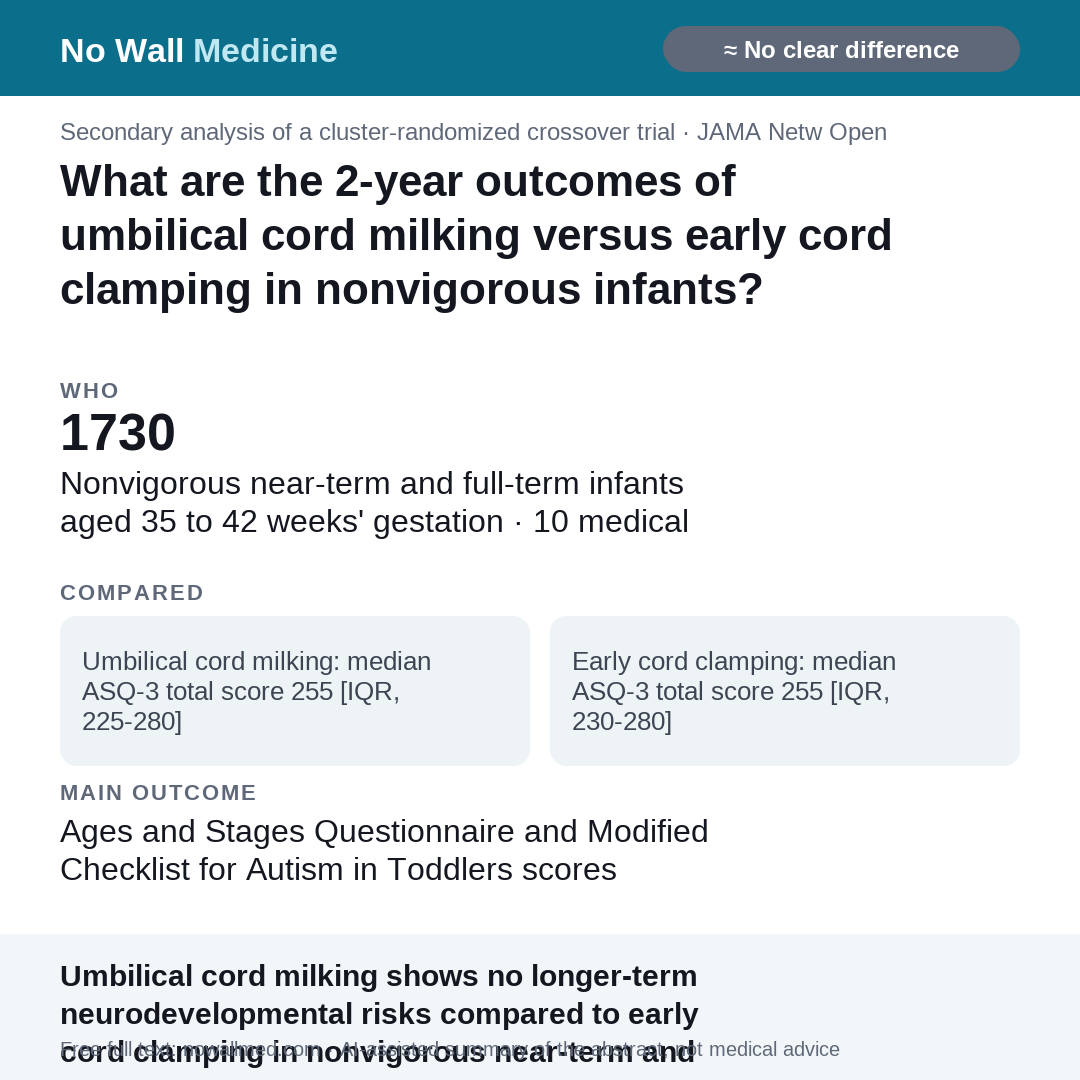
Two-Year Outcomes of Umbilical Cord Milking in Nonvigorous Infants: A Secondary Analysis of the MINVI Randomized Clinical Trial
Secondary analysis of a cluster-randomized crossover trialNo clear difference
What are the 2-year outcomes of umbilical cord milking versus early cord clamping in nonvigorous infants?
Who
1730
Nonvigorous near-term and full-term infants aged 35 to 42 weeks' gestation · 10 medical centers in the US, Canada, and Poland
Compared
Umbilical cord milking: median ASQ-3 total score 255 [IQR, 225-280]
Early cord clamping: median ASQ-3 total score 255 [IQR, 230-280]
Main outcome
Ages and Stages Questionnaire and Modified Checklist for Autism in Toddlers scores
Bottom line: Umbilical cord milking shows no longer-term neurodevelopmental risks compared to early cord clamping in nonvigorous near-term and term infants.
JAMA Netw Open · 2024-07-01Download image
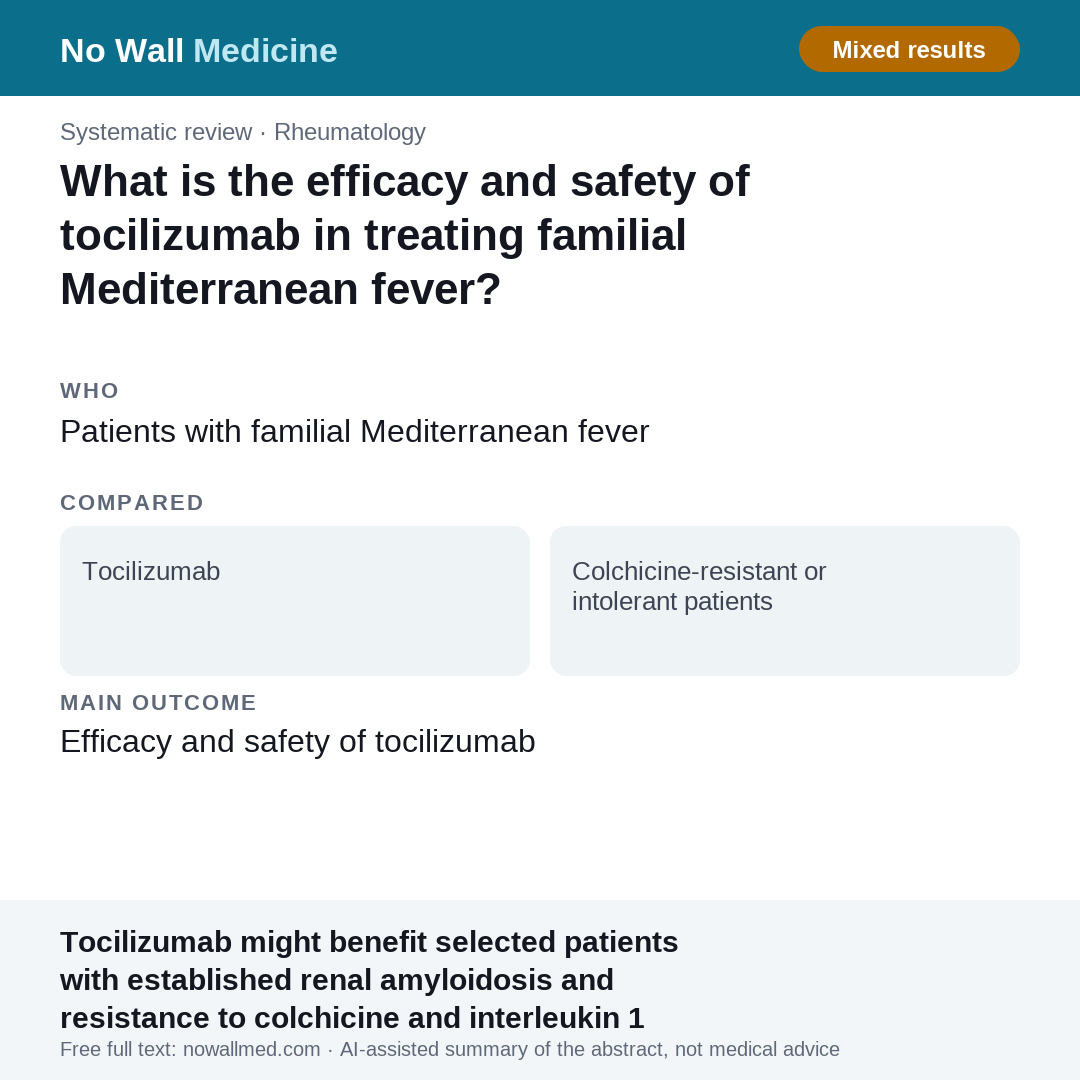
Could tocilizumab be used in familial Mediterranean fever? A systematic review
Systematic reviewMixed results
What is the efficacy and safety of tocilizumab in treating familial Mediterranean fever?
Who
Patients with familial Mediterranean fever
Compared
Tocilizumab
Colchicine-resistant or intolerant patients
Main outcome
Efficacy and safety of tocilizumab
Bottom line: Tocilizumab might benefit selected patients with established renal amyloidosis and resistance to colchicine and interleukin 1 inhibitors.
Limitation: Genetic and classification heterogeneity, possible misdiagnosed patients, and lack of paediatric data.
Rheumatology · 2024-07-01Download image
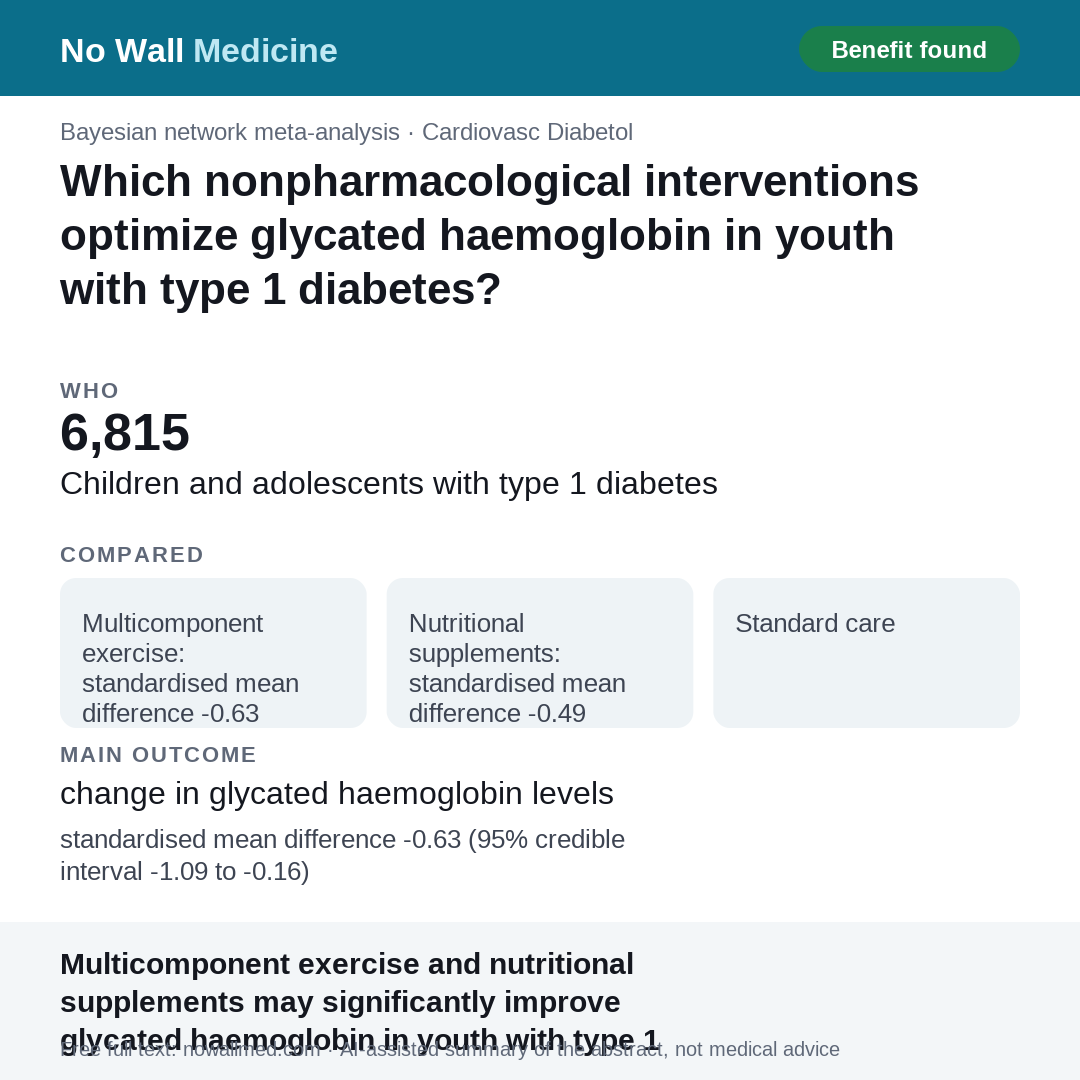
Nonpharmacological interventions on glycated haemoglobin in youth with type 1 diabetes: a Bayesian network meta-analysis
Bayesian network meta-analysisBenefit found
Which nonpharmacological interventions optimize glycated haemoglobin in youth with type 1 diabetes?
Who
6,815
Children and adolescents with type 1 diabetes
Compared
Multicomponent exercise: standardised mean difference -0.63
Nutritional supplements: standardised mean difference -0.49
Standard care
Main outcome
change in glycated haemoglobin levels
Result: standardised mean difference -0.63 (95% credible interval -1.09 to -0.16)
Bottom line: Multicomponent exercise and nutritional supplements may significantly improve glycated haemoglobin in youth with type 1 diabetes.
Limitation: additional research to confirm their efficacy is required
Cardiovasc Diabetol · 2024-07-01Download image
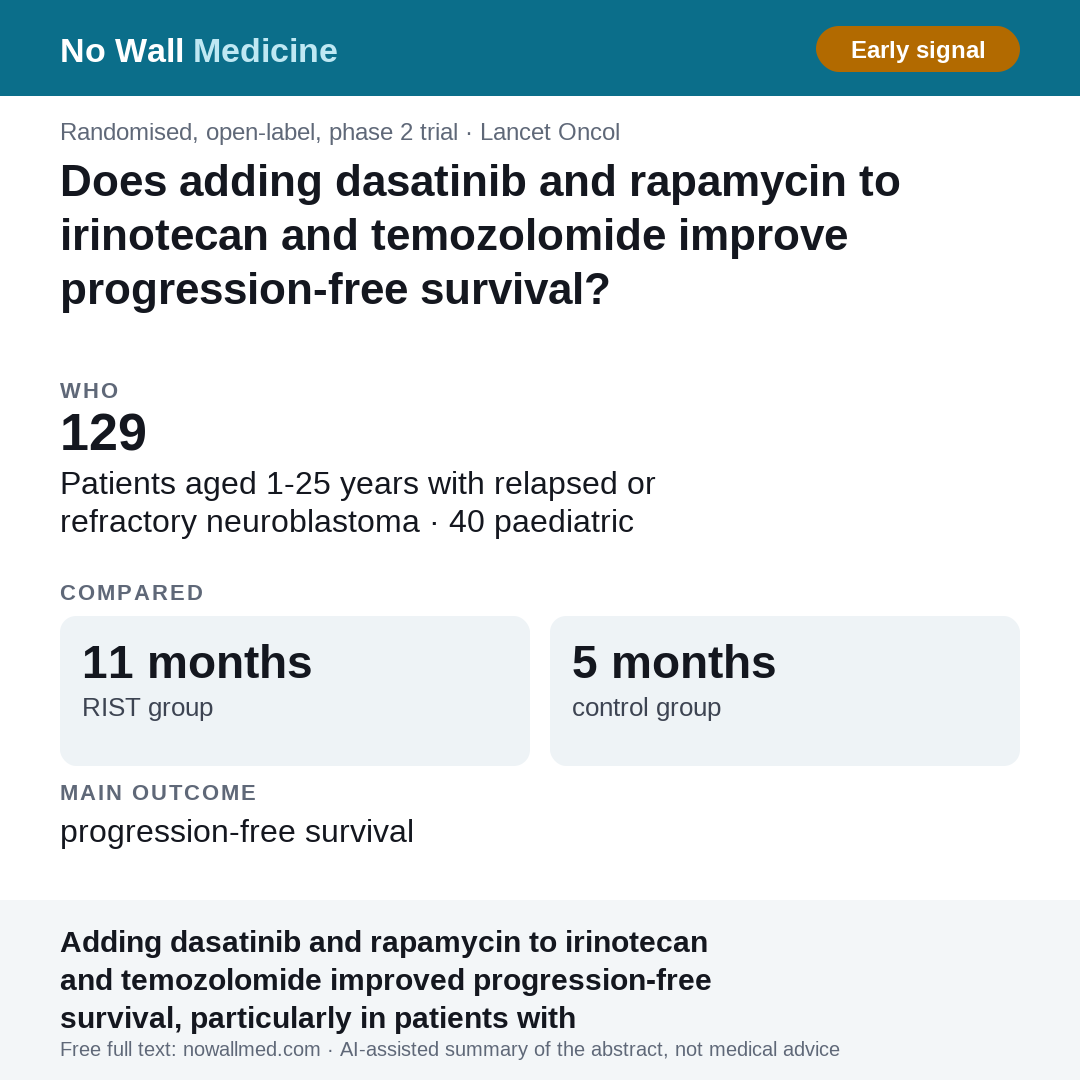
Irinotecan and temozolomide in combination with dasatinib and rapamycin versus irinotecan and temozolomide for patients with relapsed or refractory neuroblastoma (RIST-rNB-2011): a multicentre, open-label, randomised, controlled, phase 2 trial
Randomised, open-label, phase 2 trialBenefit found
Does adding dasatinib and rapamycin to irinotecan and temozolomide improve progression-free survival?
Who
129
Patients aged 1-25 years with relapsed or refractory neuroblastoma · 40 paediatric oncology centres in Germany and Austria
Compared
11 monthsRIST group (95% CI 7-17)
5 monthscontrol group (2-8)
Main outcome
progression-free survival
Result: hazard ratio 0·62, one-sided 90% CI 0·81
Bottom line: Adding dasatinib and rapamycin to irinotecan and temozolomide improved progression-free survival, particularly in patients with amplified MYCN.
Funded by: Deutsche Krebshilfe
Lancet Oncol · 2024-06-28Download image
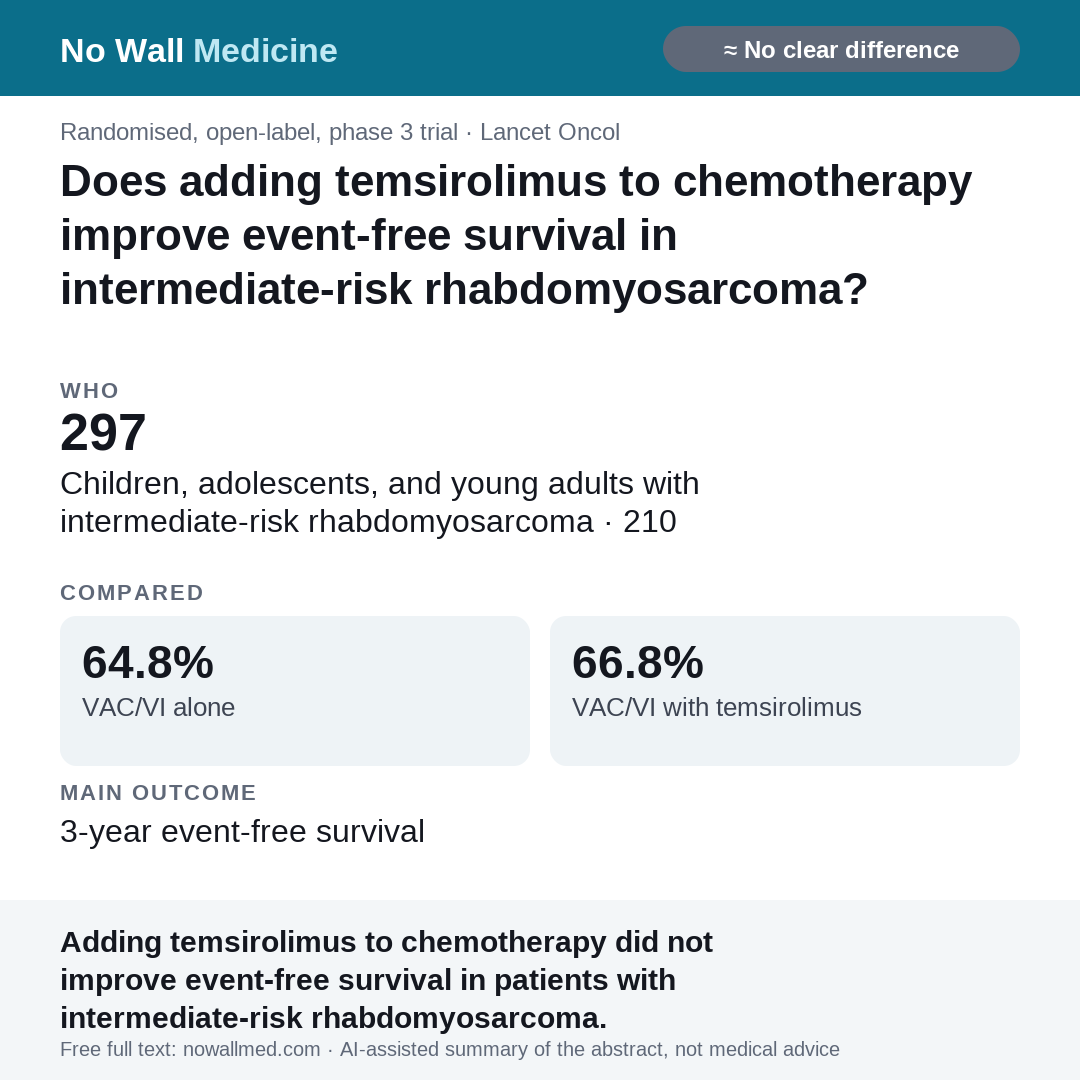
Addition of temsirolimus to chemotherapy in children, adolescents, and young adults with intermediate-risk rhabdomyosarcoma (ARST1431): a randomised, open-label, phase 3 trial from the Children's Oncology Group
Randomised, open-label, phase 3 trialNo clear difference
Does adding temsirolimus to chemotherapy improve event-free survival in intermediate-risk rhabdomyosarcoma?
Who
297
Children, adolescents, and young adults with intermediate-risk rhabdomyosarcoma · 210 institutions in Australia, Canada, New Zealand, and USA
Compared
64.8%VAC/VI alone (95% CI 55.5-74.1)
66.8%VAC/VI with temsirolimus (57.5-76.2%)
Main outcome
3-year event-free survival
Result: hazard ratio 0.86 (95% CI 0.58-1.26)
Bottom line: Adding temsirolimus to chemotherapy did not improve event-free survival in patients with intermediate-risk rhabdomyosarcoma.
Funded by: Children's Oncology Group
Lancet Oncol · 2024-06-28Download image
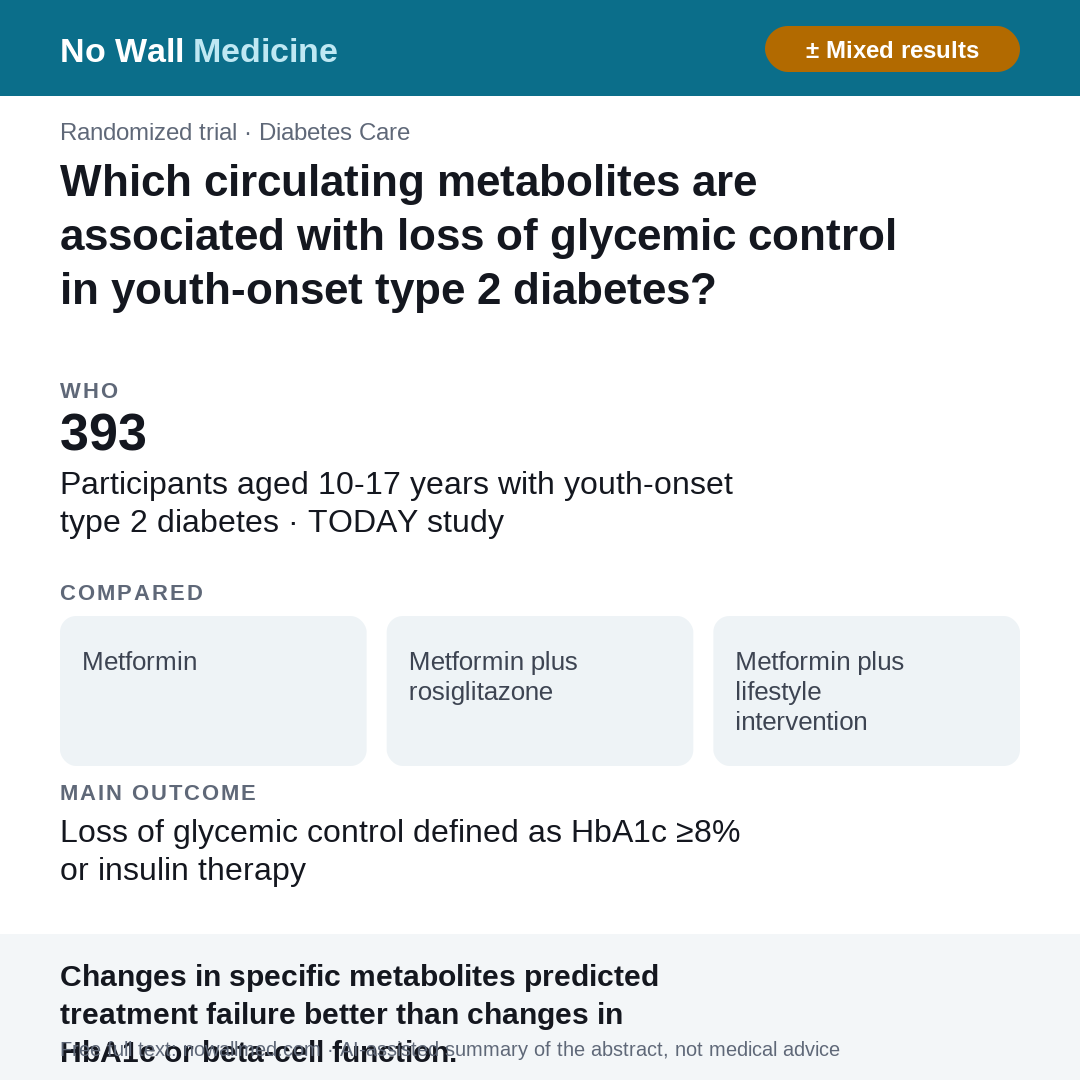
Circulating Metabolite Biomarkers of Glycemic Control in Youth-Onset Type 2 Diabetes
Randomized trialMixed results
Which circulating metabolites are associated with loss of glycemic control in youth-onset type 2 diabetes?
Who
393
Participants aged 10-17 years with youth-onset type 2 diabetes · TODAY study
Compared
Metformin
Metformin plus rosiglitazone
Metformin plus lifestyle intervention
Main outcome
Loss of glycemic control defined as HbA1c ≥8% or insulin therapy
Bottom line: Changes in specific metabolites predicted treatment failure better than changes in HbA1c or beta-cell function.
Diabetes Care · 2024-06-27Download image
Why do adolescents attempt suicide? Insights from leading ideation-to-action suicide theories: a systematic review
Systematic reviewUnclear result
Do suicide theories apply to adolescents
Who
adolescents
Compared
IPTS
IMV
3ST
Main outcome
suicide risk
Bottom line: Suicide theories have mixed support in adolescents
Limitation: few complete tests of models
Transl Psychiatry · 2024-06-27Download image
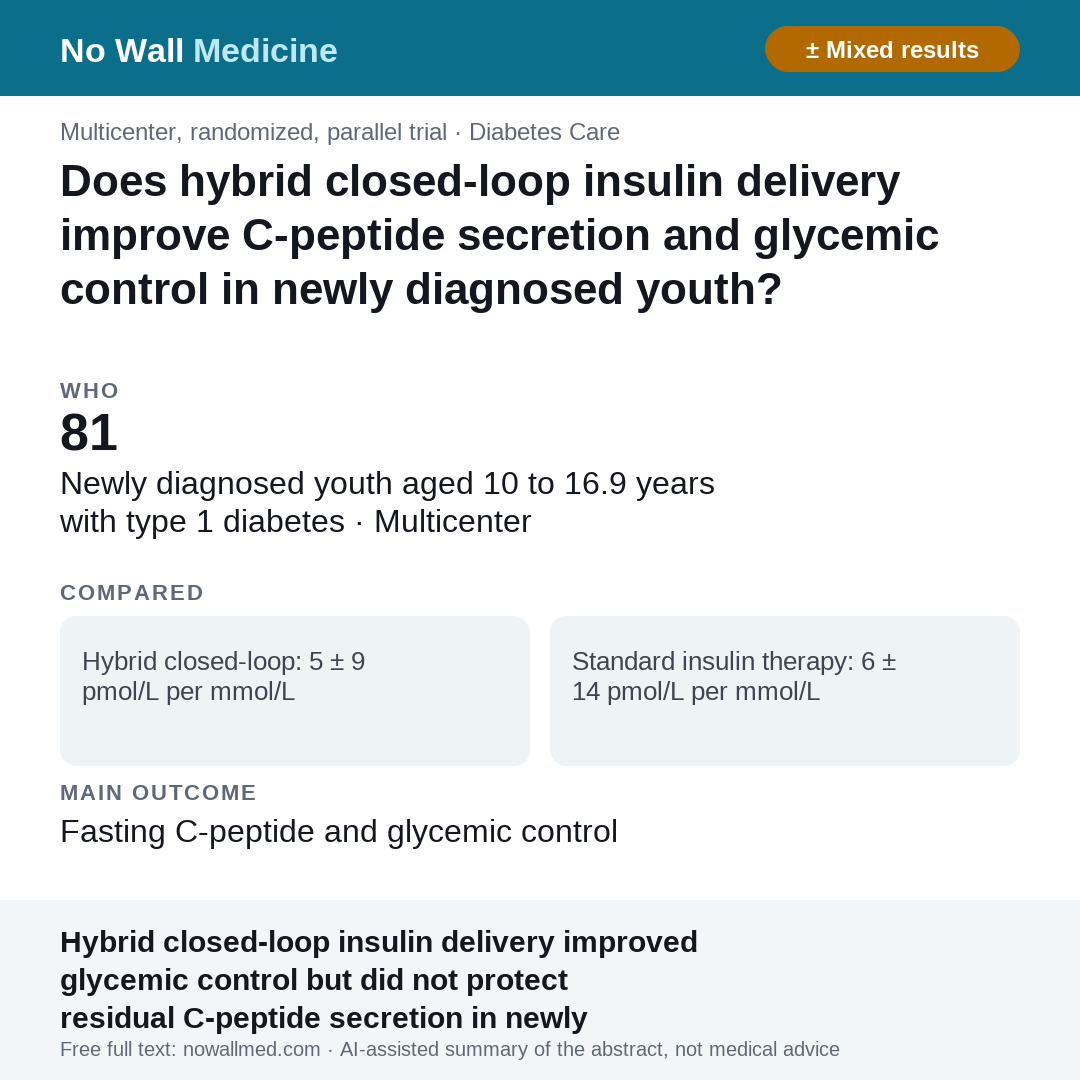
Effect of 48 Months of Closed-Loop Insulin Delivery on Residual C-Peptide Secretion and Glycemic Control in Newly Diagnosed Youth With Type 1 Diabetes: A Randomized Trial
Multicenter, randomized, parallel trialMixed results
Does hybrid closed-loop insulin delivery improve C-peptide secretion and glycemic control in newly diagnosed youth?
Who
81
Newly diagnosed youth aged 10 to 16.9 years with type 1 diabetes · Multicenter
Compared
Hybrid closed-loop: 5 ± 9 pmol/L per mmol/L
Standard insulin therapy: 6 ± 14 pmol/L per mmol/L
Main outcome
Fasting C-peptide and glycemic control
Result: mean adjusted difference -2 (95% CI -7, 4; P = 0.54)
Bottom line: Hybrid closed-loop insulin delivery improved glycemic control but did not protect residual C-peptide secretion in newly diagnosed youth.
Diabetes Care · 2024-06-26Download image
Knowledge and skills of pediatric residents in managing pediatric foreign body airway obstruction using novel airway clearance devices in Spain: A randomized simulation trial
Randomized controlled simulation trialMixed results
How do pediatric residents manage simulated pediatric foreign body airway obstruction using different interventions?
Who
60
60 pediatric residents from 3 different hospitals · 3 different hospitals in Spain
Compared
Recommended protocol: 50-75%
LifeVac: 75% to 100%
DeCHOKER: 75% to 100%
Main outcome
Variable compliance rate of correct execution of steps
Bottom line: Residents performed better with airway clearance devices than recommended protocols, but many still failed to adhere to proper steps.
Resusc Plus · 2024-06-26Download image

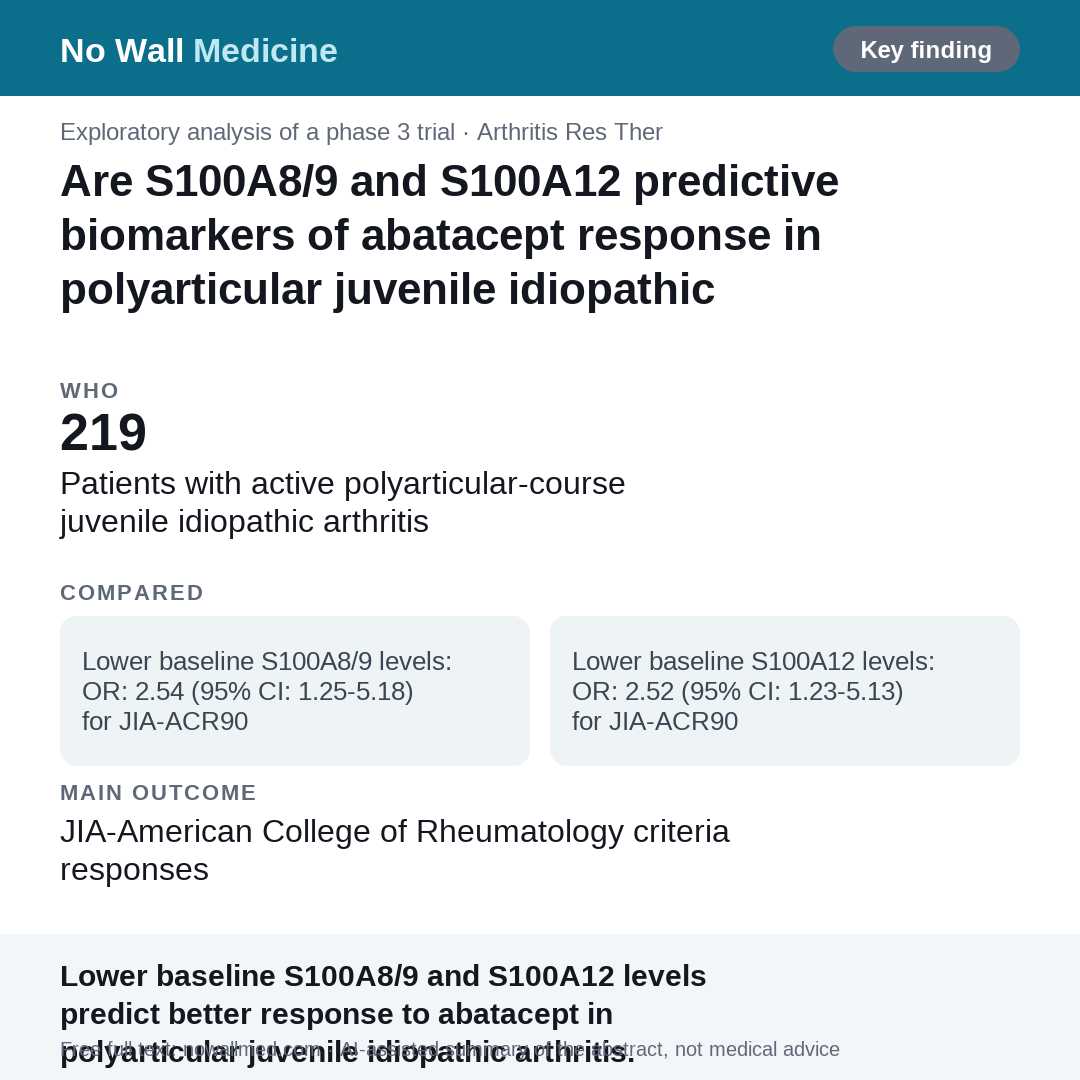
S100 proteins as potential predictive biomarkers of abatacept response in polyarticular juvenile idiopathic arthritis
Exploratory analysis of a phase 3 trialBenefit found
Are S100A8/9 and S100A12 predictive biomarkers of abatacept response in polyarticular juvenile idiopathic arthritis?
Who
219
Patients with active polyarticular-course juvenile idiopathic arthritis
Compared
Lower baseline S100A8/9 levels: OR: 2.54 (95% CI: 1.25-5.18) for JIA-ACR90
Lower baseline S100A12 levels: OR: 2.52 (95% CI: 1.23-5.13) for JIA-ACR90
Main outcome
JIA-American College of Rheumatology criteria responses
Bottom line: Lower baseline S100A8/9 and S100A12 levels predict better response to abatacept in polyarticular juvenile idiopathic arthritis.
Arthritis Res Ther · 2024-06-25Download image
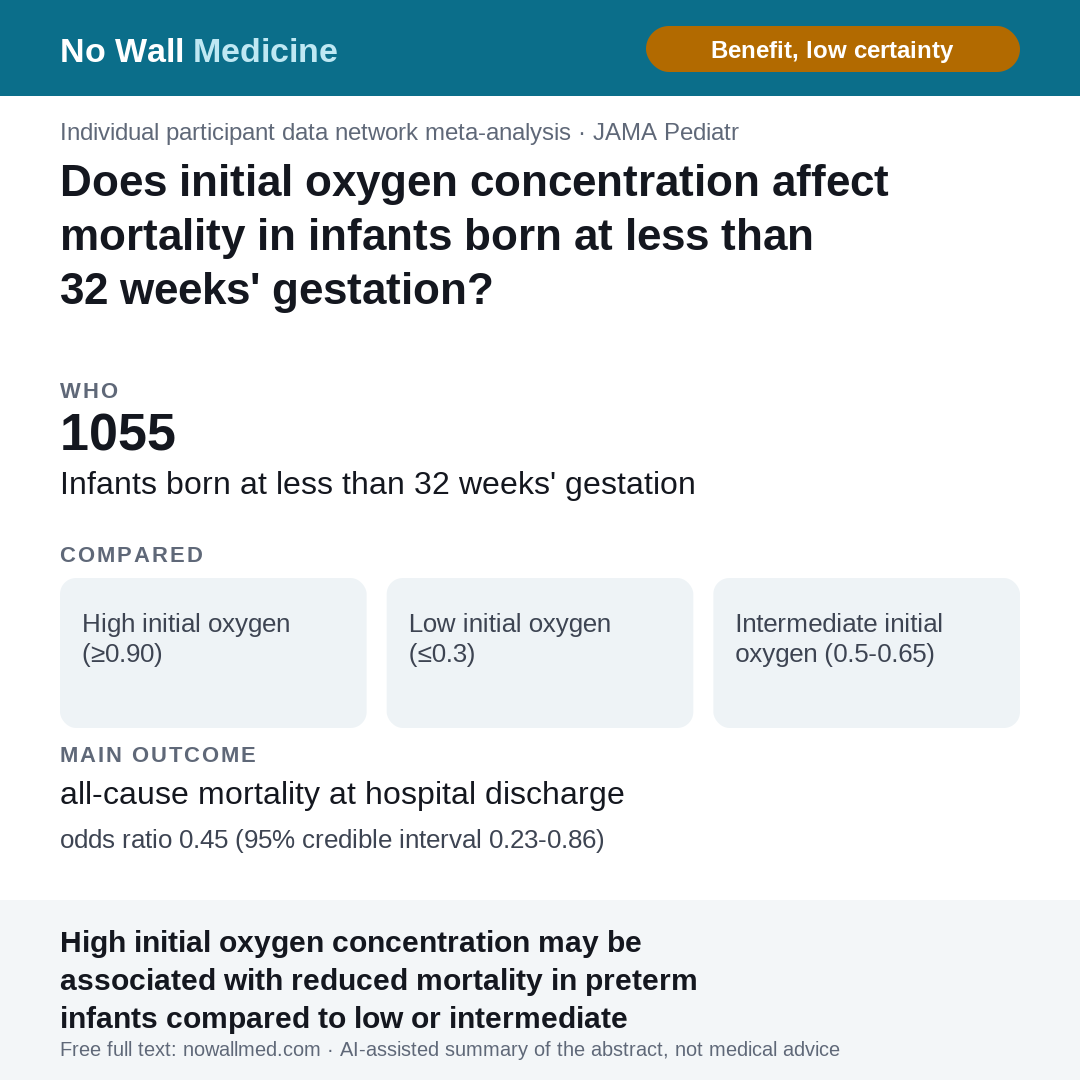
Initial Oxygen Concentration for the Resuscitation of Infants Born at Less Than 32 Weeks' Gestation: A Systematic Review and Individual Participant Data Network Meta-Analysis
Individual participant data network meta-analysisBenefit found
Does initial oxygen concentration affect mortality in infants born at less than 32 weeks' gestation?
Who
1055
Infants born at less than 32 weeks' gestation
Compared
High initial oxygen (≥0.90)
Low initial oxygen (≤0.3)
Intermediate initial oxygen (0.5-0.65)
Main outcome
all-cause mortality at hospital discharge
Result: odds ratio 0.45 (95% credible interval 0.23-0.86)
Bottom line: High initial oxygen concentration may be associated with reduced mortality in preterm infants compared to low or intermediate concentrations.
JAMA Pediatr · 2024-06-24Download image
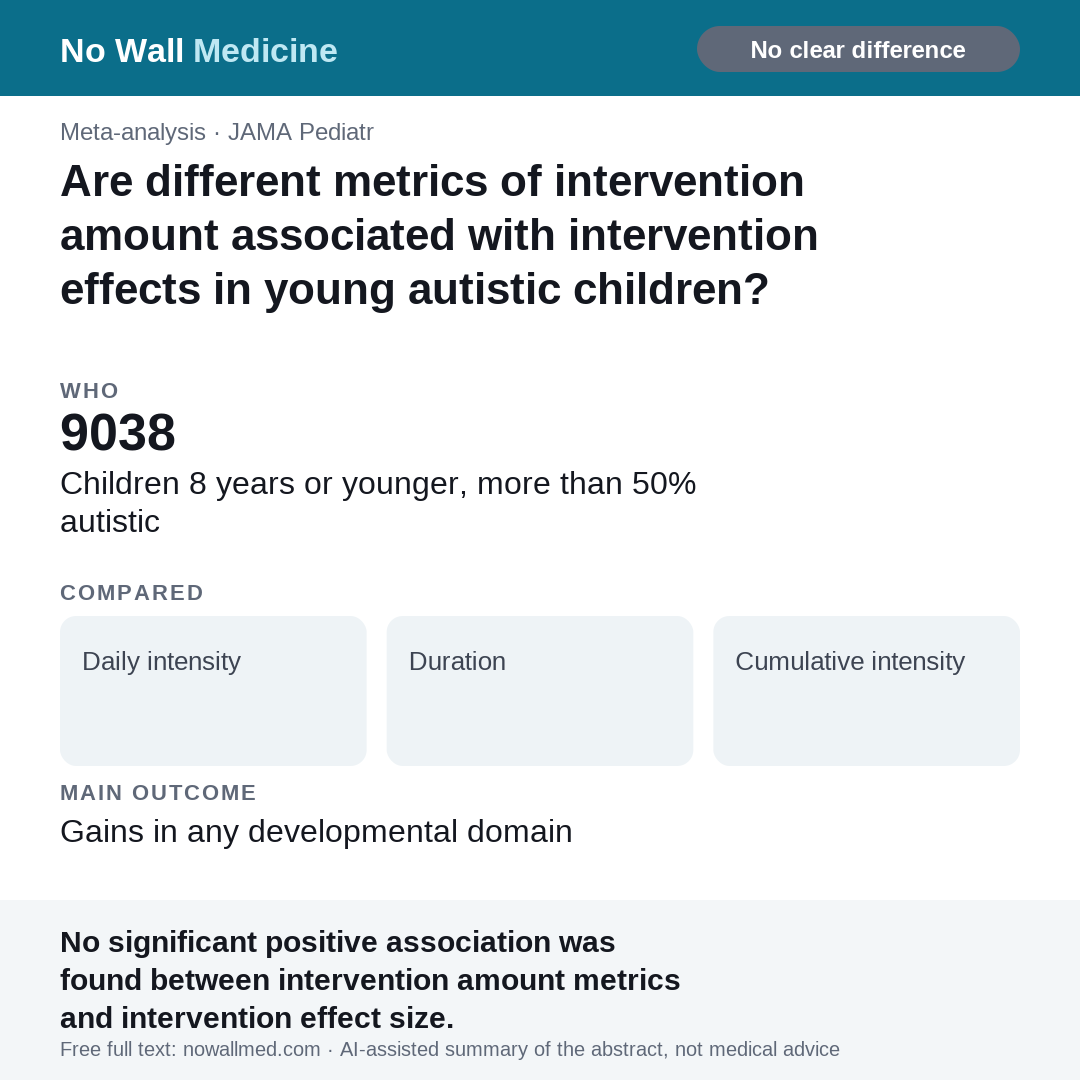
Determining Associations Between Intervention Amount and Outcomes for Young Autistic Children: A Meta-Analysis
Meta-analysisNo clear difference
Are different metrics of intervention amount associated with intervention effects in young autistic children?
Who
9038
Children 8 years or younger, more than 50% autistic
Compared
Daily intensity
Duration
Cumulative intensity
Main outcome
Gains in any developmental domain
Bottom line: No significant positive association was found between intervention amount metrics and intervention effect size.
JAMA Pediatr · 2024-06-24Download image
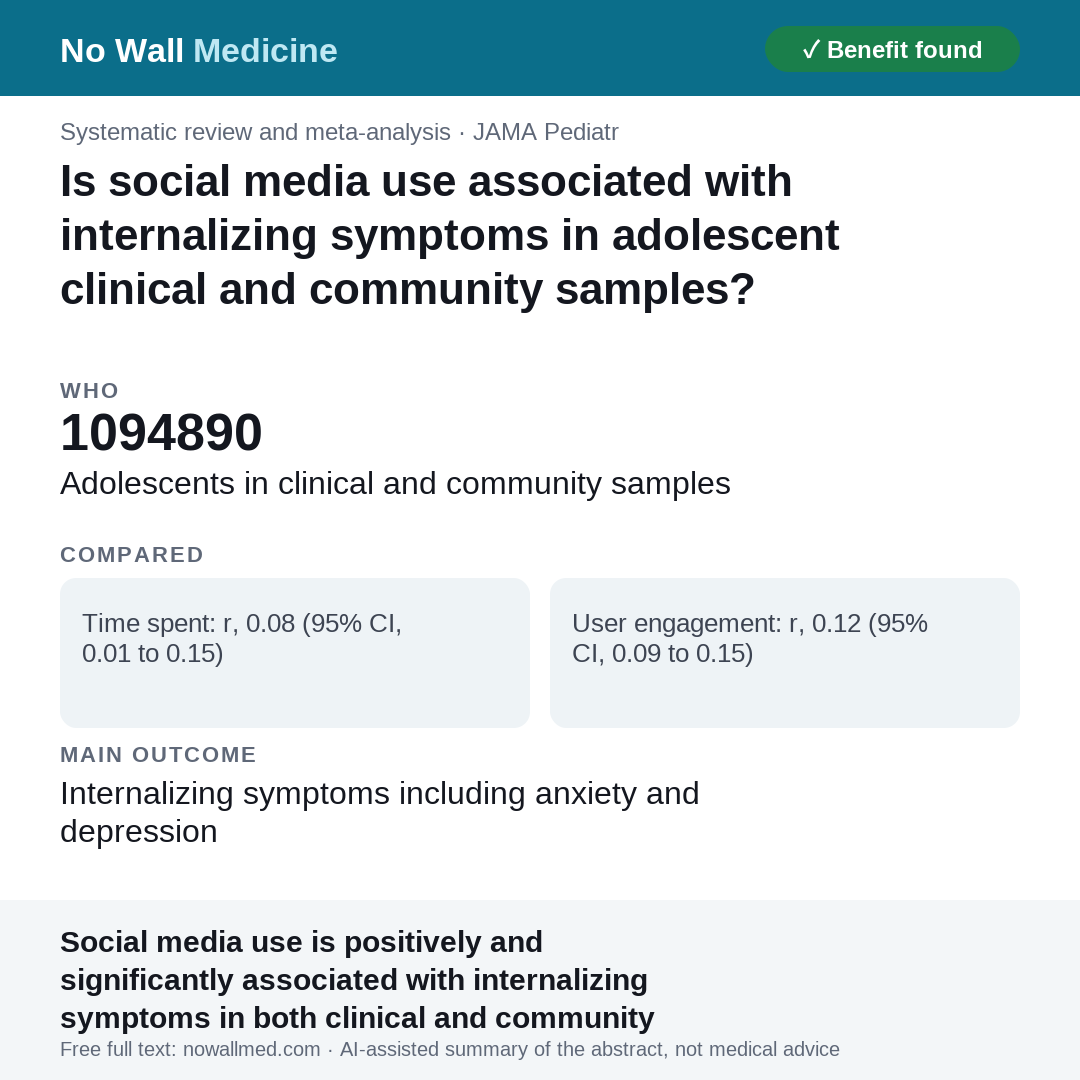
Social Media Use and Internalizing Symptoms in Clinical and Community Adolescent Samples: A Systematic Review and Meta-Analysis
Systematic review and meta-analysisBenefit found
Is social media use associated with internalizing symptoms in adolescent clinical and community samples?
Who
1094890
Adolescents in clinical and community samples
Compared
Time spent: r, 0.08 (95% CI, 0.01 to 0.15)
User engagement: r, 0.12 (95% CI, 0.09 to 0.15)
Main outcome
Internalizing symptoms including anxiety and depression
Bottom line: Social media use is positively and significantly associated with internalizing symptoms in both clinical and community adolescent samples.
Limitation: Lack of research on clinical populations restricts generalizability and ability to compare populations.
JAMA Pediatr · 2024-06-24Download image
The Dynamic Interplay Between Puberty and Structural Brain Development as a Predictor of Mental Health Difficulties in Adolescence: A Systematic Review
Two systematic reviewsMixed results
Does the interplay between puberty and brain structure predict adolescent mental health difficulties?
Who
Adolescents
Compared
Early puberty: association with mental health difficulties
Physically observable characteristics: more commonly identified as a predictor
Main outcome
Mental health difficulties in adolescence
Bottom line: Evidence is inconsistent regarding brain structure mediation, though physical pubertal characteristics predict mental health difficulties.
Limitation: Study designs in predictive models did not allow for quantification of predictive power.
Biol Psychiatry · 2024-06-24Download image

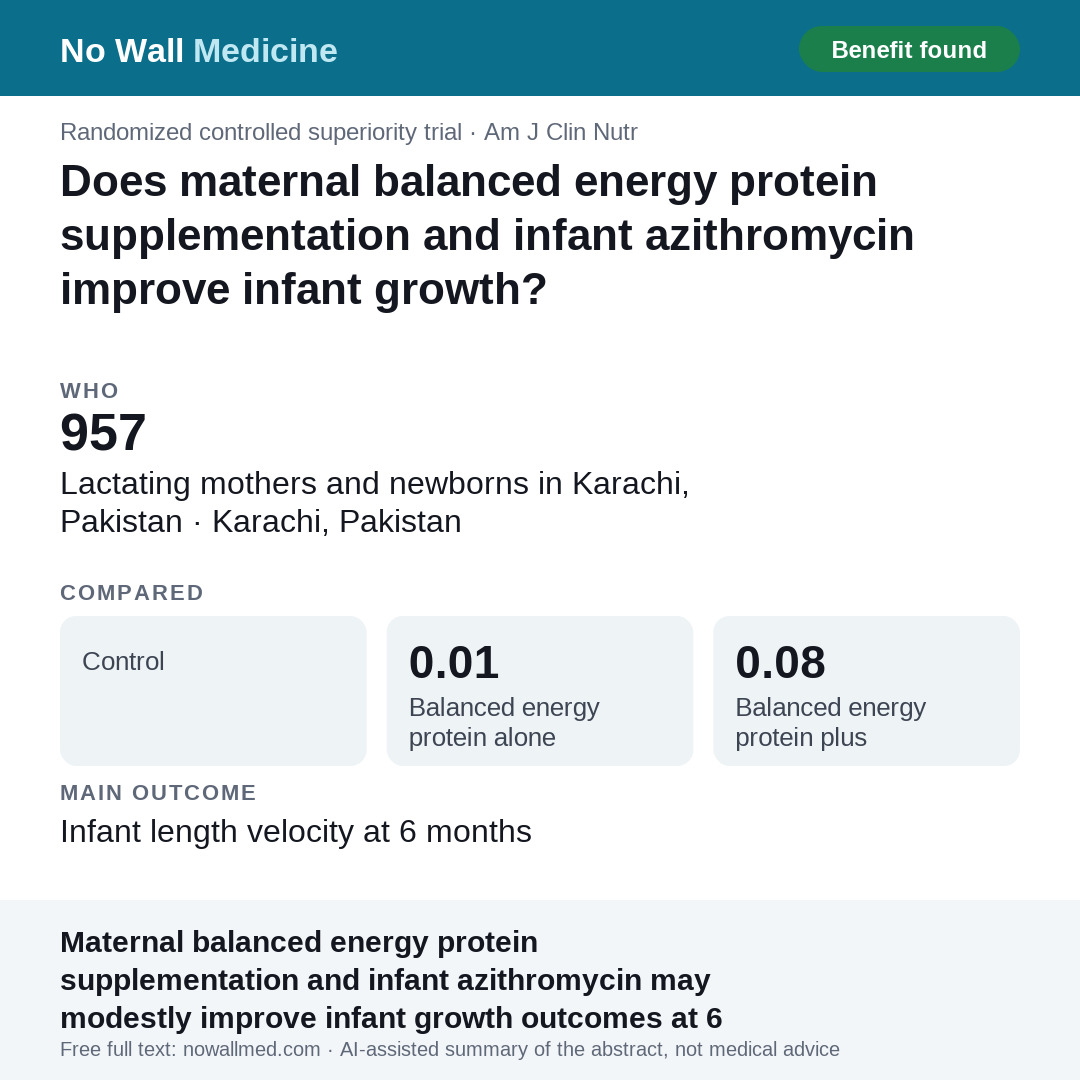
Effect of maternal postnatal balanced energy protein supplementation and infant azithromycin on infant growth outcomes: an open-label randomized controlled trial
Randomized controlled superiority trialBenefit found
Does maternal balanced energy protein supplementation and infant azithromycin improve infant growth?
Who
957
Lactating mothers and newborns in Karachi, Pakistan · Karachi, Pakistan
Compared
Control
0.01Balanced energy protein alone (95% CI: -0.03, 0.06)
0.08Balanced energy protein plus azithromycin (95% CI: 0.03, 0.13)
Main outcome
Infant length velocity at 6 months
Result: 0.08 (95% CI: 0.03, 0.13) for BEP plus AZ vs control
Bottom line: Maternal balanced energy protein supplementation and infant azithromycin may modestly improve infant growth outcomes at 6 months.
Am J Clin Nutr · 2024-06-24Download image
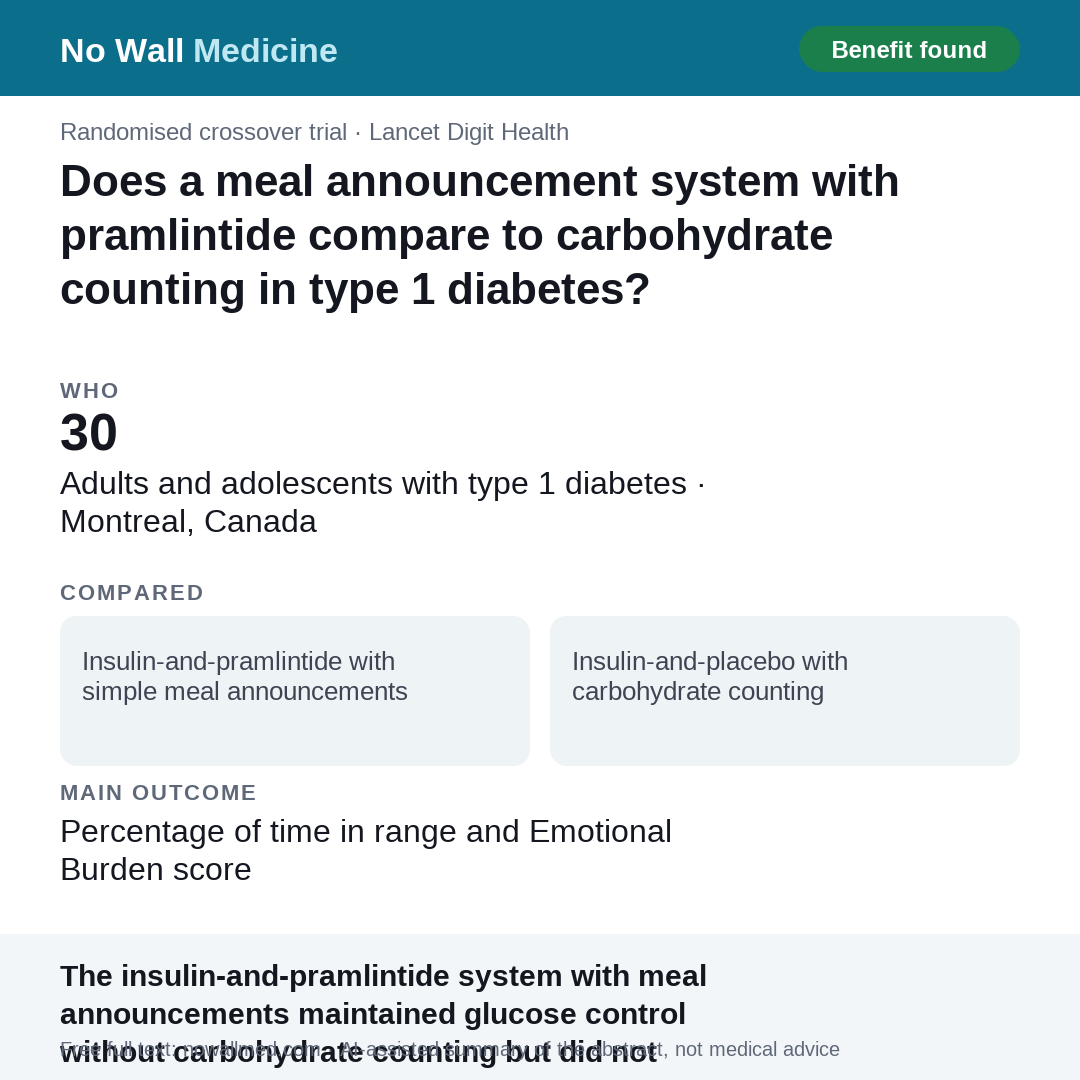
Simple meal announcements and pramlintide delivery versus carbohydrate counting in type 1 diabetes with automated fast-acting insulin aspart delivery: a randomised crossover trial in Montreal, Canada
Randomised crossover trialBenefit found
Does a meal announcement system with pramlintide compare to carbohydrate counting in type 1 diabetes?
Who
30
Adults and adolescents with type 1 diabetes · Montreal, Canada
Compared
Insulin-and-pramlintide with simple meal announcements
Insulin-and-placebo with carbohydrate counting
Main outcome
Percentage of time in range and Emotional Burden score
Result: difference -5% (95% CI -9·0 to -0·7) for time in range
Bottom line: The insulin-and-pramlintide system with meal announcements maintained glucose control without carbohydrate counting but did not improve emotional burden.
Funded by: Juvenile Diabetes Research Foundation
Lancet Digit Health · 2024-06-22Download image
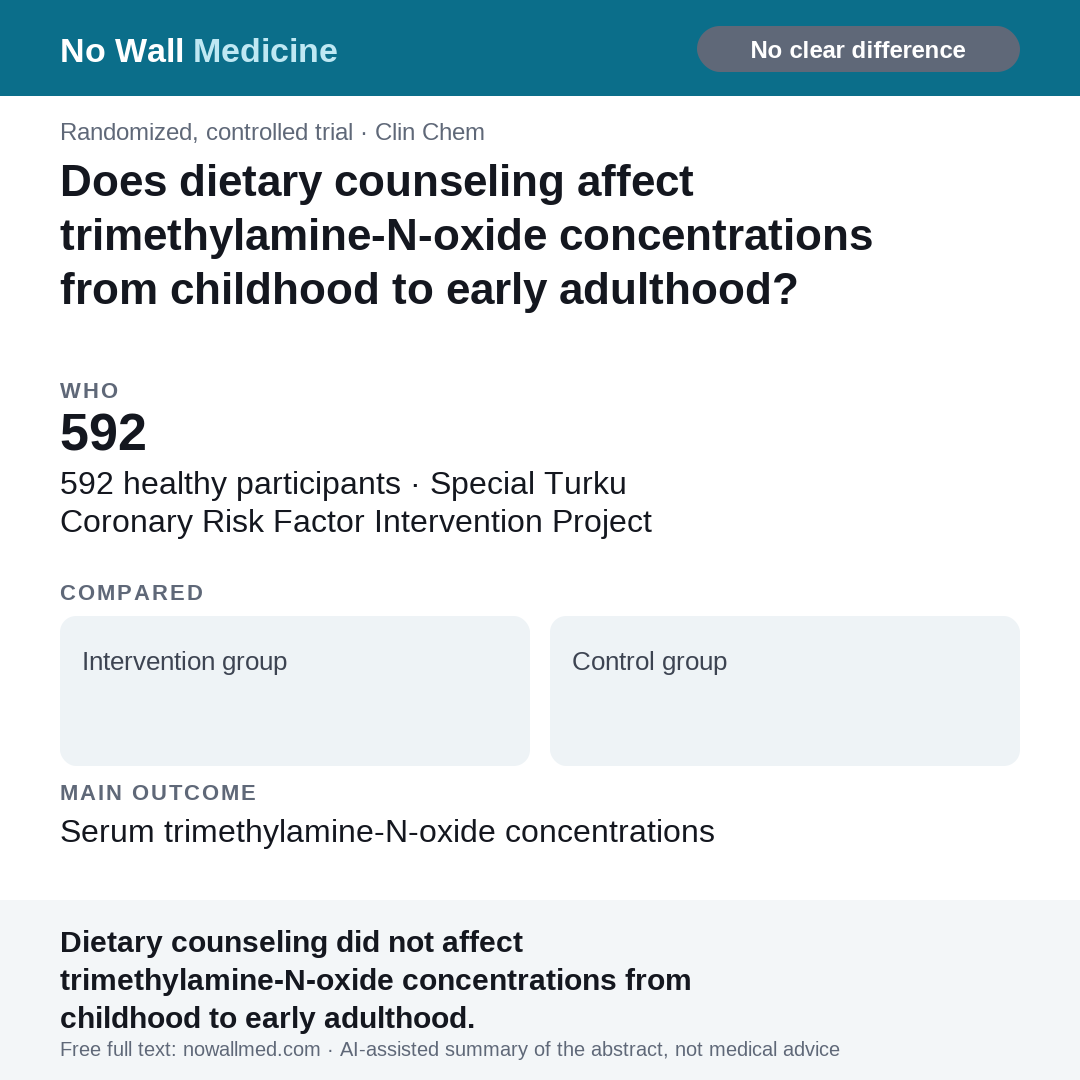
Association of Serum Trimethylamine-N-Oxide Concentration from Childhood to Early Adulthood with Age and Sex
Randomized, controlled trialNo clear difference
Does dietary counseling affect trimethylamine-N-oxide concentrations from childhood to early adulthood?
Who
592
592 healthy participants · Special Turku Coronary Risk Factor Intervention Project
Compared
Intervention group
Control group
Main outcome
Serum trimethylamine-N-oxide concentrations
Bottom line: Dietary counseling did not affect trimethylamine-N-oxide concentrations from childhood to early adulthood.
Clin Chem · 2024-06-22Download image
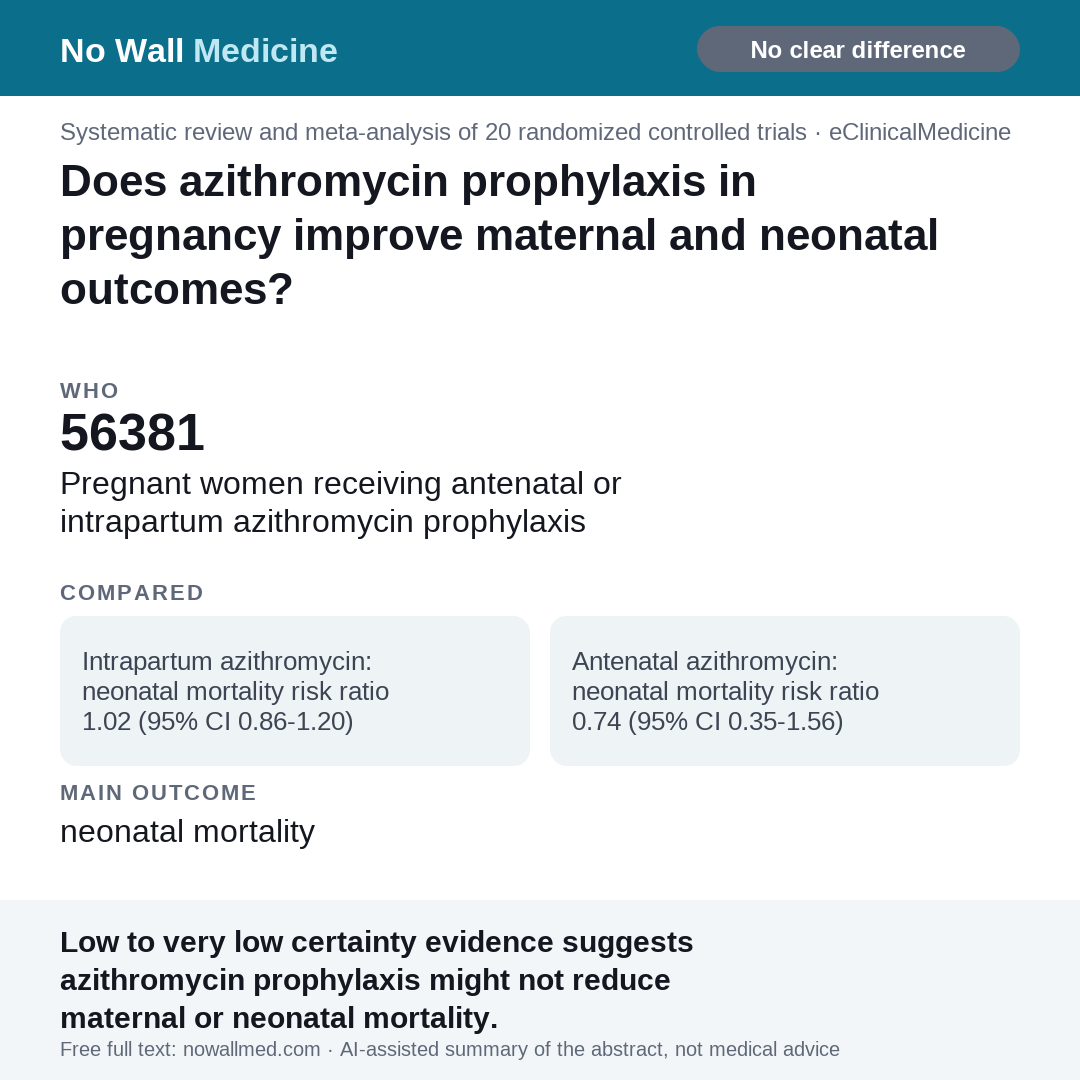
PeRinatal, neOnatal, and Maternal OuTcomEs with azithromycin prophylaxis in pregnancy and labour (PROMOTE-PROPHYLAXIS): systematic review and meta-analysis
Systematic review and meta-analysis of 20 randomized controlled trialsNo clear difference
Does azithromycin prophylaxis in pregnancy improve maternal and neonatal outcomes?
Who
56381
Pregnant women receiving antenatal or intrapartum azithromycin prophylaxis
Compared
Intrapartum azithromycin: neonatal mortality risk ratio 1.02 (95% CI 0.86-1.20)
Antenatal azithromycin: neonatal mortality risk ratio 0.74 (95% CI 0.35-1.56)
Main outcome
neonatal mortality
Result: risk ratio 1.02 (95% CI 0.86-1.20) for intrapartum; 0.74 (95% CI 0.35-1.56) for antenatal
Bottom line: Low to very low certainty evidence suggests azithromycin prophylaxis might not reduce maternal or neonatal mortality.
Limitation: There is no data on long-term adverse outcomes and antimicrobial resistance.
eClinicalMedicine · 2024-06-21Download image
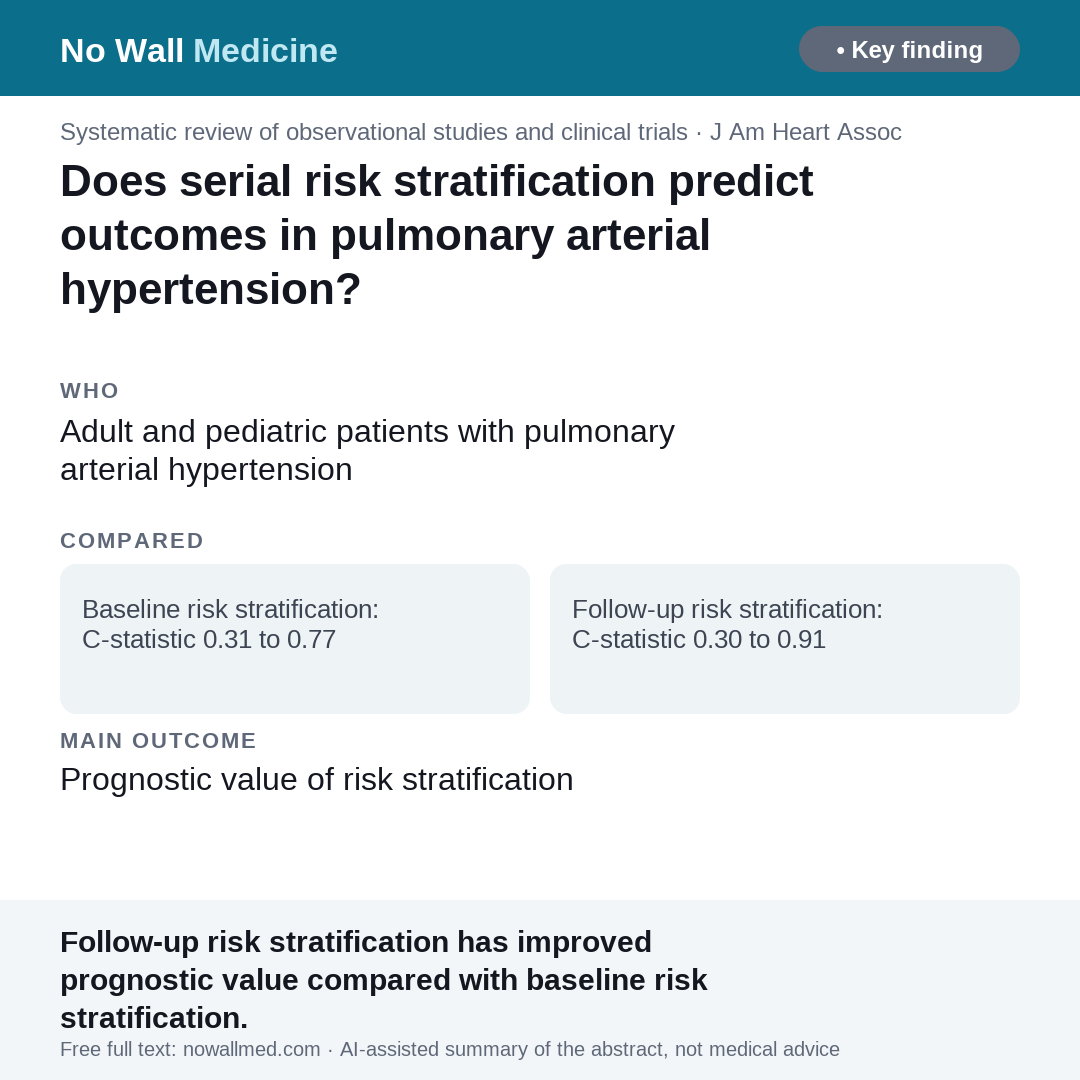
Prognostic Value of Serial Risk Stratification in Adult and Pediatric Pulmonary Arterial Hypertension: A Systematic Review
Systematic reviewBenefit found
Prognostic value of serial risk stratification
Who
Adult and pediatric pulmonary arterial hypertension patients
Compared
Baseline risk
Follow-up risk
Main outcome
Prognostic value and survival
Bottom line: Serial risk stratification improves prognostic value
J Am Heart Assoc · 2024-06-21Download image
Comparative physiological effects of antipsychotic drugs in children and young people: a network meta-analysis
Network meta-analysis of 47 randomized controlled trialsMixed results
What are the physiological effects of various antipsychotic medications in children and adolescents?
Who
6500
Children and adolescents younger than 18 years with neuropsychiatric or neurodevelopmental conditions
Compared
Antipsychotics
Placebo
Main outcome
Mean change in various physiological variables from baseline to end of treatment
Bottom line: Antipsychotic drugs cause varied and clinically significant physiological, metabolic, and hemodynamic changes in children and adolescents.
Funded by: UK Academy of Medical Sciences, Brain and Behaviour Research Foundation, UK National Institute
Lancet Child Adolesc Health · 2024-06-20Download image