Visual abstracts
New randomized trials and meta-analyses from leading journals at a glance: who was studied, what was compared, and what was found. Every paper is free to read in full.
All specialtiesCardiology 4763Oncology 4043Gastroenterology & Hepatology 1903Infectious Disease 3756Neurology 1872Psychiatry & Mental Health 2216Pulmonology 2044Critical Care 1319Endocrinology & Diabetes 2544Pediatrics 2889Surgery 2480Orthopedics & Sports Medicine 917Neurosurgery 525Cardiothoracic & Vascular Surgery 656Plastic & Reconstructive Surgery 574Nephrology 1107Rheumatology 810Hematology 1090Dermatology 611Ophthalmology 532Obstetrics & Gynecology 1645Public & Global Health 1037Radiology & Imaging 619Anesthesiology 958Urology 745ENT (Otolaryngology) 494Emergency Medicine 481Allergy & Immunology 309Geriatrics 972Family Medicine & Primary Care 534Medical Genetics & Genomics 659Pathology & Laboratory Medicine 156Physical Medicine & Rehabilitation 734Palliative Care 421Nutrition 1560Digital Health & AI 2137General Medicine 318
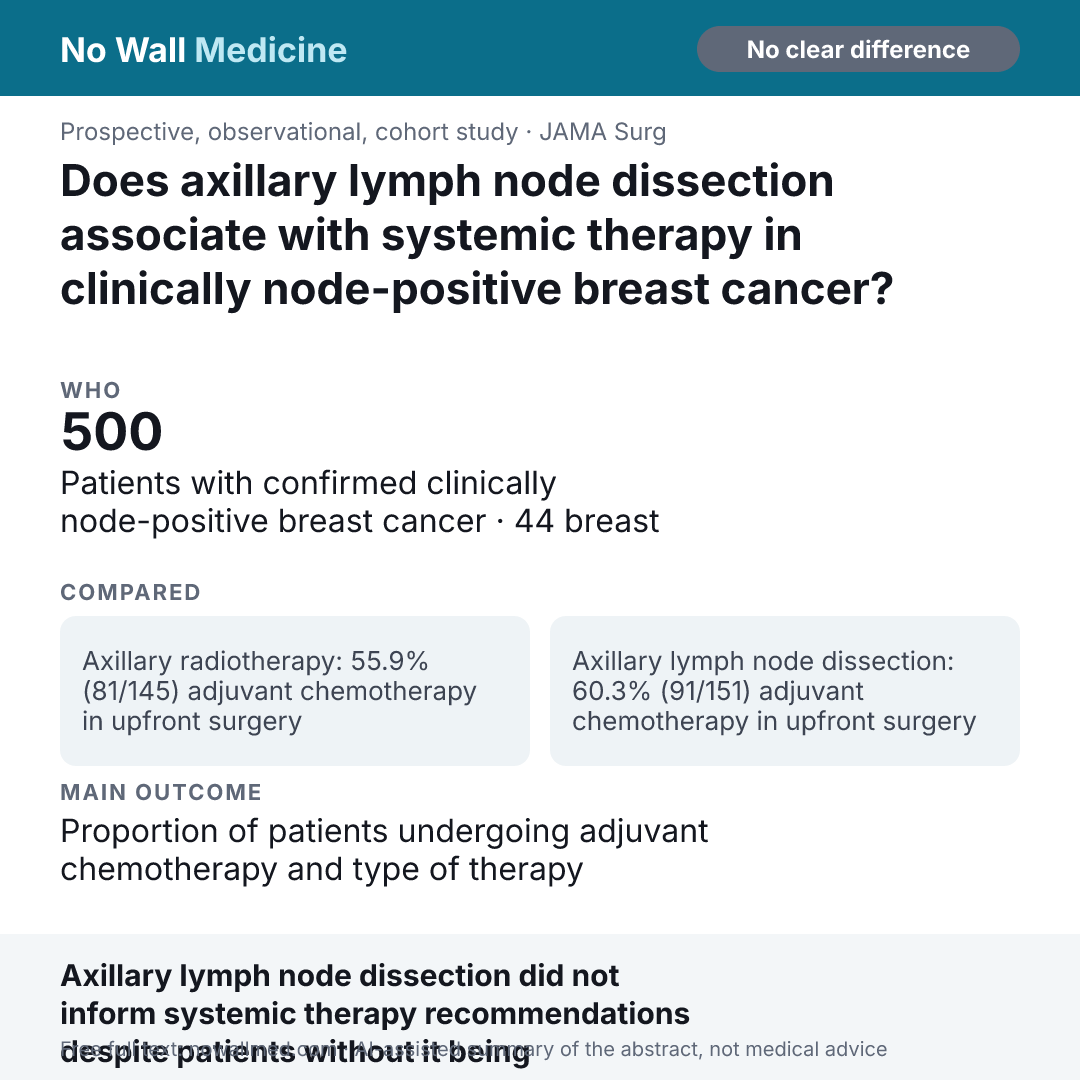
Association of Axillary Dissection With Systemic Therapy in Patients With Clinically Node-Positive Breast Cancer
Prospective, observational, cohort studyNo clear difference
Does axillary lymph node dissection associate with systemic therapy in clinically node-positive breast cancer?
Who
500
Patients with confirmed clinically node-positive breast cancer · 44 breast centers in 6 European countries
Compared
Axillary radiotherapy: 55.9% (81/145) adjuvant chemotherapy in upfront surgery
Axillary lymph node dissection: 60.3% (91/151) adjuvant chemotherapy in upfront surgery
Main outcome
Proportion of patients undergoing adjuvant chemotherapy and type of therapy
Result: adjusted odds ratio 0.72 (95% CI 0.19-2.67)
Bottom line: Axillary lymph node dissection did not inform systemic therapy recommendations despite patients without it being understaged.
JAMA Surg · 2023-07-19 · Save PNG
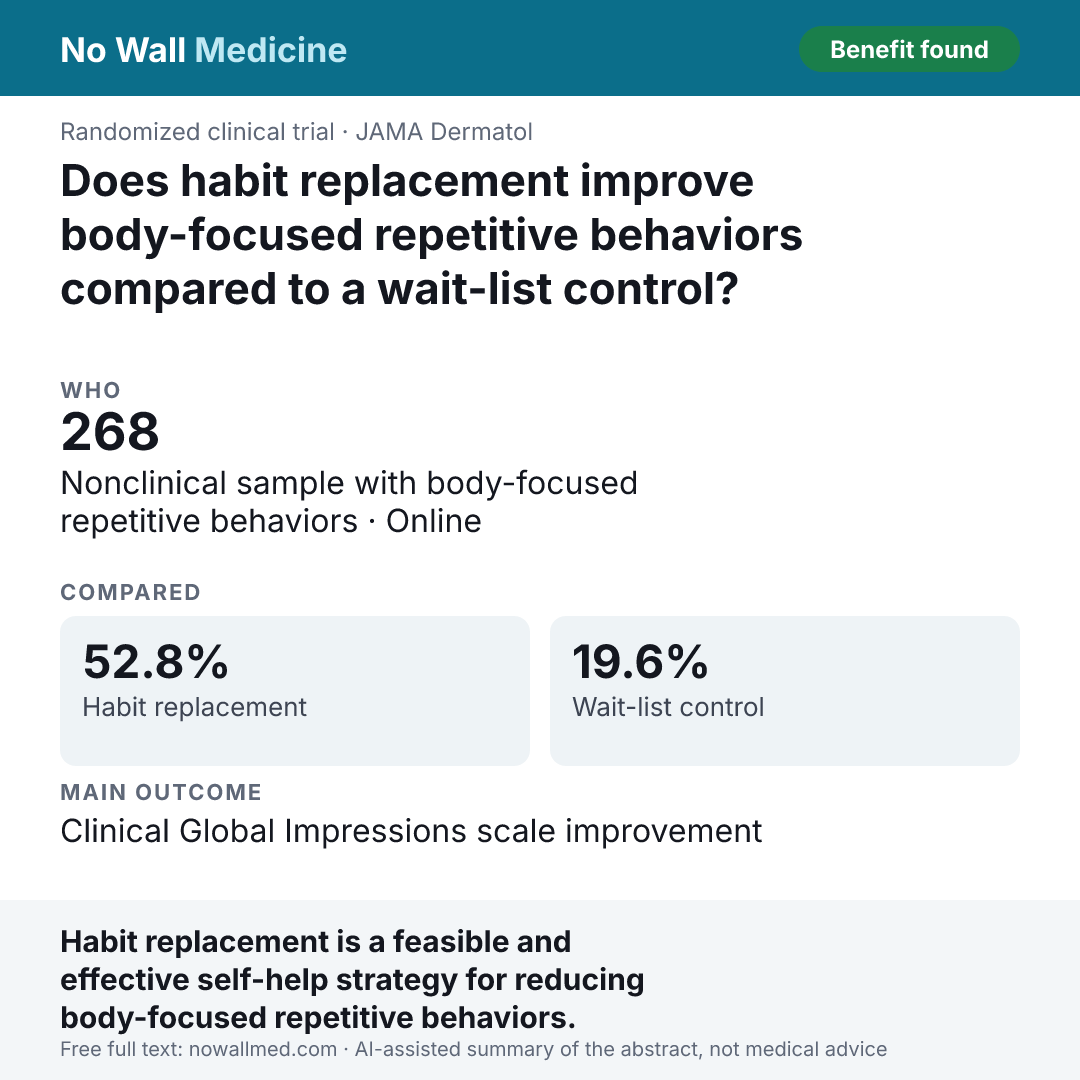
Self-Help Habit Replacement in Individuals With Body-Focused Repetitive Behaviors: A Proof-of-Concept Randomized Clinical Trial
Randomized clinical trialBenefit found
Does habit replacement improve body-focused repetitive behaviors compared to a wait-list control?
Who
268
Nonclinical sample with body-focused repetitive behaviors · Online
Compared
52.8%Habit replacement
19.6%Wait-list control
Main outcome
Clinical Global Impressions scale improvement
Bottom line: Habit replacement is a feasible and effective self-help strategy for reducing body-focused repetitive behaviors.
Limitation: Lack of external assessment, verified diagnoses, and missing follow-up data.
JAMA Dermatol · 2023-07-19 · Save PNG
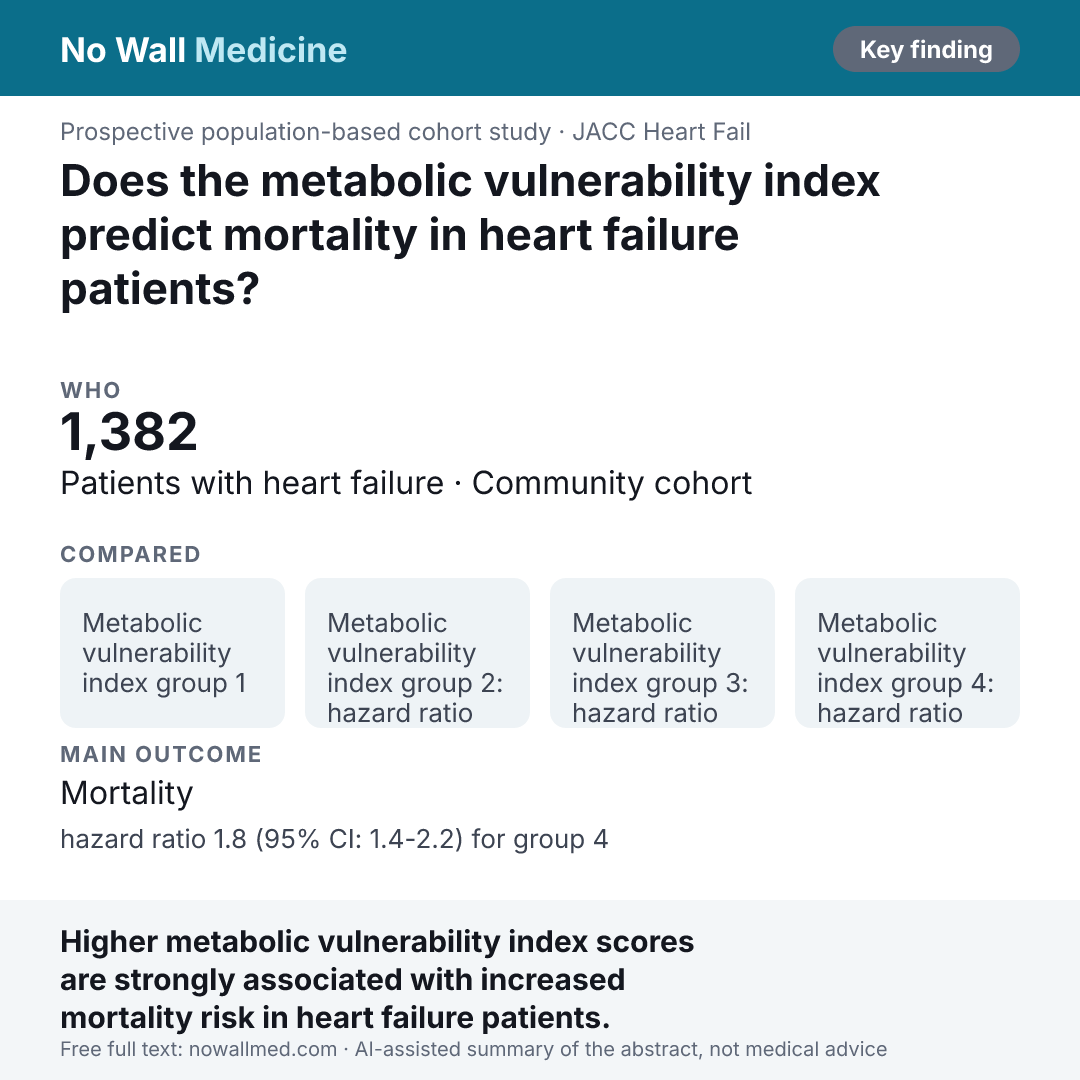
The Metabolic Vulnerability Index: A Novel Marker for Mortality Prediction in Heart Failure
Prospective population-based cohort studyKey finding
Does the metabolic vulnerability index predict mortality in heart failure patients?
Who
1,382
Patients with heart failure · Community cohort
Compared
Metabolic vulnerability index group 1
Metabolic vulnerability index group 2: hazard ratio 1.2 (95% CI: 0.9-1.4)
Metabolic vulnerability index group 3: hazard ratio 1.6 (95% CI: 1.3-2.0)
Metabolic vulnerability index group 4: hazard ratio 1.8 (95% CI: 1.4-2.2)
Main outcome
Mortality
Result: hazard ratio 1.8 (95% CI: 1.4-2.2) for group 4
Bottom line: Higher metabolic vulnerability index scores are strongly associated with increased mortality risk in heart failure patients.
JACC Heart Fail · 2023-07-19 · Save PNG
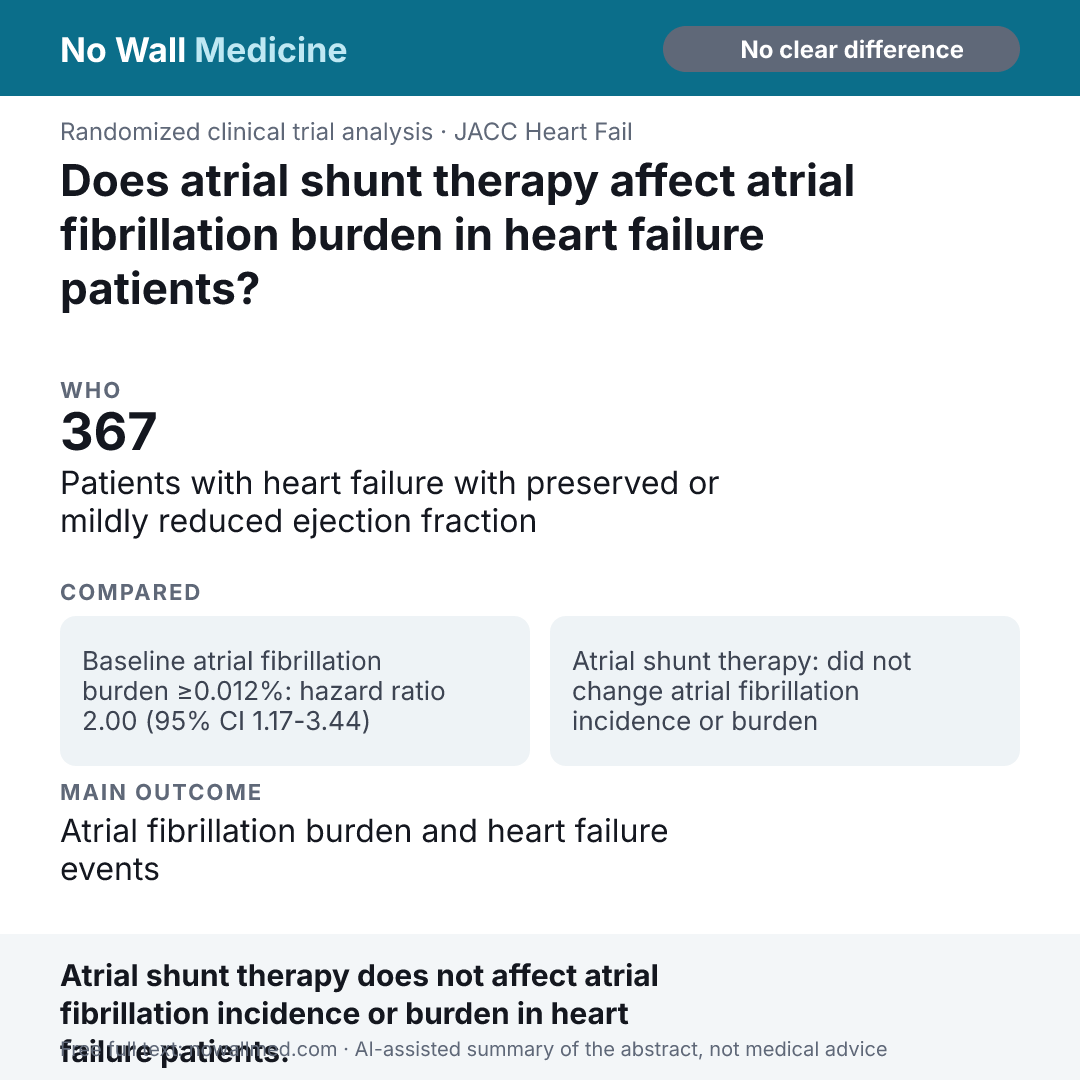
Atrial Fibrillation Burden and Atrial Shunt Therapy in Heart Failure With Preserved Ejection Fraction
Randomized clinical trial analysisNo clear difference
Does atrial shunt therapy affect atrial fibrillation burden in heart failure patients?
Who
367
Patients with heart failure with preserved or mildly reduced ejection fraction
Compared
Baseline atrial fibrillation burden ≥0.012%: hazard ratio 2.00 (95% CI 1.17-3.44)
Atrial shunt therapy: did not change atrial fibrillation incidence or burden
Main outcome
Atrial fibrillation burden and heart failure events
Result: hazard ratio 2.00 (95% CI 1.17-3.44)
Bottom line: Atrial shunt therapy does not affect atrial fibrillation incidence or burden in heart failure patients.
JACC Heart Fail · 2023-07-19 · Save PNG
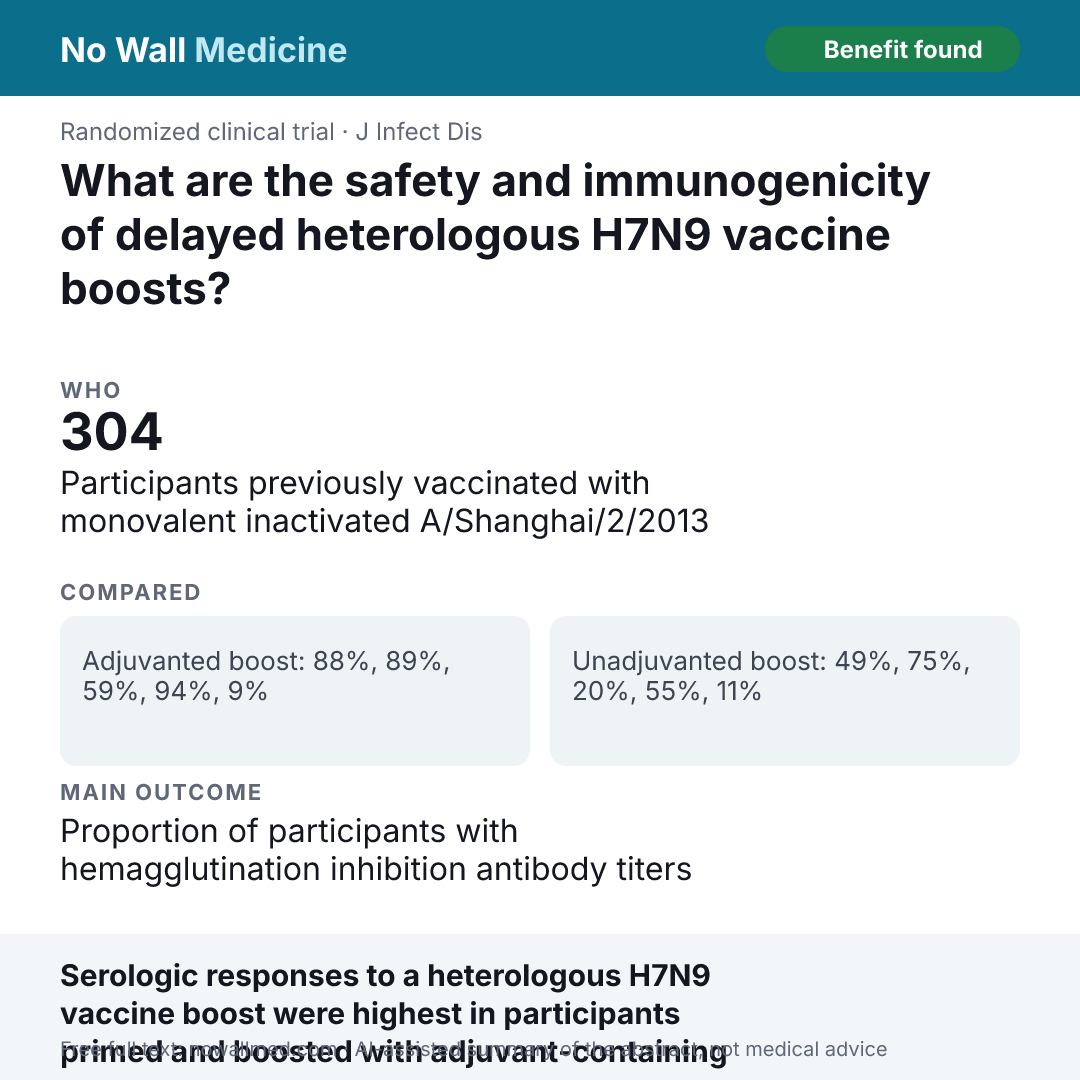
Safety and Immunogenicity of a Delayed Heterologous Avian Influenza A(H7N9) Vaccine Boost Following Different Priming Regimens: A Randomized Clinical Trial
Randomized clinical trialBenefit found
What are the safety and immunogenicity of delayed heterologous H7N9 vaccine boosts?
Who
304
Participants previously vaccinated with monovalent inactivated A/Shanghai/2/2013 (H7N9) vaccine
Compared
Adjuvanted boost: 88%, 89%, 59%, 94%, 9%
Unadjuvanted boost: 49%, 75%, 20%, 55%, 11%
Main outcome
Proportion of participants with hemagglutination inhibition antibody titers ≥40
Bottom line: Serologic responses to a heterologous H7N9 vaccine boost were highest in participants primed and boosted with adjuvant-containing regimens.
J Infect Dis · 2023-07-19 · Save PNG
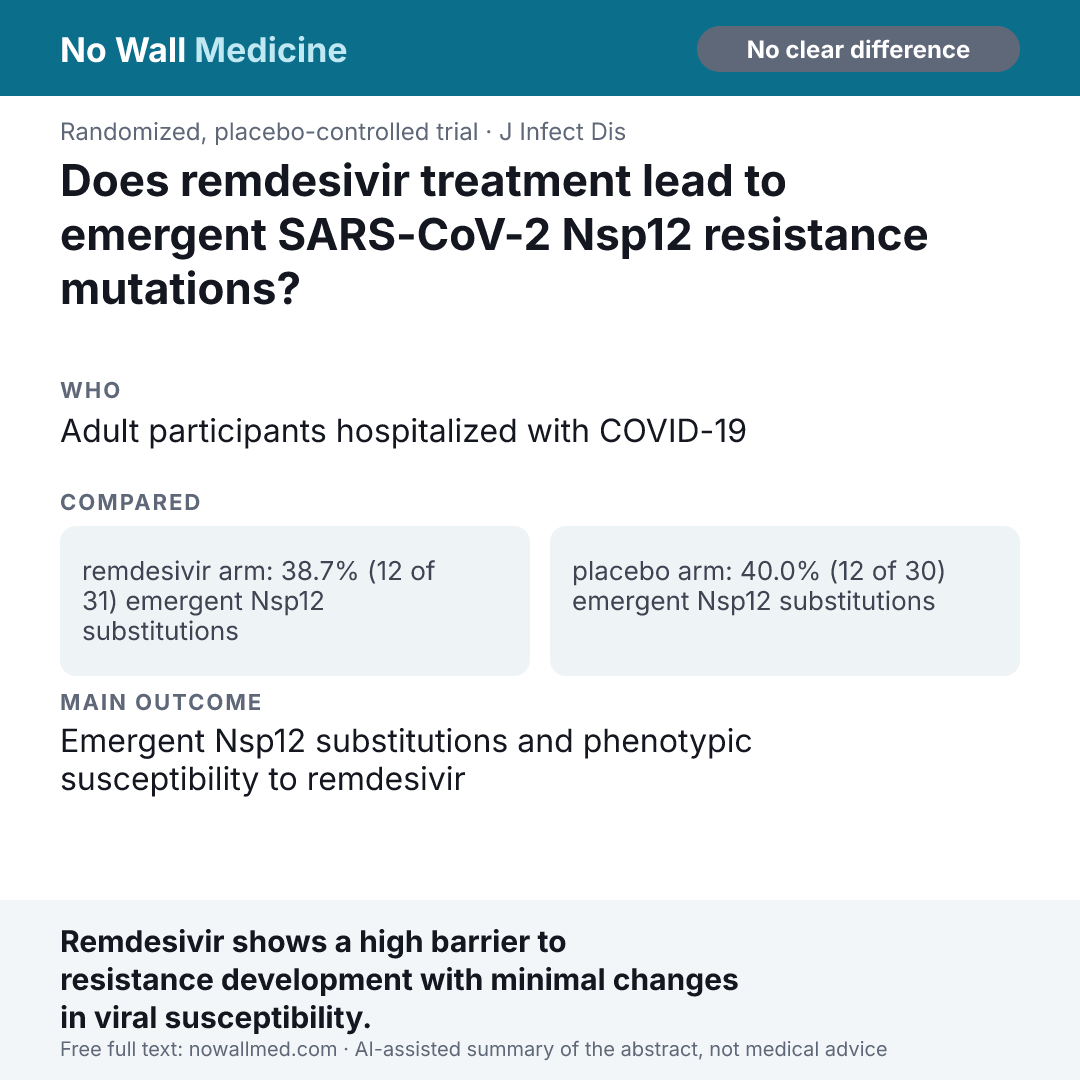
Viral Resistance Analyses From the Remdesivir Phase 3 Adaptive COVID-19 Treatment Trial-1 (ACTT-1)
Randomized, placebo-controlled trialNo clear difference
Does remdesivir treatment lead to emergent SARS-CoV-2 Nsp12 resistance mutations?
Who
Adult participants hospitalized with COVID-19
Compared
remdesivir arm: 38.7% (12 of 31) emergent Nsp12 substitutions
placebo arm: 40.0% (12 of 30) emergent Nsp12 substitutions
Main outcome
Emergent Nsp12 substitutions and phenotypic susceptibility to remdesivir
Bottom line: Remdesivir shows a high barrier to resistance development with minimal changes in viral susceptibility.
J Infect Dis · 2023-07-19 · Save PNG
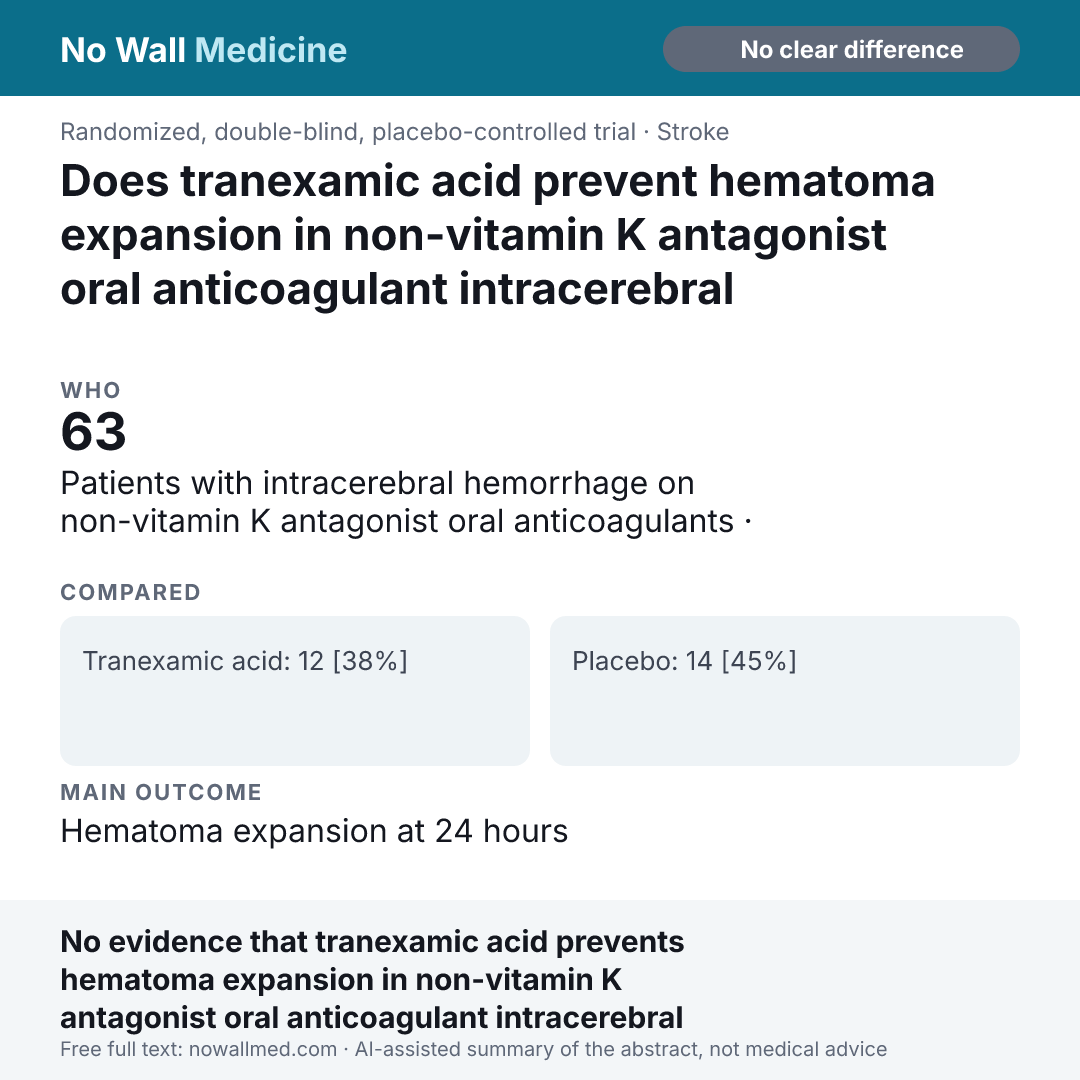
Tranexamic Acid for Intracerebral Hemorrhage in Patients on Non-Vitamin K Antagonist Oral Anticoagulants (TICH-NOAC): A Multicenter, Randomized, Placebo-Controlled, Phase 2 Trial
Randomized, double-blind, placebo-controlled trialNo clear difference
Does tranexamic acid prevent hematoma expansion in non-vitamin K antagonist oral anticoagulant intracerebral hemorrhage?
Who
63
Patients with intracerebral hemorrhage on non-vitamin K antagonist oral anticoagulants · 6 Swiss stroke centers
Compared
Tranexamic acid: 12 [38%]
Placebo: 14 [45%]
Main outcome
Hematoma expansion at 24 hours
Result: adjusted odds ratio, 0.63 [95% CI, 0.22-1.82]
Bottom line: No evidence that tranexamic acid prevents hematoma expansion in non-vitamin K antagonist oral anticoagulant intracerebral hemorrhage.
Stroke · 2023-07-19 · Save PNG
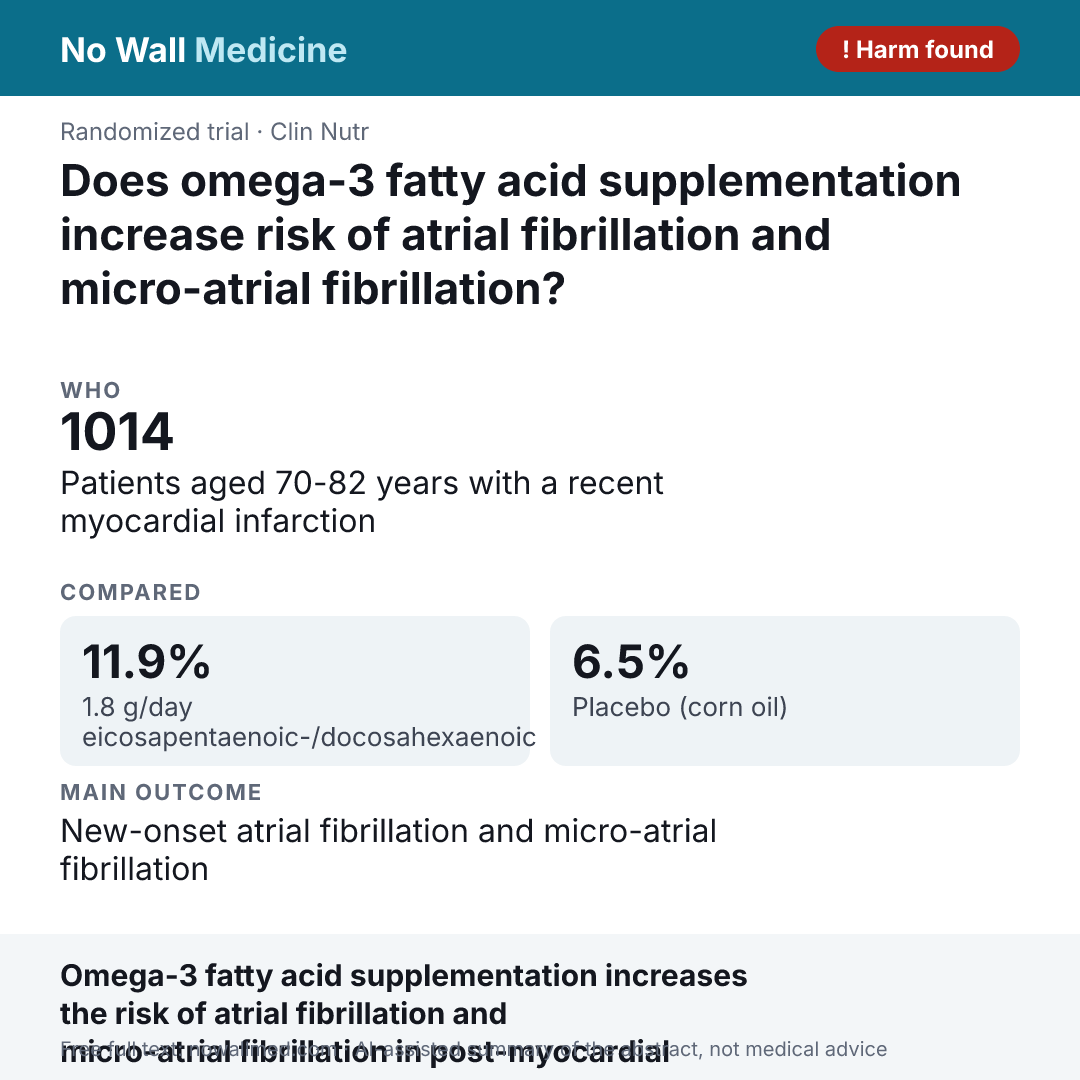
Omega-3 fatty acid supplements and risk of atrial fibrillation and 'micro-atrial fibrillation': A secondary analysis from the OMEMI trial
Randomized trialHarm found
Does omega-3 fatty acid supplementation increase risk of atrial fibrillation and micro-atrial fibrillation?
Who
1014
Patients aged 70-82 years with a recent myocardial infarction
Compared
11.9%1.8 g/day eicosapentaenoic-/docosahexaenoic acid
6.5%Placebo (corn oil)
Main outcome
New-onset atrial fibrillation and micro-atrial fibrillation
Result: hazard ratio 1.90 (95%CI 1.16-3.11)
Bottom line: Omega-3 fatty acid supplementation increases the risk of atrial fibrillation and micro-atrial fibrillation in post-myocardial infarction patients.
Clin Nutr · 2023-07-19 · Save PNG
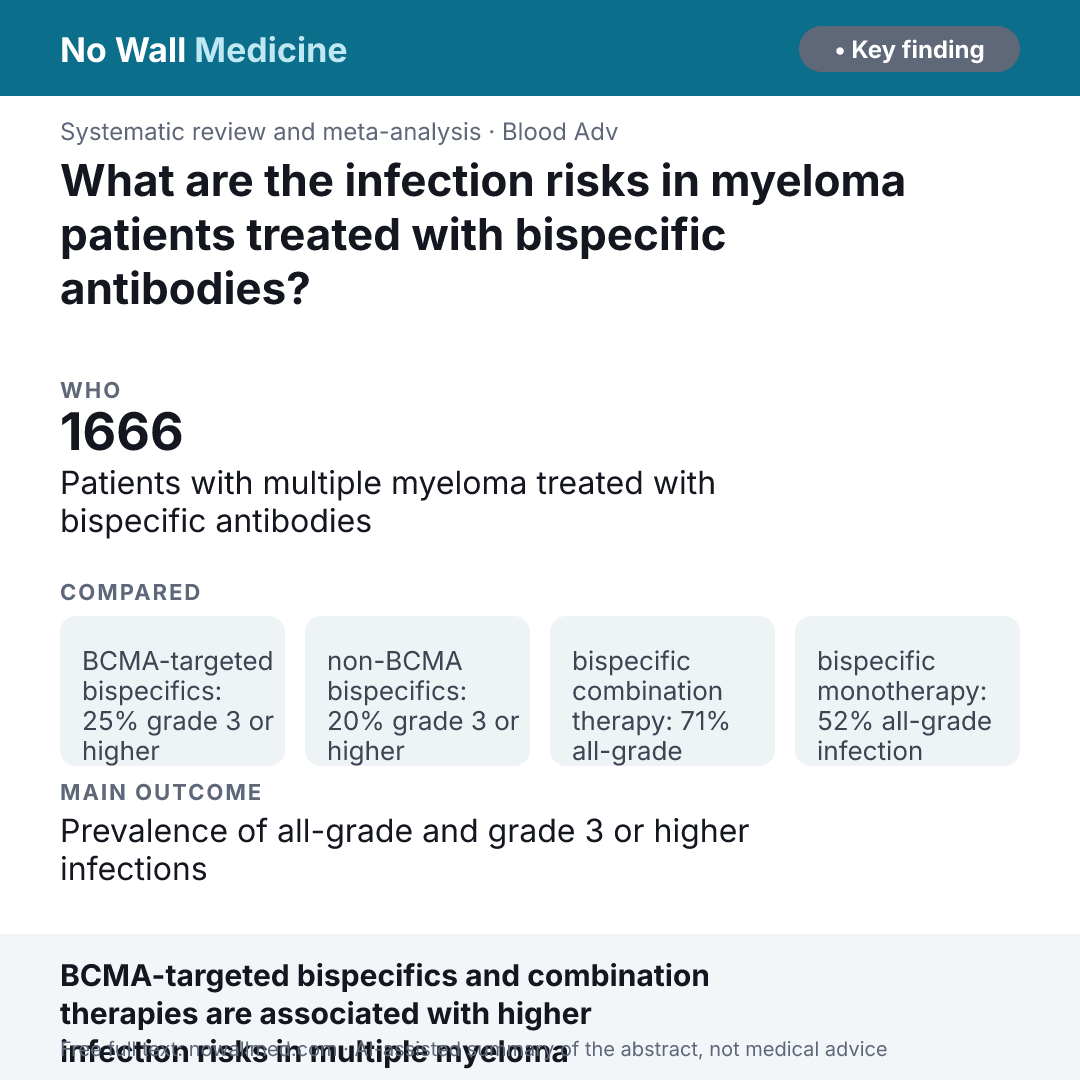
Infections following bispecific antibodies in myeloma: a systematic review and meta-analysis
Systematic review and meta-analysisKey finding
What are the infection risks in myeloma patients treated with bispecific antibodies?
Who
1666
Patients with multiple myeloma treated with bispecific antibodies
Compared
BCMA-targeted bispecifics: 25% grade 3 or higher infections
non-BCMA bispecifics: 20% grade 3 or higher infections
bispecific combination therapy: 71% all-grade infection
bispecific monotherapy: 52% all-grade infection
Main outcome
Prevalence of all-grade and grade 3 or higher infections
Bottom line: BCMA-targeted bispecifics and combination therapies are associated with higher infection risks in multiple myeloma patients.
Blood Adv · 2023-07-19 · Save PNG
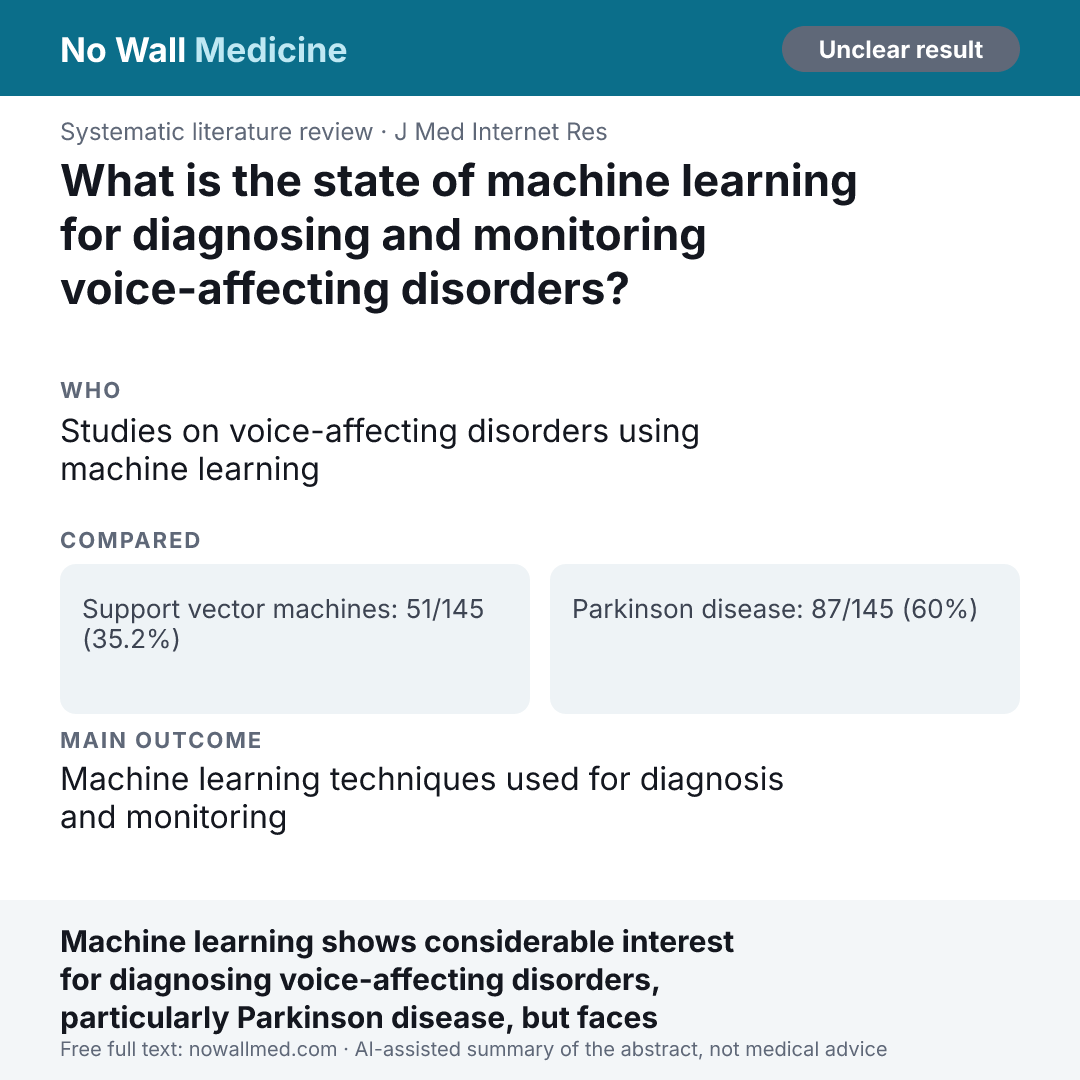
Applied Machine Learning Techniques to Diagnose Voice-Affecting Conditions and Disorders: Systematic Literature Review
Systematic literature reviewUnclear result
What is the state of machine learning for diagnosing and monitoring voice-affecting disorders?
Who
Studies on voice-affecting disorders using machine learning
Compared
Support vector machines: 51/145 (35.2%)
Parkinson disease: 87/145 (60%)
Main outcome
Machine learning techniques used for diagnosis and monitoring
Bottom line: Machine learning shows considerable interest for diagnosing voice-affecting disorders, particularly Parkinson disease, but faces data limitations.
Limitation: Constrained by only peer-reviewed publications written in English.
J Med Internet Res · 2023-07-19 · Save PNG
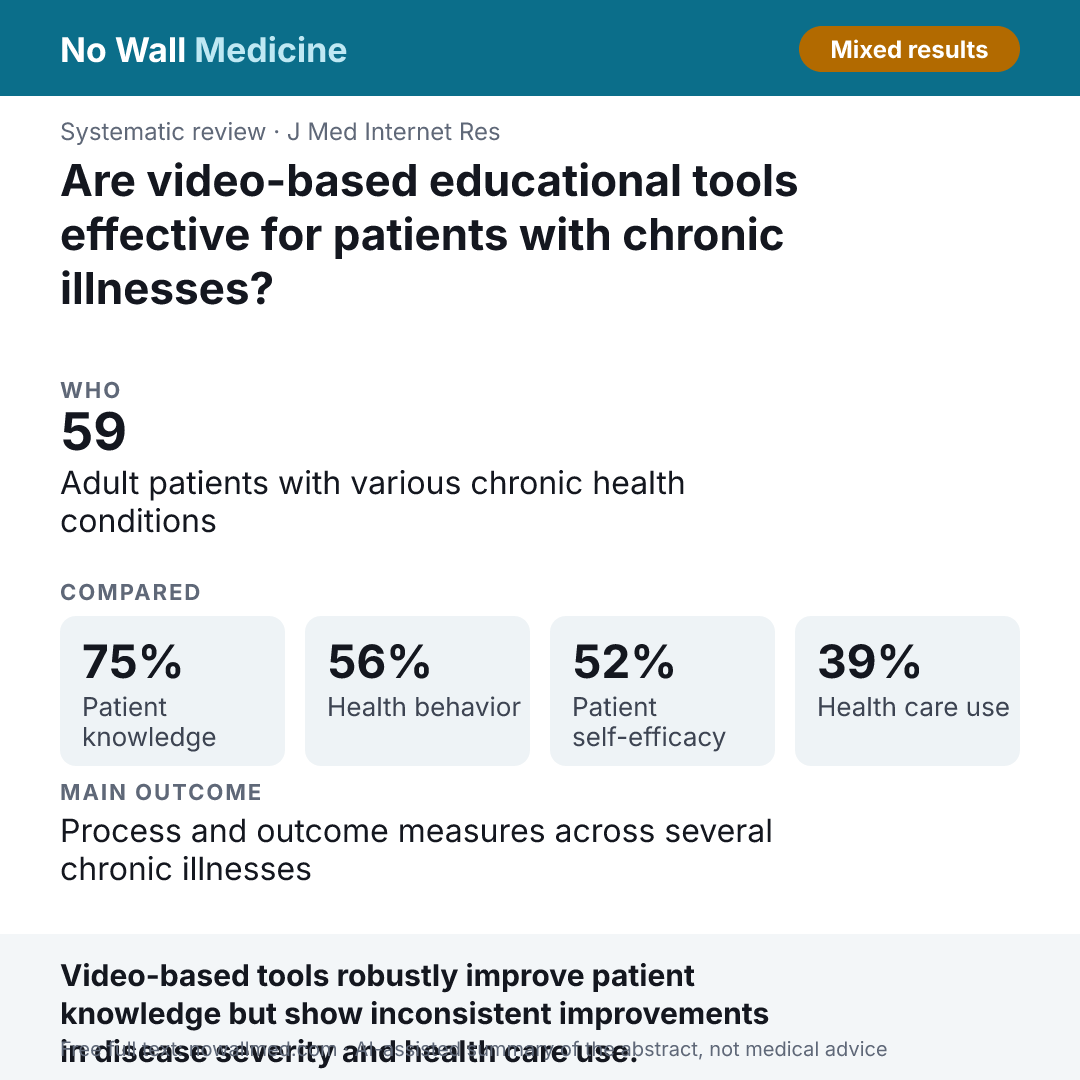
Video-Based Educational Interventions for Patients With Chronic Illnesses: Systematic Review
Systematic reviewMixed results
Are video-based educational tools effective for patients with chronic illnesses?
Who
59
Adult patients with various chronic health conditions
Compared
75%Patient knowledge (30/40)
56%Health behavior (21/38)
52%Patient self-efficacy (12/23)
39%Health care use (11/28)
Main outcome
Process and outcome measures across several chronic illnesses
Bottom line: Video-based tools robustly improve patient knowledge but show inconsistent improvements in disease severity and health care use.
Limitation: Moderate or high risk of bias in many included studies.
J Med Internet Res · 2023-07-19 · Save PNG
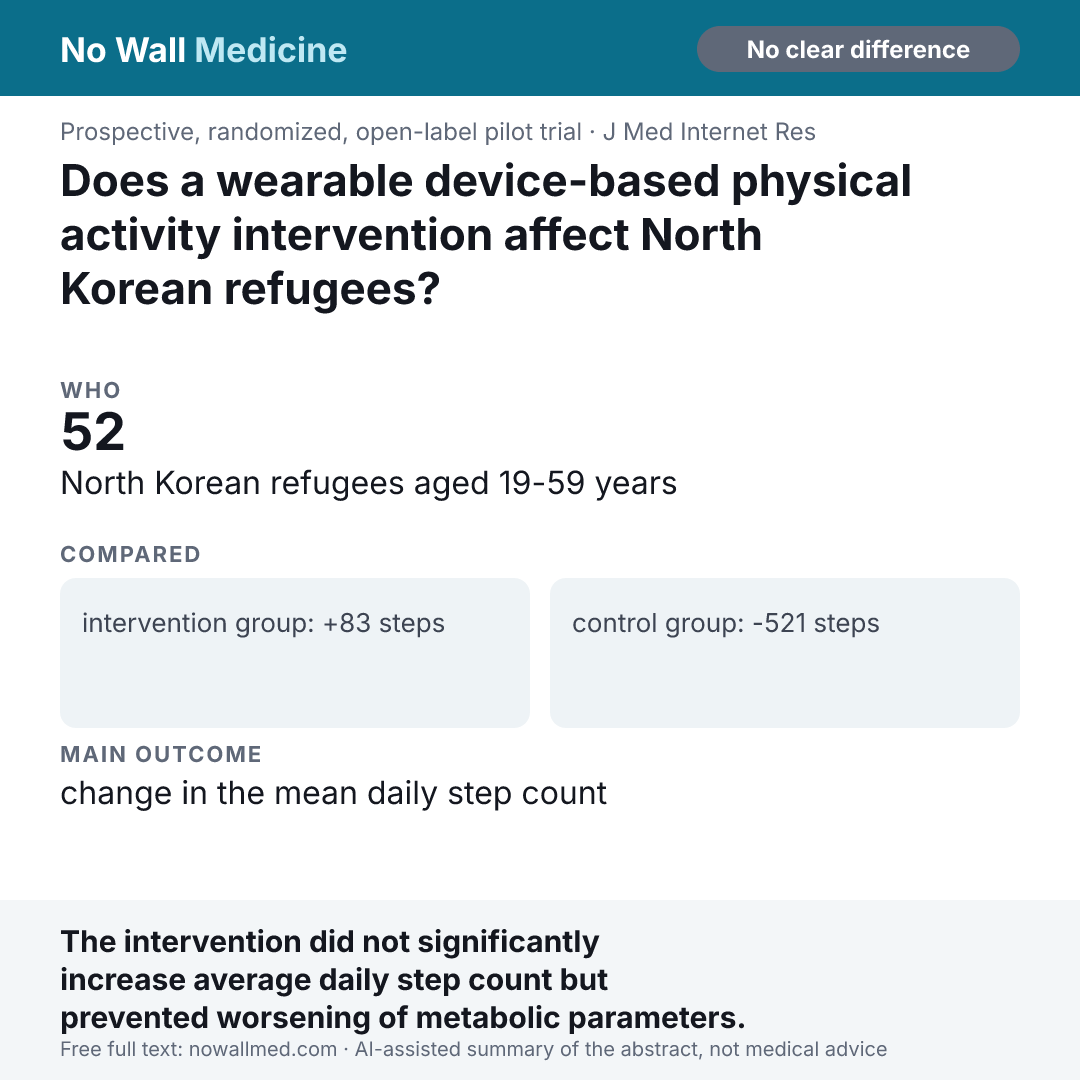
Effect of a Wearable Device-Based Physical Activity Intervention in North Korean Refugees: Pilot Randomized Controlled Trial
Prospective, randomized, open-label pilot trialNo clear difference
Does a wearable device-based physical activity intervention affect North Korean refugees?
Who
52
North Korean refugees aged 19-59 years
Compared
intervention group: +83 steps
control group: -521 steps
Main outcome
change in the mean daily step count
Bottom line: The intervention did not significantly increase average daily step count but prevented worsening of metabolic parameters.
Limitation: This was a pilot study; large-scale, long-term studies are warranted.
J Med Internet Res · 2023-07-19 · Save PNG
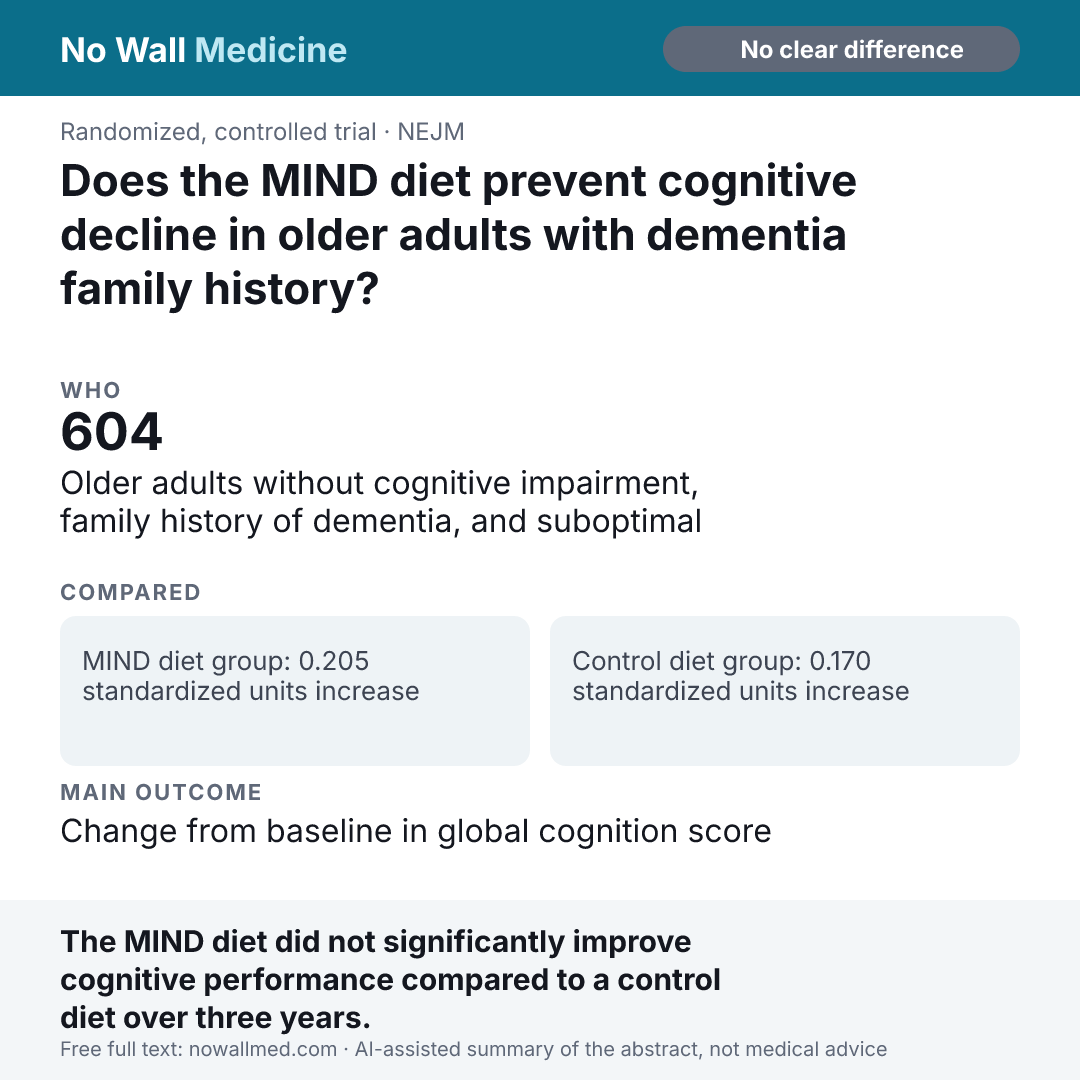
Trial of the MIND Diet for Prevention of Cognitive Decline in Older Persons
Randomized, controlled trialNo clear difference
Does the MIND diet prevent cognitive decline in older adults with dementia family history?
Who
604
Older adults without cognitive impairment, family history of dementia, and suboptimal diet · Two-site trial
Compared
MIND diet group: 0.205 standardized units increase
Control diet group: 0.170 standardized units increase
Main outcome
Change from baseline in global cognition score
Result: mean difference 0.035 standardized units (95% CI -0.022 to 0.092)
Bottom line: The MIND diet did not significantly improve cognitive performance compared to a control diet over three years.
Limitation: MRI outcomes were measured in a nonrandom sample of participants
Funded by: National Institute on Aging
NEJM · 2023-07-18 · Save PNG
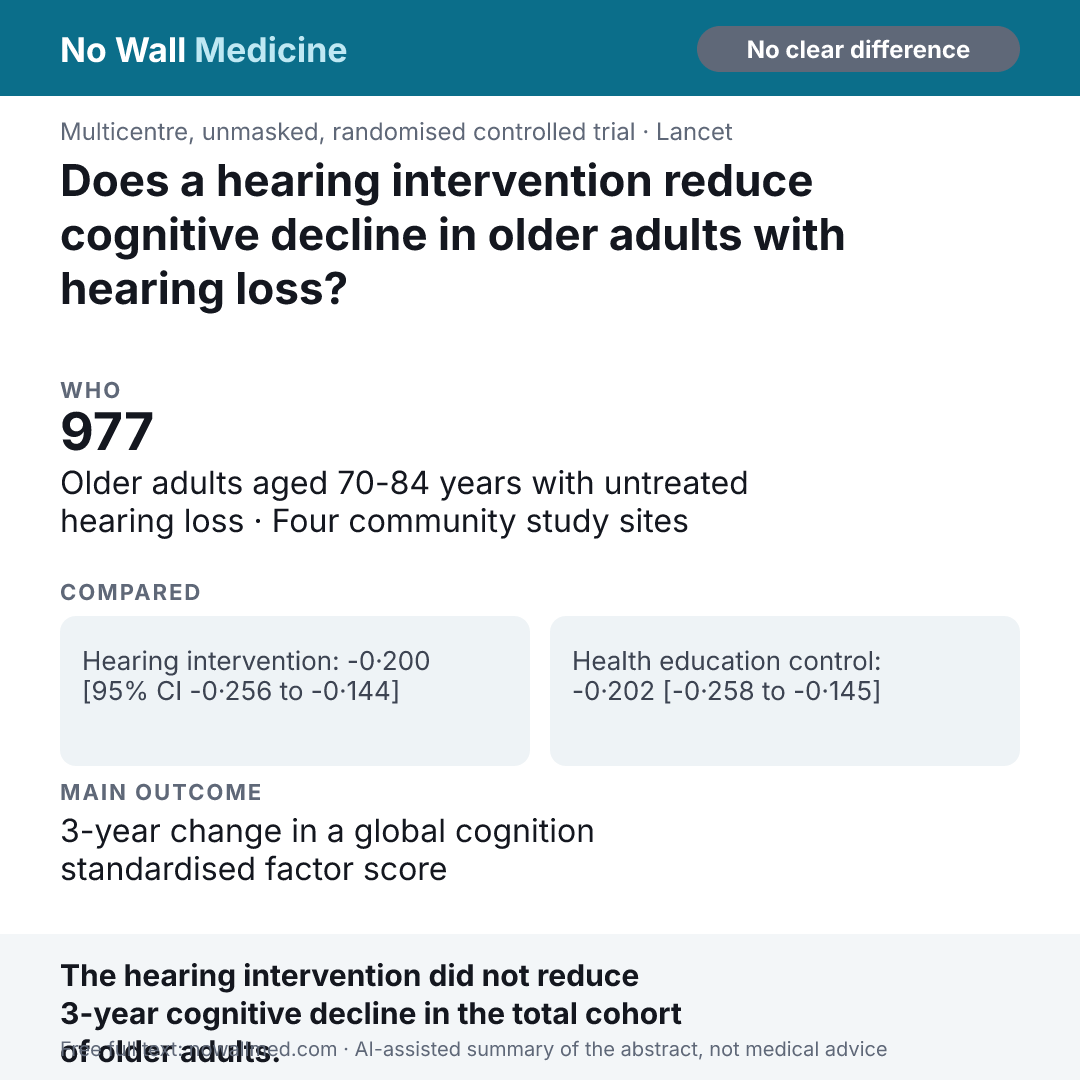
Hearing intervention versus health education control to reduce cognitive decline in older adults with hearing loss in the USA (ACHIEVE): a multicentre, randomised controlled trial
Multicentre, unmasked, randomised controlled trialNo clear difference
Does a hearing intervention reduce cognitive decline in older adults with hearing loss?
Who
977
Older adults aged 70-84 years with untreated hearing loss · Four community study sites across the USA
Compared
Hearing intervention: -0·200 [95% CI -0·256 to -0·144]
Health education control: -0·202 [-0·258 to -0·145]
Main outcome
3-year change in a global cognition standardised factor score
Result: difference 0·002 [-0·077 to 0·081]
Bottom line: The hearing intervention did not reduce 3-year cognitive decline in the total cohort of older adults.
Limitation: The effect of the hearing intervention differed between the ARIC and de novo study populations.
Funded by: US National Institutes of Health
Lancet · 2023-07-18 · Save PNG
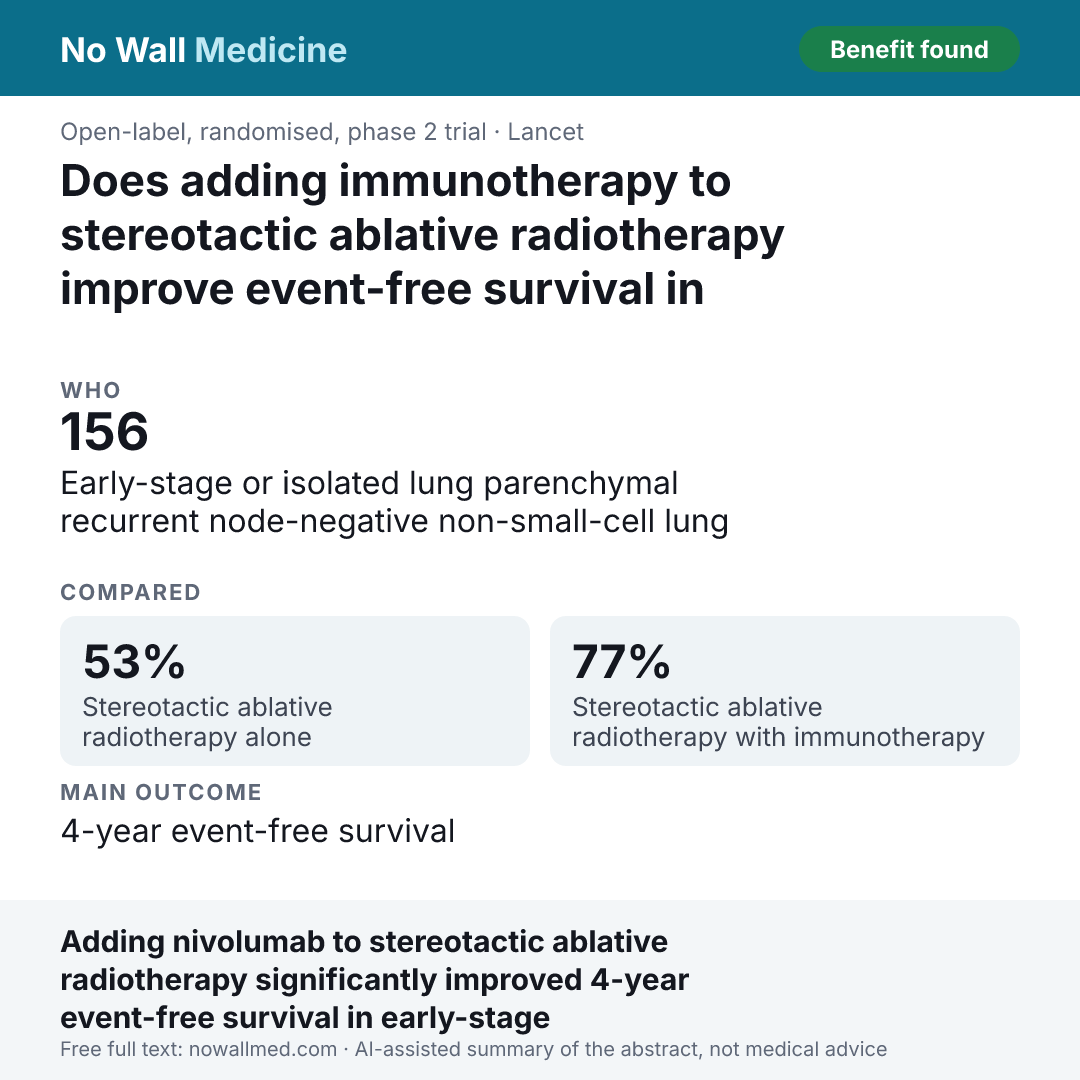
Stereotactic ablative radiotherapy with or without immunotherapy for early-stage or isolated lung parenchymal recurrent node-negative non-small-cell lung cancer: an open-label, randomised, phase 2 trial
Open-label, randomised, phase 2 trialBenefit found
Does adding immunotherapy to stereotactic ablative radiotherapy improve event-free survival in early-stage non-small-cell lung cancer?
Who
156
Early-stage or isolated lung parenchymal recurrent node-negative non-small-cell lung cancer · Three hospitals in Texas, USA
Compared
53%Stereotactic ablative radiotherapy alone (95% CI 42-67%)
77%Stereotactic ablative radiotherapy with immunotherapy (66-91%)
Main outcome
4-year event-free survival
Result: hazard ratio 0.38 (95% CI 0.19-0.75)
Bottom line: Adding nivolumab to stereotactic ablative radiotherapy significantly improved 4-year event-free survival in early-stage non-small-cell lung cancer.
Funded by: Bristol-Myers Squibb, MD Anderson Cancer Center Alliance, and National Cancer Institute
Lancet · 2023-07-18 · Save PNG
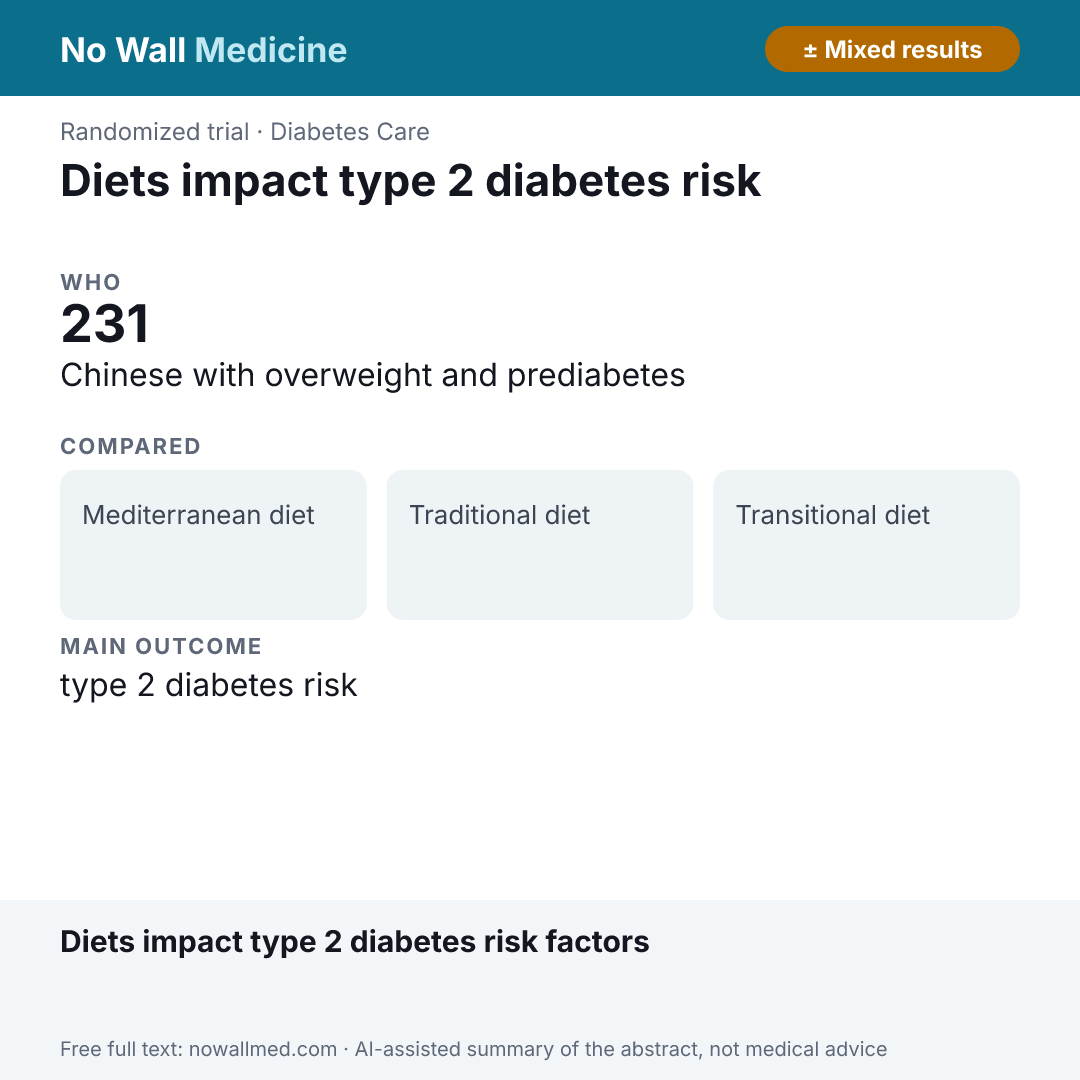
Diet-Related Lipidomic Signatures and Changed Type 2 Diabetes Risk in a Randomized Controlled Feeding Study With Mediterranean Diet and Traditional Chinese or Transitional Diets
Randomized trialMixed results
Diets impact type 2 diabetes risk
Who
231
Chinese with overweight and prediabetes
Compared
Mediterranean diet
Traditional diet
Transitional diet
Main outcome
type 2 diabetes risk
Bottom line: Diets impact type 2 diabetes risk factors
Diabetes Care · 2023-07-18 · Save PNG
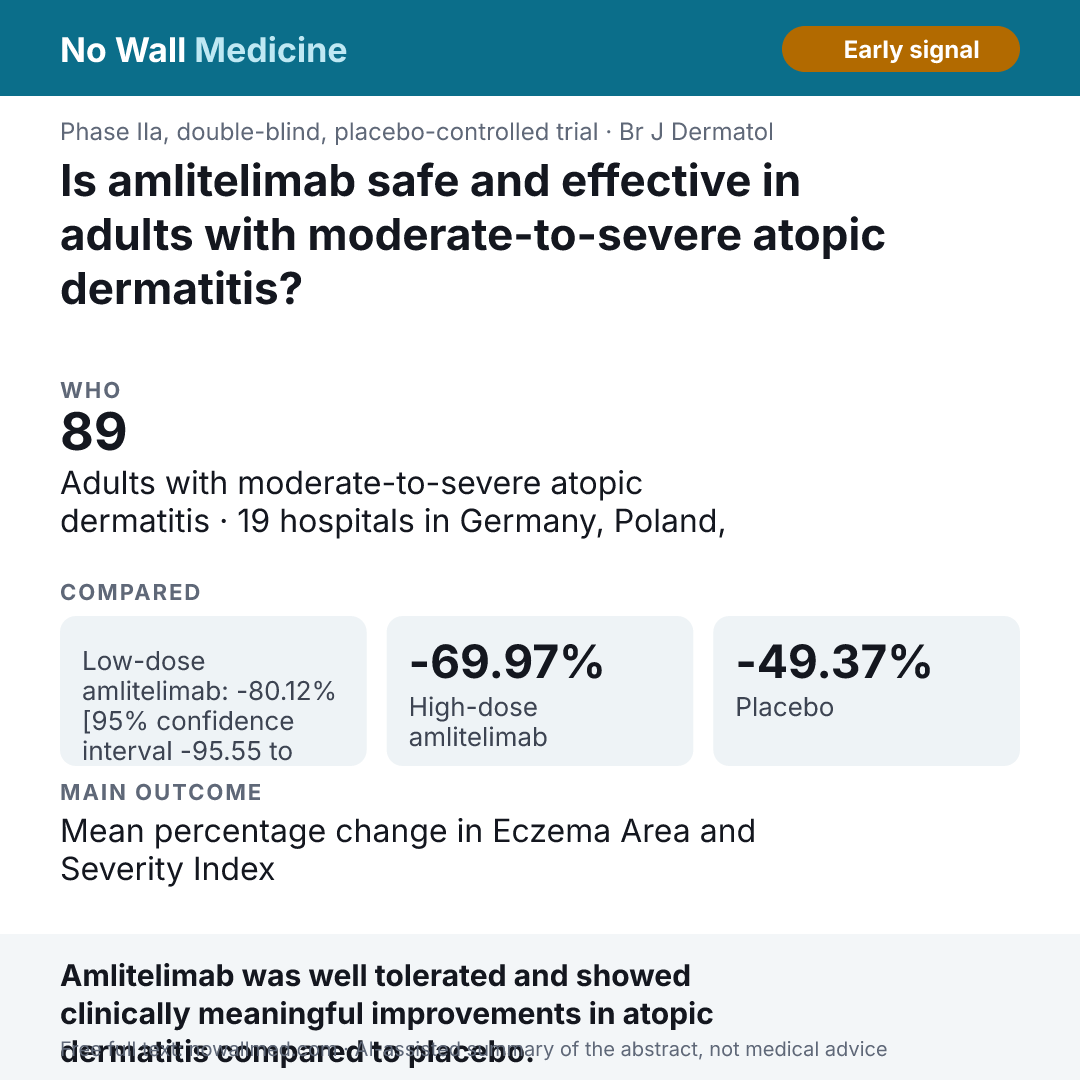
Safety and efficacy of amlitelimab, a fully human nondepleting, noncytotoxic anti-OX40 ligand monoclonal antibody, in atopic dermatitis: results of a phase IIa randomized placebo-controlled trial
Phase IIa, double-blind, placebo-controlled trialEarly signal
Is amlitelimab safe and effective in adults with moderate-to-severe atopic dermatitis?
Who
89
Adults with moderate-to-severe atopic dermatitis · 19 hospitals in Germany, Poland, Spain and the UK
Compared
Low-dose amlitelimab: -80.12% [95% confidence interval -95.55 to -64.68]
-69.97%High-dose amlitelimab (95% CI -85.04 to -54.60)
-49.37%Placebo (95% CI -66.02 to -32.72)
Main outcome
Mean percentage change in Eczema Area and Severity Index
Bottom line: Amlitelimab was well tolerated and showed clinically meaningful improvements in atopic dermatitis compared to placebo.
Br J Dermatol · 2023-07-18 · Save PNG
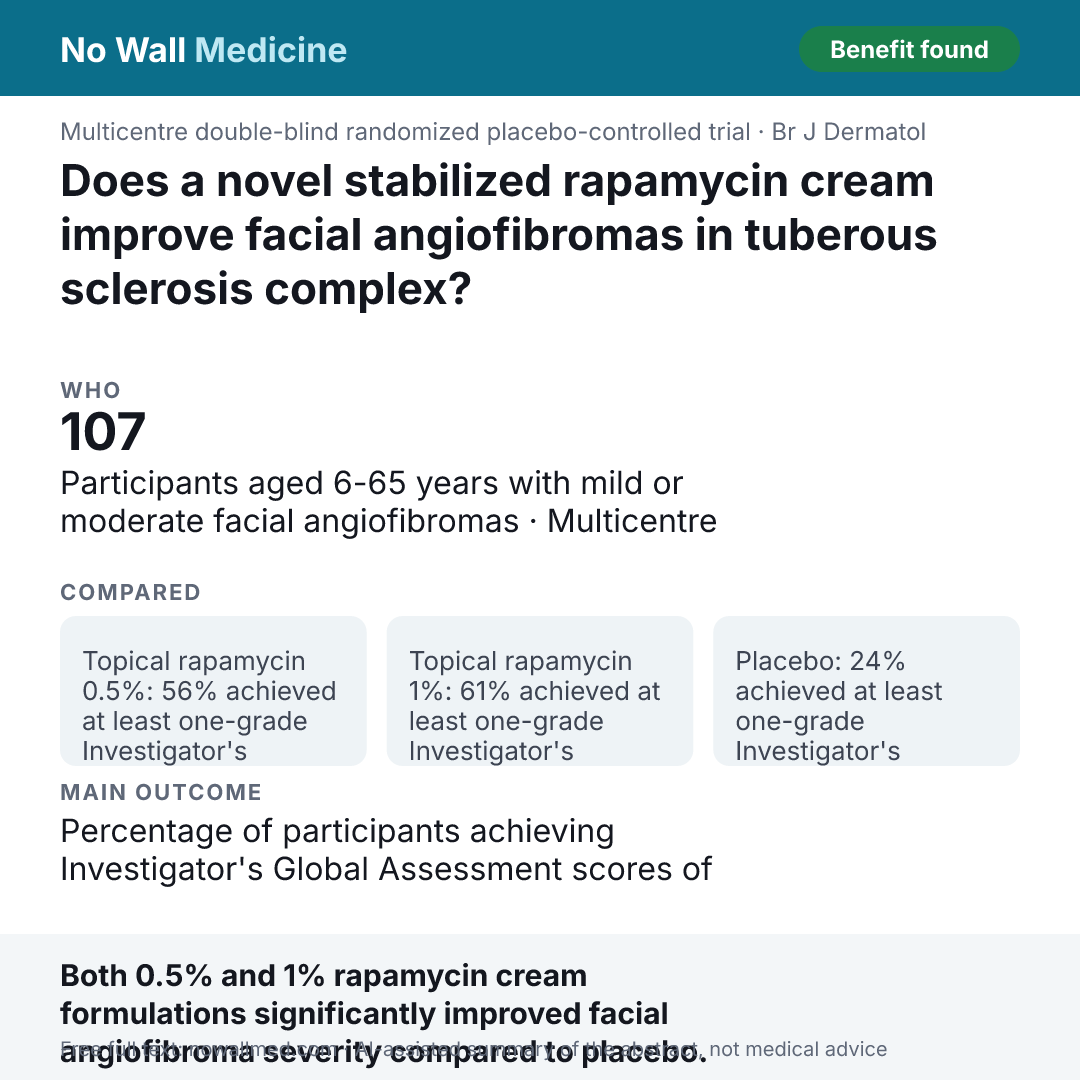
A novel rapamycin cream formulation improves facial angiofibromas associated with tuberous sclerosis complex: a double-blind randomized placebo-controlled trial
Multicentre double-blind randomized placebo-controlled trialBenefit found
Does a novel stabilized rapamycin cream improve facial angiofibromas in tuberous sclerosis complex?
Who
107
Participants aged 6-65 years with mild or moderate facial angiofibromas · Multicentre
Compared
Topical rapamycin 0.5%: 56% achieved at least one-grade Investigator's Global Assessment improvement
Topical rapamycin 1%: 61% achieved at least one-grade Investigator's Global Assessment improvement
Placebo: 24% achieved at least one-grade Investigator's Global Assessment improvement
Main outcome
Percentage of participants achieving Investigator's Global Assessment scores of clear or almost clear
Result: OR 4.73, 95% CI 1.59-14.10 for 0.5% and OR 5.14, 95% CI 1.70-15.57 for 1%
Bottom line: Both 0.5% and 1% rapamycin cream formulations significantly improved facial angiofibroma severity compared to placebo.
Br J Dermatol · 2023-07-18 · Save PNG
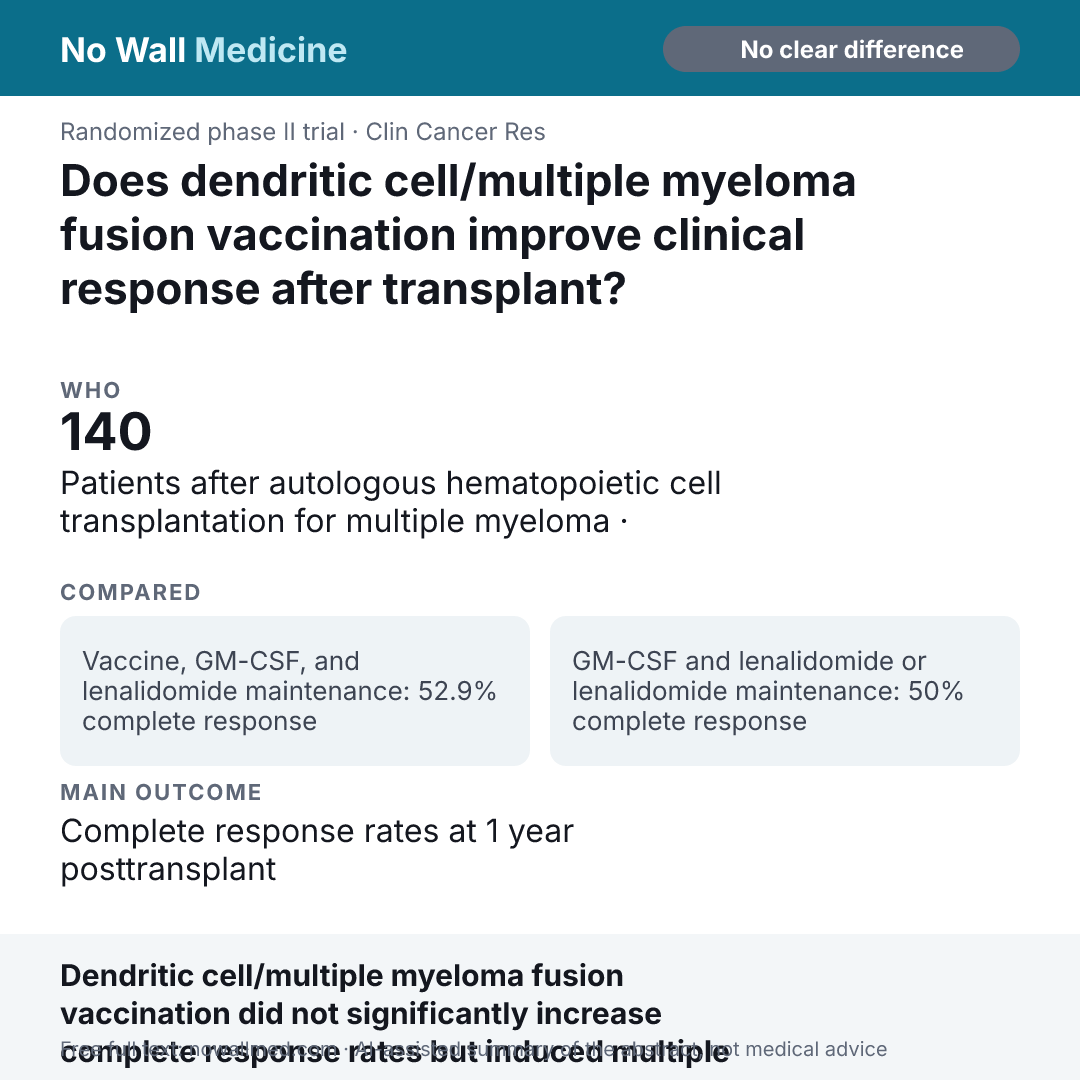
Randomized Phase II Trial of Dendritic Cell/Myeloma Fusion Vaccine with Lenalidomide Maintenance after Upfront Autologous Hematopoietic Cell Transplantation for Multiple Myeloma: BMT CTN 1401
Randomized phase II trialNo clear difference
Does dendritic cell/multiple myeloma fusion vaccination improve clinical response after transplant?
Who
140
Patients after autologous hematopoietic cell transplantation for multiple myeloma · Multicenter cooperative group study
Compared
Vaccine, GM-CSF, and lenalidomide maintenance: 52.9% complete response
GM-CSF and lenalidomide or lenalidomide maintenance: 50% complete response
Main outcome
Complete response rates at 1 year posttransplant
Bottom line: Dendritic cell/multiple myeloma fusion vaccination did not significantly increase complete response rates but induced multiple myeloma-reactive lymphocytes.
Clin Cancer Res · 2023-07-18 · Save PNG
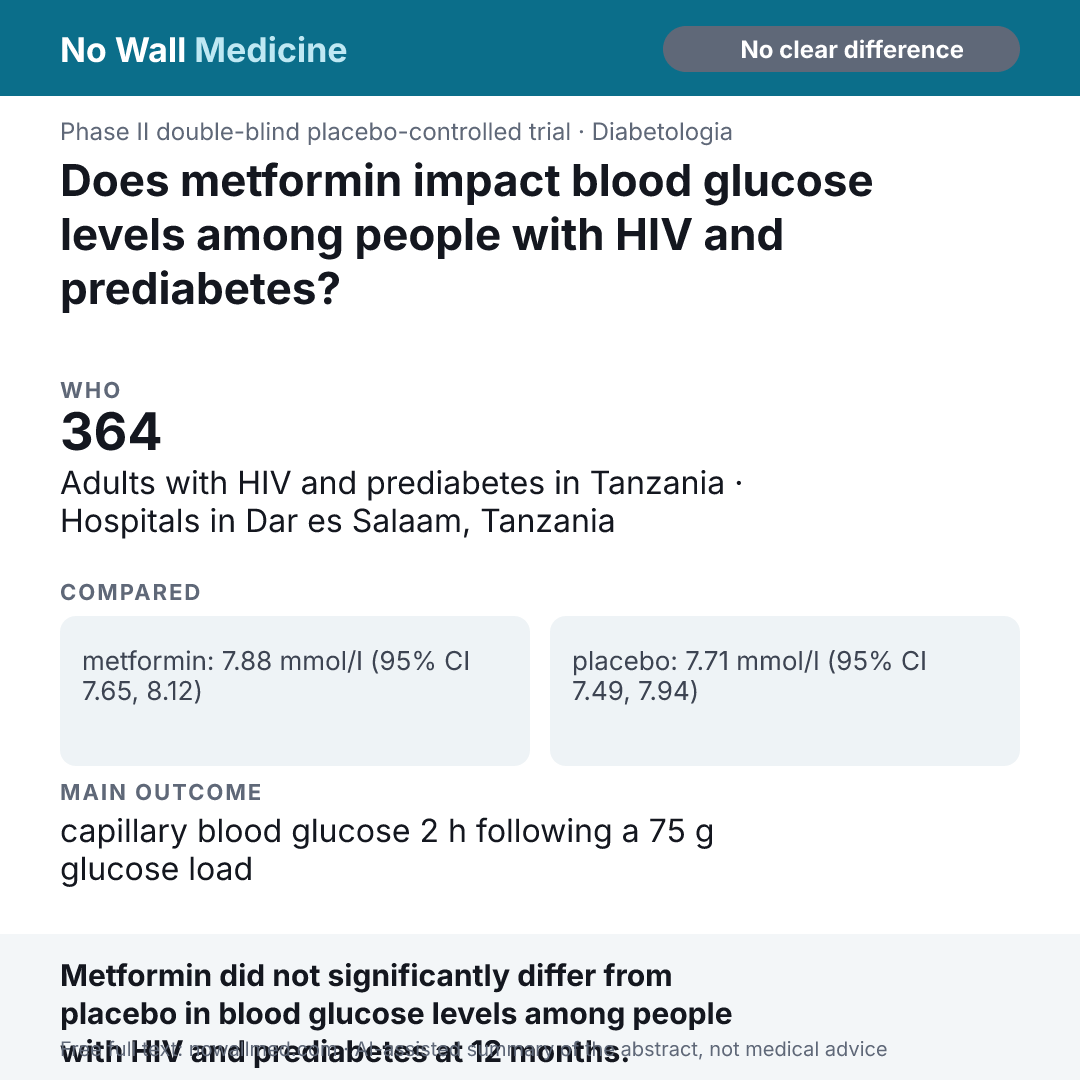
Metformin for the prevention of diabetes among people with HIV and either impaired fasting glucose or impaired glucose tolerance (prediabetes) in Tanzania: a Phase II randomised placebo-controlled trial
Phase II double-blind placebo-controlled trialNo clear difference
Does metformin impact blood glucose levels among people with HIV and prediabetes?
Who
364
Adults with HIV and prediabetes in Tanzania · Hospitals in Dar es Salaam, Tanzania
Compared
metformin: 7.88 mmol/l (95% CI 7.65, 8.12)
placebo: 7.71 mmol/l (95% CI 7.49, 7.94)
Main outcome
capillary blood glucose 2 h following a 75 g glucose load
Result: 0.20 mmol/l (95% CI -0.17, 0.58)
Bottom line: Metformin did not significantly differ from placebo in blood glucose levels among people with HIV and prediabetes at 12 months.
Funded by: National Institute for Health Research and UK Government
Diabetologia · 2023-07-18 · Save PNG