Visual abstracts
New randomized trials and meta-analyses from leading journals at a glance: who was studied, what was compared, and what was found. Every paper is free to read in full.
All specialtiesCardiology 4763Oncology 4042Gastroenterology & Hepatology 1902Infectious Disease 3756Neurology 1872Psychiatry & Mental Health 2214Pulmonology 2042Critical Care 1319Endocrinology & Diabetes 2544Pediatrics 2889Surgery 2479Orthopedics & Sports Medicine 917Neurosurgery 525Cardiothoracic & Vascular Surgery 656Plastic & Reconstructive Surgery 574Nephrology 1107Rheumatology 810Hematology 1090Dermatology 611Ophthalmology 532Obstetrics & Gynecology 1645Public & Global Health 1037Radiology & Imaging 617Anesthesiology 957Urology 745ENT (Otolaryngology) 494Emergency Medicine 481Allergy & Immunology 309Geriatrics 972Family Medicine & Primary Care 533Medical Genetics & Genomics 659Pathology & Laboratory Medicine 156Physical Medicine & Rehabilitation 734Palliative Care 421Nutrition 1560Digital Health & AI 2133General Medicine 318
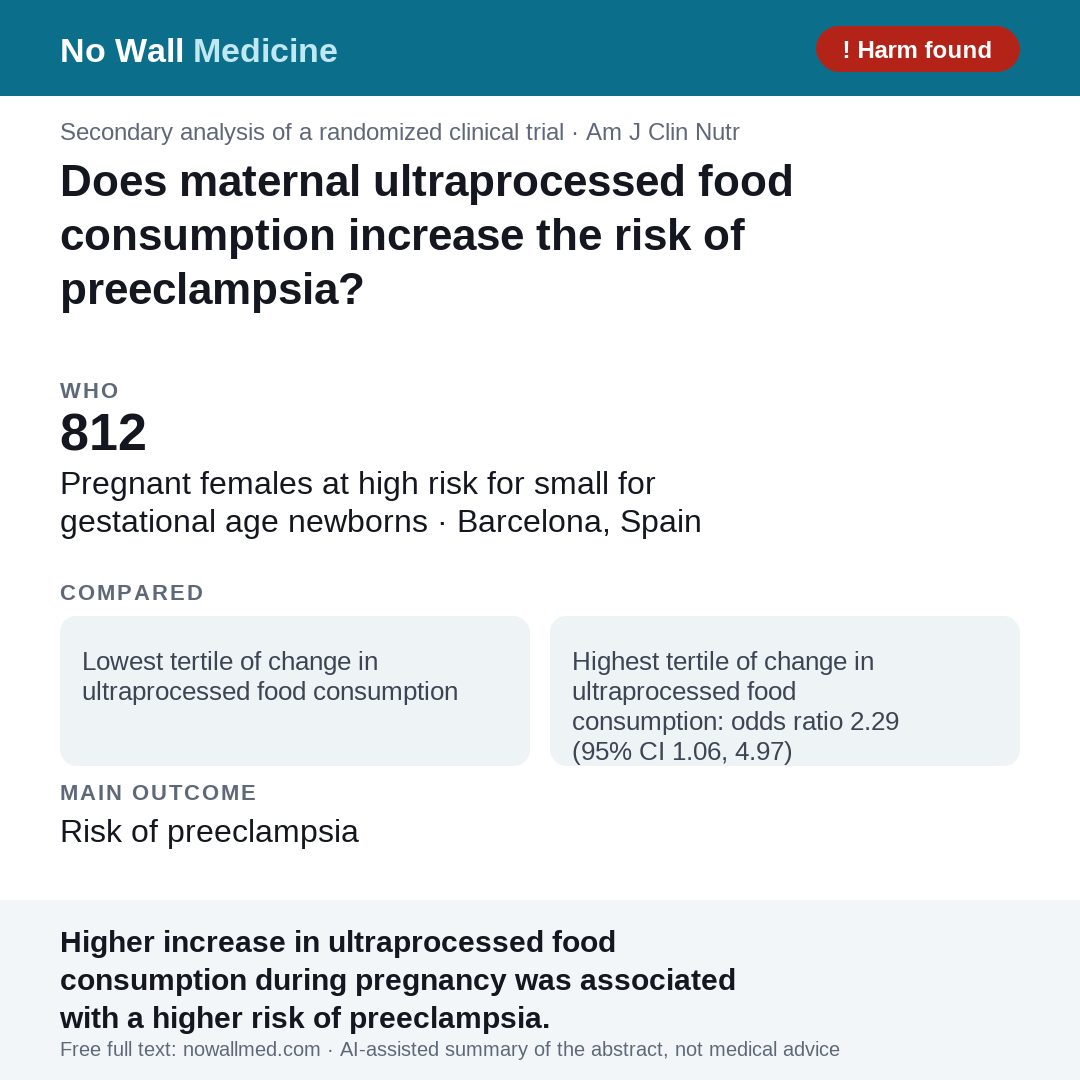
Ultraprocessed foods consumption and risk of preeclampsia: a secondary analysis of the improving mothers for a better prenatal care trial Barcelona (IMPACT BCN) randomized clinical trial
Secondary analysis of a randomized clinical trialHarm found
Does maternal ultraprocessed food consumption increase the risk of preeclampsia?
Who
812
Pregnant females at high risk for small for gestational age newborns · Barcelona, Spain
Compared
Lowest tertile of change in ultraprocessed food consumption
Highest tertile of change in ultraprocessed food consumption: odds ratio 2.29 (95% CI 1.06, 4.97)
Main outcome
Risk of preeclampsia
Result: odds ratio 2.29 (95% CI 1.06, 4.97)
Bottom line: Higher increase in ultraprocessed food consumption during pregnancy was associated with a higher risk of preeclampsia.
Am J Clin Nutr · 2026-03-02Download image
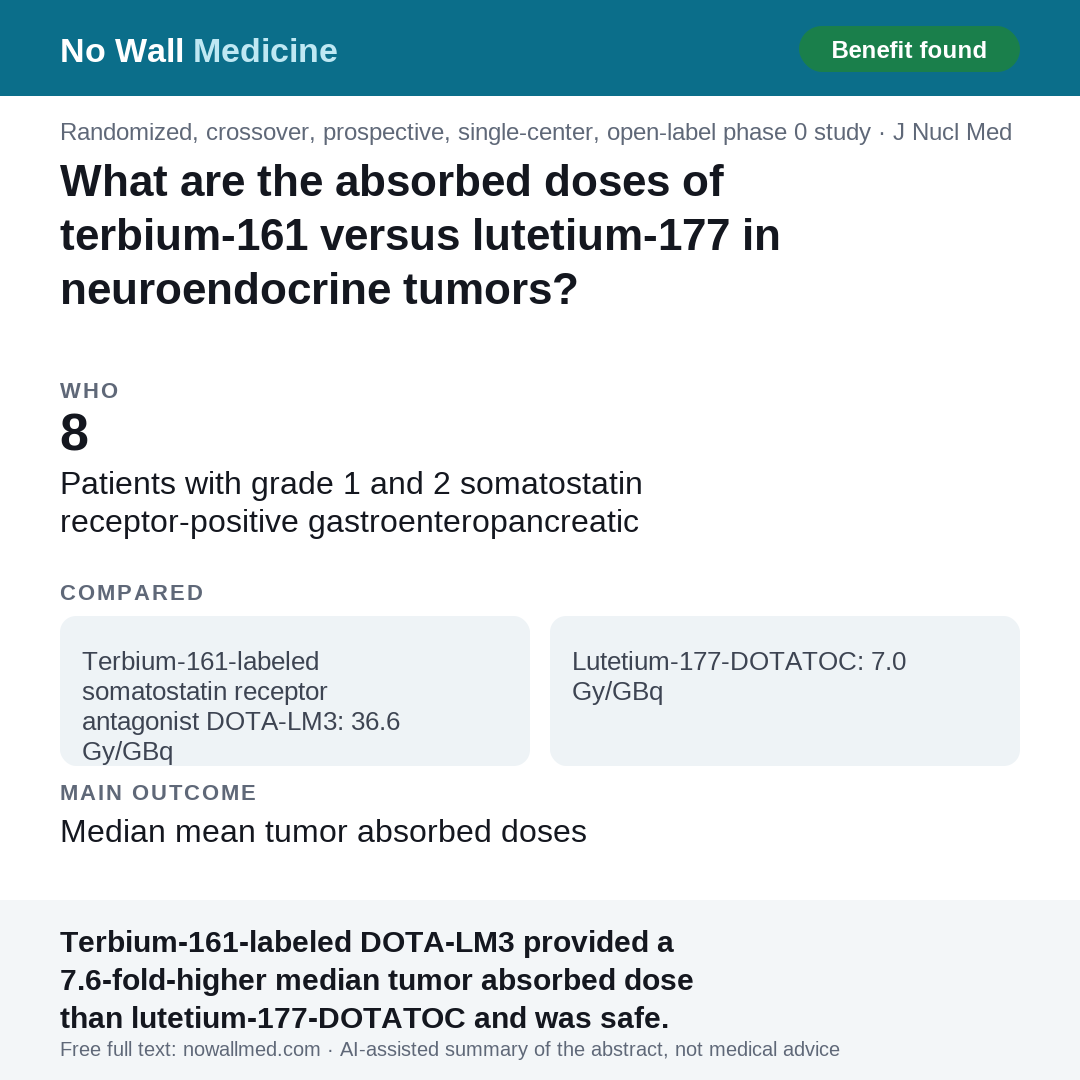
Targeted β--Particle Plus Conversion and Auger-Electron Therapy with 161Tb-Labeled Somatostatin Receptor Antagonist DOTA-LM3: A Phase 0 Study
Randomized, crossover, prospective, single-center, open-label phase 0 studyKey finding
What are the absorbed doses of terbium-161 versus lutetium-177 in neuroendocrine tumors?
Who
8
Patients with grade 1 and 2 somatostatin receptor-positive gastroenteropancreatic neuroendocrine tumors · Single-center
Compared
Terbium-161-labeled somatostatin receptor antagonist DOTA-LM3: 36.6 Gy/GBq
Lutetium-177-DOTATOC: 7.0 Gy/GBq
Main outcome
Median mean tumor absorbed doses
Bottom line: Terbium-161-labeled DOTA-LM3 provided a 7.6-fold-higher median tumor absorbed dose than lutetium-177-DOTATOC and was safe.
J Nucl Med · 2026-03-02Download image
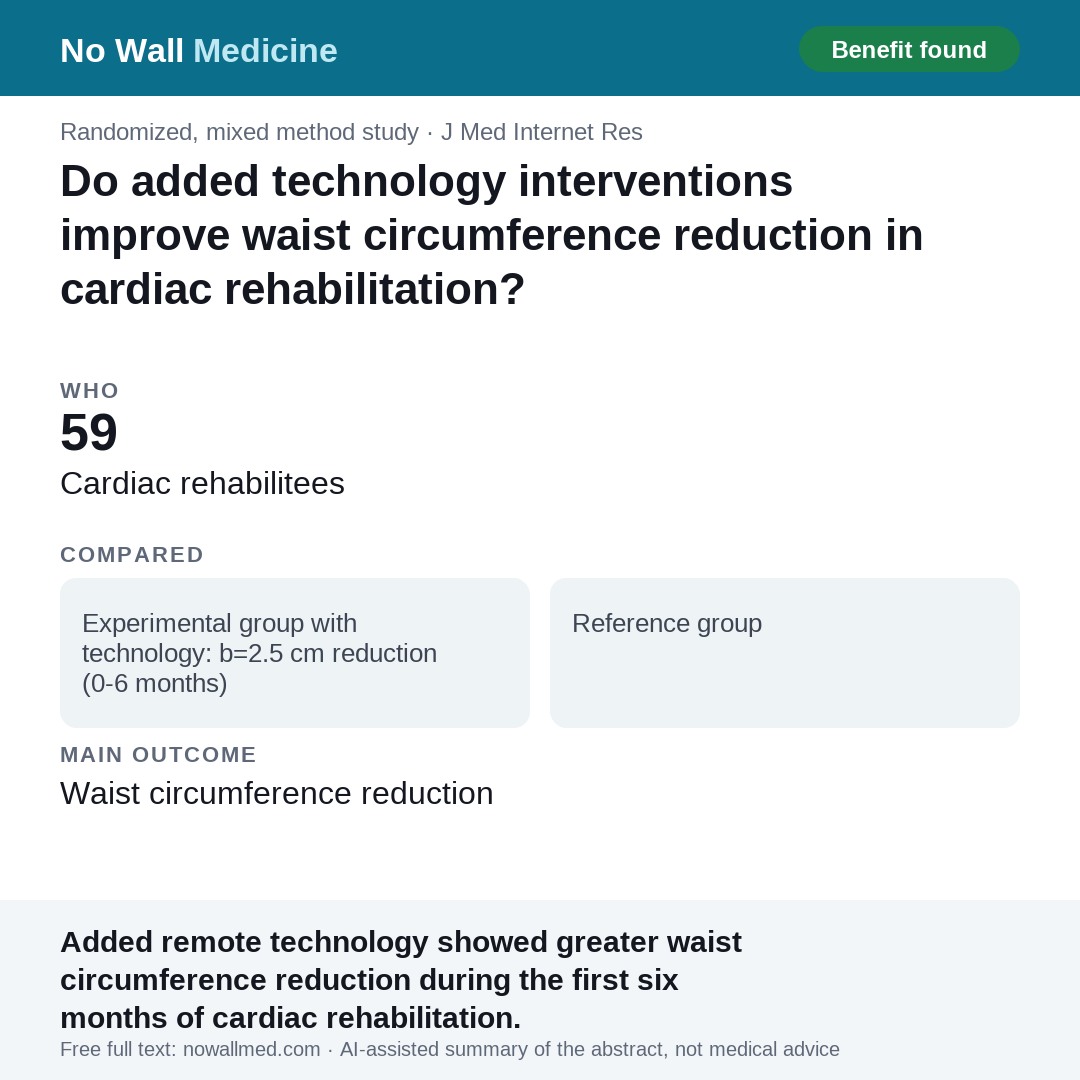
Added Technology for Weight Management in Cardiac Rehabilitation: Biopsychosocial Factors and Rehabilitees' Talk in a Mixed Method Study
Randomized, mixed method studyBenefit found
Do added technology interventions improve waist circumference reduction in cardiac rehabilitation?
Who
59
Cardiac rehabilitees
Compared
Experimental group with technology: b=2.5 cm reduction (0-6 months)
Reference group
Main outcome
Waist circumference reduction
Bottom line: Added remote technology showed greater waist circumference reduction during the first six months of cardiac rehabilitation.
J Med Internet Res · 2026-03-02Download image
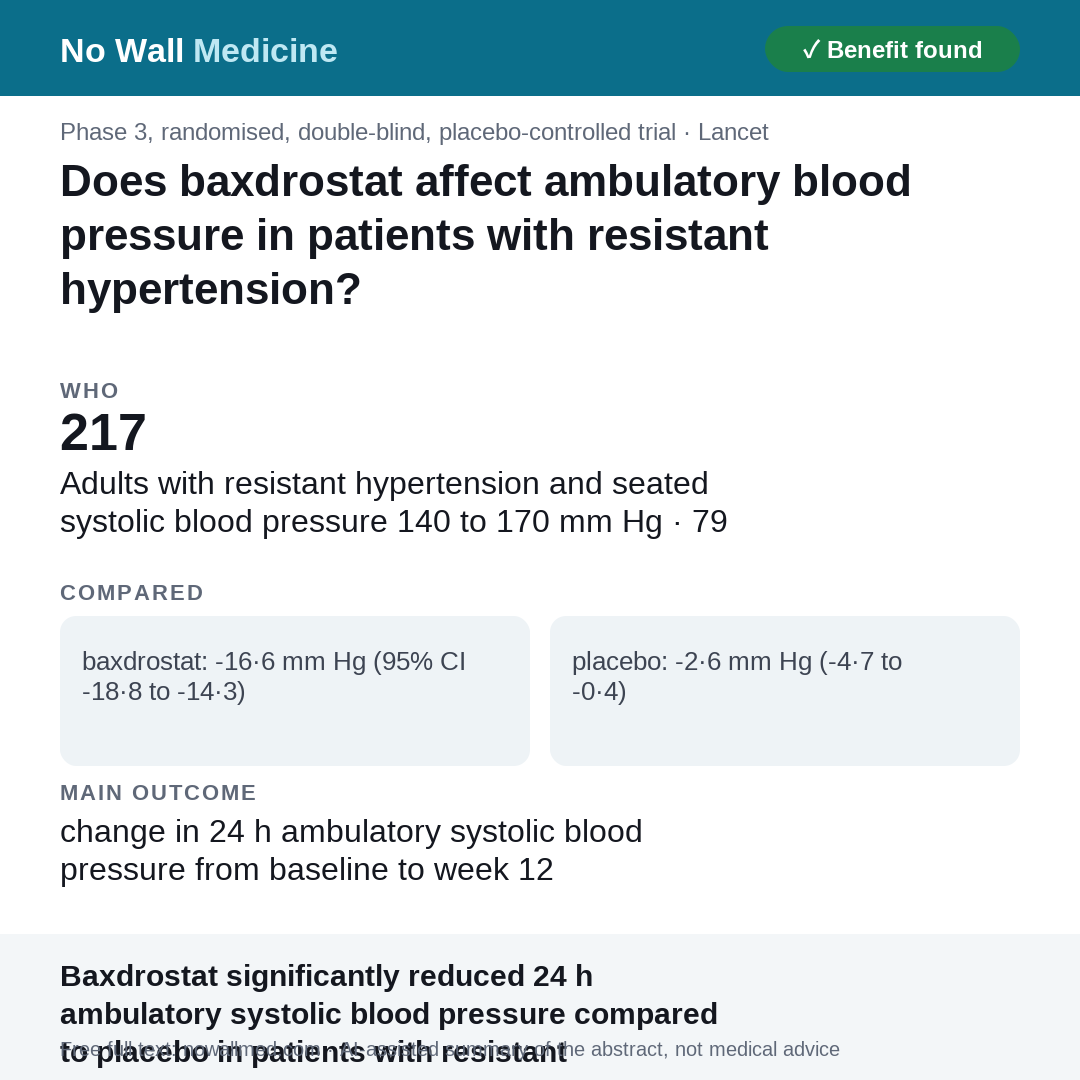
Effect of baxdrostat on ambulatory blood pressure in patients with resistant hypertension (Bax24): a phase 3, randomised, double-blind, placebo-controlled trial
Phase 3, randomised, double-blind, placebo-controlled trialBenefit found
Does baxdrostat affect ambulatory blood pressure in patients with resistant hypertension?
Who
217
Adults with resistant hypertension and seated systolic blood pressure 140 to 170 mm Hg · 79 clinical sites in 22 countries
Compared
baxdrostat: -16·6 mm Hg (95% CI -18·8 to -14·3)
placebo: -2·6 mm Hg (-4·7 to -0·4)
Main outcome
change in 24 h ambulatory systolic blood pressure from baseline to week 12
Result: -14·0 mm Hg (-17·2 to -10·8; p<0·0001)
Bottom line: Baxdrostat significantly reduced 24 h ambulatory systolic blood pressure compared to placebo in patients with resistant hypertension.
Funded by: AstraZeneca
Lancet · 2026-03-01Download image
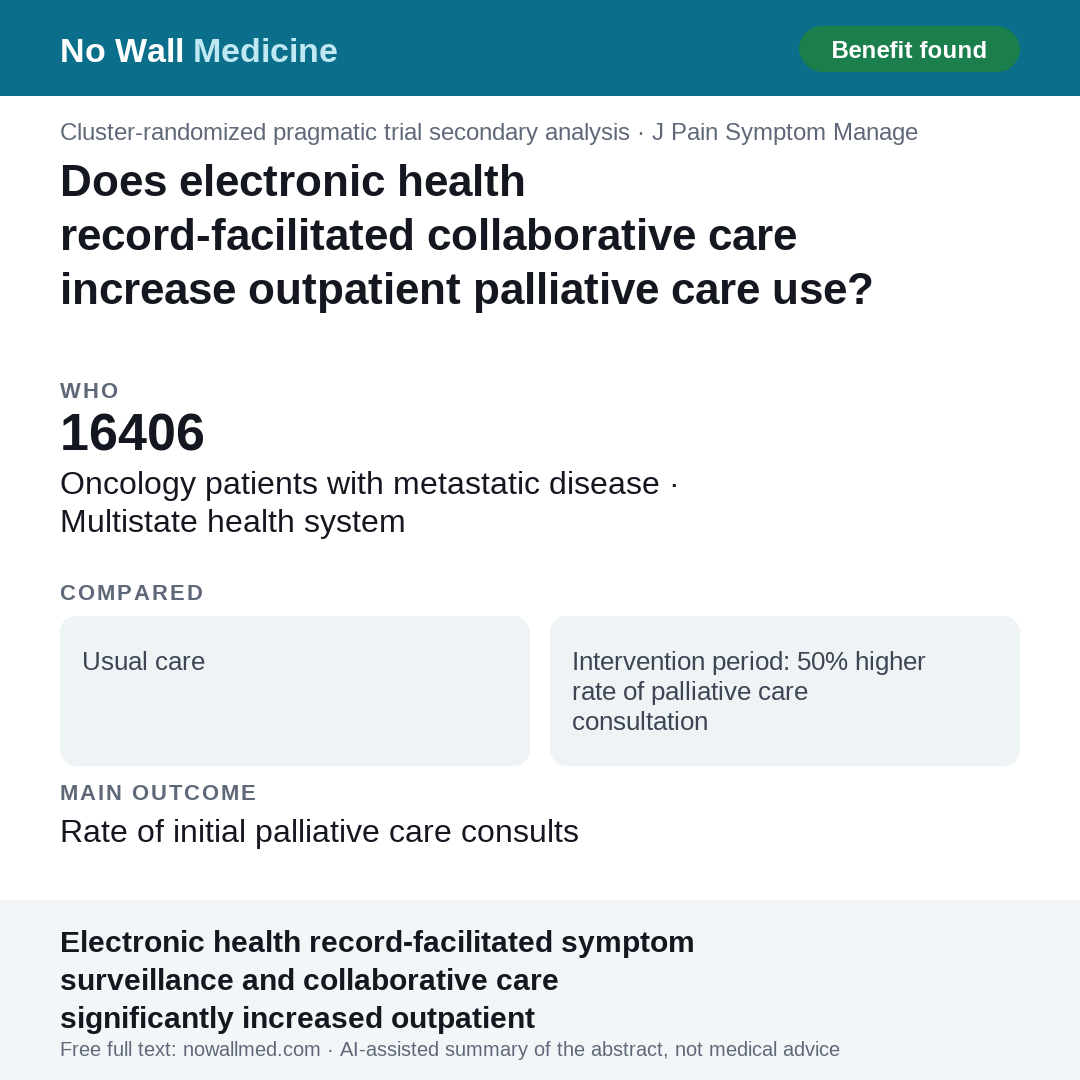
Effect of a Symptom Surveillance and Collaborative Care Intervention on Palliative Care Utilization
Cluster-randomized pragmatic trial secondary analysisBenefit found
Does electronic health record-facilitated collaborative care increase outpatient palliative care use?
Who
16406
Oncology patients with metastatic disease · Multistate health system
Compared
Usual care
Intervention period: 50% higher rate of palliative care consultation
Main outcome
Rate of initial palliative care consults
Result: incidence rate ratio = 1.50, P < 0.001
Bottom line: Electronic health record-facilitated symptom surveillance and collaborative care significantly increased outpatient palliative care utilization.
J Pain Symptom Manage · 2026-03-01Download image
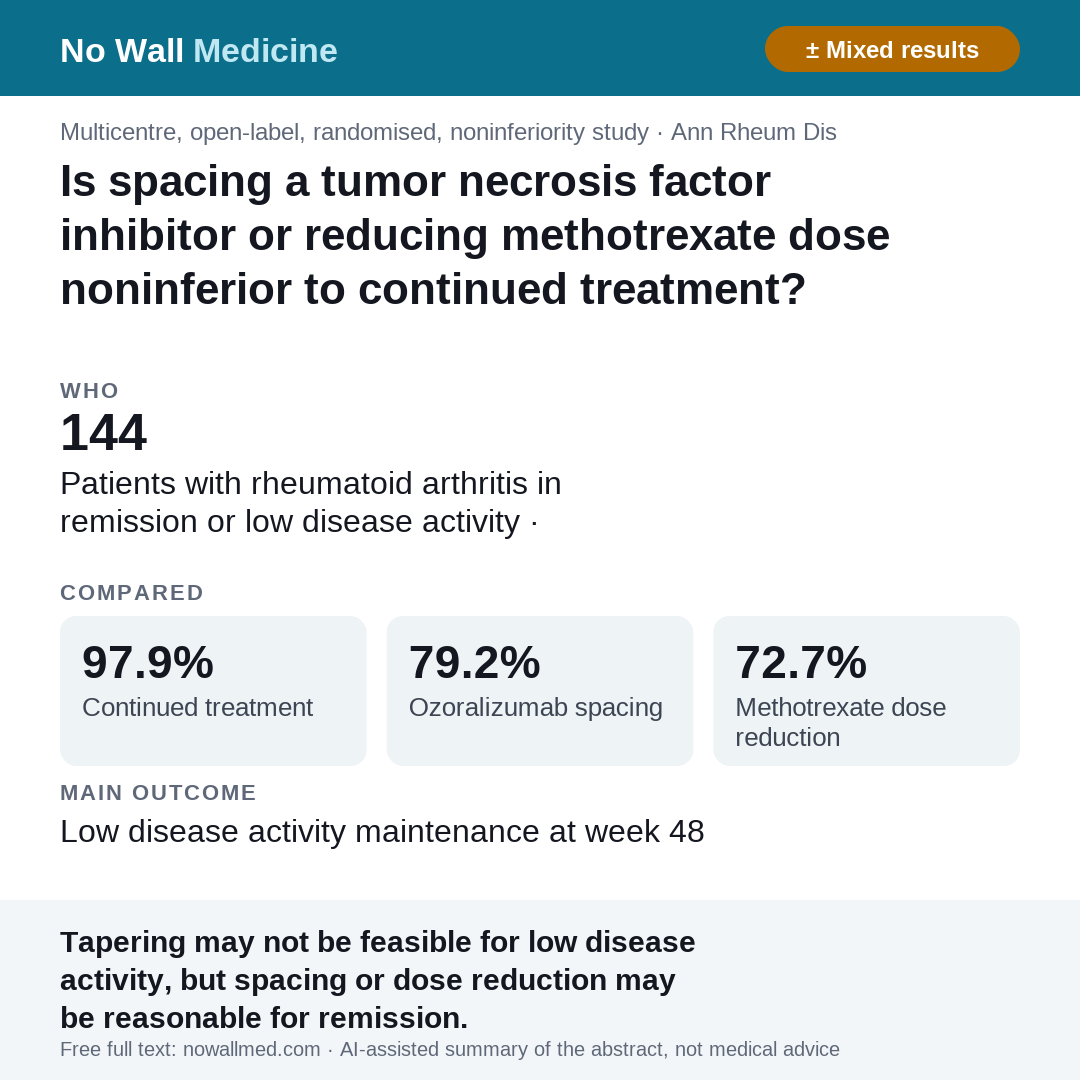
Spacing of a TNF inhibitor or dose reduction of methotrexate vs continued treatment in patients with rheumatoid arthritis in remission or low disease activity: a randomised, controlled trial (SORAIRO trial)
Multicentre, open-label, randomised, noninferiority studyMixed results
Is spacing a tumor necrosis factor inhibitor or reducing methotrexate dose noninferior to continued treatment?
Who
144
Patients with rheumatoid arthritis in remission or low disease activity · Multicentre
Compared
97.9%Continued treatment
79.2%Ozoralizumab spacing
72.7%Methotrexate dose reduction
Main outcome
Low disease activity maintenance at week 48
Bottom line: Tapering may not be feasible for low disease activity, but spacing or dose reduction may be reasonable for remission.
Ann Rheum Dis · 2026-02-28Download image
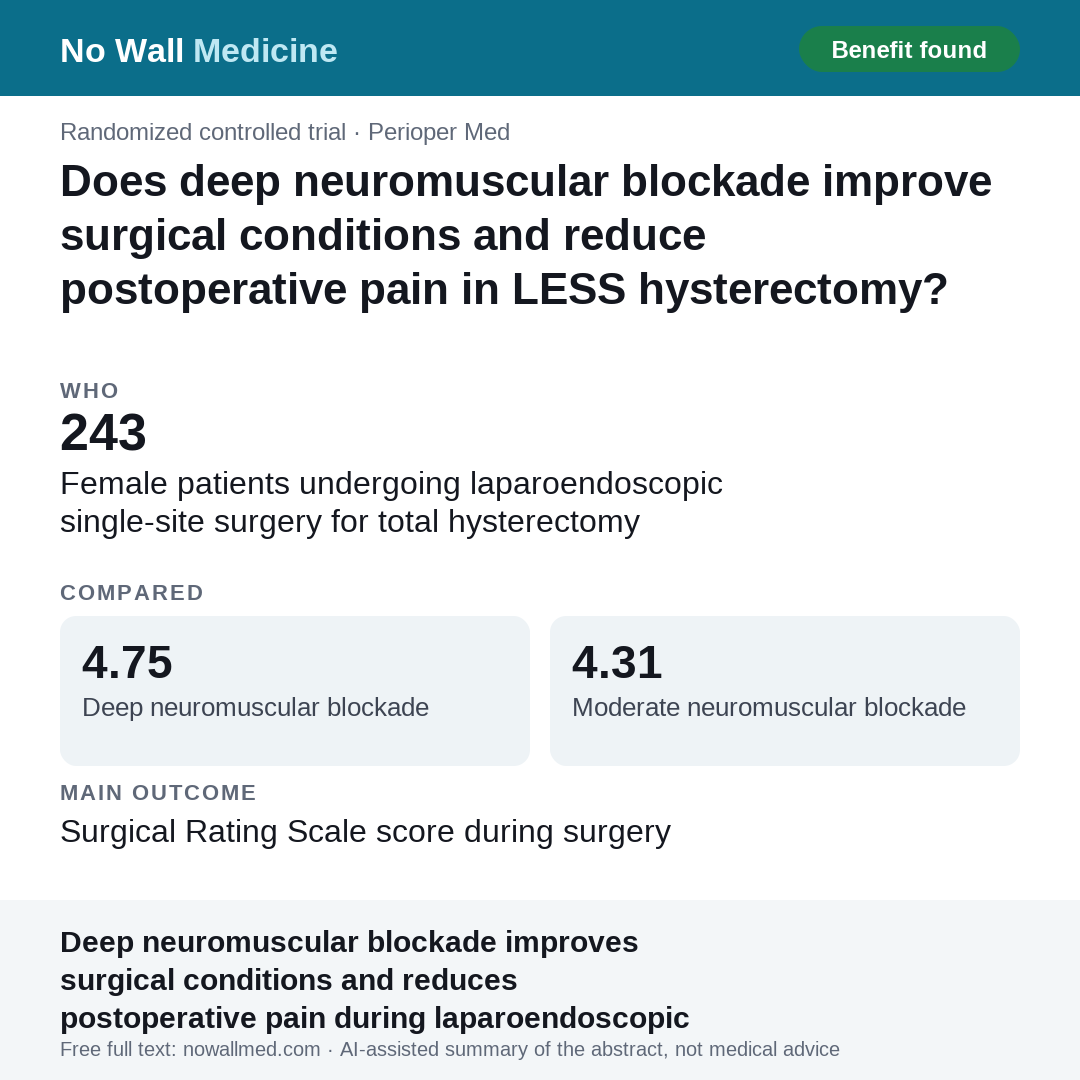
Deep neuromuscular blockade improves surgical conditions during laparoendoscopic single-site (LESS) surgery for total hysterectomy and reduces postoperative pain: a randomized controlled trial
Randomized controlled trialBenefit found
Does deep neuromuscular blockade improve surgical conditions and reduce postoperative pain in LESS hysterectomy?
Who
243
Female patients undergoing laparoendoscopic single-site surgery for total hysterectomy
Compared
4.75Deep neuromuscular blockade (0.54)
4.31Moderate neuromuscular blockade (0.86)
Main outcome
Surgical Rating Scale score during surgery
Bottom line: Deep neuromuscular blockade improves surgical conditions and reduces postoperative pain during laparoendoscopic single-site hysterectomy.
Limitation: Recovery time to extubation was significantly prolonged in the deep neuromuscular blockade group.
Perioper Med · 2026-02-28Download image
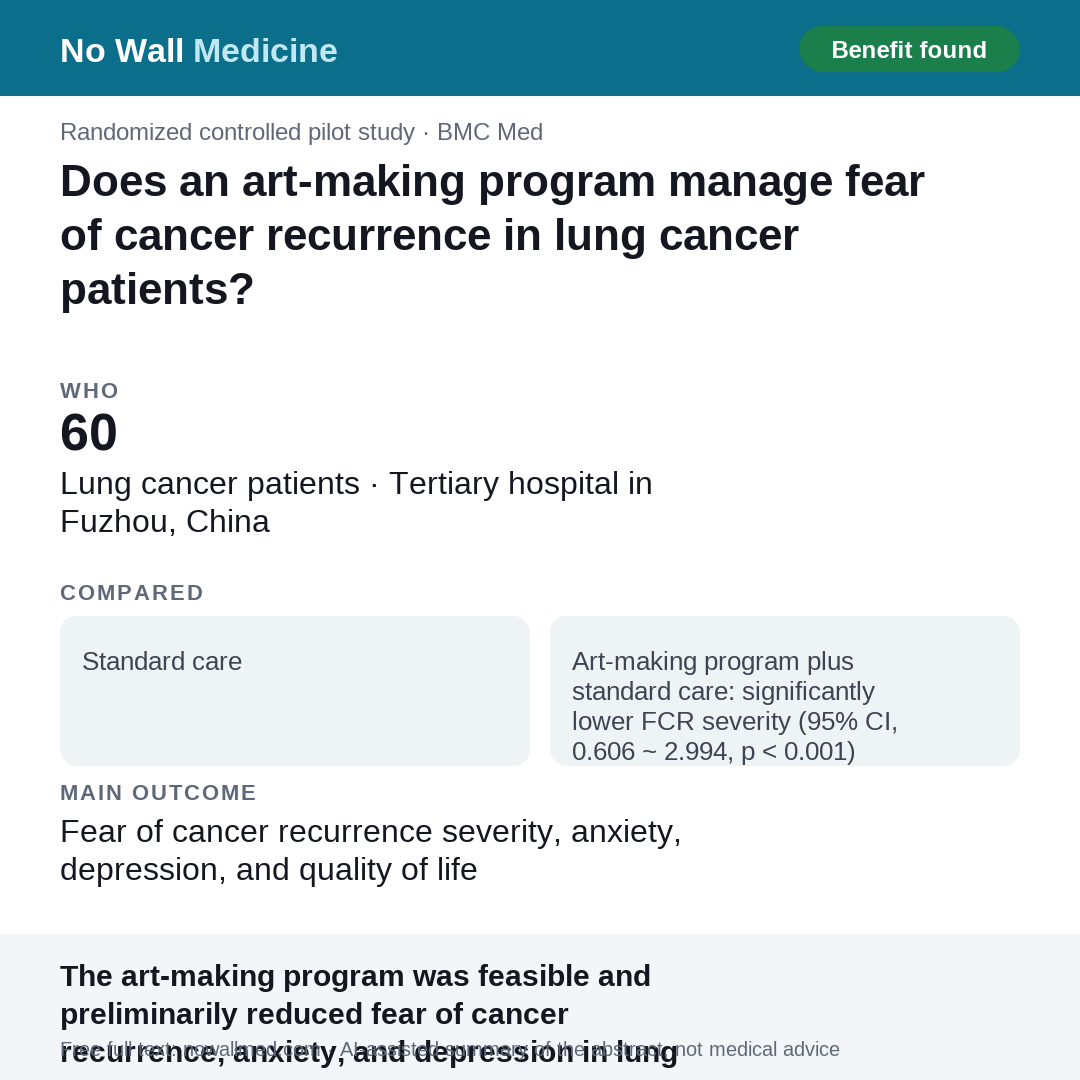
Feasibility and preliminary efficacy of an art-making program to manage fear of cancer recurrence (AM-I-FCR) in lung cancer patients: a randomized controlled pilot study
Randomized controlled pilot studyBenefit found
Does an art-making program manage fear of cancer recurrence in lung cancer patients?
Who
60
Lung cancer patients · Tertiary hospital in Fuzhou, China
Compared
Standard care
Art-making program plus standard care: significantly lower FCR severity (95% CI, 0.606 ~ 2.994, p < 0.001)
Main outcome
Fear of cancer recurrence severity, anxiety, depression, and quality of life
Bottom line: The art-making program was feasible and preliminarily reduced fear of cancer recurrence, anxiety, and depression in lung cancer patients.
BMC Med · 2026-02-27Download image
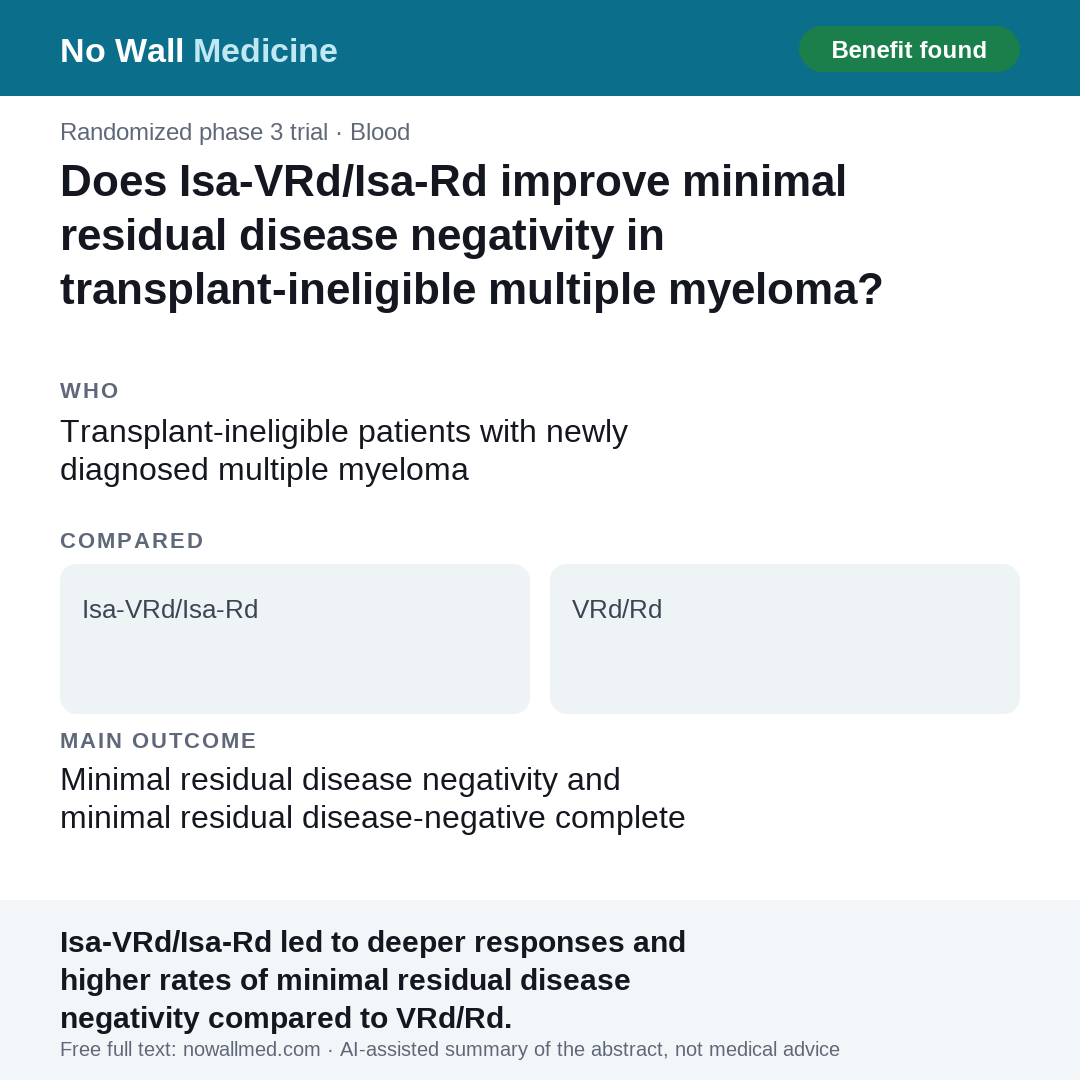
Isatuximab, bortezomib, lenalidomide, and dexamethasone for multiple myeloma: dynamics of MRD negativity in the IMROZ study
Randomized phase 3 trialBenefit found
Does Isa-VRd/Isa-Rd improve minimal residual disease negativity in transplant-ineligible multiple myeloma?
Who
Transplant-ineligible patients with newly diagnosed multiple myeloma
Compared
Isa-VRd/Isa-Rd
VRd/Rd
Main outcome
Minimal residual disease negativity and minimal residual disease-negative complete response
Bottom line: Isa-VRd/Isa-Rd led to deeper responses and higher rates of minimal residual disease negativity compared to VRd/Rd.
Blood · 2026-02-27Download image
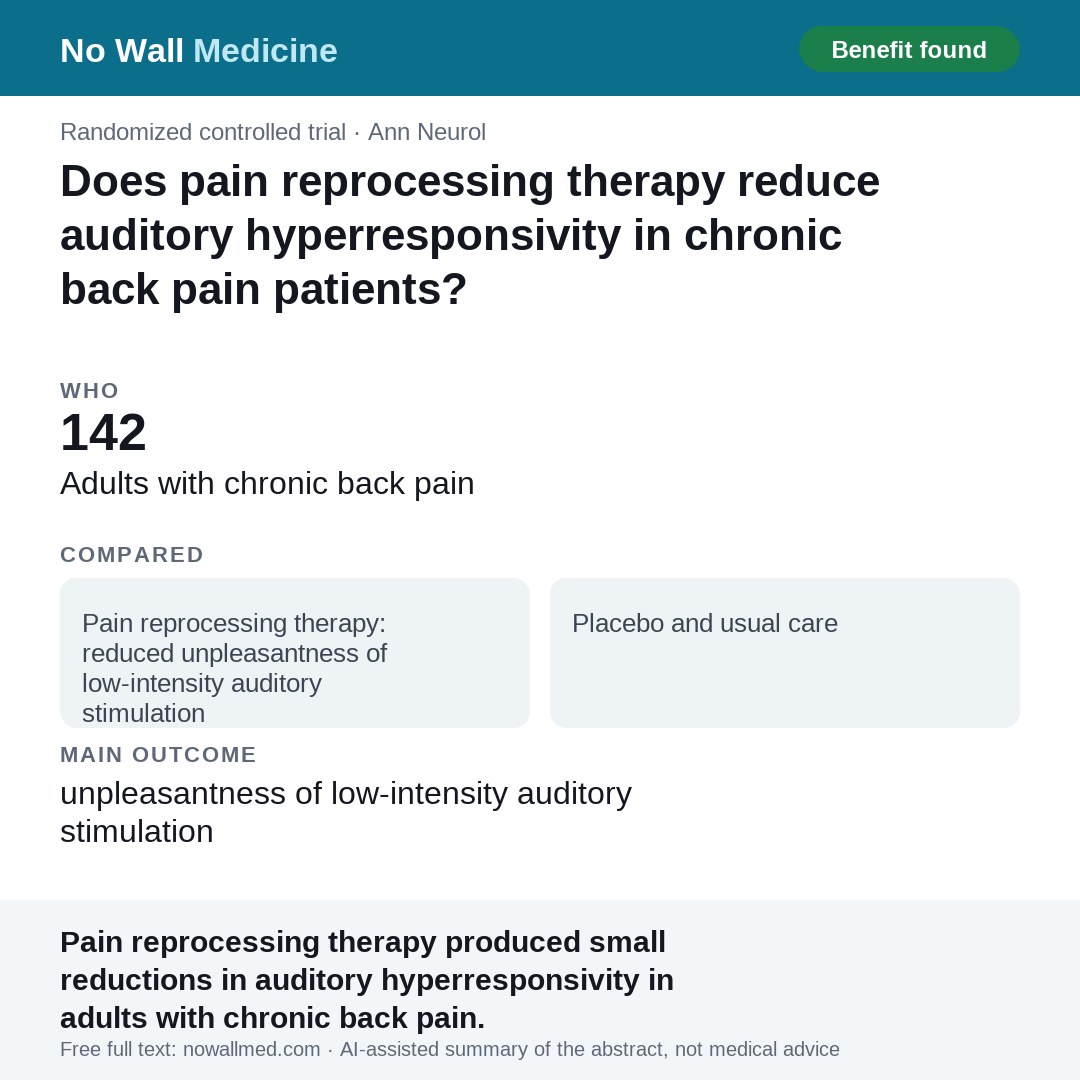
Auditory Hyperresponsivity in Chronic Back Pain: A Randomized Controlled Trial of Pain Reprocessing Therapy
Randomized controlled trialBenefit found
Does pain reprocessing therapy reduce auditory hyperresponsivity in chronic back pain patients?
Who
142
Adults with chronic back pain
Compared
Pain reprocessing therapy: reduced unpleasantness of low-intensity auditory stimulation
Placebo and usual care
Main outcome
unpleasantness of low-intensity auditory stimulation
Bottom line: Pain reprocessing therapy produced small reductions in auditory hyperresponsivity in adults with chronic back pain.
Ann Neurol · 2026-02-27Download image
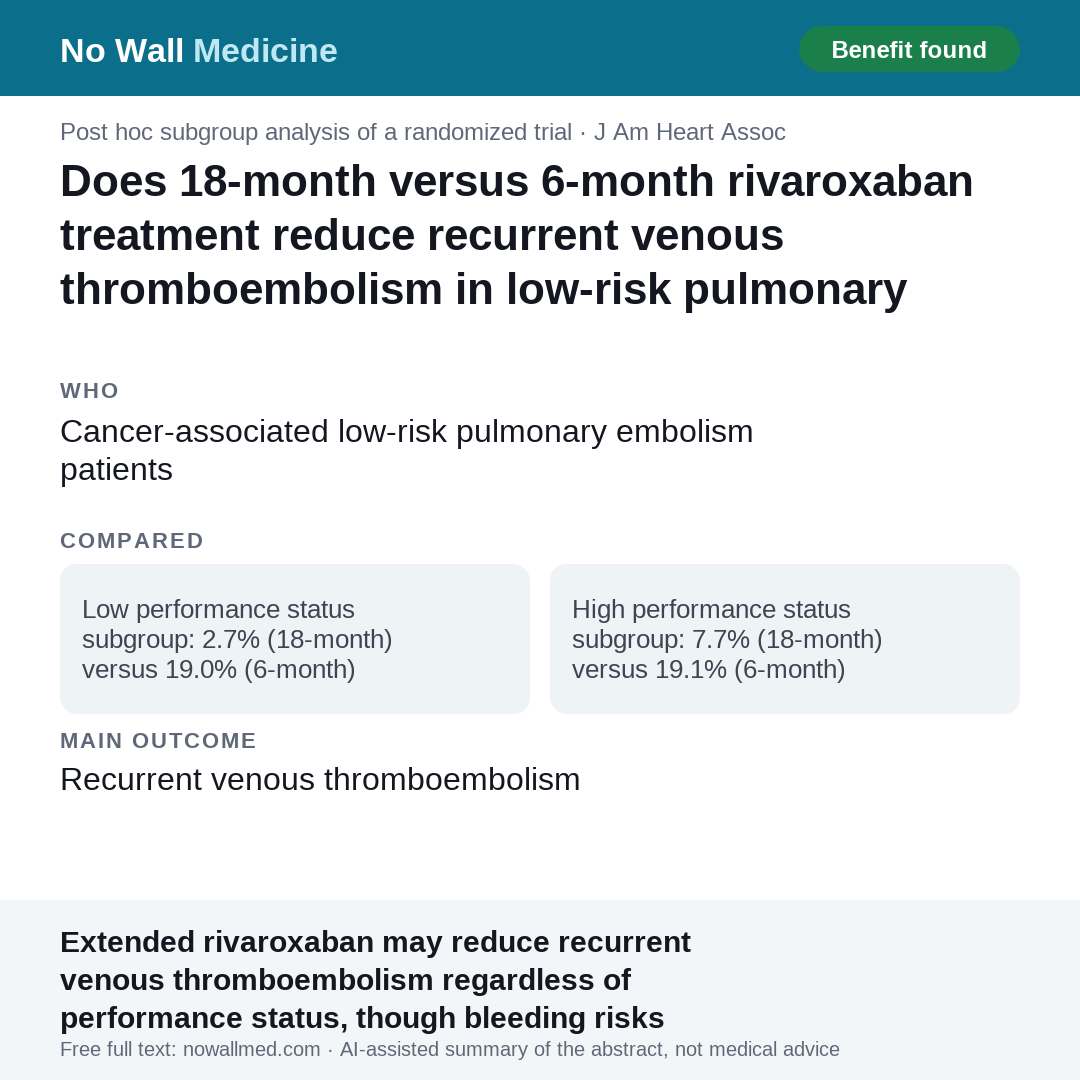
Extended Anticoagulation Therapy With Rivaroxaban for Cancer-Associated Low-Risk Pulmonary Embolism According to Different Performance Status Scores: Insights From the ONCO PE Randomized Trial
Post hoc subgroup analysis of a randomized trialBenefit found
Does 18-month versus 6-month rivaroxaban treatment reduce recurrent venous thromboembolism in low-risk pulmonary embolism?
Who
Cancer-associated low-risk pulmonary embolism patients
Compared
Low performance status subgroup: 2.7% (18-month) versus 19.0% (6-month)
High performance status subgroup: 7.7% (18-month) versus 19.1% (6-month)
Main outcome
Recurrent venous thromboembolism
Bottom line: Extended rivaroxaban may reduce recurrent venous thromboembolism regardless of performance status, though bleeding risks may increase in high performance status patients.
Limitation: This was a post hoc subgroup analysis
J Am Heart Assoc · 2026-02-27Download image
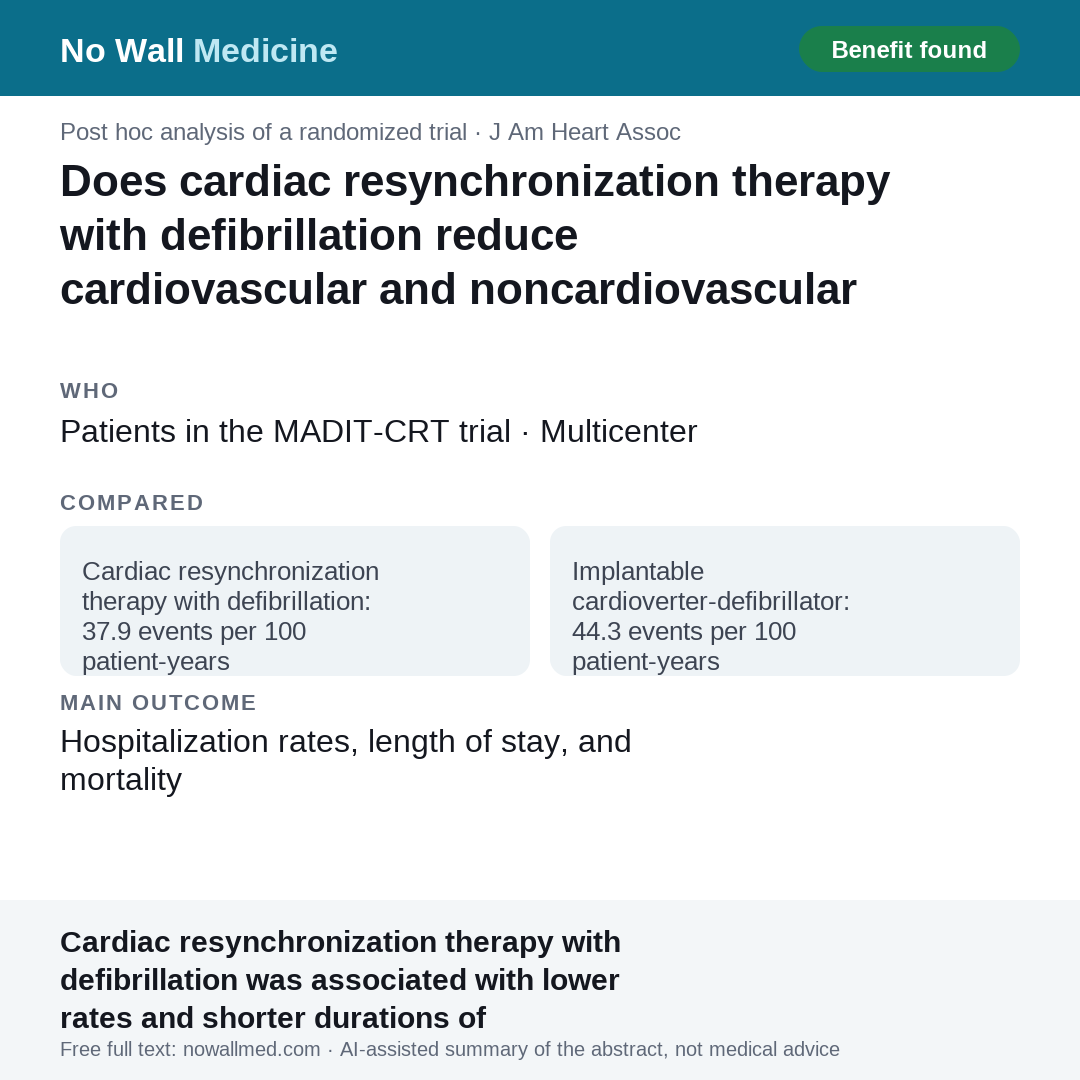
Effects of Cardiac Resynchronization Therapy on Cardiovascular and Noncardiovascular Hospitalization: A MADIT-CRT Long-Term Follow-Up
Post hoc analysis of a randomized trialBenefit found
Does cardiac resynchronization therapy with defibrillation reduce cardiovascular and noncardiovascular hospitalizations?
Who
Patients in the MADIT-CRT trial · Multicenter
Compared
Cardiac resynchronization therapy with defibrillation: 37.9 events per 100 patient-years
Implantable cardioverter-defibrillator: 44.3 events per 100 patient-years
Main outcome
Hospitalization rates, length of stay, and mortality
Bottom line: Cardiac resynchronization therapy with defibrillation was associated with lower rates and shorter durations of cardiovascular hospitalizations.
J Am Heart Assoc · 2026-02-27Download image
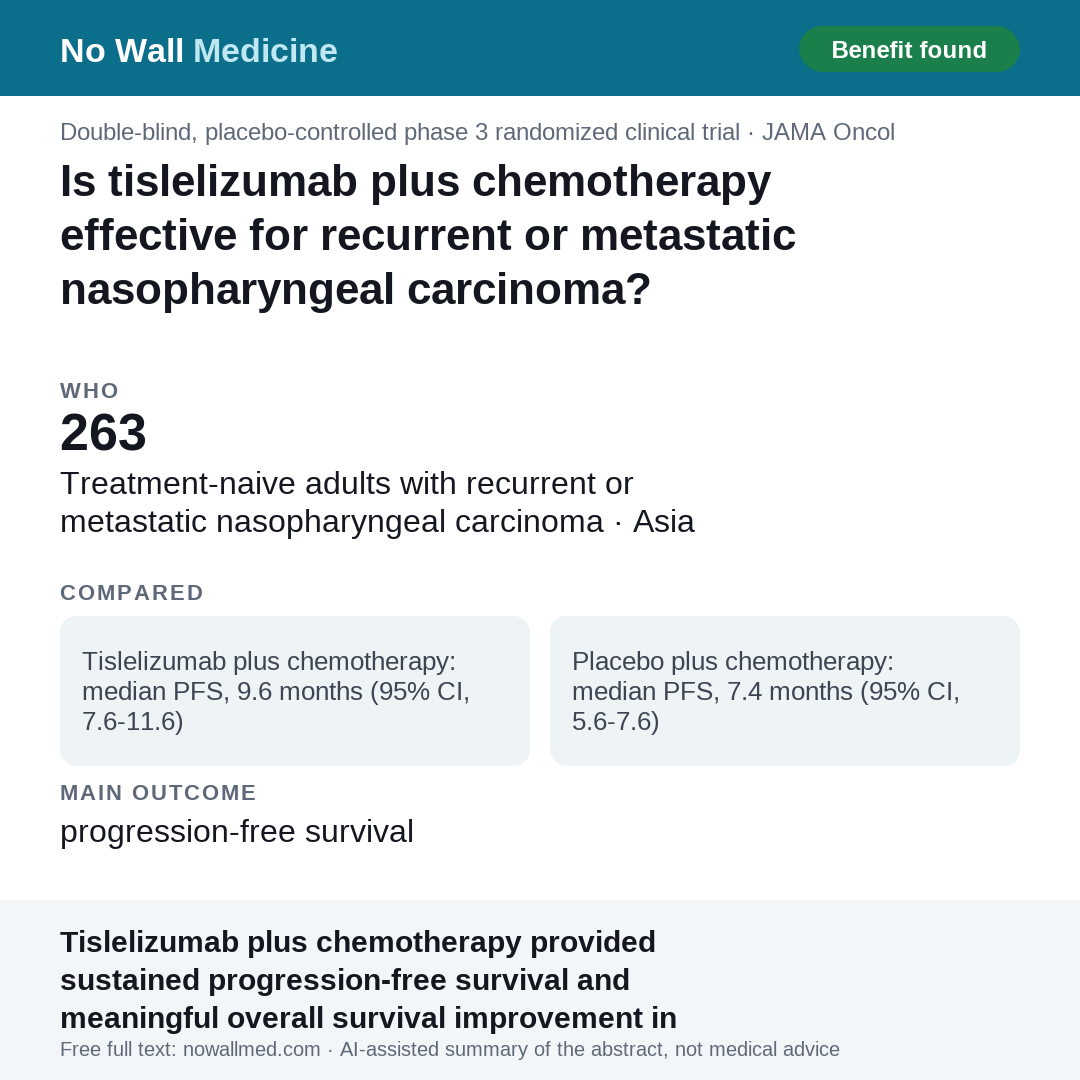
First-Line Tislelizumab Plus Chemotherapy for Recurrent or Metastatic Nasopharyngeal Cancer: Three-Year Follow-Up of the Phase 3 RATIONALE-309 Randomized Clinical Trial
Double-blind, placebo-controlled phase 3 randomized clinical trialBenefit found
Is tislelizumab plus chemotherapy effective for recurrent or metastatic nasopharyngeal carcinoma?
Who
263
Treatment-naive adults with recurrent or metastatic nasopharyngeal carcinoma · Asia
Compared
Tislelizumab plus chemotherapy: median PFS, 9.6 months (95% CI, 7.6-11.6)
Placebo plus chemotherapy: median PFS, 7.4 months (95% CI, 5.6-7.6)
Main outcome
progression-free survival
Result: hazard ratio 0.53 (95% CI, 0.39-0.71)
Bottom line: Tislelizumab plus chemotherapy provided sustained progression-free survival and meaningful overall survival improvement in recurrent or metastatic nasopharyngeal carcinoma.
JAMA Oncol · 2026-02-26Download image
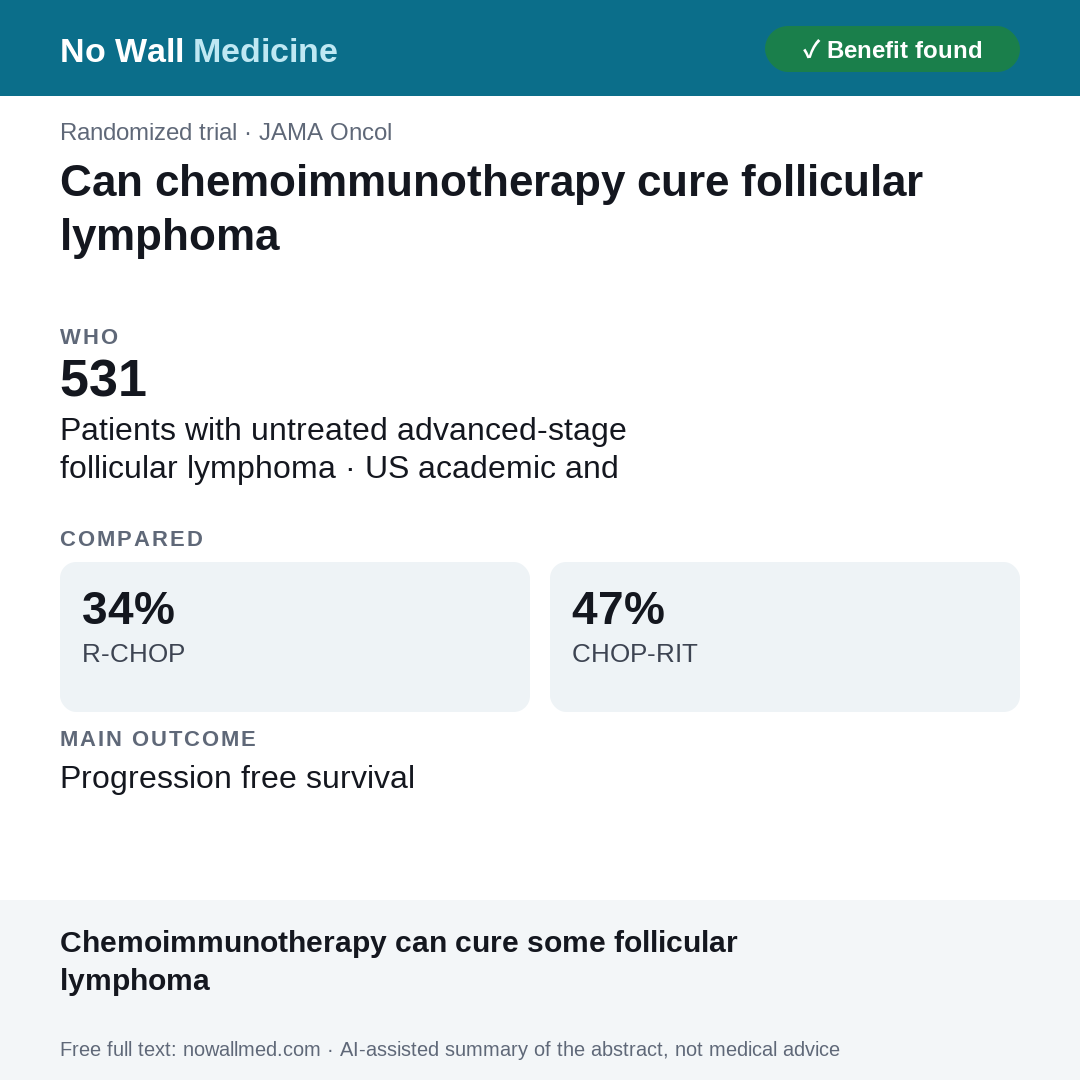
Treatment of Follicular Lymphoma With CHOP and Anti-CD20 Therapy: 15-Year Follow-Up of the SWOG S0016 Trial
Randomized trialBenefit found
Can chemoimmunotherapy cure follicular lymphoma
Who
531
Patients with untreated advanced-stage follicular lymphoma · US academic and community locations
Compared
34%R-CHOP
47%CHOP-RIT
Main outcome
Progression free survival
Bottom line: Chemoimmunotherapy can cure some follicular lymphoma
JAMA Oncol · 2026-02-26Download image
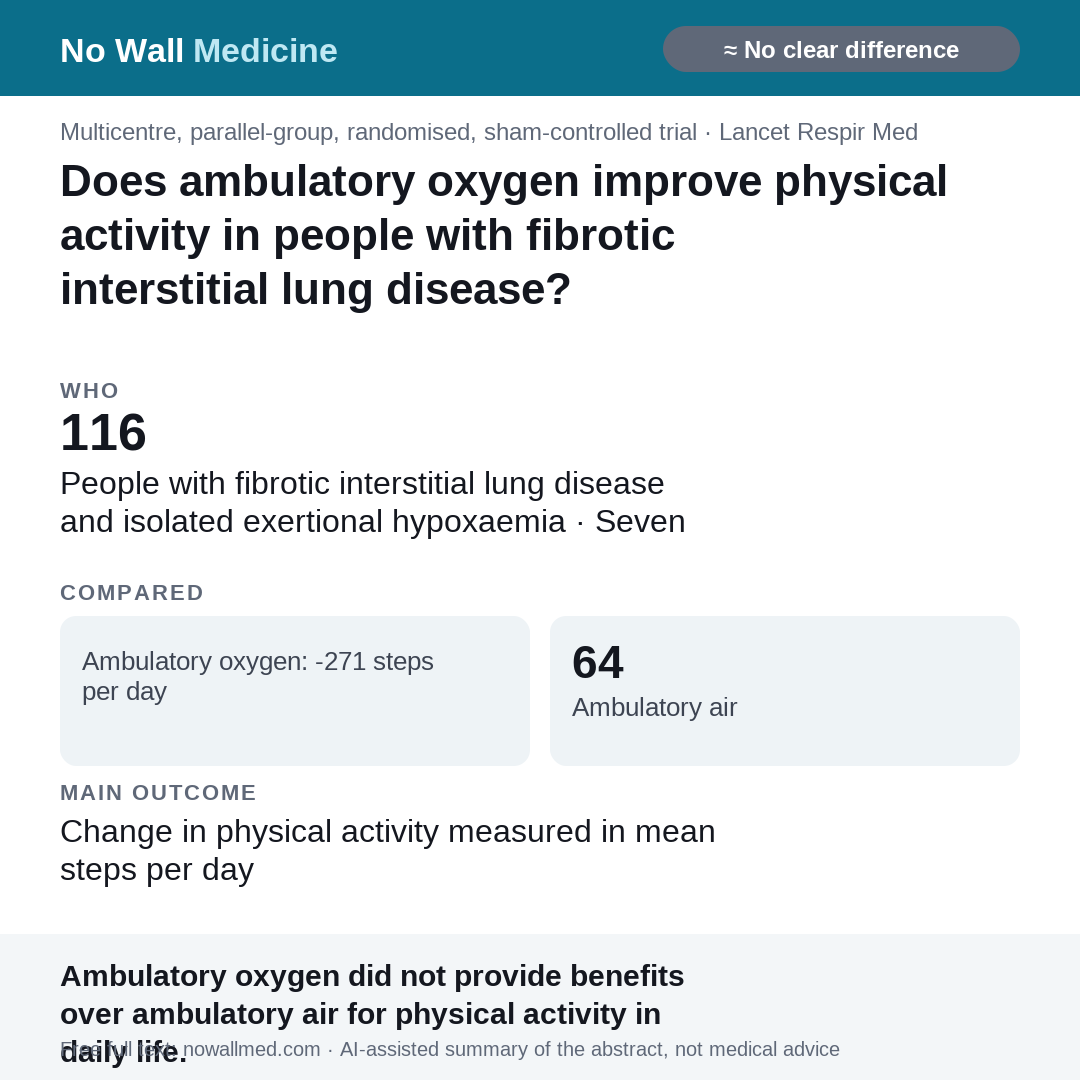
Ambulatory oxygen for treatment of exertional hypoxaemia in pulmonary fibrosis (PFOX): a multicentre, randomised, sham-controlled trial
Multicentre, parallel-group, randomised, sham-controlled trialNo clear difference
Does ambulatory oxygen improve physical activity in people with fibrotic interstitial lung disease?
Who
116
People with fibrotic interstitial lung disease and isolated exertional hypoxaemia · Seven hospital sites in Australia and Sweden
Compared
Ambulatory oxygen: -271 steps per day
64Ambulatory air
Main outcome
Change in physical activity measured in mean steps per day
Result: -334, -803 to 134
Bottom line: Ambulatory oxygen did not provide benefits over ambulatory air for physical activity in daily life.
Funded by: National Health and Medical Research Council and Swedish Society of Medicine
Lancet Respir Med · 2026-02-26Download image
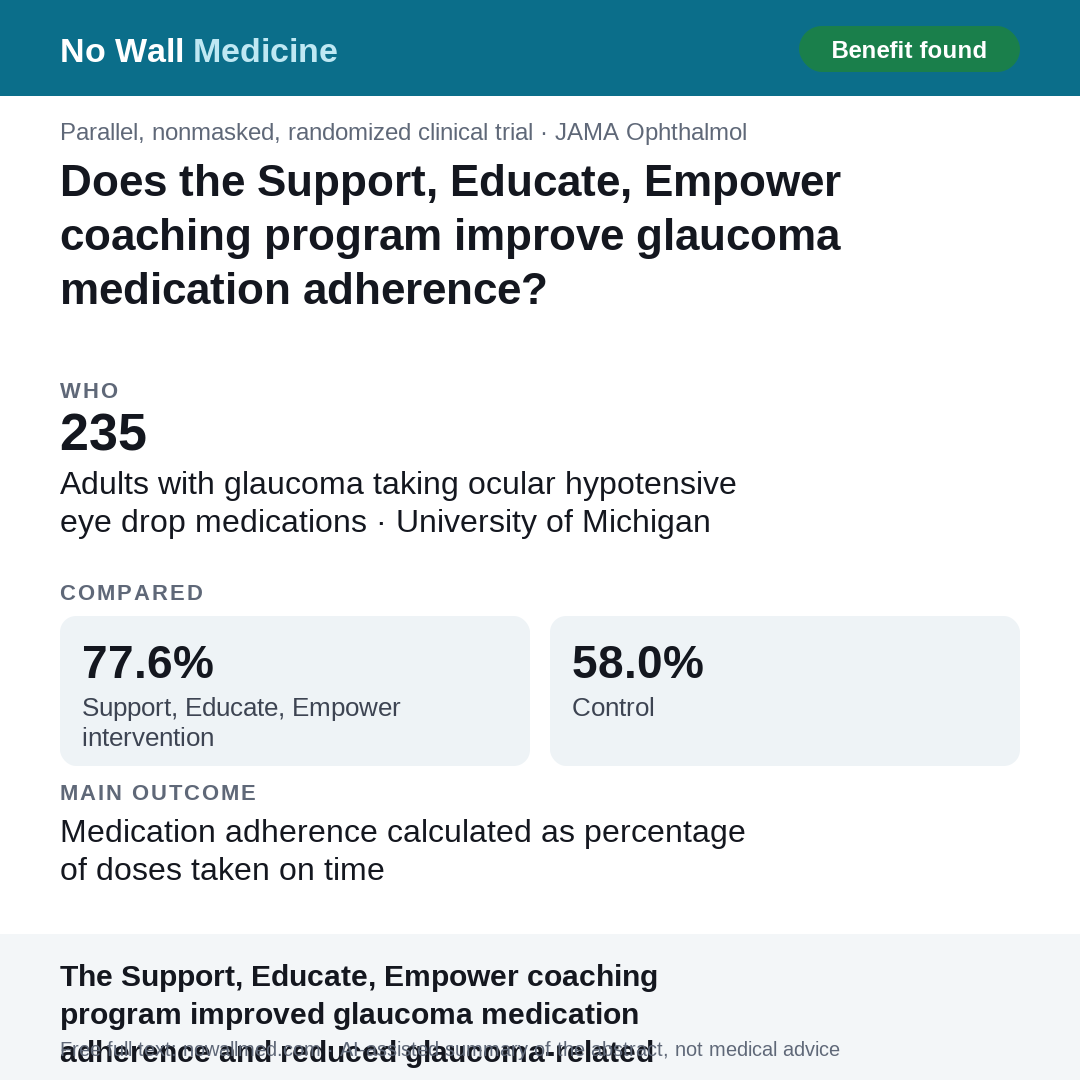
Effect of the Support, Educate, Empower Personalized Glaucoma Coaching Program on Medication Adherence: The SEE Program Randomized Clinical Trial
Randomized, nonmasked, parallel clinical trialBenefit found
Does SEE coaching improve glaucoma medication adherence compared with standard written education?
Who
235
Adults with glaucoma taking eye drops with self-reported adherence 85% or lower · University of Michigan and Henry Ford Health System
Compared
77.6%SEE intervention (19.7%)
58.0%Control (25.2%)
Main outcome
Medication adherence over 6 months
Result: difference, 19.7%; 95% CI, 13.7 to 25.6
Bottom line: The SEE glaucoma coaching program improved medication adherence and reduced glaucoma-related distress compared with standard written education.
JAMA Ophthalmol · 2026-02-26Download image
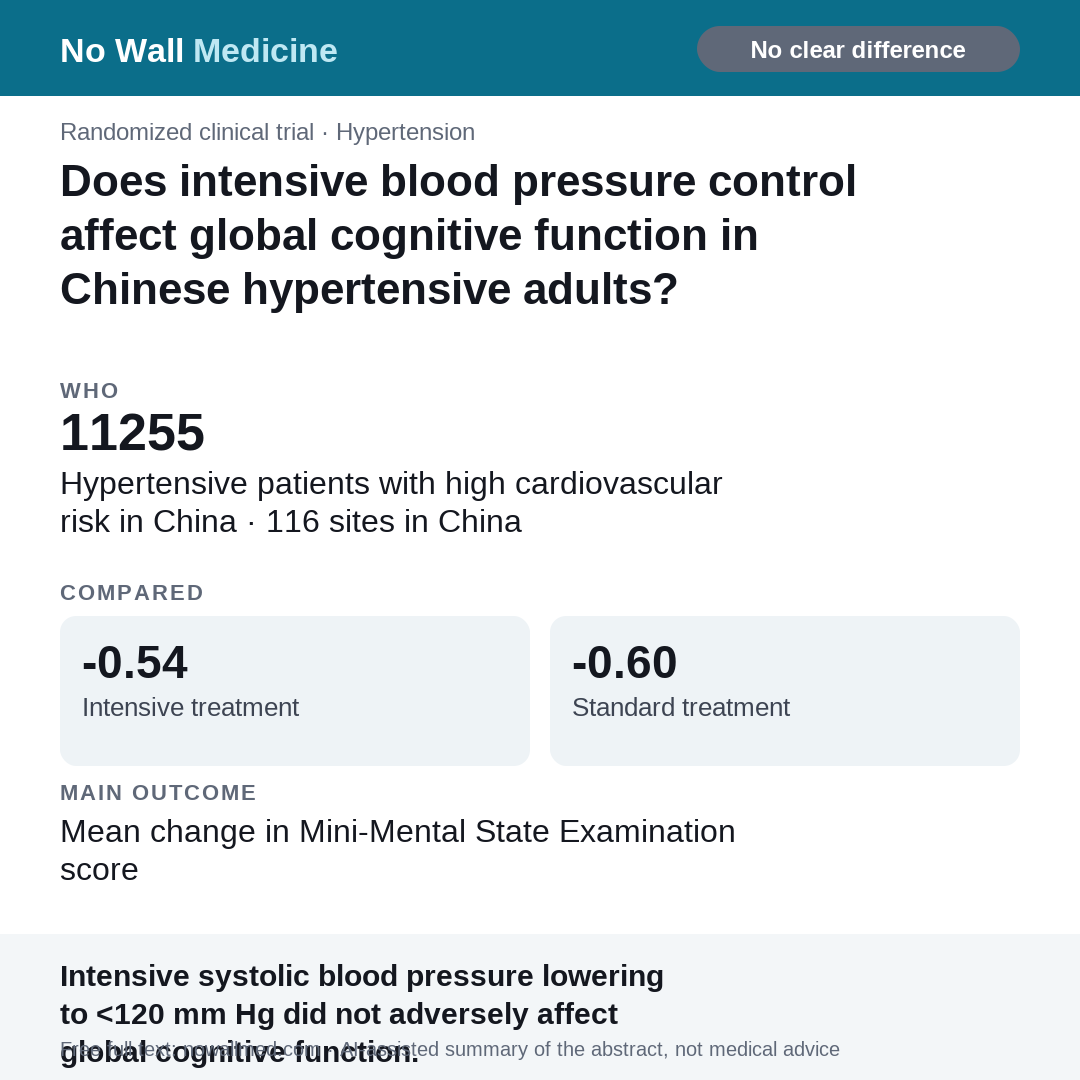
Intensive BP Control and Cognitive Function: A Randomized Clinical Trial
Randomized clinical trialNo clear difference
Does intensive blood pressure control affect global cognitive function in Chinese hypertensive adults?
Who
11255
Hypertensive patients with high cardiovascular risk in China · 116 sites in China
Compared
-0.54Intensive treatment (95% CI, -0.63 to -0.46)
-0.60Standard treatment (95% CI, -0.68 to -0.51)
Main outcome
Mean change in Mini-Mental State Examination score
Result: difference, 0.05 (95% CI, -0.07 to 0.17)
Bottom line: Intensive systolic blood pressure lowering to <120 mm Hg did not adversely affect global cognitive function.
Hypertension · 2026-02-26Download image
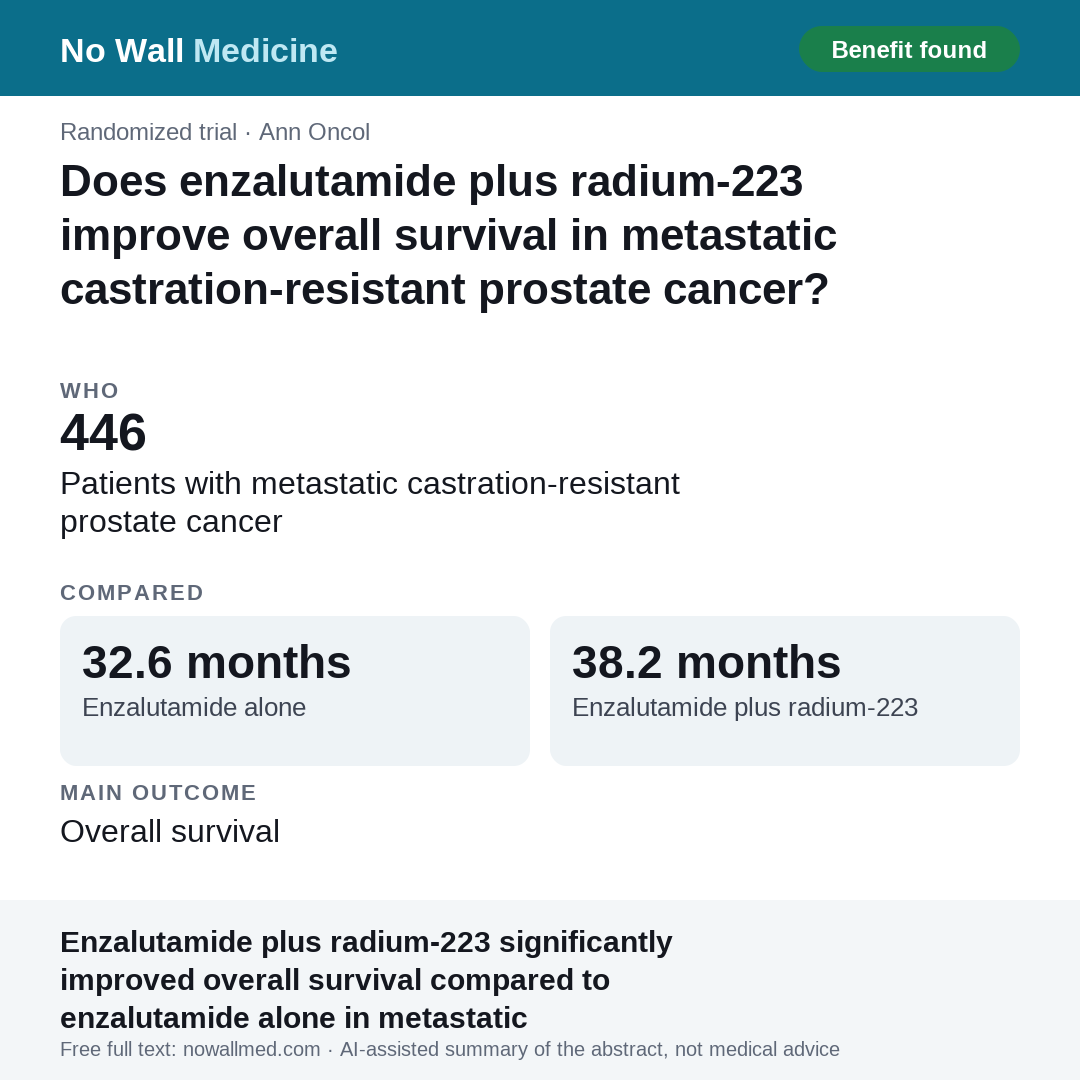
Final overall survival results from EORTC 1333/PEACE-3 trial of enzalutamide plus radium-223 in metastatic castration-resistant prostate cancer
Randomized trialBenefit found
Does enzalutamide plus radium-223 improve overall survival in metastatic castration-resistant prostate cancer?
Who
446
Patients with metastatic castration-resistant prostate cancer
Compared
32.6 monthsEnzalutamide alone (95% CI 29.3-38.2 months)
38.2 monthsEnzalutamide plus radium-223 (95% CI 33.1-44.8 months)
Main outcome
Overall survival
Result: hazard ratio 0.76 (95% CI 0.60-0.96)
Bottom line: Enzalutamide plus radium-223 significantly improved overall survival compared to enzalutamide alone in metastatic castration-resistant prostate cancer.
Ann Oncol · 2026-02-26Download image
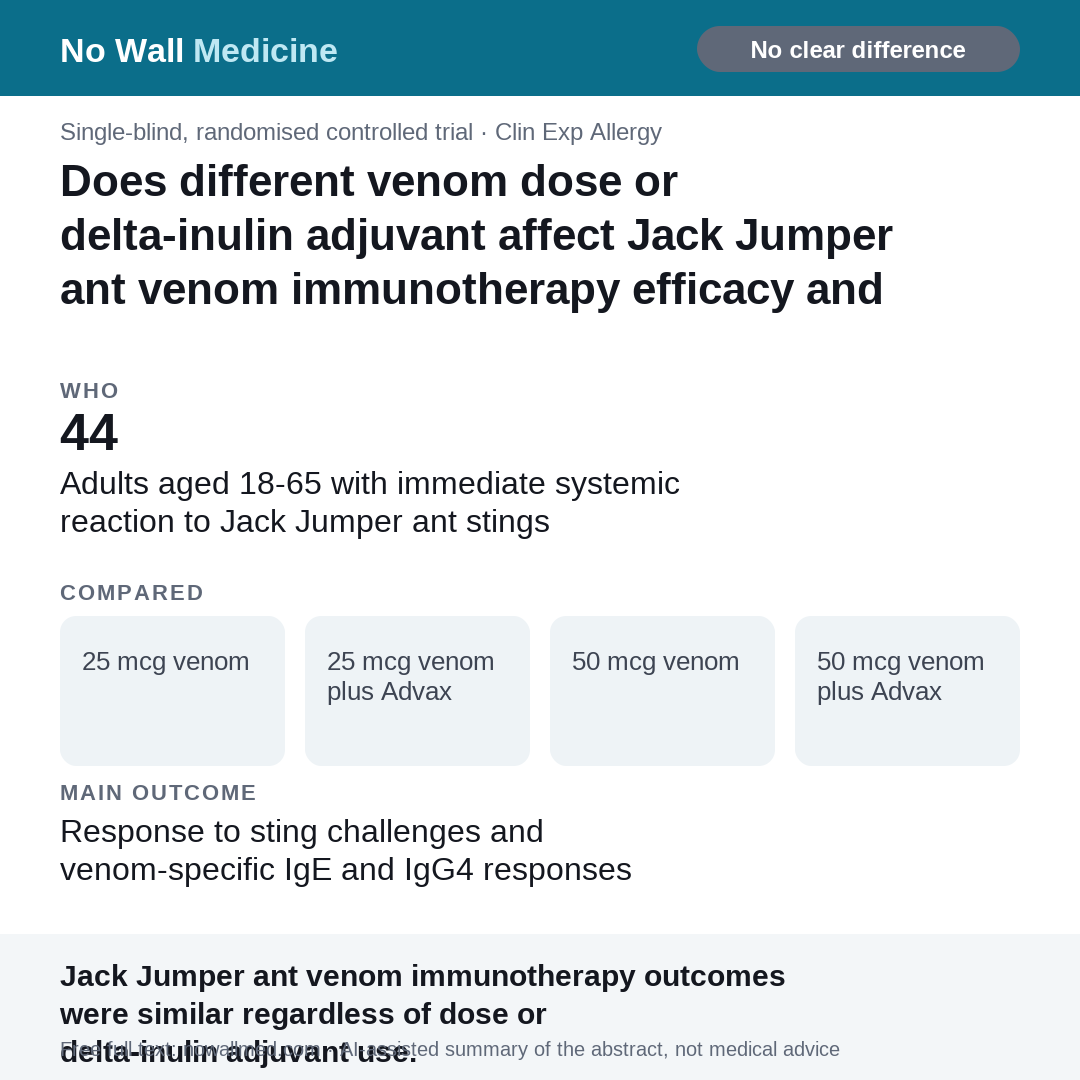
A Pilot Randomised Controlled Dose-Ranging Trial of Ant Venom Immunotherapy With and Without Delta-Inulin Adjuvant
Single-blind, randomised controlled trialNo clear difference
Does different venom dose or delta-inulin adjuvant affect Jack Jumper ant venom immunotherapy efficacy and safety?
Who
44
Adults aged 18-65 with immediate systemic reaction to Jack Jumper ant stings
Compared
25 mcg venom
25 mcg venom plus Advax
50 mcg venom
50 mcg venom plus Advax
Main outcome
Response to sting challenges and venom-specific IgE and IgG4 responses
Bottom line: Jack Jumper ant venom immunotherapy outcomes were similar regardless of dose or delta-inulin adjuvant use.
Clin Exp Allergy · 2026-02-26Download image
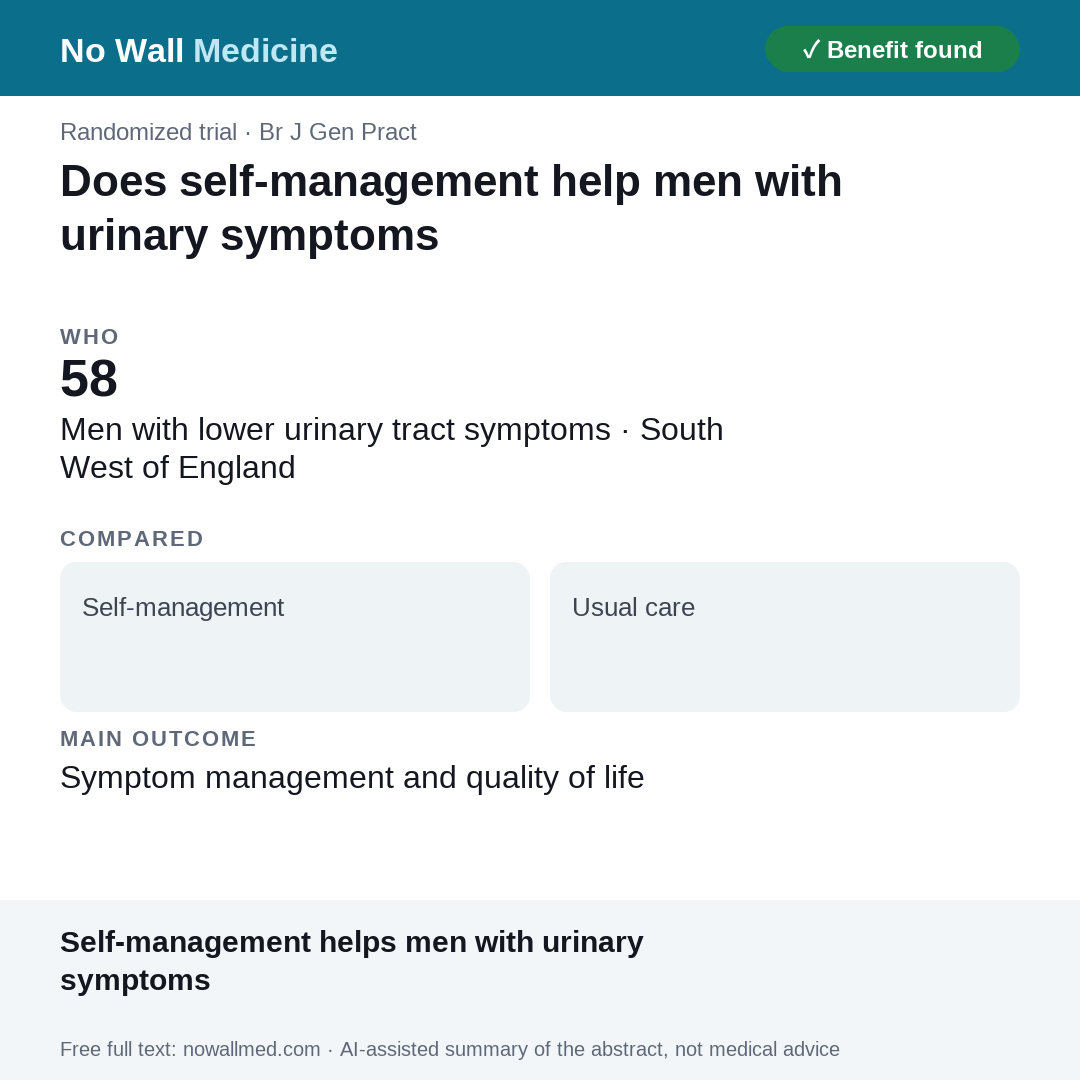
Self-management of male urinary symptoms: qualitative findings from a primary care trial
Randomized trialBenefit found
Does self-management help men with urinary symptoms
Who
58
Men with lower urinary tract symptoms · South West of England
Compared
Self-management
Usual care
Main outcome
Symptom management and quality of life
Bottom line: Self-management helps men with urinary symptoms
Br J Gen Pract · 2026-02-26Download image