Visual abstracts
New randomized trials and meta-analyses from leading journals at a glance: who was studied, what was compared, and what was found. Every paper is free to read in full.
All specialtiesCardiology 4763Oncology 4042Gastroenterology & Hepatology 1902Infectious Disease 3756Neurology 1872Psychiatry & Mental Health 2214Pulmonology 2042Critical Care 1319Endocrinology & Diabetes 2544Pediatrics 2889Surgery 2479Orthopedics & Sports Medicine 917Neurosurgery 525Cardiothoracic & Vascular Surgery 656Plastic & Reconstructive Surgery 574Nephrology 1107Rheumatology 810Hematology 1090Dermatology 611Ophthalmology 532Obstetrics & Gynecology 1645Public & Global Health 1037Radiology & Imaging 617Anesthesiology 957Urology 745ENT (Otolaryngology) 494Emergency Medicine 481Allergy & Immunology 309Geriatrics 972Family Medicine & Primary Care 533Medical Genetics & Genomics 659Pathology & Laboratory Medicine 156Physical Medicine & Rehabilitation 734Palliative Care 421Nutrition 1560Digital Health & AI 2133General Medicine 318
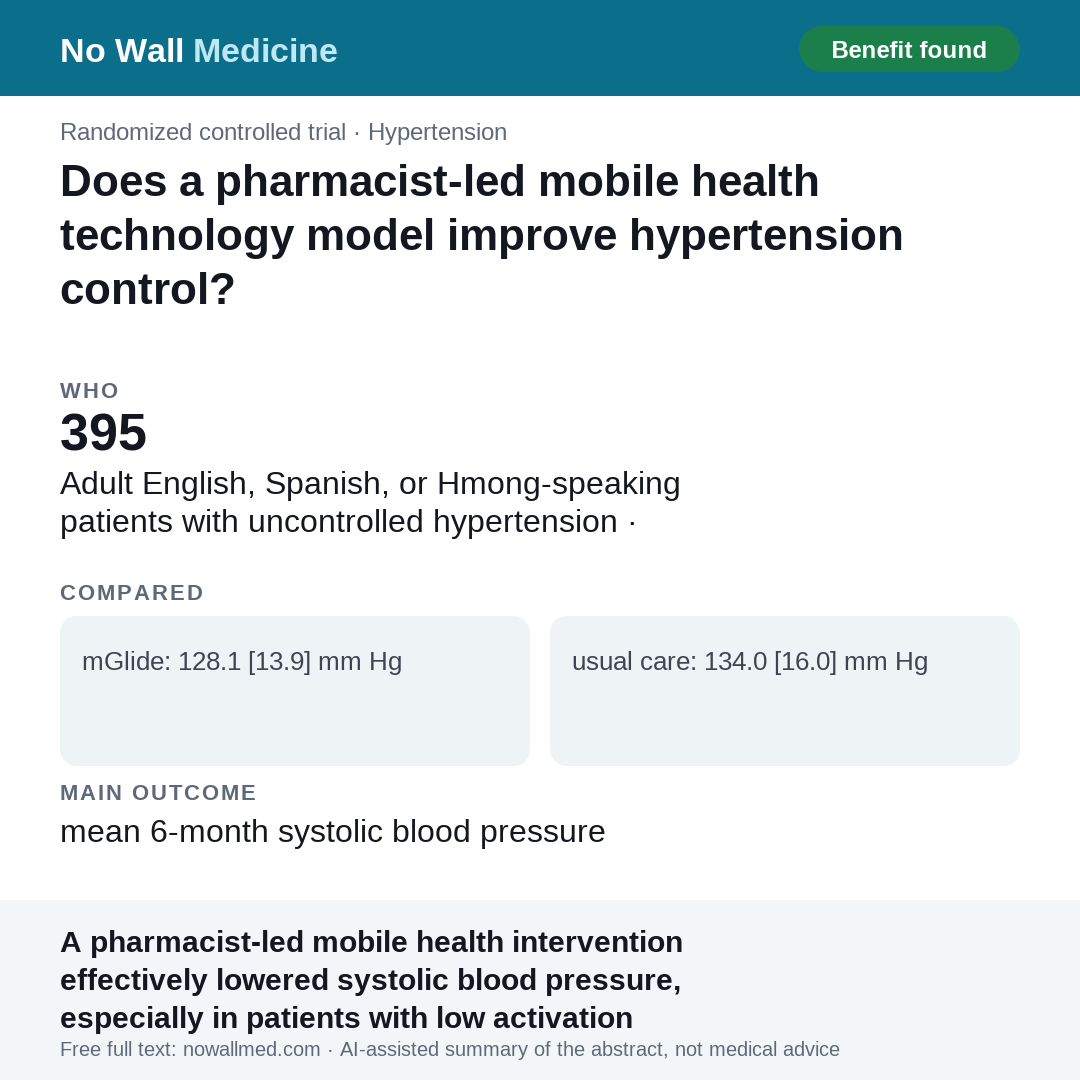
mHealth Intervention to Improve Hypertension Care in High-Risk Patients
Randomized controlled trialBenefit found
Does a pharmacist-led mobile health technology model improve hypertension control?
Who
395
Adult English, Spanish, or Hmong-speaking patients with uncontrolled hypertension · Large health care system and community clinics
Compared
mGlide: 128.1 [13.9] mm Hg
usual care: 134.0 [16.0] mm Hg
Main outcome
mean 6-month systolic blood pressure
Result: -5.8 mm Hg (95% CI, -8.6 to -3.0)
Bottom line: A pharmacist-led mobile health intervention effectively lowered systolic blood pressure, especially in patients with low activation levels.
Hypertension · 2026-02-20Download image
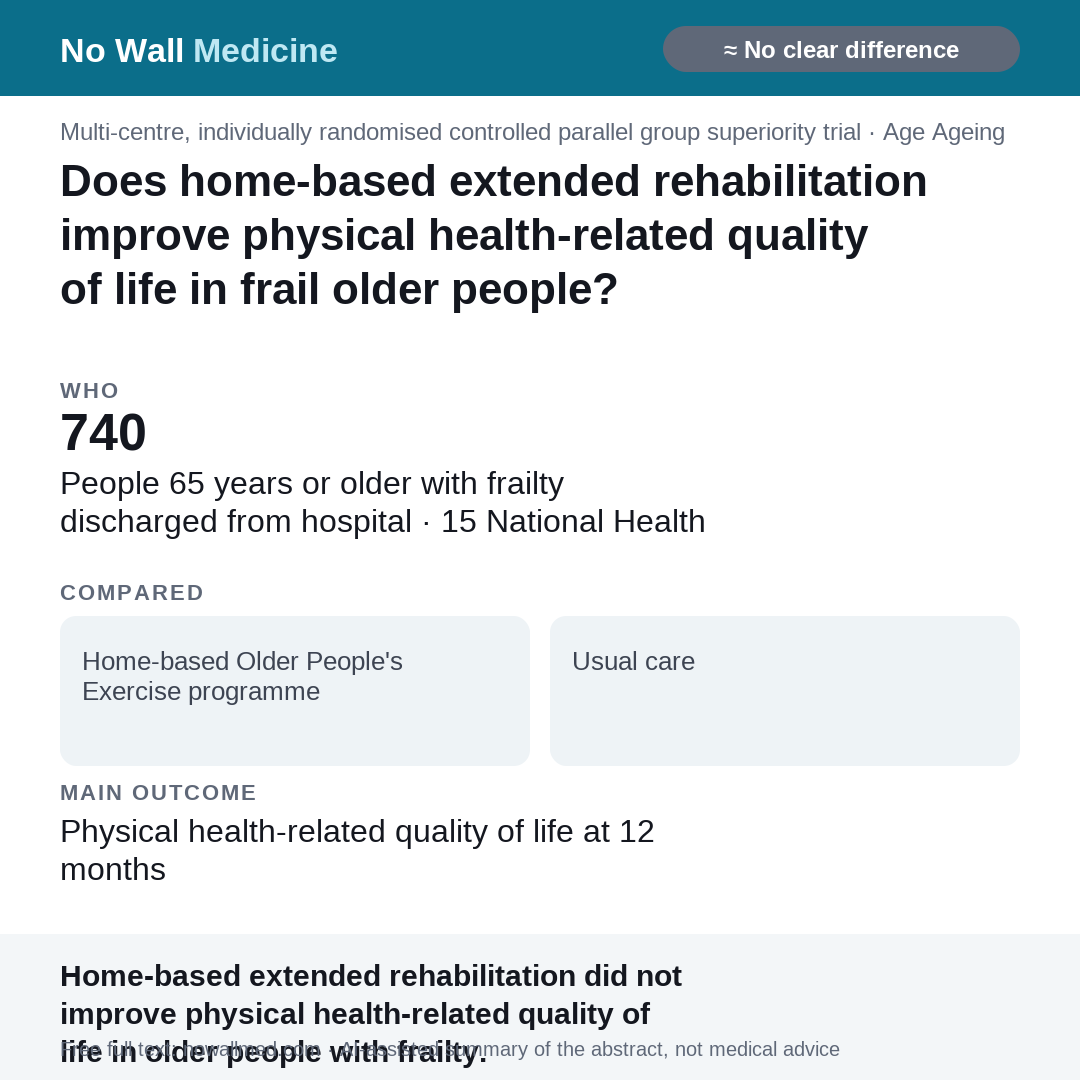
Home-based extended rehabilitation for older people with frailty (HERO): a randomised controlled trial
Multi-centre, individually randomised controlled parallel group superiority trialNo clear difference
Does home-based extended rehabilitation improve physical health-related quality of life in frail older people?
Who
740
People 65 years or older with frailty discharged from hospital · 15 National Health Service Trusts in England
Compared
Home-based Older People's Exercise programme
Usual care
Main outcome
Physical health-related quality of life at 12 months
Result: adjusted mean difference -0.22 (95% CI -1.47 to 1.03)
Bottom line: Home-based extended rehabilitation did not improve physical health-related quality of life in older people with frailty.
Age Ageing · 2026-02-20Download image
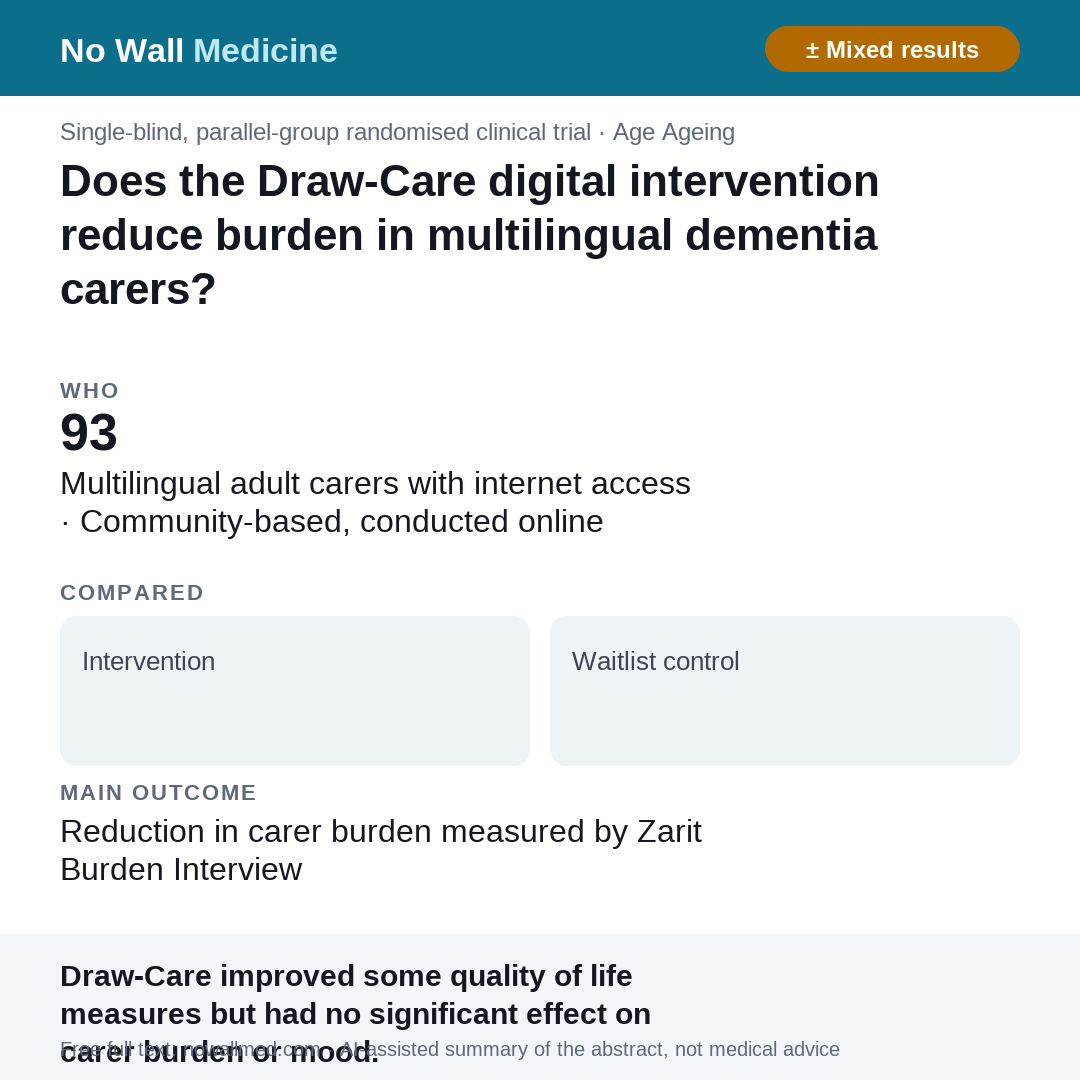
Evaluating the effects of the World Health Organisation's online intervention 'iSupport lite' to reduce burden in multilingual dementia carers: results from the Australian Draw-Care randomised clinical trial
Single-blind, parallel-group randomised clinical trialMixed results
Does the Draw-Care digital intervention reduce burden in multilingual dementia carers?
Who
93
Multilingual adult carers with internet access · Community-based, conducted online
Compared
Intervention
Waitlist control
Main outcome
Reduction in carer burden measured by Zarit Burden Interview
Result: mean difference 0.75 (95% CL: 0.25 to 1.24) for CarerQoL-VAS
Bottom line: Draw-Care improved some quality of life measures but had no significant effect on carer burden or mood.
Age Ageing · 2026-02-20Download image
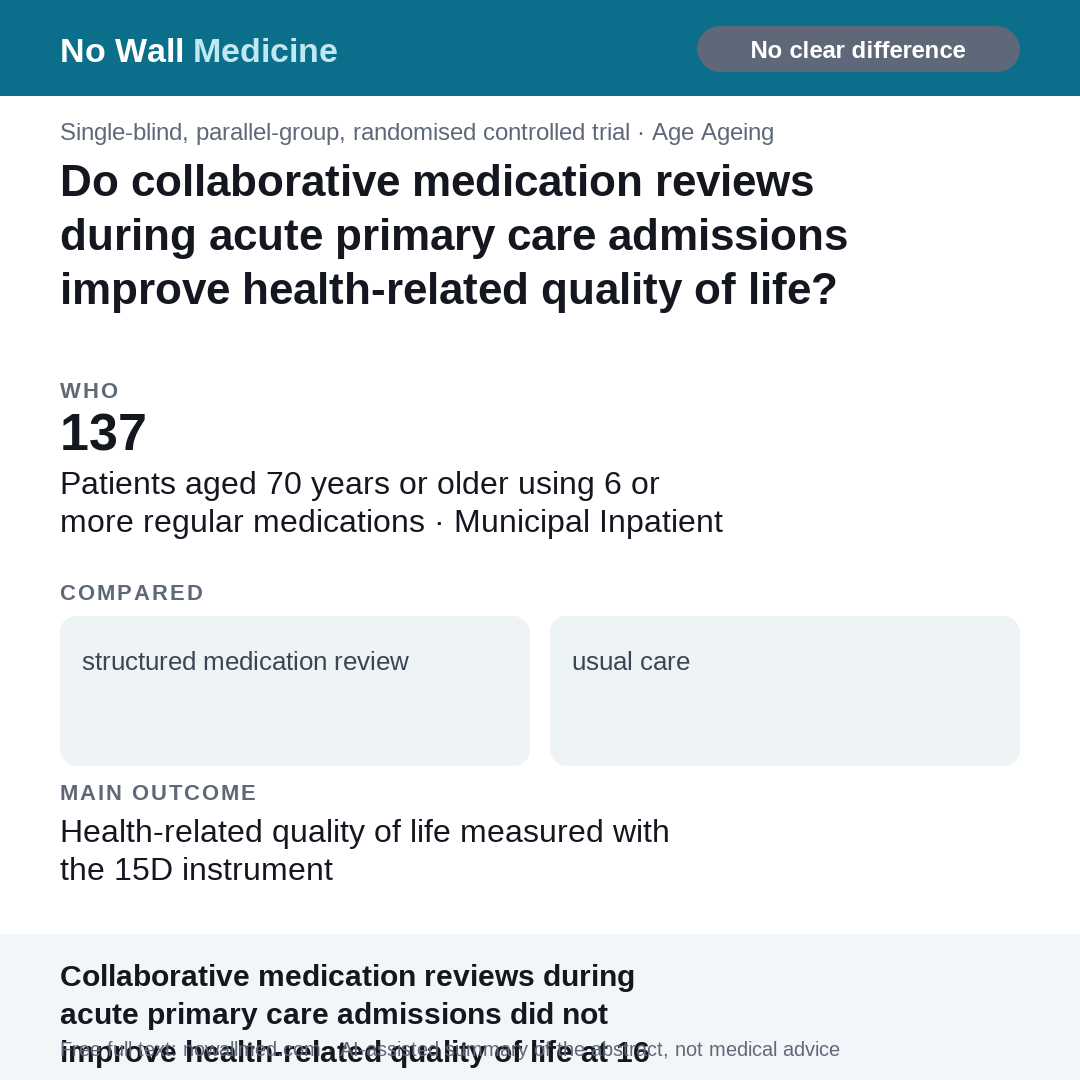
Collaborative medication reviews during acute primary care admissions for older adults with polypharmacy: a randomised controlled trial
Single-blind, parallel-group, randomised controlled trialNo clear difference
Do collaborative medication reviews during acute primary care admissions improve health-related quality of life?
Who
137
Patients aged 70 years or older using 6 or more regular medications · Municipal Inpatient Acute Care unit in Oslo, Norway
Compared
structured medication review
usual care
Main outcome
Health-related quality of life measured with the 15D instrument
Result: mean difference 0.009 (95% CI, -0.063 to 0.079)
Bottom line: Collaborative medication reviews during acute primary care admissions did not improve health-related quality of life at 16 weeks.
Age Ageing · 2026-02-20Download image
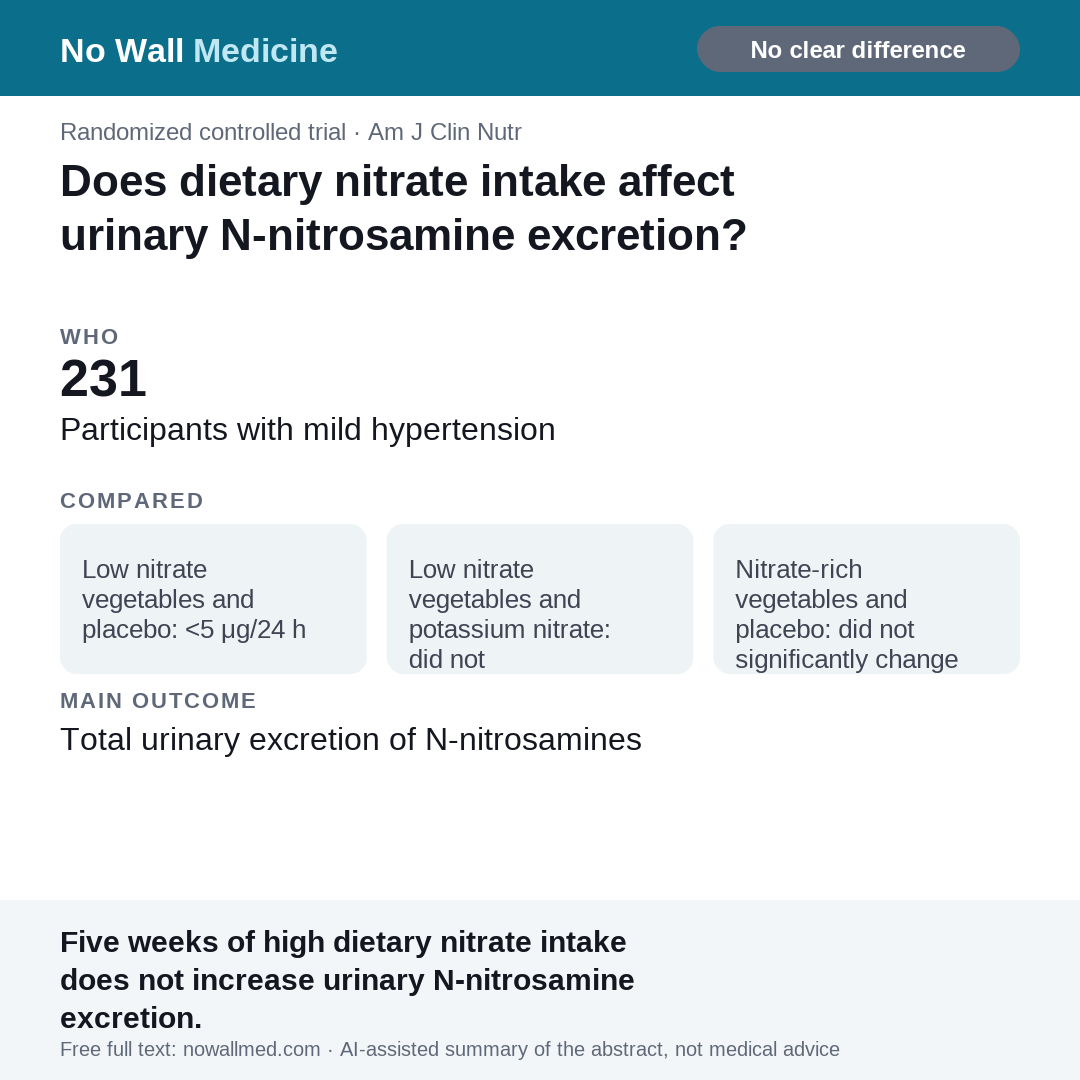
A clinical study examining the effects of dietary nitrate on urinary N-nitrosamines
Randomized controlled trialNo clear difference
Does dietary nitrate intake affect urinary N-nitrosamine excretion?
Who
231
Participants with mild hypertension
Compared
Low nitrate vegetables and placebo: <5 μg/24 h
Low nitrate vegetables and potassium nitrate: did not significantly change
Nitrate-rich vegetables and placebo: did not significantly change
Main outcome
Total urinary excretion of N-nitrosamines
Bottom line: Five weeks of high dietary nitrate intake does not increase urinary N-nitrosamine excretion.
Am J Clin Nutr · 2026-02-20Download image
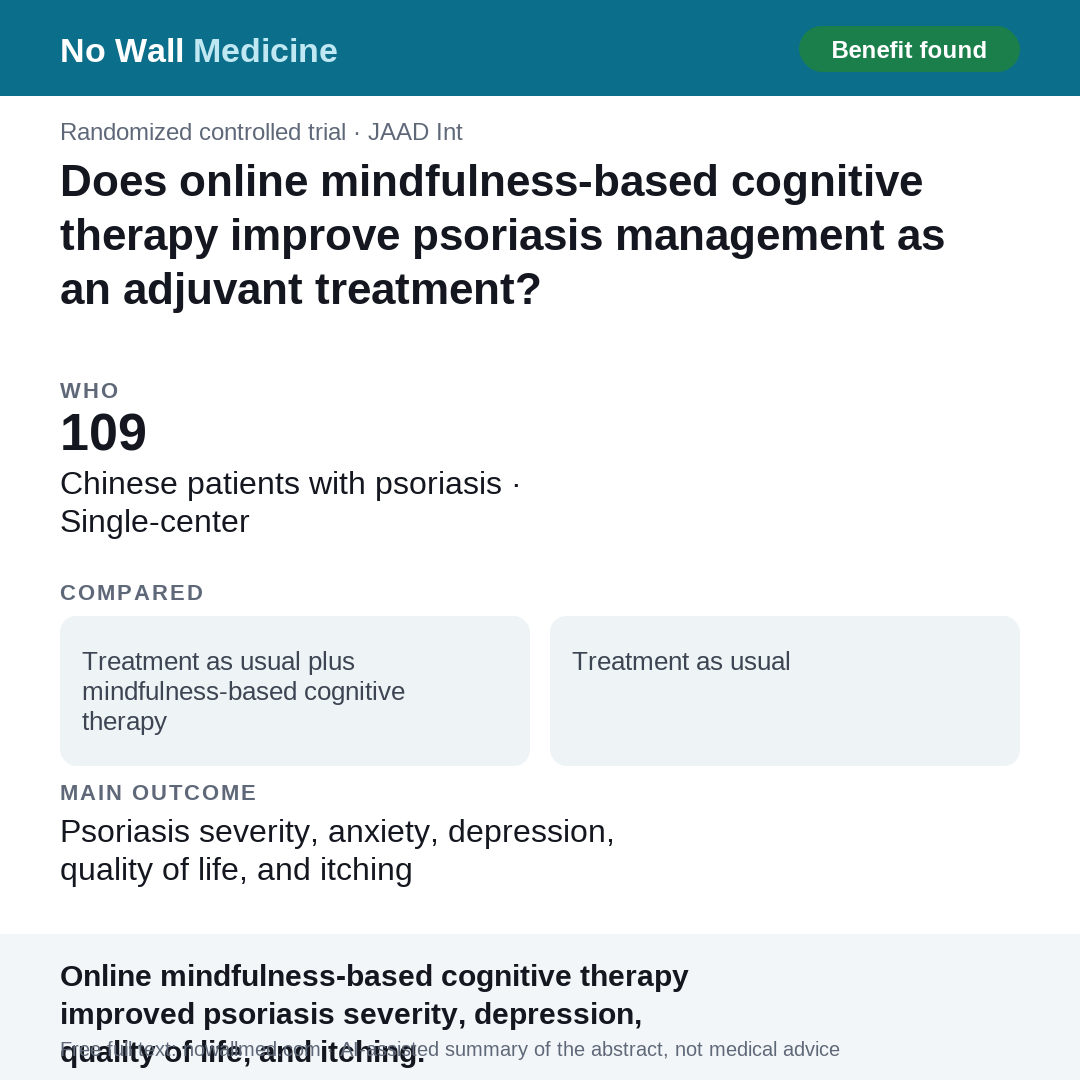
Online mindfulness-based cognitive therapy as an adjuvant-treatment for Chinese patients with psoriasis: A randomized controlled trial
Randomized controlled trialBenefit found
Does online mindfulness-based cognitive therapy improve psoriasis management as an adjuvant treatment?
Who
109
Chinese patients with psoriasis · Single-center
Compared
Treatment as usual plus mindfulness-based cognitive therapy
Treatment as usual
Main outcome
Psoriasis severity, anxiety, depression, quality of life, and itching
Bottom line: Online mindfulness-based cognitive therapy improved psoriasis severity, depression, quality of life, and itching.
Limitation: Single-center
JAAD Int · 2026-02-20Download image
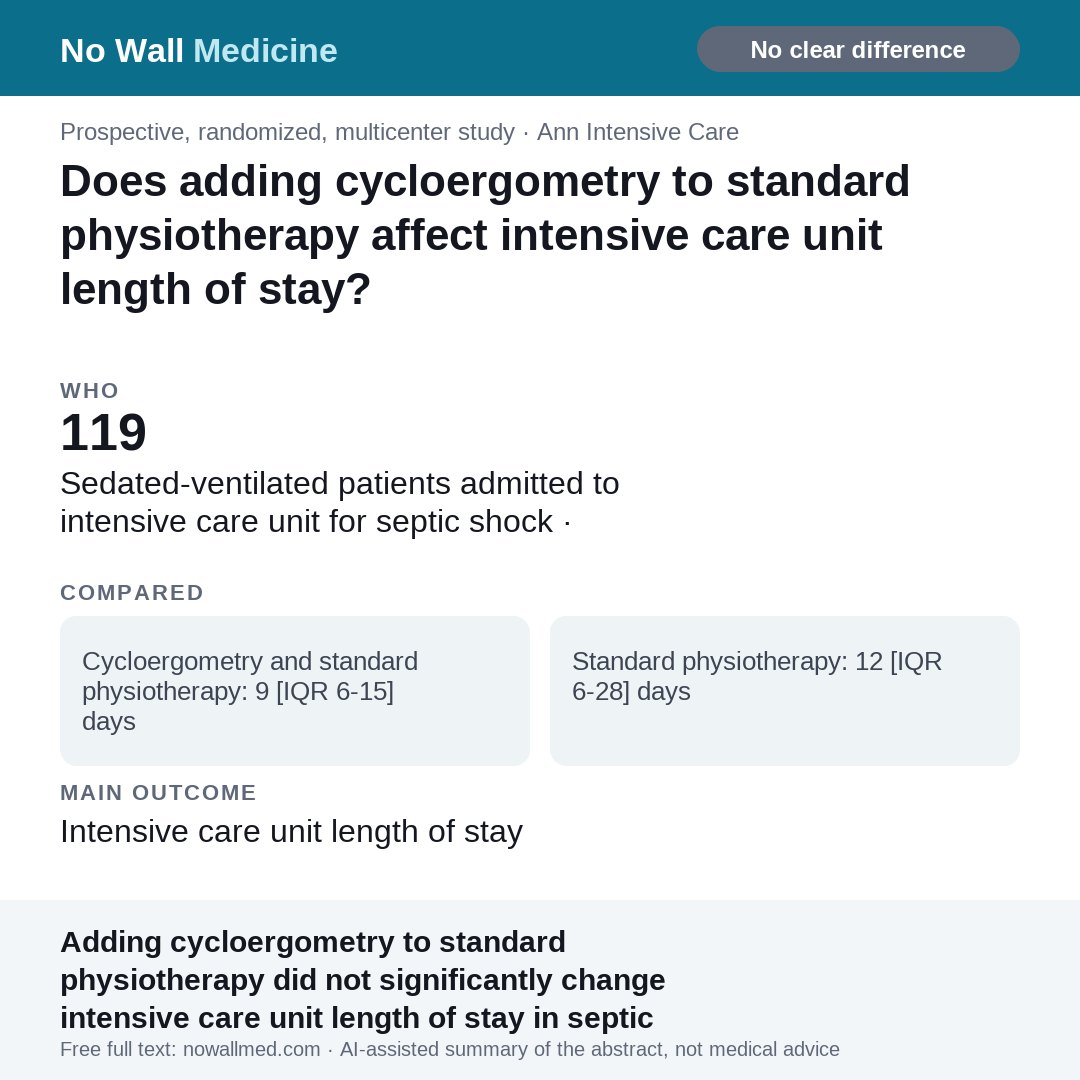
Early mobilization with or without cycloergometry in patients with septic shock in Intensive Care Unit: a randomized controlled trial
Prospective, randomized, multicenter studyNo clear difference
Does adding cycloergometry to standard physiotherapy affect intensive care unit length of stay?
Who
119
Sedated-ventilated patients admitted to intensive care unit for septic shock · Multicenter
Compared
Cycloergometry and standard physiotherapy: 9 [IQR 6-15] days
Standard physiotherapy: 12 [IQR 6-28] days
Main outcome
Intensive care unit length of stay
Bottom line: Adding cycloergometry to standard physiotherapy did not significantly change intensive care unit length of stay in septic shock patients.
Ann Intensive Care · 2026-02-20Download image
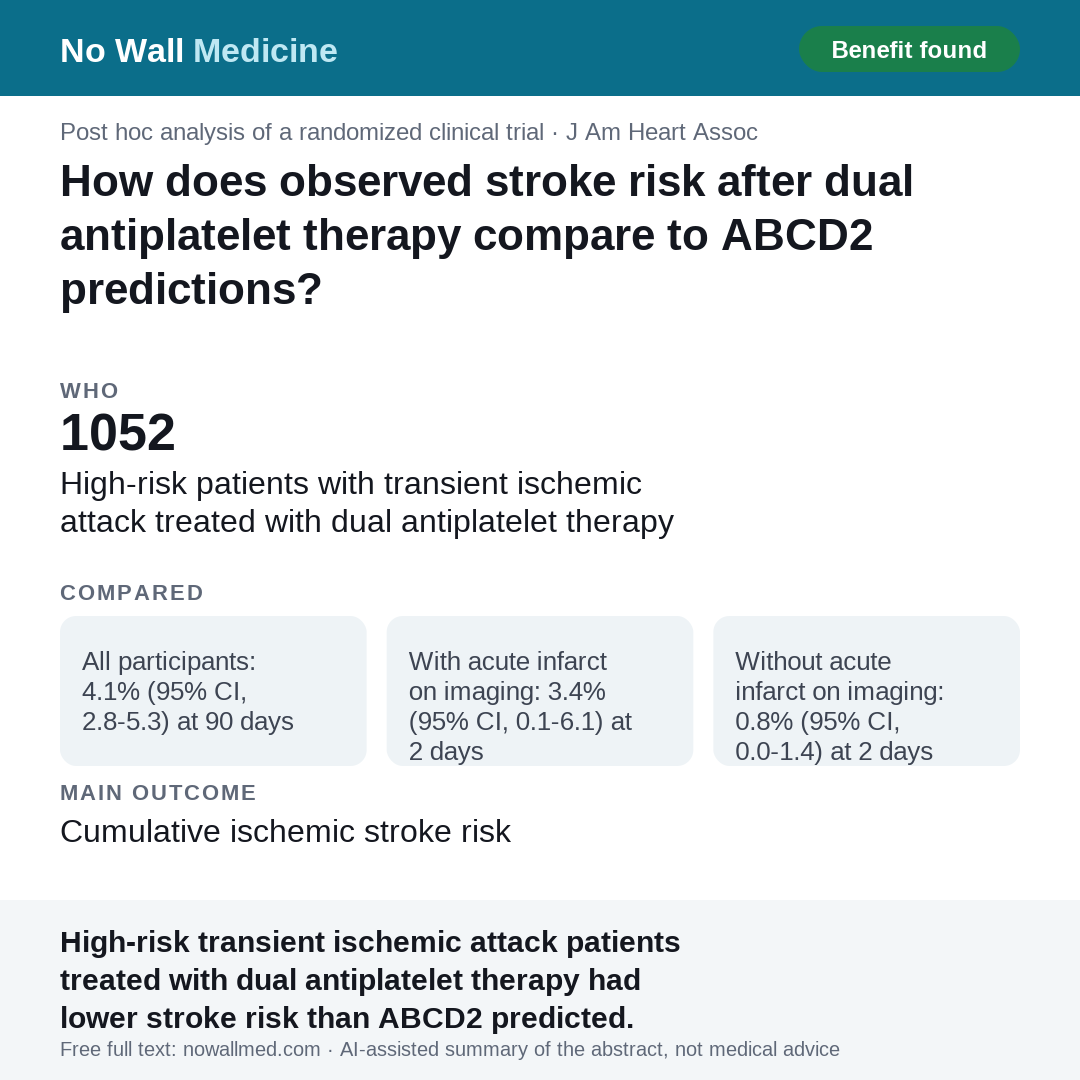
Observed Versus Predicted Stroke Risk After Transient Ischemic Attack: A Post Hoc Analysis of a Randomized Clinical Trial
Post hoc analysis of a randomized clinical trialKey finding
How does observed stroke risk after dual antiplatelet therapy compare to ABCD2 predictions?
Who
1052
High-risk patients with transient ischemic attack treated with dual antiplatelet therapy
Compared
All participants: 4.1% (95% CI, 2.8-5.3) at 90 days
With acute infarct on imaging: 3.4% (95% CI, 0.1-6.1) at 2 days
Without acute infarct on imaging: 0.8% (95% CI, 0.0-1.4) at 2 days
Main outcome
Cumulative ischemic stroke risk
Bottom line: High-risk transient ischemic attack patients treated with dual antiplatelet therapy had lower stroke risk than ABCD2 predicted.
Limitation: This was a post hoc analysis of a randomized clinical trial.
J Am Heart Assoc · 2026-02-20Download image
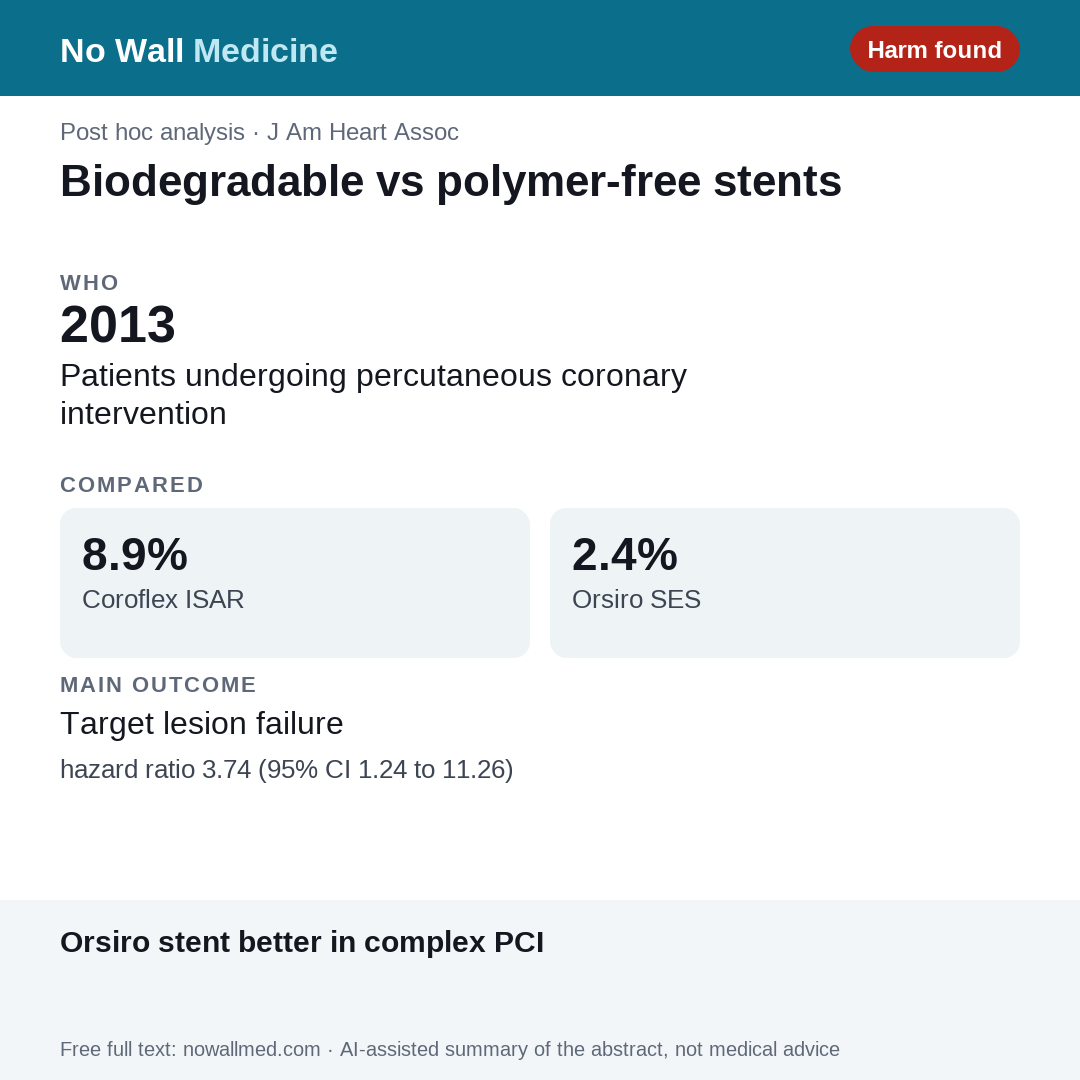
Biodegradable Polymer Versus Polymer-Free Ultrathin Sirolimus-Eluting Stents in Complex Percutaneous Coronary Intervention: Post Hoc Analysis of the Stent Arm Registry From the HOST-IDEA Randomized Trial
Post hoc analysisHarm found
Biodegradable vs polymer-free stents
Who
2013
Patients undergoing percutaneous coronary intervention
Compared
8.9%Coroflex ISAR
2.4%Orsiro SES
Main outcome
Target lesion failure
Result: hazard ratio 3.74 (95% CI 1.24 to 11.26)
Bottom line: Orsiro stent better in complex PCI
J Am Heart Assoc · 2026-02-20Download image
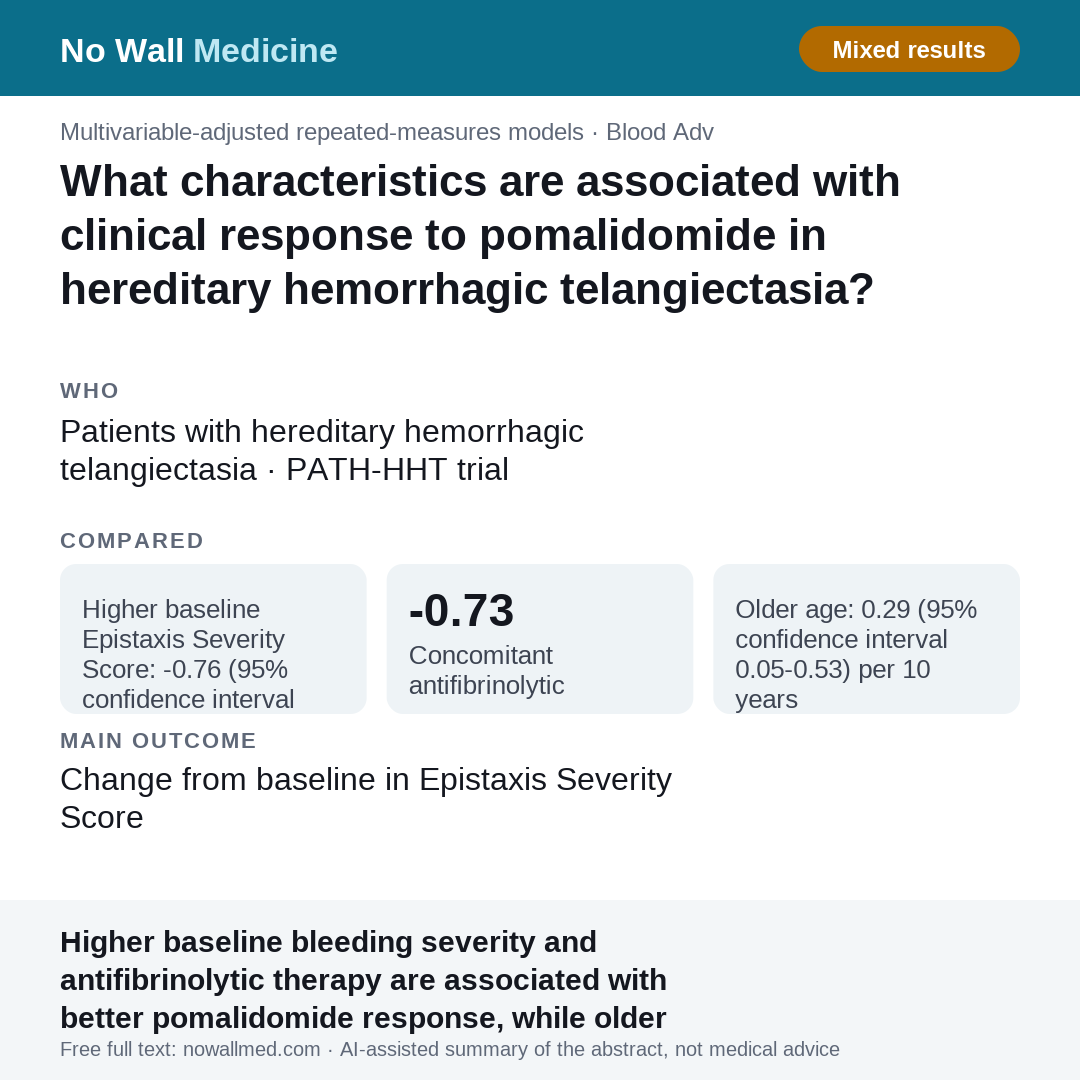
Characteristics associated with clinical response to pomalidomide in hereditary hemorrhagic telangiectasia
Multivariable-adjusted repeated-measures modelsMixed results
What characteristics are associated with clinical response to pomalidomide in hereditary hemorrhagic telangiectasia?
Who
Patients with hereditary hemorrhagic telangiectasia · PATH-HHT trial
Compared
Higher baseline Epistaxis Severity Score: -0.76 (95% confidence interval -0.99 to -0.54) points
-0.73Concomitant antifibrinolytic therapy (95% confidence interval -1.48 to 0.01)
Older age: 0.29 (95% confidence interval 0.05-0.53) per 10 years
Main outcome
Change from baseline in Epistaxis Severity Score
Bottom line: Higher baseline bleeding severity and antifibrinolytic therapy are associated with better pomalidomide response, while older age is associated with less response.
Blood Adv · 2026-02-20Download image
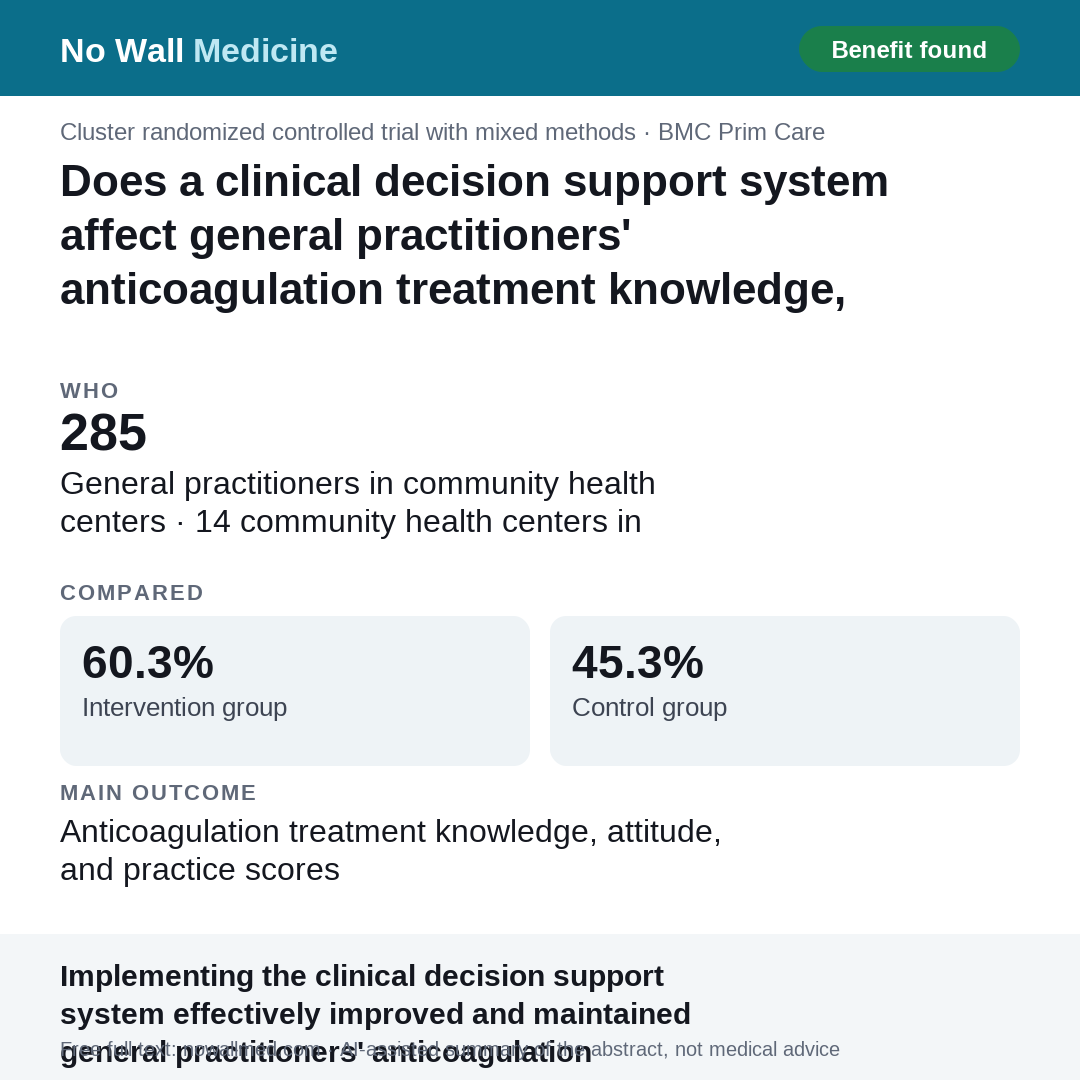
Influence of a clinical decision support system on the anticoagulation treatment knowledge, attitude and practice of general practitioners and their using experience: a mixed method study
Cluster randomized controlled trial with mixed methodsBenefit found
Does a clinical decision support system affect general practitioners' anticoagulation treatment knowledge, attitude, and practice?
Who
285
General practitioners in community health centers · 14 community health centers in Shanghai, China
Compared
60.3%Intervention group
45.3%Control group
Main outcome
Anticoagulation treatment knowledge, attitude, and practice scores
Result: p = 0.002
Bottom line: Implementing the clinical decision support system effectively improved and maintained general practitioners' anticoagulation treatment knowledge, attitude, and practice.
BMC Prim Care · 2026-02-20Download image
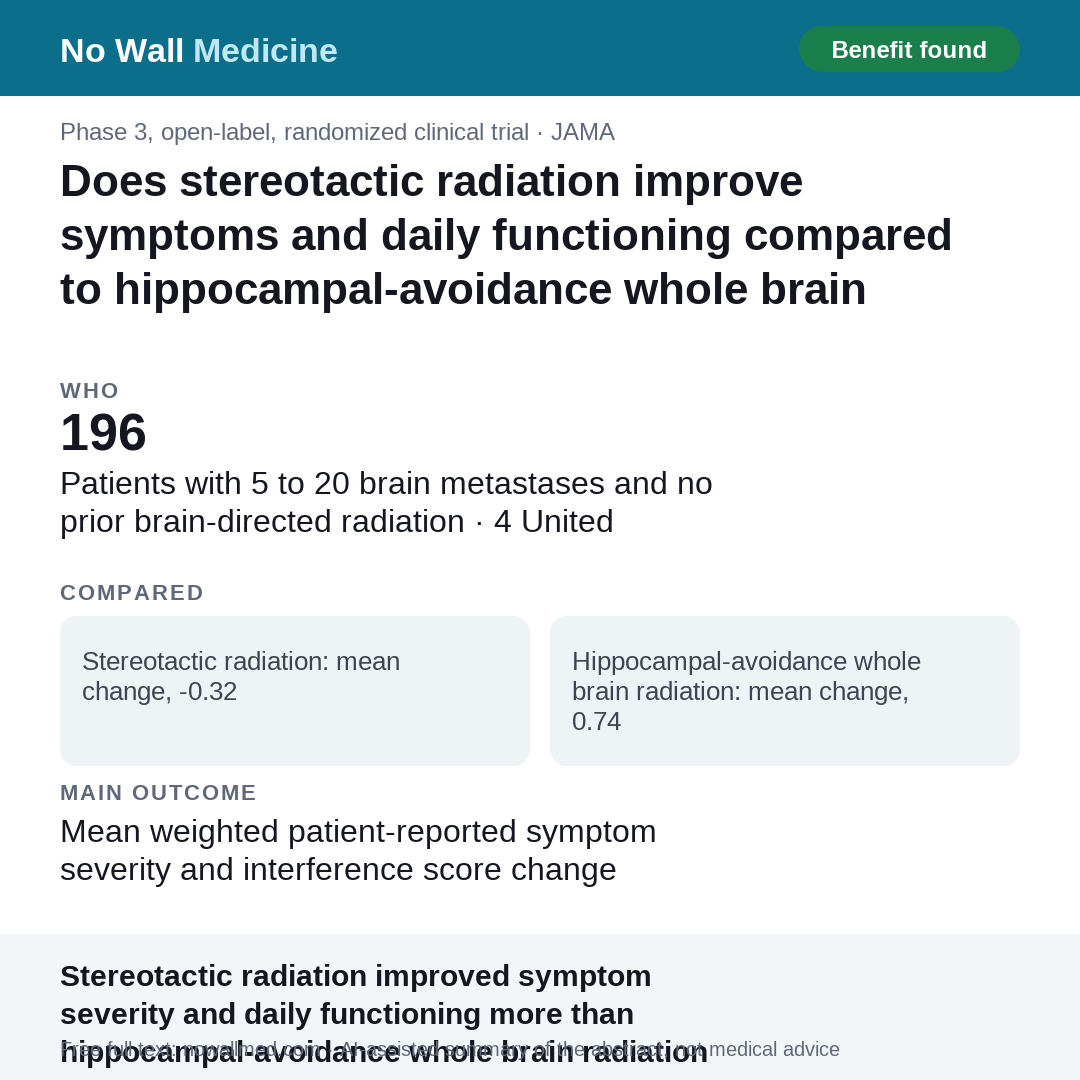
Treatment for Brain Metastases With Stereotactic Radiation vs Hippocampal-Avoidance Whole Brain Radiation: A Randomized Clinical Trial
Phase 3, open-label, randomized clinical trialBenefit found
Does stereotactic radiation improve symptoms and daily functioning compared to hippocampal-avoidance whole brain radiation?
Who
196
Patients with 5 to 20 brain metastases and no prior brain-directed radiation · 4 United States-based centers
Compared
Stereotactic radiation: mean change, -0.32
Hippocampal-avoidance whole brain radiation: mean change, 0.74
Main outcome
Mean weighted patient-reported symptom severity and interference score change
Result: mean difference, -1.06 (95% CI, -1.54 to -0.58)
Bottom line: Stereotactic radiation improved symptom severity and daily functioning more than hippocampal-avoidance whole brain radiation in patients with multiple brain metastases.
JAMA · 2026-02-19Download image
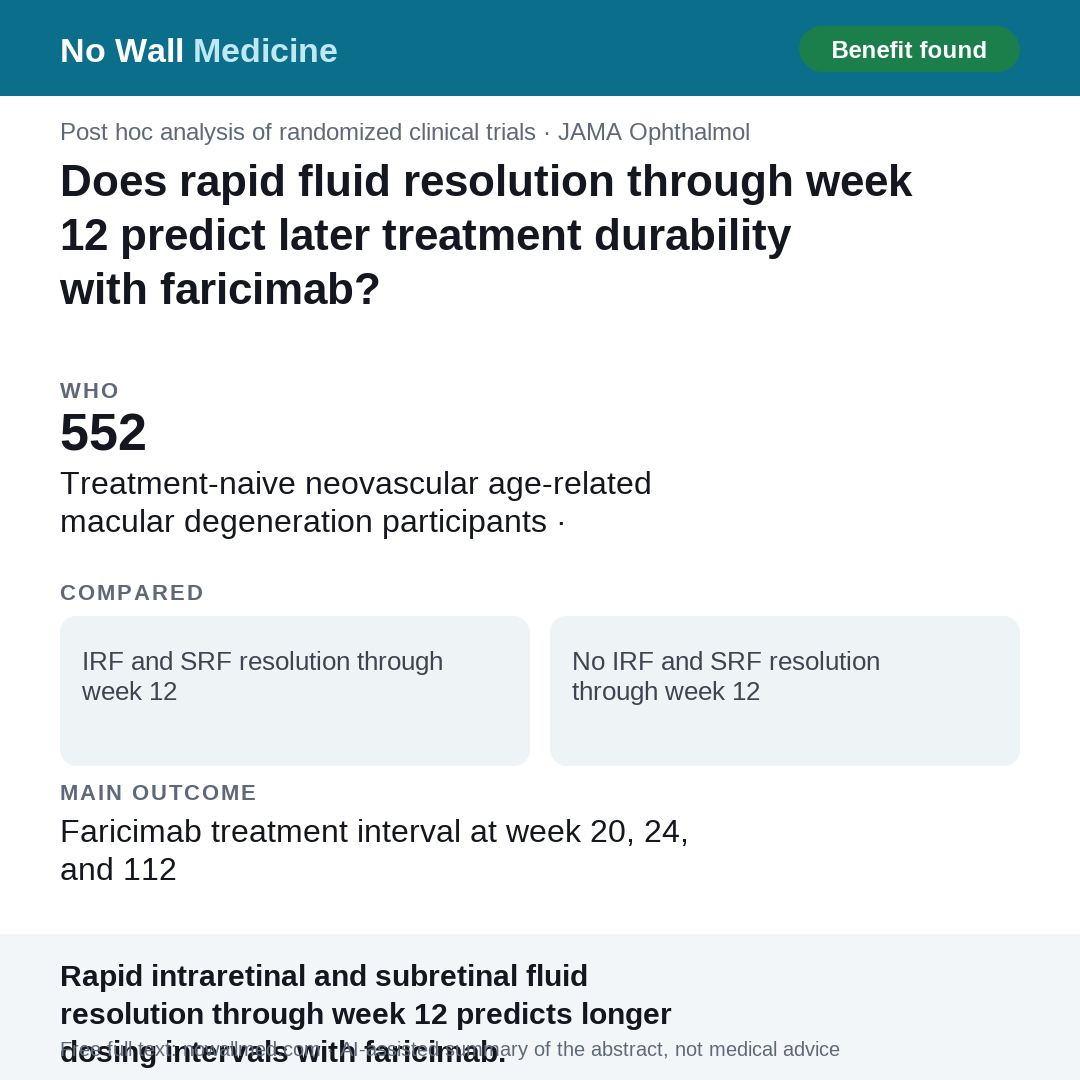
Rapid Fluid Resolution and Durability With Faricimab in Neovascular Age-Related Macular Degeneration
Post hoc analysis of randomized clinical trialsKey finding
Does rapid fluid resolution through week 12 predict later treatment durability with faricimab?
Who
552
Treatment-naive neovascular age-related macular degeneration participants · Multicenter
Compared
IRF and SRF resolution through week 12
No IRF and SRF resolution through week 12
Main outcome
Faricimab treatment interval at week 20, 24, and 112
Result: odds ratio 1.99 (95% CI 1.23-3.21) for every-16-week dosing
Bottom line: Rapid intraretinal and subretinal fluid resolution through week 12 predicts longer dosing intervals with faricimab.
JAMA Ophthalmol · 2026-02-19Download image
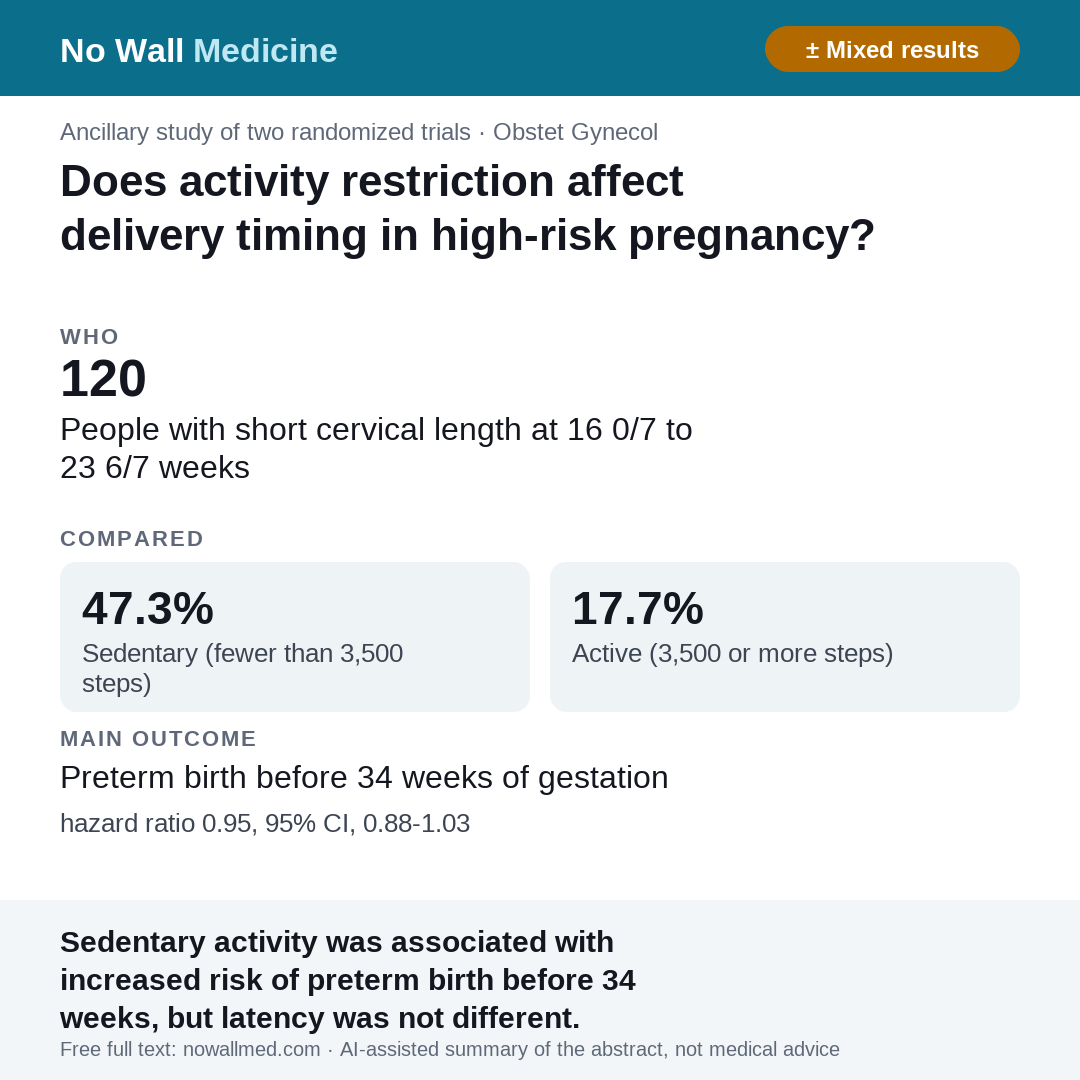
Activity Restriction in Pregnancy and the Risk of Early Delivery: The AWARE Study
Ancillary study of two randomized trialsMixed results
Does activity restriction affect delivery timing in high-risk pregnancy?
Who
120
People with short cervical length at 16 0/7 to 23 6/7 weeks
Compared
47.3%Sedentary (fewer than 3,500 steps)
17.7%Active (3,500 or more steps)
Main outcome
Preterm birth before 34 weeks of gestation
Result: hazard ratio 0.95, 95% CI, 0.88-1.03
Bottom line: Sedentary activity was associated with increased risk of preterm birth before 34 weeks, but latency was not different.
Obstet Gynecol · 2026-02-19Download image
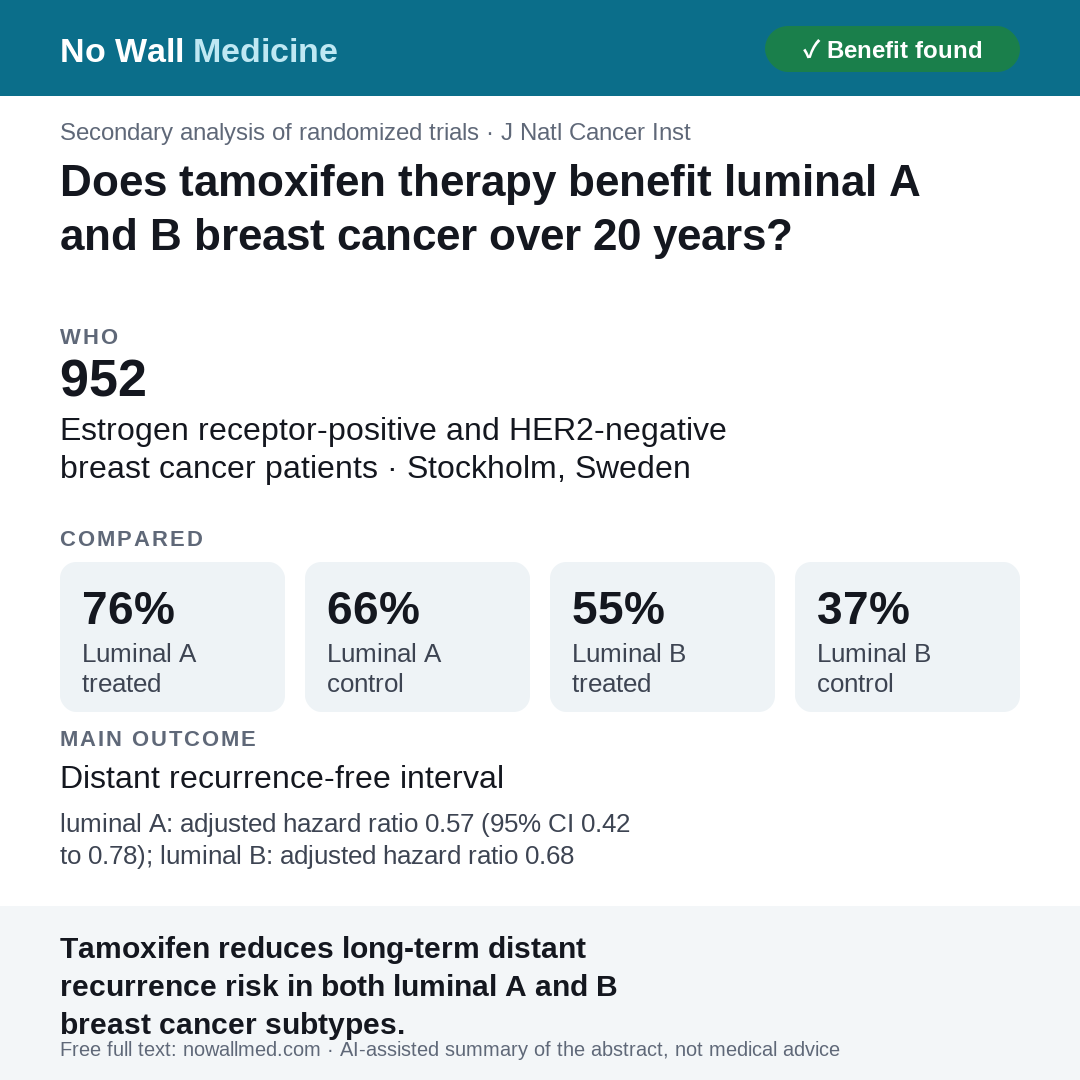
Tamoxifen therapy benefit in luminal A and B breast cancer with 20-year follow-up
Secondary analysis of randomized trialsBenefit found
Does tamoxifen therapy benefit luminal A and B breast cancer over 20 years?
Who
952
Estrogen receptor-positive and HER2-negative breast cancer patients · Stockholm, Sweden
Compared
76%Luminal A treated (20-year distant recurrence-free interval)
66%Luminal A control (20-year distant recurrence-free interval)
55%Luminal B treated (20-year distant recurrence-free interval)
37%Luminal B control (20-year distant recurrence-free interval)
Main outcome
Distant recurrence-free interval
Result: luminal A: adjusted hazard ratio 0.57 (95% CI 0.42 to 0.78); luminal B: adjusted hazard ratio 0.68 (95% CI 0.46 to 0.99)
Bottom line: Tamoxifen reduces long-term distant recurrence risk in both luminal A and B breast cancer subtypes.
J Natl Cancer Inst · 2026-02-19Download image
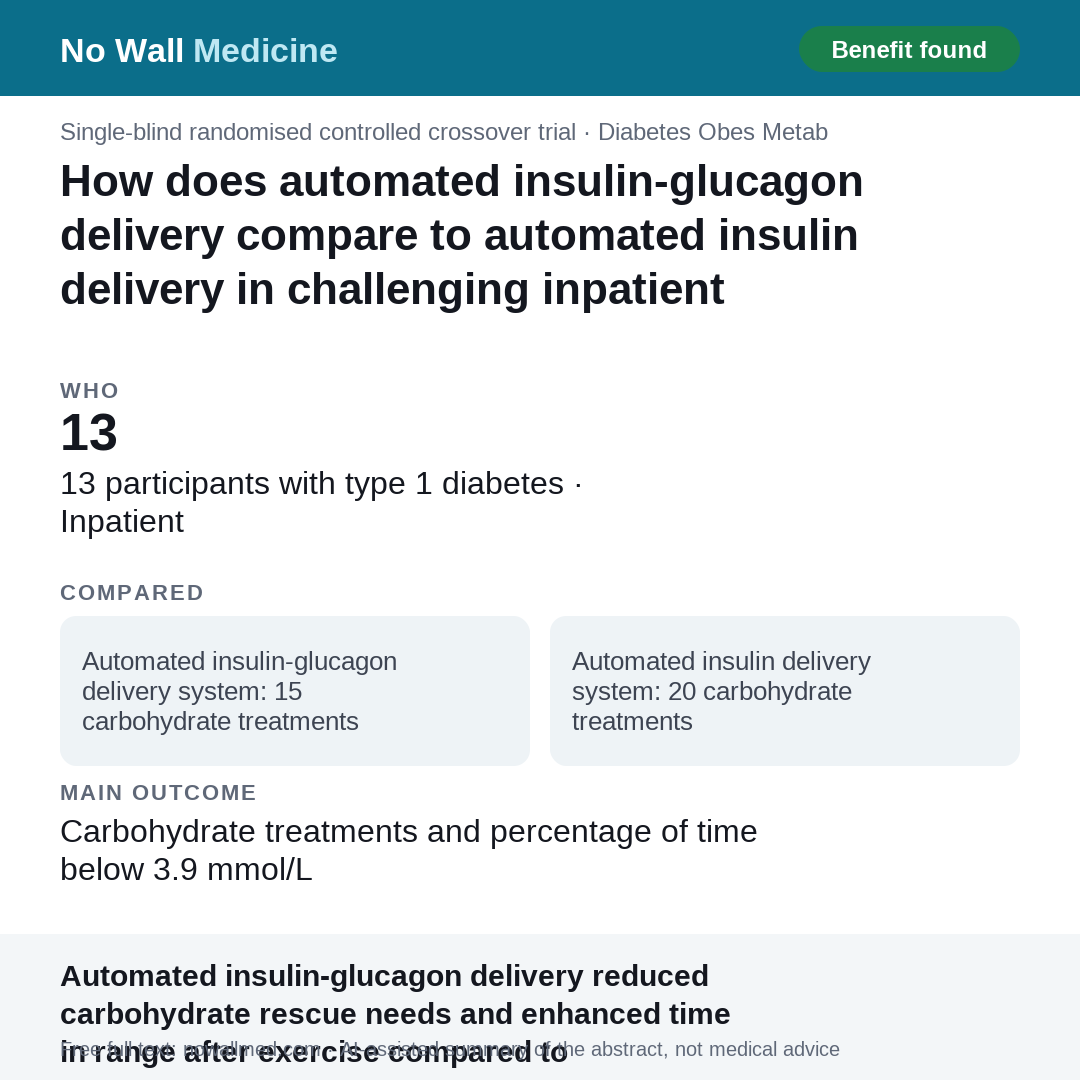
Performance of an automated insulin-glucagon delivery system versus automated insulin delivery system during challenging inpatient conditions. A single-blind randomised controlled crossover trial
Single-blind randomised controlled crossover trialBenefit found
How does automated insulin-glucagon delivery compare to automated insulin delivery in challenging inpatient conditions?
Who
13
13 participants with type 1 diabetes · Inpatient
Compared
Automated insulin-glucagon delivery system: 15 carbohydrate treatments
Automated insulin delivery system: 20 carbohydrate treatments
Main outcome
Carbohydrate treatments and percentage of time below 3.9 mmol/L
Bottom line: Automated insulin-glucagon delivery reduced carbohydrate rescue needs and enhanced time in range after exercise compared to automated insulin delivery.
Diabetes Obes Metab · 2026-02-19Download image
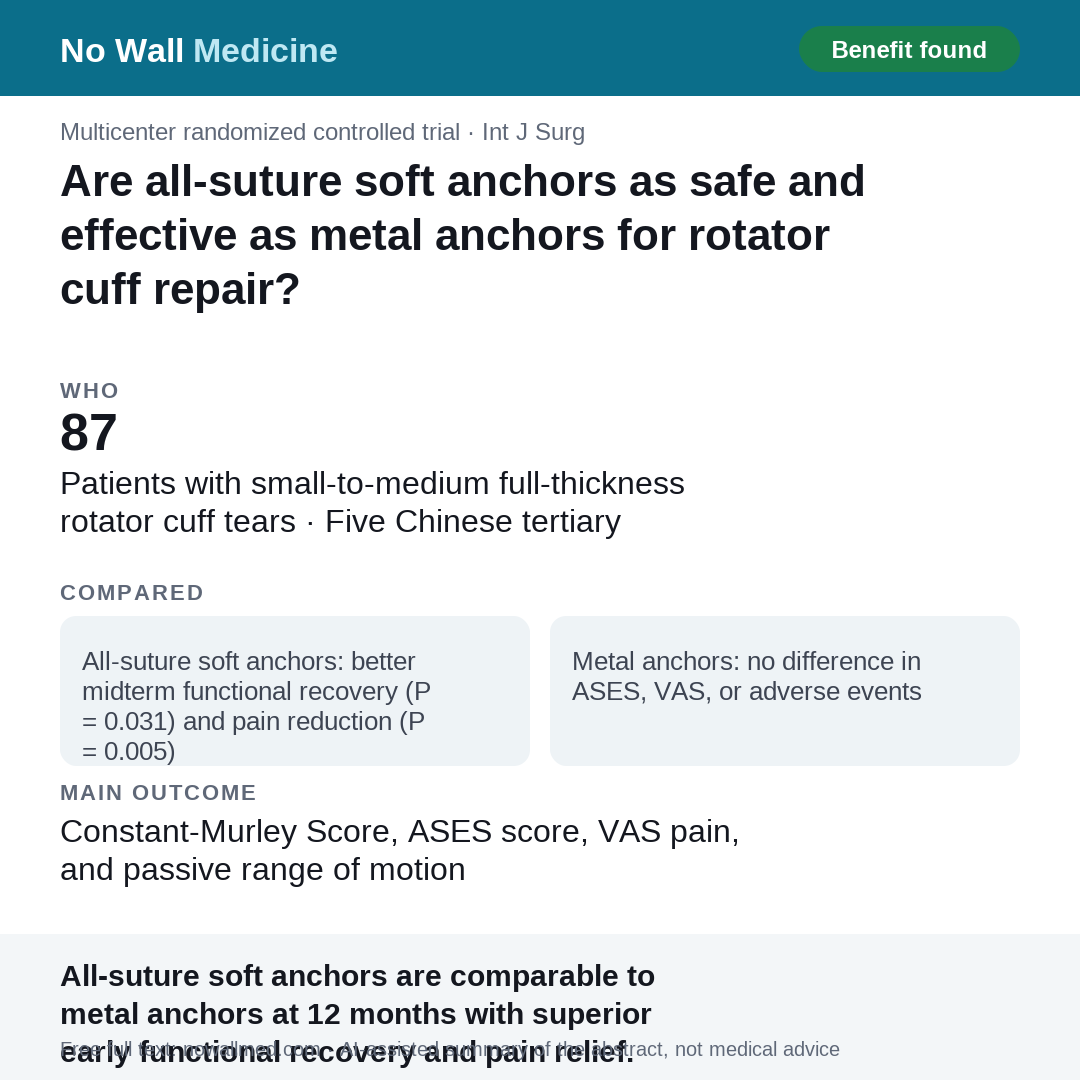
All-suture soft anchors versus metal anchors in arthroscopic rotator cuff repair: a multicenter randomized clinical trial
Multicenter randomized controlled trialBenefit found
Are all-suture soft anchors as safe and effective as metal anchors for rotator cuff repair?
Who
87
Patients with small-to-medium full-thickness rotator cuff tears · Five Chinese tertiary hospitals
Compared
All-suture soft anchors: better midterm functional recovery (P = 0.031) and pain reduction (P = 0.005)
Metal anchors: no difference in ASES, VAS, or adverse events
Main outcome
Constant-Murley Score, ASES score, VAS pain, and passive range of motion
Bottom line: All-suture soft anchors are comparable to metal anchors at 12 months with superior early functional recovery and pain relief.
Int J Surg · 2026-02-19Download image
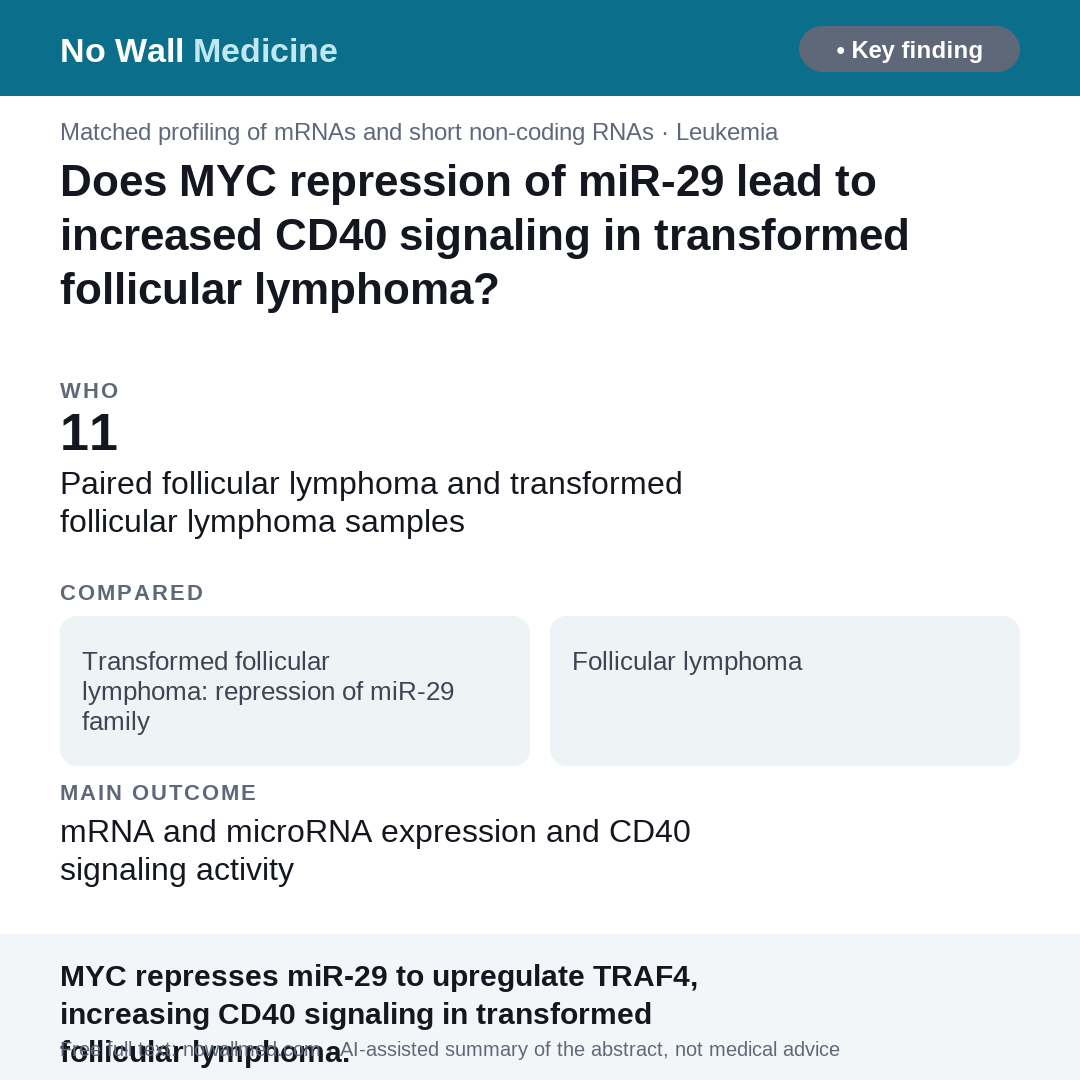
Repression of miR-29 via MYC leads to increased CD40 signaling in transformed follicular lymphoma
Matched profiling of mRNAs and short non-coding RNAsKey finding
Does MYC repression of miR-29 lead to increased CD40 signaling in transformed follicular lymphoma?
Who
11
Paired follicular lymphoma and transformed follicular lymphoma samples
Compared
Transformed follicular lymphoma: repression of miR-29 family
Follicular lymphoma
Main outcome
mRNA and microRNA expression and CD40 signaling activity
Bottom line: MYC represses miR-29 to upregulate TRAF4, increasing CD40 signaling in transformed follicular lymphoma.
Leukemia · 2026-02-19Download image
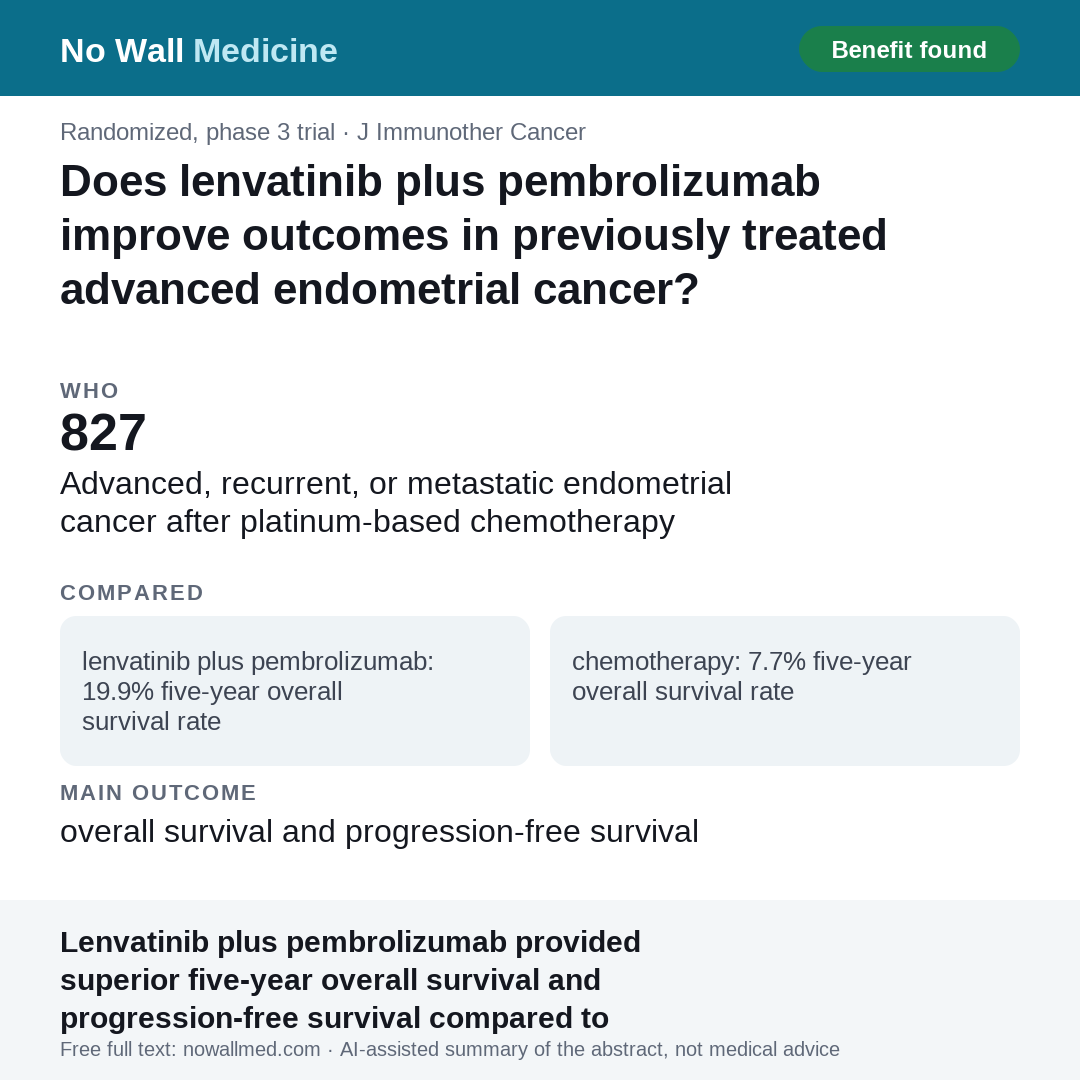
Lenvatinib plus pembrolizumab in previously treated advanced endometrial cancer: 5-year outcomes from the randomized, phase 3 Study 309/KEYNOTE-775
Randomized, phase 3 trialBenefit found
Does lenvatinib plus pembrolizumab improve outcomes in previously treated advanced endometrial cancer?
Who
827
Advanced, recurrent, or metastatic endometrial cancer after platinum-based chemotherapy
Compared
lenvatinib plus pembrolizumab: 19.9% five-year overall survival rate
chemotherapy: 7.7% five-year overall survival rate
Main outcome
overall survival and progression-free survival
Bottom line: Lenvatinib plus pembrolizumab provided superior five-year overall survival and progression-free survival compared to chemotherapy in advanced endometrial cancer.
J Immunother Cancer · 2026-02-19Download image
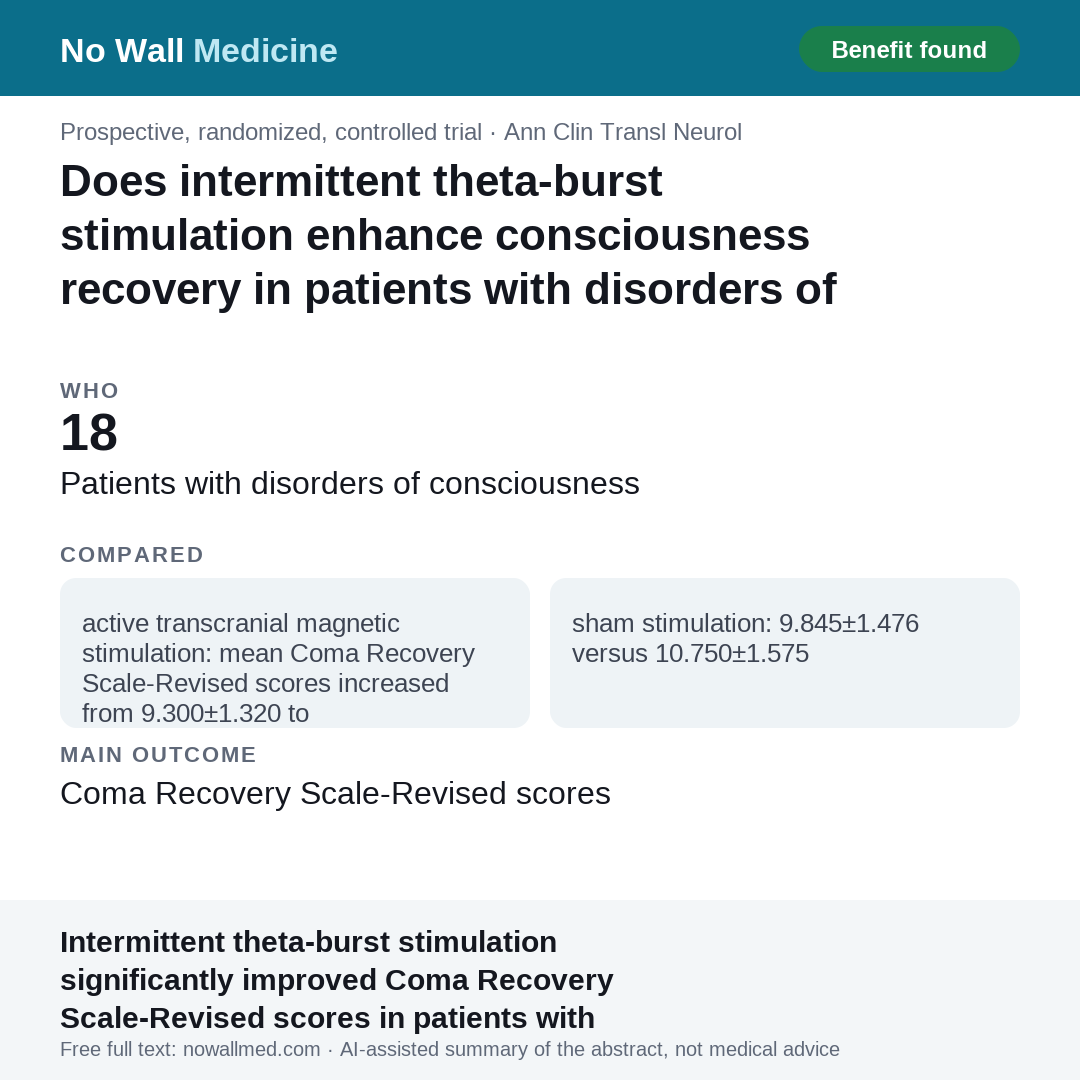
Efficacy of Intermittent Theta-Burst Stimulation for Prolonged Disorders of Consciousness: A Prospective, Randomized, Controlled Trial
Prospective, randomized, controlled trialKey finding
Does intermittent theta-burst stimulation enhance consciousness recovery in patients with disorders of consciousness?
Who
18
Patients with disorders of consciousness
Compared
active transcranial magnetic stimulation: mean Coma Recovery Scale-Revised scores increased from 9.300±1.320 to 11.700±1.409
sham stimulation: 9.845±1.476 versus 10.750±1.575
Main outcome
Coma Recovery Scale-Revised scores
Bottom line: Intermittent theta-burst stimulation significantly improved Coma Recovery Scale-Revised scores in patients with disorders of consciousness.
Ann Clin Transl Neurol · 2026-02-19Download image