Visual abstracts
New randomized trials and meta-analyses from leading journals at a glance: who was studied, what was compared, and what was found. Every paper is free to read in full.
All specialtiesCardiology 847Oncology 766Gastroenterology & Hepatology 307Infectious Disease 626Neurology 353Psychiatry & Mental Health 430Pulmonology 368Critical Care 252Endocrinology & Diabetes 480Pediatrics 540Surgery 328Orthopedics & Sports Medicine 163Neurosurgery 100Cardiothoracic & Vascular Surgery 87Plastic & Reconstructive Surgery 132Nephrology 197Rheumatology 108Hematology 182Dermatology 80Ophthalmology 97Obstetrics & Gynecology 262Public & Global Health 167Radiology & Imaging 98Anesthesiology 117Urology 162ENT (Otolaryngology) 100Emergency Medicine 84Allergy & Immunology 58Geriatrics 160Family Medicine & Primary Care 111Medical Genetics & Genomics 91Pathology & Laboratory Medicine 24Physical Medicine & Rehabilitation 148Palliative Care 81Nutrition 223Digital Health & AI 460General Medicine 101
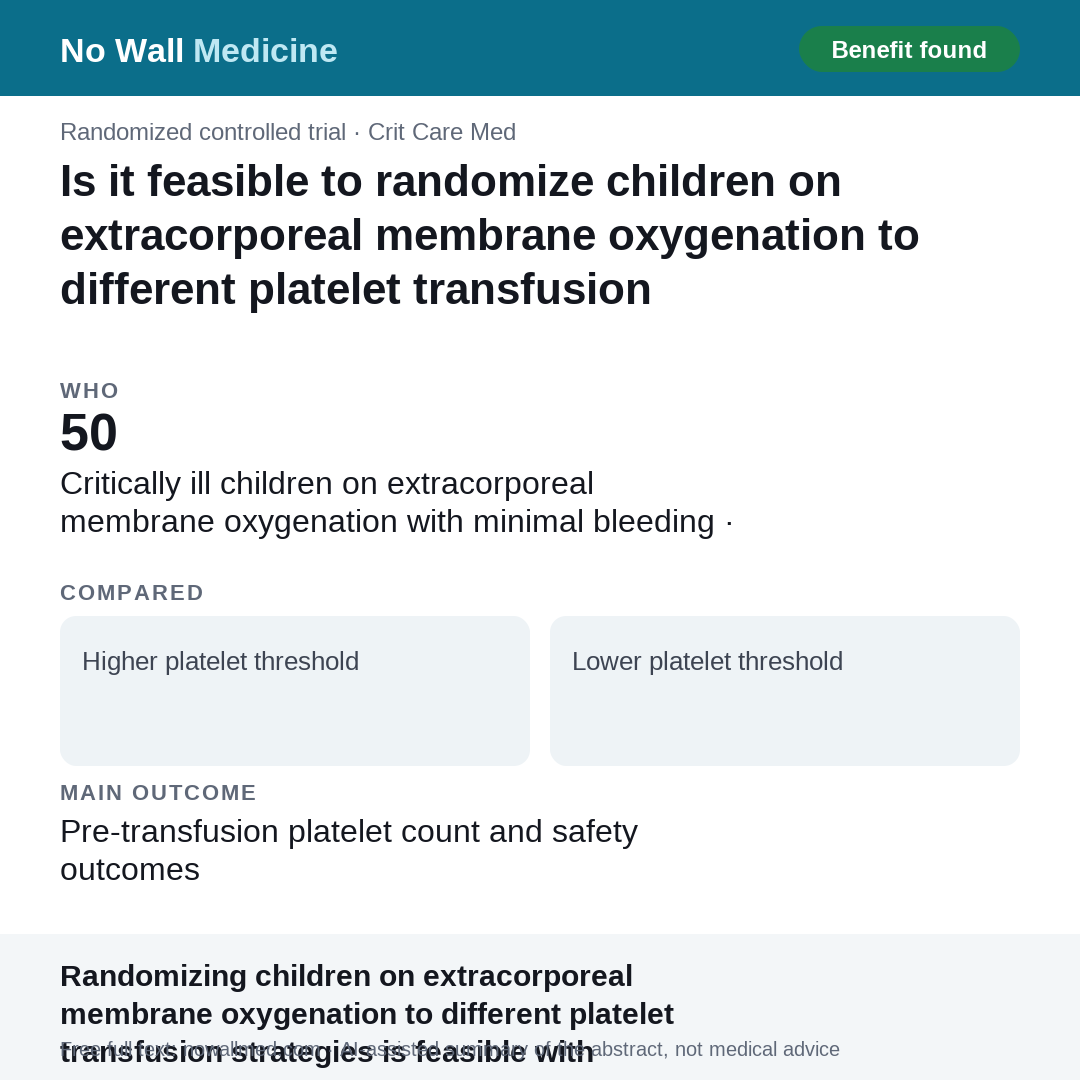
Platelet Transfusion Thresholds for Children Supported by Extracorporeal Membrane Oxygenation: The Extracorporeal Membrane Oxygenation Hemostatic Transfusions in Children (ECSTATIC) Feasibility Clinical Trial
Randomized controlled trialBenefit found
Is it feasible to randomize children on extracorporeal membrane oxygenation to different platelet transfusion thresholds?
Who
50
Critically ill children on extracorporeal membrane oxygenation with minimal bleeding · Ten centers in United States and Israel
Compared
Higher platelet threshold
Lower platelet threshold
Main outcome
Pre-transfusion platelet count and safety outcomes
Bottom line: Randomizing children on extracorporeal membrane oxygenation to different platelet transfusion strategies is feasible with excellent protocol compliance.
Crit Care Med · 2025-12-23Download image
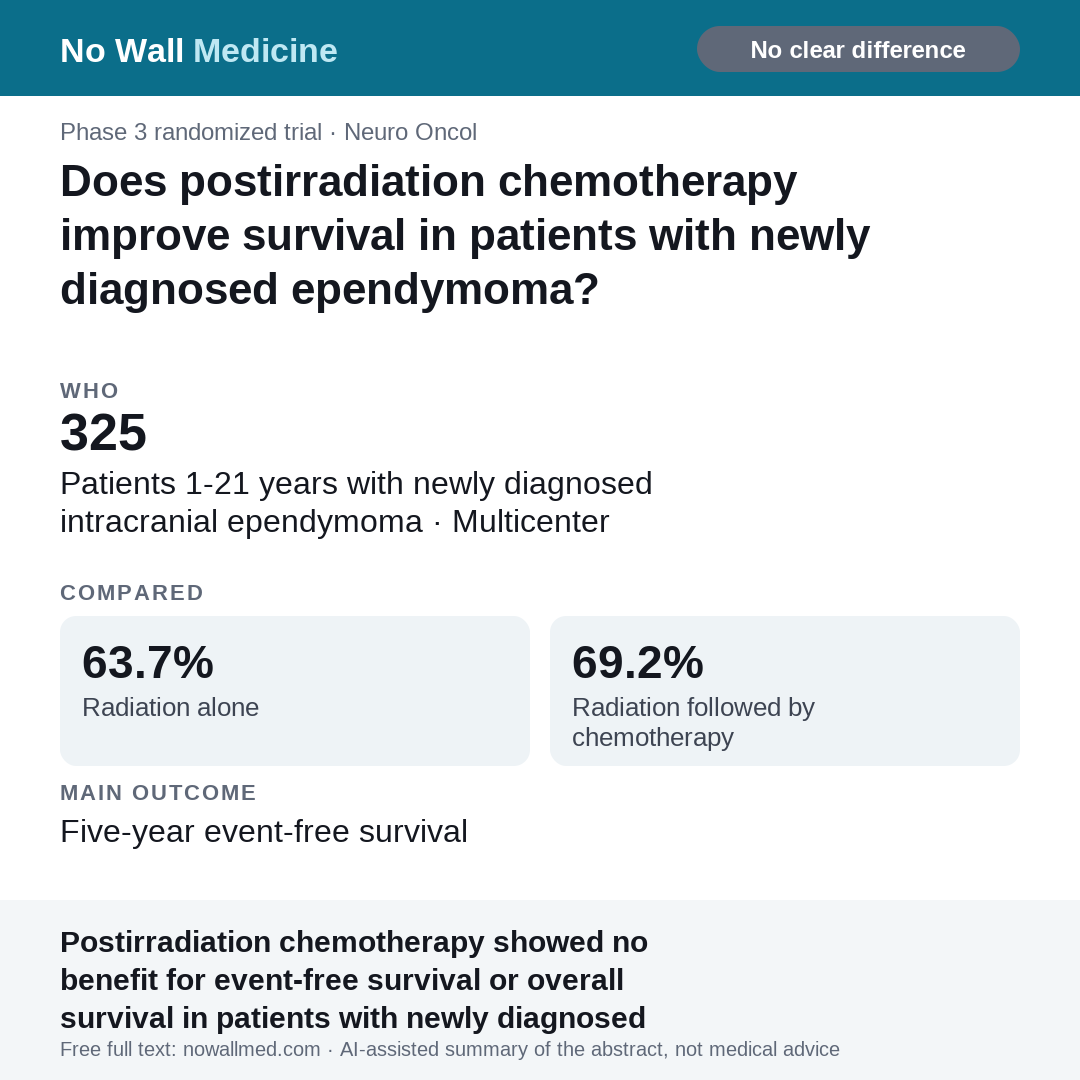
Phase 3 randomized trial of postirradiation chemotherapy in patients with newly diagnosed ependymoma: A report from the Children's Oncology Group
Phase 3 randomized trialNo clear difference
Does postirradiation chemotherapy improve survival in patients with newly diagnosed ependymoma?
Who
325
Patients 1-21 years with newly diagnosed intracranial ependymoma · Multicenter
Compared
63.7%Radiation alone (95% CI: 55.1%-71.1%)
69.2%Radiation followed by chemotherapy (60.8%-76.3%)
Main outcome
Five-year event-free survival
Result: hazard ratio 0.866
Bottom line: Postirradiation chemotherapy showed no benefit for event-free survival or overall survival in patients with newly diagnosed ependymoma.
Neuro Oncol · 2025-12-22Download image
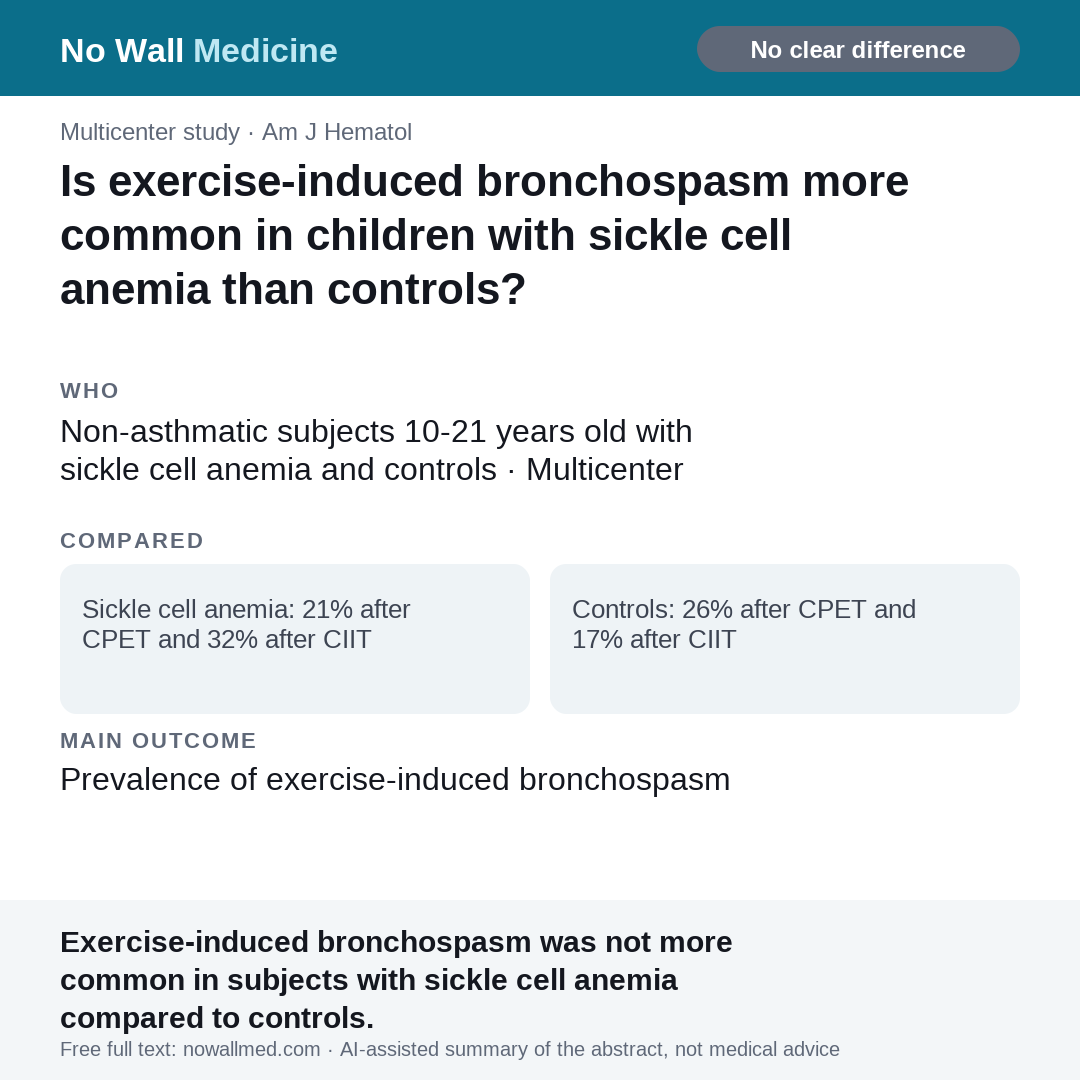
Acute Exercise Challenge and Airway Dynamics in Youth With Sickle Cell Anemia: A Multicenter Study
Multicenter studyNo clear difference
Is exercise-induced bronchospasm more common in children with sickle cell anemia than controls?
Who
Non-asthmatic subjects 10-21 years old with sickle cell anemia and controls · Multicenter
Compared
Sickle cell anemia: 21% after CPET and 32% after CIIT
Controls: 26% after CPET and 17% after CIIT
Main outcome
Prevalence of exercise-induced bronchospasm
Bottom line: Exercise-induced bronchospasm was not more common in subjects with sickle cell anemia compared to controls.
Am J Hematol · 2025-12-20Download image
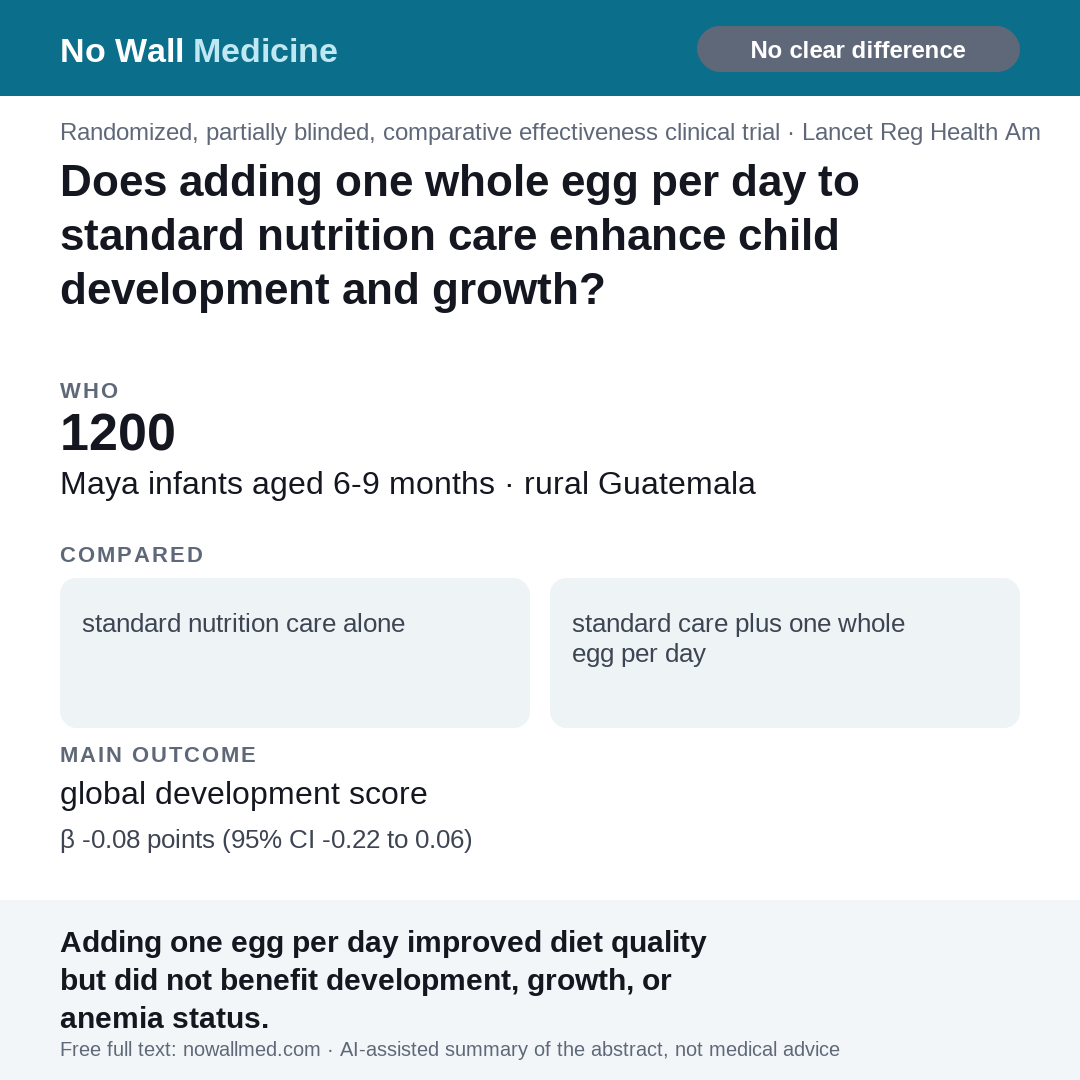
Effect of eggs on Maya child development and growth: the Saqmolo' Project randomized clinical trial
Randomized, partially blinded, comparative effectiveness clinical trialNo clear difference
Does adding one whole egg per day to standard nutrition care enhance child development and growth?
Who
1200
Maya infants aged 6-9 months · rural Guatemala
Compared
standard nutrition care alone
standard care plus one whole egg per day
Main outcome
global development score
Result: β -0.08 points (95% CI -0.22 to 0.06)
Bottom line: Adding one egg per day improved diet quality but did not benefit development, growth, or anemia status.
Funded by: Academy of Nutrition and Dietetics Foundation
Lancet Reg Health Am · 2025-12-20Download image
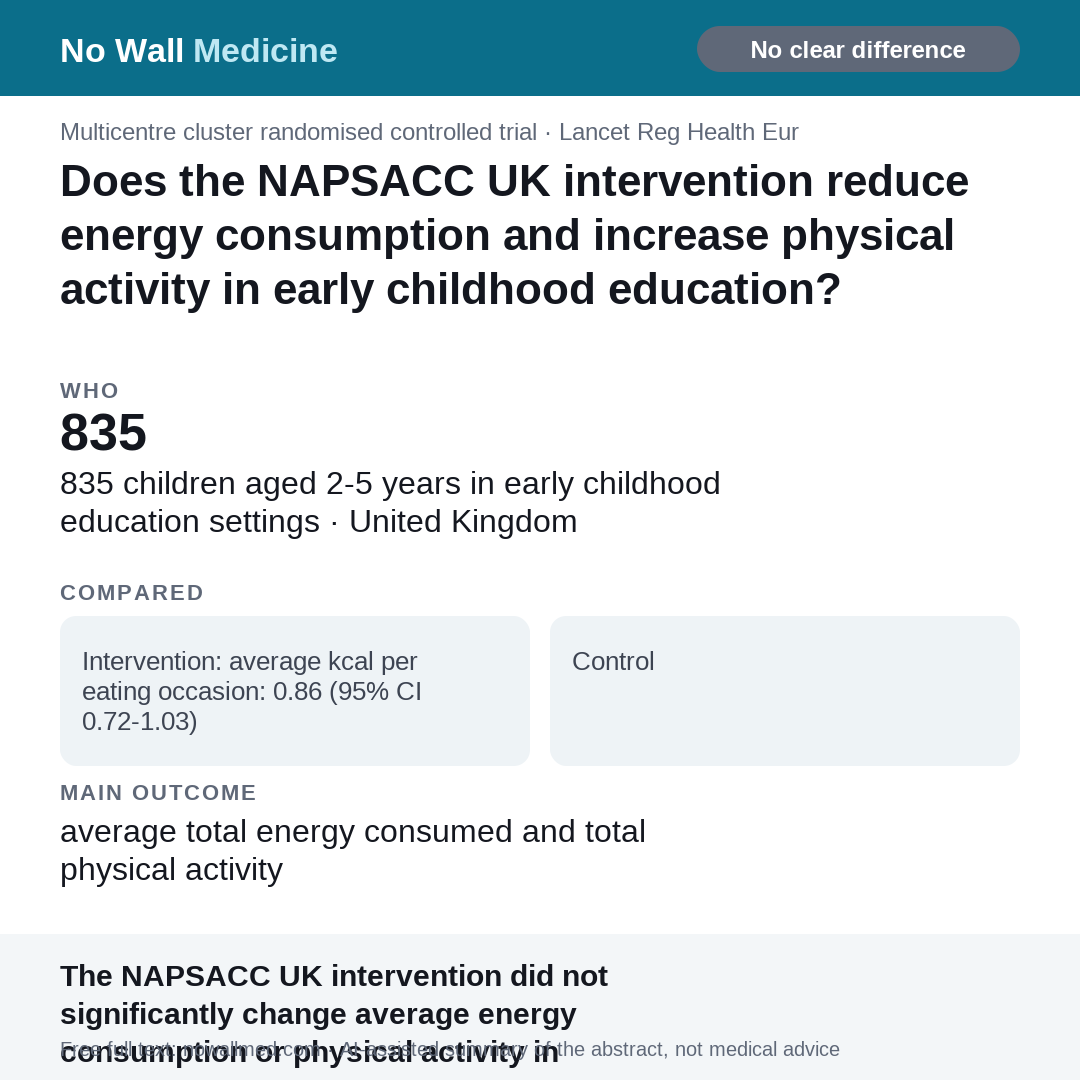
Effectiveness of an environmental nutrition and physical activity intervention in early childhood education and care settings (NAPSACC UK): a multicentre cluster randomised controlled trial
Multicentre cluster randomised controlled trialNo clear difference
Does the NAPSACC UK intervention reduce energy consumption and increase physical activity in early childhood education?
Who
835
835 children aged 2-5 years in early childhood education settings · United Kingdom
Compared
Intervention: average kcal per eating occasion: 0.86 (95% CI 0.72-1.03)
Control
Main outcome
average total energy consumed and total physical activity
Result: adjusted geometric mean ratio 0.86 (95% CI 0.72-1.03); adjusted mean difference -2.13 min (95% CI -10.96 to 6.70)
Bottom line: The NAPSACC UK intervention did not significantly change average energy consumption or physical activity in children.
Funded by: National Institute for Health and Care Research
Lancet Reg Health Eur · 2025-12-18Download image
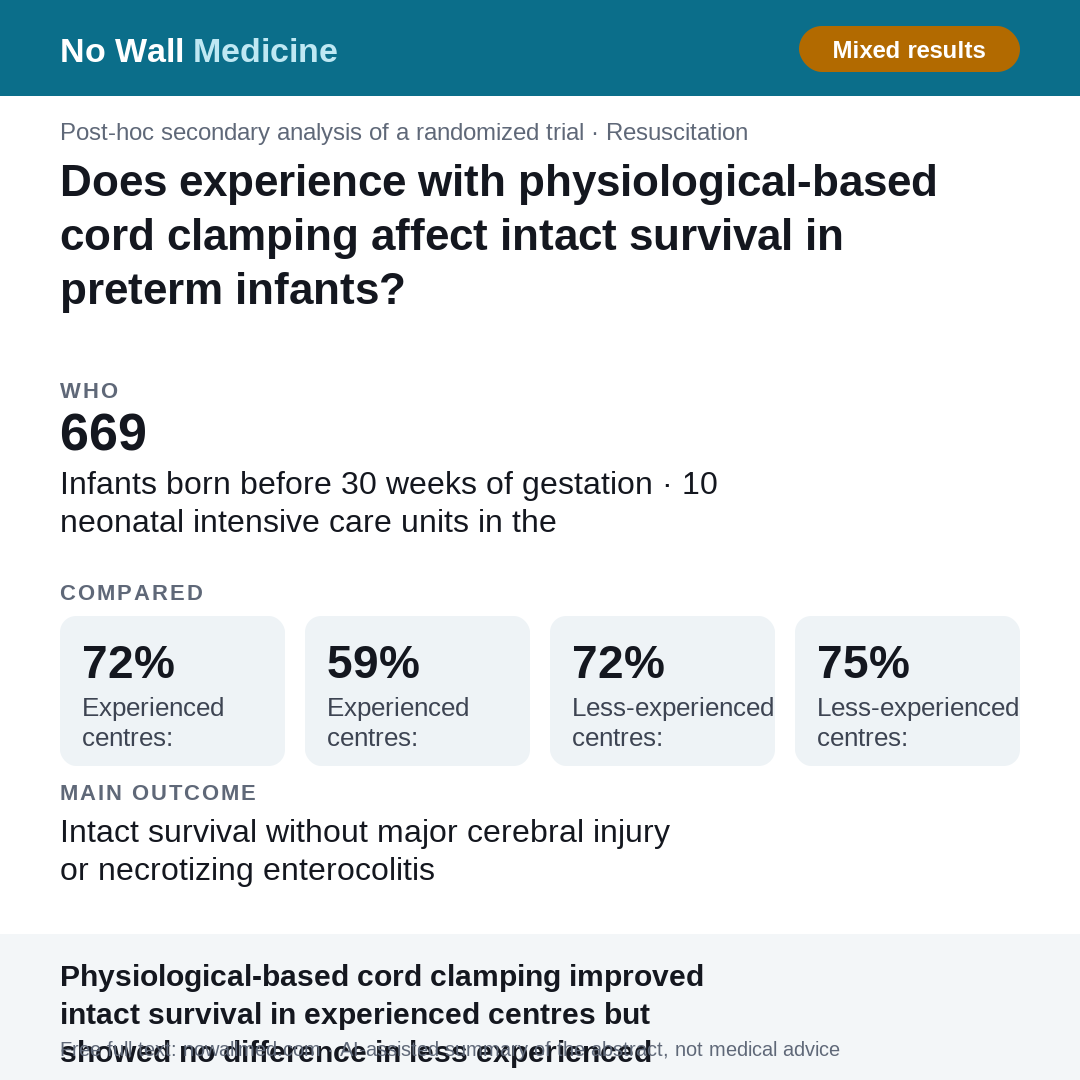
Experience with physiological based cord clamping is associated with increased effect size: a post-hoc analysis of the ABC3 trial
Post-hoc secondary analysis of a randomized trialMixed results
Does experience with physiological-based cord clamping affect intact survival in preterm infants?
Who
669
Infants born before 30 weeks of gestation · 10 neonatal intensive care units in the Netherlands
Compared
72%Experienced centres: physiological-based cord clamping
59%Experienced centres: time-based delayed cord clamping
72%Less-experienced centres: physiological-based cord clamping
75%Less-experienced centres: time-based delayed cord clamping
Main outcome
Intact survival without major cerebral injury or necrotizing enterocolitis
Result: aOR 1.93 (95% CI 1.73-2.17) in experienced centres
Bottom line: Physiological-based cord clamping improved intact survival in experienced centres but showed no difference in less experienced centres.
Resuscitation · 2025-12-17Download image
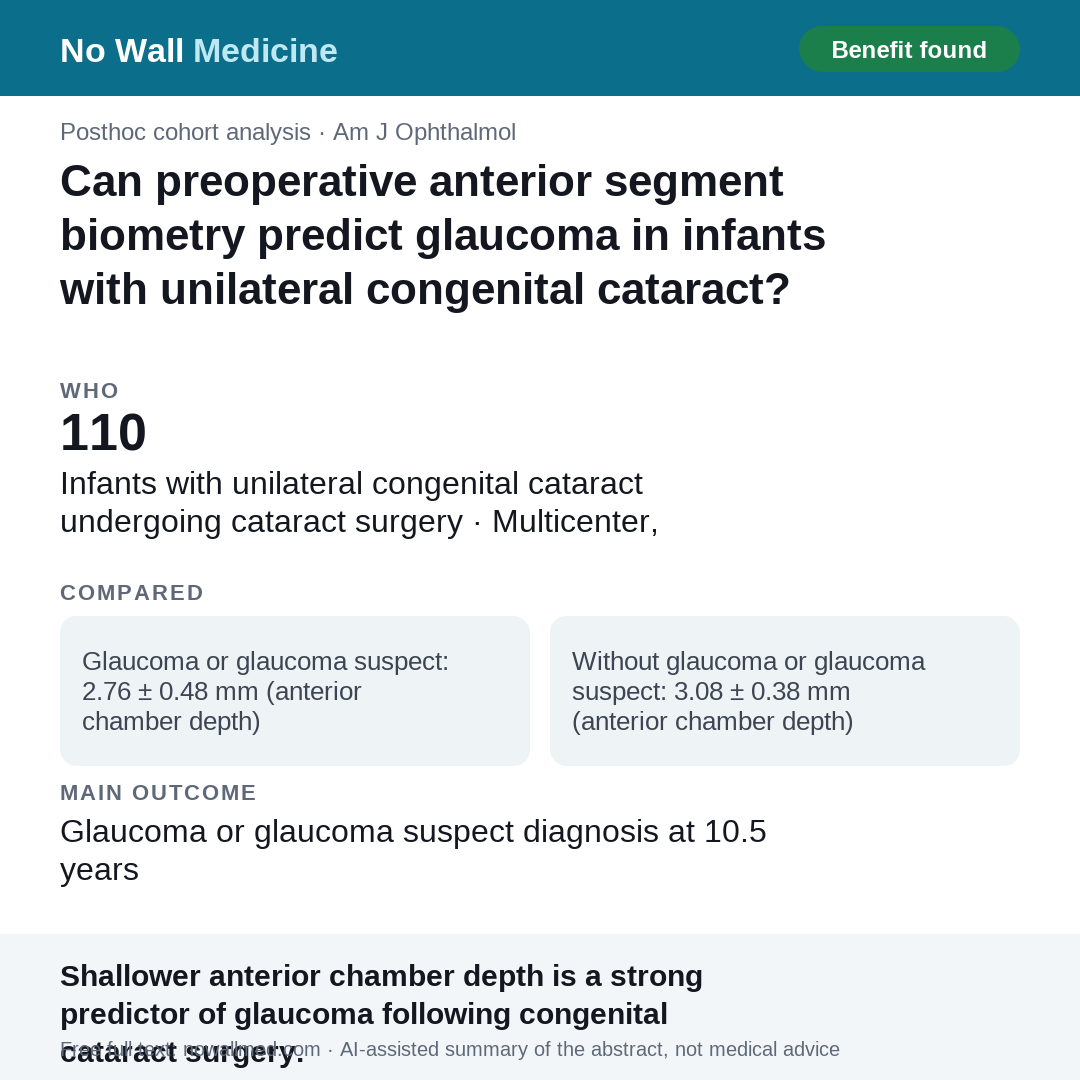
Predicting 10 Year Glaucoma Using Anterior Segment Biometry for Infants with Unilateral Congenital Cataract
Posthoc cohort analysisBenefit found
Can preoperative anterior segment biometry predict glaucoma in infants with unilateral congenital cataract?
Who
110
Infants with unilateral congenital cataract undergoing cataract surgery · Multicenter, United States
Compared
Glaucoma or glaucoma suspect: 2.76 ± 0.48 mm (anterior chamber depth)
Without glaucoma or glaucoma suspect: 3.08 ± 0.38 mm (anterior chamber depth)
Main outcome
Glaucoma or glaucoma suspect diagnosis at 10.5 years
Result: odds ratio 5.8 (95% CI 1.8 to 18.9)
Bottom line: Shallower anterior chamber depth is a strong predictor of glaucoma following congenital cataract surgery.
Am J Ophthalmol · 2025-12-17Download image
Effects of early water, sanitation, handwashing, and nutrition interventions on child development at school age: a follow-on study of a cluster-randomized trial in rural Bangladesh
Follow-up of a cluster-randomized trialBenefit found
Are early water, sanitation, handwashing, and nutrition interventions sustained at school age?
Who
3833
Children aged 7 years in rural Bangladesh · 718 clusters in rural Bangladesh
Compared
Combined WSH + N, N, and S: improved cognitive scores on one or more domains
Control arm
Main outcome
Child cognition, fine motor, behavior, school achievement, and executive function
Result: adjusted effect sizes between 0.10 (95%CI: 0.00, 0.20) and 0.15 (0.03, 0.27)
Bottom line: Early water, sanitation, handwashing, and nutrition interventions provide small, sustained benefits for child cognition, socioemotional outcomes, and maternal mental health.
Limitation: The main limitation of this study is loss to follow-up.
PLOS Med · 2025-12-16Download image

Early Parenting Support on Child Development Through Age 6: The Smart Beginnings Model
Single-blind, 2-site randomized clinical trialBenefit found
Does the Smart Beginnings model impact child academic skills through age 6?
Who
403
Mother-infant dyads · 2 sites
Compared
Smart Beginnings model
Standard pediatric care
Main outcome
Child academic skills at age 6
Result: receptive vocabulary ES=0.04, oral comprehension ES=0.05, letter-word recognition ES=0.04, phonemic decoding ES=0.04, applied problems ES=0.05
Bottom line: The Smart Beginnings model positively impacts child academic outcomes at age 6 through parental cognitive stimulation and preacademic skills.
Pediatrics · 2025-12-15Download image

App-based prevention of preschooler unintentional injury in rural China: a cluster randomized controlled trial
Single-blinded cluster randomized controlled trialBenefit found
Does an app-based intervention reduce unintentional injury incidence among rural preschoolers?
Who
3836
Preschoolers and their caregivers in rural China · 24 preschools in rural China
Compared
Intervention group
Control group
Main outcome
12-month preschooler unintentional injury incidence
Result: adjusted relative risk 0.93 (95% CI: 0.86, 0.98)
Bottom line: An app-based intervention effectively reduces unintentional injury incidence among rural preschoolers.
NPJ Digit Med · 2025-12-15Download image

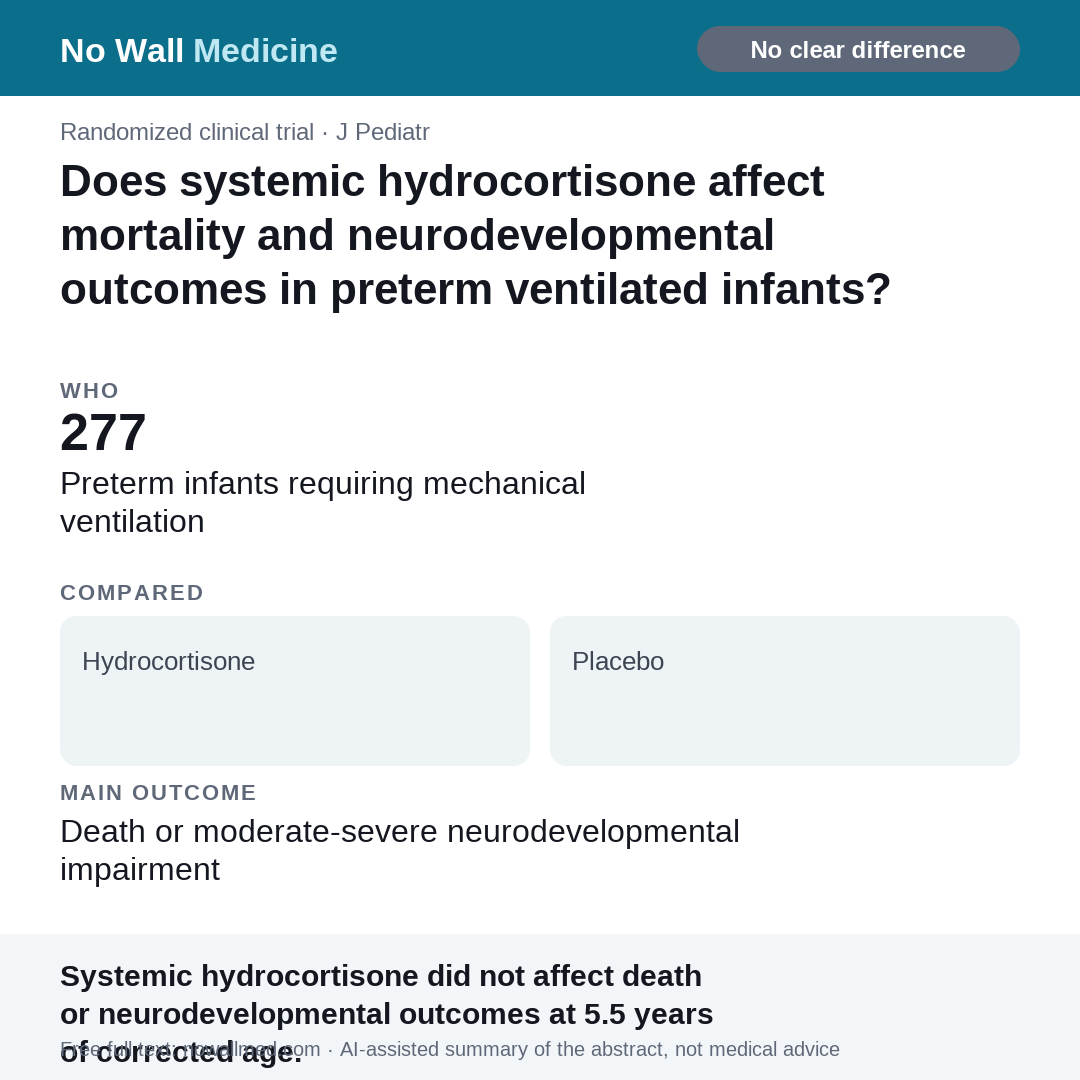
Effect of Systemic Hydrocortisone in Ventilated Infants Born Preterm: Mortality and 5.5-Year Neurodevelopmental Outcomes of a Randomized Clinical Trial
Randomized clinical trialNo clear difference
Does systemic hydrocortisone affect mortality and neurodevelopmental outcomes in preterm ventilated infants?
Who
277
Preterm infants requiring mechanical ventilation
Compared
Hydrocortisone
Placebo
Main outcome
Death or moderate-severe neurodevelopmental impairment
Result: odds ratio 0.75 (95% CI 0.49 to 1.14)
Bottom line: Systemic hydrocortisone did not affect death or neurodevelopmental outcomes at 5.5 years of corrected age.
J Pediatr · 2025-12-13Download image
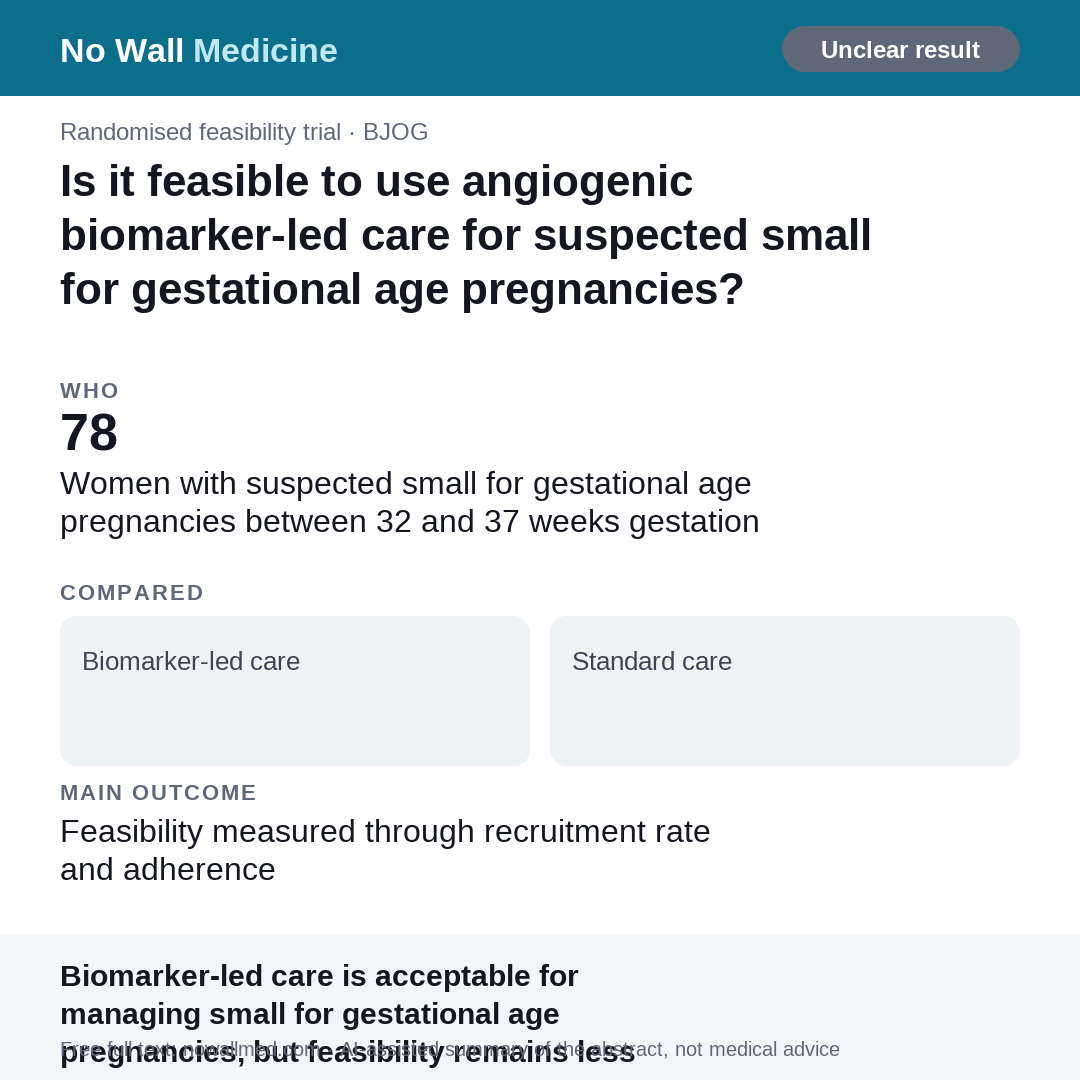
Placental Growth Factor Led Management of the Small for Gestational Age Fetus: Randomised Controlled Feasibility Study
Randomised feasibility trialUnclear result
Is it feasible to use angiogenic biomarker-led care for suspected small for gestational age pregnancies?
Who
78
Women with suspected small for gestational age pregnancies between 32 and 37 weeks gestation · Two tertiary maternity hospitals in the United Kingdom
Compared
Biomarker-led care
Standard care
Main outcome
Feasibility measured through recruitment rate and adherence
Result: recruitment rate of 60.1% (95% confidence interval 52%-69%)
Bottom line: Biomarker-led care is acceptable for managing small for gestational age pregnancies, but feasibility remains less certain.
BJOG · 2025-12-12Download image
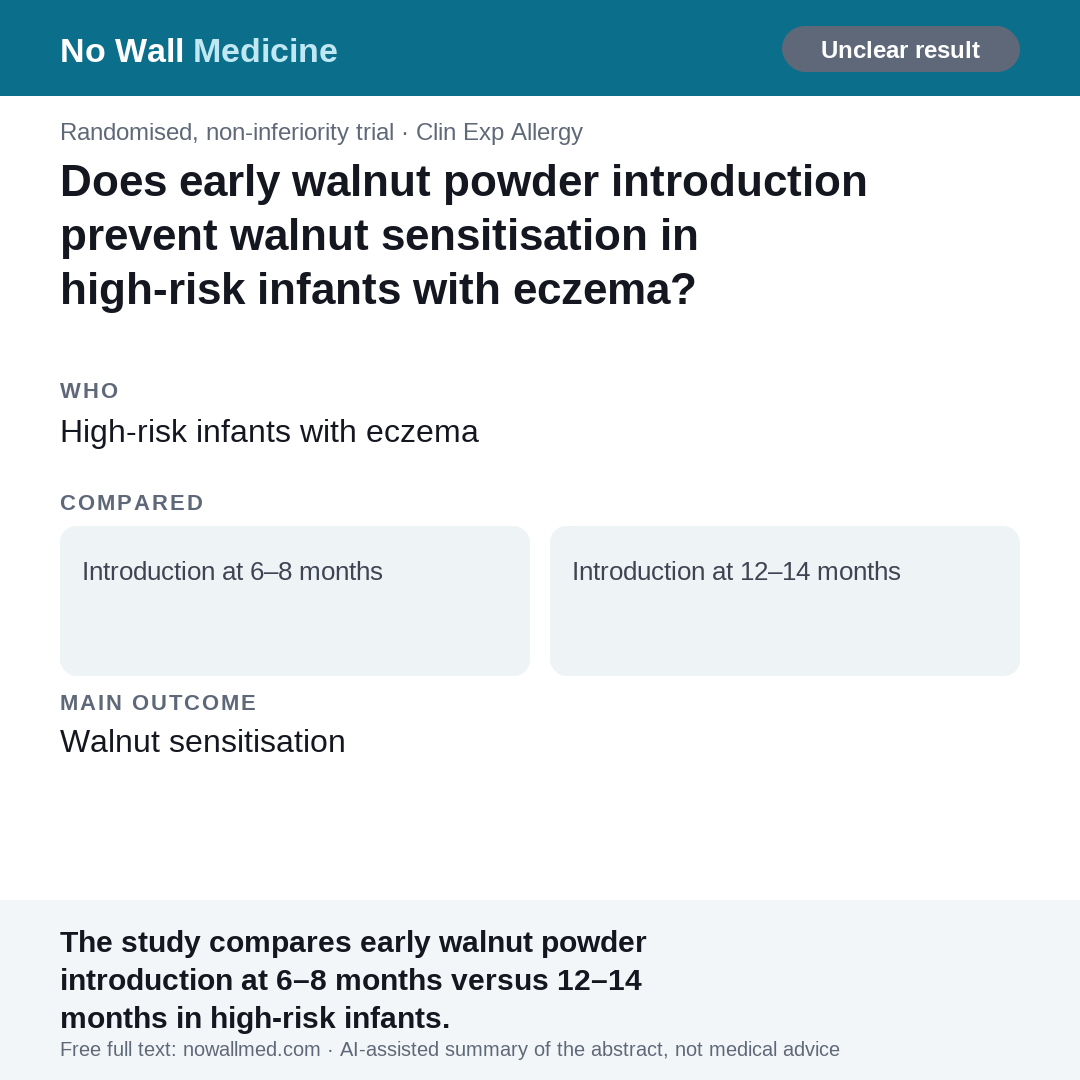
Early Walnut Powder Introduction for Prevention of Walnut Sensitisation in High-Risk Infants With Eczema: An Open-Label, Randomised, Non-Inferiority Trial
Randomised, non-inferiority trialUnclear result
Does early walnut powder introduction prevent walnut sensitisation in high-risk infants with eczema?
Who
High-risk infants with eczema
Compared
Introduction at 6–8 months
Introduction at 12–14 months
Main outcome
Walnut sensitisation
Bottom line: The study compares early walnut powder introduction at 6–8 months versus 12–14 months in high-risk infants.
Clin Exp Allergy · 2025-12-12Download image
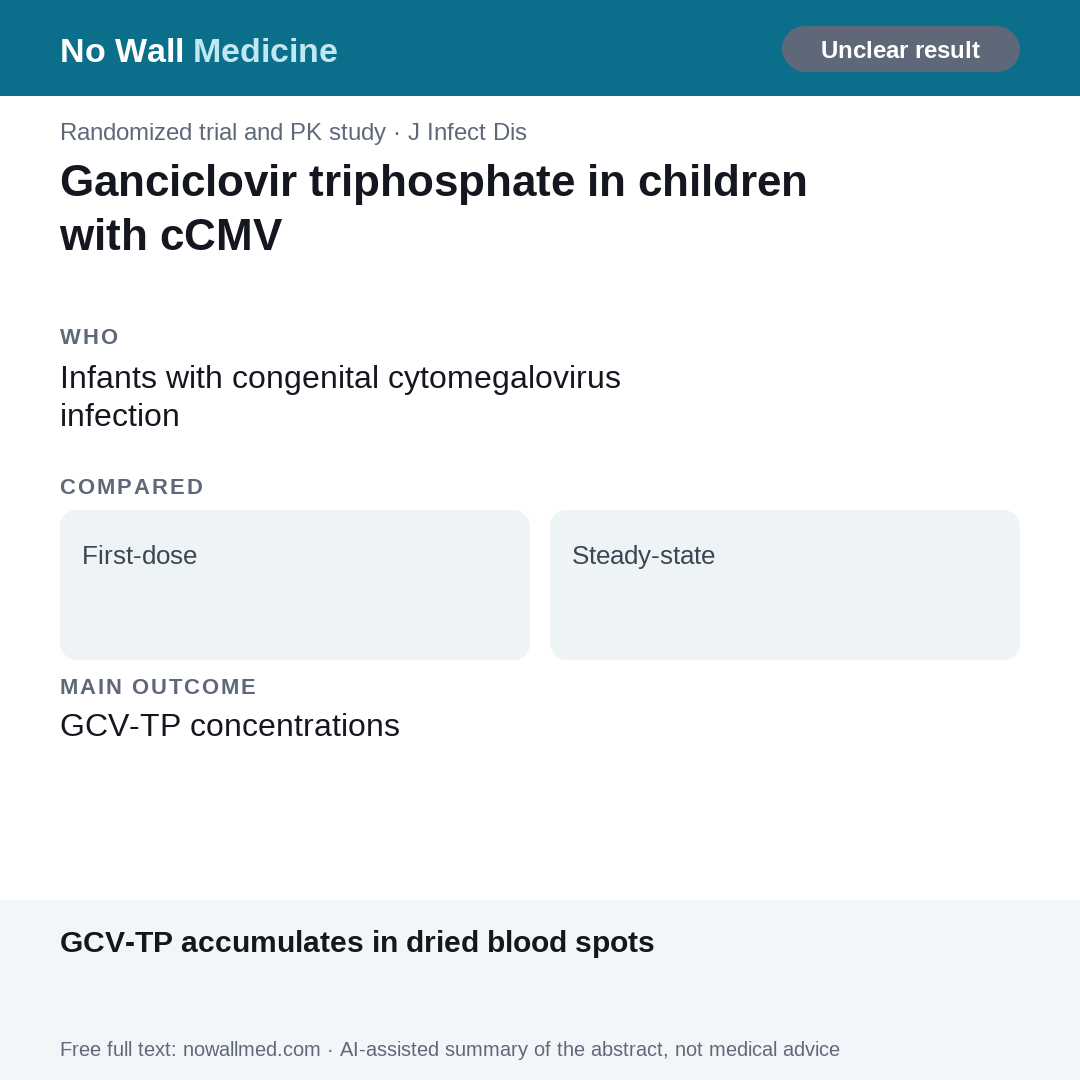
Intracellular Ganciclovir Triphosphate Concentrations in Children With Congenital Cytomegalovirus Infection
Randomized trial and PK studyUnclear result
Ganciclovir triphosphate in children with cCMV
Who
Infants with congenital cytomegalovirus infection
Compared
First-dose
Steady-state
Main outcome
GCV-TP concentrations
Bottom line: GCV-TP accumulates in dried blood spots
J Infect Dis · 2025-12-12Download image
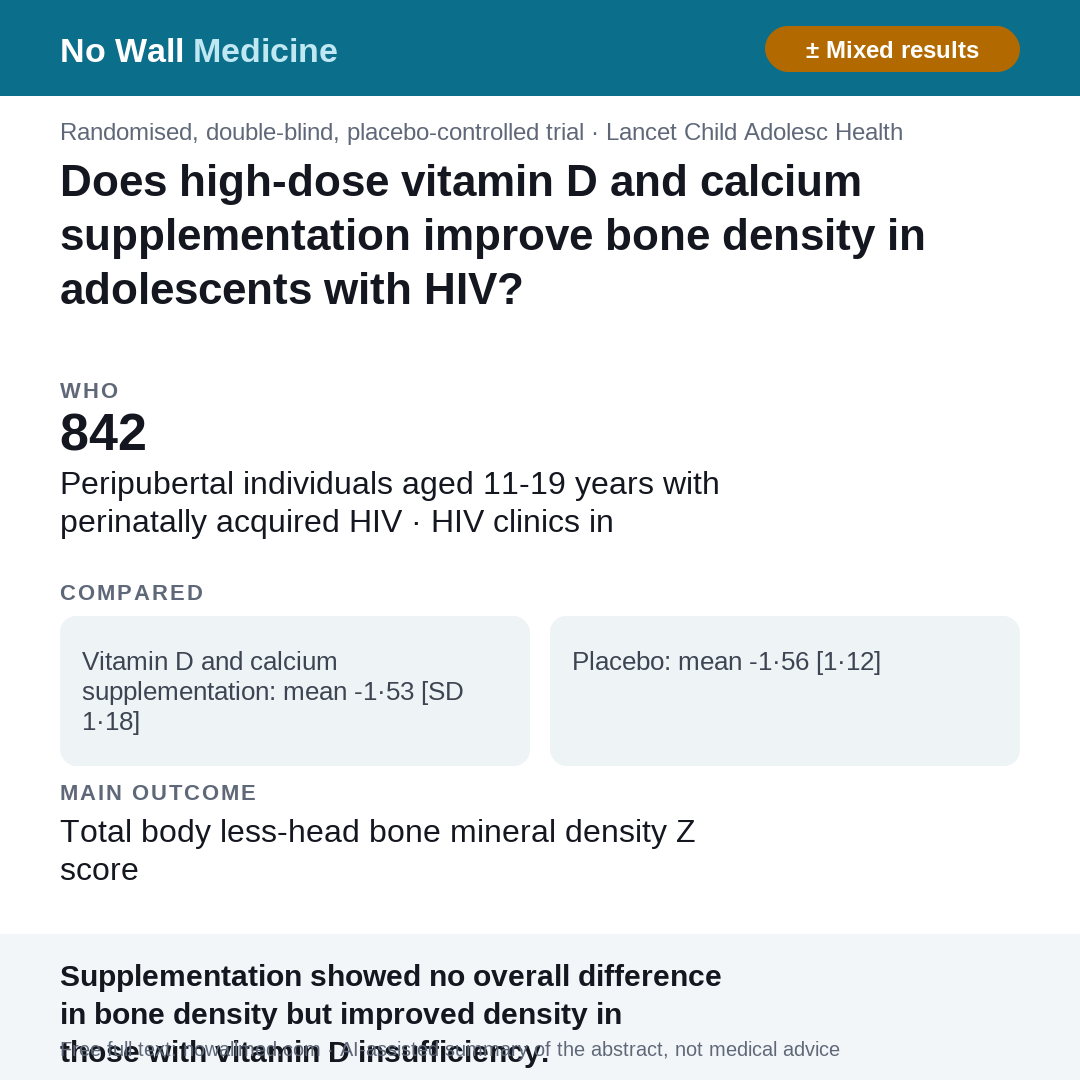
Impact of high-dose vitamin D and calcium carbonate supplementation on bone density in adolescents living with HIV: a randomised, placebo-controlled trial
Randomised, double-blind, placebo-controlled trialMixed results
Does high-dose vitamin D and calcium supplementation improve bone density in adolescents with HIV?
Who
842
Peripubertal individuals aged 11-19 years with perinatally acquired HIV · HIV clinics in Harare, Zimbabwe and Lusaka, Zambia
Compared
Vitamin D and calcium supplementation: mean -1·53 [SD 1·18]
Placebo: mean -1·56 [1·12]
Main outcome
Total body less-head bone mineral density Z score
Result: adjusted mean difference -0·04 (95% CI -0·01 to 0·09)
Bottom line: Supplementation showed no overall difference in bone density but improved density in those with vitamin D insufficiency.
Funded by: European Developing Country Clinical Trials Partnership
Lancet Child Adolesc Health · 2025-12-11Download image
Impact of biannual azithromycin on weight-for-age z-score among infants in the AVENIR cluster-randomised trial
Cluster-randomised trialNo clear difference
Does biannual azithromycin mass drug administration improve weight-for-age z-score among infants?
Who
51687
Infants in Niger · Dosso and Tahoua regions, Niger
Compared
-1.39azithromycin arm
-1.38placebo arm
Main outcome
Weight-for-age z-score
Result: mean difference 0.00 (95% CI -0.05 to 0.04)
Bottom line: Biannual azithromycin mass drug administration did not improve weight-for-age z-score among infants in Niger.
BMJ Paediatr Open · 2025-12-11Download image

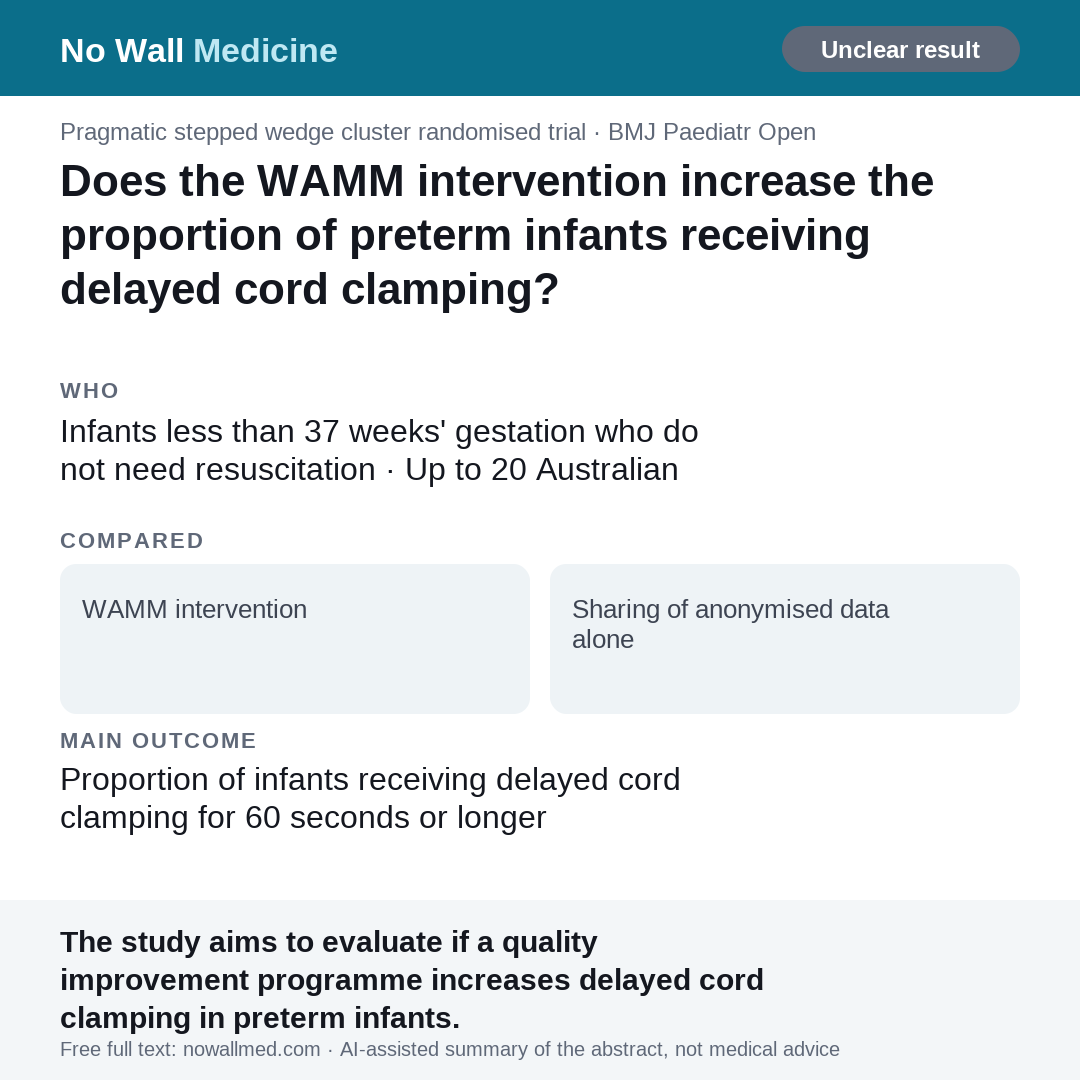
Wait a Minute or More (WAMM): a pragmatic stepped wedge cluster randomised implementation trial assessing the effect of a quality improvement programme on the proportion of infants achieving delayed cord clamping more than 60 s in infants <37 weeks' gestation in up to 20 maternity hospitals
Pragmatic stepped wedge cluster randomised trialUnclear result
Does the WAMM intervention increase the proportion of preterm infants receiving delayed cord clamping?
Who
Infants less than 37 weeks' gestation who do not need resuscitation · Up to 20 Australian maternity hospitals
Compared
WAMM intervention
Sharing of anonymised data alone
Main outcome
Proportion of infants receiving delayed cord clamping for 60 seconds or longer
Bottom line: The study aims to evaluate if a quality improvement programme increases delayed cord clamping in preterm infants.
BMJ Paediatr Open · 2025-12-11Download image
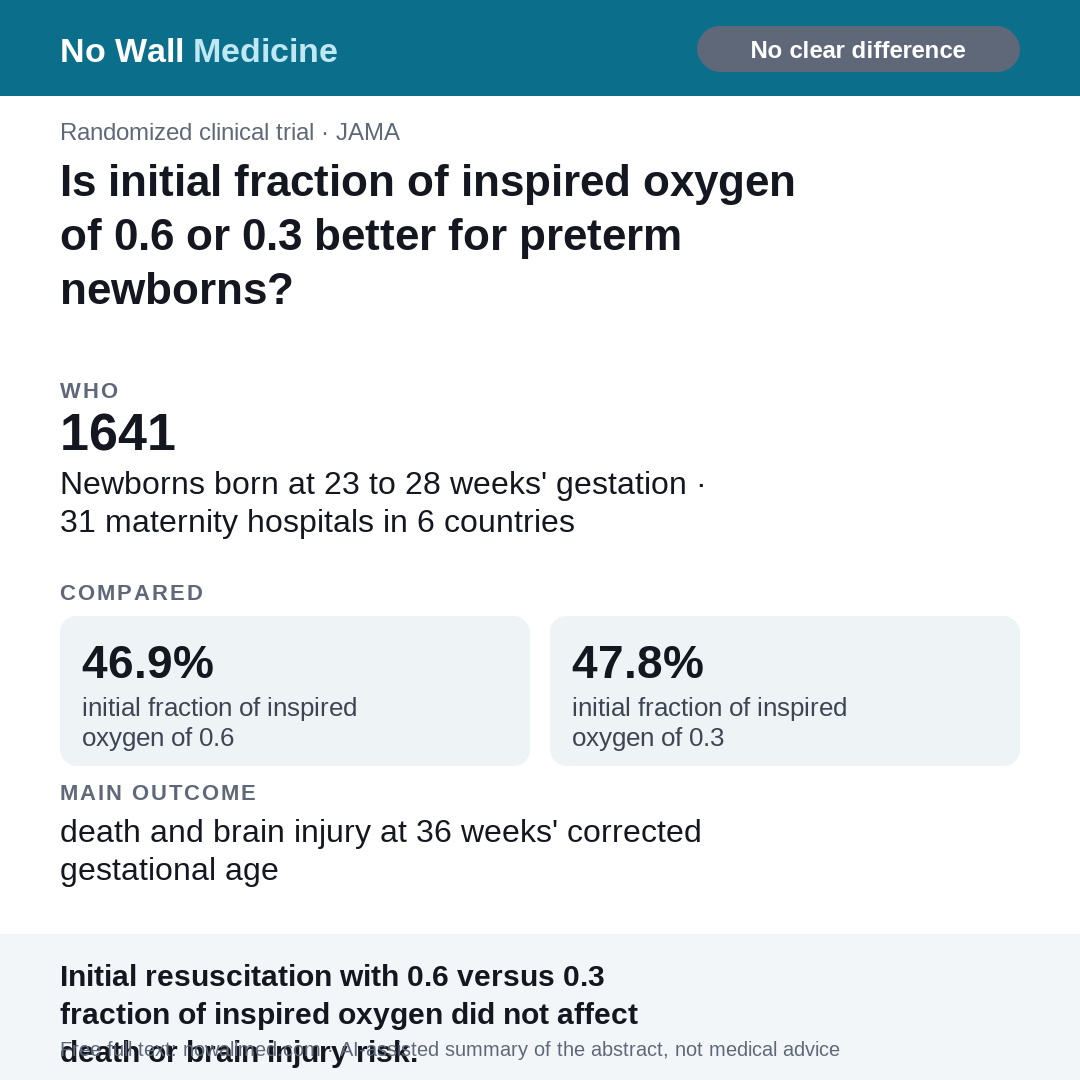
Targeted Oxygen for Initial Resuscitation of Preterm Infants: The TORPIDO 30/60 Randomized Clinical Trial
Randomized clinical trialNo clear difference
Is initial fraction of inspired oxygen of 0.6 or 0.3 better for preterm newborns?
Who
1641
Newborns born at 23 to 28 weeks' gestation · 31 maternity hospitals in 6 countries
Compared
46.9%initial fraction of inspired oxygen of 0.6 (330/703)
47.8%initial fraction of inspired oxygen of 0.3 (344/720)
Main outcome
death and brain injury at 36 weeks' corrected gestational age
Result: relative risk 0.98 (95% CI 0.89-1.09)
Bottom line: Initial resuscitation with 0.6 versus 0.3 fraction of inspired oxygen did not affect death or brain injury risk.
JAMA · 2025-12-10Download image
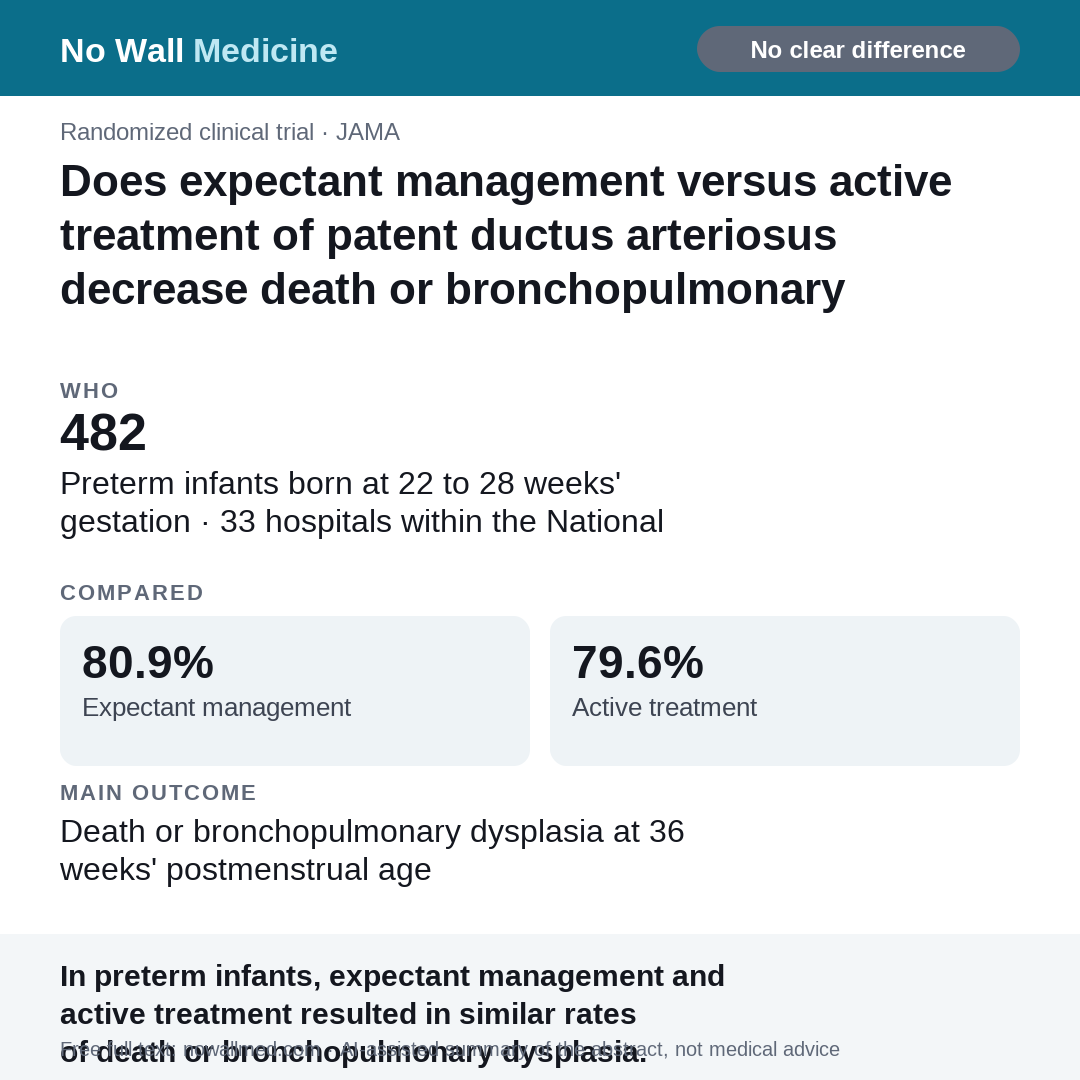
Expectant Management vs Medication for Patent Ductus Arteriosus in Preterm Infants: The PDA Randomized Clinical Trial
Randomized clinical trialNo clear difference
Does expectant management versus active treatment of patent ductus arteriosus decrease death or bronchopulmonary dysplasia?
Who
482
Preterm infants born at 22 to 28 weeks' gestation · 33 hospitals within the National Institute of Child Health and Human Development Neonatal Research Network
Compared
80.9%Expectant management (195/241)
79.6%Active treatment (191/240)
Main outcome
Death or bronchopulmonary dysplasia at 36 weeks' postmenstrual age
Result: adjusted risk difference, 1.2% (95% CI, -5.7% to 8.1%)
Bottom line: In preterm infants, expectant management and active treatment resulted in similar rates of death or bronchopulmonary dysplasia.
JAMA · 2025-12-09Download image
Intrathecal onasemnogene abeparvovec in treatment-naive patients with spinal muscular atrophy: a phase 3, randomized controlled trial
Phase 3, randomized, sham-controlled, double-blind trialBenefit found
Does intrathecal onasemnogene abeparvovec improve motor function in treatment-naive spinal muscular atrophy patients?
Who
126
Treatment-naive patients with spinal muscular atrophy aged 2 to <18 years · multicenter
Compared
onasemnogene abeparvovec
sham procedure
Main outcome
change from baseline in Hammersmith Functional Motor Scale-Expanded score
Result: least squares mean difference, 1.88 (95% confidence interval: 0.51-3.25)
Bottom line: One-time intrathecal onasemnogene abeparvovec demonstrated significant improvement in motor function compared with sham control.
Nat Med · 2025-12-08Download image