Accelerated theta-burst stimulation was more effective than sham treatment for treatment-resistant depression
Accelerated Theta-Burst Stimulation for Treatment-Resistant Depression: A Randomized Clinical Trial
Randomized, triple-blinded trialBenefit found
Does accelerated TBS help depression?
Who
100
Patients with treatment-resistant depression · Single center in Brazil
Compared
31.87%Sham
54.7%Active
Main outcome
Change in depression score
Result: medium-to-large effect size (Cohen d, 0.65; 95% CI, 0.29-1.00)
Bottom line: Accelerated TBS reduces depression scores
JAMA Psychiatry · 2025-03-05Download image
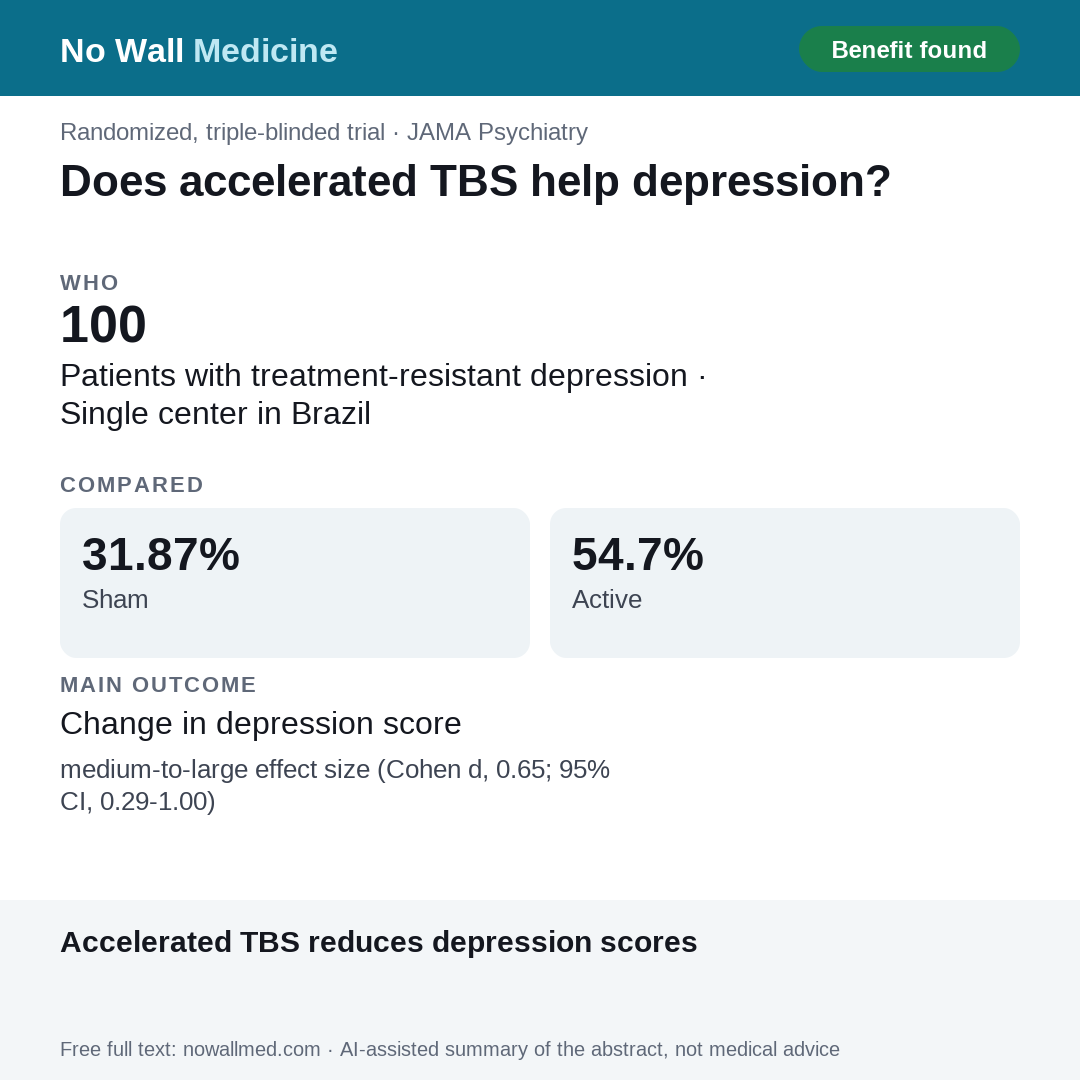
Clinical question: Does accelerated TBS help depression?
Why it matters: It is unknown if a pragmatic, non-expensive accelerated theta-burst stimulation protocol using craniometric targeting is effective for treatment-resistant depression.
Key points
- Researchers studied 100 participants with treatment-resistant depression who received either active or sham accelerated theta-burst stimulation, a type of brain stimulation, over 15 weekdays.
- The active group showed a mean Hamilton Depression Rating Scale score reduction of 54.7% compared to 31.87% in the sham group.
- Scalp pain was more frequent in the active group at 17.4% compared to 4.4% in the sham group.
Limitation the authors note: This was a single-center study conducted in São Paulo, Brazil.
Headline and key points written with AI from the paper’s abstract, with every number checked against it. Read the paper before relying on them.
Was this summary helpful?
Subject terms
Cite this article
Ramos MRF, Goerigk S, Aparecida da Silva V, Cavendish BA, Pinto BS, Papa CHG. Accelerated Theta-Burst Stimulation for Treatment-Resistant Depression: A Randomized Clinical Trial. JAMA Psychiatry. 2025. doi:10.1001/jamapsychiatry.2025.0013
Spotted a mistake? Suggest a correction
Top studies every Monday
The week’s key trials and guidelines in your specialties, plus any topics you follow. By email, free.
Get the weekly digest