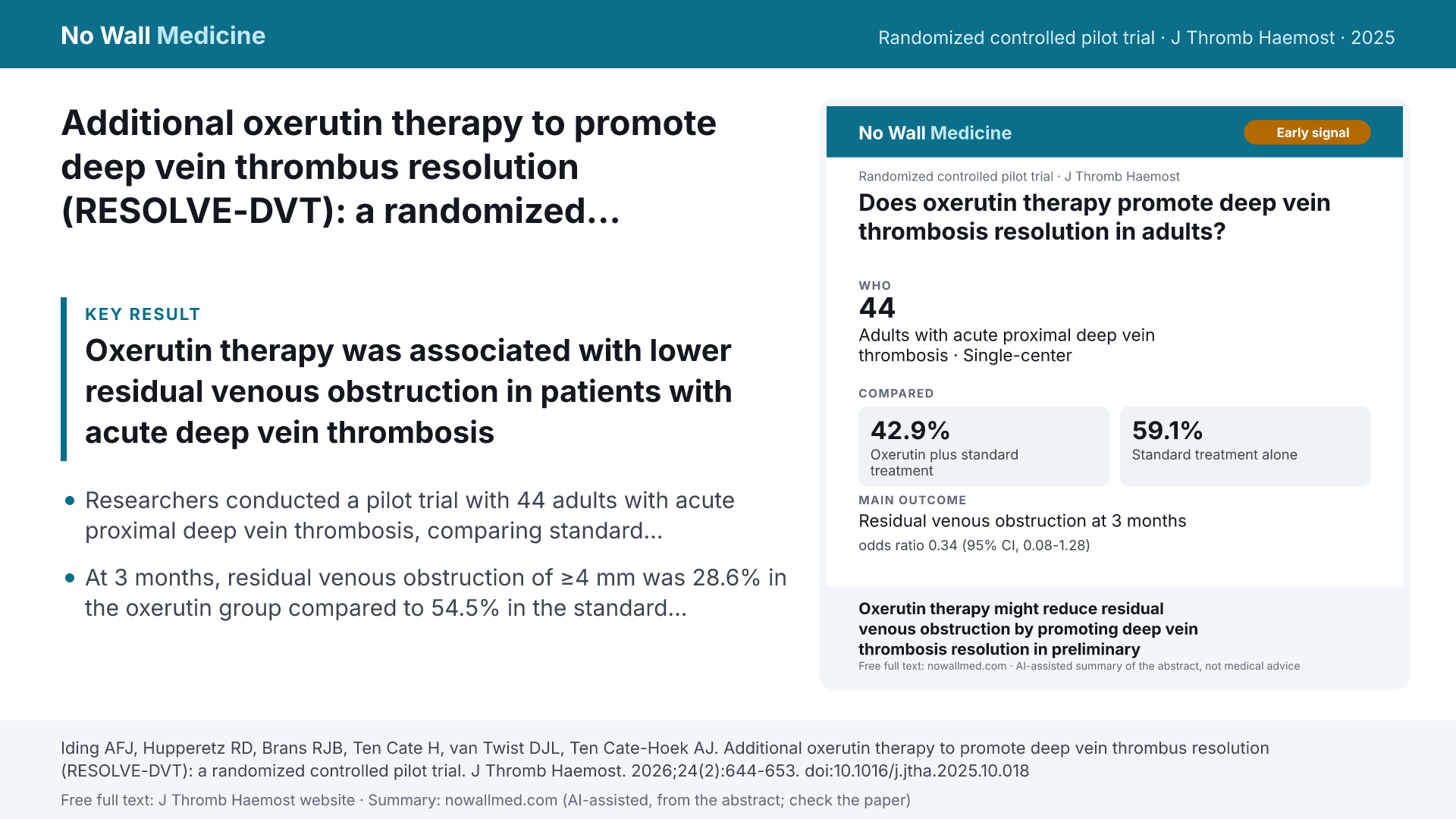
Oxerutin therapy was associated with lower residual venous obstruction in patients with acute deep vein thrombosis
Additional oxerutin therapy to promote deep vein thrombus resolution (RESOLVE-DVT): a randomized controlled pilot trial
Randomized controlled pilot trialBenefit found
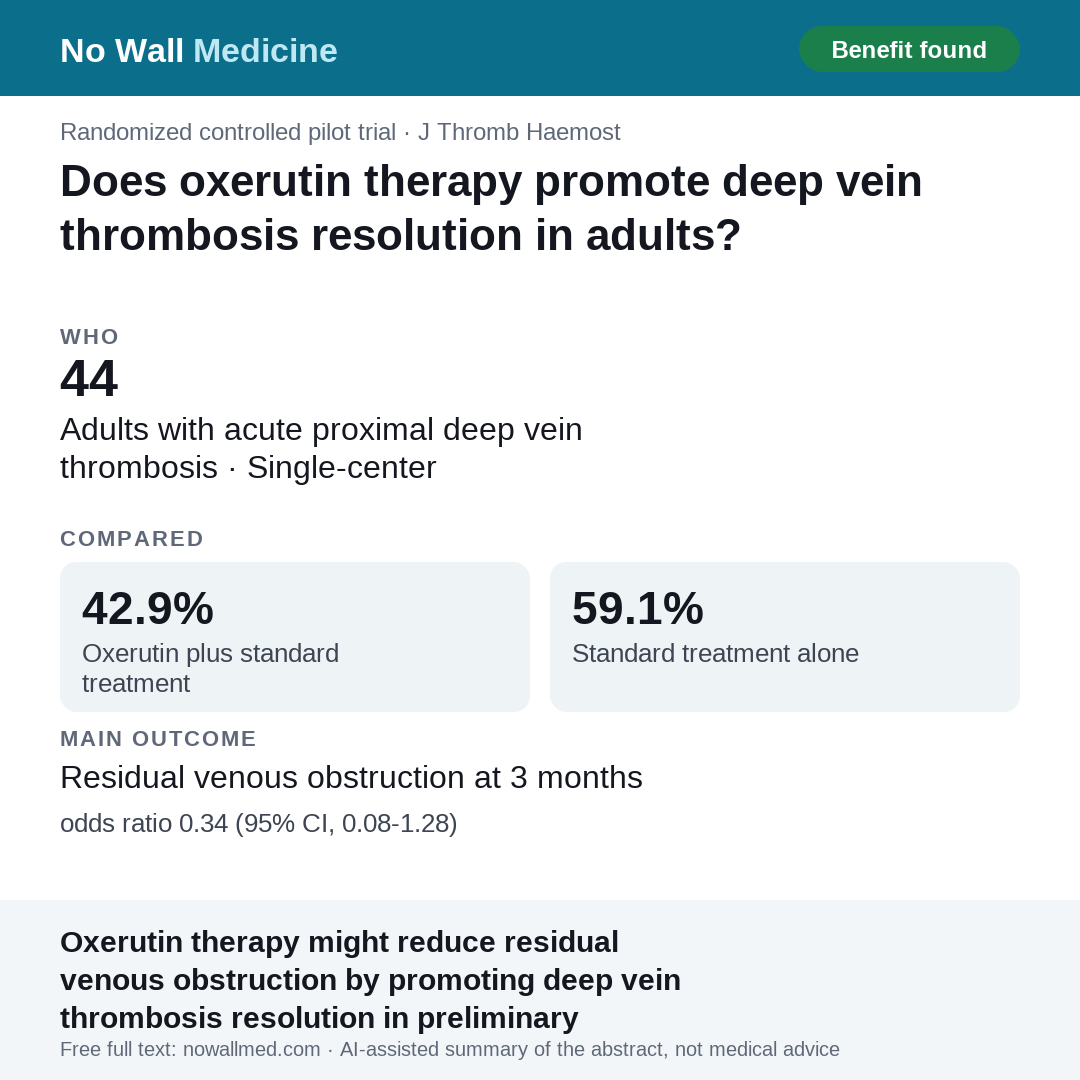
Does oxerutin therapy promote deep vein thrombosis resolution in adults?
Who
44
Adults with acute proximal deep vein thrombosis · Single-center
Compared
42.9%Oxerutin plus standard treatment (for residual venous obstruction ≥2mm)
59.1%Standard treatment alone (for residual venous obstruction ≥2mm)
Main outcome
Residual venous obstruction at 3 months
Result: odds ratio 0.34 (95% CI, 0.08-1.28)
Bottom line: Oxerutin therapy might reduce residual venous obstruction by promoting deep vein thrombosis resolution in preliminary findings.
J Thromb Haemost · 2025-11-04Download image
Clinical question: Does oxerutin therapy promote deep vein thrombosis resolution in adults?
Why it matters: It is unclear if adding the venoactive drug oxerutin to standard treatment can promote the resolution of deep vein thrombosis and reduce residual venous obstruction.
Key points
- Researchers conducted a pilot trial with 44 adults with acute proximal deep vein thrombosis, comparing standard treatment alone to standard treatment plus 2 months of oxerutin.
- At 3 months, residual venous obstruction of ≥4 mm was 28.6% in the oxerutin group compared to 54.5% in the standard treatment group.
- The oxerutin group also showed a lower proportion of postthrombotic syndrome at 3 months, with 28.6% compared to 40.9% in the standard treatment group.
Limitation the authors note: The study was a single-center, patient-unblinded pilot trial with a small sample of 44 patients.
Headline and key points written with AI from the paper’s abstract, with every number checked against it. Read the paper before relying on them.
Was this summary helpful?
Subject terms
Cite this article
Iding AFJ, Hupperetz RD, Brans RJB, Ten Cate H, van Twist DJL, Ten Cate-Hoek AJ. Additional oxerutin therapy to promote deep vein thrombus resolution (RESOLVE-DVT): a randomized controlled pilot trial. J Thromb Haemost. 2025. doi:10.1016/j.jtha.2025.10.018
Spotted a mistake? Suggest a correction
Top studies every Monday
The week’s key trials and guidelines in your specialties, plus any topics you follow. By email, free.
Get the weekly digest