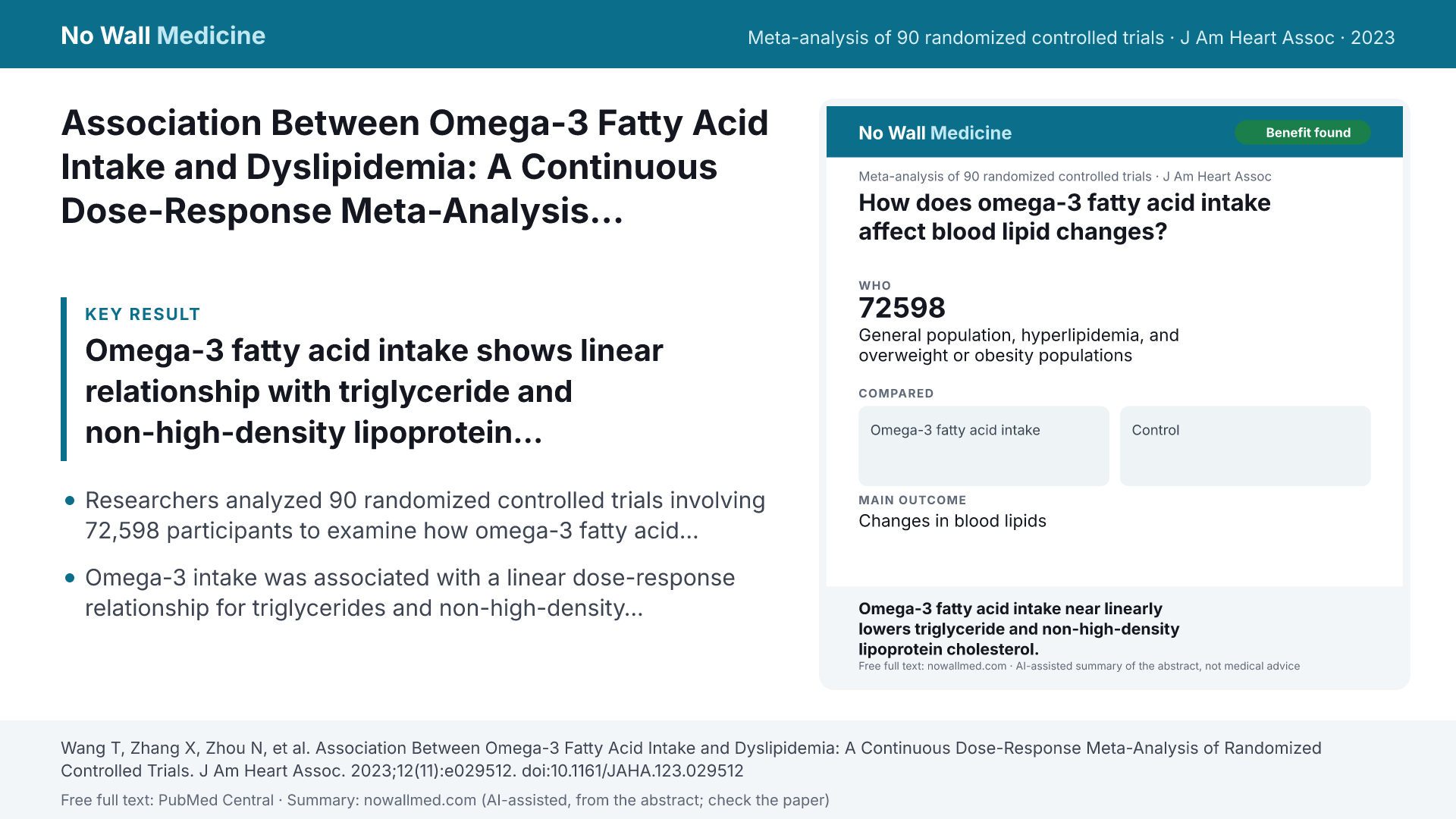
Omega-3 fatty acid intake shows linear relationship with triglyceride and non-high-density lipoprotein cholesterol levels
Association Between Omega-3 Fatty Acid Intake and Dyslipidemia: A Continuous Dose-Response Meta-Analysis of Randomized Controlled Trials
Meta-analysis of 90 randomized controlled trialsBenefit found
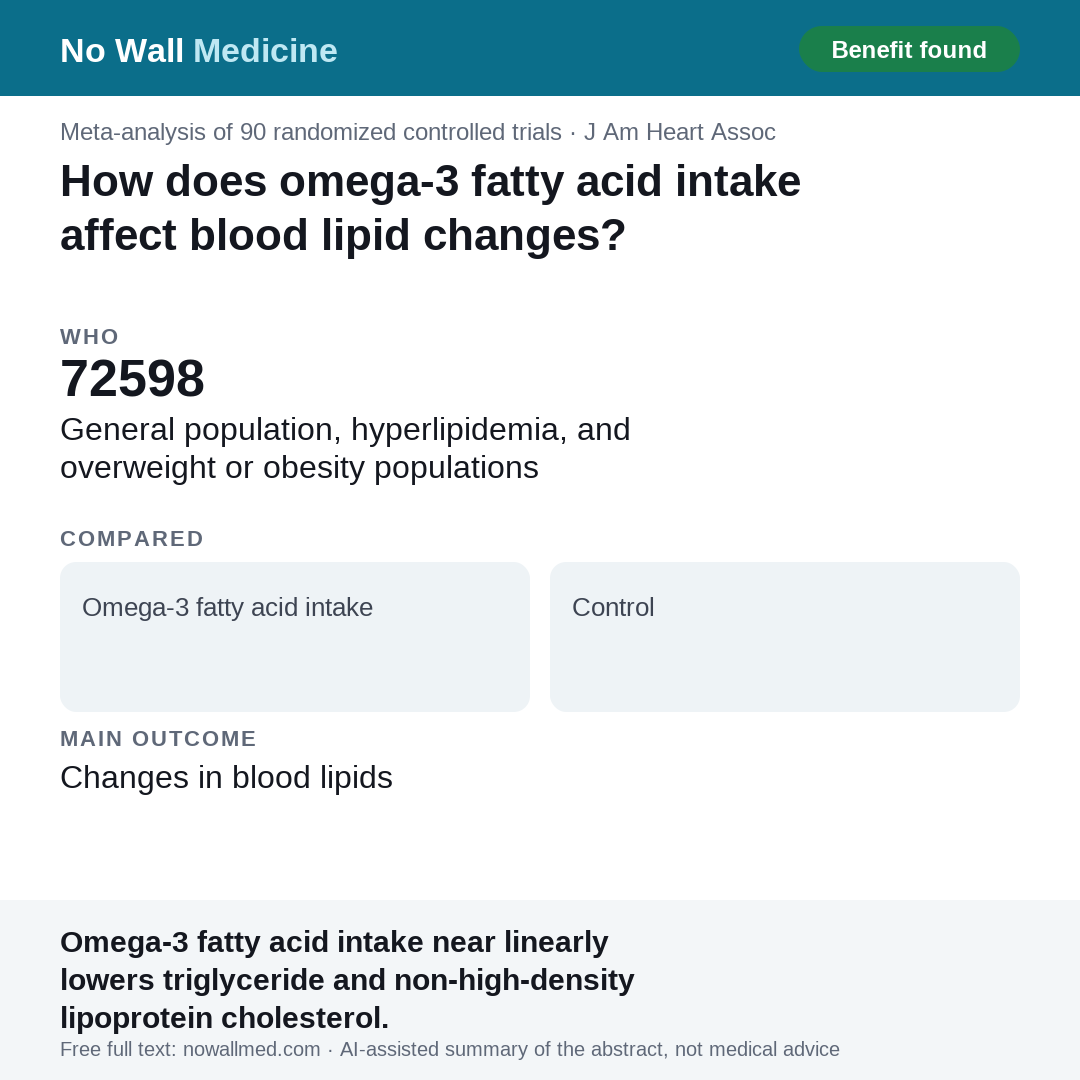
How does omega-3 fatty acid intake affect blood lipid changes?
Who
72598
General population, hyperlipidemia, and overweight or obesity populations
Compared
Omega-3 fatty acid intake
Control
Main outcome
Changes in blood lipids
Bottom line: Omega-3 fatty acid intake near linearly lowers triglyceride and non-high-density lipoprotein cholesterol.
J Am Heart Assoc · 2023-06-02Download image
Clinical question: How does omega-3 fatty acid intake affect blood lipid changes?
Why it matters: The strength and shape of the dose-response relationship between omega-3 fatty acid intake and blood lipid changes remained elusive.
Key points
- Researchers analyzed 90 randomized controlled trials involving 72,598 participants to examine how omega-3 fatty acid intake affects blood lipids.
- Omega-3 intake was associated with a linear dose-response relationship for triglycerides and non-high-density lipoprotein cholesterol, particularly in populations with hyperlipidemia or overweight/obesity receiving doses >2 g/d.
- Low-density lipoprotein and high-density lipoprotein cholesterol showed nonlinear, J-shaped dose-response curves.
Headline and key points written with AI from the paper’s abstract, with every number checked against it. Read the paper before relying on them.
Was this summary helpful?
Subject terms
Headline, design, result, key points, caveat and citation as plain text.
Cite this article
Wang T, Zhang X, Zhou N, et al. Association Between Omega-3 Fatty Acid Intake and Dyslipidemia: A Continuous Dose-Response Meta-Analysis of Randomized Controlled Trials. J Am Heart Assoc. 2023. doi:10.1161/JAHA.123.029512
Spotted a mistake? Suggest a correction