Personalized pharmaceutical and psychological treatments did not change shoulder pain recovery after muscle injury
Biopsychosocial influence on shoulder pain: results from a randomized preclinical trial of exercise-induced muscle injury
Randomized clinical trialNo clear difference
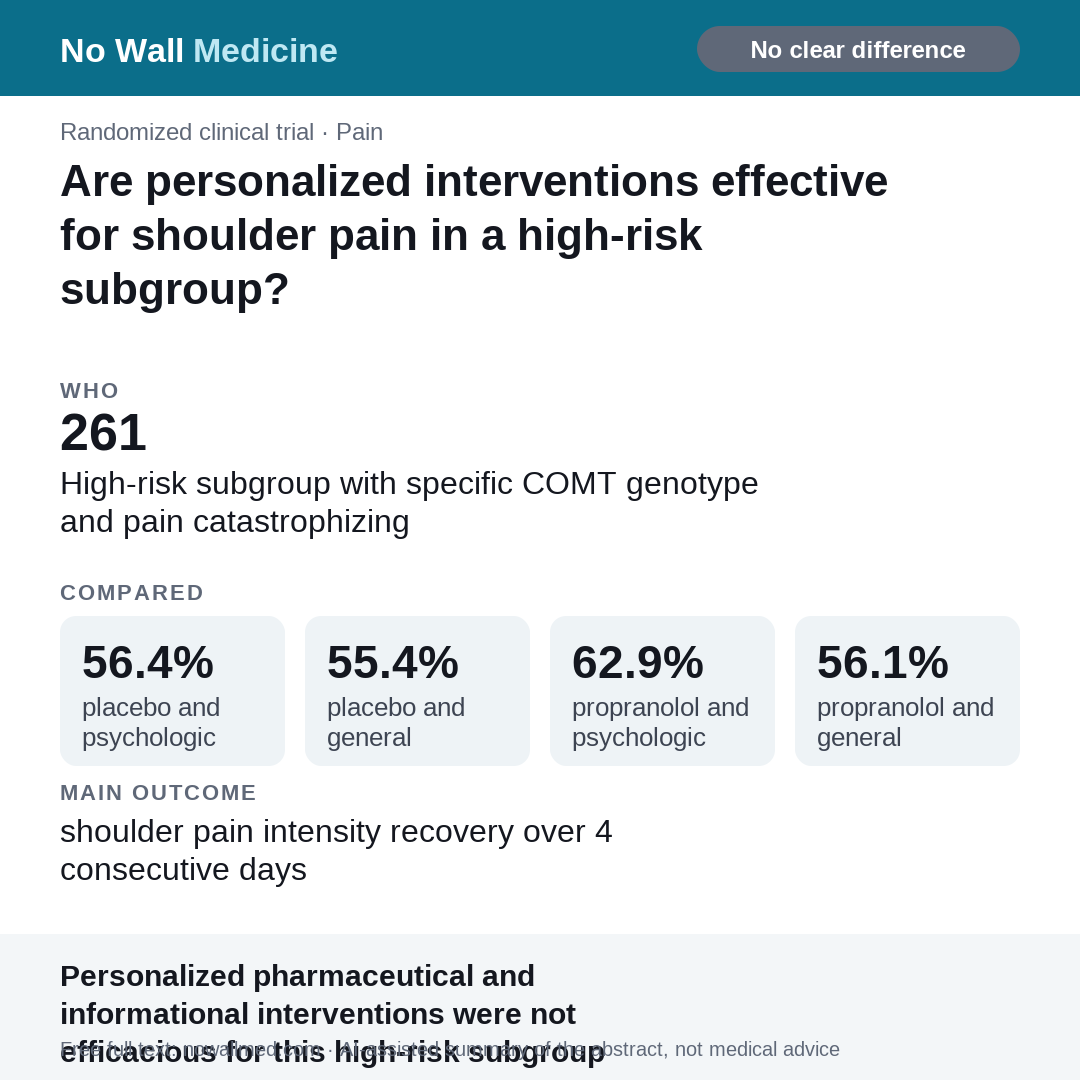
Are personalized interventions effective for shoulder pain in a high-risk subgroup?
Who
261
High-risk subgroup with specific COMT genotype and pain catastrophizing
Compared
56.4%placebo and psychologic intervention
55.4%placebo and general education
62.9%propranolol and psychologic intervention
56.1%propranolol and general education
Main outcome
shoulder pain intensity recovery over 4 consecutive days
Bottom line: Personalized pharmaceutical and informational interventions were not efficacious for this high-risk subgroup following exercise-induced muscle injury.
Pain · 2022-05-23Download image
Clinical question: Are personalized interventions effective for shoulder pain in a high-risk subgroup?
Why it matters: It was unknown if matching pharmaceutical and informational interventions to a high-risk subgroup defined by genetics and pain catastrophizing would improve recovery from muscle injury.
Key points
- Researchers randomized 261 participants to receive combinations of propranolol (a beta-blocker), placebo, psychological intervention, or general education following exercise-induced muscle injury.
- Recovery rates for shoulder pain intensity over 4 days were 56.4% for placebo and psychological intervention, 55.4% for placebo and general education, 62.9% for propranolol and psychological intervention, and 56.1% for propranolol and general education.
- No statistical differences were found between the intervention groups regarding pain intensity recovery or the duration of shoulder pain.
Headline and key points written with AI from the paper’s abstract, with every number checked against it. Read the paper before relying on them.
Was this summary helpful?
Subject terms
Cite this article
George SZ, Bishop MD, Wu SS, Staud R, Borsa PA, Wallace MR. Biopsychosocial influence on shoulder pain: results from a randomized preclinical trial of exercise-induced muscle injury. Pain. 2022. doi:10.1097/j.pain.0000000000002700
Spotted a mistake? Suggest a correction
Top studies every Monday
The week’s key trials and guidelines in your specialties, plus any topics you follow. By email, free.
Get the weekly digest