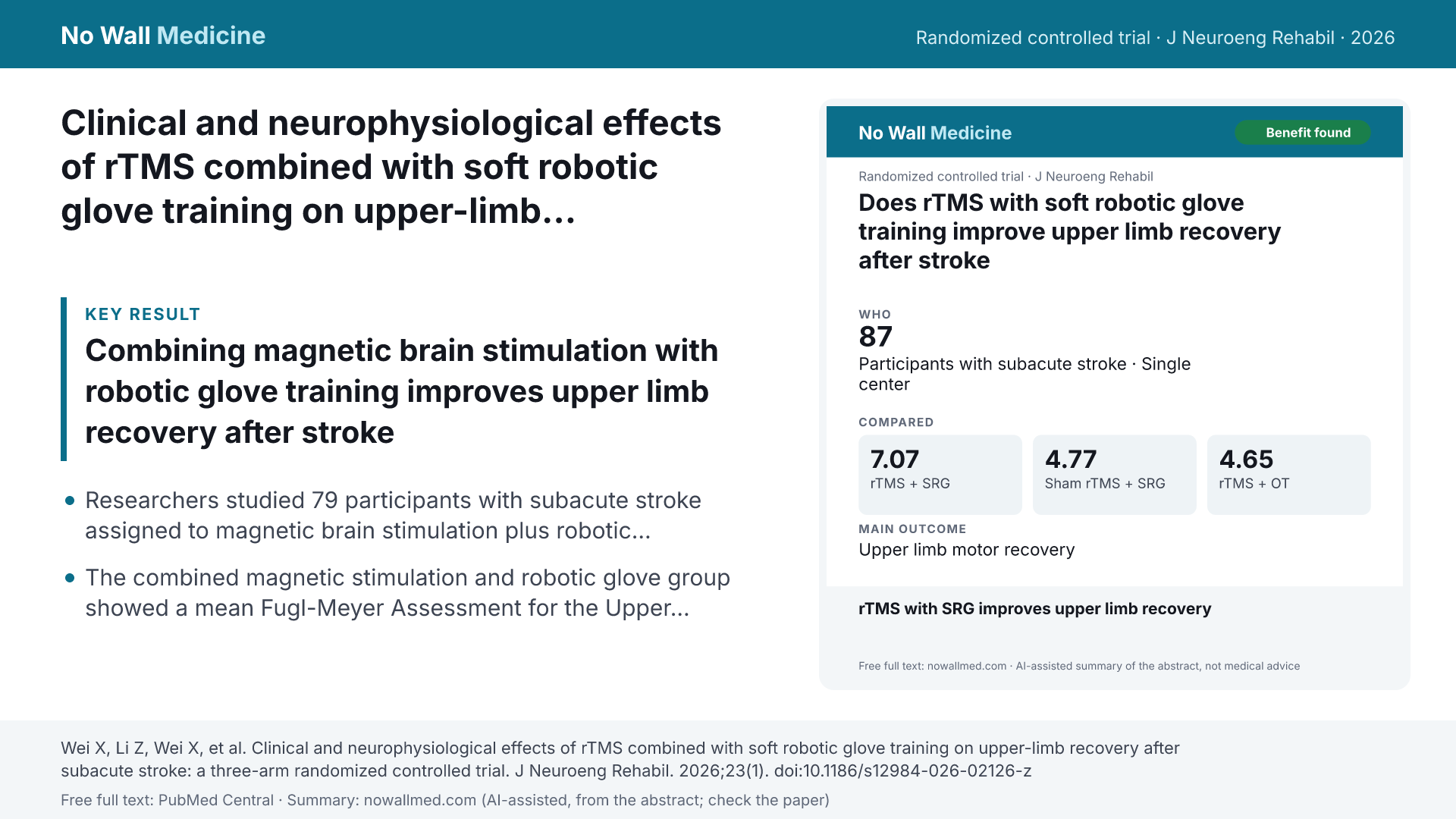
Combining magnetic brain stimulation with robotic glove training improves upper limb recovery after stroke
Clinical and neurophysiological effects of rTMS combined with soft robotic glove training on upper-limb recovery after subacute stroke: a three-arm randomized controlled trial
Randomized controlled trialBenefit found
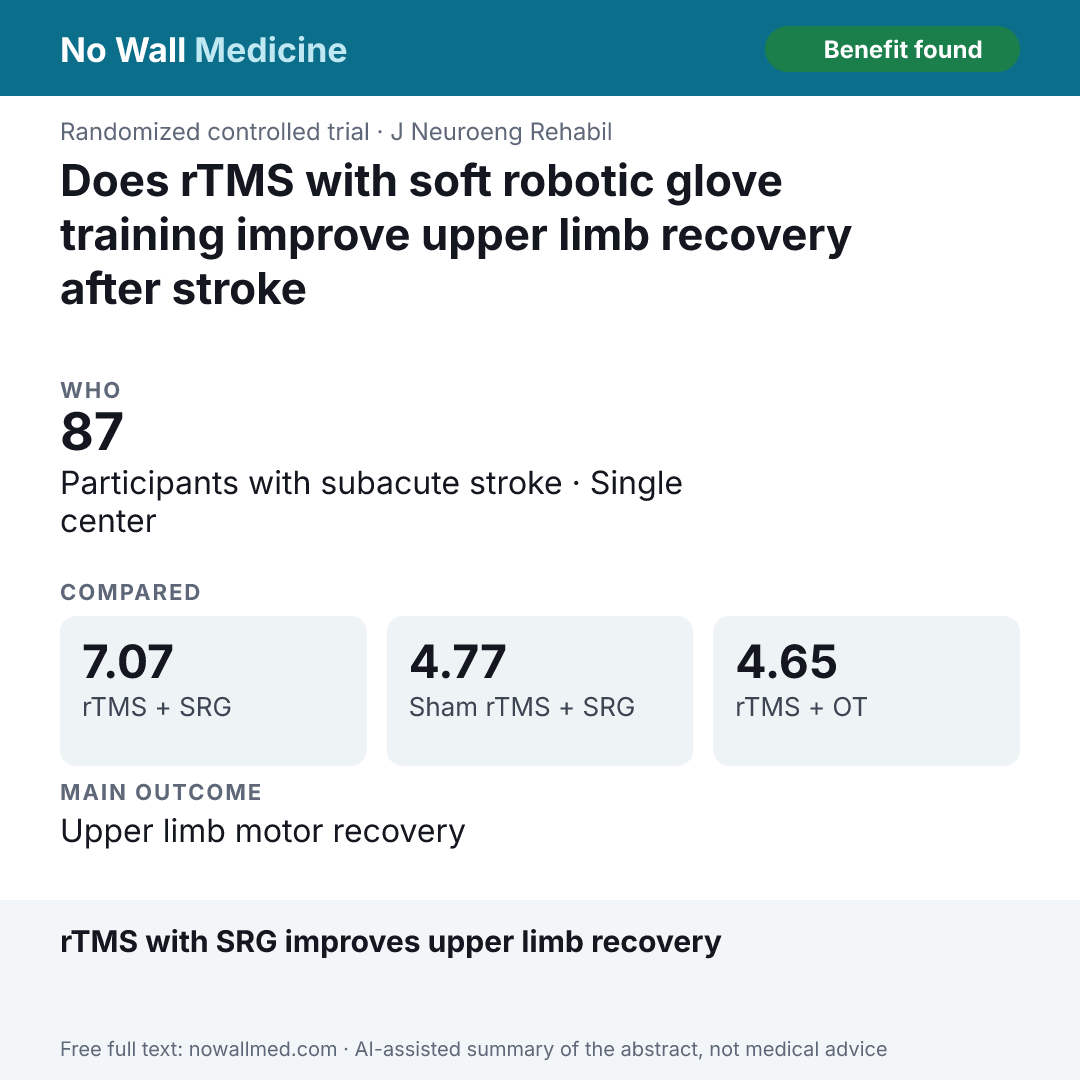
Does rTMS with soft robotic glove training improve upper limb recovery after stroke
Who
87
Participants with subacute stroke · Single center
Compared
7.07rTMS + SRG
4.77Sham rTMS + SRG
4.65rTMS + OT
Main outcome
Upper limb motor recovery
Bottom line: rTMS with SRG improves upper limb recovery
J Neuroeng Rehabil · 2026-08-20 · Save PNG
Key points
- Researchers studied 79 participants with subacute stroke assigned to magnetic brain stimulation plus robotic glove training, sham magnetic stimulation plus robotic glove training, or magnetic brain stimulation plus occupational therapy.
- The combined magnetic stimulation and robotic glove group showed a mean Fugl-Meyer Assessment for the Upper Extremity improvement of 7.07 points, compared to 4.77 and 4.65 points in the other groups.
- The combined group also showed greater increases in motor-related functional connectivity and information transfer between the brain and muscles.
Limitation the authors note: The authors state that the mechanistic relevance of the neurophysiological changes to clinical recovery requires further investigation.
Headline and key points written with AI from the paper’s abstract, with every number checked against it. Read the paper before relying on them.
Was this summary helpful?
Subject terms
Headline, design, result, key points, caveat and citation as plain text.
Cite this article
Wei X, Li Z, Wei X, et al. Clinical and neurophysiological effects of rTMS combined with soft robotic glove training on upper-limb recovery after subacute stroke: a three-arm randomized controlled trial. J Neuroeng Rehabil. 2026;23(1). doi:10.1186/s12984-026-02126-z
Spotted a mistake? Suggest a correction