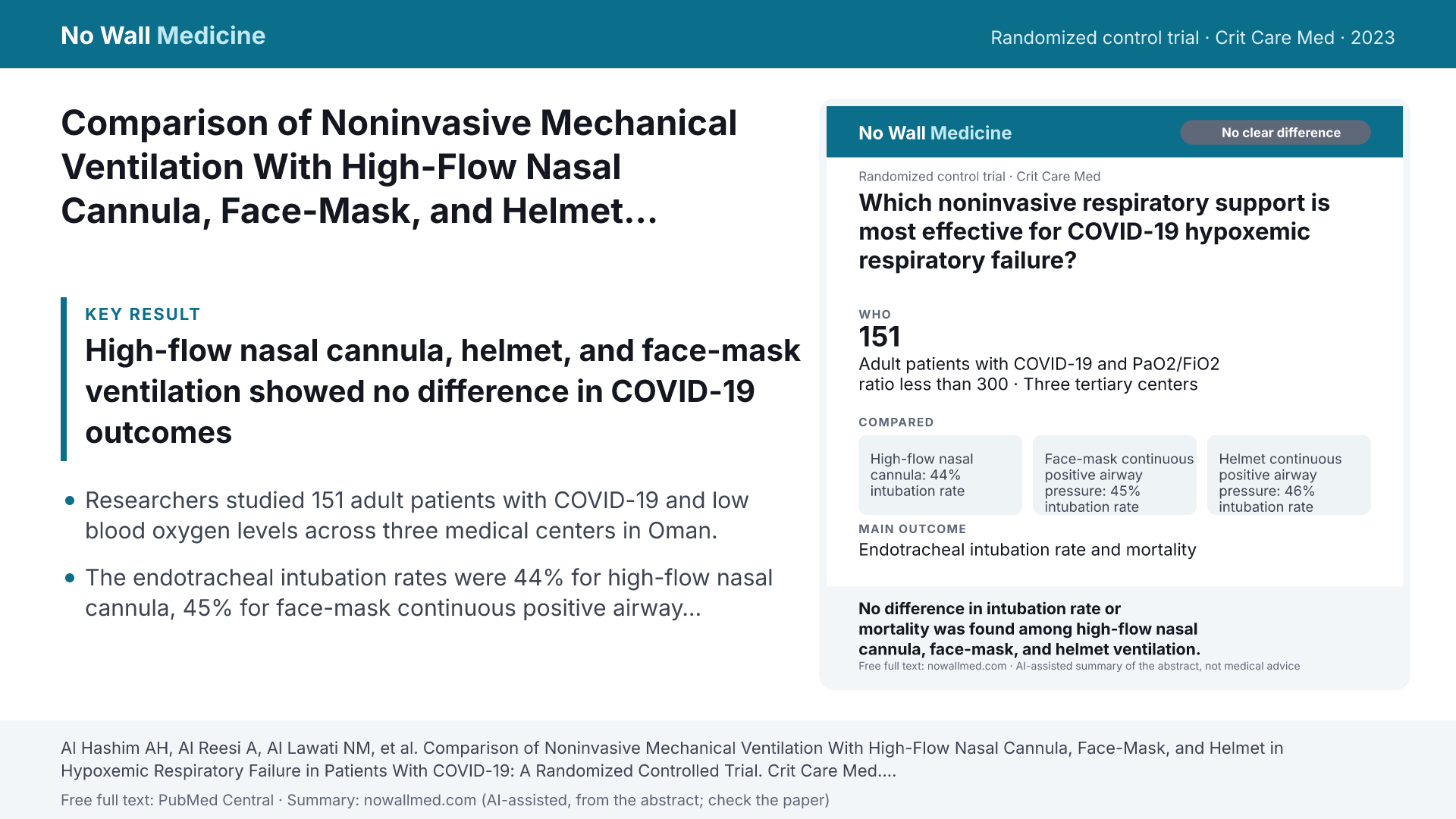
High-flow nasal cannula, helmet, and face-mask ventilation showed no difference in COVID-19 outcomes
Comparison of Noninvasive Mechanical Ventilation With High-Flow Nasal Cannula, Face-Mask, and Helmet in Hypoxemic Respiratory Failure in Patients With COVID-19: A Randomized Controlled Trial
Randomized control trialNo clear difference
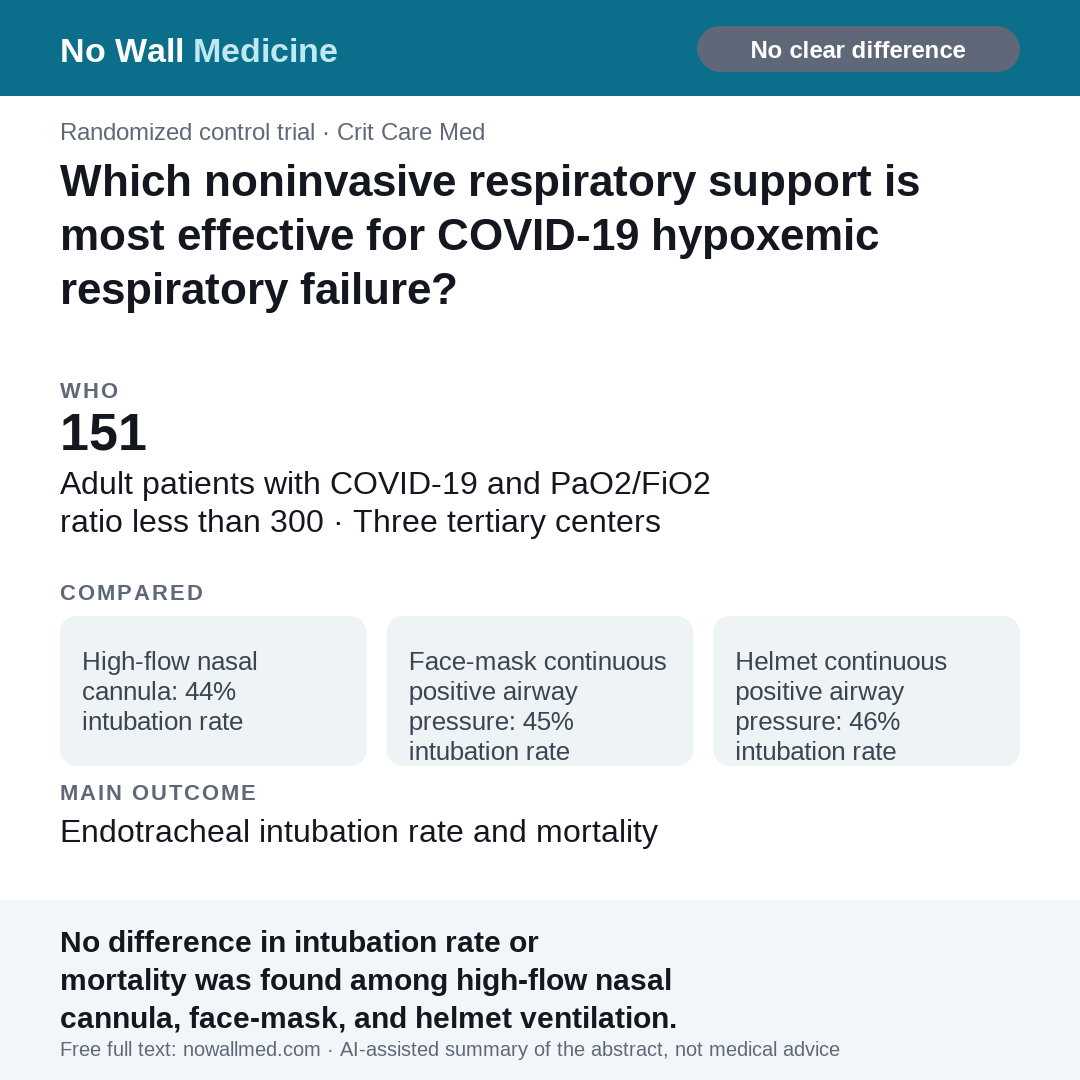
Which noninvasive respiratory support is most effective for COVID-19 hypoxemic respiratory failure?
Who
151
Adult patients with COVID-19 and PaO2/FiO2 ratio less than 300 · Three tertiary centers in Oman
Compared
High-flow nasal cannula: 44% intubation rate
Face-mask continuous positive airway pressure: 45% intubation rate
Helmet continuous positive airway pressure: 46% intubation rate
Main outcome
Endotracheal intubation rate and mortality
Result: relative risk of intubation 0.97 (95% CI, 0.63-1.49) for HFNC
Bottom line: No difference in intubation rate or mortality was found among high-flow nasal cannula, face-mask, and helmet ventilation.
Limitation: The trial was stopped prematurely because of a decline in cases.
Crit Care Med · 2023-06-13Download image
Clinical question: Which noninvasive respiratory support is most effective for COVID-19 hypoxemic respiratory failure?
Why it matters: It was unknown which noninvasive respiratory support technique is most effective for patients with COVID-19 and hypoxemic respiratory failure.
Key points
- Researchers studied 151 adult patients with COVID-19 and low blood oxygen levels across three medical centers in Oman.
- The endotracheal intubation rates were 44% for high-flow nasal cannula, 45% for face-mask continuous positive airway pressure, and 46% for helmet continuous positive airway pressure.
- Mortality rates at 28 days were 23%, 32%, and 38%, while 90-day mortality rates were 43%, 38%, and 40% for the three groups.
Headline and key points written with AI from the paper’s abstract, with every number checked against it. Read the paper before relying on them.
Was this summary helpful?
Subject terms
Cite this article
Al Hashim AH, Al Reesi A, Al Lawati NM, Burad J, Al Khabori M, Chandwani J. Comparison of Noninvasive Mechanical Ventilation With High-Flow Nasal Cannula, Face-Mask, and Helmet in Hypoxemic Respiratory Failure in Patients With COVID-19: A Randomized Controlled Trial. Crit Care Med. 2023. doi:10.1097/CCM.0000000000005963
Spotted a mistake? Suggest a correction