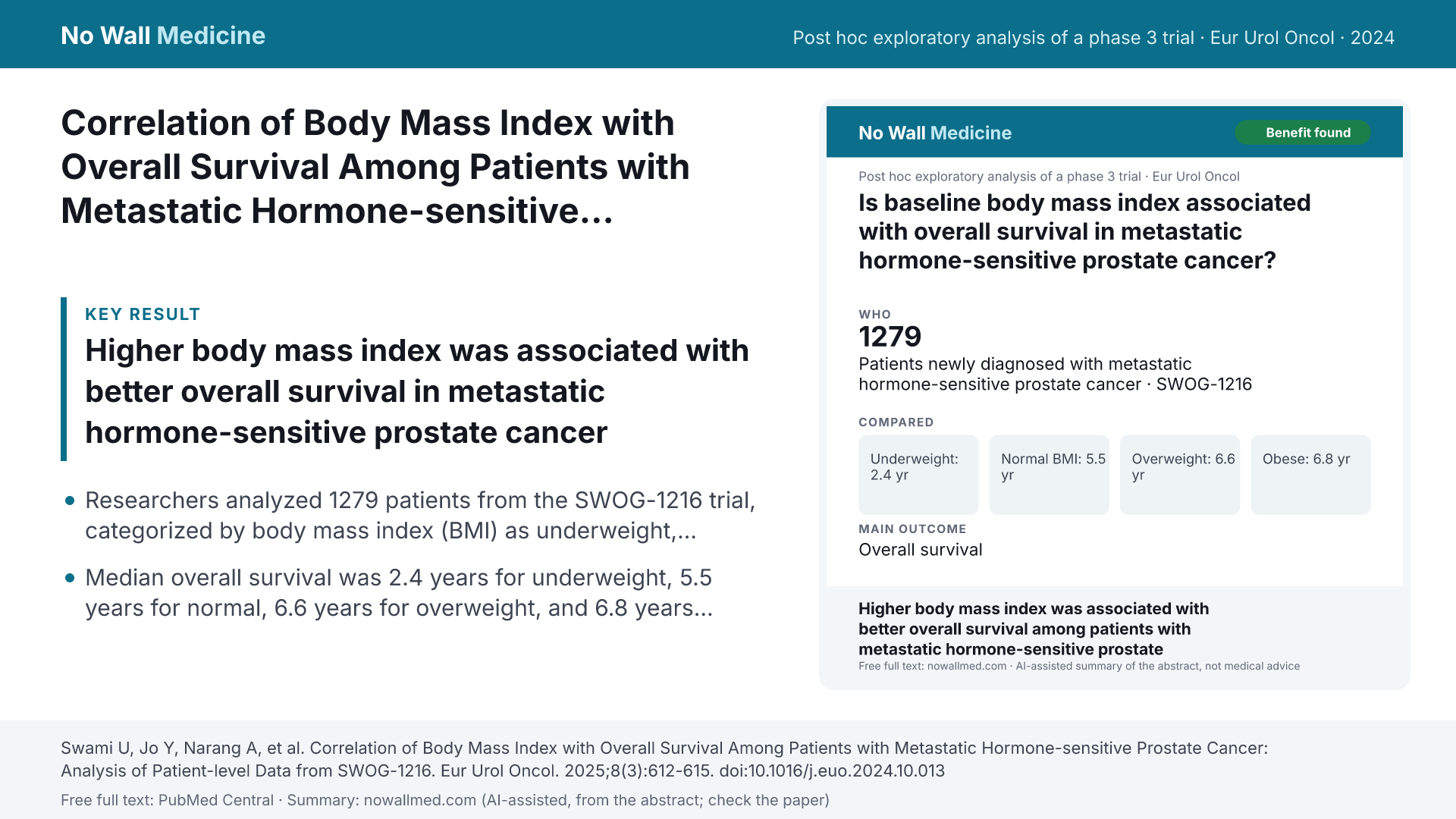
Higher body mass index was associated with better overall survival in metastatic hormone-sensitive prostate cancer
Correlation of Body Mass Index with Overall Survival Among Patients with Metastatic Hormone-sensitive Prostate Cancer: Analysis of Patient-level Data from SWOG-1216
Post hoc exploratory analysis of a phase 3 trialBenefit found
Is baseline body mass index associated with overall survival in metastatic hormone-sensitive prostate cancer?
Who
1279
Patients newly diagnosed with metastatic hormone-sensitive prostate cancer · SWOG-1216 trial
Compared
Underweight: 2.4 yr
Normal BMI: 5.5 yr
Overweight: 6.6 yr
Obese: 6.8 yr
Main outcome
Overall survival
Result: hazard ratio 0.829, 5% CI 0.68-0.98
Bottom line: Higher body mass index was associated with better overall survival among patients with metastatic hormone-sensitive prostate cancer.
Eur Urol Oncol · 2024-11-08 · Save PNG
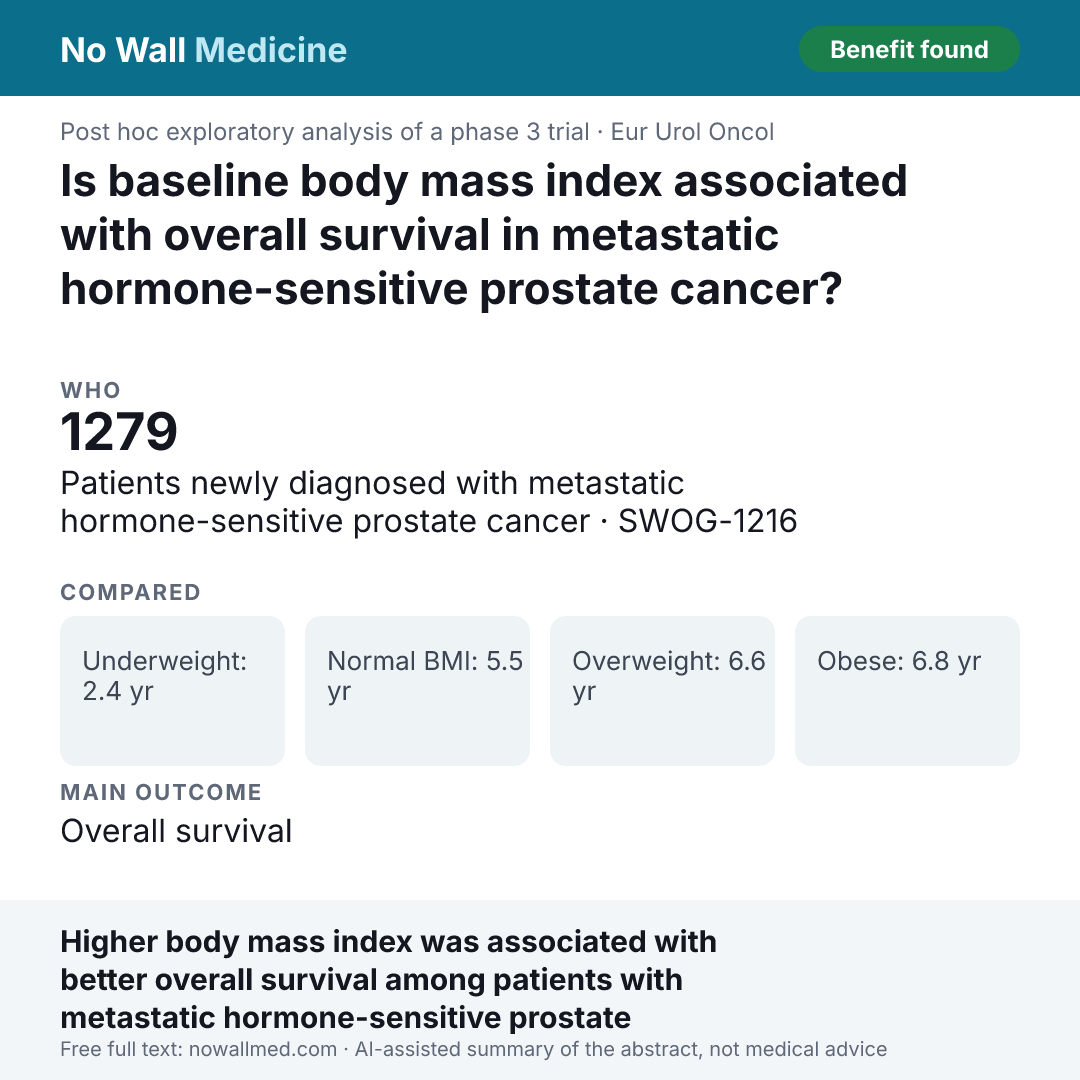
Clinical question: Is baseline body mass index associated with overall survival in metastatic hormone-sensitive prostate cancer?
Why it matters: The association between body mass index and overall survival in patients with metastatic hormone-sensitive prostate cancer has not been extensively explored.
Key points
- Researchers analyzed 1279 patients from the SWOG-1216 trial, categorized by body mass index (BMI) as underweight, normal, overweight, or obese.
- Median overall survival was 2.4 years for underweight, 5.5 years for normal, 6.6 years for overweight, and 6.8 years for obese patients.
- After adjusting for prognostic variables, a higher BMI was associated with better overall survival with a hazard ratio of 0.829 for each BMI category increment.
Headline and key points written with AI from the paper’s abstract, with every number checked against it. Read the paper before relying on them.
Was this summary helpful?
Subject terms
Headline, design, result, key points, caveat and citation as plain text.
Cite this article
Swami U, Jo Y, Narang A, et al. Correlation of Body Mass Index with Overall Survival Among Patients with Metastatic Hormone-sensitive Prostate Cancer: Analysis of Patient-level Data from SWOG-1216. Eur Urol Oncol. 2025;8(3):612-615. doi:10.1016/j.euo.2024.10.013
Spotted a mistake? Suggest a correction