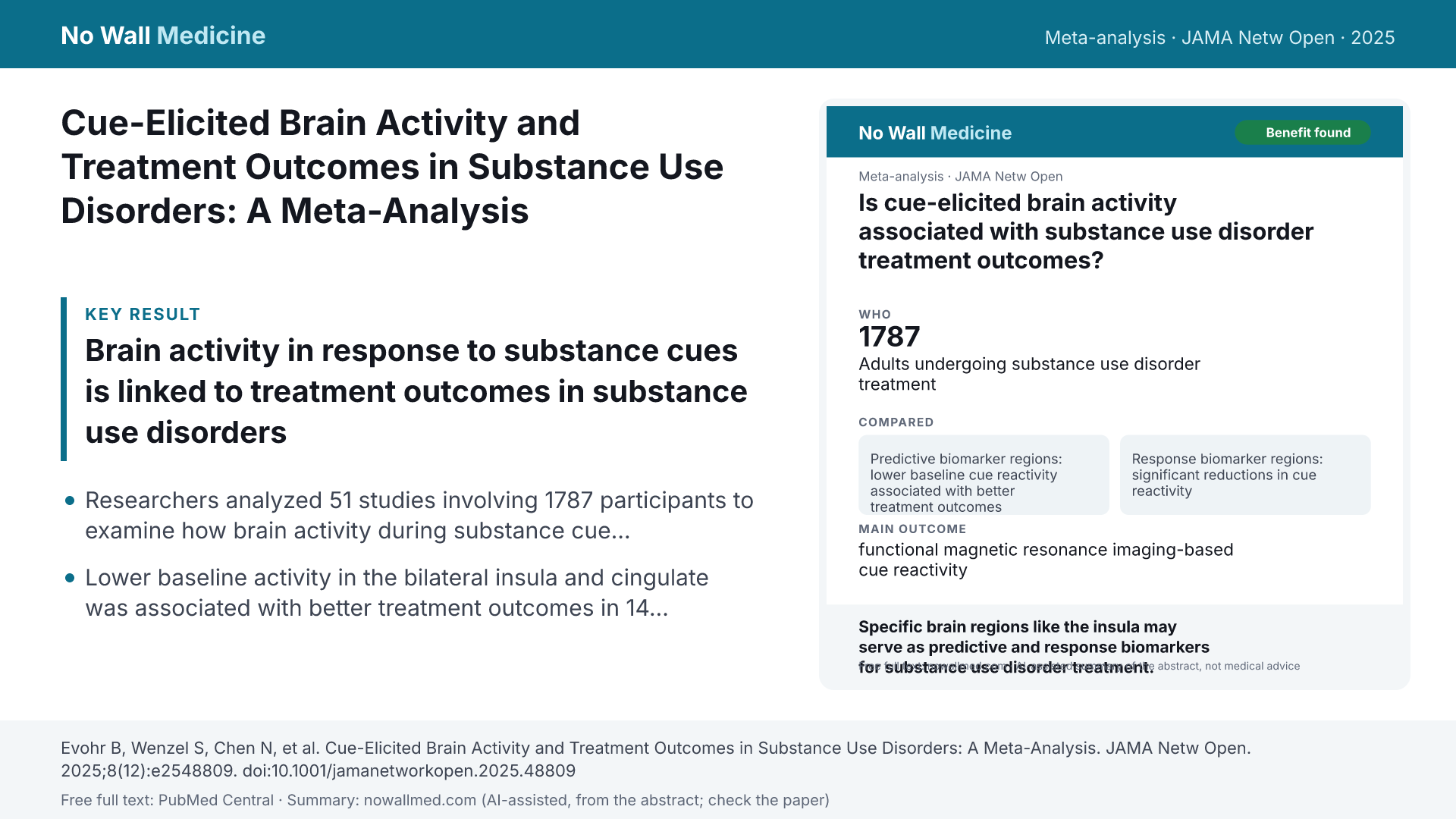
Brain activity in response to substance cues is linked to treatment outcomes in substance use disorders
Cue-Elicited Brain Activity and Treatment Outcomes in Substance Use Disorders: A Meta-Analysis
Meta-analysisBenefit found
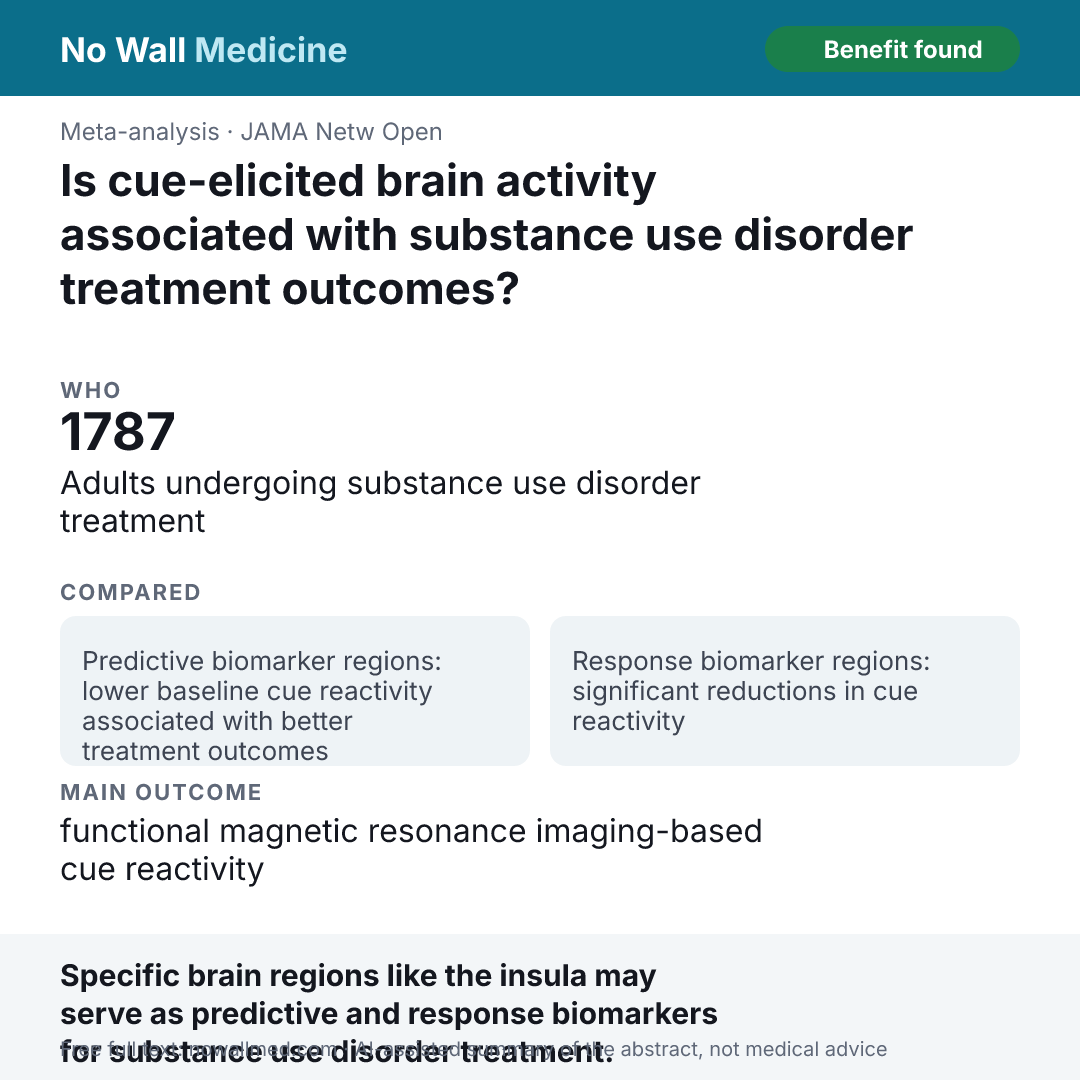
Is cue-elicited brain activity associated with substance use disorder treatment outcomes?
Who
1787
Adults undergoing substance use disorder treatment
Compared
Predictive biomarker regions: lower baseline cue reactivity associated with better treatment outcomes
Response biomarker regions: significant reductions in cue reactivity
Main outcome
functional magnetic resonance imaging-based cue reactivity
Bottom line: Specific brain regions like the insula may serve as predictive and response biomarkers for substance use disorder treatment.
JAMA Netw Open · 2025-12-01 · Save PNG
Clinical question: Is cue-elicited brain activity associated with substance use disorder treatment outcomes?
Key points
- Researchers analyzed 51 studies involving 1787 participants to examine how brain activity during substance cue exposure relates to treatment results.
- Lower baseline activity in the bilateral insula and cingulate was associated with better treatment outcomes in 14 studies involving 456 participants.
- Significant reductions in cue reactivity were observed in the anterior cingulate, caudate, accumbens, and insula in 25 studies involving 609 participants.
Headline and key points written with AI from the paper’s abstract, with every number checked against it. Read the paper before relying on them.
Was this summary helpful?
Subject terms
Headline, design, result, key points, caveat and citation as plain text.
Cite this article
Evohr B, Wenzel S, Chen N, et al. Cue-Elicited Brain Activity and Treatment Outcomes in Substance Use Disorders: A Meta-Analysis. JAMA Netw Open. 2025;8(12):e2548809. doi:10.1001/jamanetworkopen.2025.48809
Spotted a mistake? Suggest a correction