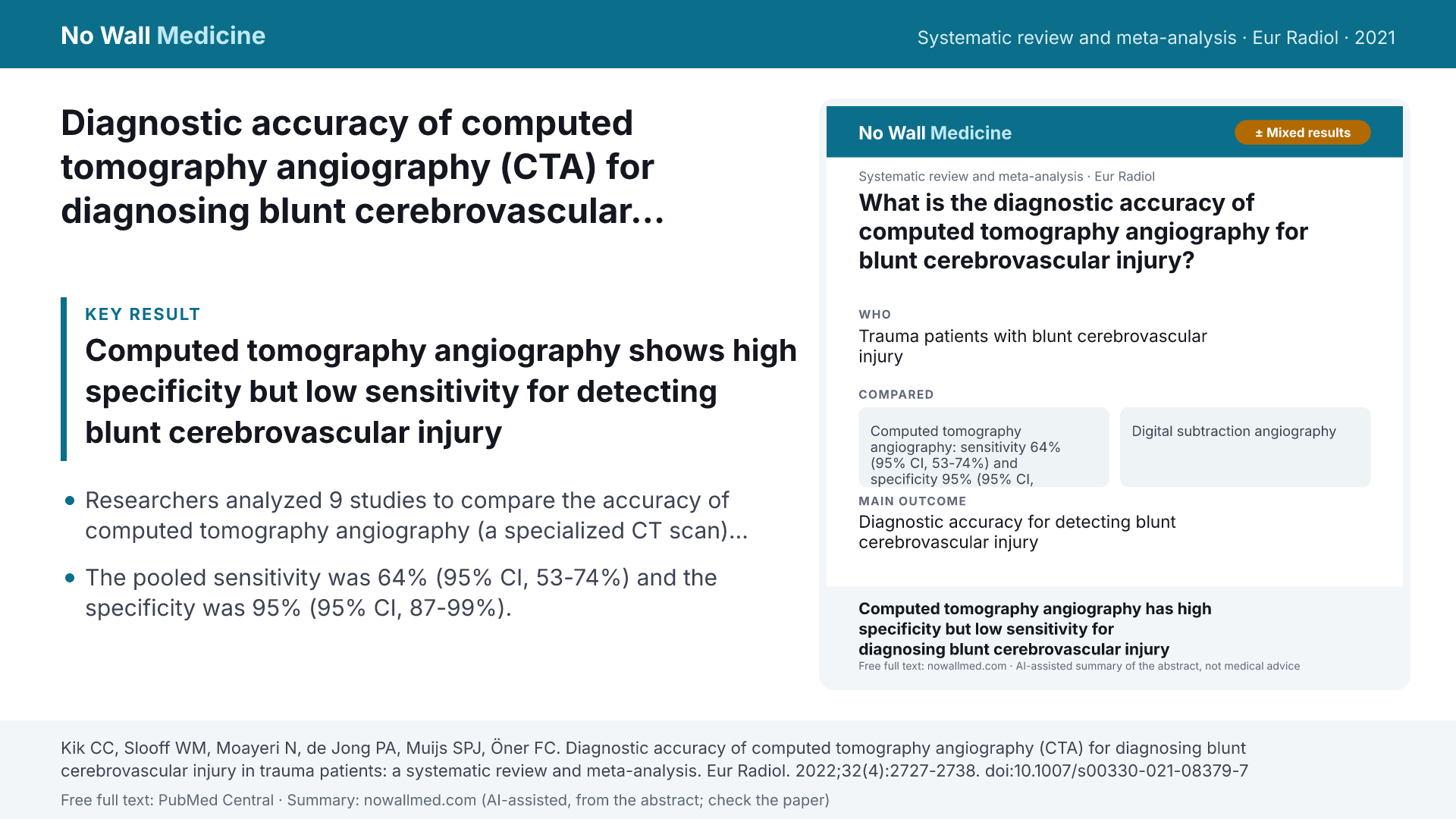
Computed tomography angiography shows high specificity but low sensitivity for detecting blunt cerebrovascular injury
Diagnostic accuracy of computed tomography angiography (CTA) for diagnosing blunt cerebrovascular injury in trauma patients: a systematic review and meta-analysis
Systematic review and meta-analysisMixed results
What is the diagnostic accuracy of computed tomography angiography for blunt cerebrovascular injury?
Who
Trauma patients with blunt cerebrovascular injury
Compared
Computed tomography angiography: sensitivity 64% (95% CI, 53-74%) and specificity 95% (95% CI, 87-99%)
Digital subtraction angiography
Main outcome
Diagnostic accuracy for detecting blunt cerebrovascular injury
Result: diagnostic odds ratio 31 (95%, 17-56)
Bottom line: Computed tomography angiography has high specificity but low sensitivity for diagnosing blunt cerebrovascular injury compared to digital subtraction angiography.
Eur Radiol · 2021-12-02Download image
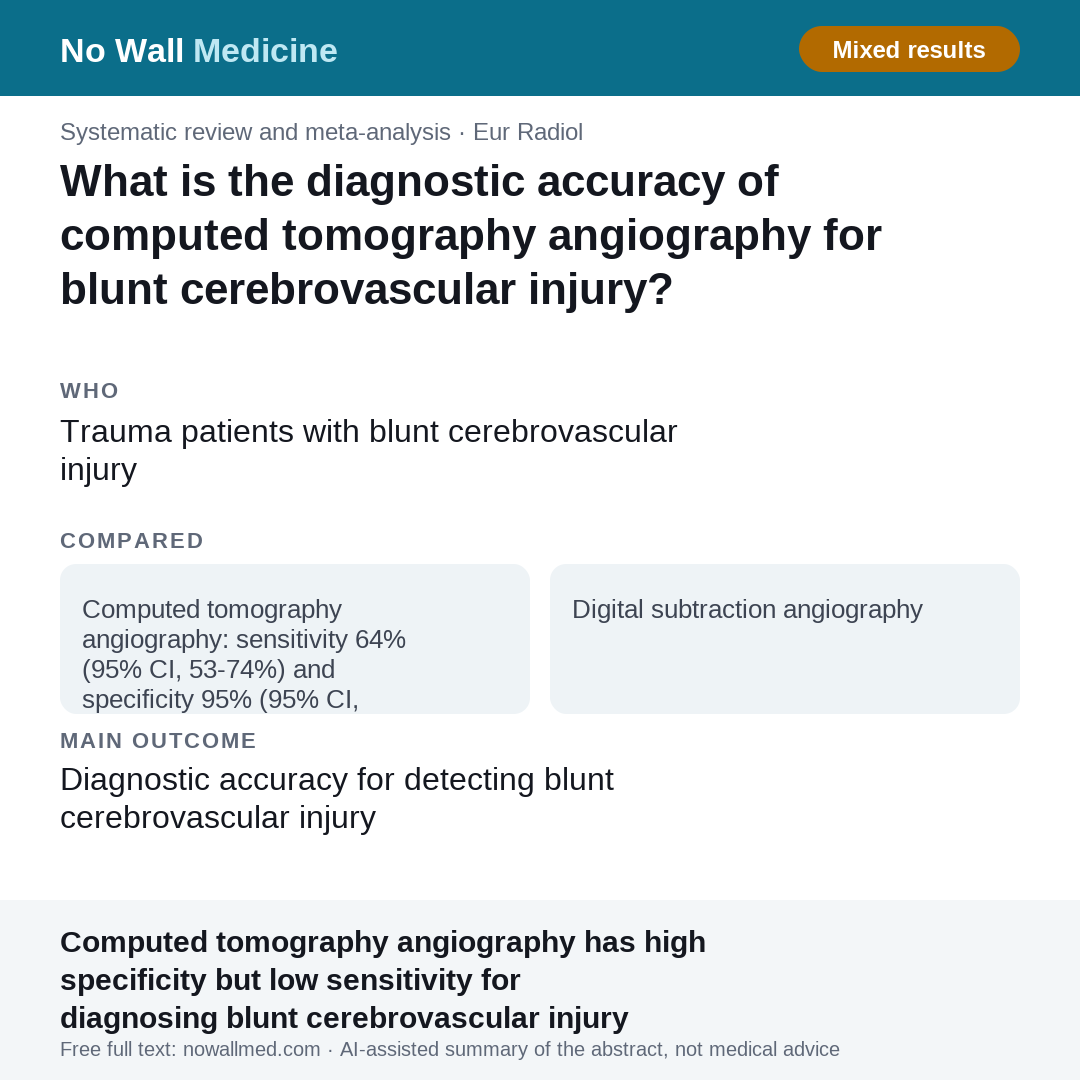
Clinical question: What is the diagnostic accuracy of computed tomography angiography for blunt cerebrovascular injury?
Why it matters: It was unknown if advances in computed tomography angiography technology have made it as accurate as digital subtraction angiography for detecting blunt cerebrovascular injury in trauma patients.
Key points
- Researchers analyzed 9 studies to compare the accuracy of computed tomography angiography (a specialized CT scan) against digital subtraction angiography (the gold standard imaging test) for blunt cerebrovascular injury.
- The pooled sensitivity was 64% (95% CI, 53-74%) and the specificity was 95% (95% CI, 87-99%).
- Increasing the number of detector channels to 64 slices did not result in higher sensitivity for detecting these injuries.
Headline and key points written with AI from the paper’s abstract, with every number checked against it. Read the paper before relying on them.
Was this summary helpful?
Subject terms
Cite this article
Kik CC, Slooff WM, Moayeri N, de Jong PA, Muijs SPJ, Öner FC. Diagnostic accuracy of computed tomography angiography (CTA) for diagnosing blunt cerebrovascular injury in trauma patients: a systematic review and meta-analysis. Eur Radiol. 2021. doi:10.1007/s00330-021-08379-7
Spotted a mistake? Suggest a correction
Top studies every Monday
The week’s key trials and guidelines in your specialties, plus any topics you follow. By email, free.
Get the weekly digest