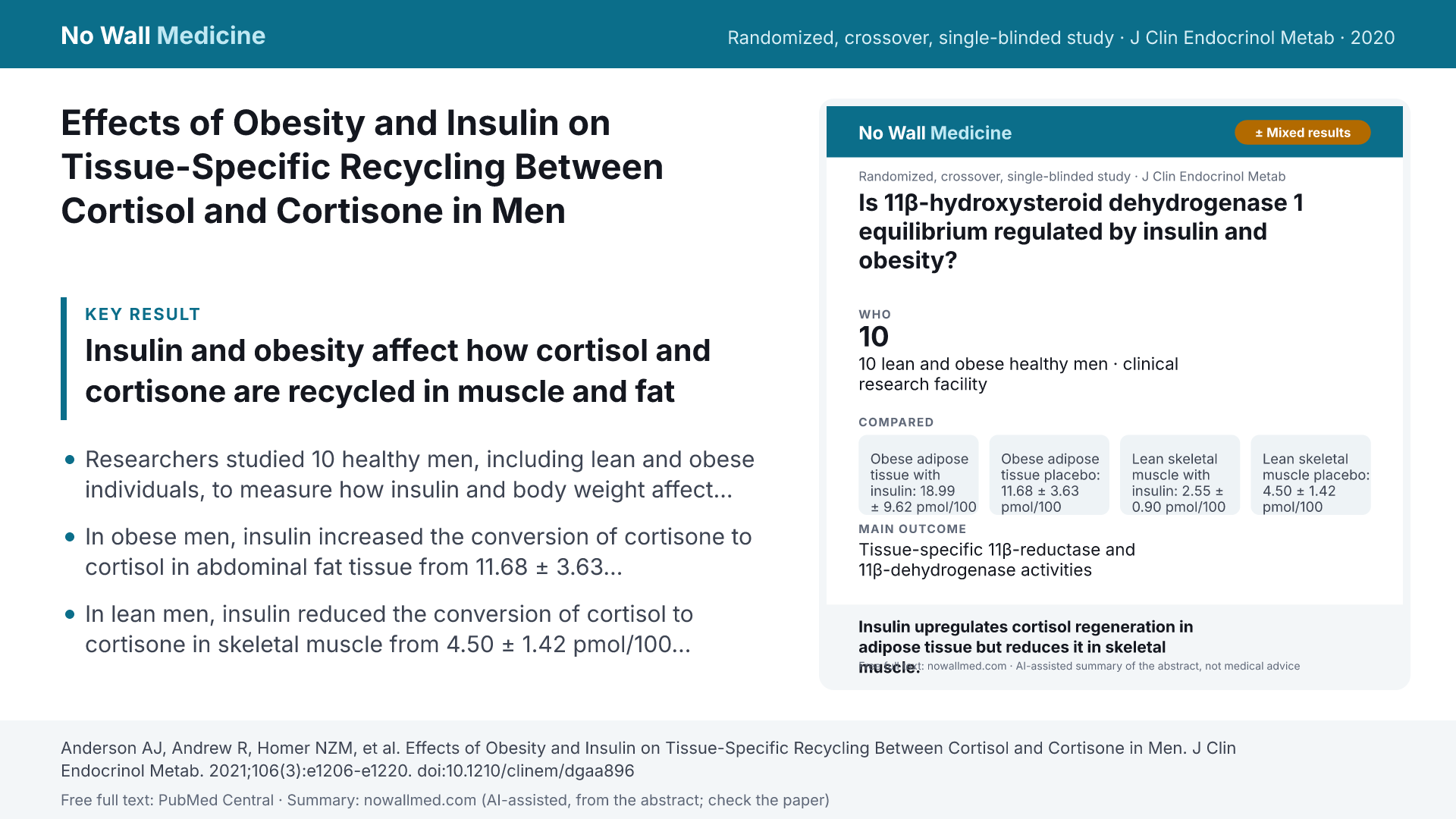
Insulin and obesity affect how cortisol and cortisone are recycled in muscle and fat
Effects of Obesity and Insulin on Tissue-Specific Recycling Between Cortisol and Cortisone in Men
Randomized, crossover, single-blinded studyMixed results
Is 11β-hydroxysteroid dehydrogenase 1 equilibrium regulated by insulin and obesity?
Who
10
10 lean and obese healthy men · clinical research facility
Compared
Obese adipose tissue with insulin: 18.99 ± 9.62 pmol/100 g/minute
Obese adipose tissue placebo: 11.68 ± 3.63 pmol/100 g/minute
Lean skeletal muscle with insulin: 2.55 ± 0.90 pmol/100 g/minute
Lean skeletal muscle placebo: 4.50 ± 1.42 pmol/100 g/minute
Main outcome
Tissue-specific 11β-reductase and 11β-dehydrogenase activities
Bottom line: Insulin upregulates cortisol regeneration in adipose tissue but reduces it in skeletal muscle.
J Clin Endocrinol Metab · 2020-12-04Download image
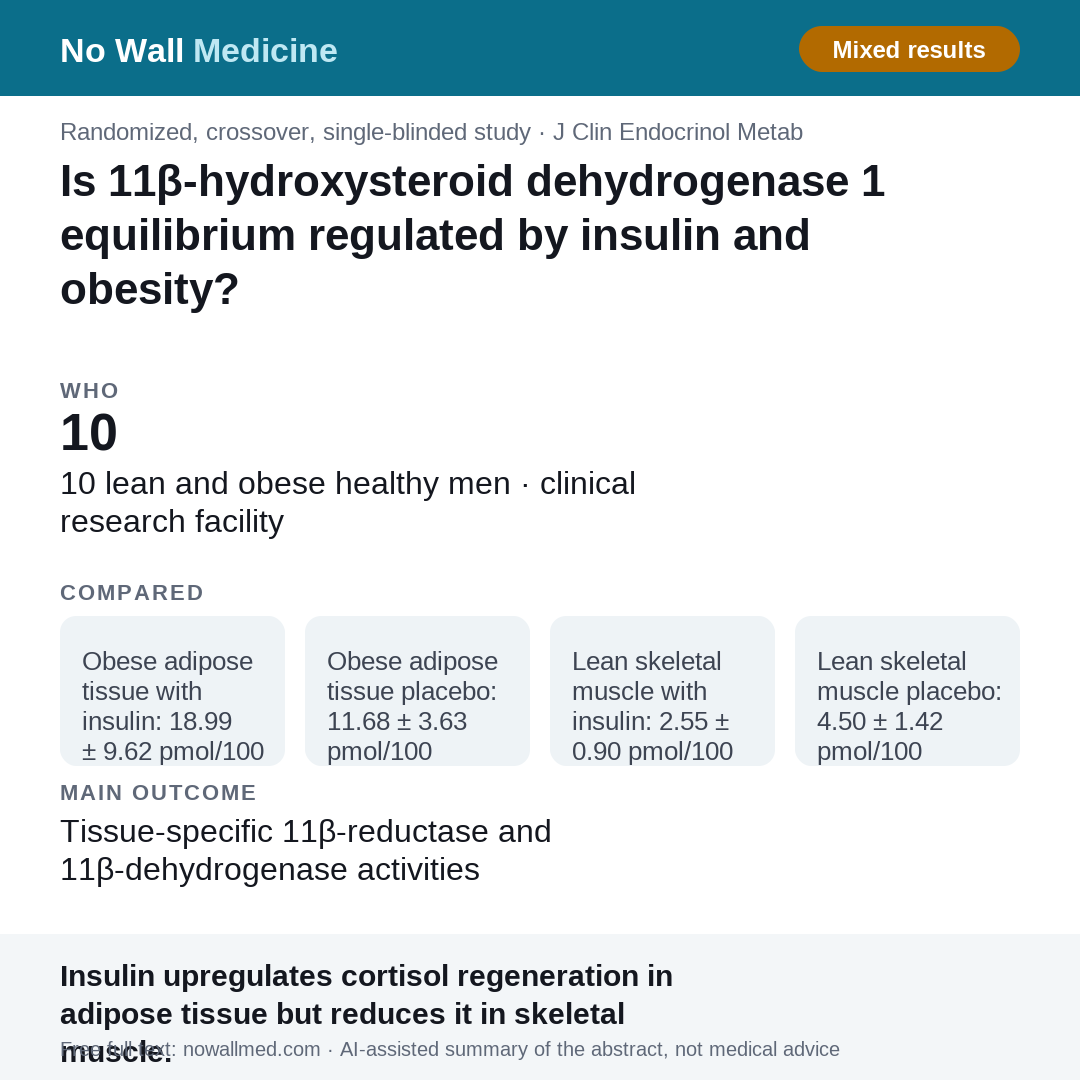
Clinical question: Is 11β-hydroxysteroid dehydrogenase 1 equilibrium regulated by insulin and obesity?
Key points
- Researchers studied 10 healthy men, including lean and obese individuals, to measure how insulin and body weight affect the enzyme 11β-hydroxysteroid dehydrogenase 1.
- In obese men, insulin increased the conversion of cortisone to cortisol in abdominal fat tissue from 11.68 ± 3.63 pmol/100 g/minute to 18.99 ± 9.62 pmol/100 g/minute.
- In lean men, insulin reduced the conversion of cortisol to cortisone in skeletal muscle from 4.50 ± 1.42 pmol/100 g/minute to 2.55 ± 0.90 pmol/100 g/minute.
Headline and key points written with AI from the paper’s abstract, with every number checked against it. Read the paper before relying on them.
Was this summary helpful?
Subject terms
Headline, design, result, key points, caveat and citation as plain text.
Cite this article
Anderson AJ, Andrew R, Homer NZM, et al. Effects of Obesity and Insulin on Tissue-Specific Recycling Between Cortisol and Cortisone in Men. J Clin Endocrinol Metab. 2020. doi:10.1210/clinem/dgaa896
Spotted a mistake? Suggest a correction