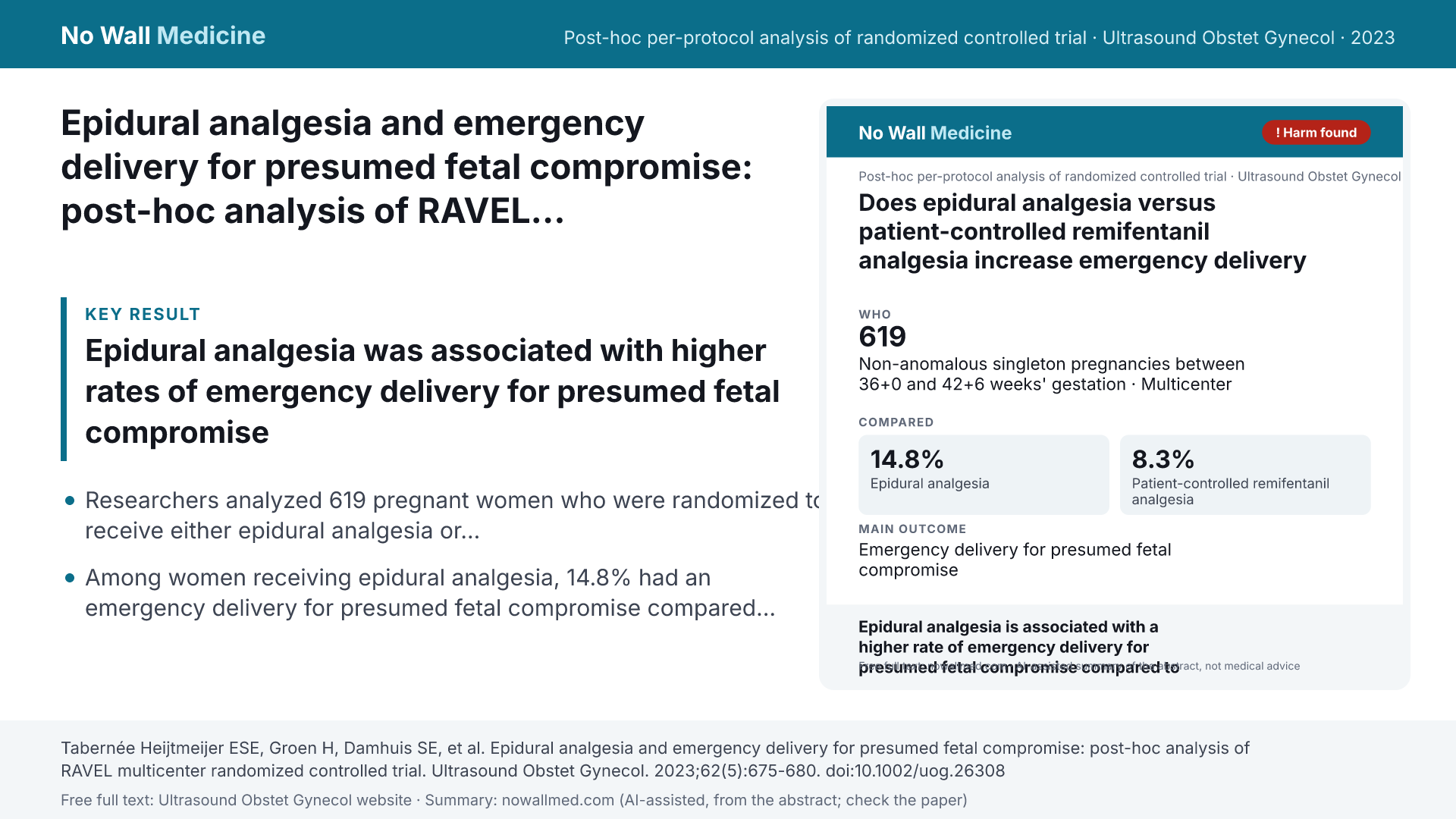
Epidural analgesia was associated with higher rates of emergency delivery for presumed fetal compromise
Epidural analgesia and emergency delivery for presumed fetal compromise: post-hoc analysis of RAVEL multicenter randomized controlled trial
Post-hoc per-protocol analysis of randomized controlled trialHarm found
Does epidural analgesia versus patient-controlled remifentanil analgesia increase emergency delivery for presumed fetal compromise?
Who
619
Non-anomalous singleton pregnancies between 36+0 and 42+6 weeks' gestation · Multicenter
Compared
14.8%Epidural analgesia
8.3%Patient-controlled remifentanil analgesia
Main outcome
Emergency delivery for presumed fetal compromise
Result: odds ratio 1.69 (95% CI 1.01-2.83)
Bottom line: Epidural analgesia is associated with a higher rate of emergency delivery for presumed fetal compromise compared to patient-controlled remifentanil analgesia.
Limitation: Post-hoc per-protocol analysis
Ultrasound Obstet Gynecol · 2023-07-14Download image
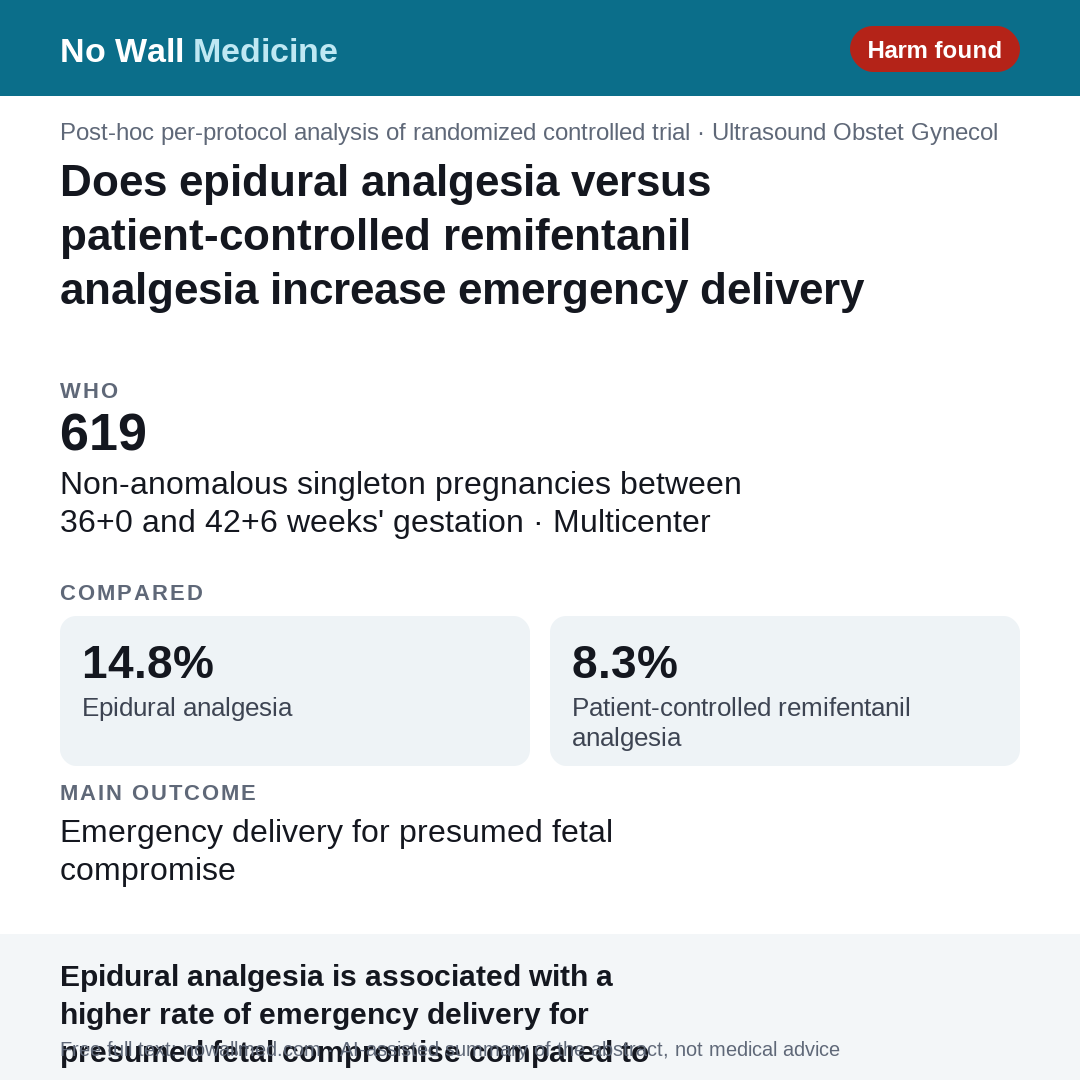
Clinical question: Does epidural analgesia versus patient-controlled remifentanil analgesia increase emergency delivery for presumed fetal compromise?
Why it matters: It was unknown if the type of pain relief used during labor affects the likelihood of emergency delivery for suspected fetal distress across different birth-weight groups.
Key points
- Researchers analyzed 619 pregnant women who were randomized to receive either epidural analgesia or patient-controlled remifentanil analgesia, which is a continuous infusion of a strong pain medication.
- Among women receiving epidural analgesia, 14.8% had an emergency delivery for presumed fetal compromise compared with 8.3% of women receiving patient-controlled remifentanil analgesia.
- After adjusting for parity, women receiving epidural analgesia had higher odds of presumed fetal compromise with an odds ratio of 1.69 (95% CI, 1.01-2.83).
Headline and key points written with AI from the paper’s abstract, with every number checked against it. Read the paper before relying on them.
Was this summary helpful?
Subject terms
Cite this article
Tabernée Heijtmeijer ESE, Groen H, Damhuis SE, Freeman LM, Middeldorp JM, Ganzevoort W. Epidural analgesia and emergency delivery for presumed fetal compromise: post-hoc analysis of RAVEL multicenter randomized controlled trial. Ultrasound Obstet Gynecol. 2023. doi:10.1002/uog.26308
Spotted a mistake? Suggest a correction
Top studies every Monday
The week’s key trials and guidelines in your specialties, plus any topics you follow. By email, free.
Get the weekly digest