Intensive blood pressure control was associated with lower functional independence after mechanical clot removal for stroke
Intensive vs Conventional Blood Pressure Control After Thrombectomy in Acute Ischemic Stroke: A Systematic Review and Meta-Analysis
Systematic review and meta-analysis of 4 randomized clinical trialsHarm found
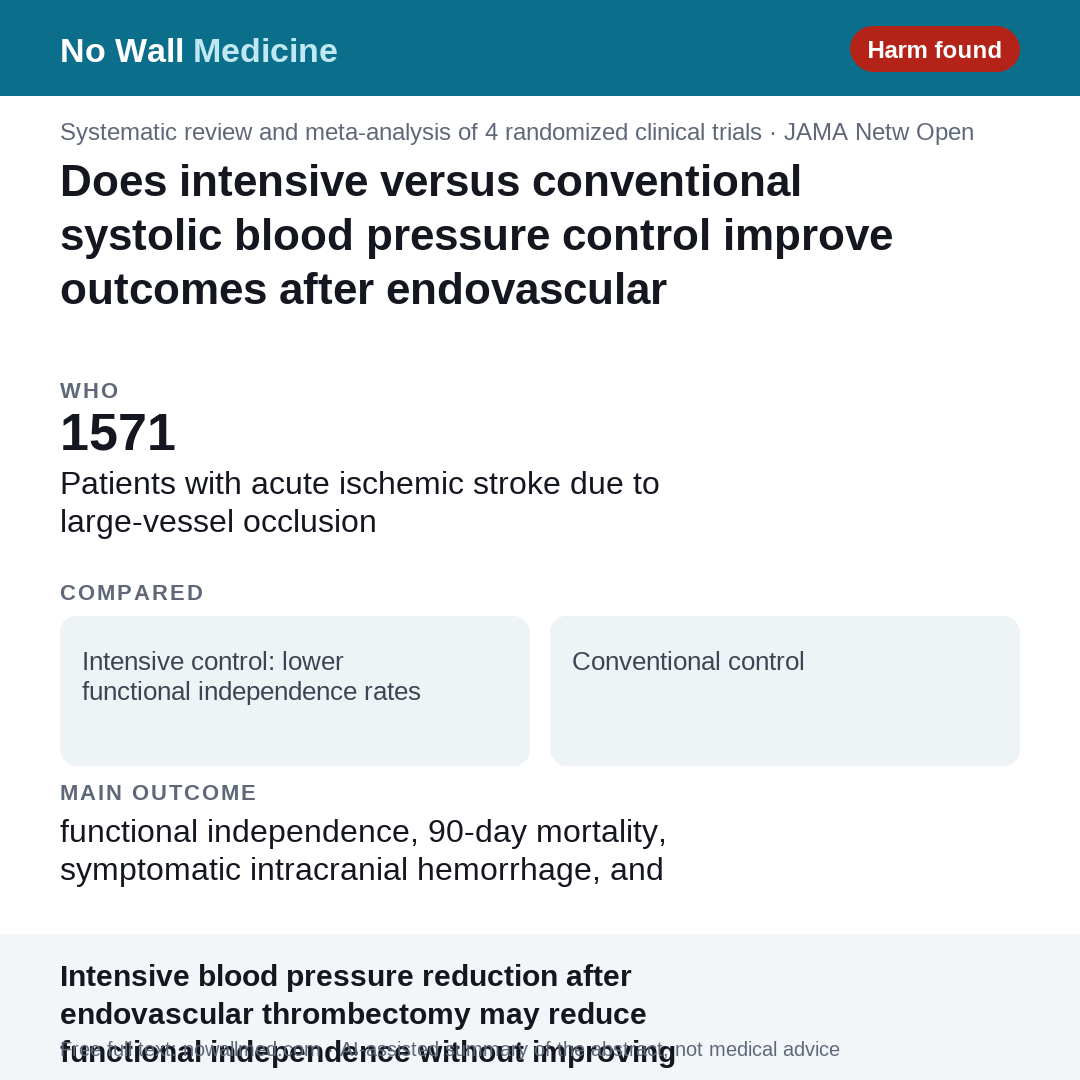
Does intensive versus conventional systolic blood pressure control improve outcomes after endovascular thrombectomy?
Who
1571
Patients with acute ischemic stroke due to large-vessel occlusion
Compared
Intensive control: lower functional independence rates
Conventional control
Main outcome
functional independence, 90-day mortality, symptomatic intracranial hemorrhage, and hypotensive events
Result: relative risk 0.81 (95% CI 0.67-0.98) for functional independence
Bottom line: Intensive blood pressure reduction after endovascular thrombectomy may reduce functional independence without improving mortality or safety.
JAMA Netw Open · 2024-02-05Download image
Clinical question: Does intensive versus conventional systolic blood pressure control improve outcomes after endovascular thrombectomy?
Why it matters: The optimal systolic blood pressure targets following mechanical clot removal for acute ischemic stroke remain a subject of debate.
Key points
- Researchers analyzed 4 randomized clinical trials involving 1571 patients who underwent endovascular thrombectomy, a procedure to remove a clot from a large blood vessel.
- Intensive blood pressure targets were associated with lower rates of functional independence compared to conventional targets (relative risk, 0.81 [95% CI, 0.67-0.98]).
- No significant differences were found between groups regarding 90-day mortality, symptomatic intracranial hemorrhage, or hypotensive events.
Headline and key points written with AI from the paper’s abstract, with every number checked against it. Read the paper before relying on them.
Topics
Cite this article
Ghozy S, Mortezaei A, Elfil M, Abdelghaffar M, Kobeissi H, Aladawi M. Intensive vs Conventional Blood Pressure Control After Thrombectomy in Acute Ischemic Stroke: A Systematic Review and Meta-Analysis. JAMA Netw Open. 2024. doi:10.1001/jamanetworkopen.2024.0179
Spotted a mistake? Suggest a correction
Top studies every Monday
The week’s key trials and guidelines in your specialties, plus any topics you follow. By email, free.
Get the weekly digest