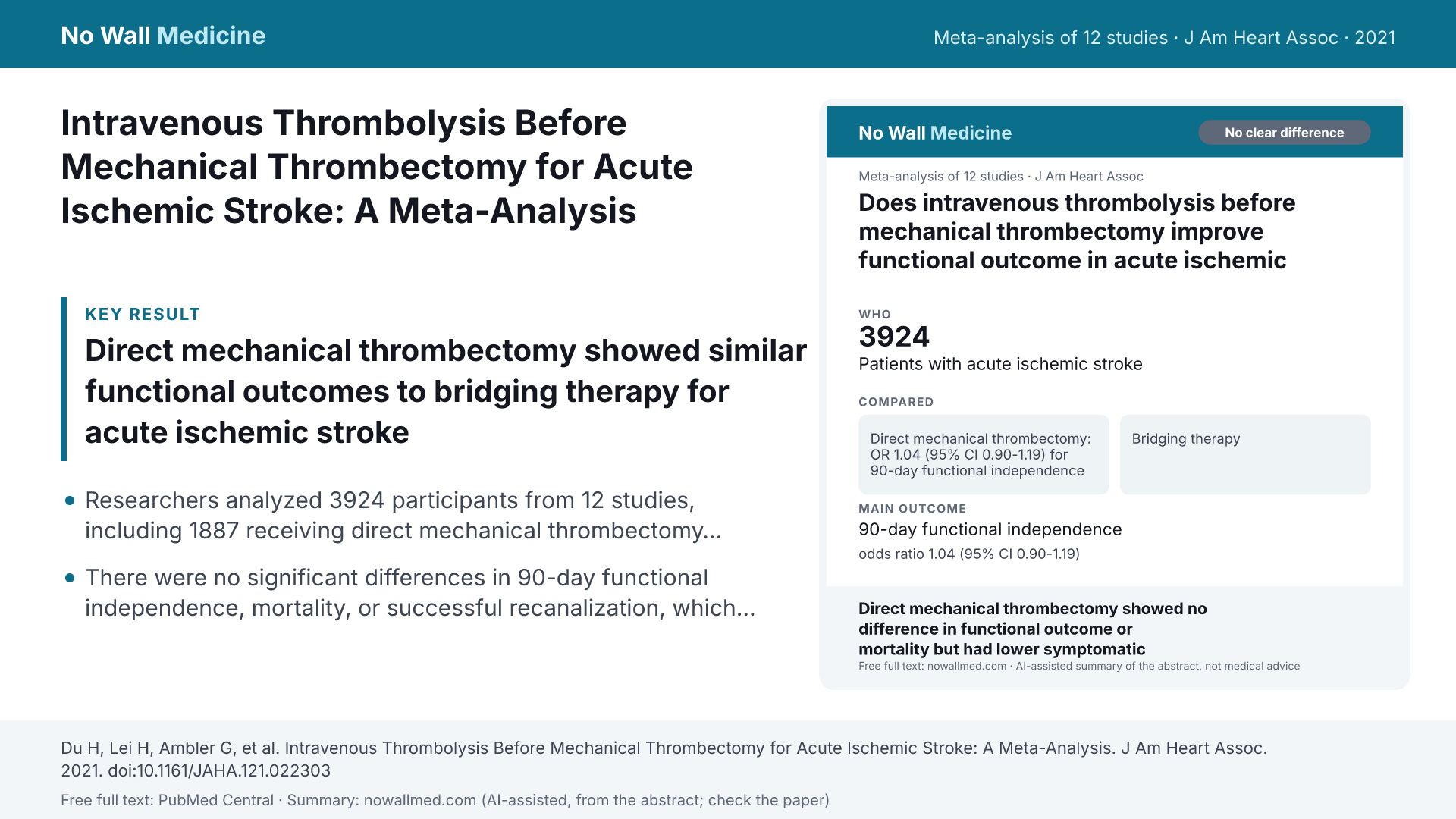
Direct mechanical thrombectomy showed similar functional outcomes to bridging therapy for acute ischemic stroke
Intravenous Thrombolysis Before Mechanical Thrombectomy for Acute Ischemic Stroke: A Meta-Analysis
Meta-analysis of 12 studiesNo clear difference
Does intravenous thrombolysis before mechanical thrombectomy improve functional outcome in acute ischemic stroke?
Who
3924
Patients with acute ischemic stroke
Compared
Direct mechanical thrombectomy: OR 1.04 (95% CI 0.90-1.19) for 90-day functional independence
Bridging therapy
Main outcome
90-day functional independence
Result: odds ratio 1.04 (95% CI 0.90-1.19)
Bottom line: Direct mechanical thrombectomy showed no difference in functional outcome or mortality but had lower symptomatic intracranial hemorrhage rates.
J Am Heart Assoc · 2021-11-15Download image
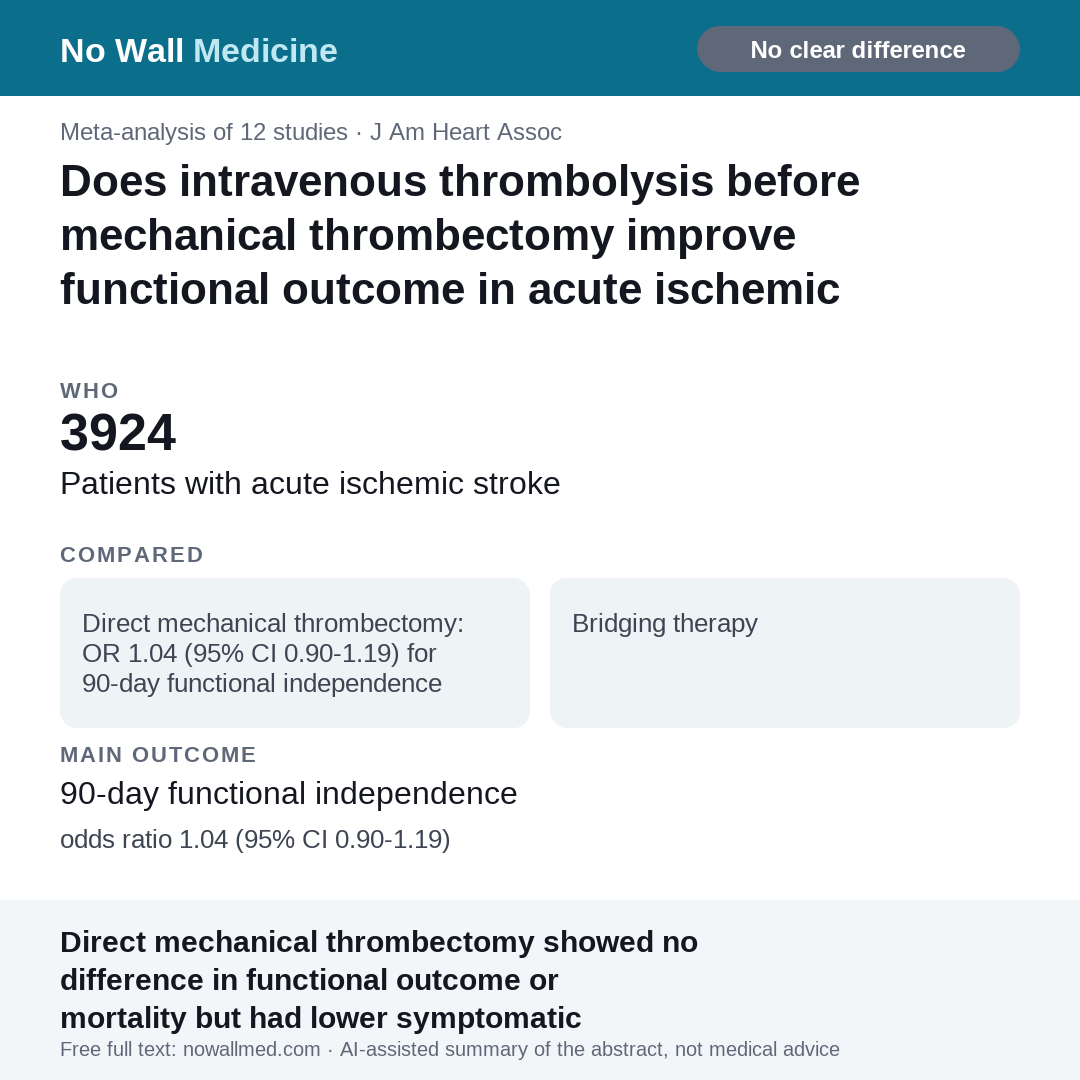
Clinical question: Does intravenous thrombolysis before mechanical thrombectomy improve functional outcome in acute ischemic stroke?
Why it matters: It is uncertain whether using intravenous clot-dissolving medication before mechanical thrombectomy provides additional benefits for functional outcomes in acute ischemic stroke.
Key points
- Researchers analyzed 3924 participants from 12 studies, including 1887 receiving direct mechanical thrombectomy and 2037 receiving bridging therapy with intravenous clot-dissolving medication.
- There were no significant differences in 90-day functional independence, mortality, or successful recanalization, which is the reopening of the blocked artery.
- Direct mechanical thrombectomy was associated with a lower rate of symptomatic intracranial hemorrhage and any intracranial hemorrhage compared to bridging therapy.
Headline and key points written with AI from the paper’s abstract, with every number checked against it. Read the paper before relying on them.
Was this summary helpful?
Subject terms
Cite this article
Du H, Lei H, Ambler G, et al. Intravenous Thrombolysis Before Mechanical Thrombectomy for Acute Ischemic Stroke: A Meta-Analysis. J Am Heart Assoc. 2021. doi:10.1161/JAHA.121.022303
Spotted a mistake? Suggest a correction