Bayesian analysis of anesthesia trials shows many reported non-zero effects may lack strong evidence
Multicentre randomised trials in anaesthesia: an analysis using Bayesian metrics
Structured review of multicentre randomized trialsMixed results
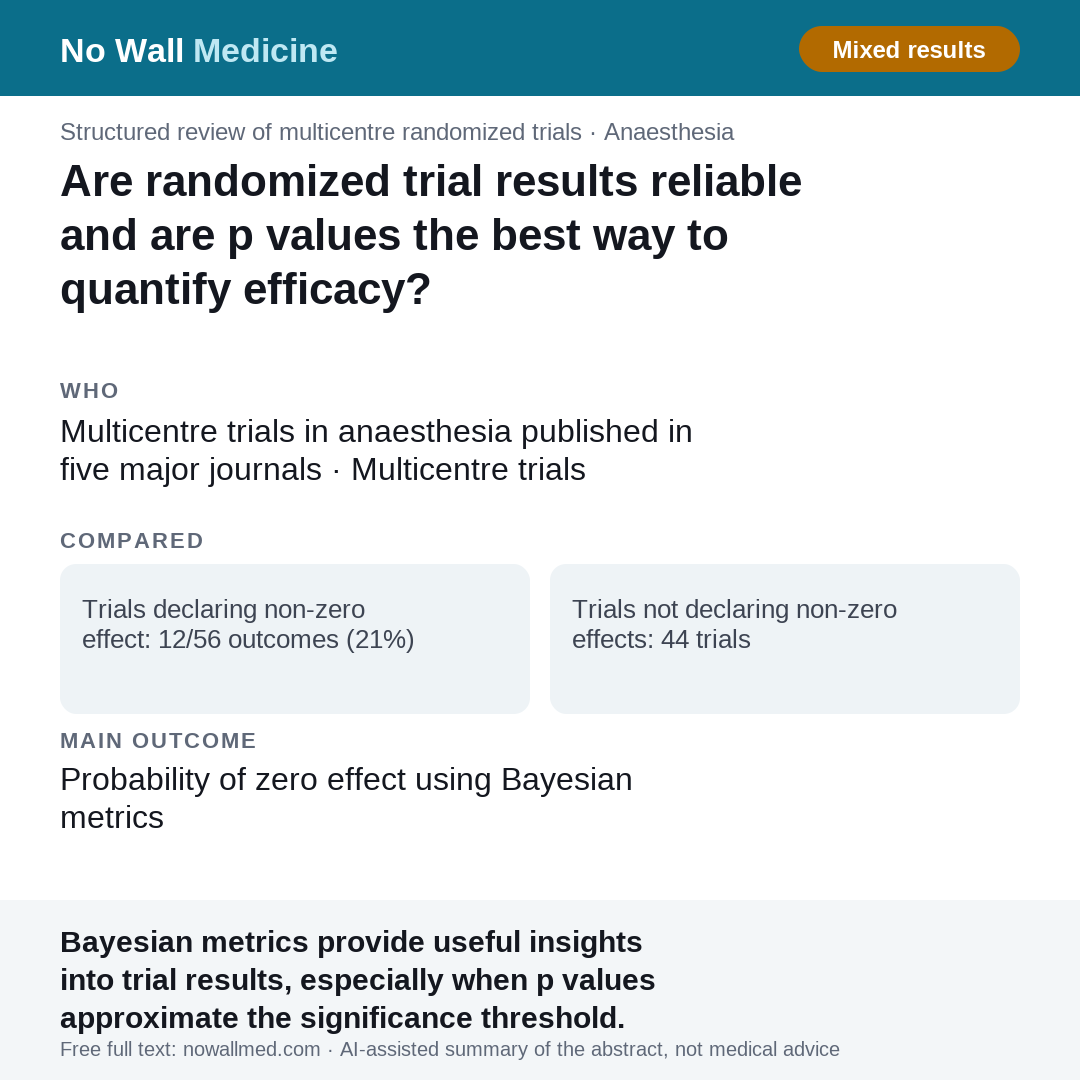
Are randomized trial results reliable and are p values the best way to quantify efficacy?
Who
Multicentre trials in anaesthesia published in five major journals · Multicentre trials published between February 2011 and November 2021
Compared
Trials declaring non-zero effect: 12/56 outcomes (21%)
Trials not declaring non-zero effects: 44 trials
Main outcome
Probability of zero effect using Bayesian metrics
Bottom line: Bayesian metrics provide useful insights into trial results, especially when p values approximate the significance threshold.
Anaesthesia · 2022-09-20Download image
Clinical question: Are randomized trial results reliable and are p values the best way to quantify efficacy?
Why it matters: It is unknown if traditional p values and confidence intervals are the best ways to quantify efficacy or if they provide sufficient insight compared to Bayesian metrics.
Key points
- Researchers reviewed multicentre randomized trials in anesthesia published in five major journals between February 2011 and November 2021.
- Of 56 outcomes, non-zero effects were declared for 12, but Bayes factors for these trials ranged from 0.000001 to 1.9 with post-test zero effect probabilities of 0.0001% to 65%.
- The median hypothesized absolute effect size was 7% (3-13% [0-25%]) while the median observed absolute effect size was 2% (1-7% [0-24%]).
Headline and key points written with AI from the paper’s abstract, with every number checked against it. Read the paper before relying on them.
Was this summary helpful?
Subject terms
Cite this article
Seretny M, Barlow J, Sidebotham D. Multicentre randomised trials in anaesthesia: an analysis using Bayesian metrics. Anaesthesia. 2022. doi:10.1111/anae.15867
Spotted a mistake? Suggest a correction
Top studies every Monday
The week’s key trials and guidelines in your specialties, plus any topics you follow. By email, free.
Get the weekly digest