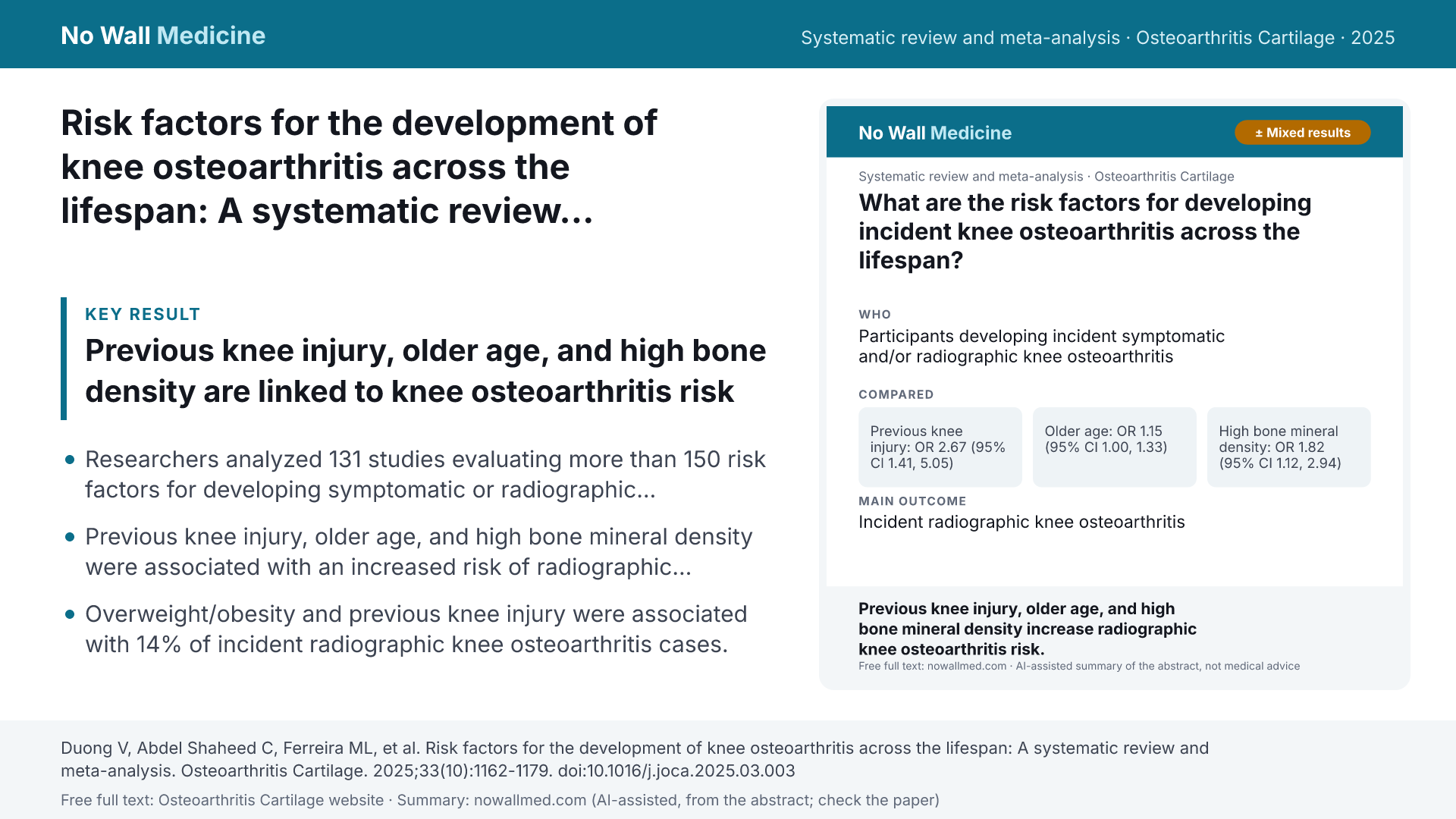
Previous knee injury, older age, and high bone density are linked to knee osteoarthritis risk
Risk factors for the development of knee osteoarthritis across the lifespan: A systematic review and meta-analysis
Systematic review and meta-analysisMixed results
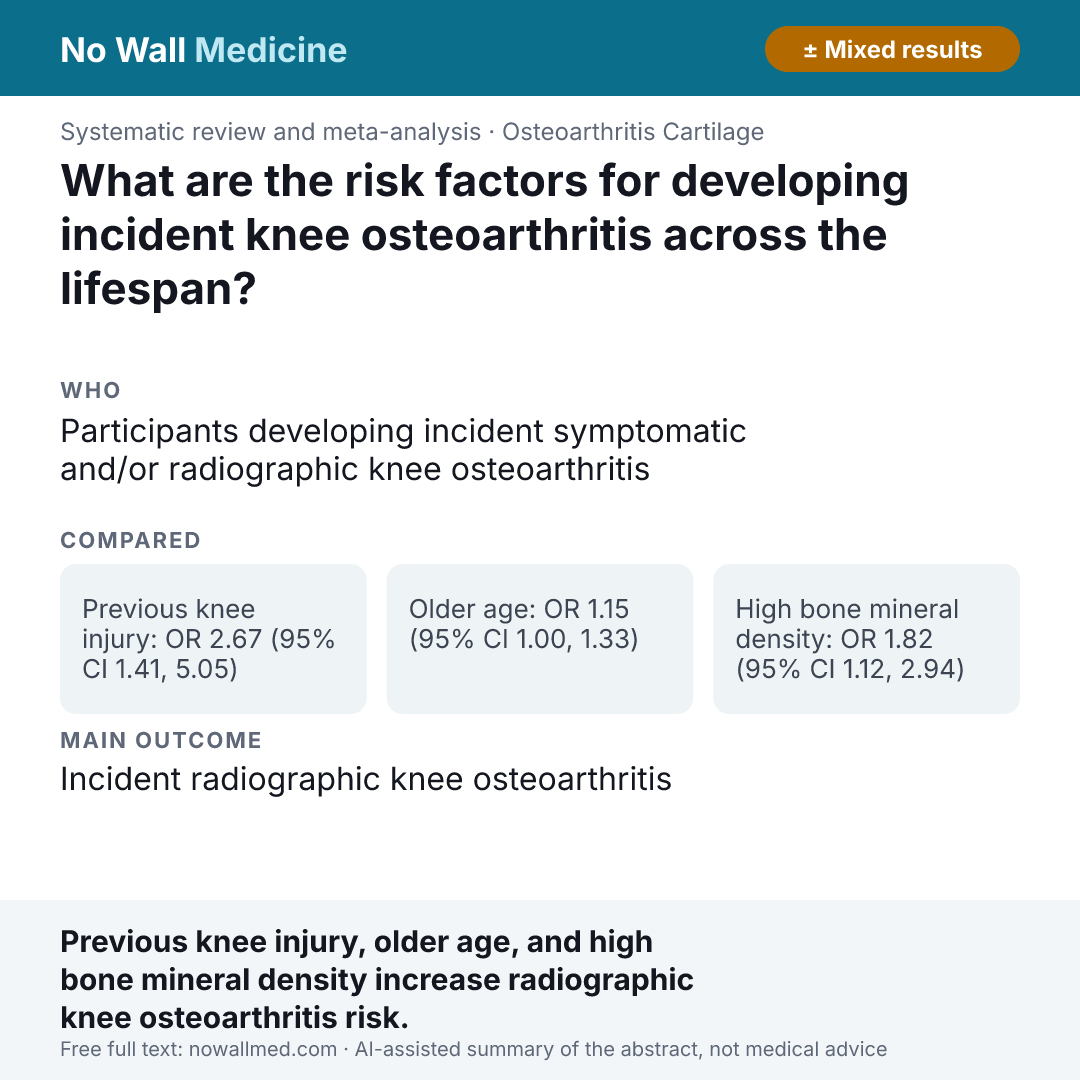
What are the risk factors for developing incident knee osteoarthritis across the lifespan?
Who
Participants developing incident symptomatic and/or radiographic knee osteoarthritis
Compared
Previous knee injury: OR 2.67 (95% CI 1.41, 5.05)
Older age: OR 1.15 (95% CI 1.00, 1.33)
High bone mineral density: OR 1.82 (95% CI 1.12, 2.94)
Main outcome
Incident radiographic knee osteoarthritis
Bottom line: Previous knee injury, older age, and high bone mineral density increase radiographic knee osteoarthritis risk.
Osteoarthritis Cartilage · 2025-03-31 · PROSPERO CRD42023391187
Why it matters: The specific risk factors that contribute to the development of knee osteoarthritis across different stages of life were not fully quantified.
Headline and visual abstract written with AI from the paper’s abstract, with every number checked against it. Read the paper before relying on them.
Was this summary helpful?
Subject terms
Cite this article
Duong V, Abdel Shaheed C, Ferreira ML, et al. Risk factors for the development of knee osteoarthritis across the lifespan: A systematic review and meta-analysis. Osteoarthritis Cartilage. 2025;33(10):1162-1179. doi:10.1016/j.joca.2025.03.003
Spotted a mistake? Suggest a correction