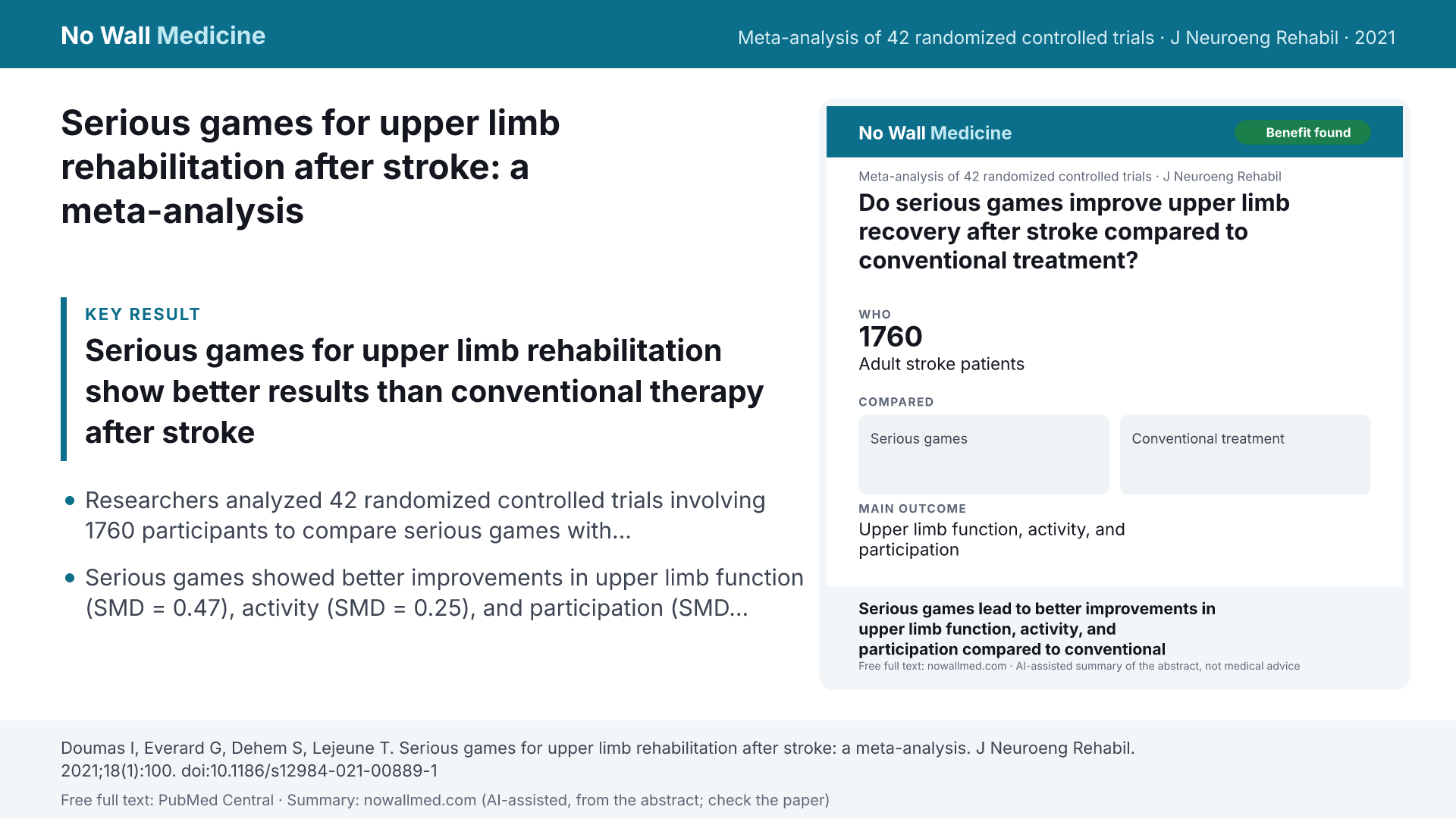
Serious games for upper limb rehabilitation show better results than conventional therapy after stroke
Serious games for upper limb rehabilitation after stroke: a meta-analysis
Meta-analysis of 42 randomized controlled trialsBenefit found
Do serious games improve upper limb recovery after stroke compared to conventional treatment?
Who
1760
Adult stroke patients
Compared
Serious games
Conventional treatment
Main outcome
Upper limb function, activity, and participation
Result: SMD 0.47 (95% CI 0.24 to 0.70) for function
Bottom line: Serious games lead to better improvements in upper limb function, activity, and participation compared to conventional treatment.
J Neuroeng Rehabil · 2021-06-15Download image
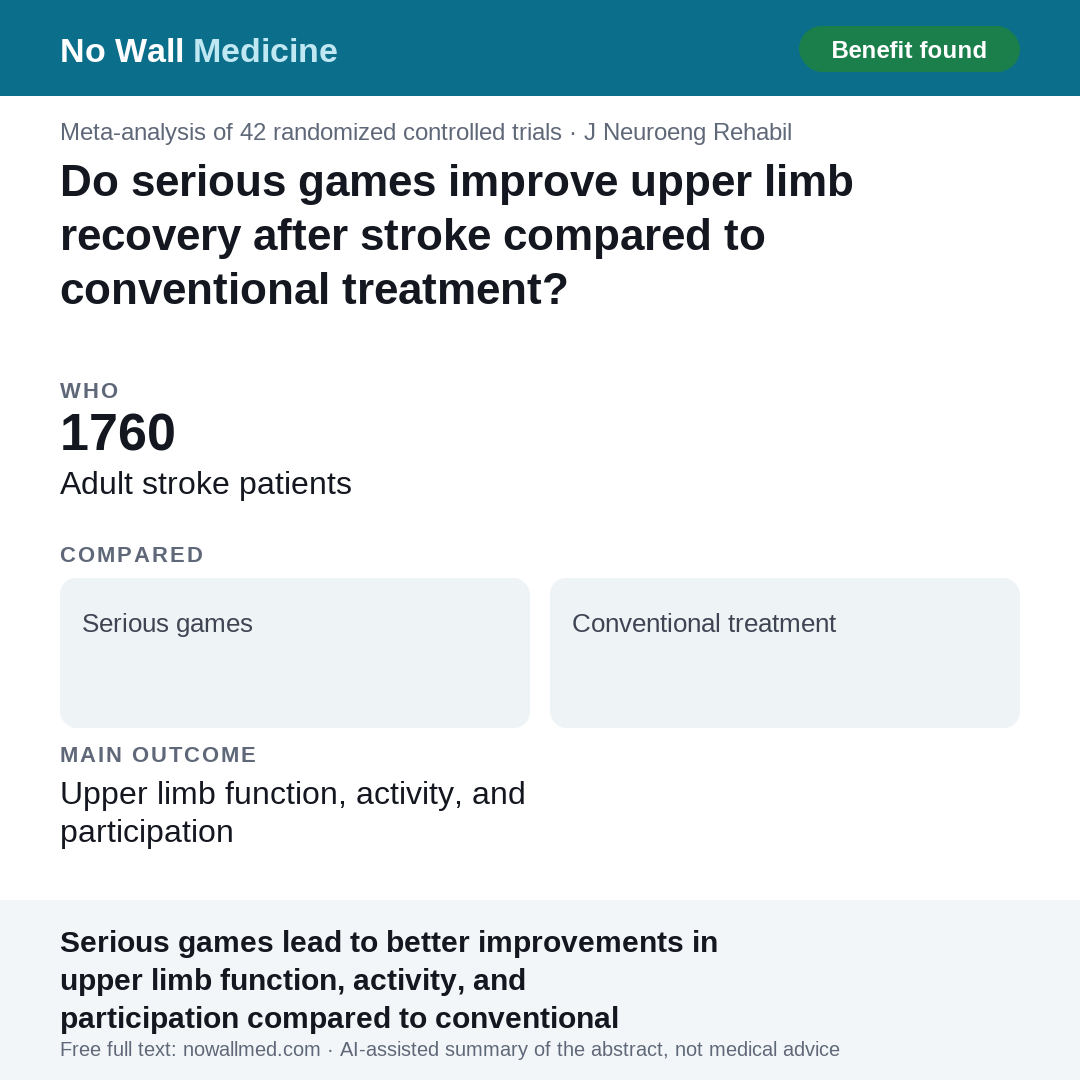
Clinical question: Do serious games improve upper limb recovery after stroke compared to conventional treatment?
Key points
- Researchers analyzed 42 randomized controlled trials involving 1760 participants to compare serious games with conventional therapy for upper limb recovery.
- Serious games showed better improvements in upper limb function (SMD = 0.47), activity (SMD = 0.25), and participation (SMD = 0.66) compared to conventional treatments.
- Interventions following at least 8 neurorehabilitation principles, which are rules for brain-based recovery, showed better overall effects.
Headline and key points written with AI from the paper’s abstract, with every number checked against it. Read the paper before relying on them.
Was this summary helpful?
Subject terms
Headline, design, result, key points, caveat and citation as plain text.
Cite this article
Doumas I, Everard G, Dehem S, Lejeune T. Serious games for upper limb rehabilitation after stroke: a meta-analysis. J Neuroeng Rehabil. 2021. doi:10.1186/s12984-021-00889-1
Spotted a mistake? Suggest a correction