Underlying heart rhythm issues were linked to higher mortality rather than the device shocks themselves
Survival After Implantable Cardioverter-Defibrillator Shocks
Analysis of 5 landmark randomized trialsMixed results
Does the arrhythmic substrate or the device therapy increase mortality in ICD recipients?
Who
5,516
Implantable cardioverter-defibrillator recipients
Compared
First appropriate ICD shock: hazard ratio 2.78
Inappropriate shock alone: hazard ratio 1.23
Ventricular tachycardia ≥200 beats/min or ventricular fibrillation: hazard ratio 2.25 and 2.62
Ventricular tachycardia <200 beats/min or inappropriate therapy
Main outcome
subsequent mortality
Result: hazard ratio 2.78 (p < 0.001)
Bottom line: The underlying arrhythmic substrate is a more important determinant of mortality than the implantable cardioverter-defibrillator therapy itself.
JACC · 2021-05-21Download image
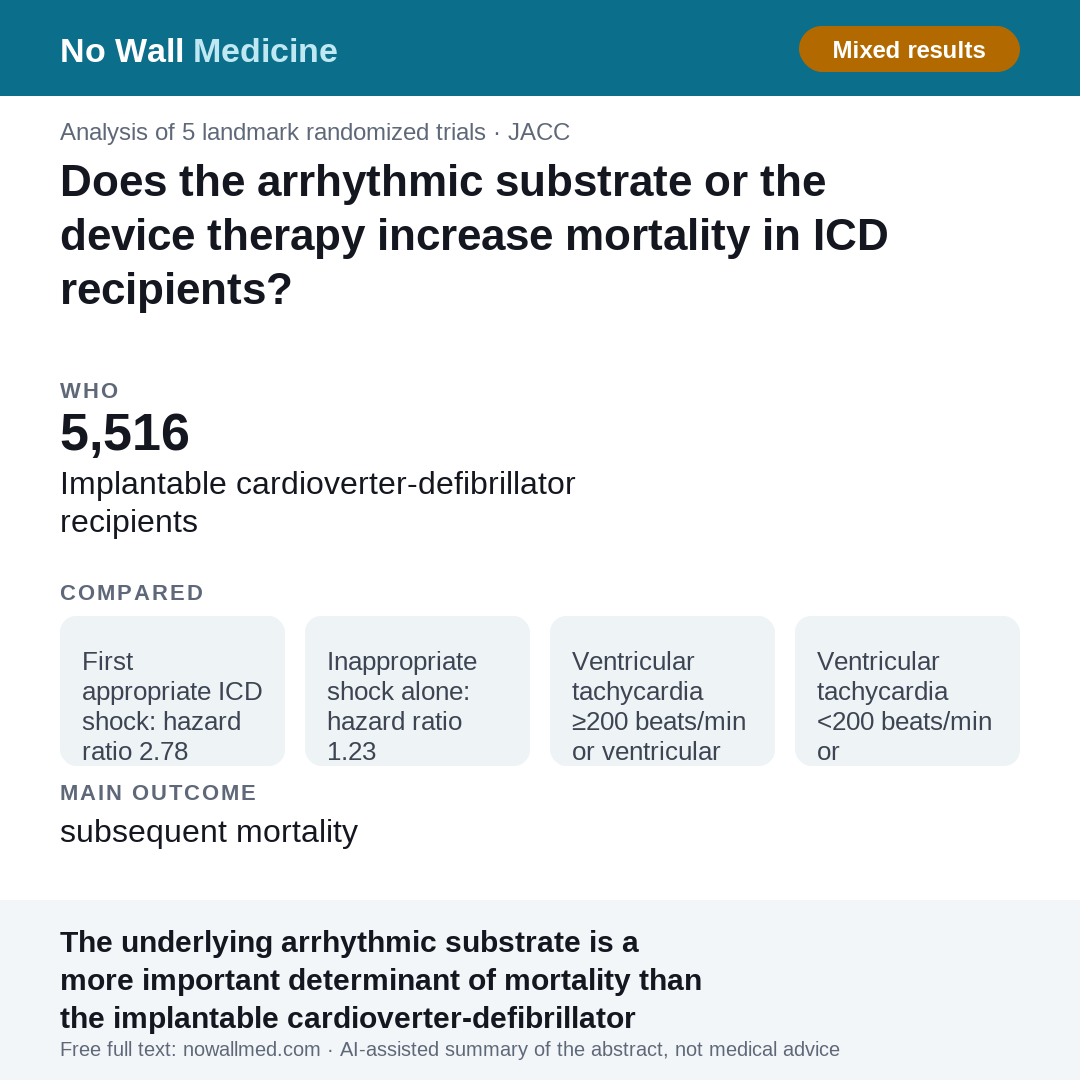
Clinical question: Does the arrhythmic substrate or the device therapy increase mortality in ICD recipients?
Why it matters: It is unclear whether the heart rhythm disorder or the electric shocks from the device itself increases the risk of death.
Key points
- Researchers analyzed 5,516 patients from five landmark clinical trials involving implantable cardioverter-defibrillator, a device that delivers electric shocks to correct heart rhythms.
- A first appropriate shock was associated with increased mortality risk (hazard ratio: 2.78), while inappropriate shocks alone were not associated with mortality risk (hazard ratio: 1.23).
- Shocks for ventricular fibrillation or fast ventricular tachycardia were associated with increased death risk, but two or more appropriate shocks showed no incremental risk compared to the first.
Headline and key points written with AI from the paper’s abstract, with every number checked against it. Read the paper before relying on them.
Was this summary helpful?
Subject terms
Cite this article
Aktaş MK, Younis A, Zareba W, Kutyifa V, Klein H, Daubert JP. Survival After Implantable Cardioverter-Defibrillator Shocks. JACC. 2021. doi:10.1016/j.jacc.2021.03.329
Spotted a mistake? Suggest a correction
Top studies every Monday
The week’s key trials and guidelines in your specialties, plus any topics you follow. By email, free.
Get the weekly digest