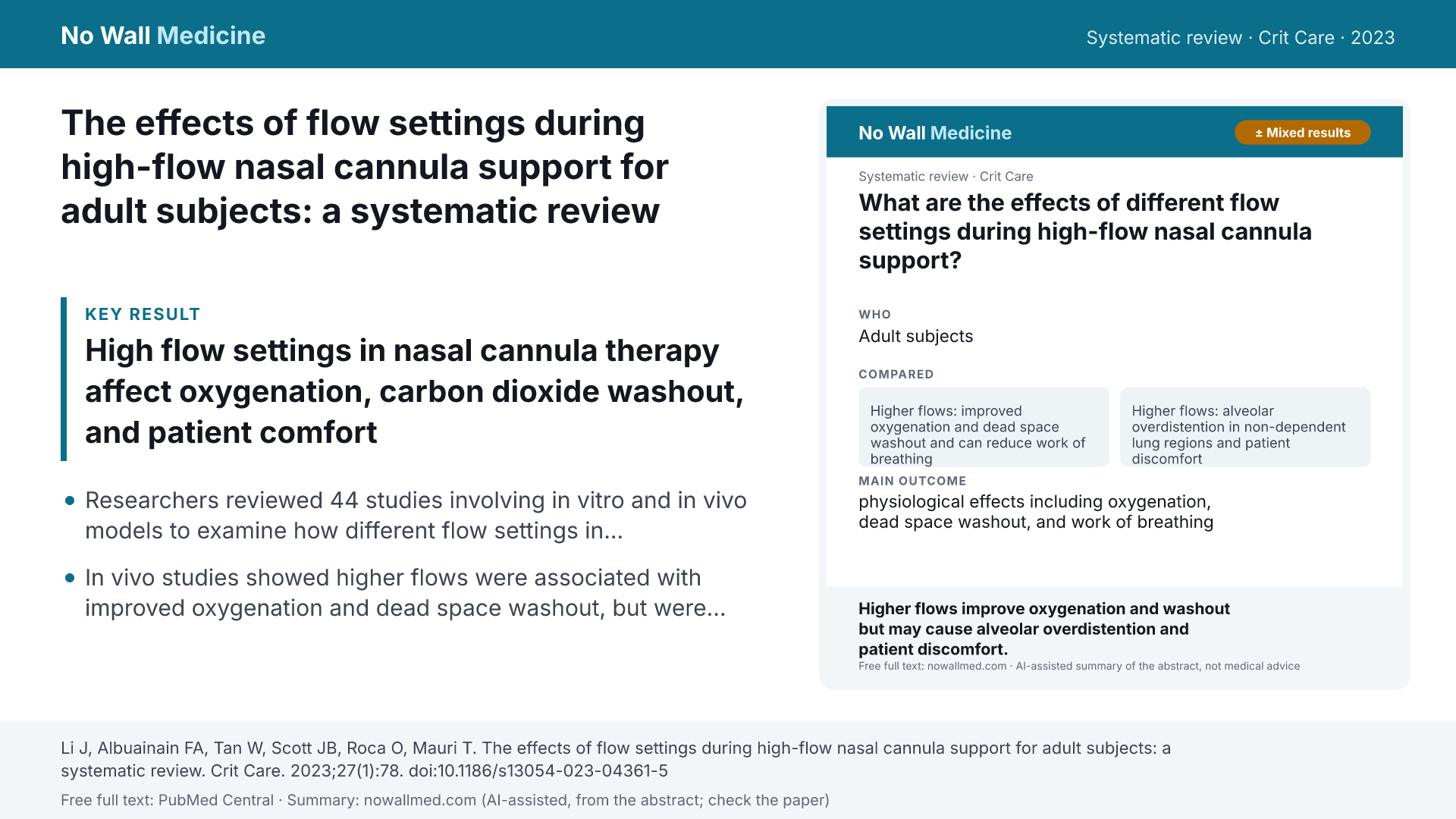
High flow settings in nasal cannula therapy affect oxygenation, carbon dioxide washout, and patient comfort
The effects of flow settings during high-flow nasal cannula support for adult subjects: a systematic review
Systematic reviewMixed results
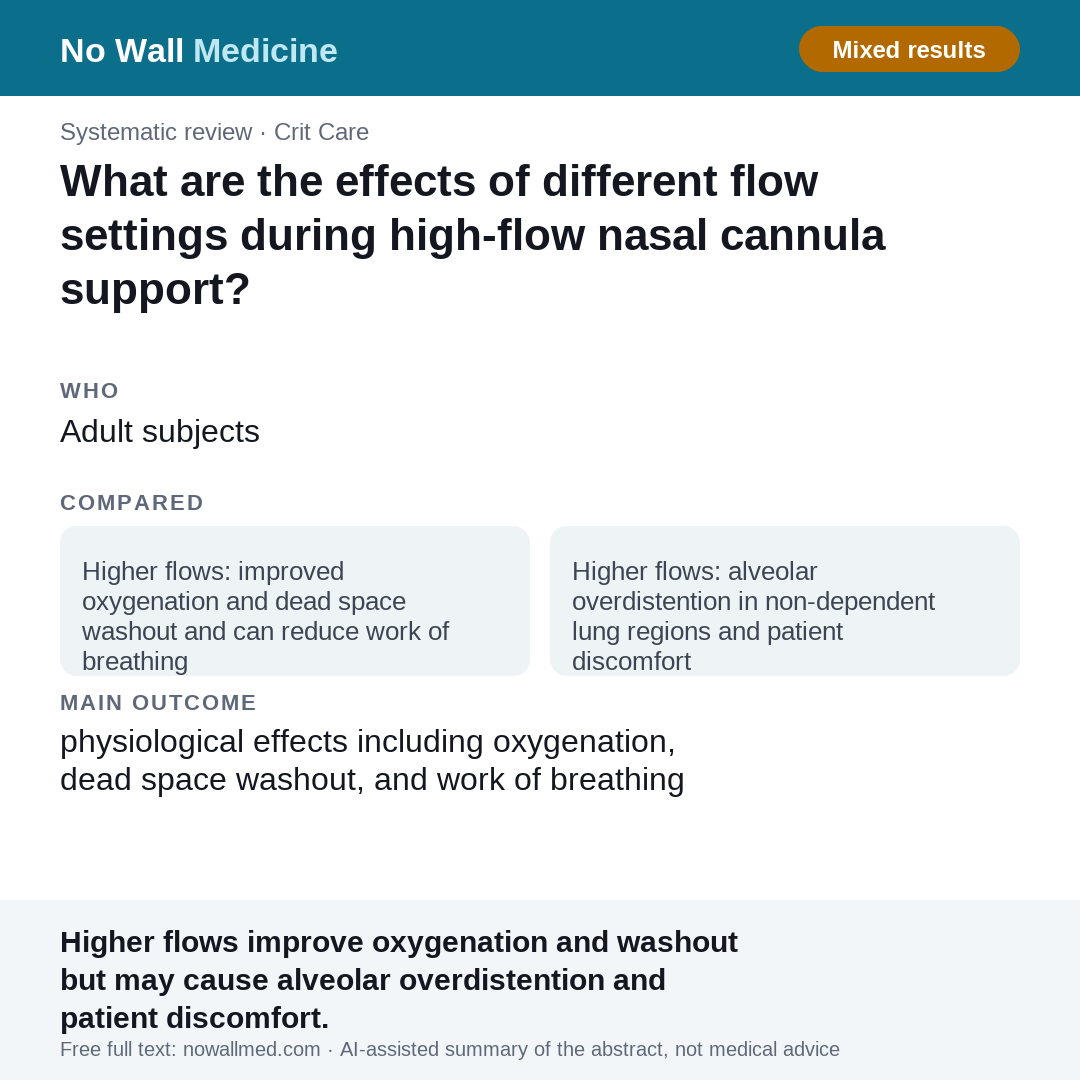
What are the effects of different flow settings during high-flow nasal cannula support?
Who
Adult subjects
Compared
Higher flows: improved oxygenation and dead space washout and can reduce work of breathing
Higher flows: alveolar overdistention in non-dependent lung regions and patient discomfort
Main outcome
physiological effects including oxygenation, dead space washout, and work of breathing
Bottom line: Higher flows improve oxygenation and washout but may cause alveolar overdistention and patient discomfort.
Limitation: The impact of flows on different patients is largely heterogeneous.
Crit Care · 2023-02-28Download image
Clinical question: What are the effects of different flow settings during high-flow nasal cannula support?
Why it matters: There is no consensus regarding the optimal initial flow settings and the process for adjusting them during high-flow nasal cannula treatment.
Key points
- Researchers reviewed 44 studies involving in vitro and in vivo models to examine how different flow settings in high-flow nasal cannula therapy affect physiological outcomes.
- In vivo studies showed higher flows were associated with improved oxygenation and dead space washout, but were also associated with alveolar overdistention and patient discomfort.
- The physiological effects of flow settings are maximized when the flow exceeds the patient peak inspiratory flow, though results vary significantly between patients.
Headline and key points written with AI from the paper’s abstract, with every number checked against it. Read the paper before relying on them.
Was this summary helpful?
Subject terms
Cite this article
Li J, Albuainain FA, Tan W, Scott JB, Roca O, Mauri T. The effects of flow settings during high-flow nasal cannula support for adult subjects: a systematic review. Crit Care. 2023. doi:10.1186/s13054-023-04361-5
Spotted a mistake? Suggest a correction