Visual abstracts
New randomized trials and meta-analyses from leading journals at a glance: who was studied, what was compared, and what was found. Every paper is free to read in full.
All specialtiesCardiology 1027Oncology 925Gastroenterology & Hepatology 381Infectious Disease 710Neurology 440Psychiatry & Mental Health 542Pulmonology 455Critical Care 317Endocrinology & Diabetes 585Pediatrics 651Surgery 452Orthopedics & Sports Medicine 204Neurosurgery 149Cardiothoracic & Vascular Surgery 106Plastic & Reconstructive Surgery 169Nephrology 232Rheumatology 135Hematology 223Dermatology 99Ophthalmology 121Obstetrics & Gynecology 324Public & Global Health 197Radiology & Imaging 132Anesthesiology 190Urology 199ENT (Otolaryngology) 142Emergency Medicine 116Allergy & Immunology 70Geriatrics 212Family Medicine & Primary Care 135Medical Genetics & Genomics 109Pathology & Laboratory Medicine 31Physical Medicine & Rehabilitation 183Palliative Care 95Nutrition 273Digital Health & AI 542General Medicine 105
The Effect of Vitamin D3 Supplementation on the Risk of Falls in a General Population-The Finnish Vitamin D Trial
Double-blind, placebo-controlled randomized trialNo clear difference
Does vitamin D3 supplementation affect the risk of falls and fall-related injuries?
Who
2495
Healthy, community-dwelling men and women in Finland · Finland
Compared
Placebo: 55% fall risk
1600 IU/day vitamin D3: 55% fall risk
3200 IU/day vitamin D3: 55% fall risk
Main outcome
Risk of falls and fall-related injuries
Bottom line: Five years of vitamin D3 supplementation did not affect the risk of falls or fall injuries in this population.
J Am Geriatr Soc · 2026-01-13Download image

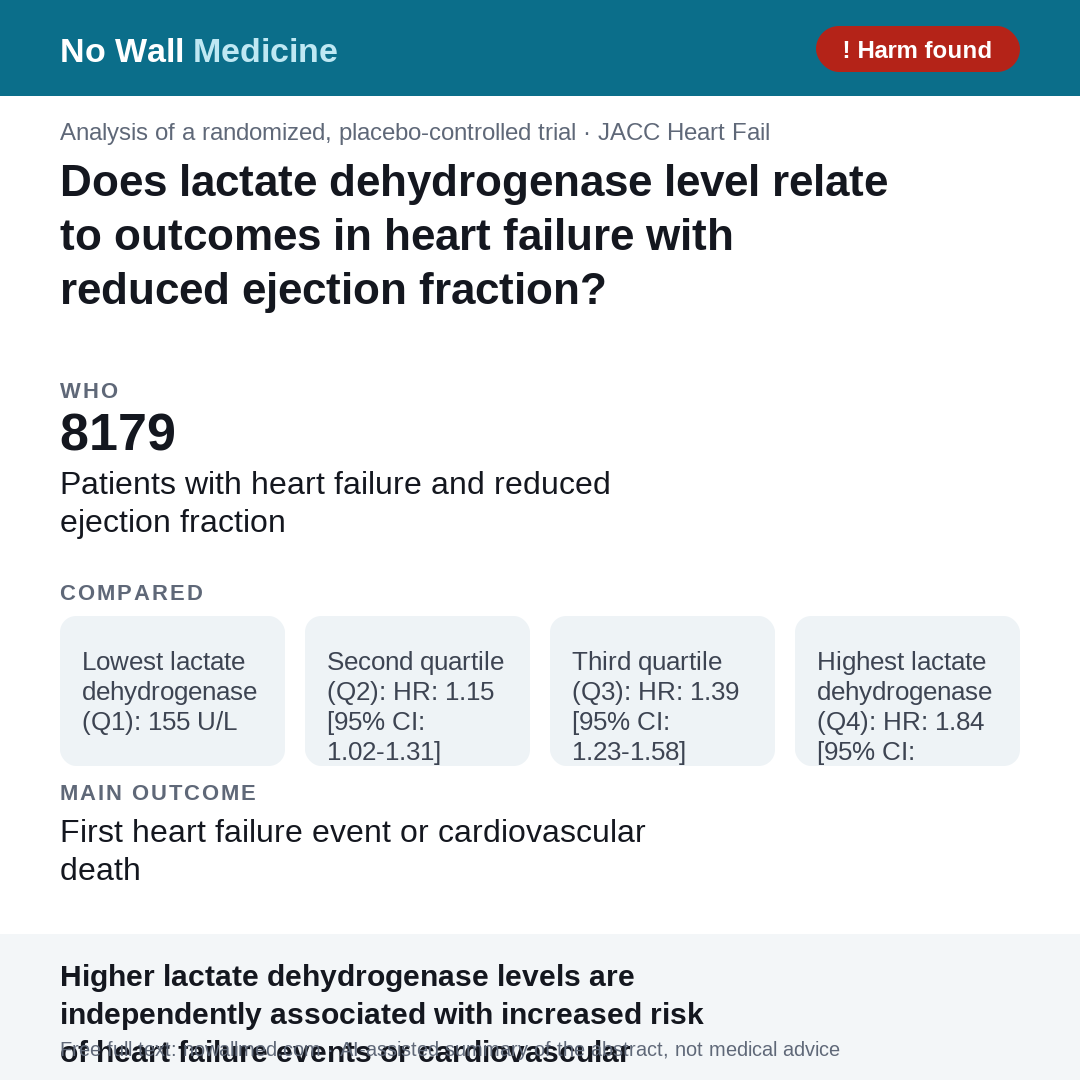
Lactate Dehydrogenase and Outcomes in Patients With HF and Reduced Ejection Fraction: Insights From GALACTIC-HF
Analysis of a randomized, placebo-controlled trialHarm found
Does lactate dehydrogenase level relate to outcomes in heart failure with reduced ejection fraction?
Who
8179
Patients with heart failure and reduced ejection fraction
Compared
Lowest lactate dehydrogenase (Q1): 155 U/L
Second quartile (Q2): HR: 1.15 [95% CI: 1.02-1.31]
Third quartile (Q3): HR: 1.39 [95% CI: 1.23-1.58]
Highest lactate dehydrogenase (Q4): HR: 1.84 [95% CI: 1.62-2.08]
Main outcome
First heart failure event or cardiovascular death
Bottom line: Higher lactate dehydrogenase levels are independently associated with increased risk of heart failure events or cardiovascular death.
JACC Heart Fail · 2026-01-13Download image
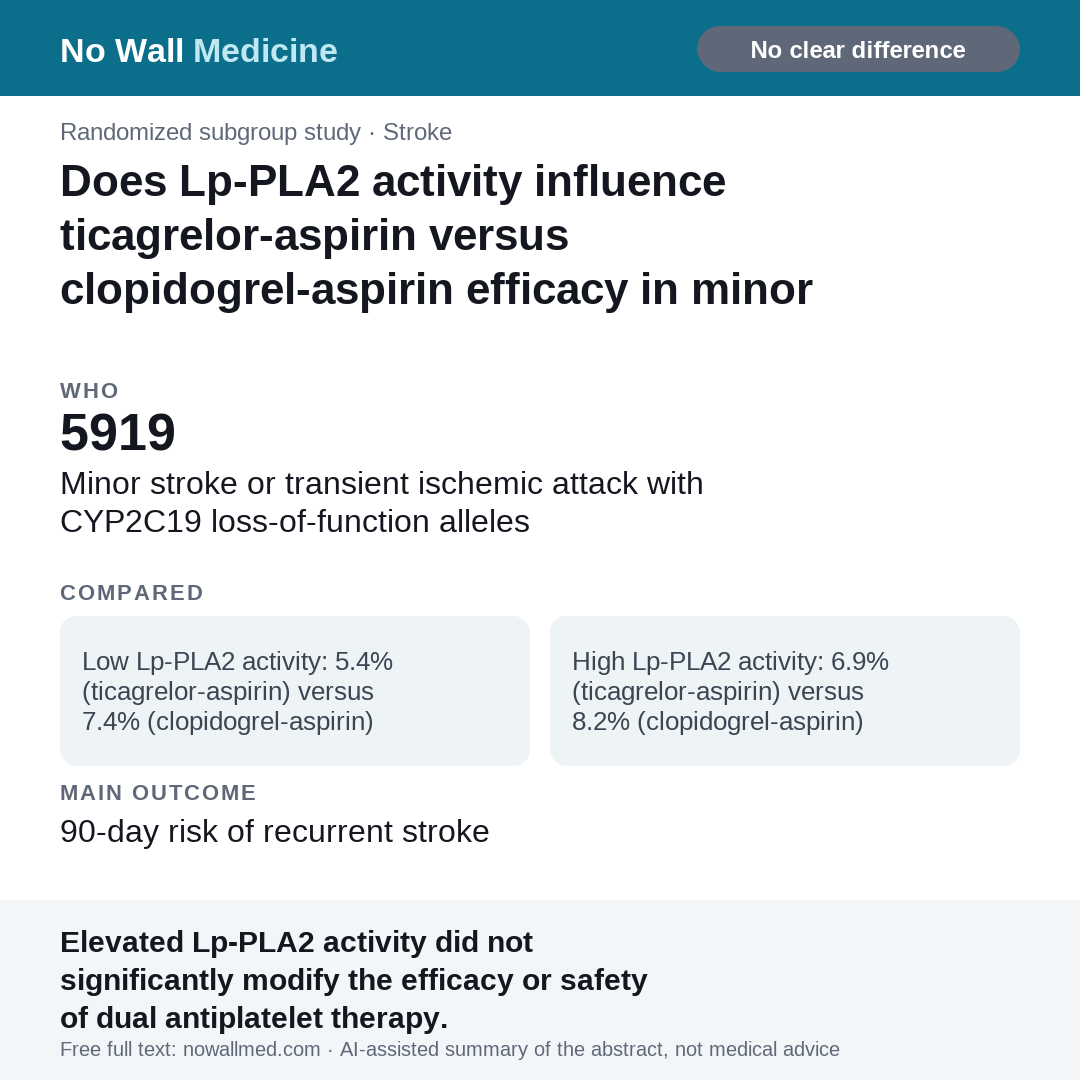
Lp-PLA2 Activity and Genotype-Guided Dual Antiplatelet Therapy in Minor Stroke or Transient Ischemic Attack
Randomized subgroup studyNo clear difference
Does Lp-PLA2 activity influence ticagrelor-aspirin versus clopidogrel-aspirin efficacy in minor stroke?
Who
5919
Minor stroke or transient ischemic attack with CYP2C19 loss-of-function alleles
Compared
Low Lp-PLA2 activity: 5.4% (ticagrelor-aspirin) versus 7.4% (clopidogrel-aspirin)
High Lp-PLA2 activity: 6.9% (ticagrelor-aspirin) versus 8.2% (clopidogrel-aspirin)
Main outcome
90-day risk of recurrent stroke
Result: adjusted hazard ratio 0.72 (95% CI 0.54-0.97) for low activity
Bottom line: Elevated Lp-PLA2 activity did not significantly modify the efficacy or safety of dual antiplatelet therapy.
Stroke · 2026-01-13Download image
Genomic Studies of Suicidal Thoughts and Behaviors in Latin American Populations: A Systematic Review
Systematic reviewUnclear result
Genomic basis of suicidality in Latin America
Who
Latin American or Hispanic/Latinx individuals
Compared
Genetic studies
Transcriptomic studies
Main outcome
Suicidal thoughts and behaviors
Bottom line: Genomic research is growing but remains fragmented
Limitation: small samples and limited resources
Biol Psychiatry · 2026-01-13Download image

Pharmacological therapy for preventing esophageal stricture after endoscopic submucosal dissection: a systematic review and network meta-analysis
Network meta-analysisBenefit found
Which pharmacological therapies best prevent esophageal stricture after endoscopic submucosal dissection?
Who
3085
Patients who underwent endoscopic submucosal dissection
Compared
Oral hydrocortisone sodium succinate and aluminum phosphate gel: RR = 0.075 (95% CrI: 0.017, 0.24)
Standard care
Main outcome
Incidence of esophageal stricture
Result: RR = 0.075 (95% CrI: 0.017, 0.24)
Bottom line: Oral hydrocortisone sodium succinate combined with aluminum phosphate gel most effectively reduces esophageal stricture incidence after endoscopic submucosal dissection.
Int J Surg · 2026-01-13Download image

Testing and evaluation of generative large language models in electronic health record applications: a systematic review
Systematic reviewUnclear result
How are generative large language models evaluated in electronic health record applications?
Who
196
Articles using generative large language models to analyze real-world electronic health record data · PubMed and Web of Science
Compared
62.2%Clinical decision support tasks
5.6%Summarizations tasks
5.1%Patient communications tasks
Main outcome
Clinical specialties, use cases, and evaluation methods used
Bottom line: Generative large language models are used across various specialties, but standardized and clinically meaningful evaluation frameworks are urgently needed.
J Am Med Inform Assoc · 2026-01-13Download image

Preoperative Nonopioid Analgesia Reduces Postoperative Opioid Consumption After Arthroscopic Surgery: A Systematic Review and Meta-analysis of Randomized Controlled Trials
Systematic review and meta-analysisBenefit found
Does preoperative nonopioid analgesia reduce postoperative opioid consumption after arthroscopic surgery?
Who
22
Patients undergoing arthroscopic surgery
Compared
Preoperative nonopioid medication: 4.3 mg reduction in oral morphine equivalents
Control
Main outcome
Postoperative opioid consumption in oral morphine equivalents
Result: mean reduction 4.3 mg of oral morphine equivalents (95% CI, -6.1 to -2.5)
Bottom line: Preoperative nonopioid medications reduce postoperative opioid consumption after arthroscopic surgery, though improvements may not be clinically meaningful.
Limitation: The current available literature is highly heterogeneous.
Am J Sports Med · 2026-01-13Download image

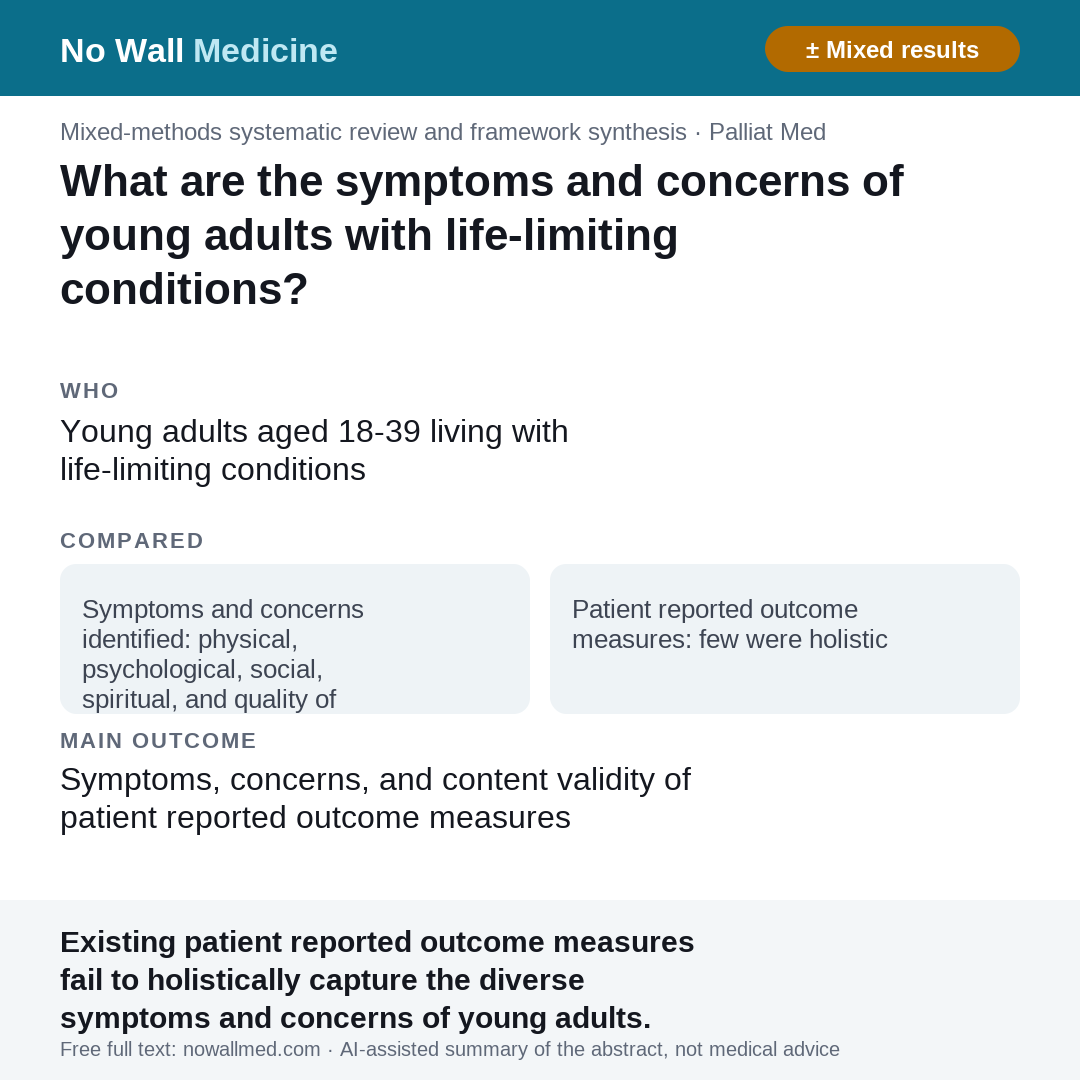
What are the symptoms and concerns of young adults living with life-limiting conditions and how well are they captured by patient reported outcome measures? A mixed-methods systematic review and framework synthesis
Mixed-methods systematic review and framework synthesisMixed results
What are the symptoms and concerns of young adults with life-limiting conditions?
Who
Young adults aged 18-39 living with life-limiting conditions
Compared
Symptoms and concerns identified: physical, psychological, social, spiritual, and quality of healthcare concerns
Patient reported outcome measures: few were holistic
Main outcome
Symptoms, concerns, and content validity of patient reported outcome measures
Bottom line: Existing patient reported outcome measures fail to holistically capture the diverse symptoms and concerns of young adults.
Palliat Med · 2026-01-13Download image
Biomarkers to predict relapse in myelin oligodendrocyte glycoprotein antibody-associated disease: a systematic review and meta-analysis
Systematic review and meta-analysisBenefit found
Can biomarkers predict relapse in myelin oligodendrocyte glycoprotein antibody-associated disease?
Who
1710
Individuals with myelin oligodendrocyte glycoprotein antibody-associated disease
Compared
Persistent seropositivity: OR 2.7 (95% CI 1.8 to 4.0)
Seroreversion to negative status: HR 0.19 (95% CI 0.14 to 0.26)
Clear positive titre: OR 3.6 (95% CI 2.6 to 5.0)
Cerebrospinal fluid leucocytosis: OR 3.1 (95% CI 1.7 to 5.9)
Main outcome
Disease course and activity
Bottom line: Myelin oligodendrocyte glycoprotein antibody serostatus, titre, and cerebrospinal fluid leucocytosis are biomarkers of disease course and activity.
J Neurol Neurosurg Psychiatry · 2026-01-13Download image

Target trial emulation to replicate randomised clinical trials using registry data in multiple sclerosis
Multicentre, retrospective, observational studyBenefit found
Can target trial emulation replicate randomized clinical trials using multiple sclerosis registry data?
Who
14111
Patients initiating disease-modifying therapies in the French registry · France, Observatoire Français de la Sclérose en Plaques database
Compared
Emulated trials
Randomized clinical trials
Main outcome
Relapse rate, disability progression, and radiological outcomes
Bottom line: Target trial emulation using high-quality registry data effectively replicates randomized clinical trial findings for multiple sclerosis treatments.
Limitation: Radiological outcomes were more challenging to replicate than clinical outcomes.
J Neurol Neurosurg Psychiatry · 2026-01-13Download image

Workflow improvements from automated large vessel occlusion detection algorithms are dependent on care team engagement
Post-hoc analysis of a randomized prospective clinical trialBenefit found
Does machine learning software utilization improve door-to-groin time in large vessel occlusion patients?
Who
101
Patients undergoing endovascular thrombectomy for large vessel occlusion acute ischemic stroke · Four comprehensive stroke centers
Compared
Increased comment-to-patient ratio: decreased by 2.6 min
Increased number of users: not associated with a reduction
Main outcome
reduction in door-to-groin time
Result: 2.6 (95% CI -5.09 to -0.13) min
Bottom line: User engagement through comment-to-patient ratios, rather than total users, improved door-to-groin time.
J Neurointerv Surg · 2026-01-13Download image

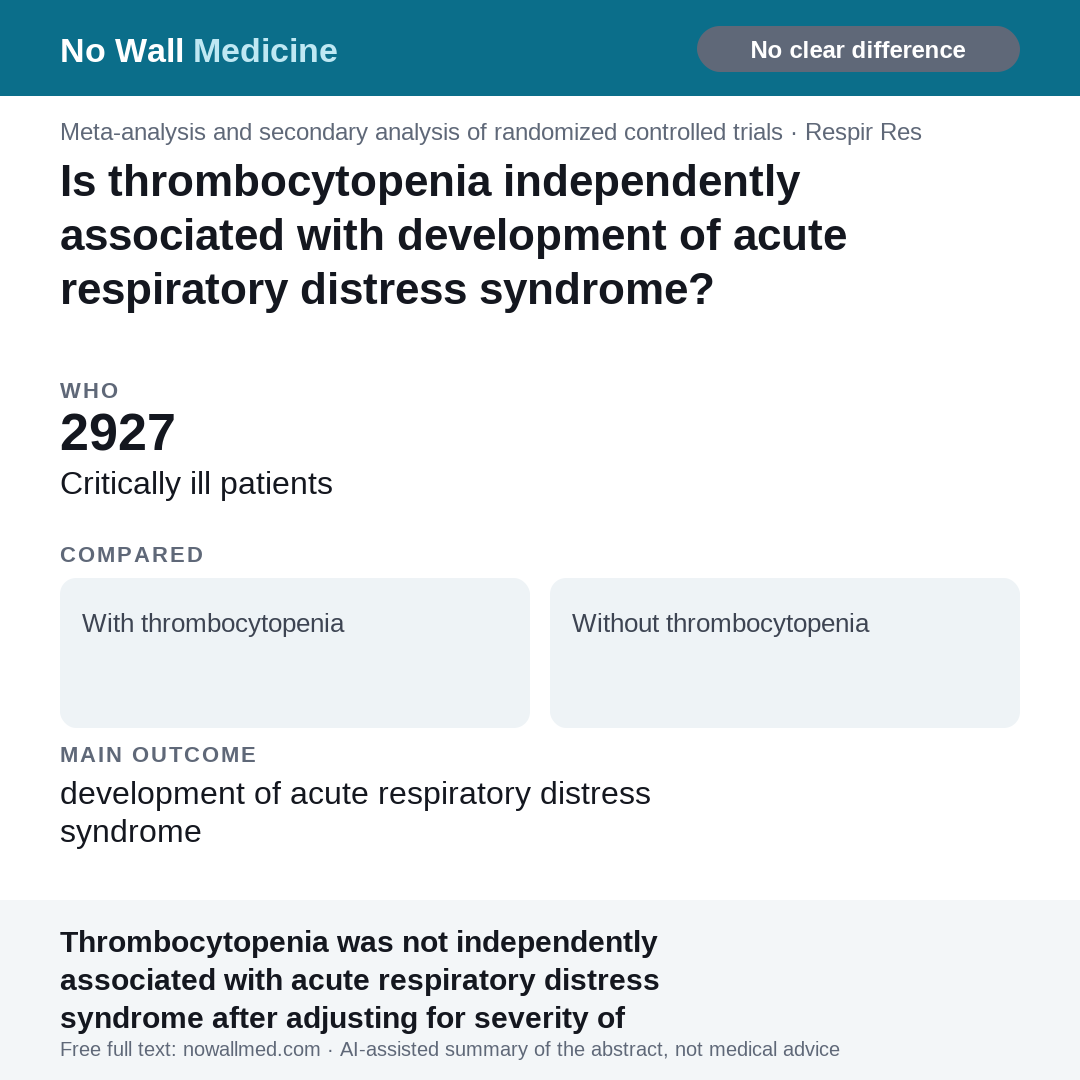
Association between thrombocytopenia and development of acute respiratory distress syndrome
Meta-analysis and secondary analysis of randomized controlled trialsNo clear difference
Is thrombocytopenia independently associated with development of acute respiratory distress syndrome?
Who
2927
Critically ill patients
Compared
With thrombocytopenia
Without thrombocytopenia
Main outcome
development of acute respiratory distress syndrome
Result: odds ratio 1.57 (95% CI 0.95–2.60)
Bottom line: Thrombocytopenia was not independently associated with acute respiratory distress syndrome after adjusting for severity of illness.
Limitation: The association may represent a marker of severe illness rather than a mechanistic relationship.
Respir Res · 2026-01-13Download image
Medication-related problems and their associated factors among paediatric patients in Ethiopia: a systematic review and meta-analysis
Meta-analysis of 21 studiesHarm found
Medication problems in Ethiopian children
Who
5969
paediatric patients in Ethiopia · hospitals in Ethiopia
Compared
53%with medication problems (95% CI 45% to 61%)
without medication problems
Main outcome
medication-related problems
Result: pooled prevalence 53% (95% CI 45% to 61%)
Bottom line: More than half experience medication problems
BMJ Paediatr Open · 2026-01-13Download image

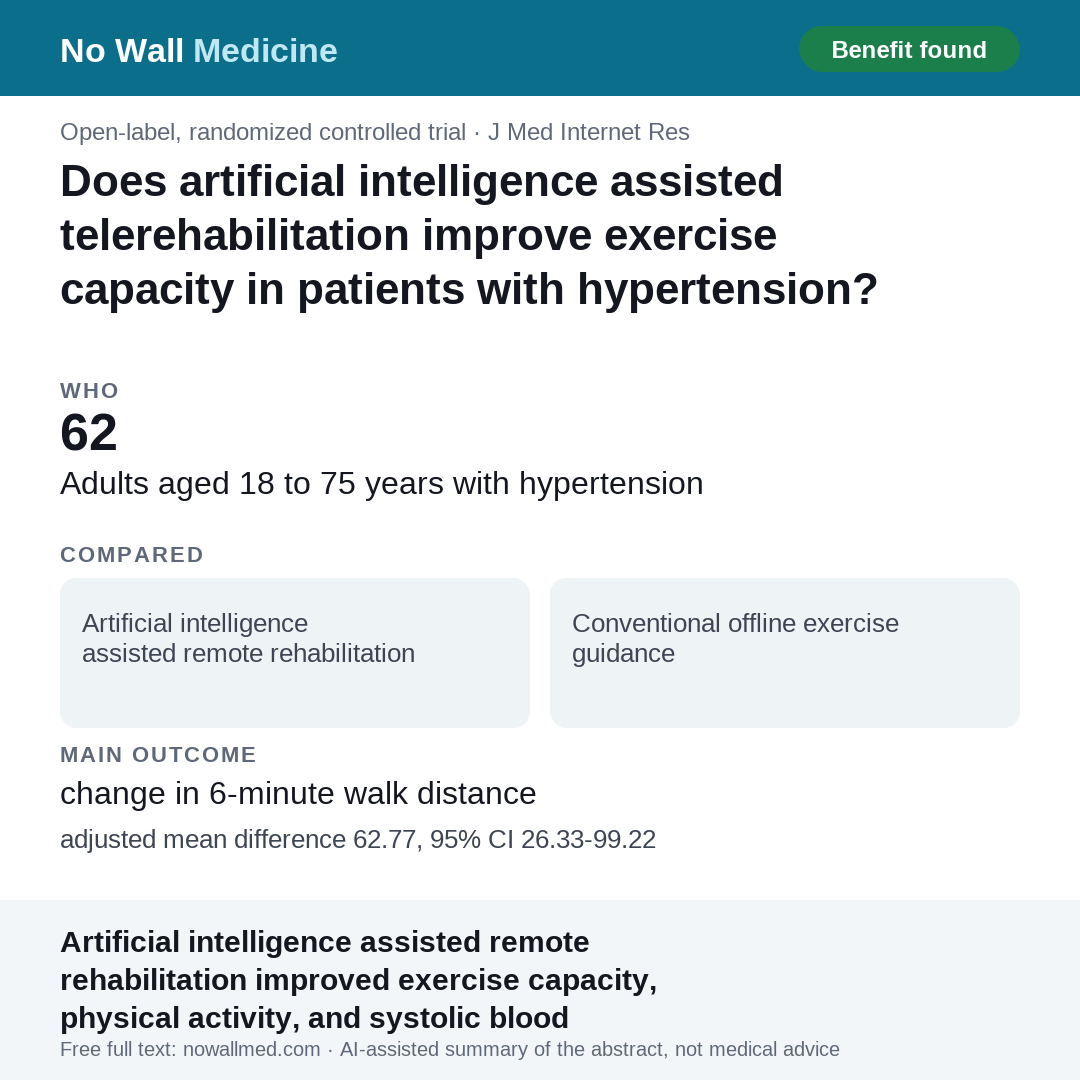
Effects of Artificial Intelligence Recognition-Based Telerehabilitation on Exercise Capacity in Patients With Hypertension: Randomized Controlled Trial
Open-label, randomized controlled trialBenefit found
Does artificial intelligence assisted telerehabilitation improve exercise capacity in patients with hypertension?
Who
62
Adults aged 18 to 75 years with hypertension
Compared
Artificial intelligence assisted remote rehabilitation
Conventional offline exercise guidance
Main outcome
change in 6-minute walk distance
Result: adjusted mean difference 62.77, 95% CI 26.33-99.22
Bottom line: Artificial intelligence assisted remote rehabilitation improved exercise capacity, physical activity, and systolic blood pressure in patients with hypertension.
J Med Internet Res · 2026-01-13Download image
Assessment of the Diagnostic Performance and Clinical Impact of AI in Hepatic Steatosis: Systematic Review and Meta-Analysis
Meta-analysis of 36 studiesBenefit found
AI for hepatic steatosis diagnosis accurate
Who
patients with hepatic steatosis
Compared
AI models
traditional machine learning
Main outcome
diagnostic accuracy
Result: AUC 0.98 (95% CI 0.96-0.99)
Bottom line: AI shows remarkable potential for HS diagnosis
Limitation: high risk of bias and heterogeneity
J Med Internet Res · 2026-01-13Download image

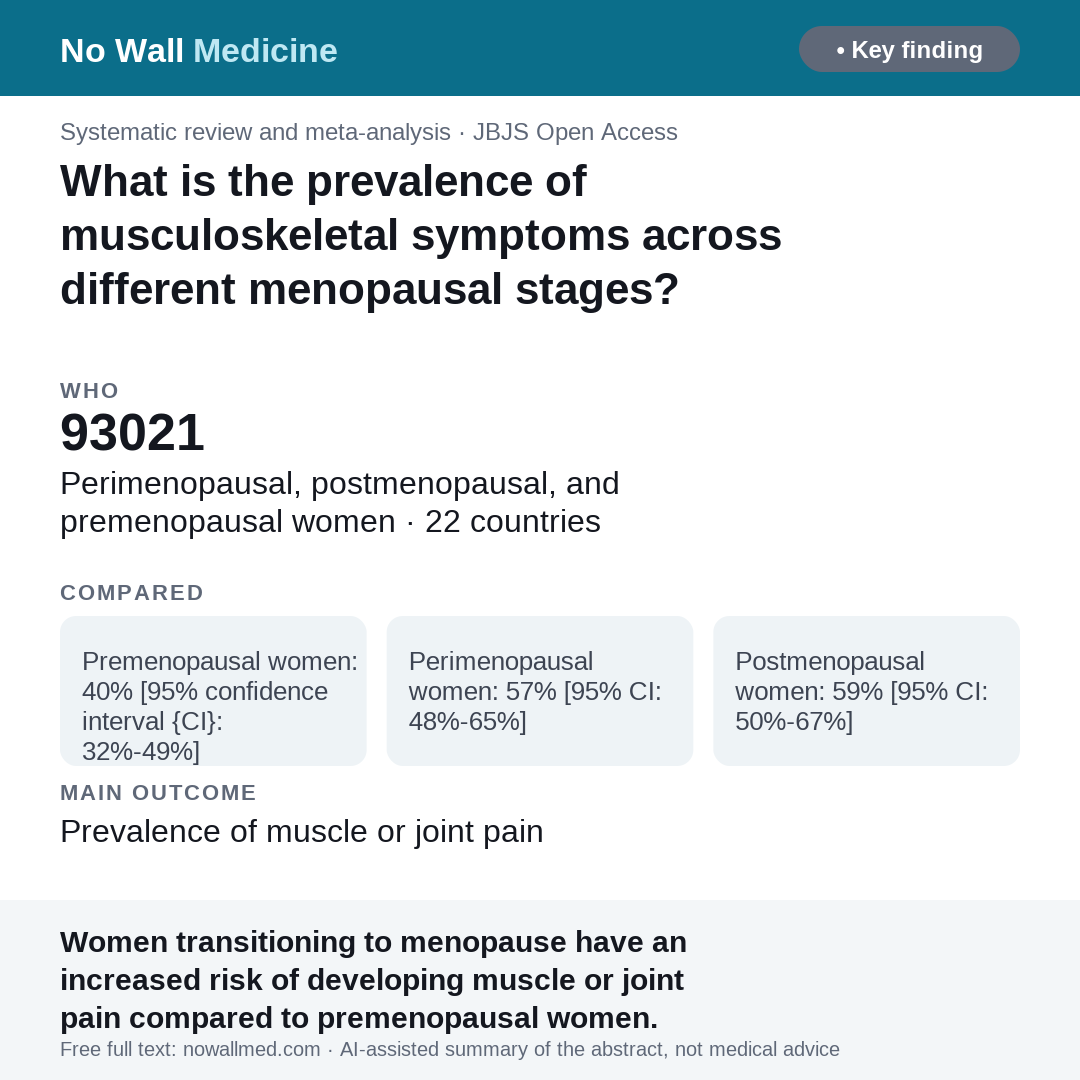
Musculoskeletal Manifestations of Perimenopause: A Systematic Review and Meta-Analysis of 93,021 Women
Systematic review and meta-analysisHarm found
What is the prevalence of musculoskeletal symptoms across different menopausal stages?
Who
93021
Perimenopausal, postmenopausal, and premenopausal women · 22 countries
Compared
Premenopausal women: 40% [95% confidence interval {CI}: 32%-49%]
Perimenopausal women: 57% [95% CI: 48%-65%]
Postmenopausal women: 59% [95% CI: 50%-67%]
Main outcome
Prevalence of muscle or joint pain
Result: risk ratio 1.35 (95% CI 1.25-1.46) for perimenopause; risk ratio 1.40 (95% CI 1.28-1.53) for postmenopause
Bottom line: Women transitioning to menopause have an increased risk of developing muscle or joint pain compared to premenopausal women.
Limitation: Findings are based on observational studies with significant heterogeneity and underreporting of specific conditions.
JBJS Open Access · 2026-01-13Download image
Associations of perfluoroalkyl and polyfluoroalkyl substances with markers of glycaemic control, insulin secretion and sensitivity, and diabetes risk: a systematic review and meta-analyses
Systematic review and meta-analysisMixed results
How do perfluoroalkyl and polyfluoroalkyl substances associate with diabetes risk and glycemic markers?
Who
Epidemiological study participants
Compared
Higher perfluoroalkyl and polyfluoroalkyl substances exposure
Lower perfluoroalkyl and polyfluoroalkyl substances exposure
Main outcome
Gestational diabetes mellitus, type 2 diabetes, and glycemic markers
Bottom line: Perfluoroalkyl and polyfluoroalkyl substances are associated with higher gestational diabetes risk and increased insulin resistance markers.
Limitation: Evidence was of low-moderate quality and limited strength, with small effect sizes for some markers.
Funded by: National Institutes of Health and National Institute of Environmental Health Sciences
eClinicalMedicine · 2026-01-12Download image

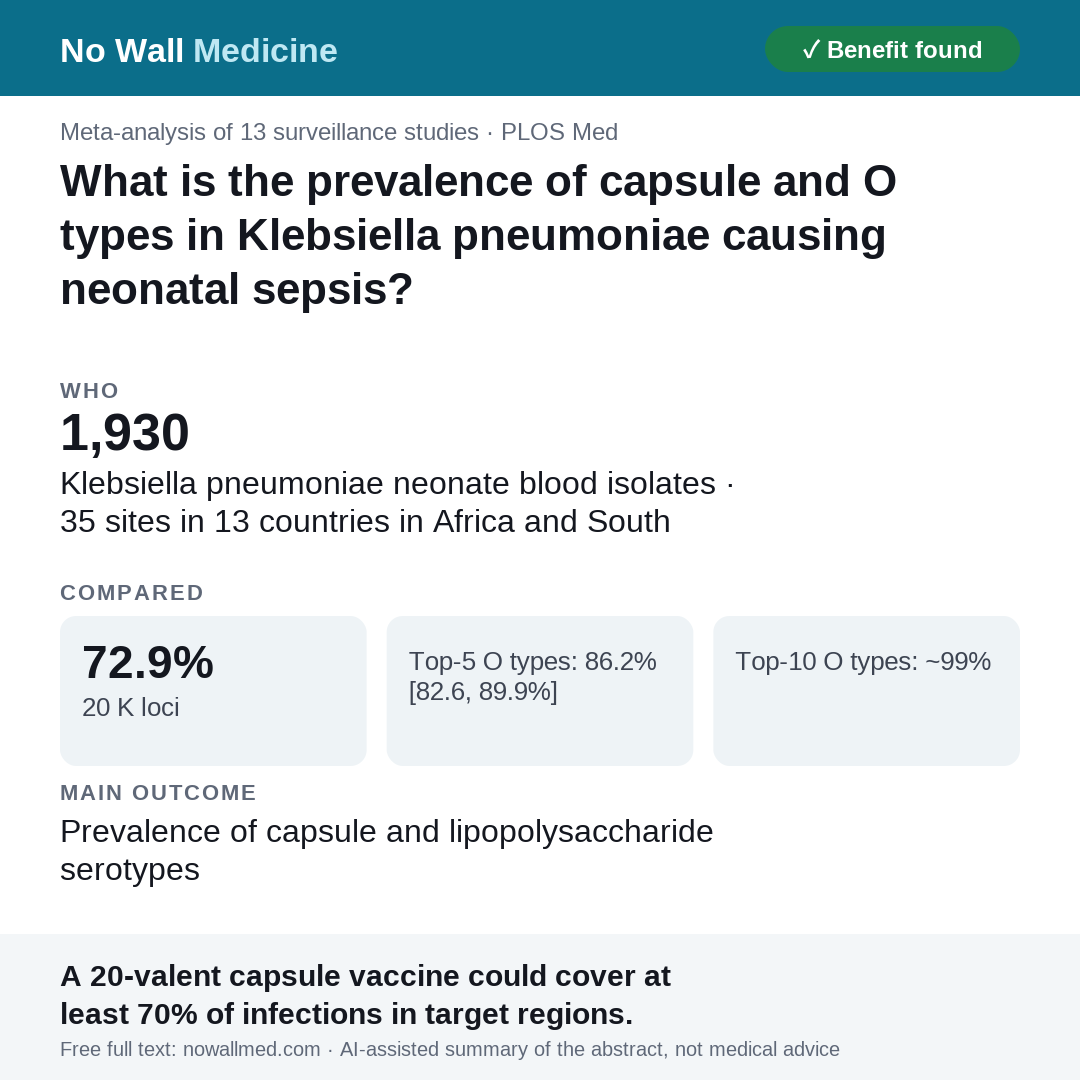
Distribution of capsule and O types in Klebsiella pneumoniae causing neonatal sepsis in Africa and South Asia: A meta-analysis of genome-predicted serotype prevalence to inform potential vaccine coverage
Meta-analysis of 13 surveillance studiesBenefit found
What is the prevalence of capsule and O types in Klebsiella pneumoniae causing neonatal sepsis?
Who
1,930
Klebsiella pneumoniae neonate blood isolates · 35 sites in 13 countries in Africa and South Asia
Compared
72.9%20 K loci (95% credible interval: [69.4%, 76.5%])
Top-5 O types: 86.2% [82.6, 89.9%]
Top-10 O types: ~99%
Main outcome
Prevalence of capsule and lipopolysaccharide serotypes
Bottom line: A 20-valent capsule vaccine could cover at least 70% of infections in target regions.
Limitation: Reliance on genome sequences to predict serotypes and lack of longitudinal data.
PLOS Med · 2026-01-12Download image
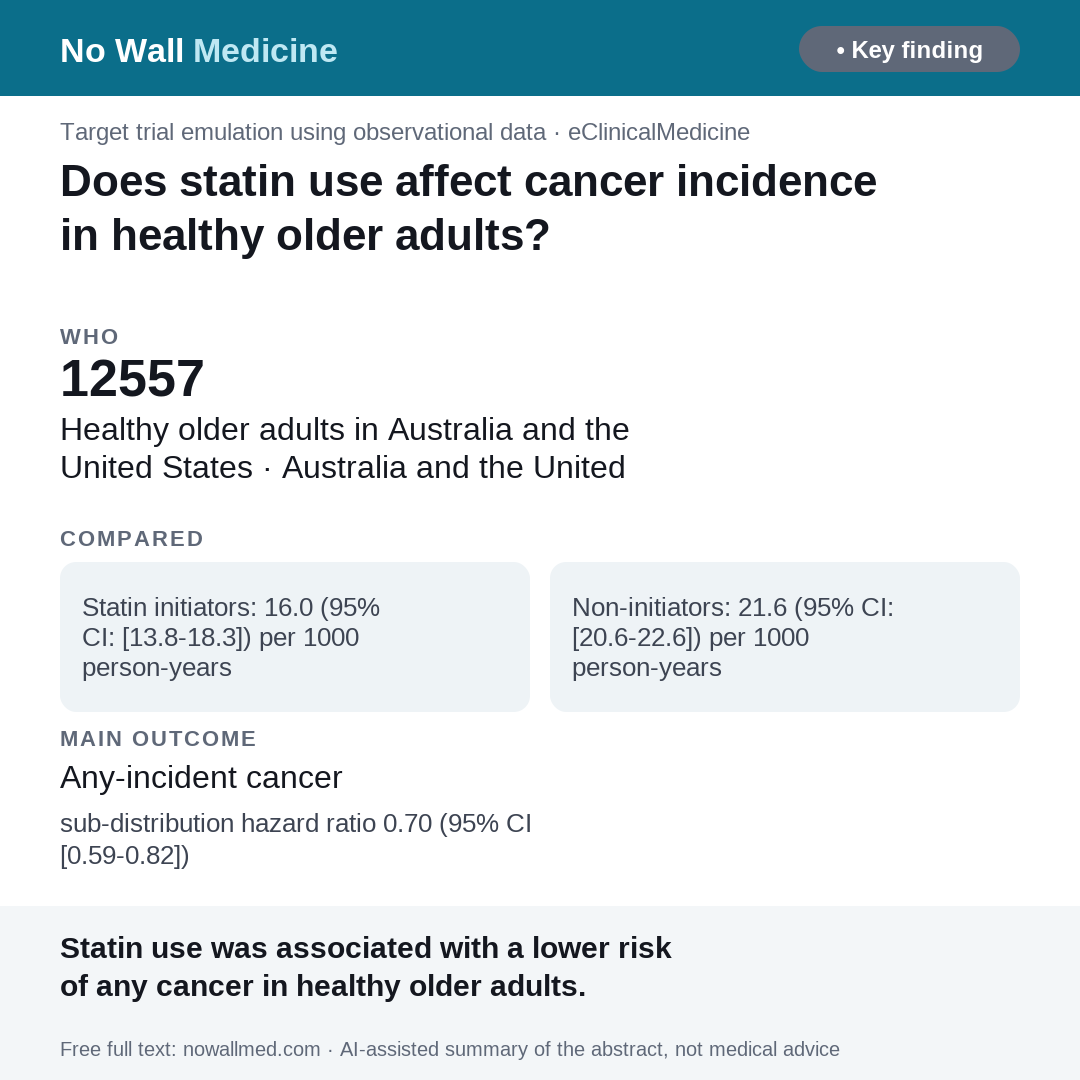
Association between statin use and risk of incident cancer in healthy older adults: a target trial emulation using data from a multicentre, randomised trial of community-dwelling older adults in Australia and the USA
Target trial emulation using observational dataBenefit found
Does statin use affect cancer incidence in healthy older adults?
Who
12557
Healthy older adults in Australia and the United States · Australia and the United States
Compared
Statin initiators: 16.0 (95% CI: [13.8-18.3]) per 1000 person-years
Non-initiators: 21.6 (95% CI: [20.6-22.6]) per 1000 person-years
Main outcome
Any-incident cancer
Result: sub-distribution hazard ratio 0.70 (95% CI [0.59-0.82])
Bottom line: Statin use was associated with a lower risk of any cancer in healthy older adults.
Limitation: Potential for unmeasured confounding and bias due to the non-randomised observational design.
Funded by: National Institute on Aging, National Cancer Institute, and others
eClinicalMedicine · 2026-01-12Download image
Impact of diagnosis to ablation time on clinical outcomes in patients with atrial fibrillation: post hoc analysis of the CABANA trial
Post hoc analysisMixed results
Impact of ablation timing on outcomes
Who
1145
Patients with atrial fibrillation
Compared
Early ablation
Late ablation
Main outcome
Composite of death, stroke, bleeding, or arrest
Bottom line: Earlier ablation reduces recurrence but not prognosis
BMC Med · 2026-01-12Download image