Visual abstracts
New randomized trials and meta-analyses from leading journals at a glance: who was studied, what was compared, and what was found. Every paper is free to read in full.
All specialtiesCardiology 4877Oncology 4138Gastroenterology & Hepatology 1942Infectious Disease 3837Neurology 1905Psychiatry & Mental Health 2273Pulmonology 2143Critical Care 1365Endocrinology & Diabetes 2580Pediatrics 2980Surgery 2559Orthopedics & Sports Medicine 931Neurosurgery 537Cardiothoracic & Vascular Surgery 674Plastic & Reconstructive Surgery 591Nephrology 1133Rheumatology 823Hematology 1109Dermatology 621Ophthalmology 543Obstetrics & Gynecology 1686Public & Global Health 1058Radiology & Imaging 648Anesthesiology 986Urology 764ENT (Otolaryngology) 503Emergency Medicine 511Allergy & Immunology 313Geriatrics 981Family Medicine & Primary Care 562Medical Genetics & Genomics 676Pathology & Laboratory Medicine 159Physical Medicine & Rehabilitation 757Palliative Care 444Nutrition 1588Digital Health & AI 2201General Medicine 321
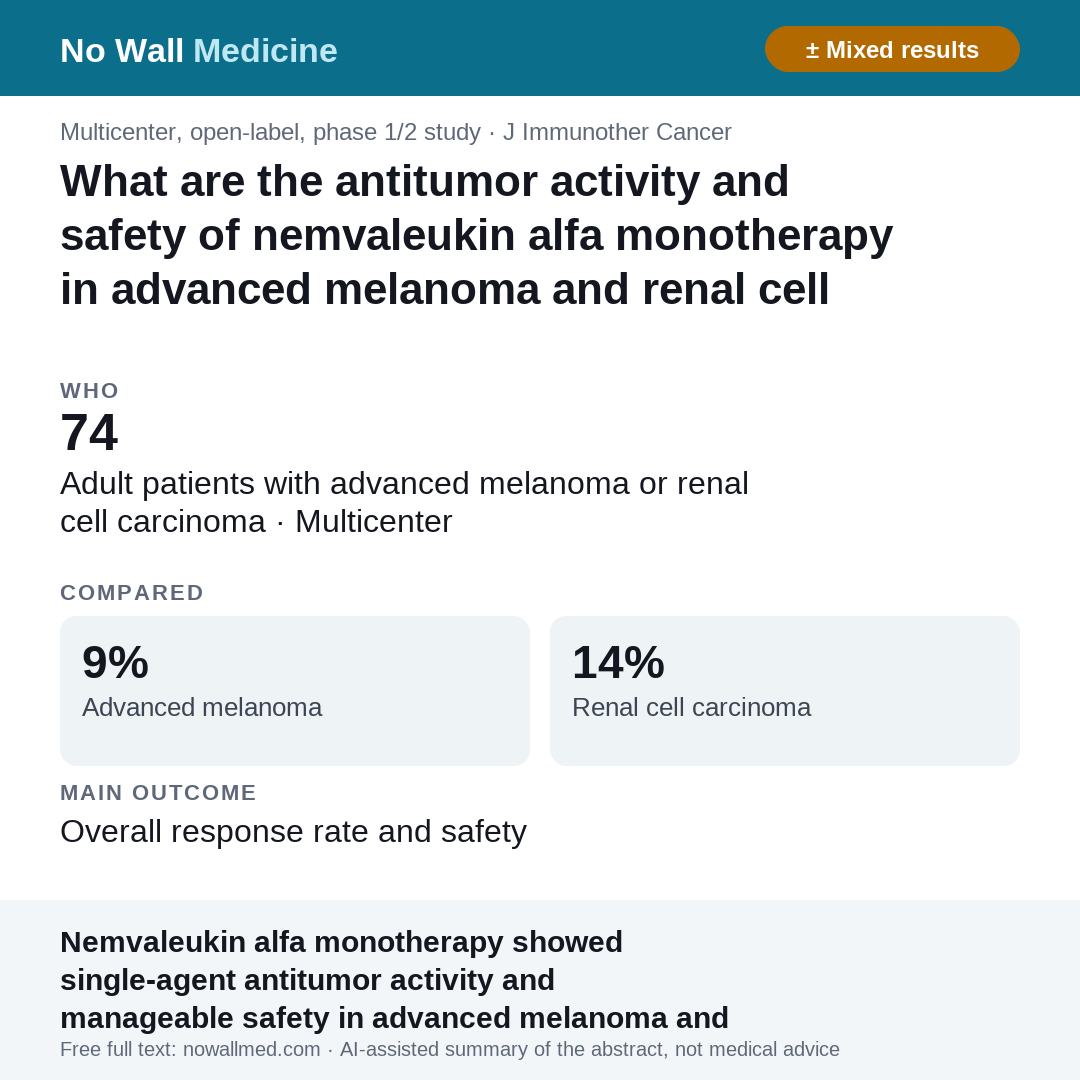
Nemvaleukin alfa monotherapy in patients with advanced melanoma and renal cell carcinoma: results from the phase 1/2 non-randomized ARTISTRY-1 trial
Multicenter, open-label, phase 1/2 studyMixed results
What are the antitumor activity and safety of nemvaleukin alfa monotherapy in advanced melanoma and renal cell carcinoma?
Who
74
Adult patients with advanced melanoma or renal cell carcinoma · Multicenter
Compared
9%Advanced melanoma (95% CI, 2% to 21%)
14%Renal cell carcinoma (95% CI, 3% to 35%)
Main outcome
Overall response rate and safety
Bottom line: Nemvaleukin alfa monotherapy showed single-agent antitumor activity and manageable safety in advanced melanoma and renal cell carcinoma patients.
J Immunother Cancer · 2025-08-04Download image
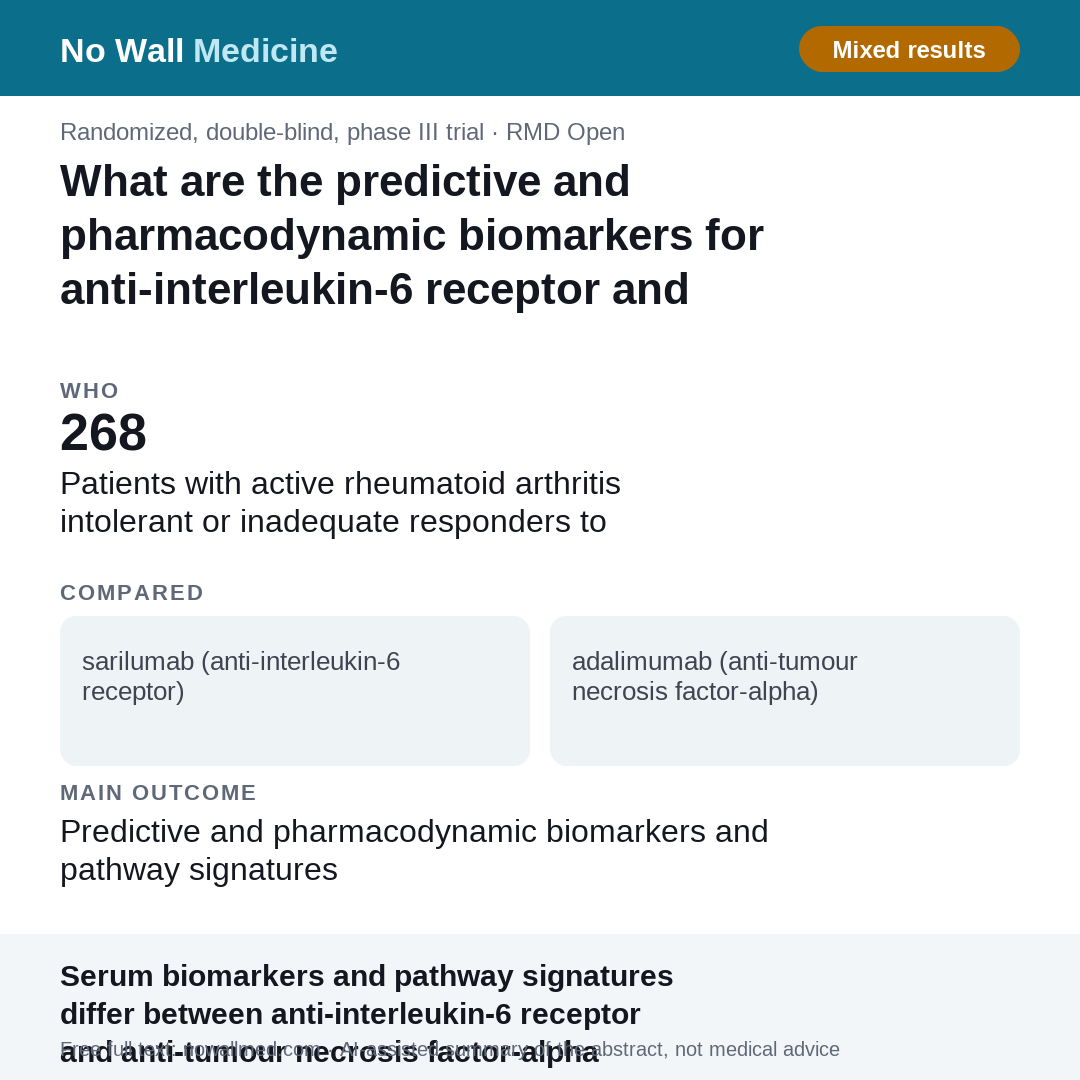
Deciphering differential biomarkers for anti-interleukin-6 receptor and anti-tumour necrosis factor-α treatment response in rheumatoid arthritis by multiomics analysis
Randomized, double-blind, phase III trialMixed results
What are the predictive and pharmacodynamic biomarkers for anti-interleukin-6 receptor and anti-tumour necrosis factor-alpha?
Who
268
Patients with active rheumatoid arthritis intolerant or inadequate responders to methotrexate · MONARCH trial
Compared
sarilumab (anti-interleukin-6 receptor)
adalimumab (anti-tumour necrosis factor-alpha)
Main outcome
Predictive and pharmacodynamic biomarkers and pathway signatures
Bottom line: Serum biomarkers and pathway signatures differ between anti-interleukin-6 receptor and anti-tumour necrosis factor-alpha treatments in rheumatoid arthritis.
Limitation: Absolute prediction performance of single and combination biomarkers using cross-validation was limited.
RMD Open · 2025-08-04Download image
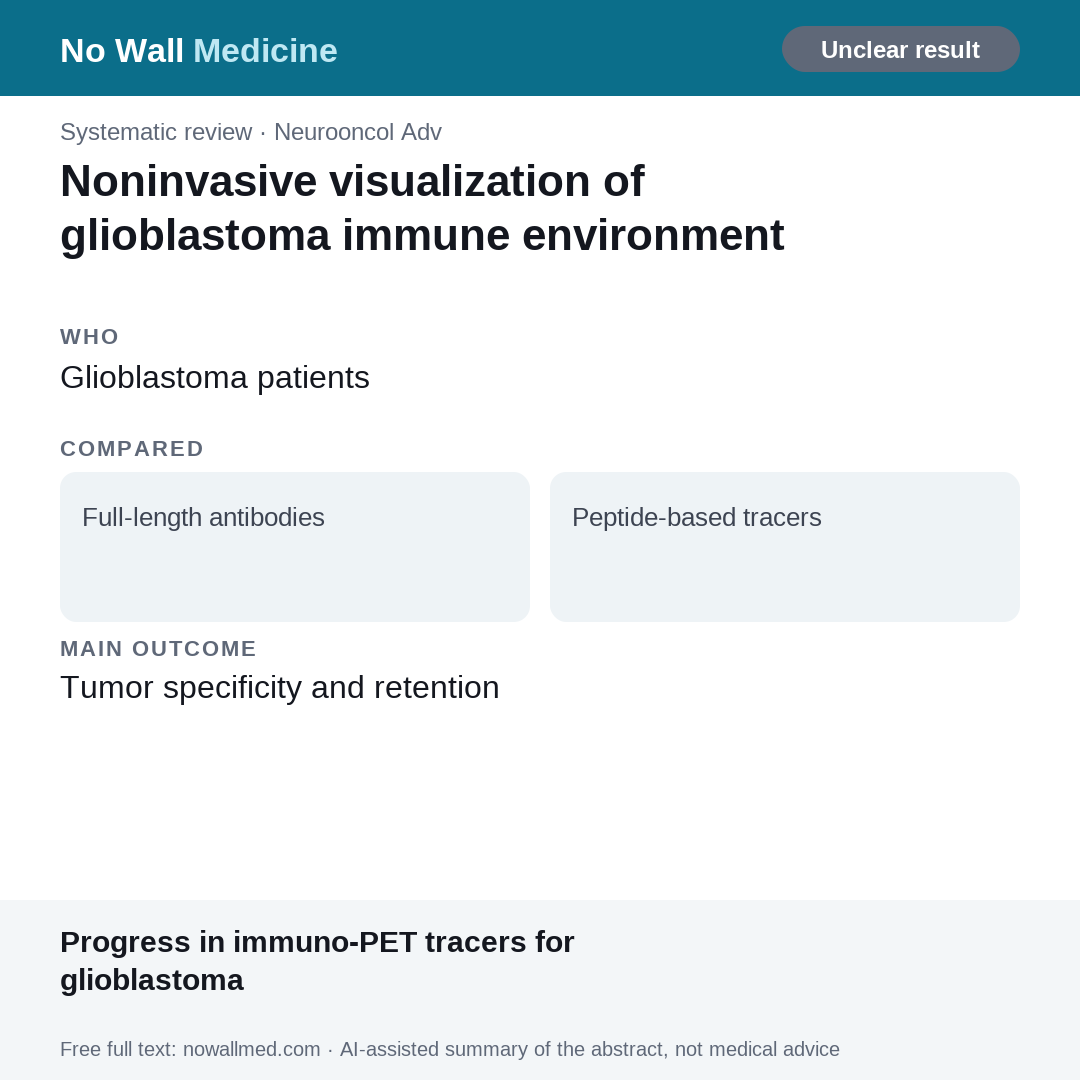
Advancements in noninvasive visualization of the immune environment in glioblastoma: A systematic review
Systematic reviewUnclear result
Noninvasive visualization of glioblastoma immune environment
Who
Glioblastoma patients
Compared
Full-length antibodies
Peptide-based tracers
Main outcome
Tumor specificity and retention
Bottom line: Progress in immuno-PET tracers for glioblastoma
Neurooncol Adv · 2025-08-04Download image
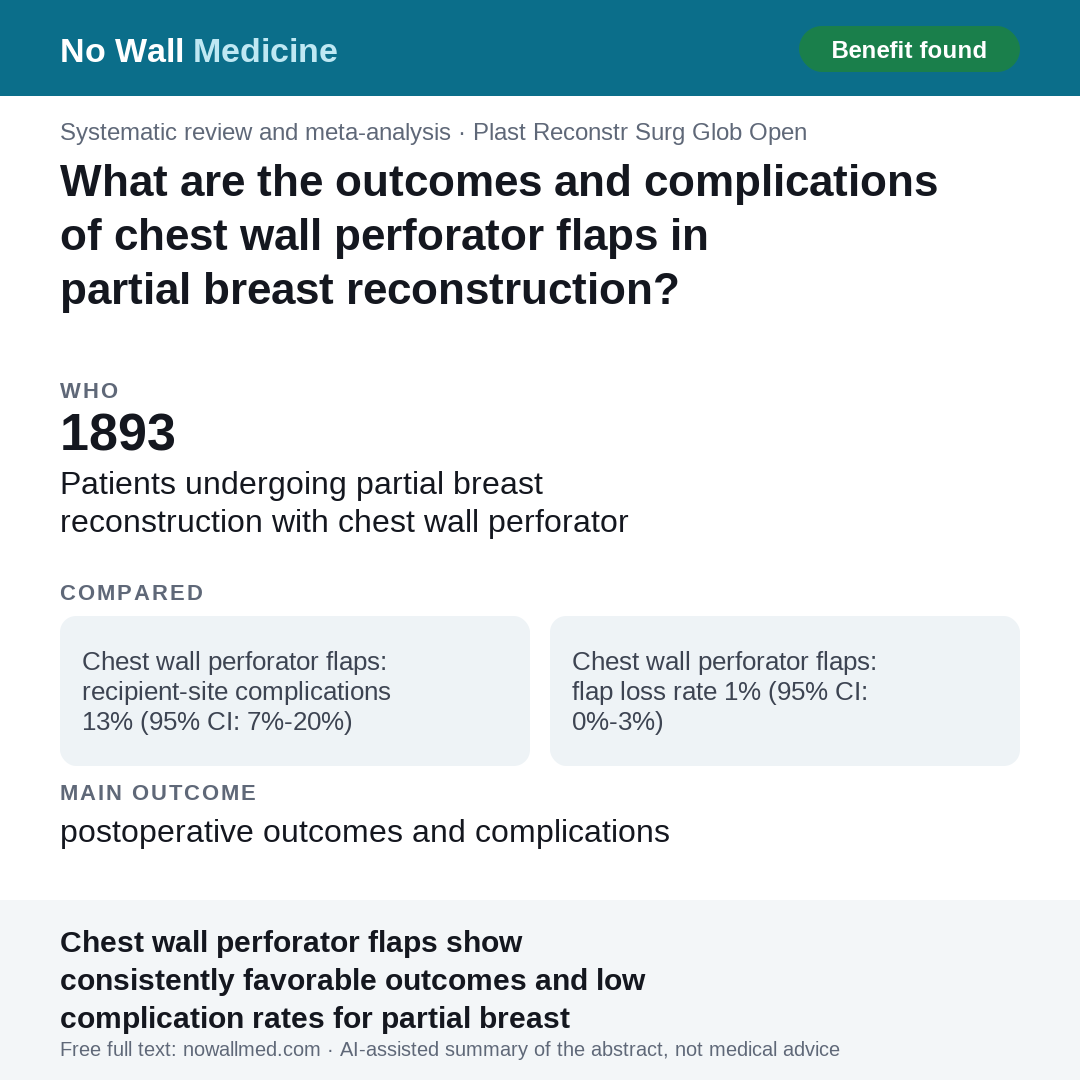
Chest Wall Perforator Flaps in Partial Breast Reconstruction: A Systematic Review and Meta-analysis
Systematic review and meta-analysisBenefit found
What are the outcomes and complications of chest wall perforator flaps in partial breast reconstruction?
Who
1893
Patients undergoing partial breast reconstruction with chest wall perforator flaps
Compared
Chest wall perforator flaps: recipient-site complications 13% (95% CI: 7%-20%)
Chest wall perforator flaps: flap loss rate 1% (95% CI: 0%-3%)
Main outcome
postoperative outcomes and complications
Bottom line: Chest wall perforator flaps show consistently favorable outcomes and low complication rates for partial breast reconstruction.
Plast Reconstr Surg Glob Open · 2025-08-04Download image
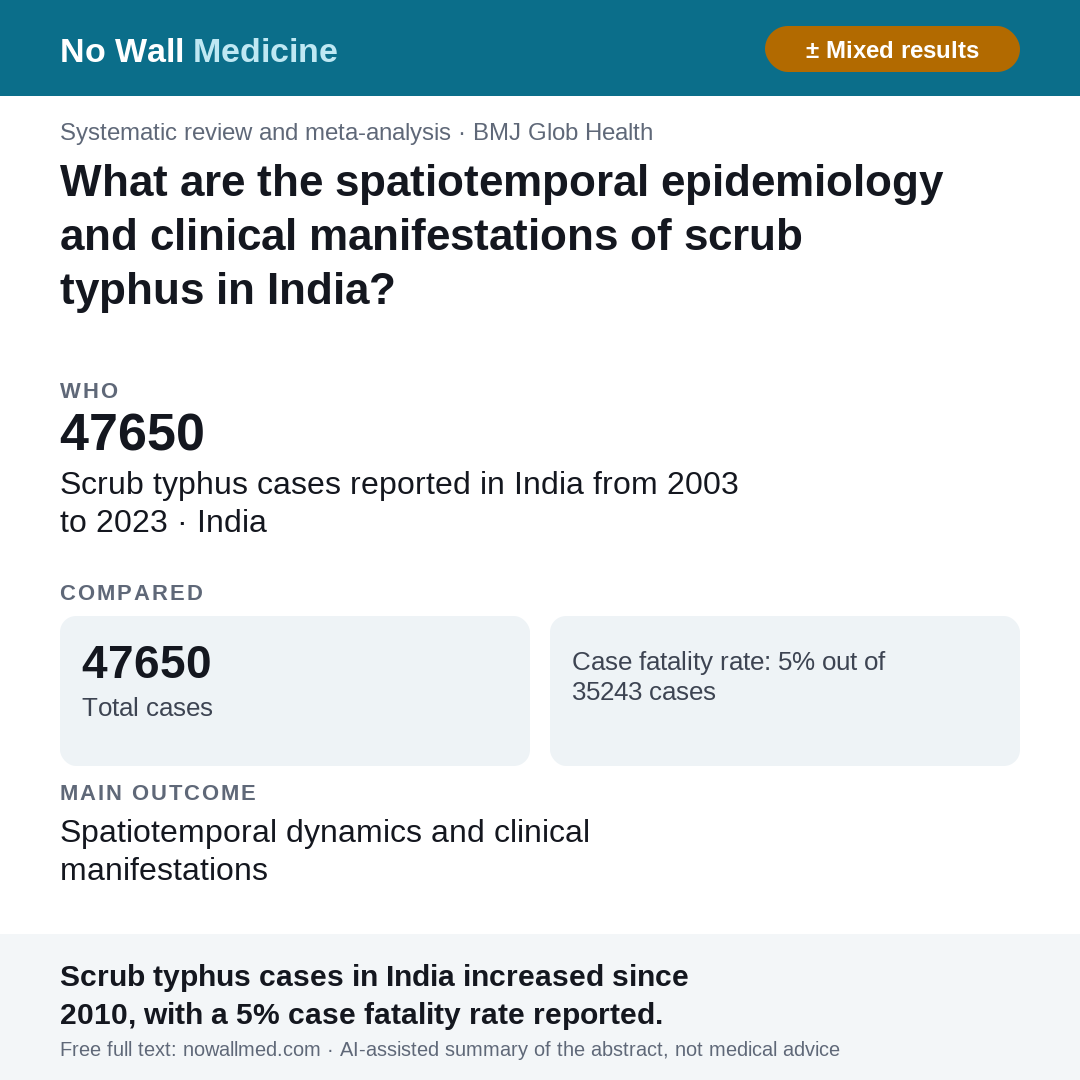
Spatiotemporal epidemiology and clinical manifestations of two decades of scrub typhus in India: a systematic review and meta-analysis
Systematic review and meta-analysisMixed results
What are the spatiotemporal epidemiology and clinical manifestations of scrub typhus in India?
Who
47650
Scrub typhus cases reported in India from 2003 to 2023 · India
Compared
47650Total cases
Case fatality rate: 5% out of 35243 cases
Main outcome
Spatiotemporal dynamics and clinical manifestations
Bottom line: Scrub typhus cases in India increased since 2010, with a 5% case fatality rate reported.
BMJ Glob Health · 2025-08-03Download image
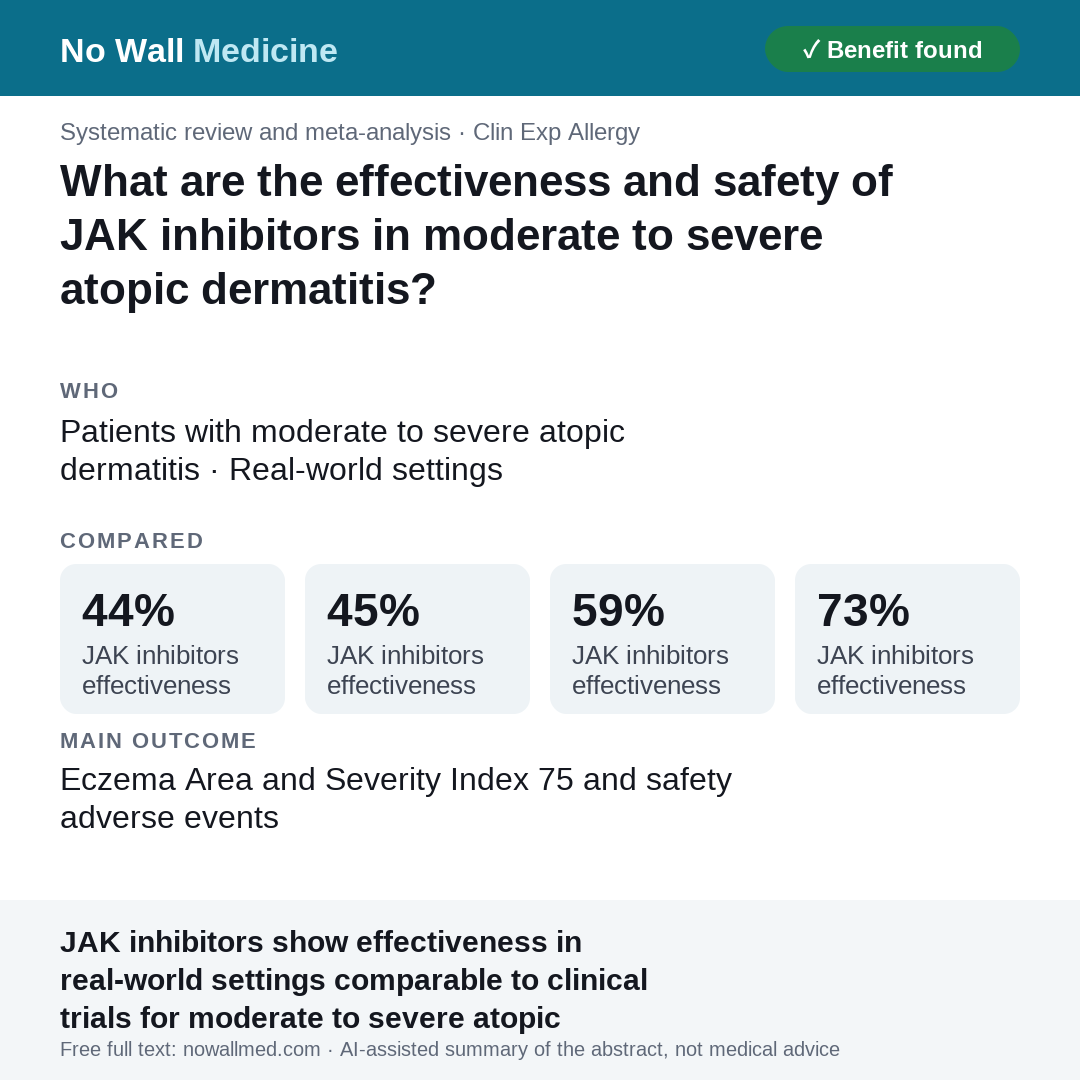
Real-World Effectiveness and Safety of JAK Inhibitors in Atopic Dermatitis: A Systematic Review and Meta-Analysis
Systematic review and meta-analysisBenefit found
What are the effectiveness and safety of JAK inhibitors in moderate to severe atopic dermatitis?
Who
Patients with moderate to severe atopic dermatitis · Real-world settings
Compared
44%JAK inhibitors effectiveness (EASI-75) at 4 weeks (34%-55%)
45%JAK inhibitors effectiveness (EASI-75) at 8 weeks (28%-62%)
59%JAK inhibitors effectiveness (EASI-75) at 12 weeks (51%-66%)
73%JAK inhibitors effectiveness (EASI-75) at 16 weeks (64%-81%)
Main outcome
Eczema Area and Severity Index 75 and safety adverse events
Bottom line: JAK inhibitors show effectiveness in real-world settings comparable to clinical trials for moderate to severe atopic dermatitis.
Clin Exp Allergy · 2025-08-02Download image
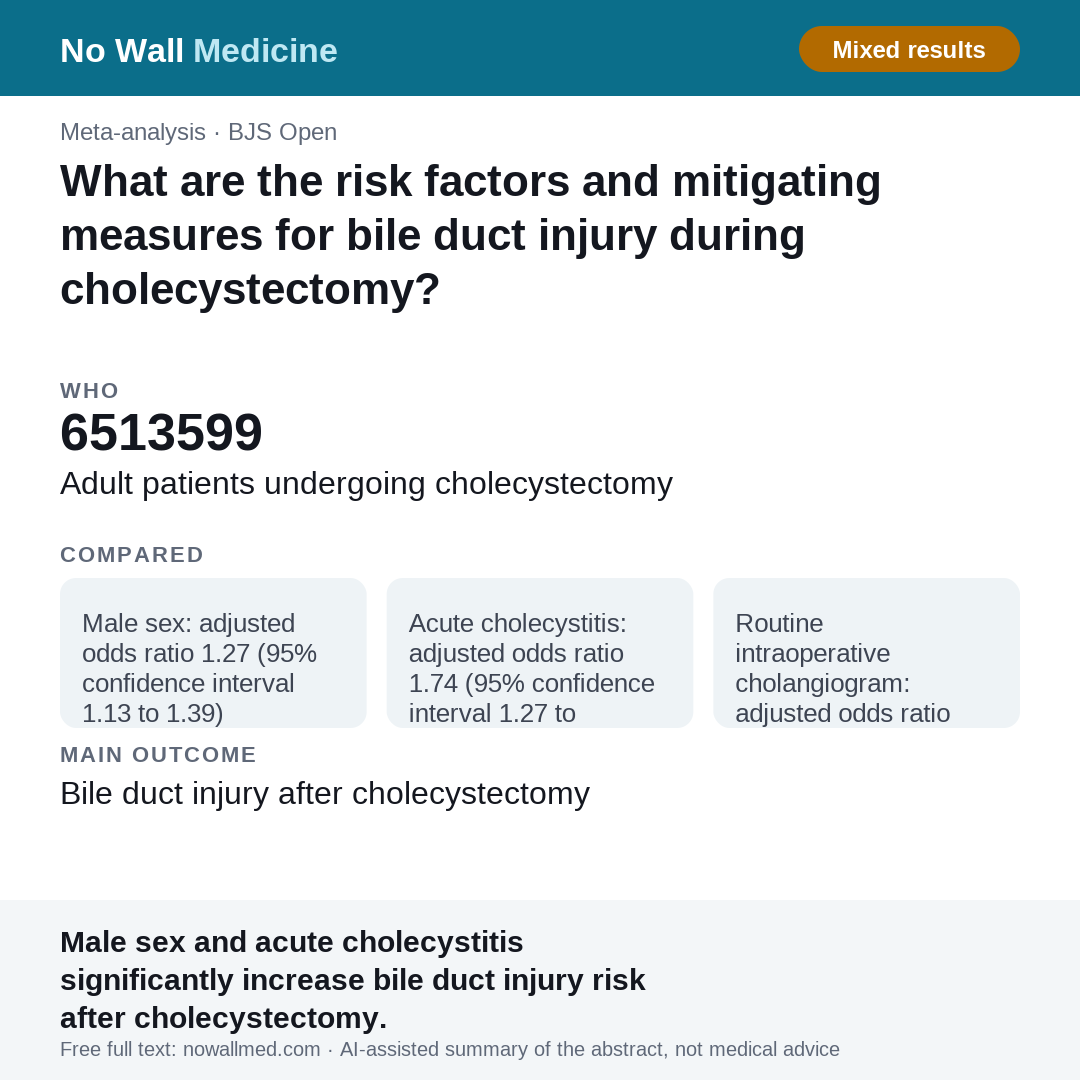
Risk factors and mitigating measures associated with bile duct injury during cholecystectomy: meta-analysis
Meta-analysisMixed results
What are the risk factors and mitigating measures for bile duct injury during cholecystectomy?
Who
6513599
Adult patients undergoing cholecystectomy
Compared
Male sex: adjusted odds ratio 1.27 (95% confidence interval 1.13 to 1.39)
Acute cholecystitis: adjusted odds ratio 1.74 (95% confidence interval 1.27 to 2.39)
Routine intraoperative cholangiogram: adjusted odds ratio 0.92 (95% confidence interval 0.70 to 1.23)
Main outcome
Bile duct injury after cholecystectomy
Bottom line: Male sex and acute cholecystitis significantly increase bile duct injury risk after cholecystectomy.
BJS Open · 2025-08-02Download image
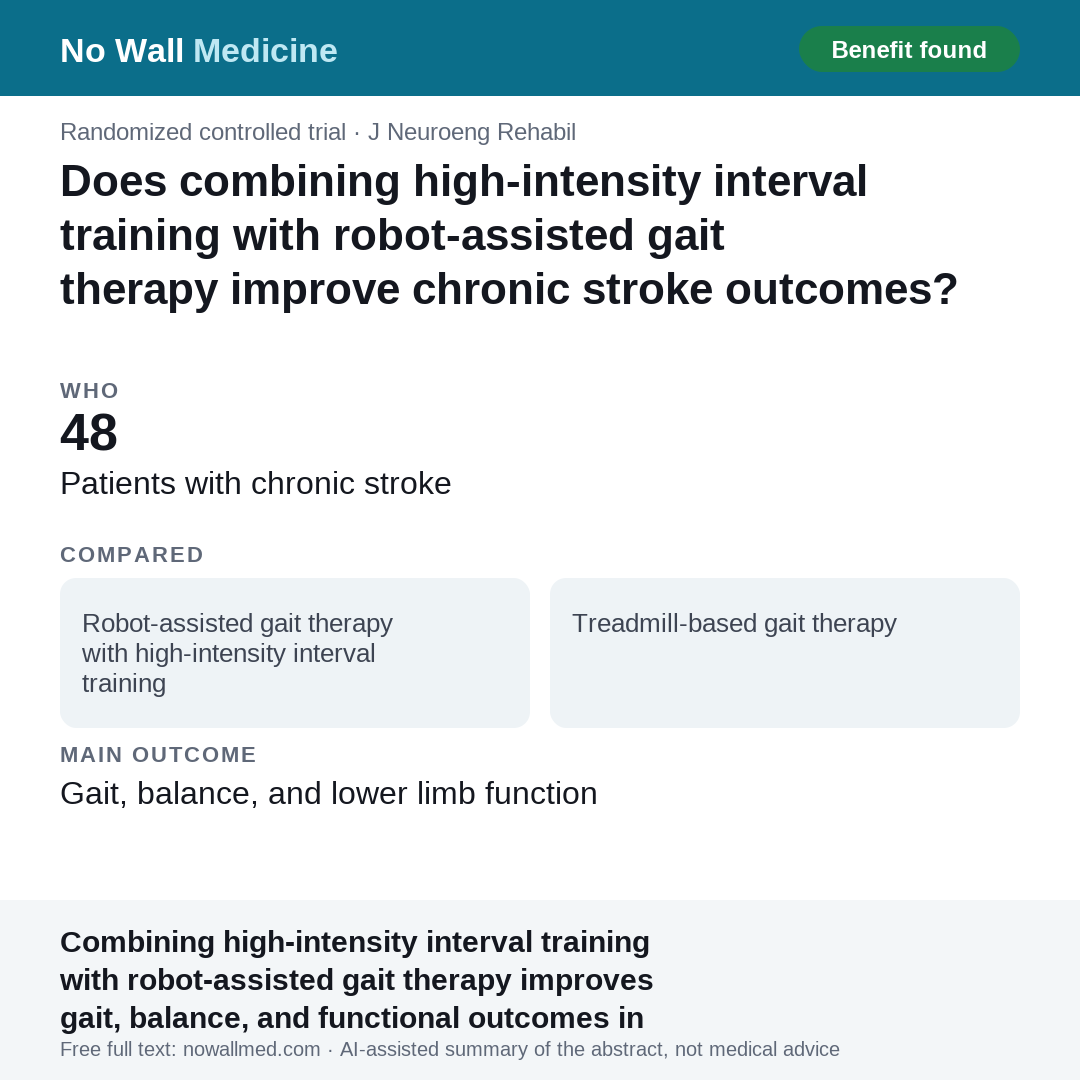
High-intensity interval training with robot-assisted gait therapy vs. treadmill gait therapy in chronic stroke: a randomized controlled trial
Randomized controlled trialBenefit found
Does combining high-intensity interval training with robot-assisted gait therapy improve chronic stroke outcomes?
Who
48
Patients with chronic stroke
Compared
Robot-assisted gait therapy with high-intensity interval training
Treadmill-based gait therapy
Main outcome
Gait, balance, and lower limb function
Bottom line: Combining high-intensity interval training with robot-assisted gait therapy improves gait, balance, and functional outcomes in chronic stroke.
J Neuroeng Rehabil · 2025-08-02Download image
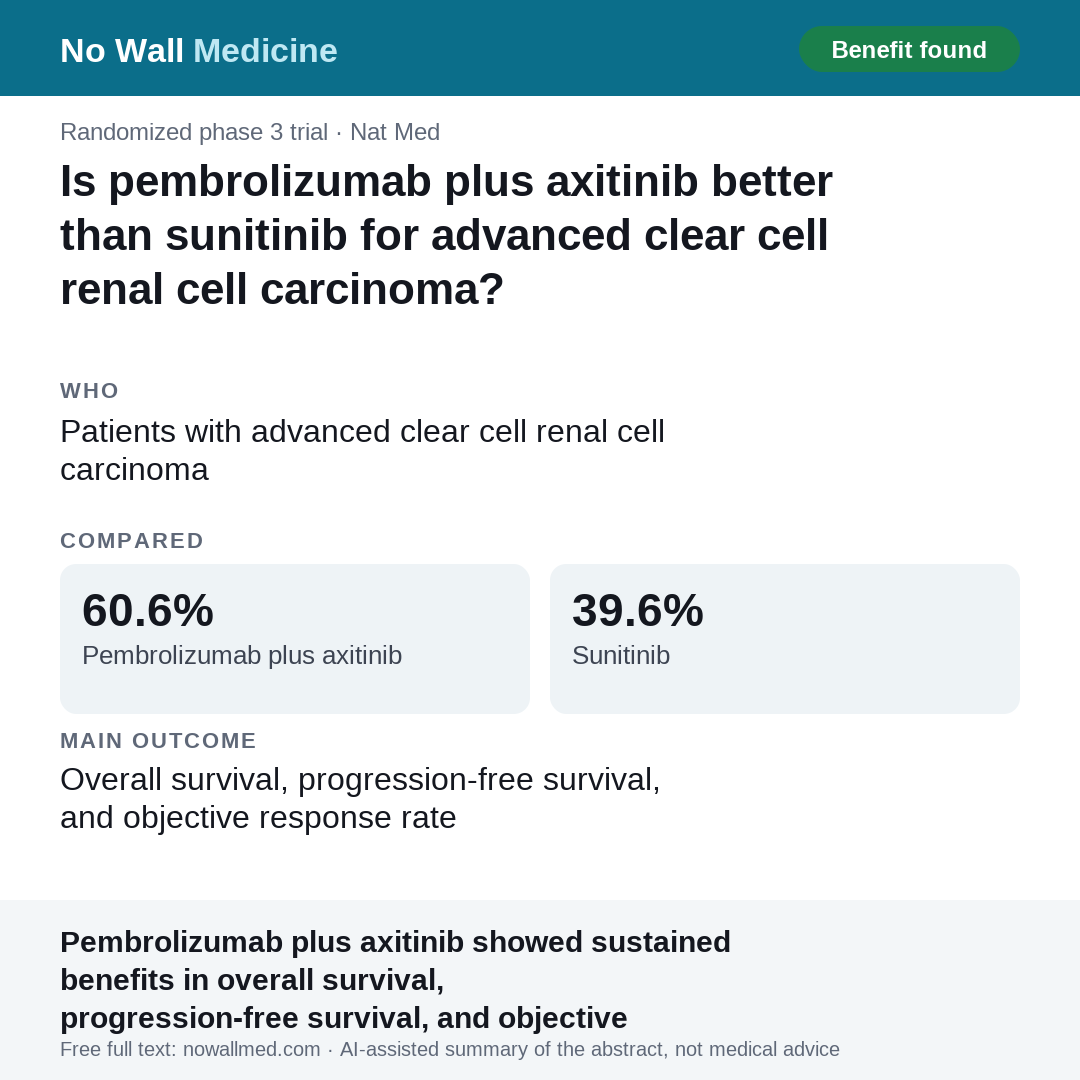
Pembrolizumab plus axitinib versus sunitinib for advanced clear cell renal cell carcinoma: 5-year survival and biomarker analyses of the phase 3 KEYNOTE-426 trial
Randomized phase 3 trialBenefit found
Is pembrolizumab plus axitinib better than sunitinib for advanced clear cell renal cell carcinoma?
Who
Patients with advanced clear cell renal cell carcinoma
Compared
60.6%Pembrolizumab plus axitinib
39.6%Sunitinib
Main outcome
Overall survival, progression-free survival, and objective response rate
Result: hazard ratio 0.84 (95% confidence interval 0.71-0.99)
Bottom line: Pembrolizumab plus axitinib showed sustained benefits in overall survival, progression-free survival, and objective response rate over sunitinib.
Nat Med · 2025-08-01Download image
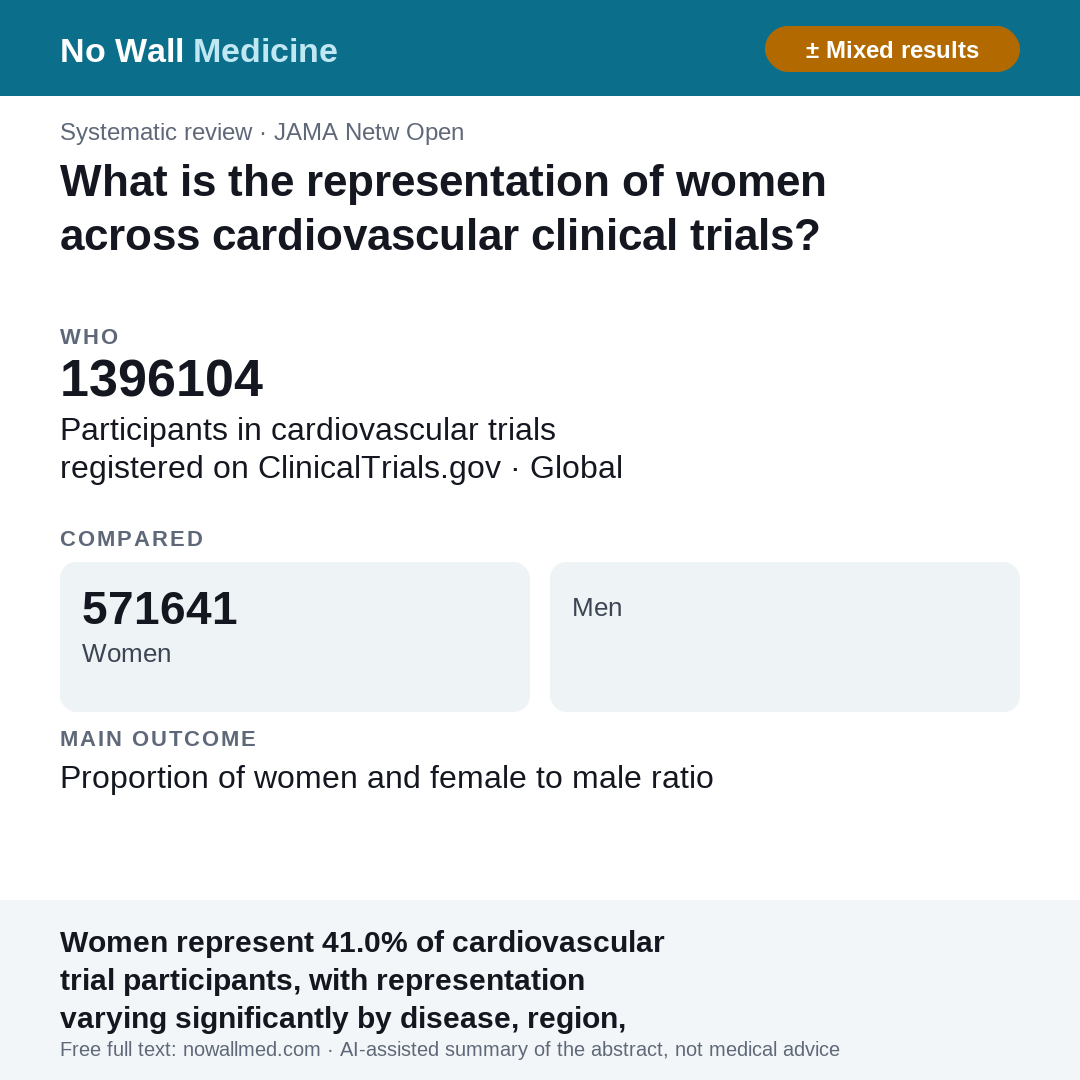
Participation of Women in Cardiovascular Trials From 2017 to 2023: A Systematic Review
Systematic reviewMixed results
What is the representation of women across cardiovascular clinical trials?
Who
1396104
Participants in cardiovascular trials registered on ClinicalTrials.gov · Global
Compared
571641Women (41.0%)
Men
Main outcome
Proportion of women and female to male ratio
Bottom line: Women represent 41.0% of cardiovascular trial participants, with representation varying significantly by disease, region, and intervention.
JAMA Netw Open · 2025-08-01Download image
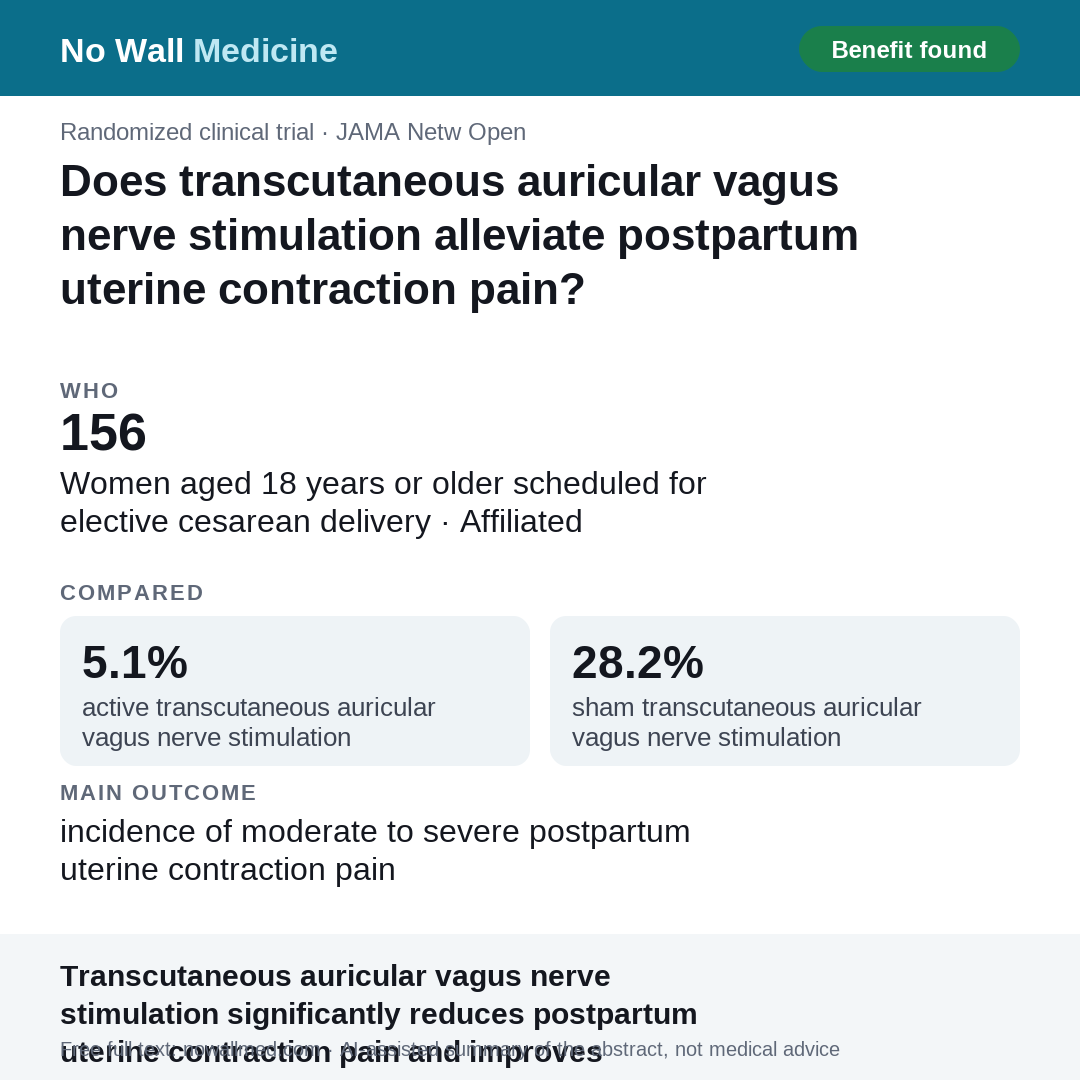
Transcutaneous Auricular Vagus Nerve Stimulation for Postpartum Contraction Pain During Elective Cesarean Delivery: A Randomized Clinical Trial
Randomized clinical trialBenefit found
Does transcutaneous auricular vagus nerve stimulation alleviate postpartum uterine contraction pain?
Who
156
Women aged 18 years or older scheduled for elective cesarean delivery · Affiliated Hospital of Xuzhou Medical University, China
Compared
5.1%active transcutaneous auricular vagus nerve stimulation (4/78)
28.2%sham transcutaneous auricular vagus nerve stimulation (22/78)
Main outcome
incidence of moderate to severe postpartum uterine contraction pain
Result: relative risk 0.18 (95% CI 0.07-0.50)
Bottom line: Transcutaneous auricular vagus nerve stimulation significantly reduces postpartum uterine contraction pain and improves postoperative recovery quality.
JAMA Netw Open · 2025-08-01Download image
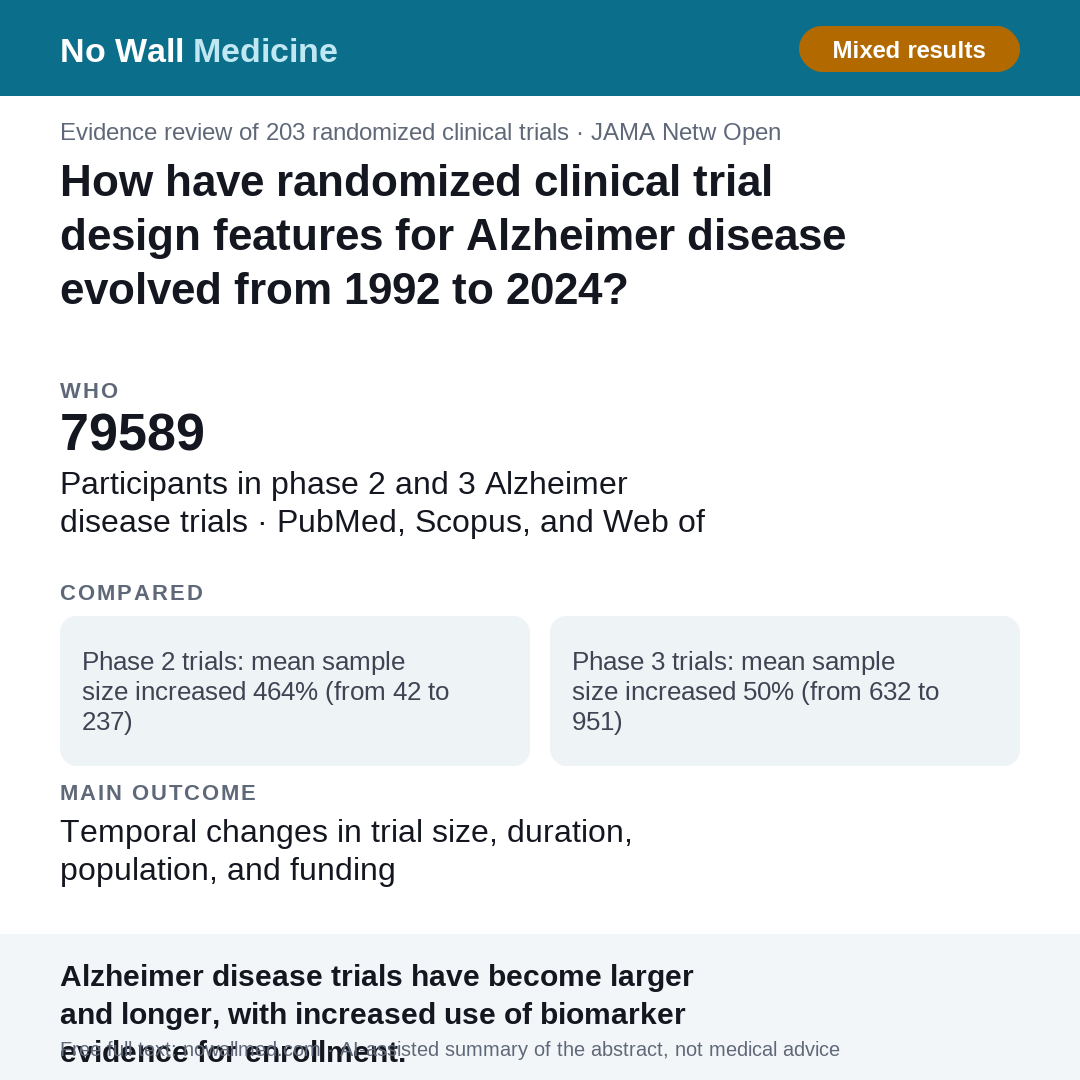
The Evolution of Randomized Clinical Trial Designs to Assess Therapeutics in Alzheimer Disease
Evidence review of 203 randomized clinical trialsMixed results
How have randomized clinical trial design features for Alzheimer disease evolved from 1992 to 2024?
Who
79589
Participants in phase 2 and 3 Alzheimer disease trials · PubMed, Scopus, and Web of Science databases
Compared
Phase 2 trials: mean sample size increased 464% (from 42 to 237)
Phase 3 trials: mean sample size increased 50% (from 632 to 951)
Main outcome
Temporal changes in trial size, duration, population, and funding
Bottom line: Alzheimer disease trials have become larger and longer, with increased use of biomarker evidence for enrollment.
JAMA Netw Open · 2025-08-01Download image
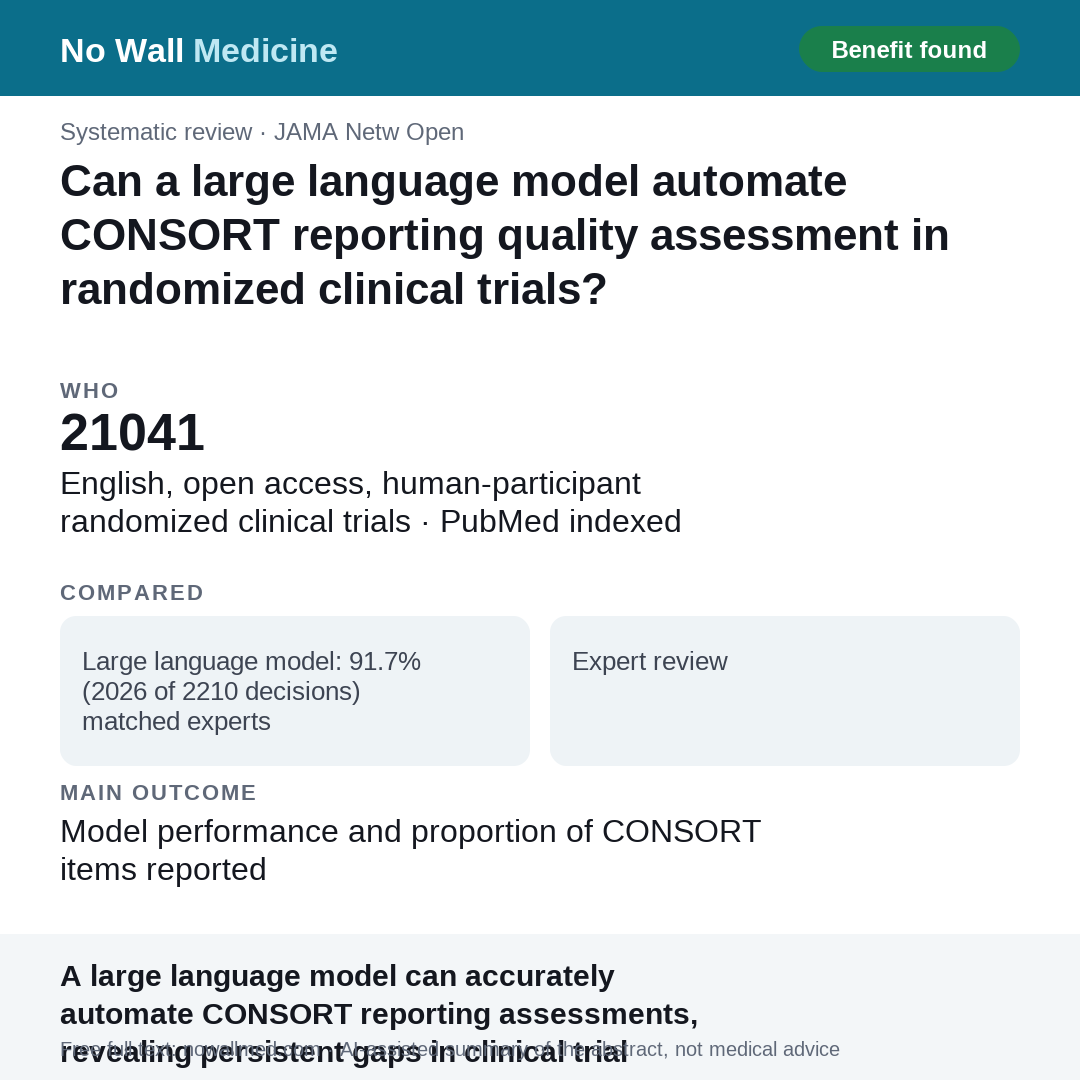
Large Language Model Analysis of Reporting Quality of Randomized Clinical Trial Articles: A Systematic Review
Systematic reviewBenefit found
Can a large language model automate CONSORT reporting quality assessment in randomized clinical trials?
Who
21041
English, open access, human-participant randomized clinical trials · PubMed indexed articles
Compared
Large language model: 91.7% (2026 of 2210 decisions) matched experts
Expert review
Main outcome
Model performance and proportion of CONSORT items reported
Result: macro F1 score 0.86 (95% CI, 0.84-0.87)
Bottom line: A large language model can accurately automate CONSORT reporting assessments, revealing persistent gaps in clinical trial transparency.
JAMA Netw Open · 2025-08-01Download image
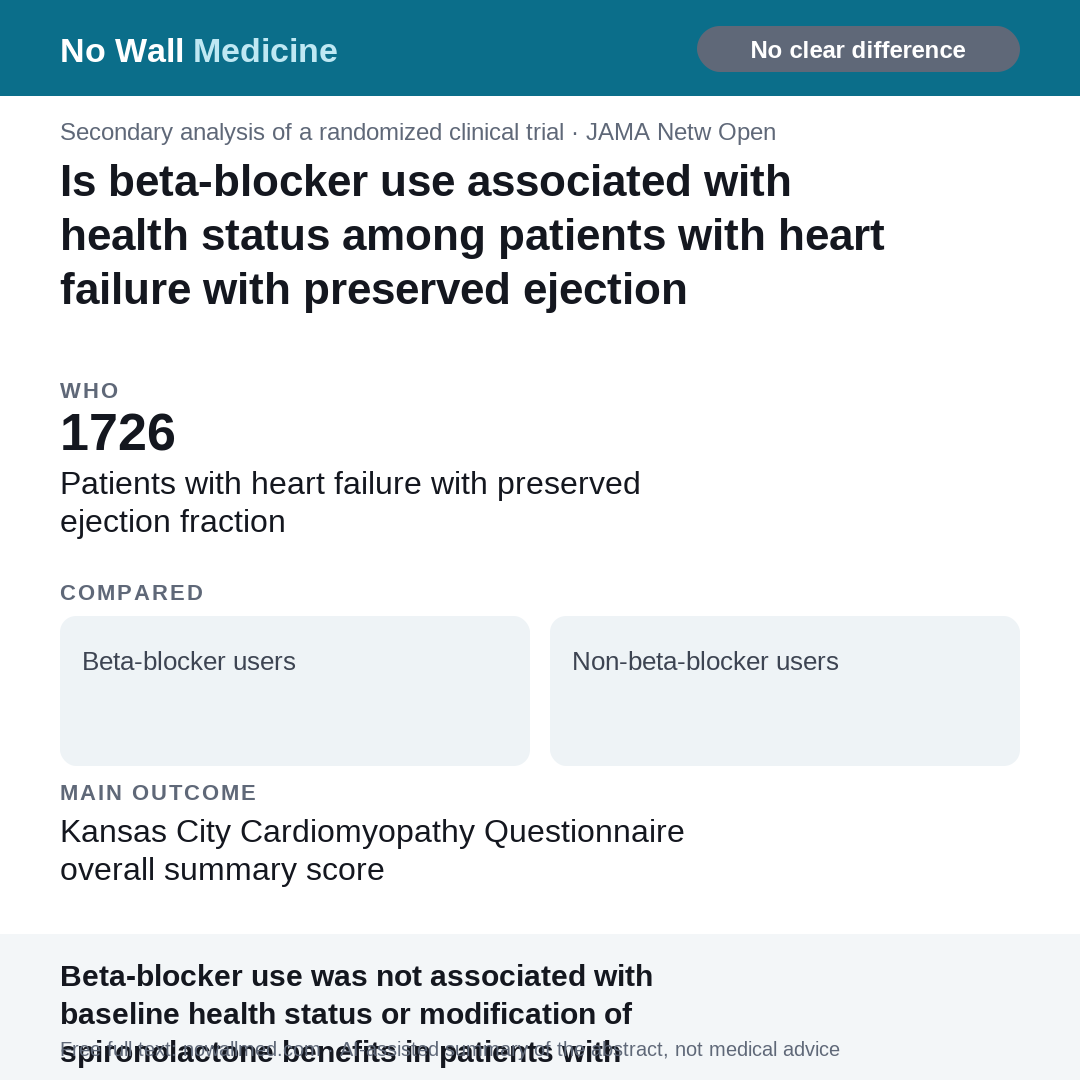
β-Blocker Use and Health Status Among Patients With Heart Failure With Preserved Ejection Fraction
Secondary analysis of a randomized clinical trialNo clear difference
Is beta-blocker use associated with health status among patients with heart failure with preserved ejection fraction?
Who
1726
Patients with heart failure with preserved ejection fraction
Compared
Beta-blocker users
Non-beta-blocker users
Main outcome
Kansas City Cardiomyopathy Questionnaire overall summary score
Result: mean difference -1.1 points (95% CI -3.7 to 1.4 points)
Bottom line: Beta-blocker use was not associated with baseline health status or modification of spironolactone benefits in patients with HFpEF.
Limitation: This was a secondary analysis of a randomized clinical trial cohort.
JAMA Netw Open · 2025-08-01Download image
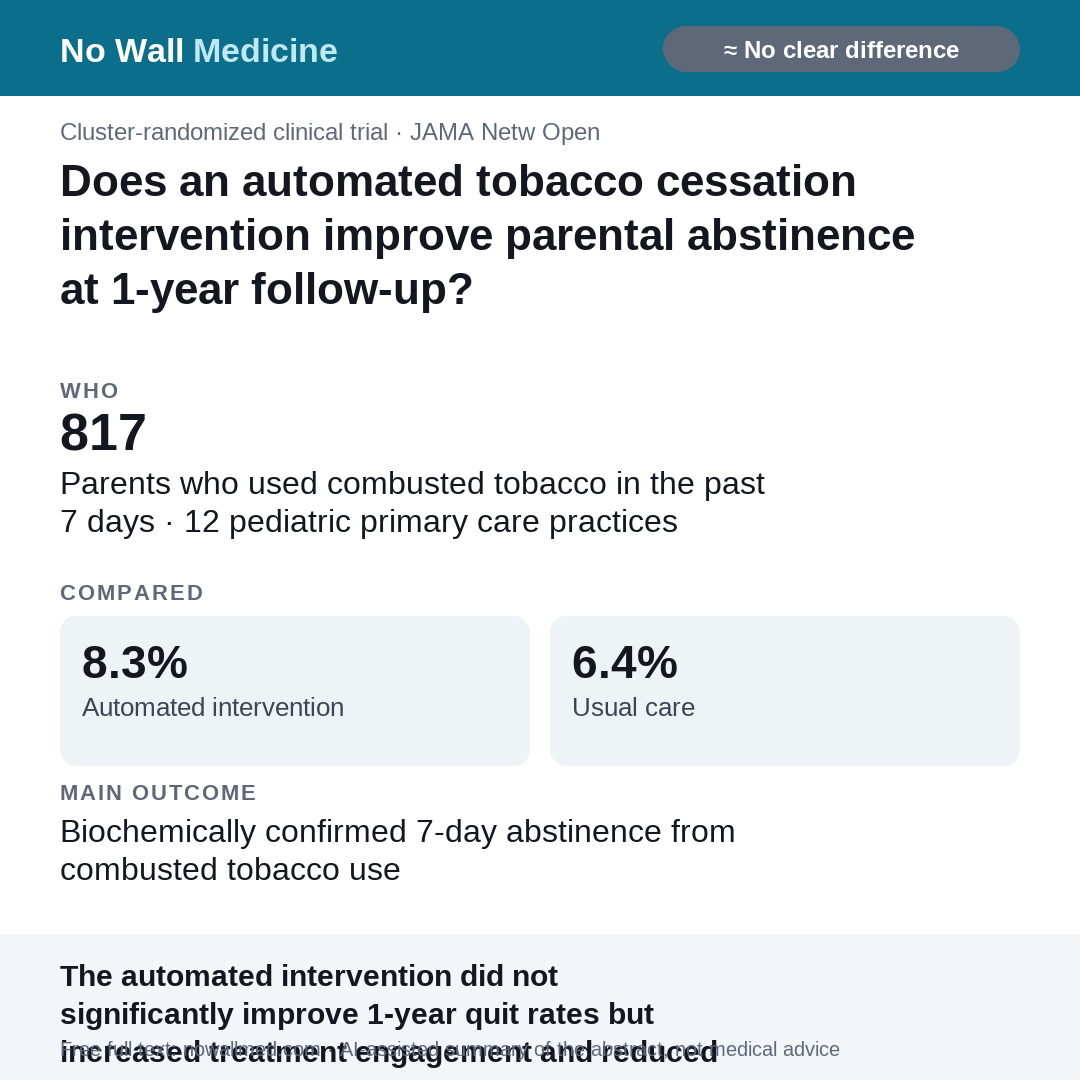
Automated Tobacco Cessation Intervention for Parents in Pediatric Primary Care: A Cluster-Randomized Clinical Trial
Cluster-randomized clinical trialNo clear difference
Does an automated tobacco cessation intervention improve parental abstinence at 1-year follow-up?
Who
817
Parents who used combusted tobacco in the past 7 days · 12 pediatric primary care practices in Philadelphia, Pennsylvania
Compared
8.3%Automated intervention
6.4%Usual care
Main outcome
Biochemically confirmed 7-day abstinence from combusted tobacco use
Result: adjusted odds ratio, 1.34 (95% CI, 0.79-2.29)
Bottom line: The automated intervention did not significantly improve 1-year quit rates but increased treatment engagement and reduced cigarette consumption.
JAMA Netw Open · 2025-08-01Download image
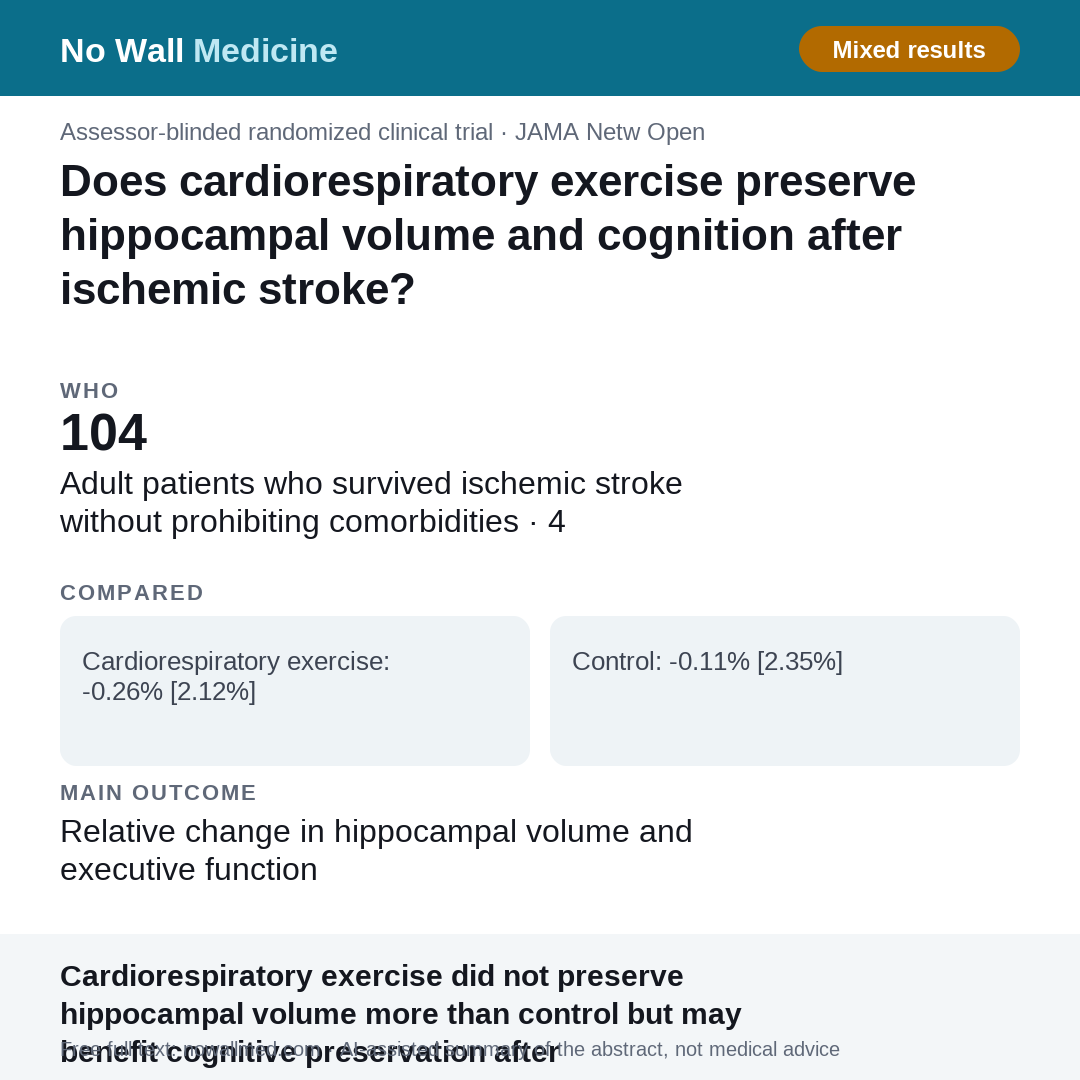
Poststroke Cardiorespiratory Exercise for Brain Volume and Cognition: A Randomized Clinical Trial
Assessor-blinded randomized clinical trialMixed results
Does cardiorespiratory exercise preserve hippocampal volume and cognition after ischemic stroke?
Who
104
Adult patients who survived ischemic stroke without prohibiting comorbidities · 4 metropolitan health care services in Melbourne, Australia
Compared
Cardiorespiratory exercise: -0.26% [2.12%]
Control: -0.11% [2.35%]
Main outcome
Relative change in hippocampal volume and executive function
Result: -0.10% (95% CI, -1.10% to 0.87%)
Bottom line: Cardiorespiratory exercise did not preserve hippocampal volume more than control but may benefit cognitive preservation after ischemic stroke.
JAMA Netw Open · 2025-08-01Download image
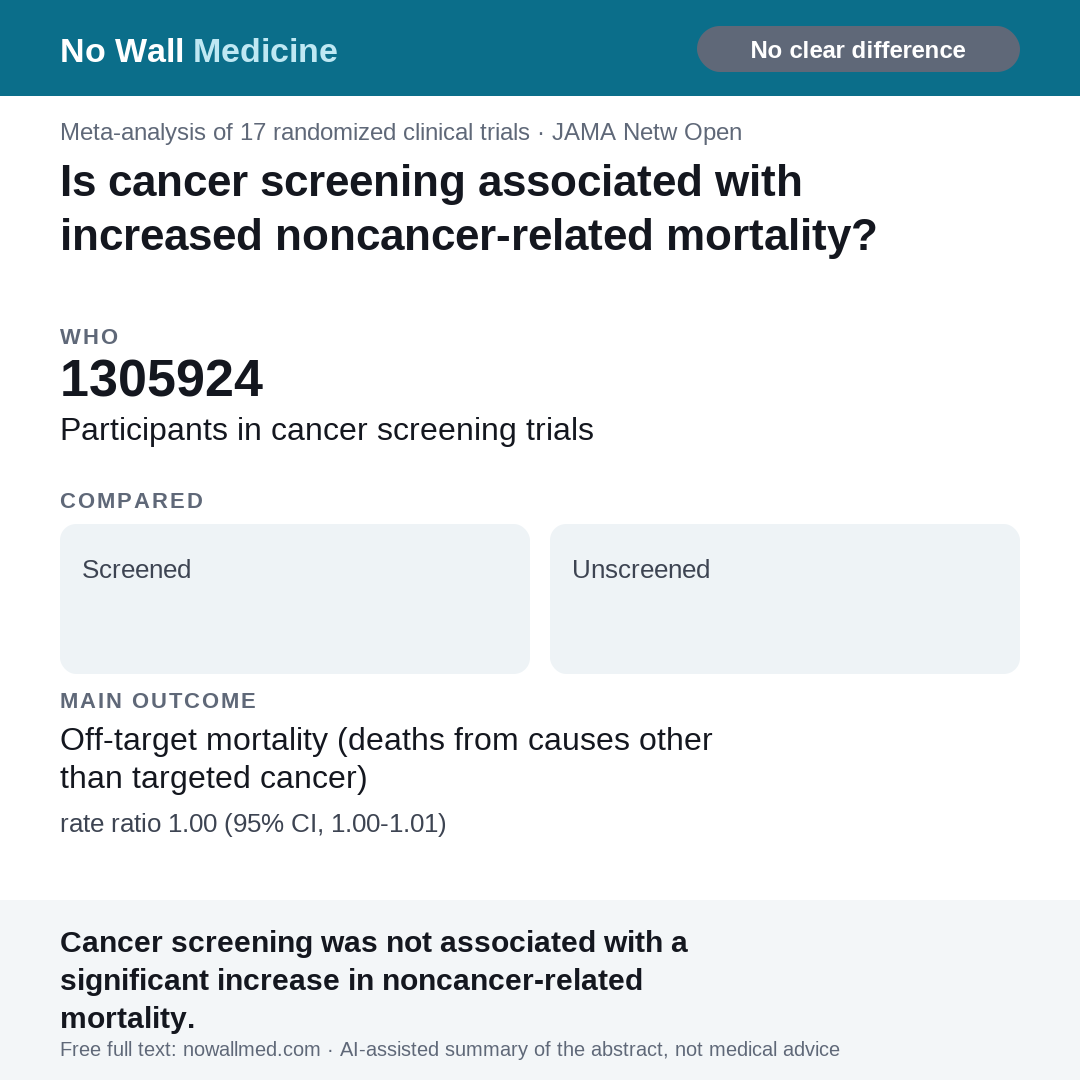
Noncancer-Related Mortality in Randomized Clinical Trials: A Meta-Analysis
Meta-analysis of 17 randomized clinical trialsNo clear difference
Is cancer screening associated with increased noncancer-related mortality?
Who
1305924
Participants in cancer screening trials
Compared
Screened
Unscreened
Main outcome
Off-target mortality (deaths from causes other than targeted cancer)
Result: rate ratio 1.00 (95% CI, 1.00-1.01)
Bottom line: Cancer screening was not associated with a significant increase in noncancer-related mortality.
JAMA Netw Open · 2025-08-01Download image
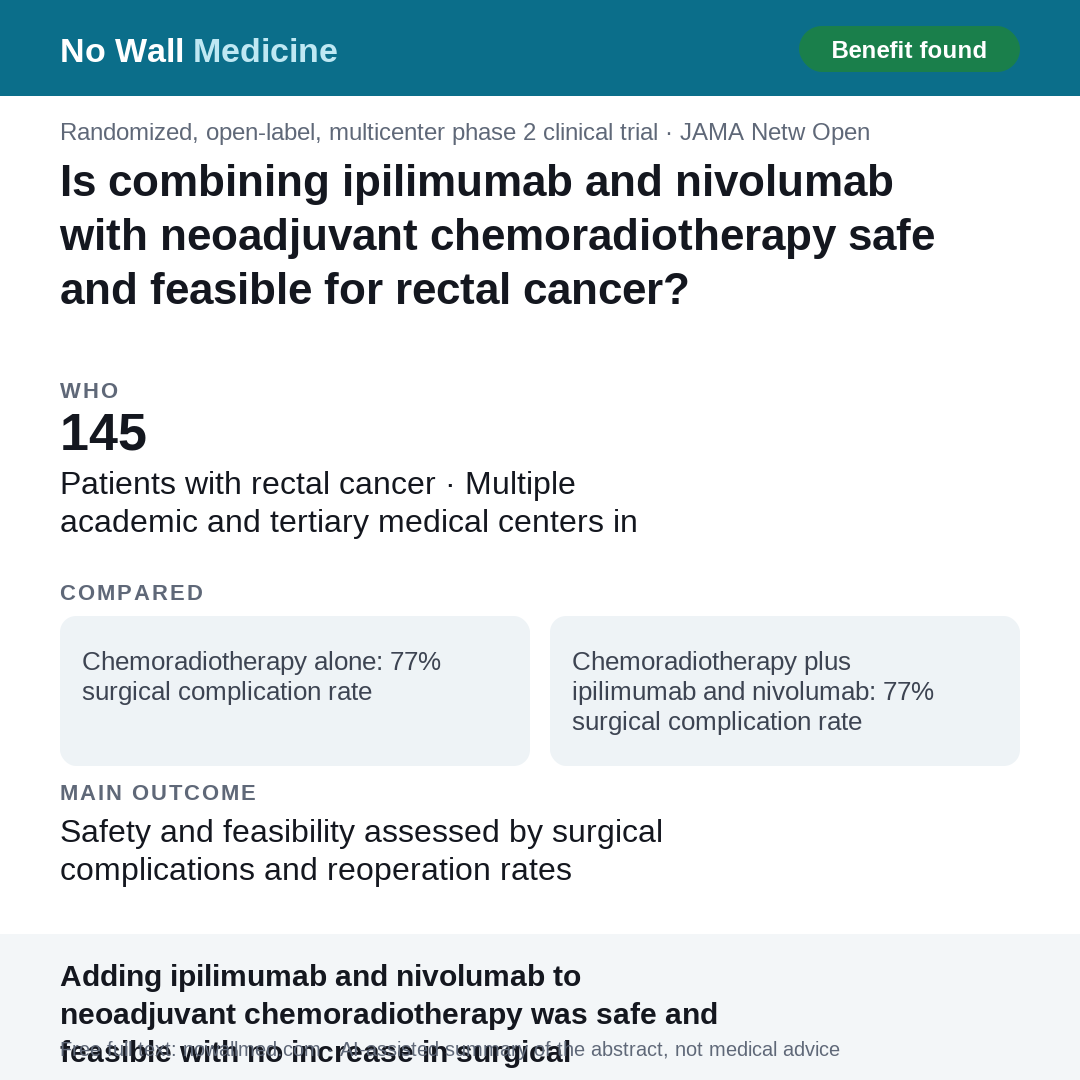
Dual Immune Checkpoint Inhibition Plus Neoadjuvant Chemoradiotherapy in Rectal Cancer: A Randomized Clinical Trial
Randomized, open-label, multicenter phase 2 clinical trialBenefit found
Is combining ipilimumab and nivolumab with neoadjuvant chemoradiotherapy safe and feasible for rectal cancer?
Who
145
Patients with rectal cancer · Multiple academic and tertiary medical centers in Austria
Compared
Chemoradiotherapy alone: 77% surgical complication rate
Chemoradiotherapy plus ipilimumab and nivolumab: 77% surgical complication rate
Main outcome
Safety and feasibility assessed by surgical complications and reoperation rates
Bottom line: Adding ipilimumab and nivolumab to neoadjuvant chemoradiotherapy was safe and feasible with no increase in surgical complications.
JAMA Netw Open · 2025-08-01Download image
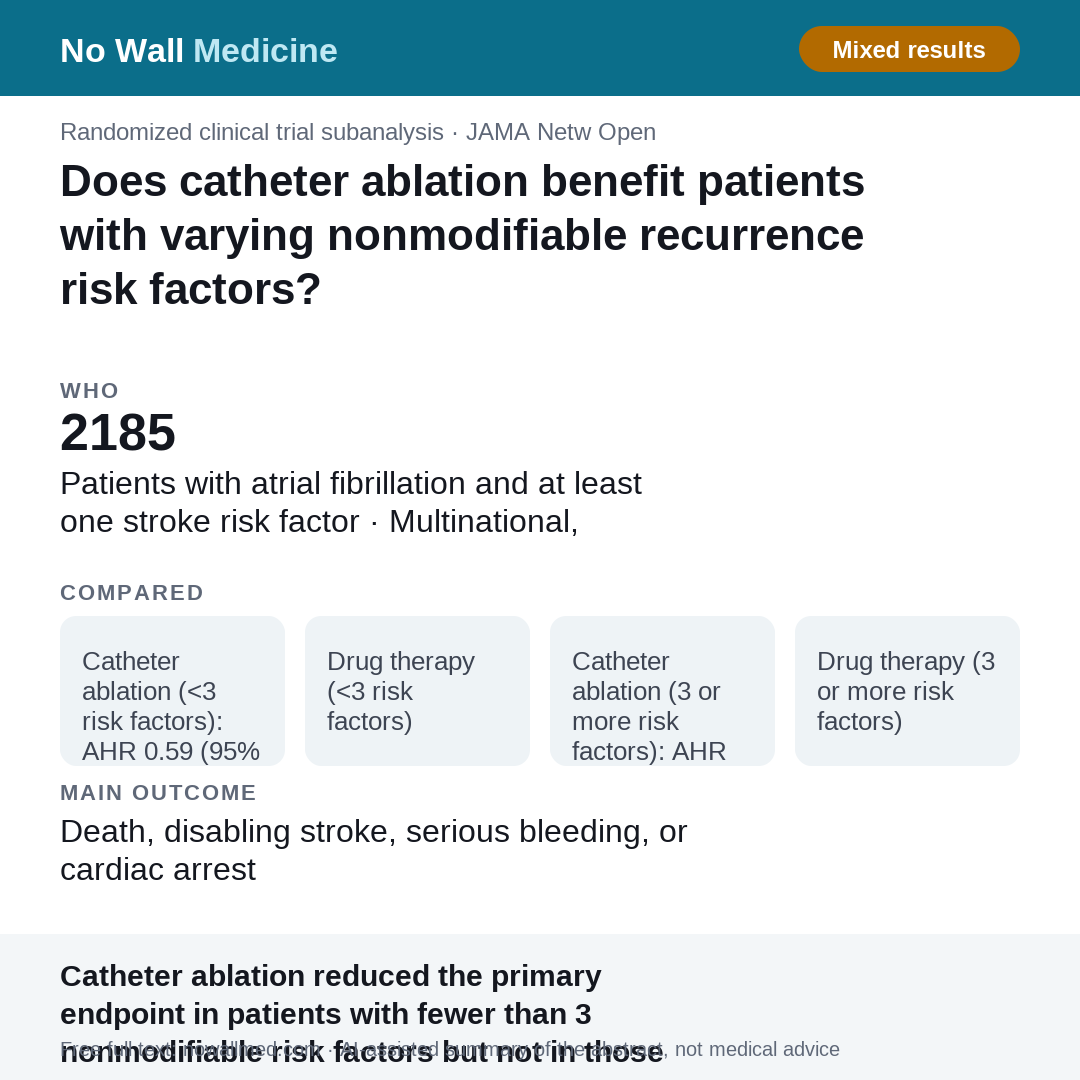
Catheter Ablation vs Drug Therapy in Patients With Atrial Fibrillation and Nonmodifiable Recurrence Risk Factors: A Secondary Analysis of the CABANA Randomized Clinical Trial
Randomized clinical trial subanalysisMixed results
Does catheter ablation benefit patients with varying nonmodifiable recurrence risk factors?
Who
2185
Patients with atrial fibrillation and at least one stroke risk factor · Multinational, multicenter
Compared
Catheter ablation (<3 risk factors): AHR 0.59 (95% CI 0.41-0.86)
Drug therapy (<3 risk factors)
Catheter ablation (3 or more risk factors): AHR 1.55 (95% CI 0.93-2.58)
Drug therapy (3 or more risk factors)
Main outcome
Death, disabling stroke, serious bleeding, or cardiac arrest
Result: AHR 0.59 (95% CI 0.41-0.86) for <3 risk factors
Bottom line: Catheter ablation reduced the primary endpoint in patients with fewer than 3 nonmodifiable risk factors but not in those with 3 or more.
Limitation: This was a post hoc subanalysis of the CABANA randomized clinical trial.
JAMA Netw Open · 2025-08-01Download image
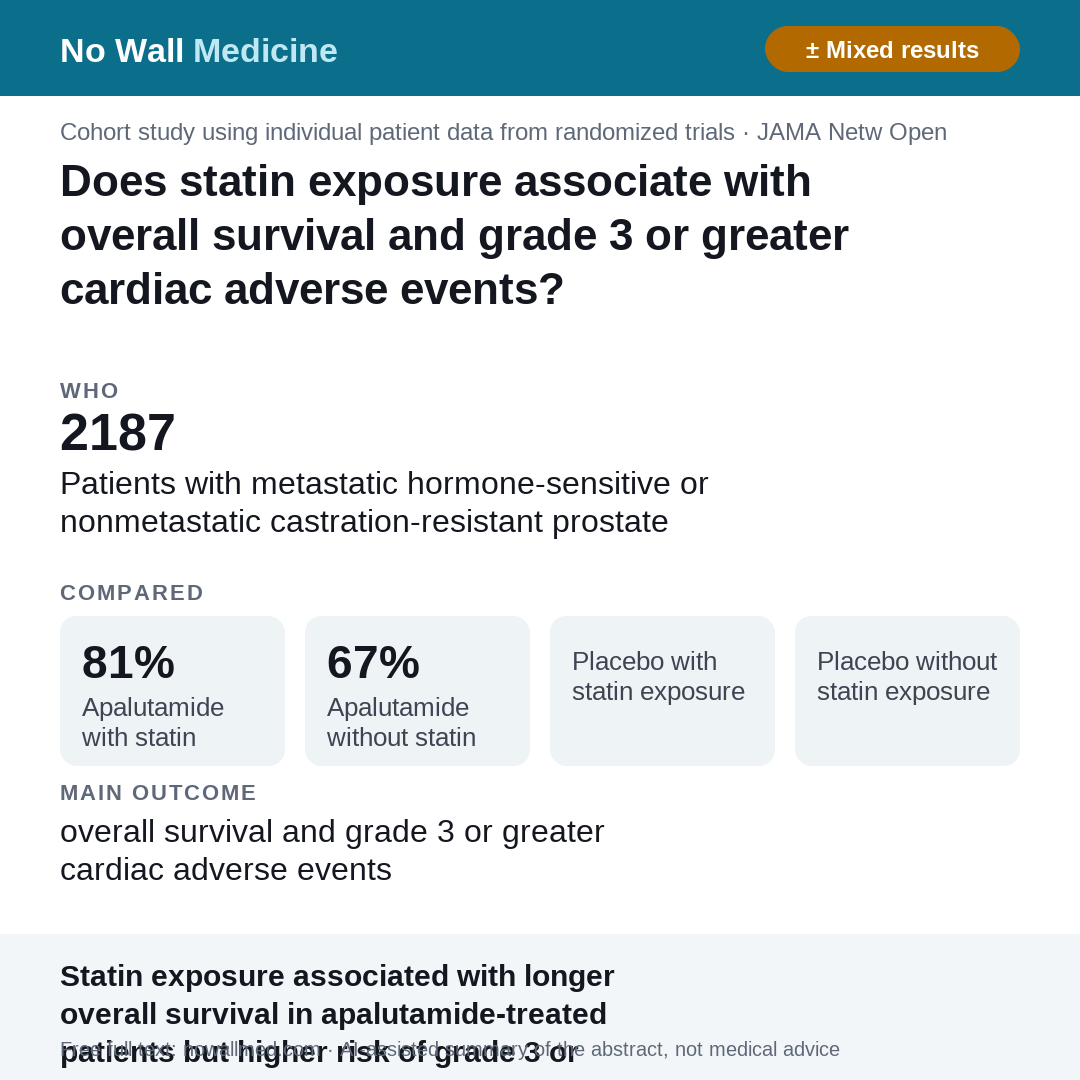
Statin Use in Patients With Advanced Prostate Cancer in the TITAN and SPARTAN Trials
Cohort study using individual patient data from randomized trialsMixed results
Does statin exposure associate with overall survival and grade 3 or greater cardiac adverse events?
Who
2187
Patients with metastatic hormone-sensitive or nonmetastatic castration-resistant prostate cancer · Multicenter phase 3 randomized clinical trials
Compared
81%Apalutamide with statin exposure (TITAN 3-year OS)
67%Apalutamide without statin exposure (TITAN 3-year OS)
Placebo with statin exposure
Placebo without statin exposure
Main outcome
overall survival and grade 3 or greater cardiac adverse events
Result: hazard ratio 0.53 (95% CI, 0.32-0.87) in TITAN apalutamide group
Bottom line: Statin exposure associated with longer overall survival in apalutamide-treated patients but higher risk of grade 3 or greater cardiac adverse events.
JAMA Netw Open · 2025-08-01Download image