Visual abstracts
New randomized trials and meta-analyses from leading journals at a glance: who was studied, what was compared, and what was found. Every paper is free to read in full.
All specialtiesCardiology 1221Oncology 1064Gastroenterology & Hepatology 429Infectious Disease 803Neurology 504Psychiatry & Mental Health 617Pulmonology 515Critical Care 355Endocrinology & Diabetes 680Pediatrics 725Surgery 542Orthopedics & Sports Medicine 230Neurosurgery 164Cardiothoracic & Vascular Surgery 135Plastic & Reconstructive Surgery 188Nephrology 255Rheumatology 161Hematology 253Dermatology 121Ophthalmology 137Obstetrics & Gynecology 381Public & Global Health 241Radiology & Imaging 159Anesthesiology 219Urology 219ENT (Otolaryngology) 168Emergency Medicine 131Allergy & Immunology 84Geriatrics 250Family Medicine & Primary Care 150Medical Genetics & Genomics 126Pathology & Laboratory Medicine 37Physical Medicine & Rehabilitation 209Palliative Care 109Nutrition 315Digital Health & AI 613General Medicine 114
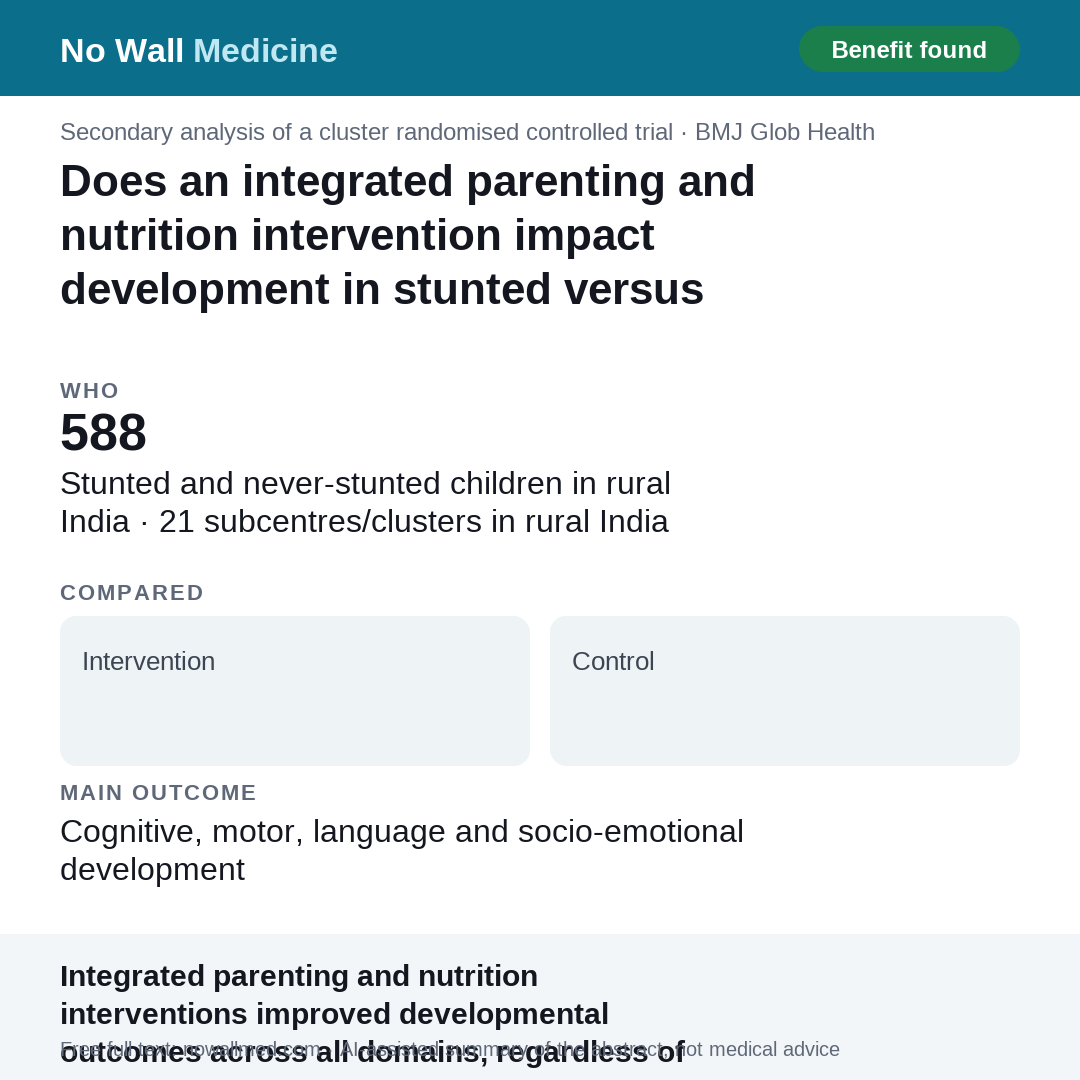
Impact of an integrated parenting and nutrition intervention on growth and development in stunted children at 24 months: evidence from the Stepping Stones programme in rural India
Secondary analysis of a cluster randomised controlled trialBenefit found
Does an integrated parenting and nutrition intervention impact development in stunted versus never-stunted children?
Who
588
Stunted and never-stunted children in rural India · 21 subcentres/clusters in rural India
Compared
Intervention
Control
Main outcome
Cognitive, motor, language and socio-emotional development
Bottom line: Integrated parenting and nutrition interventions improved developmental outcomes across all domains, regardless of stunting status.
BMJ Glob Health · 2026-01-08Download image
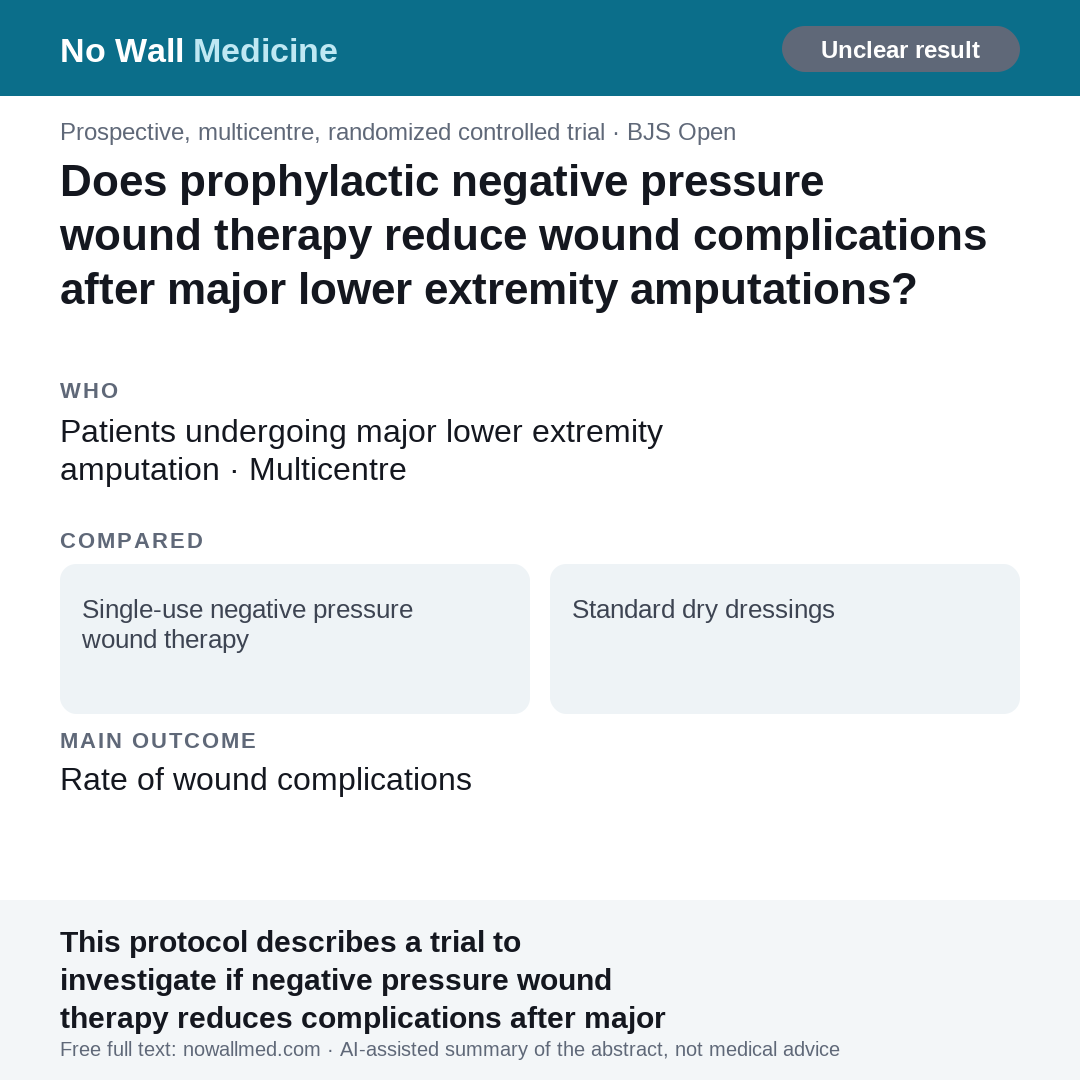
Prophylactic Incisional Negative Pressure wound therapy (NPWT) for major Amputations (PINTA): protocol for randomized controlled trial of single-use NPWT devices for closed-incision major lower extremity amputations
Prospective, multicentre, randomized controlled trialUnclear result
Does prophylactic negative pressure wound therapy reduce wound complications after major lower extremity amputations?
Who
Patients undergoing major lower extremity amputation · Multicentre
Compared
Single-use negative pressure wound therapy
Standard dry dressings
Main outcome
Rate of wound complications
Bottom line: This protocol describes a trial to investigate if negative pressure wound therapy reduces complications after major amputations.
BJS Open · 2026-01-08Download image
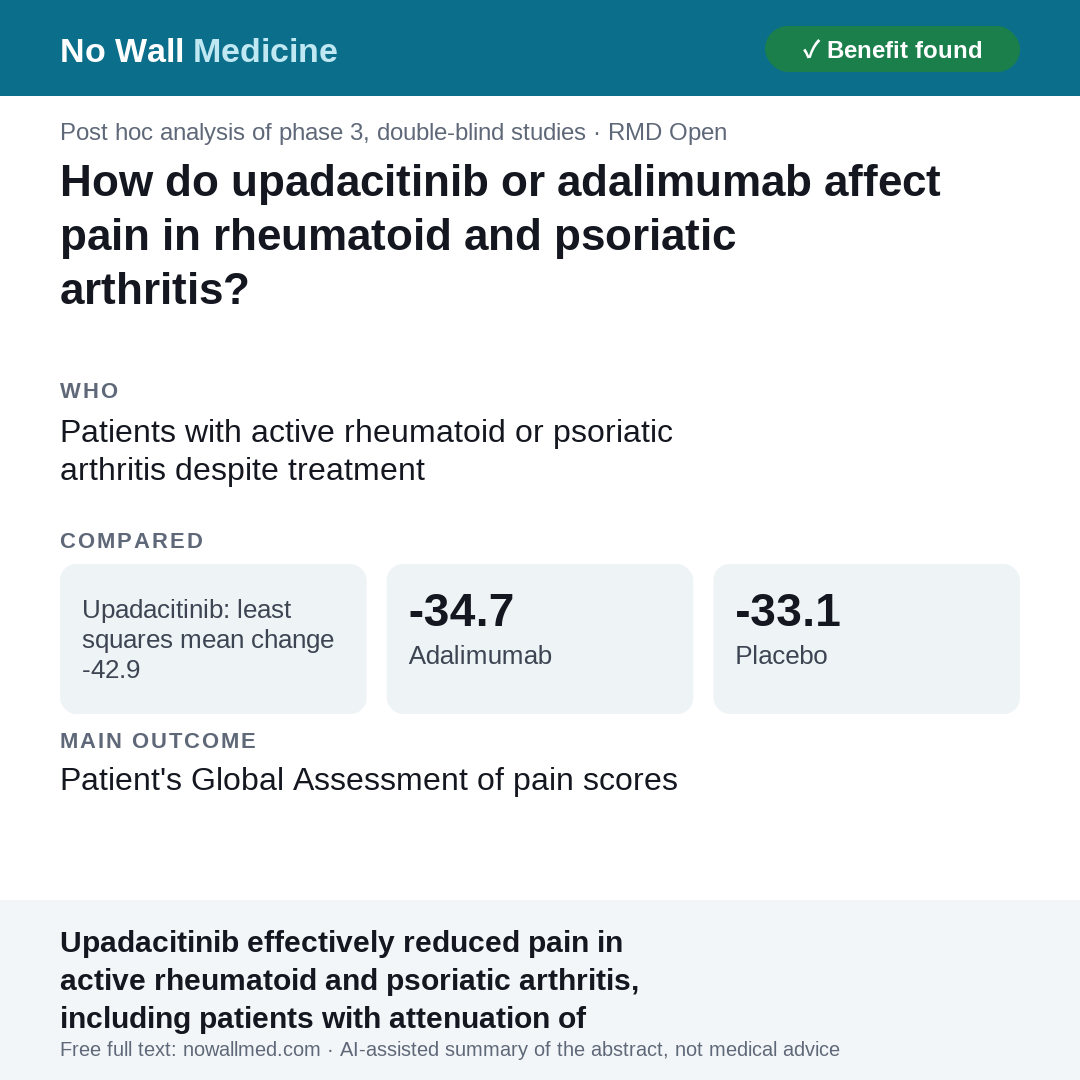
Effects of upadacitinib or adalimumab on pain in rheumatoid arthritis and psoriatic arthritis: results from randomised phase 3 studies
Post hoc analysis of phase 3, double-blind studiesBenefit found
How do upadacitinib or adalimumab affect pain in rheumatoid and psoriatic arthritis?
Who
Patients with active rheumatoid or psoriatic arthritis despite treatment
Compared
Upadacitinib: least squares mean change -42.9
-34.7Adalimumab
-33.1Placebo
Main outcome
Patient's Global Assessment of pain scores
Bottom line: Upadacitinib effectively reduced pain in active rheumatoid and psoriatic arthritis, including patients with attenuation of inflammation.
RMD Open · 2026-01-08Download image
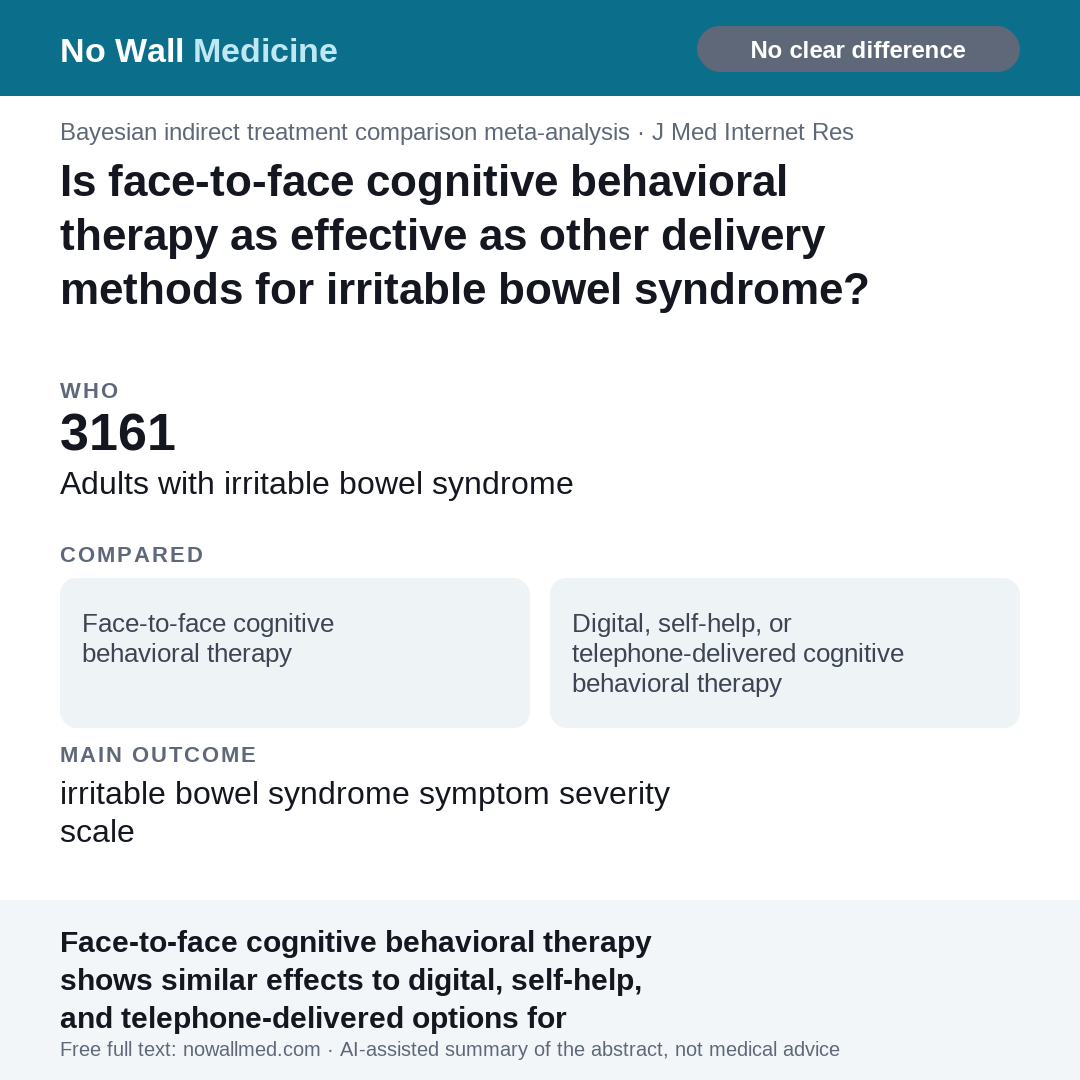
Face-to-Face Versus Digital, Telephone-Delivered, and Self-Help Cognitive Behavioral Therapy for Irritable Bowel Syndrome: Systematic Review and Bayesian Indirect Treatment Comparison Meta-Analysis
Bayesian indirect treatment comparison meta-analysisNo clear difference
Is face-to-face cognitive behavioral therapy as effective as other delivery methods for irritable bowel syndrome?
Who
3161
Adults with irritable bowel syndrome
Compared
Face-to-face cognitive behavioral therapy
Digital, self-help, or telephone-delivered cognitive behavioral therapy
Main outcome
irritable bowel syndrome symptom severity scale
Result: mean difference -0.89 (95% credible interval -20.78 to 18.73) for digital
Bottom line: Face-to-face cognitive behavioral therapy shows similar effects to digital, self-help, and telephone-delivered options for irritable bowel syndrome symptoms.
Limitation: High heterogeneity, high risk of bias, and inadequate effective sample sizes in most comparisons.
J Med Internet Res · 2026-01-08Download image
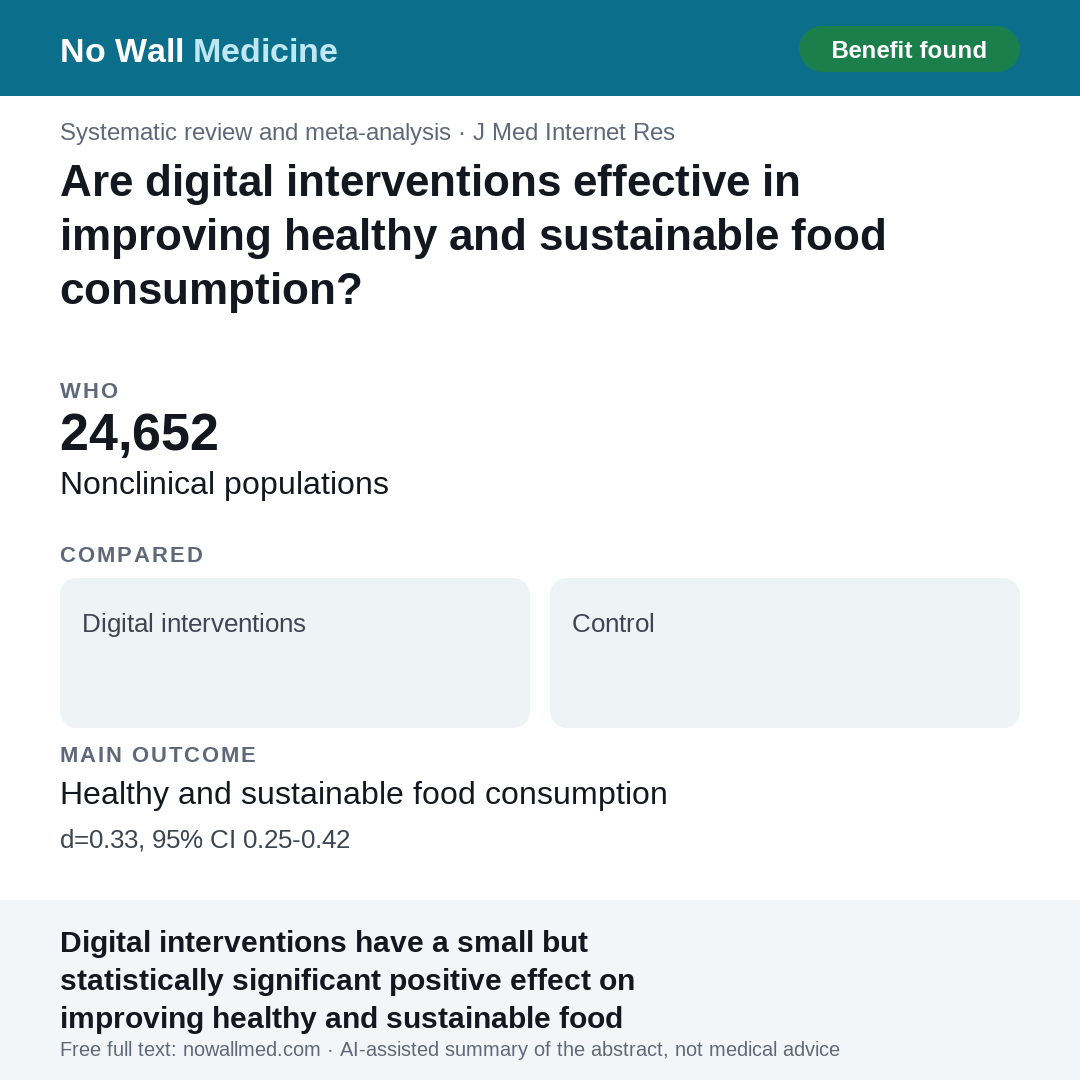
Digital Interventions Targeting Healthy and Sustainable Eating Behavior: Systematic Review and Meta-Analysis
Systematic review and meta-analysisBenefit found
Are digital interventions effective in improving healthy and sustainable food consumption?
Who
24,652
Nonclinical populations
Compared
Digital interventions
Control
Main outcome
Healthy and sustainable food consumption
Result: d=0.33, 95% CI 0.25-0.42
Bottom line: Digital interventions have a small but statistically significant positive effect on improving healthy and sustainable food consumption.
Limitation: Substantial heterogeneity and few studies including adolescents or individuals from lower socioeconomic backgrounds.
J Med Internet Res · 2026-01-08Download image
Implementation of a cardiovascular toolkit in primary care increased women Veterans' engagement in behavior change programs: results from a non-randomized stepped wedge trial
Non-randomized stepped wedge trialBenefit found
Does a cardiovascular toolkit increase participation in behavior change programs for women Veterans?
Who
6009
Women Veterans with at least one primary care visit · Five geographically diverse Veterans Health Administration sites
Compared
Women 65 years and older: increased odds of MOVE! participation (OR 1.09; 95% CI:1.030-1.152)
Women younger than 65: increased odds of using HPDP/CIH programs (OR 1.01; 95% CI:1.002-1.022)
Main outcome
Participation in behavior change programs
Bottom line: Implementing a cardiovascular toolkit increased participation in weight management and health promotion programs among women Veterans.
Limitation: The study used a non-randomized stepped wedge design.
Funded by: Veterans Health Administration Office of Women's Health
BMC Prim Care · 2026-01-08Download image

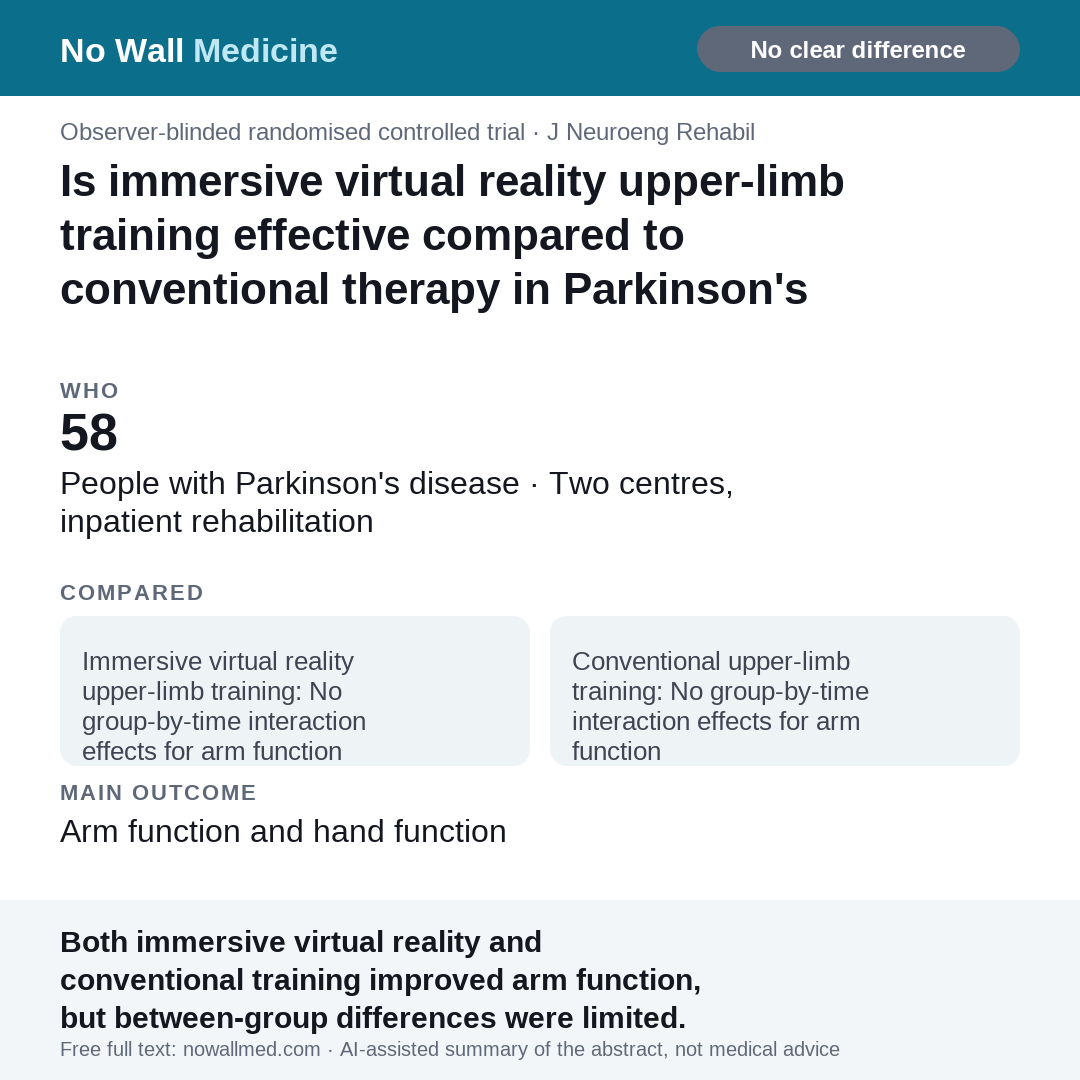
Immersive virtual reality upper-limb exercises in people with Parkinson's disease: an observer-blinded randomised controlled trial
Observer-blinded randomised controlled trialNo clear difference
Is immersive virtual reality upper-limb training effective compared to conventional therapy in Parkinson's disease?
Who
58
People with Parkinson's disease · Two centres, inpatient rehabilitation
Compared
Immersive virtual reality upper-limb training: No group-by-time interaction effects for arm function
Conventional upper-limb training: No group-by-time interaction effects for arm function
Main outcome
Arm function and hand function
Result: small between-group effect (r = 0.275, p = 0.038) for hand function
Bottom line: Both immersive virtual reality and conventional training improved arm function, but between-group differences were limited.
Limitation: warranting further evaluation in larger trials
J Neuroeng Rehabil · 2026-01-08Download image
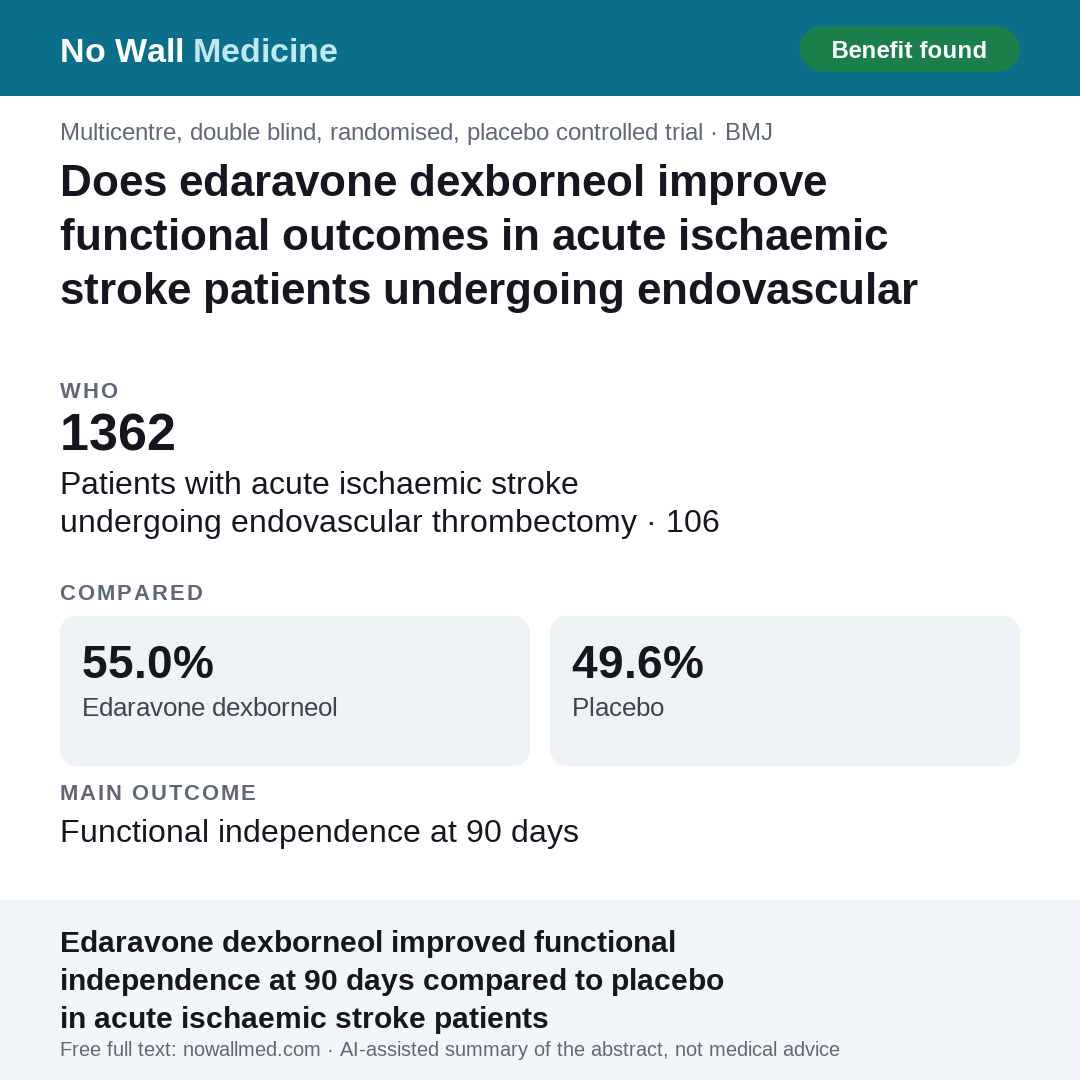
Edaravone dexborneol versus placebo on functional outcomes in patients with acute ischaemic stroke undergoing endovascular thrombectomy (TASTE-2): randomised controlled trial
Multicentre, double blind, randomised, placebo controlled trialBenefit found
Does edaravone dexborneol improve functional outcomes in acute ischaemic stroke patients undergoing endovascular thrombectomy?
Who
1362
Patients with acute ischaemic stroke undergoing endovascular thrombectomy · 106 hospitals in China
Compared
55.0%Edaravone dexborneol (379/689)
49.6%Placebo (333/671)
Main outcome
Functional independence at 90 days
Result: risk ratio 1.11, 95% confidence interval (CI) 1.00 to 1.23
Bottom line: Edaravone dexborneol improved functional independence at 90 days compared to placebo in acute ischaemic stroke patients undergoing endovascular thrombectomy.
BMJ · 2026-01-07Download image
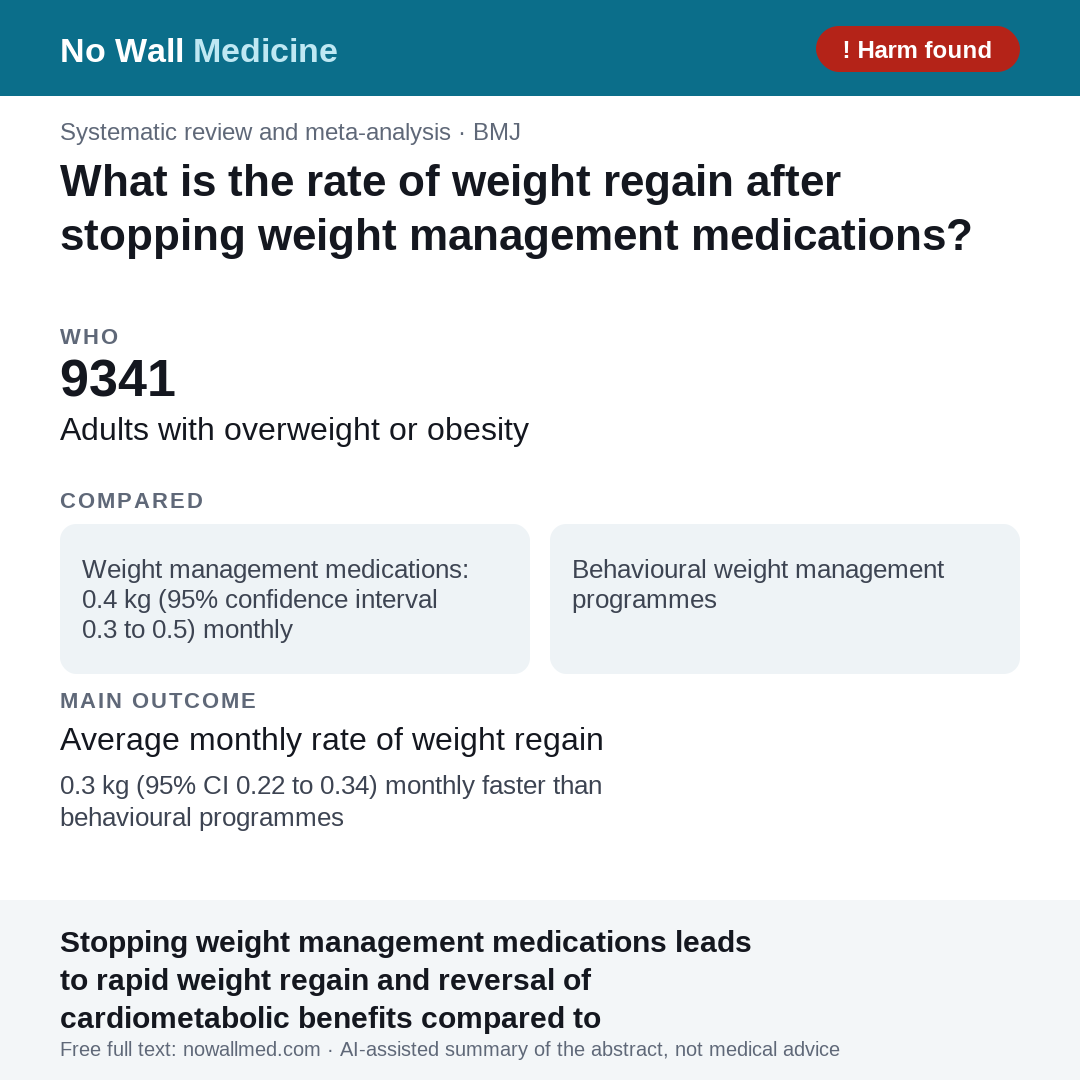
Weight regain after cessation of medication for weight management: systematic review and meta-analysis
Systematic review and meta-analysisHarm found
What is the rate of weight regain after stopping weight management medications?
Who
9341
Adults with overweight or obesity
Compared
Weight management medications: 0.4 kg (95% confidence interval 0.3 to 0.5) monthly
Behavioural weight management programmes
Main outcome
Average monthly rate of weight regain
Result: 0.3 kg (95% CI 0.22 to 0.34) monthly faster than behavioural programmes
Bottom line: Stopping weight management medications leads to rapid weight regain and reversal of cardiometabolic benefits compared to behavioural programmes.
BMJ · 2026-01-07Download image
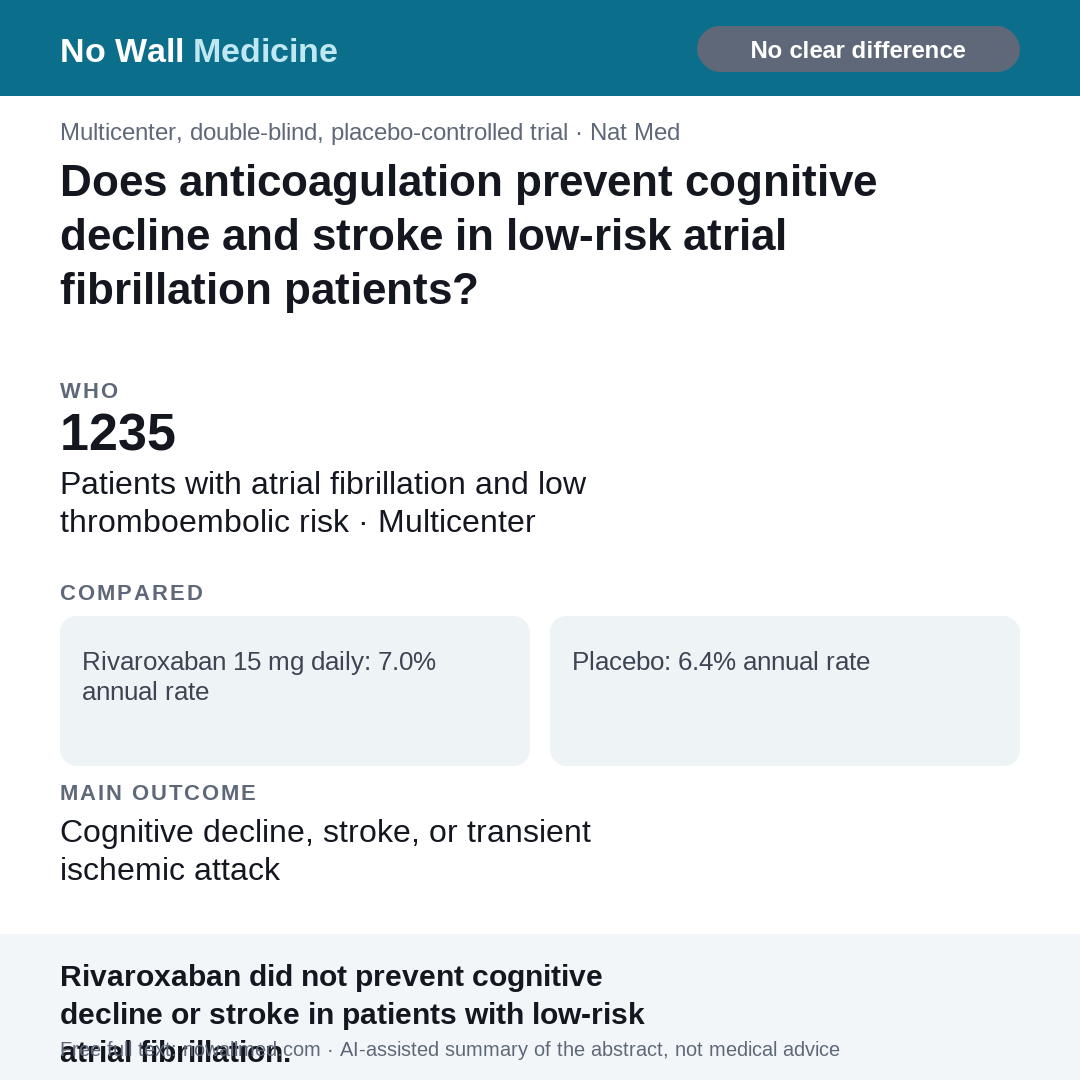
Anticoagulation to prevent ischemic stroke and neurocognitive impairment in atrial fibrillation: the BRAIN-AF randomized clinical trial
Multicenter, double-blind, placebo-controlled trialNo clear difference
Does anticoagulation prevent cognitive decline and stroke in low-risk atrial fibrillation patients?
Who
1235
Patients with atrial fibrillation and low thromboembolic risk · Multicenter
Compared
Rivaroxaban 15 mg daily: 7.0% annual rate
Placebo: 6.4% annual rate
Main outcome
Cognitive decline, stroke, or transient ischemic attack
Result: hazard ratio 1.10 (95% confidence interval 0.86-1.40)
Bottom line: Rivaroxaban did not prevent cognitive decline or stroke in patients with low-risk atrial fibrillation.
Nat Med · 2026-01-07Download image
Effect of probiotic supplementation on the gut microbiota diversity in healthy populations: a systematic review and meta-analysis of randomised controlled trials
Systematic review and meta-analysis of randomized controlled trialsNo clear difference
Do probiotics significantly modify gut microbiota diversity in healthy populations?
Who
1068
Healthy individuals
Compared
Probiotics
Unsupplemented controls
Main outcome
Gut microbiota diversity assessed by diversity indices
Result: Shannon diversity MedD -0.08 (95% CI -0.16 to 0.01)
Bottom line: Probiotic supplementation does not produce statistically significant changes in gut microbiota diversity in healthy individuals.
Limitation: Insufficient data prevented meta-analysing other diversity indices.
BMC Med · 2026-01-07Download image

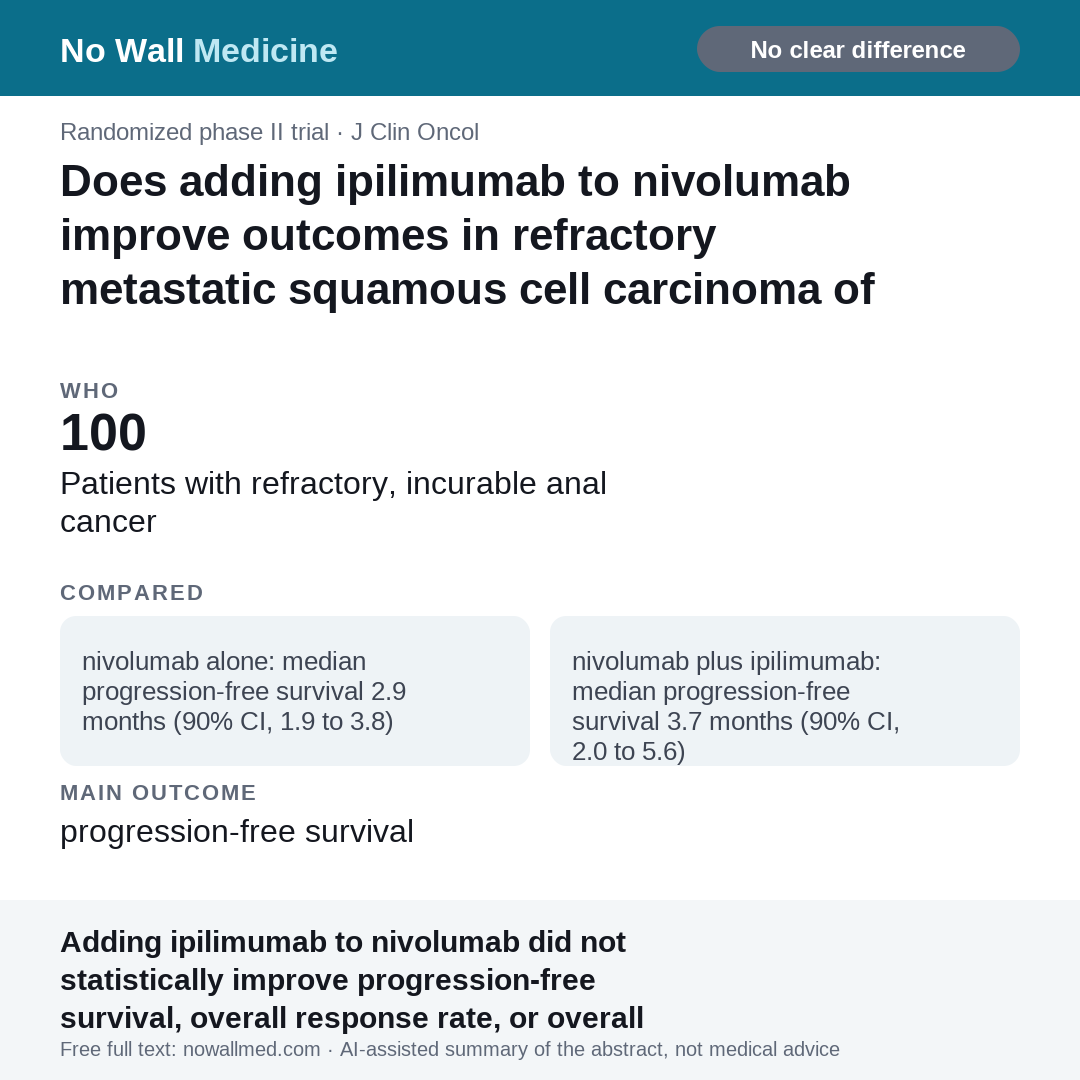
NCI9673 (Part B): ETCTN Randomized Phase II Study of Nivolumab With or Without Ipilimumab in Refractory, Metastatic Squamous Cell Carcinoma of the Anal Canal
Randomized phase II trialNo clear difference
Does adding ipilimumab to nivolumab improve outcomes in refractory metastatic squamous cell carcinoma of the anal canal?
Who
100
Patients with refractory, incurable anal cancer
Compared
nivolumab alone: median progression-free survival 2.9 months (90% CI, 1.9 to 3.8)
nivolumab plus ipilimumab: median progression-free survival 3.7 months (90% CI, 2.0 to 5.6)
Main outcome
progression-free survival
Result: hazard ratio 0.86 (95% CI 0.60 to 1.23)
Bottom line: Adding ipilimumab to nivolumab did not statistically improve progression-free survival, overall response rate, or overall survival.
J Clin Oncol · 2026-01-07Download image
Safety and immunogenicity of PanChol, a single-dose live-attenuated oral cholera vaccine: results from a phase 1a, double-blind, randomised, placebo-controlled trial
Phase 1a, randomized, double-blind, placebo-controlled trialBenefit found
What are the safety and immunogenicity of PanChol oral cholera vaccine?
Who
57
Healthy adults aged 18-55 years · Brigham and Women's Hospital, USA
Compared
PanChol recipients: 69% reported at least one solicited adverse event
Placebo recipients: 38% reported at least one solicited adverse event
Main outcome
Safety and seroconversion of vibriocidal titres
Bottom line: PanChol is a single-dose oral cholera vaccine that is generally safe with mild and transient adverse events.
Limitation: This was a small phase 1a first-in-human trial.
Lancet Infect Dis · 2026-01-07Download image

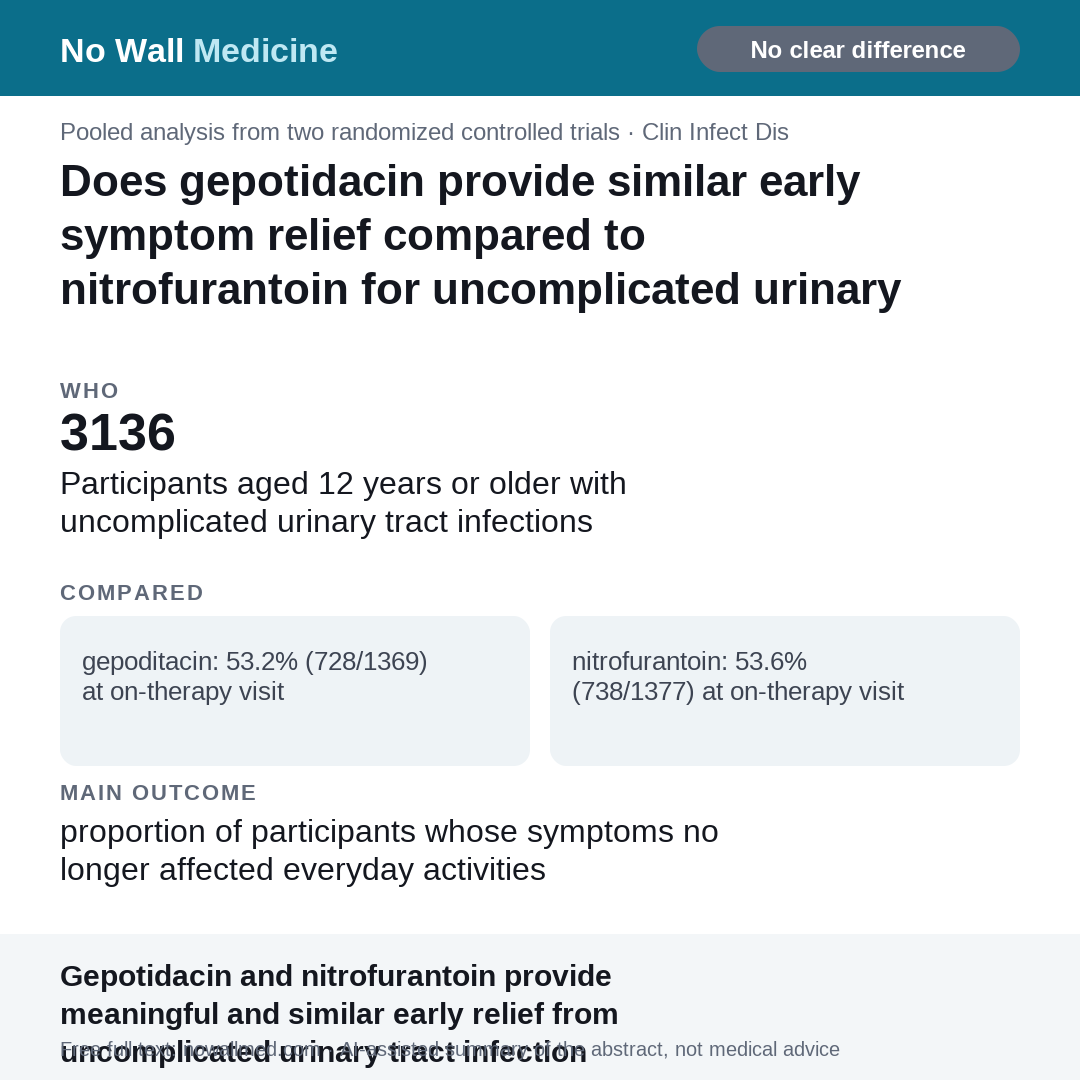
Early Symptom Response in Patients With Uncomplicated Urinary Tract Infection Treated With Gepotidacin or Nitrofurantoin: Pooled Analysis From Two Pivotal Phase 3 Studies
Pooled analysis from two randomized controlled trialsNo clear difference
Does gepotidacin provide similar early symptom relief compared to nitrofurantoin for uncomplicated urinary tract infections?
Who
3136
Participants aged 12 years or older with uncomplicated urinary tract infections
Compared
gepoditacin: 53.2% (728/1369) at on-therapy visit
nitrofurantoin: 53.6% (738/1377) at on-therapy visit
Main outcome
proportion of participants whose symptoms no longer affected everyday activities
Bottom line: Gepotidacin and nitrofurantoin provide meaningful and similar early relief from uncomplicated urinary tract infection symptoms.
Clin Infect Dis · 2026-01-07Download image
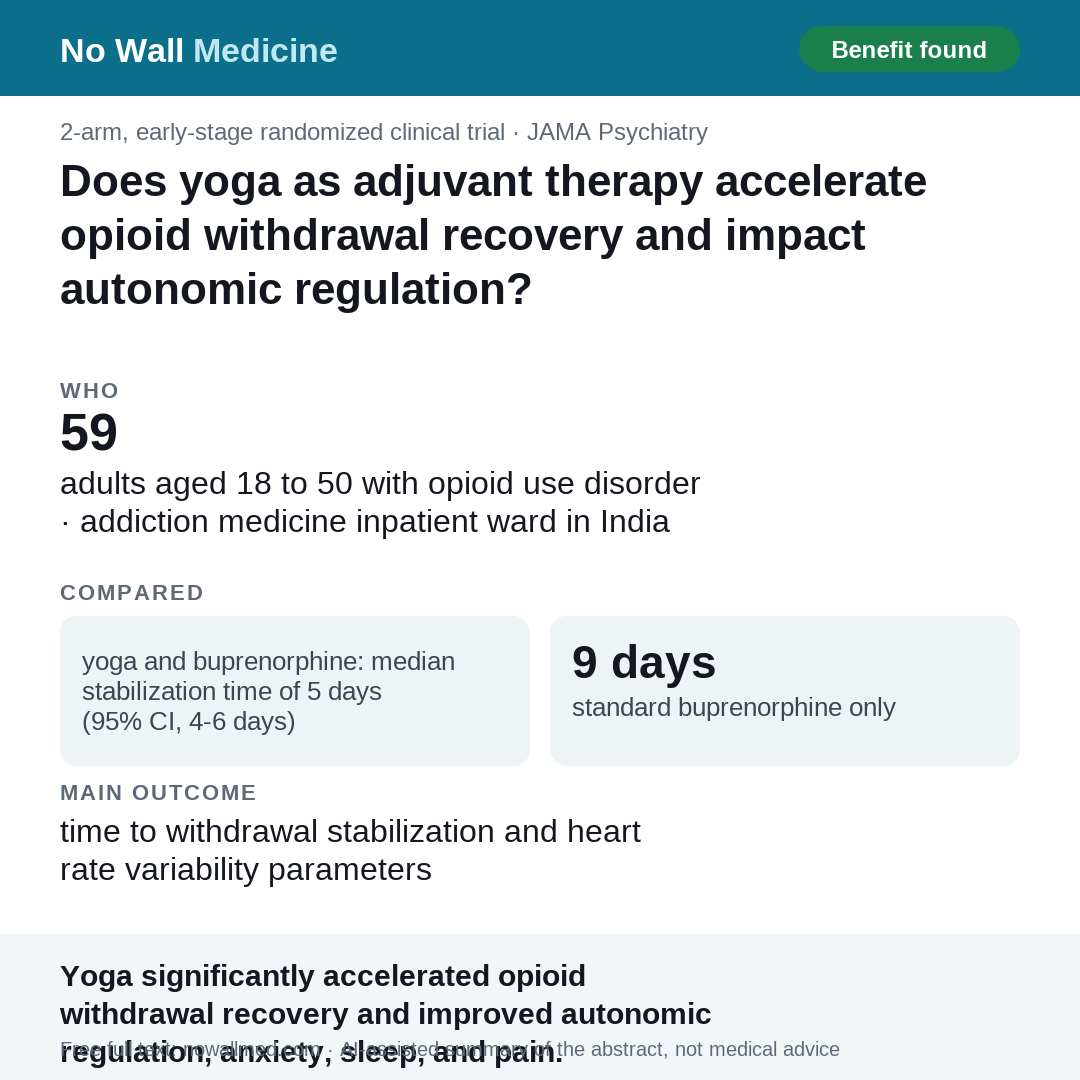
Yoga for Opioid Withdrawal and Autonomic Regulation: A Randomized Clinical Trial
2-arm, early-stage randomized clinical trialBenefit found
Does yoga as adjuvant therapy accelerate opioid withdrawal recovery and impact autonomic regulation?
Who
59
adults aged 18 to 50 with opioid use disorder · addiction medicine inpatient ward in India
Compared
yoga and buprenorphine: median stabilization time of 5 days (95% CI, 4-6 days)
9 daysstandard buprenorphine only (95% CI, 7-13 days)
Main outcome
time to withdrawal stabilization and heart rate variability parameters
Result: hazard ratio 4.40 (95% CI, 2.40-8.07)
Bottom line: Yoga significantly accelerated opioid withdrawal recovery and improved autonomic regulation, anxiety, sleep, and pain.
JAMA Psychiatry · 2026-01-07Download image
Second victim syndrome in surgeons: systematic review and meta-analysis of the impact of adverse events on surgeons
Systematic review and meta-analysisMixed results
What are the symptoms and coping strategies of second victim syndrome in surgeons?
Who
36
Surgeons experiencing adverse care events
Compared
56.3%Anxiety (95% c.i. 45.8% to 66.3%)
53.8%Guilt (95% c.i. 41.3% to 65.8%)
48.3%Sadness (95% c.i. 34.6% to 62.3%)
50.5%Sleep disturbance (95% c.i. 38.4% to 62.5%)
Main outcome
Prevalence of second victim syndrome symptoms and coping methods
Bottom line: Surgeons experience high rates of anxiety, guilt, sadness, and sleep disturbance following adverse events, often coping by talking to others.
Br J Surg · 2026-01-07Download image

Global estimates of tuberculosis incidence during pregnancy and postpartum: a rapid review and modelling analysis
Rapid review and modelling analysisHarm found
What are the global tuberculosis incidence rates during pregnancy and postpartum?
Who
Pregnant and postpartum women globally · Global
Compared
HIV-negative pregnant women: incidence rate ratio 1·34 (95% CI 1·17-1·54)
HIV-negative postpartum women: incidence rate ratio 1·91 (1·53-2·39)
HIV-positive pregnant women: incidence rate ratio 5·73 (95% CI 2·64-10·94)
HIV-positive postpartum women: incidence rate ratio 3·58 (0·85-9·63)
Main outcome
Tuberculosis incidence rate ratios
Bottom line: Pregnant and postpartum women face substantially increased tuberculosis risk, especially those living with HIV.
Funded by: UK Medical Research Council
Lancet Glob Health · 2026-01-07Download image

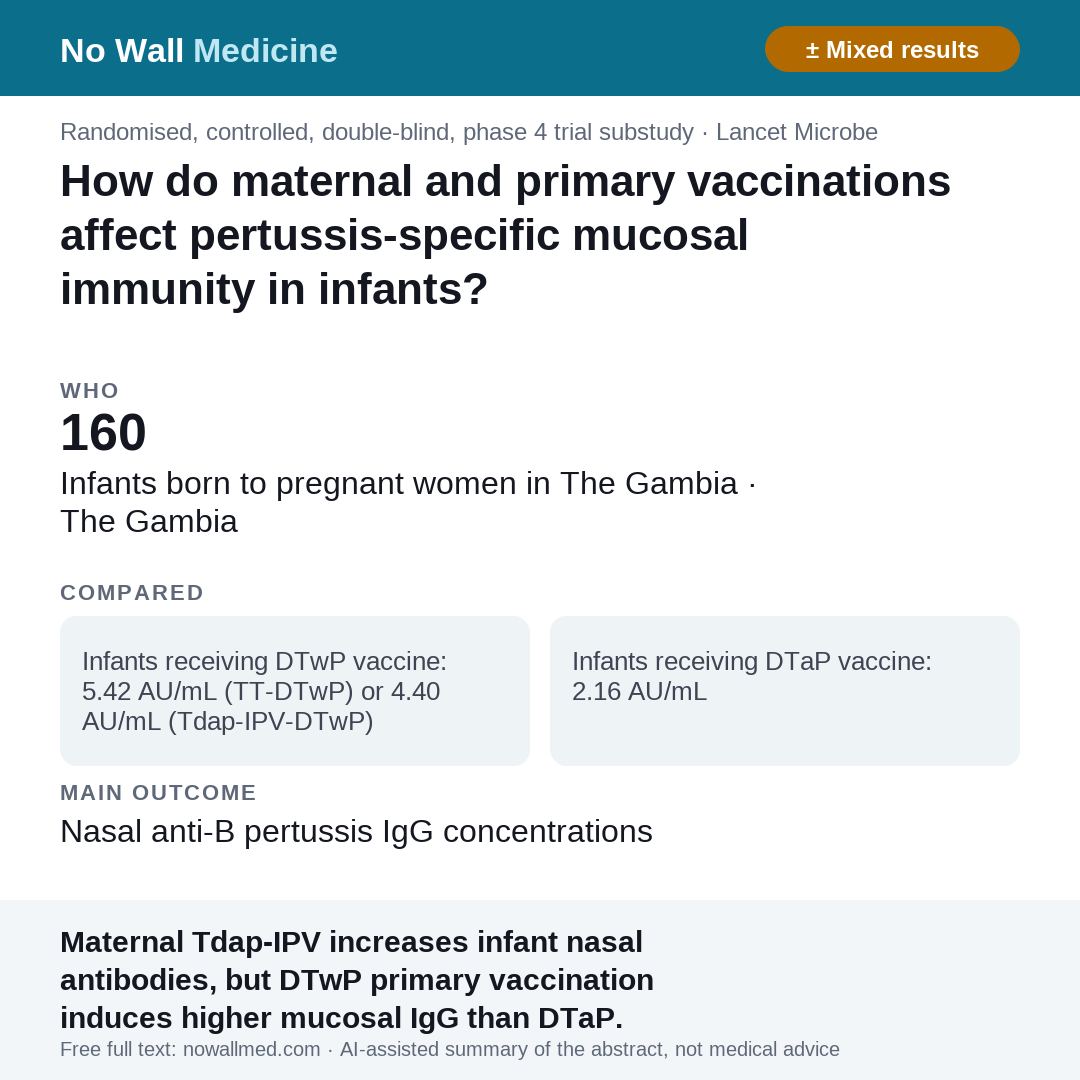
Mucosal immune responses to Bordetella pertussis in Gambian infants after maternal and primary vaccination: an immunological substudy of a single-centre, randomised, controlled, double-blind, phase 4 trial
Randomised, controlled, double-blind, phase 4 trial substudyMixed results
How do maternal and primary vaccinations affect pertussis-specific mucosal immunity in infants?
Who
160
Infants born to pregnant women in The Gambia · The Gambia
Compared
Infants receiving DTwP vaccine: 5.42 AU/mL (TT-DTwP) or 4.40 AU/mL (Tdap-IPV-DTwP)
Infants receiving DTaP vaccine: 2.16 AU/mL
Main outcome
Nasal anti-B pertussis IgG concentrations
Bottom line: Maternal Tdap-IPV increases infant nasal antibodies, but DTwP primary vaccination induces higher mucosal IgG than DTaP.
Lancet Microbe · 2026-01-07Download image
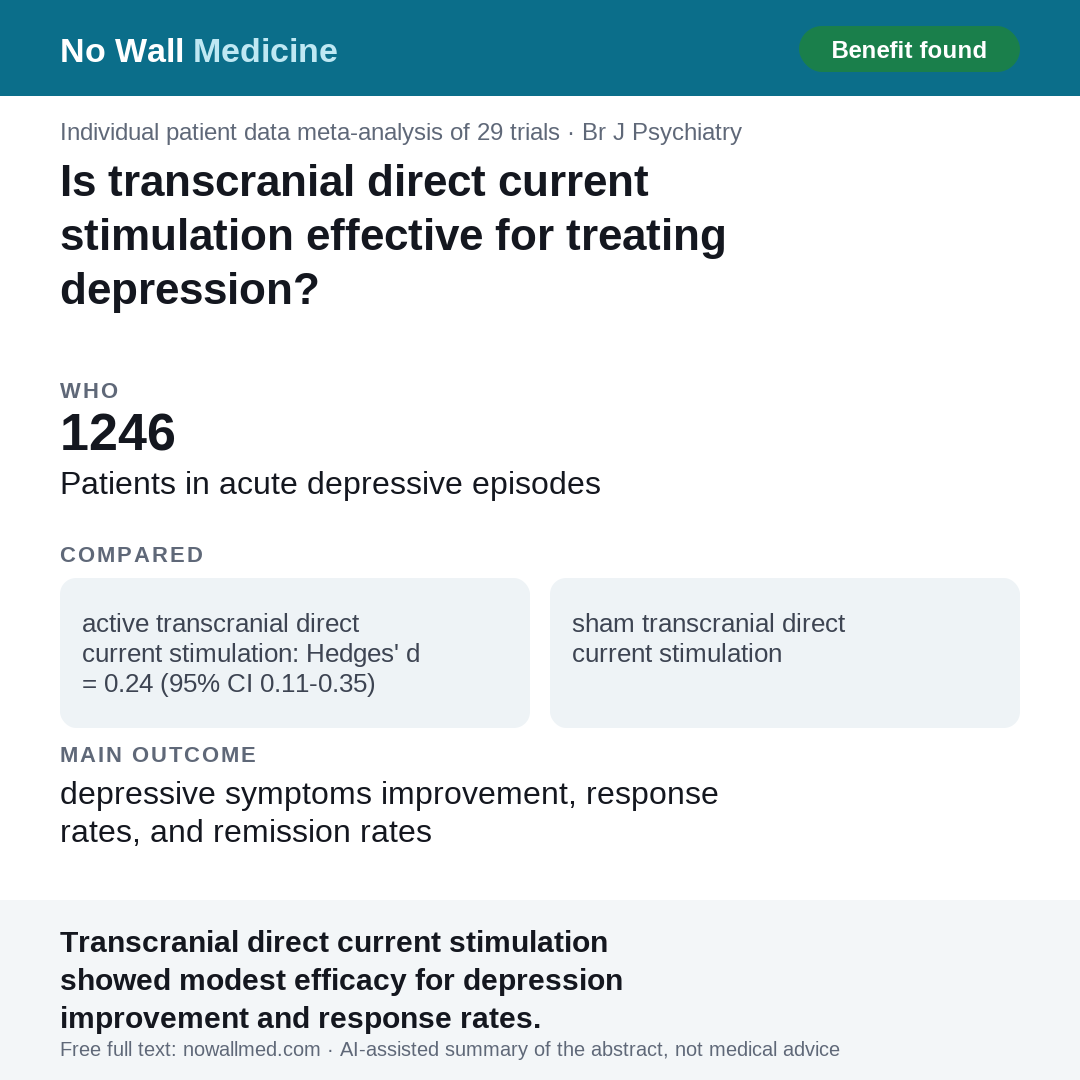
Efficacy of transcranial direct current stimulation for depression: individual patient data meta-analysis
Individual patient data meta-analysis of 29 trialsBenefit found
Is transcranial direct current stimulation effective for treating depression?
Who
1246
Patients in acute depressive episodes
Compared
active transcranial direct current stimulation: Hedges' d = 0.24 (95% CI 0.11-0.35)
sham transcranial direct current stimulation
Main outcome
depressive symptoms improvement, response rates, and remission rates
Result: Hedges' d = 0.24 (95% CI 0.11-0.35)
Bottom line: Transcranial direct current stimulation showed modest efficacy for depression improvement and response rates.
Limitation: Future research should clarify mechanisms and consider non-specific placebo effects.
Br J Psychiatry · 2026-01-07Download image
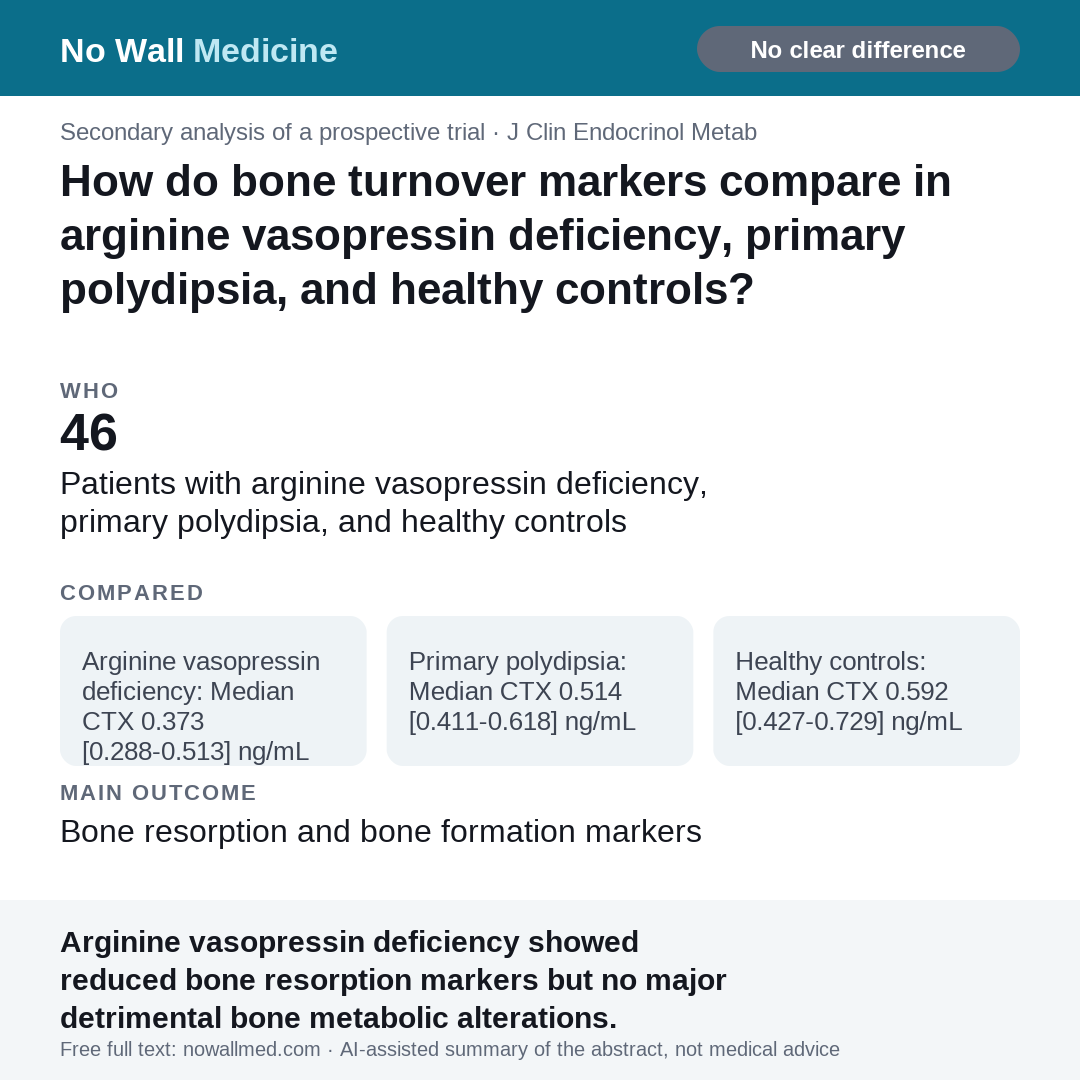
Bone turnover in arginine vasopressin deficiency: a comparative study with primary polydipsia and healthy controls
Secondary analysis of a prospective trialNo clear difference
How do bone turnover markers compare in arginine vasopressin deficiency, primary polydipsia, and healthy controls?
Who
46
Patients with arginine vasopressin deficiency, primary polydipsia, and healthy controls
Compared
Arginine vasopressin deficiency: Median CTX 0.373 [0.288-0.513] ng/mL
Primary polydipsia: Median CTX 0.514 [0.411-0.618] ng/mL
Healthy controls: Median CTX 0.592 [0.427-0.729] ng/mL
Main outcome
Bone resorption and bone formation markers
Result: CTX lower in arginine vasopressin deficiency compared to healthy controls -0.183 (95% CI, -0.352 to -0.013)
Bottom line: Arginine vasopressin deficiency showed reduced bone resorption markers but no major detrimental bone metabolic alterations.
J Clin Endocrinol Metab · 2026-01-07Download image