Visual abstracts
New randomized trials and meta-analyses from leading journals at a glance: who was studied, what was compared, and what was found. Every paper is free to read in full.
All specialtiesCardiology 1795Oncology 1546Gastroenterology & Hepatology 674Infectious Disease 1142Neurology 742Psychiatry & Mental Health 878Pulmonology 767Critical Care 523Endocrinology & Diabetes 967Pediatrics 1067Surgery 906Orthopedics & Sports Medicine 335Neurosurgery 227Cardiothoracic & Vascular Surgery 199Plastic & Reconstructive Surgery 278Nephrology 372Rheumatology 253Hematology 396Dermatology 198Ophthalmology 214Obstetrics & Gynecology 584Public & Global Health 352Radiology & Imaging 243Anesthesiology 358Urology 312ENT (Otolaryngology) 243Emergency Medicine 201Allergy & Immunology 116Geriatrics 381Family Medicine & Primary Care 218Medical Genetics & Genomics 194Pathology & Laboratory Medicine 56Physical Medicine & Rehabilitation 321Palliative Care 163Nutrition 477Digital Health & AI 945General Medicine 139
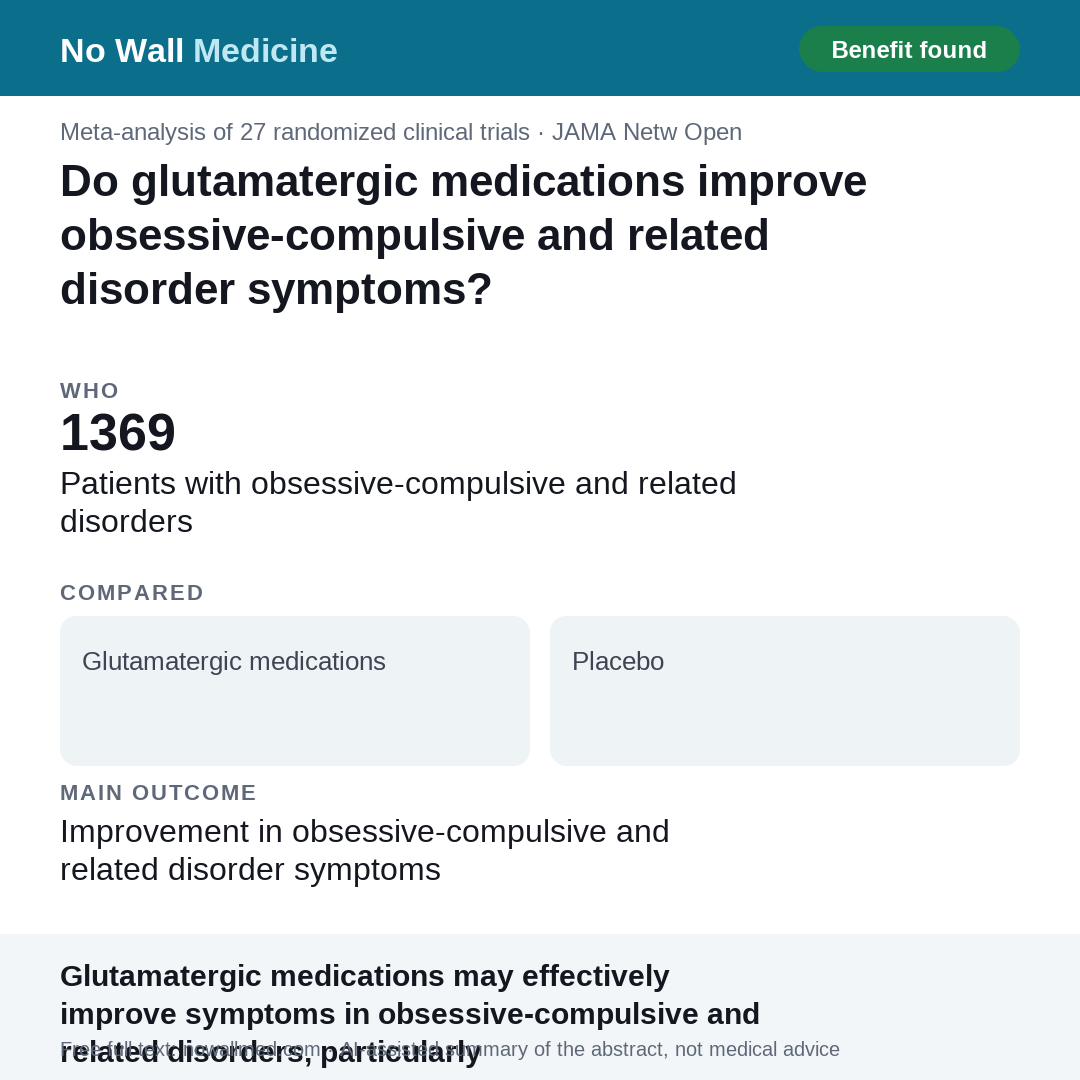
Glutamatergic Medications for Obsessive-Compulsive and Related Disorders: A Systematic Review and Meta-Analysis
Meta-analysis of 27 randomized clinical trialsBenefit found
Do glutamatergic medications improve obsessive-compulsive and related disorder symptoms?
Who
1369
Patients with obsessive-compulsive and related disorders
Compared
Glutamatergic medications
Placebo
Main outcome
Improvement in obsessive-compulsive and related disorder symptoms
Result: standardized mean difference -0.80 (95% CI -1.13 to -0.47)
Bottom line: Glutamatergic medications may effectively improve symptoms in obsessive-compulsive and related disorders, particularly obsessive-compulsive disorder.
Limitation: High heterogeneity and potential publication bias necessitate cautious interpretation.
JAMA Netw Open · 2025-01-02Download image
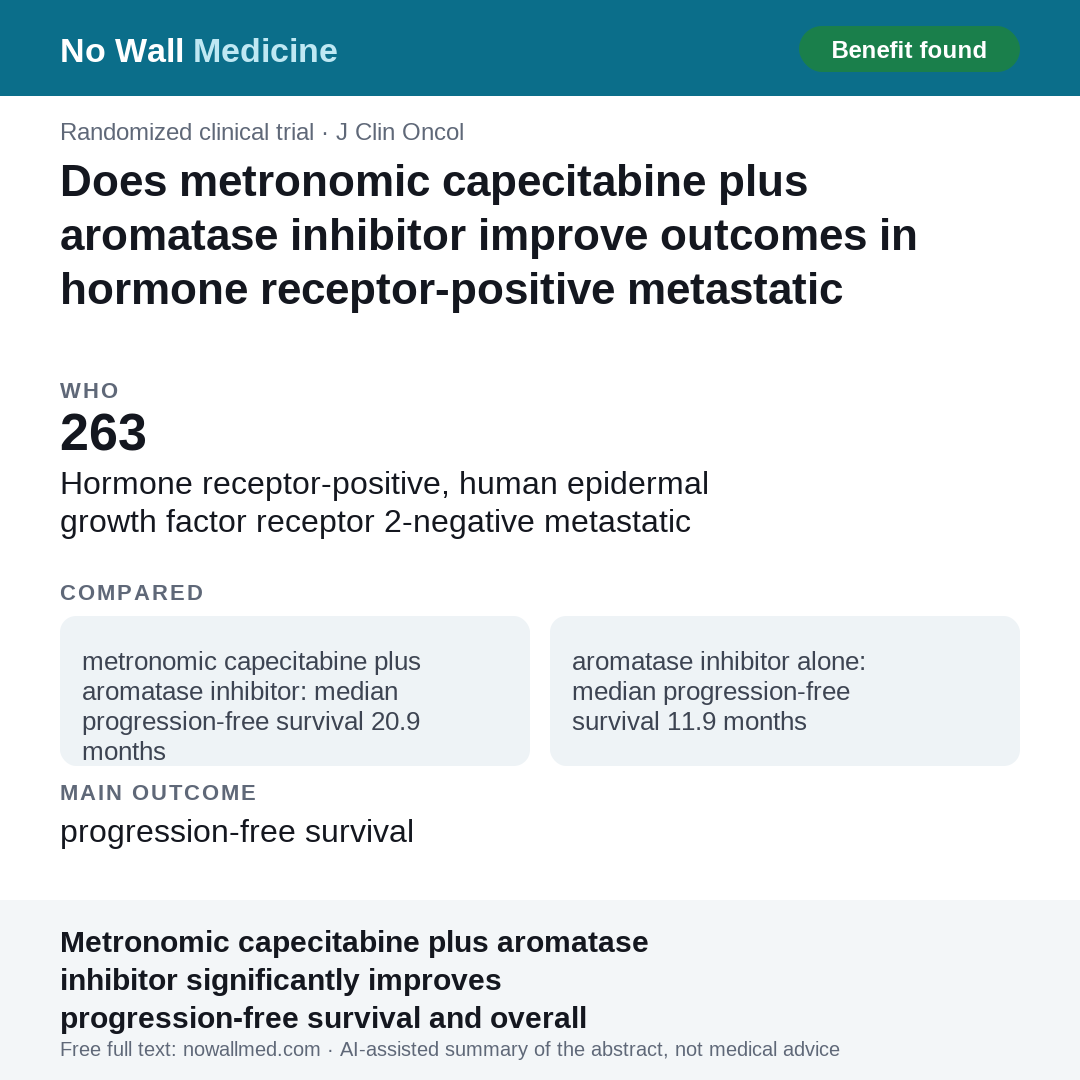
Metronomic Capecitabine Plus Aromatase Inhibitor as Initial Therapy in Patients With Hormone Receptor-Positive, Human Epidermal Growth Factor Receptor 2-Negative Metastatic Breast Cancer: The Phase III MECCA Trial
Randomized clinical trialBenefit found
Does metronomic capecitabine plus aromatase inhibitor improve outcomes in hormone receptor-positive metastatic breast cancer?
Who
263
Hormone receptor-positive, human epidermal growth factor receptor 2-negative metastatic breast cancer patients · 12 centers in China
Compared
metronomic capecitabine plus aromatase inhibitor: median progression-free survival 20.9 months
aromatase inhibitor alone: median progression-free survival 11.9 months
Main outcome
progression-free survival
Result: hazard ratio 0.58 (95% CI 0.43 to 0.76)
Bottom line: Metronomic capecitabine plus aromatase inhibitor significantly improves progression-free survival and overall survival in hormone receptor-positive metastatic breast cancer.
J Clin Oncol · 2025-01-02Download image
Adjuvant Dose-Dense Chemotherapy in Hormone Receptor-Positive Breast Cancer
Randomized trialBenefit found
Does adjuvant dose-dense chemotherapy improve long-term outcomes in node-positive breast cancer?
Who
1973
Patients with node-positive breast cancer
Compared
Dose-dense chemotherapy
Conventional chemotherapy
Main outcome
disease-free survival and overall survival
Result: hazard ratio 0.77 (95% CI 0.66 to 0.90) for disease-free survival
Bottom line: Dose-dense chemotherapy provides sustained long-term benefit for disease-free and overall survival in node-positive breast cancer.
J Clin Oncol · 2025-01-02Download image

Social Determinants of Health and Suicide-Related Outcomes: A Review of Meta-Analyses
Review of 46 meta-analysesMixed results
What are the associations between social determinants of health and suicide-related outcomes?
Who
General population across various social determinant categories
Compared
Suicide mortality risk factors: 114.5 per 100 000 persons
28.9%Suicide attempt in homeless individuals (95% CI, 21.7%-37.2%)
27%Suicide attempt in incarcerated female youths (95% CI, 20%-34%)
12.2%Suicide attempt in incarcerated adults (95% CI, 7.1%-17.2%)
Main outcome
Suicide mortality, suicide attempt, and suicidal ideation
Bottom line: Social determinants like incarceration, firearm accessibility, and homelessness are strongly associated with increased suicide mortality, attempts, and ideation.
JAMA Psychiatry · 2025-01-02Download image

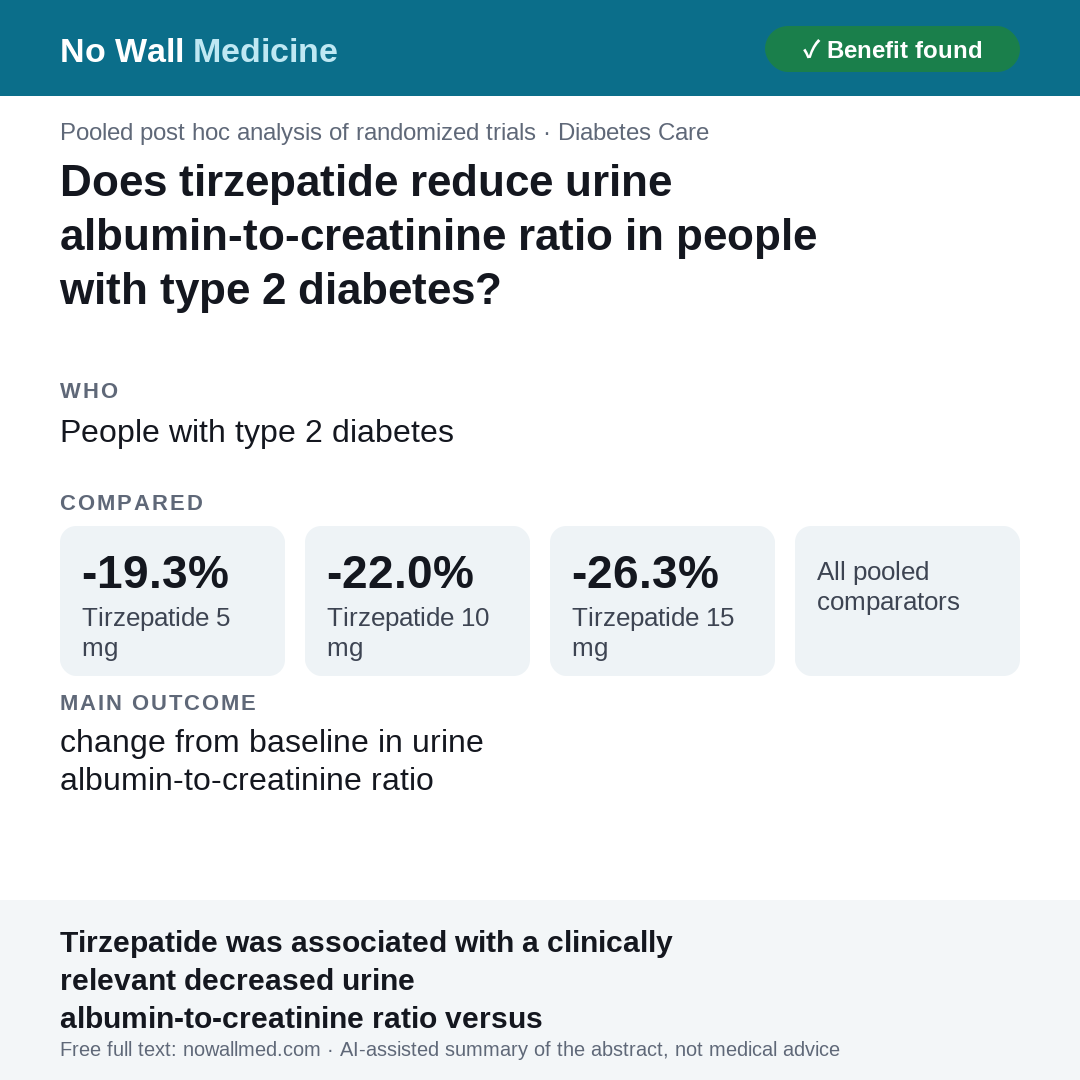
Tirzepatide Associated With Reduced Albuminuria in Participants With Type 2 Diabetes: Pooled Post Hoc Analysis From the Randomized Active- and Placebo-Controlled SURPASS-1-5 Clinical Trials
Pooled post hoc analysis of randomized trialsBenefit found
Does tirzepatide reduce urine albumin-to-creatinine ratio in people with type 2 diabetes?
Who
People with type 2 diabetes
Compared
-19.3%Tirzepatide 5 mg (95% CI -25.5, -12.5)
-22.0%Tirzepatide 10 mg (-28.1, -15.3)
-26.3%Tirzepatide 15 mg (-32.0, -20.0)
All pooled comparators
Main outcome
change from baseline in urine albumin-to-creatinine ratio
Bottom line: Tirzepatide was associated with a clinically relevant decreased urine albumin-to-creatinine ratio versus comparators in people with type 2 diabetes.
Limitation: This was a post hoc analysis of pooled data.
Diabetes Care · 2025-01-02Download image
Results from the international collaborative systematic literature review informing the 2023 EULAR recommendations for the treatment of systemic sclerosis
Systematic literature reviewUnclear result
Treatment of systemic sclerosis
Who
Systemic sclerosis patients
Compared
New interventions
Existing interventions
Main outcome
Treatment efficacy
Bottom line: New interventions and outcomes inform EULAR recommendations
Ann Rheum Dis · 2025-01-02Download image
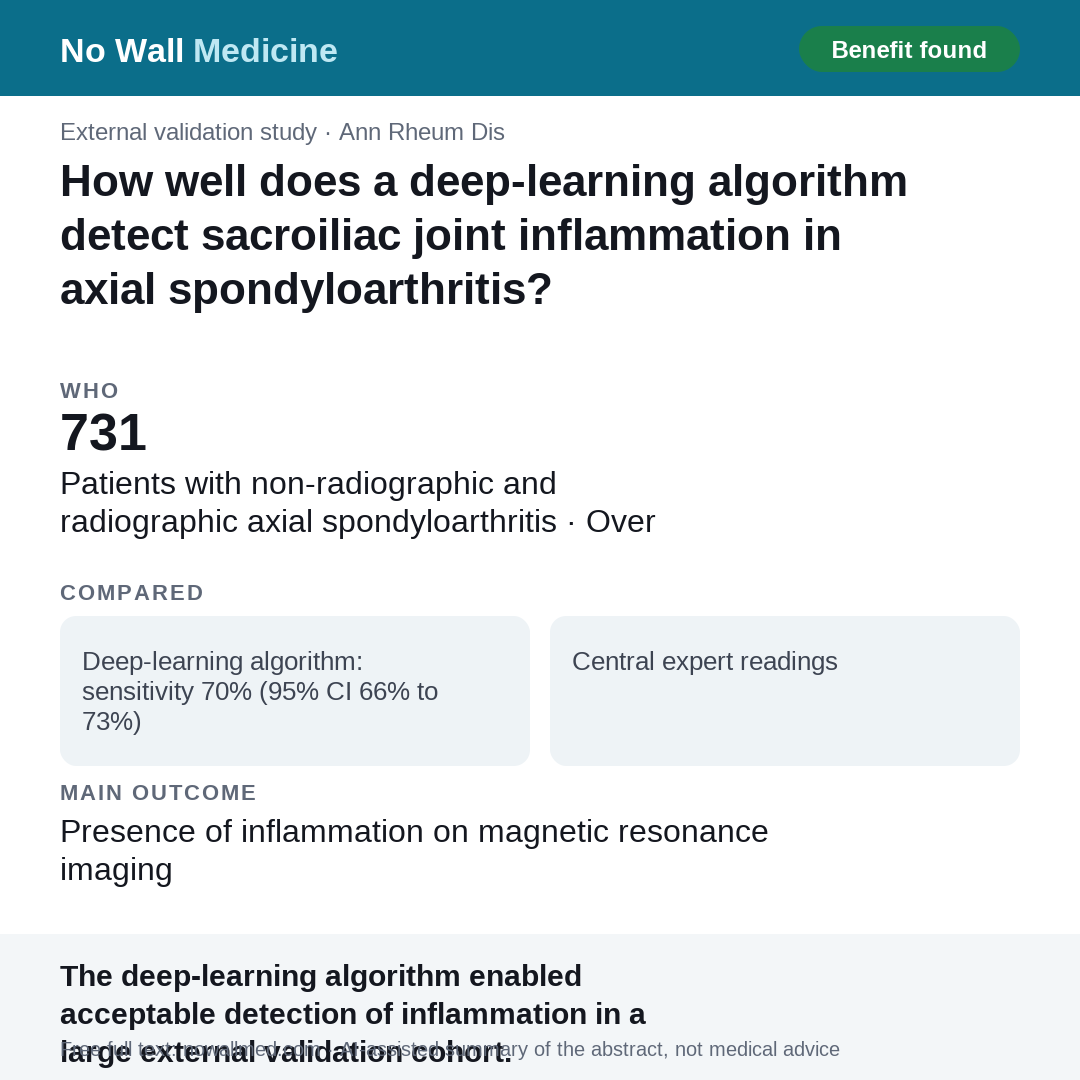
Performance analysis of a deep-learning algorithm to detect the presence of inflammation in MRI of sacroiliac joints in patients with axial spondyloarthritis
External validation studyBenefit found
How well does a deep-learning algorithm detect sacroiliac joint inflammation in axial spondyloarthritis?
Who
731
Patients with non-radiographic and radiographic axial spondyloarthritis · Over 100 clinical sites
Compared
Deep-learning algorithm: sensitivity 70% (95% CI 66% to 73%)
Central expert readings
Main outcome
Presence of inflammation on magnetic resonance imaging
Result: absolute agreement of 74% (95% CI 72% to 77%)
Bottom line: The deep-learning algorithm enabled acceptable detection of inflammation in a large external validation cohort.
Ann Rheum Dis · 2025-01-02Download image
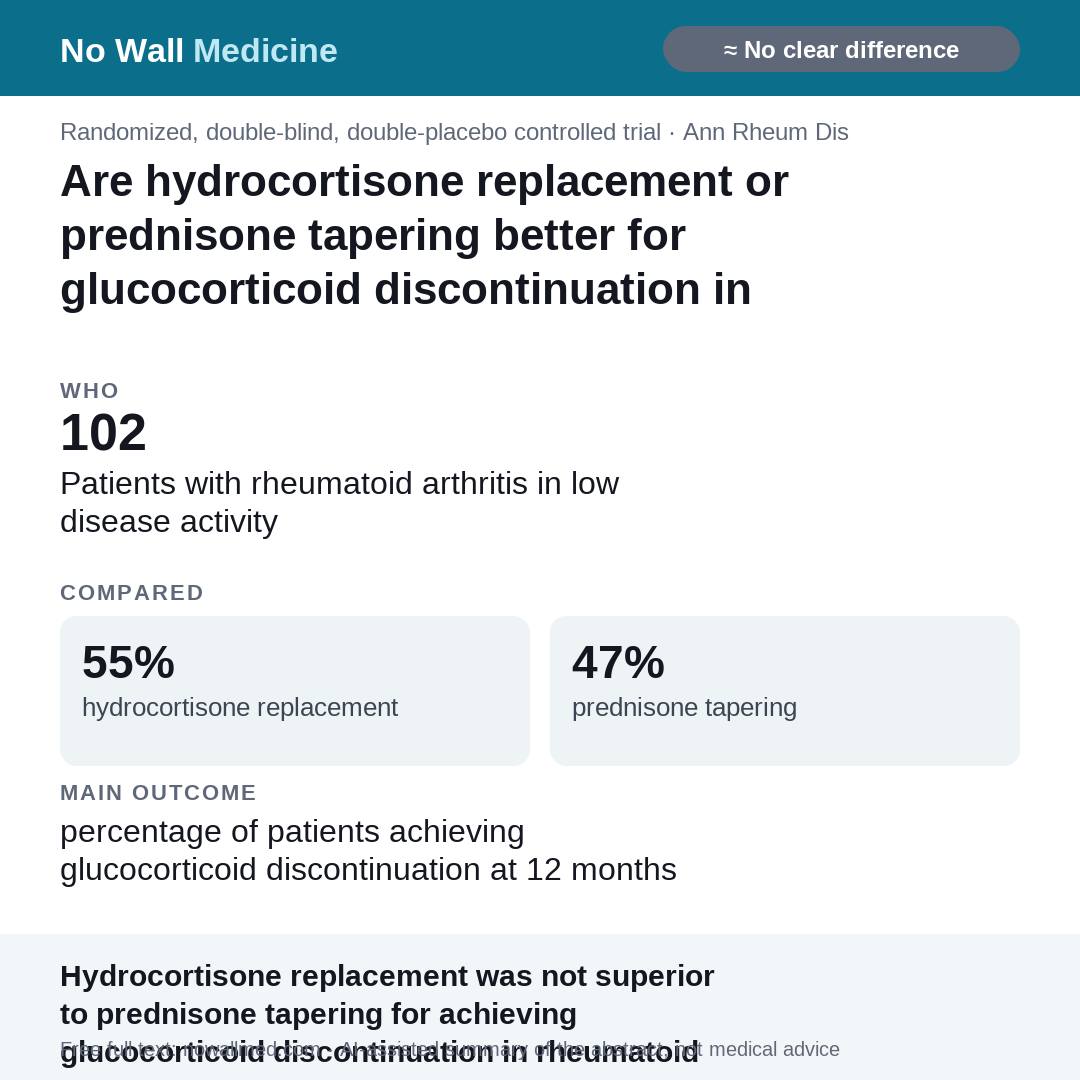
Comparison of two strategies of glucocorticoid withdrawal in patients with rheumatoid arthritis in low disease activity (STAR): a randomised, placebo- controlled, double-blind trial
Randomized, double-blind, double-placebo controlled trialNo clear difference
Are hydrocortisone replacement or prednisone tapering better for glucocorticoid discontinuation in rheumatoid arthritis?
Who
102
Patients with rheumatoid arthritis in low disease activity
Compared
55%hydrocortisone replacement
47%prednisone tapering
Main outcome
percentage of patients achieving glucocorticoid discontinuation at 12 months
Bottom line: Hydrocortisone replacement was not superior to prednisone tapering for achieving glucocorticoid discontinuation in rheumatoid arthritis patients.
Ann Rheum Dis · 2025-01-02Download image
Efficacy, Safety, and Immunogenicity of the MATISSE (Maternal Immunization Study for Safety and Efficacy) Maternal Respiratory Syncytial Virus Prefusion F Protein Vaccine Trial
Phase 3, randomized, double-blinded, placebo-controlled trialBenefit found
Is the bivalent respiratory syncytial virus prefusion F protein vaccine effective and safe?
Who
7420
Healthy pregnant participants aged 49 years or younger · Global
Compared
RSVpreF 120 micrograms: 70.0% (95% CI, 50.6-82.5) within 180 days
Placebo
Main outcome
Severe respiratory syncytial virus-associated medically attended lower respiratory tract illness
Result: vaccine efficacy 70.0% (95% CI, 50.6-82.5) within 180 days
Bottom line: Maternal vaccination with RSVpreF is effective and safe against severe respiratory syncytial virus lower respiratory tract illness in infants.
Obstet Gynecol · 2025-01-02Download image

Weight and Procedural Abortion Complications: A Systematic Review
Systematic reviewNo clear difference
Is higher body weight associated with procedural abortion complications?
Who
38,960
People with body mass index 30 or higher · United States
Compared
Higher body weight
No significant relationship
Main outcome
Procedural abortion complications
Bottom line: Higher body weight was not associated with an increased risk of procedural abortion complications in the included studies.
Obstet Gynecol · 2025-01-02Download image

Preterm Birth Frequency and Associated Outcomes From the MATISSE (Maternal Immunization Study for Safety and Efficacy) Maternal Trial of the Bivalent Respiratory Syncytial Virus Prefusion F Protein Vaccine
Phase 3, randomized, double-blind trialNo clear difference
What are the preterm birth frequency and newborn outcomes of maternal RSV vaccination?
Who
7386
Pregnant individuals and their newborns and infants · Global
Compared
5.7%RSVpreF vaccine
4.7%Placebo
Main outcome
Preterm birth frequency and newborn and infant outcomes
Result: relative risk 1.20 (95% CI, 0.98-1.46)
Bottom line: Maternal RSV vaccination showed no clinically significant increase in preterm birth or other adverse outcomes in the overall analysis.
Funded by: Pfizer
Obstet Gynecol · 2025-01-02Download image

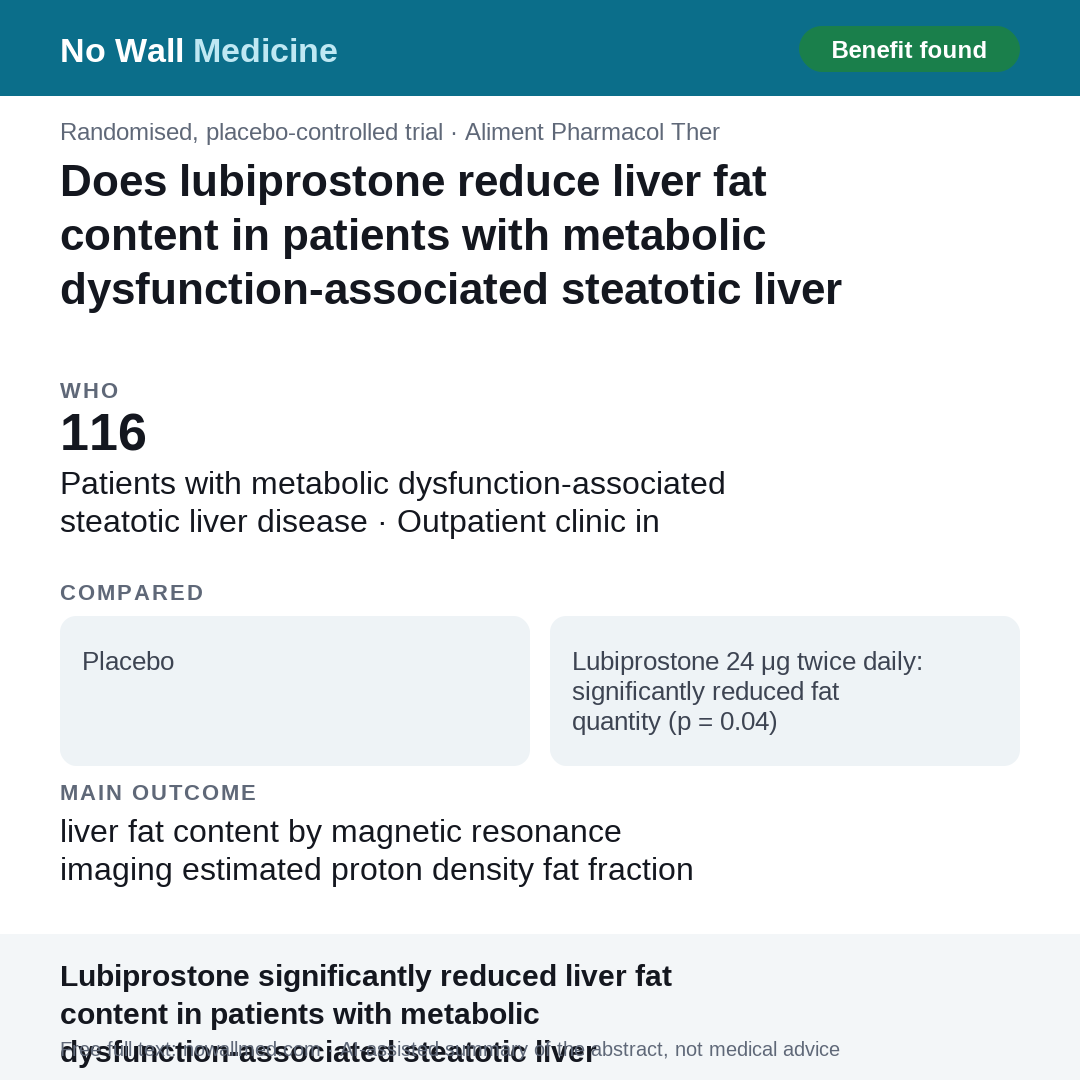
Lubiprostone Reduces Fat Content on MRI-PDFF in Patients With MASLD: A 48-Week Randomised Controlled Trial
Randomised, placebo-controlled trialBenefit found
Does lubiprostone reduce liver fat content in patients with metabolic dysfunction-associated steatotic liver disease?
Who
116
Patients with metabolic dysfunction-associated steatotic liver disease · Outpatient clinic in Cairo, Egypt
Compared
Placebo
Lubiprostone 24 μg twice daily: significantly reduced fat quantity (p = 0.04)
Main outcome
liver fat content by magnetic resonance imaging estimated proton density fat fraction
Bottom line: Lubiprostone significantly reduced liver fat content in patients with metabolic dysfunction-associated steatotic liver disease over 48 weeks.
Aliment Pharmacol Ther · 2025-01-02Download image
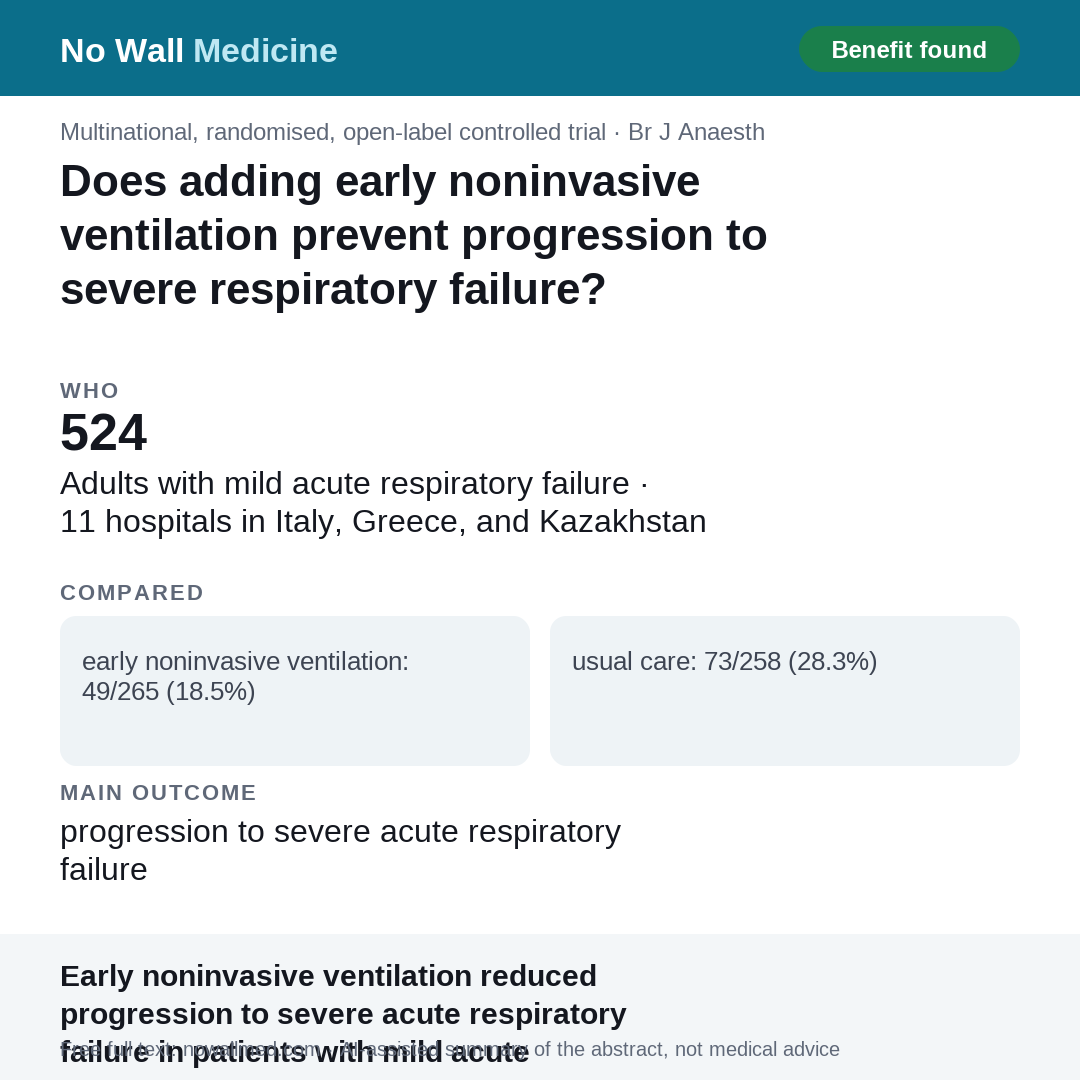
Early noninvasive ventilation in general wards for acute respiratory failure: an international, multicentre, open-label, randomised trial
Multinational, randomised, open-label controlled trialBenefit found
Does adding early noninvasive ventilation prevent progression to severe respiratory failure?
Who
524
Adults with mild acute respiratory failure · 11 hospitals in Italy, Greece, and Kazakhstan
Compared
early noninvasive ventilation: 49/265 (18.5%)
usual care: 73/258 (28.3%)
Main outcome
progression to severe acute respiratory failure
Result: relative risk 0.65 (95% confidence interval 0.48-0.90)
Bottom line: Early noninvasive ventilation reduced progression to severe acute respiratory failure in patients with mild acute respiratory failure.
Br J Anaesth · 2025-01-02Download image
Delayed Postoperative Radiotherapy in Head & Neck Cancers-A Systematic Review and Meta-Analysis
Meta-analysis of 52 studiesHarm found
Impact of delayed postoperative radiotherapy
Who
254189
adult head and neck cancer patients · United States and others
Compared
Timely PORT
Delayed PORT: 4% increase in mortality
Main outcome
overall survival
Result: hazard ratio 1.04 (1.03 to 1.06)
Bottom line: Delayed radiotherapy increases mortality
Limitation: more research is needed
Laryngoscope · 2025-01-02Download image

Medium-term results of arthroscopic hip surgery compared with physiotherapy and activity modification for the treatment of femoroacetabular impingement syndrome: a multi-centre randomised controlled trial
Two-group parallel, assessor-blinded, pragmatic randomised controlled trialMixed results
Does arthroscopic hip surgery compare to physiotherapy for femoroacetabular impingement syndrome?
Who
222
222 participants aged 18-60 years with femoroacetabular impingement syndrome · seven sites
Compared
arthroscopic hip surgery: mean (SD) 84.2 (17.4)
74.2physiotherapy (21.9)
Main outcome
minimum joint space width and Hip Outcome Score activities of daily living
Result: difference 8.9 (95% CI 7.0, 10.8)
Bottom line: Surgery showed superior patient-reported function and less cartilage damage, but no difference in radiographic hip osteoarthritis progression.
Br J Sports Med · 2025-01-02Download image

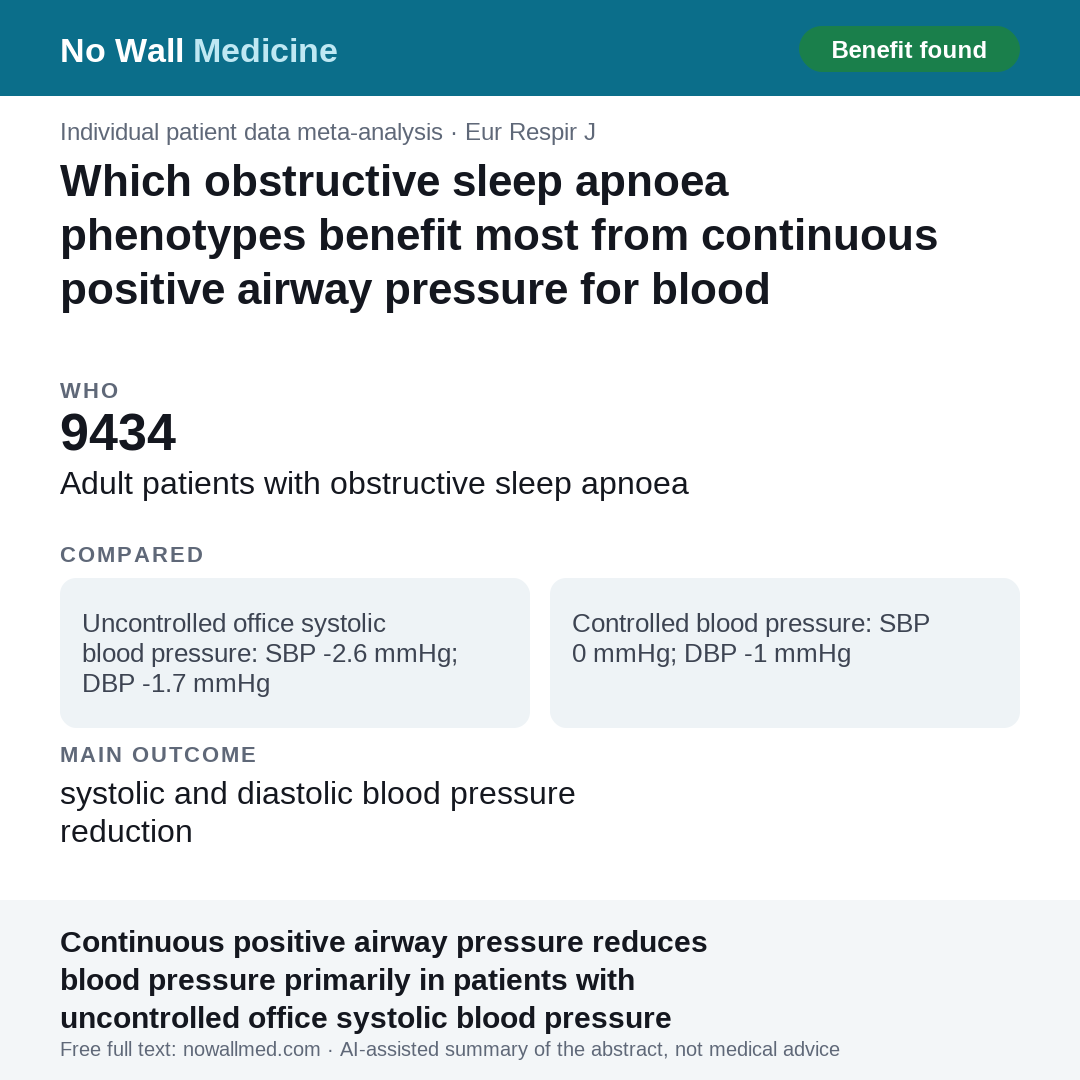
Effect of CPAP therapy on blood pressure in patients with obstructive sleep apnoea: a worldwide individual patient data meta-analysis
Individual patient data meta-analysisBenefit found
Which obstructive sleep apnoea phenotypes benefit most from continuous positive airway pressure for blood pressure reduction?
Who
9434
Adult patients with obstructive sleep apnoea
Compared
Uncontrolled office systolic blood pressure: SBP -2.6 mmHg; DBP -1.7 mmHg
Controlled blood pressure: SBP 0 mmHg; DBP -1 mmHg
Main outcome
systolic and diastolic blood pressure reduction
Bottom line: Continuous positive airway pressure reduces blood pressure primarily in patients with uncontrolled office systolic blood pressure at baseline.
Eur Respir J · 2025-01-02Download image
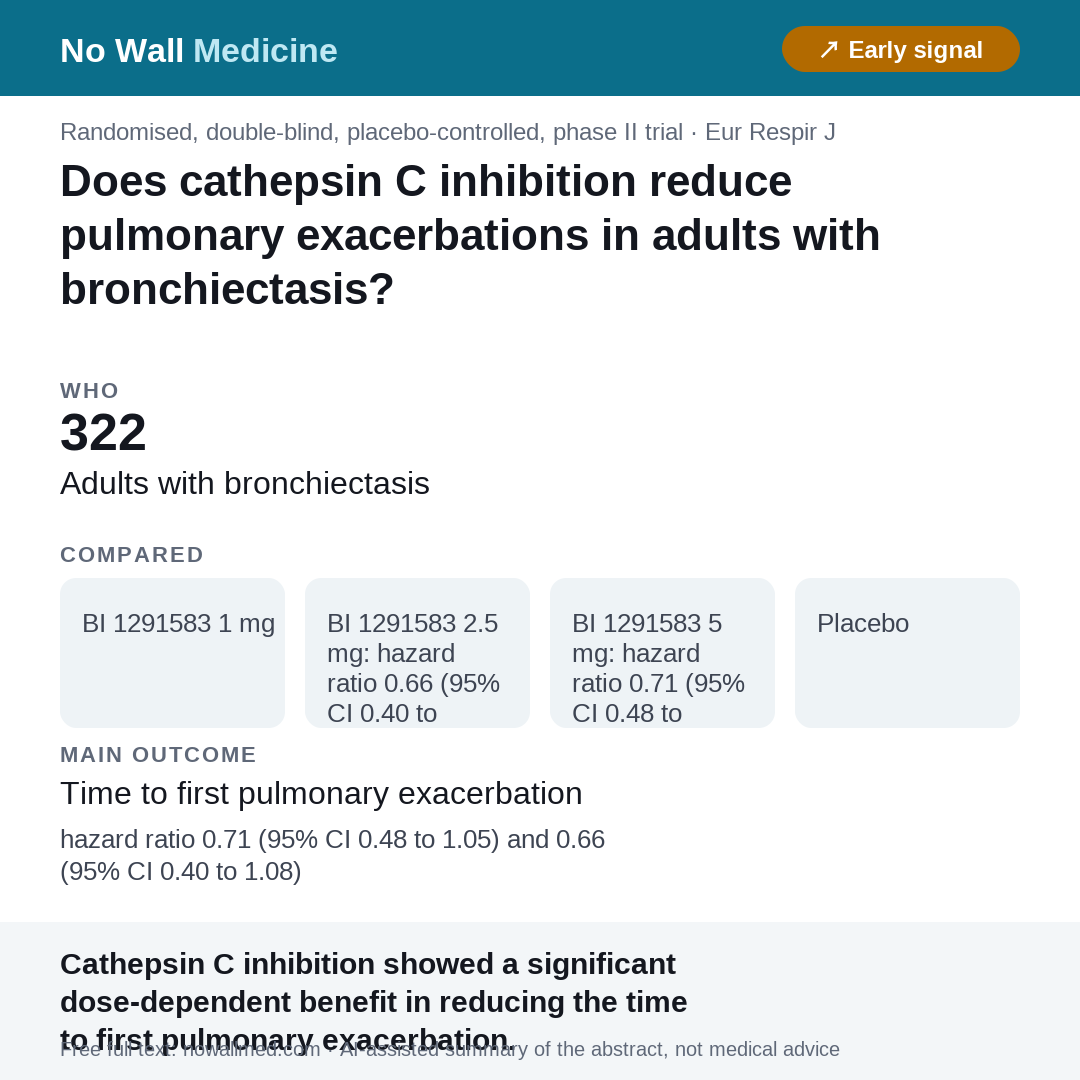
Cathepsin C (dipeptidyl peptidase 1) inhibition in adults with bronchiectasis: AIRLEAF, a phase II randomised, double-blind, placebo-controlled, dose-finding study
Randomised, double-blind, placebo-controlled, phase II trialBenefit found
Does cathepsin C inhibition reduce pulmonary exacerbations in adults with bronchiectasis?
Who
322
Adults with bronchiectasis
Compared
BI 1291583 1 mg
BI 1291583 2.5 mg: hazard ratio 0.66 (95% CI 0.40 to 1.08)
BI 1291583 5 mg: hazard ratio 0.71 (95% CI 0.48 to 1.05)
Placebo
Main outcome
Time to first pulmonary exacerbation
Result: hazard ratio 0.71 (95% CI 0.48 to 1.05) and 0.66 (95% CI 0.40 to 1.08)
Bottom line: Cathepsin C inhibition showed a significant dose-dependent benefit in reducing the time to first pulmonary exacerbation.
Eur Respir J · 2025-01-02Download image
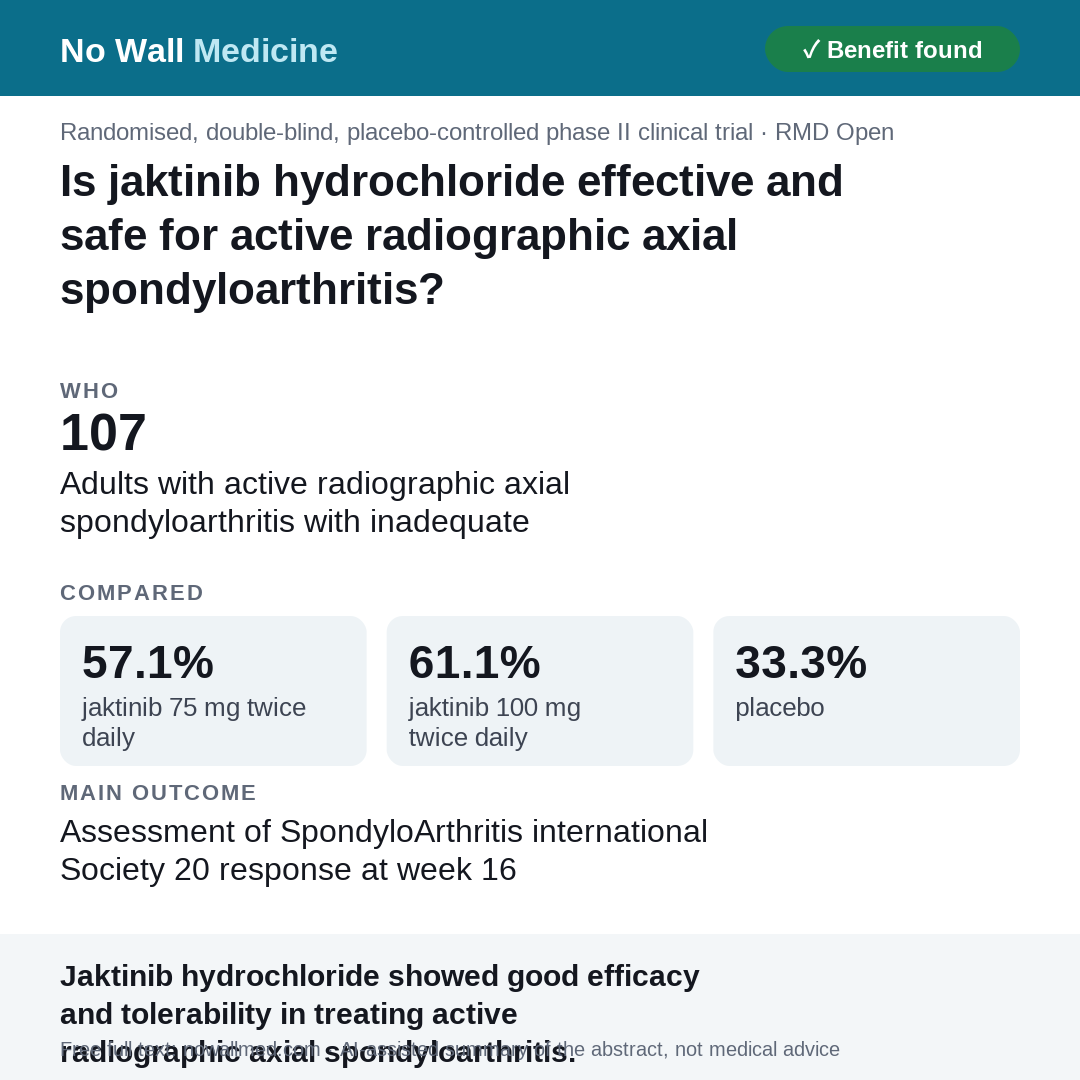
Efficacy and safety of jaktinib hydrochloride tablets in active axial spondyloarthritis: a multicentre, randomised, double-blind, placebo-controlled phase II clinical trial
Randomised, double-blind, placebo-controlled phase II clinical trialBenefit found
Is jaktinib hydrochloride effective and safe for active radiographic axial spondyloarthritis?
Who
107
Adults with active radiographic axial spondyloarthritis with inadequate non-steroidal anti-inflammatory drug response · multicentre
Compared
57.1%jaktinib 75 mg twice daily
61.1%jaktinib 100 mg twice daily
33.3%placebo
Main outcome
Assessment of SpondyloArthritis international Society 20 response at week 16
Bottom line: Jaktinib hydrochloride showed good efficacy and tolerability in treating active radiographic axial spondyloarthritis.
RMD Open · 2025-01-02Download image
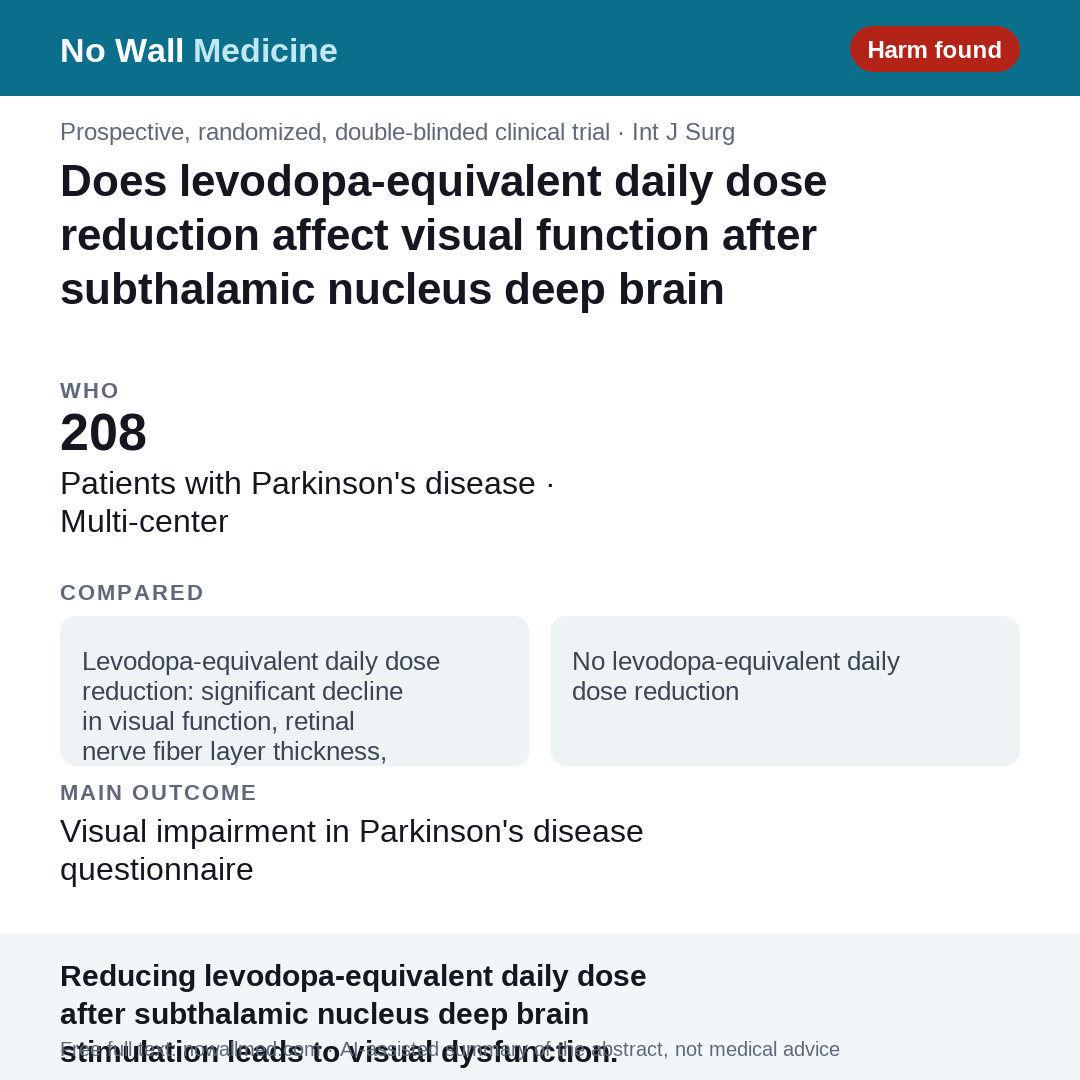
The reduction of LEDD leads to visual dysfunction in patients with PD after STN-DBS: a randomized clinical trial
Prospective, randomized, double-blinded clinical trialHarm found
Does levodopa-equivalent daily dose reduction affect visual function after subthalamic nucleus deep brain stimulation?
Who
208
Patients with Parkinson's disease · Multi-center
Compared
Levodopa-equivalent daily dose reduction: significant decline in visual function, retinal nerve fiber layer thickness, and vessel density
No levodopa-equivalent daily dose reduction
Main outcome
Visual impairment in Parkinson's disease questionnaire
Bottom line: Reducing levodopa-equivalent daily dose after subthalamic nucleus deep brain stimulation leads to visual dysfunction.
Int J Surg · 2025-01-01Download image
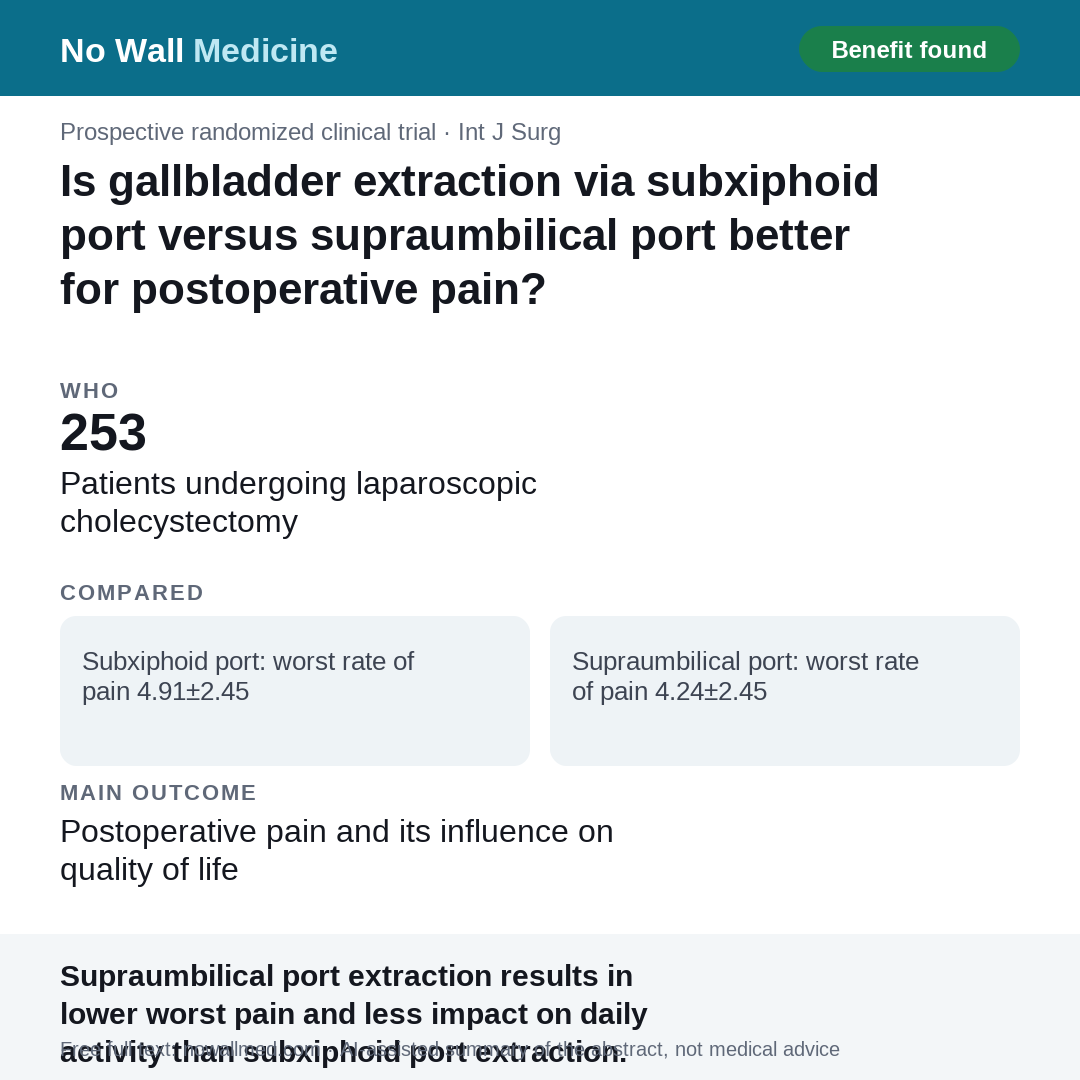
Comparison of gallbladder extraction via the subxiphoid port and the supraumbilical port during laparoscopic cholecystectomy: a prospective randomized clinical trial
Prospective randomized clinical trialBenefit found
Is gallbladder extraction via subxiphoid port versus supraumbilical port better for postoperative pain?
Who
253
Patients undergoing laparoscopic cholecystectomy
Compared
Subxiphoid port: worst rate of pain 4.91±2.45
Supraumbilical port: worst rate of pain 4.24±2.45
Main outcome
Postoperative pain and its influence on quality of life
Bottom line: Supraumbilical port extraction results in lower worst pain and less impact on daily activity than subxiphoid port extraction.
Int J Surg · 2025-01-01Download image