Visual abstracts
New randomized trials and meta-analyses from leading journals at a glance: who was studied, what was compared, and what was found. Every paper is free to read in full.
All specialtiesCardiology 2641Oncology 2238Gastroenterology & Hepatology 1011Infectious Disease 1660Neurology 1050Psychiatry & Mental Health 1223Pulmonology 1109Critical Care 724Endocrinology & Diabetes 1365Pediatrics 1545Surgery 1344Orthopedics & Sports Medicine 482Neurosurgery 321Cardiothoracic & Vascular Surgery 286Plastic & Reconstructive Surgery 398Nephrology 547Rheumatology 400Hematology 572Dermatology 308Ophthalmology 305Obstetrics & Gynecology 858Public & Global Health 483Radiology & Imaging 366Anesthesiology 524Urology 437ENT (Otolaryngology) 316Emergency Medicine 294Allergy & Immunology 170Geriatrics 567Family Medicine & Primary Care 302Medical Genetics & Genomics 300Pathology & Laboratory Medicine 82Physical Medicine & Rehabilitation 434Palliative Care 230Nutrition 701Digital Health & AI 1270General Medicine 190
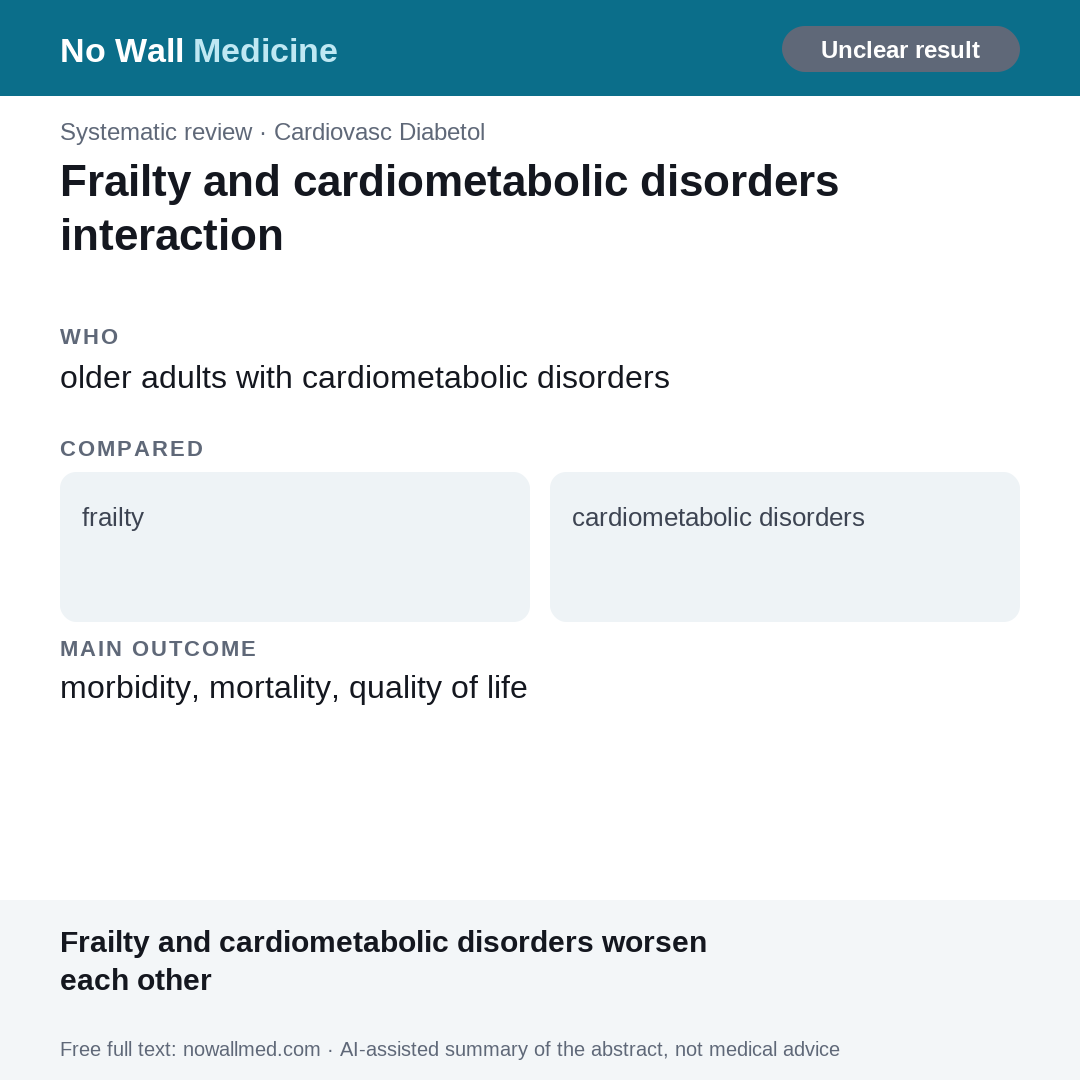
Interplay between frailty and cardiometabolic disorders: from pathophysiology to clinical implications
Systematic reviewUnclear result
Frailty and cardiometabolic disorders interaction
Who
older adults with cardiometabolic disorders
Compared
frailty
cardiometabolic disorders
Main outcome
morbidity, mortality, quality of life
Bottom line: Frailty and cardiometabolic disorders worsen each other
Cardiovasc Diabetol · 2025-12-08Download image
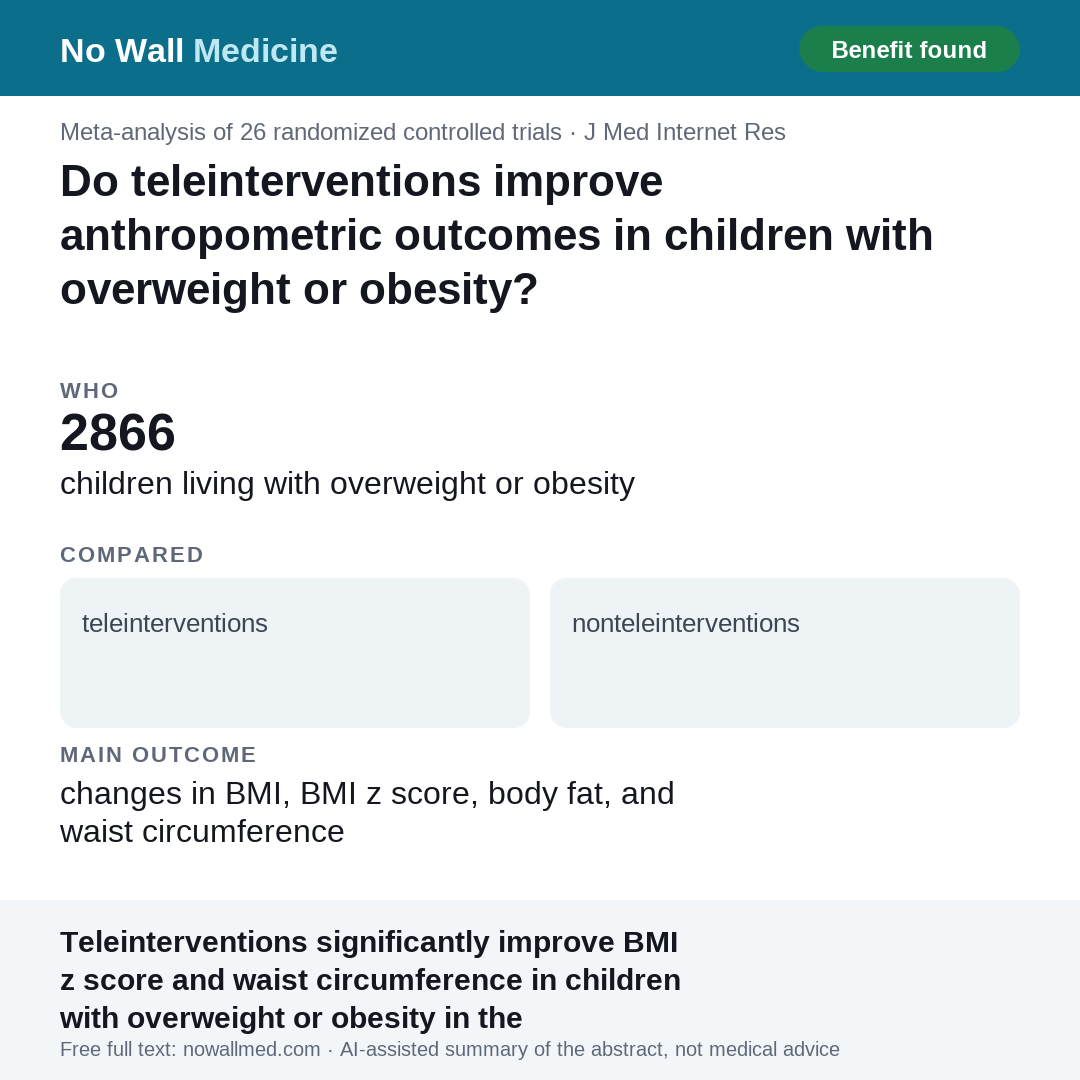
The Effects of Teleinterventions on Pediatric Weight Control: Systematic Review and Meta-Analysis of Randomized Controlled Trials
Meta-analysis of 26 randomized controlled trialsBenefit found
Do teleinterventions improve anthropometric outcomes in children with overweight or obesity?
Who
2866
children living with overweight or obesity
Compared
teleinterventions
nonteleinterventions
Main outcome
changes in BMI, BMI z score, body fat, and waist circumference
Result: BMI z score (MD -0.15, 95% CI -0.23 to -0.08)
Bottom line: Teleinterventions significantly improve BMI z score and waist circumference in children with overweight or obesity in the short-to-medium term.
J Med Internet Res · 2025-12-08Download image
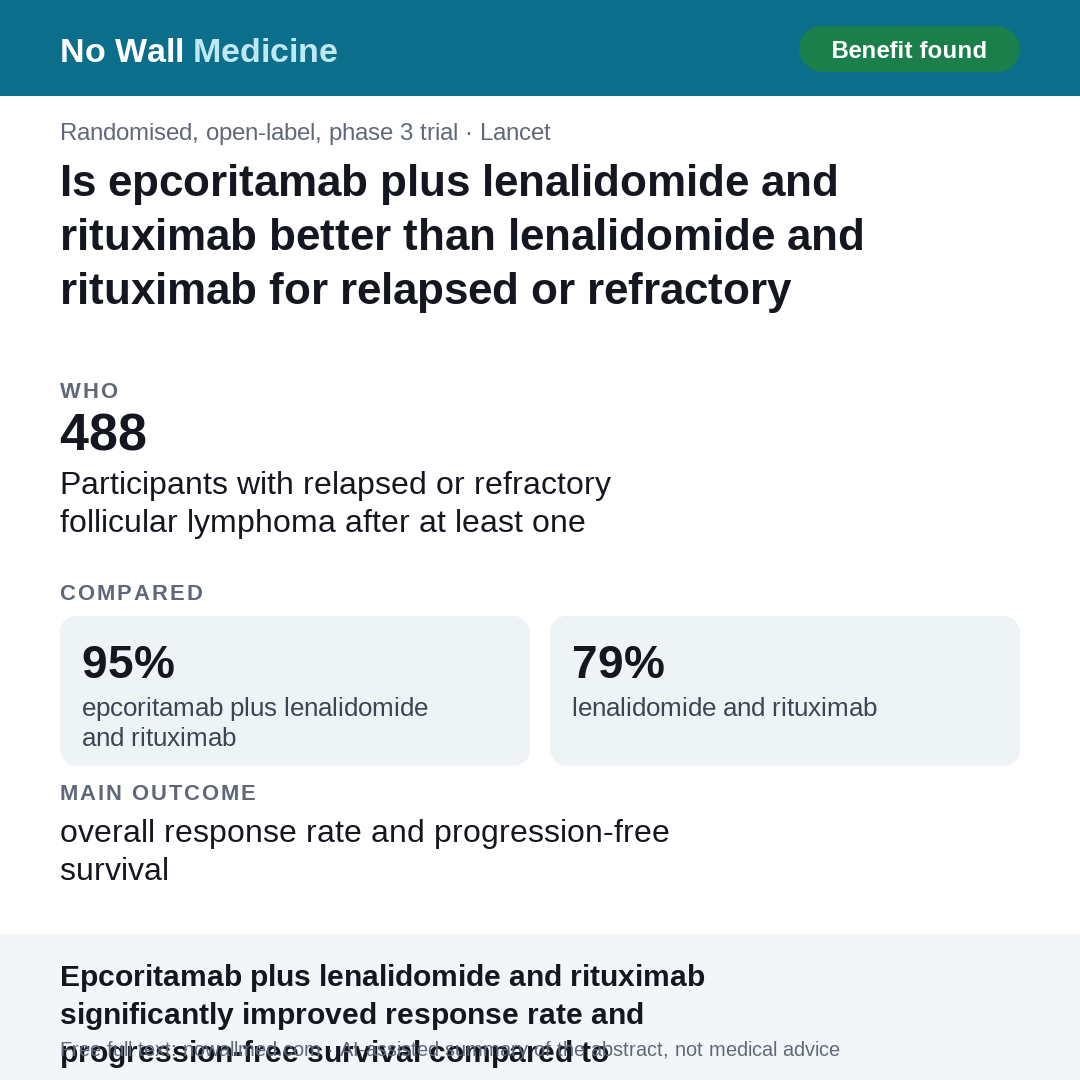
Epcoritamab, lenalidomide, and rituximab versus lenalidomide and rituximab for relapsed or refractory follicular lymphoma (EPCORE FL-1): a global, open-label, randomised, phase 3 trial
Randomised, open-label, phase 3 trialBenefit found
Is epcoritamab plus lenalidomide and rituximab better than lenalidomide and rituximab for relapsed or refractory follicular lymphoma?
Who
488
Participants with relapsed or refractory follicular lymphoma after at least one chemoimmunotherapy · 189 centres in 30 countries
Compared
95%epcoritamab plus lenalidomide and rituximab (95% CI 92-97)
79%lenalidomide and rituximab (74-84)
Main outcome
overall response rate and progression-free survival
Result: hazard ratio 0·21 (95% CI 0·14-0·31)
Bottom line: Epcoritamab plus lenalidomide and rituximab significantly improved response rate and progression-free survival compared to lenalidomide and rituximab.
Funded by: AbbVie and Genmab
Lancet · 2025-12-07Download image
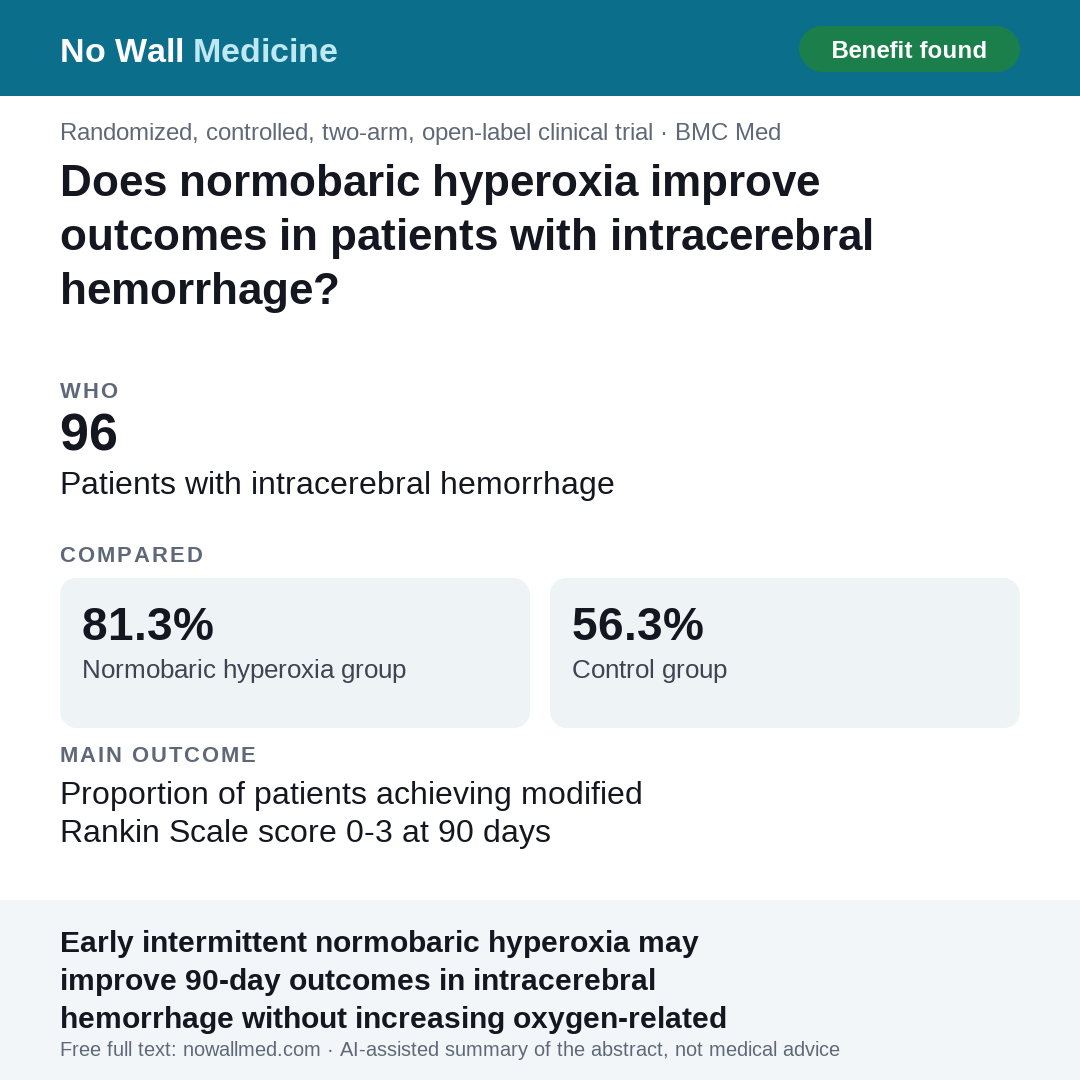
Normobaric hyperoxia for intracerebral hemorrhage: a randomized clinical trial
Randomized, controlled, two-arm, open-label clinical trialBenefit found
Does normobaric hyperoxia improve outcomes in patients with intracerebral hemorrhage?
Who
96
Patients with intracerebral hemorrhage
Compared
81.3%Normobaric hyperoxia group
56.3%Control group
Main outcome
Proportion of patients achieving modified Rankin Scale score 0-3 at 90 days
Result: adjusted risk ratio 1.39 (95% CI 1.06 to 1.82)
Bottom line: Early intermittent normobaric hyperoxia may improve 90-day outcomes in intracerebral hemorrhage without increasing oxygen-related complications.
BMC Med · 2025-12-07Download image
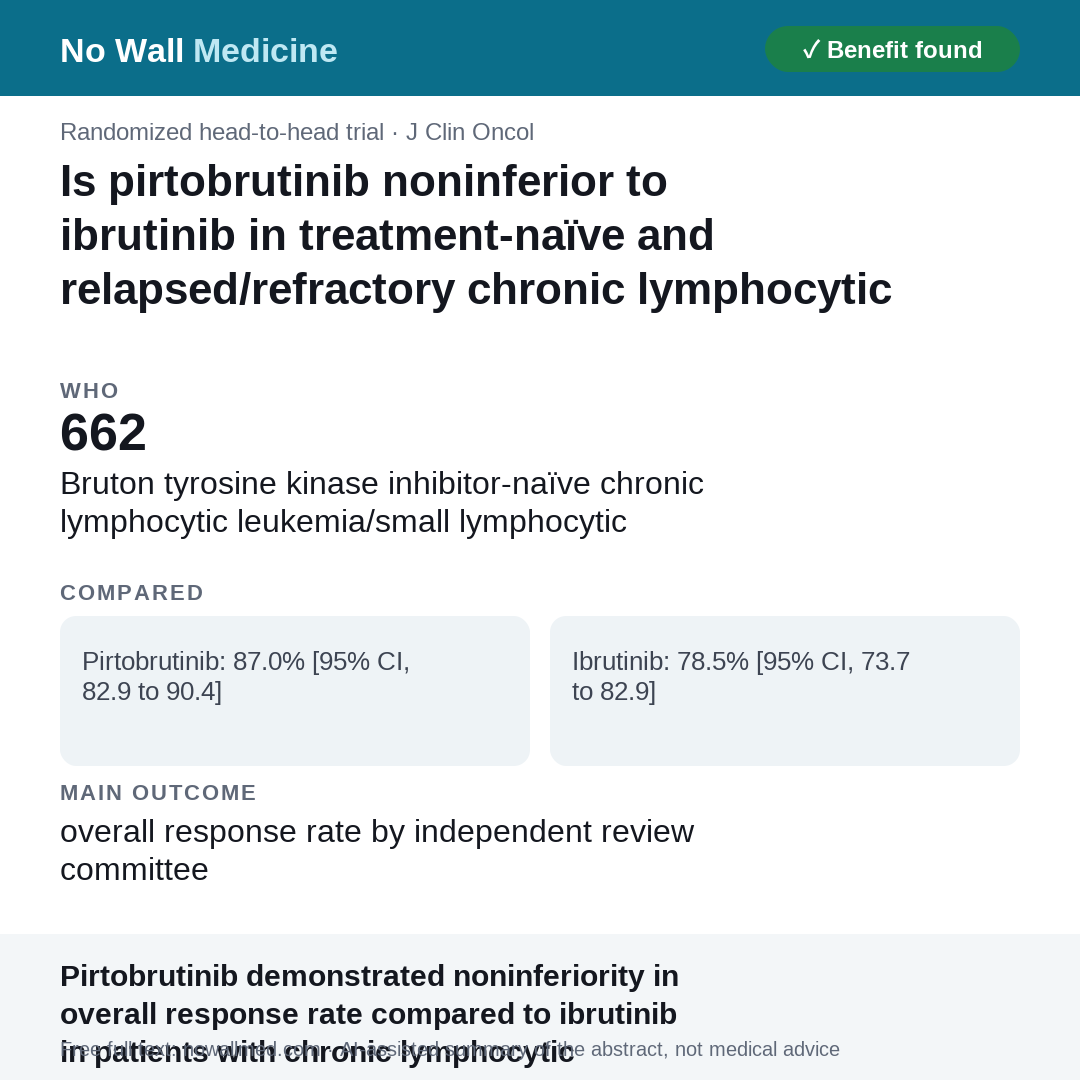
Pirtobrutinib Versus Ibrutinib in Treatment-Naïve and Relapsed/Refractory Chronic Lymphocytic Leukemia/Small Lymphocytic Lymphoma
Randomized head-to-head trialBenefit found
Is pirtobrutinib noninferior to ibrutinib in treatment-naïve and relapsed/refractory chronic lymphocytic leukemia/small lymphocytic lymphoma?
Who
662
Bruton tyrosine kinase inhibitor-naïve chronic lymphocytic leukemia/small lymphocytic lymphoma patients
Compared
Pirtobrutinib: 87.0% [95% CI, 82.9 to 90.4]
Ibrutinib: 78.5% [95% CI, 73.7 to 82.9]
Main outcome
overall response rate by independent review committee
Result: ORR ratio = 1.11 [95% CI, 1.03 to 1.19]
Bottom line: Pirtobrutinib demonstrated noninferiority in overall response rate compared to ibrutinib in patients with chronic lymphocytic leukemia/small lymphocytic lymphoma.
J Clin Oncol · 2025-12-07Download image
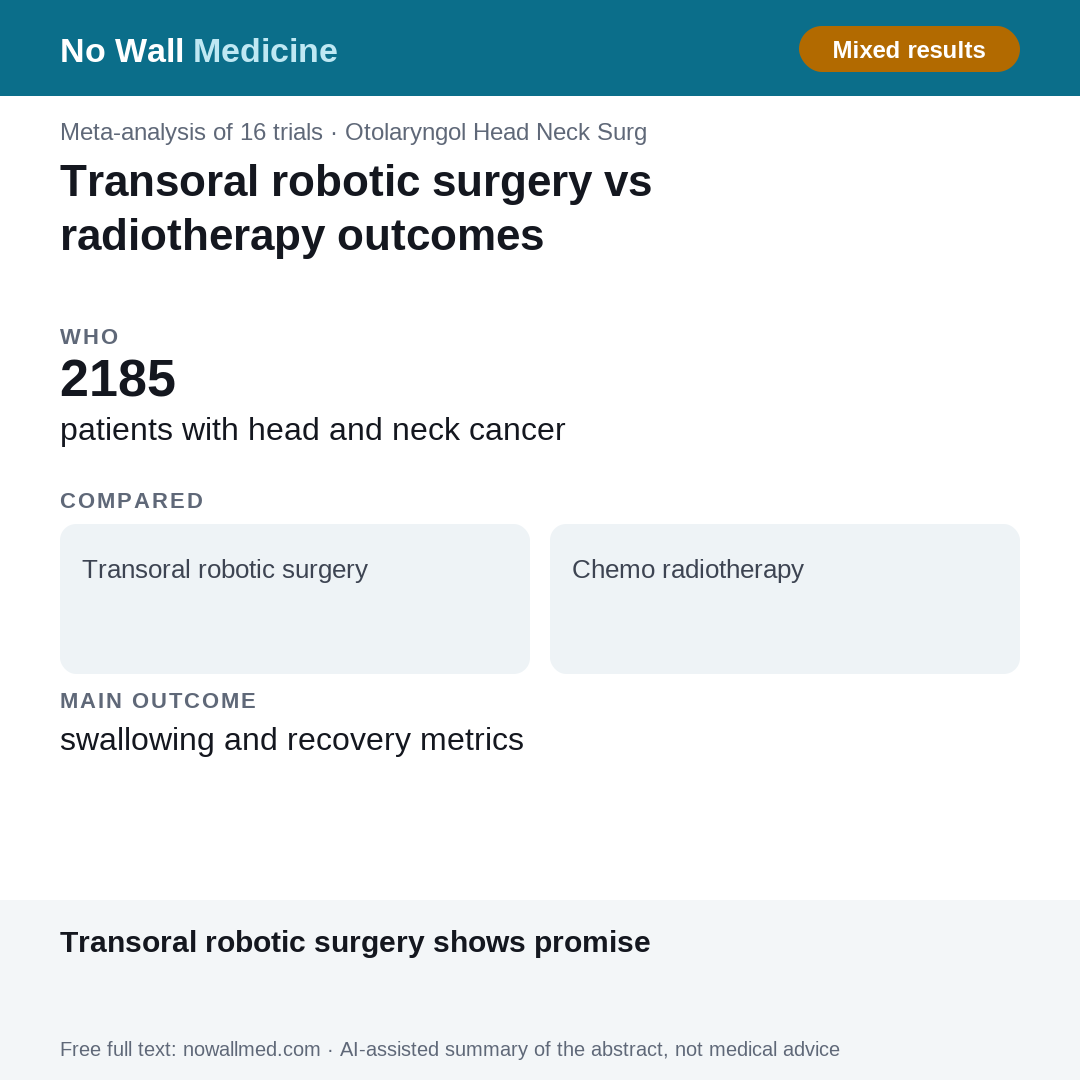
A Meta-analysis of Functional Outcomes and Recovery Metrics Comparing Transoral Robotic Surgery and (Chemo)Radiotherapy
Meta-analysis of 16 trialsMixed results
Transoral robotic surgery vs radiotherapy outcomes
Who
2185
patients with head and neck cancer
Compared
Transoral robotic surgery
Chemo radiotherapy
Main outcome
swallowing and recovery metrics
Bottom line: Transoral robotic surgery shows promise
Limitation: methodological inconsistencies
Otolaryngol Head Neck Surg · 2025-12-07Download image
Physical and Occupational Therapist Evaluations for Fall Prevention in the Emergency Department: A Geriatric ED Guidelines 2.0 Systematic Review
Systematic reviewBenefit found
Do physical or occupational therapist evaluations reduce fall risks in the emergency department?
Who
Older adults in the emergency department · Emergency department
Compared
Physical or occupational therapy evaluation: reduced emergency department revisits
Control
Main outcome
emergency department revisits and hospital admission rates
Bottom line: Physical or occupational therapist evaluations in the emergency department are associated with reduced subsequent emergency department revisits.
Limitation: Impact of co-interventions and heterogeneity limits strong conclusions.
Acad Emerg Med · 2025-12-07Download image

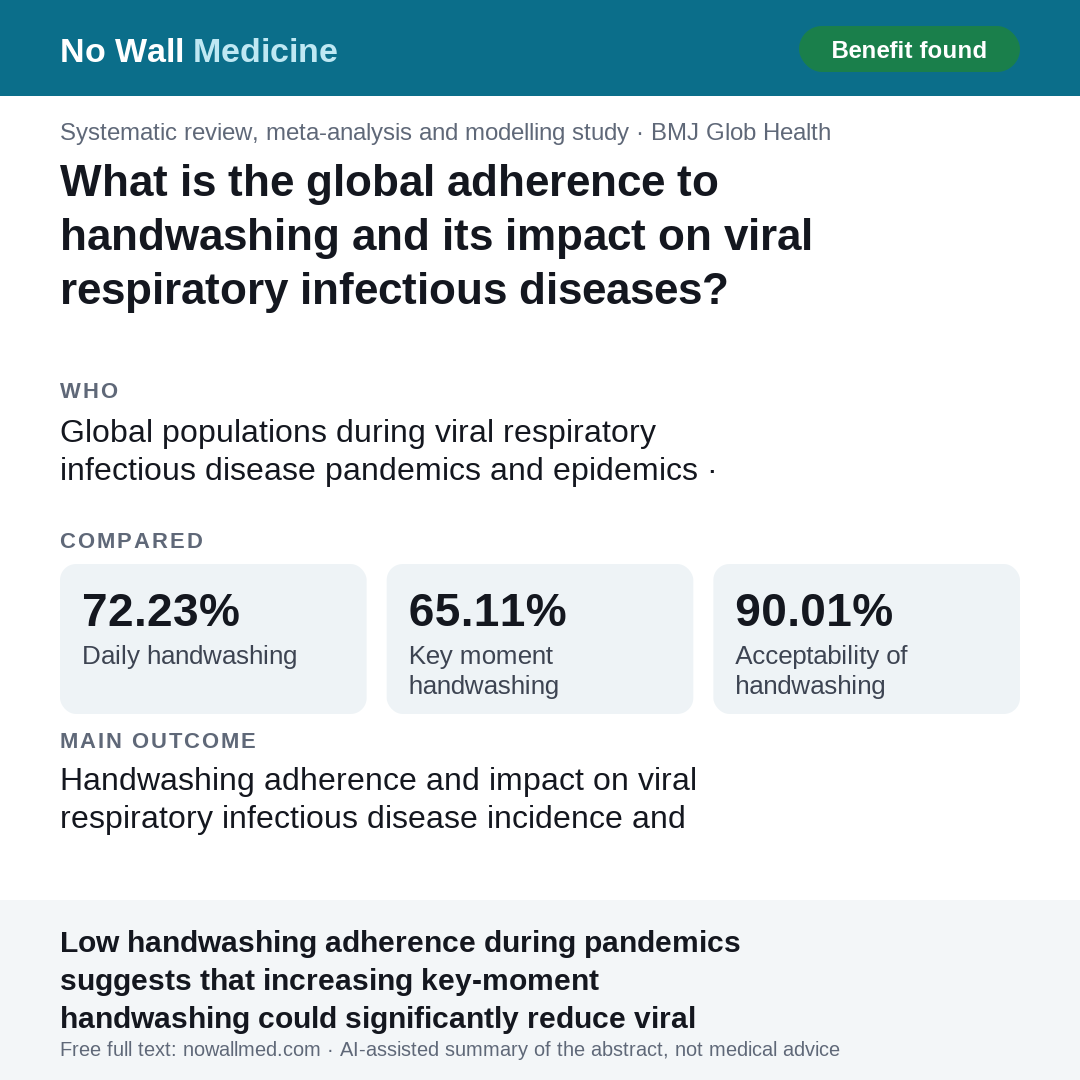
Adherence to handwashing behaviour and its impact on the incidence and death of viral respiratory infectious diseases: a systematic review, meta-analysis and modelling study
Systematic review, meta-analysis and modelling studyBenefit found
What is the global adherence to handwashing and its impact on viral respiratory infectious diseases?
Who
Global populations during viral respiratory infectious disease pandemics and epidemics · Global
Compared
72.23%Daily handwashing (95% CI 66.95% to 76.95%)
65.11%Key moment handwashing (95% CI 59.74% to 70.28%)
90.01%Acceptability of handwashing (95% CI 83.73% to 94.05%)
Main outcome
Handwashing adherence and impact on viral respiratory infectious disease incidence and death
Bottom line: Low handwashing adherence during pandemics suggests that increasing key-moment handwashing could significantly reduce viral respiratory disease incidence and death.
BMJ Glob Health · 2025-12-07Download image
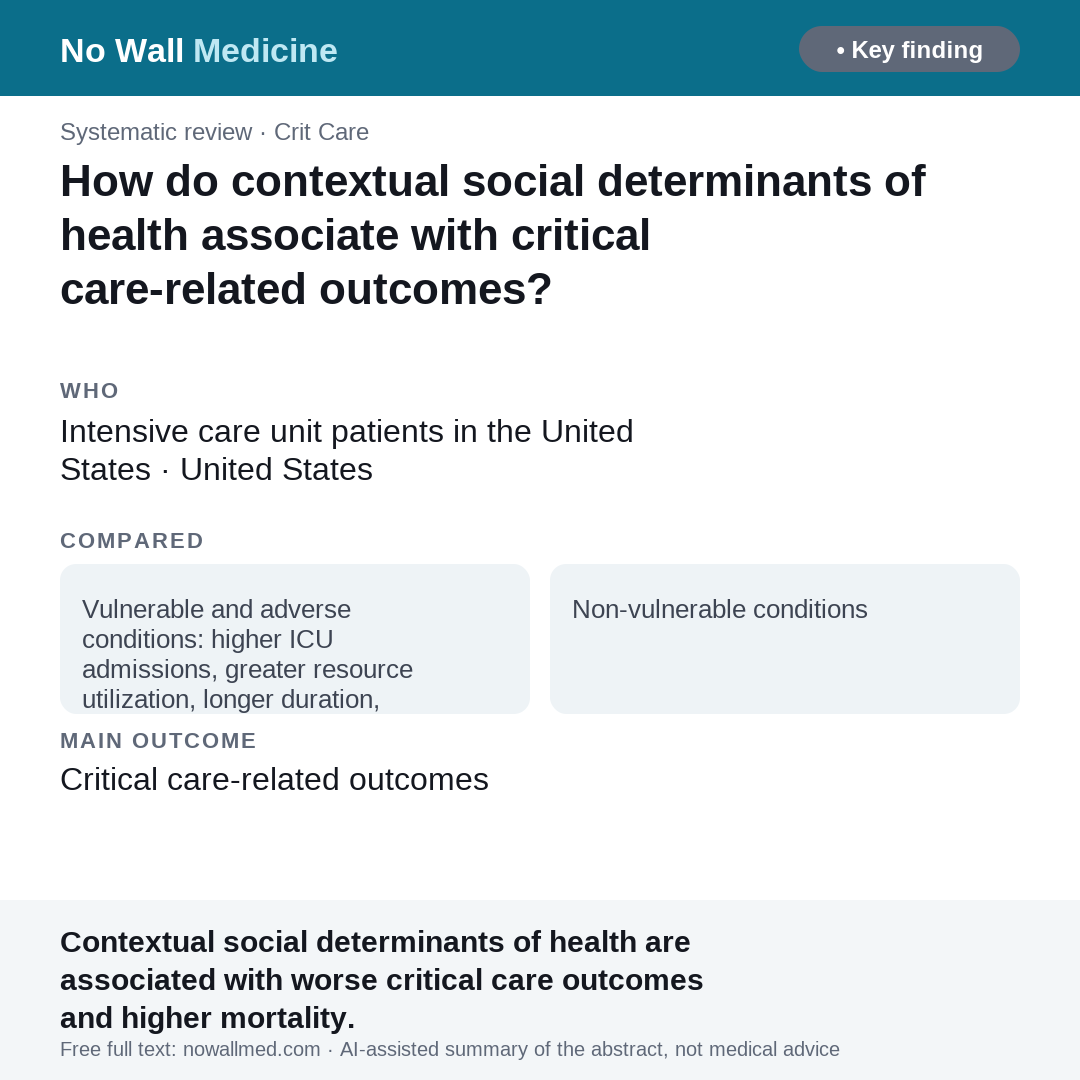
Contextual nonmedical health factors and critical care-related outcomes: a systematic review
Systematic reviewHarm found
How do contextual social determinants of health associate with critical care-related outcomes?
Who
Intensive care unit patients in the United States · United States
Compared
Vulnerable and adverse conditions: higher ICU admissions, greater resource utilization, longer duration, higher mortality
Non-vulnerable conditions
Main outcome
Critical care-related outcomes
Bottom line: Contextual social determinants of health are associated with worse critical care outcomes and higher mortality.
Crit Care · 2025-12-07Download image
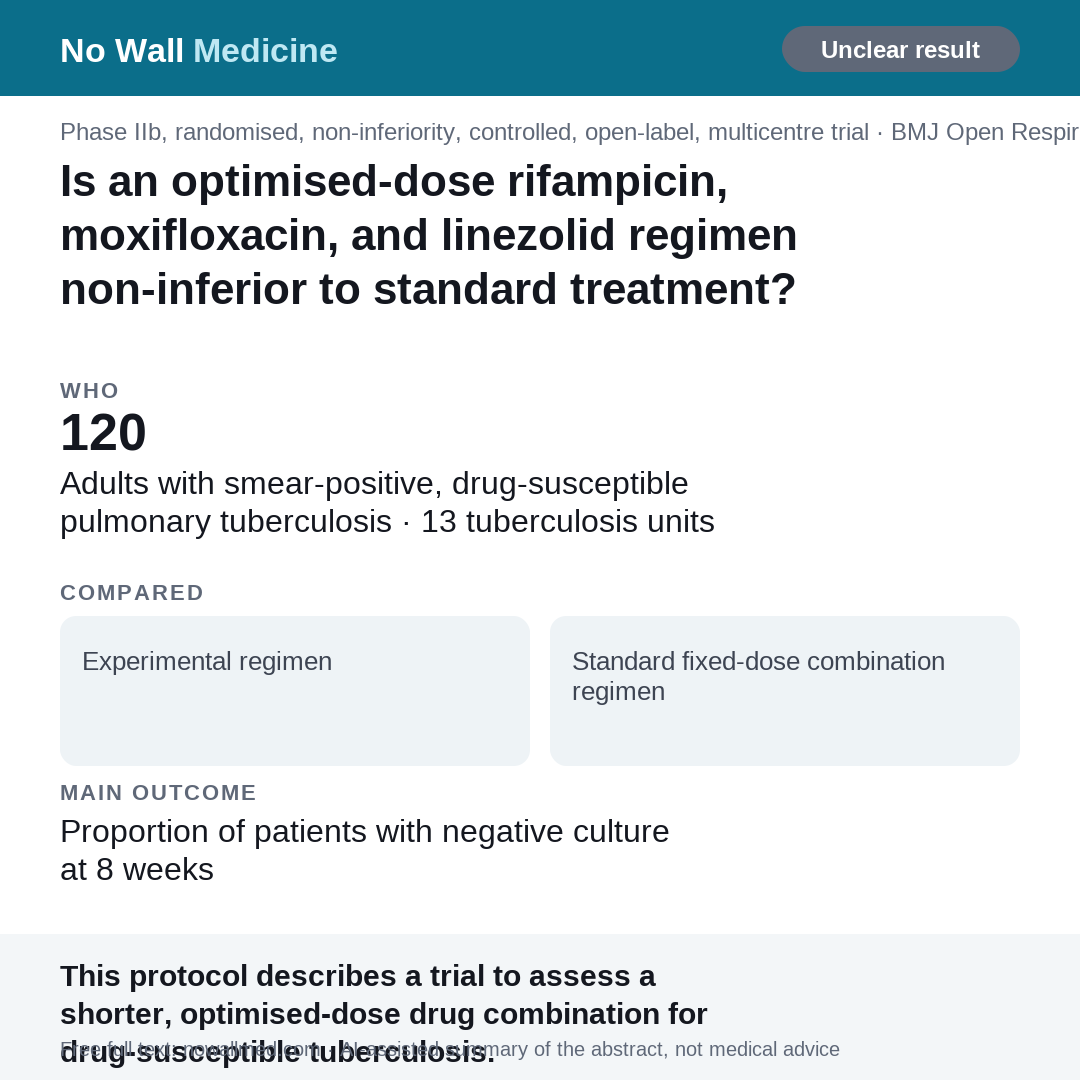
Multicentre controlled open randomised clinical trial to assess efficacy and safety of an anti-tuberculosis drug combination based on optimised-dose rifampicin, optimised-dose moxifloxacin and optimised-dose linezolid for TB: the RML-TB trial protocol
Phase IIb, randomised, non-inferiority, controlled, open-label, multicentre trialUnclear result
Is an optimised-dose rifampicin, moxifloxacin, and linezolid regimen non-inferior to standard treatment?
Who
120
Adults with smear-positive, drug-susceptible pulmonary tuberculosis · 13 tuberculosis units in Spain
Compared
Experimental regimen
Standard fixed-dose combination regimen
Main outcome
Proportion of patients with negative culture at 8 weeks
Bottom line: This protocol describes a trial to assess a shorter, optimised-dose drug combination for drug-susceptible tuberculosis.
BMJ Open Respir Res · 2025-12-07Download image
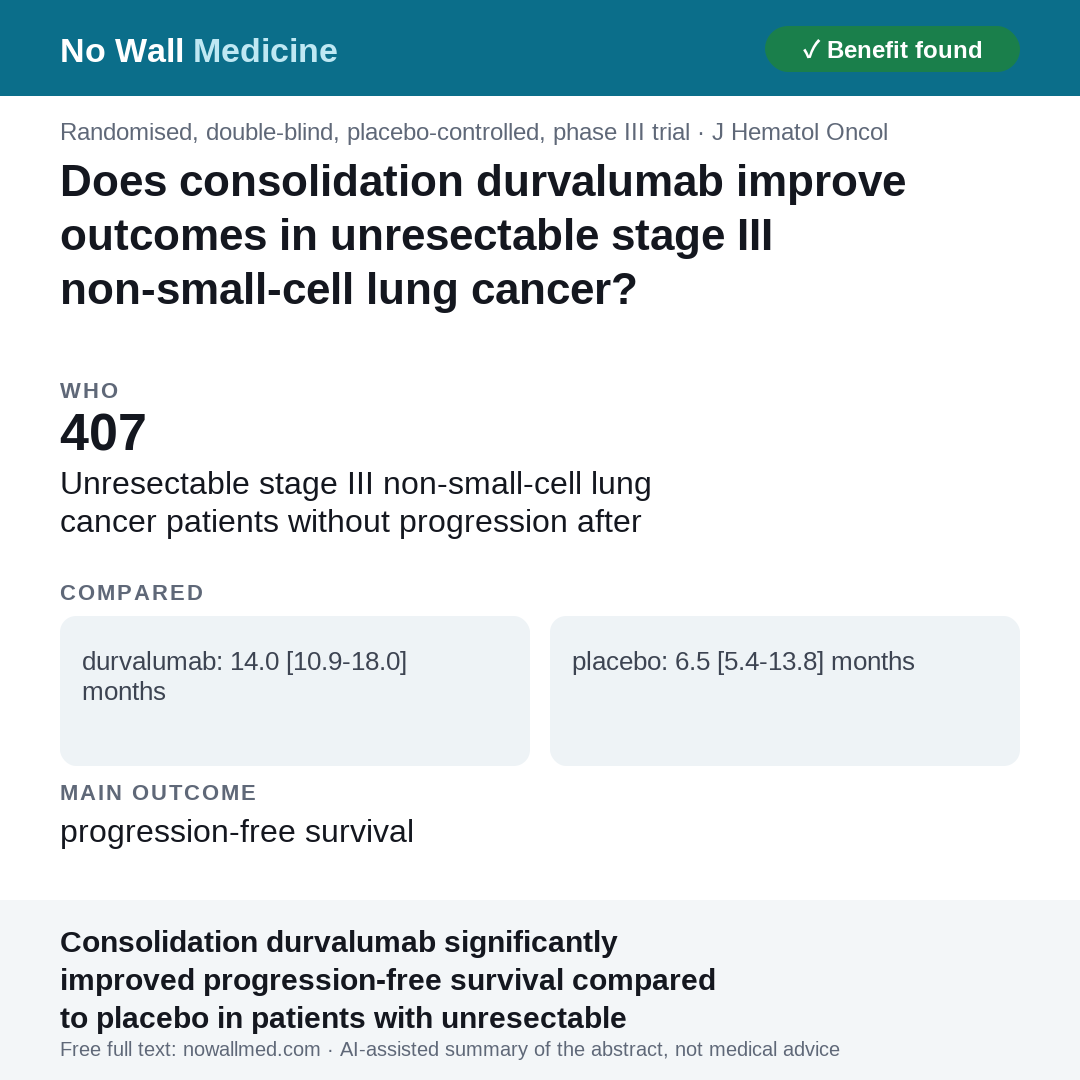
PACIFIC-5: a phase III clinical trial of consolidation durvalumab in patients with unresectable stage III NSCLC and no progression after concurrent or sequential chemoradiotherapy
Randomised, double-blind, placebo-controlled, phase III trialBenefit found
Does consolidation durvalumab improve outcomes in unresectable stage III non-small-cell lung cancer?
Who
407
Unresectable stage III non-small-cell lung cancer patients without progression after chemoradiotherapy
Compared
durvalumab: 14.0 [10.9-18.0] months
placebo: 6.5 [5.4-13.8] months
Main outcome
progression-free survival
Result: hazard ratio 0.75 (95% CI 0.58 to 0.99)
Bottom line: Consolidation durvalumab significantly improved progression-free survival compared to placebo in patients with unresectable stage III non-small-cell lung cancer.
Limitation: Follow-up for overall survival is ongoing.
J Hematol Oncol · 2025-12-07Download image
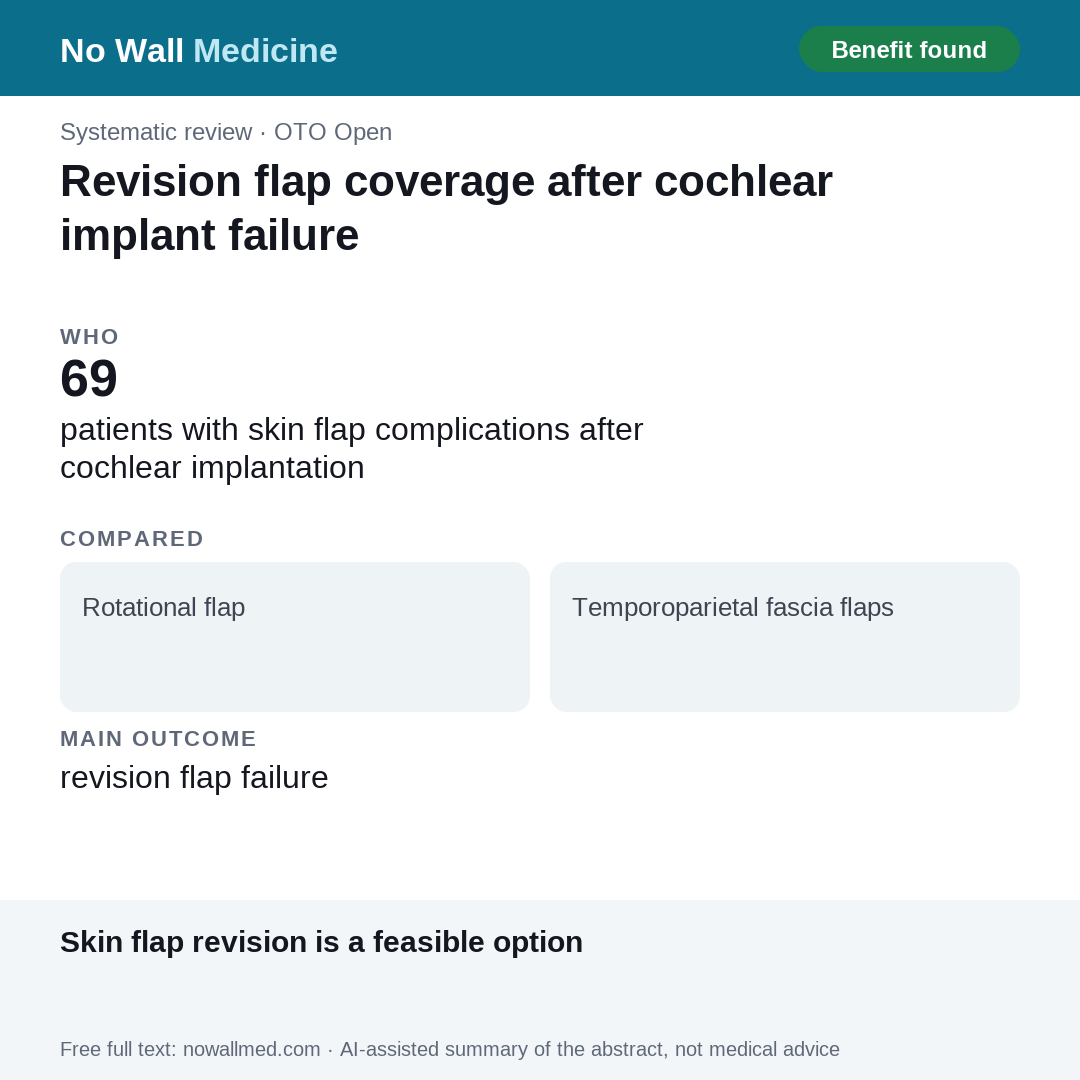
Revision Flap Coverage Following Primary Cochlear Implant Flap Failure: A Systematic Review
Systematic reviewBenefit found
Revision flap coverage after cochlear implant failure
Who
69
patients with skin flap complications after cochlear implantation
Compared
Rotational flap
Temporoparietal fascia flaps
Main outcome
revision flap failure
Bottom line: Skin flap revision is a feasible option
OTO Open · 2025-12-07Download image
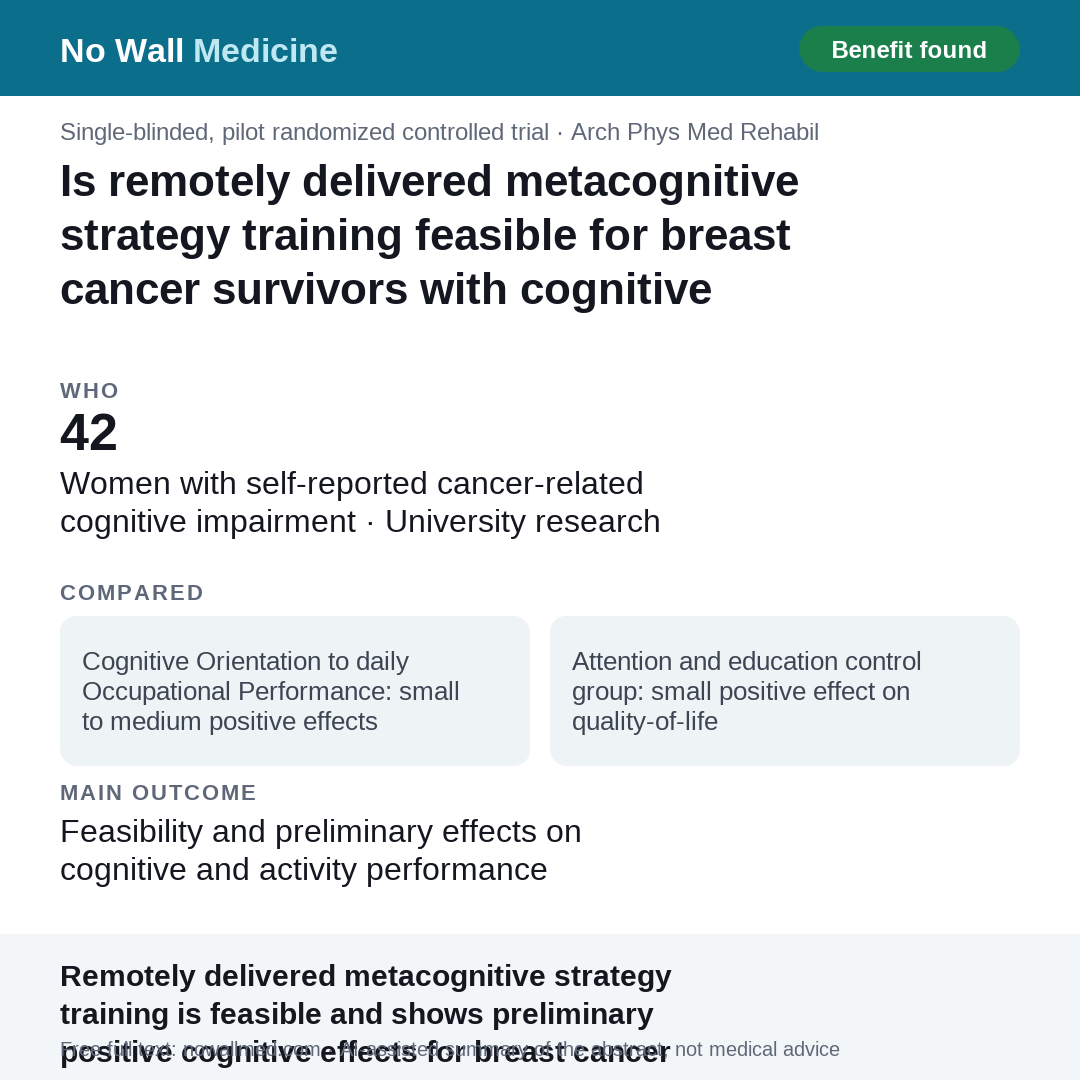
Feasibility Testing of Remotely Delivered Metacognitive Strategy Training in Cancer-Related Cognitive Impairment
Single-blinded, pilot randomized controlled trialBenefit found
Is remotely delivered metacognitive strategy training feasible for breast cancer survivors with cognitive impairment?
Who
42
Women with self-reported cancer-related cognitive impairment · University research laboratory and community
Compared
Cognitive Orientation to daily Occupational Performance: small to medium positive effects
Attention and education control group: small positive effect on quality-of-life
Main outcome
Feasibility and preliminary effects on cognitive and activity performance
Bottom line: Remotely delivered metacognitive strategy training is feasible and shows preliminary positive cognitive effects for breast cancer survivors.
Arch Phys Med Rehabil · 2025-12-06Download image
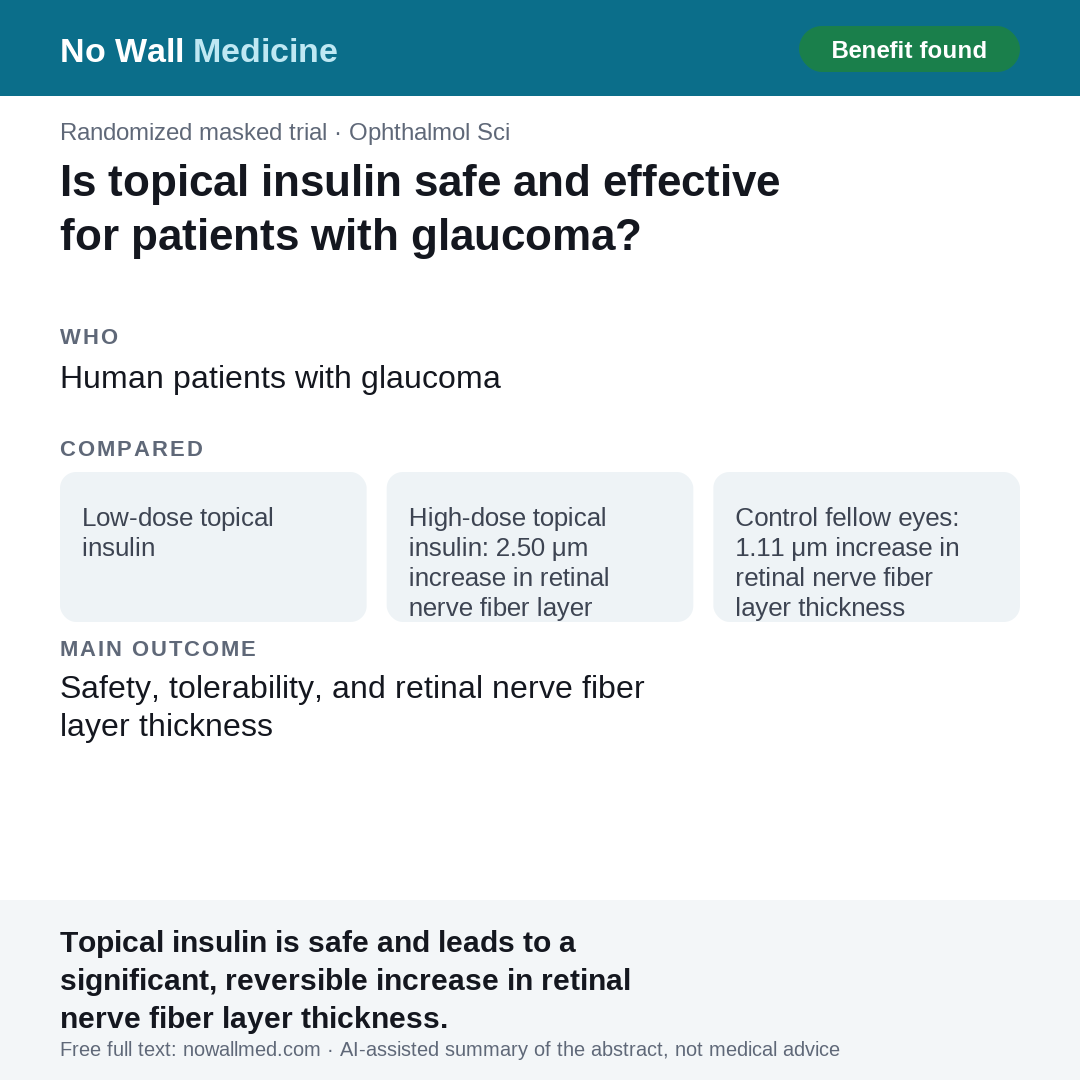
A Phase I Randomized Trial of Topical Insulin for Glaucoma: Safety and Efficacy Outcomes
Randomized masked trialBenefit found
Is topical insulin safe and effective for patients with glaucoma?
Who
Human patients with glaucoma
Compared
Low-dose topical insulin
High-dose topical insulin: 2.50 μm increase in retinal nerve fiber layer thickness
Control fellow eyes: 1.11 μm increase in retinal nerve fiber layer thickness
Main outcome
Safety, tolerability, and retinal nerve fiber layer thickness
Bottom line: Topical insulin is safe and leads to a significant, reversible increase in retinal nerve fiber layer thickness.
Ophthalmol Sci · 2025-12-06Download image
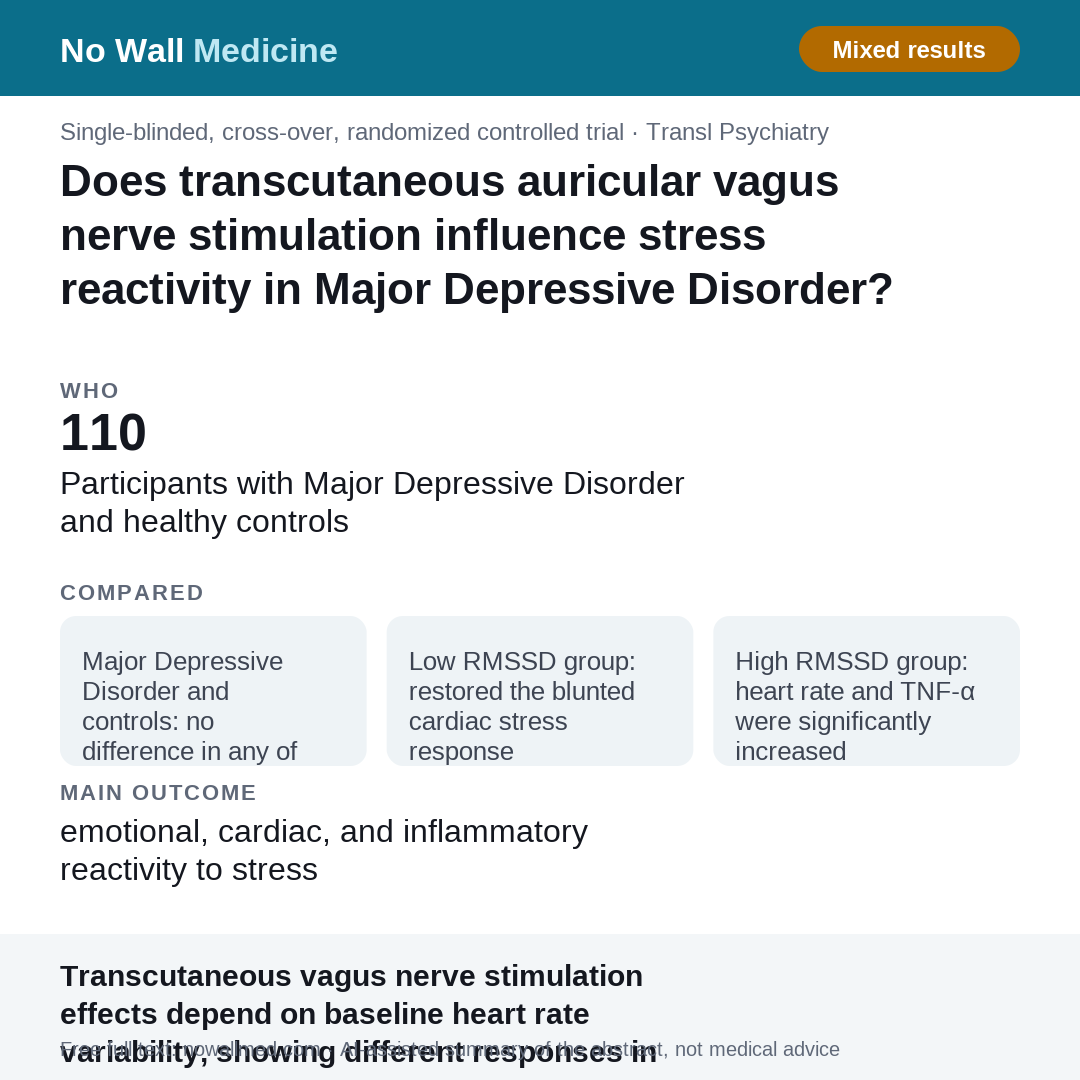
The heart knows best: baseline heart rate variability as guide to transcutaneous auricular vagus nerve stimulation in depression
Single-blinded, cross-over, randomized controlled trialMixed results
Does transcutaneous auricular vagus nerve stimulation influence stress reactivity in Major Depressive Disorder?
Who
110
Participants with Major Depressive Disorder and healthy controls
Compared
Major Depressive Disorder and controls: no difference in any of the outcomes
Low RMSSD group: restored the blunted cardiac stress response
High RMSSD group: heart rate and TNF-α were significantly increased
Main outcome
emotional, cardiac, and inflammatory reactivity to stress
Bottom line: Transcutaneous vagus nerve stimulation effects depend on baseline heart rate variability, showing different responses in low versus high RMSSD groups.
Transl Psychiatry · 2025-12-06Download image
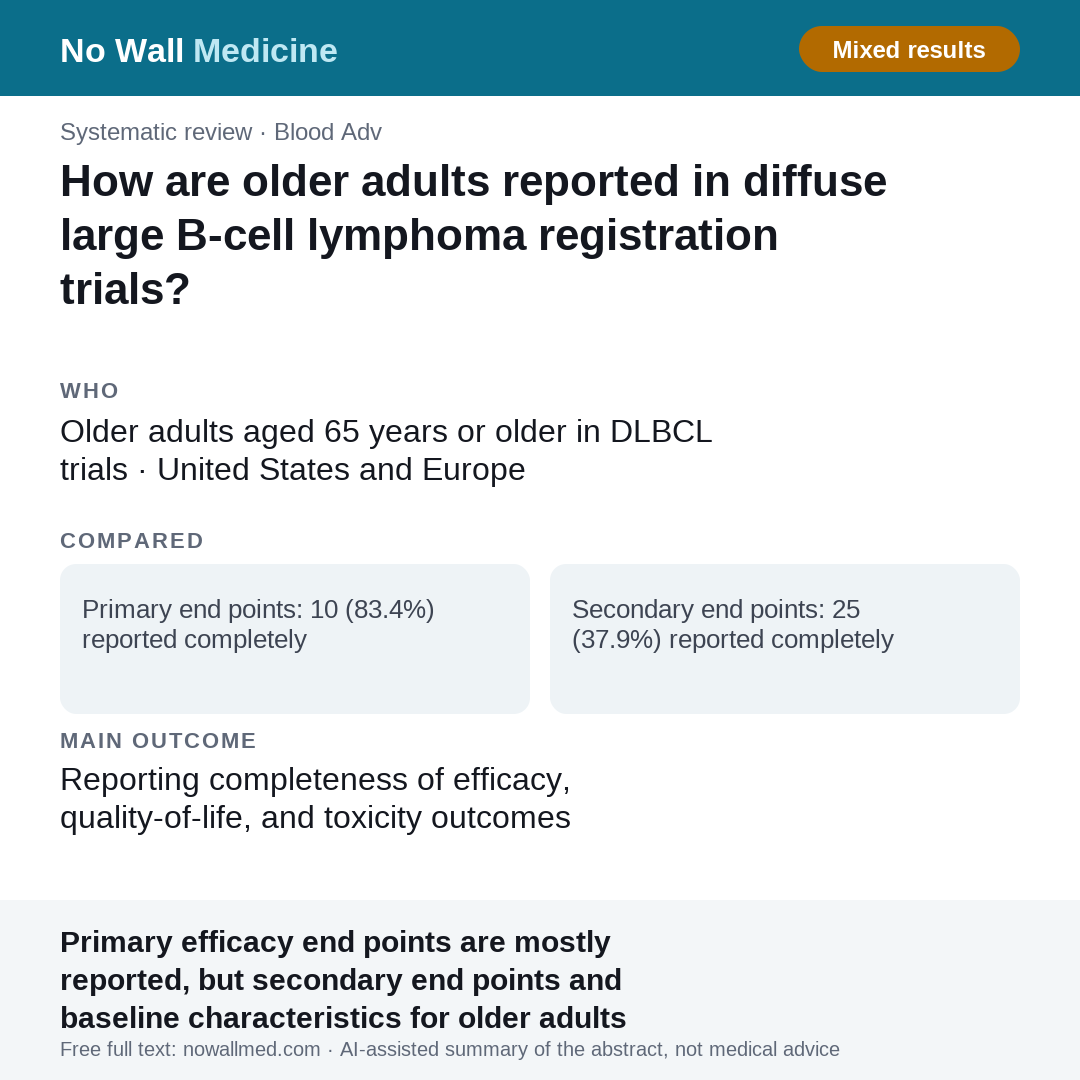
Inclusion, characteristics, and reporting of older patients in recent registration trials for DLBCL
Systematic reviewMixed results
How are older adults reported in diffuse large B-cell lymphoma registration trials?
Who
Older adults aged 65 years or older in DLBCL trials · United States and Europe
Compared
Primary end points: 10 (83.4%) reported completely
Secondary end points: 25 (37.9%) reported completely
Main outcome
Reporting completeness of efficacy, quality-of-life, and toxicity outcomes
Bottom line: Primary efficacy end points are mostly reported, but secondary end points and baseline characteristics for older adults are often unreported.
Blood Adv · 2025-12-06Download image
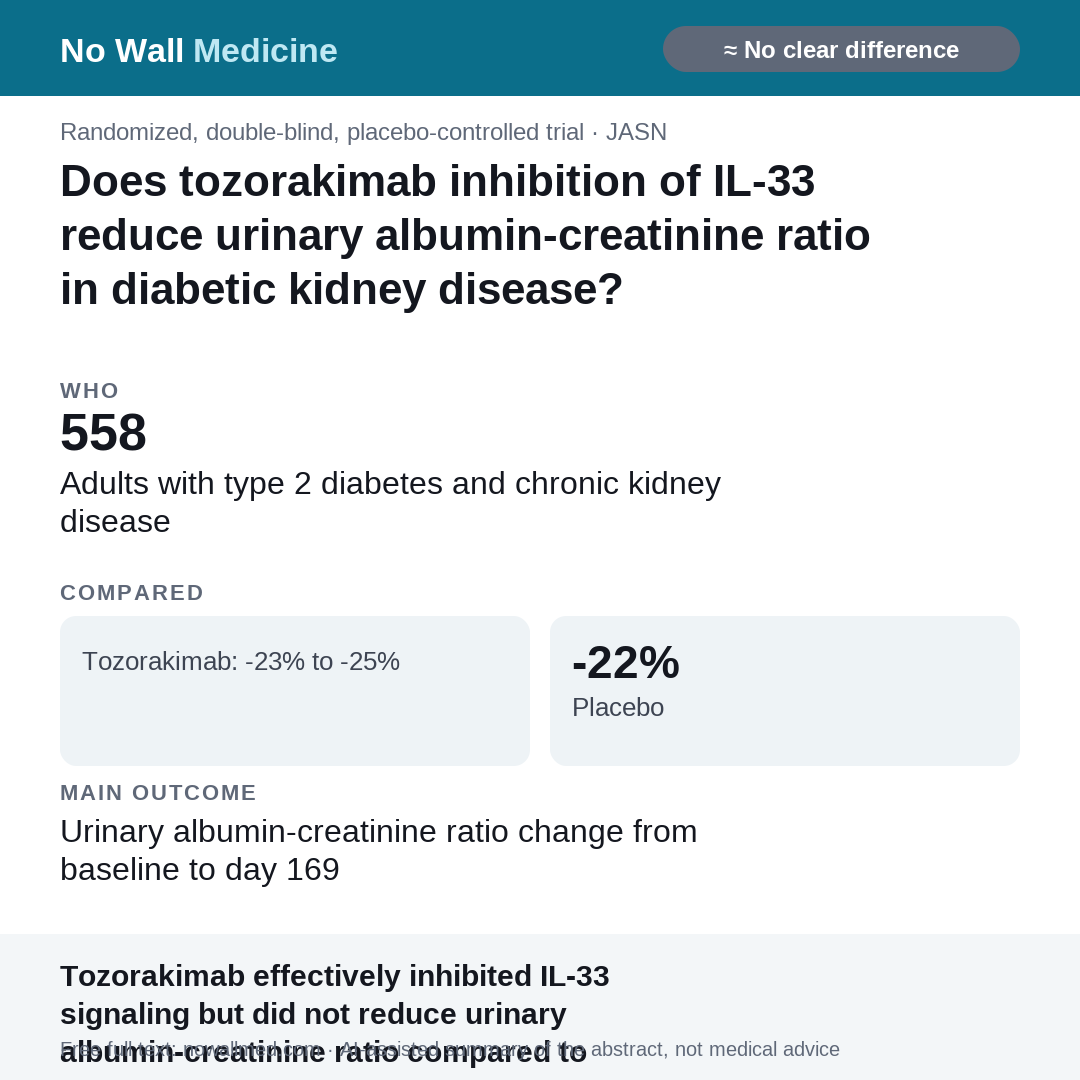
Inhibition of IL-33 in Diabetic Kidney Disease: A Randomized, Placebo-Controlled Phase 2b Trial
Randomized, double-blind, placebo-controlled trialNo clear difference
Does tozorakimab inhibition of IL-33 reduce urinary albumin-creatinine ratio in diabetic kidney disease?
Who
558
Adults with type 2 diabetes and chronic kidney disease
Compared
Tozorakimab: -23% to -25%
-22%Placebo
Main outcome
Urinary albumin-creatinine ratio change from baseline to day 169
Bottom line: Tozorakimab effectively inhibited IL-33 signaling but did not reduce urinary albumin-creatinine ratio compared to placebo.
JASN · 2025-12-05Download image
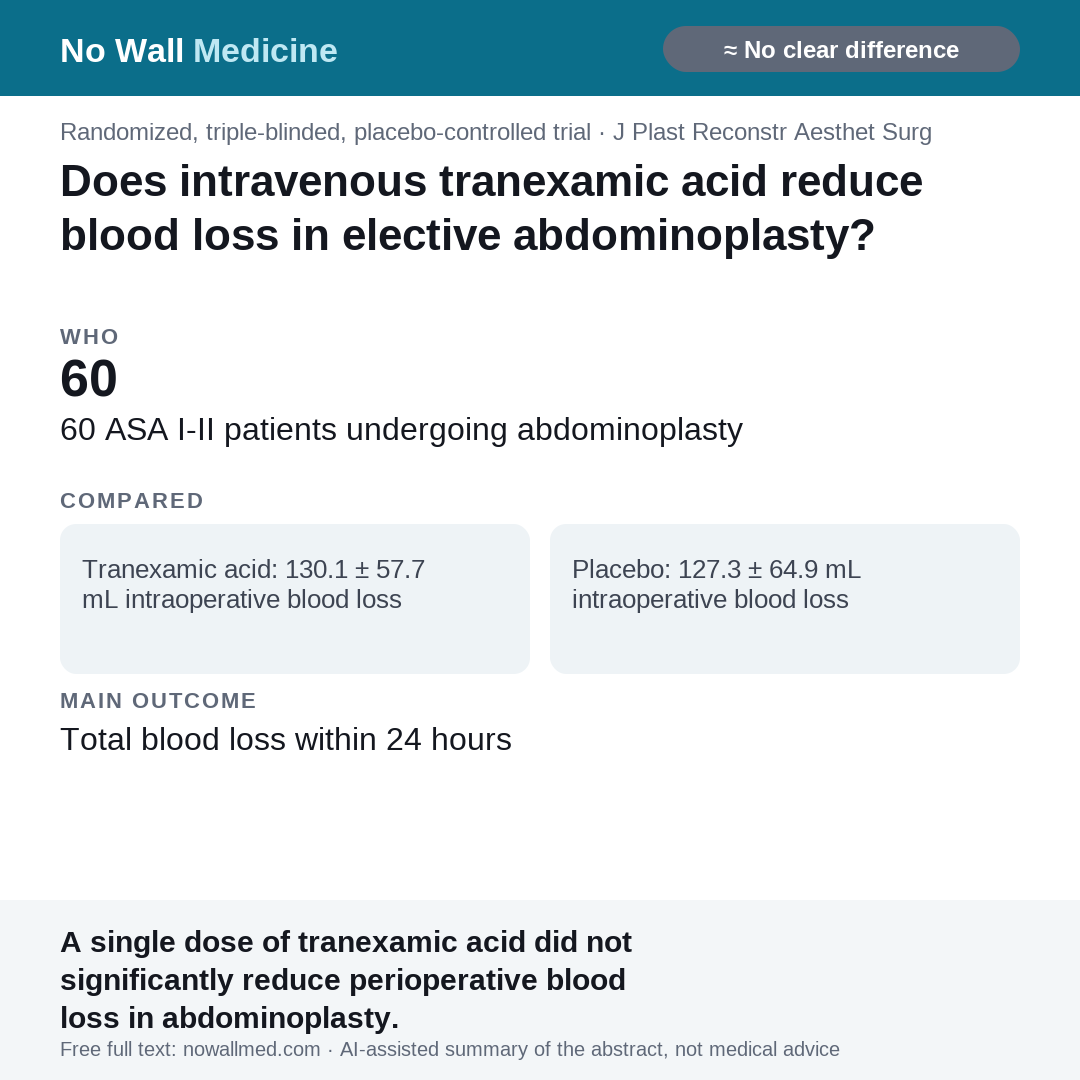
Efficacy and safety of intravenous tranexamic acid in elective abdominoplasty: A randomized, triple-blinded, placebo-controlled clinical trial
Randomized, triple-blinded, placebo-controlled trialNo clear difference
Does intravenous tranexamic acid reduce blood loss in elective abdominoplasty?
Who
60
60 ASA I-II patients undergoing abdominoplasty
Compared
Tranexamic acid: 130.1 ± 57.7 mL intraoperative blood loss
Placebo: 127.3 ± 64.9 mL intraoperative blood loss
Main outcome
Total blood loss within 24 hours
Bottom line: A single dose of tranexamic acid did not significantly reduce perioperative blood loss in abdominoplasty.
J Plast Reconstr Aesthet Surg · 2025-12-05Download image
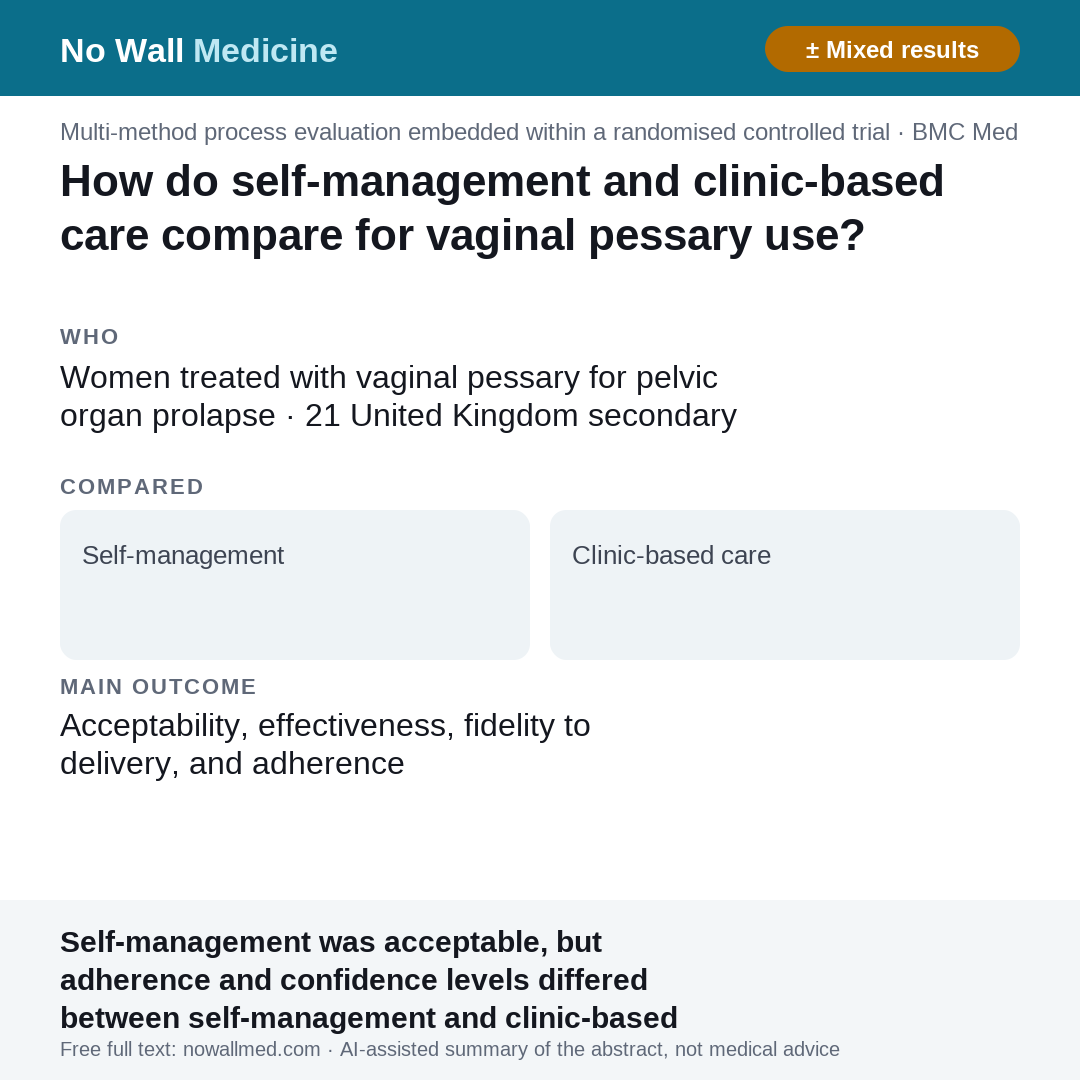
Self-management of vaginal pessaries for pelvic organ prolapse: multi-method process evaluation, linked to the TOPSY randomised controlled trial
Multi-method process evaluation embedded within a randomised controlled trialMixed results
How do self-management and clinic-based care compare for vaginal pessary use?
Who
Women treated with vaginal pessary for pelvic organ prolapse · 21 United Kingdom secondary care centres
Compared
Self-management
Clinic-based care
Main outcome
Acceptability, effectiveness, fidelity to delivery, and adherence
Bottom line: Self-management was acceptable, but adherence and confidence levels differed between self-management and clinic-based care groups.
BMC Med · 2025-12-05Download image
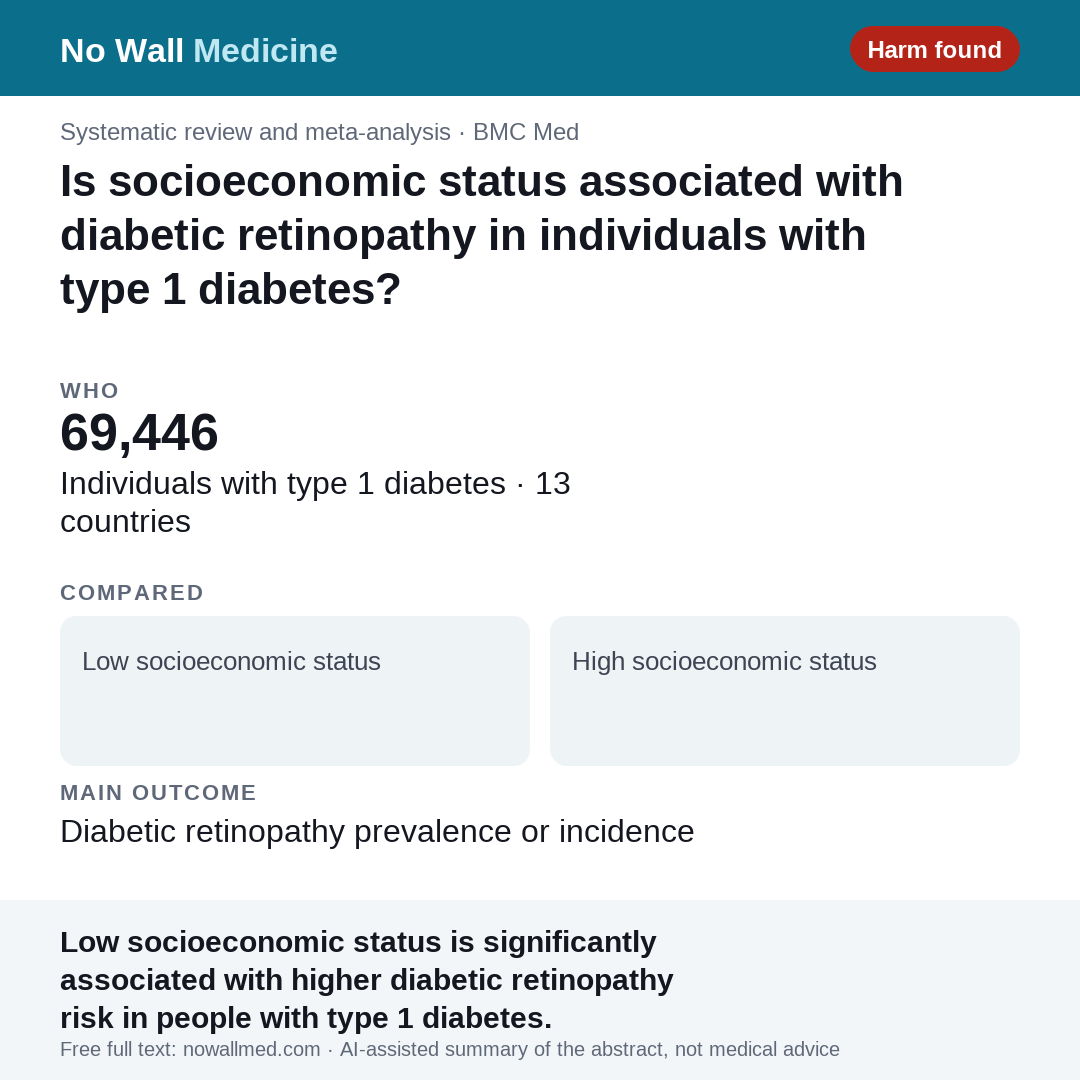
Association between socioeconomic status and diabetic retinopathy in individuals with type 1 diabetes: a systematic review and meta-analysis
Systematic review and meta-analysisHarm found
Is socioeconomic status associated with diabetic retinopathy in individuals with type 1 diabetes?
Who
69,446
Individuals with type 1 diabetes · 13 countries
Compared
Low socioeconomic status
High socioeconomic status
Main outcome
Diabetic retinopathy prevalence or incidence
Result: odds ratio 1.44 (95% CI 1.21-1.71)
Bottom line: Low socioeconomic status is significantly associated with higher diabetic retinopathy risk in people with type 1 diabetes.
BMC Med · 2025-12-05Download image