Visual abstracts
New randomized trials and meta-analyses from leading journals at a glance: who was studied, what was compared, and what was found. Every paper is free to read in full.
All specialtiesCardiology 4833Oncology 4115Gastroenterology & Hepatology 1934Infectious Disease 3825Neurology 1901Psychiatry & Mental Health 2256Pulmonology 2082Critical Care 1346Endocrinology & Diabetes 2572Pediatrics 2940Surgery 2525Orthopedics & Sports Medicine 926Neurosurgery 534Cardiothoracic & Vascular Surgery 671Plastic & Reconstructive Surgery 591Nephrology 1124Rheumatology 823Hematology 1104Dermatology 620Ophthalmology 543Obstetrics & Gynecology 1684Public & Global Health 1056Radiology & Imaging 641Anesthesiology 962Urology 754ENT (Otolaryngology) 503Emergency Medicine 489Allergy & Immunology 313Geriatrics 982Family Medicine & Primary Care 541Medical Genetics & Genomics 675Pathology & Laboratory Medicine 157Physical Medicine & Rehabilitation 751Palliative Care 424Nutrition 1580Digital Health & AI 2195General Medicine 321
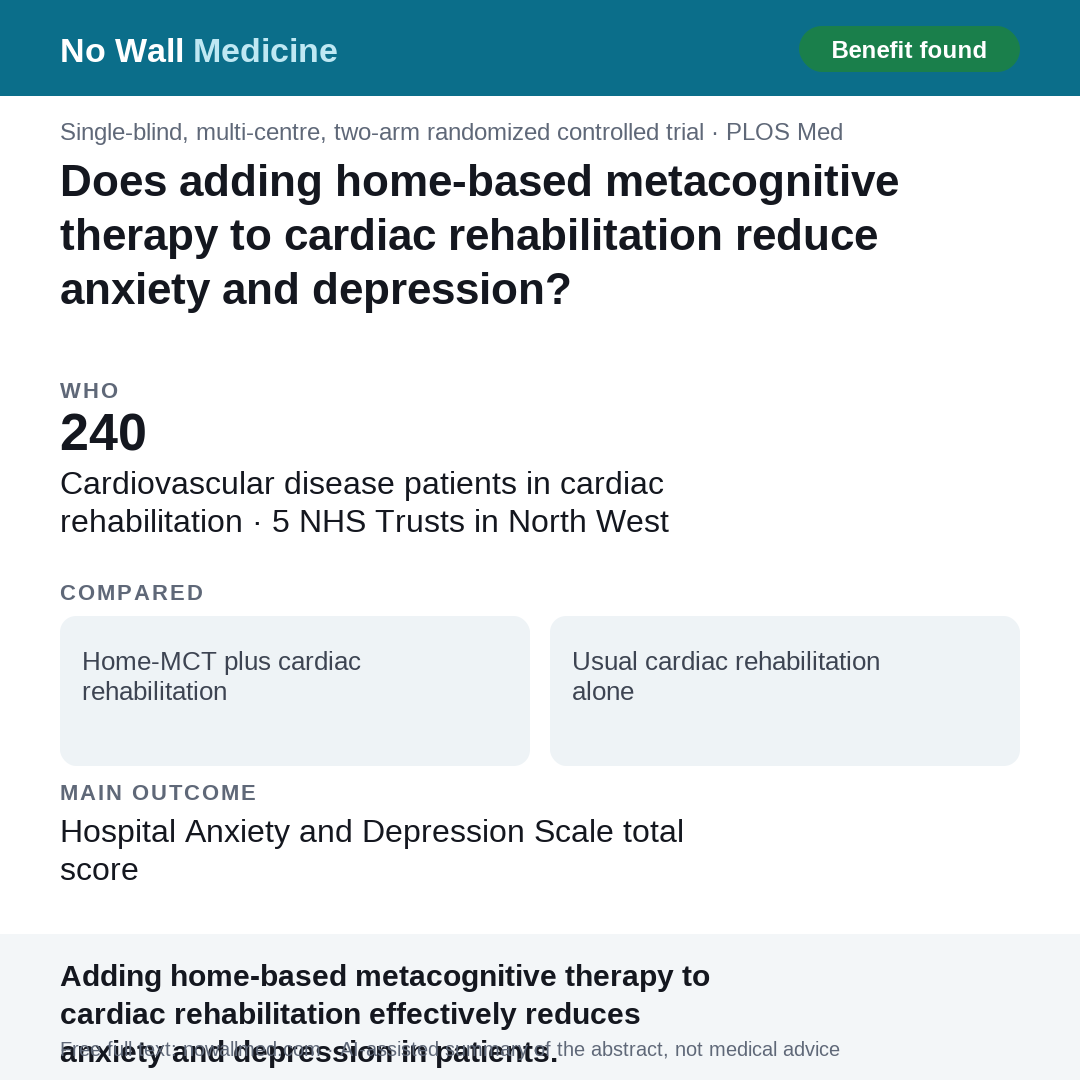
Metacognitive therapy home-based self-help for anxiety and depression in cardiovascular disease patients in the UK: A single-blind randomised controlled trial
Single-blind, multi-centre, two-arm randomized controlled trialBenefit found
Does adding home-based metacognitive therapy to cardiac rehabilitation reduce anxiety and depression?
Who
240
Cardiovascular disease patients in cardiac rehabilitation · 5 NHS Trusts in North West England
Compared
Home-MCT plus cardiac rehabilitation
Usual cardiac rehabilitation alone
Main outcome
Hospital Anxiety and Depression Scale total score
Result: adjusted mean difference = -2.64 [-4.49 to -0.78]
Bottom line: Adding home-based metacognitive therapy to cardiac rehabilitation effectively reduces anxiety and depression in patients.
Limitation: The absence of longer term follow-up data.
PLOS Med · 2023-01-31Download image
Mandatory, voluntary, repetitive, or one-off post-migration follow-up for tuberculosis prevention and control: A systematic review
Systematic review and meta-analysisNo clear difference
How do post-migration follow-up strategies affect tuberculosis coverage and yields?
Who
International migrants at risk of tuberculosis · 7 countries
Compared
Mandatory programmes
Voluntary programmes
One-off screening
Repetitive screening
Main outcome
Coverage and tuberculosis yields
Bottom line: Voluntary programmes have similar yields to mandatory ones, and repetitive screening does not increase yields compared to one-off screening.
Limitation: High heterogeneity in programme design and underreported factors like baseline incidence and reactivation rates.
PLOS Med · 2023-01-31Download image

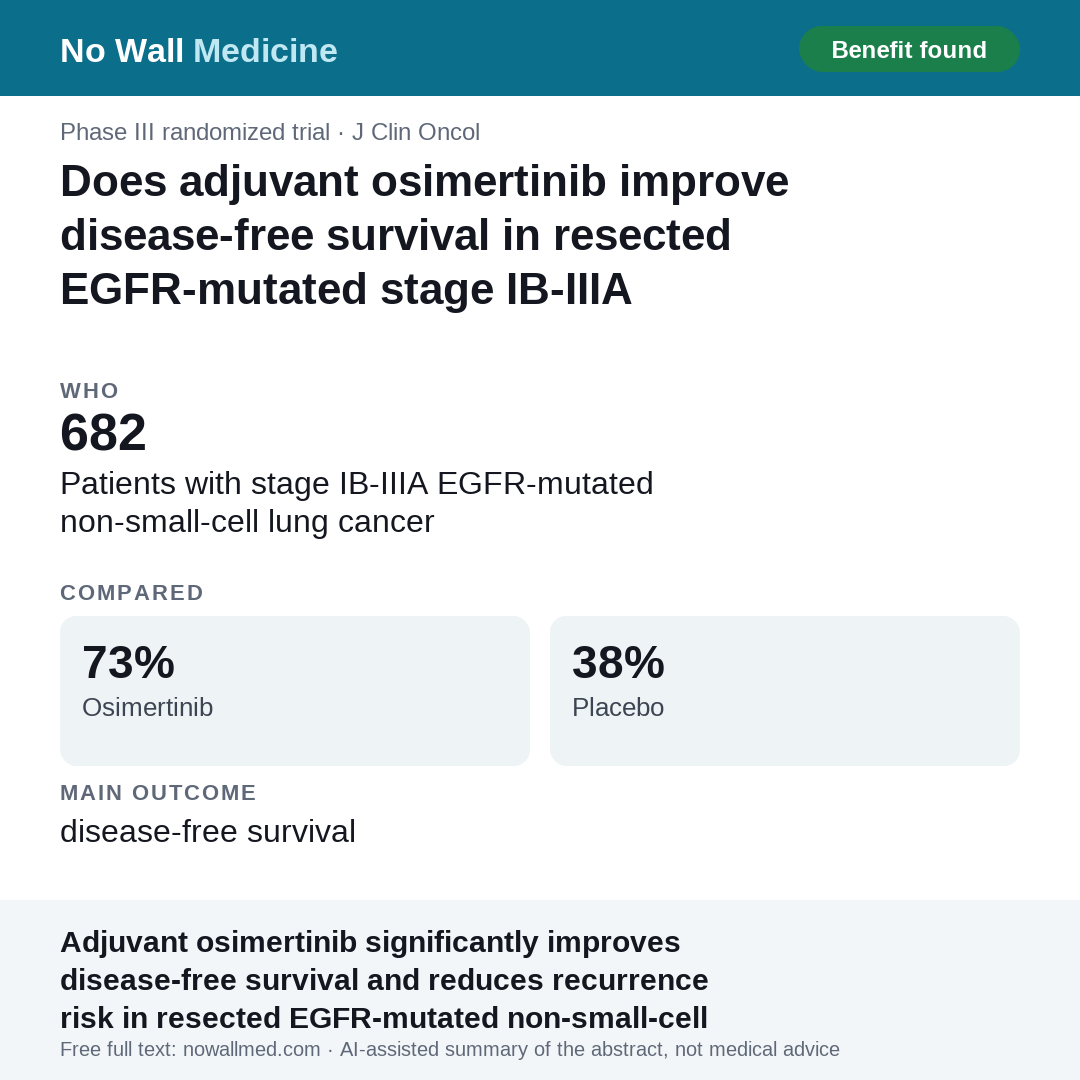
Adjuvant Osimertinib for Resected EGFR-Mutated Stage IB-IIIA Non-Small-Cell Lung Cancer: Updated Results From the Phase III Randomized ADAURA Trial
Phase III randomized trialBenefit found
Does adjuvant osimertinib improve disease-free survival in resected EGFR-mutated stage IB-IIIA non-small-cell lung cancer?
Who
682
Patients with stage IB-IIIA EGFR-mutated non-small-cell lung cancer
Compared
73%Osimertinib (4-year disease-free survival rate)
38%Placebo (4-year disease-free survival rate)
Main outcome
disease-free survival
Result: hazard ratio 0.27 (95% CI 0.21 to 0.34)
Bottom line: Adjuvant osimertinib significantly improves disease-free survival and reduces recurrence risk in resected EGFR-mutated non-small-cell lung cancer.
J Clin Oncol · 2023-01-31Download image
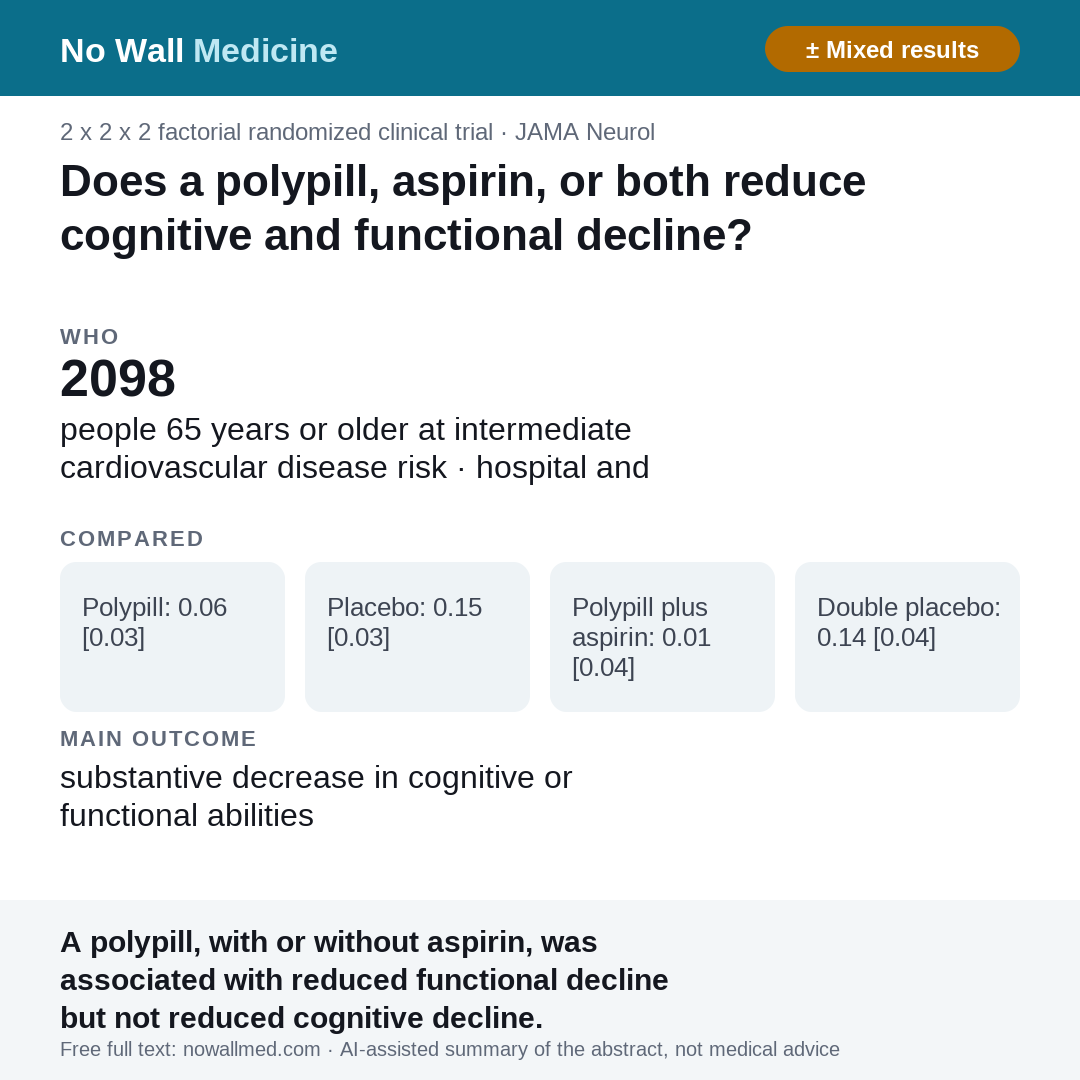
Effects of a Polypill, Aspirin, and the Combination of Both on Cognitive and Functional Outcomes: A Randomized Clinical Trial
2 x 2 x 2 factorial randomized clinical trialMixed results
Does a polypill, aspirin, or both reduce cognitive and functional decline?
Who
2098
people 65 years or older at intermediate cardiovascular disease risk · hospital and community-based centers in 8 countries
Compared
Polypill: 0.06 [0.03]
Placebo: 0.15 [0.03]
Polypill plus aspirin: 0.01 [0.04]
Double placebo: 0.14 [0.04]
Main outcome
substantive decrease in cognitive or functional abilities
Bottom line: A polypill, with or without aspirin, was associated with reduced functional decline but not reduced cognitive decline.
JAMA Neurol · 2023-01-31Download image
Pharmacokinetics and Pharmacodynamics of a Novel U500 Insulin Aspart Formulation: A Randomized, Double-Blind, Crossover Study in People With Type 1 Diabetes
Randomized, double-blind, crossover studyBenefit found
How do AT278 U500 and insulin aspart U100 compare in pharmacokinetics and pharmacodynamics?
Who
38
38 men with type 1 diabetes · single-center
Compared
AT278 U500: onset of appearance in serum was 6 min earlier
Insulin aspart U100
Main outcome
pharmacokinetics, pharmacodynamics, and safety
Bottom line: AT278 U500 provides accelerated absorption and onset of action compared with insulin aspart U100 in a reduced dose volume.
Diabetes Care · 2023-01-31Download image
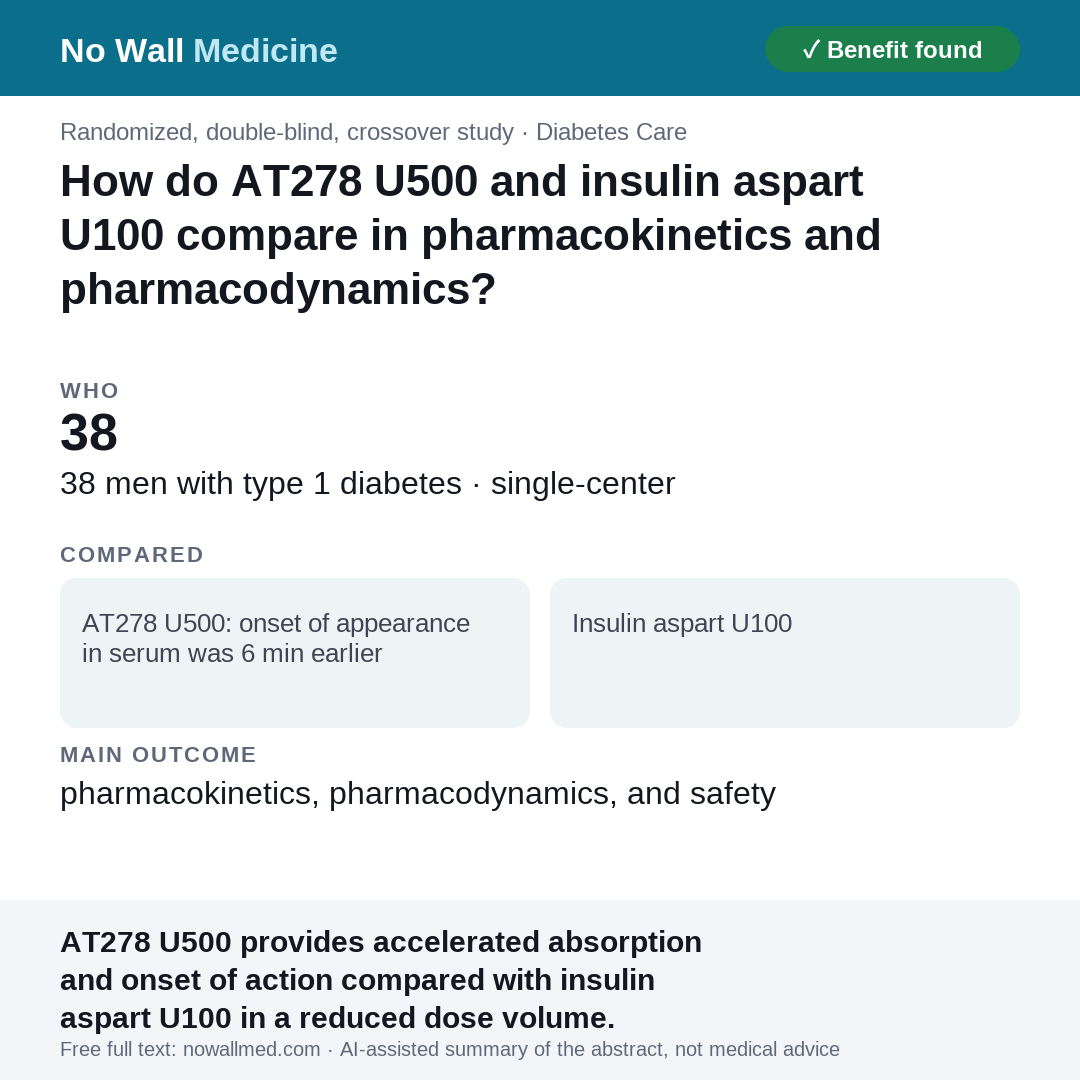
An ostomy baseplate with a skin-protection technology reduces peristomal skin complications: a randomized controlled trial (the ATTRACT study)
Randomized, controlled, open-labelled, cross-over trialBenefit found
Does an ostomy baseplate with skin-protection technology reduce peristomal skin complications?
Who
79
People living with a stoma with liquid faecal effluent · Five different countries
Compared
Investigational product: Significant reduction in peristomal skin complications (P = 0.015)
Comparator product SenSura Mio
Main outcome
Peristomal skin complications and health-related quality of life
Bottom line: An ostomy baseplate with skin-protection technology reduced peristomal skin complications and improved health-related quality of life.
Br J Dermatol · 2023-01-31Download image

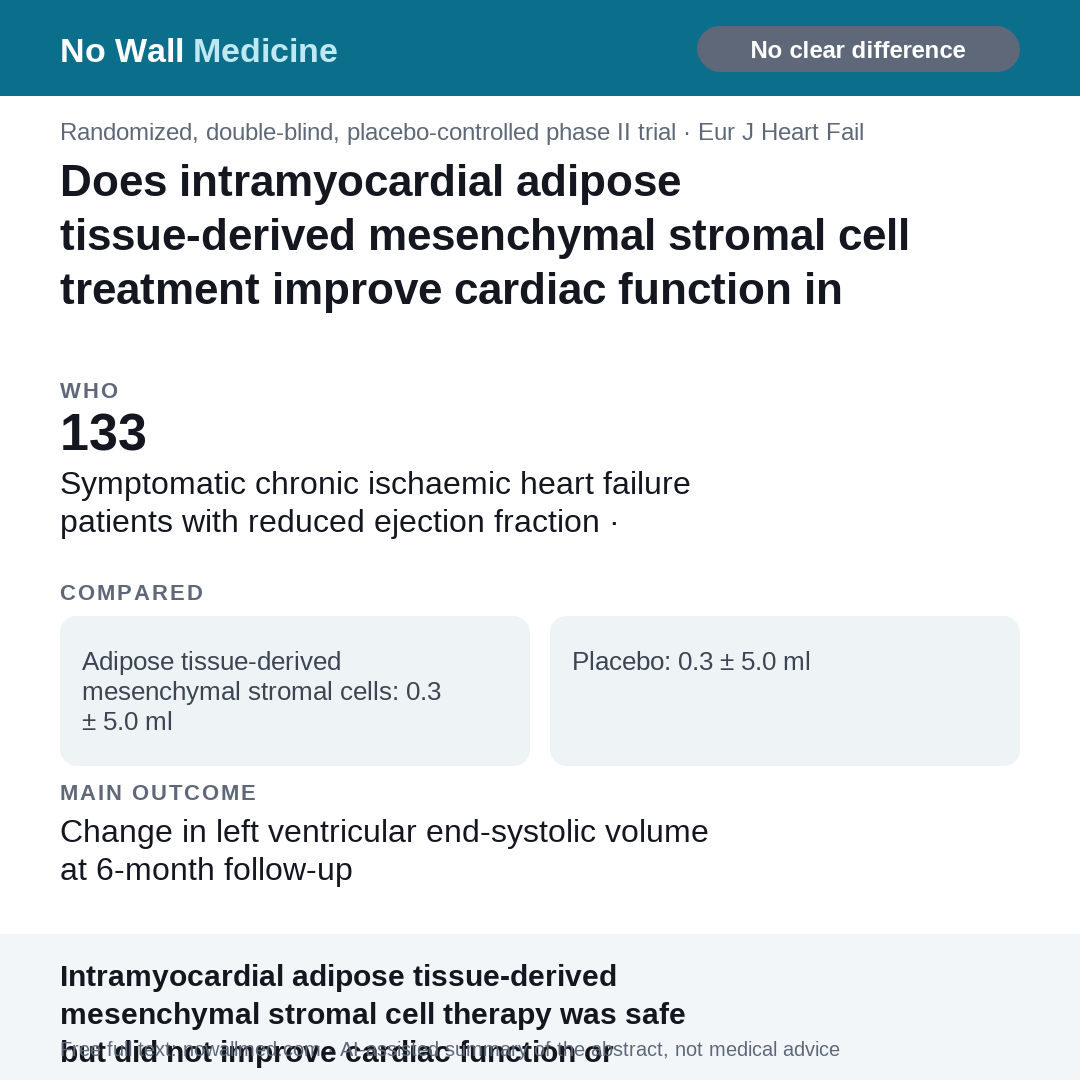
Effect of allogeneic adipose tissue-derived mesenchymal stromal cell treatment in chronic ischaemic heart failure with reduced ejection fraction - the SCIENCE trial
Randomized, double-blind, placebo-controlled phase II trialNo clear difference
Does intramyocardial adipose tissue-derived mesenchymal stromal cell treatment improve cardiac function in HFrEF?
Who
133
Symptomatic chronic ischaemic heart failure patients with reduced ejection fraction · European multicentre
Compared
Adipose tissue-derived mesenchymal stromal cells: 0.3 ± 5.0 ml
Placebo: 0.3 ± 5.0 ml
Main outcome
Change in left ventricular end-systolic volume at 6-month follow-up
Bottom line: Intramyocardial adipose tissue-derived mesenchymal stromal cell therapy was safe but did not improve cardiac function or symptoms.
Eur J Heart Fail · 2023-01-31Download image
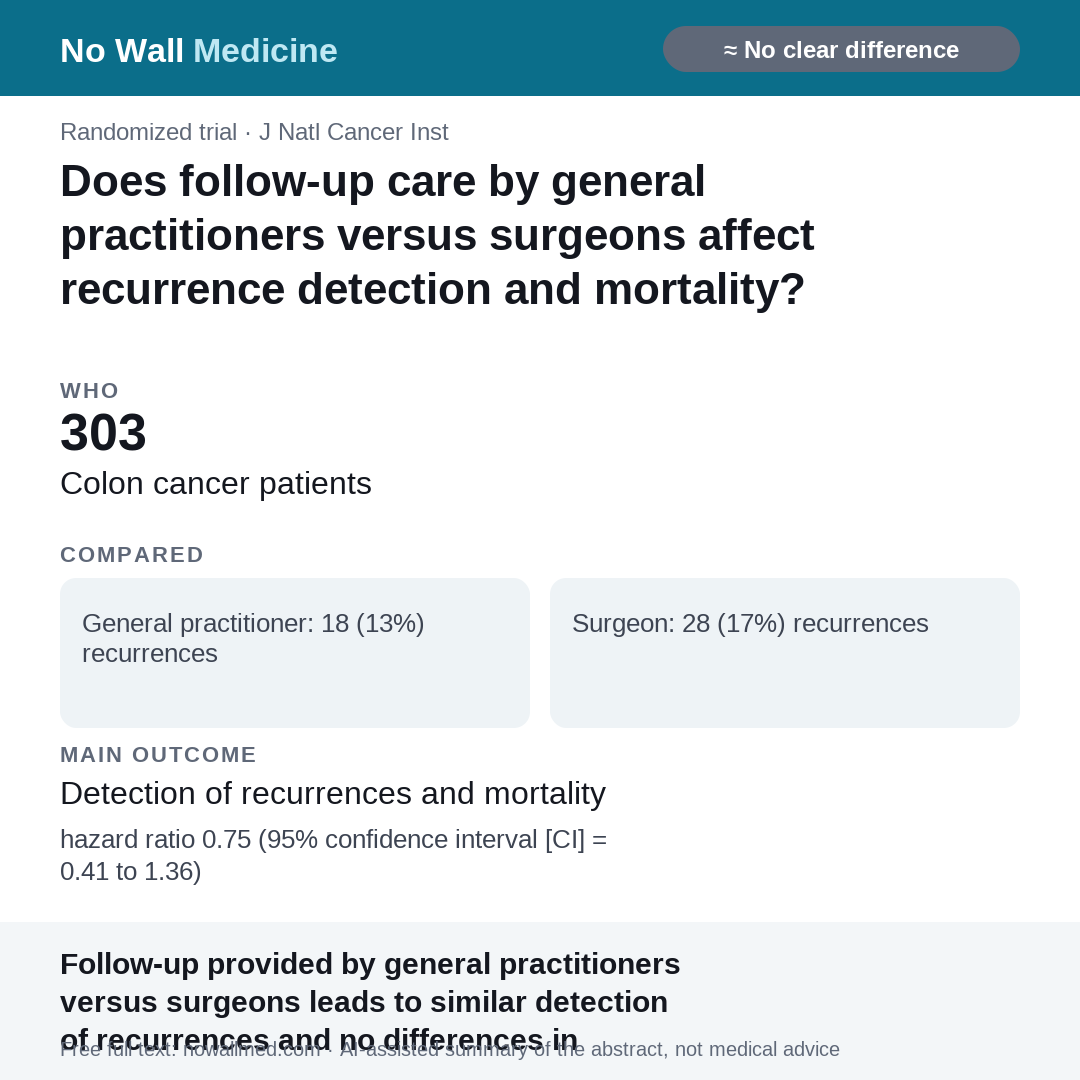
Detection of colon cancer recurrences during follow-up care by general practitioners vs surgeons
Randomized trialNo clear difference
Does follow-up care by general practitioners versus surgeons affect recurrence detection and mortality?
Who
303
Colon cancer patients
Compared
General practitioner: 18 (13%) recurrences
Surgeon: 28 (17%) recurrences
Main outcome
Detection of recurrences and mortality
Result: hazard ratio 0.75 (95% confidence interval [CI] = 0.41 to 1.36)
Bottom line: Follow-up provided by general practitioners versus surgeons leads to similar detection of recurrences and no differences in mortality.
J Natl Cancer Inst · 2023-01-31Download image
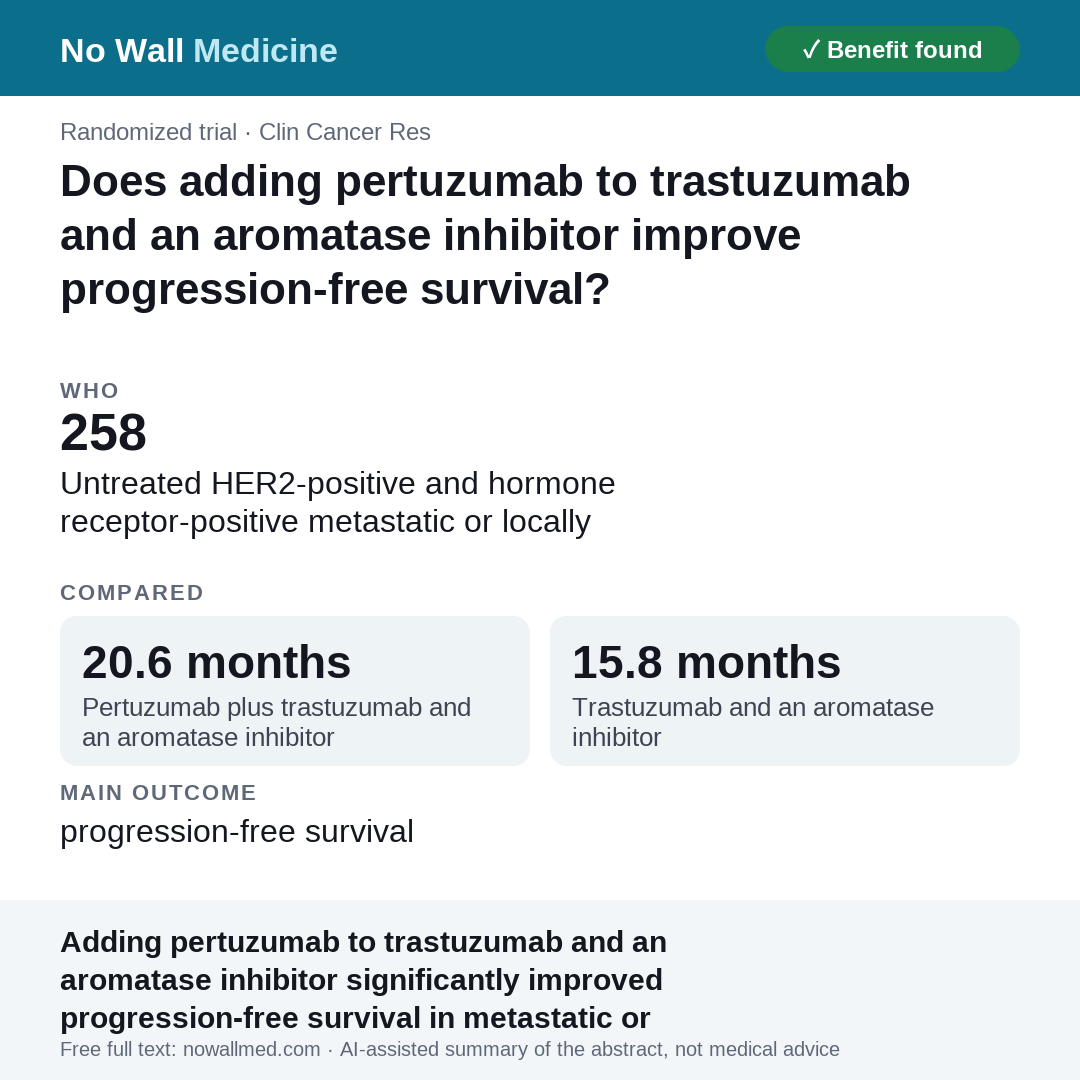
Pertuzumab, Trastuzumab, and an Aromatase Inhibitor for HER2-Positive and Hormone Receptor-Positive Metastatic or Locally Advanced Breast Cancer: PERTAIN Final Analysis
Randomized trialBenefit found
Does adding pertuzumab to trastuzumab and an aromatase inhibitor improve progression-free survival?
Who
258
Untreated HER2-positive and hormone receptor-positive metastatic or locally advanced breast cancer
Compared
20.6 monthsPertuzumab plus trastuzumab and an aromatase inhibitor
15.8 monthsTrastuzumab and an aromatase inhibitor
Main outcome
progression-free survival
Result: hazard ratio 0.67 (P = 0.006)
Bottom line: Adding pertuzumab to trastuzumab and an aromatase inhibitor significantly improved progression-free survival in metastatic or locally advanced breast cancer.
Clin Cancer Res · 2023-01-31Download image
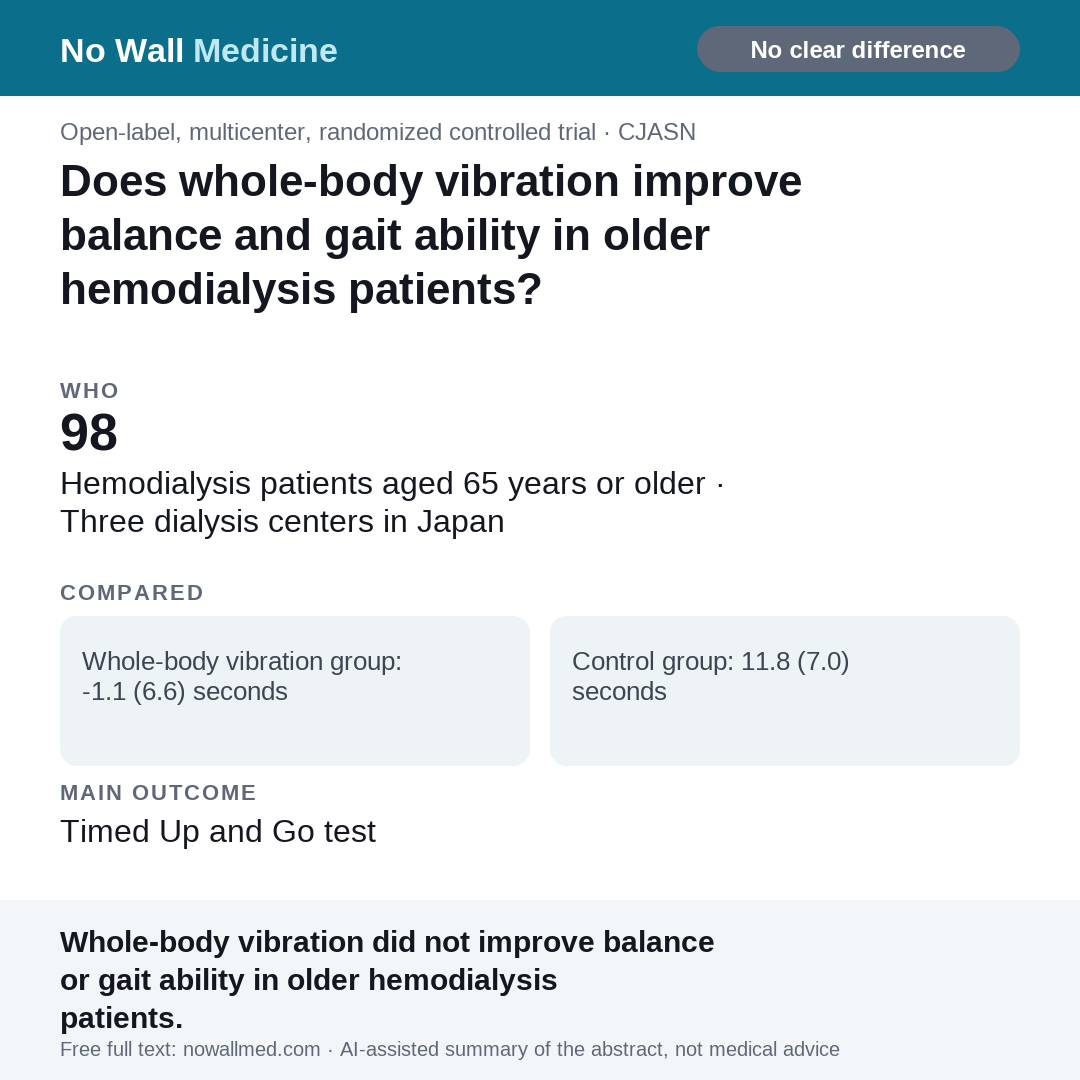
A Randomized Controlled Trial of Whole-Body Vibration on Gait Ability and Balance among Older Hemodialysis Patients
Open-label, multicenter, randomized controlled trialNo clear difference
Does whole-body vibration improve balance and gait ability in older hemodialysis patients?
Who
98
Hemodialysis patients aged 65 years or older · Three dialysis centers in Japan
Compared
Whole-body vibration group: -1.1 (6.6) seconds
Control group: 11.8 (7.0) seconds
Main outcome
Timed Up and Go test
Result: change, 0.3 seconds in the whole-body vibration group; 95% confidence interval, -1.4 to 2.0; P=0.71
Bottom line: Whole-body vibration did not improve balance or gait ability in older hemodialysis patients.
CJASN · 2023-01-31Download image
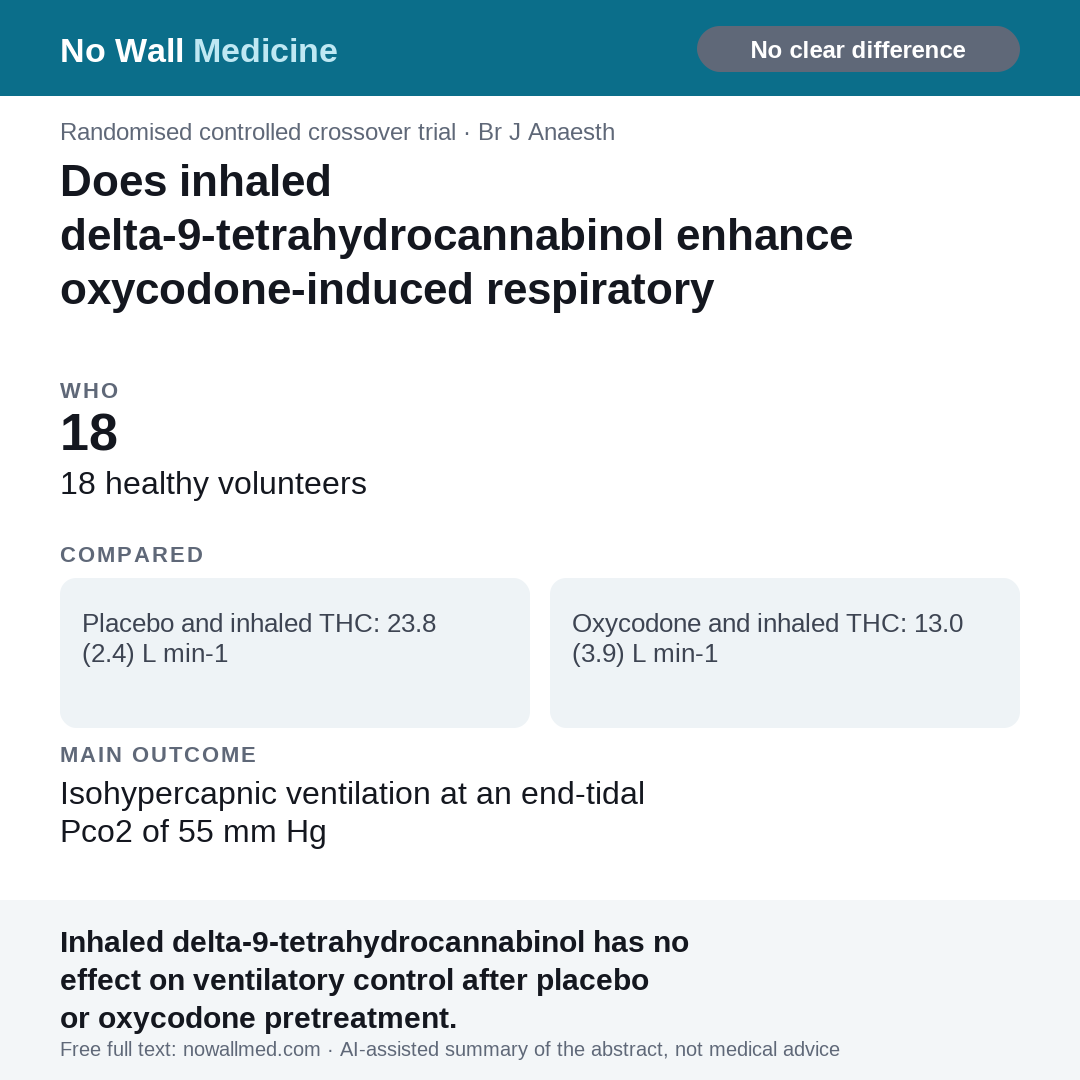
Inhaled Δ9-tetrahydrocannabinol does not enhance oxycodone-induced respiratory depression: randomised controlled trial in healthy volunteers
Randomised controlled crossover trialNo clear difference
Does inhaled delta-9-tetrahydrocannabinol enhance oxycodone-induced respiratory depression?
Who
18
18 healthy volunteers
Compared
Placebo and inhaled THC: 23.8 (2.4) L min-1
Oxycodone and inhaled THC: 13.0 (3.9) L min-1
Main outcome
Isohypercapnic ventilation at an end-tidal Pco2 of 55 mm Hg
Bottom line: Inhaled delta-9-tetrahydrocannabinol has no effect on ventilatory control after placebo or oxycodone pretreatment.
Br J Anaesth · 2023-01-31Download image
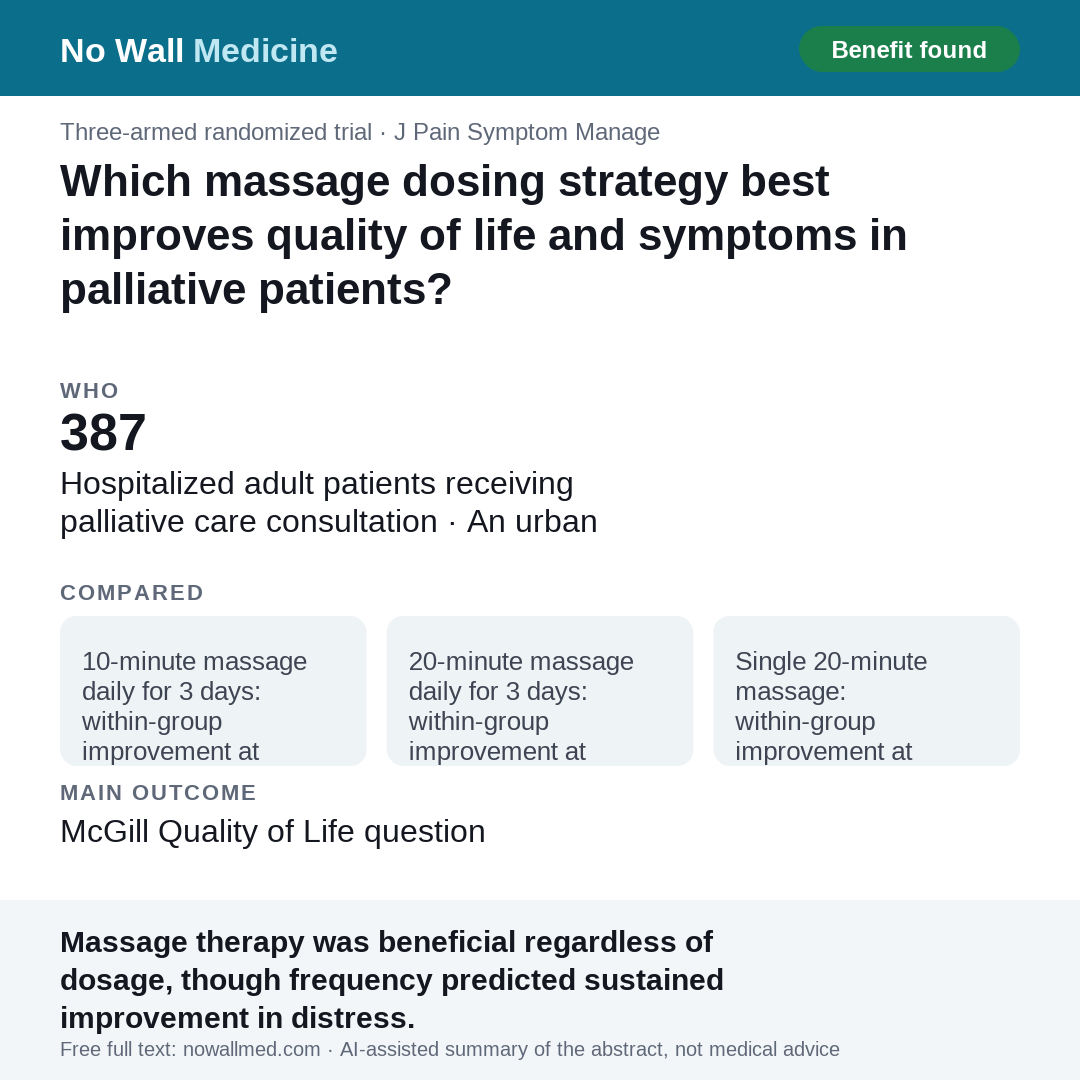
Massage Therapy for Hospitalized Patients Receiving Palliative Care: A Randomized Clinical Trial
Three-armed randomized trialBenefit found
Which massage dosing strategy best improves quality of life and symptoms in palliative patients?
Who
387
Hospitalized adult patients receiving palliative care consultation · An urban academic hospital
Compared
10-minute massage daily for 3 days: within-group improvement at follow-up (P < 0.05)
20-minute massage daily for 3 days: within-group improvement at follow-up (P < 0.05)
Single 20-minute massage: within-group improvement at follow-up (P < 0.05)
Main outcome
McGill Quality of Life question
Bottom line: Massage therapy was beneficial regardless of dosage, though frequency predicted sustained improvement in distress.
J Pain Symptom Manage · 2023-01-31Download image
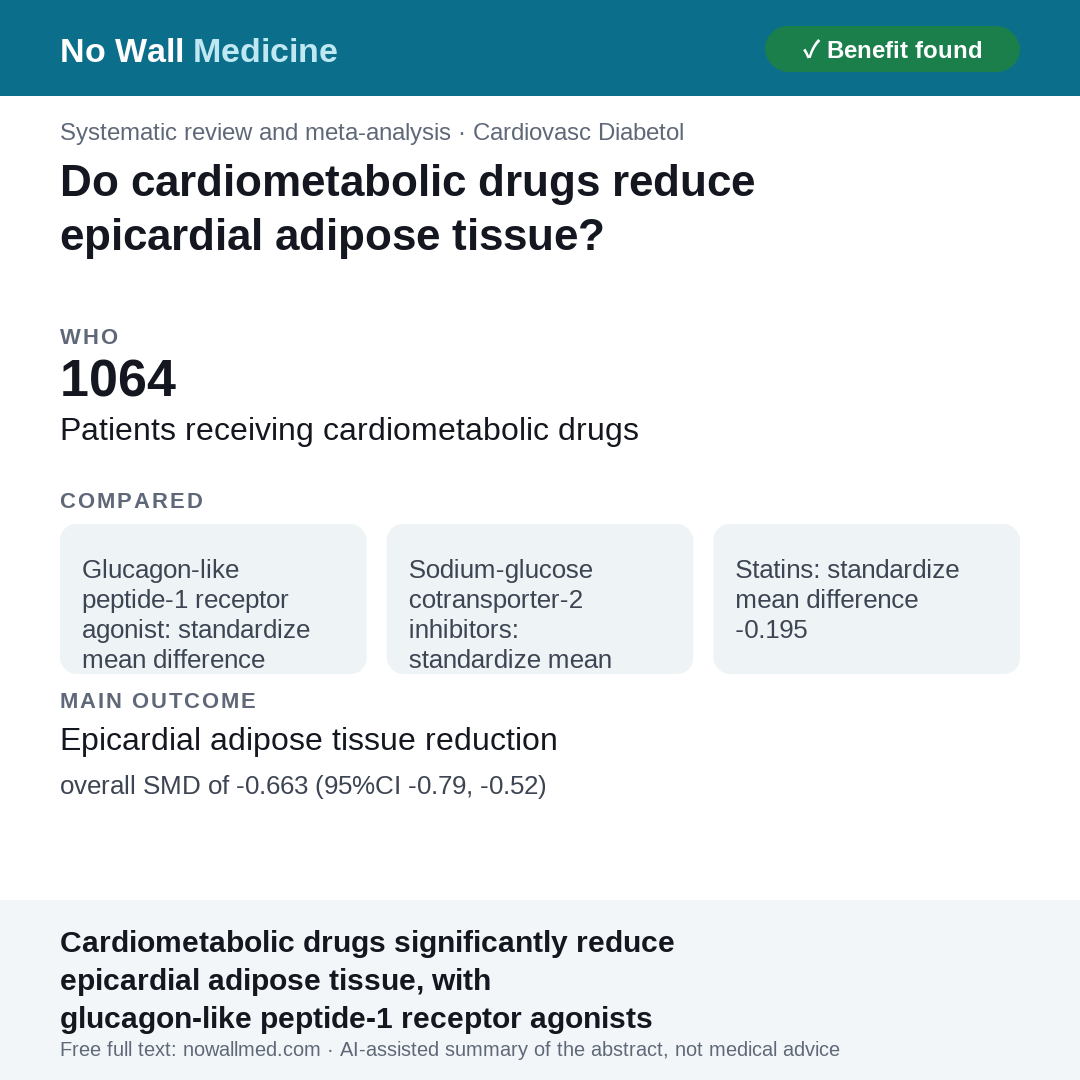
Efficacy of cardiometabolic drugs in reduction of epicardial adipose tissue: a systematic review and meta-analysis
Systematic review and meta-analysisBenefit found
Do cardiometabolic drugs reduce epicardial adipose tissue?
Who
1064
Patients receiving cardiometabolic drugs
Compared
Glucagon-like peptide-1 receptor agonist: standardize mean difference -1.005
Sodium-glucose cotransporter-2 inhibitors: standardize mean difference -0.552
Statins: standardize mean difference -0.195
Main outcome
Epicardial adipose tissue reduction
Result: overall SMD of -0.663 (95%CI -0.79, -0.52)
Bottom line: Cardiometabolic drugs significantly reduce epicardial adipose tissue, with glucagon-like peptide-1 receptor agonists being the most effective.
Cardiovasc Diabetol · 2023-01-31Download image
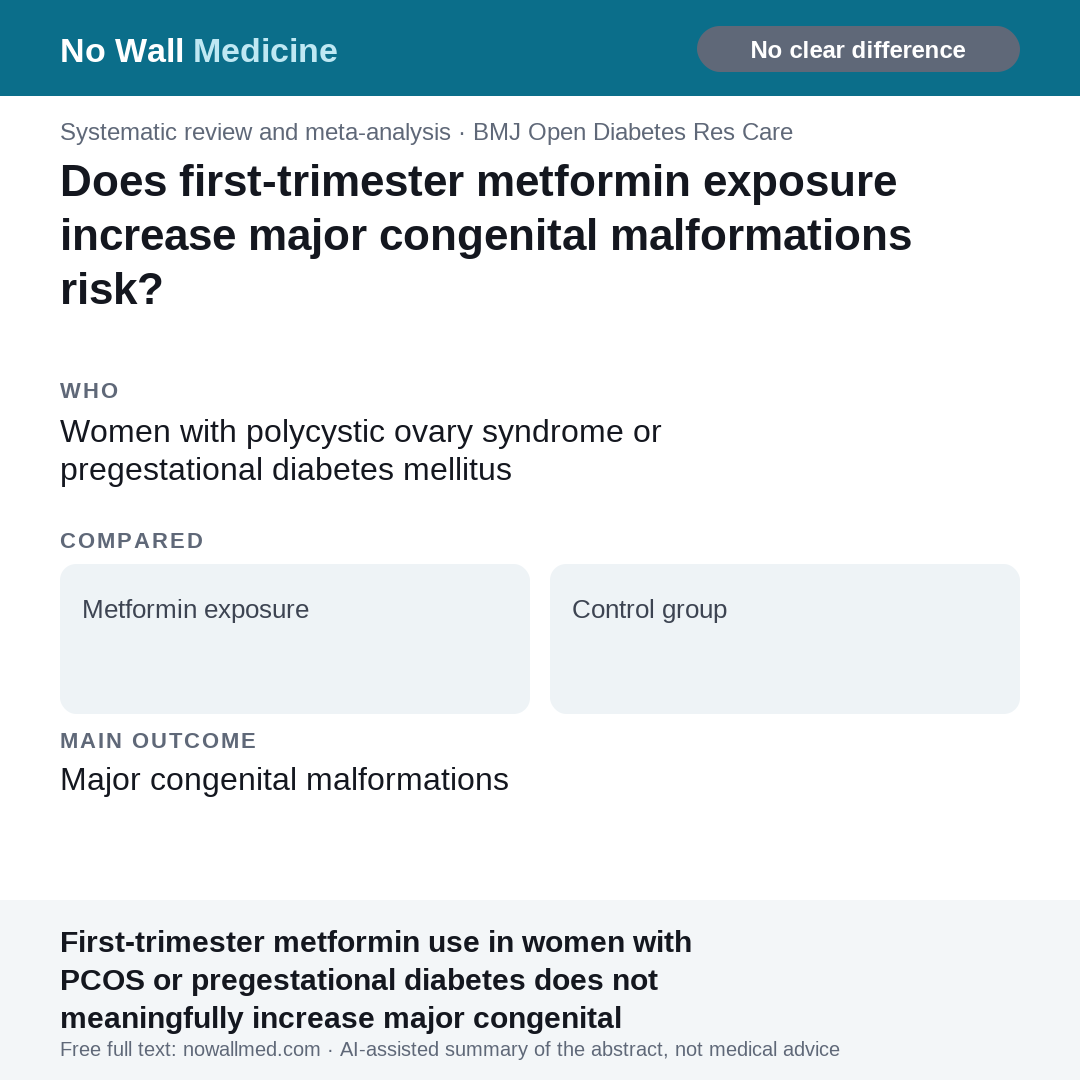
Major malformations risk following early pregnancy exposure to metformin: a systematic review and meta-analysis
Systematic review and meta-analysisNo clear difference
Does first-trimester metformin exposure increase major congenital malformations risk?
Who
Women with polycystic ovary syndrome or pregestational diabetes mellitus
Compared
Metformin exposure
Control group
Main outcome
Major congenital malformations
Bottom line: First-trimester metformin use in women with PCOS or pregestational diabetes does not meaningfully increase major congenital malformations risk.
Limitation: Further studies are needed to characterize residual safety concerns.
BMJ Open Diabetes Res Care · 2023-01-31Download image
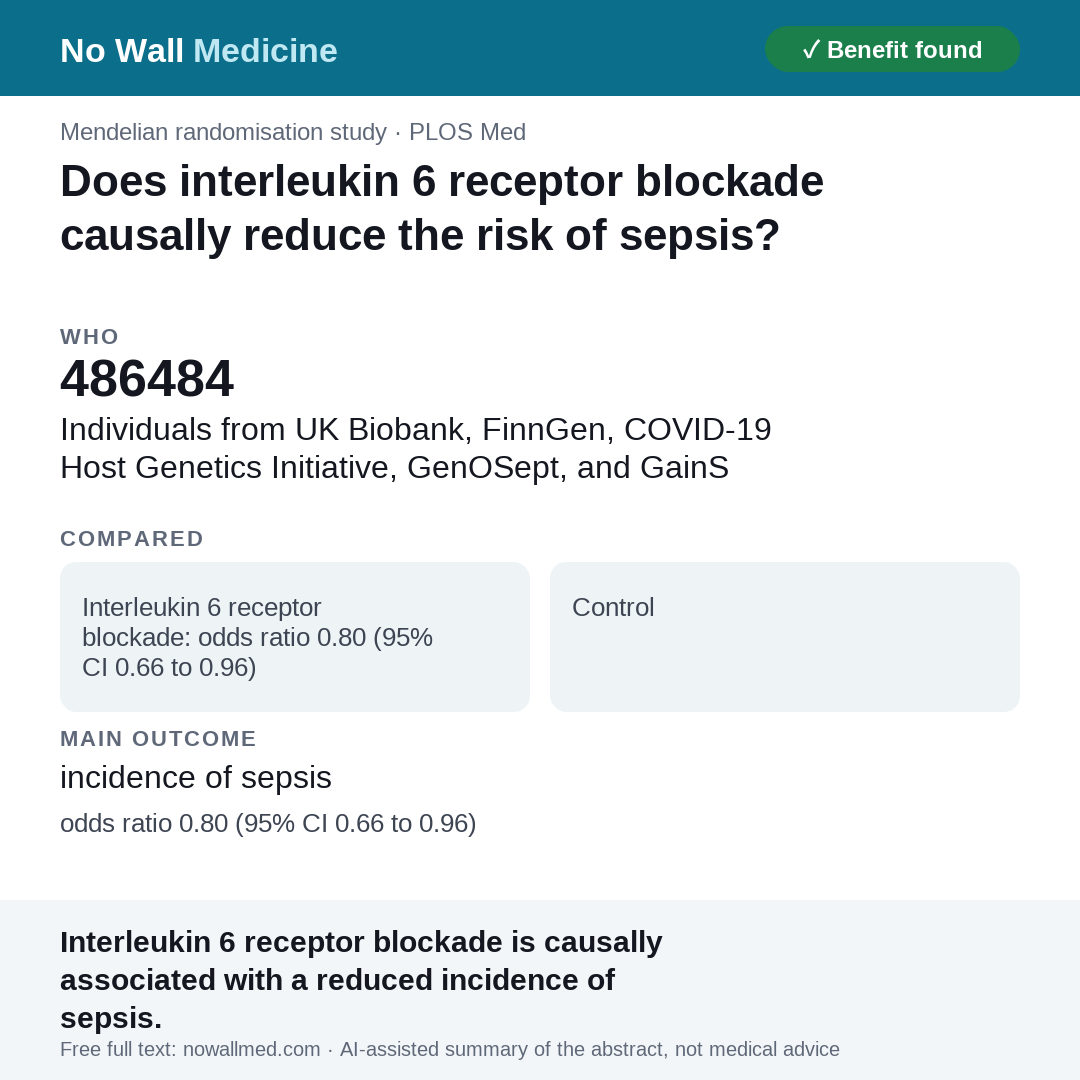
Therapeutic potential of IL6R blockade for the treatment of sepsis and sepsis-related death: A Mendelian randomisation study
Mendelian randomisation studyBenefit found
Does interleukin 6 receptor blockade causally reduce the risk of sepsis?
Who
486484
Individuals from UK Biobank, FinnGen, COVID-19 Host Genetics Initiative, GenOSept, and GainS · UK Biobank, FinnGen, COVID-19 Host Genetics Initiative, GenOSept, and GainS consortium
Compared
Interleukin 6 receptor blockade: odds ratio 0.80 (95% CI 0.66 to 0.96)
Control
Main outcome
incidence of sepsis
Result: odds ratio 0.80 (95% CI 0.66 to 0.96)
Bottom line: Interleukin 6 receptor blockade is causally associated with a reduced incidence of sepsis.
Limitation: Results reflect lifetime exposure rather than the effect of therapeutic blockade.
PLOS Med · 2023-01-30Download image
Asciminib vs bosutinib in chronic-phase chronic myeloid leukemia previously treated with at least two tyrosine kinase inhibitors: longer-term follow-up of ASCEMBL
Randomized trialBenefit found
Is asciminib more effective and safer than bosutinib in chronic-phase chronic myeloid leukemia?
Who
Adults with Philadelphia chromosome-positive chronic myeloid leukemia in chronic phase
Compared
asciminib: 37.6% major molecular response rate at week 96
bosutinib: 15.8% major molecular response rate at week 96
Main outcome
major molecular response rate at week 96
Result: difference 21.7% (95% CI, 10.53-32.95; two-sided p = 0.001)
Bottom line: Asciminib demonstrated superior efficacy and better safety than bosutinib in patients previously treated with two or more tyrosine kinase inhibitors.
Leukemia · 2023-01-30Download image

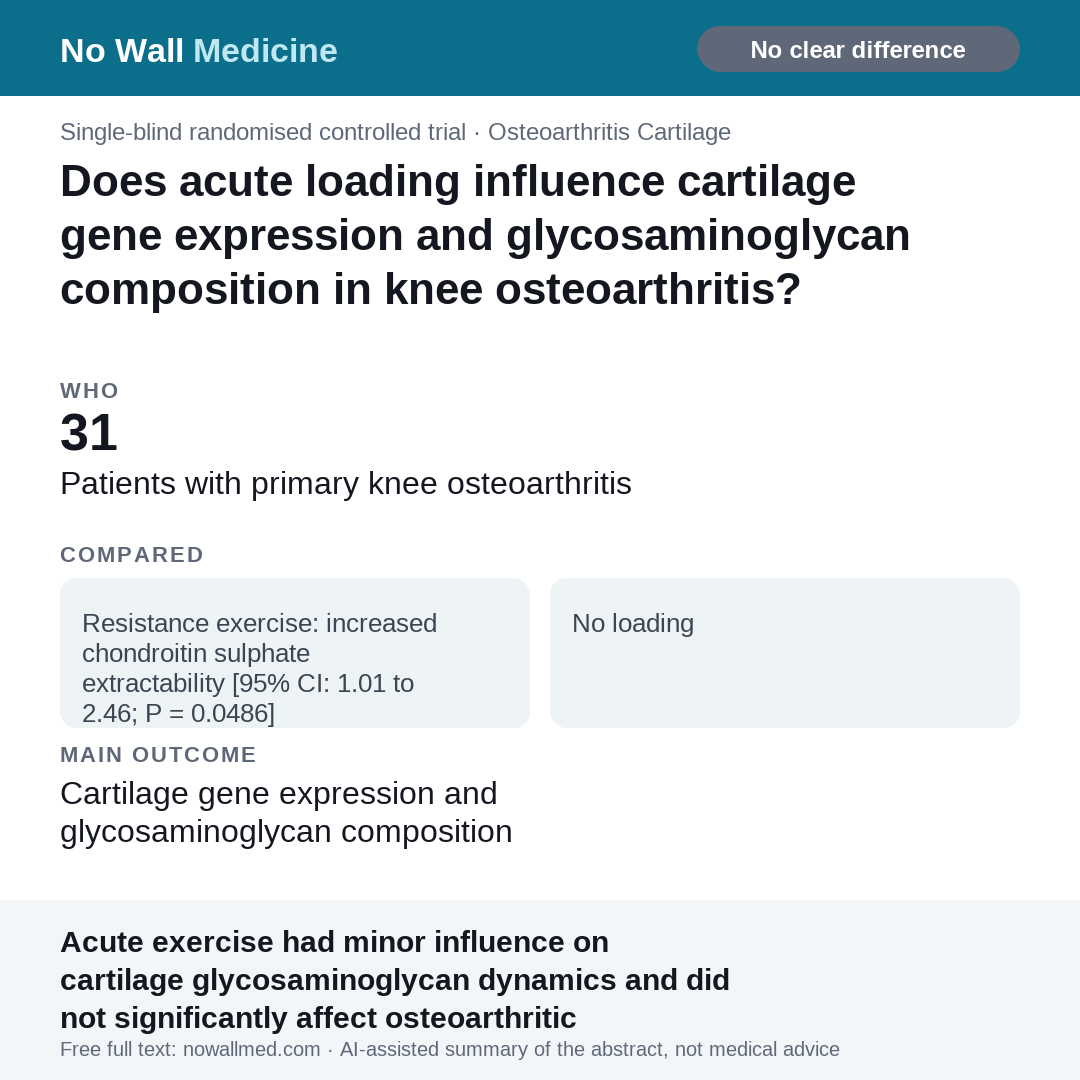
Acute loading has minor influence on human articular cartilage gene expression and glycosaminoglycan composition in late-stage knee osteoarthritis: a randomised controlled trial
Single-blind randomised controlled trialNo clear difference
Does acute loading influence cartilage gene expression and glycosaminoglycan composition in knee osteoarthritis?
Who
31
Patients with primary knee osteoarthritis
Compared
Resistance exercise: increased chondroitin sulphate extractability [95% CI: 1.01 to 2.46; P = 0.0486]
No loading
Main outcome
Cartilage gene expression and glycosaminoglycan composition
Bottom line: Acute exercise had minor influence on cartilage glycosaminoglycan dynamics and did not significantly affect osteoarthritic cartilage.
Osteoarthritis Cartilage · 2023-01-30Download image
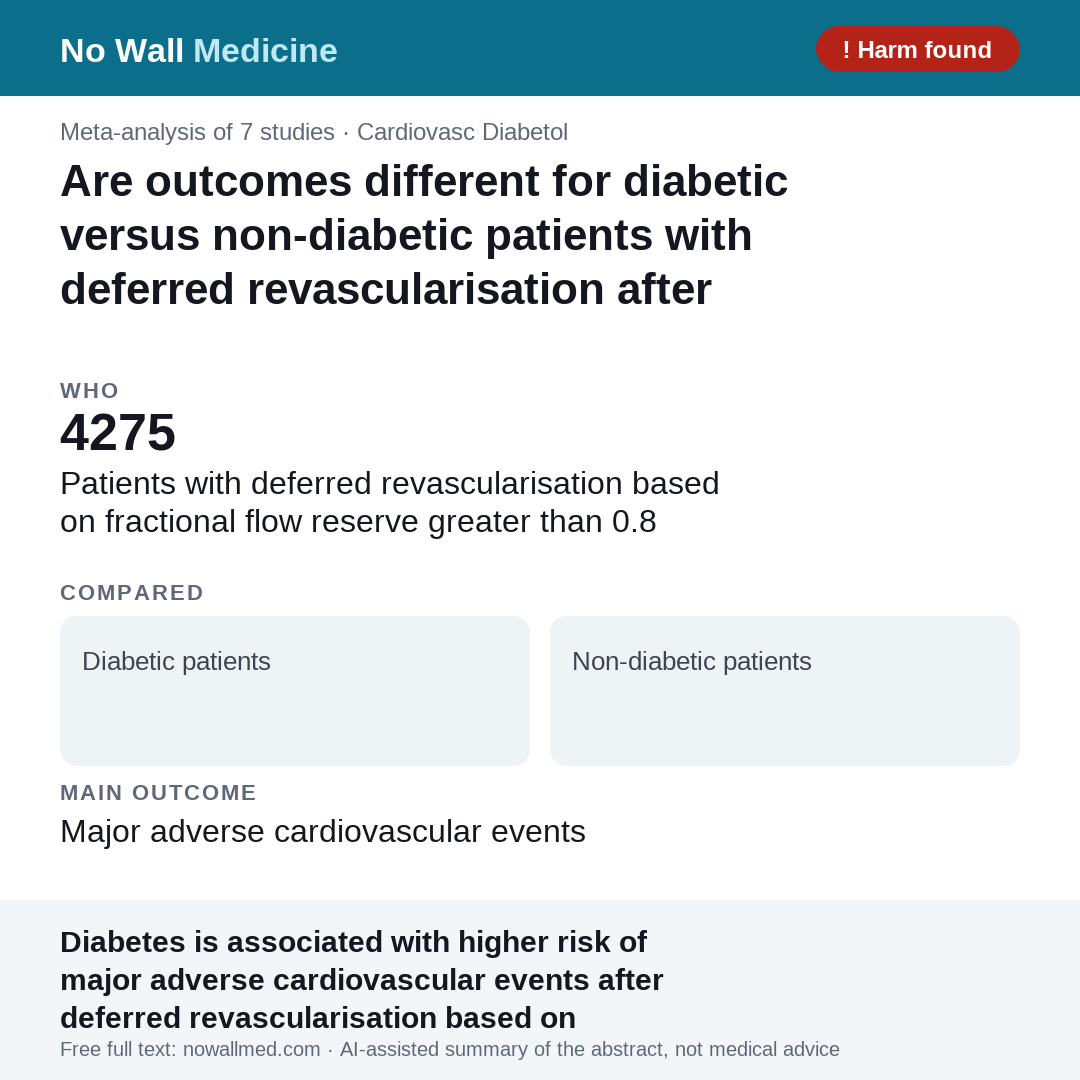
Outcomes of deferred revascularisation following negative fractional flow reserve in diabetic and non-diabetic patients: a meta-analysis
Meta-analysis of 7 studiesHarm found
Are outcomes different for diabetic versus non-diabetic patients with deferred revascularisation after negative FFR?
Who
4275
Patients with deferred revascularisation based on fractional flow reserve greater than 0.8
Compared
Diabetic patients
Non-diabetic patients
Main outcome
Major adverse cardiovascular events
Result: odds ratio 1.66 (95% CI 1.35-2.04)
Bottom line: Diabetes is associated with higher risk of major adverse cardiovascular events after deferred revascularisation based on fractional flow reserve.
Cardiovasc Diabetol · 2023-01-30Download image
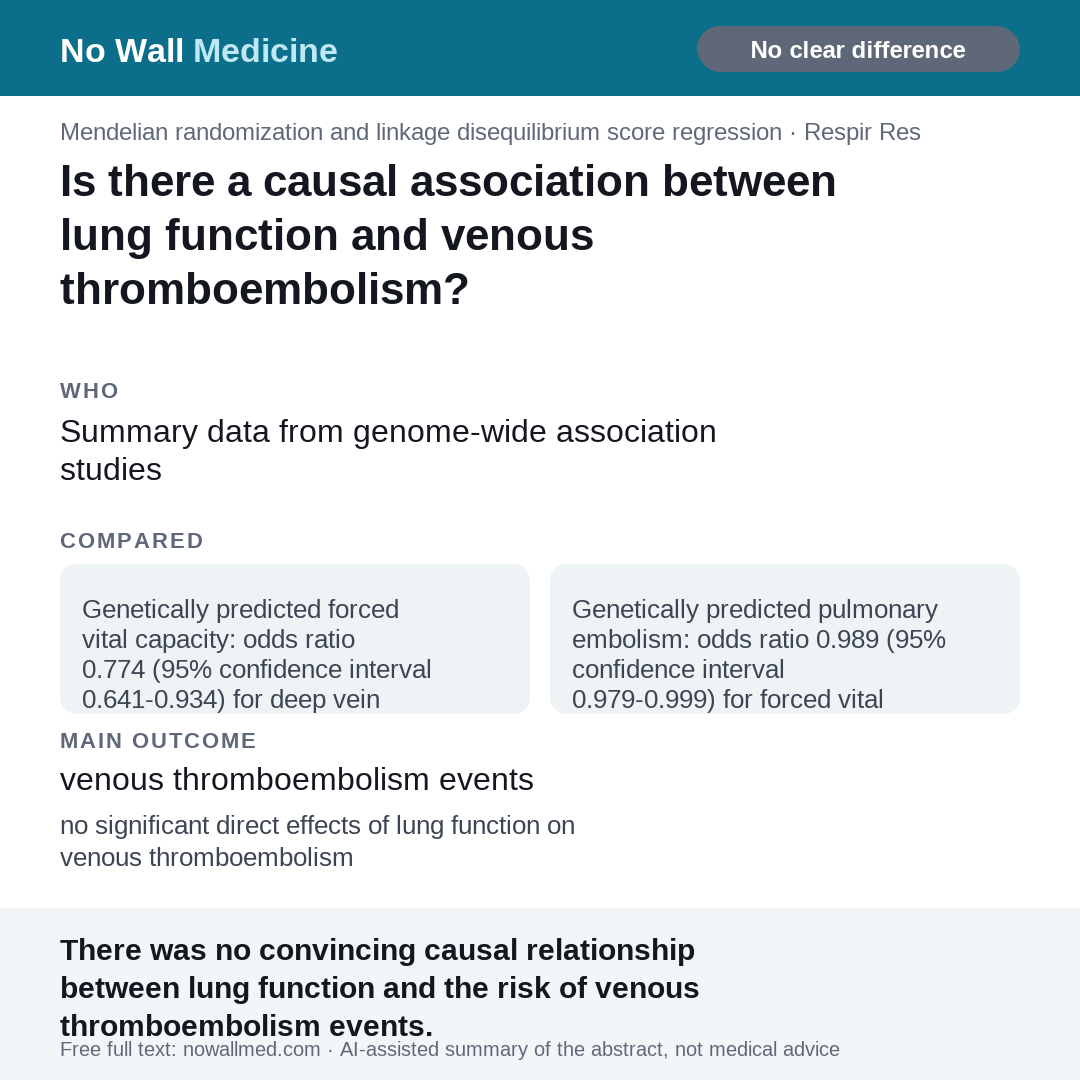
Genetic association and causal inference between lung function and venous thromboembolism
Mendelian randomization and linkage disequilibrium score regressionNo clear difference
Is there a causal association between lung function and venous thromboembolism?
Who
Summary data from genome-wide association studies
Compared
Genetically predicted forced vital capacity: odds ratio 0.774 (95% confidence interval 0.641-0.934) for deep vein thrombosis
Genetically predicted pulmonary embolism: odds ratio 0.989 (95% confidence interval 0.979-0.999) for forced vital capacity
Main outcome
venous thromboembolism events
Result: no significant direct effects of lung function on venous thromboembolism
Bottom line: There was no convincing causal relationship between lung function and the risk of venous thromboembolism events.
Respir Res · 2023-01-30Download image
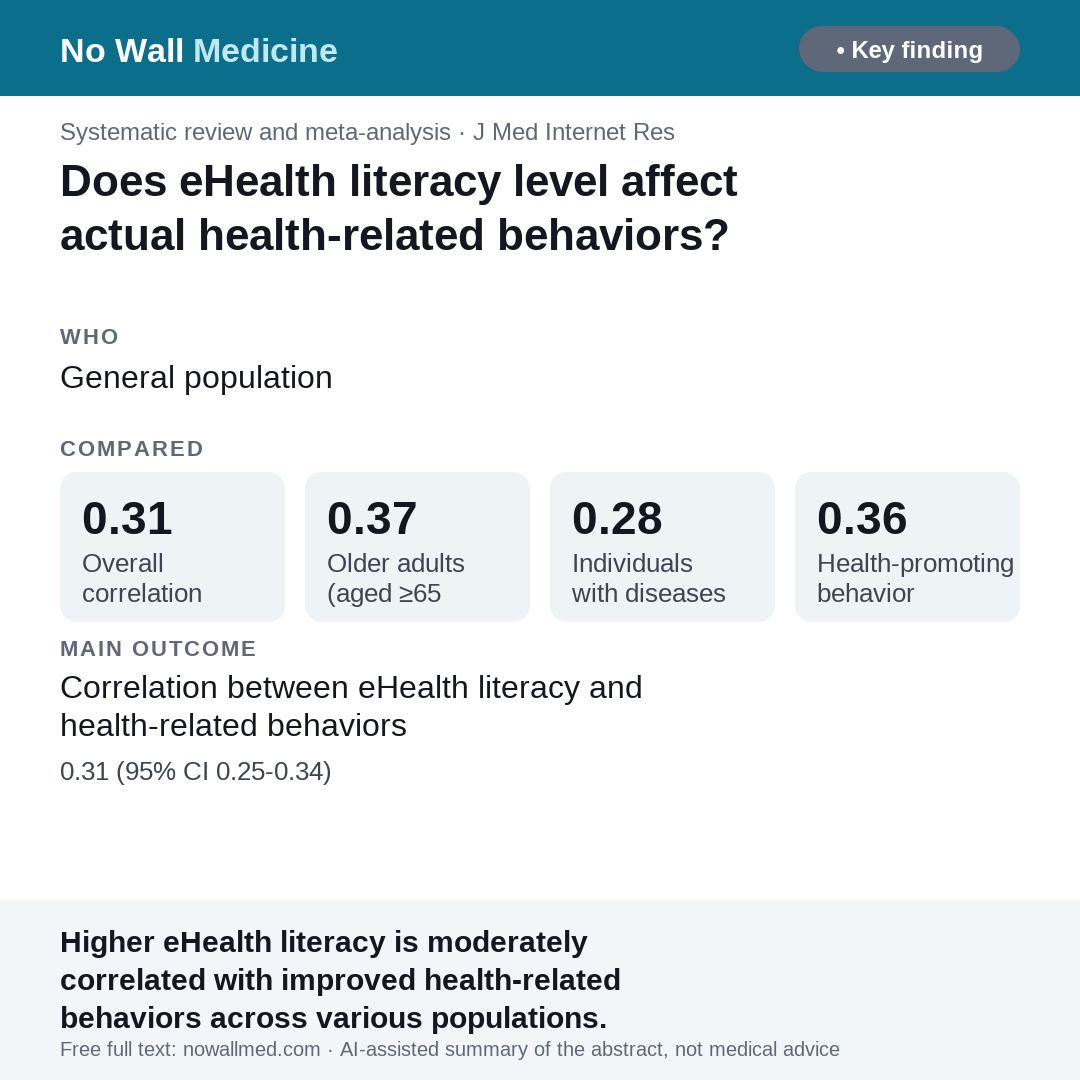
The Relation Between eHealth Literacy and Health-Related Behaviors: Systematic Review and Meta-analysis
Systematic review and meta-analysisBenefit found
Does eHealth literacy level affect actual health-related behaviors?
Who
General population
Compared
0.31Overall correlation
0.37Older adults (aged ≥65 years)
0.28Individuals with diseases
0.36Health-promoting behavior
Main outcome
Correlation between eHealth literacy and health-related behaviors
Result: 0.31 (95% CI 0.25-0.34)
Bottom line: Higher eHealth literacy is moderately correlated with improved health-related behaviors across various populations.
Limitation: All retrieved studies were cross-sectional studies.
J Med Internet Res · 2023-01-30Download image