Visual abstracts
New randomized trials and meta-analyses from leading journals at a glance: who was studied, what was compared, and what was found. Every paper is free to read in full.
All specialtiesCardiology 905Oncology 814Gastroenterology & Hepatology 330Infectious Disease 648Neurology 371Psychiatry & Mental Health 447Pulmonology 389Critical Care 270Endocrinology & Diabetes 497Pediatrics 567Surgery 365Orthopedics & Sports Medicine 167Neurosurgery 116Cardiothoracic & Vascular Surgery 88Plastic & Reconstructive Surgery 145Nephrology 202Rheumatology 111Hematology 194Dermatology 86Ophthalmology 106Obstetrics & Gynecology 278Public & Global Health 183Radiology & Imaging 109Anesthesiology 135Urology 171ENT (Otolaryngology) 115Emergency Medicine 104Allergy & Immunology 63Geriatrics 165Family Medicine & Primary Care 116Medical Genetics & Genomics 93Pathology & Laboratory Medicine 28Physical Medicine & Rehabilitation 149Palliative Care 82Nutrition 228Digital Health & AI 466General Medicine 105
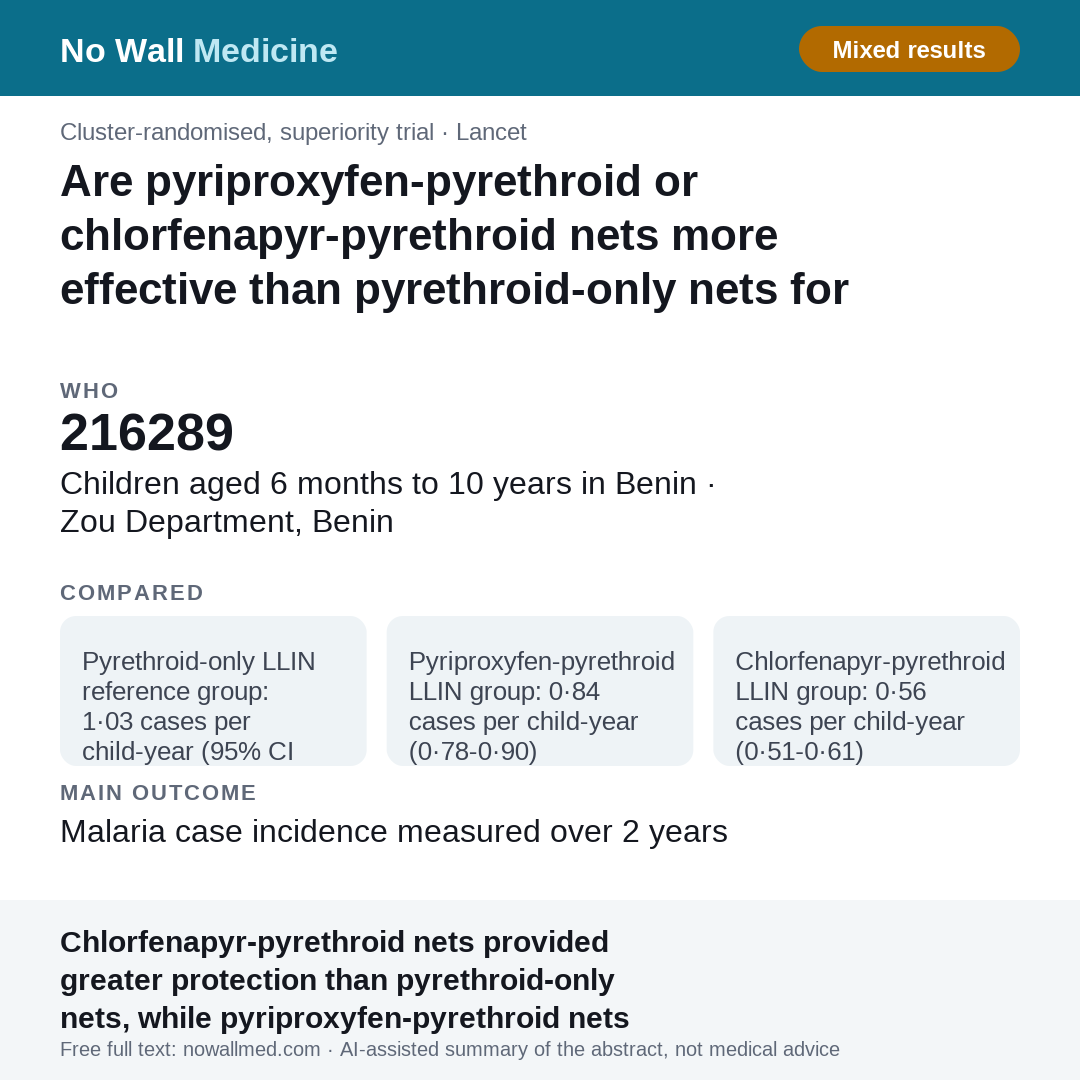
Efficacy of pyriproxyfen-pyrethroid long-lasting insecticidal nets (LLINs) and chlorfenapyr-pyrethroid LLINs compared with pyrethroid-only LLINs for malaria control in Benin: a cluster-randomised, superiority trial
Cluster-randomised, superiority trialMixed results
Are pyriproxyfen-pyrethroid or chlorfenapyr-pyrethroid nets more effective than pyrethroid-only nets for malaria control?
Who
216289
Children aged 6 months to 10 years in Benin · Zou Department, Benin
Compared
Pyrethroid-only LLIN reference group: 1·03 cases per child-year (95% CI 0·96-1·09)
Pyriproxyfen-pyrethroid LLIN group: 0·84 cases per child-year (0·78-0·90)
Chlorfenapyr-pyrethroid LLIN group: 0·56 cases per child-year (0·51-0·61)
Main outcome
Malaria case incidence measured over 2 years
Result: hazard ratio 0·54 (95% CI 0·42-0·70) for chlorfenapyr-pyrethroid
Bottom line: Chlorfenapyr-pyrethroid nets provided greater protection than pyrethroid-only nets, while pyriproxyfen-pyrethroid nets conferred similar protection.
Funded by: UNITAID, The Global Fund
Lancet · 2023-01-24Download image
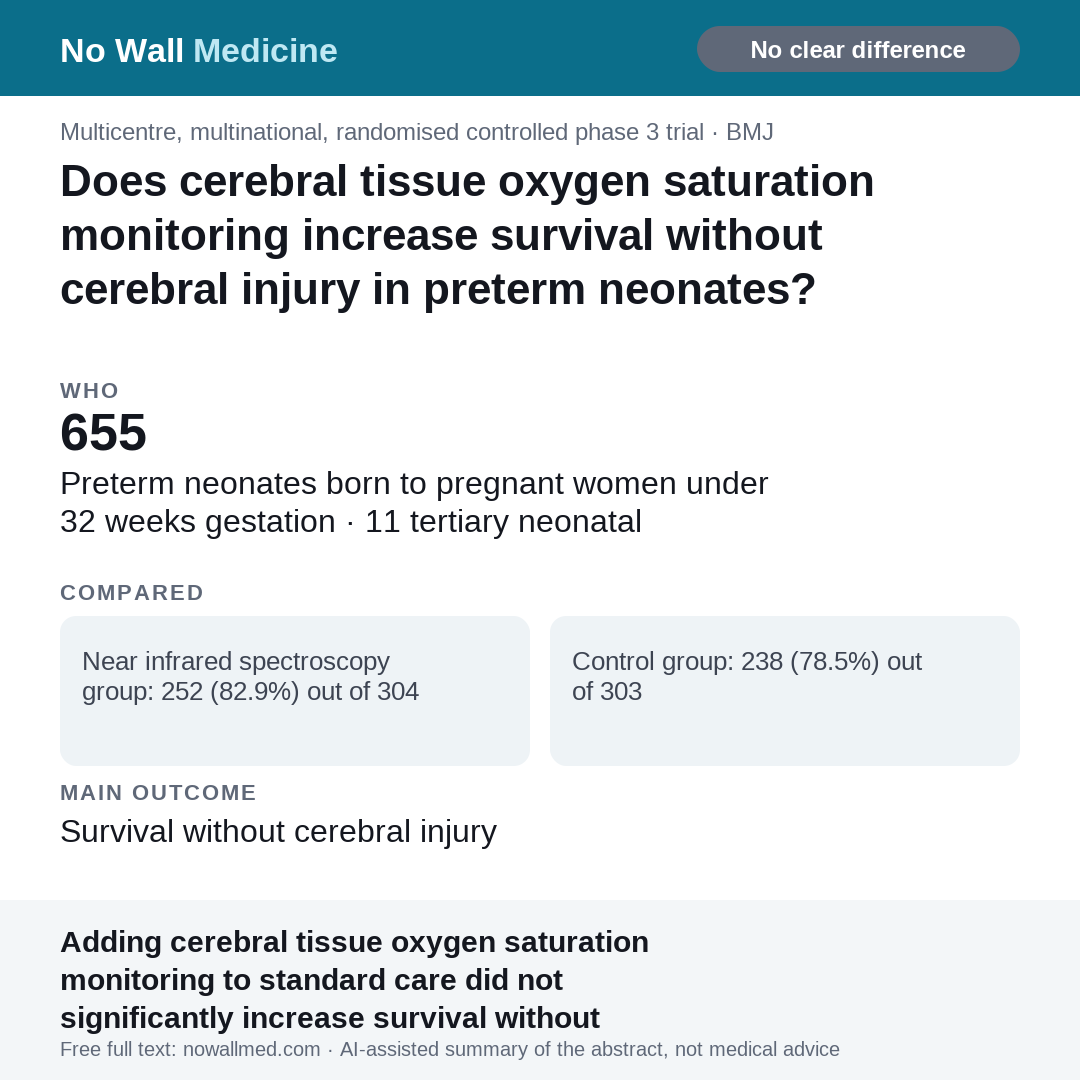
Cerebral regional tissue Oxygen Saturation to Guide Oxygen Delivery in preterm neonates during immediate transition after birth (COSGOD III): multicentre randomised phase 3 clinical trial
Multicentre, multinational, randomised controlled phase 3 trialNo clear difference
Does cerebral tissue oxygen saturation monitoring increase survival without cerebral injury in preterm neonates?
Who
655
Preterm neonates born to pregnant women under 32 weeks gestation · 11 tertiary neonatal intensive care units in six countries
Compared
Near infrared spectroscopy group: 252 (82.9%) out of 304
Control group: 238 (78.5%) out of 303
Main outcome
Survival without cerebral injury
Result: relative risk 1.06 (95% confidence interval 0.98 to 1.14)
Bottom line: Adding cerebral tissue oxygen saturation monitoring to standard care did not significantly increase survival without cerebral injury in preterm neonates.
BMJ · 2023-01-24Download image
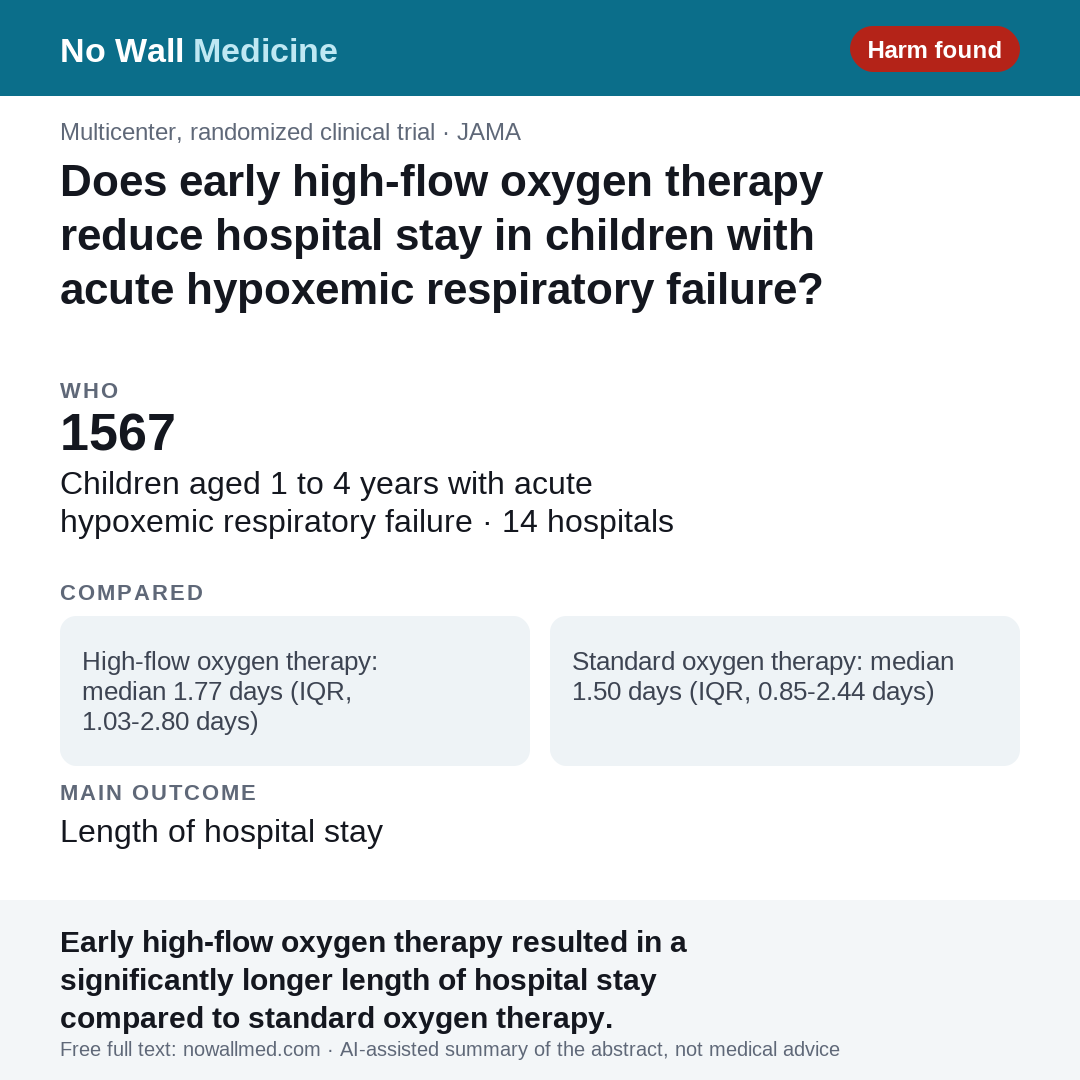
Effect of Early High-Flow Nasal Oxygen vs Standard Oxygen Therapy on Length of Hospital Stay in Hospitalized Children With Acute Hypoxemic Respiratory Failure: The PARIS-2 Randomized Clinical Trial
Multicenter, randomized clinical trialHarm found
Does early high-flow oxygen therapy reduce hospital stay in children with acute hypoxemic respiratory failure?
Who
1567
Children aged 1 to 4 years with acute hypoxemic respiratory failure · 14 hospitals in Australia and New Zealand
Compared
High-flow oxygen therapy: median 1.77 days (IQR, 1.03-2.80 days)
Standard oxygen therapy: median 1.50 days (IQR, 0.85-2.44 days)
Main outcome
Length of hospital stay
Result: adjusted hazard ratio, 0.83 (95% CI, 0.75-0.92)
Bottom line: Early high-flow oxygen therapy resulted in a significantly longer length of hospital stay compared to standard oxygen therapy.
JAMA · 2023-01-17Download image
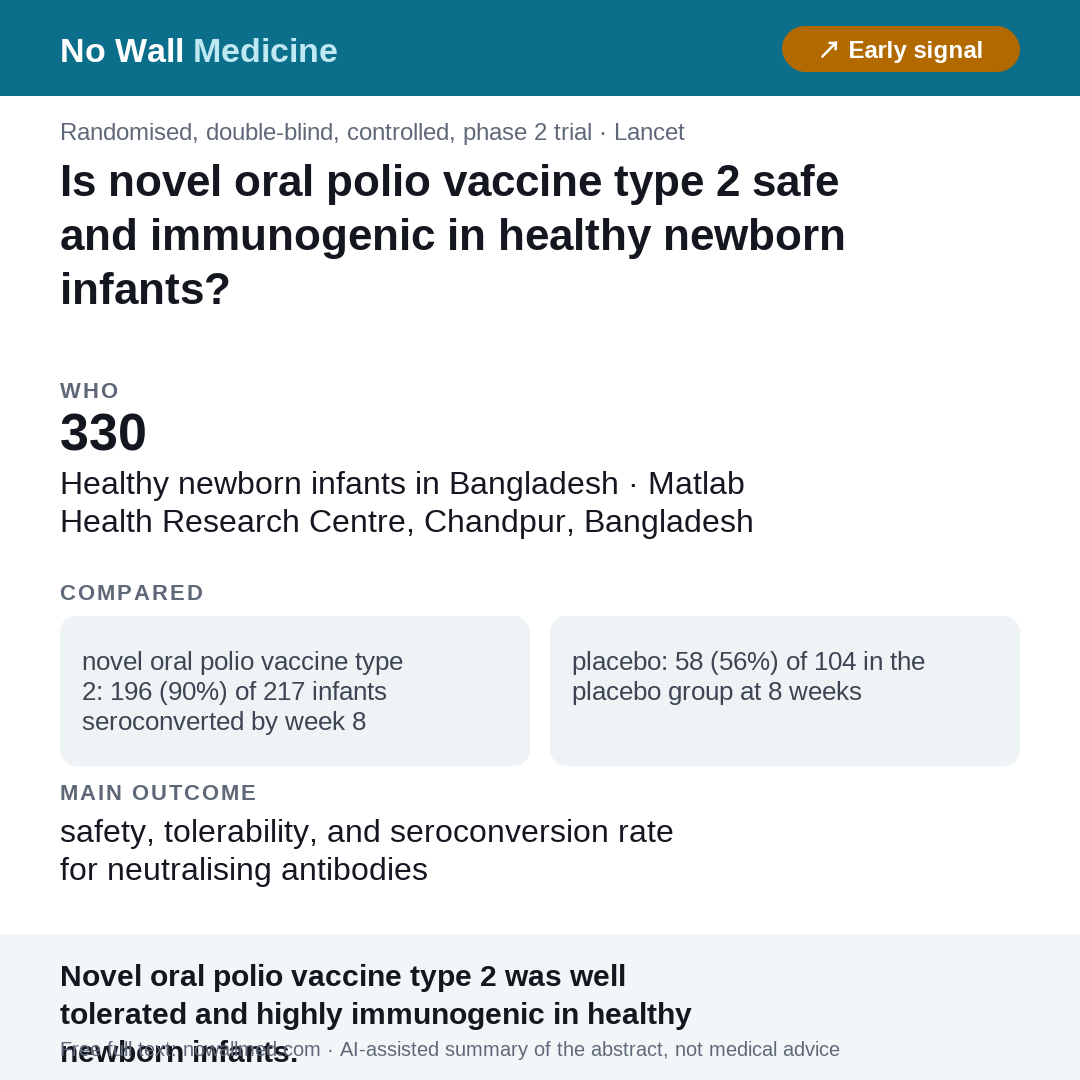
Evaluation of the safety, immunogenicity, and faecal shedding of novel oral polio vaccine type 2 in healthy newborn infants in Bangladesh: a randomised, controlled, phase 2 clinical trial
Randomised, double-blind, controlled, phase 2 trialBenefit found
Is novel oral polio vaccine type 2 safe and immunogenic in healthy newborn infants?
Who
330
Healthy newborn infants in Bangladesh · Matlab Health Research Centre, Chandpur, Bangladesh
Compared
novel oral polio vaccine type 2: 196 (90%) of 217 infants seroconverted by week 8
placebo: 58 (56%) of 104 in the placebo group at 8 weeks
Main outcome
safety, tolerability, and seroconversion rate for neutralising antibodies
Bottom line: Novel oral polio vaccine type 2 was well tolerated and highly immunogenic in healthy newborn infants.
Funded by: Bill & Melinda Gates Foundation
Lancet · 2022-12-07Download image
The Peer Education Project to improve mental health literacy in secondary school students in England: a qualitative realist evaluation
Qualitative realist evaluationUnclear result
Does peer education improve mental health literacy
Who
Secondary school students in England · Six schools in England
Compared
Peer educators
Peer learners
Main outcome
Mental health literacy
Bottom line: Peer education improves mental health literacy
Funded by: National Institute for Health and Care Research
Lancet · 2022-11-24Download image