Visual abstracts
New randomized trials and meta-analyses from leading journals at a glance: who was studied, what was compared, and what was found. Every paper is free to read in full.
All specialtiesCardiology 4780Oncology 4080Gastroenterology & Hepatology 1914Infectious Disease 3775Neurology 1883Psychiatry & Mental Health 2238Pulmonology 2058Critical Care 1331Endocrinology & Diabetes 2550Pediatrics 2908Surgery 2496Orthopedics & Sports Medicine 922Neurosurgery 532Cardiothoracic & Vascular Surgery 662Plastic & Reconstructive Surgery 584Nephrology 1111Rheumatology 812Hematology 1095Dermatology 617Ophthalmology 537Obstetrics & Gynecology 1656Public & Global Health 1041Radiology & Imaging 637Anesthesiology 958Urology 751ENT (Otolaryngology) 497Emergency Medicine 484Allergy & Immunology 310Geriatrics 973Family Medicine & Primary Care 538Medical Genetics & Genomics 662Pathology & Laboratory Medicine 156Physical Medicine & Rehabilitation 744Palliative Care 422Nutrition 1564Digital Health & AI 2188General Medicine 318
Radiofrequency identification tag localization of nonpalpable breast lesions: a systematic review and meta-analysis
Systematic review and meta-analysisBenefit found
Is radiofrequency identification tag localization effective compared to wire-guided localization for nonpalpable breast lesions?
Who
3234
3,234 patients with 497 benign and 2,741 malignant lesions
Compared
Radiofrequency identification tag localization: 12% positive margins
Wire-guided localization
Main outcome
Positive margins and re-excision rates
Result: odds ratio 0.71 (95% CI 0.54-0.95) for positive margins
Bottom line: Radiofrequency identification tag localization has significantly lower positive margin rates than wire-guided localization for nonpalpable breast lesions.
Limitation: Moderate bias was reported in 16/19 studies, serious bias in 3/19.
Eur Radiol Exp · 2025-12-22Download image

Prevalence of type 2 diabetes among global Indigenous adult populations: a systematic review
Systematic reviewHarm found
What is the prevalence of type 2 diabetes among global Indigenous adult populations?
Who
Indigenous adult populations aged 18 years and older · 37 countries
Compared
Indigenous populations: 0 to 40%
Global prevalence
Main outcome
Type 2 diabetes prevalence
Bottom line: Type 2 diabetes prevalence among Indigenous adults was markedly higher than global averages from 1980 to 2020.
Limitation: Potential publication bias, which may have led to fewer studies being included.
Diabetologia · 2025-12-21Download image

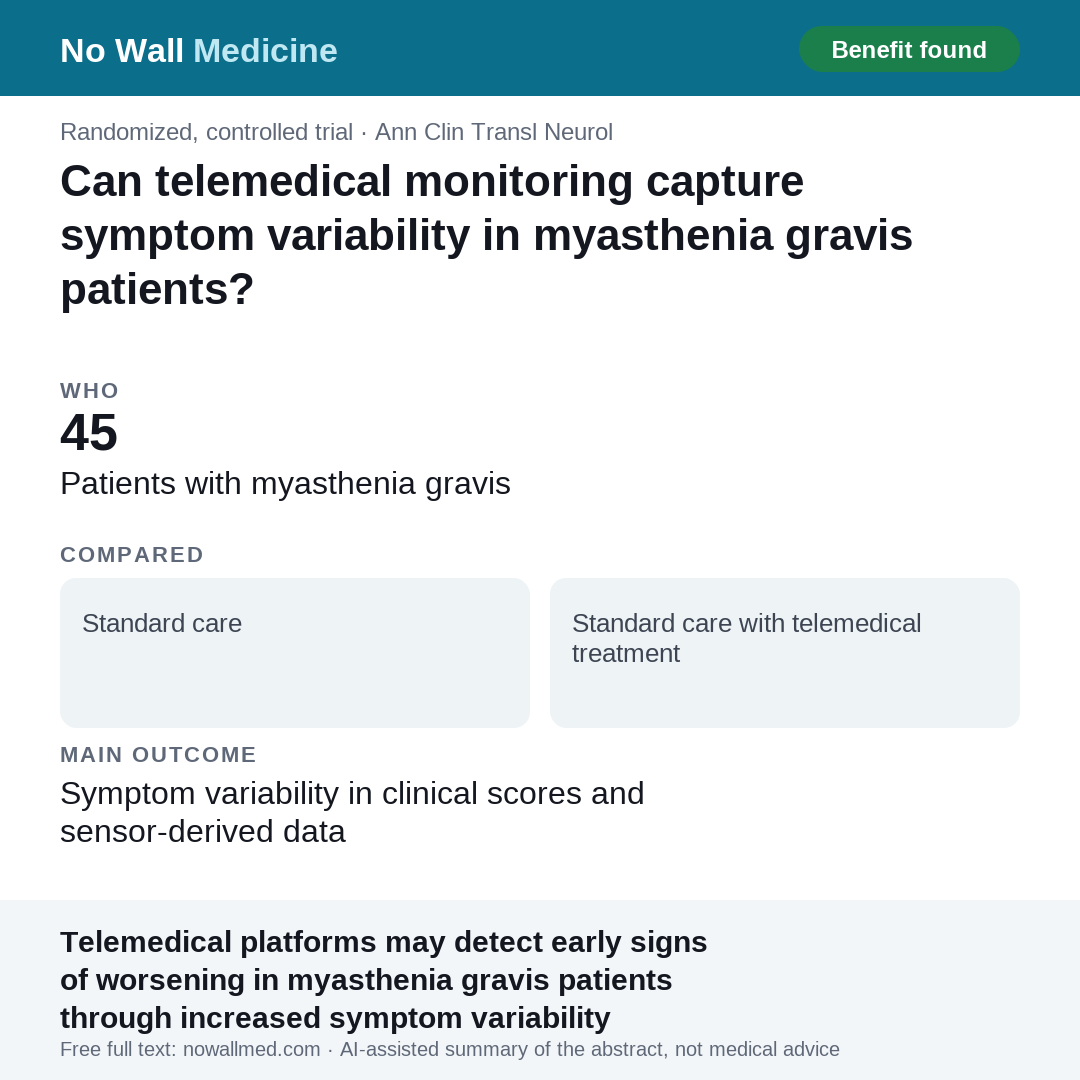
Remote Monitoring in Myasthenia Gravis: Exploring Symptom Variability
Randomized, controlled trialBenefit found
Can telemedical monitoring capture symptom variability in myasthenia gravis patients?
Who
45
Patients with myasthenia gravis
Compared
Standard care
Standard care with telemedical treatment
Main outcome
Symptom variability in clinical scores and sensor-derived data
Bottom line: Telemedical platforms may detect early signs of worsening in myasthenia gravis patients through increased symptom variability detection.
Ann Clin Transl Neurol · 2025-12-21Download image
Burnout among paediatric surgeons: a systematic review and meta-analysis
Systematic review and meta-analysisBenefit found
What is the prevalence of burnout among paediatric surgeons?
Who
2757
Paediatric surgeons
Compared
22.4%Maslach Burnout Inventory tools
44.9%Non-Maslach Burnout Inventory tools
Main outcome
Burnout prevalence
Result: 29.4% (95% CI 20.3% to 40.5%)
Bottom line: Nearly one in three paediatric surgeons experience burnout, with a pooled prevalence of 29.4%.
Limitation: Substantial heterogeneity (I²=96.4%) was observed among the included studies.
BMJ Paediatr Open · 2025-12-21Download image

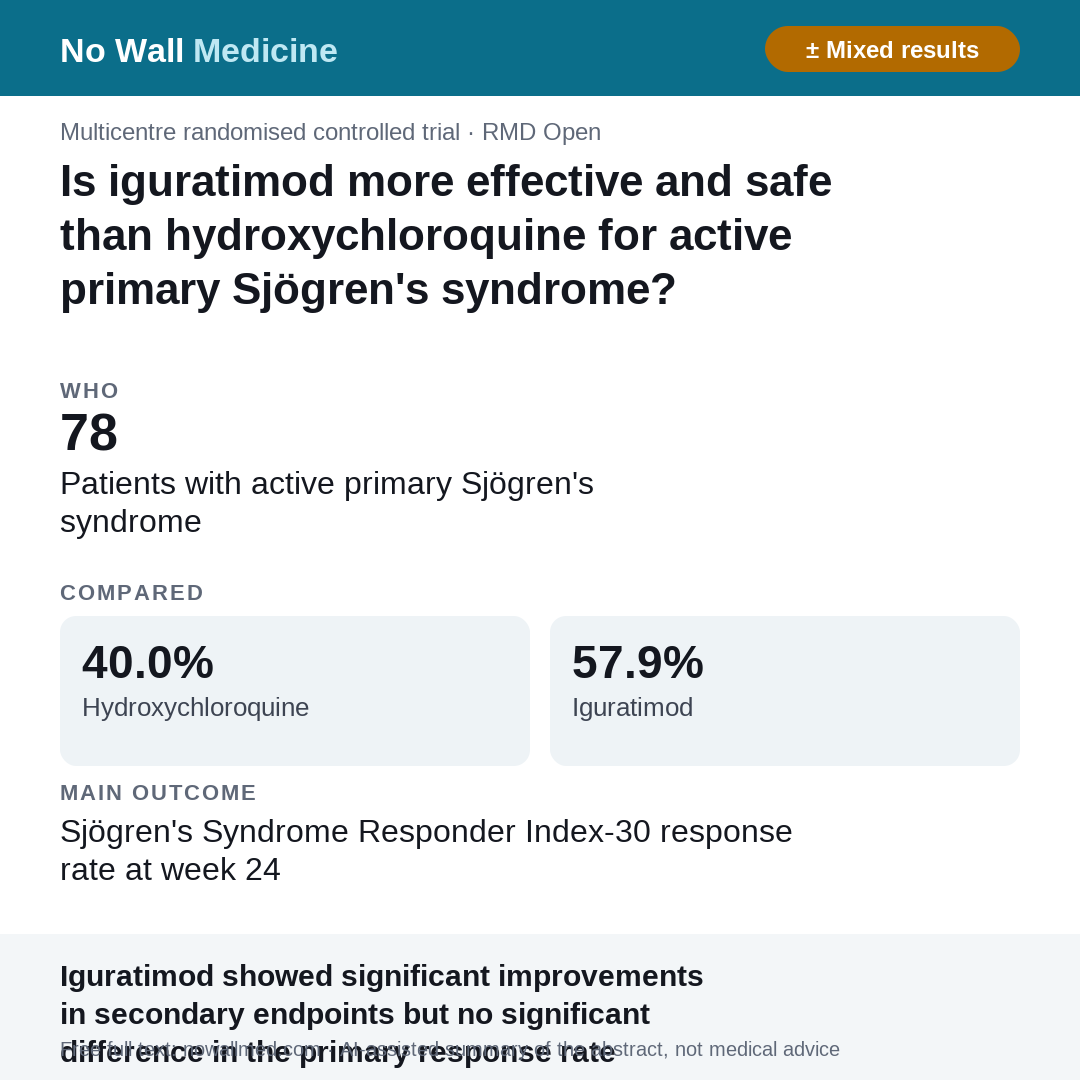
Efficacy and safety of iguratimod in patients with primary Sjögren's syndrome: a multicentre randomised controlled trial
Multicentre randomised controlled trialMixed results
Is iguratimod more effective and safe than hydroxychloroquine for active primary Sjögren's syndrome?
Who
78
Patients with active primary Sjögren's syndrome
Compared
40.0%Hydroxychloroquine
57.9%Iguratimod
Main outcome
Sjögren's Syndrome Responder Index-30 response rate at week 24
Bottom line: Iguratimod showed significant improvements in secondary endpoints but no significant difference in the primary response rate compared to hydroxychloroquine.
RMD Open · 2025-12-21Download image
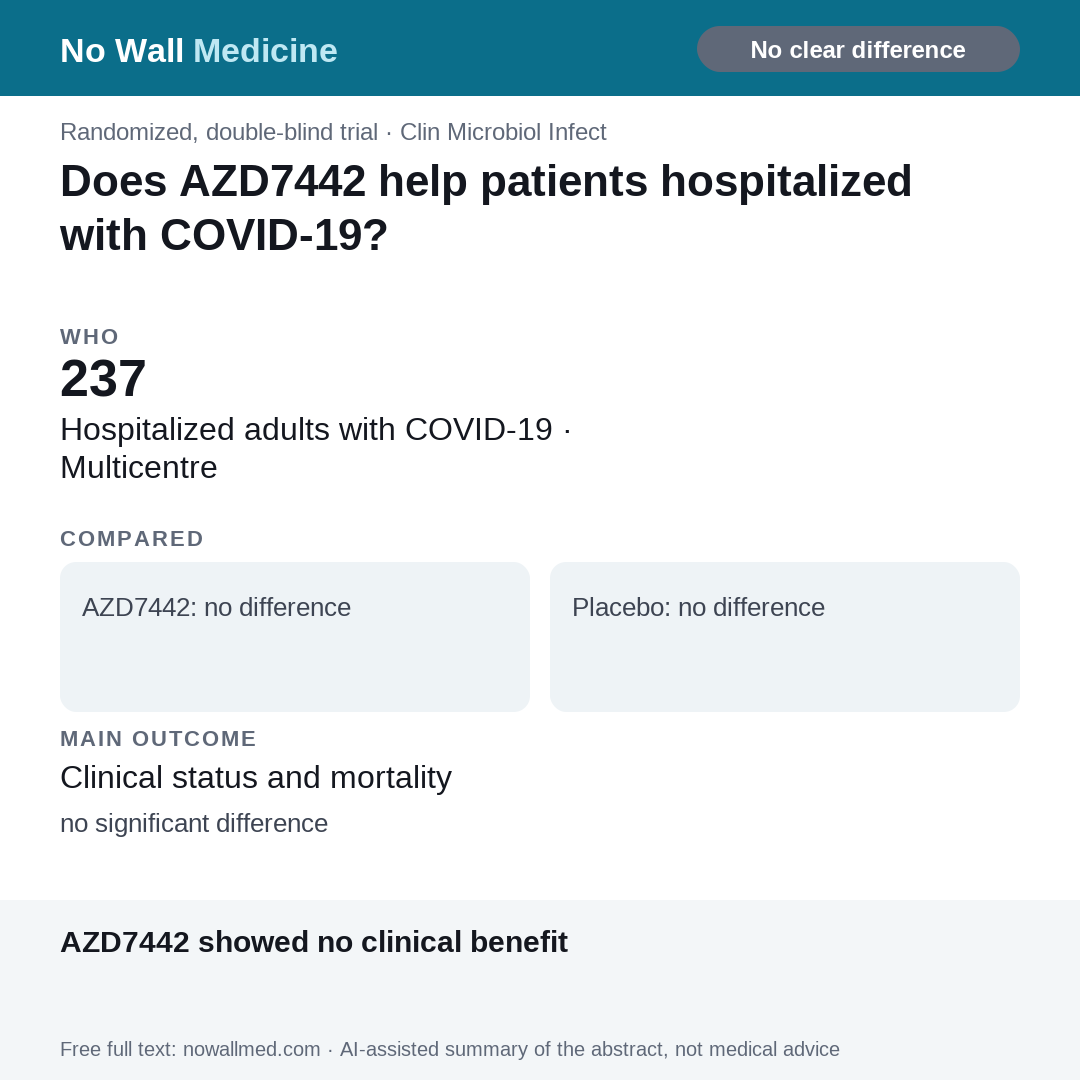
Efficacy, safety, pharmacokinetics, immunogenicity, and serum neutralizing activity of AZD7442 (tixagevimab-cilgavimab) in patients hospitalized with COVID-19: long-term results from the DisCoVeRy trial
Randomized, double-blind trialNo clear difference
Does AZD7442 help patients hospitalized with COVID-19?
Who
237
Hospitalized adults with COVID-19 · Multicentre
Compared
AZD7442: no difference
Placebo: no difference
Main outcome
Clinical status and mortality
Result: no significant difference
Bottom line: AZD7442 showed no clinical benefit
Clin Microbiol Infect · 2025-12-20Download image
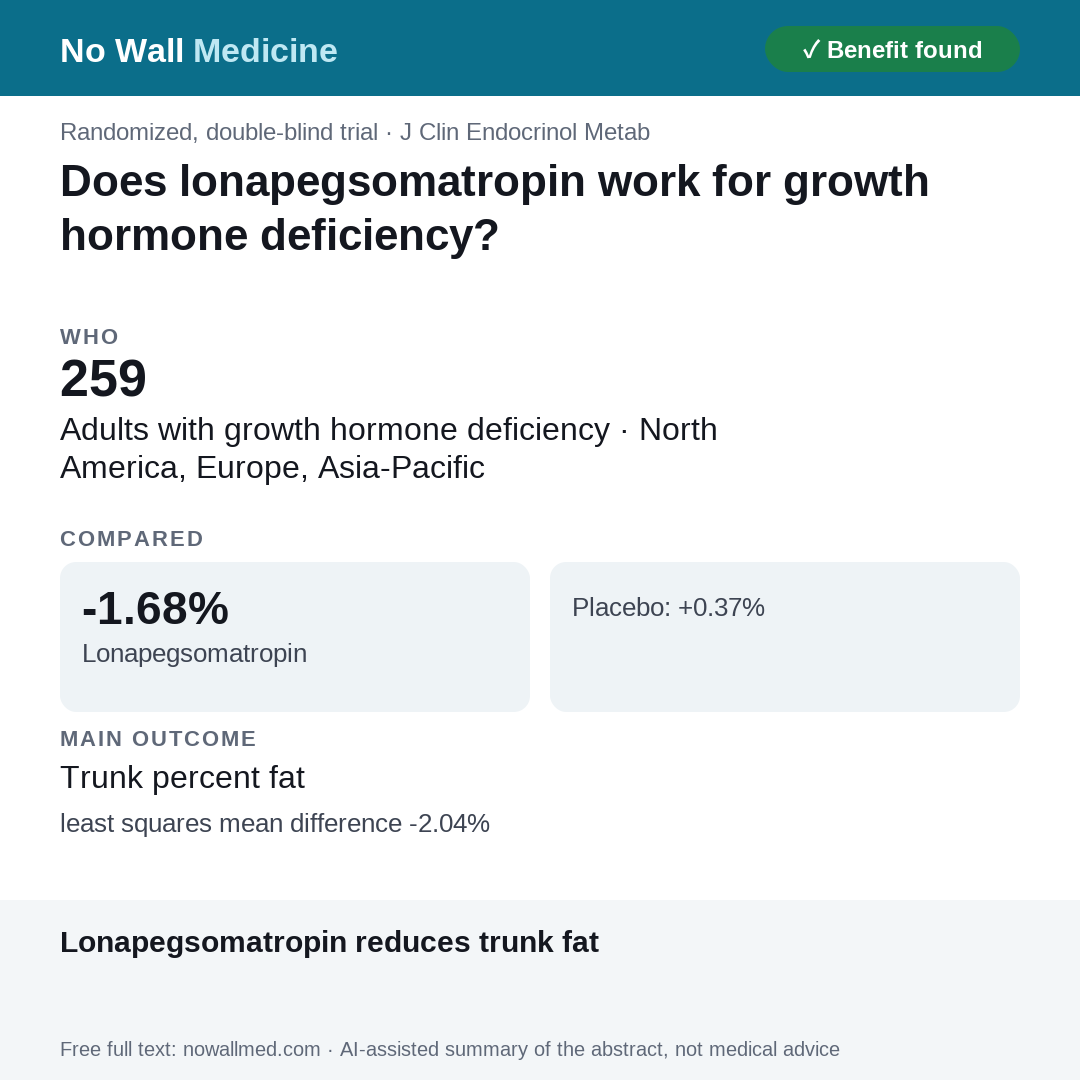
Efficacy and Safety of Once-Weekly Lonapegsomatropin in Adults With Growth Hormone Deficiency: foresiGHt Trial Results
Randomized, double-blind trialBenefit found
Does lonapegsomatropin work for growth hormone deficiency?
Who
259
Adults with growth hormone deficiency · North America, Europe, Asia-Pacific
Compared
-1.68%Lonapegsomatropin
Placebo: +0.37%
Main outcome
Trunk percent fat
Result: least squares mean difference -2.04%
Bottom line: Lonapegsomatropin reduces trunk fat
J Clin Endocrinol Metab · 2025-12-20Download image
Acute Exercise Challenge and Airway Dynamics in Youth With Sickle Cell Anemia: A Multicenter Study
Multicenter studyNo clear difference
Is exercise-induced bronchospasm more common in children with sickle cell anemia than controls?
Who
Non-asthmatic subjects 10-21 years old with sickle cell anemia and controls · Multicenter
Compared
Sickle cell anemia: 21% after CPET and 32% after CIIT
Controls: 26% after CPET and 17% after CIIT
Main outcome
Prevalence of exercise-induced bronchospasm
Bottom line: Exercise-induced bronchospasm was not more common in subjects with sickle cell anemia compared to controls.
Am J Hematol · 2025-12-20Download image

Reliability of physical examination tests for assessing hip flexor flexibility: A systematic review and meta-analysis
Systematic review and meta-analysisBenefit found
How reliable are physical examination tests for assessing hip flexor flexibility?
Who
1056
Participants undergoing hip flexor flexibility clinical tests
Compared
0.90Intrarater reliability (95% CI, 0.85-0.95)
0.80Interrater reliability (95% CI, 0.71-0.88)
Main outcome
Intraclass correlation coefficient for hip flexor flexibility tests
Bottom line: Physical examination tests for hip flexor flexibility demonstrate generally high intrarater and interrater reliability.
Limitation: Substantial heterogeneity was observed, particularly for the Modified Thomas Test and Thomas Test.
PM R · 2025-12-20Download image

Anterior cruciate ligament reconstruction combined with anterolateral ligament reconstruction using hamstring autograft versus anterior cruciate ligament reconstruction using bone-patellar tendon-bone autograft: a randomised controlled trial with 5-year follow-up
Randomised, single-centre, controlled trialBenefit found
Does combining anterolateral ligament reconstruction with anterior cruciate ligament reconstruction reduce graft failure?
Who
593
Patients aged 18-35 years with symptomatic anterior cruciate ligament rupture · Santy Orthopedic Center in Lyon, France
Compared
Anterior cruciate ligament reconstruction plus anterolateral ligament reconstruction: 12/283 (4.2%)
Anterior cruciate ligament reconstruction: 28/273 (10.3%)
Main outcome
Graft failure at 5 years
Result: adjusted odds ratio 2.54 (95% CI 1.27 to 5.36)
Bottom line: Combining anterior cruciate ligament reconstruction with anterolateral ligament reconstruction significantly decreased graft failure compared to anterior cruciate ligament reconstruction alone.
Funded by: GCS Ramsay Santé pour l'Enseignement et la Recherche
Lancet Reg Health Eur · 2025-12-20Download image

Effect of eggs on Maya child development and growth: the Saqmolo' Project randomized clinical trial
Randomized, partially blinded, comparative effectiveness clinical trialNo clear difference
Does adding one whole egg per day to standard nutrition care enhance child development and growth?
Who
1200
Maya infants aged 6-9 months · rural Guatemala
Compared
standard nutrition care alone
standard care plus one whole egg per day
Main outcome
global development score
Result: β -0.08 points (95% CI -0.22 to 0.06)
Bottom line: Adding one egg per day improved diet quality but did not benefit development, growth, or anemia status.
Funded by: Academy of Nutrition and Dietetics Foundation
Lancet Reg Health Am · 2025-12-20Download image

Once-weekly semaglutide versus placebo for the treatment of type 2 diabetes and chronic kidney disease in Denmark: A long-term cost-effectiveness analysis based on FLOW
Long-term cost-effectiveness analysisBenefit found
Is once-weekly semaglutide cost-effective compared to placebo for type 2 diabetes and chronic kidney disease?
Who
People with type 2 diabetes and chronic kidney disease · Denmark
Compared
Semaglutide: 0.60 quality-adjusted life years improvement
Placebo
Main outcome
Long-term quality-adjusted life expectancy and costs
Bottom line: Adding semaglutide to standard of care is highly cost-effective and potentially cost-saving in Denmark.
Cardiovasc Diabetol · 2025-12-20Download image

Technologies for the three-dimensional assessment and treatment of unilateral spatial neglect in individuals with stroke: a systematic review
Systematic reviewUnclear result
What are the features and outcomes of three-dimensional technologies for unilateral spatial neglect?
Who
Individuals with unilateral spatial neglect following stroke
Compared
Assessment studies: 15 studies
Treatment studies: 17 studies
Technical studies: 5 studies
Main outcome
Features, development level, and reported outcomes of three-dimensional technologies
Bottom line: Three-dimensional technologies for unilateral spatial neglect are in early experimental phases with significant methodological variability.
Limitation: Methodological variability, heterogeneity of technologies and outcomes, and lack of standardized protocols.
J Neuroeng Rehabil · 2025-12-20Download image

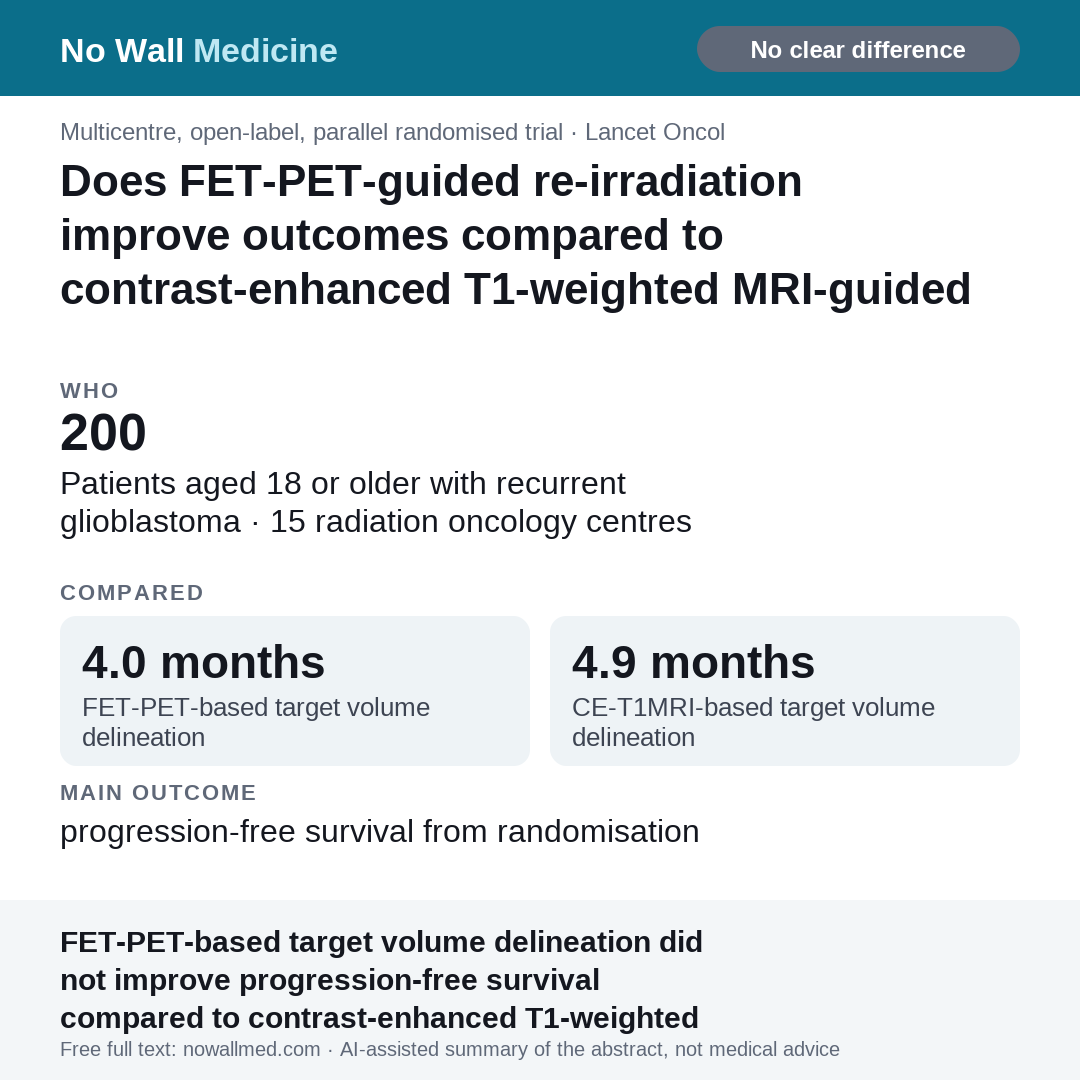
O-(2-[18F]fluoroethyl)-L-tyrosine-PET-guided versus contrast-enhanced T1-weighted MRI-guided re-irradiation in patients with recurrent glioblastoma (GLIAA/NOA-10 ARO2013-01): a multicentre, open-label, randomised trial
Multicentre, open-label, parallel randomised trialNo clear difference
Does FET-PET-guided re-irradiation improve outcomes compared to contrast-enhanced T1-weighted MRI-guided re-irradiation in recurrent glioblastoma?
Who
200
Patients aged 18 or older with recurrent glioblastoma · 15 radiation oncology centres in Germany
Compared
4.0 monthsFET-PET-based target volume delineation
4.9 monthsCE-T1MRI-based target volume delineation
Main outcome
progression-free survival from randomisation
Result: adjusted hazard ratio 1.14 (95% CI 0.85 to 1.52)
Bottom line: FET-PET-based target volume delineation did not improve progression-free survival compared to contrast-enhanced T1-weighted MRI in recurrent glioblastoma.
Funded by: Deutsche Krebshilfe
Lancet Oncol · 2025-12-19Download image
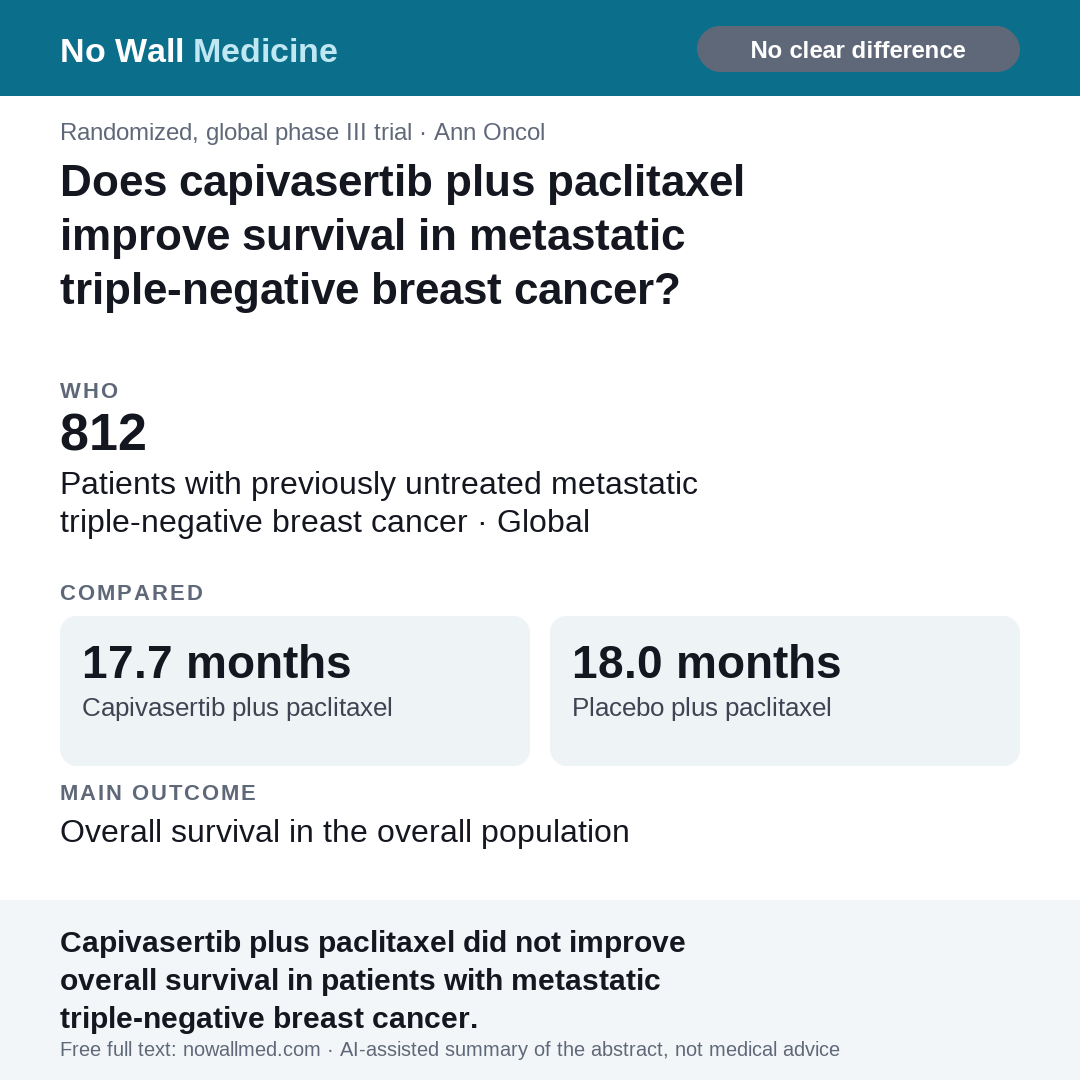
Capivasertib plus paclitaxel as first-line treatment for metastatic triple-negative breast cancer: results from the randomised, global phase III CAPItello-290 trial
Randomized, global phase III trialNo clear difference
Does capivasertib plus paclitaxel improve survival in metastatic triple-negative breast cancer?
Who
812
Patients with previously untreated metastatic triple-negative breast cancer · Global
Compared
17.7 monthsCapivasertib plus paclitaxel
18.0 monthsPlacebo plus paclitaxel
Main outcome
Overall survival in the overall population
Result: hazard ratio 0.92 (95% CI 0.78-1.08)
Bottom line: Capivasertib plus paclitaxel did not improve overall survival in patients with metastatic triple-negative breast cancer.
Ann Oncol · 2025-12-19Download image
Phase 2 study of zervimesine (CT1812) in participants with mild-to-moderate dementia with Lewy bodies (DLB)
Multi-center, double-blind, placebo-controlled, parallel-design studyUnclear result
Is zervimesine safe and effective in participants with mild-to-moderate dementia with Lewy bodies?
Who
130
Participants aged 50 to 85 years with probable dementia with Lewy bodies
Compared
zervimesine 100 mg: 4.5% discontinuation rate for adverse events
zervimesine 300 mg: 16.3% discontinuation rate for adverse events
placebo: 4.8% discontinuation rate for adverse events
Main outcome
Safety and efficacy via exploratory outcomes
Bottom line: Zervimesine was safe and showed favorable efficacy trends in exploratory outcomes for dementia with Lewy bodies.
Alzheimers Dement · 2025-12-19Download image

A multi-ancestry meta genome-wide association study of migraine among veterans: associations with traumatic brain injury, depression, and post-traumatic stress disorder
Meta-analysis of a genome-wide association studyMixed results
What are the genetic associations of migraine and its links to psychiatric comorbidities in Veterans?
Who
433,000
Predominantly male Veterans · Million Veteran Program
Compared
87,859Migraine cases
Migraine and neuropsychiatric disorders: high genetic correlations
Main outcome
Genome-wide significant loci and causal links to psychiatric disorders
Bottom line: The study identified 49 significant loci but found no causal links between migraine and psychiatric disorders.
Limitation: Minimal vascular tissue enrichment potentially reflecting the predominantly male Veteran sample composition.
Mol Psychiatry · 2025-12-19Download image

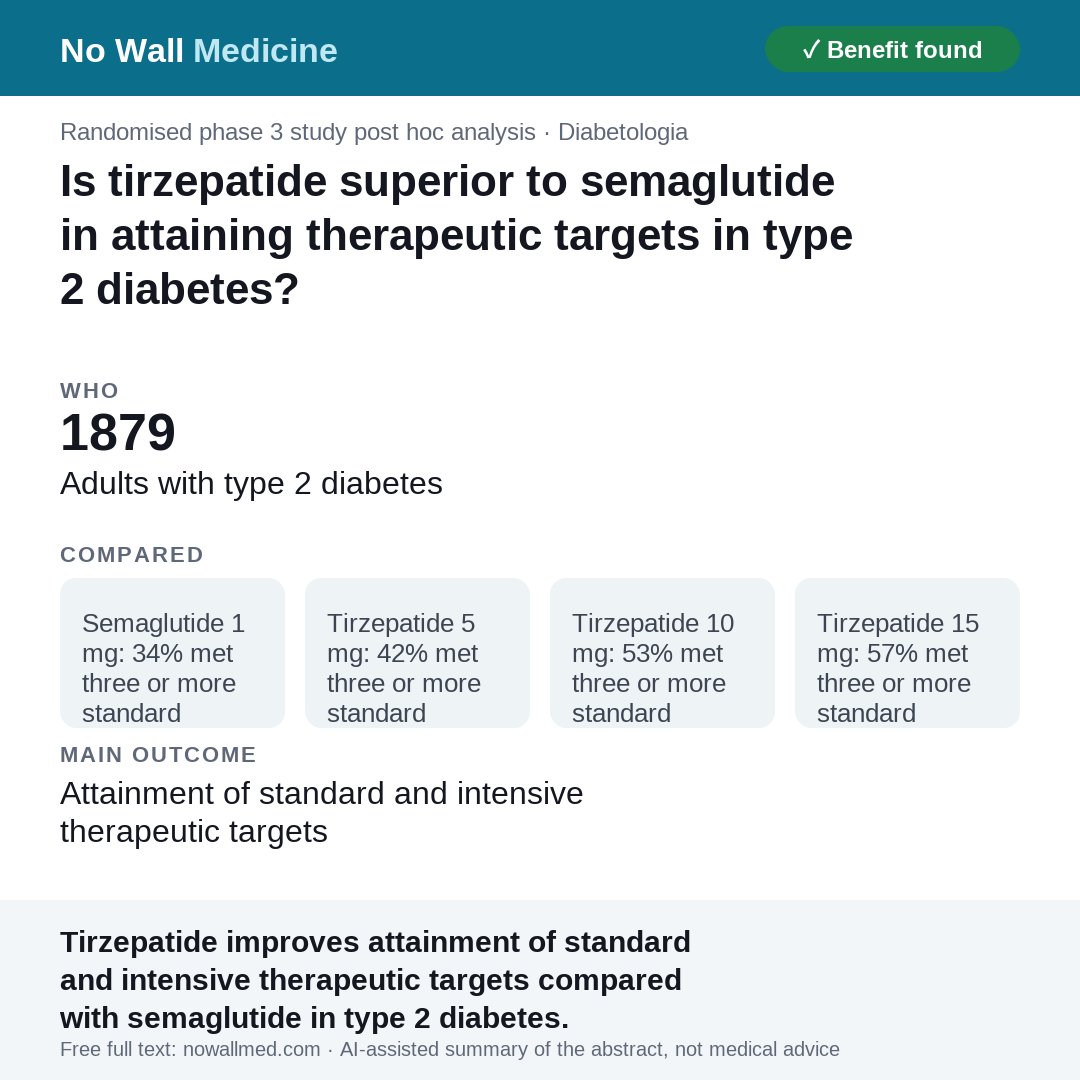
Efficacy of tirzepatide versus semaglutide in achieving therapeutic targets in type 2 diabetes: a post hoc analysis of the SURPASS-2 Trial
Randomised phase 3 study post hoc analysisBenefit found
Is tirzepatide superior to semaglutide in attaining therapeutic targets in type 2 diabetes?
Who
1879
Adults with type 2 diabetes
Compared
Semaglutide 1 mg: 34% met three or more standard targets
Tirzepatide 5 mg: 42% met three or more standard targets
Tirzepatide 10 mg: 53% met three or more standard targets
Tirzepatide 15 mg: 57% met three or more standard targets
Main outcome
Attainment of standard and intensive therapeutic targets
Result: OR 1.50 [95% CI 1.12, 2.00] for standard HbA1c targets
Bottom line: Tirzepatide improves attainment of standard and intensive therapeutic targets compared with semaglutide in type 2 diabetes.
Diabetologia · 2025-12-19Download image
Efficacy and safety of combining empagliflozin in people with type 2 diabetes mellitus uncontrolled with metformin and sitagliptin: A randomised, double-blind, multicentre, therapeutic confirmatory phase 3 clinical trial
Randomised, double-blind, multicentre, phase 3 clinical trialBenefit found
Does adding empagliflozin improve glycemic control in type 2 diabetes uncontrolled with metformin and sitagliptin?
Who
172
People with type 2 diabetes mellitus uncontrolled with metformin and sitagliptin · Korea
Compared
-0.7%empagliflozin 10 mg (95% CI -1.0, -0.4)
-0.8%empagliflozin 25 mg (95% CI -1.1, -0.5)
placebo
Main outcome
change in glycosylated haemoglobin from baseline to week 24
Result: -0.7% (95% CI -1.0, -0.4) and -0.8% (95% CI -1.1, -0.5)
Bottom line: Adding empagliflozin 10 or 25 mg safely improves glycemic control in patients with type 2 diabetes.
Diabetes Obes Metab · 2025-12-19Download image

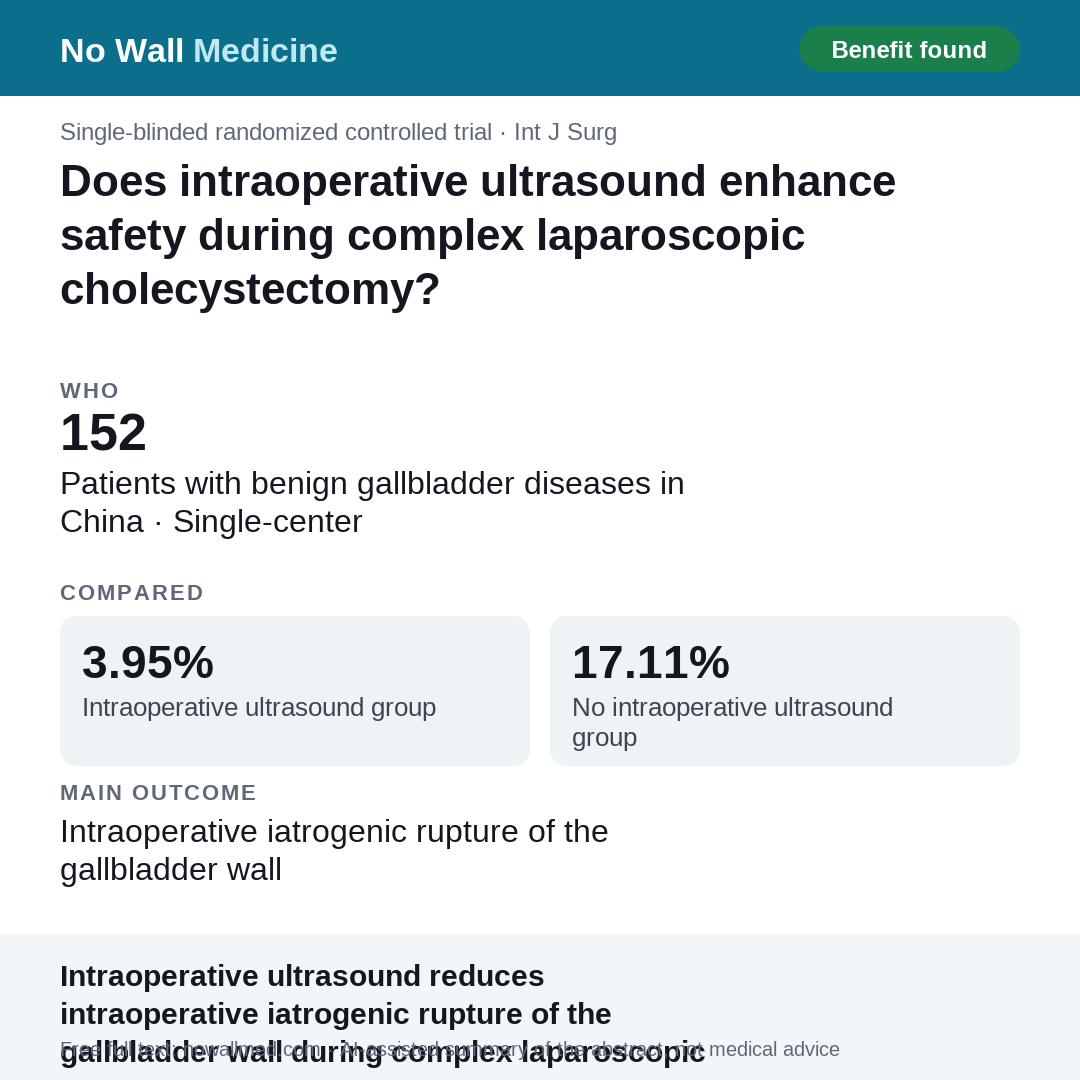
Intraoperative ultrasound enhancing safety of key steps in complex laparoscopic cholecystectomy: a single-blinded randomized controlled trial
Single-blinded randomized controlled trialBenefit found
Does intraoperative ultrasound enhance safety during complex laparoscopic cholecystectomy?
Who
152
Patients with benign gallbladder diseases in China · Single-center
Compared
3.95%Intraoperative ultrasound group
17.11%No intraoperative ultrasound group
Main outcome
Intraoperative iatrogenic rupture of the gallbladder wall
Bottom line: Intraoperative ultrasound reduces intraoperative iatrogenic rupture of the gallbladder wall during complex laparoscopic cholecystectomy.
Int J Surg · 2025-12-19Download image