Visual abstracts
New randomized trials and meta-analyses from leading journals at a glance: who was studied, what was compared, and what was found. Every paper is free to read in full.
All specialtiesCardiology 843Oncology 763Gastroenterology & Hepatology 307Infectious Disease 626Neurology 351Psychiatry & Mental Health 430Pulmonology 367Critical Care 247Endocrinology & Diabetes 480Pediatrics 538Surgery 326Orthopedics & Sports Medicine 163Neurosurgery 94Cardiothoracic & Vascular Surgery 87Plastic & Reconstructive Surgery 124Nephrology 197Rheumatology 108Hematology 182Dermatology 80Ophthalmology 97Obstetrics & Gynecology 261Public & Global Health 167Radiology & Imaging 98Anesthesiology 116Urology 162ENT (Otolaryngology) 95Emergency Medicine 75Allergy & Immunology 58Geriatrics 160Family Medicine & Primary Care 111Medical Genetics & Genomics 91Pathology & Laboratory Medicine 24Physical Medicine & Rehabilitation 148Palliative Care 81Nutrition 223Digital Health & AI 460General Medicine 101
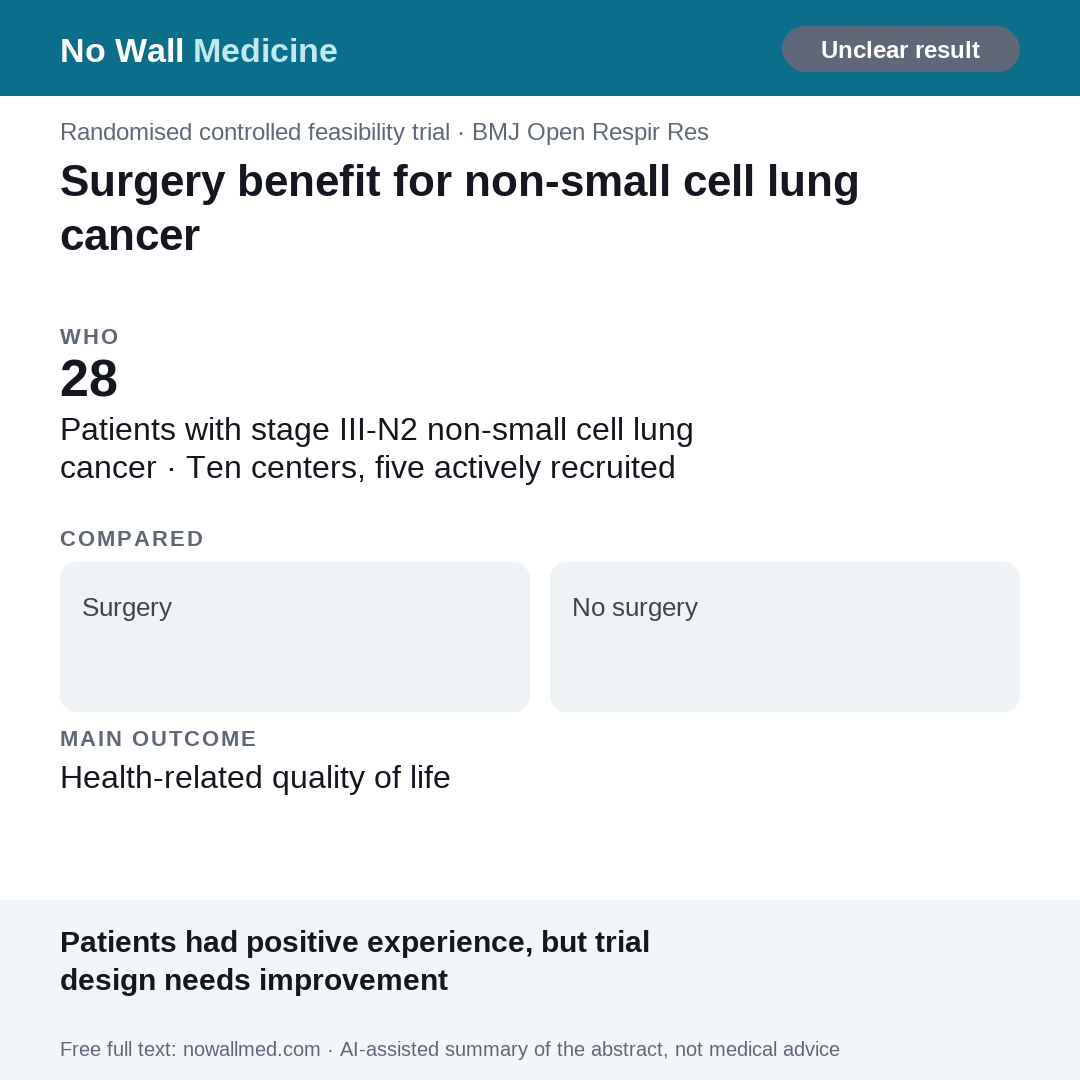
Experience of participating in a randomised controlled feasibility trial of surgery versus no surgery as part of multimodality treatment in stage III-N2 non-small cell lung cancer: PIONEER
Randomised controlled feasibility trialUnclear result
Surgery benefit for non-small cell lung cancer
Who
28
Patients with stage III-N2 non-small cell lung cancer · Ten centers, five actively recruited
Compared
Surgery
No surgery
Main outcome
Health-related quality of life
Bottom line: Patients had positive experience, but trial design needs improvement
Limitation: Recruitment difficulties, limited eligible patients
BMJ Open Respir Res · 2026-10-26Download image
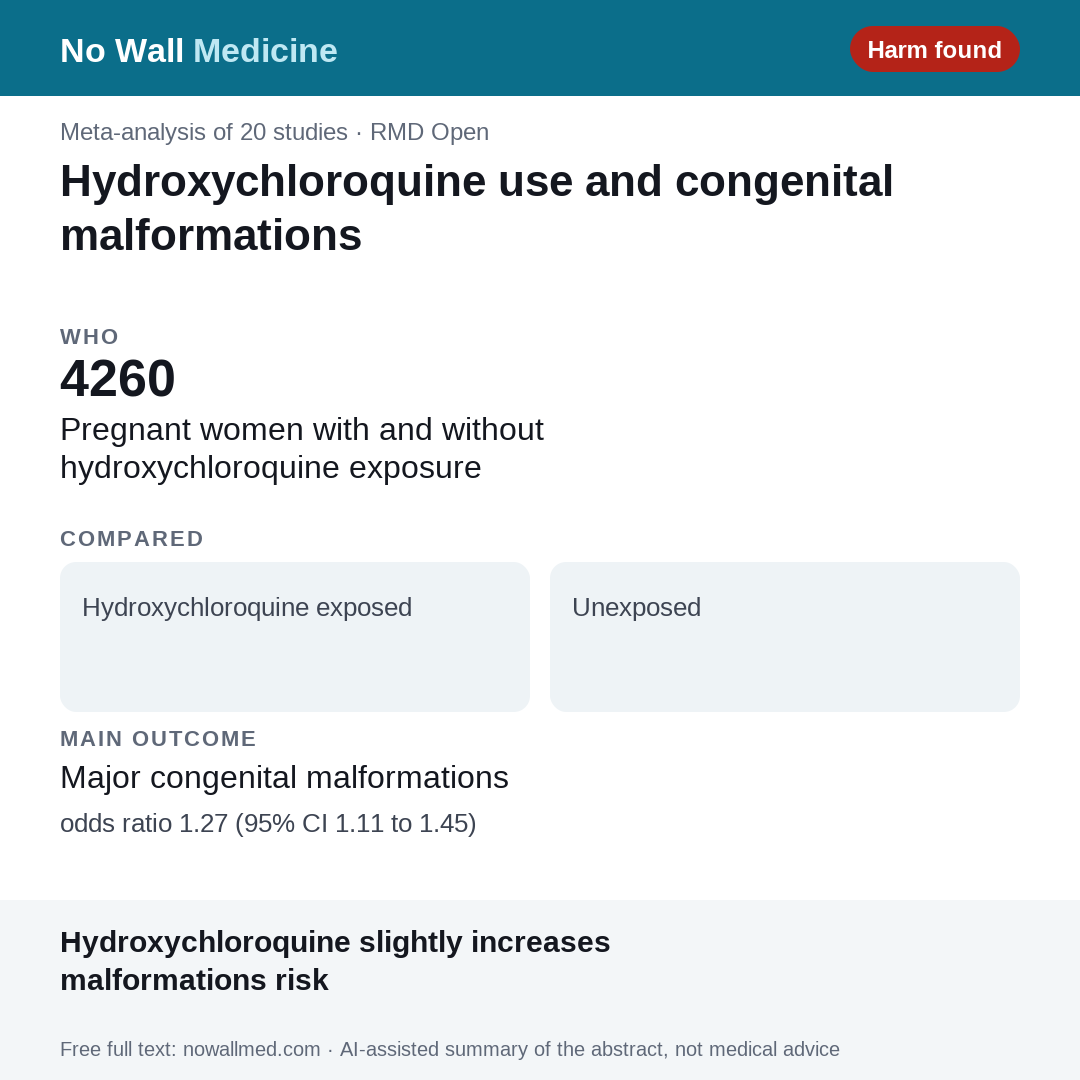
First trimester exposure to hydroxychloroquine during pregnancy and major congenital malformations: a systematic review and meta-analysis
Meta-analysis of 20 studiesHarm found
Hydroxychloroquine use and congenital malformations
Who
4260
Pregnant women with and without hydroxychloroquine exposure
Compared
Hydroxychloroquine exposed
Unexposed
Main outcome
Major congenital malformations
Result: odds ratio 1.27 (95% CI 1.11 to 1.45)
Bottom line: Hydroxychloroquine slightly increases malformations risk
Limitation: Low certainty of evidence
RMD Open · 2026-10-26Download image
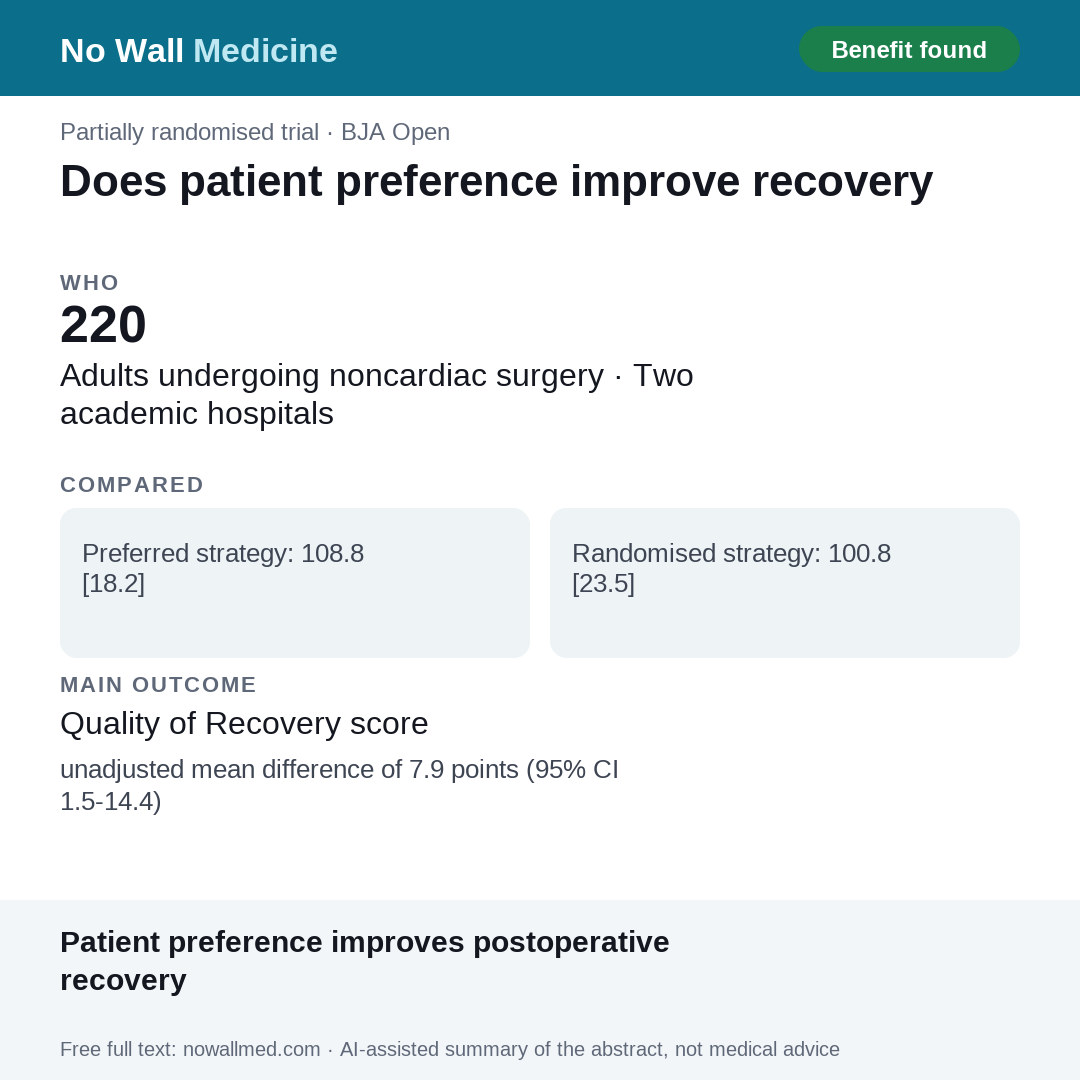
Patient preference for intraoperative opioid strategy and early postoperative recovery after noncardiac surgery: a prospective partially randomised patient-preference trial (the PERFECT trial)
Partially randomised trialBenefit found
Does patient preference improve recovery
Who
220
Adults undergoing noncardiac surgery · Two academic hospitals
Compared
Preferred strategy: 108.8 [18.2]
Randomised strategy: 100.8 [23.5]
Main outcome
Quality of Recovery score
Result: unadjusted mean difference of 7.9 points (95% CI 1.5-14.4)
Bottom line: Patient preference improves postoperative recovery
Limitation: Non-randomised comparison and limited precision
BJA Open · 2026-10-26Download image
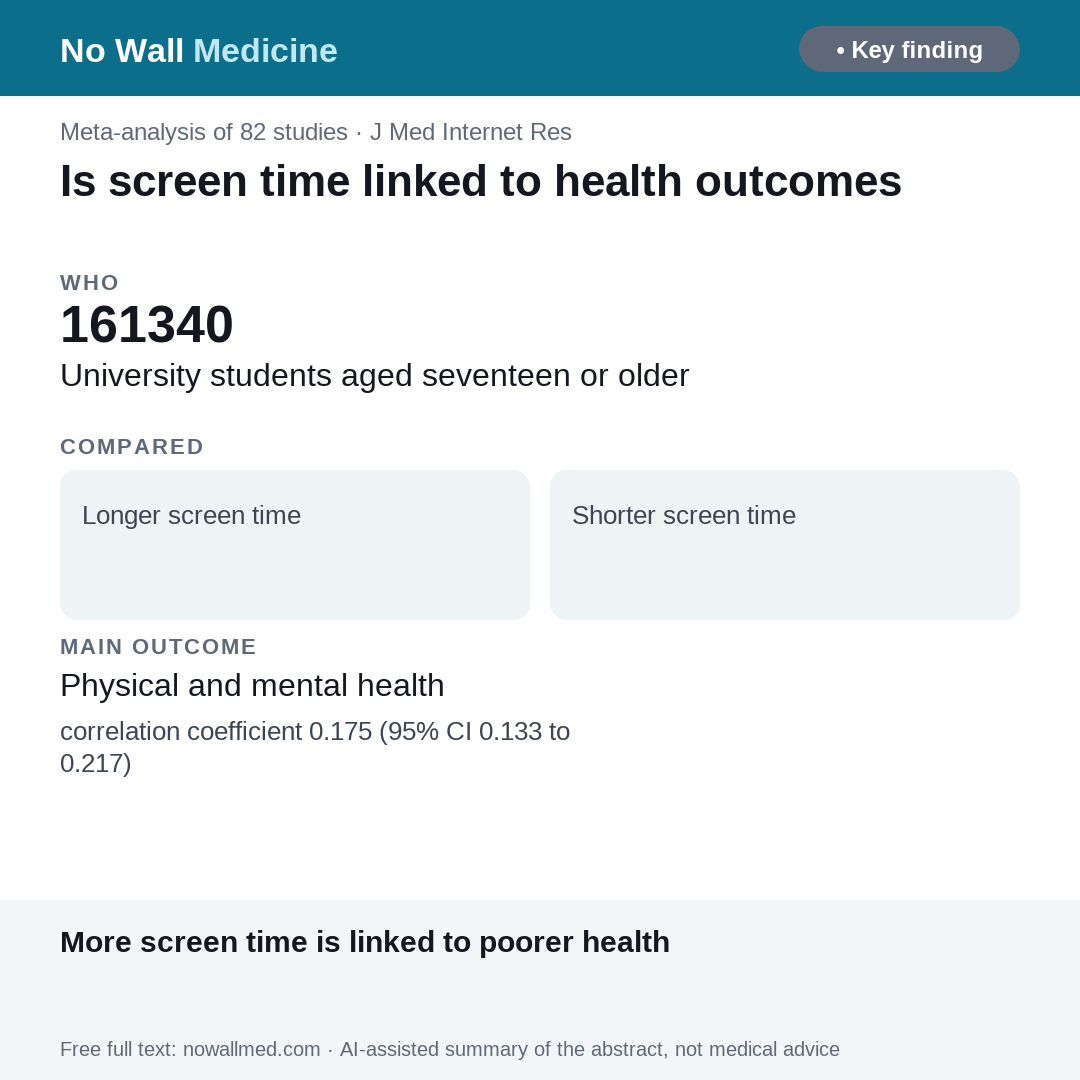
Association of Screen Time With Physical and Mental Health in University Students: Systematic Review and Meta-Analysis
Meta-analysis of 82 studiesHarm found
Is screen time linked to health outcomes
Who
161340
University students aged seventeen or older
Compared
Longer screen time
Shorter screen time
Main outcome
Physical and mental health
Result: correlation coefficient 0.175 (95% CI 0.133 to 0.217)
Bottom line: More screen time is linked to poorer health
Limitation: Cross sectional designs and self reported screen time
J Med Internet Res · 2026-10-26Download image
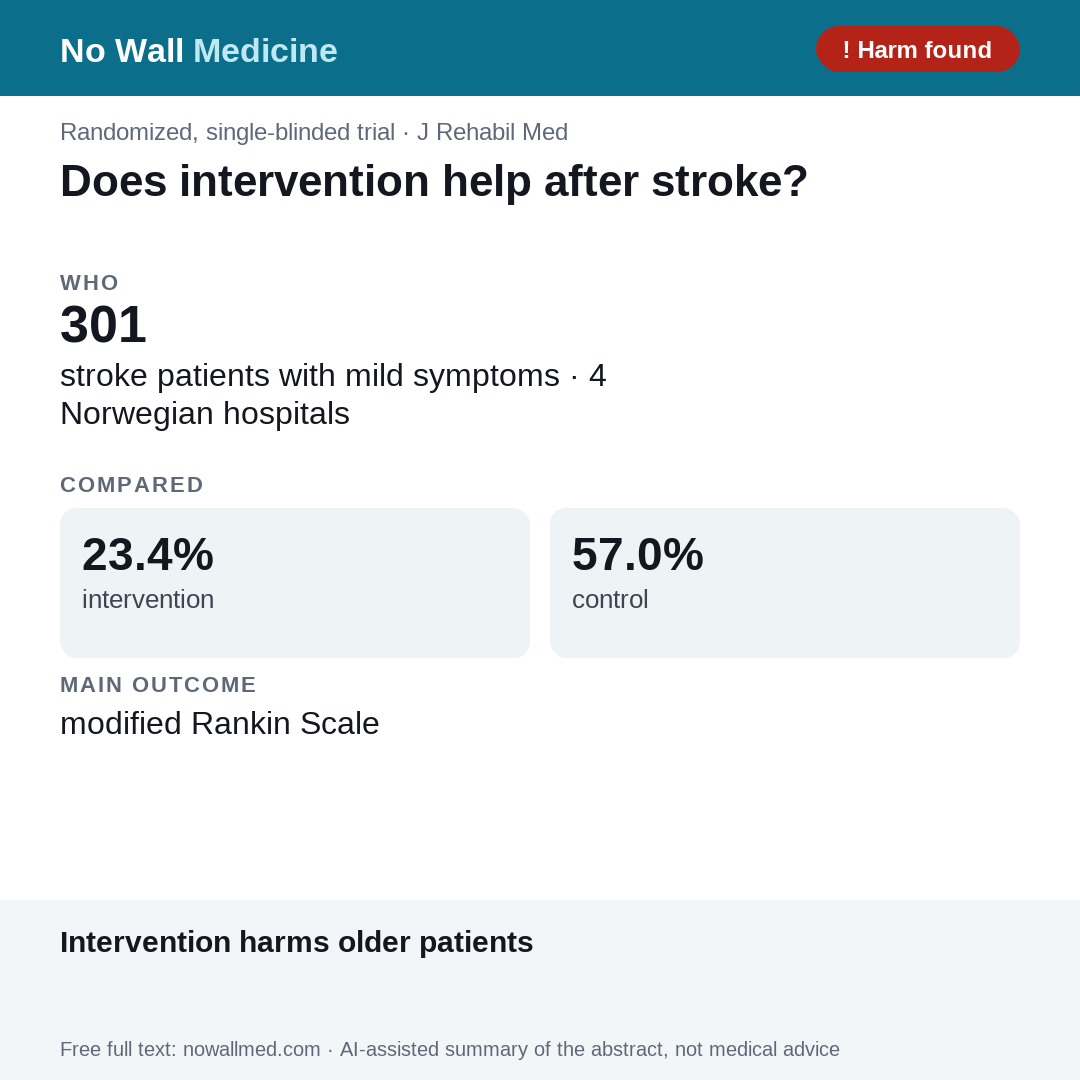
Impact of age and frailty on the effect of a multimodal individualized long-term intervention after stroke: the last-long trial
Randomized, single-blinded trialHarm found
Does intervention help after stroke?
Who
301
stroke patients with mild symptoms · 4 Norwegian hospitals
Compared
23.4%intervention
57.0%control
Main outcome
modified Rankin Scale
Bottom line: Intervention harms older patients
J Rehabil Med · 2026-10-26Download image
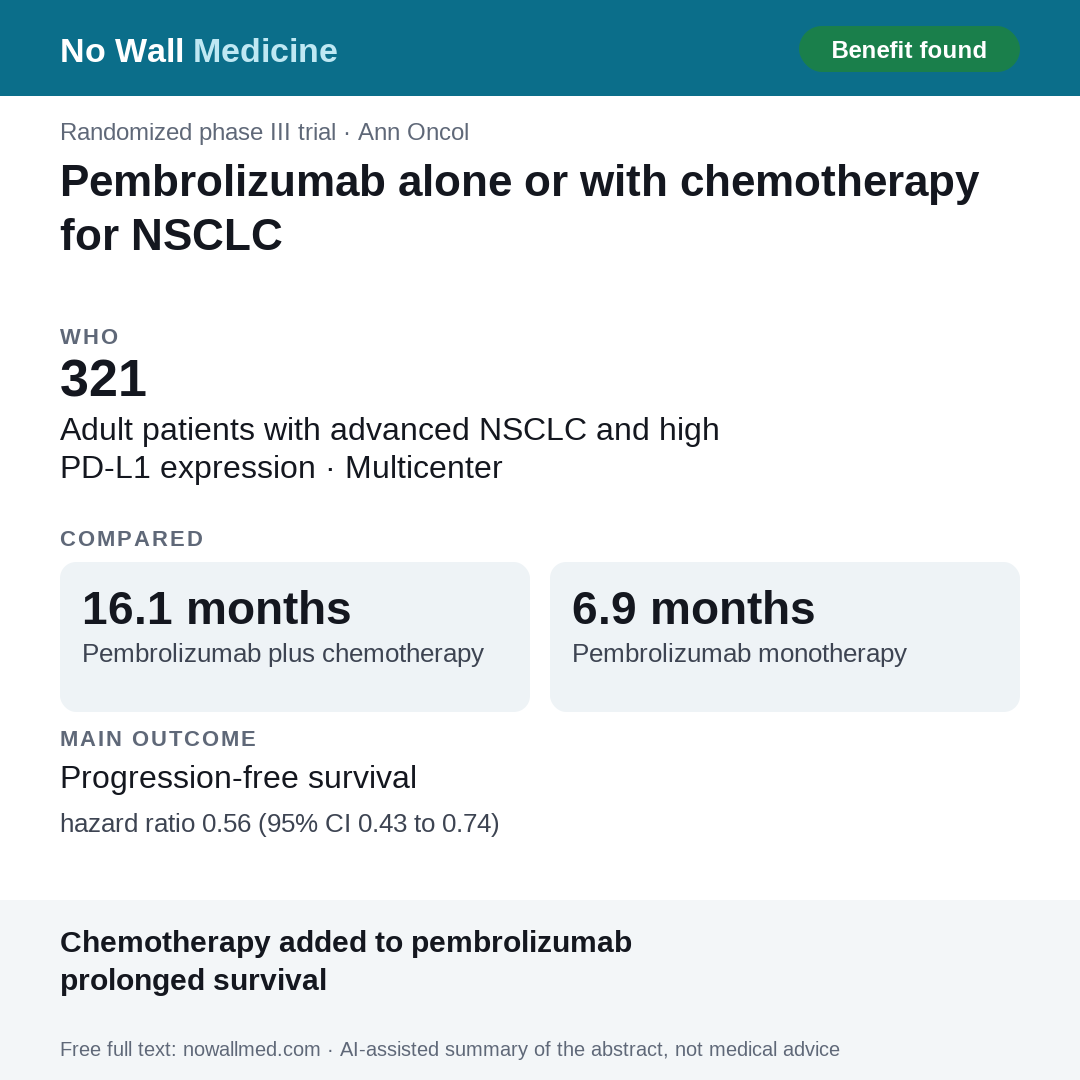
Pembrolizumab with or without platinum-based chemotherapy as first-line treatment in advanced NSCLC expressing PD-L1 ≥50%: The PERSEE randomized phase III trial (GFPC 01-2020)
Randomized phase III trialBenefit found
Pembrolizumab alone or with chemotherapy for NSCLC
Who
321
Adult patients with advanced NSCLC and high PD-L1 expression · Multicenter
Compared
16.1 monthsPembrolizumab plus chemotherapy
6.9 monthsPembrolizumab monotherapy
Main outcome
Progression-free survival
Result: hazard ratio 0.56 (95% CI 0.43 to 0.74)
Bottom line: Chemotherapy added to pembrolizumab prolongs survival
Ann Oncol · 2026-10-25Download image
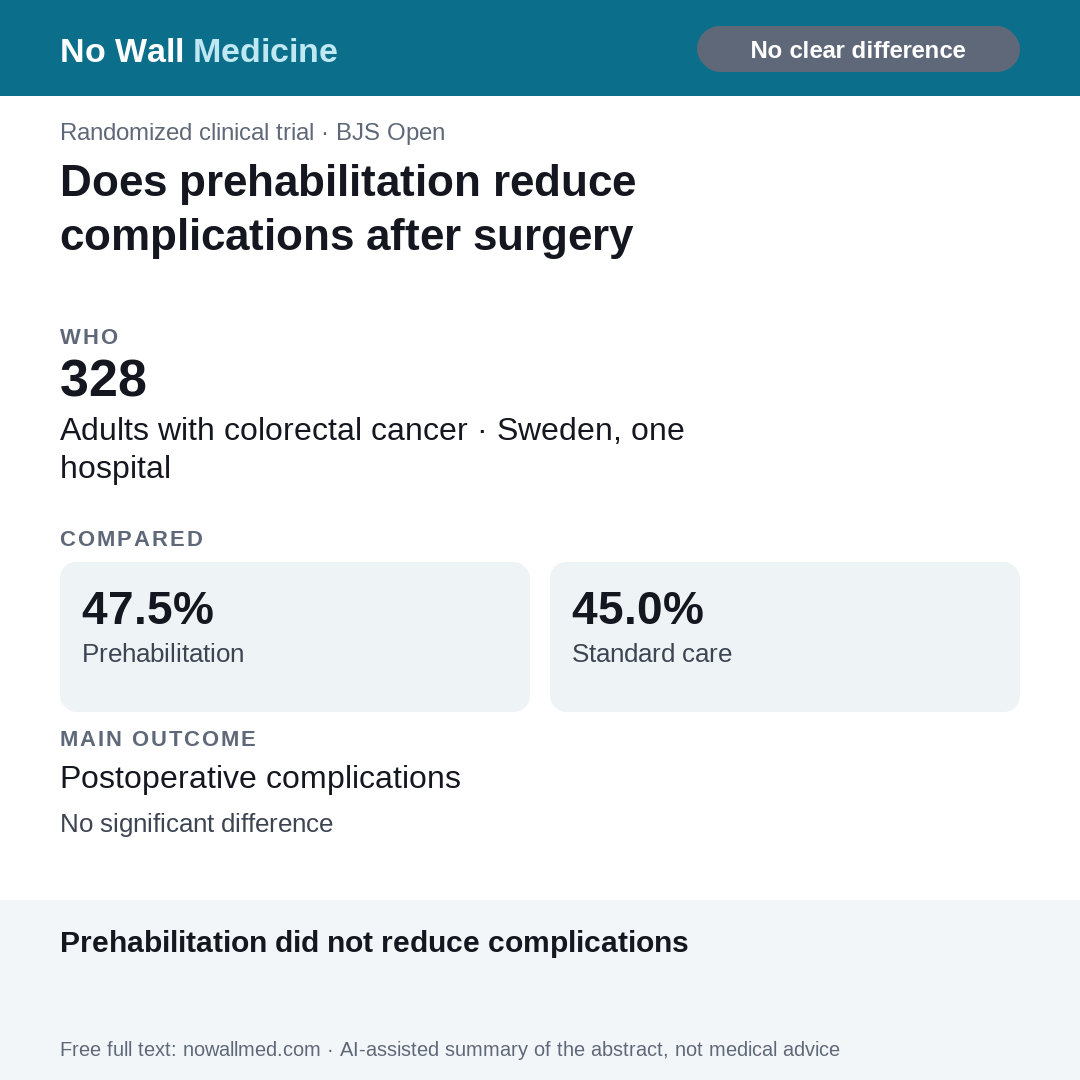
Multimodal prehabilitation in colorectal cancer surgery: randomized clinical trial
Randomized clinical trialNo clear difference
Does prehabilitation reduce complications after surgery
Who
328
Adults with colorectal cancer · Sweden, one hospital
Compared
47.5%Prehabilitation
45.0%Standard care
Main outcome
Postoperative complications
Result: No significant difference
Bottom line: Prehabilitation did not reduce complications
Limitation: Single-centre trial
BJS Open · 2026-10-25Download image
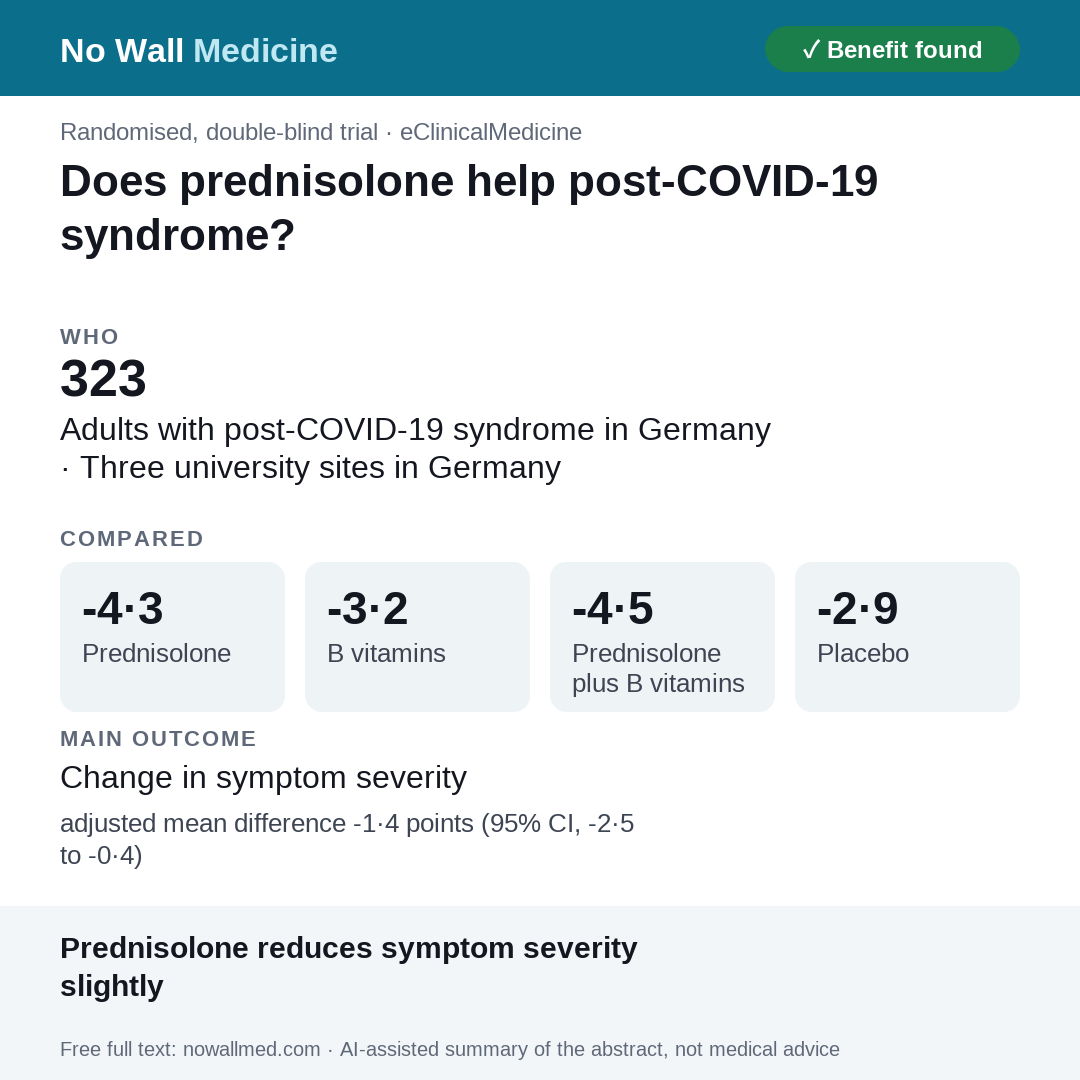
Low-dose prednisolone and B vitamins for post-COVID-19 syndrome in Germany: the PreVitaCOV randomised clinical trial
Randomised, double-blind trialBenefit found
Does prednisolone help post-COVID-19 syndrome?
Who
323
Adults with post-COVID-19 syndrome in Germany · Three university sites in Germany
Compared
-4·3Prednisolone (SD 5·1)
-3·2B vitamins (SD 5·0)
-4·5Prednisolone plus B vitamins (SD 4·5)
-2·9Placebo (SD 4·6)
Main outcome
Change in symptom severity
Result: adjusted mean difference -1·4 points (95% CI, -2·5 to -0·4)
Bottom line: Prednisolone reduces symptom severity slightly
Limitation: effect did not reach clinical relevance threshold
Funded by: German Federal Ministry of Research
eClinicalMedicine · 2026-10-24Download image
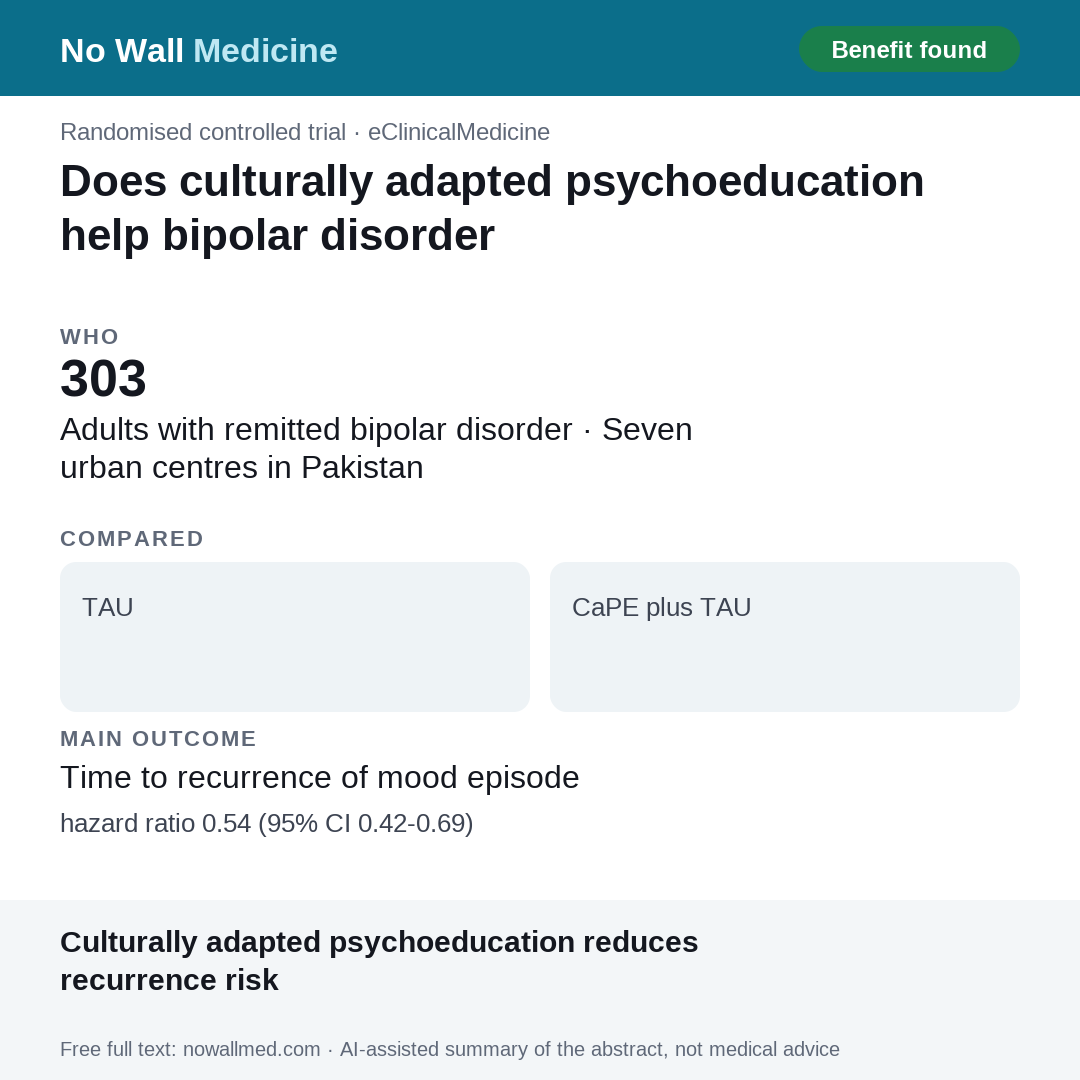
Culturally adapted psychoeducation for bipolar disorder: a multicentre, assessor-masked, randomised controlled trial
Randomised controlled trialBenefit found
Does culturally adapted psychoeducation help bipolar disorder
Who
303
Adults with remitted bipolar disorder · Seven urban centres in Pakistan
Compared
TAU
CaPE plus TAU
Main outcome
Time to recurrence of mood episode
Result: hazard ratio 0.54 (95% CI 0.42-0.69)
Bottom line: Culturally adapted psychoeducation reduces recurrence risk
Funded by: Canadian Institutes of Health Research
eClinicalMedicine · 2026-10-24Download image
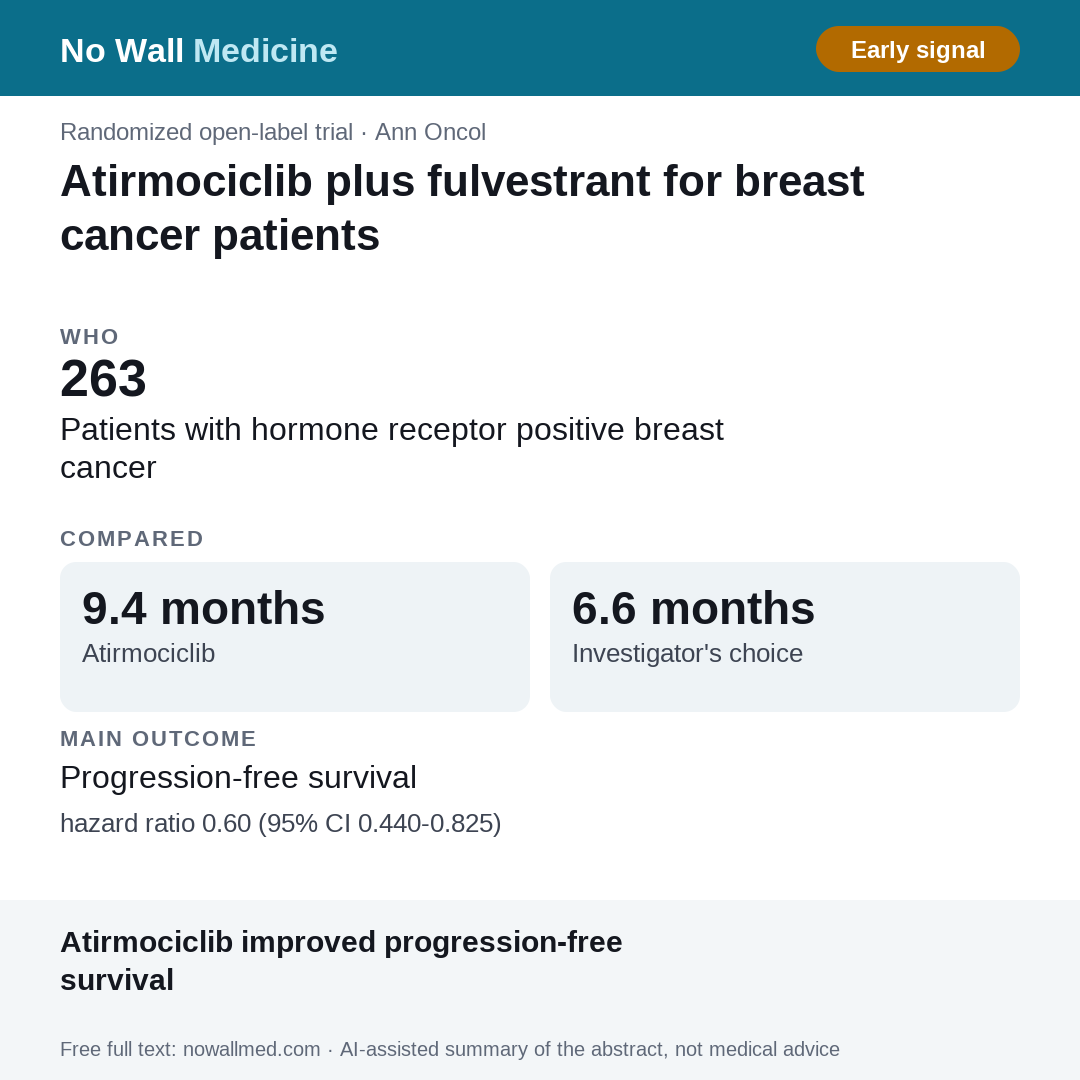
Atirmociclib and fulvestrant for patients with HR-positive/HER2-negative advanced or metastatic breast cancer who progressed on a prior cyclin-dependent kinase 4/6 inhibitor: primary analysis of the randomized FourLight-1 trial
Randomized open-label trialBenefit found
Atirmociclib plus fulvestrant for breast cancer patients
Who
263
Patients with hormone receptor positive breast cancer
Compared
9.4 monthsAtirmociclib
6.6 monthsInvestigator's choice
Main outcome
Progression-free survival
Result: hazard ratio 0.60 (95% CI 0.440-0.825)
Bottom line: Atirmociclib improved progression-free survival
Ann Oncol · 2026-10-24Download image
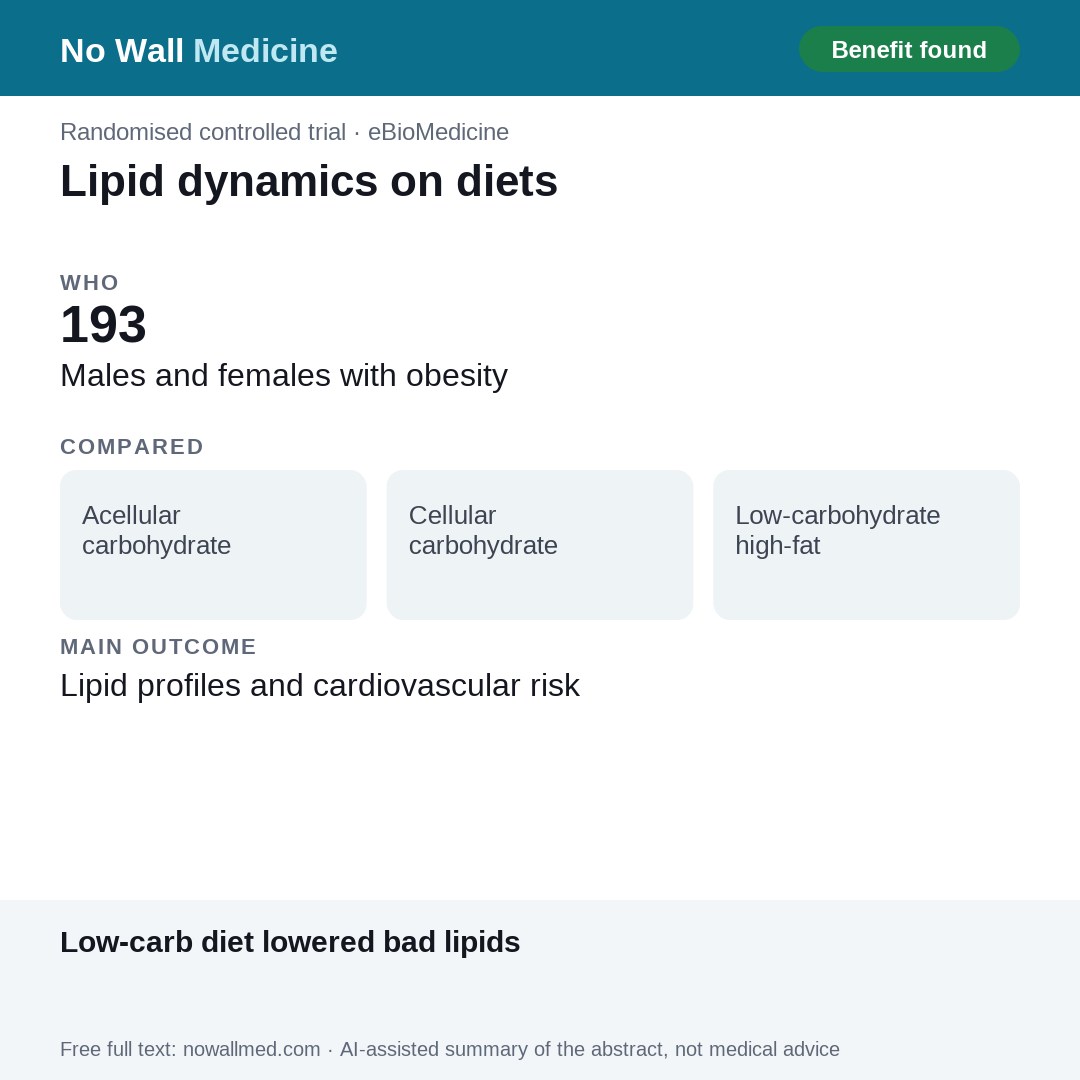
Lipid dynamics and cardiovascular risk profiles on carbohydrate- or saturated fat-based diets: secondary analysis of the CARBFUNC trial
Randomised controlled trialBenefit found
Lipid dynamics on diets
Who
193
Males and females with obesity
Compared
Acellular carbohydrate
Cellular carbohydrate
Low-carbohydrate high-fat
Main outcome
Lipid profiles and cardiovascular risk
Bottom line: Low-carb diet lowered bad lipids
Funded by: Trond Mohn Research Foundation
eBioMedicine · 2026-10-24Download image
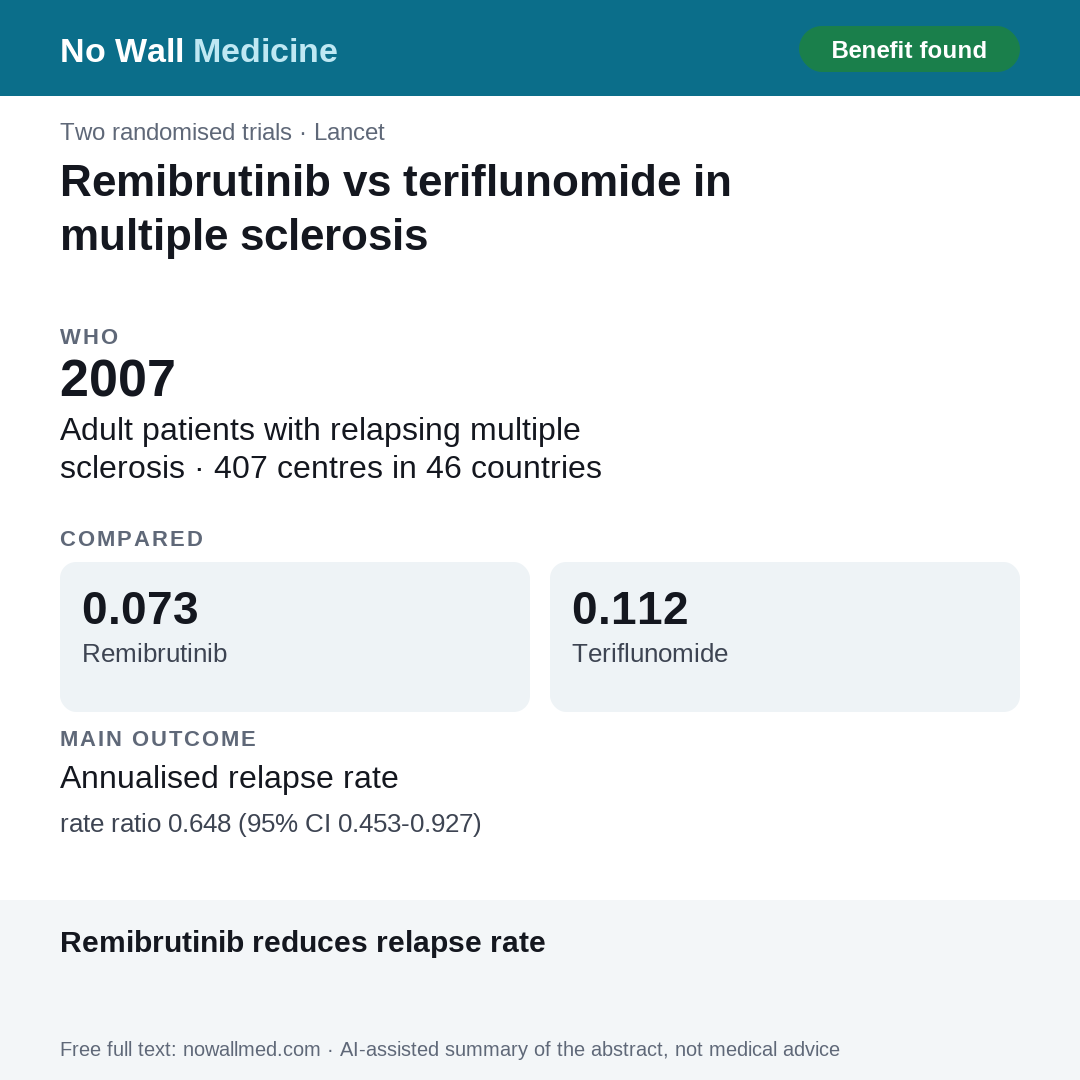
Remibrutinib versus teriflunomide in relapsing multiple sclerosis (REMODEL-1 and REMODEL-2): two randomised, phase 3 trials
Two randomised trialsBenefit found
Remibrutinib vs teriflunomide in multiple sclerosis
Who
2007
Adult patients with relapsing multiple sclerosis · 407 centres in 46 countries
Compared
0.073Remibrutinib
0.112Teriflunomide
Main outcome
Annualised relapse rate
Result: rate ratio 0.648 (95% CI 0.453-0.927)
Bottom line: Remibrutinib reduces relapse rate
Funded by: Novartis
Lancet · 2026-10-23Download image
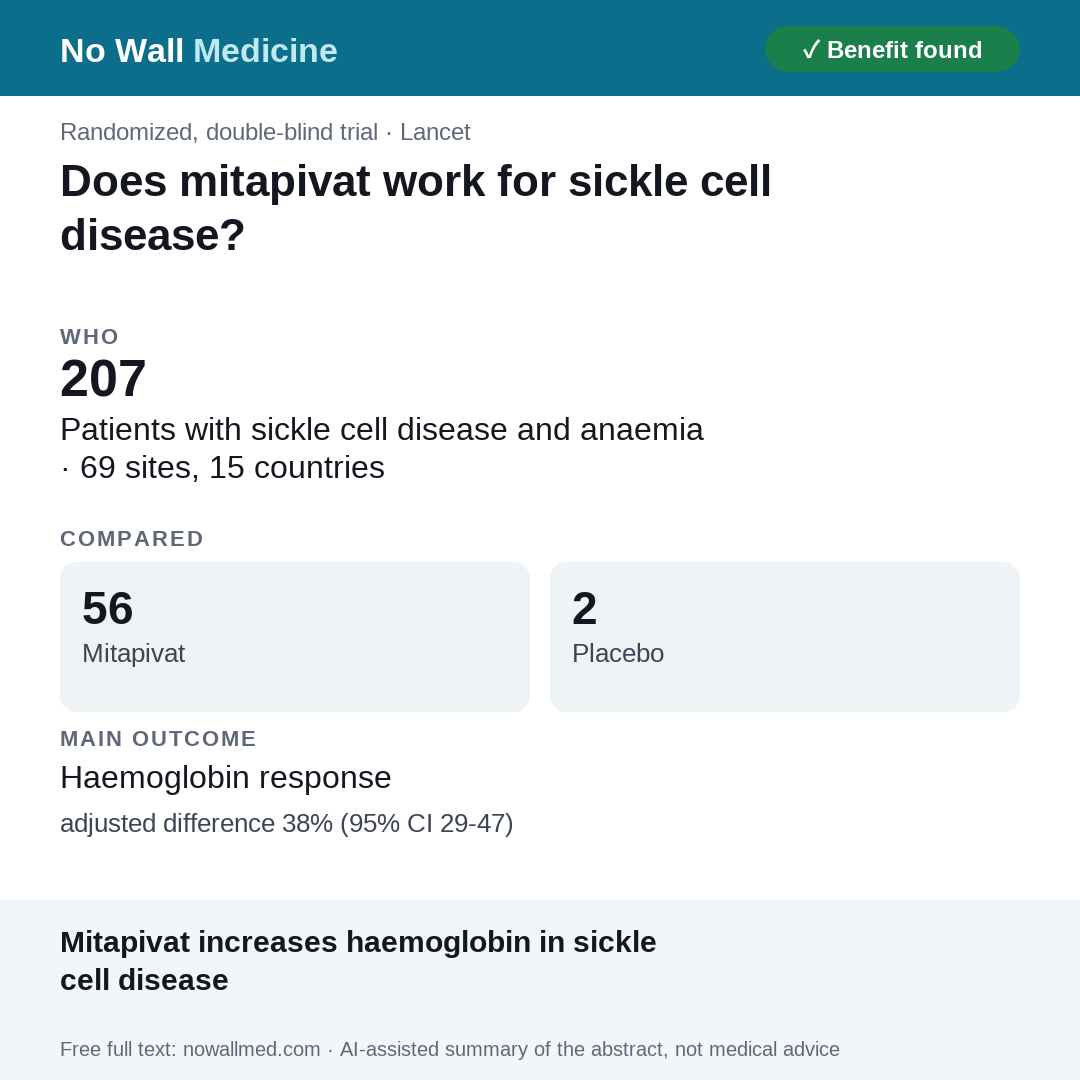
Efficacy and safety of mitapivat in patients with sickle cell disease (RISE UP): a phase 3, double-blind, global, randomised, placebo-controlled trial
Randomized, double-blind trialBenefit found
Does mitapivat work for sickle cell disease?
Who
207
Patients with sickle cell disease and anaemia · 69 sites, 15 countries
Compared
56Mitapivat (41%)
2Placebo (3%)
Main outcome
Haemoglobin response
Result: adjusted difference 38% (95% CI 29-47)
Bottom line: Mitapivat increases haemoglobin in sickle cell disease
Funded by: Agios Pharmaceuticals
Lancet · 2026-10-23Download image
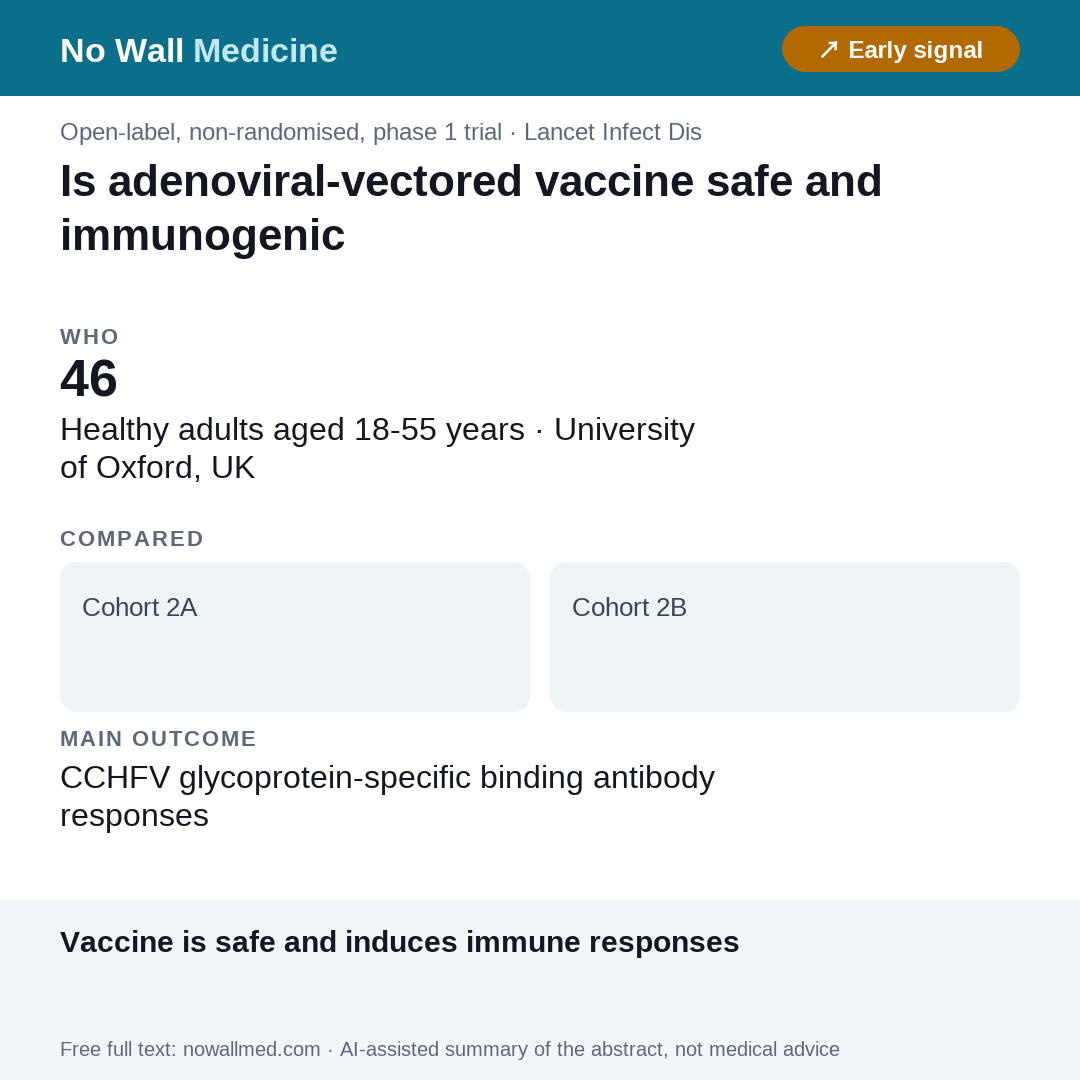
Safety and immunogenicity of an adenoviral-vectored vaccine against Crimean-Congo haemorrhagic fever in the UK (CCHF01): an open-label, first-in-human, non-randomised, phase 1 clinical trial
Open-label, non-randomised, phase 1 trialBenefit found
Is adenoviral-vectored vaccine safe and immunogenic
Who
46
Healthy adults aged 18-55 years · University of Oxford, UK
Compared
Cohort 2A
Cohort 2B
Main outcome
CCHFV glycoprotein-specific binding antibody responses
Result: Median CCHFV glycoprotein Gc-specific IgG response was 88·20 AU 28 days after second vaccination
Bottom line: Vaccine is safe and induces immune responses
Funded by: UK Research and Innovation
Lancet Infect Dis · 2026-10-23Download image
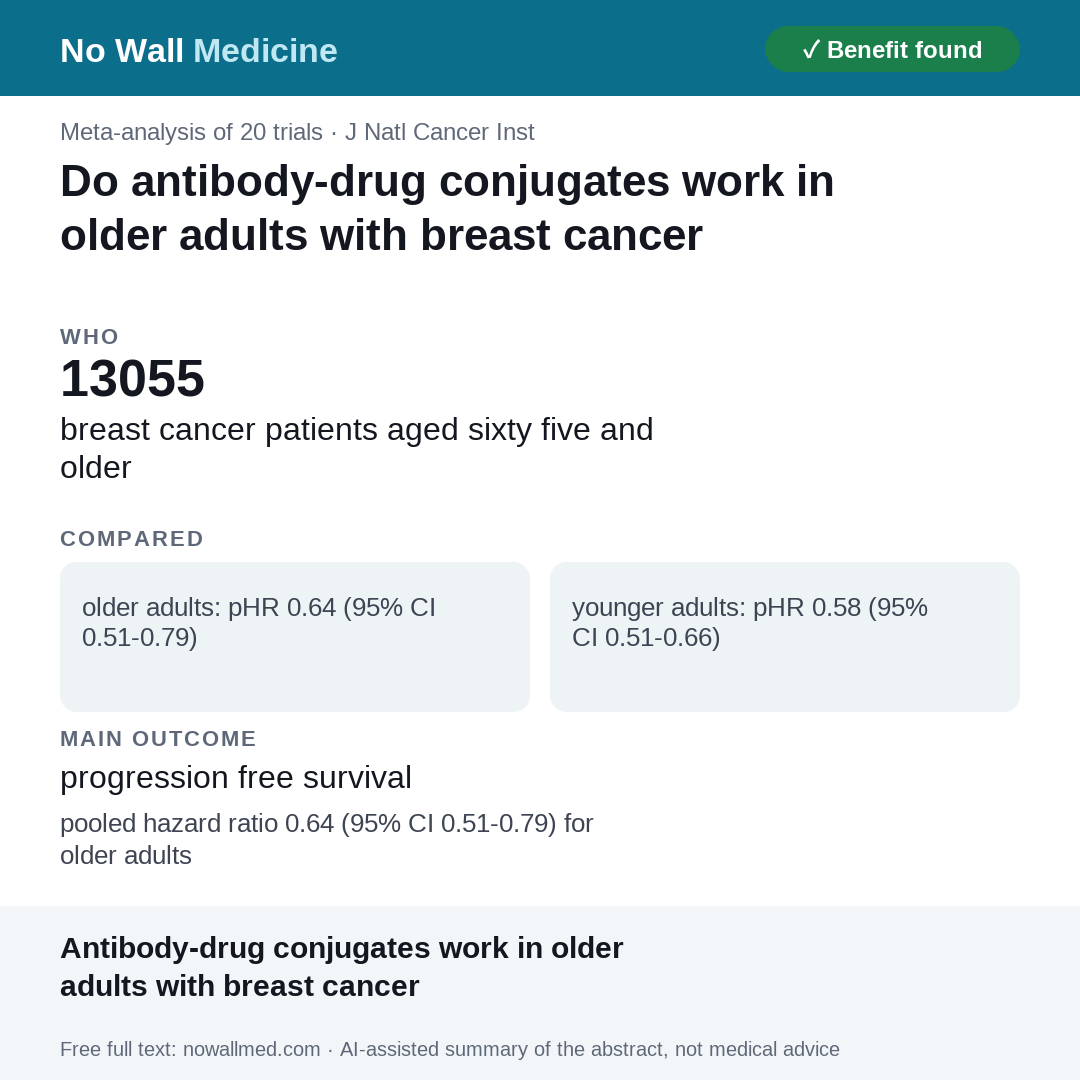
Efficacy and toxicity of antibody-drug conjugates in older adults with breast cancer: A systematic review and meta-analysis
Meta-analysis of 20 trialsBenefit found
Do antibody-drug conjugates work in older adults with breast cancer
Who
13055
breast cancer patients aged sixty five and older
Compared
older adults: pHR 0.64 (95% CI 0.51-0.79)
younger adults: pHR 0.58 (95% CI 0.51-0.66)
Main outcome
progression free survival
Result: pooled hazard ratio 0.64 (95% CI 0.51-0.79) for older adults
Bottom line: Antibody-drug conjugates work in older adults with breast cancer
Limitation: insufficient age and treatment stratified toxicity reporting
J Natl Cancer Inst · 2026-10-23Download image
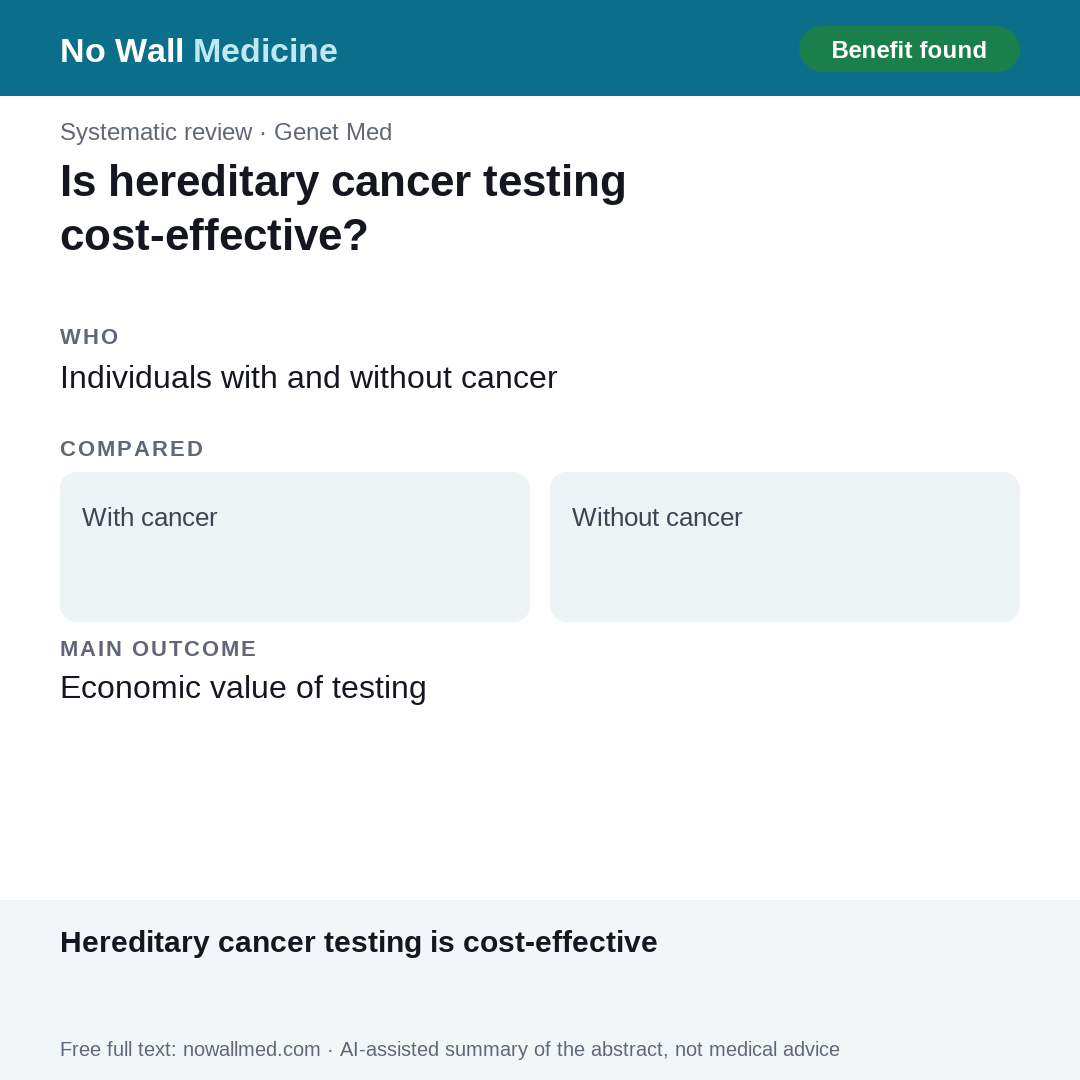
The Economic Value of Hereditary Cancer Testing: A Systematic Review
Systematic reviewBenefit found
Is hereditary cancer testing cost-effective?
Who
Individuals with and without cancer
Compared
With cancer
Without cancer
Main outcome
Economic value of testing
Bottom line: Hereditary cancer testing is cost-effective
Genet Med · 2026-10-23Download image
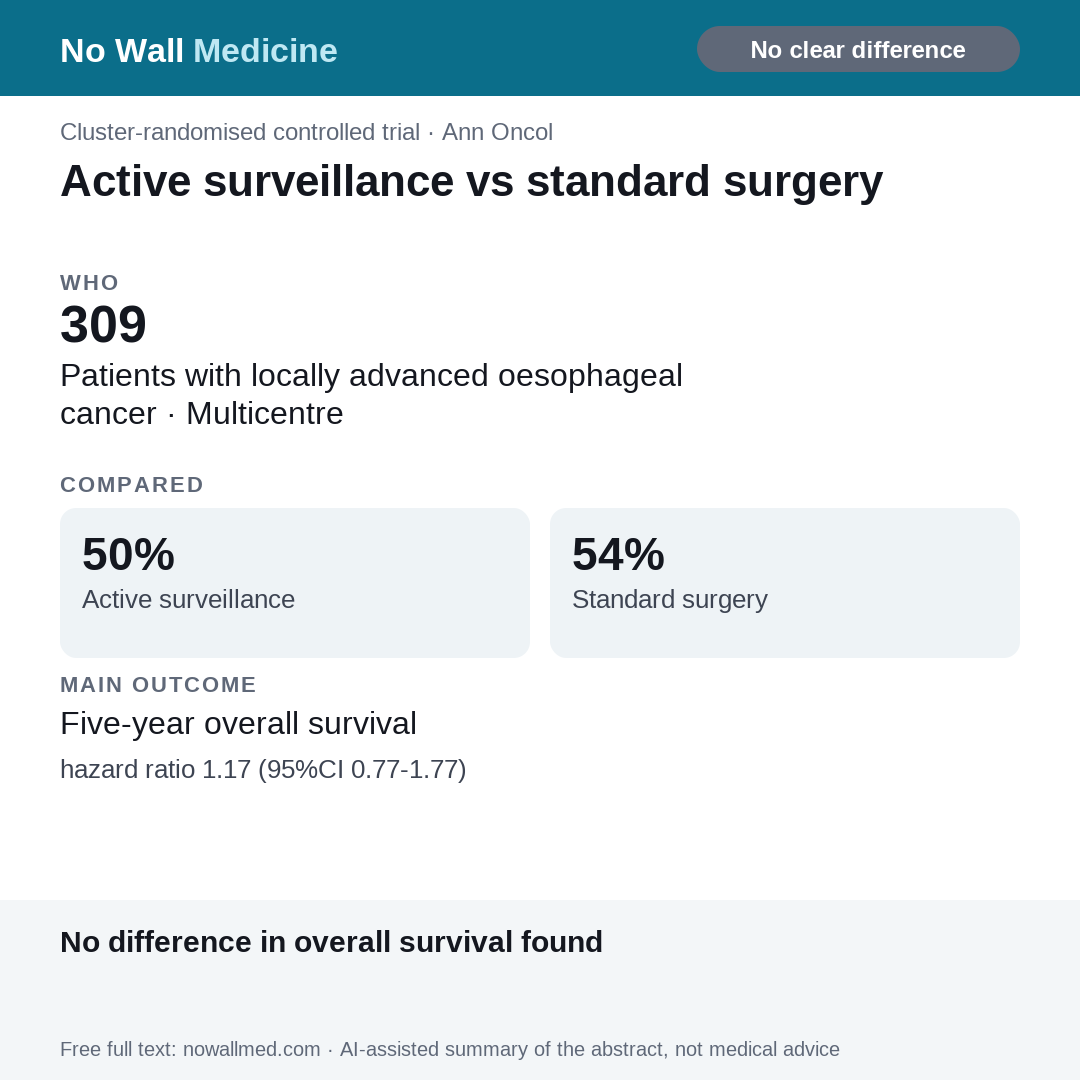
Active surveillance versus standard surgery after neoadjuvant chemoradiotherapy for oesophageal cancer: long-term results of a cluster-randomised controlled trial (SANO)
Cluster-randomised controlled trialNo clear difference
Active surveillance vs surgery after chemoradiotherapy
Who
309
Patients with locally advanced oesophageal cancer · Multicentre
Compared
50%Active surveillance (95%CI 43-57)
54%Standard surgery (95%CI 46-64)
Main outcome
Five-year overall survival
Result: hazard ratio 1.17 (95%CI 0.77-1.77)
Bottom line: Active surveillance is as good as surgery
Ann Oncol · 2026-10-23Download image
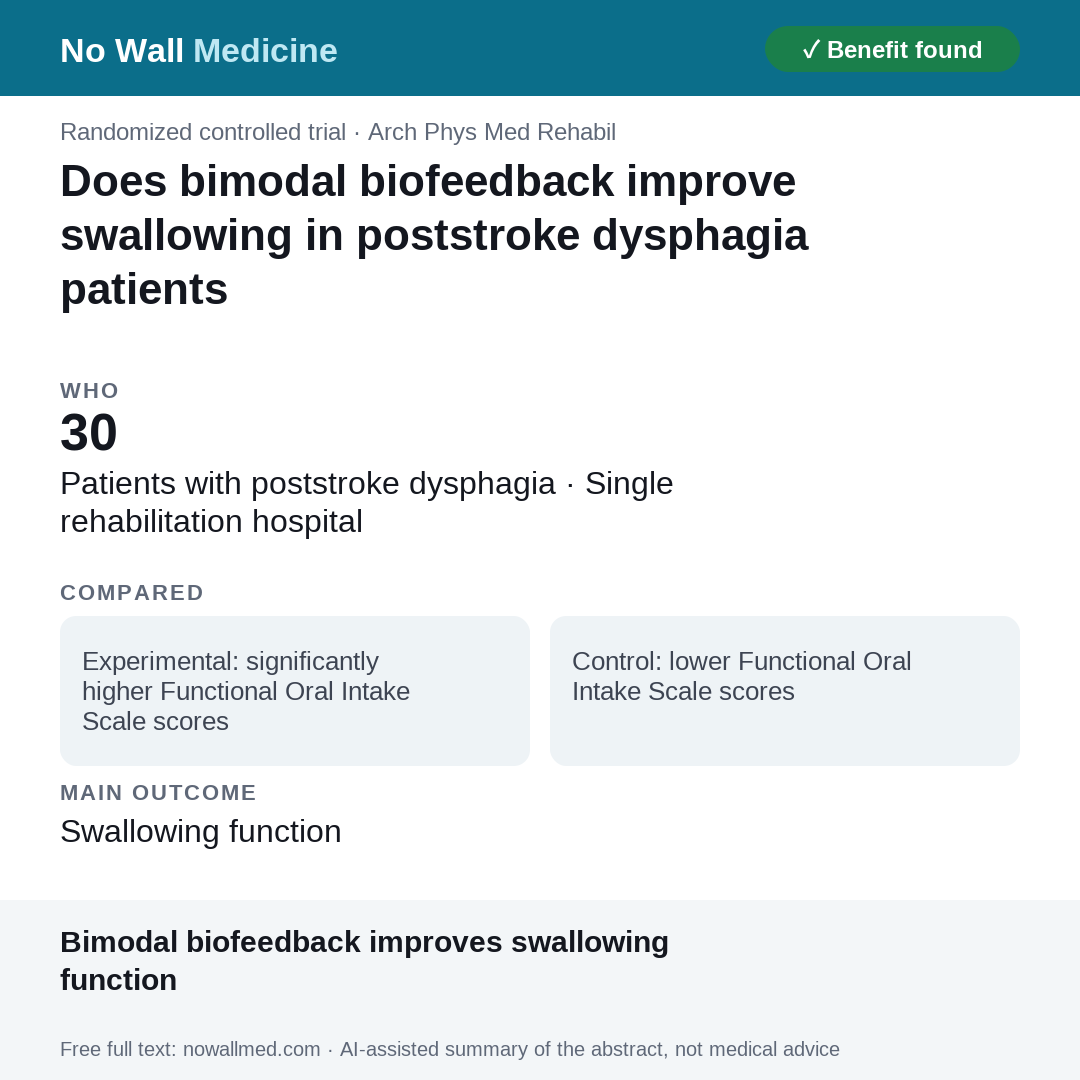
Effect of Bimodal Signal Biofeedback on the Supraglottic Swallowing Maneuver in Individuals With Poststroke Dysphagia: A Randomized Controlled Trial
Randomized controlled trialBenefit found
Does bimodal biofeedback improve swallowing in poststroke dysphagia patients
Who
30
Patients with poststroke dysphagia · Single rehabilitation hospital
Compared
Experimental: significantly higher Functional Oral Intake Scale scores
Control: lower Functional Oral Intake Scale scores
Main outcome
Swallowing function
Bottom line: Bimodal biofeedback improves swallowing function
Arch Phys Med Rehabil · 2026-10-23Download image
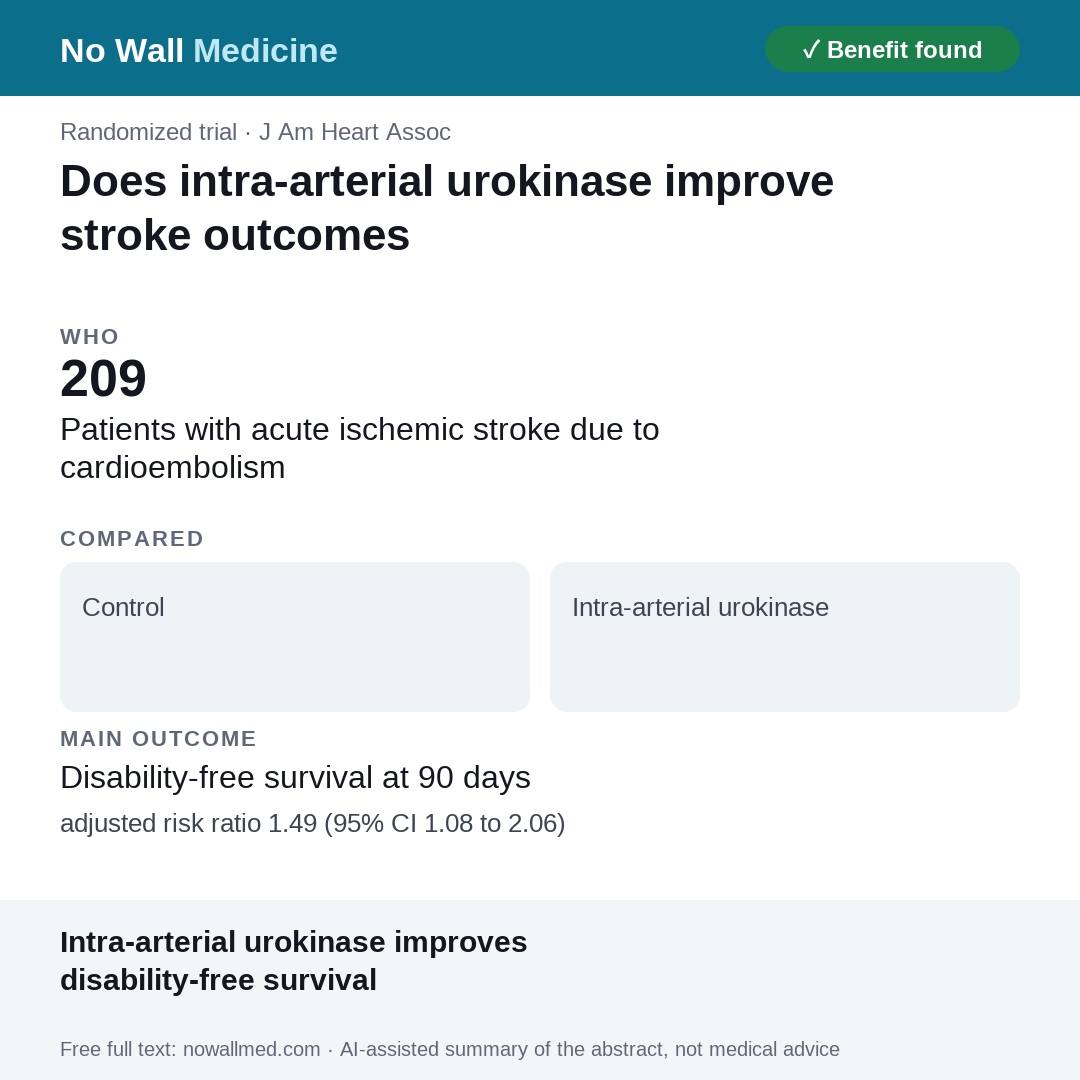
Outcomes of Intra-Arterial Urokinase After Endovascular Reperfusion for Acute Ischemic Stroke Due to Cardioembolism: A Secondary Analysis of the POST-UK Trial
Randomized trialBenefit found
Does intra-arterial urokinase improve stroke outcomes
Who
209
Patients with acute ischemic stroke due to cardioembolism
Compared
Control
Intra-arterial urokinase
Main outcome
Disability-free survival at 90 days
Result: adjusted risk ratio 1.49 (95% CI 1.08 to 2.06)
Bottom line: Intra-arterial urokinase improves disability-free survival
J Am Heart Assoc · 2026-10-23Download image
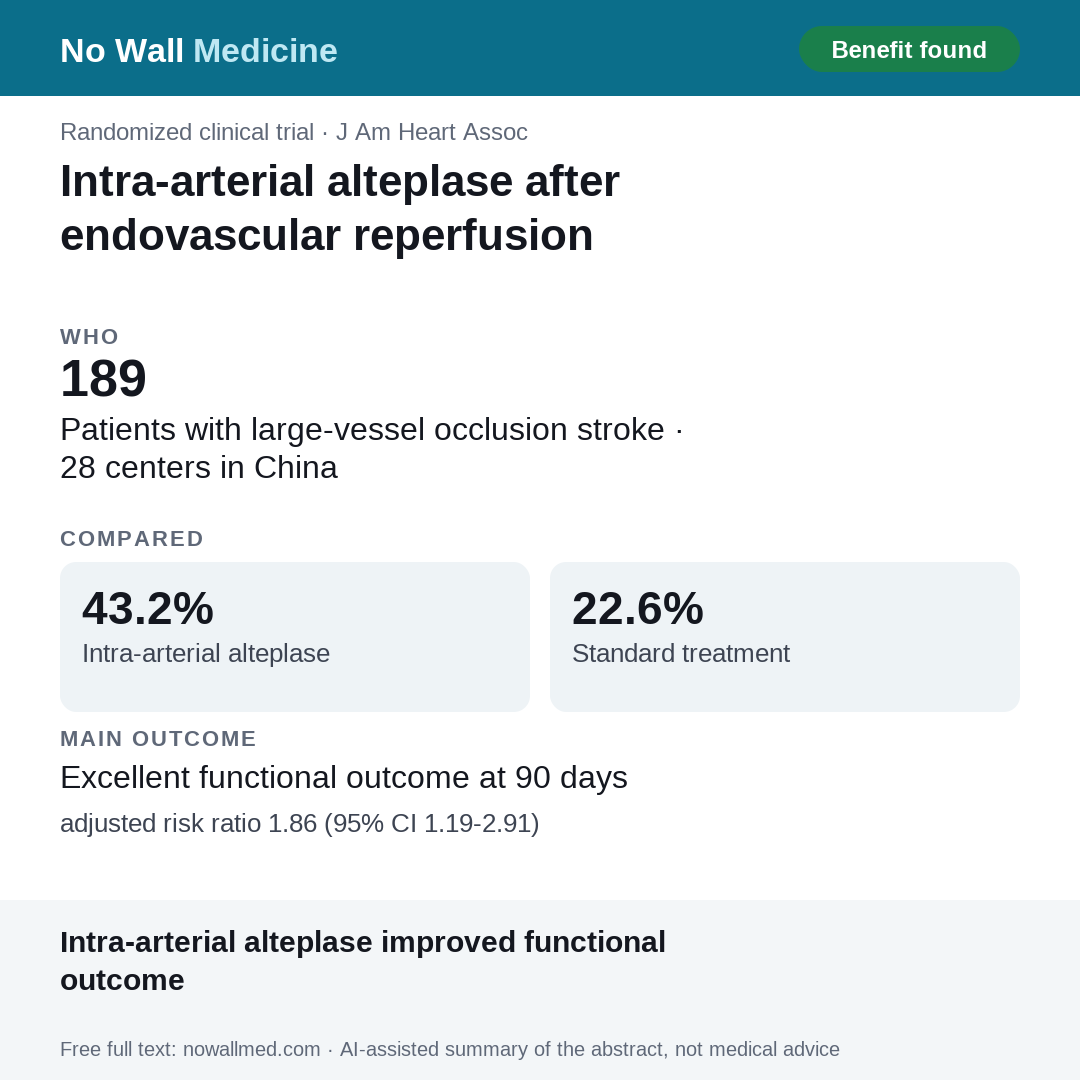
Intra-Arterial Alteplase After Successful Endovascular Reperfusion in Patients Without Intravenous Thrombolysis: A Subgroup Analysis of the PEARL Randomized Clinical Trial
Randomized clinical trialBenefit found
Intra-arterial alteplase after endovascular reperfusion
Who
189
Patients with large-vessel occlusion stroke · 28 centers in China
Compared
43.2%Intra-arterial alteplase (41/95)
22.6%Standard treatment (21/93)
Main outcome
Excellent functional outcome at 90 days
Result: adjusted risk ratio 1.86 (95% CI 1.19-2.91)
Bottom line: Intra-arterial alteplase improved functional outcome
J Am Heart Assoc · 2026-10-23Download image