Visual abstracts
New randomized trials and meta-analyses from leading journals at a glance: who was studied, what was compared, and what was found. Every paper is free to read in full.
All specialtiesCardiology 2696Oncology 2271Gastroenterology & Hepatology 1034Infectious Disease 1697Neurology 1075Psychiatry & Mental Health 1247Pulmonology 1130Critical Care 744Endocrinology & Diabetes 1385Pediatrics 1571Surgery 1384Orthopedics & Sports Medicine 495Neurosurgery 331Cardiothoracic & Vascular Surgery 296Plastic & Reconstructive Surgery 401Nephrology 557Rheumatology 414Hematology 583Dermatology 317Ophthalmology 308Obstetrics & Gynecology 882Public & Global Health 492Radiology & Imaging 372Anesthesiology 539Urology 447ENT (Otolaryngology) 319Emergency Medicine 300Allergy & Immunology 174Geriatrics 577Family Medicine & Primary Care 308Medical Genetics & Genomics 303Pathology & Laboratory Medicine 85Physical Medicine & Rehabilitation 438Palliative Care 238Nutrition 717Digital Health & AI 1291General Medicine 193
Buffered Cortisol Response to Stress in Patients With Epilepsy and Its Association With Memory and Quality of Life
Hybrid single-blind controlled studyHarm found
How is the acute cortisol stress response affected in adults with epilepsy?
Who
147
Adults with epilepsy and healthy individuals · Refractory Epilepsy Unit
Compared
Epilepsy experimental group: abolition of the stress response
Epilepsy control group: no differences with those not exposed to the Trier Social Stress Test
Healthy group: expected cortisol response to stress
Main outcome
cortisol levels and relationship with memory and quality of life
Result: mean difference -107.90 (95% CI -176.75 to -39.05)
Bottom line: Patients with epilepsy may exhibit a buffered cortisol response to acute stress compared to healthy individuals.
Limitation: cross-sectional design and sample specificity
Neurology · 2025-09-16Download image

Programmes for people who are homeless and have severe mental illness in low-income and middle-income countries: a systematic review
Systematic reviewMixed results
Programmes for homeless with severe mental illness
Who
people who are homeless and have severe mental illness · low-income and middle-income countries
Compared
intervention programmes
control
Main outcome
clinical improvements and family reintegration
Bottom line: Programmes show promise for homeless with mental illness
Lancet Psychiatry · 2025-09-16Download image

Heart failure outcomes and empagliflozin effects in patients with heart failure and reduced ejection fraction in sinus rhythm or atrial fibrillation: Data from EMPEROR-Reduced
Post-hoc analysis of a randomized trialBenefit found
Does atrial fibrillation status affect empagliflozin outcomes in heart failure with reduced ejection fraction?
Who
2785
Patients with heart failure and reduced ejection fraction
Compared
Atrial fibrillation: hazard ratio 0.82 (95% CI 0.63-1.08)
Sinus rhythm: hazard ratio 0.69 (95% CI 0.56-0.84)
Main outcome
cardiovascular death or hospitalization for heart failure
Result: hazard ratio 0.82 (95% CI 0.63-1.08) in atrial fibrillation and 0.69 (95% CI 0.56-0.84) in sinus rhythm
Bottom line: Empagliflozin reduced cardiovascular death or hospitalization for heart failure regardless of atrial fibrillation or sinus rhythm status.
Eur J Heart Fail · 2025-09-16Download image

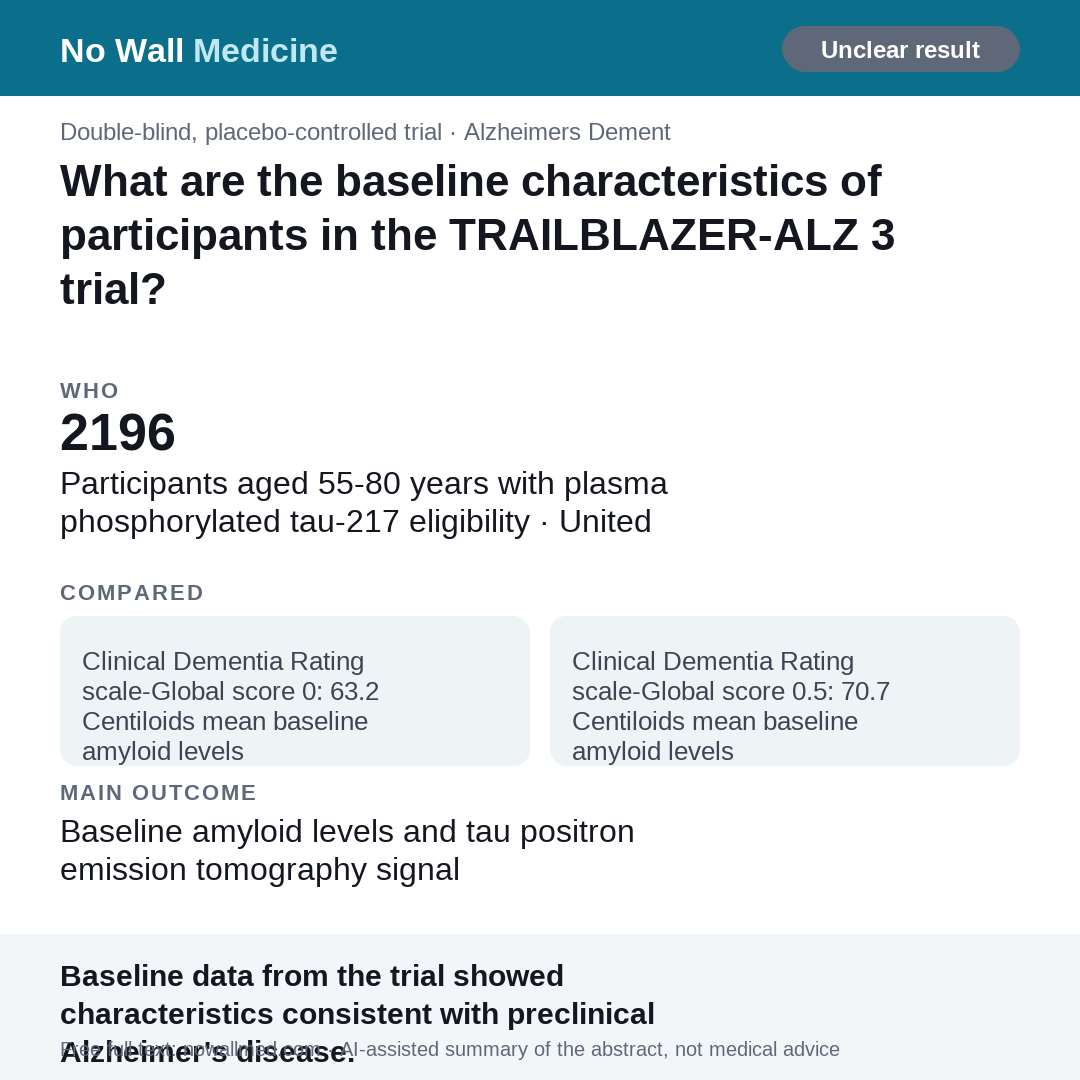
Donanemab in preclinical Alzheimer's disease: Screening and baseline data from TRAILBLAZER-ALZ 3
Double-blind, placebo-controlled trialUnclear result
What are the baseline characteristics of participants in the TRAILBLAZER-ALZ 3 trial?
Who
2196
Participants aged 55-80 years with plasma phosphorylated tau-217 eligibility · United States and Japan
Compared
Clinical Dementia Rating scale-Global score 0: 63.2 Centiloids mean baseline amyloid levels
Clinical Dementia Rating scale-Global score 0.5: 70.7 Centiloids mean baseline amyloid levels
Main outcome
Baseline amyloid levels and tau positron emission tomography signal
Bottom line: Baseline data from the trial showed characteristics consistent with preclinical Alzheimer's disease.
Alzheimers Dement · 2025-09-16Download image
Multi-epigenome-wide analyses and meta-analysis of child maltreatment in judicial autopsies and intervened children and adolescents
Epigenome-wide analyses and meta-analysisBenefit found
What are the common DNA methylation signatures associated with child maltreatment?
Who
Judicial autopsy cases, toddlers, and adolescents
Compared
Child maltreatment
Controls
Main outcome
Common methylation sites associated with child maltreatment exposure
Bottom line: Four methylation sites in specific genes serve as potential biomarkers for identifying early-life adversity.
Mol Psychiatry · 2025-09-16Download image

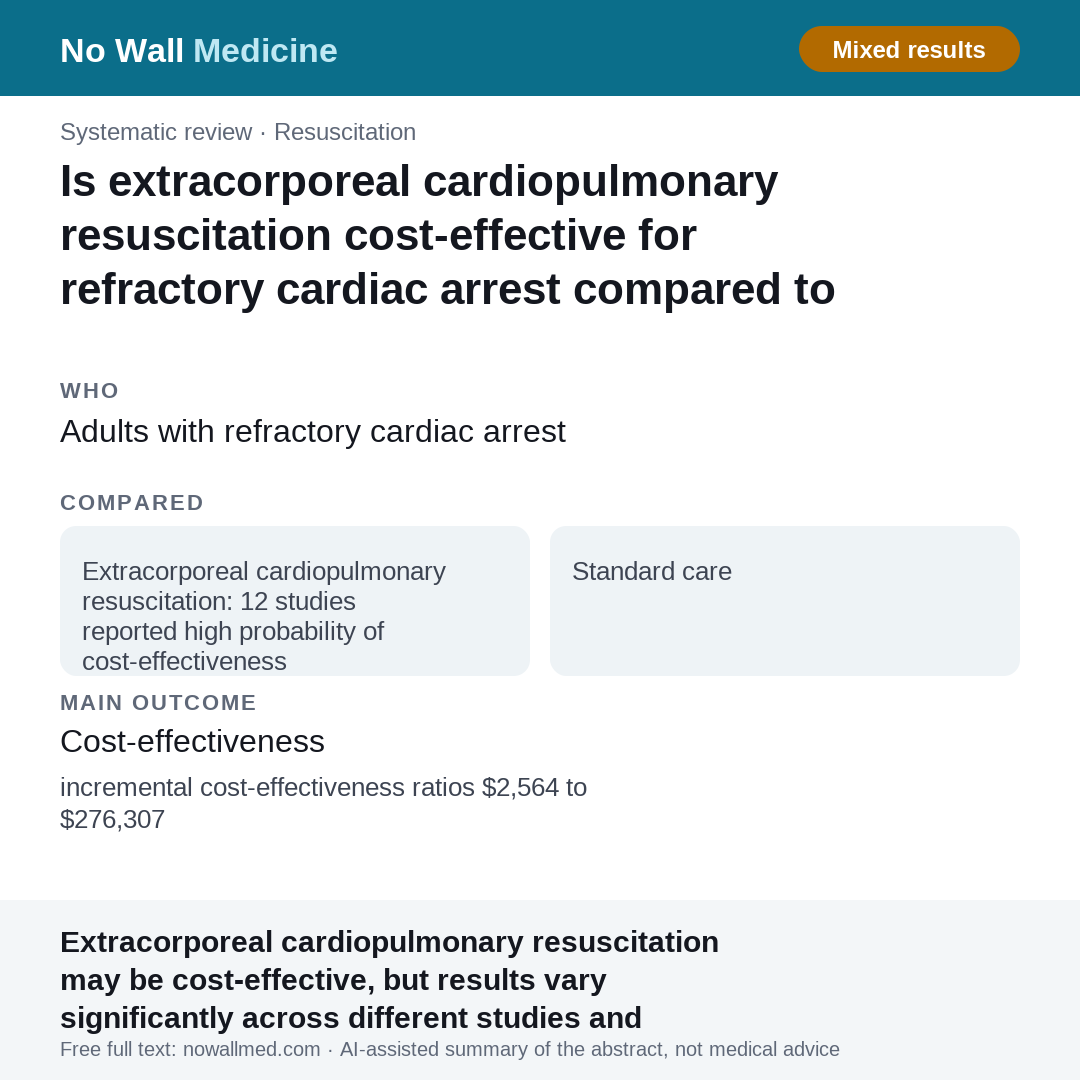
The cost-effectiveness of extracorporeal cardiopulmonary resuscitation (ECPR) for refractory cardiac arrest: A systematic review
Systematic reviewMixed results
Is extracorporeal cardiopulmonary resuscitation cost-effective for refractory cardiac arrest compared to standard care?
Who
Adults with refractory cardiac arrest
Compared
Extracorporeal cardiopulmonary resuscitation: 12 studies reported high probability of cost-effectiveness
Standard care
Main outcome
Cost-effectiveness
Result: incremental cost-effectiveness ratios $2,564 to $276,307
Bottom line: Extracorporeal cardiopulmonary resuscitation may be cost-effective, but results vary significantly across different studies and settings.
Resuscitation · 2025-09-16Download image
Gut feelings-the gut microbiome as a regulator of mental health in polycystic ovary syndrome
Systematic reviewBenefit found
Is the gut microbiome associated with mental health in women with polycystic ovary syndrome?
Who
Women with polycystic ovary syndrome
Compared
Women with PCOS: association between gut microbiome and mental health problems
Women without PCOS
Main outcome
Association between gut microbiome and mental health indicators
Bottom line: All reviewed studies indicated an association between gut microbiome changes and mental health indicators in polycystic ovary syndrome.
Limitation: Limited number of studies, low quality scores, and high risk of bias in half of studies.
Fertil Steril · 2025-09-16Download image

Predictors of Response to Biologics for Severe Asthma: A Systematic Review and Meta-Analysis
Systematic review and meta-analysisBenefit found
What predictors identify response to biologics for severe asthma?
Who
Patients with severe asthma
Compared
High blood eosinophil counts: ≥ 300 cells/μL
Fractional exhaled nitric oxide levels: > 40 ppb
Low oral corticosteroid dose: < 10 mg/day
Main outcome
Predictors of biologic response
Bottom line: Blood eosinophil counts, fractional exhaled nitric oxide, and low oral corticosteroid doses predict biologic response.
Limitation: Heterogeneous response definitions, imprecision, and lack of pediatric data.
Allergy · 2025-09-16Download image

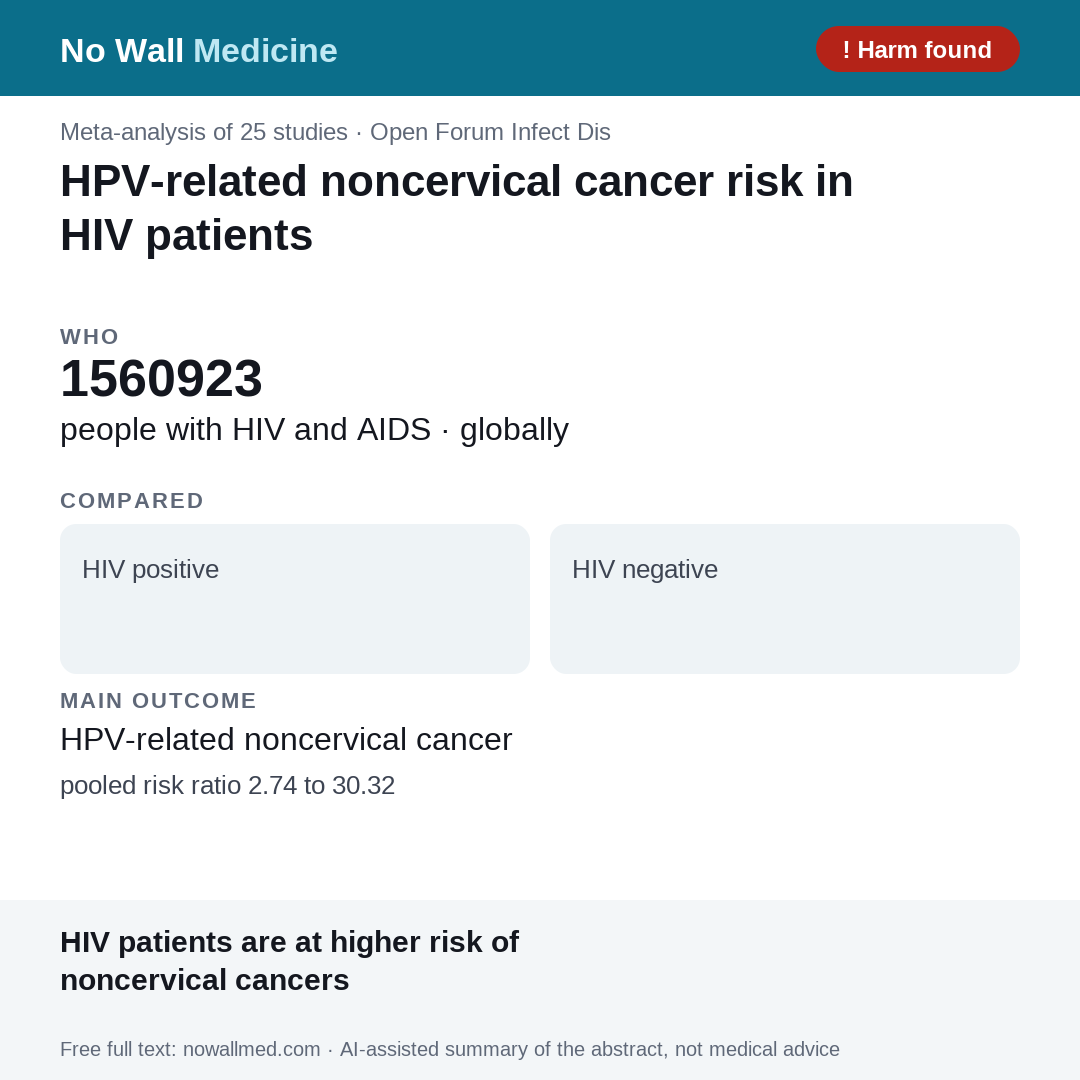
Global Estimates of the HPV-related, Noncervical Cancer Burden in People With HIV and AIDS and the Potential Effect of Improved HPV Vaccine Coverage in This Population: A Systematic Review, Meta-analysis and Modeling Study
Meta-analysis of 25 studiesHarm found
HPV-related noncervical cancer risk in HIV patients
Who
1560923
people with HIV and AIDS · globally
Compared
HIV positive
HIV negative
Main outcome
HPV-related noncervical cancer
Result: pooled risk ratio 2.74 to 30.32
Bottom line: HIV patients are at higher risk of noncervical cancers
Open Forum Infect Dis · 2025-09-16Download image
Minimum material requirements for hand hygiene in community settings: a systematic review
Systematic reviewUnclear result
What are the minimum material requirements for hand hygiene in community settings?
Who
People in non-healthcare community settings · 27 countries across 4 WHO regions
Compared
Material requirements
Hand hygiene practices
Main outcome
Relationship between material requirements and hand hygiene practices
Bottom line: There is a lack of evidence linking material requirements with handwashing practices in community settings.
Limitation: The review was limited to observational studies.
BMJ Glob Health · 2025-09-16Download image

Efficacy and effectiveness of hand hygiene-related practices used in community settings for removal of organisms from hands: a systematic review
Systematic reviewMixed results
How effective are hand hygiene materials for removing organisms from hands in community settings?
Who
177
Laboratory and field studies in community settings
Compared
Soap and water (bacteria): >2 log10 reduction (2.19 (95% CI 1.5 to 2.87))
Alcohol-based sanitisers (bacteria): >2 log10 reduction (3.13 (95% CI 2.7 to 3.56))
2.03Soap and water (viruses) (95% CI 1.45 to 2.62)
Alcohol-based sanitisers (viruses): <2 log10 reduction (1.86 (95% CI 1.37 to 2.35))
Main outcome
log10 reduction in organisms on hands
Bottom line: Alcohol-based sanitisers and soap are effective against bacteria, but efficacy against viruses varies between methods.
Limitation: Limited ability to compare efficacy due to focus on bacteria, soap, and alcohol-based sanitisers.
BMJ Glob Health · 2025-09-16Download image

Interventions to improve hand hygiene in community settings: a systematic review of theories, barriers and enablers, behaviour change techniques and hand hygiene station design features
Systematic review of 223 studiesMixed results
What improves hand hygiene in community settings
Who
247398
people in non-healthcare community settings · community settings
Compared
82%effective interventions
ineffective interventions
Main outcome
hand hygiene practice
Bottom line: Most interventions improved hand hygiene
Limitation: inconsistent intervention reporting
BMJ Glob Health · 2025-09-16Download image

Behavioural factors influencing hand hygiene practices across domestic, institutional and public community settings: a systematic review and qualitative meta-synthesis
Systematic review and qualitative meta-synthesisMixed results
What are the barriers and enablers to hand hygiene in community settings?
Who
80
People in domestic, institutional and public community settings · Africa, South-East Asia and other community settings
Compared
Barriers: Physical Opportunity, Reflective Motivation and Automatic Motivation
Enablers: Automatic Motivation and Reflective Motivation
Main outcome
Barriers and enablers to hand hygiene practices
Bottom line: Lack of resources hinders hand hygiene even when people are motivated, with habits and risk perception driving practice.
Limitation: Representativeness may be limited and evidence on alcohol-based hand rubs was limited.
BMJ Glob Health · 2025-09-16Download image

Applications of Magnetic Resonance Imaging in Upper Eyelid Anatomy and Upper Eyelid Blepharoplasty: A Systematic Review
Systematic reviewBenefit found
What are the applications of magnetic resonance imaging in upper eyelid anatomy and blepharoplasty?
Who
Clinical studies utilizing magnetic resonance imaging
Compared
Normal anatomy and functions: 7 articles
Racial anatomical disparities: 2 articles
Tumor extent: 1 article
Anatomical changes postblepharoplasty: 2 articles
Main outcome
MRI applications in upper eyelid anatomy and blepharoplasty
Bottom line: Dynamic high-resolution magnetic resonance imaging supports personalized surgical planning and objective postoperative assessments in complex upper eyelid cases.
Limitation: Protocol inconsistencies, small samples, artifacts, and cost.
Plast Reconstr Surg Glob Open · 2025-09-16Download image

Two-year outcomes after early postnatal high-dose fat-soluble enteral vitamin A supplementation in extremely low birth weight infants: follow-up of the NeoVitaA randomized controlled trial
Randomized controlled trial follow-upNo clear difference
Does early postnatal high-dose vitamin A supplementation affect respiratory and neurodevelopmental outcomes?
Who
759
Extremely low birth weight infants · Germany
Compared
High-dose vitamin A: median cognitive composite score 95
Placebo: median cognitive composite score 95
Main outcome
respiratory complications and neurodevelopmental outcome
Result: median difference 0.0 (95%-CI -5.0 to 0.0)
Bottom line: Early postnatal high-dose vitamin A supplementation did not affect pulmonary or developmental outcomes at 24 months corrected age.
Funded by: Deutsche Forschungsgemeinschaft and European Clinical Research Infrastructures Network
eClinicalMedicine · 2025-09-15Download image

Five-Year Outcomes from Deep Brain Stimulation of the Subthalamic Nucleus for Parkinson Disease
Randomized, double-blind, sham-controlled studyBenefit found
What are the long-term outcomes and safety of subthalamic nucleus deep brain stimulation for Parkinson disease?
Who
313
Patients with bilateral idiopathic Parkinson disease · 23 movement disorder centers across the US
Compared
Subthalamic nucleus deep brain stimulation: UPDRS-III improved 36% (95% CI, 33%-38%) at year 5
Sham control
Main outcome
Changes in UPDRS, dyskinesia scores, quality-of-life, and safety
Bottom line: Subthalamic nucleus deep brain stimulation provides sustained motor and daily living improvements and stable medication reduction over five years.
JAMA Neurol · 2025-09-15Download image

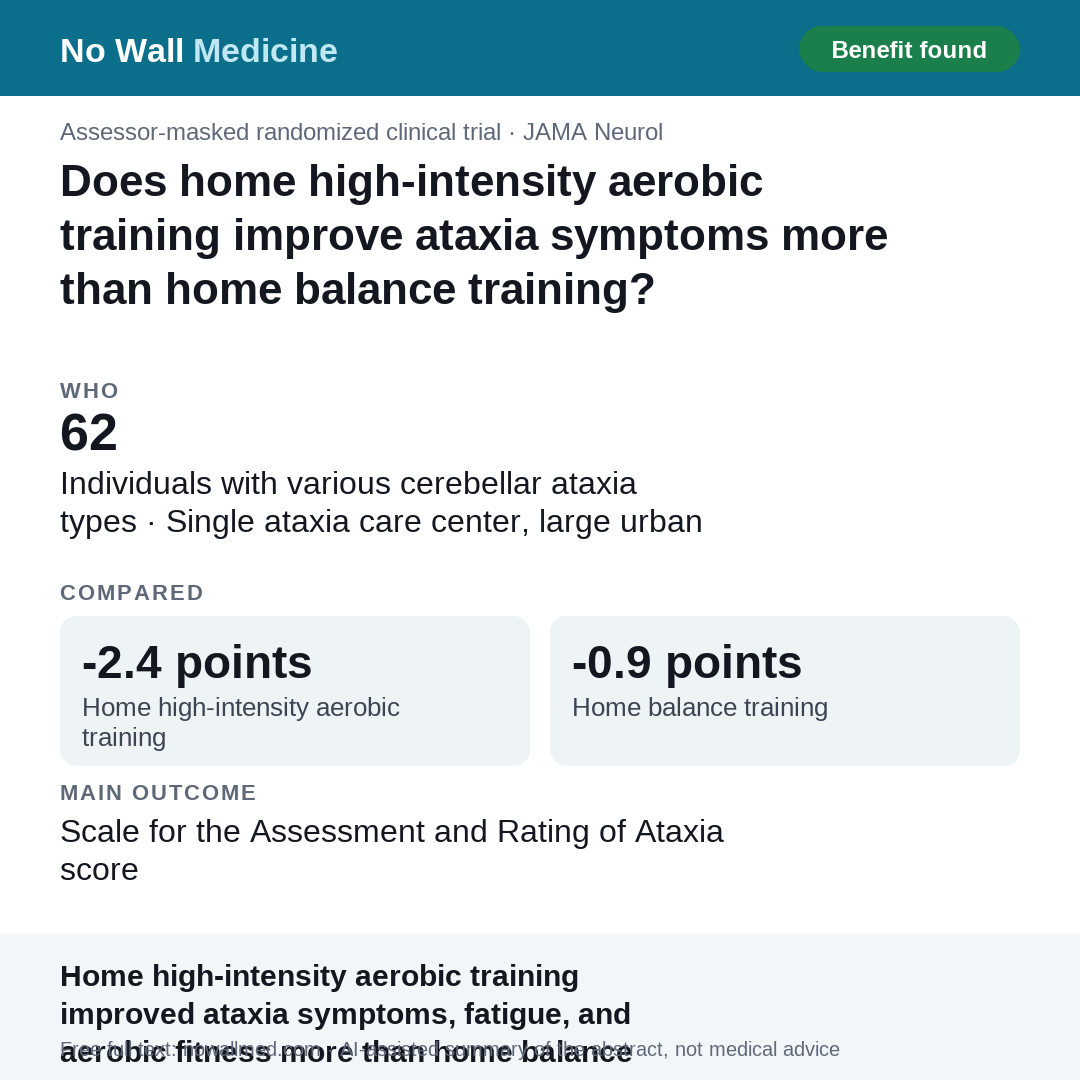
Home Training for Cerebellar Ataxias: A Randomized Clinical Trial
Assessor-masked randomized clinical trialBenefit found
Does home high-intensity aerobic training improve ataxia symptoms more than home balance training?
Who
62
Individuals with various cerebellar ataxia types · Single ataxia care center, large urban US city
Compared
-2.4 pointsHome high-intensity aerobic training (95% CI, -3.1 to -1.80)
-0.9 pointsHome balance training (95% CI, -1.5 to -0.2)
Main outcome
Scale for the Assessment and Rating of Ataxia score
Result: β, -1.53 (95% CI, -2.44 to -0.61)
Bottom line: Home high-intensity aerobic training improved ataxia symptoms, fatigue, and aerobic fitness more than home balance training.
JAMA Neurol · 2025-09-15Download image
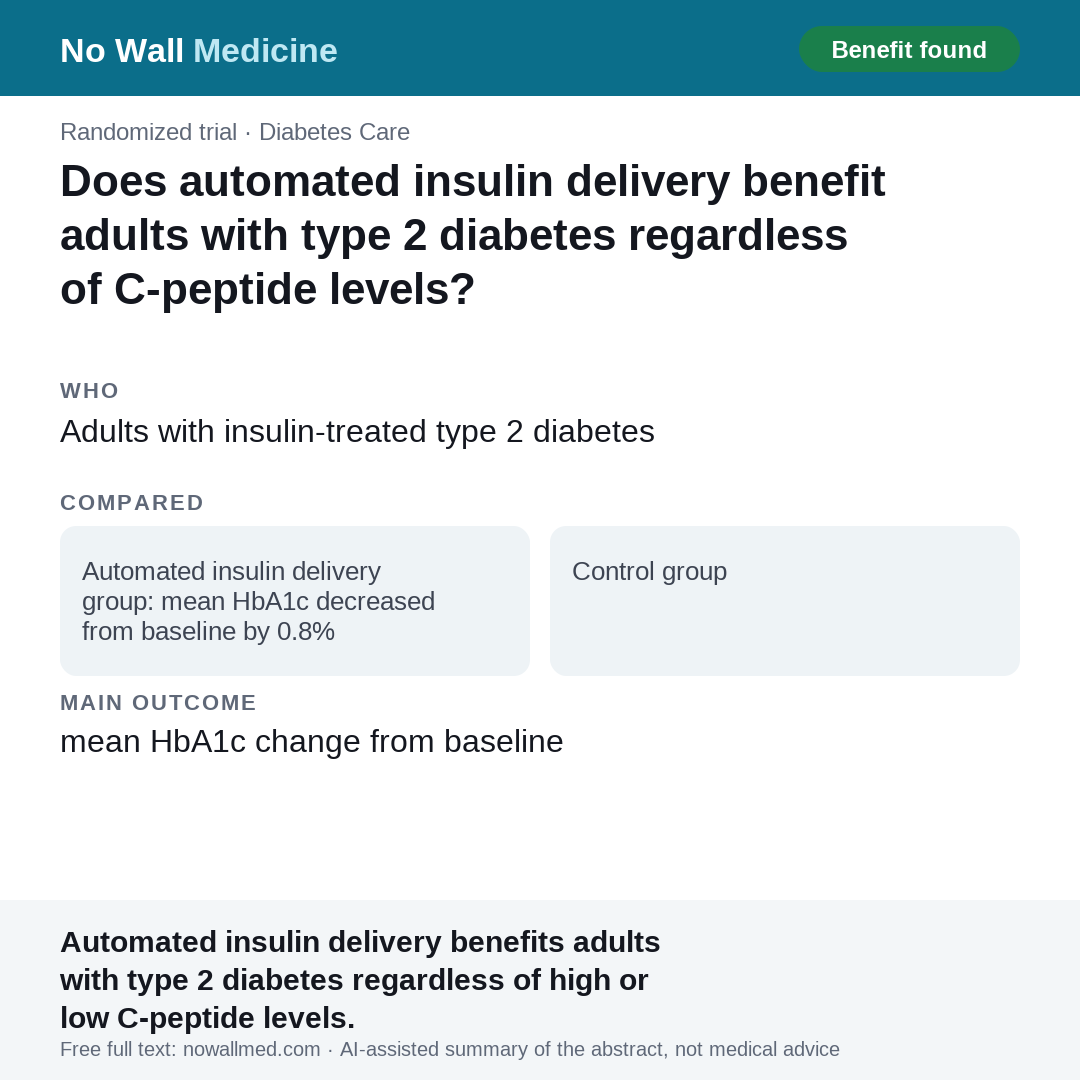
Adults With Type 2 Diabetes Benefit From Automated Insulin Delivery Irrespective of C-Peptide Level
Randomized trialBenefit found
Does automated insulin delivery benefit adults with type 2 diabetes regardless of C-peptide levels?
Who
Adults with insulin-treated type 2 diabetes
Compared
Automated insulin delivery group: mean HbA1c decreased from baseline by 0.8%
Control group
Main outcome
mean HbA1c change from baseline
Bottom line: Automated insulin delivery benefits adults with type 2 diabetes regardless of high or low C-peptide levels.
Diabetes Care · 2025-09-15Download image
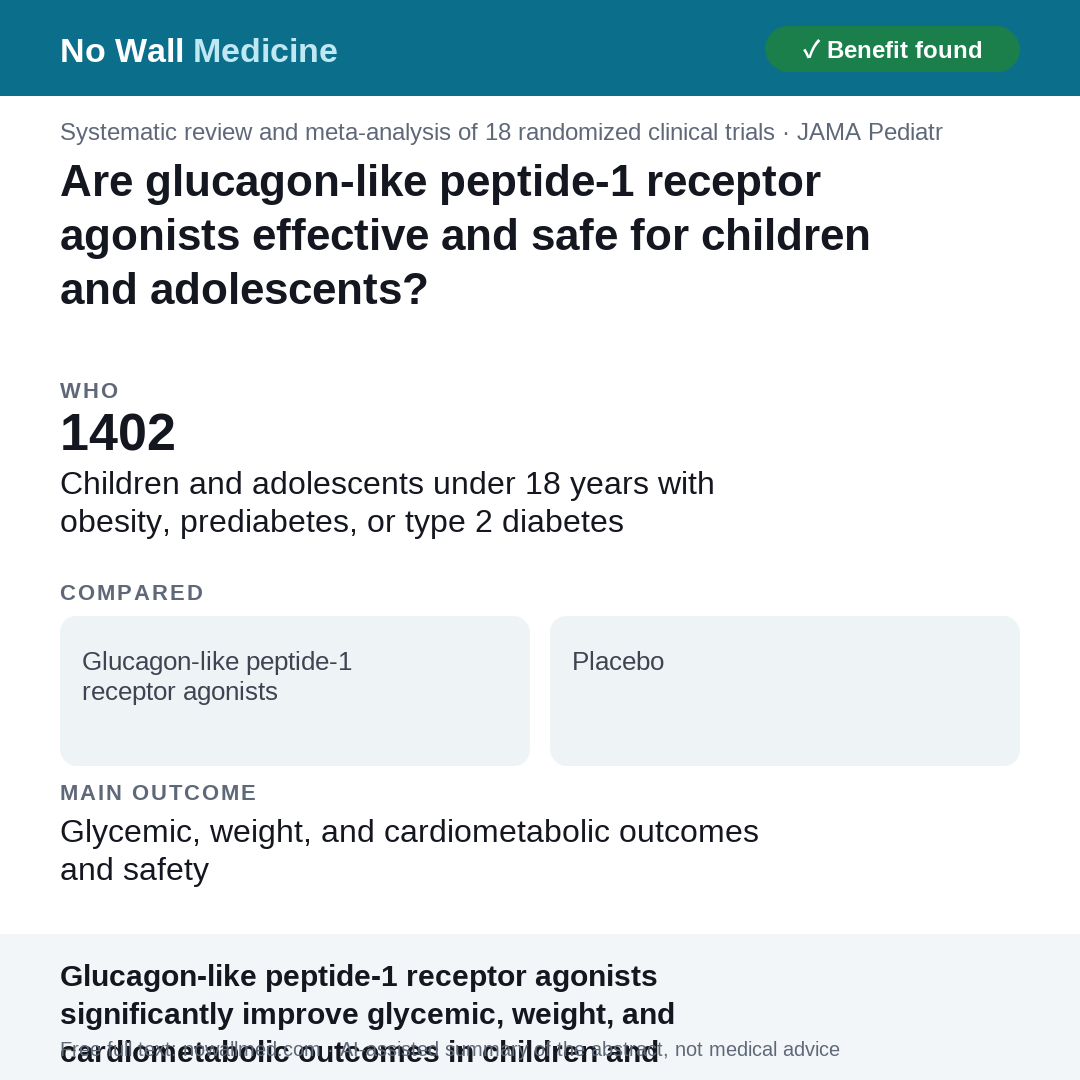
Efficacy and Safety of GLP-1 RAs in Children and Adolescents With Obesity or Type 2 Diabetes: A Systematic Review and Meta-Analysis
Systematic review and meta-analysis of 18 randomized clinical trialsBenefit found
Are glucagon-like peptide-1 receptor agonists effective and safe for children and adolescents?
Who
1402
Children and adolescents under 18 years with obesity, prediabetes, or type 2 diabetes
Compared
Glucagon-like peptide-1 receptor agonists
Placebo
Main outcome
Glycemic, weight, and cardiometabolic outcomes and safety
Result: HbA1c change -0.44% (95% CI -0.68% to -0.21%)
Bottom line: Glucagon-like peptide-1 receptor agonists significantly improve glycemic, weight, and cardiometabolic outcomes in children and adolescents.
Limitation: Available data over a relatively short follow-up
JAMA Pediatr · 2025-09-15Download image
Digital Health Interventions in Pediatric Perioperative Care: A Network Meta-Analysis
Network meta-analysis of randomized clinical trialsBenefit found
What are the effects of digital health interventions in pediatric perioperative care?
Who
4535
Pediatric patients aged 18 years or younger undergoing surgery
Compared
Virtual reality: SMD -1.14 (95% CI -1.54 to -0.74) for anxiety
2D videos: SMD -1.08 (95% CI -1.51 to -0.65) for anxiety
2D games: SMD -1.02 (95% CI -1.54 to -0.49) for anxiety
Control
Main outcome
Preoperative anxiety, postoperative pain, emergence delirium, and induction compliance
Bottom line: Virtual reality, 2D videos, and 2D games significantly reduce pediatric perioperative anxiety and pain and improve induction compliance.
JAMA Pediatr · 2025-09-15Download image