Visual abstracts
New randomized trials and meta-analyses from leading journals at a glance: who was studied, what was compared, and what was found. Every paper is free to read in full.
All specialtiesCardiology 4758Oncology 4008Gastroenterology & Hepatology 1888Infectious Disease 3723Neurology 1845Psychiatry & Mental Health 2207Pulmonology 2093Critical Care 1332Endocrinology & Diabetes 2483Pediatrics 2874Surgery 2486Orthopedics & Sports Medicine 896Neurosurgery 516Cardiothoracic & Vascular Surgery 648Plastic & Reconstructive Surgery 584Nephrology 1073Rheumatology 799Hematology 1081Dermatology 611Ophthalmology 527Obstetrics & Gynecology 1647Public & Global Health 1010Radiology & Imaging 629Anesthesiology 954Urology 746ENT (Otolaryngology) 495Emergency Medicine 494Allergy & Immunology 304Geriatrics 955Family Medicine & Primary Care 549Medical Genetics & Genomics 655Pathology & Laboratory Medicine 154Physical Medicine & Rehabilitation 735Palliative Care 432Nutrition 1528Digital Health & AI 2135General Medicine 312
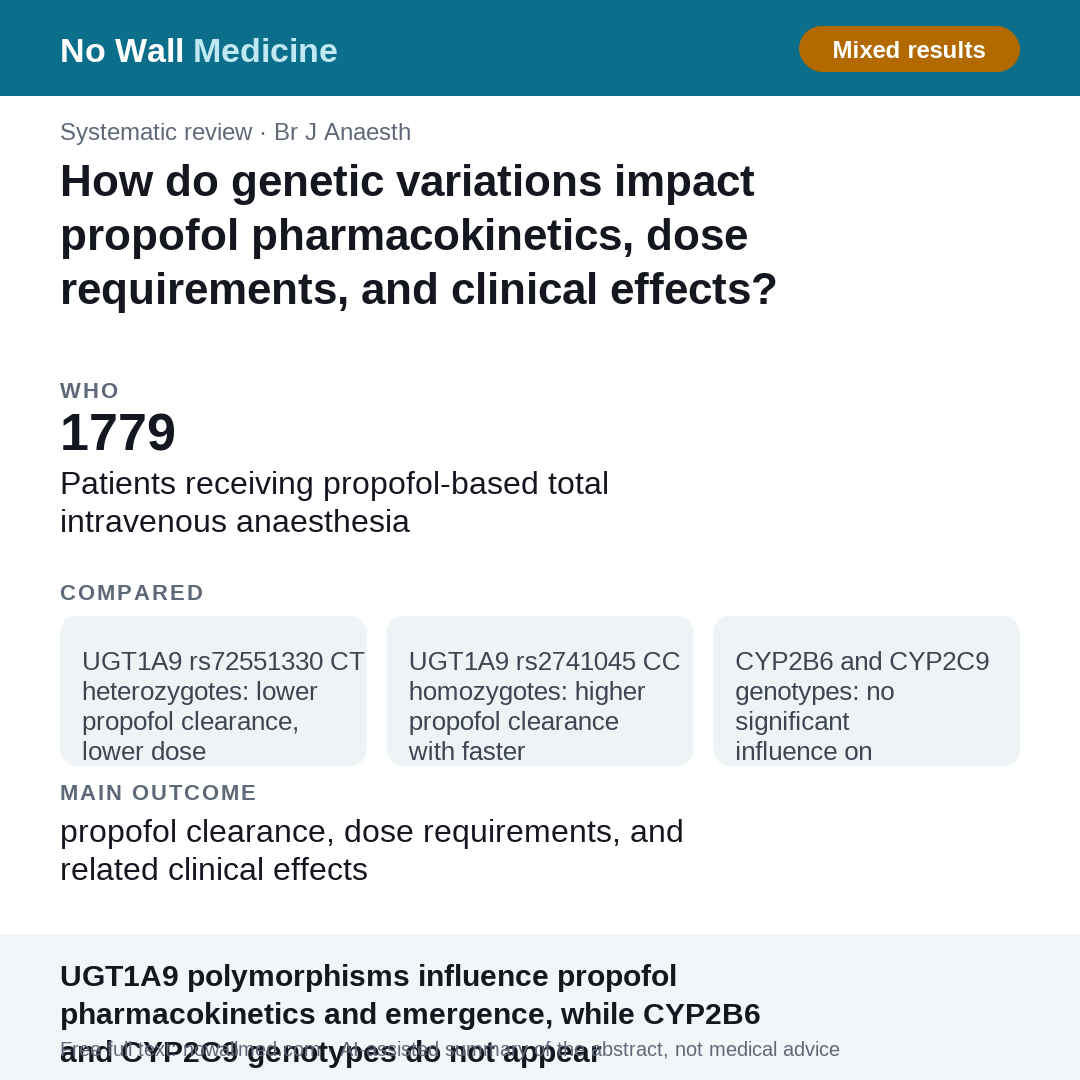
Impact of genetic variations on the pharmacokinetics, dose requirements, and clinical effects of propofol: a systematic review
Systematic reviewMixed results
How do genetic variations impact propofol pharmacokinetics, dose requirements, and clinical effects?
Who
1779
Patients receiving propofol-based total intravenous anaesthesia
Compared
UGT1A9 rs72551330 CT heterozygotes: lower propofol clearance, lower dose requirements, and longer emergence times
UGT1A9 rs2741045 CC homozygotes: higher propofol clearance with faster emergence
CYP2B6 and CYP2C9 genotypes: no significant influence on propofol pharmacokinetics or clinical outcomes
Main outcome
propofol clearance, dose requirements, and related clinical effects
Bottom line: UGT1A9 polymorphisms influence propofol pharmacokinetics and emergence, while CYP2B6 and CYP2C9 genotypes do not appear significant.
Br J Anaesth · 2025-08-06Download image
Effects of isolated single fibers, fiber mixtures, and fiber-rich whole foods on glucose homeostasis in individuals with overweight and obesity: A systematic review and meta-analysis
Systematic review and meta-analysisBenefit found
Do dietary fibers improve glucose homeostasis in individuals with overweight and obesity?
Who
3420
Individuals with overweight or obesity without type 2 diabetes mellitus
Compared
Dietary fiber supplementation
Placebo treatments
Main outcome
Glucose homeostasis and insulin resistance markers
Result: fasting glucose -0.07 mmol/L (95 % CI: -0.12, -0.02)
Bottom line: Dietary fiber supplementation improves glucose homeostasis and insulin sensitivity in individuals with overweight and obesity.
Clin Nutr · 2025-08-06Download image

Mechanisms of fat and soft tissue filler embolism following aesthetic injections: A cadaveric systematic review
Systematic review of cadaveric studiesUnclear result
What are the anatomical pathways and mechanisms of fat and soft tissue filler embolism?
Who
Cadaveric studies examining fat or filler embolization pathways · PubMed and MEDLINE
Compared
High-risk anatomical zones: temporal, periorbital, nasal, and gluteal regions
Key vascular structures: middle temporal vein, ophthalmic artery, and deep gluteal vessels
Main outcome
Anatomical pathways and mechanisms of embolism
Bottom line: Specific anatomical zones and vascular structures serve as primary conduits for fat and filler embolization.
Limitation: Differences from in vivo conditions and variations in injection techniques.
JPRAS Open · 2025-08-06Download image

Neurofilament light chain for prognostication after cardiac arrest-first steps towards validation
Validation study of previously identified cut-offsBenefit found
Can neurofilament light chain predict poor neurologic outcome after cardiac arrest?
Who
638
Comatose out-of-hospital cardiac arrest patients
Compared
24 hour cut-off (1232 pg/mL): 98% specificity
48 hour cut-off (1539 pg/mL): 98% specificity
Main outcome
Poor neurologic outcome (Cerebral Performance Category score greater than 2)
Result: area under the receiver operator curve 0.95 at 24 and 48 h
Bottom line: Neurofilament light chain levels at 24 or 48 hours provide excellent specificity for predicting poor neurologic outcomes after cardiac arrest.
Crit Care · 2025-08-06Download image

Neoadjuvant Immunotherapy in Bladder Cancer: Ushering in a New Era of Treatment-A Systematic Review of Current Evidence
Systematic review of prospective studiesBenefit found
What is the efficacy and safety of neoadjuvant immunotherapy for bladder cancer?
Who
Patients with muscle-invasive bladder cancer
Compared
Neoadjuvant immunotherapy: 54% pathological complete response rate
Chemotherapy alone
Main outcome
pathological complete response, overall survival, and adverse events
Bottom line: Neoadjuvant immunotherapy shows promising efficacy and manageable adverse events for muscle-invasive bladder cancer.
Limitation: Financial toxicity, absence of predictive biomarkers, and risk of significant immune-related adverse events.
Eur Urol Open Sci · 2025-08-06Download image

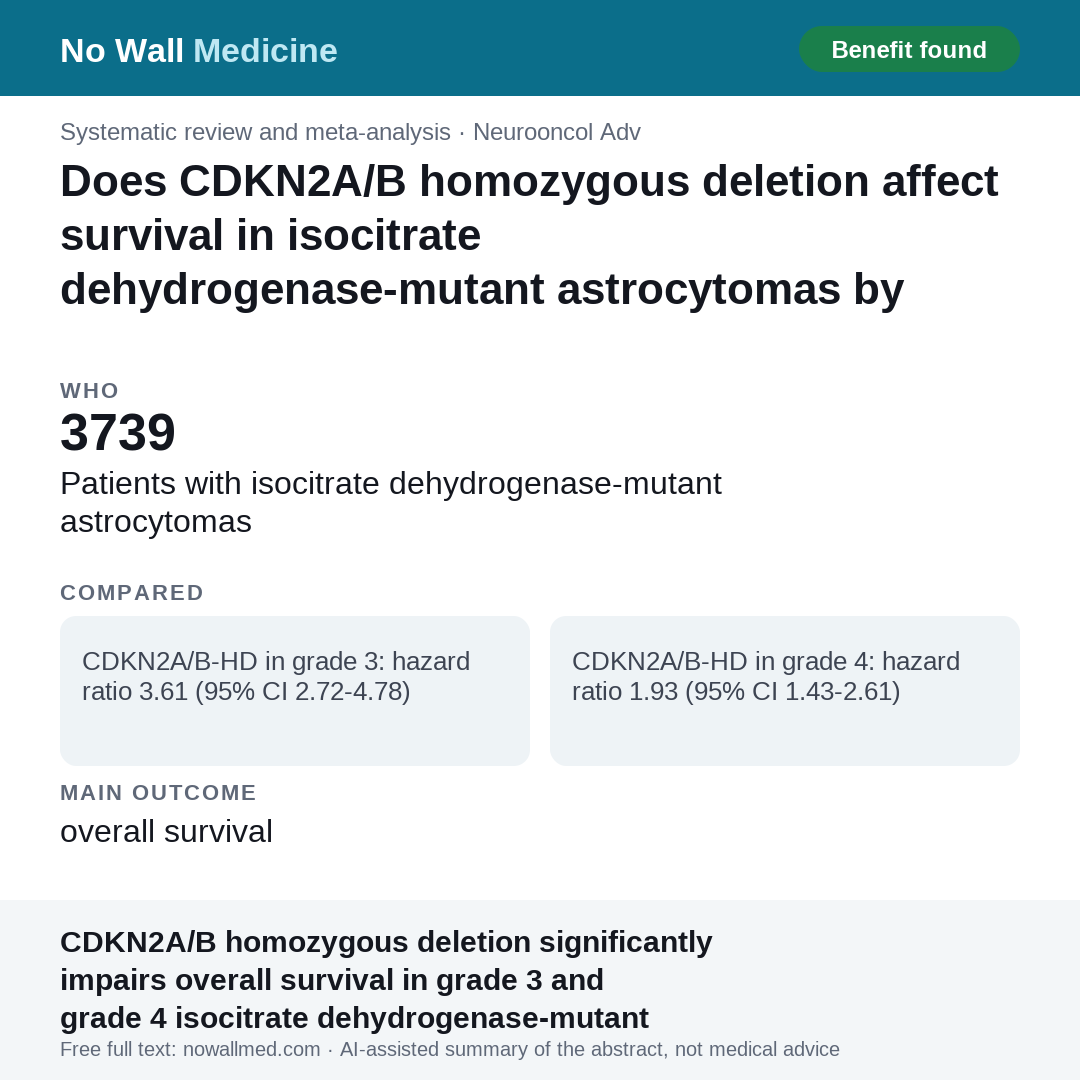
Prognostic implication of CDKN2A/B homozygous deletion on histological grades in isocitrate dehydrogenase-mutant astrocytomas: A systematic review and meta-analysis
Systematic review and meta-analysisBenefit found
Does CDKN2A/B homozygous deletion affect survival in isocitrate dehydrogenase-mutant astrocytomas by histological grade?
Who
3739
Patients with isocitrate dehydrogenase-mutant astrocytomas
Compared
CDKN2A/B-HD in grade 3: hazard ratio 3.61 (95% CI 2.72-4.78)
CDKN2A/B-HD in grade 4: hazard ratio 1.93 (95% CI 1.43-2.61)
Main outcome
overall survival
Result: hazard ratio 3.61 (95% CI 2.72-4.78) for grade 3; hazard ratio 1.93 (95% CI 1.43-2.61) for grade 4
Bottom line: CDKN2A/B homozygous deletion significantly impairs overall survival in grade 3 and grade 4 isocitrate dehydrogenase-mutant astrocytomas.
Limitation: evidence is insufficient for the classification of grade 2 with CDKN2A/B-HD due to paucity of data
Neurooncol Adv · 2025-08-06Download image
Outcomes of Open Versus Closed Rhinoplasty, a Systematic Review and Meta-analysis
Systematic review and meta-analysisNo clear difference
Are open and closed rhinoplasty techniques different in functional and aesthetic outcomes?
Who
1067
Adults undergoing rhinoplasty
Compared
Open rhinoplasty
Closed rhinoplasty
Main outcome
Rhinoplasty Outcome Evaluation score and Nasal Obstruction Symptom Evaluation score
Result: standardized mean difference -0.16 for ROE and 0.21 for NOSE
Bottom line: Open and closed rhinoplasty techniques show similar efficacy for functional and aesthetic outcomes.
Limitation: Absence of sample size calculations and biased endpoint assessments.
Plast Reconstr Surg Glob Open · 2025-08-06Download image

Comparative Efficacy and Recurrence of Combination Therapies in Keloid Management: A Systematic Review and Network Meta-analysis
Network meta-analysis of 22 randomized controlled trialsBenefit found
Which combination therapies are most effective for keloid management and recurrence reduction?
Who
1398
Patients with keloids
Compared
Triamcinolone Acetonide monotherapy
Triamcinolone Acetonide, 5-Fluorouracil and Pulsed Dye Laser: RR 2.98
Triamcinolone Acetonide and 5-Fluorouracil: RR 1.43
Triamcinolone Acetonide and bleomycin: RR 0.04
Main outcome
efficacy and recurrence rates
Result: RR 2.98 (95% CI: 1.26 to 7.02); RR 1.43 (95% CI: 1.05 to 1.93); RR 0.04 (95% CI: 0.00 to 0.84); RR 0.23 (95% CI: 0.07 to 0.73)
Bottom line: Combination therapies like Triamcinolone Acetonide with 5-Fluorouracil or bleomycin outperform Triamcinolone Acetonide monotherapy for keloid management.
Plast Reconstr Surg Glob Open · 2025-08-06Download image

Neurocognitive evaluation in patients with intracranial Meningiomas: A systematic review
Systematic reviewMixed results
Neurocognitive evaluation in meningioma patients
Who
patients with intracranial meningiomas
Compared
Meningioma patients
Postoperative patients
Main outcome
cognitive function
Bottom line: Meningiomas impact cognitive function, improve postoperatively
Brain Spine · 2025-08-06Download image

Does preoperative physical therapy/prehabilitation affect outcome or complications after surgery for lumbar disc herniation? A systematic review
Systematic review of five studiesMixed results
Does preoperative physical therapy affect outcomes or complications after lumbar disc herniation surgery?
Who
736
Adult patients undergoing lumbar spine surgery
Compared
Prehabilitation: short-term improvements in pain, functional outcomes, and psychological readiness
Standard preoperative care
Main outcome
Postoperative outcomes and complications
Bottom line: Prehabilitation enhances short-term recovery, but long-term effectiveness remains uncertain as outcomes converge over time.
Limitation: Clinical heterogeneity and lack of lumbar disc herniation specific trials.
Brain Spine · 2025-08-06Download image

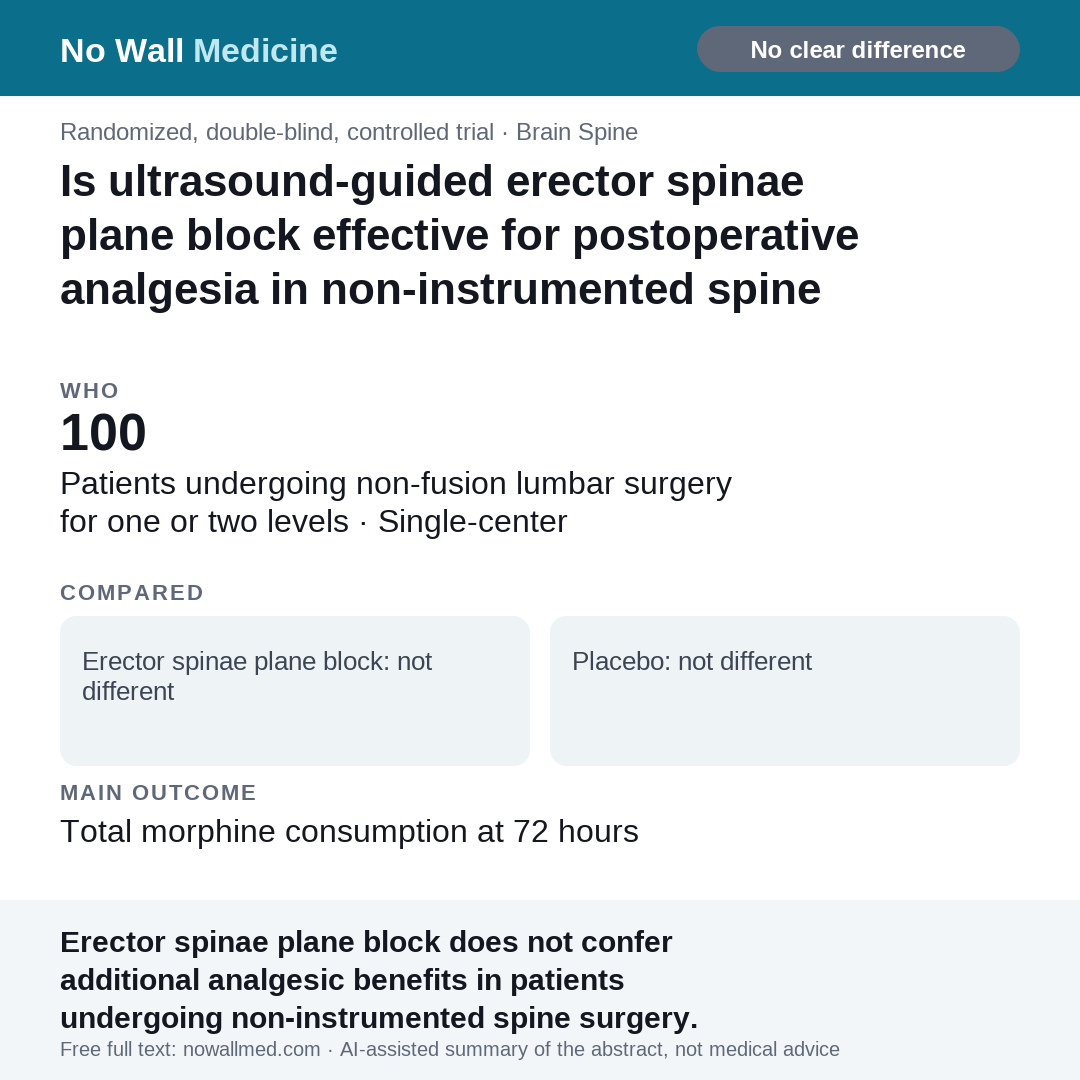
Non-efficacy of ultrasound-guided erector spinae plane block in postoperative analgesia of non-instrumented spine surgery: a randomized, double-blind, controlled trial
Randomized, double-blind, controlled trialNo clear difference
Is ultrasound-guided erector spinae plane block effective for postoperative analgesia in non-instrumented spine surgery?
Who
100
Patients undergoing non-fusion lumbar surgery for one or two levels · Single-center
Compared
Erector spinae plane block: not different
Placebo: not different
Main outcome
Total morphine consumption at 72 hours
Bottom line: Erector spinae plane block does not confer additional analgesic benefits in patients undergoing non-instrumented spine surgery.
Brain Spine · 2025-08-06Download image
DASH4D diet for glycemic control and glucose variability in type 2 diabetes: a randomized crossover trial
Randomized crossover feeding trialBenefit found
Does the DASH4D diet improve glycemic control and glucose variability in type 2 diabetes?
Who
89
Participants with type 2 diabetes
Compared
DASH4D diet: mean glucose difference -11.1 mg dl-1
Comparison diet
Main outcome
mean glucose, time in range, and coefficient of variation
Result: mean difference -11.1 mg dl-1 (P < 0.001)
Bottom line: The DASH4D diet improved mean glucose and time in range in adults with type 2 diabetes.
Nat Med · 2025-08-05Download image

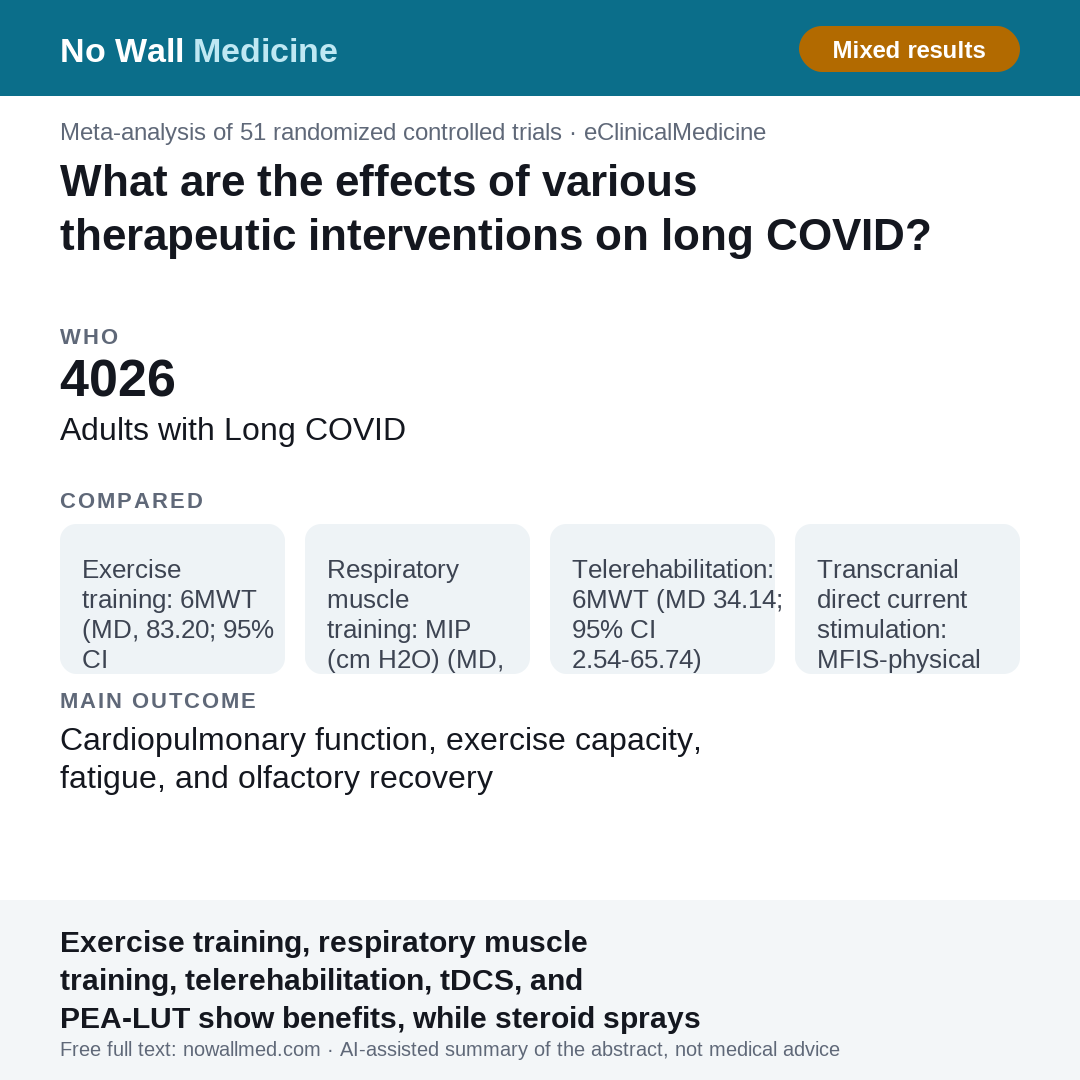
Effects of therapeutic interventions on long COVID: a meta-analysis of randomized controlled trials
Meta-analysis of 51 randomized controlled trialsMixed results
What are the effects of various therapeutic interventions on long COVID?
Who
4026
Adults with Long COVID
Compared
Exercise training: 6MWT (MD, 83.20; 95% CI 52.04-114.37)
Respiratory muscle training: MIP (cm H2O) (MD, 19.69; 95% CI 10.14-29.24)
Telerehabilitation: 6MWT (MD 34.14; 95% CI 2.54-65.74)
Transcranial direct current stimulation: MFIS-physical (MD, -2.29; 95% CI -4.36 to -0.22)
Main outcome
Cardiopulmonary function, exercise capacity, fatigue, and olfactory recovery
Bottom line: Exercise training, respiratory muscle training, telerehabilitation, tDCS, and PEA-LUT show benefits, while steroid sprays and olfactory training lack efficacy.
Limitation: The abstract mentions the need for large-scale trials to optimize dosing and long-term outcomes.
Funded by: Hunan Provincial Natural Foundation of China and others
eClinicalMedicine · 2025-08-05Download image
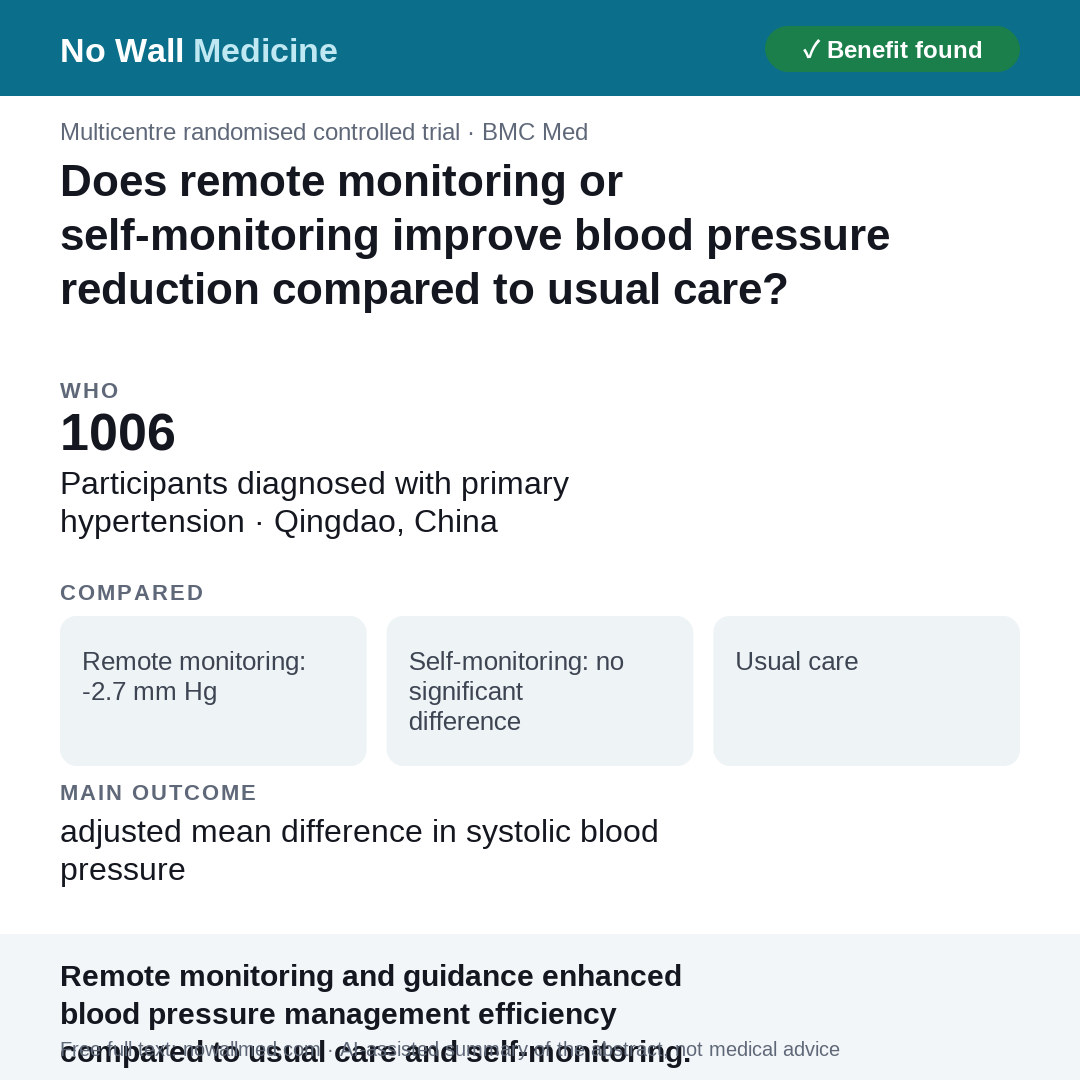
Efficiency of remote monitoring and guidance in blood pressure management: a randomized controlled trial : The role of remote monitoring in improving hypertension management
Multicentre randomised controlled trialBenefit found
Does remote monitoring or self-monitoring improve blood pressure reduction compared to usual care?
Who
1006
Participants diagnosed with primary hypertension · Qingdao, China
Compared
Remote monitoring: -2.7 mm Hg
Self-monitoring: no significant difference
Usual care
Main outcome
adjusted mean difference in systolic blood pressure
Result: -2.7 (-4.45, -0.96)
Bottom line: Remote monitoring and guidance enhanced blood pressure management efficiency compared to usual care and self-monitoring.
BMC Med · 2025-08-05Download image
A phase 3, multicenter, randomized, placebo-controlled trial of monthly oral ibrexafungerp to reduce the incidence of recurrent vulvovaginal candidiasis
Randomized trialBenefit found
Does ibrexafungerp reduce recurrent vulvovaginal candidiasis?
Who
130
People with recurrent vulvovaginal candidiasis
Compared
70.8%ibrexafungerp (92/130)
58.5%placebo (76/130)
Main outcome
no mycologically proven recurrence
Result: relative risk 1.22 (95% CI 1.032 to 1.430)
Bottom line: Ibrexafungerp reduces recurrent vulvovaginal candidiasis
AJOG · 2025-08-05Download image

Tranexamic Acid Timing and Mortality Impact After Trauma
Exploratory analysis of a randomized trialBenefit found
Does death within 28 days after trauma vary by time to first tranexamic acid dose?
Who
1287
Adults with major trauma and suspected trauma-induced coagulopathy
Compared
Tranexamic acid within 90 minutes: 67/393 [17%]
Placebo within 90 minutes: 91/363 [25%]
Tranexamic acid beyond 90 minutes
Main outcome
Death within 28 days after trauma
Result: adjusted risk ratio 0.64, 95% CI 0.50 to 0.82
Bottom line: Administering tranexamic acid within 90 minutes of injury significantly reduces the risk of death within 28 days.
Ann Emerg Med · 2025-08-05Download image

The Prognostic Accuracy of Frailty and Vulnerability Screening for Older Adults in the Emergency Department: A Systematic Review and Meta-analysis
Systematic review and meta-analysisMixed results
Which frailty or vulnerability screening instrument has the highest prognostic accuracy in the emergency department?
Who
125,412
Older adults aged 60 years or more presenting to the emergency department
Compared
Identification of Seniors at Risk: AUC 0.84 (0.60-0.89)
Clinical Frailty Scale: AUC 0.82 (0.77 to 0.85)
Main outcome
Prognostic accuracy for adverse outcomes
Bottom line: Current screening instruments fail to identify older individuals who will experience adverse outcomes as standalone prognostic tools.
Ann Emerg Med · 2025-08-05Download image

Genetic characterization of preschool wheeze phenotypes
Meta-analysis of genome-wide association studiesMixed results
Genetic basis of preschool wheeze
Who
13000
children with early-onset wheeze · 15 cohorts
Compared
early-onset wheeze
persistent wheeze
early transient wheeze
Main outcome
genetic association with wheeze
Result: odds ratio 1.26 (95% confidence interval 1.17-1.33)
Bottom line: Distinct genetic patterns for wheeze phenotypes found
JACI · 2025-08-05Download image

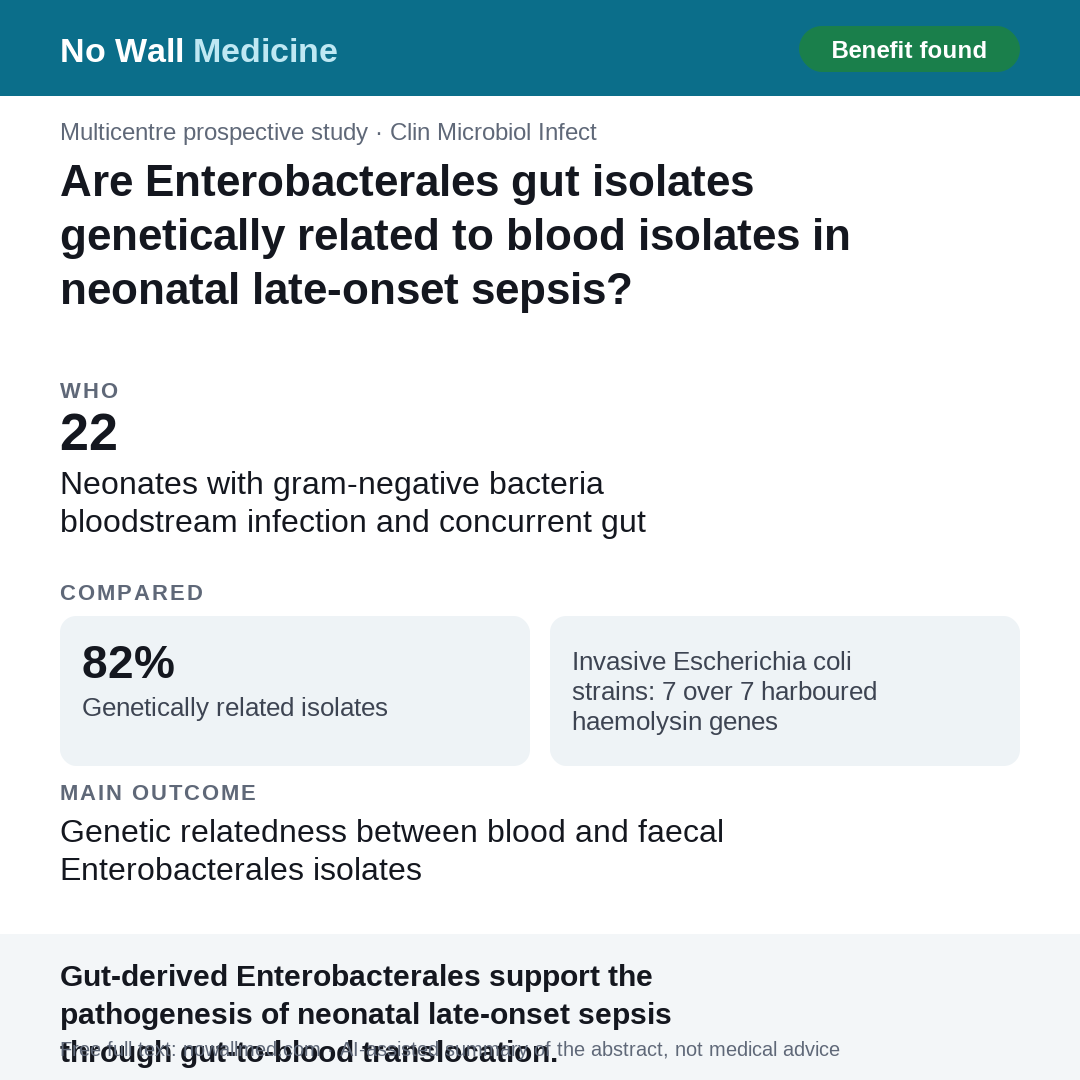
Enterobacterales gut colonization and late-onset sepsis in neonates: a multicentre prospective study across 18 neonatal intensive care units in six countries
Multicentre prospective studyBenefit found
Are Enterobacterales gut isolates genetically related to blood isolates in neonatal late-onset sepsis?
Who
22
Neonates with gram-negative bacteria bloodstream infection and concurrent gut samples · 18 neonatal intensive care units in six countries
Compared
82%Genetically related isolates (18 of 22 cases)
Invasive Escherichia coli strains: 7 over 7 harboured haemolysin genes
Main outcome
Genetic relatedness between blood and faecal Enterobacterales isolates
Bottom line: Gut-derived Enterobacterales support the pathogenesis of neonatal late-onset sepsis through gut-to-blood translocation.
Limitation: Further prospective studies are needed to validate these findings.
Clin Microbiol Infect · 2025-08-05Download image
Efficacy and safety of CT-868, a novel, fully biased, dual glucagon-like peptide-1/glucose-dependent insulinotropic polypeptide receptor agonist, in type 2 diabetes: A double-blind, randomized placebo controlled phase 2 trial
Randomized, double-blind, placebo-controlled phase 2 trialBenefit found
What is the efficacy and safety of CT-868 in type 2 diabetes?
Who
103
Adults with type 2 diabetes and Body Mass Index ≥27 kg/m2
Compared
CT-868 1.75 mg: -1.61 to -2.24%-points
CT-868 3.25 mg: -1.61 to -2.24%-points
CT-868 4.0 mg: -1.61 to -2.24%-points
Placebo
Main outcome
Change from baseline in glycated haemoglobin at week 26
Bottom line: CT-868 doses of 1.75 to 4.0 mg significantly reduced glycated haemoglobin in adults with type 2 diabetes.
Limitation: Some participants randomized to 4.0 mg received 3.25 mg maximum due to supply constraints.
Diabetes Obes Metab · 2025-08-05Download image