Visual abstracts
New randomized trials and meta-analyses from leading journals at a glance: who was studied, what was compared, and what was found. Every paper is free to read in full.
All specialtiesCardiology 4877Oncology 4138Gastroenterology & Hepatology 1942Infectious Disease 3837Neurology 1905Psychiatry & Mental Health 2273Pulmonology 2143Critical Care 1365Endocrinology & Diabetes 2580Pediatrics 2980Surgery 2559Orthopedics & Sports Medicine 931Neurosurgery 537Cardiothoracic & Vascular Surgery 674Plastic & Reconstructive Surgery 591Nephrology 1133Rheumatology 823Hematology 1109Dermatology 621Ophthalmology 543Obstetrics & Gynecology 1686Public & Global Health 1058Radiology & Imaging 648Anesthesiology 986Urology 764ENT (Otolaryngology) 503Emergency Medicine 511Allergy & Immunology 313Geriatrics 981Family Medicine & Primary Care 562Medical Genetics & Genomics 676Pathology & Laboratory Medicine 159Physical Medicine & Rehabilitation 757Palliative Care 444Nutrition 1588Digital Health & AI 2201General Medicine 321
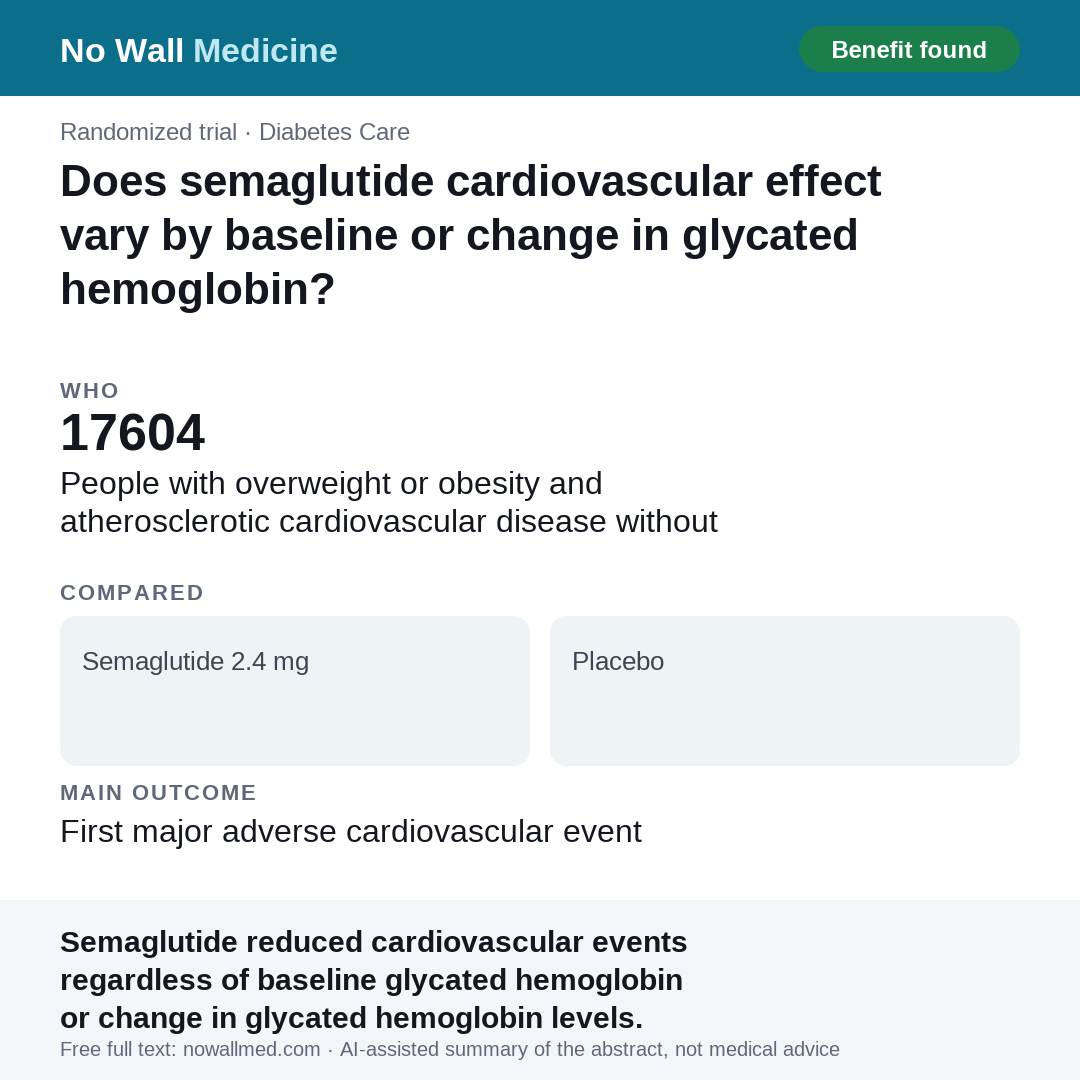
Semaglutide and Cardiovascular Outcomes by Baseline HbA1c and Change in HbA1c in People With Overweight or Obesity but Without Diabetes in SELECT
Randomized trialBenefit found
Does semaglutide cardiovascular effect vary by baseline or change in glycated hemoglobin?
Who
17604
People with overweight or obesity and atherosclerotic cardiovascular disease without diabetes
Compared
Semaglutide 2.4 mg
Placebo
Main outcome
First major adverse cardiovascular event
Result: reduced by 20%
Bottom line: Semaglutide reduced cardiovascular events regardless of baseline glycated hemoglobin or change in glycated hemoglobin levels.
Diabetes Care · 2024-06-22Download image
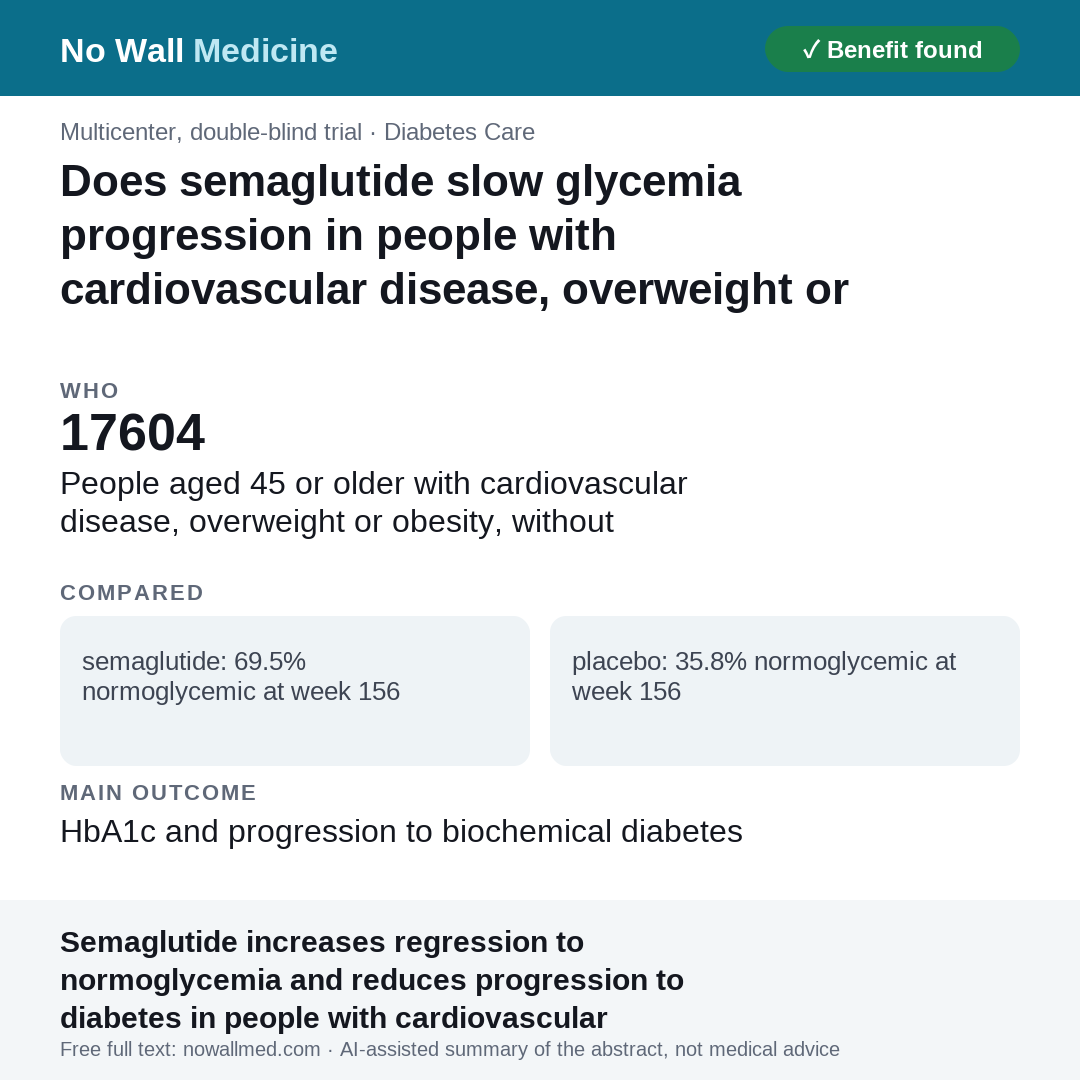
Effect of Semaglutide on Regression and Progression of Glycemia in People With Overweight or Obesity but Without Diabetes in the SELECT Trial
Multicenter, double-blind trialBenefit found
Does semaglutide slow glycemia progression in people with cardiovascular disease, overweight or obesity, without diabetes?
Who
17604
People aged 45 or older with cardiovascular disease, overweight or obesity, without diabetes · multicenter
Compared
semaglutide: 69.5% normoglycemic at week 156
placebo: 35.8% normoglycemic at week 156
Main outcome
HbA1c and progression to biochemical diabetes
Result: mean difference -0.32 percentage points (95% CI -0.33 to -0.30)
Bottom line: Semaglutide increases regression to normoglycemia and reduces progression to diabetes in people with cardiovascular disease and obesity.
Diabetes Care · 2024-06-22Download image
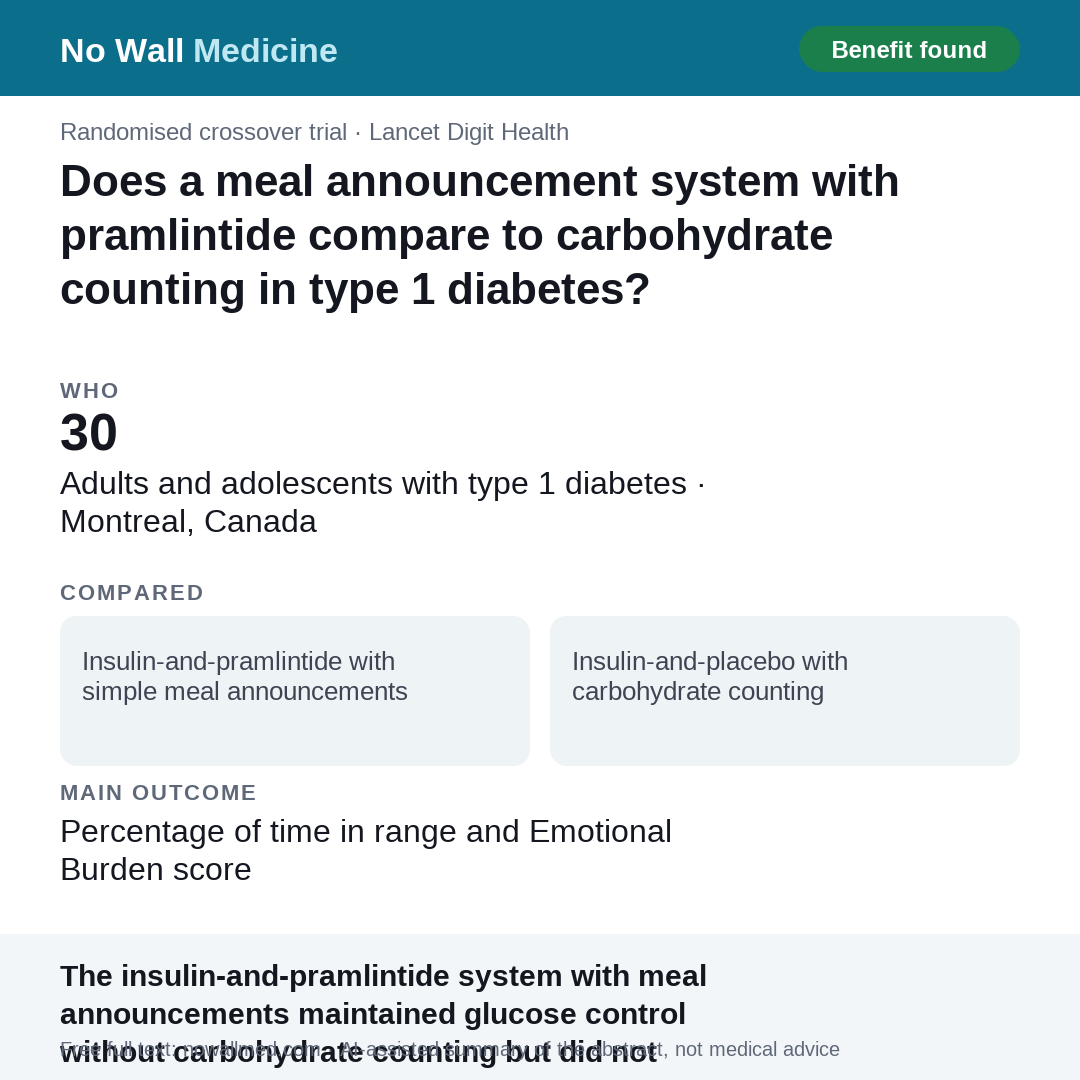
Simple meal announcements and pramlintide delivery versus carbohydrate counting in type 1 diabetes with automated fast-acting insulin aspart delivery: a randomised crossover trial in Montreal, Canada
Randomised crossover trialBenefit found
Does a meal announcement system with pramlintide compare to carbohydrate counting in type 1 diabetes?
Who
30
Adults and adolescents with type 1 diabetes · Montreal, Canada
Compared
Insulin-and-pramlintide with simple meal announcements
Insulin-and-placebo with carbohydrate counting
Main outcome
Percentage of time in range and Emotional Burden score
Result: difference -5% (95% CI -9·0 to -0·7) for time in range
Bottom line: The insulin-and-pramlintide system with meal announcements maintained glucose control without carbohydrate counting but did not improve emotional burden.
Funded by: Juvenile Diabetes Research Foundation
Lancet Digit Health · 2024-06-22Download image
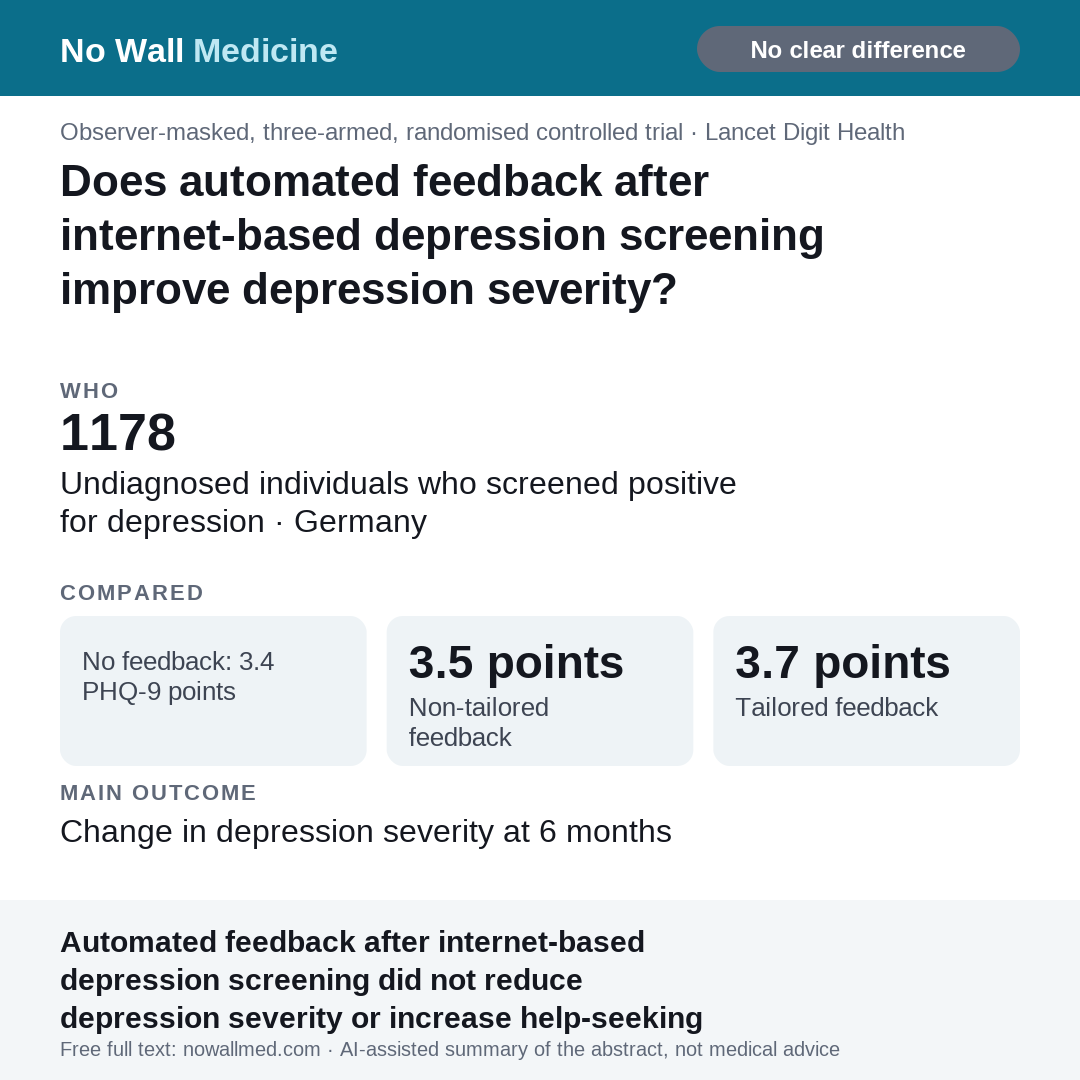
The efficacy of automated feedback after internet-based depression screening (DISCOVER): an observer-masked, three-armed, randomised controlled trial in Germany
Observer-masked, three-armed, randomised controlled trialNo clear difference
Does automated feedback after internet-based depression screening improve depression severity?
Who
1178
Undiagnosed individuals who screened positive for depression · Germany
Compared
No feedback: 3.4 PHQ-9 points
3.5 pointsNon-tailored feedback
3.7 pointsTailored feedback
Main outcome
Change in depression severity at 6 months
Result: p=0.72
Bottom line: Automated feedback after internet-based depression screening did not reduce depression severity or increase help-seeking behavior.
Funded by: German Research Foundation
Lancet Digit Health · 2024-06-22Download image
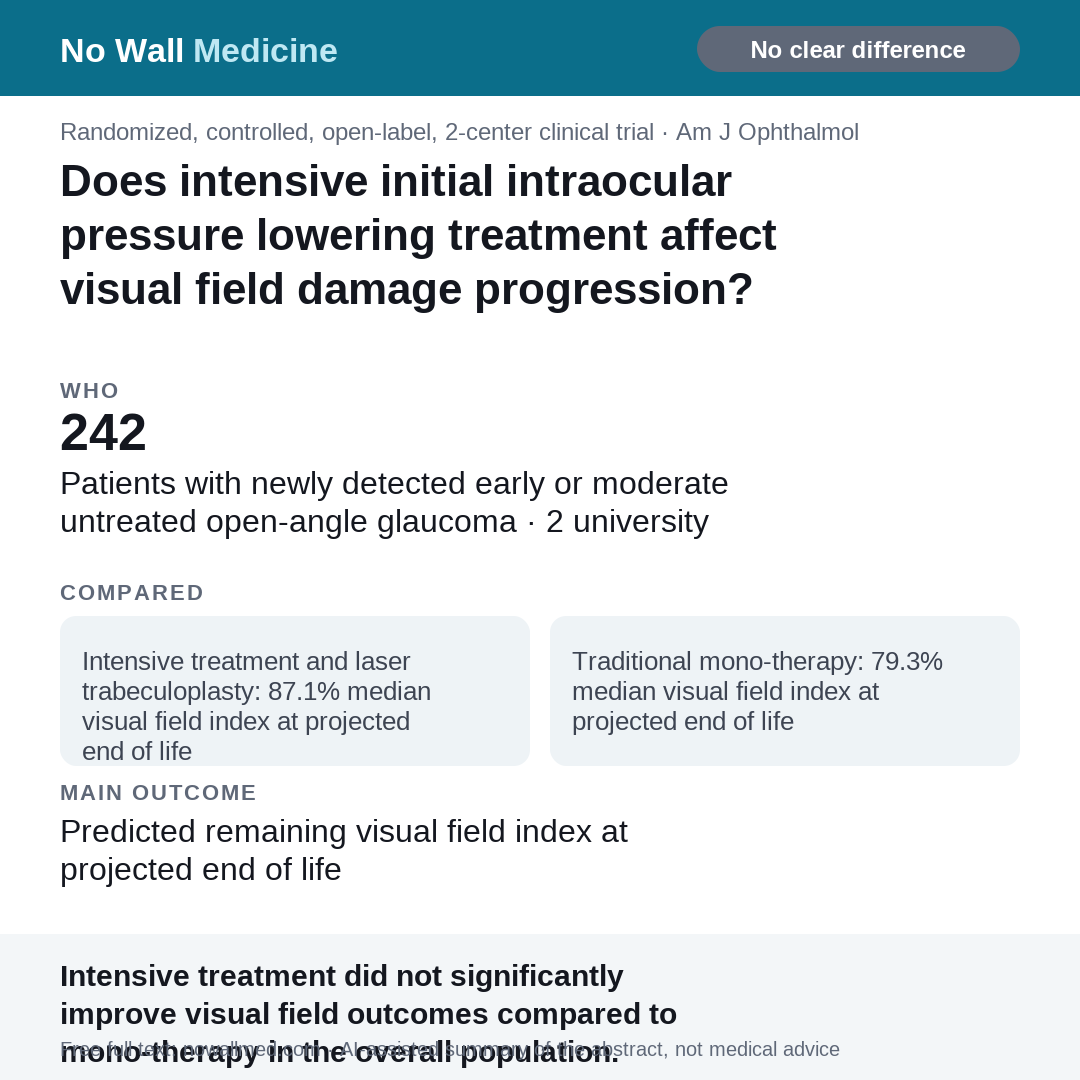
The Glaucoma Intensive Treatment Study (GITS): A Randomized Controlled Trial Comparing Intensive and Standard Treatment on 5 Years Visual Field Development
Randomized, controlled, open-label, 2-center clinical trialNo clear difference
Does intensive initial intraocular pressure lowering treatment affect visual field damage progression?
Who
242
Patients with newly detected early or moderate untreated open-angle glaucoma · 2 university hospitals in Sweden
Compared
Intensive treatment and laser trabeculoplasty: 87.1% median visual field index at projected end of life
Traditional mono-therapy: 79.3% median visual field index at projected end of life
Main outcome
Predicted remaining visual field index at projected end of life
Bottom line: Intensive treatment did not significantly improve visual field outcomes compared to mono-therapy in the overall population.
Am J Ophthalmol · 2024-06-22Download image
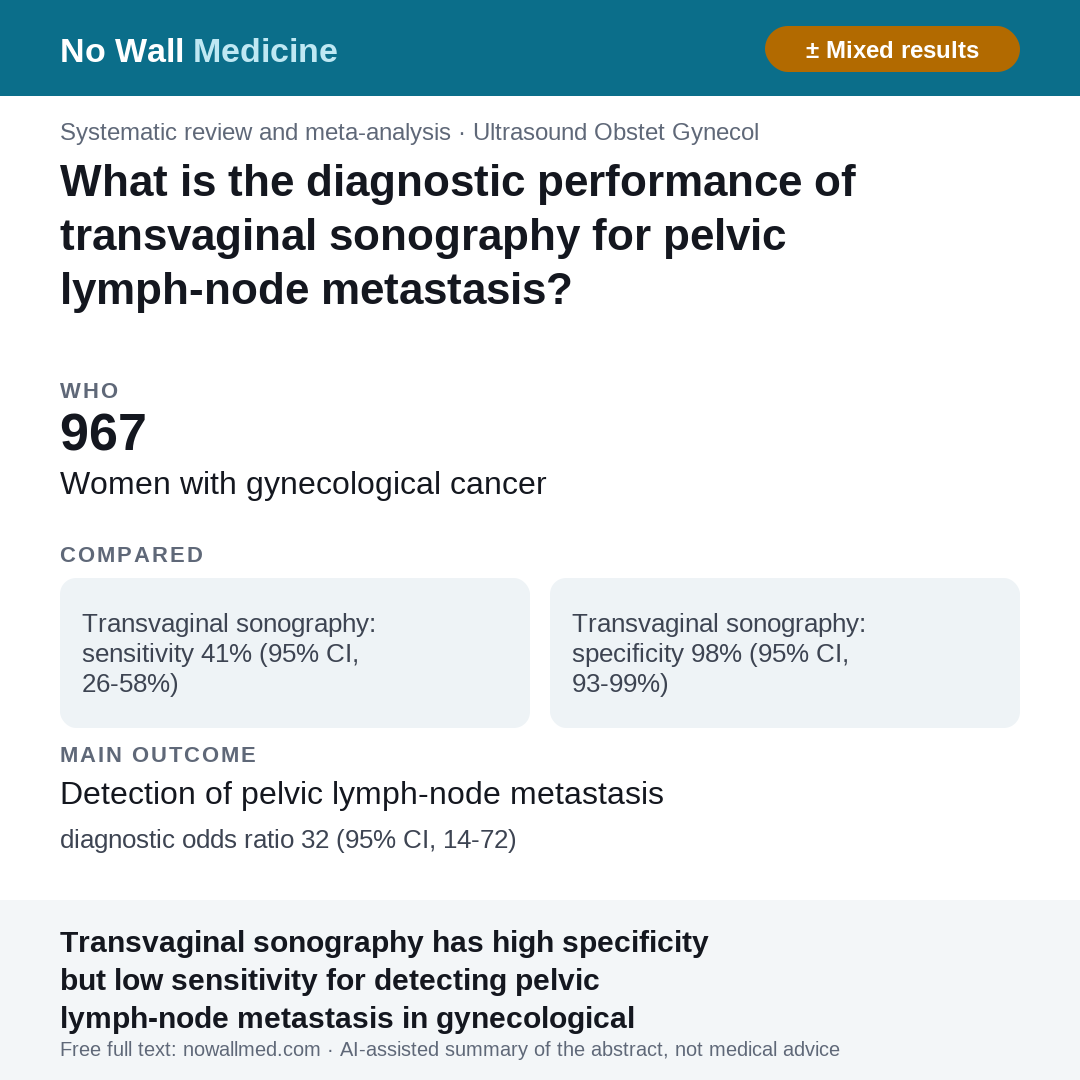
Role of ultrasound in detection of lymph-node metastasis in gynecological cancer: systematic review and meta-analysis
Systematic review and meta-analysisMixed results
What is the diagnostic performance of transvaginal sonography for pelvic lymph-node metastasis?
Who
967
Women with gynecological cancer
Compared
Transvaginal sonography: sensitivity 41% (95% CI, 26-58%)
Transvaginal sonography: specificity 98% (95% CI, 93-99%)
Main outcome
Detection of pelvic lymph-node metastasis
Result: diagnostic odds ratio 32 (95% CI, 14-72)
Bottom line: Transvaginal sonography has high specificity but low sensitivity for detecting pelvic lymph-node metastasis in gynecological cancer.
Limitation: High heterogeneity was found between studies for both sensitivity and specificity.
Ultrasound Obstet Gynecol · 2024-06-22Download image
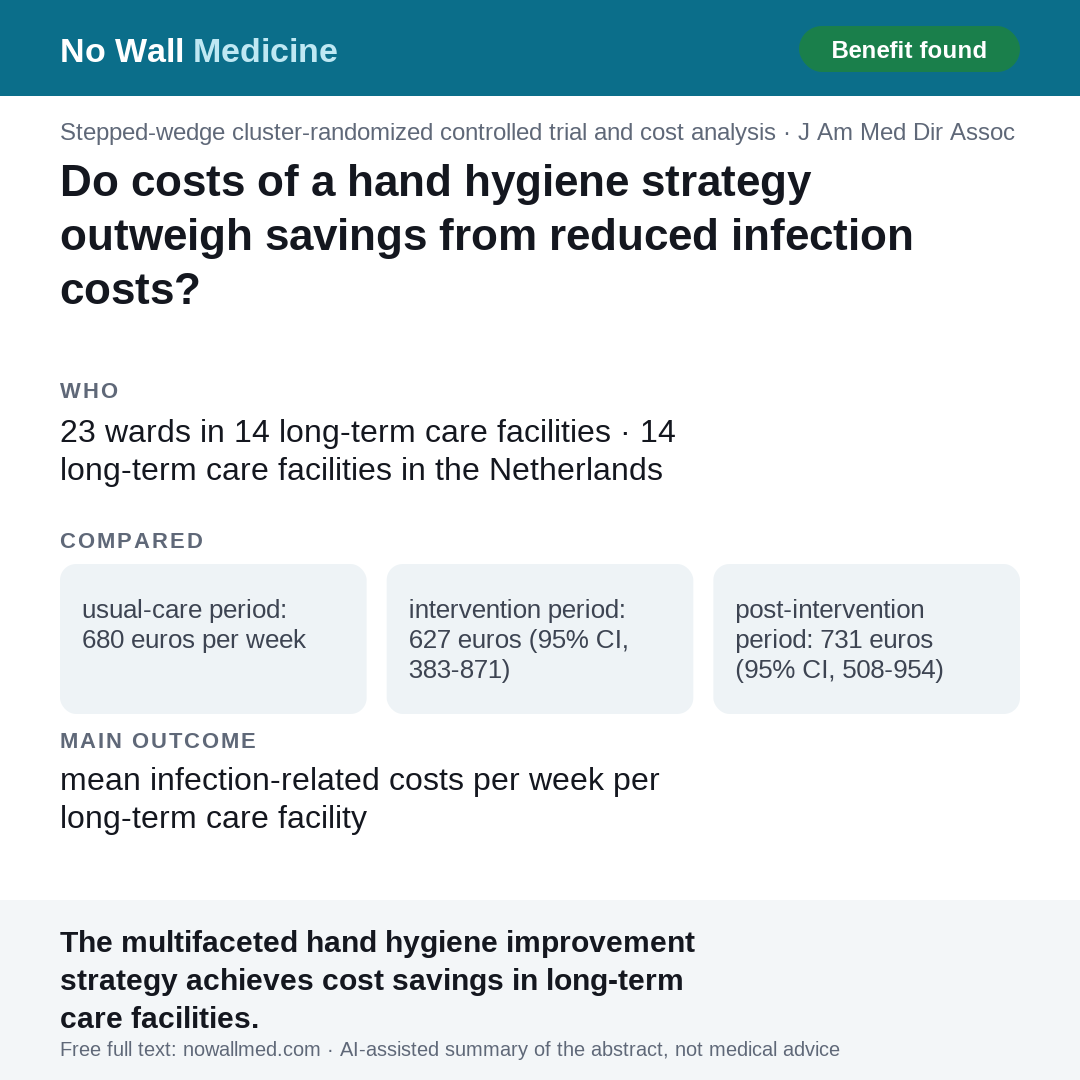
Cost Analysis of a Hand Hygiene Improvement Strategy in Long-Term Care Facilities
Stepped-wedge cluster-randomized controlled trial and cost analysisBenefit found
Do costs of a hand hygiene strategy outweigh savings from reduced infection costs?
Who
23 wards in 14 long-term care facilities · 14 long-term care facilities in the Netherlands
Compared
usual-care period: 680 euros per week
intervention period: 627 euros (95% CI, 383-871)
post-intervention period: 731 euros (95% CI, 508-954)
Main outcome
mean infection-related costs per week per long-term care facility
Bottom line: The multifaceted hand hygiene improvement strategy achieves cost savings in long-term care facilities.
J Am Med Dir Assoc · 2024-06-22Download image
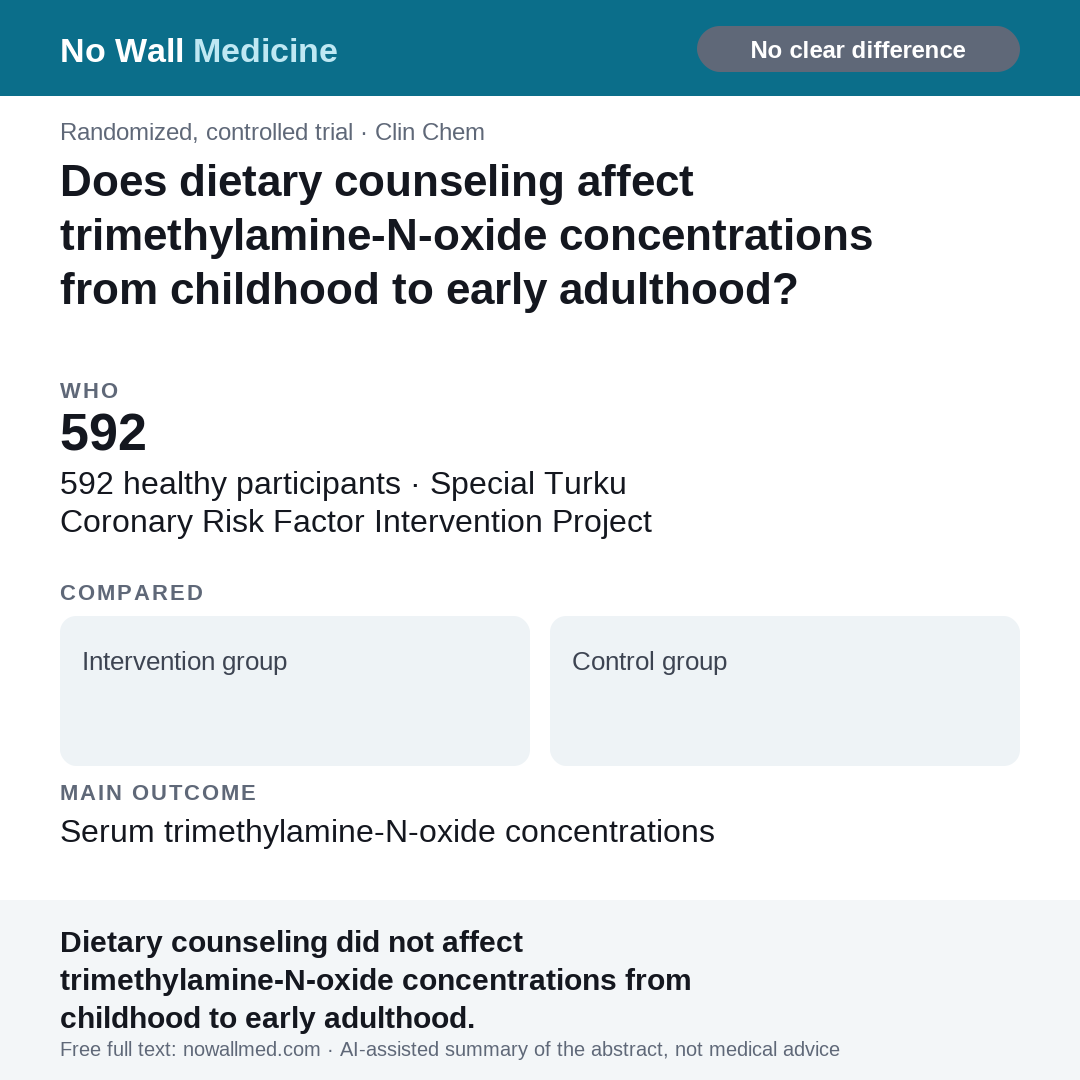
Association of Serum Trimethylamine-N-Oxide Concentration from Childhood to Early Adulthood with Age and Sex
Randomized, controlled trialNo clear difference
Does dietary counseling affect trimethylamine-N-oxide concentrations from childhood to early adulthood?
Who
592
592 healthy participants · Special Turku Coronary Risk Factor Intervention Project
Compared
Intervention group
Control group
Main outcome
Serum trimethylamine-N-oxide concentrations
Bottom line: Dietary counseling did not affect trimethylamine-N-oxide concentrations from childhood to early adulthood.
Clin Chem · 2024-06-22Download image
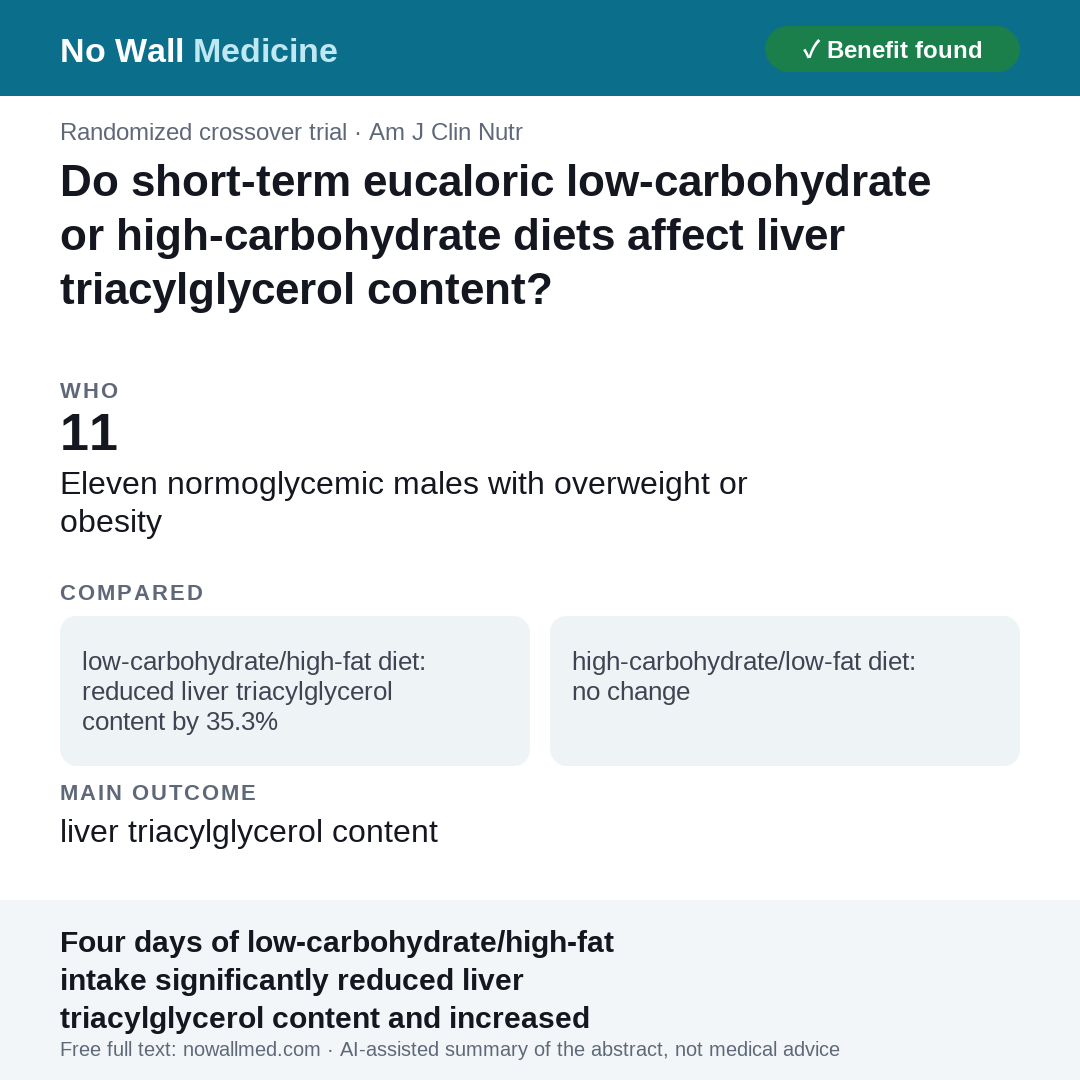
The impact of short-term eucaloric low- and high-carbohydrate diets on liver triacylglycerol content in males with overweight and obesity: a randomized crossover study
Randomized crossover trialBenefit found
Do short-term eucaloric low-carbohydrate or high-carbohydrate diets affect liver triacylglycerol content?
Who
11
Eleven normoglycemic males with overweight or obesity
Compared
low-carbohydrate/high-fat diet: reduced liver triacylglycerol content by 35.3%
high-carbohydrate/low-fat diet: no change
Main outcome
liver triacylglycerol content
Result: -35.3% (95% confidence interval: -46.6, -24.1)
Bottom line: Four days of low-carbohydrate/high-fat intake significantly reduced liver triacylglycerol content and increased hepatic insulin sensitivity.
Am J Clin Nutr · 2024-06-22Download image
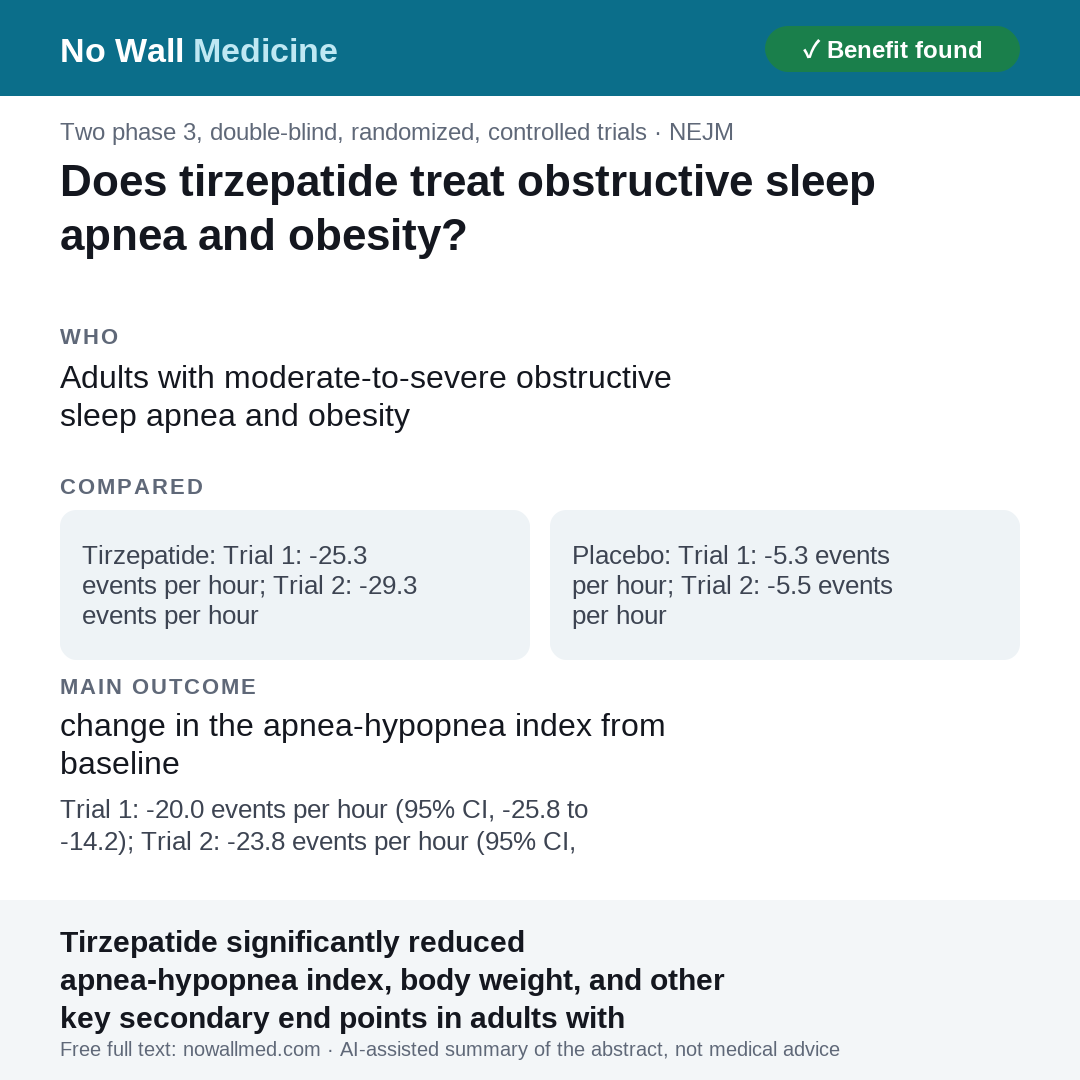
Tirzepatide for the Treatment of Obstructive Sleep Apnea and Obesity
Two phase 3, double-blind, randomized, controlled trialsBenefit found
Does tirzepatide treat obstructive sleep apnea and obesity?
Who
Adults with moderate-to-severe obstructive sleep apnea and obesity
Compared
Tirzepatide: Trial 1: -25.3 events per hour; Trial 2: -29.3 events per hour
Placebo: Trial 1: -5.3 events per hour; Trial 2: -5.5 events per hour
Main outcome
change in the apnea-hypopnea index from baseline
Result: Trial 1: -20.0 events per hour (95% CI, -25.8 to -14.2); Trial 2: -23.8 events per hour (95% CI, -29.6 to -17.9)
Bottom line: Tirzepatide significantly reduced apnea-hypopnea index, body weight, and other key secondary end points in adults with sleep apnea and obesity.
Funded by: Eli Lilly
NEJM · 2024-06-21Download image
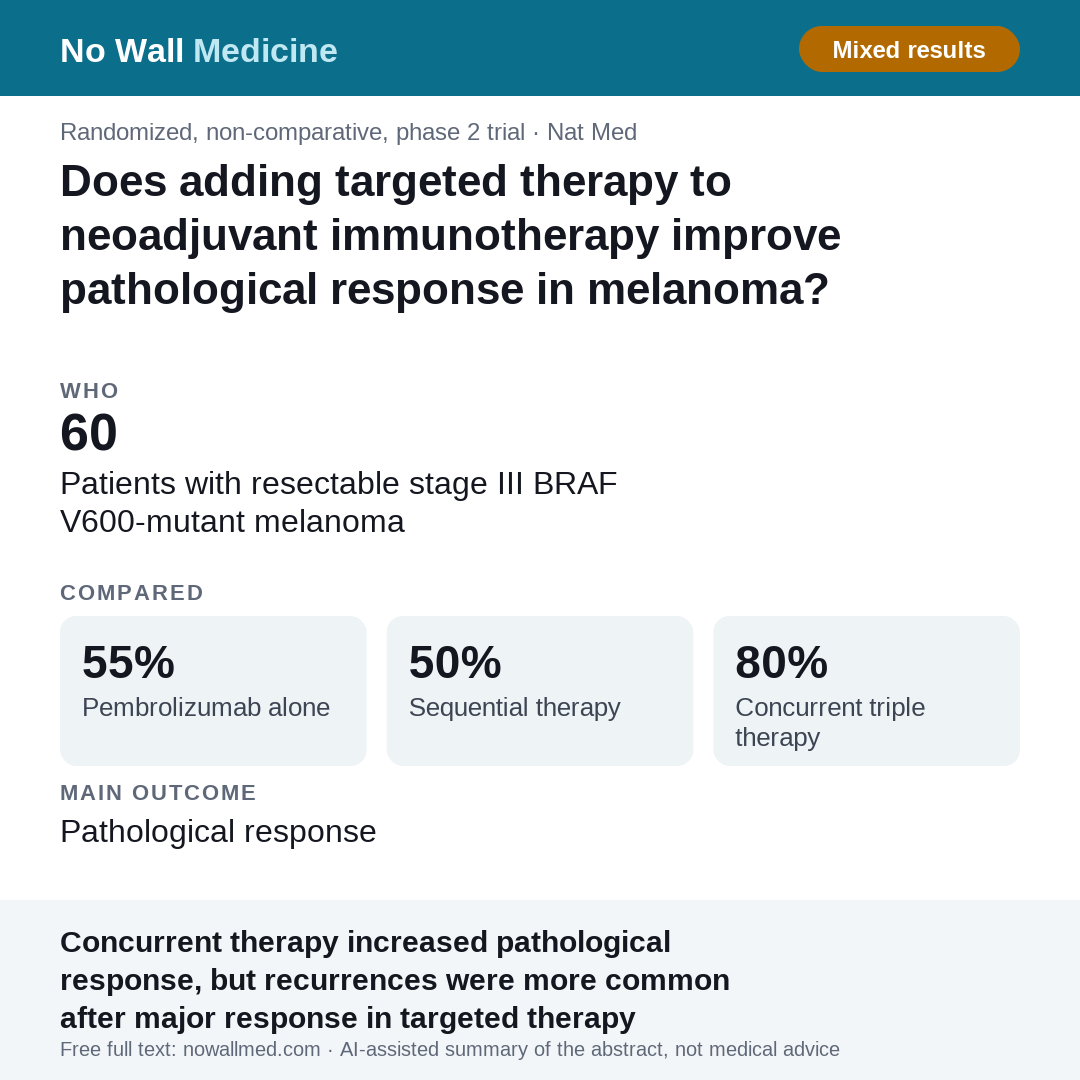
Neoadjuvant pembrolizumab, dabrafenib and trametinib in BRAFV600-mutant resectable melanoma: the randomized phase 2 NeoTrio trial
Randomized, non-comparative, phase 2 trialMixed results
Does adding targeted therapy to neoadjuvant immunotherapy improve pathological response in melanoma?
Who
60
Patients with resectable stage III BRAF V600-mutant melanoma
Compared
55%Pembrolizumab alone (11/20)
50%Sequential therapy (10/20)
80%Concurrent triple therapy (16/20)
Main outcome
Pathological response
Bottom line: Concurrent therapy increased pathological response, but recurrences were more common after major response in targeted therapy arms.
Nat Med · 2024-06-21Download image
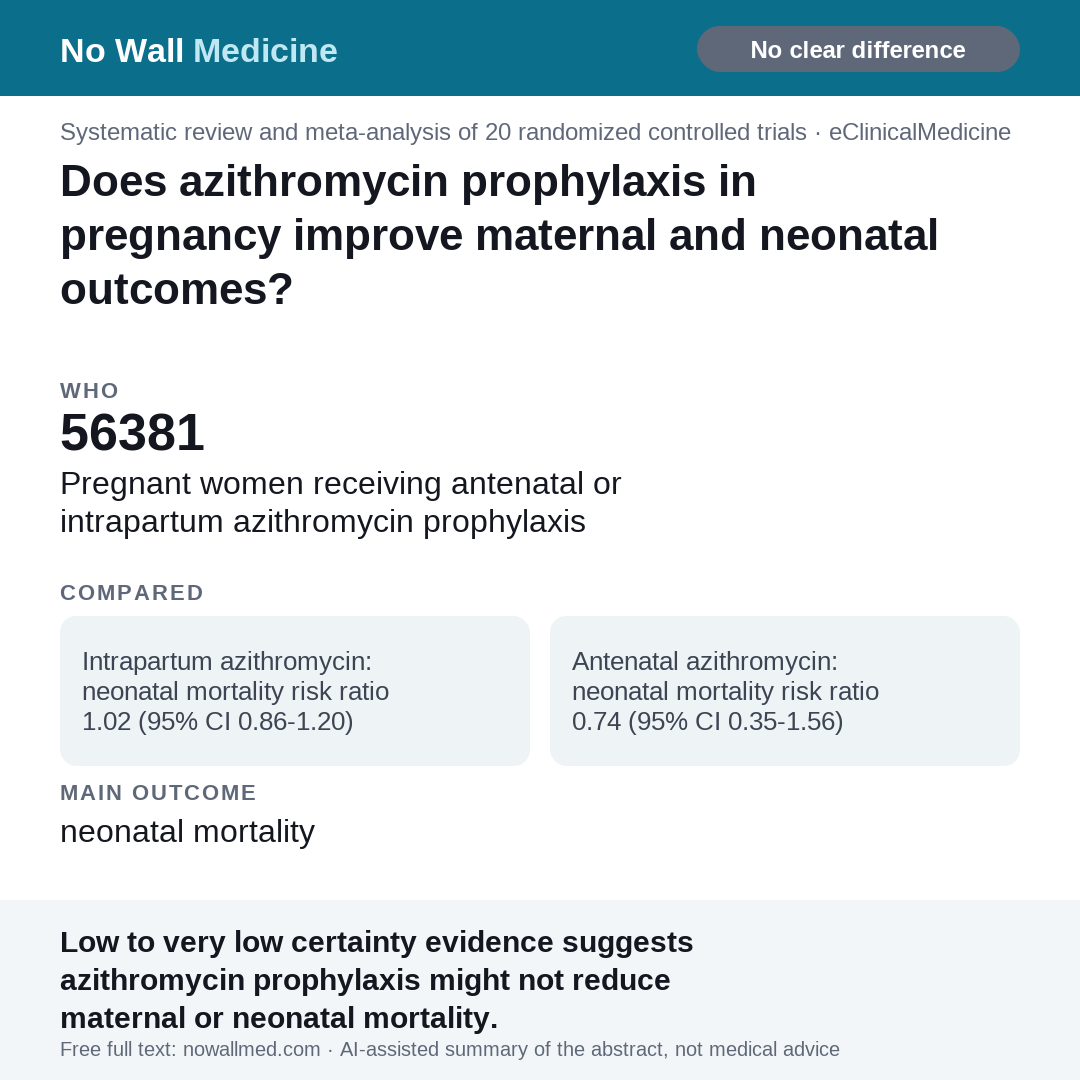
PeRinatal, neOnatal, and Maternal OuTcomEs with azithromycin prophylaxis in pregnancy and labour (PROMOTE-PROPHYLAXIS): systematic review and meta-analysis
Systematic review and meta-analysis of 20 randomized controlled trialsNo clear difference
Does azithromycin prophylaxis in pregnancy improve maternal and neonatal outcomes?
Who
56381
Pregnant women receiving antenatal or intrapartum azithromycin prophylaxis
Compared
Intrapartum azithromycin: neonatal mortality risk ratio 1.02 (95% CI 0.86-1.20)
Antenatal azithromycin: neonatal mortality risk ratio 0.74 (95% CI 0.35-1.56)
Main outcome
neonatal mortality
Result: risk ratio 1.02 (95% CI 0.86-1.20) for intrapartum; 0.74 (95% CI 0.35-1.56) for antenatal
Bottom line: Low to very low certainty evidence suggests azithromycin prophylaxis might not reduce maternal or neonatal mortality.
Limitation: There is no data on long-term adverse outcomes and antimicrobial resistance.
eClinicalMedicine · 2024-06-21Download image
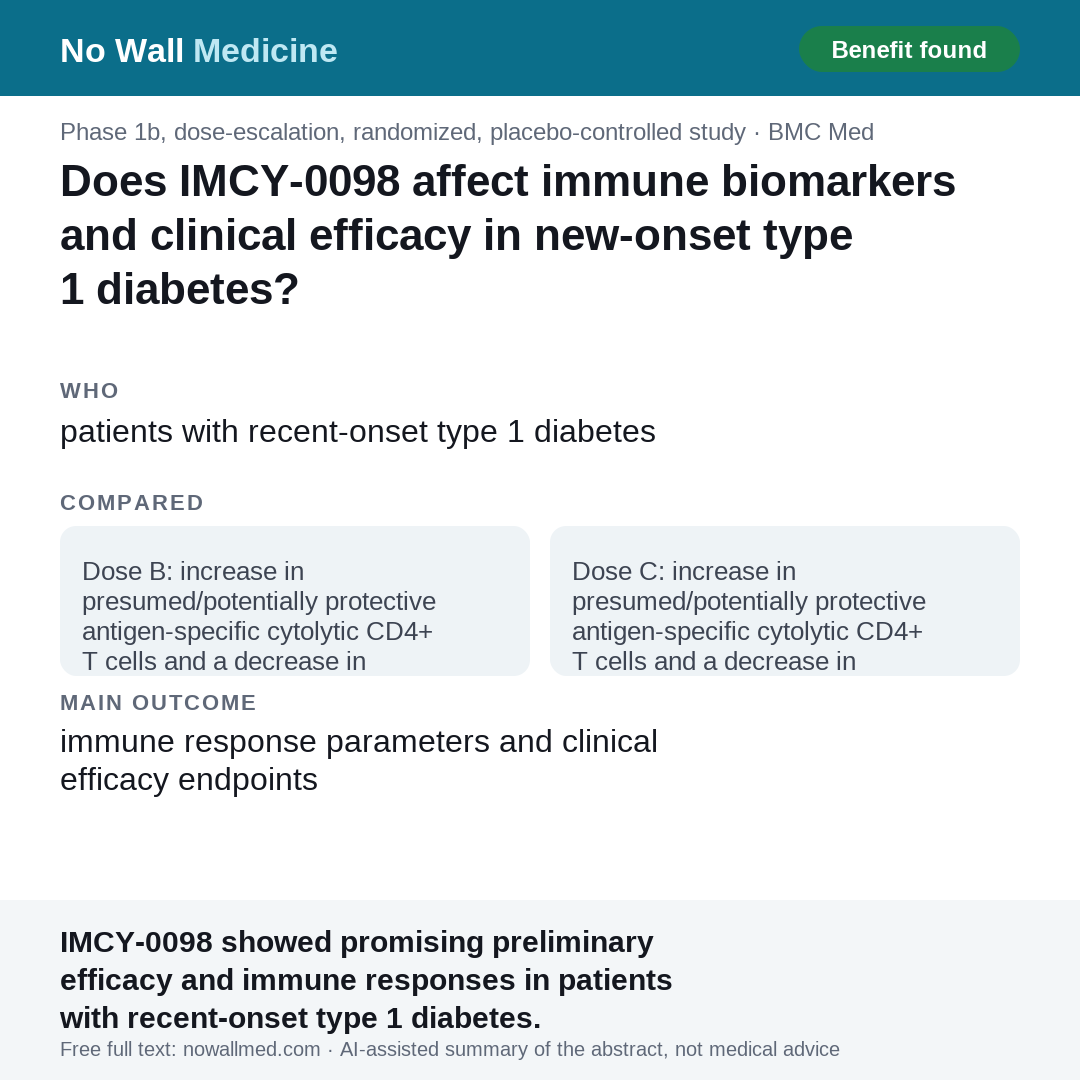
First-in-human, double-blind, randomized phase 1b study of peptide immunotherapy IMCY-0098 in new-onset type 1 diabetes: an exploratory analysis of immune biomarkers
Phase 1b, dose-escalation, randomized, placebo-controlled studyBenefit found
Does IMCY-0098 affect immune biomarkers and clinical efficacy in new-onset type 1 diabetes?
Who
patients with recent-onset type 1 diabetes
Compared
Dose B: increase in presumed/potentially protective antigen-specific cytolytic CD4+ T cells and a decrease in pathogenic CD8+ T cells
Dose C: increase in presumed/potentially protective antigen-specific cytolytic CD4+ T cells and a decrease in pathogenic CD8+ T cells
Main outcome
immune response parameters and clinical efficacy endpoints
Bottom line: IMCY-0098 showed promising preliminary efficacy and immune responses in patients with recent-onset type 1 diabetes.
BMC Med · 2024-06-21Download image
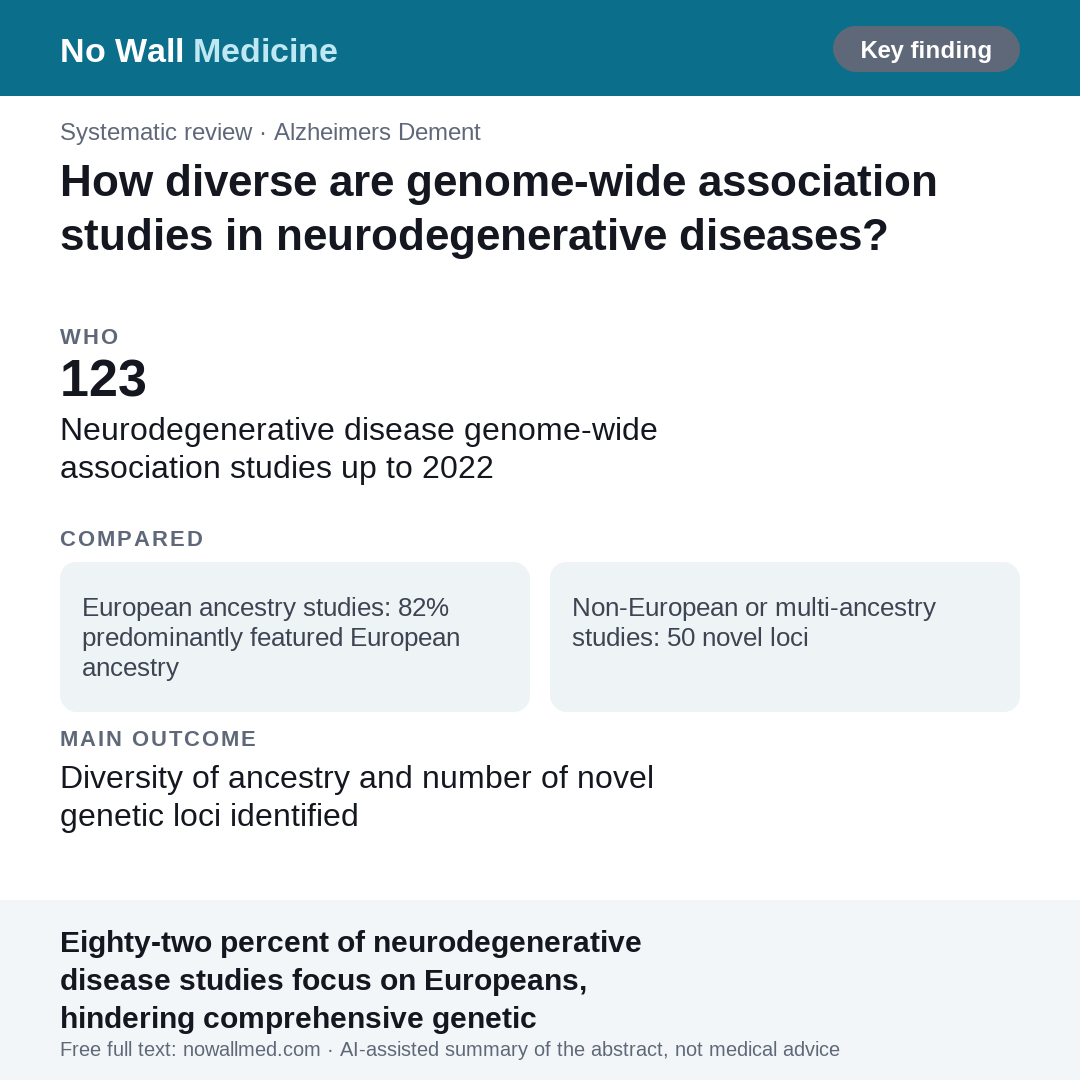
Assessing the lack of diversity in genetics research across neurodegenerative diseases: A systematic review of the GWAS Catalog and literature
Systematic reviewHarm found
How diverse are genome-wide association studies in neurodegenerative diseases?
Who
123
Neurodegenerative disease genome-wide association studies up to 2022
Compared
European ancestry studies: 82% predominantly featured European ancestry
Non-European or multi-ancestry studies: 50 novel loci
Main outcome
Diversity of ancestry and number of novel genetic loci identified
Bottom line: Eighty-two percent of neurodegenerative disease studies focus on Europeans, hindering comprehensive genetic understanding.
Alzheimers Dement · 2024-06-21Download image
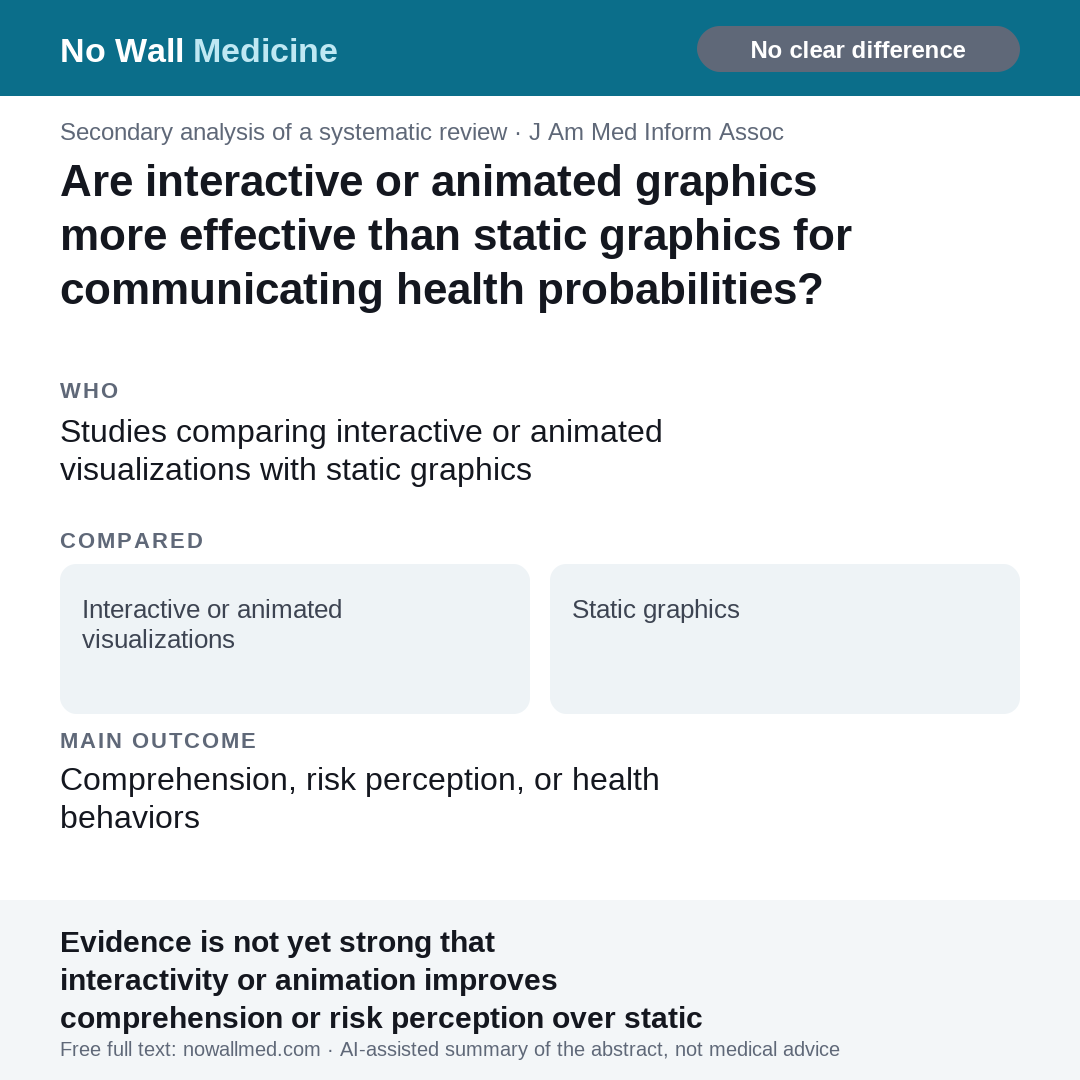
Insufficient evidence for interactive or animated graphics for communicating probability
Secondary analysis of a systematic reviewNo clear difference
Are interactive or animated graphics more effective than static graphics for communicating health probabilities?
Who
Studies comparing interactive or animated visualizations with static graphics
Compared
Interactive or animated visualizations
Static graphics
Main outcome
Comprehension, risk perception, or health behaviors
Bottom line: Evidence is not yet strong that interactivity or animation improves comprehension or risk perception over static graphics.
Limitation: The most effective visualizations may not have been studied yet.
J Am Med Inform Assoc · 2024-06-21Download image
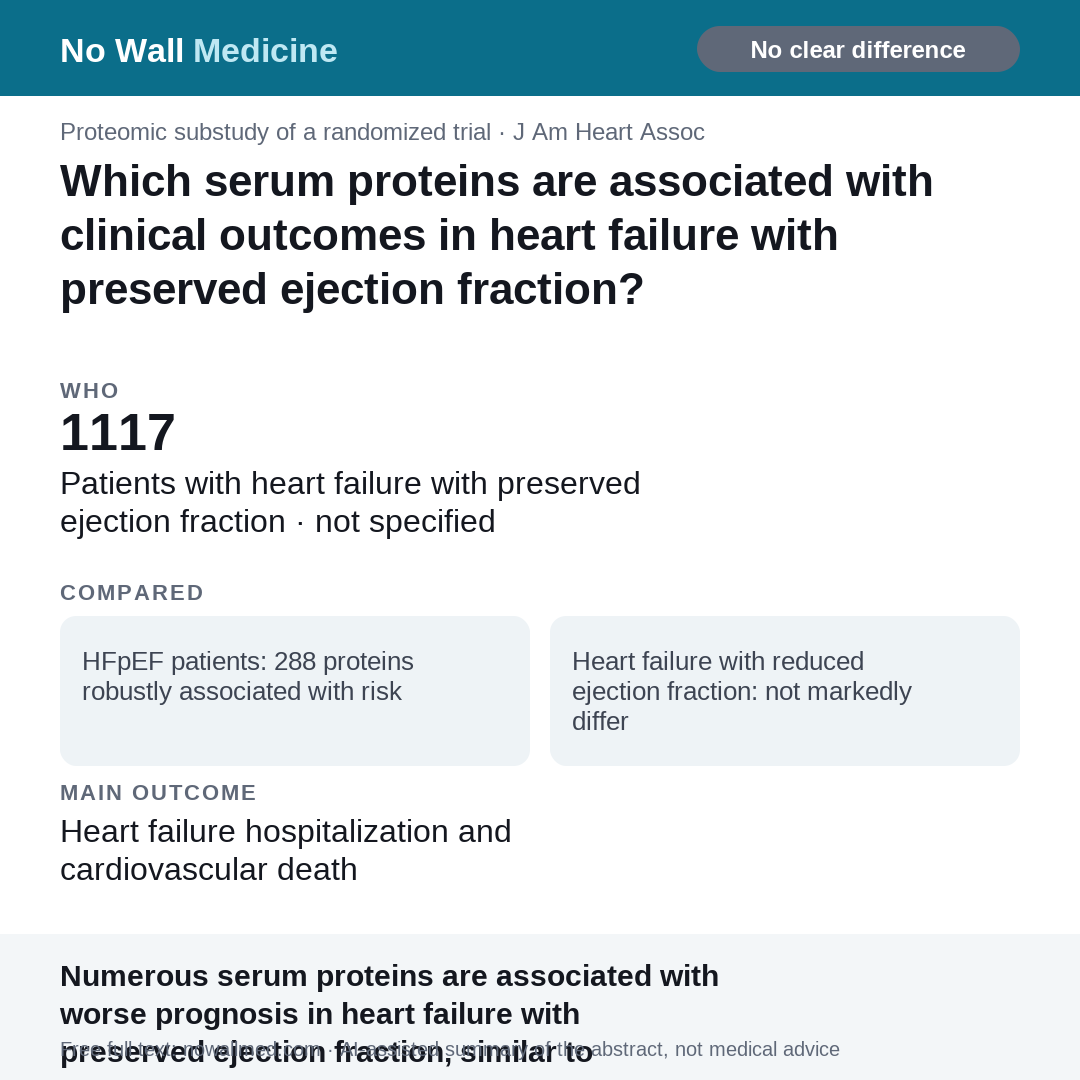
Aptamer Proteomics for Biomarker Discovery in Heart Failure With Preserved Ejection Fraction: The PARAGON-HF Proteomic Substudy
Proteomic substudy of a randomized trialNo clear difference
Which serum proteins are associated with clinical outcomes in heart failure with preserved ejection fraction?
Who
1117
Patients with heart failure with preserved ejection fraction · not specified
Compared
HFpEF patients: 288 proteins robustly associated with risk
Heart failure with reduced ejection fraction: not markedly differ
Main outcome
Heart failure hospitalization and cardiovascular death
Bottom line: Numerous serum proteins are associated with worse prognosis in heart failure with preserved ejection fraction, similar to reduced ejection fraction.
J Am Heart Assoc · 2024-06-21Download image
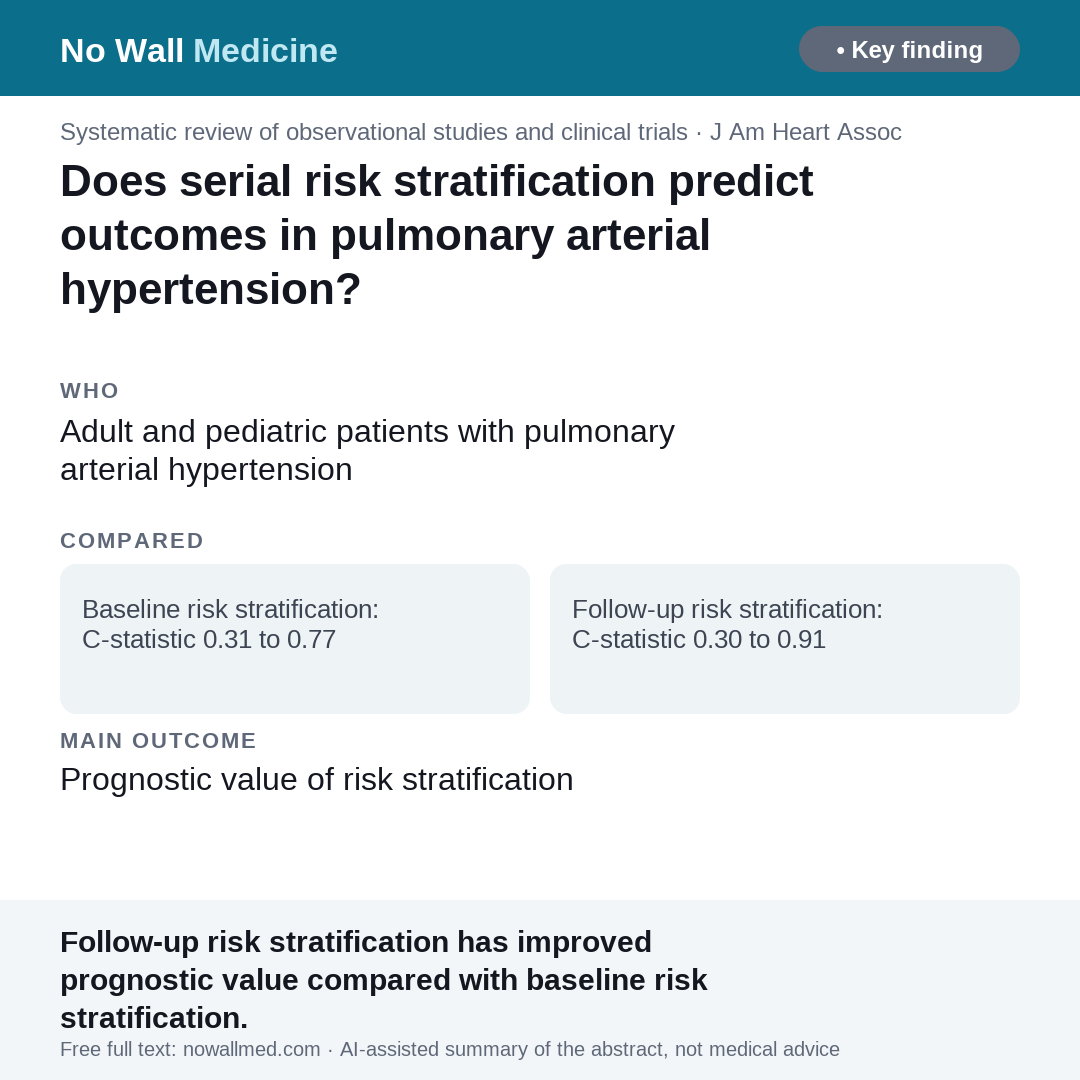
Prognostic Value of Serial Risk Stratification in Adult and Pediatric Pulmonary Arterial Hypertension: A Systematic Review
Systematic reviewBenefit found
Prognostic value of serial risk stratification
Who
Adult and pediatric pulmonary arterial hypertension patients
Compared
Baseline risk
Follow-up risk
Main outcome
Prognostic value and survival
Bottom line: Serial risk stratification improves prognostic value
J Am Heart Assoc · 2024-06-21Download image
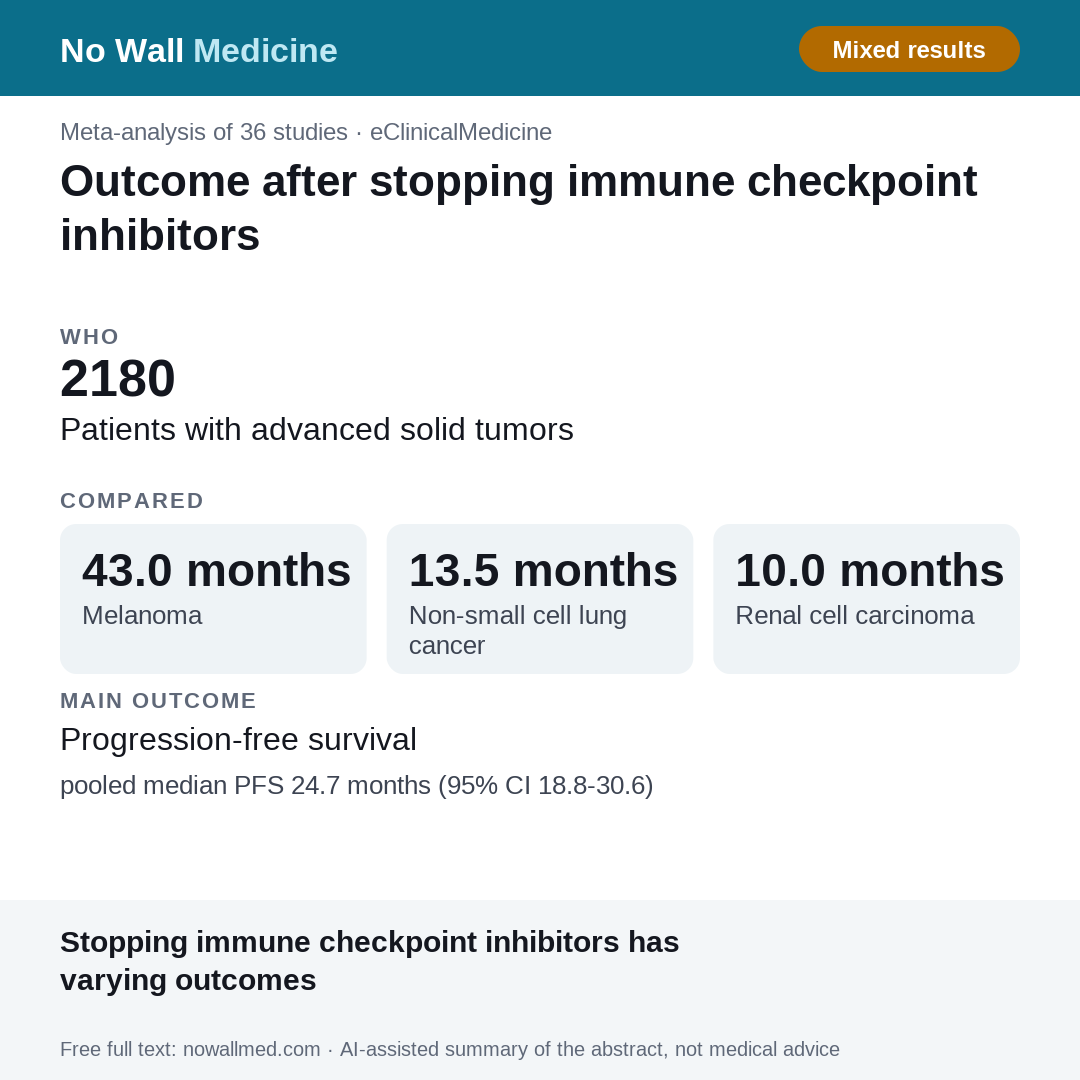
Outcomes of patients with advanced solid tumors who discontinued immune-checkpoint inhibitors: a systematic review and meta-analysis
Meta-analysis of 36 studiesMixed results
Outcome after stopping immune checkpoint inhibitors
Who
2180
Patients with advanced solid tumors
Compared
43.0 monthsMelanoma
13.5 monthsNon-small cell lung cancer
10.0 monthsRenal cell carcinoma
Main outcome
Progression-free survival
Result: pooled median PFS 24.7 months (95% CI 18.8-30.6)
Bottom line: Stopping immune checkpoint inhibitors has varying outcomes
Funded by: Italian Ministry of University and Research
eClinicalMedicine · 2024-06-20Download image
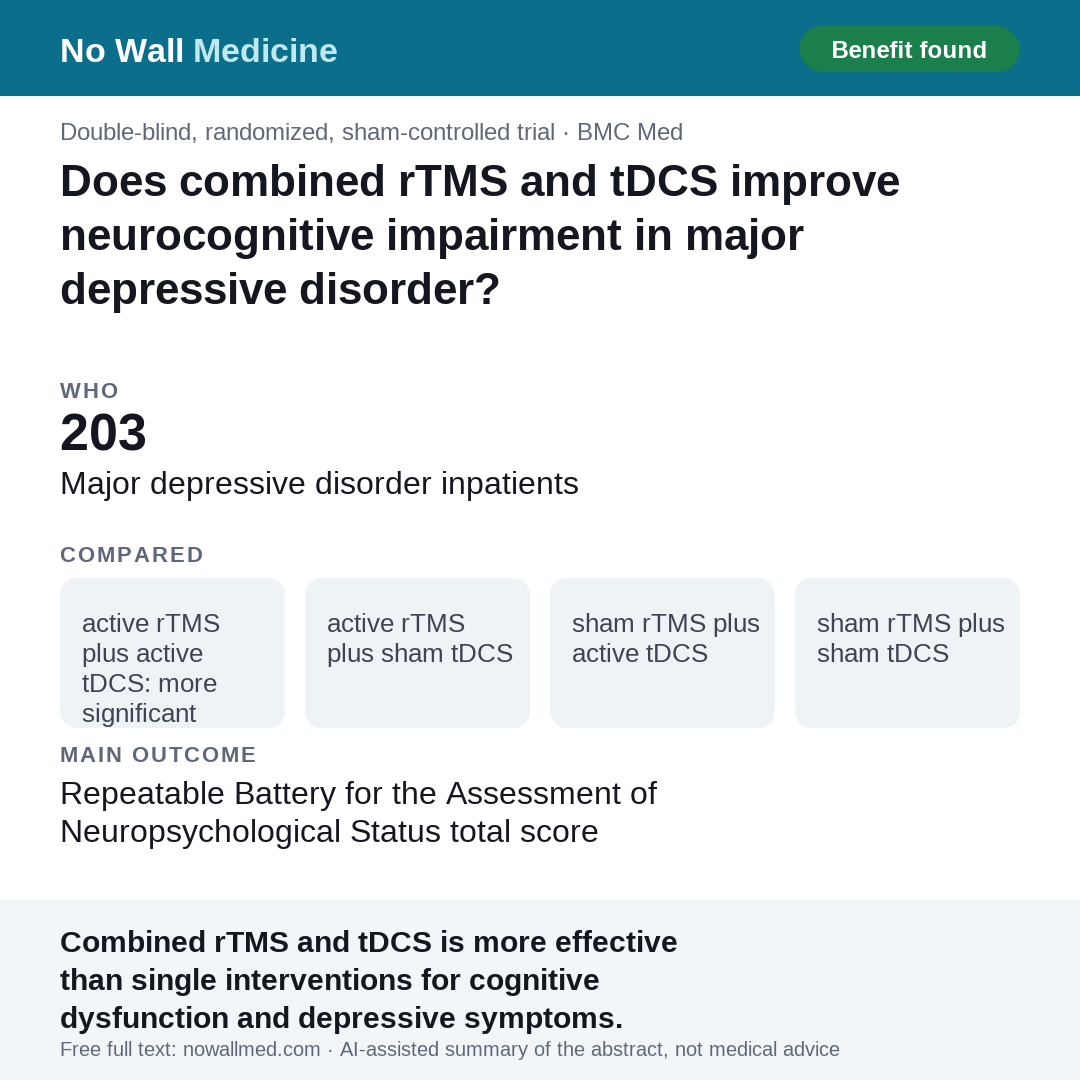
Cognitive enhancing effect of rTMS combined with tDCS in patients with major depressive disorder: a double-blind, randomized, sham-controlled study
Double-blind, randomized, sham-controlled trialBenefit found
Does combined rTMS and tDCS improve neurocognitive impairment in major depressive disorder?
Who
203
Major depressive disorder inpatients
Compared
active rTMS plus active tDCS: more significant improvements in RBANS total score, immediate memory, and visuospatial/constructional index score
active rTMS plus sham tDCS
sham rTMS plus active tDCS
sham rTMS plus sham tDCS
Main outcome
Repeatable Battery for the Assessment of Neuropsychological Status total score
Bottom line: Combined rTMS and tDCS is more effective than single interventions for cognitive dysfunction and depressive symptoms.
BMC Med · 2024-06-20Download image
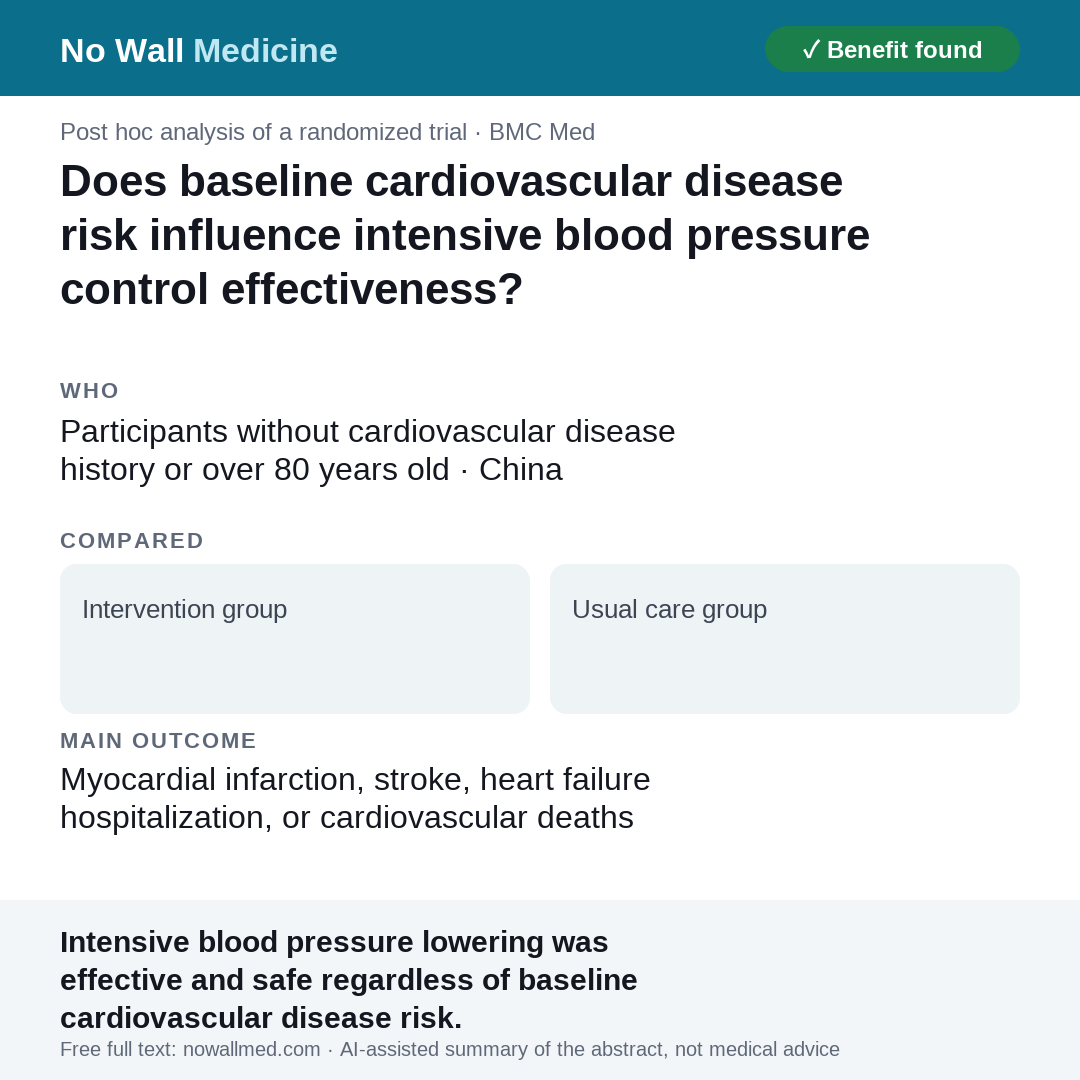
Impact of baseline cardiovascular risk on the outcomes of intensive blood pressure intervention: a post hoc analysis of the China rural hypertension control project
Post hoc analysis of a randomized trialBenefit found
Does baseline cardiovascular disease risk influence intensive blood pressure control effectiveness?
Who
Participants without cardiovascular disease history or over 80 years old · China
Compared
Intervention group
Usual care group
Main outcome
Myocardial infarction, stroke, heart failure hospitalization, or cardiovascular deaths
Result: hazard ratios 0.59 (95% CI 0.40 to 0.87), 0.54 (0.40 to 0.72), 0.72 (0.57 to 0.91) and 0.65 (0.53 to 0.80)
Bottom line: Intensive blood pressure lowering was effective and safe regardless of baseline cardiovascular disease risk.
BMC Med · 2024-06-20Download image