Visual abstracts
New randomized trials and meta-analyses from leading journals at a glance: who was studied, what was compared, and what was found. Every paper is free to read in full.
All specialtiesCardiology 847Oncology 766Gastroenterology & Hepatology 307Infectious Disease 626Neurology 353Psychiatry & Mental Health 430Pulmonology 368Critical Care 252Endocrinology & Diabetes 480Pediatrics 540Surgery 328Orthopedics & Sports Medicine 163Neurosurgery 100Cardiothoracic & Vascular Surgery 87Plastic & Reconstructive Surgery 132Nephrology 197Rheumatology 108Hematology 182Dermatology 80Ophthalmology 97Obstetrics & Gynecology 262Public & Global Health 167Radiology & Imaging 98Anesthesiology 117Urology 162ENT (Otolaryngology) 100Emergency Medicine 84Allergy & Immunology 58Geriatrics 160Family Medicine & Primary Care 111Medical Genetics & Genomics 91Pathology & Laboratory Medicine 24Physical Medicine & Rehabilitation 148Palliative Care 81Nutrition 223Digital Health & AI 460General Medicine 101
Identifying predictors of neuropathic pain medication prescribing, adherence, and discontinuation: a systematic review and meta-analysis
Systematic review and meta-analysisMixed results
What predicts neuropathic pain medication prescribing, adherence, and discontinuation in adults?
Who
Adults with neuropathic pain
Compared
Prescribing predictors: mental health disorder, diabetes mellitus, and White race
Adherence predictors: serotonin-norepinephrine reuptake inhibitors, dose titration, and medicine reminders
Discontinuation predictors: tricyclic antidepressants and combination neuropathic pain medications
Main outcome
medication prescribing, adherence, and discontinuation
Bottom line: Predictors for prescribing, adherence, and discontinuation vary across different medication management strategies in neuropathic pain.
Br J Anaesth · 2025-11-27Download image

Prevalence, hormonal correlates, severity, and neural basis of neurocognitive impairment in patients with hypothyroidism: Systematic review and meta-analyses
Systematic review and meta-analysisHarm found
What are the prevalence, hormonal correlates, and neurocognitive impairments in hypothyroidism?
Who
85
Patients with hypothyroidism
Compared
Hypothyroidism patients: SMD -1.134 (95% CI -2.020 to -0.248) for MMSE
Controls
Main outcome
Neurocognitive impairment and thyroid hormone associations
Result: standardized mean difference -1.134 (95% CI -2.020 to -0.248)
Bottom line: Hypothyroidism is associated with neurocognitive impairment, lower memory scores, and structural brain alterations.
Alzheimers Dement · 2025-11-27Download image

Magnetic resonance imaging in the diagnosis of trigeminal neuralgia: a systematic review of the imaging protocol and diagnostic accuracy
Systematic reviewUnclear result
What are the diagnostic performance and effective MRI protocols for trigeminal neuralgia?
Who
Patients with suspected trigeminal neuralgia
Compared
Advanced MRI sequences
3.0 Tesla imaging
Main outcome
Visualization of neurovascular conflicts and diagnostic accuracy
Bottom line: Advanced sequences and higher field strength improve visualization, but distinguishing clinically significant conflicts remains a challenge.
Limitation: Variable imaging protocols, interobserver variability, and limited clinical correlation.
Eur Radiol · 2025-11-27Download image

Effectiveness and Safety of a Polyvinyl Alcohol Microsphere and Hyaluronic Acid Suspension for Chin Augmentation: A Randomized Controlled Trial and Multidisciplinary Study
Randomized controlled trialBenefit found
Is PVA-HA filler effective for chin augmentation?
Who
144
Subjects with chin retrusion
Compared
PVA-HA: 1.12° (95% CI, 0.83°-1.41°)
Control: -0.42° (95% CI, -0.87° to 0.03°)
Main outcome
G-Sn-Pog' angle increase
Result: between-group difference, 1.54°
Bottom line: PVA-HA filler is effective for chin augmentation
Aesthet Surg J · 2025-11-27Download image

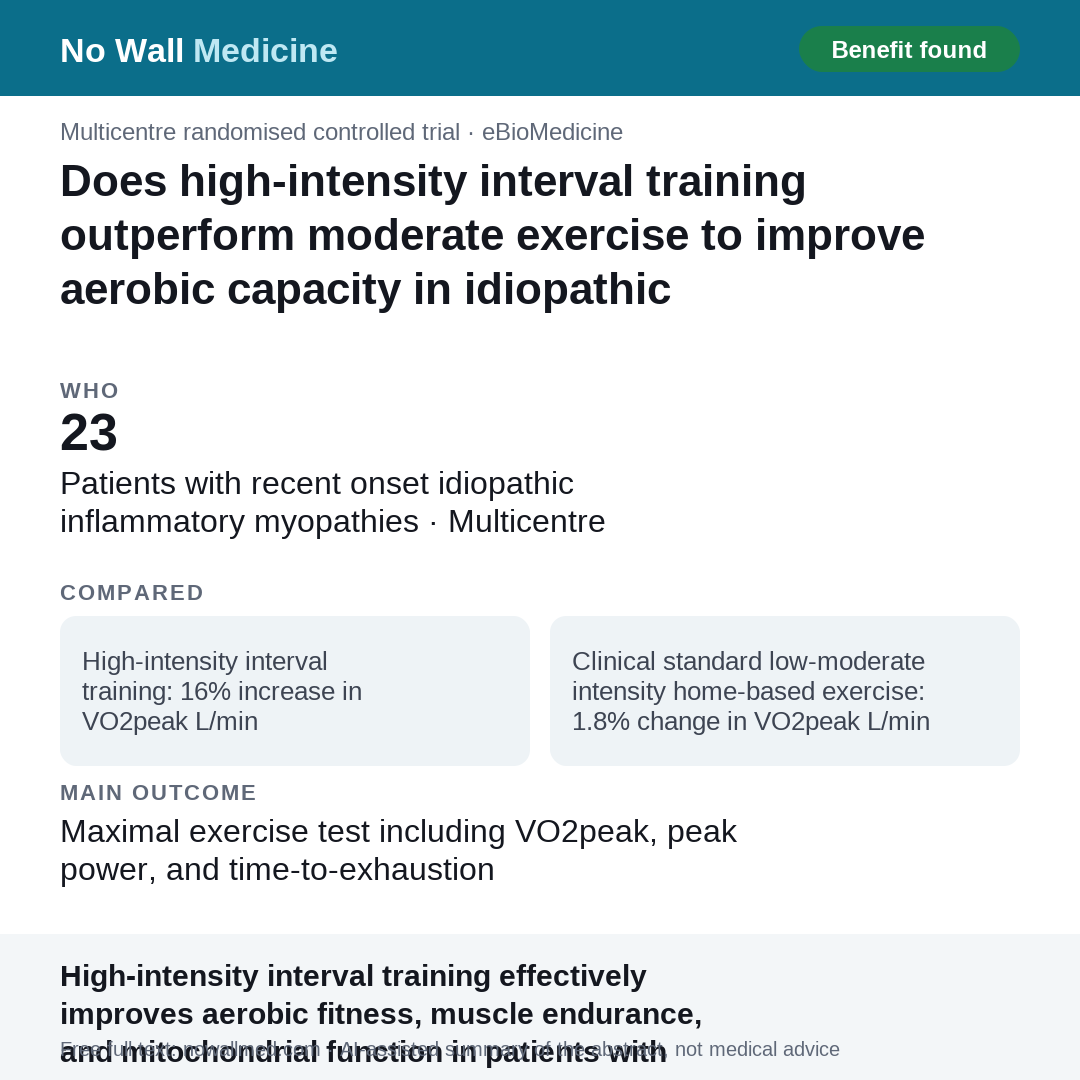
High-intensity interval training outperforms moderate exercise to improve aerobic capacity in patients with recent-onset idiopathic inflammatory myopathies: a multicentre randomised controlled trial
Multicentre randomised controlled trialBenefit found
Does high-intensity interval training outperform moderate exercise to improve aerobic capacity in idiopathic inflammatory myopathies?
Who
23
Patients with recent onset idiopathic inflammatory myopathies · Multicentre
Compared
High-intensity interval training: 16% increase in VO2peak L/min
Clinical standard low-moderate intensity home-based exercise: 1.8% change in VO2peak L/min
Main outcome
Maximal exercise test including VO2peak, peak power, and time-to-exhaustion
Result: 95% CI 0.1; 0.47
Bottom line: High-intensity interval training effectively improves aerobic fitness, muscle endurance, and mitochondrial function in patients with recent onset idiopathic inflammatory myopathies.
Funded by: Swedish Research Council, Swedish Rheumatism Association, and others
eBioMedicine · 2025-11-27Download image
First-in-human high dose AAV9 intrathecal gene therapy for paediatric CLN7 disease: a phase 1, open-label, single ascending dose, non-randomised clinical trial
Phase 1, open-label, single ascending dose, non-randomised clinical trialBenefit found
Is high dose intrathecal AAV9 gene therapy safe for paediatric CLN7 disease?
Who
4
Children with Neuronal Ceroid Lipofuscinoses type 7 disease
Compared
low dose
high dose
Main outcome
safety and preliminary efficacy
Bottom line: High dose intrathecal AAV9 gene therapy was safe and showed preliminary efficacy in children with CLN7 disease.
Limitation: Additional long-term monitoring of the immune system is needed during immunosuppression tapering.
Funded by: The Batten's Hope Foundation, Mila's Miracle Foundation, Children's Health Dallas
eBioMedicine · 2025-11-27Download image

Long-term outcome data for patients with hormone receptor-positive early breast cancer participating in the WSG PlanB trial after preselection by gene expression analysis: 10-year survival results from the WSG PlanB registry
Prospective, noninterventional registryNo clear difference
What are the 10-year survival outcomes for hormone receptor-positive early breast cancer patients?
Who
699
Hormone receptor-positive, human epidermal growth factor receptor 2-negative early breast cancer patients
Compared
Docetaxel plus cyclophosphamide: 90.8% [95% CI 86.6% to 93.7%] iDFS
Epirubicin, cyclophosphamide, and docetaxel: 92.1% (95% CI 88.2% to 94.7%) iDFS
Endocrine therapy only: 94.2% (95% CI 88.9% to 97.1%) 10-year overall survival
Main outcome
invasive disease-free survival, overall survival, and distant disease-free survival
Bottom line: Ten-year outcomes for docetaxel plus cyclophosphamide and epirubicin, cyclophosphamide, and docetaxel were similar and excellent.
ESMO Open · 2025-11-27Download image

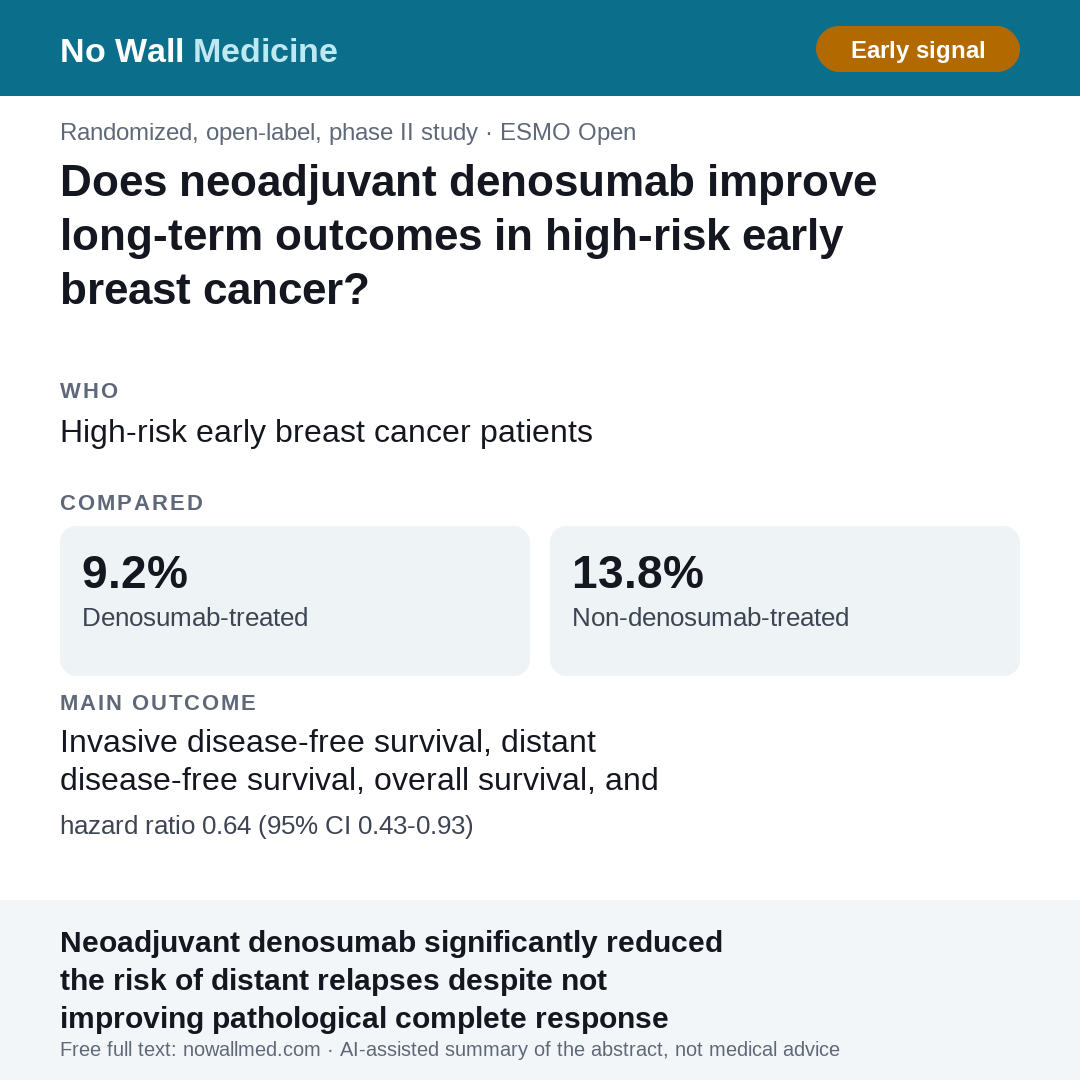
Long-term effect of neoadjuvant denosumab treatment in high-risk early breast cancer (GeparX)
Randomized, open-label, phase II studyBenefit found
Does neoadjuvant denosumab improve long-term outcomes in high-risk early breast cancer?
Who
High-risk early breast cancer patients
Compared
9.2%Denosumab-treated
13.8%Non-denosumab-treated
Main outcome
Invasive disease-free survival, distant disease-free survival, overall survival, and locoregional recurrence-free interval
Result: hazard ratio 0.64 (95% CI 0.43-0.93)
Bottom line: Neoadjuvant denosumab significantly reduced the risk of distant relapses despite not improving pathological complete response rates.
ESMO Open · 2025-11-27Download image
The evolving etiologies of rapidly progressive dementia: a systematic review
Systematic reviewMixed results
What are the evolving etiologies and temporal trends of rapidly progressive dementia?
Who
1,701
Patients with rapidly progressive dementia
Compared
Neurodegenerative diseases: 459 cases, 27.0%
Neuroimmune diseases: 327 cases, 19.2%
Central nervous system infections: 295 cases, 17.3%
Main outcome
Etiological categories and temporal trends of rapidly progressive dementia
Bottom line: Neuroimmune diseases, particularly autoimmune encephalitis, show a significant upward trend in prevalence over time.
Transl Psychiatry · 2025-11-27Download image

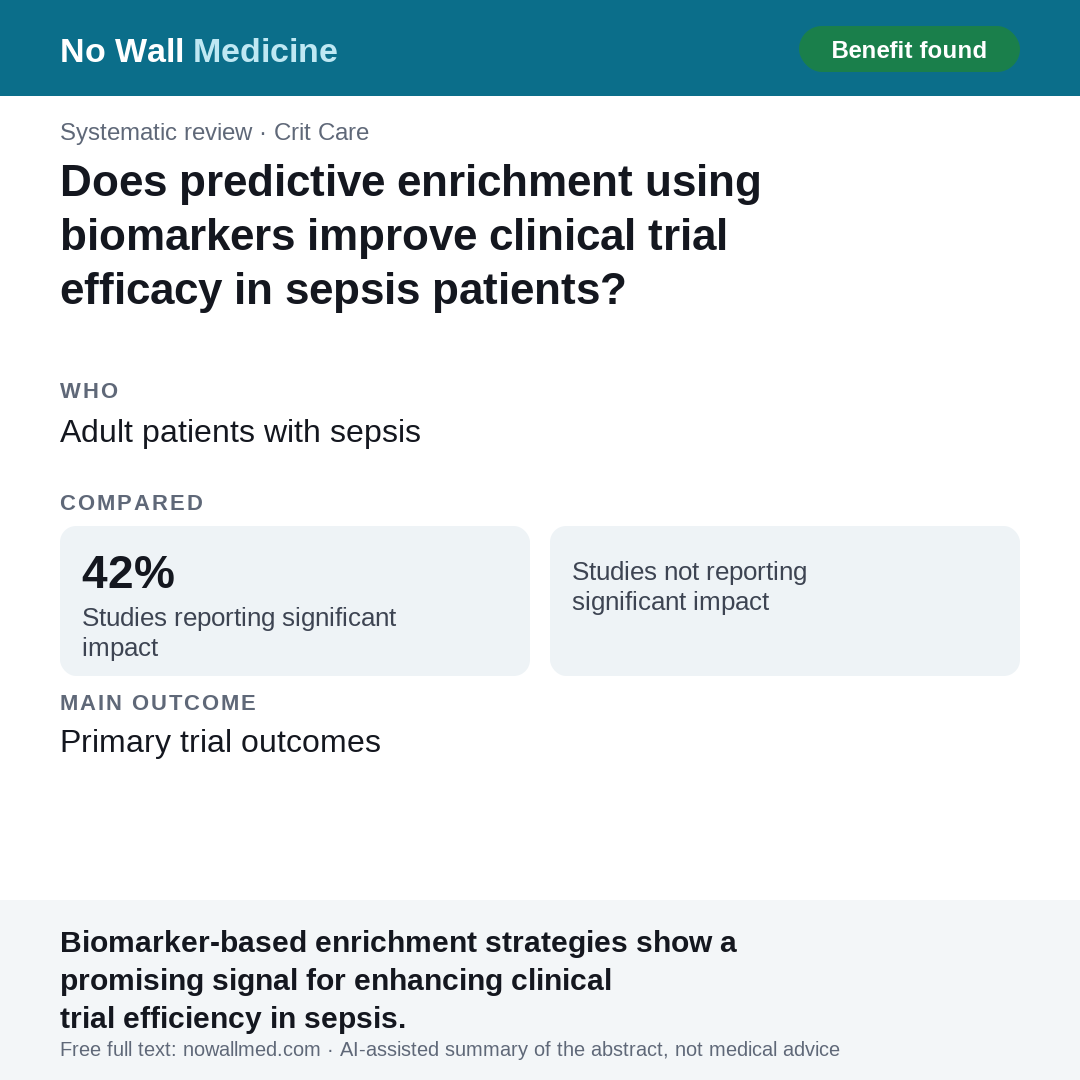
Predictive enrichment using biomarkers in studies of critically-ill patients with sepsis: a systematic review
Systematic reviewBenefit found
Does predictive enrichment using biomarkers improve clinical trial efficacy in sepsis patients?
Who
Adult patients with sepsis
Compared
42%Studies reporting significant impact
Studies not reporting significant impact
Main outcome
Primary trial outcomes
Bottom line: Biomarker-based enrichment strategies show a promising signal for enhancing clinical trial efficiency in sepsis.
Limitation: Studies were heterogeneous in design and limited in number.
Crit Care · 2025-11-27Download image
Patient-reported outcome measures for use in patients with alpha-1-antitrypsin deficiency: results of a systematic selection process
Systematic selection processUnclear result
PROM for alpha-1-antitrypsin deficiency patients
Who
patients with alpha-1-antitrypsin deficiency
Compared
EuroQoL
COPD Assessment Test
Chronic Liver Disease Quality of Life
Main outcome
quality of life
Bottom line: Three PROMs selected for alpha-1-antitrypsin deficiency
BMJ Open Respir Res · 2025-11-27Download image

Long-term outcomes of JIA-associated uveitis: a systematic review and meta-analysis
Systematic review and meta-analysisHarm found
What are the long-term ocular complications in adults with juvenile idiopathic arthritis-associated uveitis?
Who
2208
Adults with juvenile idiopathic arthritis-associated uveitis
Compared
16.6%Severe visual impairment (95% CI 9.9% to 22.6%)
44.3%Cataract (95% CI 27.5% to 61.7%)
Main outcome
Cumulative incidence of ocular complications
Bottom line: Long-term ocular complications like cataracts and severe visual impairment persist into adulthood despite biologic therapy.
Limitation: High heterogeneity and evidence of reporting bias for severe visual impairment and cataract.
RMD Open · 2025-11-27Download image

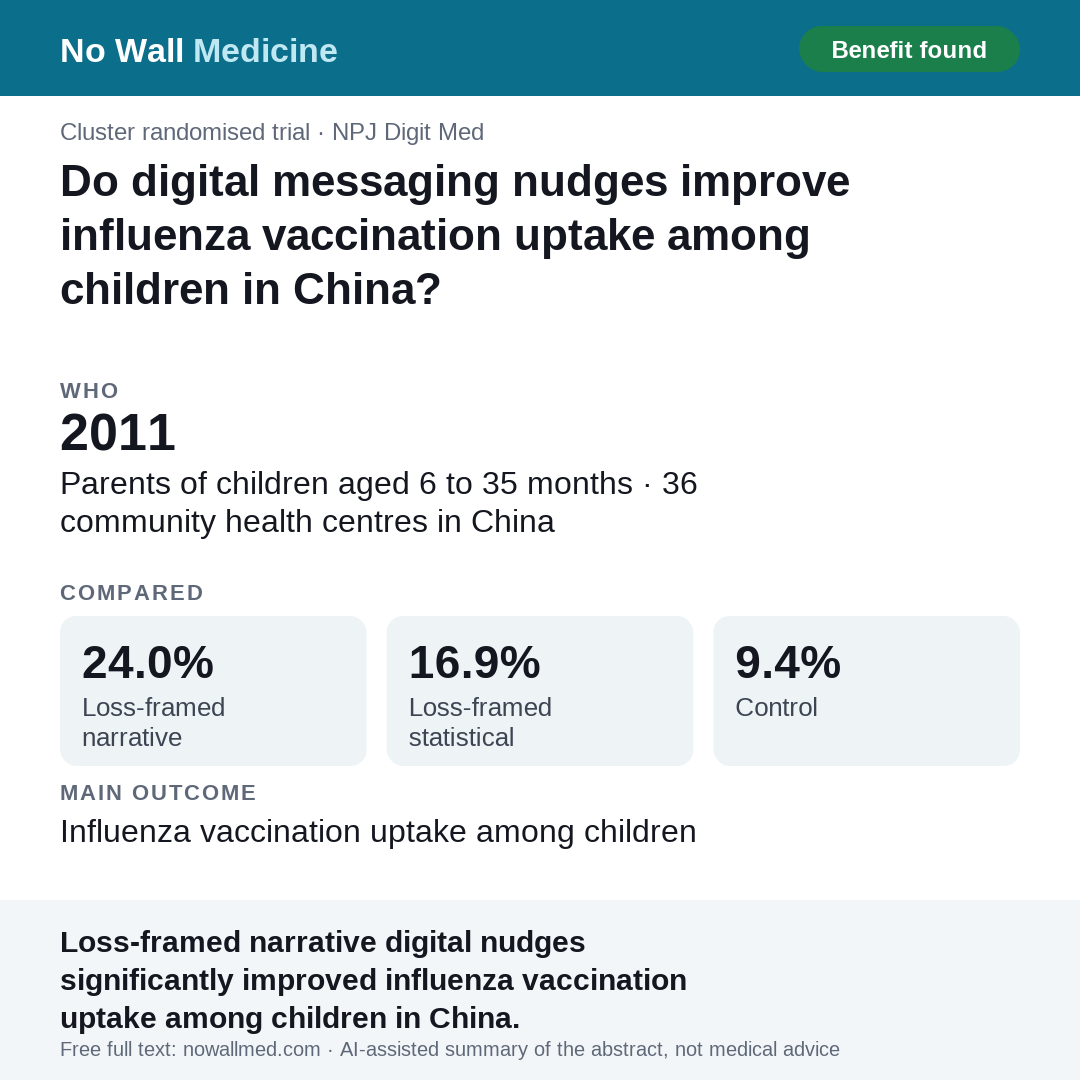
A cluster randomised trial of digital messaging nudges to improve influenza vaccination uptake in China
Cluster randomised trialBenefit found
Do digital messaging nudges improve influenza vaccination uptake among children in China?
Who
2011
Parents of children aged 6 to 35 months · 36 community health centres in China
Compared
24.0%Loss-framed narrative
16.9%Loss-framed statistical
9.4%Control
Main outcome
Influenza vaccination uptake among children
Result: adjusted RR 2.50 (95% CI 1.27-4.94)
Bottom line: Loss-framed narrative digital nudges significantly improved influenza vaccination uptake among children in China.
NPJ Digit Med · 2025-11-27Download image
The gynecologic tumor risk related to GLP-1 receptor agonists and SGLT2 inhibitors use: a network meta-analysis of 91 randomized controlled trials
Network meta-analysis of 91 randomized controlled trialsHarm found
What is the gynecologic tumor risk associated with GLP-1 receptor agonists and SGLT2 inhibitors?
Who
224986
Female participants in randomized controlled trials
Compared
high-dose tirzepatide (15mg/week): odds ratio 2.37 (95% CI 1.04-5.39)
controls
Main outcome
incidence of gynecologic tumors
Result: odds ratio 2.37 (95% CI 1.04-5.39)
Bottom line: High-dose tirzepatide is associated with increased gynecologic tumor risk, particularly intra-uterus neoplasms.
Limitation: More data are needed to confirm whether this association is causal.
J Hematol Oncol · 2025-11-27Download image

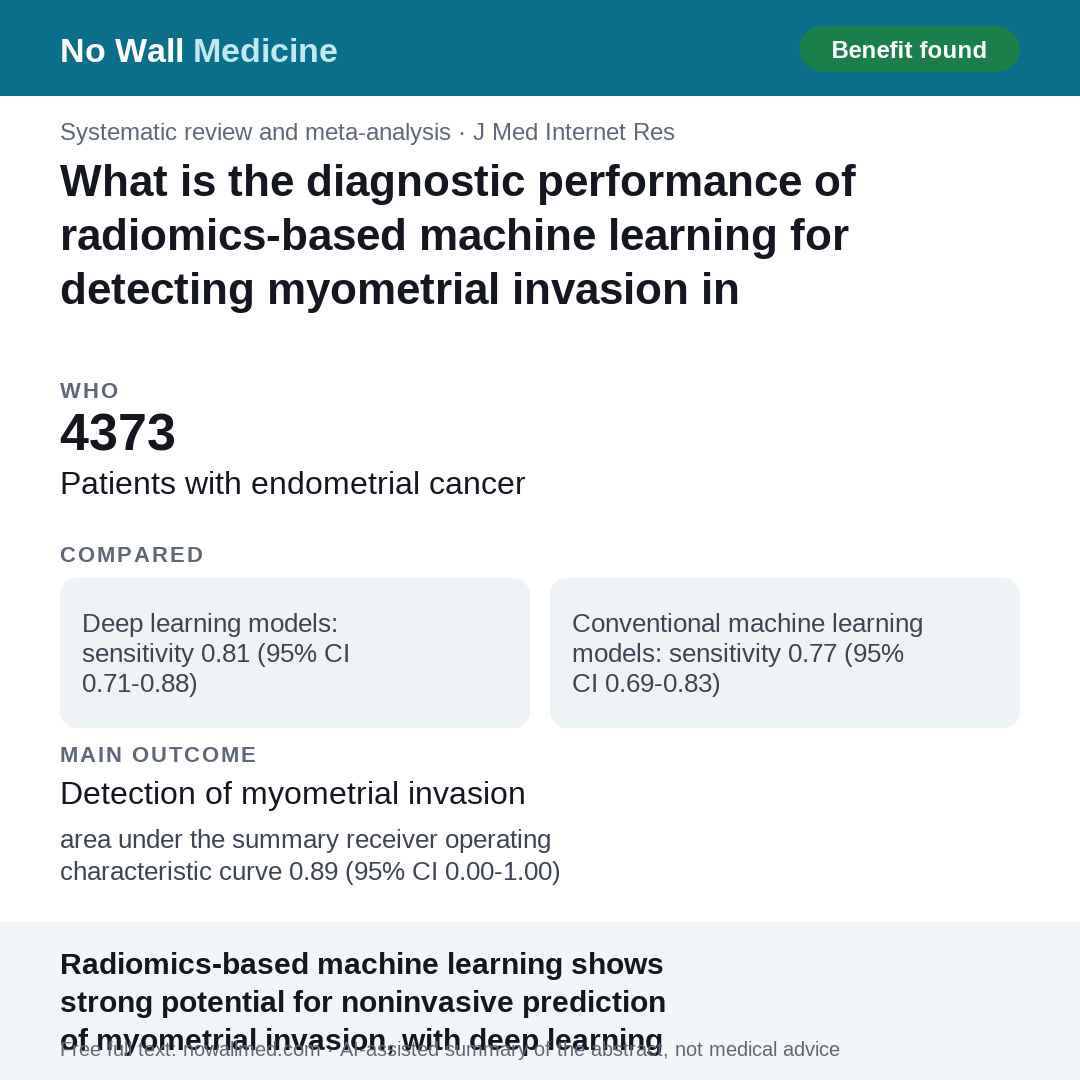
Radiomics-Based Machine Learning for the Detection of Myometrial Invasion in Endometrial Cancer: Systematic Review and Meta-Analysis
Systematic review and meta-analysisBenefit found
What is the diagnostic performance of radiomics-based machine learning for detecting myometrial invasion in endometrial cancer?
Who
4373
Patients with endometrial cancer
Compared
Deep learning models: sensitivity 0.81 (95% CI 0.71-0.88)
Conventional machine learning models: sensitivity 0.77 (95% CI 0.69-0.83)
Main outcome
Detection of myometrial invasion
Result: area under the summary receiver operating characteristic curve 0.89 (95% CI 0.00-1.00)
Bottom line: Radiomics-based machine learning shows strong potential for noninvasive prediction of myometrial invasion, with deep learning outperforming conventional machine learning.
Limitation: Current evidence is limited and relies mainly on internal validation.
J Med Internet Res · 2025-11-27Download image
Influence of age, cognitive function, attention, and mental state on the effectiveness of EEG-based brain-computer interface device use: a systematic review
Systematic reviewMixed results
How do age, cognitive function, attention, and mental state influence EEG-based brain-computer interface effectiveness?
Who
25
Humans in twenty-five studies
Compared
Visual paradigms: stable performance across age groups
Motor imagery systems: higher sensitivity to cognitive and developmental differences
Main outcome
electroencephalography-based brain-computer interface performance metrics
Bottom line: Age and cognitive traits impact brain-computer interface performance and system adaptability across different paradigms.
J Neuroeng Rehabil · 2025-11-27Download image

AI in Esophageal Motility Disorders: Systematic Review of High-Resolution Manometry Studies
Systematic review and narrative synthesisBenefit found
What is the diagnostic accuracy and performance of artificial intelligence in high-resolution esophageal manometry?
Who
4588
Adults with esophageal symptoms
Compared
Deep learning era: 97% (95% CI 95.7%-98.3%) accuracy for integrated relaxation pressure classification
Deep learning era: 91.32 (95% CI 87.0%-94.5%) for motility tracing
Deep learning era: 86% for complete Chicago Classification automation
Main outcome
Diagnostic accuracy metrics and comparison with expert interpretation
Bottom line: Artificial intelligence shows high diagnostic accuracy for esophageal motility disorders but lacks external validation and regulatory approval.
Limitation: Zero percent of studies performed external validation and all had high concern for applicability due to lack of real-world testing.
J Med Internet Res · 2025-11-27Download image

The Effectiveness of Nurse-Led Telecare Consultations Among Patients Who Have Experienced a Stroke: Systematic Review and Meta-Analysis
Systematic review and meta-analysis of randomized controlled trialsBenefit found
Are nurse-led telecare consultations effective for poststroke management in the community?
Who
2524
Stroke survivors discharged from hospital living in the community
Compared
Nurse-led telecare consultations
Usual care
Main outcome
Likelihood of achieving target blood pressure
Result: odds ratio 2.33 (95% CI 1.83-2.98)
Bottom line: Nurse-led telecare consultations may improve blood pressure management and coping among community-dwelling stroke survivors.
Limitation: Substantial heterogeneity for several key outcomes and inconclusive pooled effects for continuous outcomes.
J Med Internet Res · 2025-11-27Download image

Cost-effectiveness analysis of the MYO Armband® device in combination with specifically designed video games for upper limb rehabilitation in people with multiple sclerosis
Randomized controlled trialBenefit found
Is the MYO Armband with video games cost-effective for upper limb rehabilitation in multiple sclerosis?
Who
People with multiple sclerosis
Compared
Experimental group: 6,240.4 euros
Control group: 5,721.1 euros
Main outcome
Incremental cost-effectiveness ratio for upper limb rehabilitation
Bottom line: The MYO Armband intervention appears cost-effective for improving upper limb range of motion in multiple sclerosis patients.
J Neuroeng Rehabil · 2025-11-27Download image

Daily Mosnodenvir as Dengue Prophylaxis in a Controlled Human Infection Model
Phase 2a, double-blind, randomized trialBenefit found
Does daily mosnodenvir prevent dengue infection in a controlled human infection model?
Who
29
Healthy adults
Compared
0%Low dose mosnodenvir (0 of 6)
17%Medium dose mosnodenvir (1 of 6)
60%High dose mosnodenvir (6 of 10)
0%Placebo (0 of 7)
Main outcome
Dengue virus 3 RNA load
Result: two-sided P<0.001
Bottom line: High-dose oral mosnodenvir significantly lowered dengue virus 3 RNA load compared to placebo in this model.
Funded by: National Institute of Allergy and Infectious Diseases and Johnson & Johnson
NEJM · 2025-11-26Download image