Visual abstracts
New randomized trials and meta-analyses from leading journals at a glance: who was studied, what was compared, and what was found. Every paper is free to read in full.
All specialtiesCardiology 2286Oncology 1942Gastroenterology & Hepatology 862Infectious Disease 1424Neurology 916Psychiatry & Mental Health 1085Pulmonology 955Critical Care 634Endocrinology & Diabetes 1198Pediatrics 1335Surgery 1152Orthopedics & Sports Medicine 415Neurosurgery 282Cardiothoracic & Vascular Surgery 246Plastic & Reconstructive Surgery 346Nephrology 481Rheumatology 317Hematology 491Dermatology 265Ophthalmology 268Obstetrics & Gynecology 753Public & Global Health 423Radiology & Imaging 315Anesthesiology 455Urology 387ENT (Otolaryngology) 293Emergency Medicine 258Allergy & Immunology 140Geriatrics 486Family Medicine & Primary Care 268Medical Genetics & Genomics 243Pathology & Laboratory Medicine 75Physical Medicine & Rehabilitation 389Palliative Care 192Nutrition 598Digital Health & AI 1145General Medicine 171
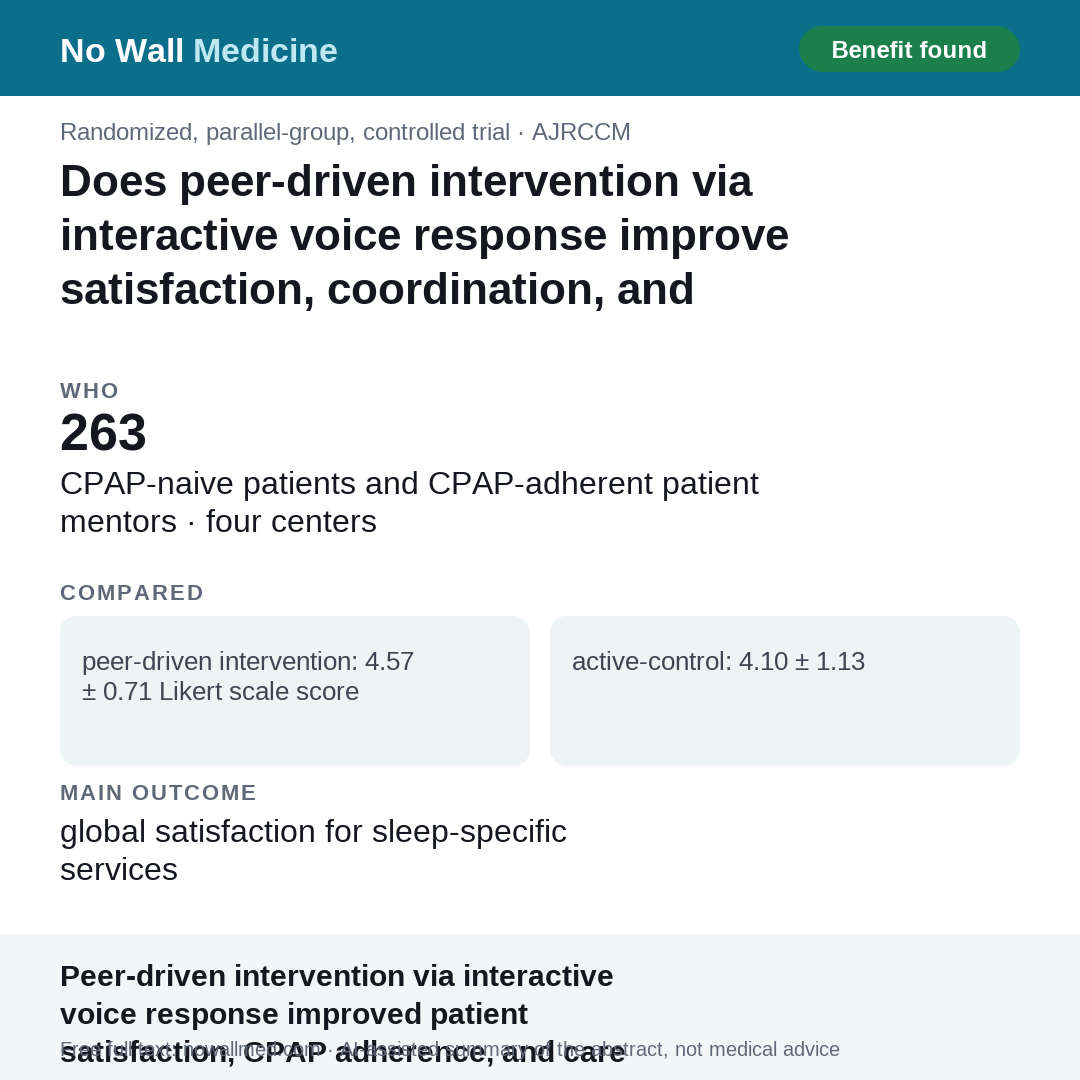
Peer-Driven Intervention for Care Coordination and Adherence Promotion for Obstructive Sleep Apnea: A Randomized, Parallel-Group Clinical Trial
Randomized, parallel-group, controlled trialBenefit found
Does peer-driven intervention via interactive voice response improve satisfaction, coordination, and adherence?
Who
263
CPAP-naive patients and CPAP-adherent patient mentors · four centers
Compared
peer-driven intervention: 4.57 ± 0.71 Likert scale score
active-control: 4.10 ± 1.13
Main outcome
global satisfaction for sleep-specific services
Bottom line: Peer-driven intervention via interactive voice response improved patient satisfaction, CPAP adherence, and care coordination.
AJRCCM · 2024-10-23Download image
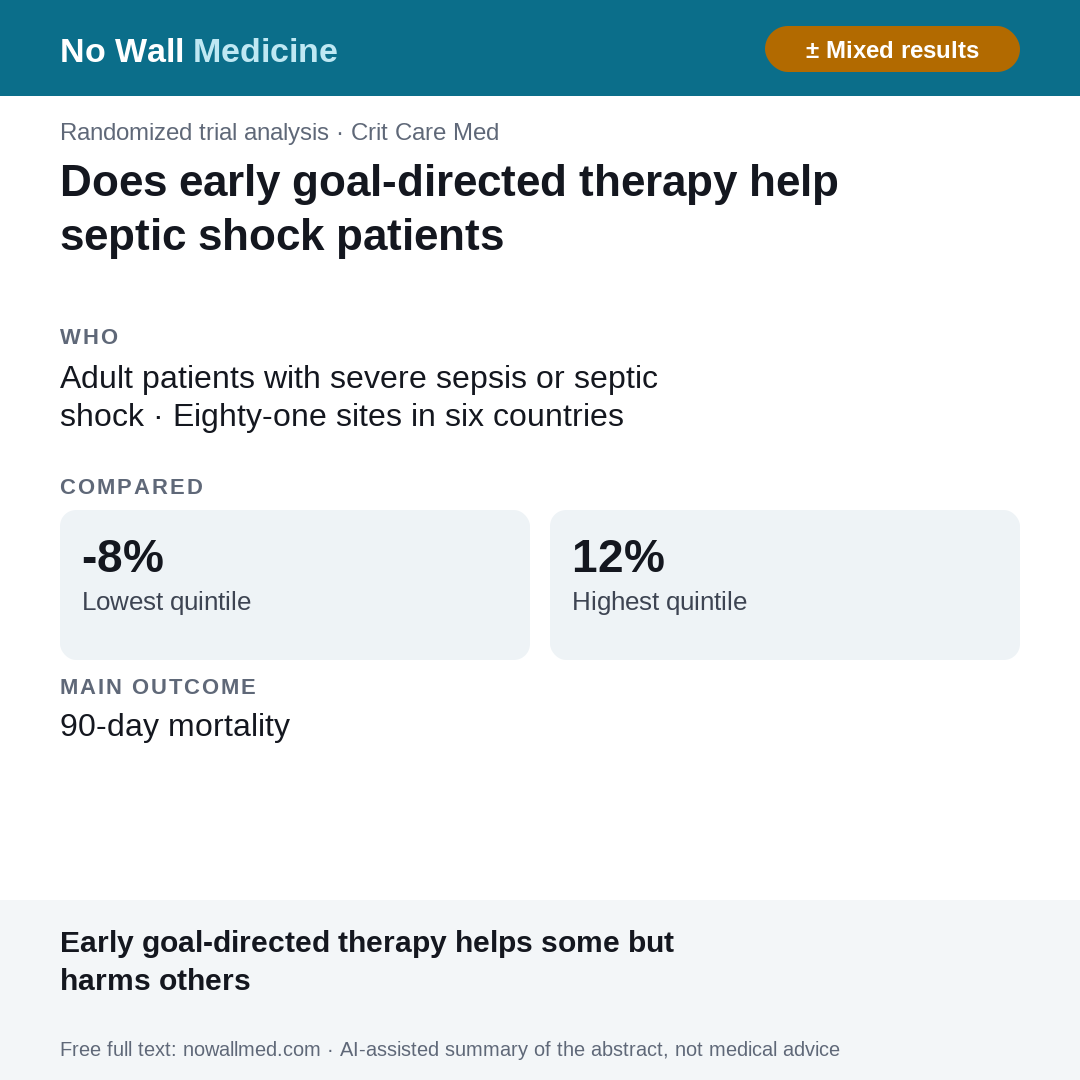
Heterogeneity in the Effect of Early Goal-Directed Therapy for Septic Shock: A Secondary Analysis of Two Multicenter International Trials
Randomized trial analysisMixed results
Does early goal-directed therapy help septic shock patients
Who
Adult patients with severe sepsis or septic shock · Eighty-one sites in six countries
Compared
-8%Lowest quintile (-19% to 4%)
12%Highest quintile (1-23%)
Main outcome
90-day mortality
Bottom line: Early goal-directed therapy helps some but harms others
Crit Care Med · 2024-10-23Download image
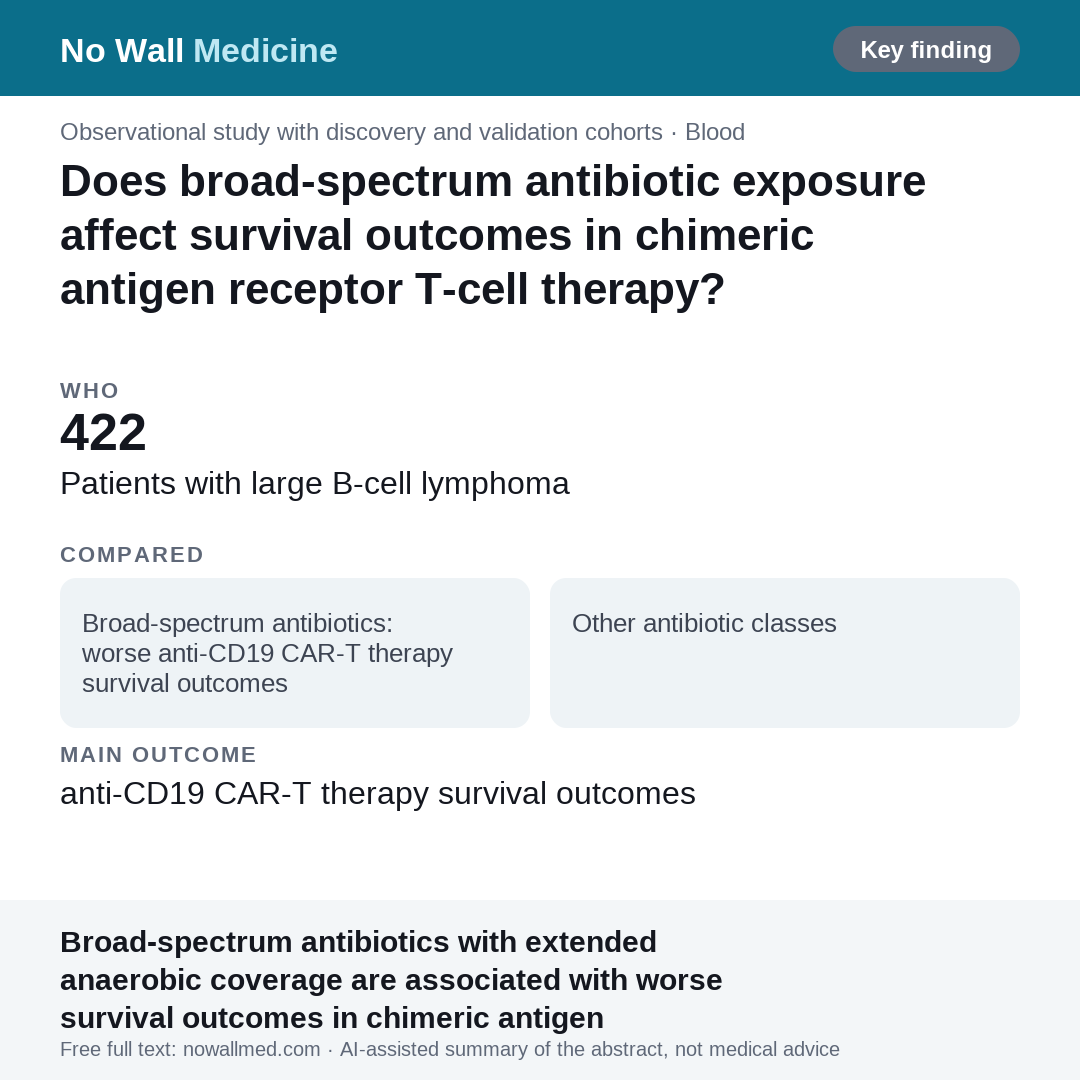
Antibiotic-induced loss of gut microbiome metabolic output correlates with clinical responses to CAR T-cell therapy
Observational study with discovery and validation cohortsHarm found
Does broad-spectrum antibiotic exposure affect survival outcomes in chimeric antigen receptor T-cell therapy?
Who
422
Patients with large B-cell lymphoma
Compared
Broad-spectrum antibiotics: worse anti-CD19 CAR-T therapy survival outcomes
Other antibiotic classes
Main outcome
anti-CD19 CAR-T therapy survival outcomes
Bottom line: Broad-spectrum antibiotics with extended anaerobic coverage are associated with worse survival outcomes in chimeric antigen receptor T-cell therapy.
Blood · 2024-10-23Download image
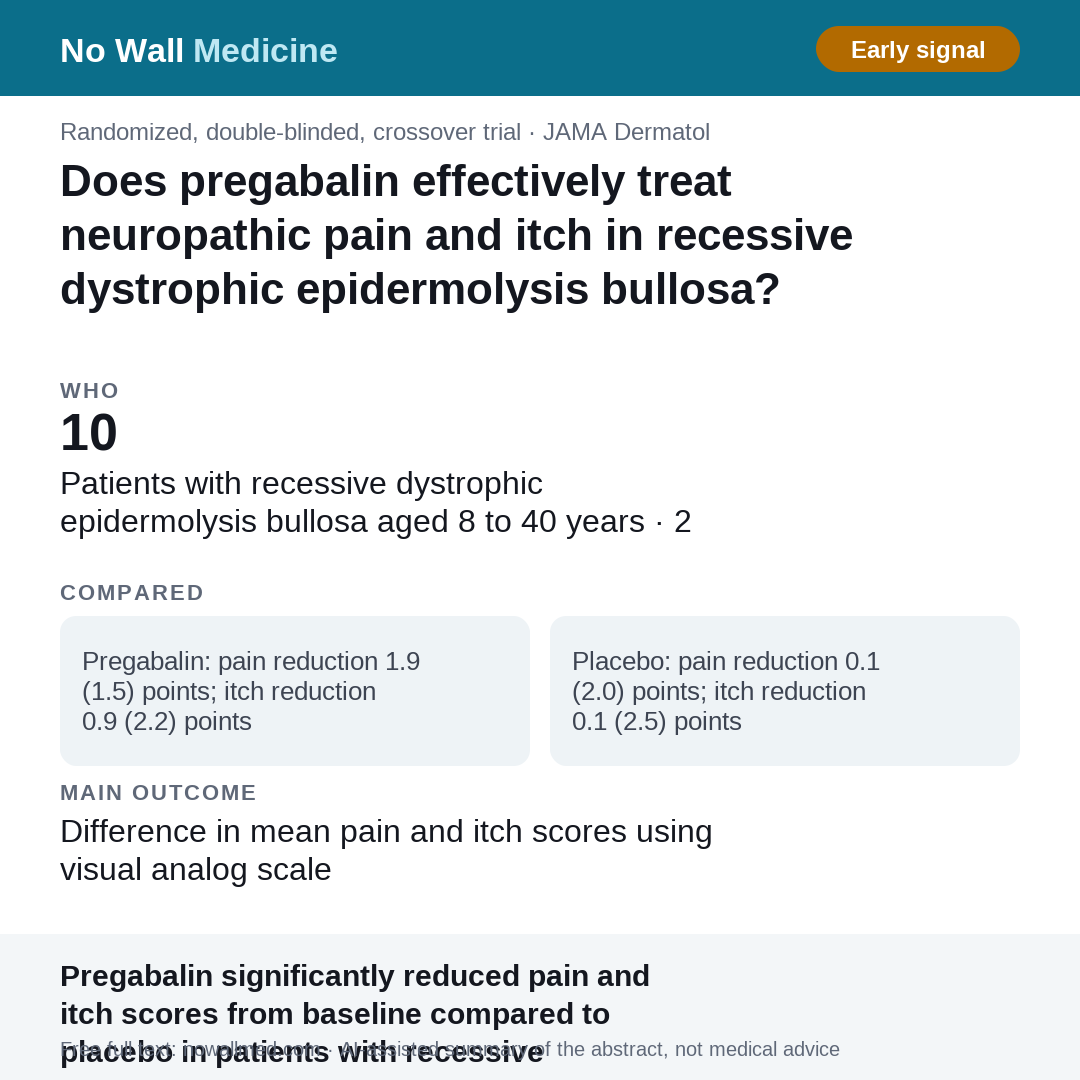
Pregabalin for Neuropathic Pain and Itch in Recessive Dystrophic Epidermolysis Bullosa: A Randomized Crossover Trial
Randomized, double-blinded, crossover trialBenefit found
Does pregabalin effectively treat neuropathic pain and itch in recessive dystrophic epidermolysis bullosa?
Who
10
Patients with recessive dystrophic epidermolysis bullosa aged 8 to 40 years · 2 sites, Toronto (Canada) and Santiago (Chile)
Compared
Pregabalin: pain reduction 1.9 (1.5) points; itch reduction 0.9 (2.2) points
Placebo: pain reduction 0.1 (2.0) points; itch reduction 0.1 (2.5) points
Main outcome
Difference in mean pain and itch scores using visual analog scale
Bottom line: Pregabalin significantly reduced pain and itch scores from baseline compared to placebo in patients with recessive dystrophic epidermolysis bullosa.
JAMA Dermatol · 2024-10-23Download image
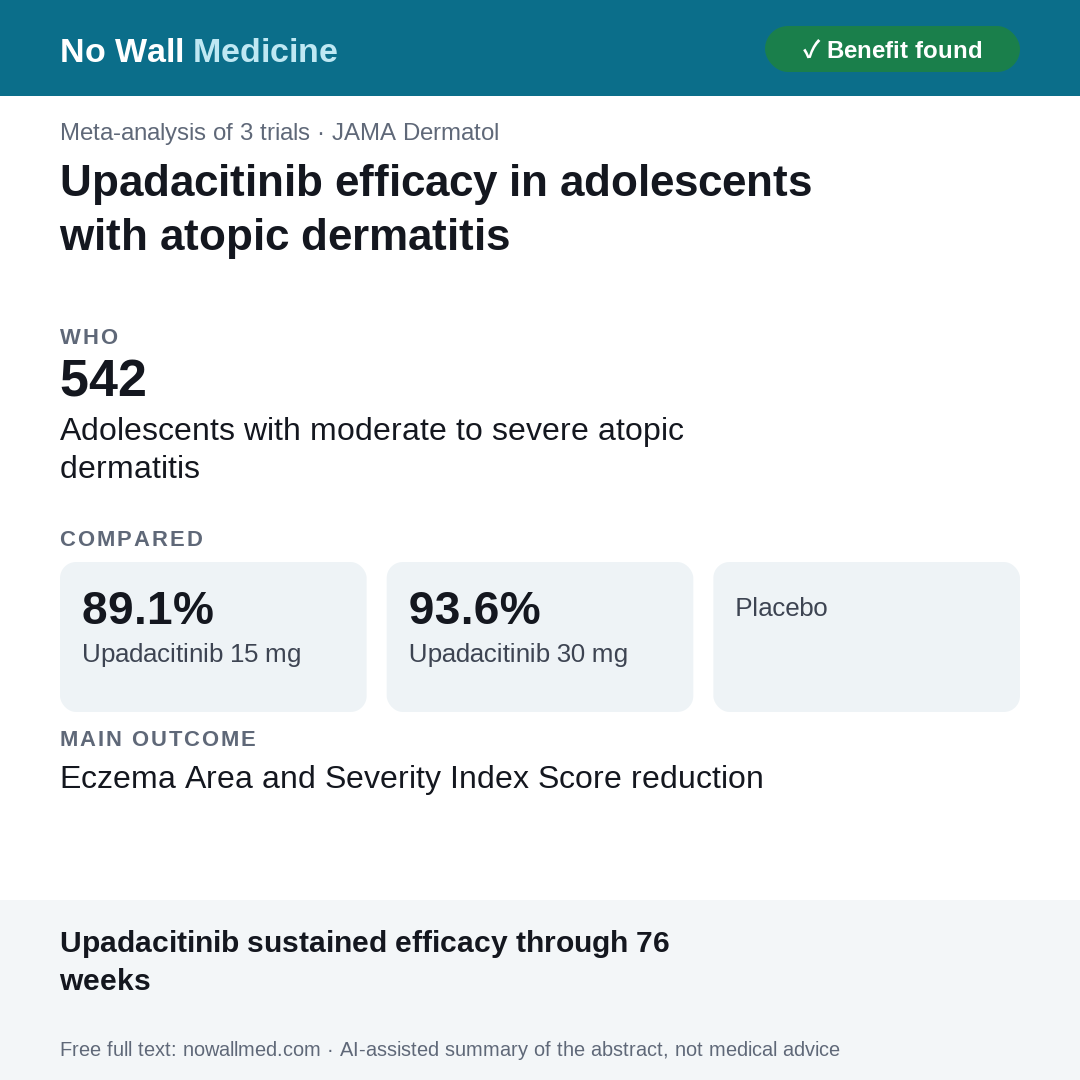
Upadacitinib in Adolescents With Moderate to Severe Atopic Dermatitis: Analysis of 3 Phase 3 Randomized Clinical Trials Through 76 Weeks
Meta-analysis of 3 trialsBenefit found
Upadacitinib efficacy in adolescents with atopic dermatitis
Who
542
Adolescents with moderate to severe atopic dermatitis
Compared
89.1%Upadacitinib 15 mg
93.6%Upadacitinib 30 mg
Placebo
Main outcome
Eczema Area and Severity Index Score reduction
Bottom line: Upadacitinib sustained efficacy through 76 weeks
JAMA Dermatol · 2024-10-23Download image
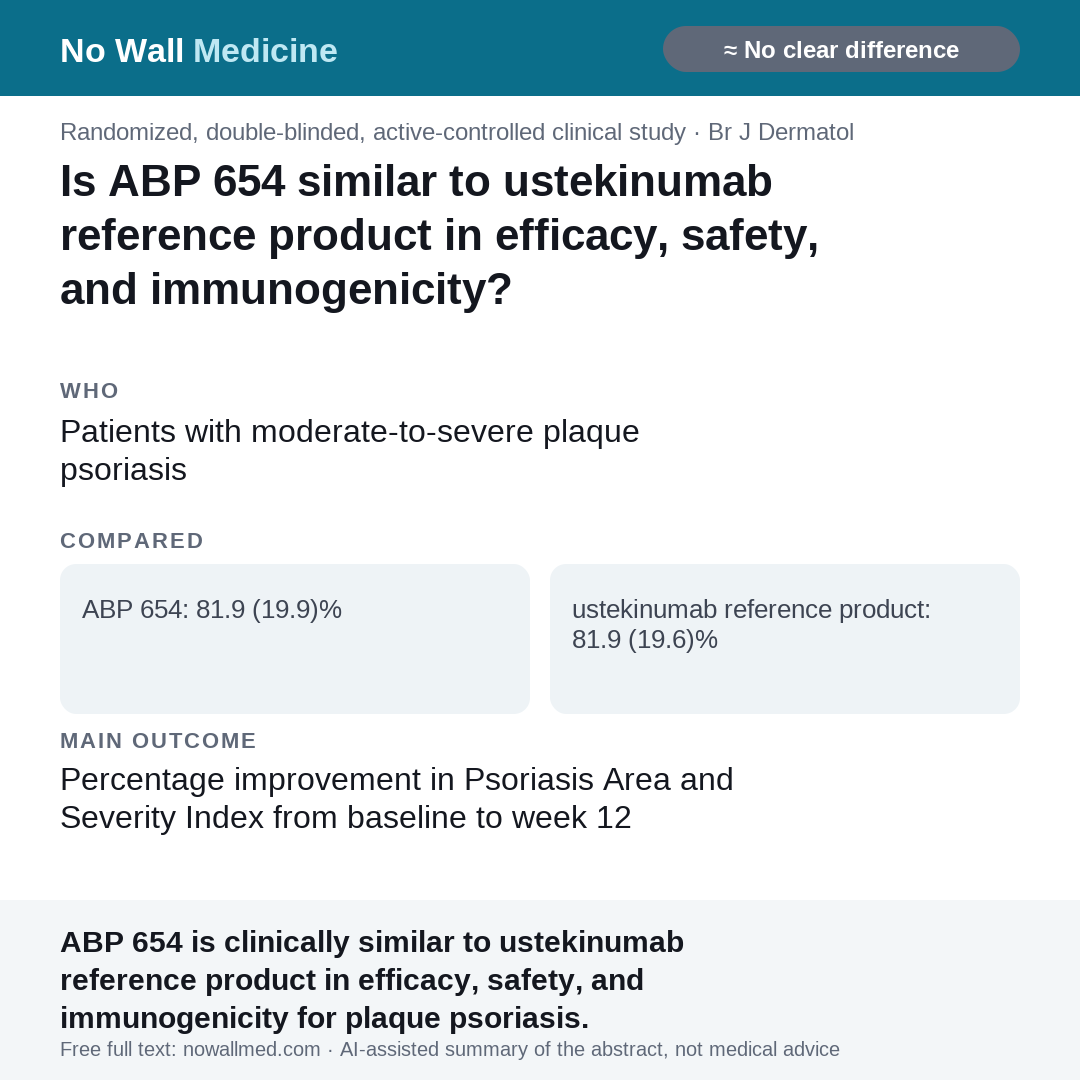
Efficacy and safety of the ustekinumab biosimilar ABP 654 in patients with moderate-to-severe plaque psoriasis: a randomized double-blinded active-controlled comparative clinical study over 52 weeks
Randomized, double-blinded, active-controlled clinical studyNo clear difference
Is ABP 654 similar to ustekinumab reference product in efficacy, safety, and immunogenicity?
Who
Patients with moderate-to-severe plaque psoriasis
Compared
ABP 654: 81.9 (19.9)%
ustekinumab reference product: 81.9 (19.6)%
Main outcome
Percentage improvement in Psoriasis Area and Severity Index from baseline to week 12
Result: mean difference 0.14 (90% CI -2.6 to 2.9)
Bottom line: ABP 654 is clinically similar to ustekinumab reference product in efficacy, safety, and immunogenicity for plaque psoriasis.
Br J Dermatol · 2024-10-23Download image
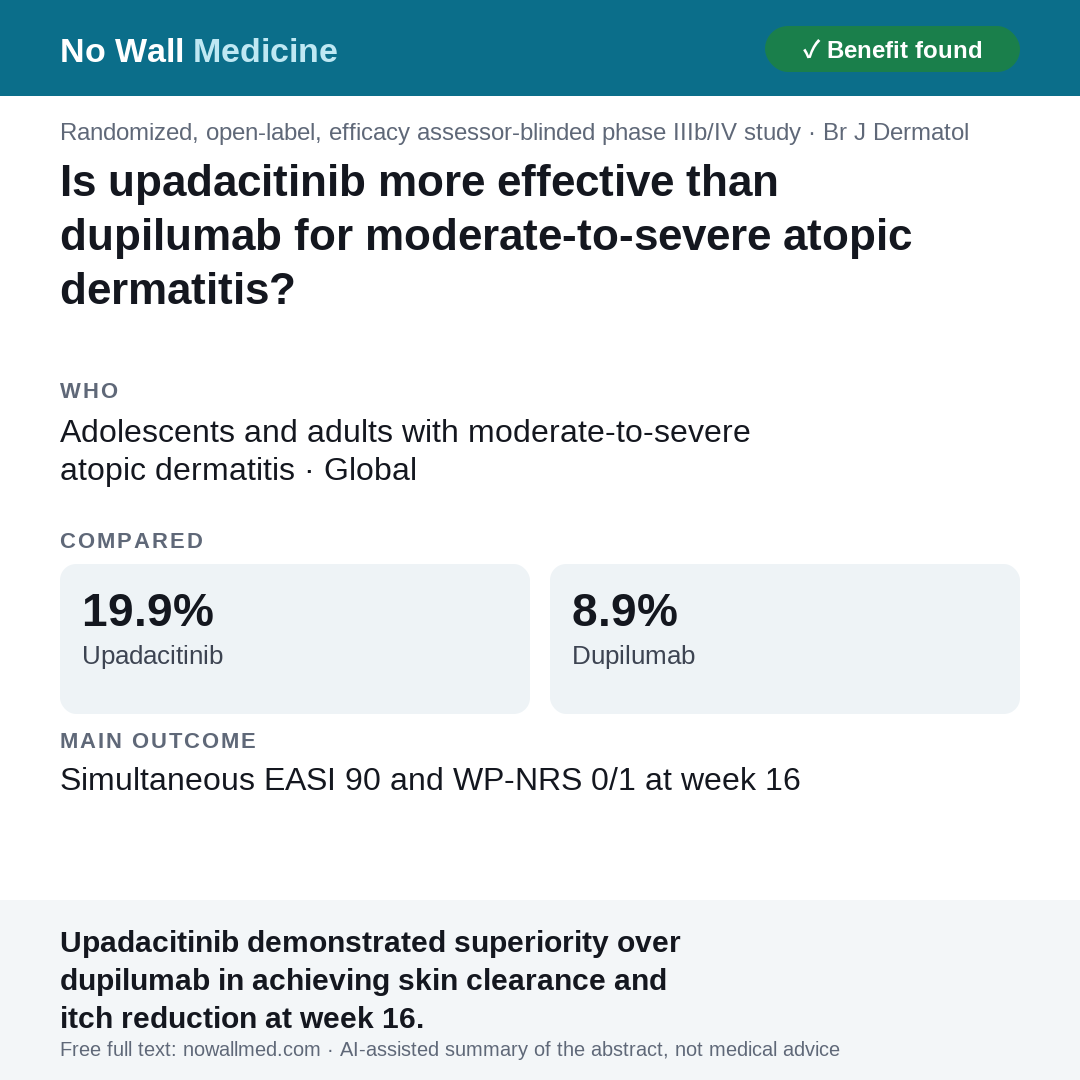
Efficacy and safety of upadacitinib versus dupilumab in adults and adolescents with moderate-to-severe atopic dermatitis: week 16 results of an open-label randomized efficacy assessor-blinded head-to-head phase IIIb/IV study (Level Up)
Randomized, open-label, efficacy assessor-blinded phase IIIb/IV studyBenefit found
Is upadacitinib more effective than dupilumab for moderate-to-severe atopic dermatitis?
Who
Adolescents and adults with moderate-to-severe atopic dermatitis · Global
Compared
19.9%Upadacitinib
8.9%Dupilumab
Main outcome
Simultaneous EASI 90 and WP-NRS 0/1 at week 16
Bottom line: Upadacitinib demonstrated superiority over dupilumab in achieving skin clearance and itch reduction at week 16.
Br J Dermatol · 2024-10-23Download image
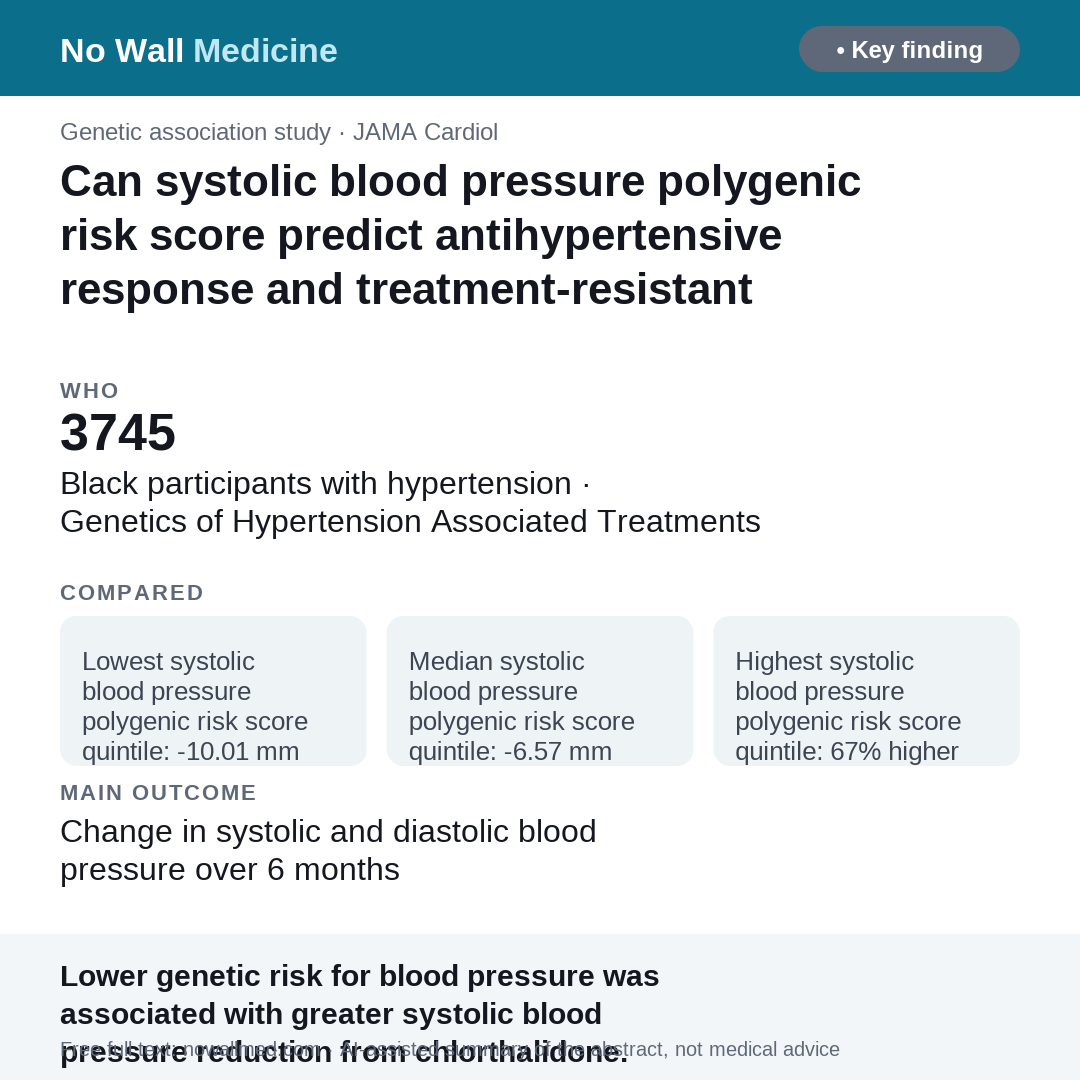
Utility of a Systolic Blood Pressure Polygenic Risk Score With Chlorthalidone Response
Genetic association studyBenefit found
Can systolic blood pressure polygenic risk score predict antihypertensive response and treatment-resistant hypertension?
Who
3745
Black participants with hypertension · Genetics of Hypertension Associated Treatments study
Compared
Lowest systolic blood pressure polygenic risk score quintile: -10.01 mm Hg (95% CI, -11.11 to -8.90)
Median systolic blood pressure polygenic risk score quintile: -6.57 mm Hg (95% CI, -7.67 to -5.48)
Highest systolic blood pressure polygenic risk score quintile: 67% higher odds of apparent treatment-resistant hypertension
Main outcome
Change in systolic and diastolic blood pressure over 6 months
Result: odds ratio 1.67 (95% CI 1.19-2.36)
Bottom line: Lower genetic risk for blood pressure was associated with greater systolic blood pressure reduction from chlorthalidone.
JAMA Cardiol · 2024-10-23Download image
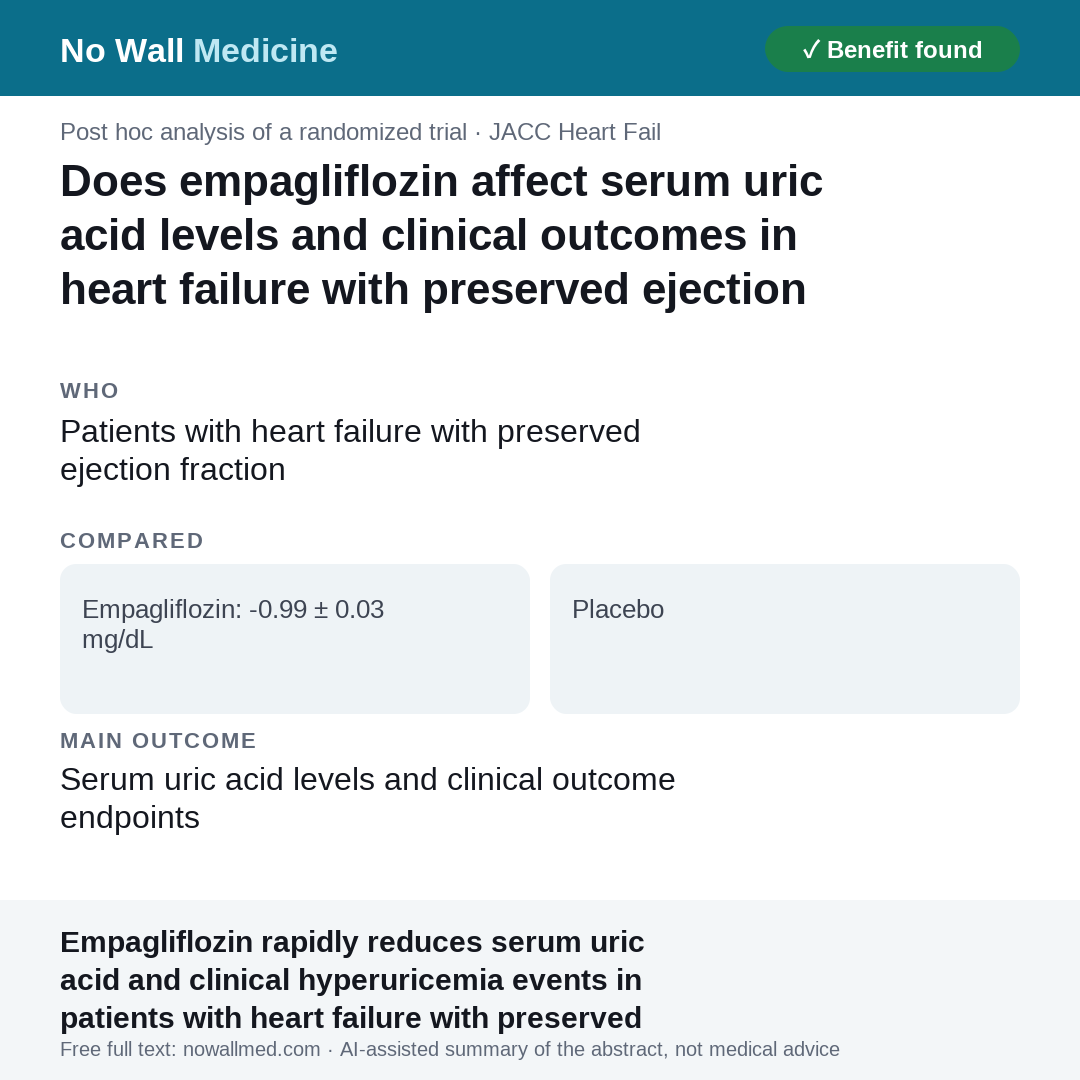
Uric Acid and SGLT2 Inhibition With Empagliflozin in Heart Failure With Preserved Ejection Fraction: The EMPEROR-Preserved Trial
Post hoc analysis of a randomized trialBenefit found
Does empagliflozin affect serum uric acid levels and clinical outcomes in heart failure with preserved ejection fraction?
Who
Patients with heart failure with preserved ejection fraction
Compared
Empagliflozin: -0.99 ± 0.03 mg/dL
Placebo
Main outcome
Serum uric acid levels and clinical outcome endpoints
Result: hazard ratio 0.79 (95% CI 0.69 to 0.90)
Bottom line: Empagliflozin rapidly reduces serum uric acid and clinical hyperuricemia events in patients with heart failure with preserved ejection fraction.
JACC Heart Fail · 2024-10-23Download image
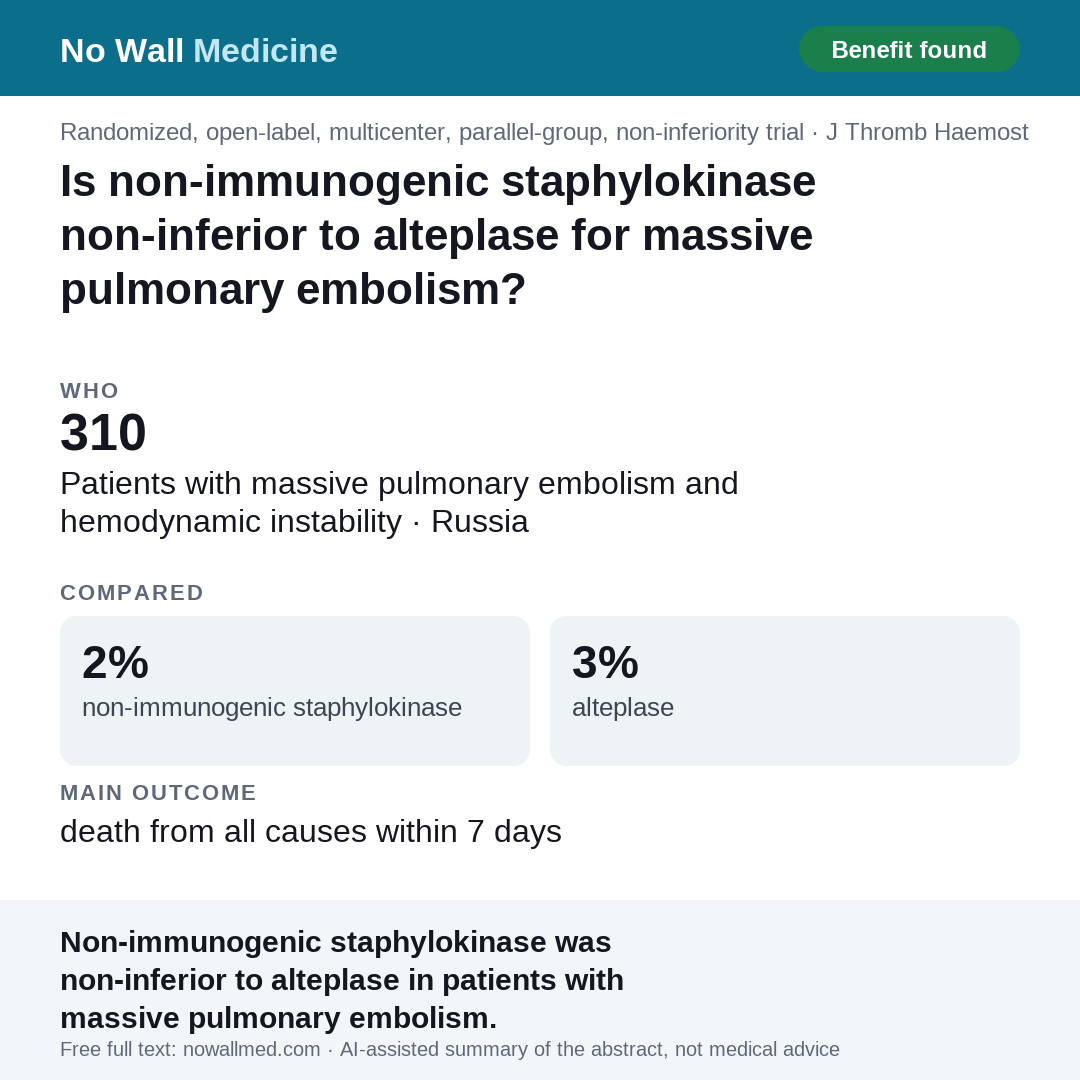
Non-immunogenic recombinant staphylokinase versus alteplase for patients with massive pulmonary embolism: a randomized open-label, multicenter, parallel-group, non-inferiority trial, FORPE
Randomized, open-label, multicenter, parallel-group, non-inferiority trialBenefit found
Is non-immunogenic staphylokinase non-inferior to alteplase for massive pulmonary embolism?
Who
310
Patients with massive pulmonary embolism and hemodynamic instability · Russia
Compared
2%non-immunogenic staphylokinase
3%alteplase
Main outcome
death from all causes within 7 days
Result: odds ratio 0.75 (95% CI 0.11-4.49)
Bottom line: Non-immunogenic staphylokinase was non-inferior to alteplase in patients with massive pulmonary embolism.
J Thromb Haemost · 2024-10-23Download image
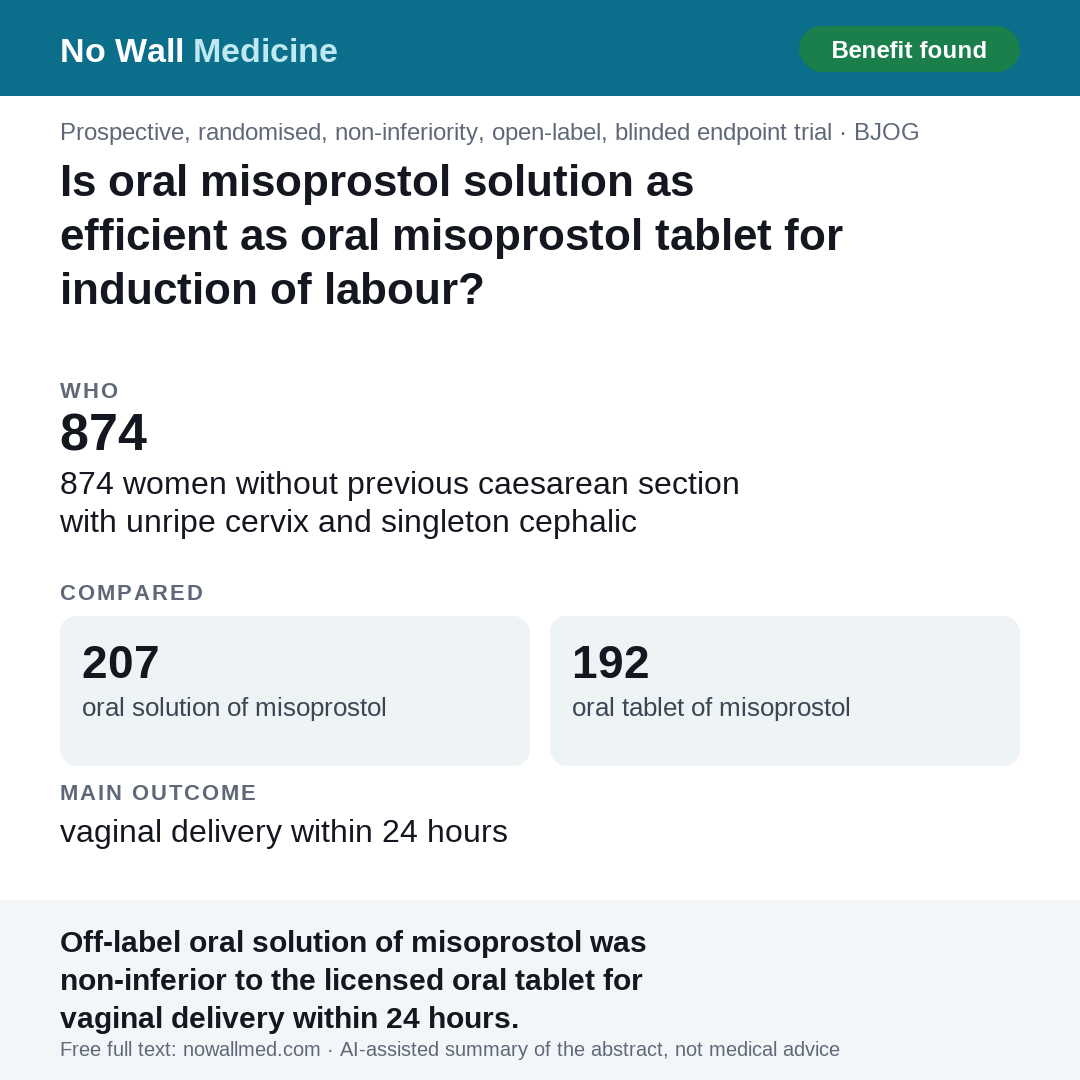
Misoprostol as Oral Solution or Oral Tablet for Induction of Labour (MISOBEST): A Randomised Controlled Non-Inferiority Trial
Prospective, randomised, non-inferiority, open-label, blinded endpoint trialBenefit found
Is oral misoprostol solution as efficient as oral misoprostol tablet for induction of labour?
Who
874
874 women without previous caesarean section with unripe cervix and singleton cephalic foetus · Two tertiary level hospitals, Stockholm, Sweden
Compared
207oral solution of misoprostol (47.4%)
192oral tablet of misoprostol (43.9%)
Main outcome
vaginal delivery within 24 hours
Result: absolute risk difference of 3.4% (95% CI -3.2% to 10.0%)
Bottom line: Off-label oral solution of misoprostol was non-inferior to the licensed oral tablet for vaginal delivery within 24 hours.
BJOG · 2024-10-23Download image
Residual neuromuscular block in the postanaesthesia care unit: a single-centre prospective observational study and systematic review
Prospective observational study and systematic reviewBenefit found
What is the incidence of residual neuromuscular block in the postanaesthesia care unit?
Who
500
Surgical patients in a large Dutch teaching hospital · One Dutch teaching hospital
Compared
2.2%Patients with residual neuromuscular block
Patients without residual neuromuscular block
Main outcome
Residual neuromuscular block defined as train-of-four ratio less than 0.9
Bottom line: The incidence of residual neuromuscular block in the postanaesthesia care unit was 2.2%.
Br J Anaesth · 2024-10-23Download image

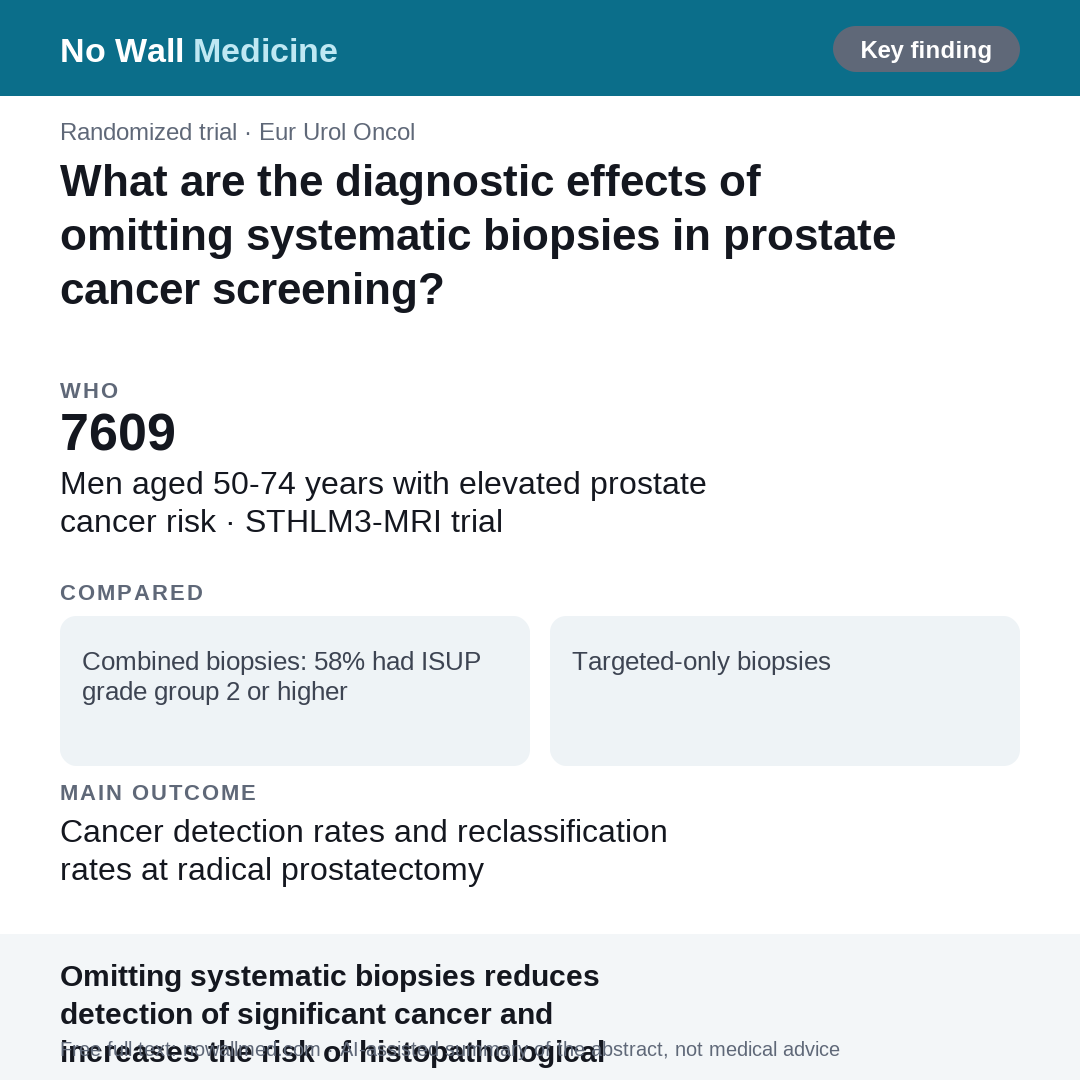
Diagnostic Effects of Omitting Systematic Biopsies in Prostate Cancer Screening
Randomized trialHarm found
What are the diagnostic effects of omitting systematic biopsies in prostate cancer screening?
Who
7609
Men aged 50-74 years with elevated prostate cancer risk · STHLM3-MRI trial
Compared
Combined biopsies: 58% had ISUP grade group 2 or higher
Targeted-only biopsies
Main outcome
Cancer detection rates and reclassification rates at radical prostatectomy
Result: RR of ISUP GG ≥2: 0.85 (95% confidence interval 0.81-0.90)
Bottom line: Omitting systematic biopsies reduces detection of significant cancer and increases the risk of histopathological misclassification.
Eur Urol Oncol · 2024-10-23Download image
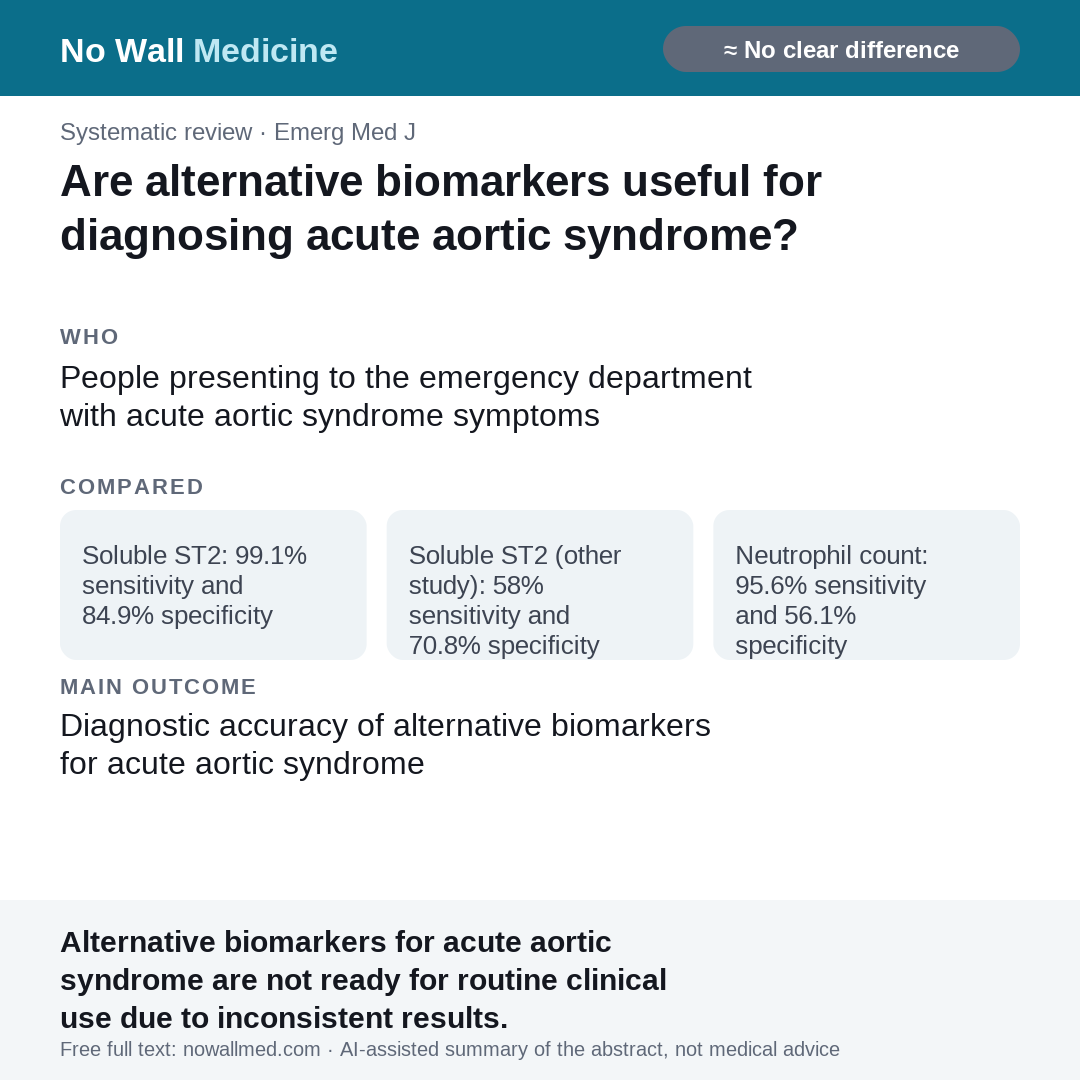
Diagnostic accuracy of alternative biomarkers for acute aortic syndrome: a systematic review
Systematic reviewNo clear difference
Are alternative biomarkers useful for diagnosing acute aortic syndrome?
Who
People presenting to the emergency department with acute aortic syndrome symptoms
Compared
Soluble ST2: 99.1% sensitivity and 84.9% specificity
Soluble ST2 (other study): 58% sensitivity and 70.8% specificity
Neutrophil count: 95.6% sensitivity and 56.1% specificity
Main outcome
Diagnostic accuracy of alternative biomarkers for acute aortic syndrome
Bottom line: Alternative biomarkers for acute aortic syndrome are not ready for routine clinical use due to inconsistent results.
Limitation: Most included studies had unclear or high risk of bias and applicability concerns.
Emerg Med J · 2024-10-23Download image
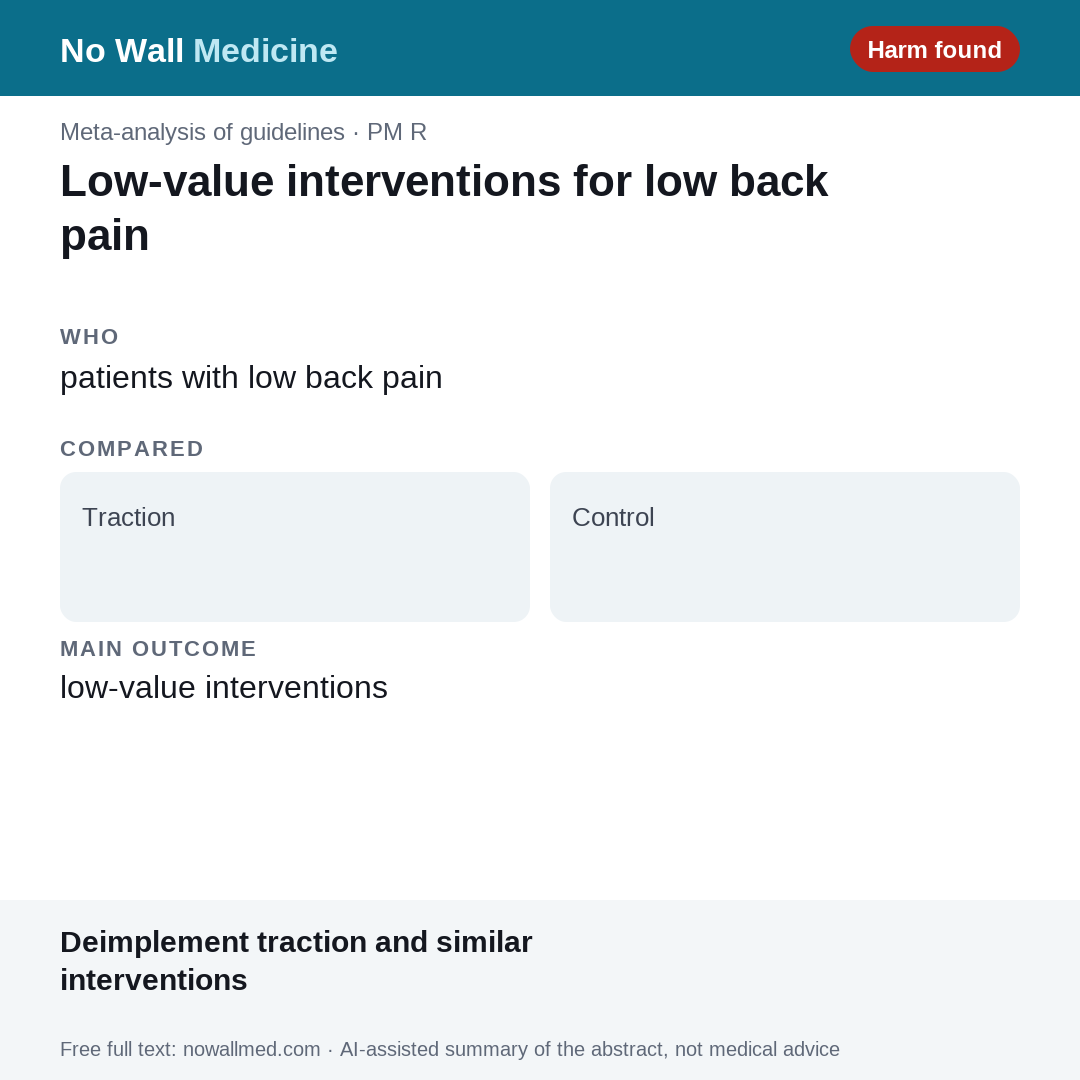
Low-value interventions to deimplement: A secondary analysis of a systematic review of low back pain clinical practice guidelines
Meta-analysis of guidelinesHarm found
Low-value interventions for low back pain
Who
patients with low back pain
Compared
Traction
Control
Main outcome
low-value interventions
Bottom line: Deimplement traction and similar interventions
PM R · 2024-10-23Download image
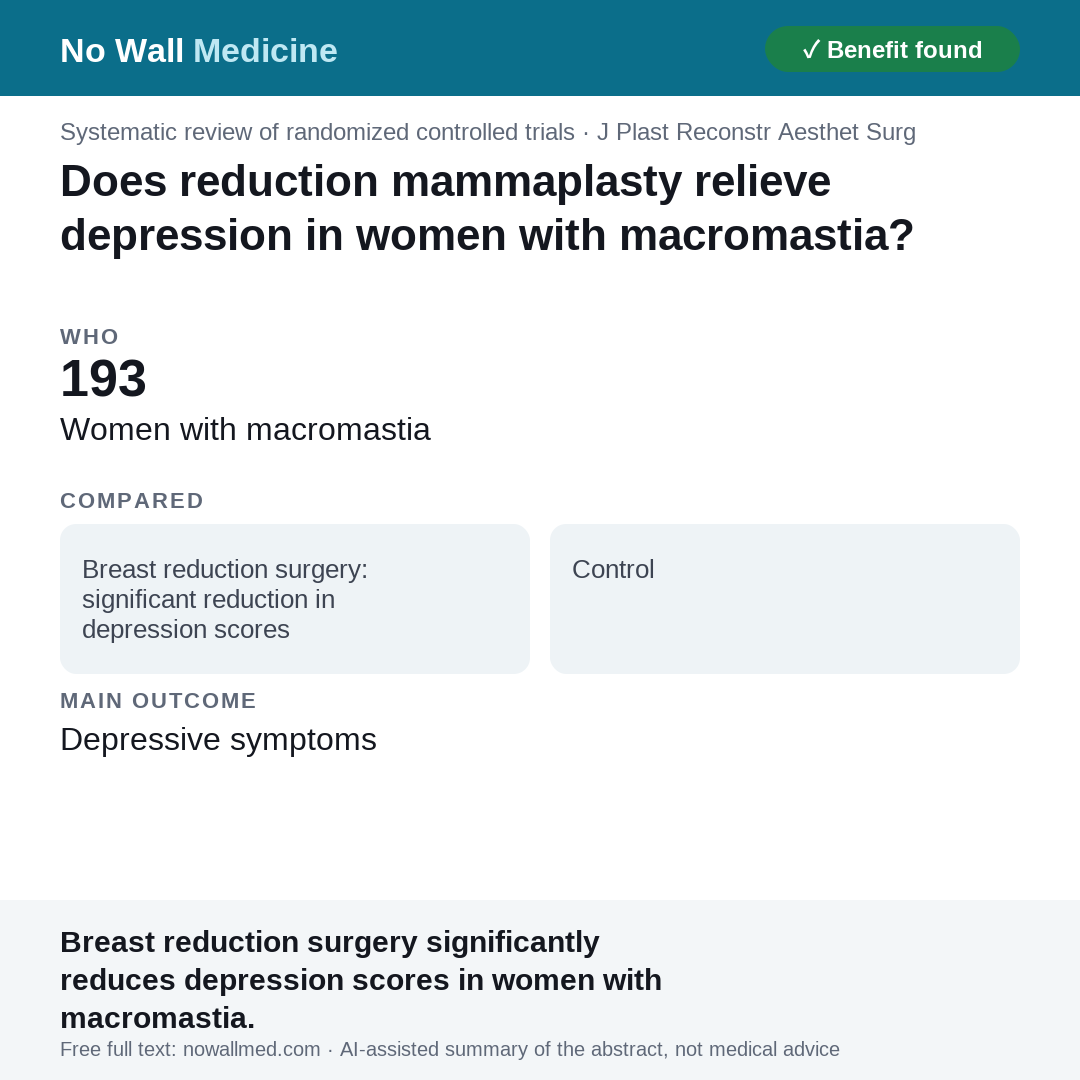
Reduction mammaplasty relieves depression in women with macromastia: A systematic review
Systematic review of randomized controlled trialsBenefit found
Does reduction mammaplasty relieve depression in women with macromastia?
Who
193
Women with macromastia
Compared
Breast reduction surgery: significant reduction in depression scores
Control
Main outcome
Depressive symptoms
Bottom line: Breast reduction surgery significantly reduces depression scores in women with macromastia.
J Plast Reconstr Aesthet Surg · 2024-10-23Download image
Adulthood dietary and lifestyle patterns and risk of breast cancer: Global Cancer Update Programme (CUP Global) systematic literature review
Systematic literature reviewBenefit found
Do dietary and lifestyle patterns affect breast cancer risk in adult females?
Who
Adult females
Compared
Healthy diet and lifestyle scores: may reduce breast cancer risk
Western, Meat, or Alcohol dietary patterns: may increase breast cancer risk
Prudent, Vegetarian, or Mediterranean dietary patterns: may reduce breast cancer risk
Main outcome
Incidence of or mortality from primary breast cancer
Bottom line: Adopting combined healthy diet and lifestyle patterns may reduce breast cancer risk in females.
Limitation: Patterns heterogeneity prevented meta-analysis.
Am J Clin Nutr · 2024-10-23Download image

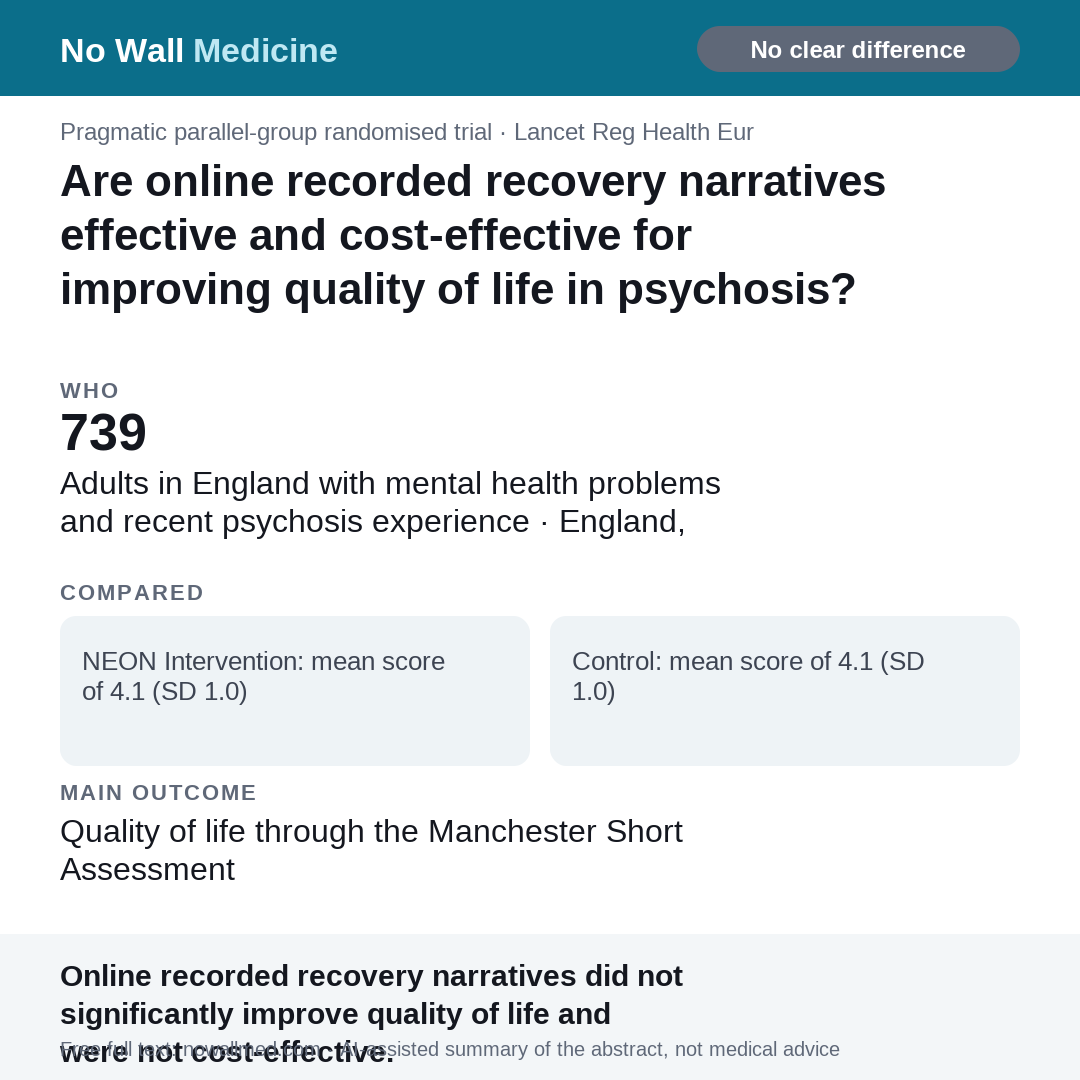
Effectiveness and cost-effectiveness of online recorded recovery narratives in improving quality of life for people with psychosis experience (NEON Trial): a pragmatic randomised controlled trial
Pragmatic parallel-group randomised trialNo clear difference
Are online recorded recovery narratives effective and cost-effective for improving quality of life in psychosis?
Who
739
Adults in England with mental health problems and recent psychosis experience · England, statutory mental health services and community engagement
Compared
NEON Intervention: mean score of 4.1 (SD 1.0)
Control: mean score of 4.1 (SD 1.0)
Main outcome
Quality of life through the Manchester Short Assessment
Result: baseline-adjusted difference 0.07, 95% CI -0.07 to 0.21
Bottom line: Online recorded recovery narratives did not significantly improve quality of life and were not cost-effective.
Funded by: National Institute for Health and Care Research
Lancet Reg Health Eur · 2024-10-23Download image
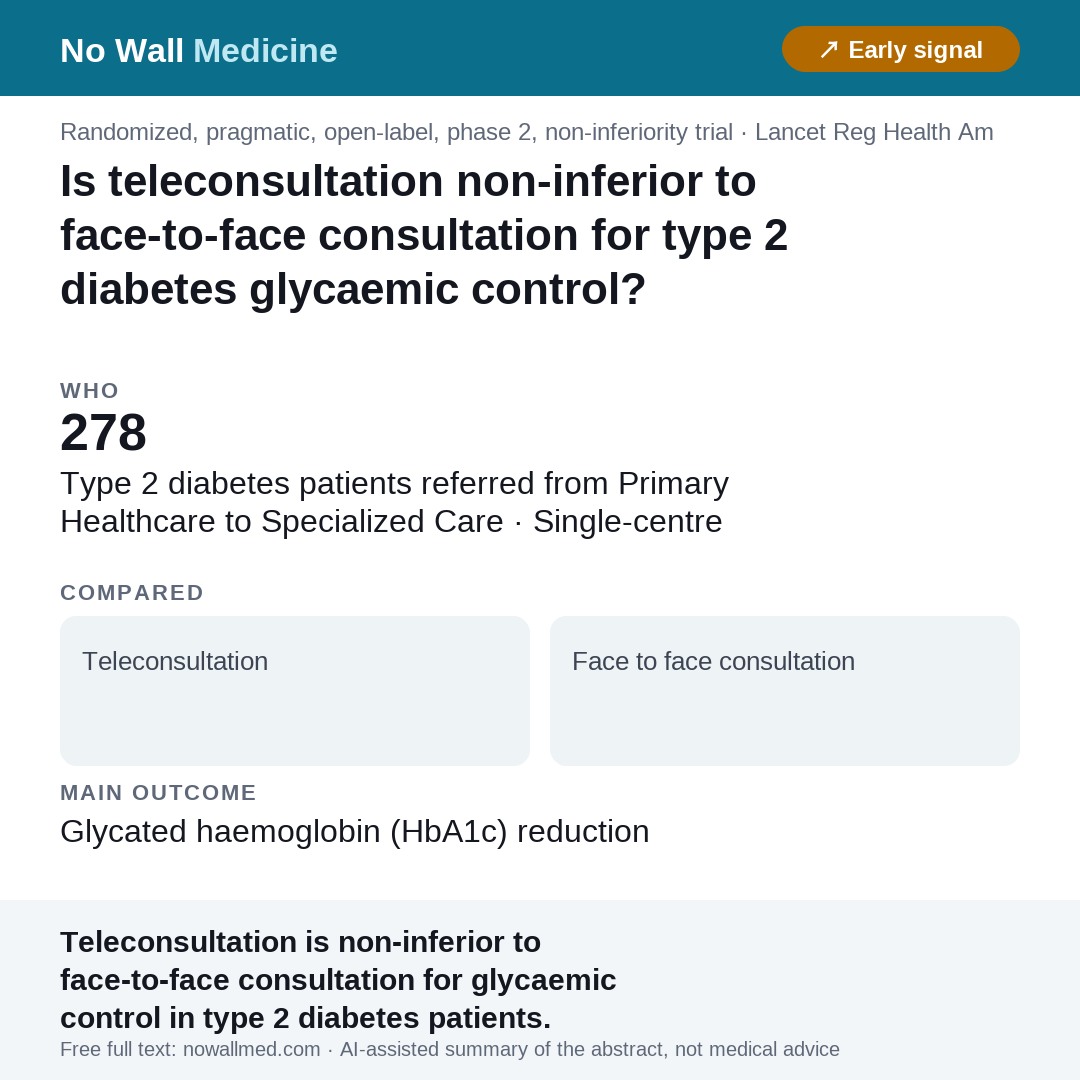
Teleconsultation on patients with type 2 diabetes in the Brazilian public health system: a randomised, pragmatic, open-label, phase 2, non-inferiority trial (TELECONSULTA diabetes trial)
Randomized, pragmatic, open-label, phase 2, non-inferiority trialBenefit found
Is teleconsultation non-inferior to face-to-face consultation for type 2 diabetes glycaemic control?
Who
278
Type 2 diabetes patients referred from Primary Healthcare to Specialized Care · Single-centre in Joinville, Brazil
Compared
Teleconsultation
Face to face consultation
Main outcome
Glycated haemoglobin (HbA1c) reduction
Result: average reduction in HbA1c was -0.6% (90% CI -1.0; -0.1) at 3-months
Bottom line: Teleconsultation is non-inferior to face-to-face consultation for glycaemic control in type 2 diabetes patients.
Funded by: Brazilian Ministry of Health
Lancet Reg Health Am · 2024-10-23Download image
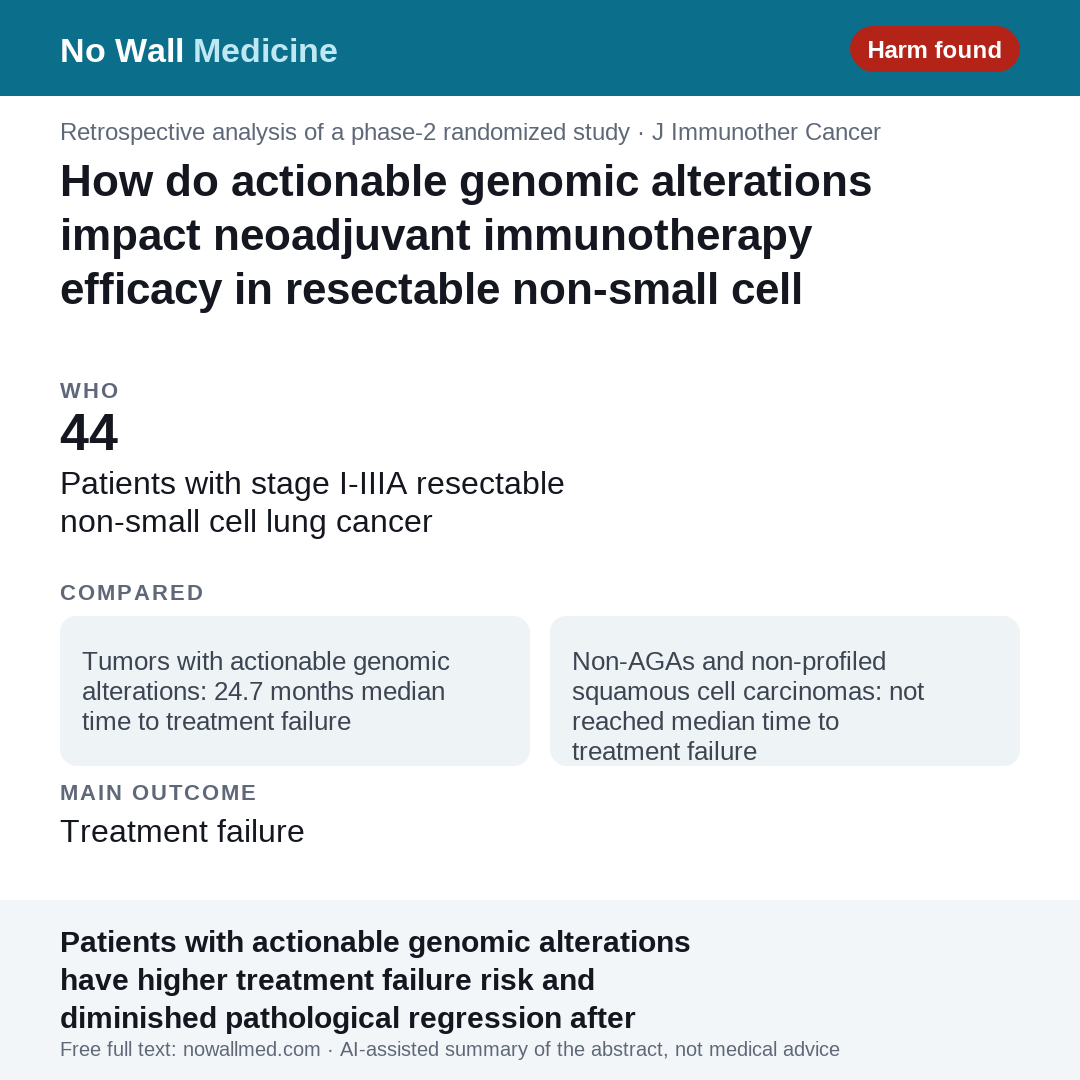
Impact of select actionable genomic alterations on efficacy of neoadjuvant immunotherapy in resectable non-small cell lung cancer
Retrospective analysis of a phase-2 randomized studyHarm found
How do actionable genomic alterations impact neoadjuvant immunotherapy efficacy in resectable non-small cell lung cancer?
Who
44
Patients with stage I-IIIA resectable non-small cell lung cancer
Compared
Tumors with actionable genomic alterations: 24.7 months median time to treatment failure
Non-AGAs and non-profiled squamous cell carcinomas: not reached median time to treatment failure
Main outcome
Treatment failure
Result: hazard ratio 5.51 (95% CI 1.68 to 18.1)
Bottom line: Patients with actionable genomic alterations have higher treatment failure risk and diminished pathological regression after neoadjuvant immunotherapy.
Limitation: Tumor molecular profiling was retrospectively obtained in 47.7% of patients.
J Immunother Cancer · 2024-10-23Download image