Visual abstracts
New randomized trials and meta-analyses from leading journals at a glance: who was studied, what was compared, and what was found. Every paper is free to read in full.
All specialtiesCardiology 2525Oncology 2154Gastroenterology & Hepatology 961Infectious Disease 1580Neurology 1000Psychiatry & Mental Health 1171Pulmonology 1048Critical Care 693Endocrinology & Diabetes 1308Pediatrics 1476Surgery 1279Orthopedics & Sports Medicine 462Neurosurgery 308Cardiothoracic & Vascular Surgery 276Plastic & Reconstructive Surgery 376Nephrology 521Rheumatology 365Hematology 550Dermatology 287Ophthalmology 298Obstetrics & Gynecology 826Public & Global Health 461Radiology & Imaging 344Anesthesiology 502Urology 430ENT (Otolaryngology) 310Emergency Medicine 282Allergy & Immunology 157Geriatrics 532Family Medicine & Primary Care 291Medical Genetics & Genomics 277Pathology & Laboratory Medicine 78Physical Medicine & Rehabilitation 420Palliative Care 215Nutrition 659Digital Health & AI 1218General Medicine 184
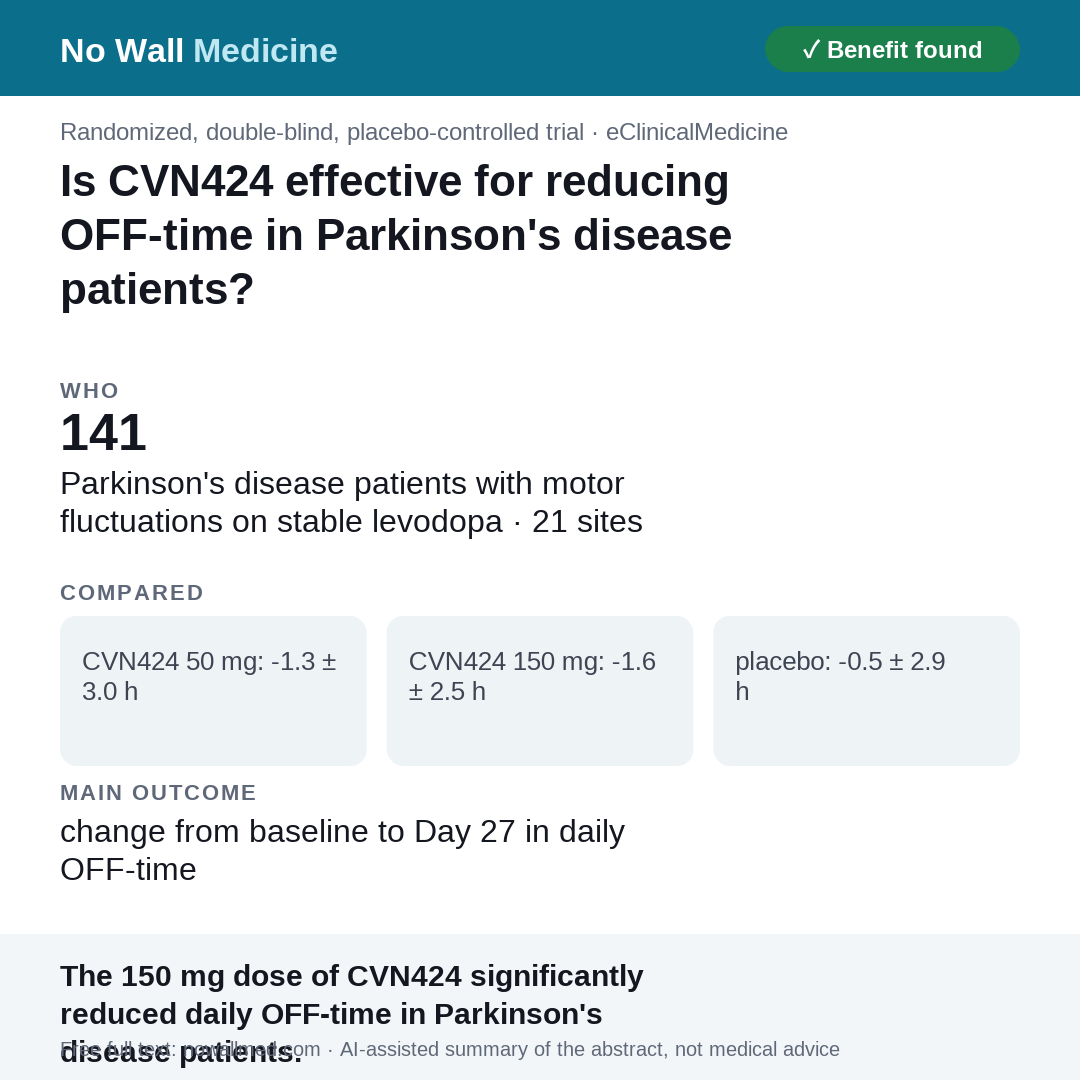
CVN424, a GPR6 inverse agonist, for Parkinson's disease and motor fluctuations: a double-blind, randomized, phase 2 trial
Randomized, double-blind, placebo-controlled trialBenefit found
Is CVN424 effective for reducing OFF-time in Parkinson's disease patients?
Who
141
Parkinson's disease patients with motor fluctuations on stable levodopa · 21 sites across the United States
Compared
CVN424 50 mg: -1.3 ± 3.0 h
CVN424 150 mg: -1.6 ± 2.5 h
placebo: -0.5 ± 2.9 h
Main outcome
change from baseline to Day 27 in daily OFF-time
Result: 1.3 ± 0.56 h, [95 CI% -2.41 to -0.19]
Bottom line: The 150 mg dose of CVN424 significantly reduced daily OFF-time in Parkinson's disease patients.
Limitation: short study duration and small sample size
Funded by: Cerevance
eClinicalMedicine · 2024-10-18Download image
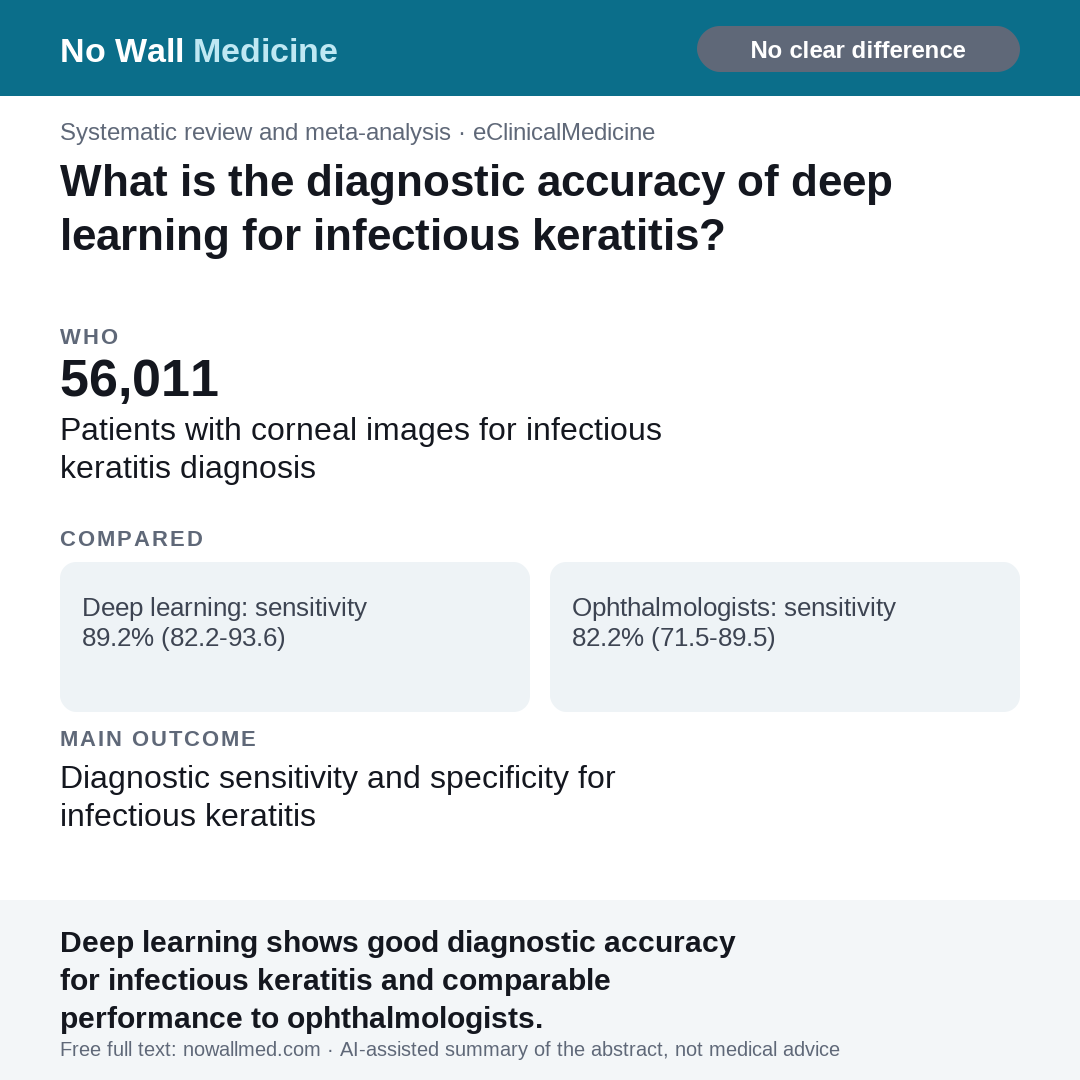
Diagnostic performance of deep learning for infectious keratitis: a systematic review and meta-analysis
Systematic review and meta-analysisNo clear difference
What is the diagnostic accuracy of deep learning for infectious keratitis?
Who
56,011
Patients with corneal images for infectious keratitis diagnosis
Compared
Deep learning: sensitivity 89.2% (82.2-93.6)
Ophthalmologists: sensitivity 82.2% (71.5-89.5)
Main outcome
Diagnostic sensitivity and specificity for infectious keratitis
Result: sensitivity 89.2% (82.2-93.6) versus 82.2% (71.5-89.5); P = 0.20
Bottom line: Deep learning shows good diagnostic accuracy for infectious keratitis and comparable performance to ophthalmologists.
Limitation: Image-based analysis did not account for potential correlation within individuals and had limited external validation.
Funded by: NIH, Wellcome Trust, MRC, Fight for Sight, BHP, and ESCRS
eClinicalMedicine · 2024-10-18Download image
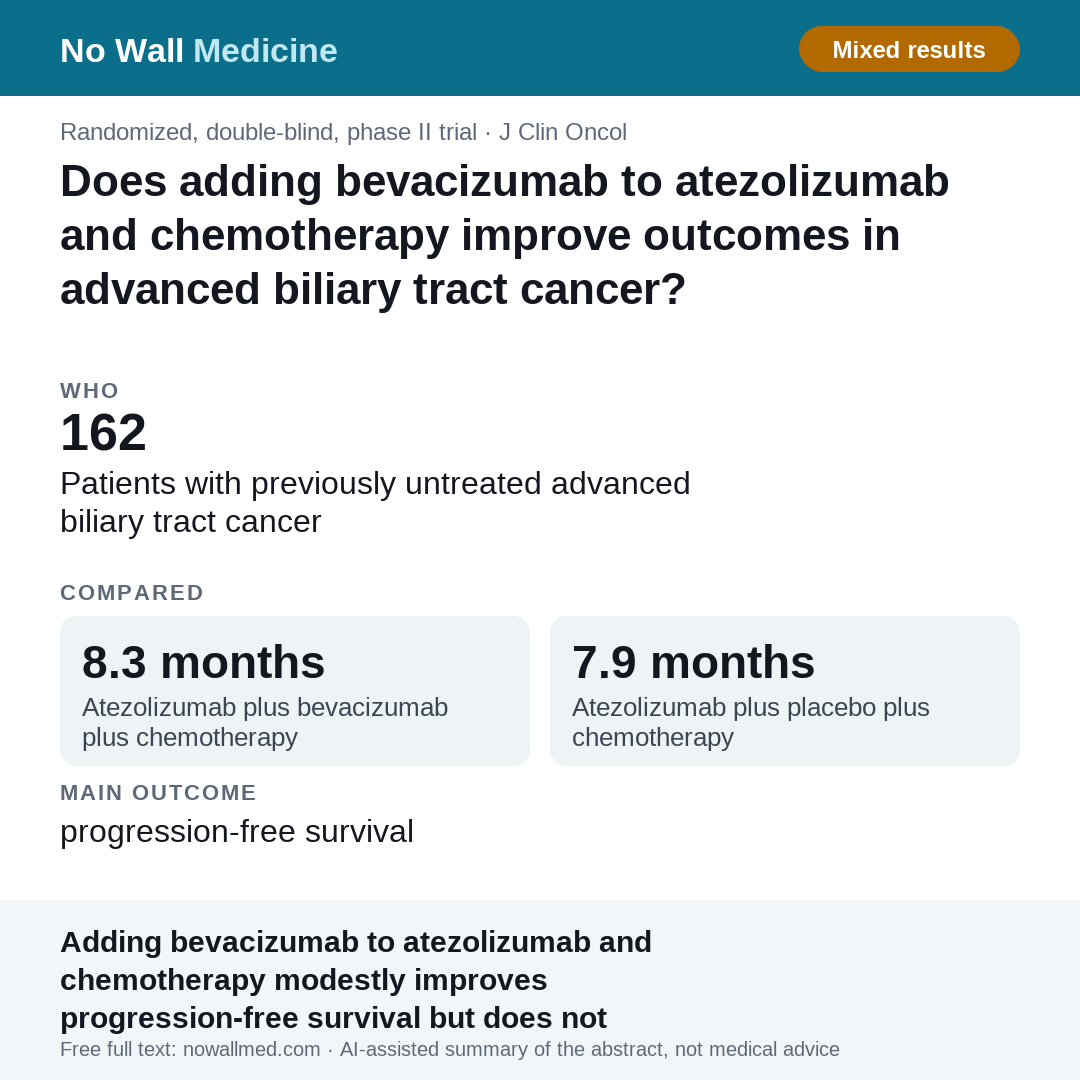
Atezolizumab Plus Chemotherapy With or Without Bevacizumab in Advanced Biliary Tract Cancer: Clinical and Biomarker Data From the Randomized Phase II IMbrave151 Trial
Randomized, double-blind, phase II trialMixed results
Does adding bevacizumab to atezolizumab and chemotherapy improve outcomes in advanced biliary tract cancer?
Who
162
Patients with previously untreated advanced biliary tract cancer
Compared
8.3 monthsAtezolizumab plus bevacizumab plus chemotherapy
7.9 monthsAtezolizumab plus placebo plus chemotherapy
Main outcome
progression-free survival
Result: hazard ratio 0.67 (95% CI 0.46 to 0.95)
Bottom line: Adding bevacizumab to atezolizumab and chemotherapy modestly improves progression-free survival but does not improve overall survival.
J Clin Oncol · 2024-10-18Download image
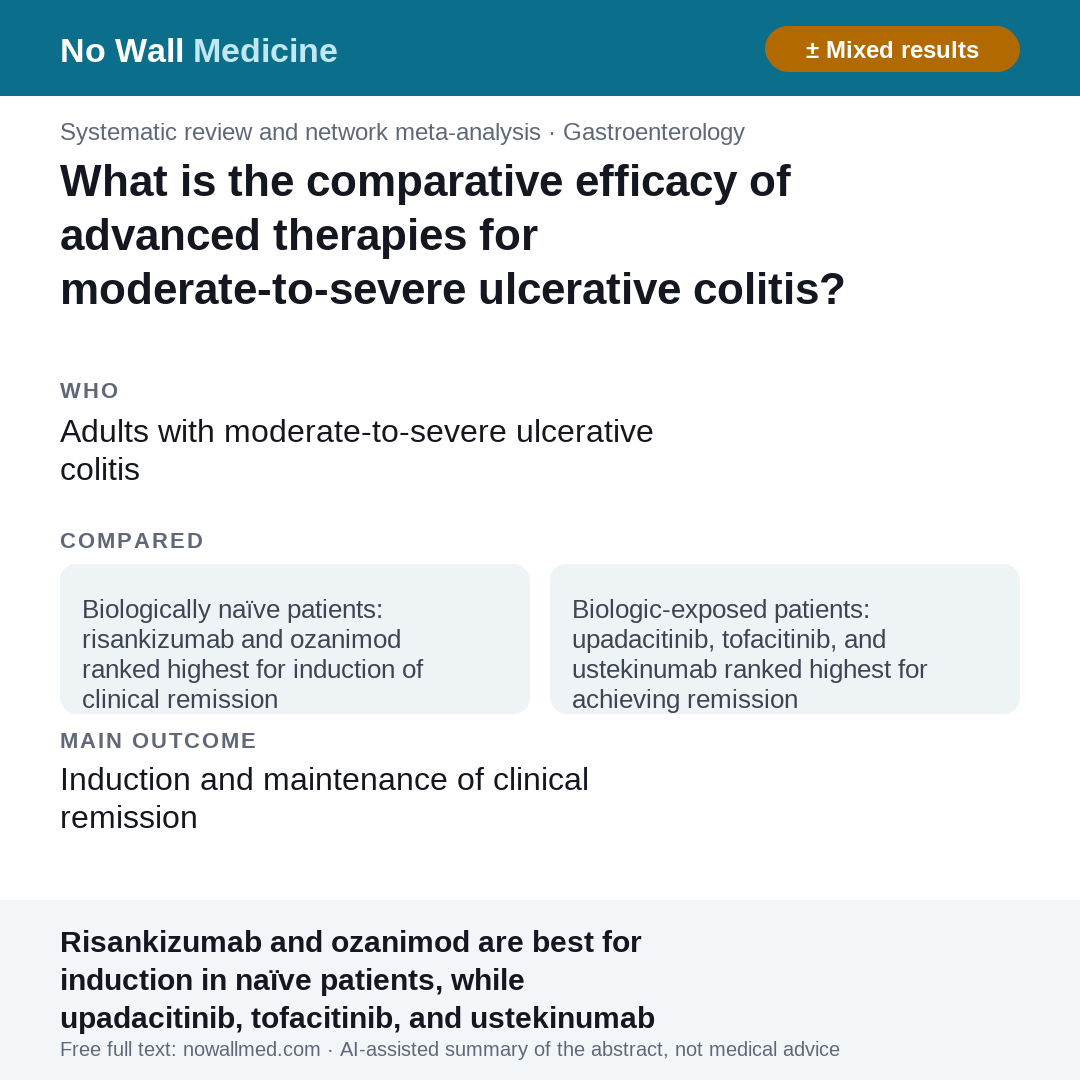
Comparative Efficacy of Advanced Therapies for Management of Moderate-to-Severe Ulcerative Colitis: 2024 American Gastroenterological Association Evidence Synthesis
Systematic review and network meta-analysisMixed results
What is the comparative efficacy of advanced therapies for moderate-to-severe ulcerative colitis?
Who
Adults with moderate-to-severe ulcerative colitis
Compared
Biologically naïve patients: risankizumab and ozanimod ranked highest for induction of clinical remission
Biologic-exposed patients: upadacitinib, tofacitinib, and ustekinumab ranked highest for achieving remission
Main outcome
Induction and maintenance of clinical remission
Bottom line: Risankizumab and ozanimod are best for induction in naïve patients, while upadacitinib, tofacitinib, and ustekinumab excel in biologic-exposed patients.
Gastroenterology · 2024-10-18Download image
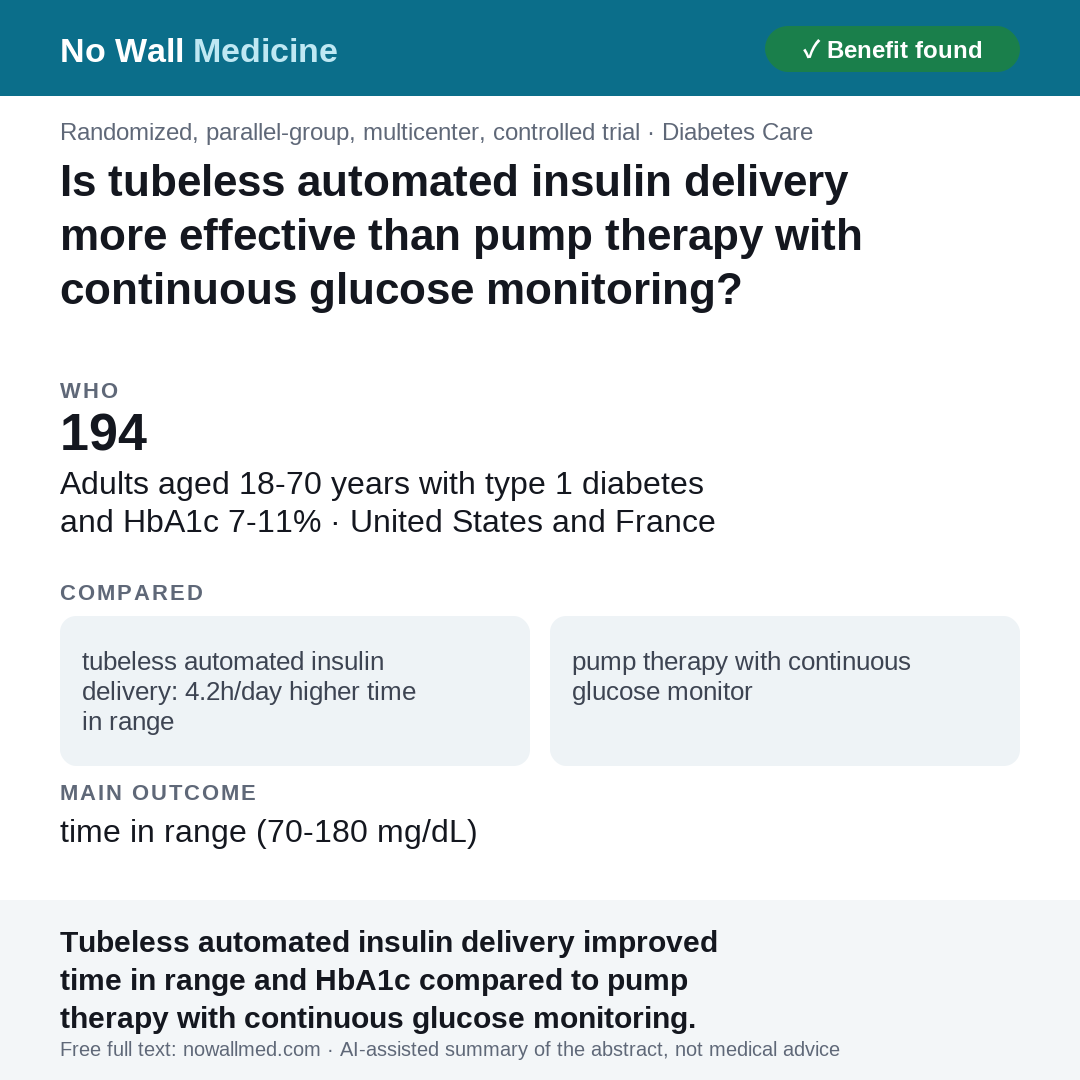
Efficacy and Safety of a Tubeless AID System Compared With Pump Therapy With CGM in the Treatment of Type 1 Diabetes in Adults With Suboptimal Glycemia: A Randomized, Parallel-Group Clinical Trial
Randomized, parallel-group, multicenter, controlled trialBenefit found
Is tubeless automated insulin delivery more effective than pump therapy with continuous glucose monitoring?
Who
194
Adults aged 18-70 years with type 1 diabetes and HbA1c 7-11% · United States and France
Compared
tubeless automated insulin delivery: 4.2h/day higher time in range
pump therapy with continuous glucose monitor
Main outcome
time in range (70-180 mg/dL)
Result: mean difference 17.5% (95% CI 14.0%, 21.1%)
Bottom line: Tubeless automated insulin delivery improved time in range and HbA1c compared to pump therapy with continuous glucose monitoring.
Diabetes Care · 2024-10-18Download image
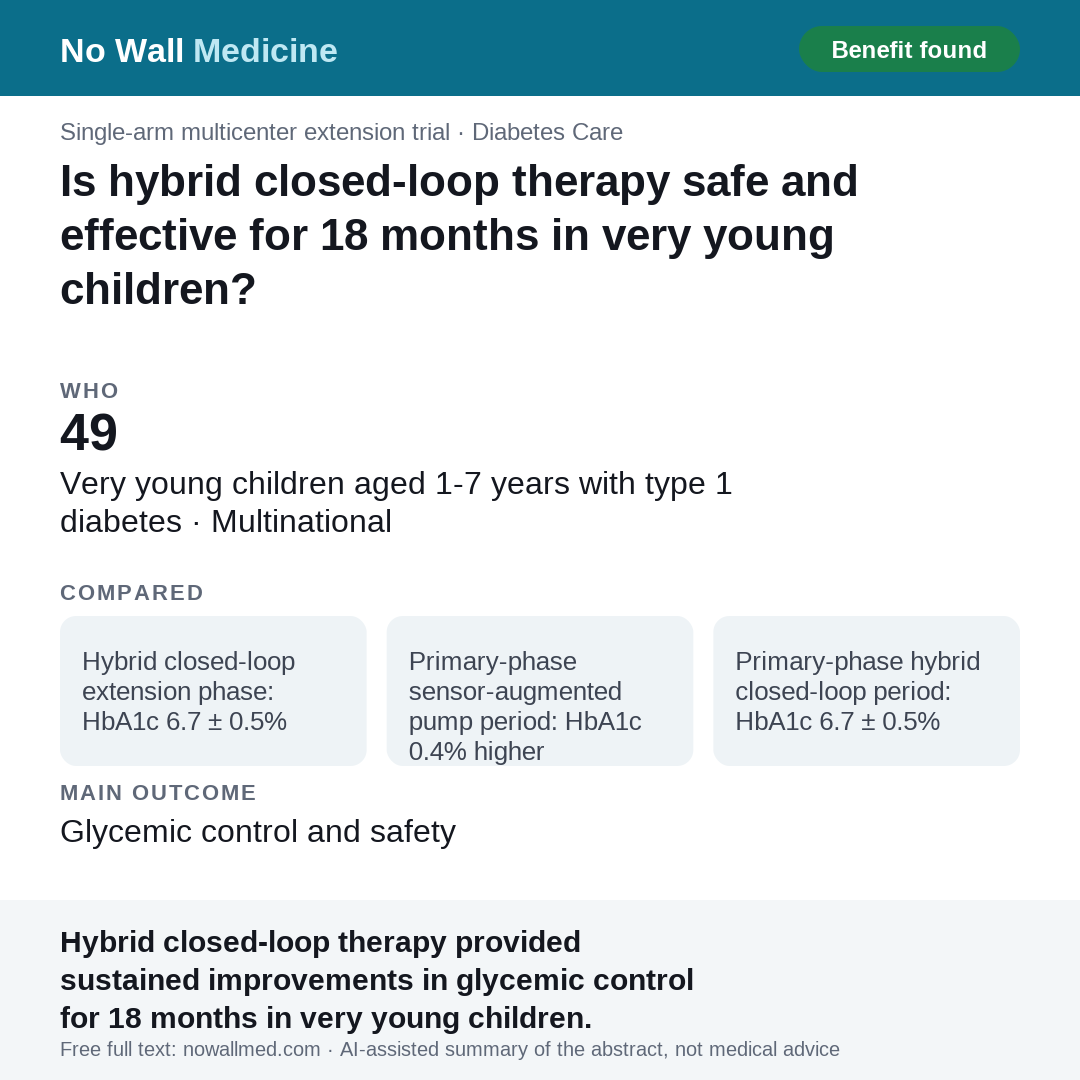
Eighteen-Month Hybrid Closed-Loop Use in Very Young Children With Type 1 Diabetes: A Single-Arm Multicenter Trial
Single-arm multicenter extension trialBenefit found
Is hybrid closed-loop therapy safe and effective for 18 months in very young children?
Who
49
Very young children aged 1-7 years with type 1 diabetes · Multinational
Compared
Hybrid closed-loop extension phase: HbA1c 6.7 ± 0.5%
Primary-phase sensor-augmented pump period: HbA1c 0.4% higher
Primary-phase hybrid closed-loop period: HbA1c 6.7 ± 0.5%
Main outcome
Glycemic control and safety
Bottom line: Hybrid closed-loop therapy provided sustained improvements in glycemic control for 18 months in very young children.
Diabetes Care · 2024-10-18Download image
Cancer risk and legalisation of access to cannabis in the USA: overview of the evidence
Umbrella review of global epidemiological evidenceUnclear result
What is the link between cannabis exposure and cancer risk?
Who
Global population exposed to cannabis · Global
Compared
Cannabis exposure
No cannabis exposure
Main outcome
Cancer risk
Bottom line: Links between cannabis exposure and cancer risk are more suggestive than conclusive, though some emerging risks exist.
Limitation: Need for rigorous study designs and data free from confounders, misclassification, and measurement error.
Lancet Public Health · 2024-10-18Download image
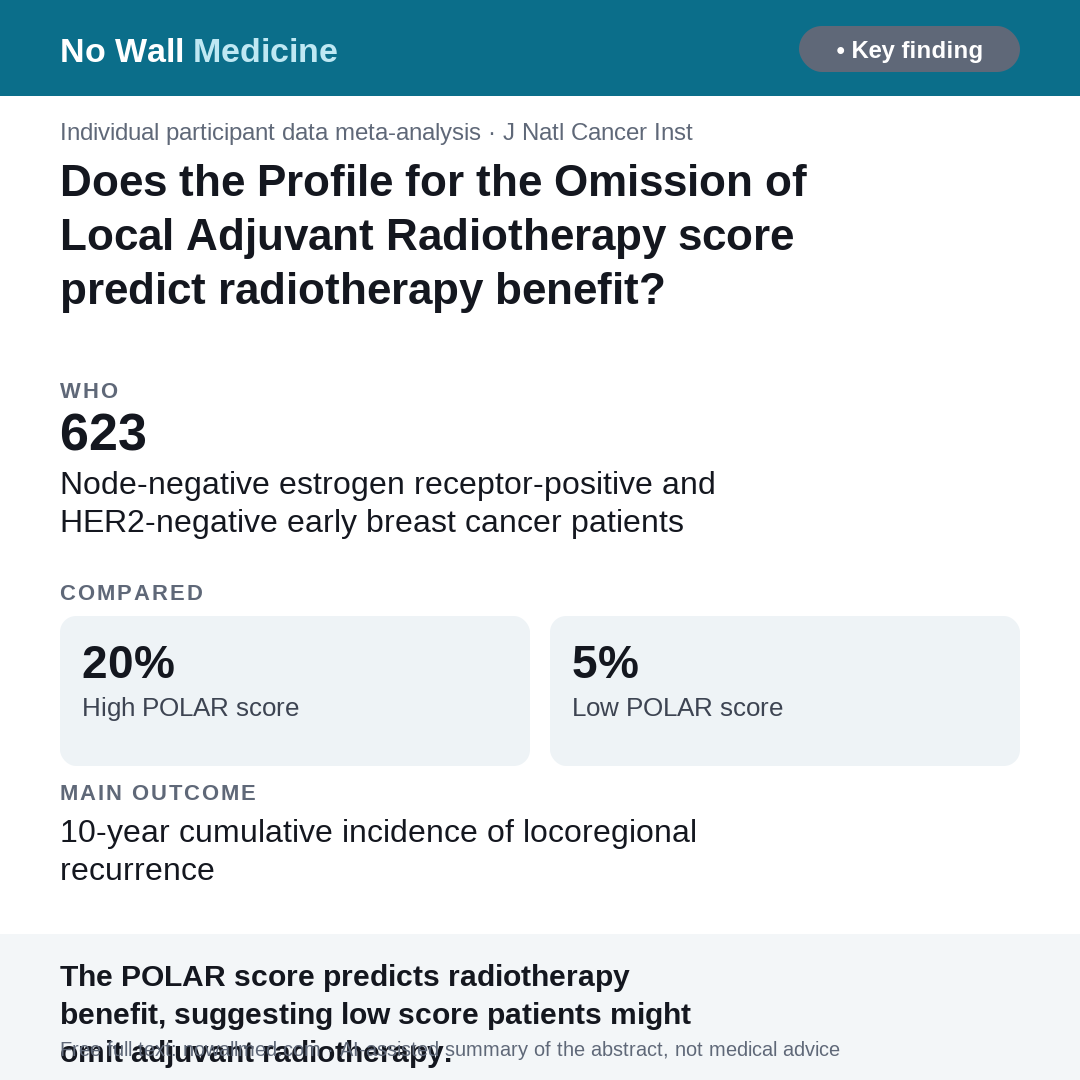
Validation of a breast cancer assay for radiotherapy omission: an individual participant data meta-analysis
Individual participant data meta-analysisBenefit found
Does the Profile for the Omission of Local Adjuvant Radiotherapy score predict radiotherapy benefit?
Who
623
Node-negative estrogen receptor-positive and HER2-negative early breast cancer patients
Compared
20%High POLAR score (95% CI 15% to 26%)
5%Low POLAR score (95% CI 2% to 11%)
Main outcome
10-year cumulative incidence of locoregional recurrence
Result: hazard ratio 0.37 (95% CI 0.23 to 0.60)
Bottom line: The POLAR score predicts radiotherapy benefit, suggesting low score patients might omit adjuvant radiotherapy.
J Natl Cancer Inst · 2024-10-18Download image
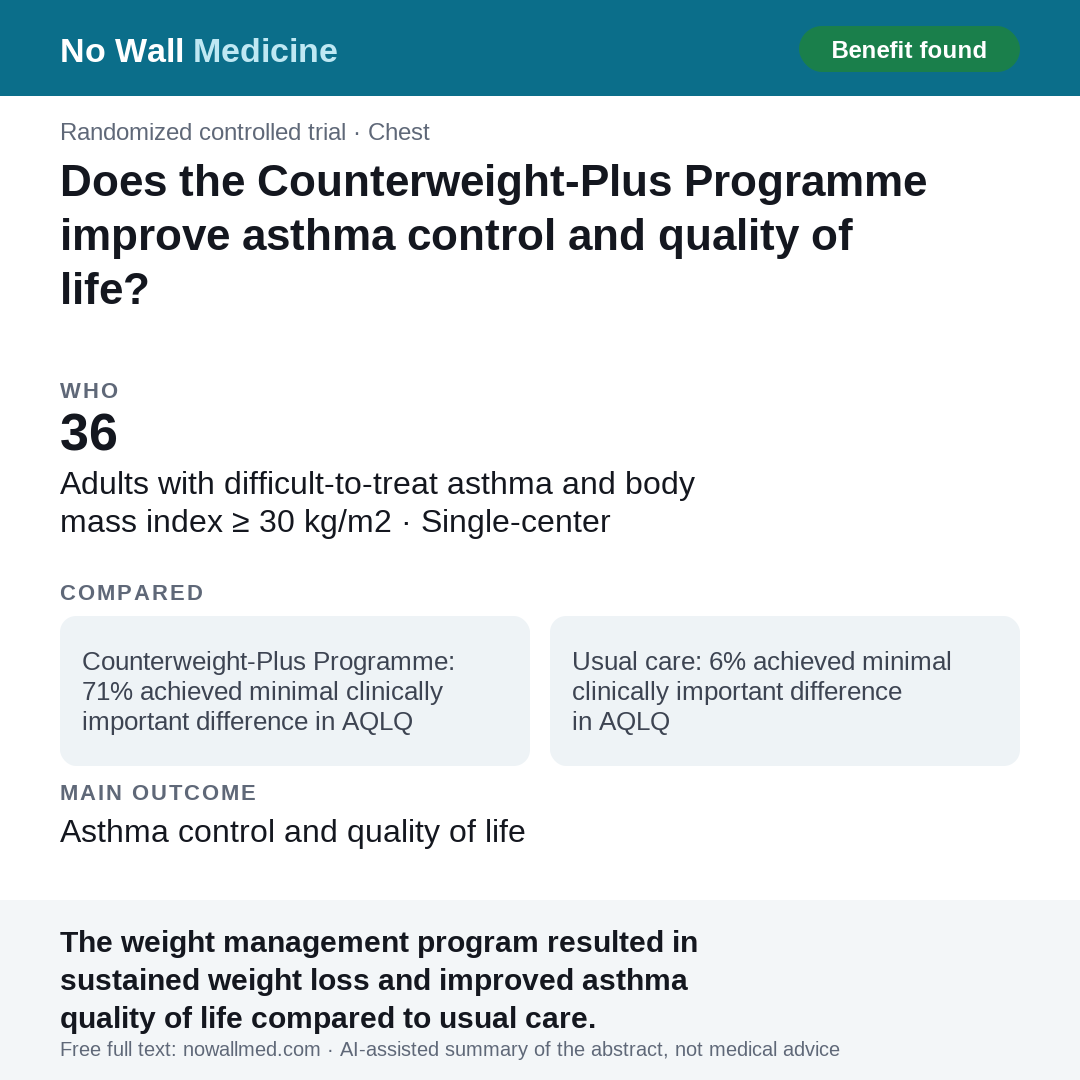
A 1-Year Weight Management Program for Difficult-to-Treat Asthma With Obesity: A Randomized Controlled Study
Randomized controlled trialBenefit found
Does the Counterweight-Plus Programme improve asthma control and quality of life?
Who
36
Adults with difficult-to-treat asthma and body mass index ≥ 30 kg/m2 · Single-center
Compared
Counterweight-Plus Programme: 71% achieved minimal clinically important difference in AQLQ
Usual care: 6% achieved minimal clinically important difference in AQLQ
Main outcome
Asthma control and quality of life
Bottom line: The weight management program resulted in sustained weight loss and improved asthma quality of life compared to usual care.
Chest · 2024-10-18Download image
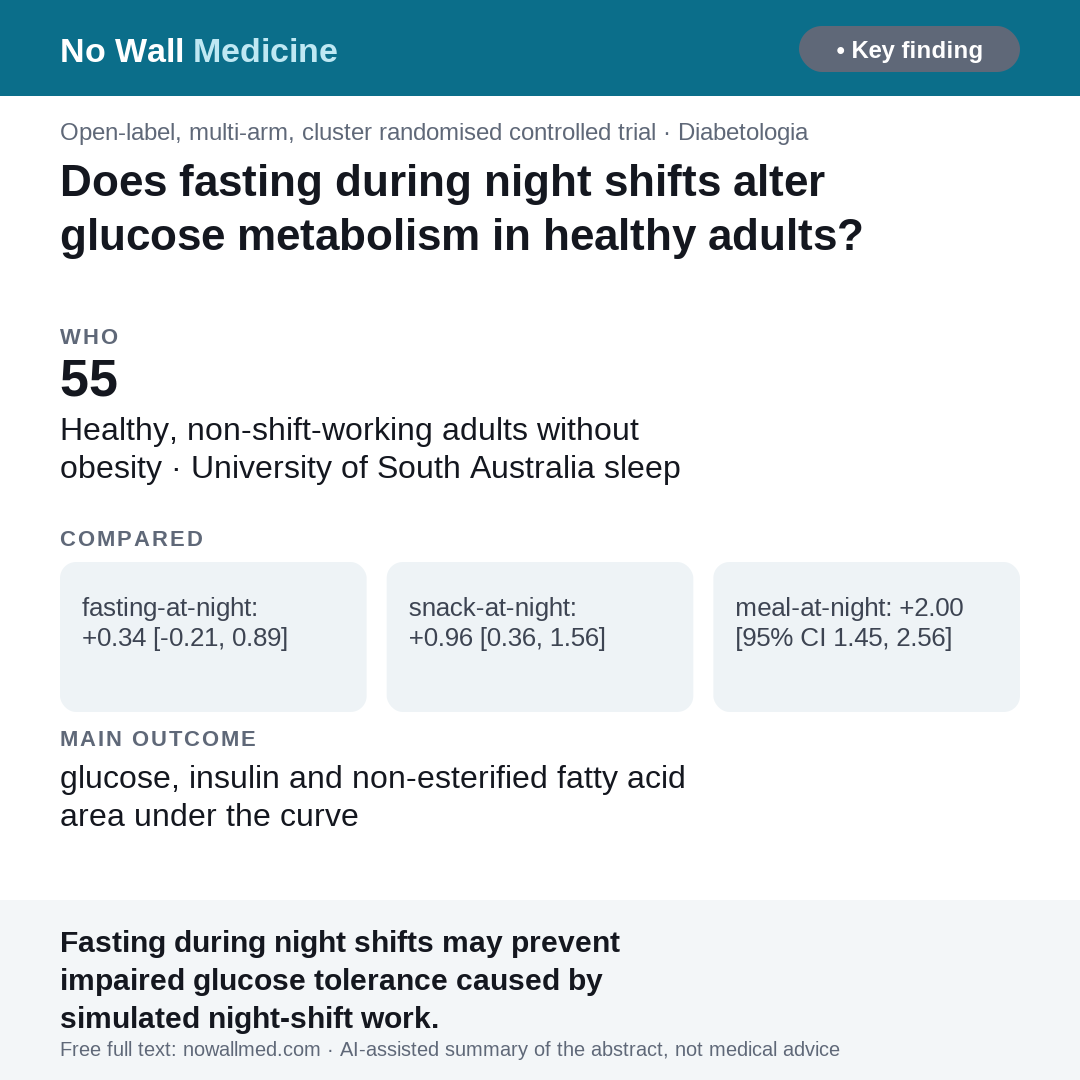
Fasting as an intervention to alter the impact of simulated night-shift work on glucose metabolism in healthy adults: a cluster randomised controlled trial
Open-label, multi-arm, cluster randomised controlled trialBenefit found
Does fasting during night shifts alter glucose metabolism in healthy adults?
Who
55
Healthy, non-shift-working adults without obesity · University of South Australia sleep laboratory, Australia
Compared
fasting-at-night: +0.34 [-0.21, 0.89]
snack-at-night: +0.96 [0.36, 1.56]
meal-at-night: +2.00 [95% CI 1.45, 2.56]
Main outcome
glucose, insulin and non-esterified fatty acid area under the curve
Result: glucose AUC day×condition interaction p<0.001
Bottom line: Fasting during night shifts may prevent impaired glucose tolerance caused by simulated night-shift work.
Funded by: National Health and Medical Research Council
Diabetologia · 2024-10-18Download image
Integrated care for children and young people with special health and care needs: a systematic review
Systematic review of randomized controlled trialsBenefit found
How effective are integrated or coordinated care models for children with special health needs?
Who
Children and young people under 25 with special healthcare needs
Compared
Integrated or coordinated care
Control
Main outcome
Child-centred outcomes, quality of life, and care use
Bottom line: Limited evidence favors integrated care using a dedicated key worker or care coordinator for children with special needs.
Limitation: Low or very low certainty of evidence and heterogeneity in study outcomes and definitions.
Arch Dis Child · 2024-10-18Download image

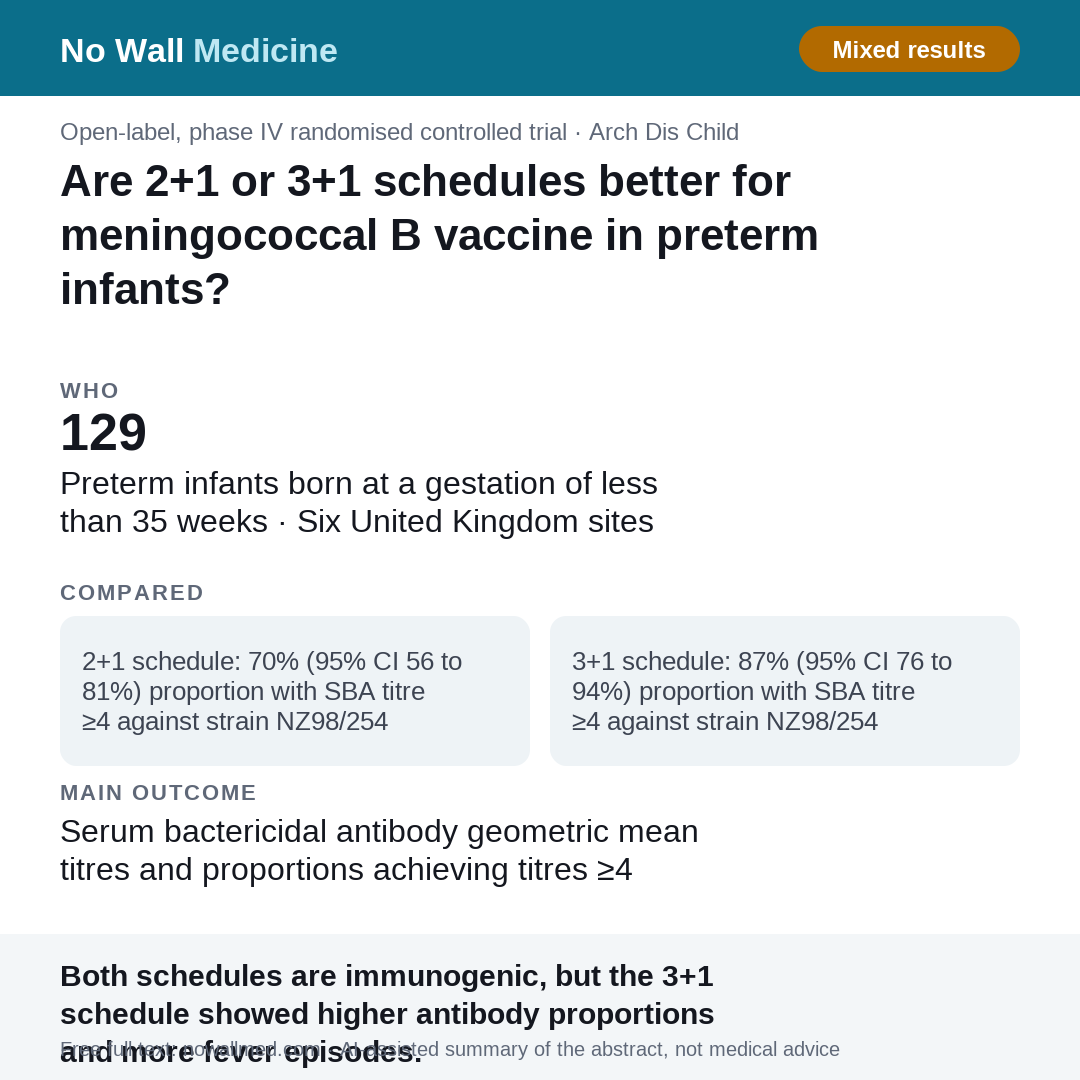
An open-label, phase IV randomised controlled trial of two schedules of a four-component meningococcal B vaccine in UK preterm infants
Open-label, phase IV randomised controlled trialMixed results
Are 2+1 or 3+1 schedules better for meningococcal B vaccine in preterm infants?
Who
129
Preterm infants born at a gestation of less than 35 weeks · Six United Kingdom sites
Compared
2+1 schedule: 70% (95% CI 56 to 81%) proportion with SBA titre ≥4 against strain NZ98/254
3+1 schedule: 87% (95% CI 76 to 94%) proportion with SBA titre ≥4 against strain NZ98/254
Main outcome
Serum bactericidal antibody geometric mean titres and proportions achieving titres ≥4
Result: p=0.03 for proportion with SBA titre ≥4 against strain NZ98/254
Bottom line: Both schedules are immunogenic, but the 3+1 schedule showed higher antibody proportions and more fever episodes.
Arch Dis Child · 2024-10-18Download image
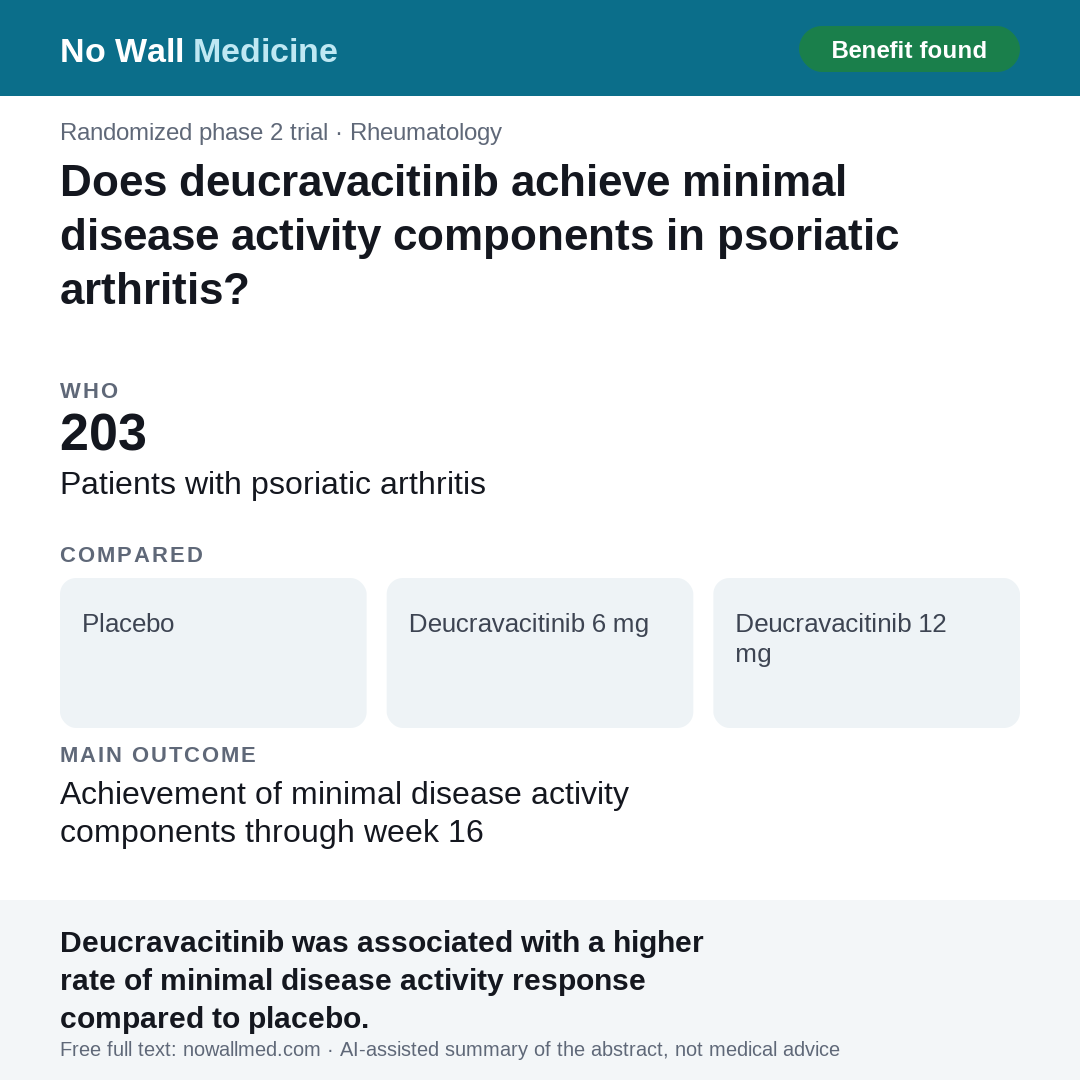
Deucravacitinib, a selective, TYK2 inhibitor, in psoriatic arthritis: achievement of minimal disease activity components in a phase 2 trial
Randomized phase 2 trialBenefit found
Does deucravacitinib achieve minimal disease activity components in psoriatic arthritis?
Who
203
Patients with psoriatic arthritis
Compared
Placebo
Deucravacitinib 6 mg
Deucravacitinib 12 mg
Main outcome
Achievement of minimal disease activity components through week 16
Bottom line: Deucravacitinib was associated with a higher rate of minimal disease activity response compared to placebo.
Rheumatology · 2024-10-18Download image
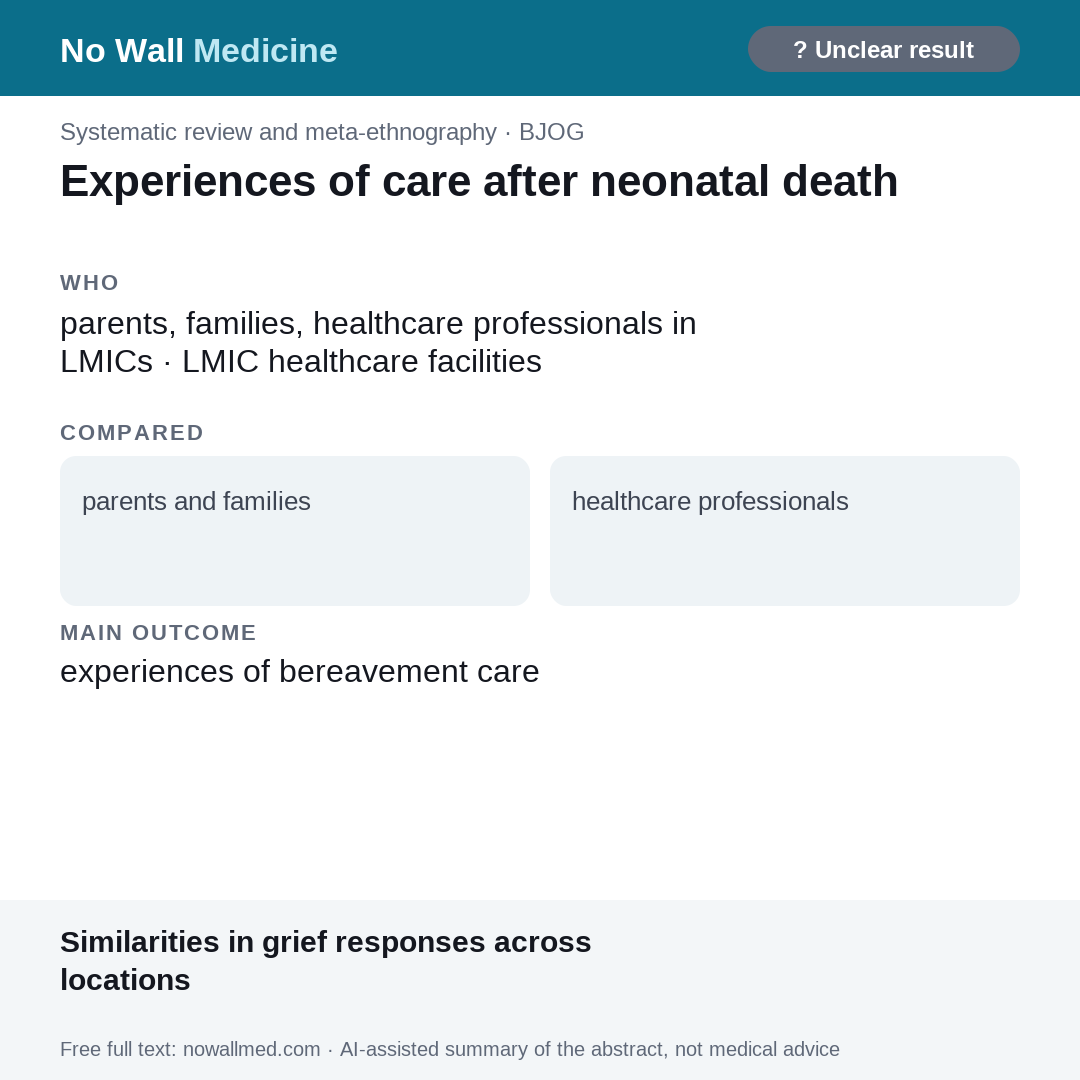
Parents', Families', Communities' and Healthcare Professionals' Experiences of Care Following Neonatal Death in Healthcare Facilities in LMICs: A Systematic Review and Meta-Ethnography
Systematic review and meta-ethnographyUnclear result
Experiences of care after neonatal death
Who
parents, families, healthcare professionals in LMICs · LMIC healthcare facilities
Compared
parents and families
healthcare professionals
Main outcome
experiences of bereavement care
Bottom line: Similarities in grief responses across locations
BJOG · 2024-10-18Download image
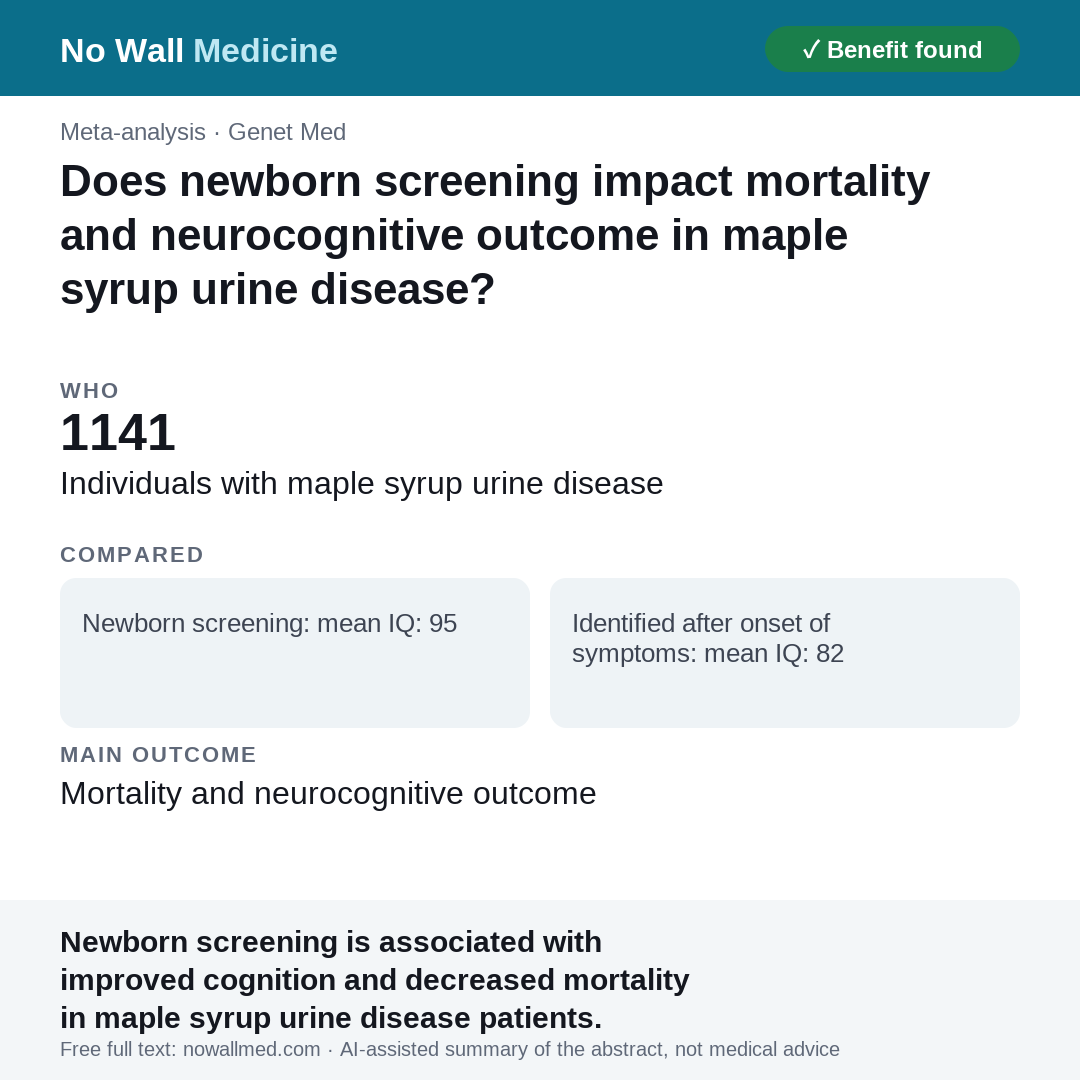
Impact of early diagnosis, disease variant, and quality of care on the neurocognitive outcome in maple syrup urine disease: A meta-analysis
Meta-analysisBenefit found
Does newborn screening impact mortality and neurocognitive outcome in maple syrup urine disease?
Who
1141
Individuals with maple syrup urine disease
Compared
Newborn screening: mean IQ: 95
Identified after onset of symptoms: mean IQ: 82
Main outcome
Mortality and neurocognitive outcome
Bottom line: Newborn screening is associated with improved cognition and decreased mortality in maple syrup urine disease patients.
Genet Med · 2024-10-18Download image
Patient satisfaction using wide-awake local anaesthesia no tourniquet (WALANT) in adults undergoing elective hand surgery: A systematic review and meta-analysis
Systematic review and meta-analysisBenefit found
What are the patient satisfaction rates using wide-awake local anaesthesia no tourniquet?
Who
1800
Adults undergoing elective hand surgery
Compared
Wide-awake local anaesthesia no tourniquet
Traditional anaesthetic techniques with tourniquets
Main outcome
Patient satisfaction
Result: standardised mean difference 1.01 (95% CI 0.11 to 1.92)
Bottom line: Wide-awake local anaesthesia no tourniquet potentially results in higher patient satisfaction rates compared with traditional anaesthesia with tourniquets.
Limitation: More robust studies are needed to verify these findings.
J Plast Reconstr Aesthet Surg · 2024-10-18Download image

Environmental and Health Sustainability of the Mediterranean Diet: A Systematic Review
Systematic reviewBenefit found
Is the Mediterranean diet a sustainable and healthy dietary pattern?
Who
35
Existing scientific literature on dietary patterns
Compared
Mediterranean diet: 91% of studies referred to it as a sustainable dietary pattern
Other dietary patterns
Main outcome
Environmental footprints and nutritional quality
Bottom line: The Mediterranean diet is generally a sustainable and healthy dietary pattern aligning with planetary health.
Adv Nutr · 2024-10-18Download image

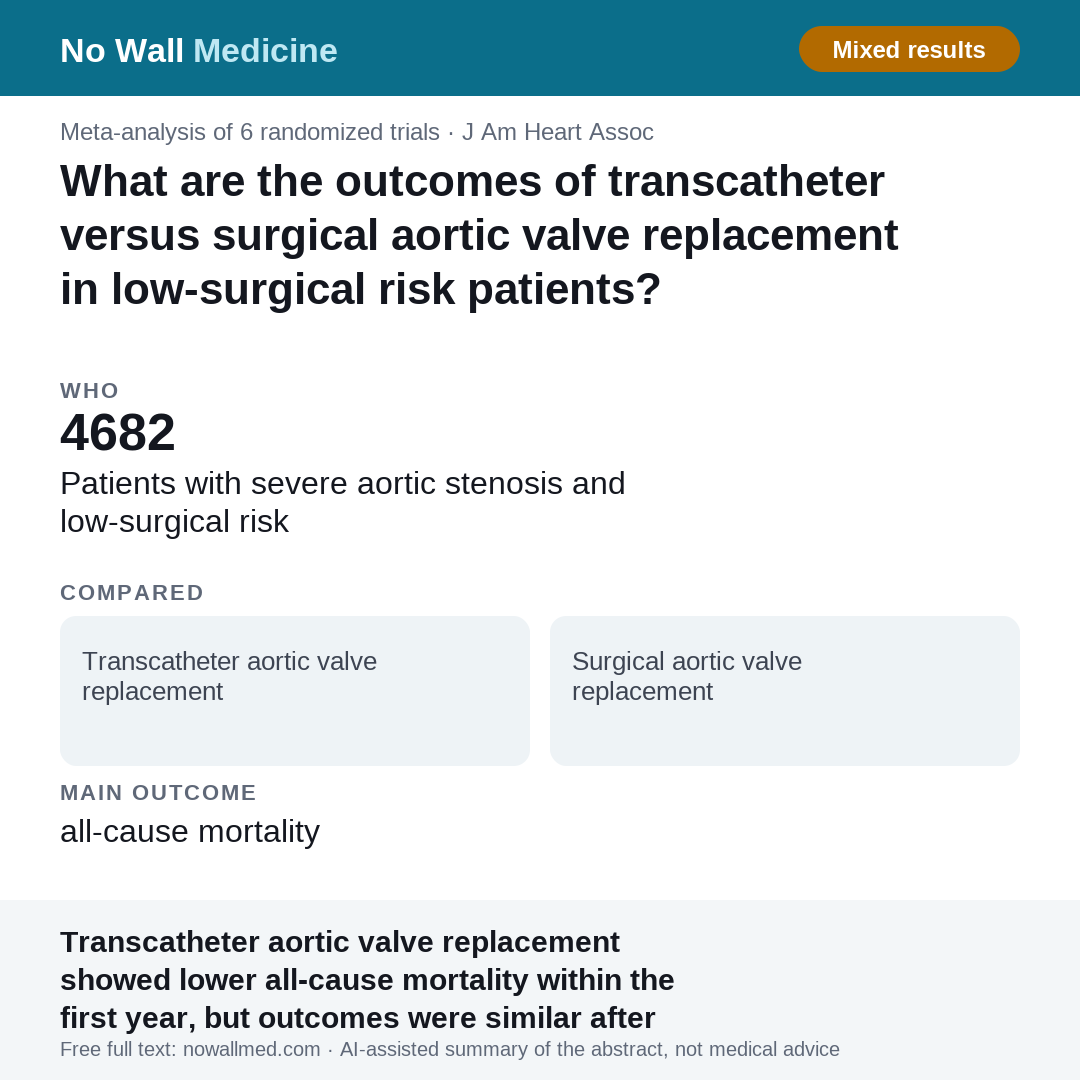
Trends in Transcatheter Versus Surgical Aortic Valve Replacement Outcomes in Patients With Low-Surgical Risk: A Systematic Review and Meta-Analysis of Randomized Trials
Meta-analysis of 6 randomized trialsMixed results
What are the outcomes of transcatheter versus surgical aortic valve replacement in low-surgical risk patients?
Who
4682
Patients with severe aortic stenosis and low-surgical risk
Compared
Transcatheter aortic valve replacement
Surgical aortic valve replacement
Main outcome
all-cause mortality
Result: hazard ratio 0.45 (95% CI 0.26-0.77) at 30-day follow-up
Bottom line: Transcatheter aortic valve replacement showed lower all-cause mortality within the first year, but outcomes were similar after one year.
J Am Heart Assoc · 2024-10-18Download image
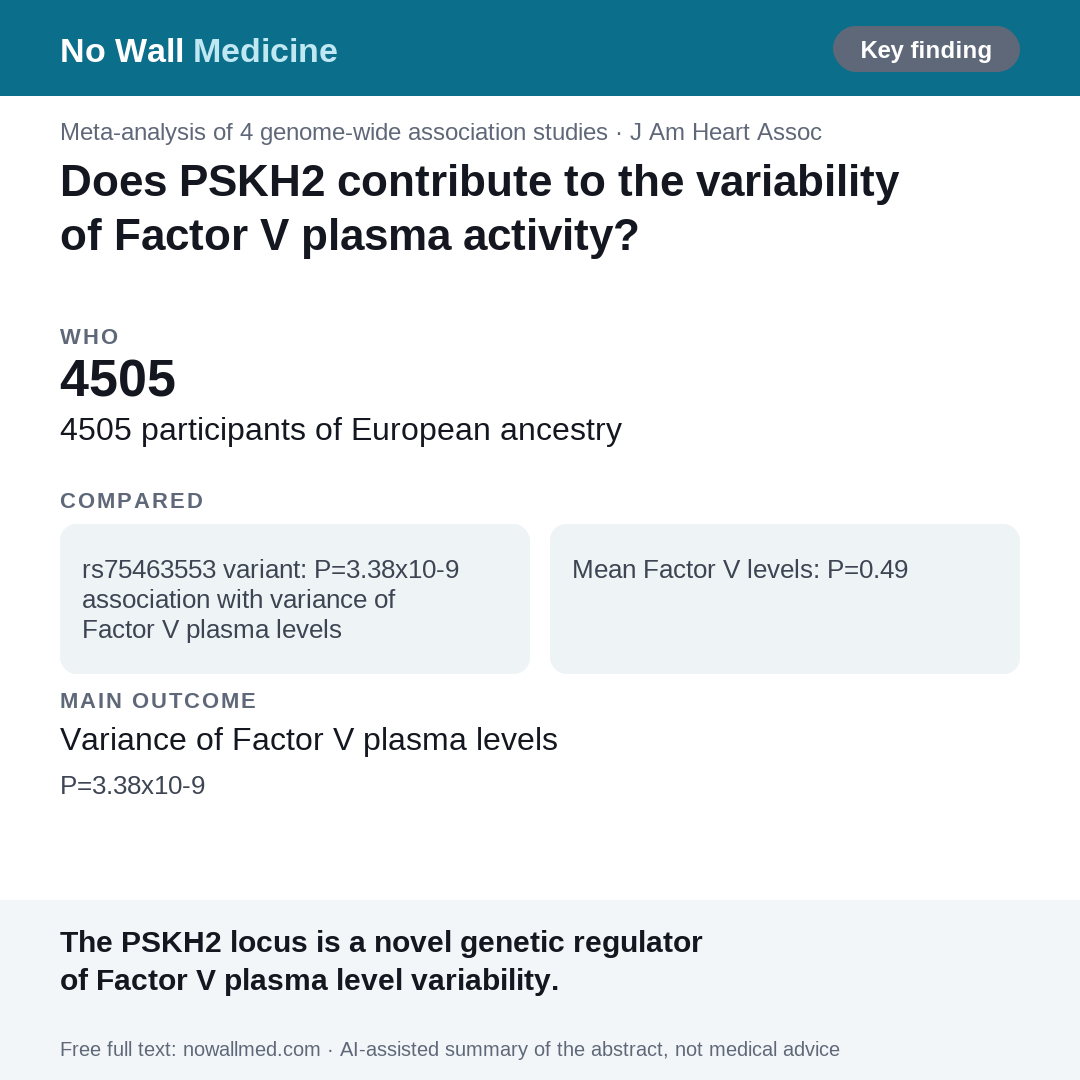
Genome-Wide Search for Nonadditive Allele Effects Identifies PSKH2 as Involved in the Variability of Factor V Activity
Meta-analysis of 4 genome-wide association studiesBenefit found
Does PSKH2 contribute to the variability of Factor V plasma activity?
Who
4505
4505 participants of European ancestry
Compared
rs75463553 variant: P=3.38x10⁻⁹ association with variance of Factor V plasma levels
Mean Factor V levels: P=0.49
Main outcome
Variance of Factor V plasma levels
Result: P=3.38x10⁻⁹
Bottom line: The PSKH2 locus is a novel genetic regulator of Factor V plasma level variability.
J Am Heart Assoc · 2024-10-18Download image
Enhancing Blood-Brain Barrier Integrity in Patients With Acute Ischemic Stroke Via Normobaric Hyperoxia
Randomized trialBenefit found
Does normobaric hyperoxia attenuate blood-brain barrier damage and brain injury in acute stroke?
Who
86
Patients undergoing endovascular treatment for acute ischemic stroke
Compared
Normobaric hyperoxia combined with endovascular treatment: 35.9% intracranial contrast extravasation
Endovascular treatment alone: 60.5% intracranial contrast extravasation
Main outcome
Blood-brain barrier damage and intracranial contrast extravasation
Result: 35.9% versus 60.5% (P=0.031)
Bottom line: Normobaric hyperoxia combined with endovascular treatment reduces blood-brain barrier damage and intracranial contrast extravasation in acute stroke.
J Am Heart Assoc · 2024-10-18Download image