Visual abstracts
New randomized trials and meta-analyses from leading journals at a glance: who was studied, what was compared, and what was found. Every paper is free to read in full.
All specialtiesCardiology 4780Oncology 4080Gastroenterology & Hepatology 1914Infectious Disease 3775Neurology 1883Psychiatry & Mental Health 2238Pulmonology 2058Critical Care 1331Endocrinology & Diabetes 2550Pediatrics 2908Surgery 2496Orthopedics & Sports Medicine 922Neurosurgery 532Cardiothoracic & Vascular Surgery 662Plastic & Reconstructive Surgery 584Nephrology 1111Rheumatology 812Hematology 1095Dermatology 617Ophthalmology 537Obstetrics & Gynecology 1656Public & Global Health 1041Radiology & Imaging 637Anesthesiology 958Urology 751ENT (Otolaryngology) 497Emergency Medicine 484Allergy & Immunology 310Geriatrics 973Family Medicine & Primary Care 538Medical Genetics & Genomics 662Pathology & Laboratory Medicine 156Physical Medicine & Rehabilitation 744Palliative Care 422Nutrition 1564Digital Health & AI 2188General Medicine 318
Whole Food Diet Induces Remission in Children and Young Adults With Mild to Moderate Crohn's Disease and Is More Tolerable Than Exclusive Enteral Nutrition: A Randomized Controlled Trial
Clinician-blinded, randomized controlled trialBenefit found
Is a whole food diet more tolerable and effective than exclusive enteral nutrition for Crohn's disease?
Who
83
Biologic-naïve patients with mild to moderate Crohn's disease aged 6-25 years
Compared
Tasty&Healthy whole food diet: 88% tolerated
Exclusive enteral nutrition: 52% tolerated
Main outcome
Tolerability and effectiveness in inducing remission
Result: adjusted odds ratio 7.7 (95% CI, 2.4-25) for tolerability
Bottom line: A whole food diet was more tolerable than exclusive enteral nutrition for inducing remission in young patients.
Gastroenterology · 2025-06-17Download image

Effect of virtual reality on pain and stress in children during Kirschner-wire removal after fracture treatment: a randomized clinical trial
Randomized clinical trialBenefit found
Does virtual reality distraction improve pain and experience during Kirschner-wire removal in children?
Who
146
Children aged 6-15 years · Single outpatient fracture clinic
Compared
Virtual reality: OR 0.23 (95% c.i. 0.12 to 0.43)
Standard of care
Main outcome
Pain perception on the Wong-Baker Faces Pain Rating Scale
Result: OR 0.23 (95% c.i. 0.12 to 0.43)
Bottom line: Virtual reality distraction effectively reduces pain during Kirschner-wire removal in children.
Br J Surg · 2025-06-17Download image

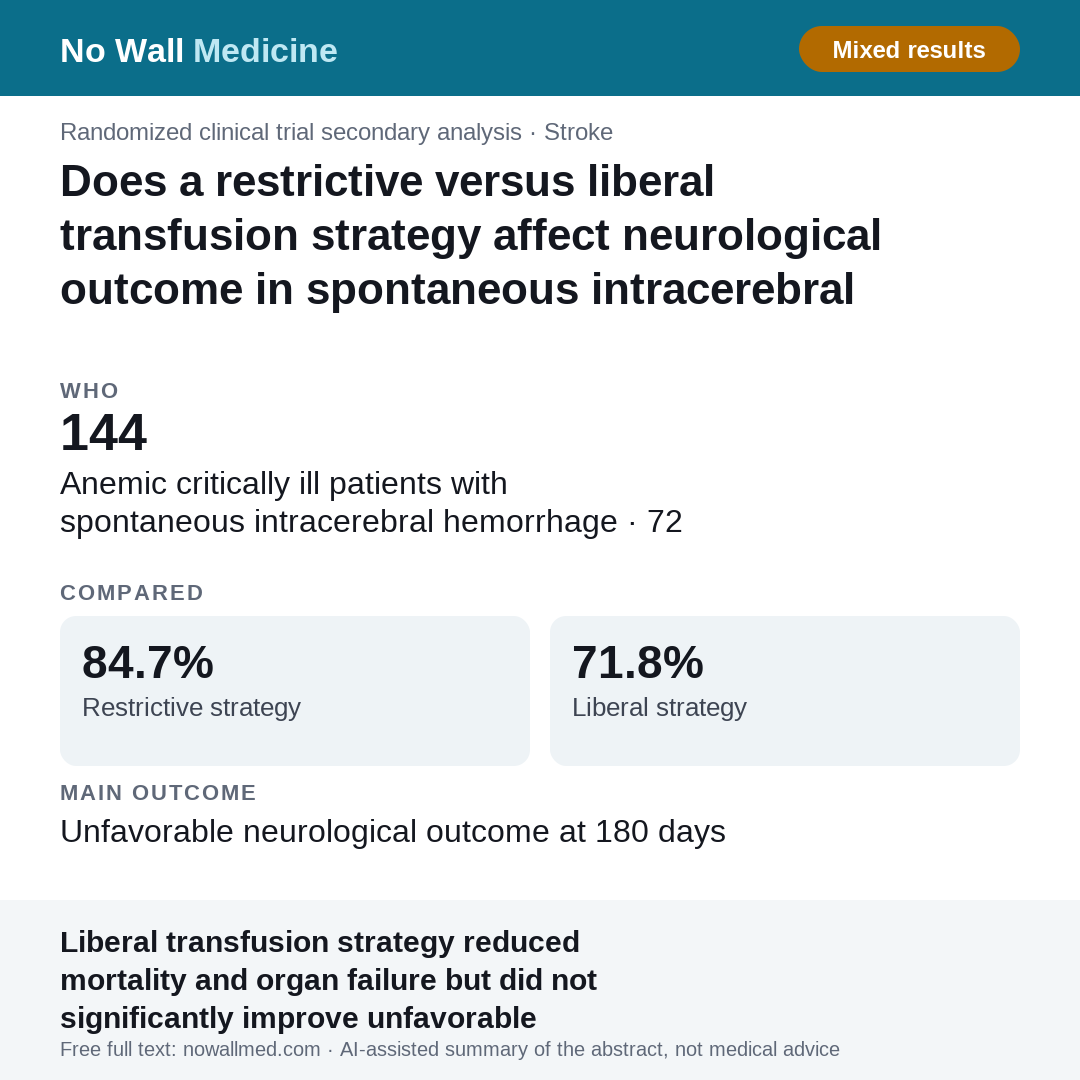
A Restrictive Versus a Liberal Transfusion Strategy in Patients With Spontaneous Intracerebral Hemorrhage: A Secondary Analysis of TRAIN Randomized Clinical Trial
Randomized clinical trial secondary analysisMixed results
Does a restrictive versus liberal transfusion strategy affect neurological outcome in spontaneous intracerebral hemorrhage?
Who
144
Anemic critically ill patients with spontaneous intracerebral hemorrhage · 72 intensive care units across 22 countries
Compared
84.7%Restrictive strategy
71.8%Liberal strategy
Main outcome
Unfavorable neurological outcome at 180 days
Result: risk ratio 0.85 (95% CI 0.71-1.01)
Bottom line: Liberal transfusion strategy reduced mortality and organ failure but did not significantly improve unfavorable neurological outcomes.
Limitation: The study cohort might have been underpowered to detect clinically relevant differences.
Stroke · 2025-06-17Download image
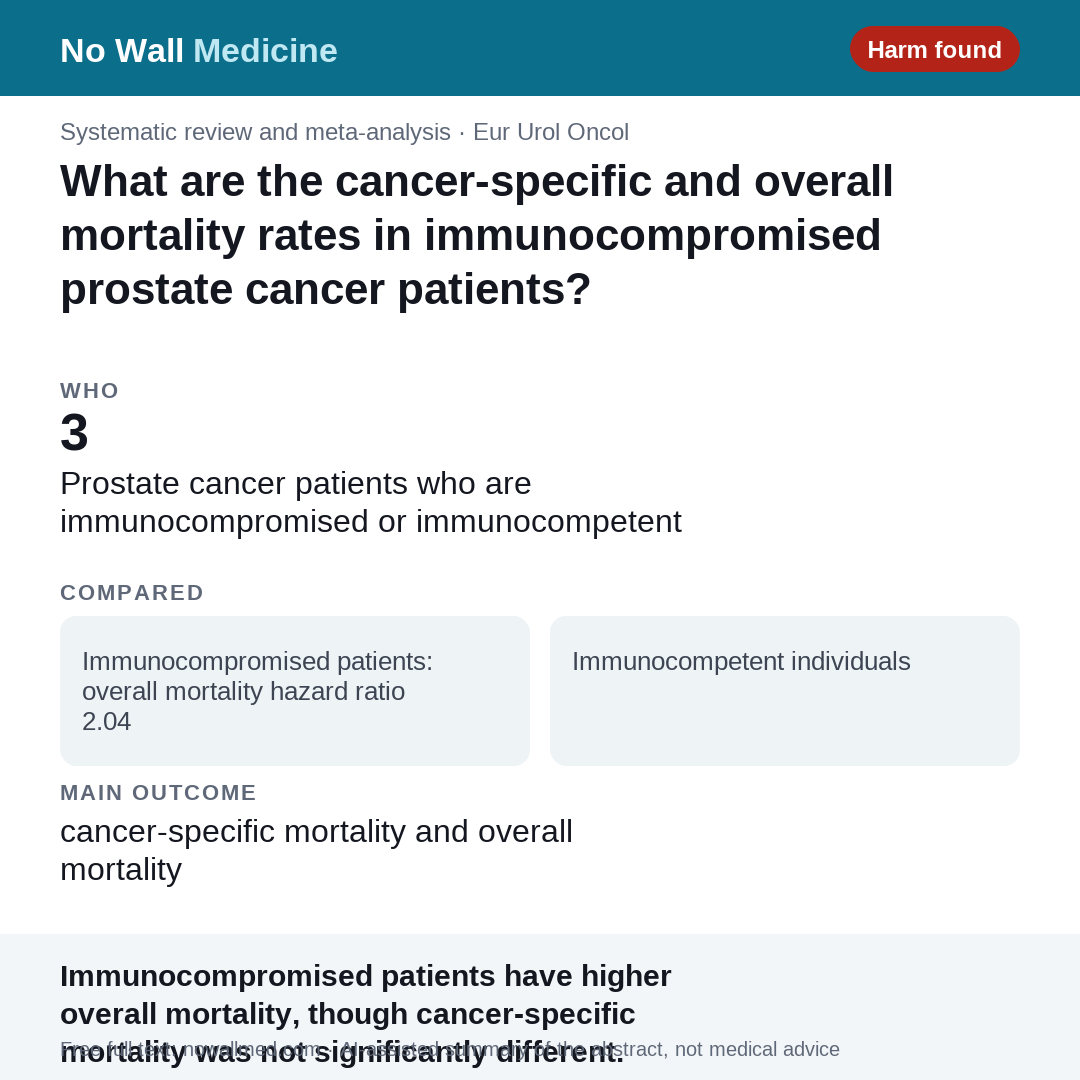
Prostate Cancer Outcomes in Immunocompromised Patients: A Systematic Review and Meta-analysis
Systematic review and meta-analysisHarm found
What are the cancer-specific and overall mortality rates in immunocompromised prostate cancer patients?
Who
3
Prostate cancer patients who are immunocompromised or immunocompetent
Compared
Immunocompromised patients: overall mortality hazard ratio 2.04
Immunocompetent individuals
Main outcome
cancer-specific mortality and overall mortality
Result: hazard ratio 2.04 (95% CI, 1.94-2.15)
Bottom line: Immunocompromised patients have higher overall mortality, though cancer-specific mortality was not significantly different.
Limitation: retrospective cohort studies and heterogeneity in reporting prostate cancer stages
Eur Urol Oncol · 2025-06-17Download image
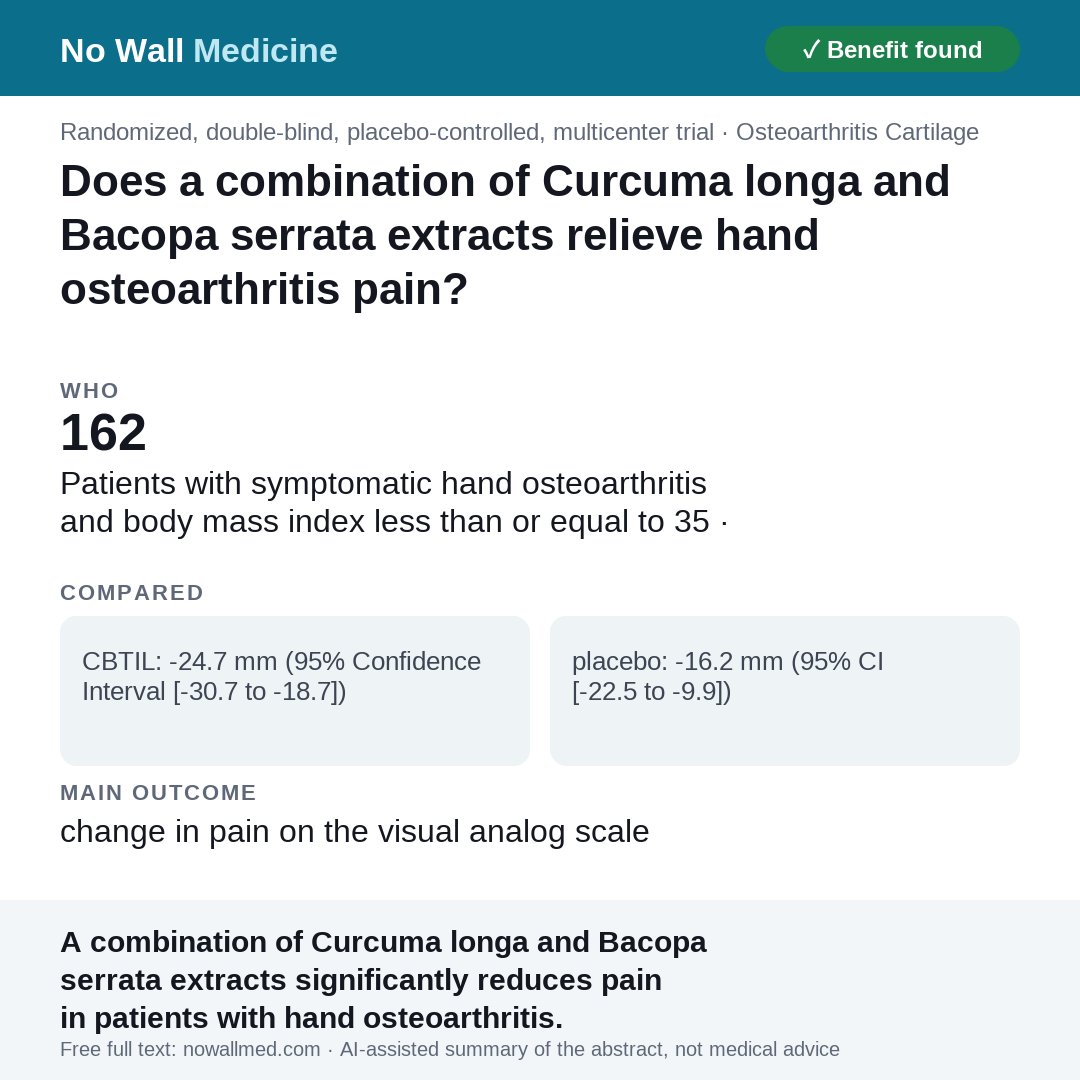
Effect of a combination of C. longa and B. serrata extracts on hand osteoarthritis. Results of a double-blind, randomized, placebo-controlled, multicenter trial
Randomized, double-blind, placebo-controlled, multicenter trialBenefit found
Does a combination of Curcuma longa and Bacopa serrata extracts relieve hand osteoarthritis pain?
Who
162
Patients with symptomatic hand osteoarthritis and body mass index less than or equal to 35 · multicentre
Compared
CBTIL: -24.7 mm (95% Confidence Interval [-30.7 to -18.7])
placebo: -16.2 mm (95% CI [-22.5 to -9.9])
Main outcome
change in pain on the visual analog scale
Result: -8.5 mm (95% CI [-16.4 to -0.6]; p = 0.03)
Bottom line: A combination of Curcuma longa and Bacopa serrata extracts significantly reduces pain in patients with hand osteoarthritis.
Osteoarthritis Cartilage · 2025-06-17Download image
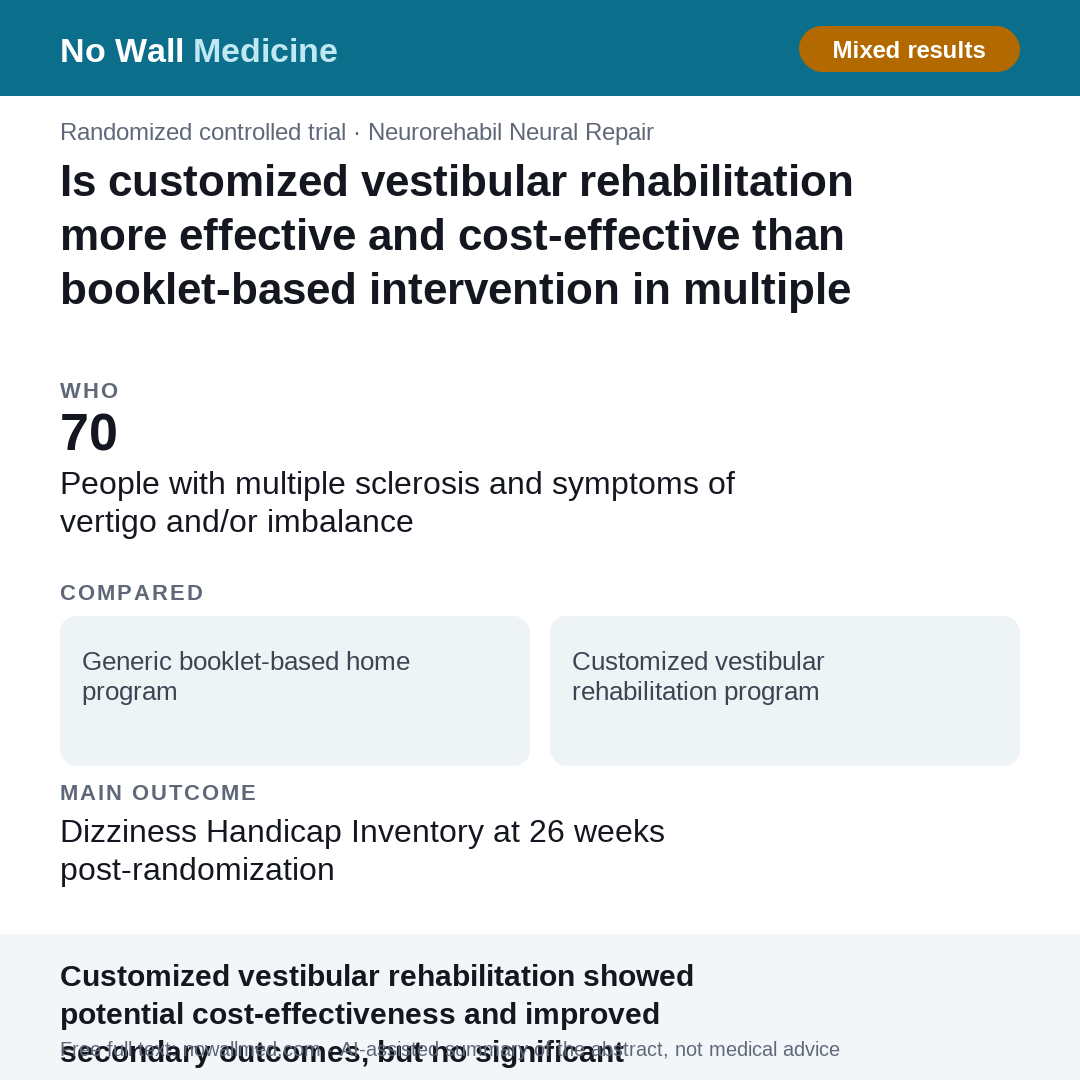
Vestibular Rehabilitation in Multiple Sclerosis: Randomized Controlled Trial and Cost-Effectiveness Analysis Comparing Customized With Booklet Based Vestibular Rehabilitation for Vestibulopathy
Randomized controlled trialMixed results
Is customized vestibular rehabilitation more effective and cost-effective than booklet-based intervention in multiple sclerosis?
Who
70
People with multiple sclerosis and symptoms of vertigo and/or imbalance
Compared
Generic booklet-based home program
Customized vestibular rehabilitation program
Main outcome
Dizziness Handicap Inventory at 26 weeks post-randomization
Result: mean reduction -1.76 (95% confidence interval -10.02, 6.50)
Bottom line: Customized vestibular rehabilitation showed potential cost-effectiveness and improved secondary outcomes, but no significant difference in dizziness handicap.
Limitation: Impairment level improvements did not translate into functional improvements measured by the Dizziness Handicap Inventory.
Neurorehabil Neural Repair · 2025-06-17Download image
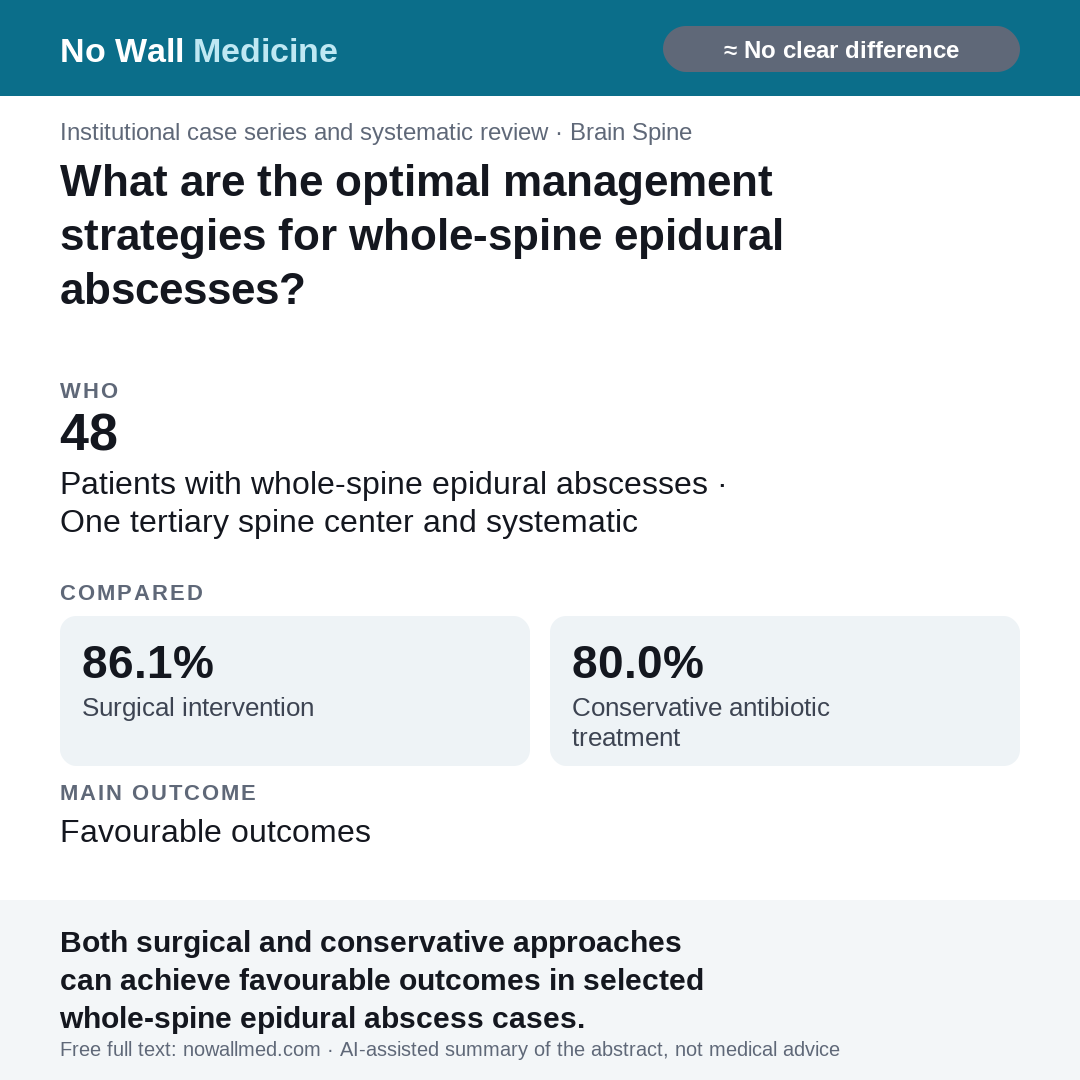
Management and outcome of whole-spine epidural abscesses - institutional case series and systematic review
Institutional case series and systematic reviewNo clear difference
What are the optimal management strategies for whole-spine epidural abscesses?
Who
48
Patients with whole-spine epidural abscesses · One tertiary spine center and systematic literature review
Compared
86.1%Surgical intervention
80.0%Conservative antibiotic treatment
Main outcome
Favourable outcomes
Bottom line: Both surgical and conservative approaches can achieve favourable outcomes in selected whole-spine epidural abscess cases.
Brain Spine · 2025-06-17Download image
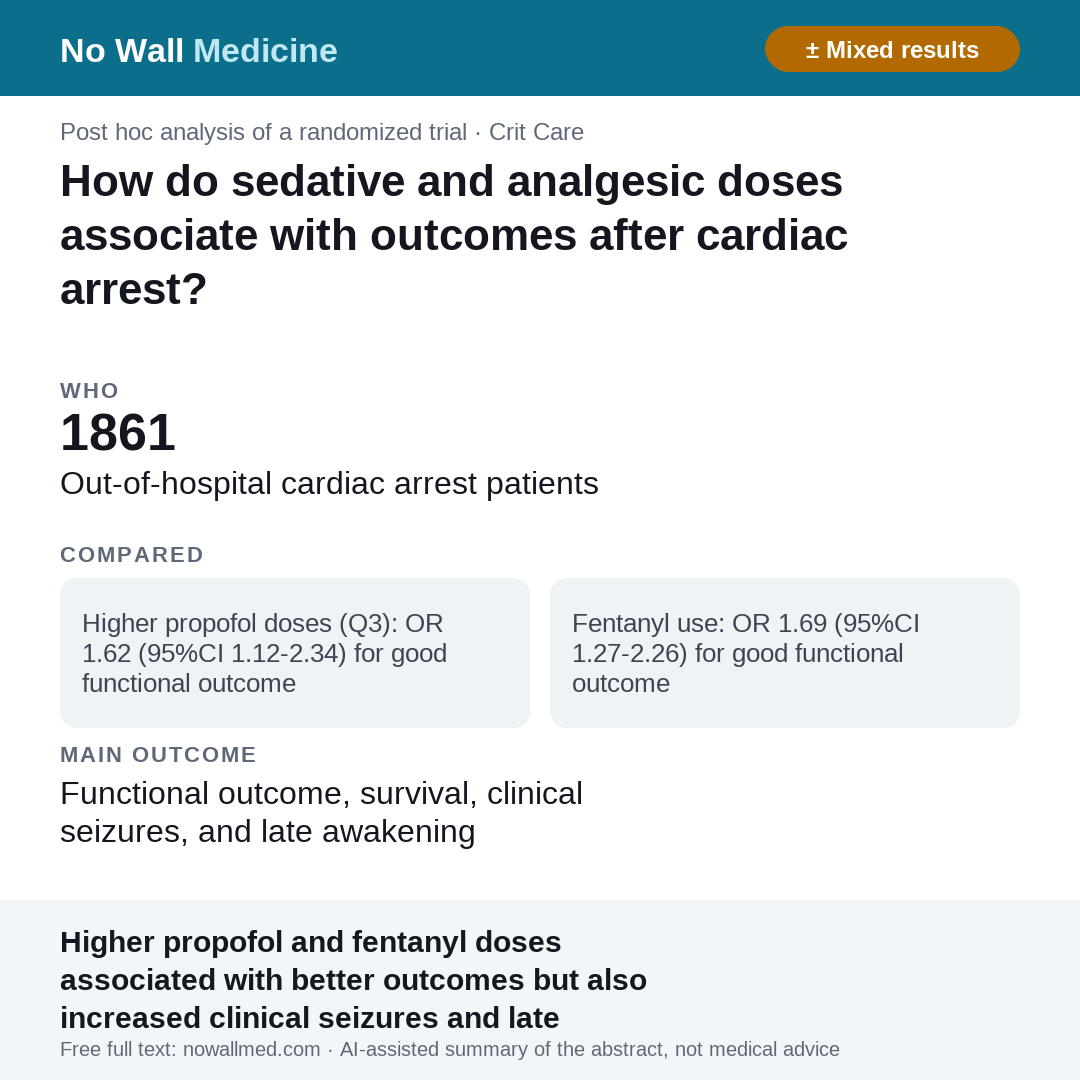
Sedation and analgesia in post-cardiac arrest care: a post hoc analysis of the TTM2 trial
Post hoc analysis of a randomized trialMixed results
How do sedative and analgesic doses associate with outcomes after cardiac arrest?
Who
1861
Out-of-hospital cardiac arrest patients
Compared
Higher propofol doses (Q3): OR 1.62 (95%CI 1.12-2.34) for good functional outcome
Fentanyl use: OR 1.69 (95%CI 1.27-2.26) for good functional outcome
Main outcome
Functional outcome, survival, clinical seizures, and late awakening
Bottom line: Higher propofol and fentanyl doses associated with better outcomes but also increased clinical seizures and late awakening.
Crit Care · 2025-06-17Download image
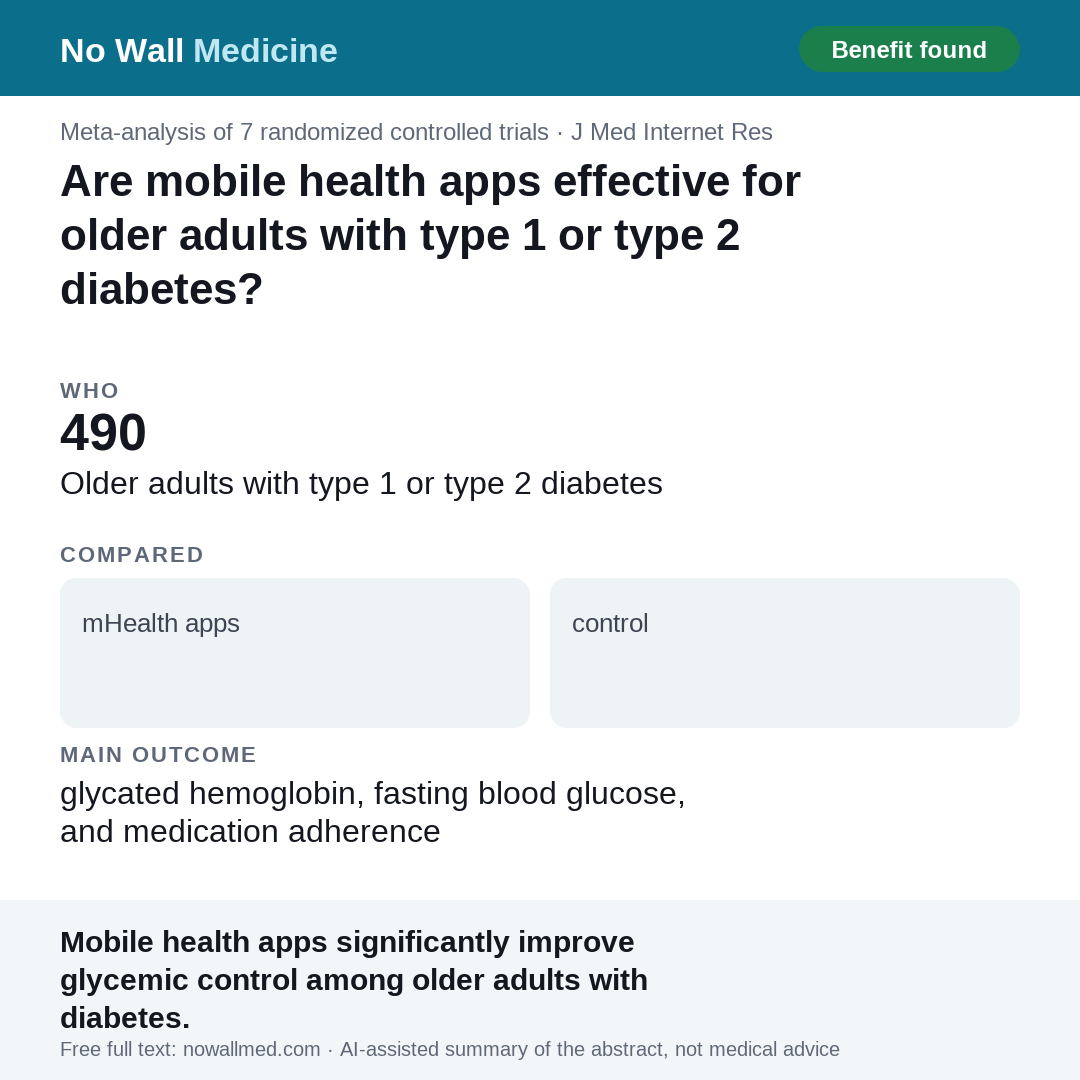
Evaluating Effectiveness of mHealth Apps for Older Adults With Diabetes: Meta-Analysis of Randomized Controlled Trials
Meta-analysis of 7 randomized controlled trialsBenefit found
Are mobile health apps effective for older adults with type 1 or type 2 diabetes?
Who
490
Older adults with type 1 or type 2 diabetes
Compared
mHealth apps
control
Main outcome
glycated hemoglobin, fasting blood glucose, and medication adherence
Result: Hedges g -0.40 (95% CI -0.75 to -0.06)
Bottom line: Mobile health apps significantly improve glycemic control among older adults with diabetes.
Limitation: Effectiveness of mobile health apps might decrease over trial time.
J Med Internet Res · 2025-06-17Download image
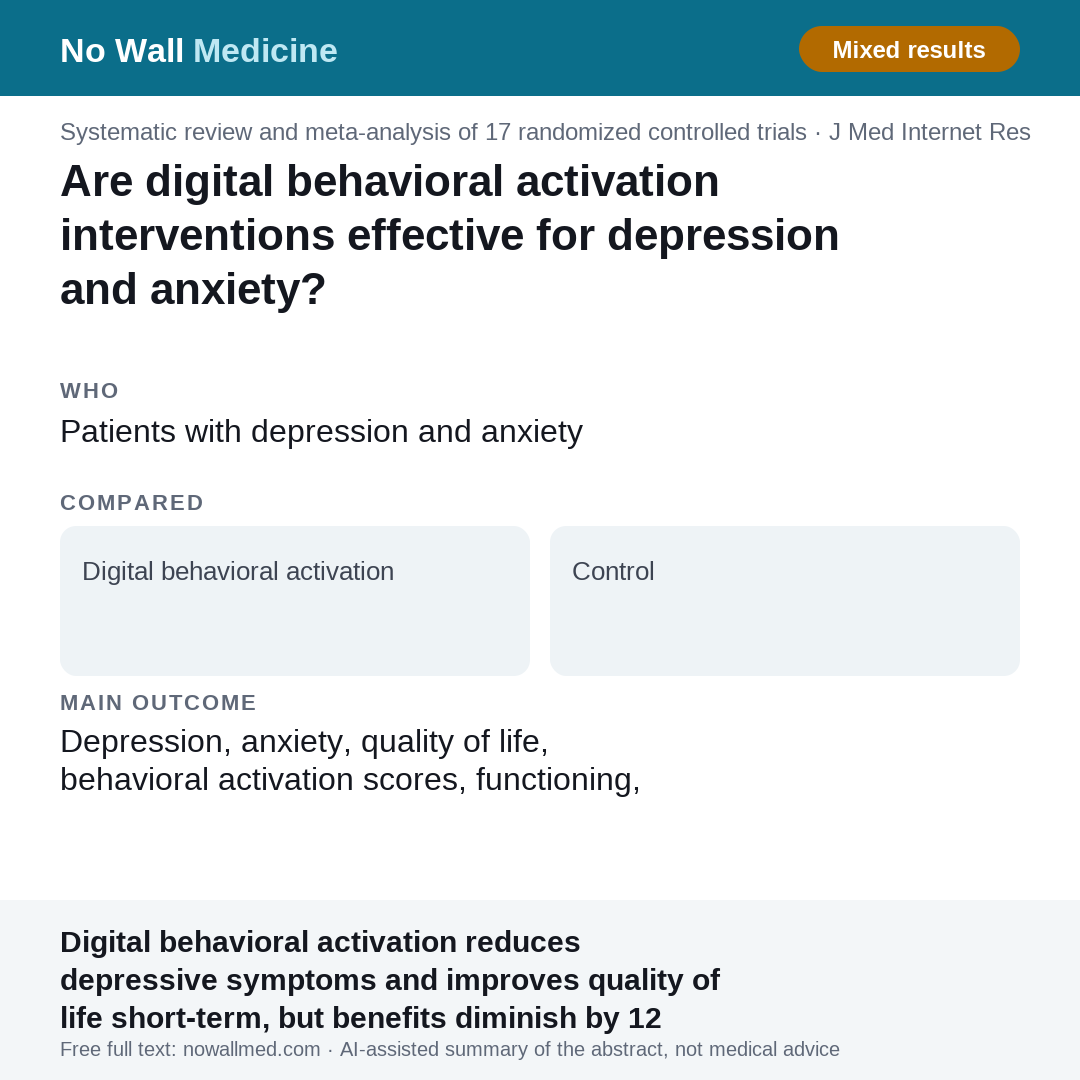
Effectiveness of Digital Behavioral Activation Interventions for Depression and Anxiety: Systematic Review and Meta-Analysis
Systematic review and meta-analysis of 17 randomized controlled trialsMixed results
Are digital behavioral activation interventions effective for depression and anxiety?
Who
Patients with depression and anxiety
Compared
Digital behavioral activation
Control
Main outcome
Depression, anxiety, quality of life, behavioral activation scores, functioning, disability, and stress
Bottom line: Digital behavioral activation reduces depressive symptoms and improves quality of life short-term, but benefits diminish by 12 months.
Limitation: Effects tend to diminish over time with no sustained benefits observed at 12 months.
J Med Internet Res · 2025-06-17Download image
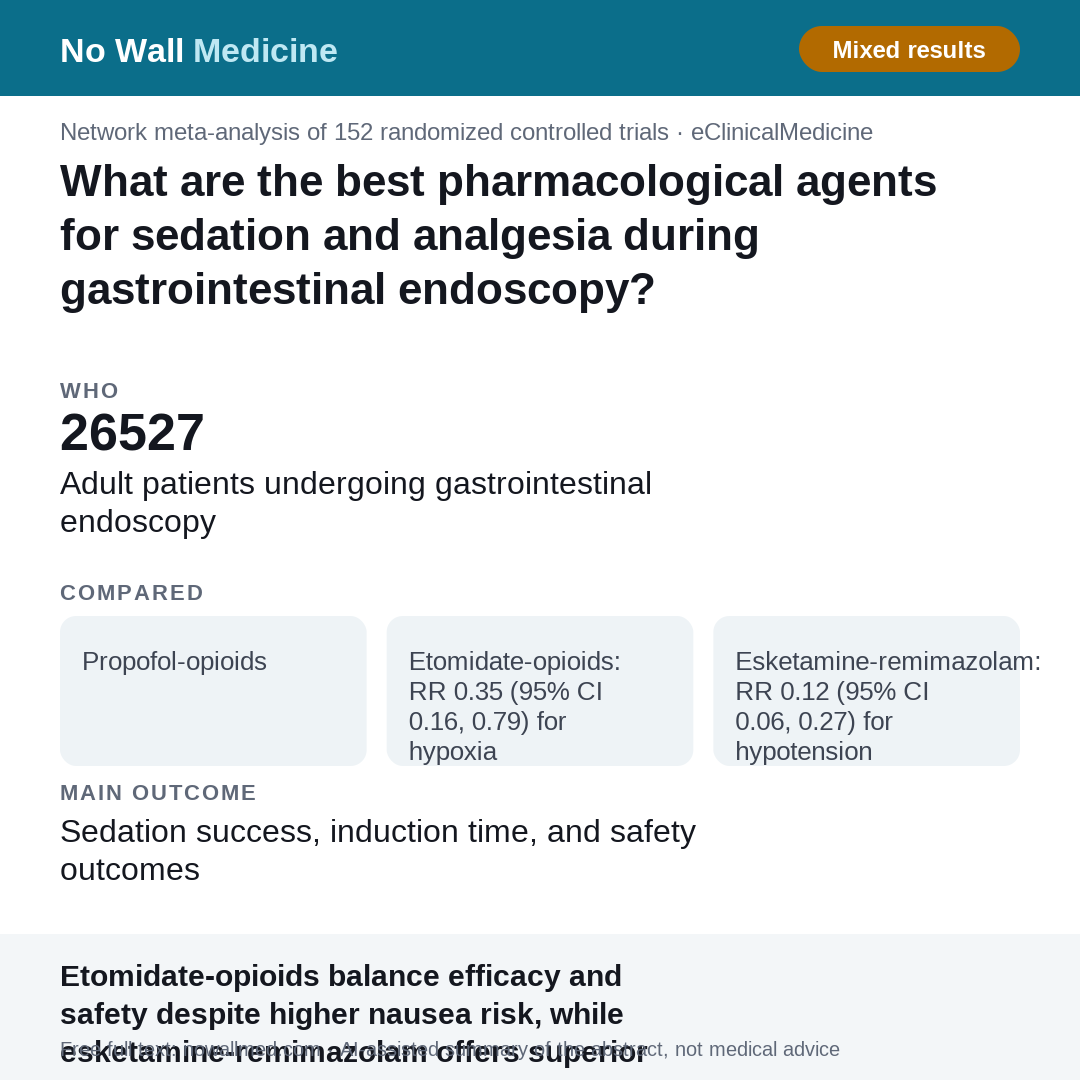
Pharmacological agents for procedural sedation and analgesia in patients undergoing gastrointestinal endoscopy: a systematic review and network meta-analysis
Network meta-analysis of 152 randomized controlled trialsMixed results
What are the best pharmacological agents for sedation and analgesia during gastrointestinal endoscopy?
Who
26527
Adult patients undergoing gastrointestinal endoscopy
Compared
Propofol-opioids
Etomidate-opioids: RR 0.35 (95% CI 0.16, 0.79) for hypoxia
Esketamine-remimazolam: RR 0.12 (95% CI 0.06, 0.27) for hypotension
Main outcome
Sedation success, induction time, and safety outcomes
Result: RR 0.35 (95% CI 0.16, 0.79) for hypoxia; RR 2.61 (95% CI 1.13, 6.07) for postoperative nausea and vomiting
Bottom line: Etomidate-opioids balance efficacy and safety despite higher nausea risk, while esketamine-remimazolam offers superior hemodynamic stability and faster recovery.
eClinicalMedicine · 2025-06-16Download image
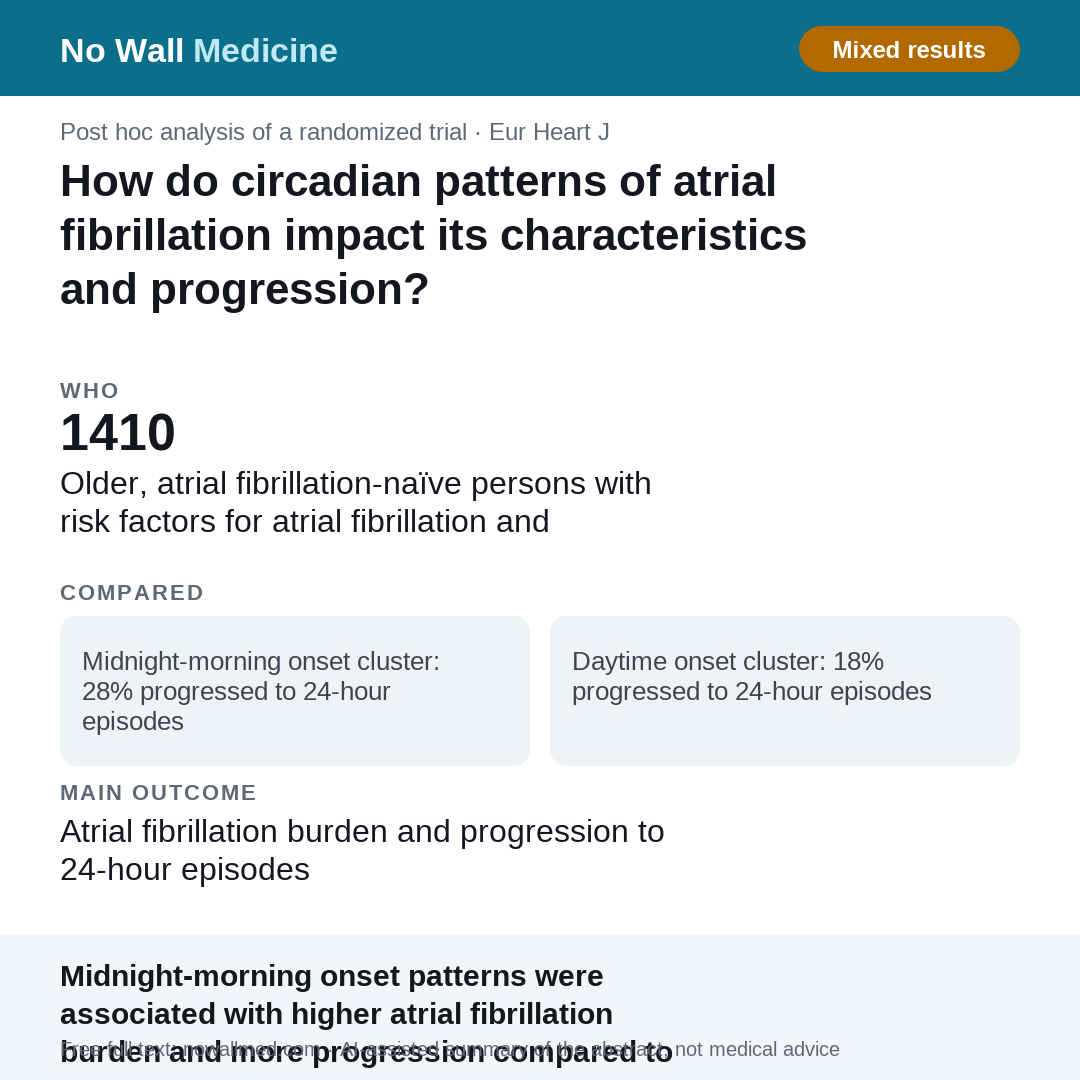
Circadian patterns of atrial fibrillation and disease progression assessed by implanted loop recorders
Post hoc analysis of a randomized trialMixed results
How do circadian patterns of atrial fibrillation impact its characteristics and progression?
Who
1410
Older, atrial fibrillation-naïve persons with risk factors for atrial fibrillation and stroke
Compared
Midnight-morning onset cluster: 28% progressed to 24-hour episodes
Daytime onset cluster: 18% progressed to 24-hour episodes
Main outcome
Atrial fibrillation burden and progression to 24-hour episodes
Bottom line: Midnight-morning onset patterns were associated with higher atrial fibrillation burden and more progression compared to daytime onset.
Eur Heart J · 2025-06-16Download image
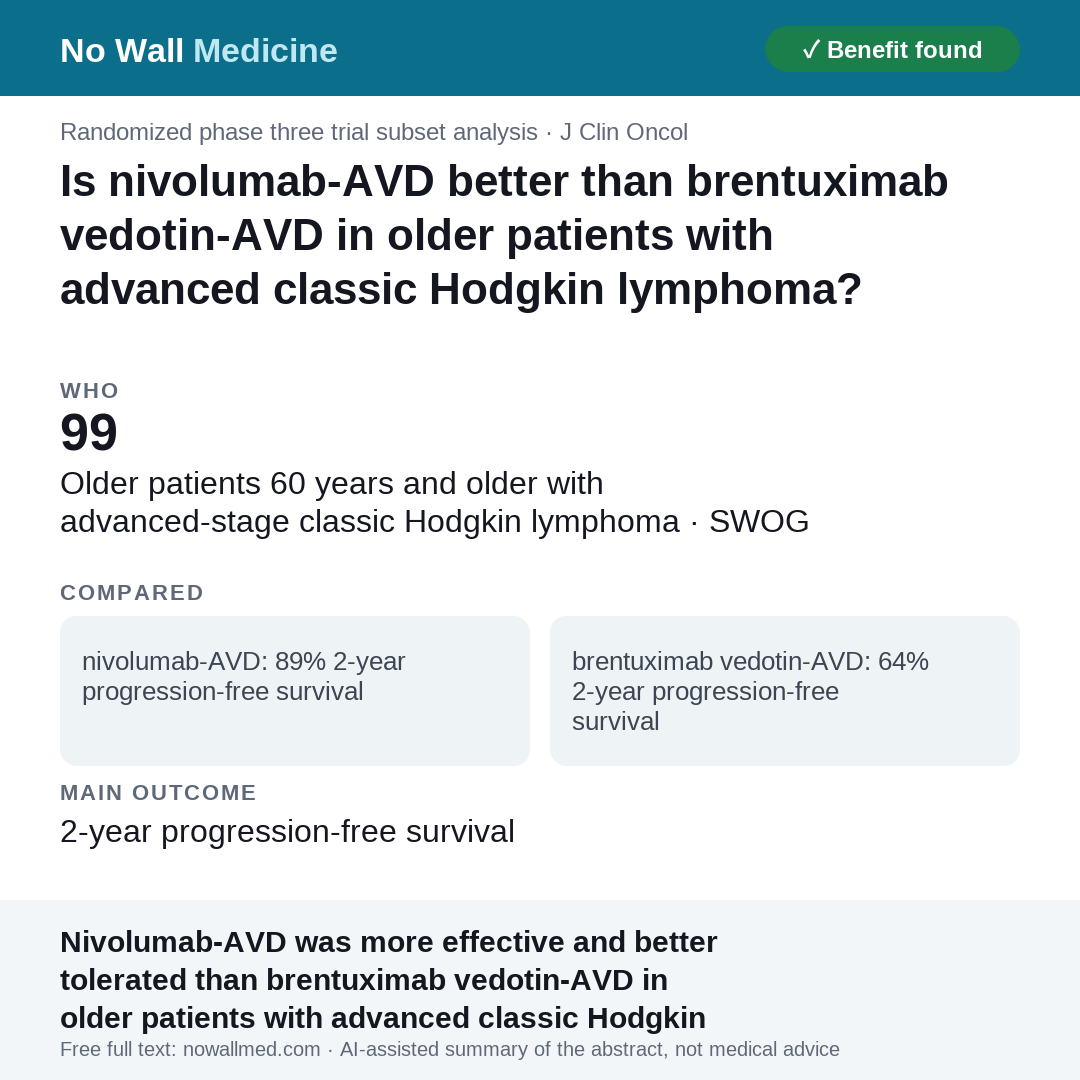
Nivolumab-AVD Versus Brentuximab Vedotin-AVD in Older Patients With Advanced-Stage Classic Hodgkin Lymphoma Enrolled on S1826
Randomized phase three trial subset analysisBenefit found
Is nivolumab-AVD better than brentuximab vedotin-AVD in older patients with advanced classic Hodgkin lymphoma?
Who
99
Older patients 60 years and older with advanced-stage classic Hodgkin lymphoma · SWOG trial
Compared
nivolumab-AVD: 89% 2-year progression-free survival
brentuximab vedotin-AVD: 64% 2-year progression-free survival
Main outcome
2-year progression-free survival
Result: hazard ratio 0.24 (95%CI 0.09-0.63)
Bottom line: Nivolumab-AVD was more effective and better tolerated than brentuximab vedotin-AVD in older patients with advanced classic Hodgkin lymphoma.
J Clin Oncol · 2025-06-16Download image
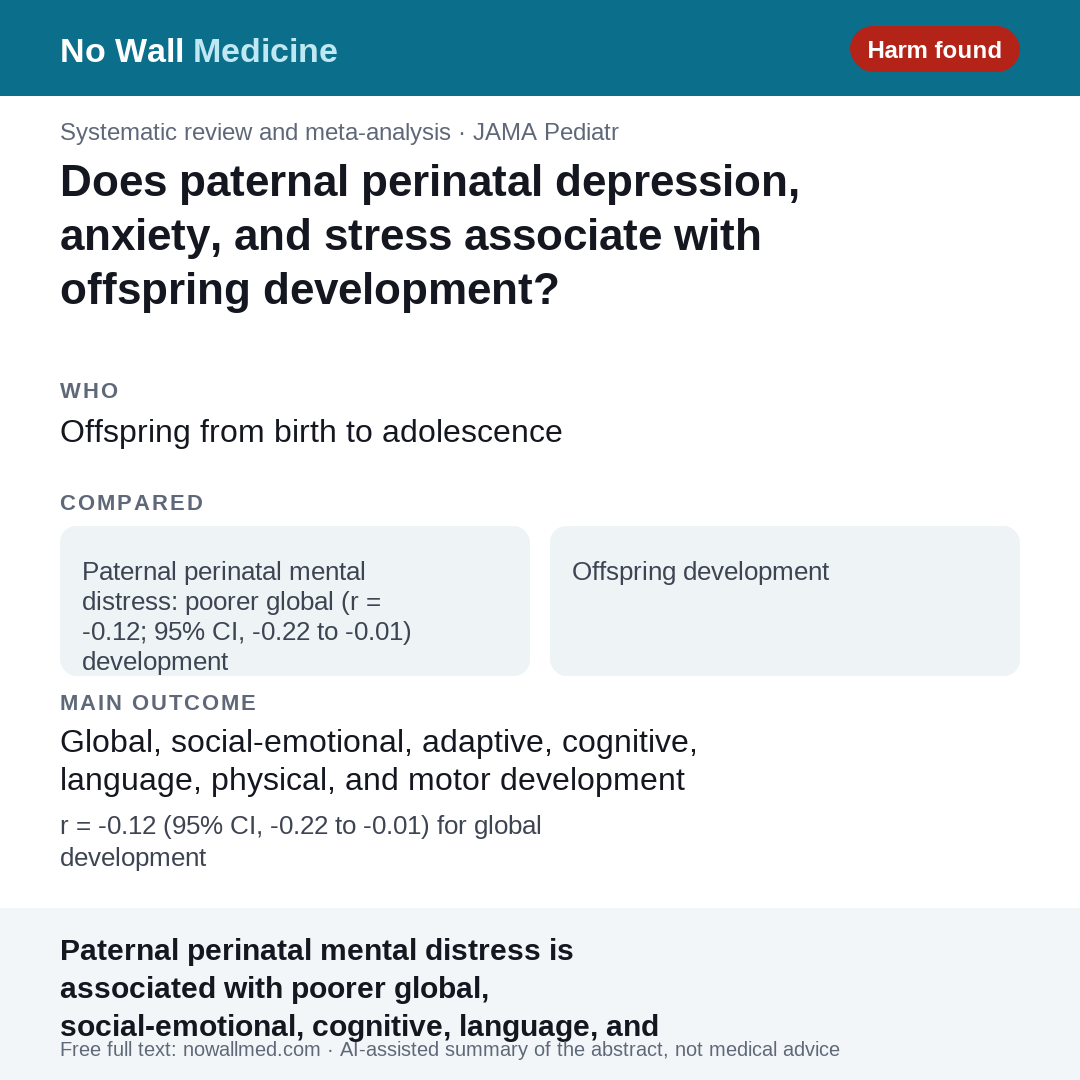
Paternal Perinatal Depression, Anxiety, and Stress and Child Development: A Systematic Review and Meta-Analysis
Systematic review and meta-analysisHarm found
Does paternal perinatal depression, anxiety, and stress associate with offspring development?
Who
Offspring from birth to adolescence
Compared
Paternal perinatal mental distress: poorer global (r = -0.12; 95% CI, -0.22 to -0.01) development
Offspring development
Main outcome
Global, social-emotional, adaptive, cognitive, language, physical, and motor development
Result: r = -0.12 (95% CI, -0.22 to -0.01) for global development
Bottom line: Paternal perinatal mental distress is associated with poorer global, social-emotional, cognitive, language, and physical development in offspring.
JAMA Pediatr · 2025-06-16Download image
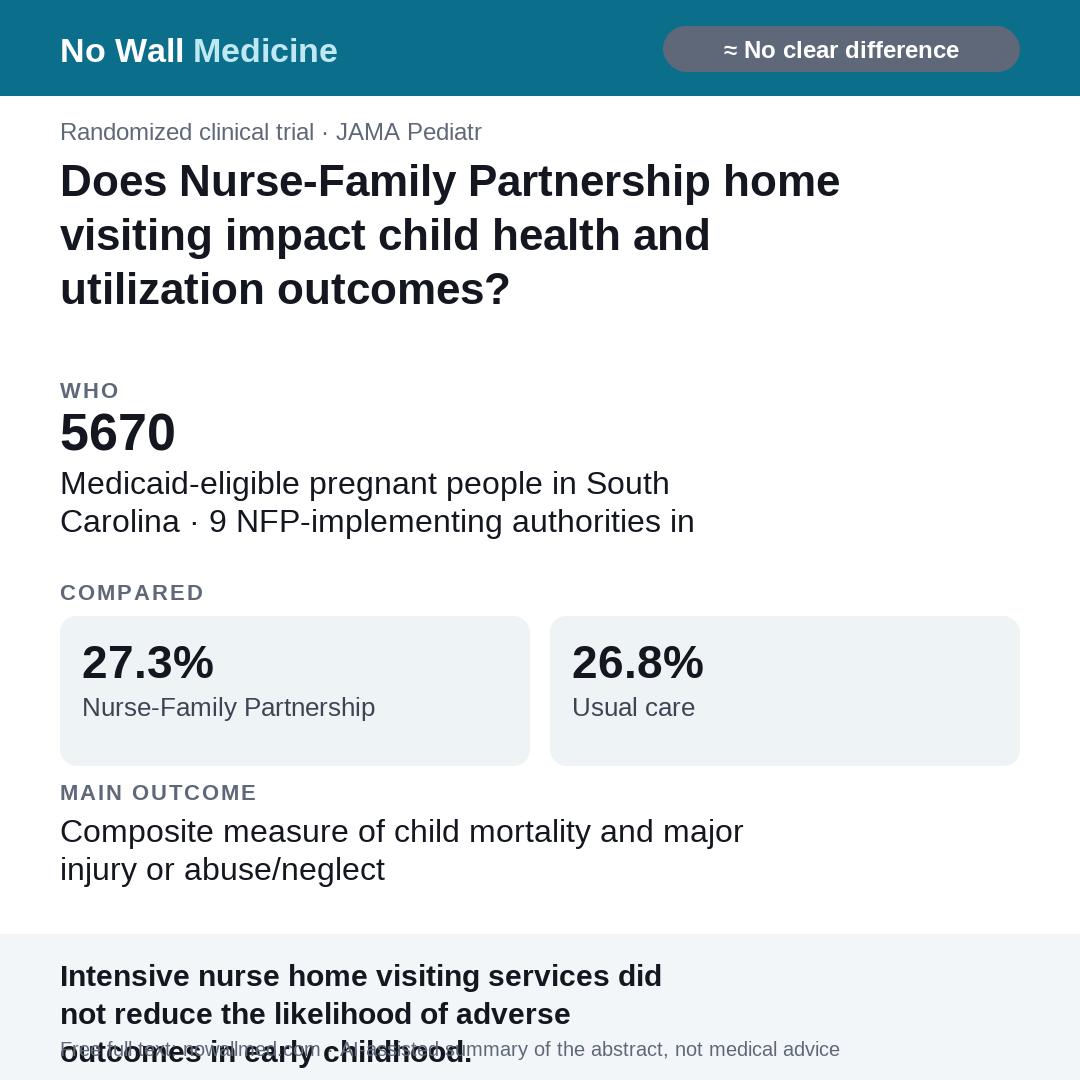
Intensive Nurse Home Visiting and Early Childhood Outcomes: A Randomized Clinical Trial
Randomized clinical trialNo clear difference
Does Nurse-Family Partnership home visiting impact child health and utilization outcomes?
Who
5670
Medicaid-eligible pregnant people in South Carolina · 9 NFP-implementing authorities in South Carolina
Compared
27.3%Nurse-Family Partnership
26.8%Usual care
Main outcome
Composite measure of child mortality and major injury or abuse/neglect
Result: adjusted between-group difference, 0.4 percentage points; 95% CI, -2.3 to 3.0
Bottom line: Intensive nurse home visiting services did not reduce the likelihood of adverse outcomes in early childhood.
JAMA Pediatr · 2025-06-16Download image
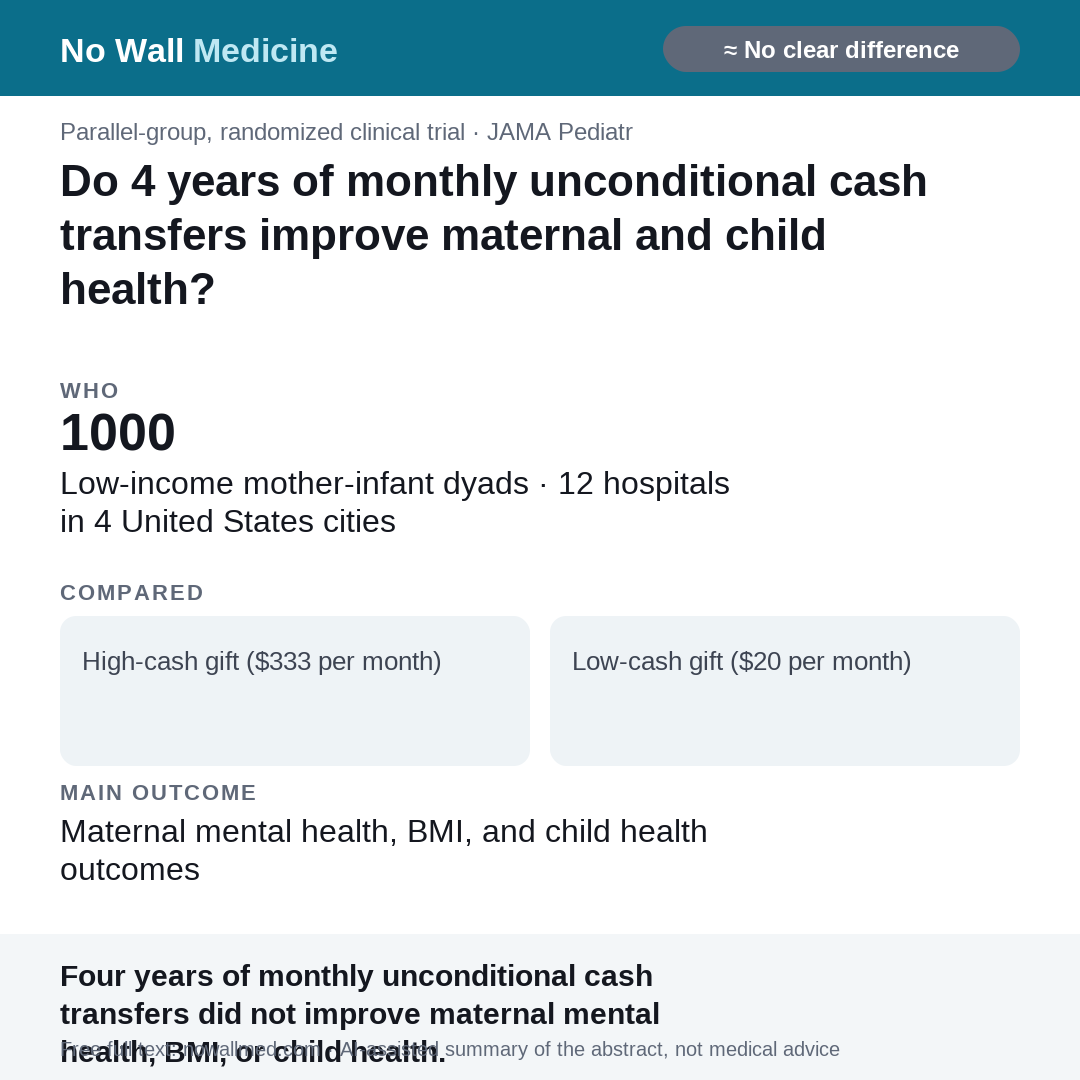
Cash Transfers and Their Effect on Maternal and Young Children's Health: A Randomized Clinical Trial
Parallel-group, randomized clinical trialNo clear difference
Do 4 years of monthly unconditional cash transfers improve maternal and child health?
Who
1000
Low-income mother-infant dyads · 12 hospitals in 4 United States cities
Compared
High-cash gift ($333 per month)
Low-cash gift ($20 per month)
Main outcome
Maternal mental health, BMI, and child health outcomes
Bottom line: Four years of monthly unconditional cash transfers did not improve maternal mental health, BMI, or child health.
JAMA Pediatr · 2025-06-16Download image
The Scale of Neurodegeneration in Moderate-to-Severe Traumatic Brain Injury: A Systematic Review of Longitudinal Studies
Systematic review of longitudinal studiesHarm found
What is the scale and timeline of neurodegeneration in moderate-to-severe traumatic brain injury?
Who
Adults with moderate-to-severe traumatic brain injury
Compared
-0.28%Total grey matter volume
-0.65%Total white matter volume
-1.98%Hippocampal volume
-3.15%Corpus callosum fractional anisotropy
Main outcome
Annualized percent change in brain volume and fractional anisotropy
Bottom line: Moderate-to-severe traumatic brain injury involves widespread progressive volumetric and white matter integrity losses over time.
Limitation: Gaps include mechanisms of degeneration and whether progressive losses remain constant or attenuate with time.
Ann Neurol · 2025-06-16Download image

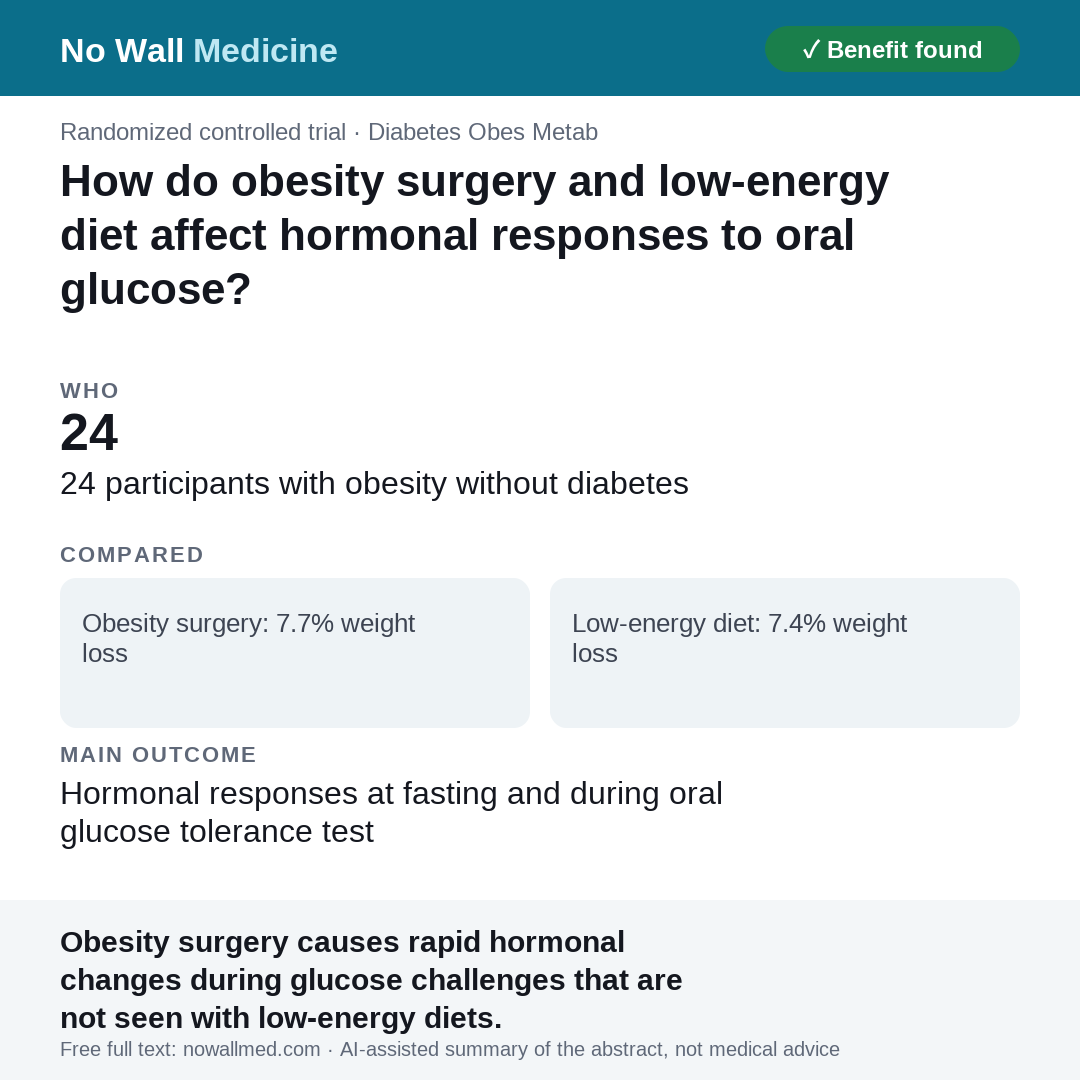
Hormonal adaptations to weight loss: Responses to an oral glucose load 4 weeks after obesity surgery and low-energy diet
Randomized controlled trialBenefit found
How do obesity surgery and low-energy diet affect hormonal responses to oral glucose?
Who
24
24 participants with obesity without diabetes
Compared
Obesity surgery: 7.7% weight loss
Low-energy diet: 7.4% weight loss
Main outcome
Hormonal responses at fasting and during oral glucose tolerance test
Bottom line: Obesity surgery causes rapid hormonal changes during glucose challenges that are not seen with low-energy diets.
Diabetes Obes Metab · 2025-06-16Download image
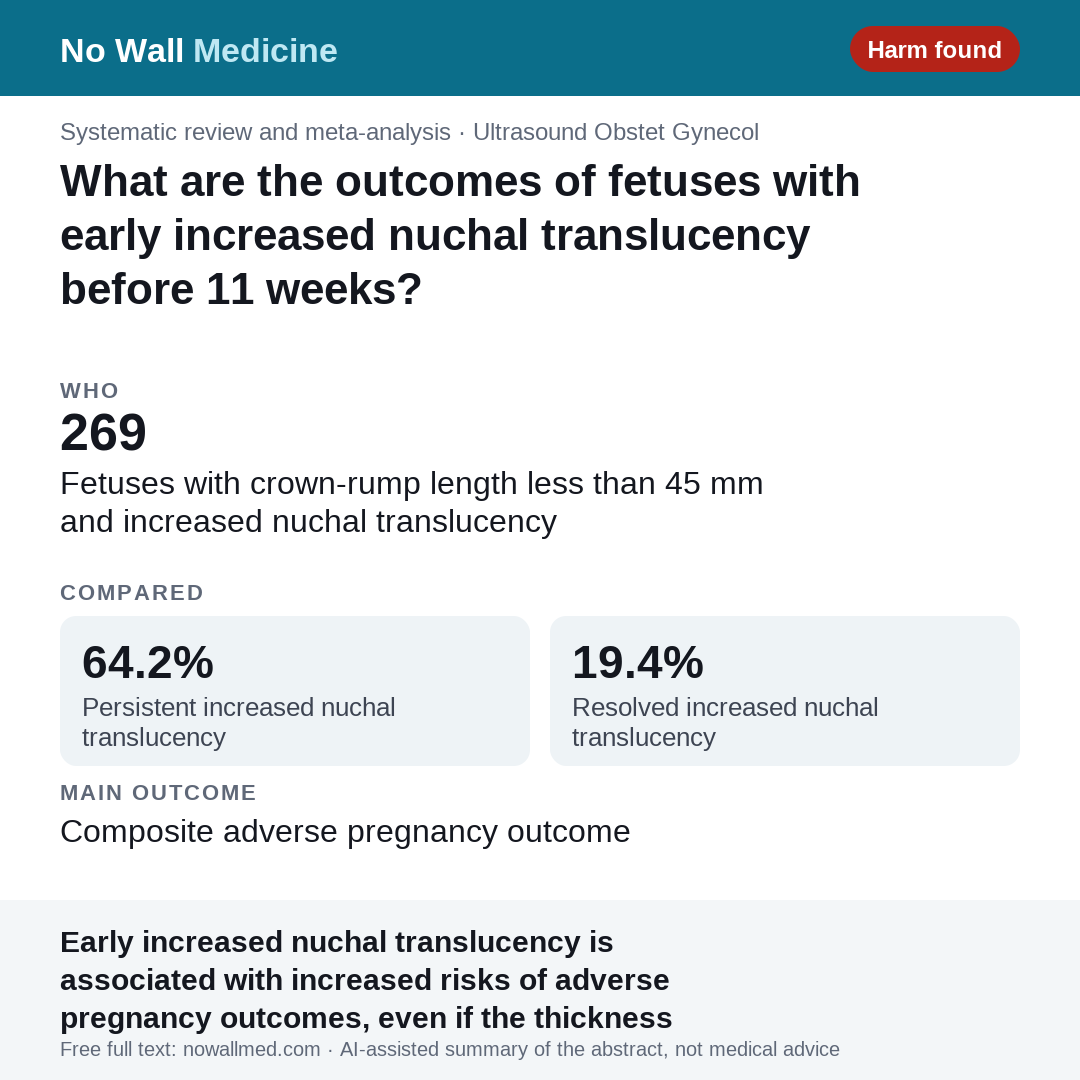
Outcome of fetuses with early increased nuchal translucency: systematic review and meta-analysis
Systematic review and meta-analysisHarm found
What are the outcomes of fetuses with early increased nuchal translucency before 11 weeks?
Who
269
Fetuses with crown-rump length less than 45 mm and increased nuchal translucency
Compared
64.2%Persistent increased nuchal translucency (95% CI, 51.8-75.6%)
19.4%Resolved increased nuchal translucency (95% CI, 8.8-33.0%)
Main outcome
Composite adverse pregnancy outcome
Result: 42.0% (95% CI, 18.5-67.6%)
Bottom line: Early increased nuchal translucency is associated with increased risks of adverse pregnancy outcomes, even if the thickness resolves later.
Ultrasound Obstet Gynecol · 2025-06-16Download image
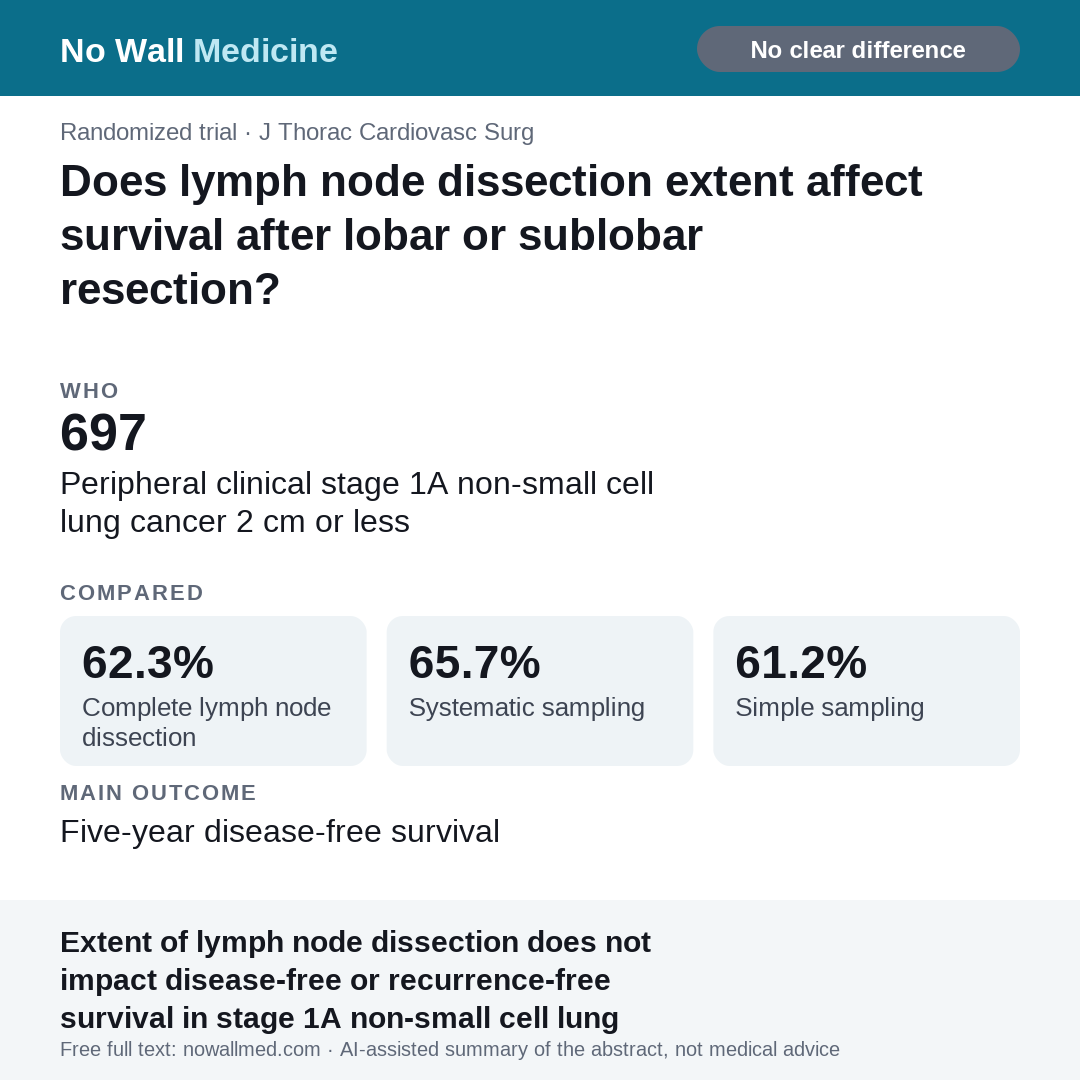
The extent of lymph node dissection is not associated with disease-free survival following lobar or sublobar resection: Results from Cancer and Leukemia Group B 140503 (Alliance)
Randomized trialNo clear difference
Does lymph node dissection extent affect survival after lobar or sublobar resection?
Who
697
Peripheral clinical stage 1A non-small cell lung cancer 2 cm or less
Compared
62.3%Complete lymph node dissection (95% CI, 55.2-70.4)
65.7%Systematic sampling (95% CI, 60.7-71.2)
61.2%Simple sampling (95% CI, 53.7-69.7)
Main outcome
Five-year disease-free survival
Bottom line: Extent of lymph node dissection does not impact disease-free or recurrence-free survival in stage 1A non-small cell lung cancer.
J Thorac Cardiovasc Surg · 2025-06-16Download image