Visual abstracts
New randomized trials and meta-analyses from leading journals at a glance: who was studied, what was compared, and what was found. Every paper is free to read in full.
All specialtiesCardiology 4031Oncology 3444Gastroenterology & Hepatology 1599Infectious Disease 3006Neurology 1594Psychiatry & Mental Health 1900Pulmonology 1741Critical Care 1135Endocrinology & Diabetes 2085Pediatrics 2416Surgery 2130Orthopedics & Sports Medicine 758Neurosurgery 461Cardiothoracic & Vascular Surgery 504Plastic & Reconstructive Surgery 536Nephrology 897Rheumatology 671Hematology 903Dermatology 514Ophthalmology 438Obstetrics & Gynecology 1407Public & Global Health 806Radiology & Imaging 544Anesthesiology 808Urology 650ENT (Otolaryngology) 436Emergency Medicine 431Allergy & Immunology 252Geriatrics 837Family Medicine & Primary Care 480Medical Genetics & Genomics 554Pathology & Laboratory Medicine 138Physical Medicine & Rehabilitation 617Palliative Care 360Nutrition 1226Digital Health & AI 1867General Medicine 280
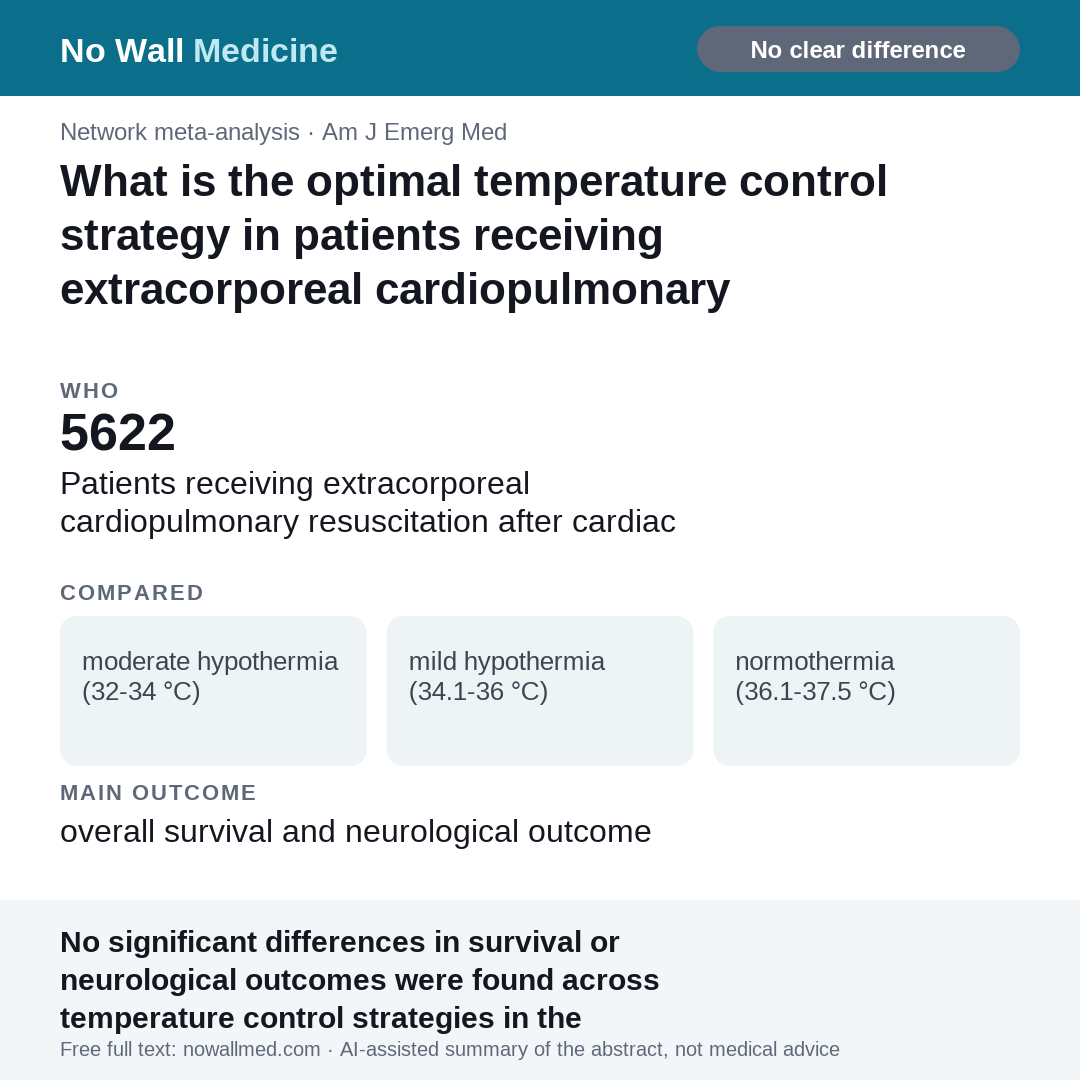
What's the optimal temperature control strategy in patients receiving ECPR after cardiac arrest? A network meta-analysis
Network meta-analysisNo clear difference
What is the optimal temperature control strategy in patients receiving extracorporeal cardiopulmonary resuscitation?
Who
5622
Patients receiving extracorporeal cardiopulmonary resuscitation after cardiac arrest
Compared
moderate hypothermia (32-34 °C)
mild hypothermia (34.1-36 °C)
normothermia (36.1-37.5 °C)
Main outcome
overall survival and neurological outcome
Bottom line: No significant differences in survival or neurological outcomes were found across temperature control strategies in the network meta-analysis.
Limitation: lower level of the evidence
Am J Emerg Med · 2024-11-02Download image
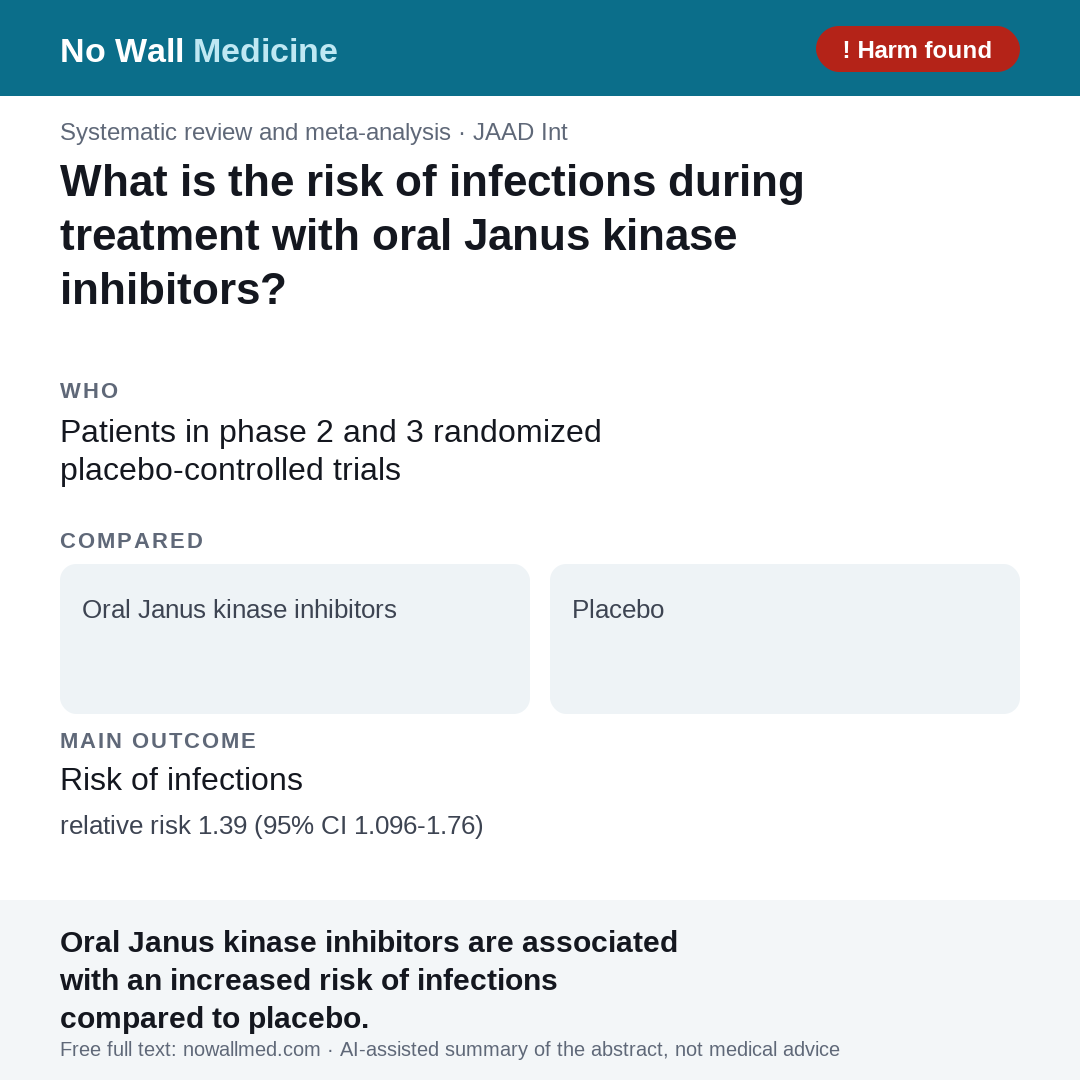
Risk of infections during treatment with oral Janus kinase inhibitors in randomized placebo-controlled trials: A systematic review and meta-analysis
Systematic review and meta-analysisHarm found
What is the risk of infections during treatment with oral Janus kinase inhibitors?
Who
Patients in phase 2 and 3 randomized placebo-controlled trials
Compared
Oral Janus kinase inhibitors
Placebo
Main outcome
Risk of infections
Result: relative risk 1.39 (95% CI 1.096-1.76)
Bottom line: Oral Janus kinase inhibitors are associated with an increased risk of infections compared to placebo.
JAAD Int · 2024-11-02Download image
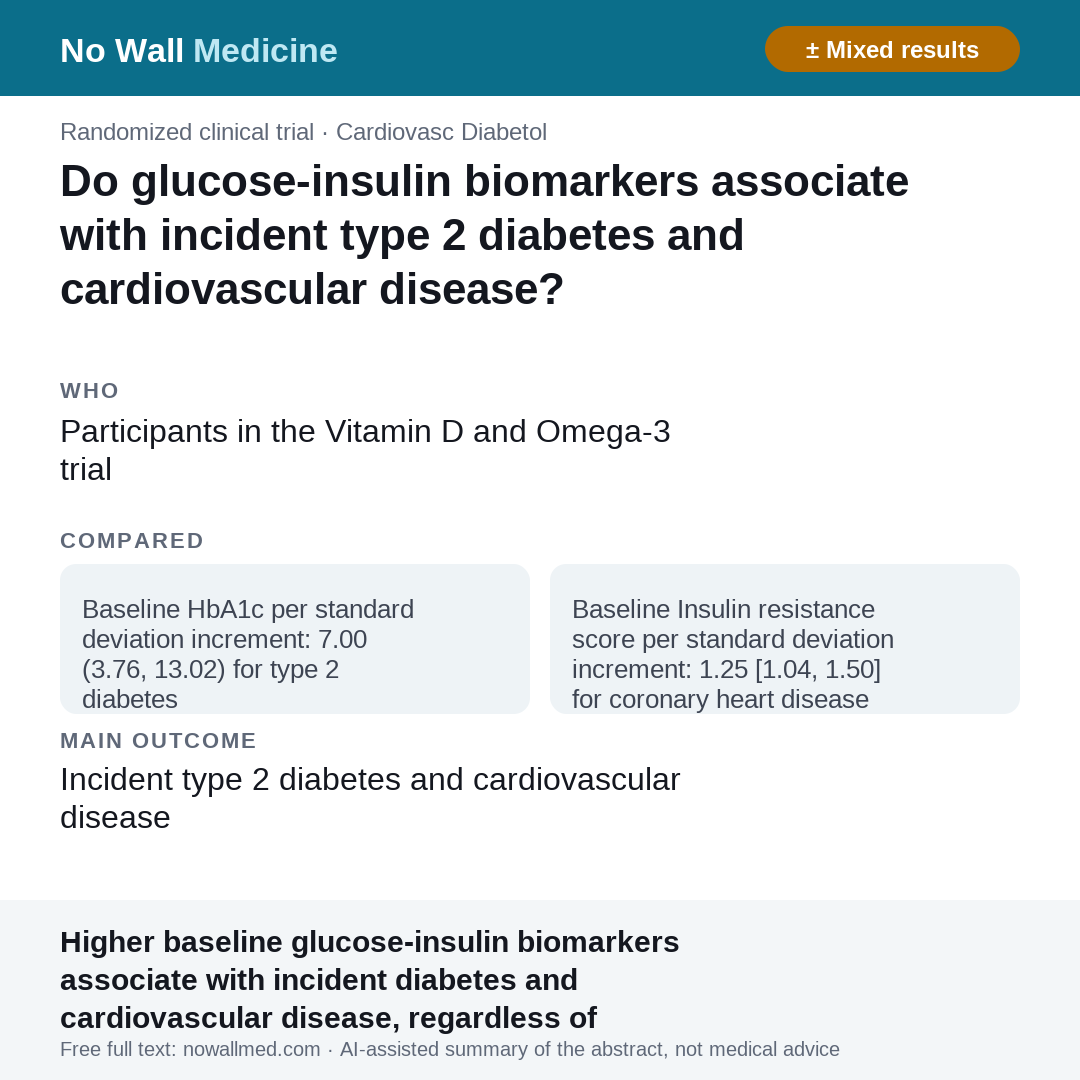
Biomarkers of glucose-insulin homeostasis and incident type 2 diabetes and cardiovascular disease: results from the Vitamin D and Omega-3 trial
Randomized clinical trialMixed results
Do glucose-insulin biomarkers associate with incident type 2 diabetes and cardiovascular disease?
Who
Participants in the Vitamin D and Omega-3 trial
Compared
Baseline HbA1c per standard deviation increment: 7.00 (3.76, 13.02) for type 2 diabetes
Baseline Insulin resistance score per standard deviation increment: 1.25 [1.04, 1.50] for coronary heart disease
Main outcome
Incident type 2 diabetes and cardiovascular disease
Bottom line: Higher baseline glucose-insulin biomarkers associate with incident diabetes and cardiovascular disease, regardless of vitamin D or omega-3 supplementation.
Cardiovasc Diabetol · 2024-11-02Download image
Getting it Right from the Start (GIRFTS): protocol for a stepped-wedge cluster randomised controlled trial of a school-based framework to improve children's oral language and reading outcomes
Stepped-wedge cluster randomised trialUnclear result
Does a school-based response to intervention framework improve oral language and reading outcomes?
Who
Foundation and grade 1 students in primary schools · Victoria, Australia
Compared
Response to intervention framework
Control
Main outcome
Reading comprehension by the start of grade 2
Bottom line: This is a protocol for a trial to evaluate a response to intervention framework for improving reading.
BMJ Paediatr Open · 2024-11-02Download image

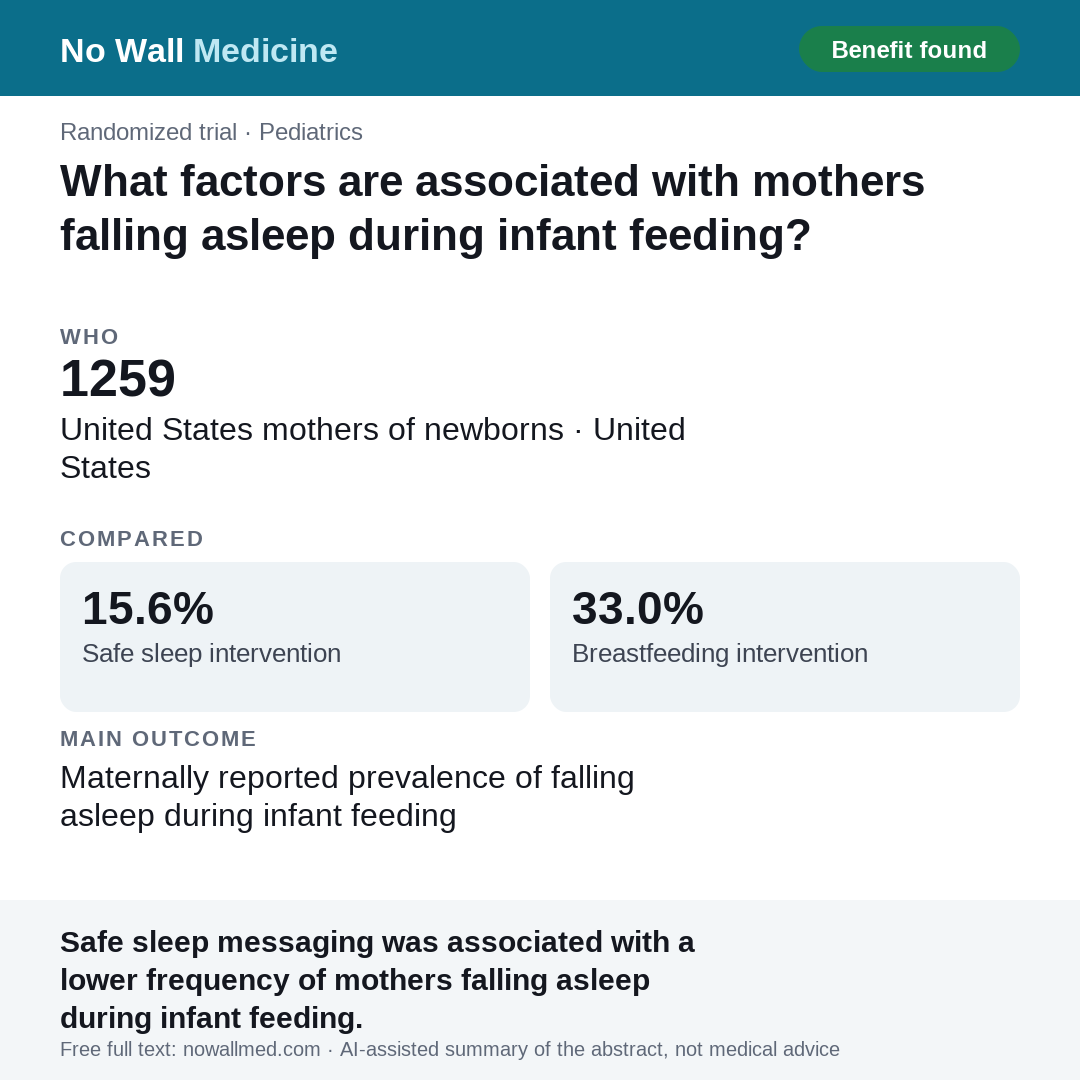
Mothers Falling Asleep During Infant Feeding
Randomized trialBenefit found
What factors are associated with mothers falling asleep during infant feeding?
Who
1259
United States mothers of newborns · United States
Compared
15.6%Safe sleep intervention
33.0%Breastfeeding intervention
Main outcome
Maternally reported prevalence of falling asleep during infant feeding
Result: adjusted odds ratio 0.40 (95% confidence interval, 0.25-0.65)
Bottom line: Safe sleep messaging was associated with a lower frequency of mothers falling asleep during infant feeding.
Pediatrics · 2024-11-01Download image
Safety and efficacy of pegcetacoplan treatment for cold agglutinin disease and warm antibody autoimmune hemolytic anemia
Open-label phase 2 randomized trialBenefit found
Is pegcetacoplan safe and effective for cold agglutinin disease and warm antibody autoimmune hemolytic anemia?
Who
Patients with cold agglutinin disease and warm antibody autoimmune hemolytic anemia
Compared
Cold agglutinin disease cohort: median change from baseline hemoglobin 2.4 (0.90-3.00) g/dL
Warm antibody autoimmune hemolytic anemia cohort: median change from baseline hemoglobin 1.7 g/dL (-1.40 to 2.90)
Main outcome
Hemoglobin levels, hemolysis, and fatigue scale scores
Bottom line: Pegcetacoplan is generally well tolerated and effective for patients with cold agglutinin disease and warm antibody autoimmune hemolytic anemia.
Blood · 2024-11-01Download image

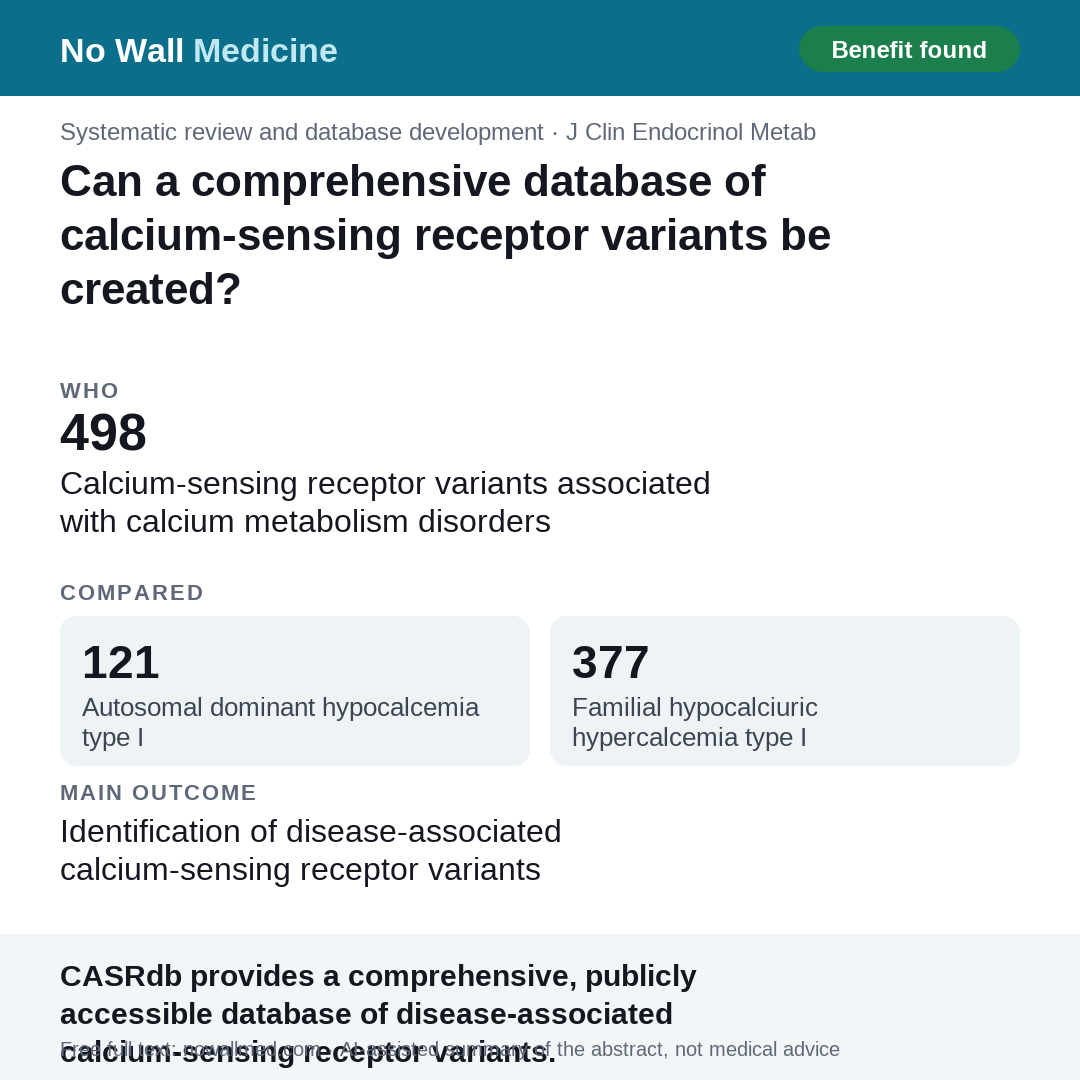
CASRdb: A Publicly Accessible Comprehensive Database for Disease-Associated Calcium-Sensing Receptor Variants
Systematic review and database developmentBenefit found
Can a comprehensive database of calcium-sensing receptor variants be created?
Who
498
Calcium-sensing receptor variants associated with calcium metabolism disorders
Compared
121Autosomal dominant hypocalcemia type I (24.3%)
377Familial hypocalciuric hypercalcemia type I (75.7%)
Main outcome
Identification of disease-associated calcium-sensing receptor variants
Bottom line: CASRdb provides a comprehensive, publicly accessible database of disease-associated calcium-sensing receptor variants.
J Clin Endocrinol Metab · 2024-11-01Download image
Cardiovascular and all-cause mortality outcomes of adrenalectomy versus medical treatment in primary aldosteronism: an umbrella review
Umbrella reviewBenefit found
Are adrenalectomy or mineralocorticoid receptor antagonist treatments better for primary aldosteronism outcomes?
Who
Patients with primary aldosteronism
Compared
Adrenalectomy
Mineralocorticoid receptor antagonist treatment
Main outcome
Cardiovascular outcomes and all-cause mortality
Result: major adverse cardiovascular events OR 1.81 (95% CI 1.33-2.46)
Bottom line: Adrenalectomy may offer favorable outcomes compared to mineralocorticoid receptor antagonist treatment for cardiovascular events and mortality.
Int J Surg · 2024-11-01Download image

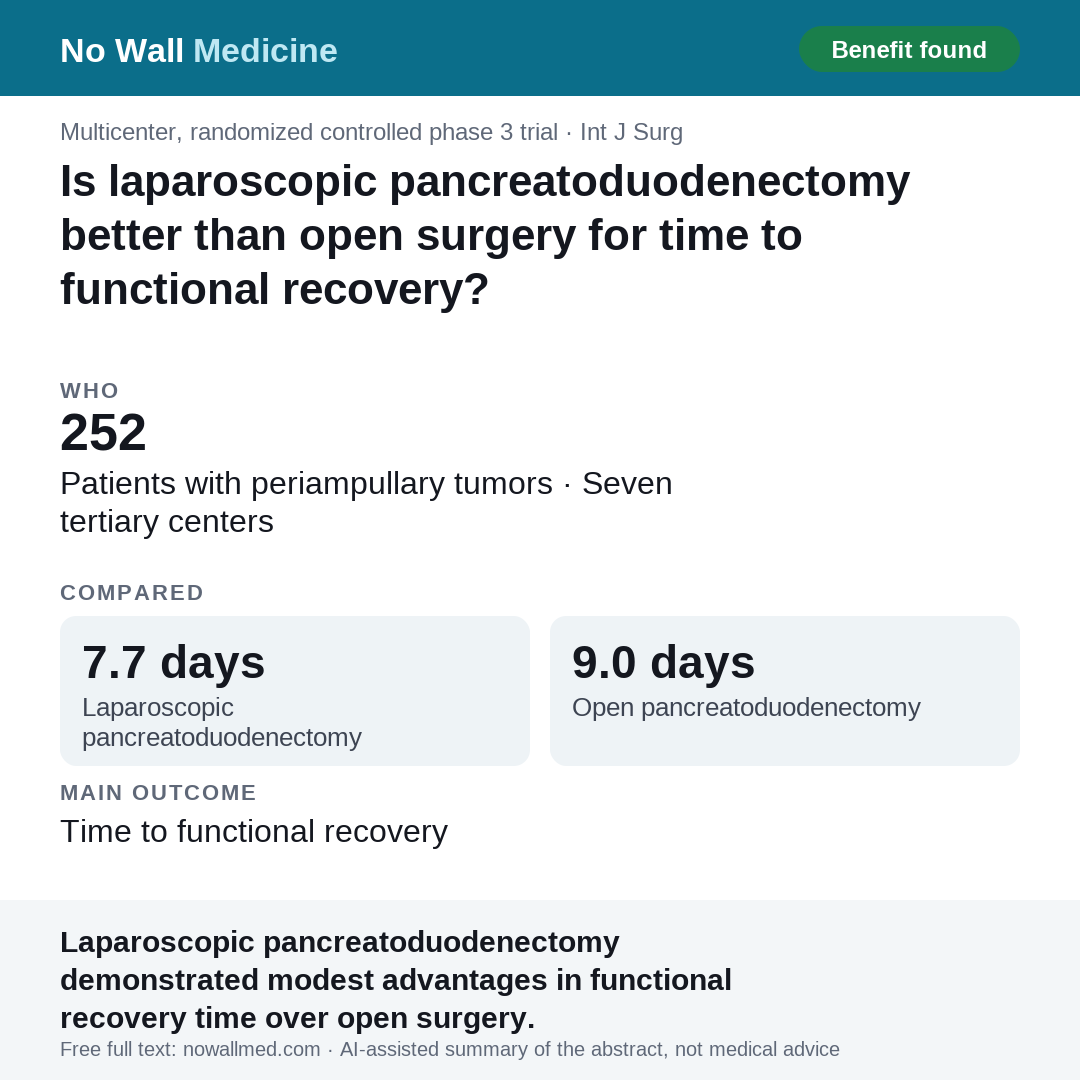
Laparoscopic versus open pancreatoduodenectomy for periampullary tumors: a randomized clinical trial
Multicenter, randomized controlled phase 3 trialBenefit found
Is laparoscopic pancreatoduodenectomy better than open surgery for time to functional recovery?
Who
252
Patients with periampullary tumors · Seven tertiary centers
Compared
7.7 daysLaparoscopic pancreatoduodenectomy
9.0 daysOpen pancreatoduodenectomy
Main outcome
Time to functional recovery
Result: hazard ratio 1.34 (95% CI 1.03-1.74)
Bottom line: Laparoscopic pancreatoduodenectomy demonstrated modest advantages in functional recovery time over open surgery.
Int J Surg · 2024-11-01Download image
Determinants of clinical response to injection laryngoplasty in unilateral vocal fold paralysis: a systematic review and meta-analysis
Meta-analysis of 82 studiesBenefit found
What determines response to injection laryngoplasty
Who
patients with unilateral vocal fold paralysis
Compared
injection laryngoplasty
control
Main outcome
vocal function improvement
Bottom line: Injection laryngoplasty improves vocal outcomes
Int J Surg · 2024-11-01Download image

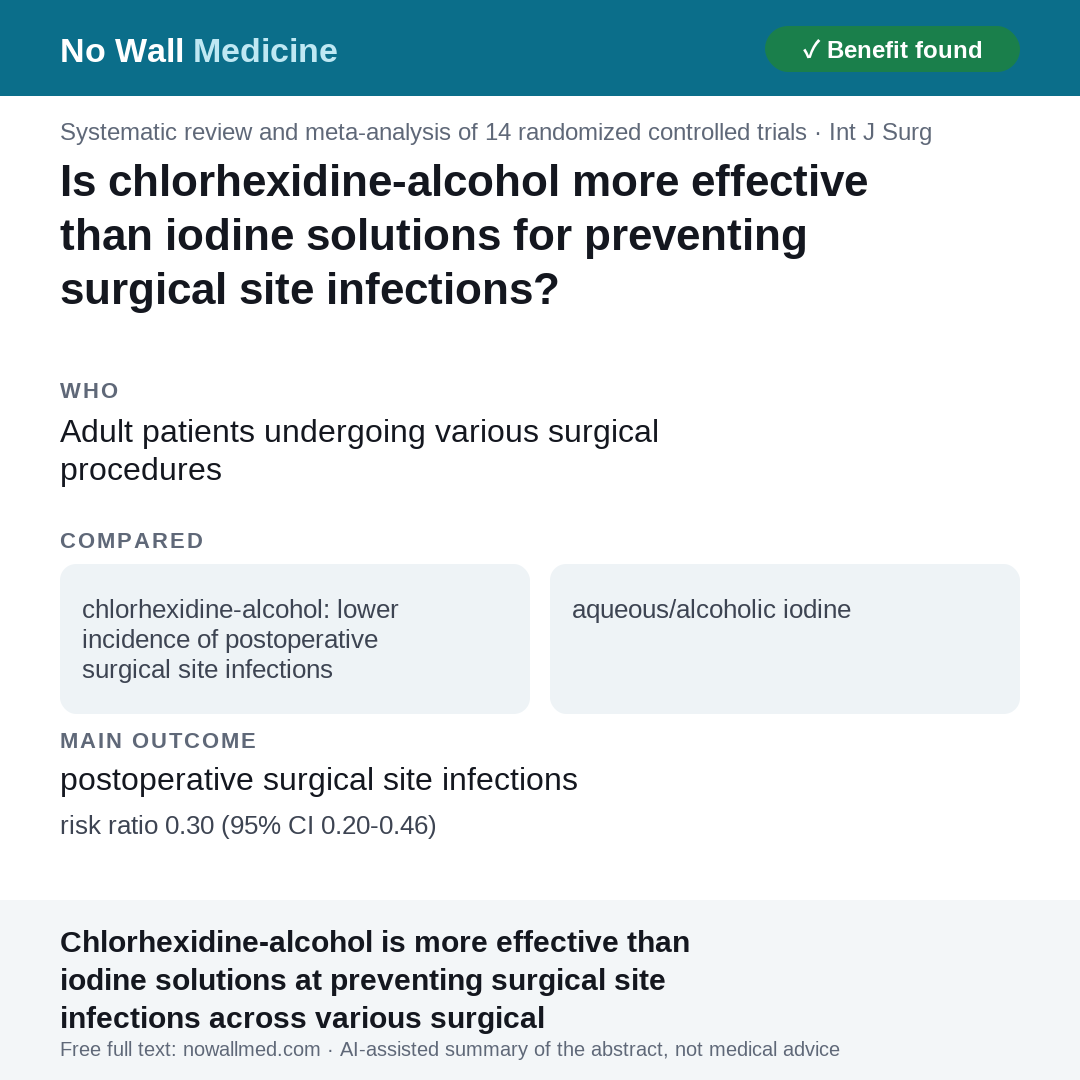
Evaluation of the efficacy of chlorhexidine-alcohol vs. aqueous/alcoholic iodine solutions for the prevention of surgical site infections: a systematic review and meta-analysis
Systematic review and meta-analysis of 14 randomized controlled trialsBenefit found
Is chlorhexidine-alcohol more effective than iodine solutions for preventing surgical site infections?
Who
Adult patients undergoing various surgical procedures
Compared
chlorhexidine-alcohol: lower incidence of postoperative surgical site infections
aqueous/alcoholic iodine
Main outcome
postoperative surgical site infections
Result: risk ratio 0.30 (95% CI 0.20-0.46)
Bottom line: Chlorhexidine-alcohol is more effective than iodine solutions at preventing surgical site infections across various surgical procedures.
Int J Surg · 2024-11-01Download image
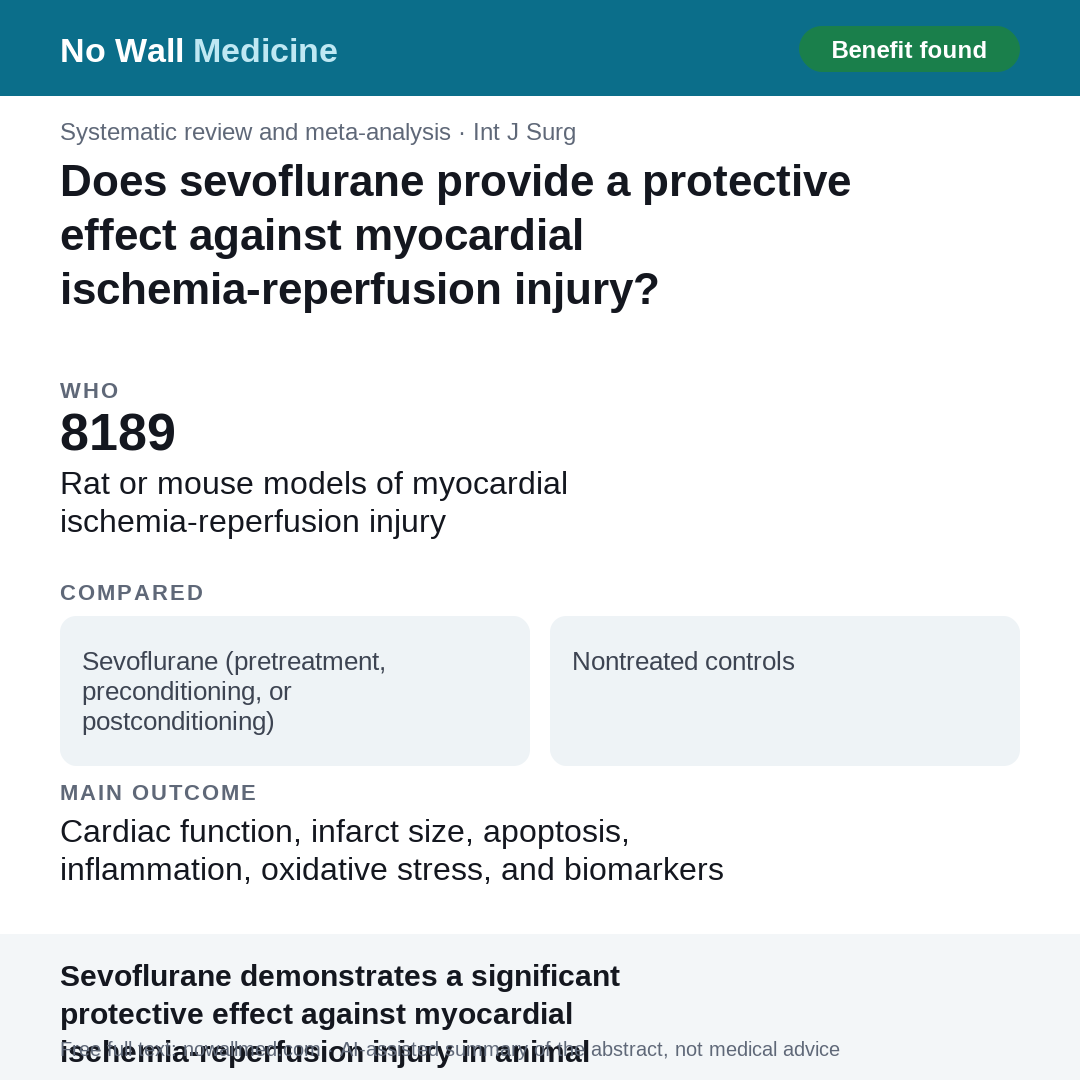
Protective effect of sevoflurane on myocardial ischemia-reperfusion injury: a systematic review and meta-analysis
Systematic review and meta-analysisBenefit found
Does sevoflurane provide a protective effect against myocardial ischemia-reperfusion injury?
Who
8189
Rat or mouse models of myocardial ischemia-reperfusion injury
Compared
Sevoflurane (pretreatment, preconditioning, or postconditioning)
Nontreated controls
Main outcome
Cardiac function, infarct size, apoptosis, inflammation, oxidative stress, and biomarkers
Bottom line: Sevoflurane demonstrates a significant protective effect against myocardial ischemia-reperfusion injury in animal models.
Int J Surg · 2024-11-01Download image
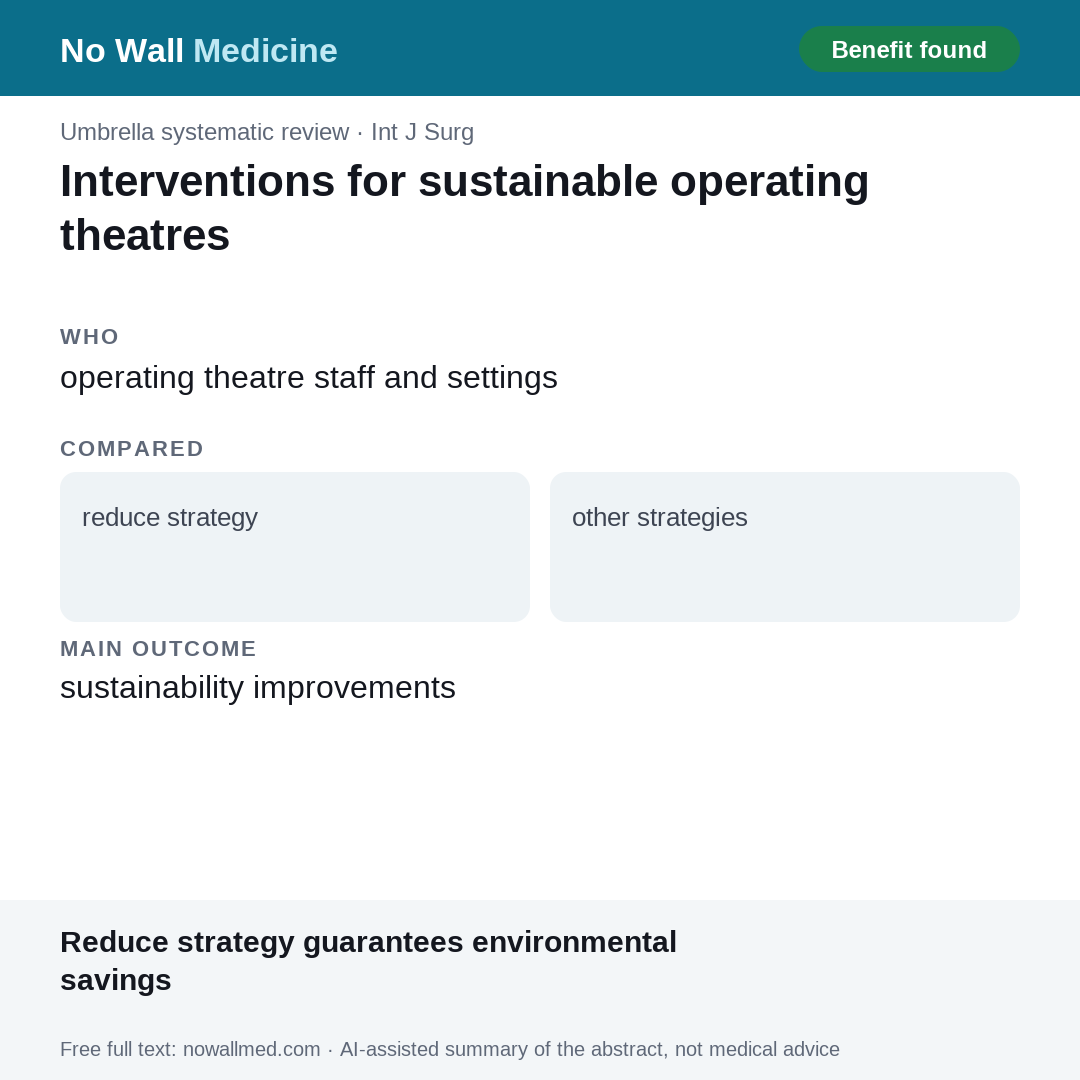
Interventions to achieve environmentally sustainable operating theatres: an umbrella systematic review using the behaviour change wheel
Umbrella systematic reviewBenefit found
Interventions for sustainable operating theatres
Who
operating theatre staff and settings
Compared
reduce strategy
other strategies
Main outcome
sustainability improvements
Bottom line: Reduce strategy guarantees environmental savings
Limitation: comparing outcomes is difficult
Int J Surg · 2024-11-01Download image
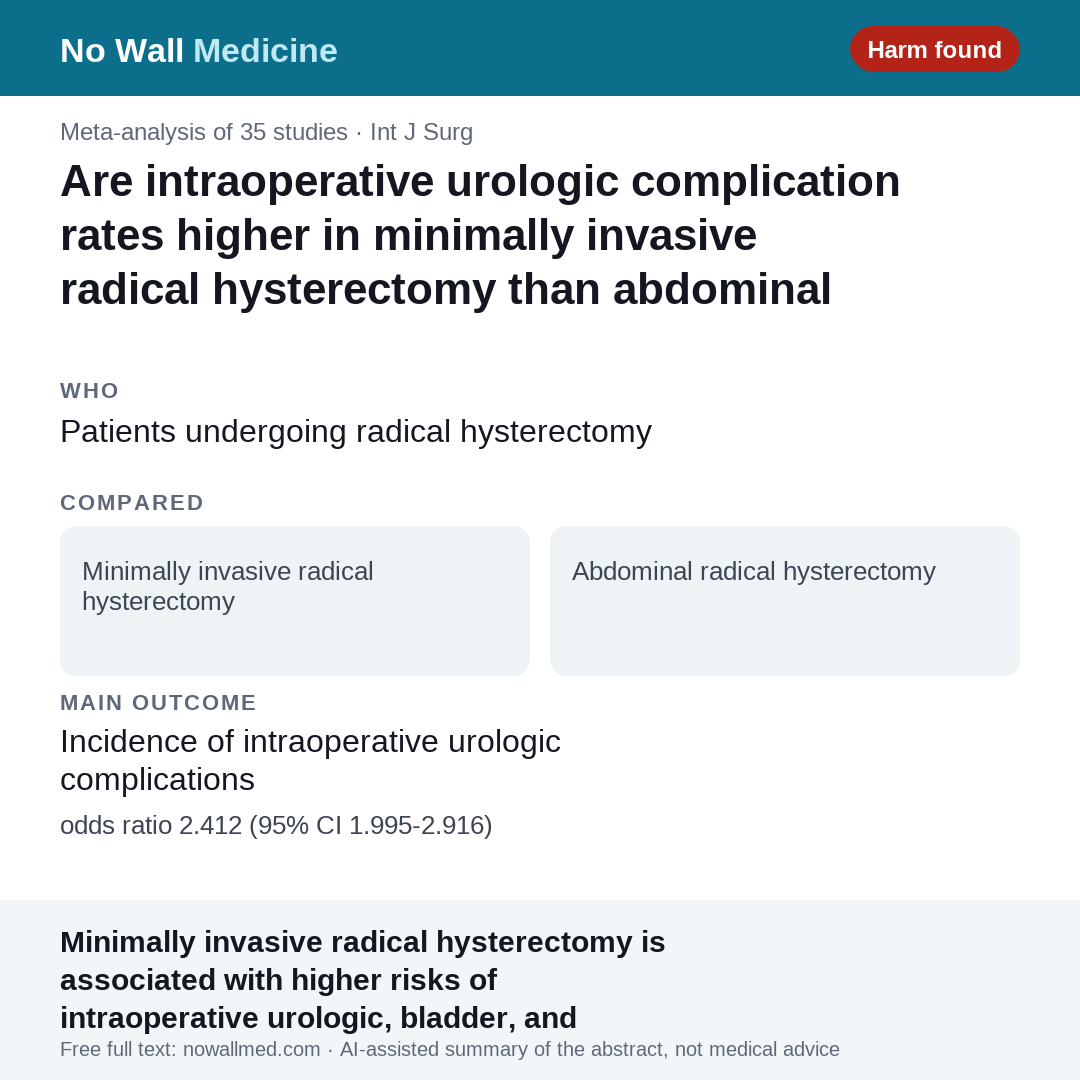
Meta-analysis reveals higher intraoperative urologic complication rates in minimally invasive radical hysterectomy compared to abdominal radical hysterectomy
Meta-analysis of 35 studiesHarm found
Are intraoperative urologic complication rates higher in minimally invasive radical hysterectomy than abdominal radical hysterectomy?
Who
Patients undergoing radical hysterectomy
Compared
Minimally invasive radical hysterectomy
Abdominal radical hysterectomy
Main outcome
Incidence of intraoperative urologic complications
Result: odds ratio 2.412 (95% CI 1.995-2.916)
Bottom line: Minimally invasive radical hysterectomy is associated with higher risks of intraoperative urologic, bladder, and ureteral injuries.
Int J Surg · 2024-11-01Download image
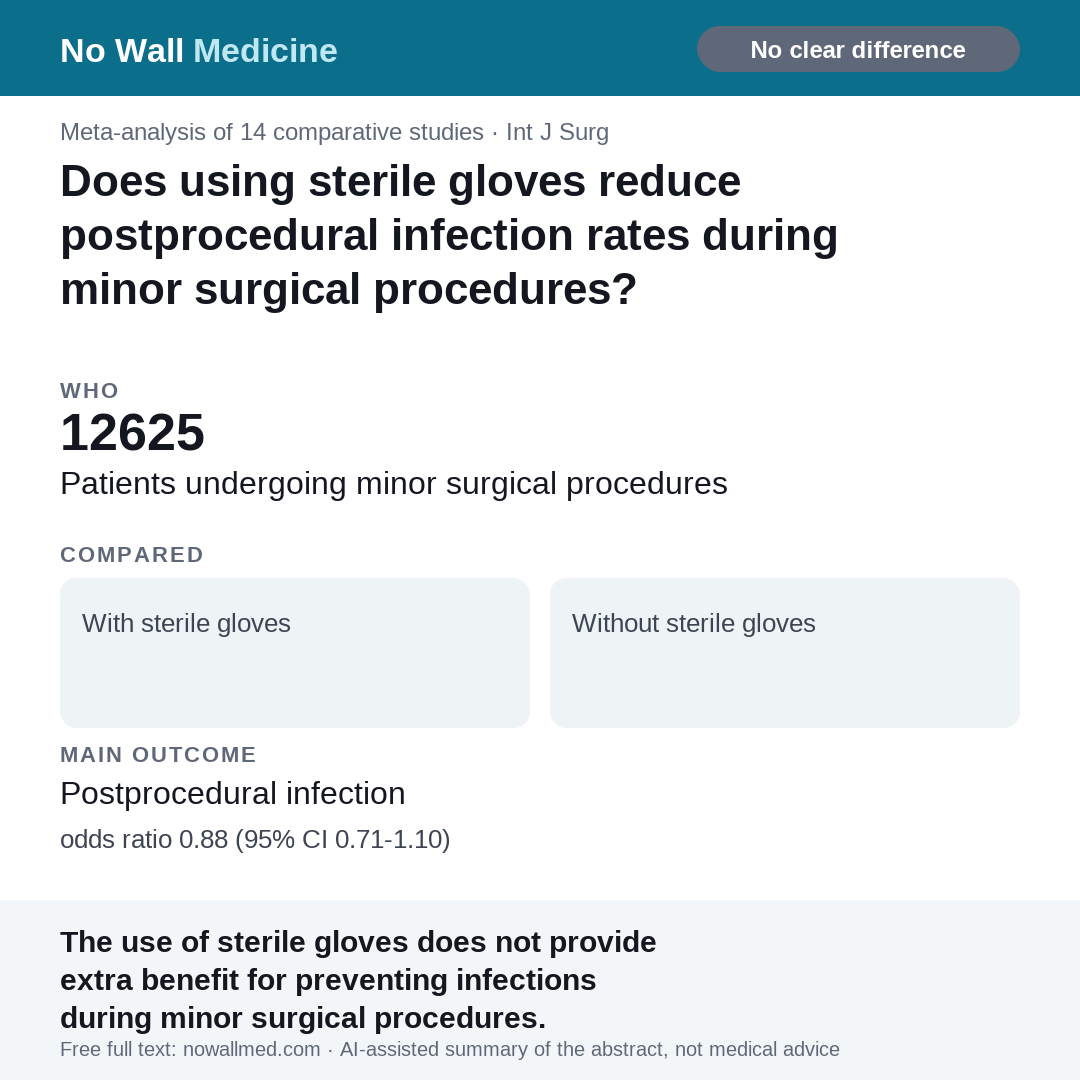
Postprocedural infection rate after minor surgical procedures performed with and without sterile gloves: a systematic review and meta-analysis
Meta-analysis of 14 comparative studiesNo clear difference
Does using sterile gloves reduce postprocedural infection rates during minor surgical procedures?
Who
12625
Patients undergoing minor surgical procedures
Compared
With sterile gloves
Without sterile gloves
Main outcome
Postprocedural infection
Result: odds ratio 0.88 (95% CI 0.71-1.10)
Bottom line: The use of sterile gloves does not provide extra benefit for preventing infections during minor surgical procedures.
Int J Surg · 2024-11-01Download image
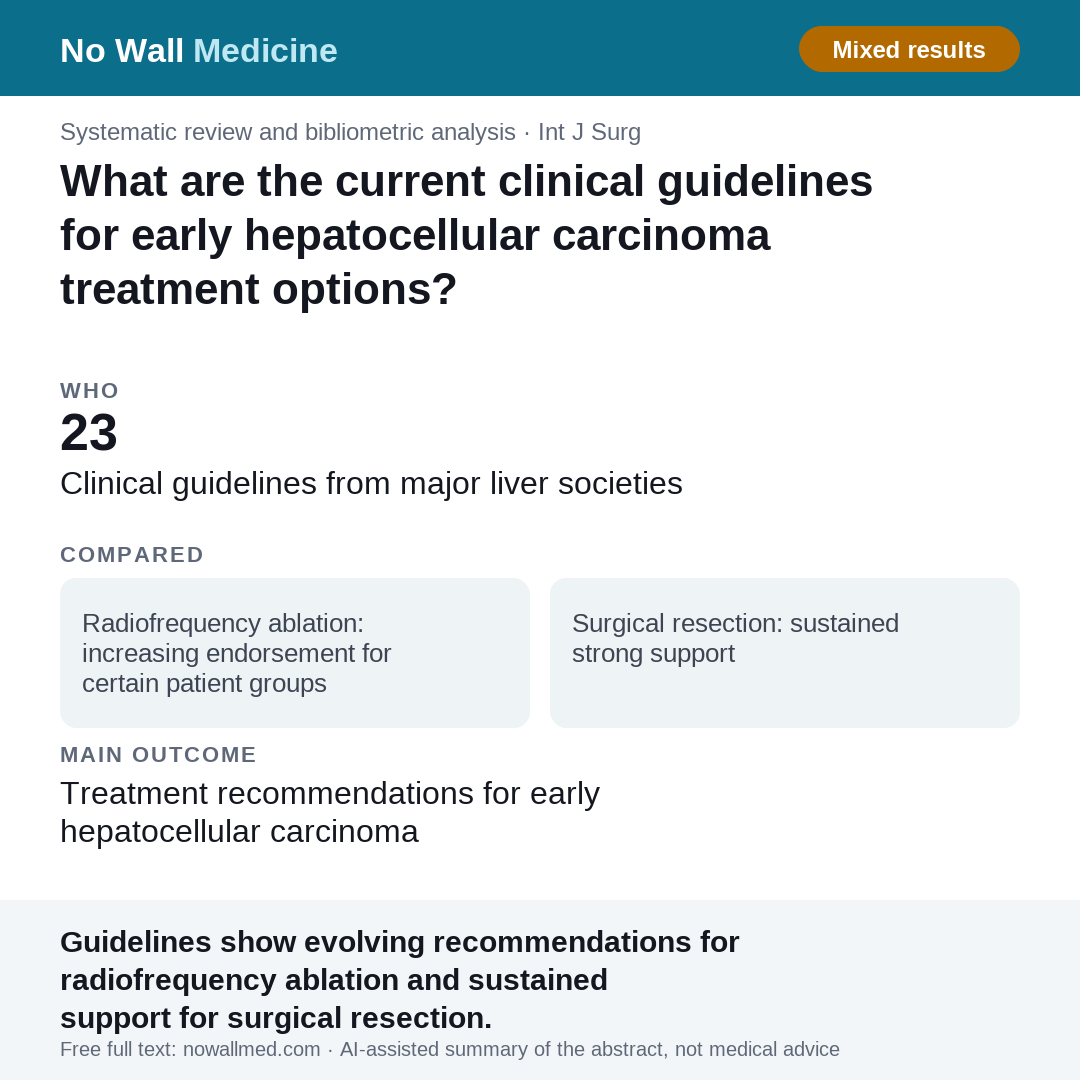
Clinical guidelines for early hepatocellular carcinoma treatment options: a systematic review and bibliometric analysis
Systematic review and bibliometric analysisMixed results
What are the current clinical guidelines for early hepatocellular carcinoma treatment options?
Who
23
Clinical guidelines from major liver societies
Compared
Radiofrequency ablation: increasing endorsement for certain patient groups
Surgical resection: sustained strong support
Main outcome
Treatment recommendations for early hepatocellular carcinoma
Bottom line: Guidelines show evolving recommendations for radiofrequency ablation and sustained support for surgical resection.
Int J Surg · 2024-11-01Download image
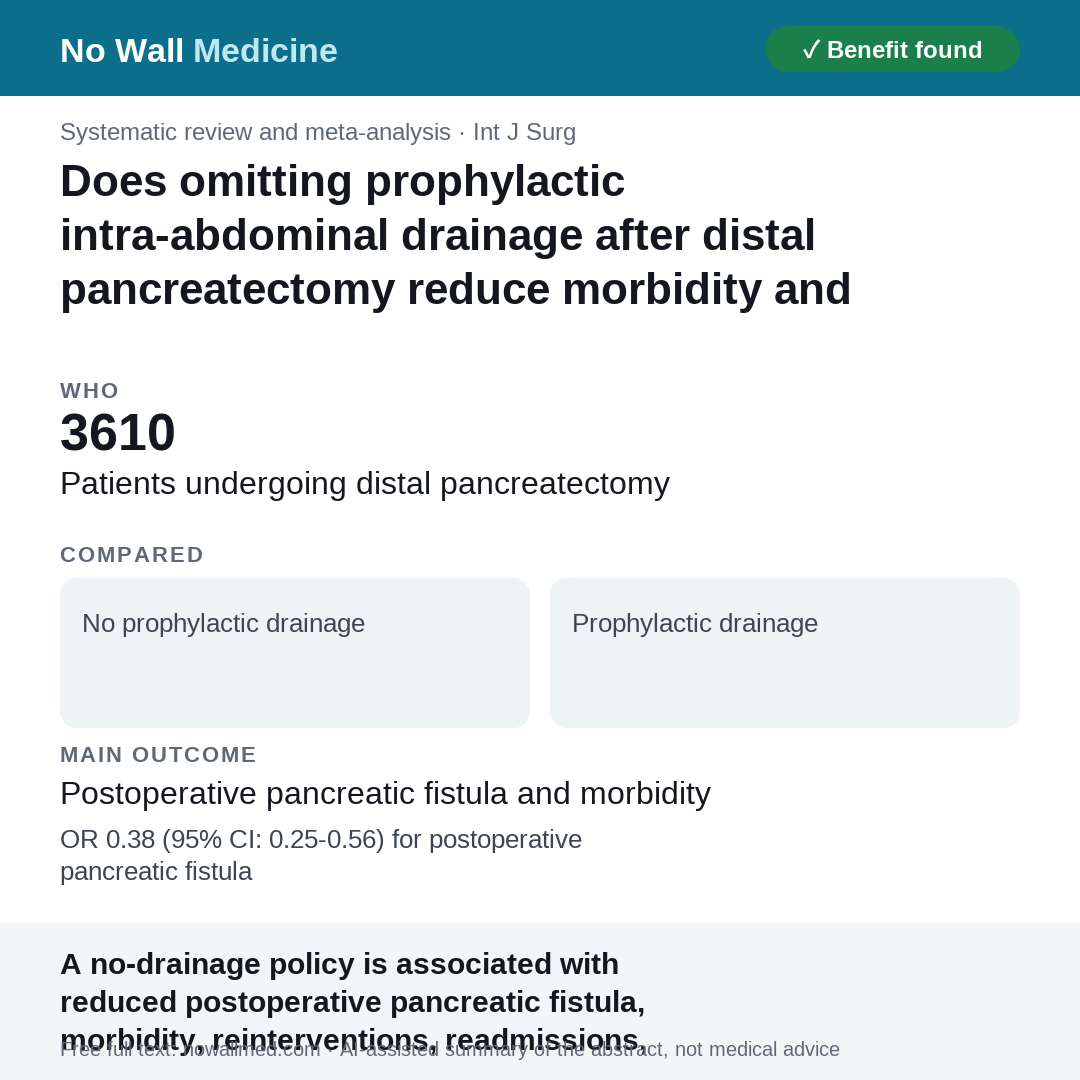
A systematic review and meta-analysis of morbidity and pancreatic fistula after distal pancreatectomy with versus without prophylactic intra-abdominal drainage
Systematic review and meta-analysisBenefit found
Does omitting prophylactic intra-abdominal drainage after distal pancreatectomy reduce morbidity and pancreatic fistula?
Who
3610
Patients undergoing distal pancreatectomy
Compared
No prophylactic drainage
Prophylactic drainage
Main outcome
Postoperative pancreatic fistula and morbidity
Result: OR 0.38 (95% CI: 0.25-0.56) for postoperative pancreatic fistula
Bottom line: A no-drainage policy is associated with reduced postoperative pancreatic fistula, morbidity, reinterventions, readmissions, and shorter hospital stays.
Int J Surg · 2024-11-01Download image
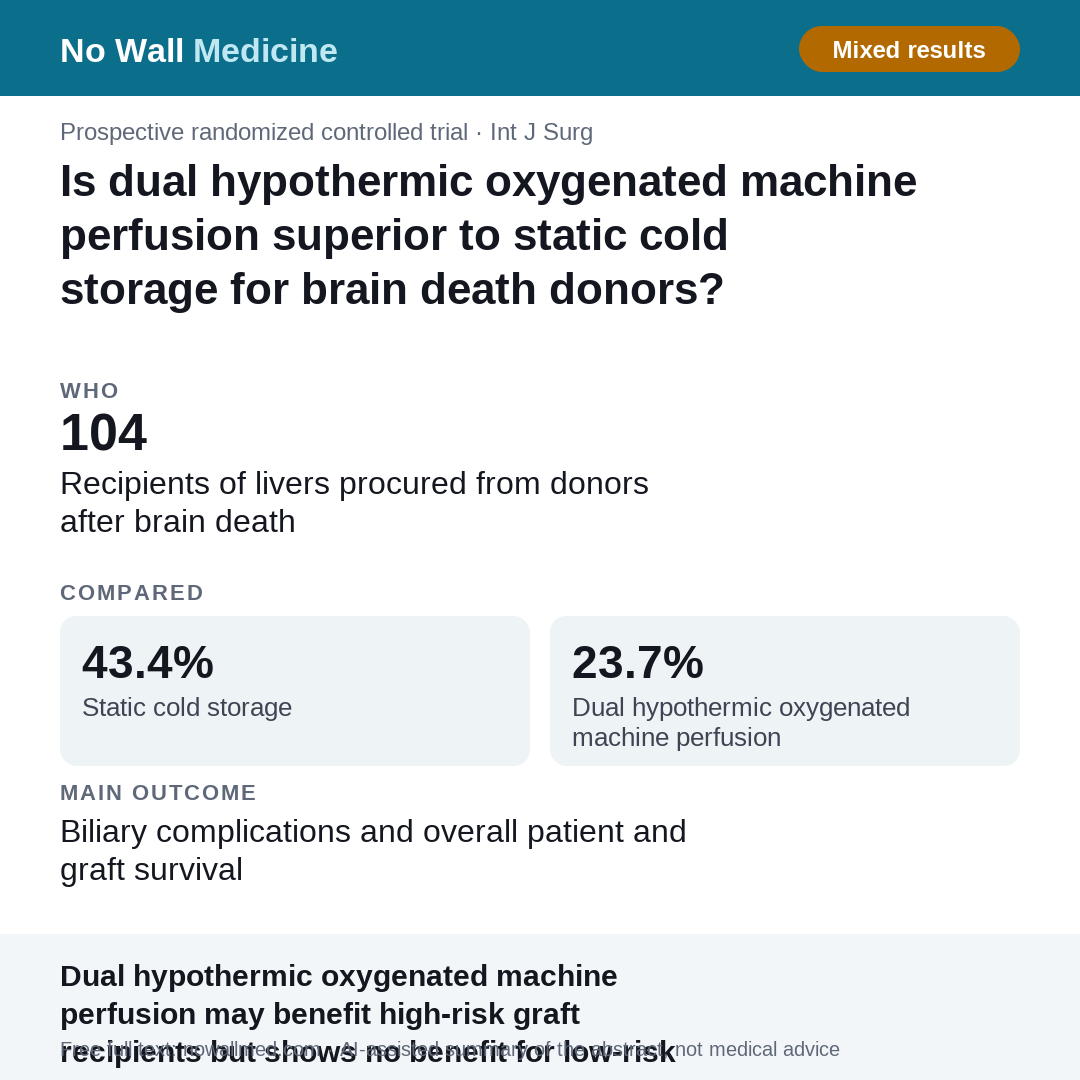
Routine end-ischemic hypothermic machine perfusion in liver transplantation from donors after brain death: results of 2-year follow-up of a randomized controlled trial
Prospective randomized controlled trialMixed results
Is dual hypothermic oxygenated machine perfusion superior to static cold storage for brain death donors?
Who
104
Recipients of livers procured from donors after brain death
Compared
43.4%Static cold storage
23.7%Dual hypothermic oxygenated machine perfusion
Main outcome
Biliary complications and overall patient and graft survival
Bottom line: Dual hypothermic oxygenated machine perfusion may benefit high-risk graft recipients but shows no benefit for low-risk grafts.
Limitation: The study does not provide evidence for benefits in low-risk grafts.
Int J Surg · 2024-11-01Download image
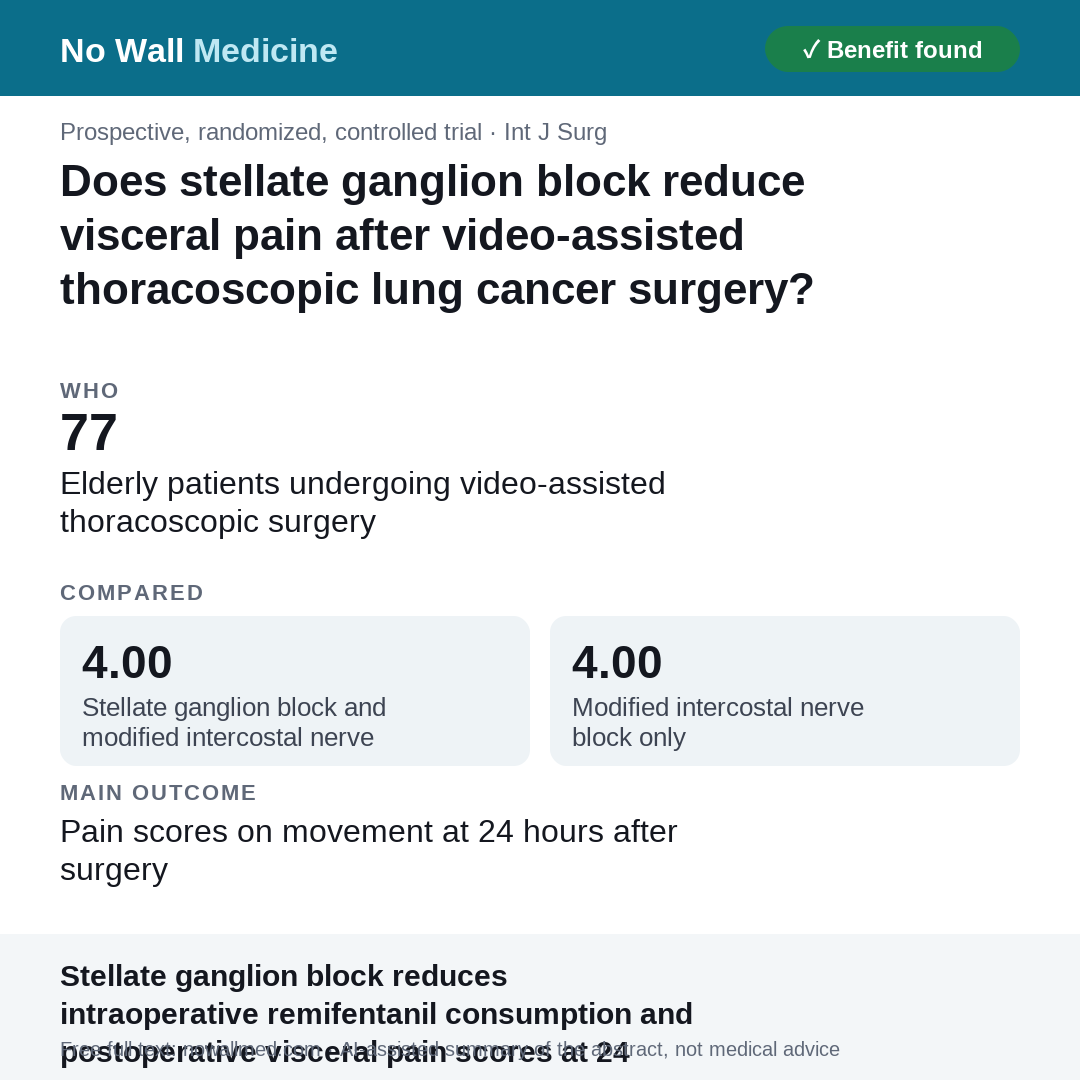
Stellate ganglion block for visceral pain in elderly patients undergoing video-assisted thoracoscopic lung cancer surgery: a randomized, controlled trial
Prospective, randomized, controlled trialBenefit found
Does stellate ganglion block reduce visceral pain after video-assisted thoracoscopic lung cancer surgery?
Who
77
Elderly patients undergoing video-assisted thoracoscopic surgery
Compared
4.00Stellate ganglion block and modified intercostal nerve block (3.00-4.00)
4.00Modified intercostal nerve block only (3.25-5.00)
Main outcome
Pain scores on movement at 24 hours after surgery
Result: P = 0.01
Bottom line: Stellate ganglion block reduces intraoperative remifentanil consumption and postoperative visceral pain scores at 24 hours.
Int J Surg · 2024-11-01Download image
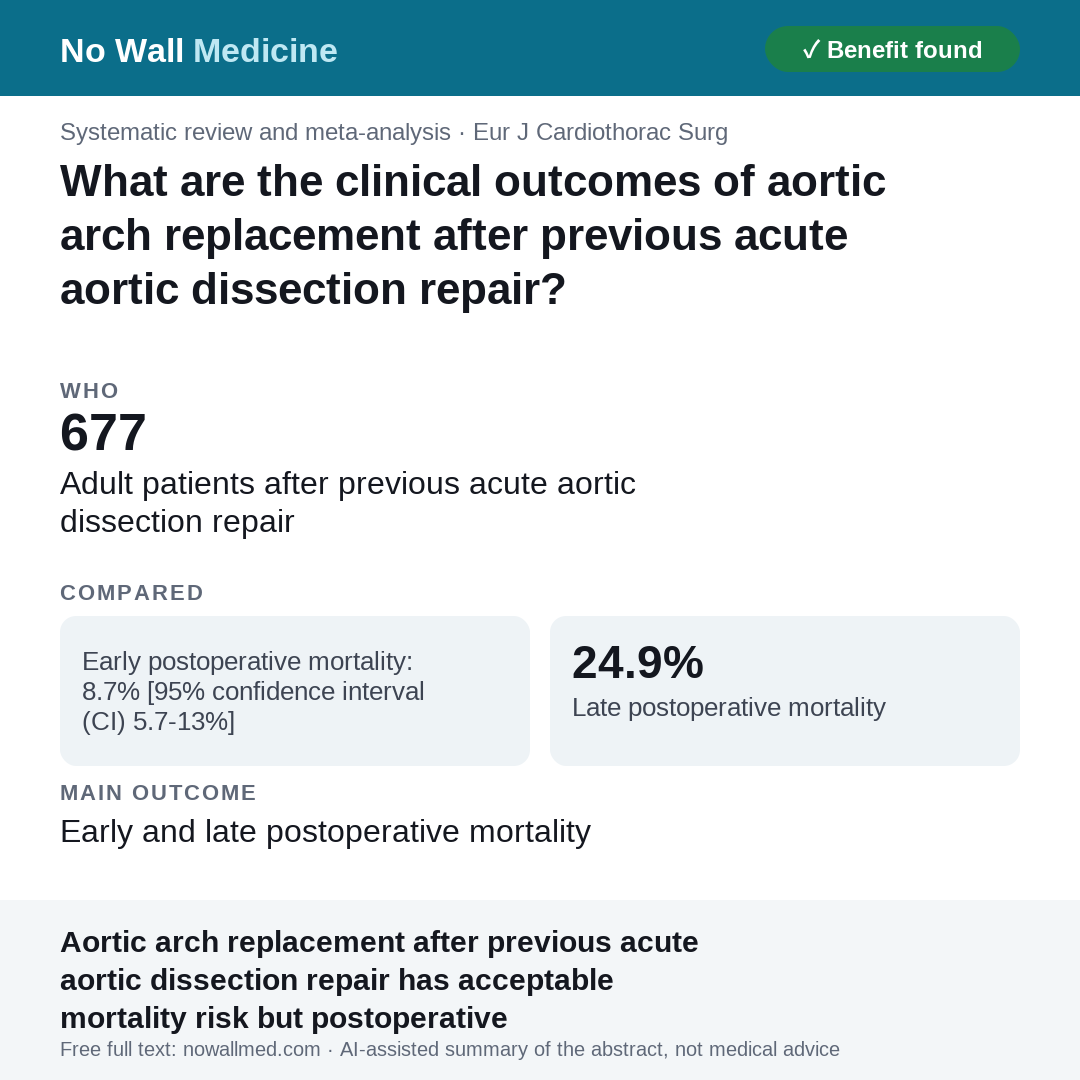
Aortic arch replacement in patients with previous repair of acute aortic dissection: a systematic review and meta-analysis
Systematic review and meta-analysisBenefit found
What are the clinical outcomes of aortic arch replacement after previous acute aortic dissection repair?
Who
677
Adult patients after previous acute aortic dissection repair
Compared
Early postoperative mortality: 8.7% [95% confidence interval (CI) 5.7-13%]
24.9%Late postoperative mortality (95% CI 19.5-31.1%)
Main outcome
Early and late postoperative mortality
Result: 8.7% [95% CI 5.7-13%] early and 24.9% (95% CI 19.5-31.1%) late mortality
Bottom line: Aortic arch replacement after previous acute aortic dissection repair has acceptable mortality risk but postoperative neurological deficit remains an issue.
Eur J Cardiothorac Surg · 2024-11-01Download image