Visual abstracts
New randomized trials and meta-analyses from leading journals at a glance: who was studied, what was compared, and what was found. Every paper is free to read in full.
All specialtiesCardiology 4877Oncology 4138Gastroenterology & Hepatology 1942Infectious Disease 3837Neurology 1905Psychiatry & Mental Health 2273Pulmonology 2143Critical Care 1365Endocrinology & Diabetes 2580Pediatrics 2980Surgery 2559Orthopedics & Sports Medicine 931Neurosurgery 537Cardiothoracic & Vascular Surgery 674Plastic & Reconstructive Surgery 591Nephrology 1133Rheumatology 823Hematology 1109Dermatology 621Ophthalmology 543Obstetrics & Gynecology 1686Public & Global Health 1058Radiology & Imaging 648Anesthesiology 986Urology 764ENT (Otolaryngology) 503Emergency Medicine 511Allergy & Immunology 313Geriatrics 981Family Medicine & Primary Care 562Medical Genetics & Genomics 676Pathology & Laboratory Medicine 159Physical Medicine & Rehabilitation 757Palliative Care 444Nutrition 1588Digital Health & AI 2201General Medicine 321
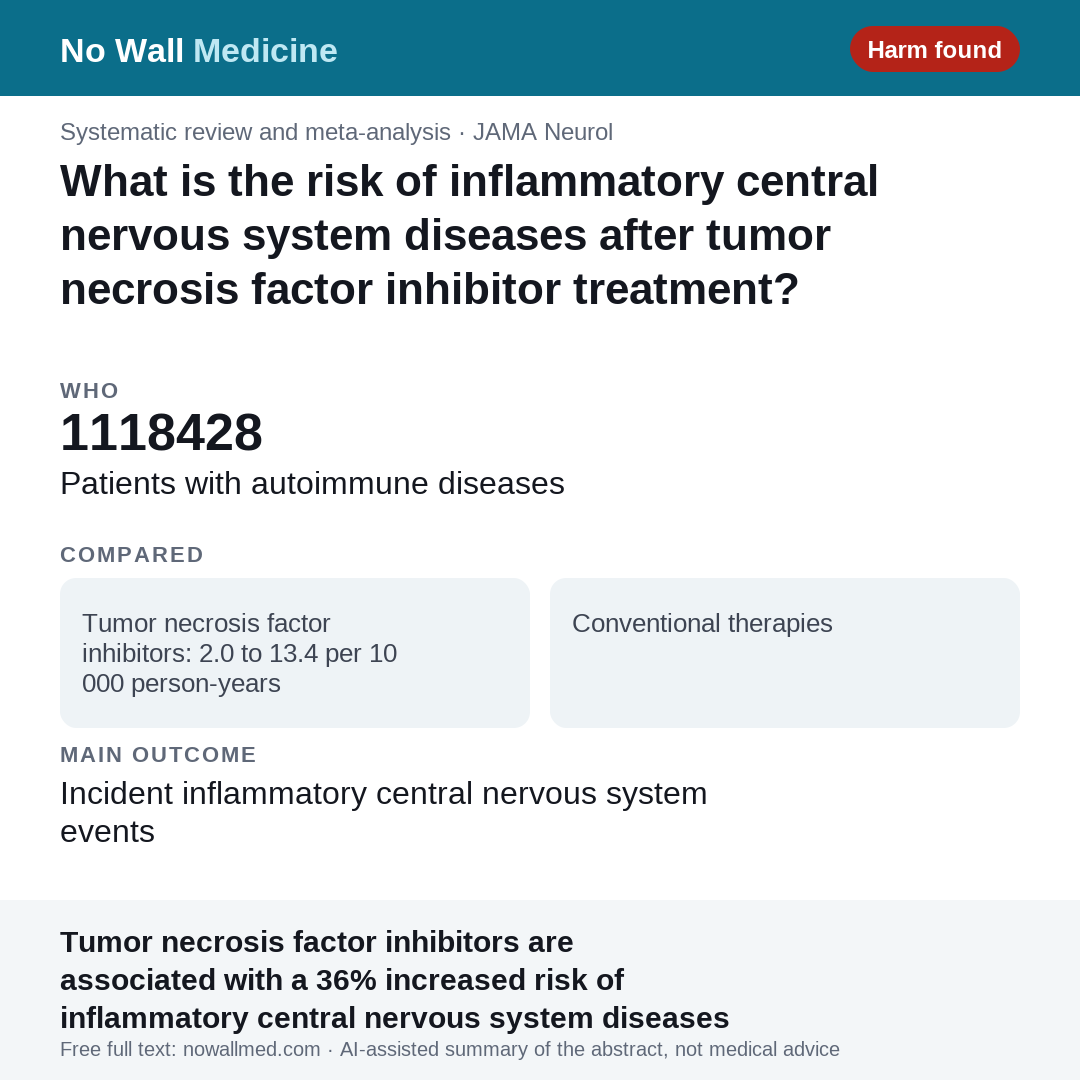
Risk of Inflammatory Central Nervous System Diseases After Tumor Necrosis Factor-Inhibitor Treatment for Autoimmune Diseases: A Systematic Review and Meta-Analysis
Systematic review and meta-analysisHarm found
What is the risk of inflammatory central nervous system diseases after tumor necrosis factor inhibitor treatment?
Who
1118428
Patients with autoimmune diseases
Compared
Tumor necrosis factor inhibitors: 2.0 to 13.4 per 10 000 person-years
Conventional therapies
Main outcome
Incident inflammatory central nervous system events
Result: risk ratio 1.36 (95% CI 1.01-1.84)
Bottom line: Tumor necrosis factor inhibitors are associated with a 36% increased risk of inflammatory central nervous system diseases compared to conventional therapies.
JAMA Neurol · 2024-10-21Download image
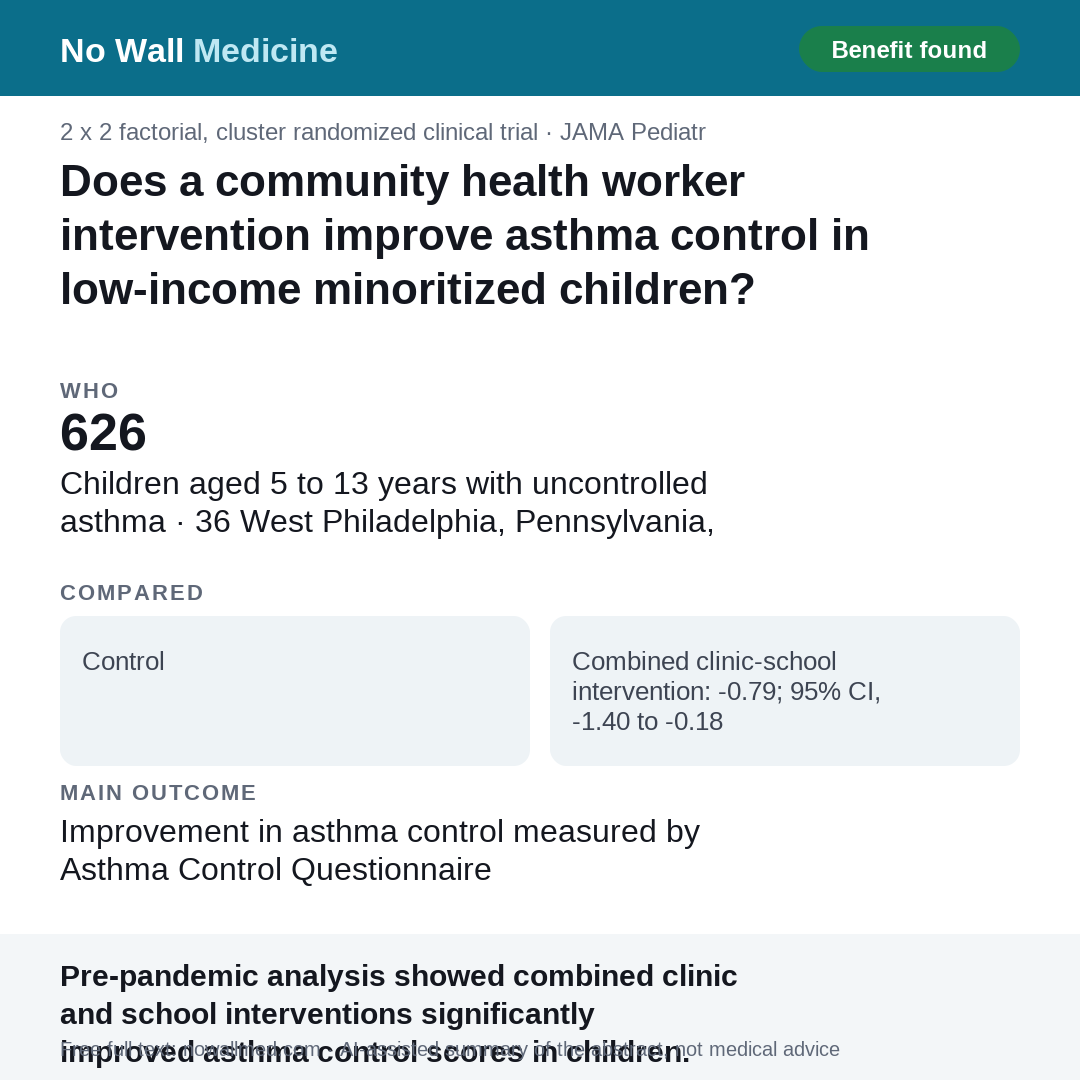
Community Health Workers Linking Clinics and Schools and Asthma Control: A Randomized Clinical Trial
2 x 2 factorial, cluster randomized clinical trialBenefit found
Does a community health worker intervention improve asthma control in low-income minoritized children?
Who
626
Children aged 5 to 13 years with uncontrolled asthma · 36 West Philadelphia, Pennsylvania, public and charter schools
Compared
Control
Combined clinic-school intervention: -0.79; 95% CI, -1.40 to -0.18
Main outcome
Improvement in asthma control measured by Asthma Control Questionnaire
Result: -0.79; 95% CI, -1.40 to -0.18
Bottom line: Pre-pandemic analysis showed combined clinic and school interventions significantly improved asthma control scores in children.
Limitation: Primary care and school interventions were dramatically disrupted by the COVID-19 pandemic.
JAMA Pediatr · 2024-10-21Download image
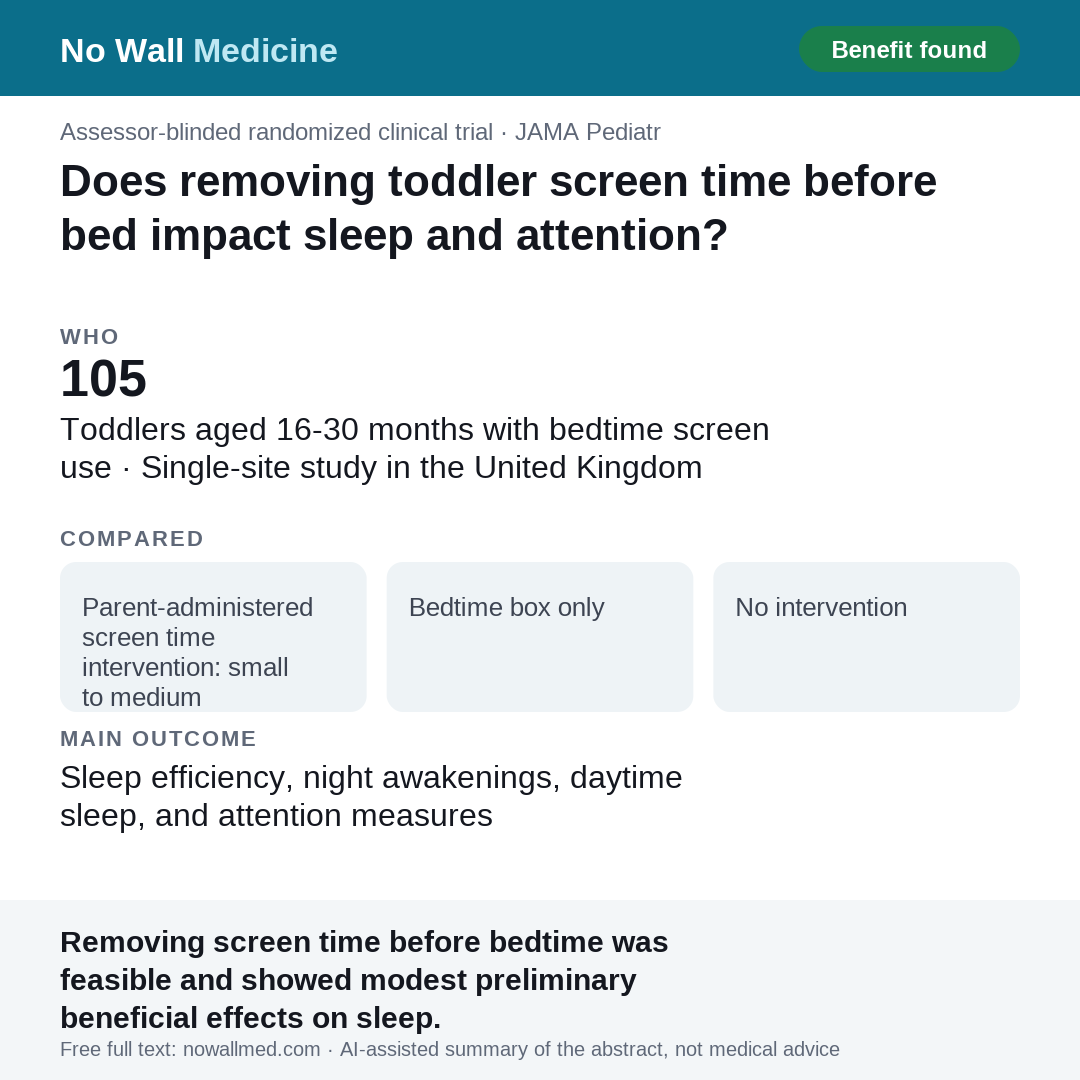
Toddler Screen Use Before Bed and Its Effect on Sleep and Attention: A Randomized Clinical Trial
Assessor-blinded randomized clinical trialBenefit found
Does removing toddler screen time before bed impact sleep and attention?
Who
105
Toddlers aged 16-30 months with bedtime screen use · Single-site study in the United Kingdom
Compared
Parent-administered screen time intervention: small to medium improvements in sleep efficiency
Bedtime box only
No intervention
Main outcome
Sleep efficiency, night awakenings, daytime sleep, and attention measures
Result: Cohen d 0.56 (95% CI, 0.17-0.96) for sleep efficiency vs BB only
Bottom line: Removing screen time before bedtime was feasible and showed modest preliminary beneficial effects on sleep.
JAMA Pediatr · 2024-10-21Download image
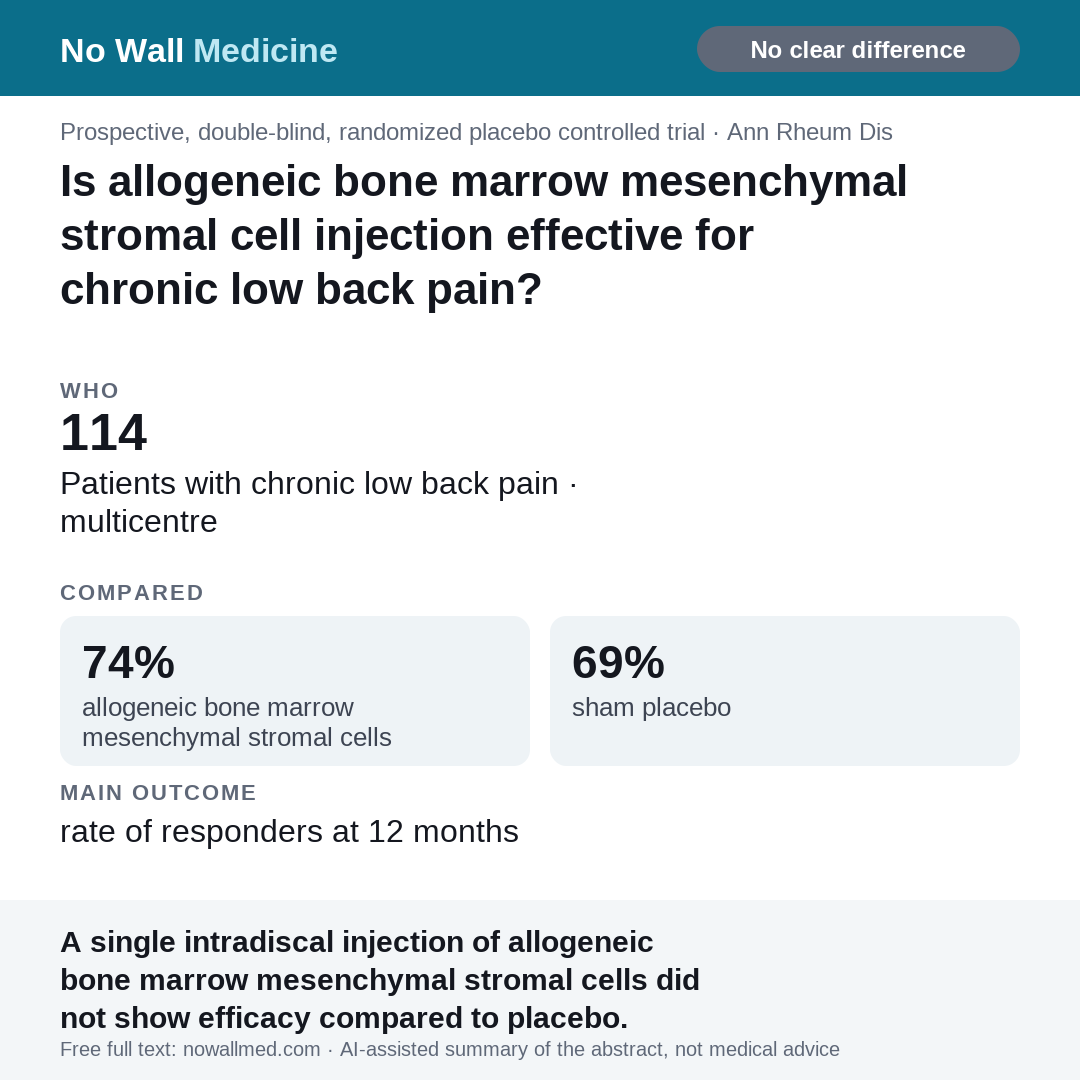
Allogenic bone marrow-derived mesenchymal stromal cell-based therapy for patients with chronic low back pain: a prospective, multicentre, randomised placebo controlled trial (RESPINE study)
Prospective, double-blind, randomized placebo controlled trialNo clear difference
Is allogeneic bone marrow mesenchymal stromal cell injection effective for chronic low back pain?
Who
114
Patients with chronic low back pain · multicentre
Compared
74%allogeneic bone marrow mesenchymal stromal cells
69%sham placebo
Main outcome
rate of responders at 12 months
Bottom line: A single intradiscal injection of allogeneic bone marrow mesenchymal stromal cells did not show efficacy compared to placebo.
Ann Rheum Dis · 2024-10-21Download image
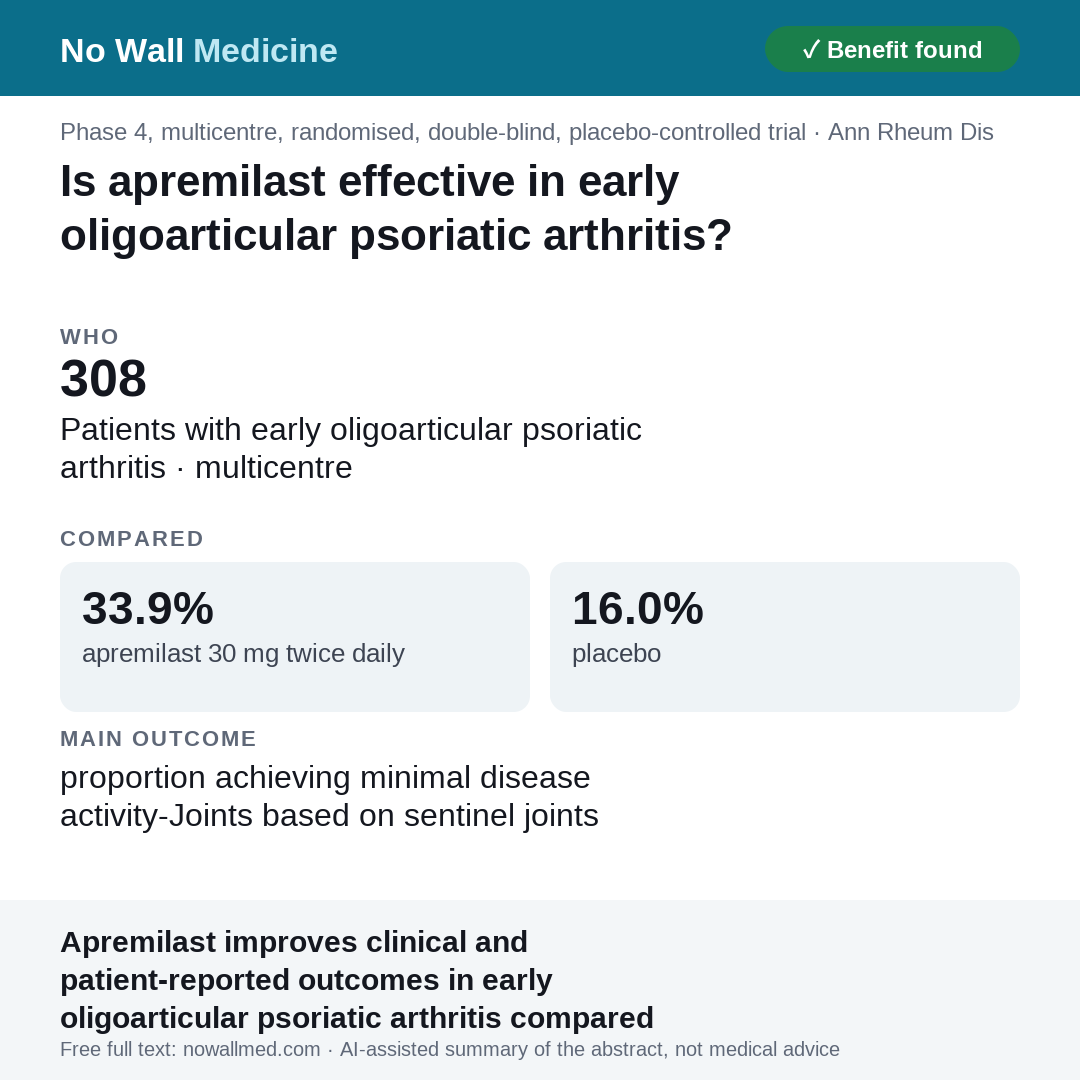
Treatment of early oligoarticular psoriatic arthritis with apremilast: primary outcomes at week 16 from the FOREMOST randomised controlled trial
Phase 4, multicentre, randomised, double-blind, placebo-controlled trialBenefit found
Is apremilast effective in early oligoarticular psoriatic arthritis?
Who
308
Patients with early oligoarticular psoriatic arthritis · multicentre
Compared
33.9%apremilast 30 mg twice daily
16.0%placebo
Main outcome
proportion achieving minimal disease activity-Joints based on sentinel joints
Bottom line: Apremilast improves clinical and patient-reported outcomes in early oligoarticular psoriatic arthritis compared to placebo.
Ann Rheum Dis · 2024-10-21Download image
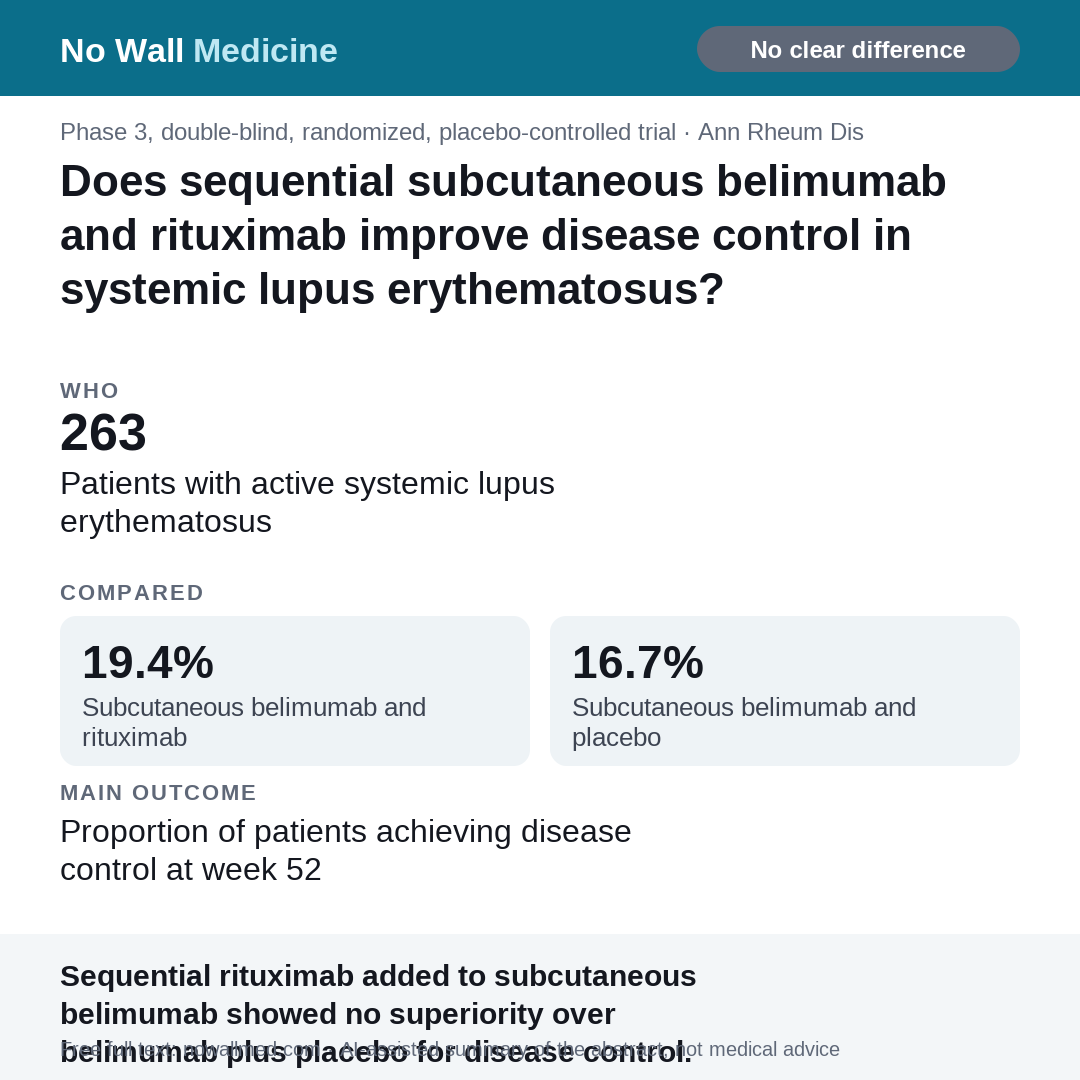
Efficacy and safety of sequential therapy with subcutaneous belimumab and one cycle of rituximab in patients with systemic lupus erythematosus: the phase 3, randomised, placebo-controlled BLISS-BELIEVE study
Phase 3, double-blind, randomized, placebo-controlled trialNo clear difference
Does sequential subcutaneous belimumab and rituximab improve disease control in systemic lupus erythematosus?
Who
263
Patients with active systemic lupus erythematosus
Compared
19.4%Subcutaneous belimumab and rituximab (28/144)
16.7%Subcutaneous belimumab and placebo (12/72)
Main outcome
Proportion of patients achieving disease control at week 52
Result: odds ratio 1.27 (95% CI 0.60 to 2.71)
Bottom line: Sequential rituximab added to subcutaneous belimumab showed no superiority over belimumab plus placebo for disease control.
Ann Rheum Dis · 2024-10-21Download image
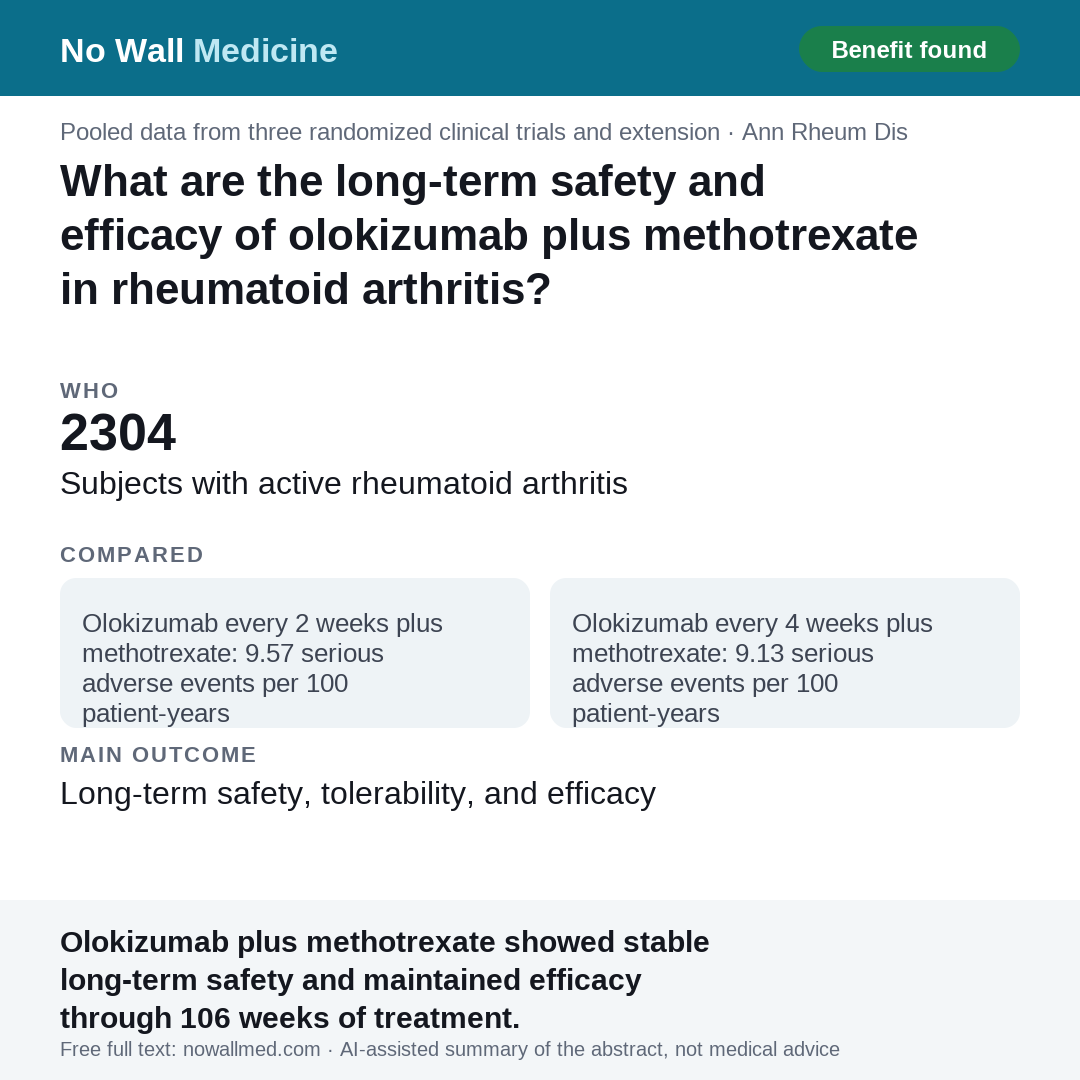
Olokizumab plus methotrexate: safety and efficacy over 106 weeks of treatment
Pooled data from three randomized clinical trials and extensionBenefit found
What are the long-term safety and efficacy of olokizumab plus methotrexate in rheumatoid arthritis?
Who
2304
Subjects with active rheumatoid arthritis
Compared
Olokizumab every 2 weeks plus methotrexate: 9.57 serious adverse events per 100 patient-years
Olokizumab every 4 weeks plus methotrexate: 9.13 serious adverse events per 100 patient-years
Main outcome
Long-term safety, tolerability, and efficacy
Bottom line: Olokizumab plus methotrexate showed stable long-term safety and maintained efficacy through 106 weeks of treatment.
Ann Rheum Dis · 2024-10-21Download image
Management of systemic lupus erythematosus: a systematic literature review informing the 2023 update of the EULAR recommendations
Systematic literature reviewMixed results
What is the best management for systemic lupus erythematosus based on new evidence?
Who
Patients with systemic lupus erythematosus · Medline and Cochrane Library databases
Compared
Anifrolumab
Standard of care
Belimumab and voclosporin
Main outcome
Disease control and response rates in lupus erythematosus
Bottom line: Anifrolumab, belimumab, and voclosporin show efficacy in specific lupus manifestations compared to standard care.
Limitation: The majority of identified articles were observational studies of low or moderate quality.
Ann Rheum Dis · 2024-10-21Download image

Gut Microbiota Features in Relation to Fecal Microbiota Transplantation Outcome in Ulcerative Colitis: A Systematic Review and Meta-Analysis
Systematic review and meta-analysisMixed results
How do gut microbiota features relate to fecal microbiota transplantation outcomes in ulcerative colitis?
Who
Patients with ulcerative colitis
Compared
Higher microbial alpha-diversity: associated with better clinical response rates
Low-diversity composition: associated with clinical response shift
Main outcome
clinical response rates to fecal microbiota transplantation
Bottom line: Higher microbial diversity and specific butyrate-producing species are associated with better clinical response to fecal microbiota transplantation.
Clin Gastroenterol Hepatol · 2024-10-21Download image

Neuroimaging Meta-Analyses Reveal Convergence of Interoception, Emotion, and Social Cognition Across Neurodegenerative Diseases
Meta-analysis of 170 studiesBenefit found
Do interoception, emotion, and social cognition deficits share neurobiological bases in neurodegenerative diseases?
Who
7032
Patients with neurodegenerative diseases and healthy controls
Compared
Neurodegenerative diseases
Healthy controls
Main outcome
Structural and functional neuroimaging changes across domains
Bottom line: Neurodegeneration induces dysfunctional allostatic-interoceptive network involvement across atrophy, connectivity, and metabolism.
Biol Psychiatry · 2024-10-21Download image
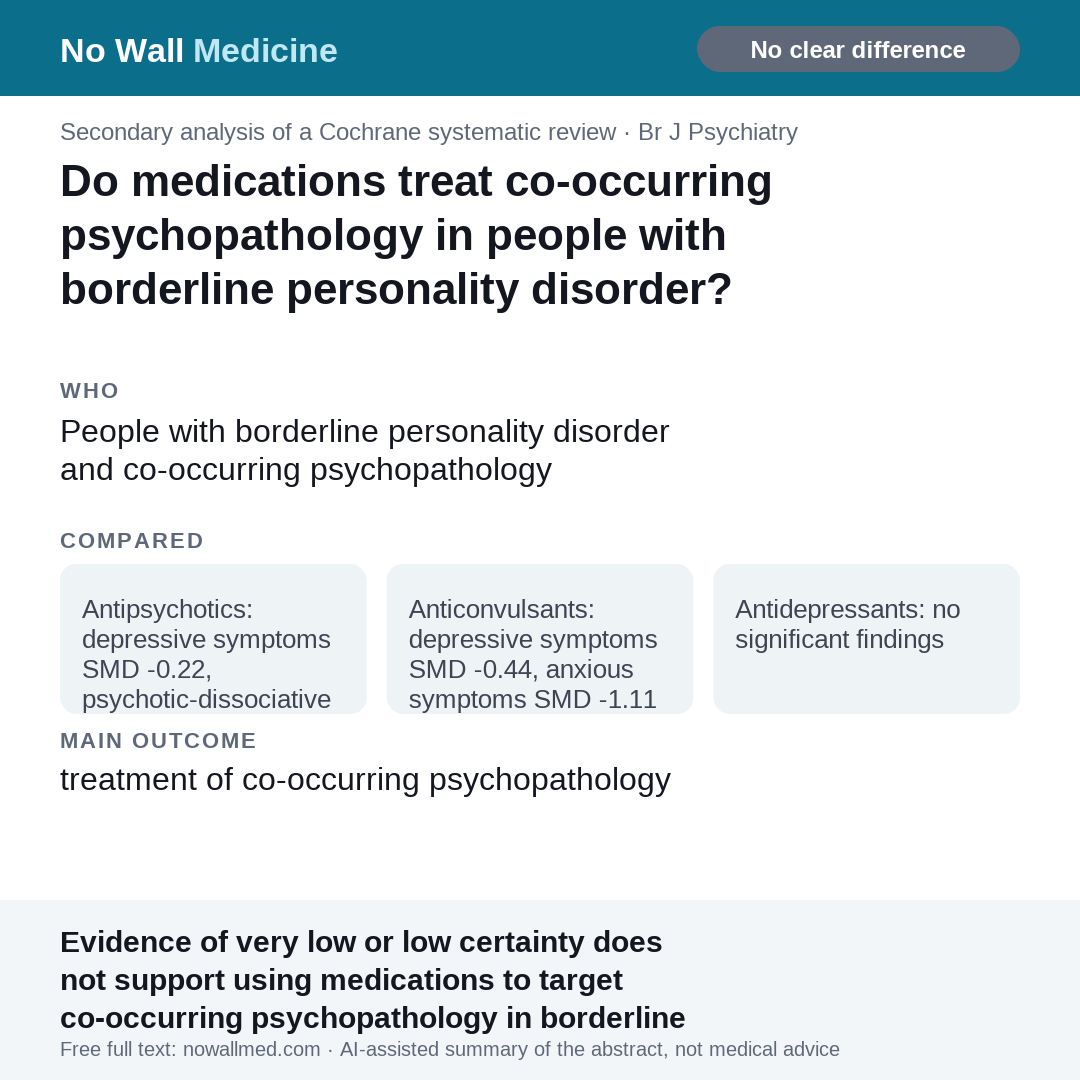
Pharmacological interventions for co-occurring psychopathology in people with borderline personality disorder: secondary analysis of the Cochrane systematic review with meta-analyses
Secondary analysis of a Cochrane systematic reviewNo clear difference
Do medications treat co-occurring psychopathology in people with borderline personality disorder?
Who
People with borderline personality disorder and co-occurring psychopathology
Compared
Antipsychotics: depressive symptoms SMD -0.22, psychotic-dissociative symptoms SMD -0.28
Anticonvulsants: depressive symptoms SMD -0.44, anxious symptoms SMD -1.11
Antidepressants: no significant findings
Main outcome
treatment of co-occurring psychopathology
Bottom line: Evidence of very low or low certainty does not support using medications to target co-occurring psychopathology in borderline personality disorder.
Br J Psychiatry · 2024-10-21Download image
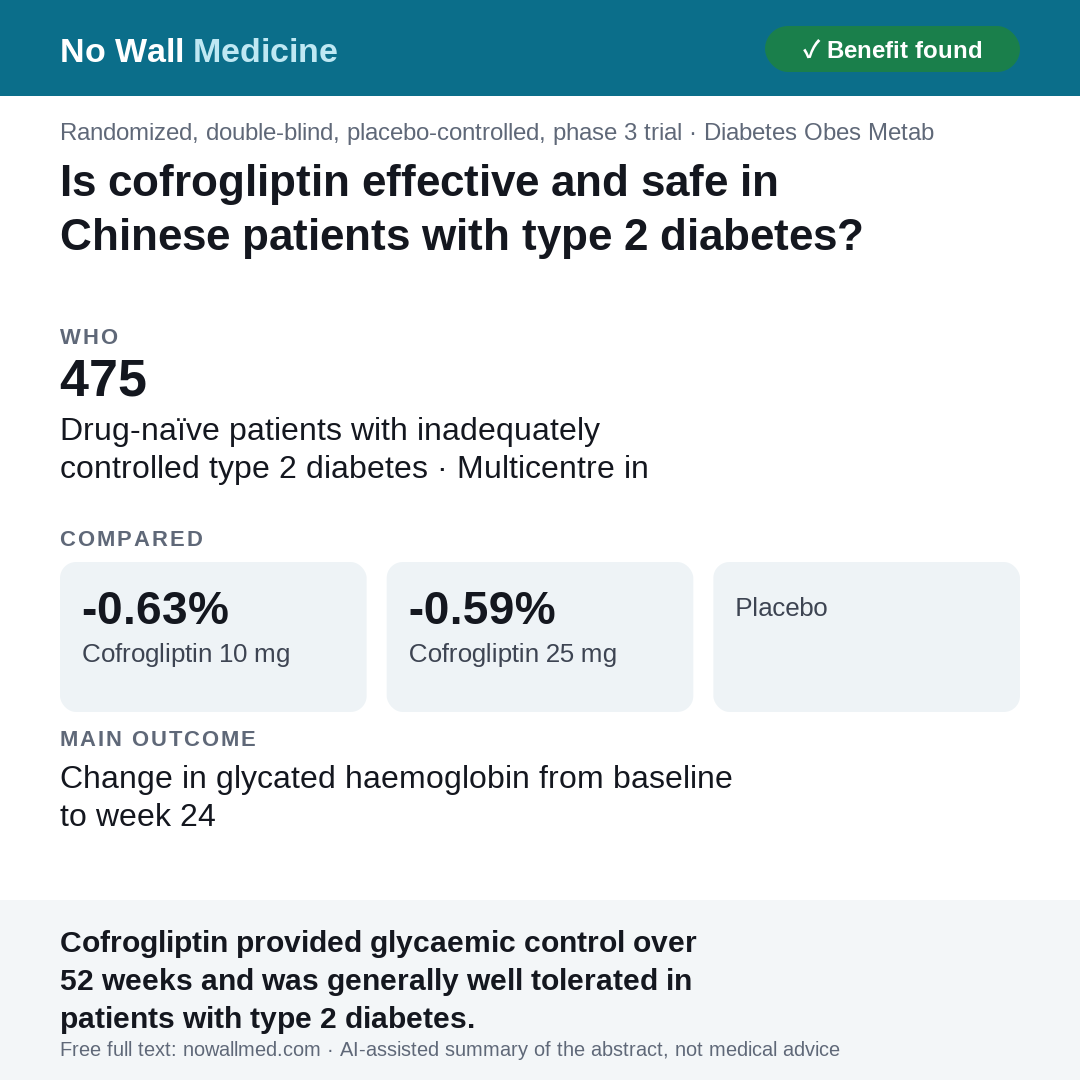
Efficacy and safety of cofrogliptin once every 2 weeks in Chinese patients with type 2 diabetes: A randomized, double-blind, placebo-controlled, phase 3 trial
Randomized, double-blind, placebo-controlled, phase 3 trialBenefit found
Is cofrogliptin effective and safe in Chinese patients with type 2 diabetes?
Who
475
Drug-naïve patients with inadequately controlled type 2 diabetes · Multicentre in China
Compared
-0.63%Cofrogliptin 10 mg (-0.81, -0.46)
-0.59%Cofrogliptin 25 mg (-0.77, -0.42)
Placebo
Main outcome
Change in glycated haemoglobin from baseline to week 24
Result: LS mean difference versus placebo: -0.63% (-0.81, -0.46) and -0.59% (-0.77, -0.42)
Bottom line: Cofrogliptin provided glycaemic control over 52 weeks and was generally well tolerated in patients with type 2 diabetes.
Diabetes Obes Metab · 2024-10-21Download image
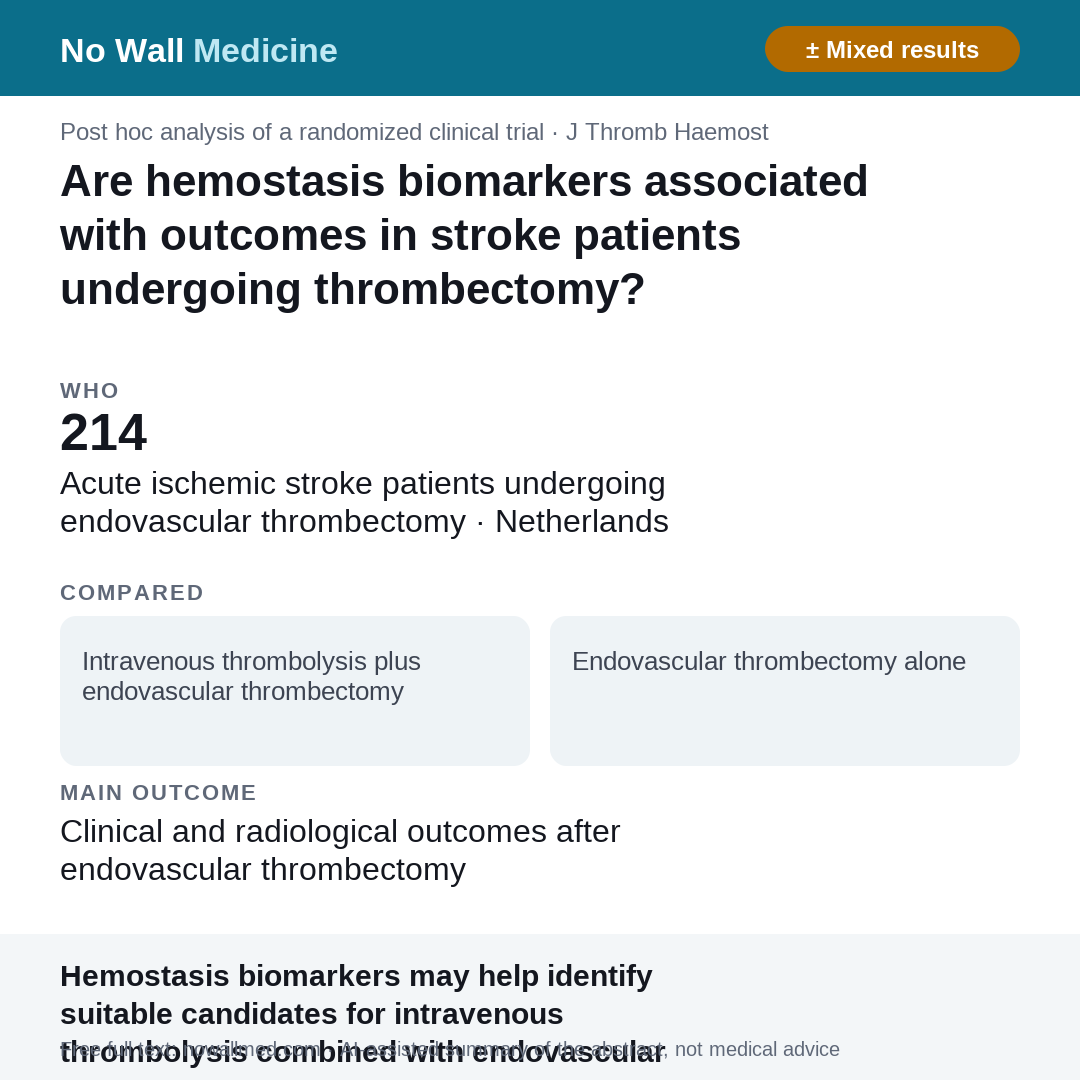
Association of primary and secondary hemostasis biomarkers with acute ischemic stroke outcome in patients undergoing thrombectomy, with or without thrombolytics: post hoc analysis of the Multicenter Randomized Clinical Trial of Endovascular Treatment for Acute Ischemic Stroke in the Netherlands-NO IV
Post hoc analysis of a randomized clinical trialMixed results
Are hemostasis biomarkers associated with outcomes in stroke patients undergoing thrombectomy?
Who
214
Acute ischemic stroke patients undergoing endovascular thrombectomy · Netherlands
Compared
Intravenous thrombolysis plus endovascular thrombectomy
Endovascular thrombectomy alone
Main outcome
Clinical and radiological outcomes after endovascular thrombectomy
Bottom line: Hemostasis biomarkers may help identify suitable candidates for intravenous thrombolysis combined with endovascular thrombectomy.
J Thromb Haemost · 2024-10-21Download image
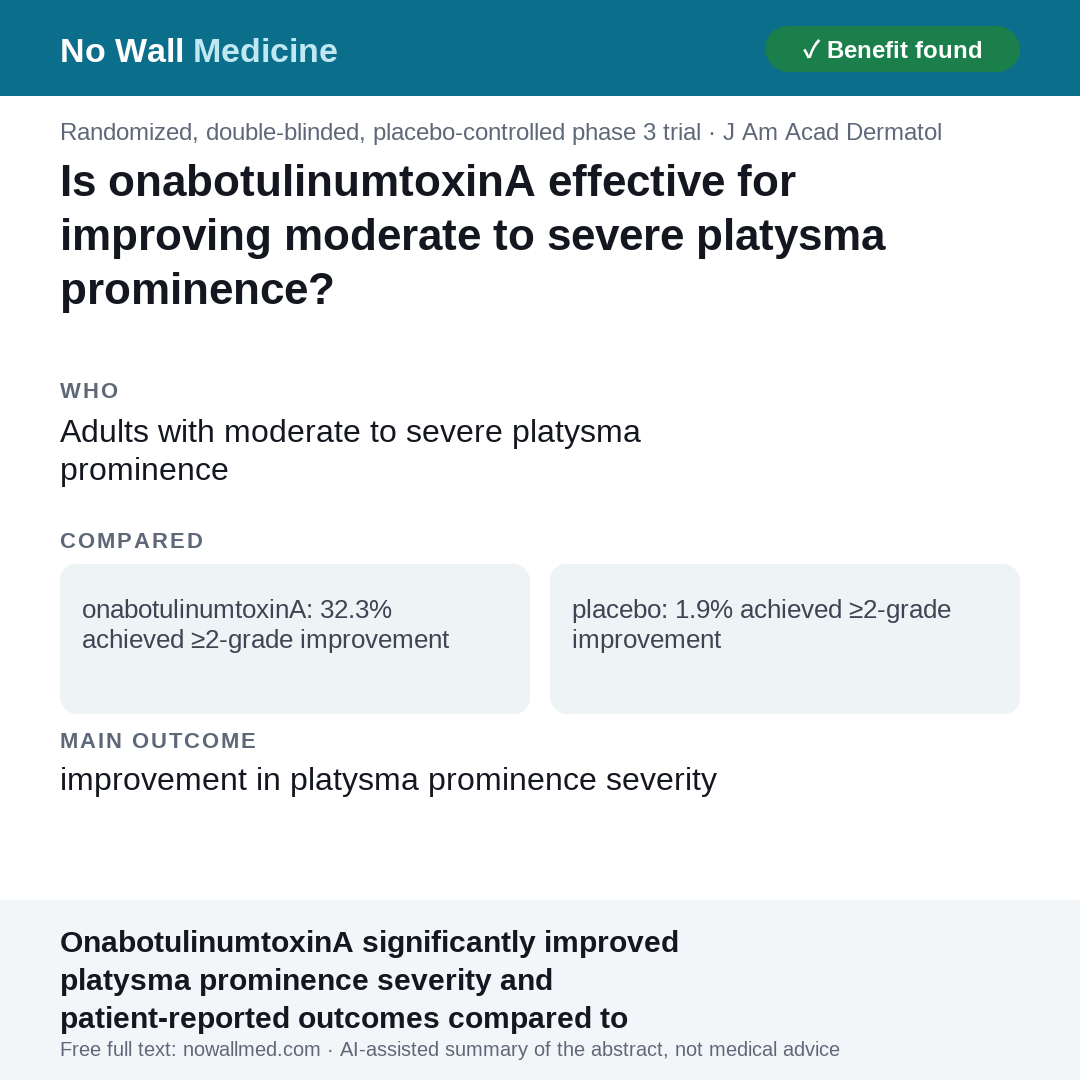
Improvement of platysma prominence with onabotulinumtoxinA: Safety and efficacy results from a randomized, double-blinded, placebo-controlled phase 3 trial
Randomized, double-blinded, placebo-controlled phase 3 trialBenefit found
Is onabotulinumtoxinA effective for improving moderate to severe platysma prominence?
Who
Adults with moderate to severe platysma prominence
Compared
onabotulinumtoxinA: 32.3% achieved ≥2-grade improvement
placebo: 1.9% achieved ≥2-grade improvement
Main outcome
improvement in platysma prominence severity
Bottom line: OnabotulinumtoxinA significantly improved platysma prominence severity and patient-reported outcomes compared to placebo.
Limitation: A single onabotulinumtoxinA treatment was evaluated.
J Am Acad Dermatol · 2024-10-21Download image
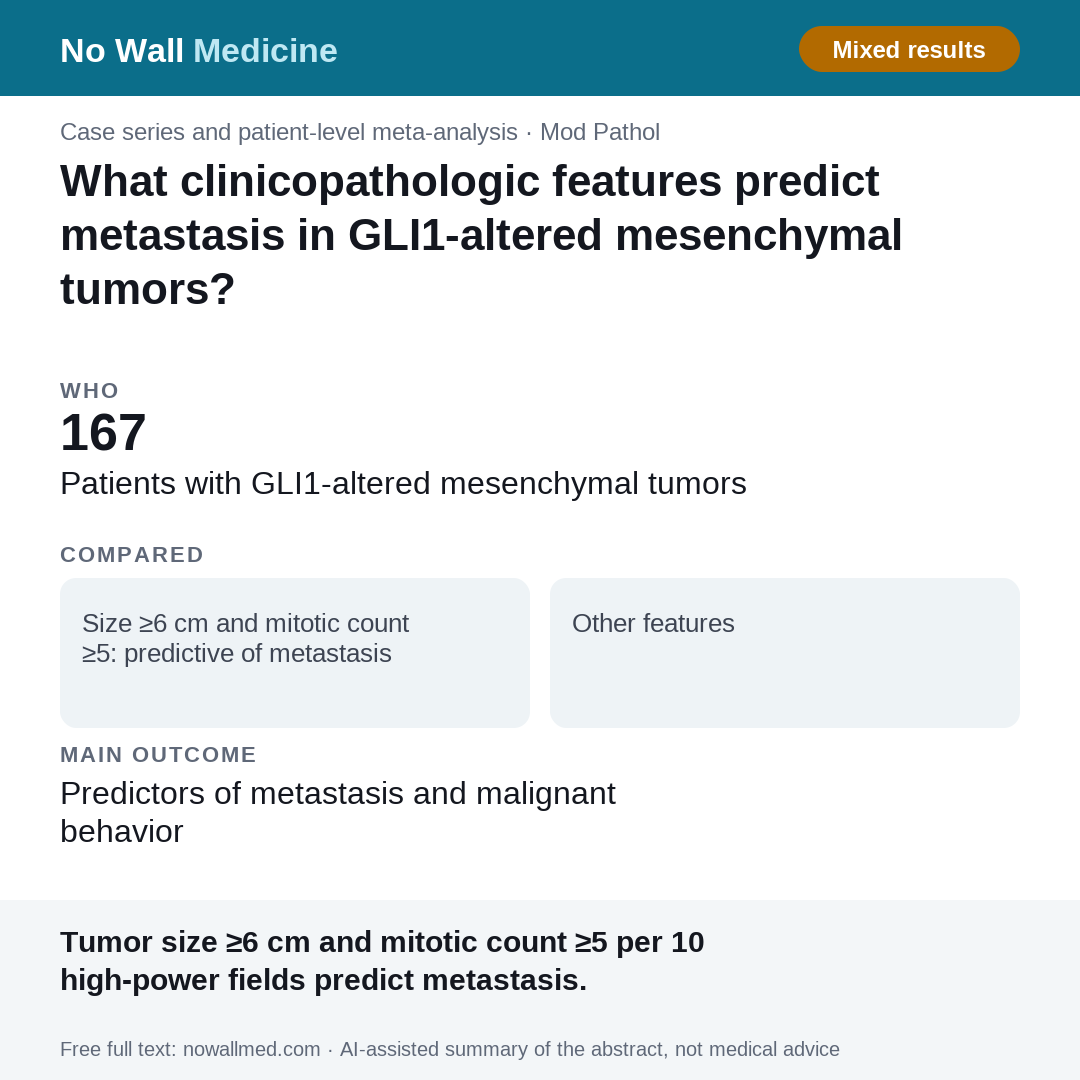
GLI1-Altered Mesenchymal Tumor-Multiomic Characterization of a Case Series and Patient-Level Meta-analysis of One Hundred Sixty-Seven Cases for Risk Stratification
Case series and patient-level meta-analysisMixed results
What clinicopathologic features predict metastasis in GLI1-altered mesenchymal tumors?
Who
167
Patients with GLI1-altered mesenchymal tumors
Compared
Size ≥6 cm and mitotic count ≥5: predictive of metastasis
Other features
Main outcome
Predictors of metastasis and malignant behavior
Bottom line: Tumor size ≥6 cm and mitotic count ≥5 per 10 high-power fields predict metastasis.
Mod Pathol · 2024-10-21Download image
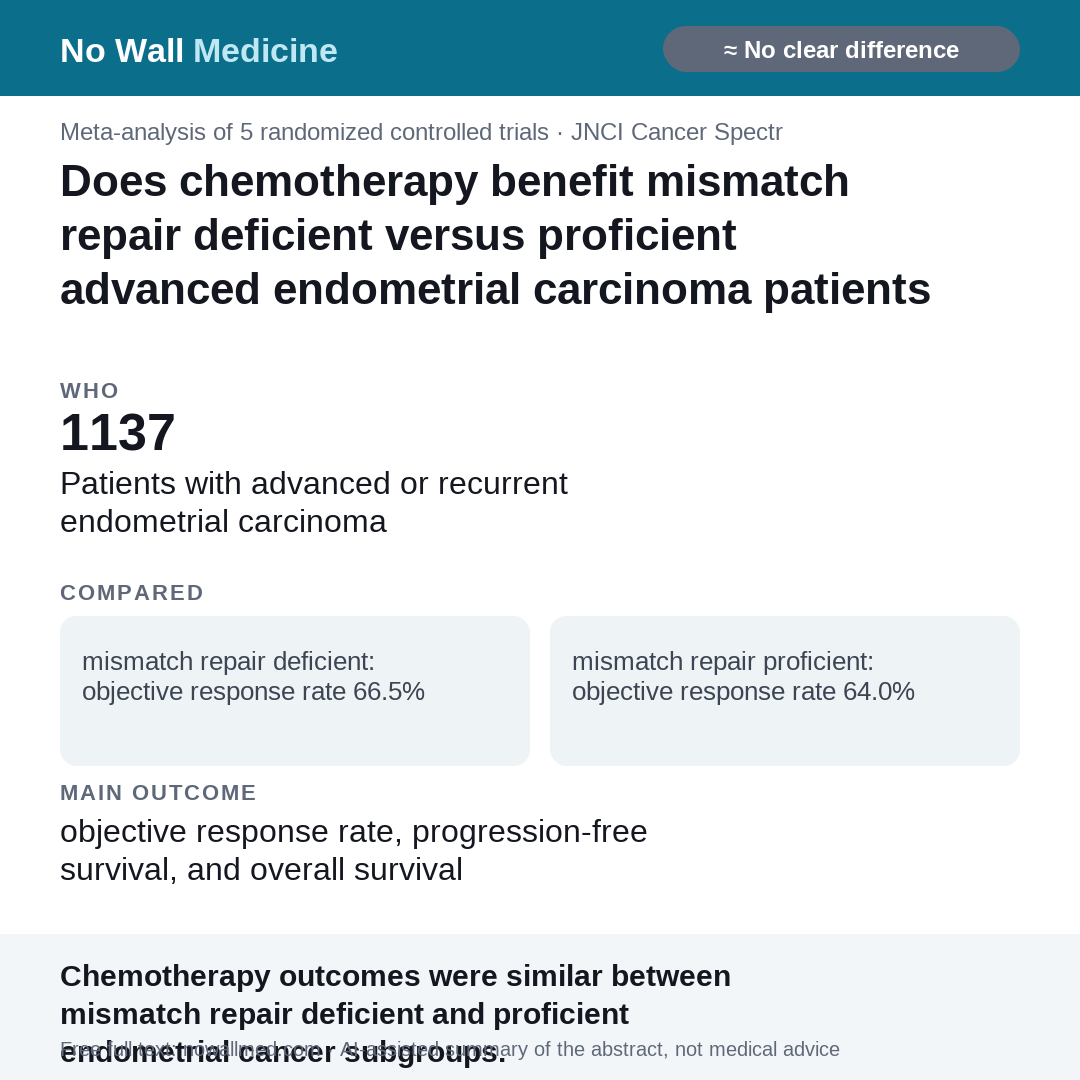
Impact of chemotherapy on patients with mismatch repair deficient advanced endometrial carcinomas-a meta-analysis
Meta-analysis of 5 randomized controlled trialsNo clear difference
Does chemotherapy benefit mismatch repair deficient versus proficient advanced endometrial carcinoma patients differently?
Who
1137
Patients with advanced or recurrent endometrial carcinoma
Compared
mismatch repair deficient: objective response rate 66.5%
mismatch repair proficient: objective response rate 64.0%
Main outcome
objective response rate, progression-free survival, and overall survival
Result: hazard ratio 0.93 (95% CI 0.77 to 1.12)
Bottom line: Chemotherapy outcomes were similar between mismatch repair deficient and proficient endometrial cancer subgroups.
JNCI Cancer Spectr · 2024-10-21Download image
Plasma Radiofrequency Tuboplasty and Cartilage Underlay Myringoplasty for Repairing Chronic Large Perforation with Eustachian Tube Dysfunction
Randomized trialBenefit found
Does adding plasma radiofrequency tuboplasty to endoscopic cartilage myringoplasty improve outcomes for chronic large perforation?
Who
61
Patients with chronic large perforation and Eustachian tube dysfunction
Compared
Endoscopic cartilage myringoplasty: 86.7% graft success rate
Endoscopic cartilage myringoplasty plus plasma radiofrequency tuboplasty: 96.8% graft success rate
Main outcome
Eustachian tube score, questionnaire scores, hearing, and graft success
Bottom line: Adding plasma radiofrequency tuboplasty improves Eustachian tube scores and questionnaire scores without affecting graft success rate.
J Otolaryngol Head Neck Surg · 2024-10-21Download image

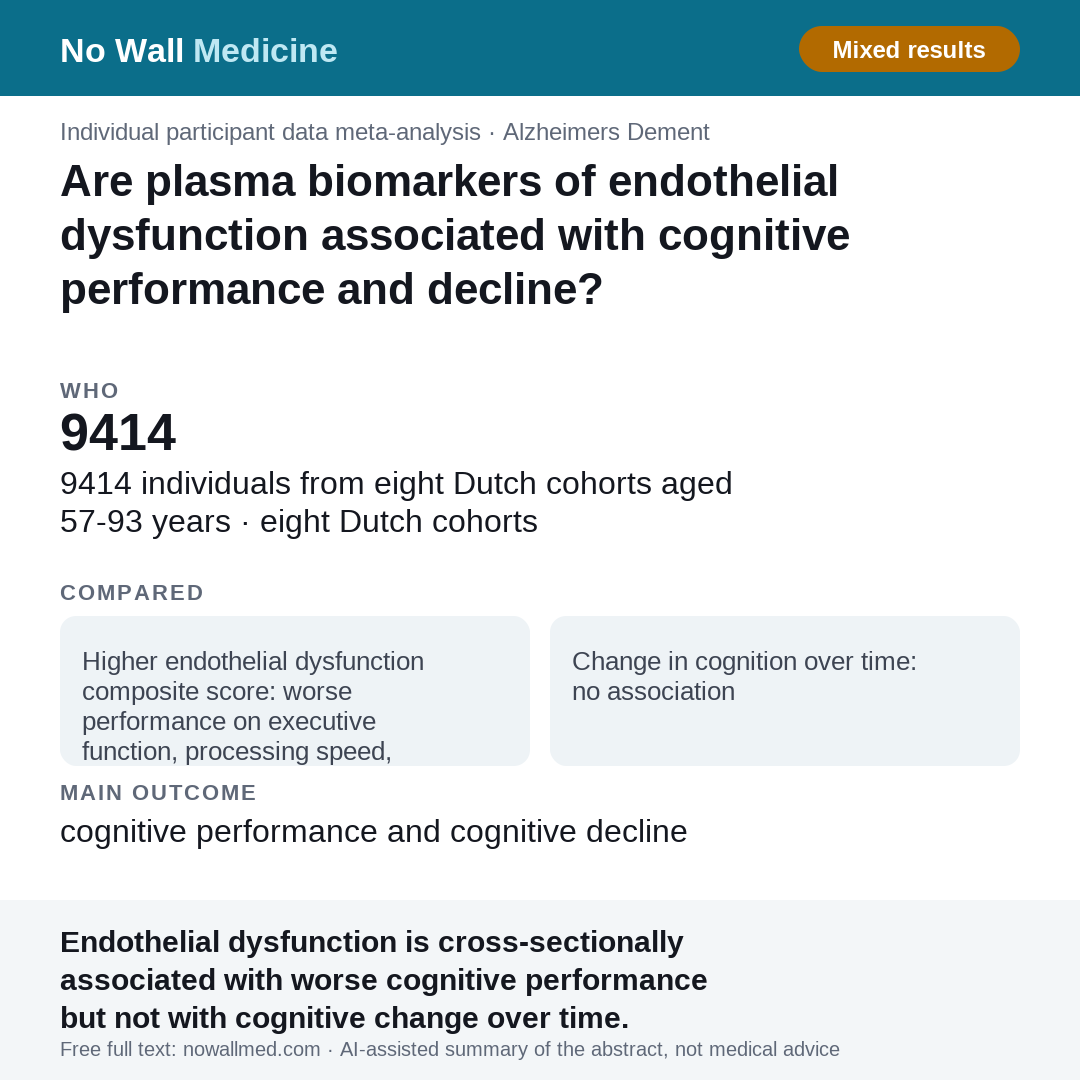
Biomarkers of endothelial dysfunction and cognition: A two-step IPD meta-analysis
Individual participant data meta-analysisMixed results
Are plasma biomarkers of endothelial dysfunction associated with cognitive performance and decline?
Who
9414
9414 individuals from eight Dutch cohorts aged 57-93 years · eight Dutch cohorts
Compared
Higher endothelial dysfunction composite score: worse performance on executive function, processing speed, delayed memory, and attention
Change in cognition over time: no association
Main outcome
cognitive performance and cognitive decline
Result: pooled beta-range: -0.04, -0.02
Bottom line: Endothelial dysfunction is cross-sectionally associated with worse cognitive performance but not with cognitive change over time.
Alzheimers Dement · 2024-10-20Download image
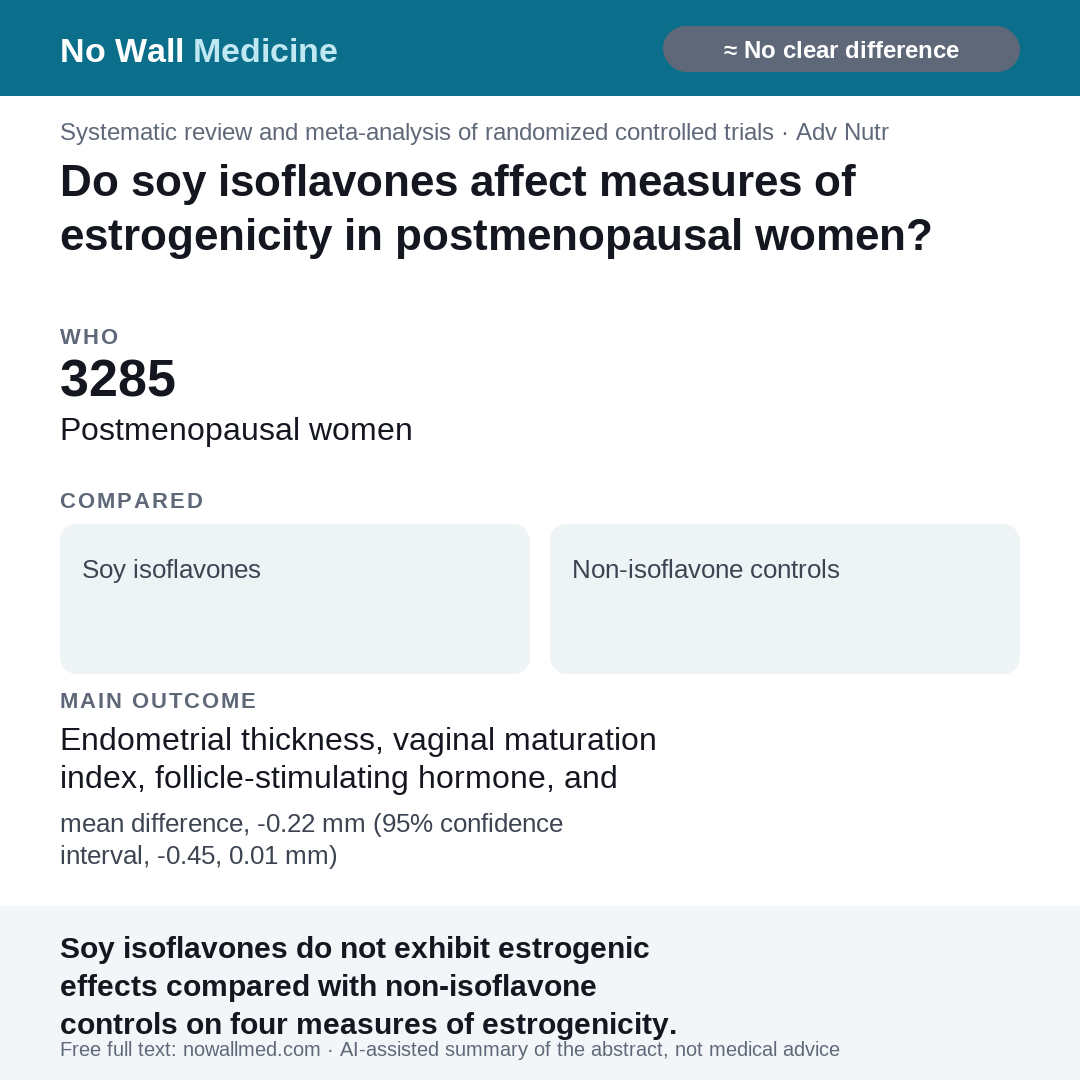
Effect of Soy Isoflavones on Measures of Estrogenicity: A Systematic Review and Meta-Analysis of Randomized Controlled Trials
Systematic review and meta-analysis of randomized controlled trialsNo clear difference
Do soy isoflavones affect measures of estrogenicity in postmenopausal women?
Who
3285
Postmenopausal women
Compared
Soy isoflavones
Non-isoflavone controls
Main outcome
Endometrial thickness, vaginal maturation index, follicle-stimulating hormone, and estradiol
Result: mean difference, -0.22 mm (95% confidence interval, -0.45, 0.01 mm)
Bottom line: Soy isoflavones do not exhibit estrogenic effects compared with non-isoflavone controls on four measures of estrogenicity.
Adv Nutr · 2024-10-20Download image
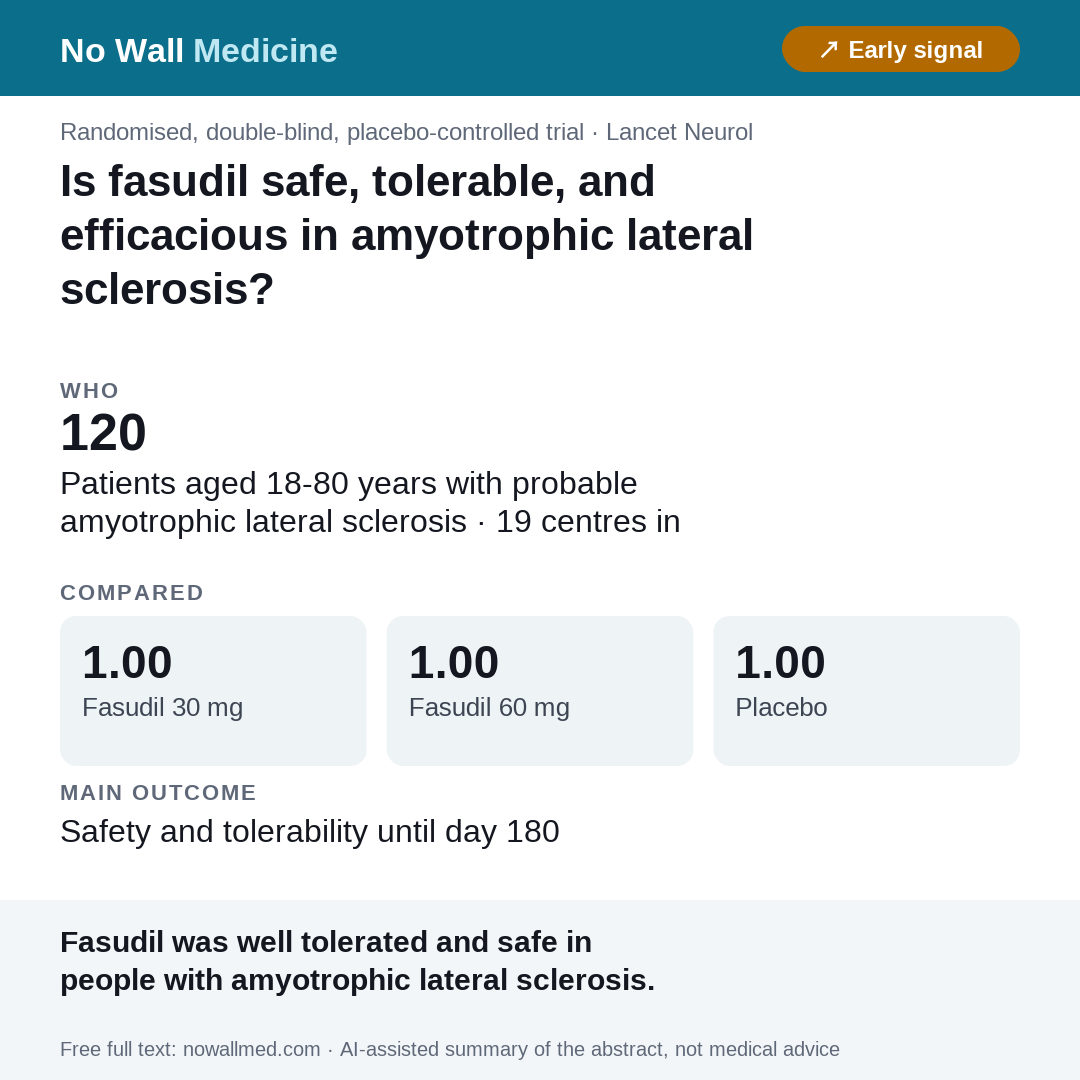
Safety, tolerability, and efficacy of fasudil in amyotrophic lateral sclerosis (ROCK-ALS): a phase 2, randomised, double-blind, placebo-controlled trial
Randomised, double-blind, placebo-controlled trialBenefit found
Is fasudil safe, tolerable, and efficacious in amyotrophic lateral sclerosis?
Who
120
Patients aged 18-80 years with probable amyotrophic lateral sclerosis · 19 centres in Germany, France, and Switzerland
Compared
1.00Fasudil 30 mg (95% CI 0.89 to 1.00)
1.00Fasudil 60 mg (95% CI 0.90 to 1.00)
1.00Placebo (95% CI 0.91 to 1.00)
Main outcome
Safety and tolerability until day 180
Result: difference in proportions 0.00 (95% CI -0.11 to 0.10; p>0.99) for 30 mg vs placebo
Bottom line: Fasudil was well tolerated and safe in people with amyotrophic lateral sclerosis.
Funded by: Framework of the E-Rare Joint Transnational Call 2016
Lancet Neurol · 2024-10-19Download image