Visual abstracts
New randomized trials and meta-analyses from leading journals at a glance: who was studied, what was compared, and what was found. Every paper is free to read in full.
All specialtiesCardiology 4877Oncology 4138Gastroenterology & Hepatology 1942Infectious Disease 3837Neurology 1905Psychiatry & Mental Health 2273Pulmonology 2143Critical Care 1365Endocrinology & Diabetes 2580Pediatrics 2980Surgery 2559Orthopedics & Sports Medicine 931Neurosurgery 537Cardiothoracic & Vascular Surgery 674Plastic & Reconstructive Surgery 591Nephrology 1133Rheumatology 823Hematology 1109Dermatology 621Ophthalmology 543Obstetrics & Gynecology 1686Public & Global Health 1058Radiology & Imaging 648Anesthesiology 986Urology 764ENT (Otolaryngology) 503Emergency Medicine 511Allergy & Immunology 313Geriatrics 981Family Medicine & Primary Care 562Medical Genetics & Genomics 676Pathology & Laboratory Medicine 159Physical Medicine & Rehabilitation 757Palliative Care 444Nutrition 1588Digital Health & AI 2201General Medicine 321
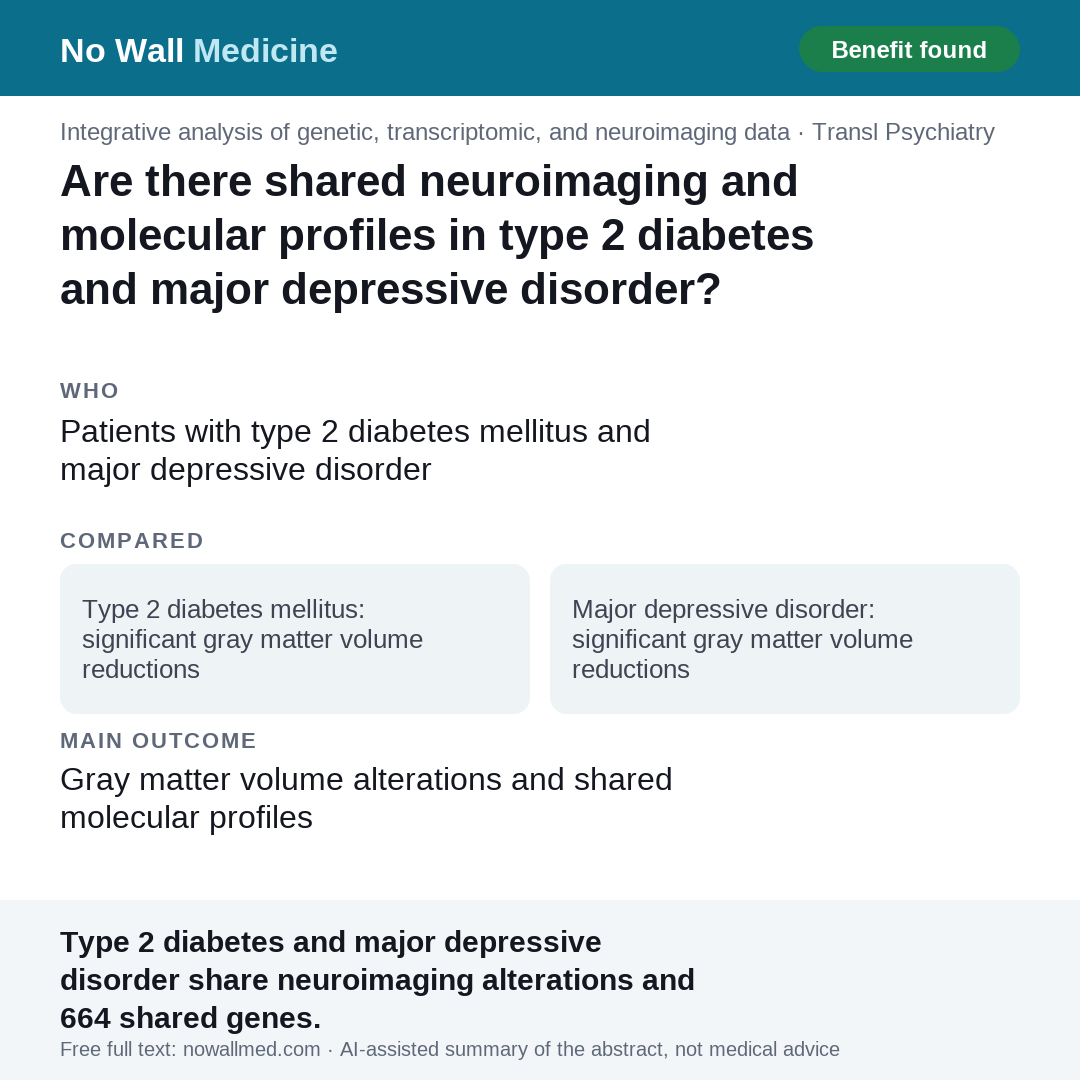
Shared neuroimaging and molecular profiles in type 2 diabetes mellitus and major depressive disorder: an integrative analysis of genetic, transcriptomic, and neuroimaging data
Integrative analysis of genetic, transcriptomic, and neuroimaging dataBenefit found
Are there shared neuroimaging and molecular profiles in type 2 diabetes and major depressive disorder?
Who
Patients with type 2 diabetes mellitus and major depressive disorder
Compared
Type 2 diabetes mellitus: significant gray matter volume reductions
Major depressive disorder: significant gray matter volume reductions
Main outcome
Gray matter volume alterations and shared molecular profiles
Bottom line: Type 2 diabetes and major depressive disorder share neuroimaging alterations and 664 shared genes.
Transl Psychiatry · 2025-10-06Download image
Post-intensive care unit clinics: models and implementation - a systematic review
Systematic reviewMixed results
Post-ICU clinic models effectiveness
Who
Adults after intensive care unit discharge · High and low income countries
Compared
88.7%Telehealth models
59%Hybrid models
51.9%Physical interview models
Main outcome
Mean attendance
Bottom line: Hybrid models may improve follow-up care
Limitation: Evidence on long-term outcomes limited
Crit Care · 2025-10-06Download image

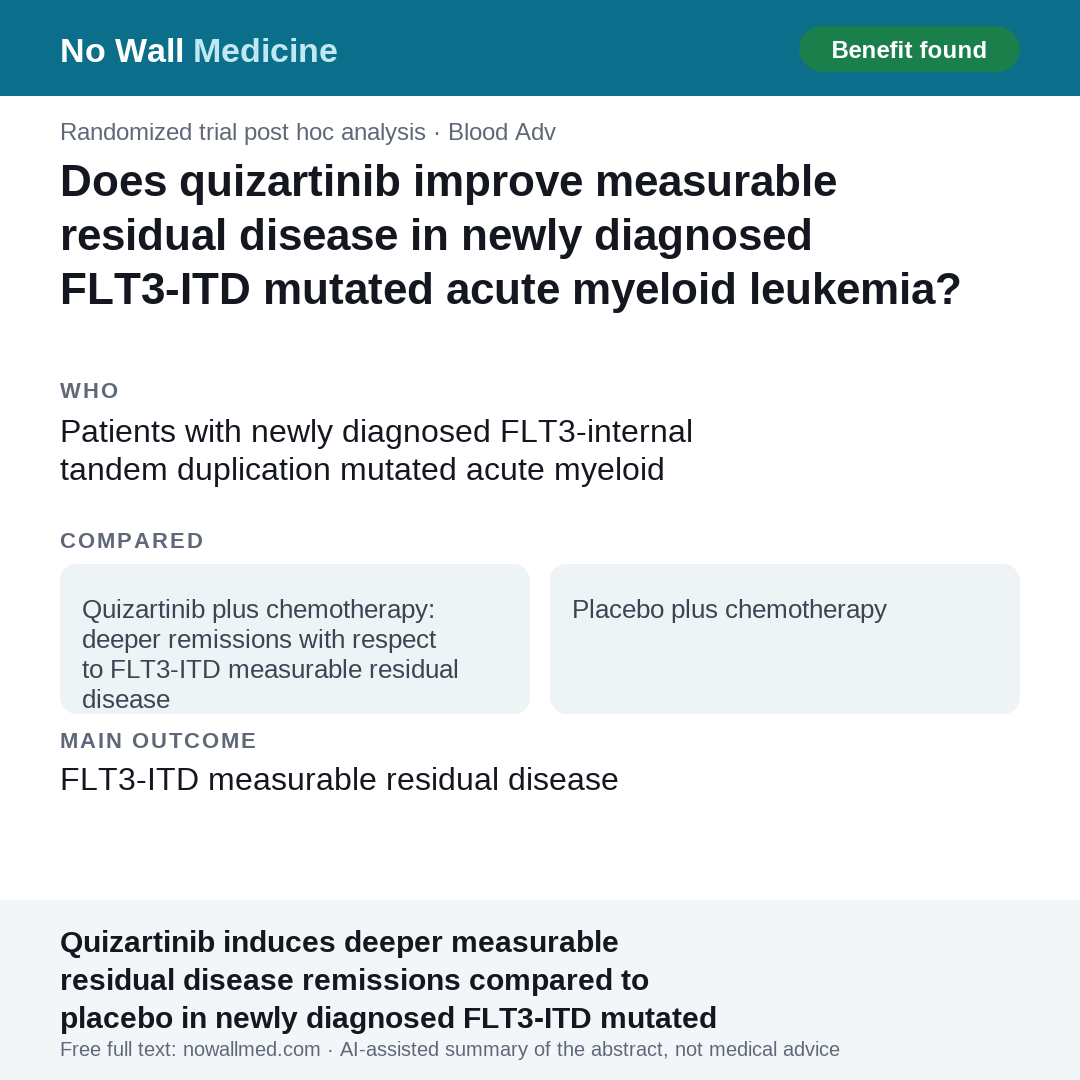
FLT3-ITD measurable residual disease from the QuANTUM-First trial
Randomized trial post hoc analysisBenefit found
Does quizartinib improve measurable residual disease in newly diagnosed FLT3-ITD mutated acute myeloid leukemia?
Who
Patients with newly diagnosed FLT3-internal tandem duplication mutated acute myeloid leukemia
Compared
Quizartinib plus chemotherapy: deeper remissions with respect to FLT3-ITD measurable residual disease
Placebo plus chemotherapy
Main outcome
FLT3-ITD measurable residual disease
Bottom line: Quizartinib induces deeper measurable residual disease remissions compared to placebo in newly diagnosed FLT3-ITD mutated acute myeloid leukemia.
Blood Adv · 2025-10-06Download image
The association between preoperative anxiety and chronic post-surgical pain after general anaesthesia, a systematic review and meta-analysis
Systematic review and meta-analysisBenefit found
Is preoperative anxiety associated with the incidence of chronic post-surgical pain?
Who
Adult patients undergoing surgical procedures under general anaesthesia
Compared
Patients with preoperative anxiety: increase in numeric rating scale pain of 0.34
Control group
Main outcome
Chronic post-surgical pain incidence and numeric rating scale pain
Result: standardised mean difference of 0.31 (95% confidence interval 0.20-0.41)
Bottom line: Increased preoperative anxiety is positively associated with an increased incidence of chronic post-surgical pain.
Limitation: High heterogeneity was observed, which was attributed to several possible confounding factors.
BJA Open · 2025-10-06Download image

The impact of very-low-calorie ketogenic diets on gut microbiota in individuals with obesity: a systematic review and meta-analysis
Systematic review and meta-analysisMixed results
How do very-low-calorie ketogenic diets affect gut microbiota in individuals with obesity?
Who
14
Individuals with obesity
Compared
Very-low-calorie ketogenic diets: increased Shannon index (SMD: 0.54, 95% CI: 0.03 to 1.04)
Control
Main outcome
Gut microbial diversity and relative abundance of key taxa
Result: Shannon index SMD: 0.54 (95% CI: 0.03 to 1.04)
Bottom line: Very-low-calorie ketogenic diets improve microbial diversity and Akkermansia but reduce Bifidobacterium abundance in individuals with obesity.
Limitation: Bidirectional effects on microbial ecology warrant caution and long-term safety requires further investigation.
Gut Microbes · 2025-10-06Download image

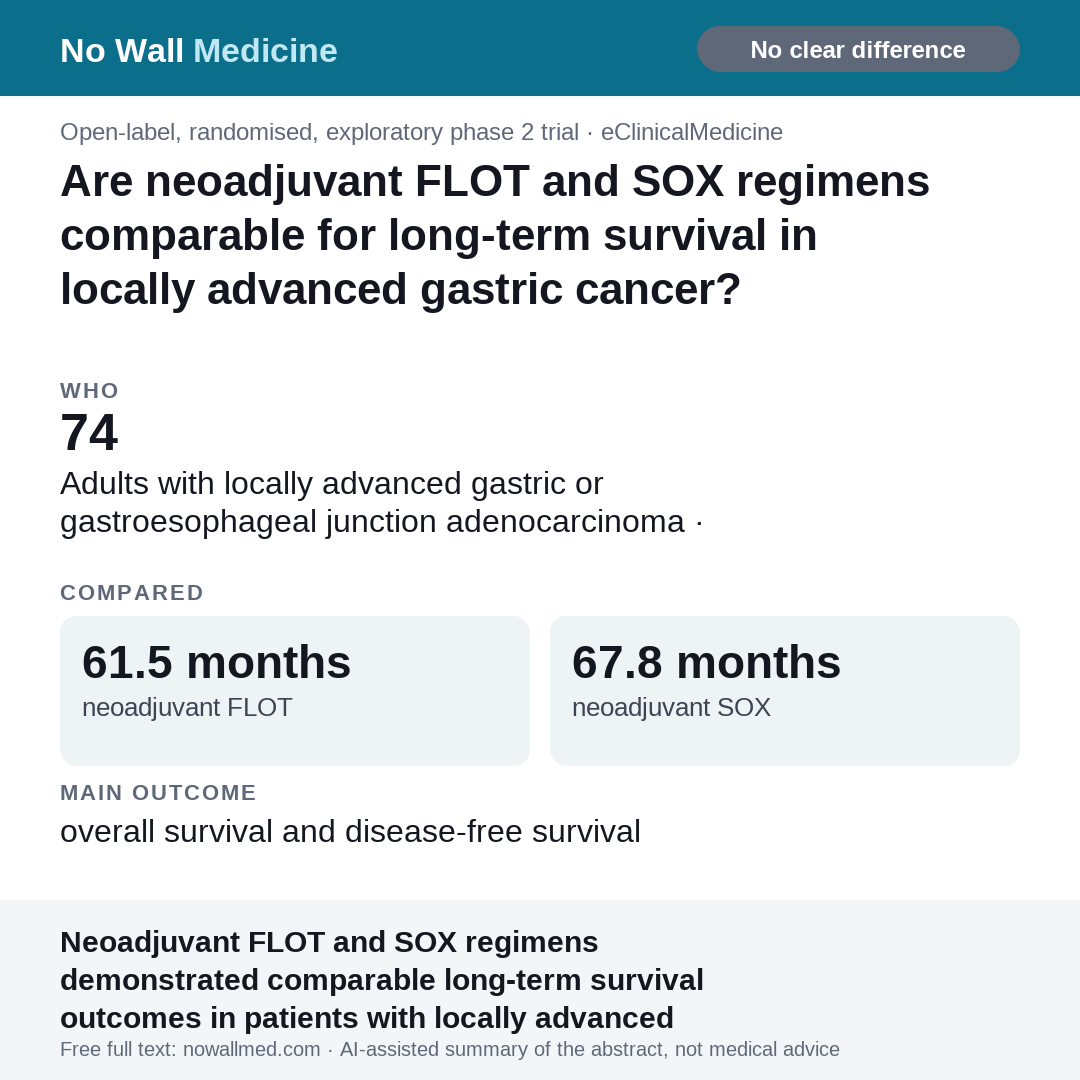
Neoadjuvant FLOT versus SOX chemotherapy in locally advanced gastric cancer: secondary outcomes of a single-centre, open-label, randomised, exploratory phase 2 trial
Open-label, randomised, exploratory phase 2 trialNo clear difference
Are neoadjuvant FLOT and SOX regimens comparable for long-term survival in locally advanced gastric cancer?
Who
74
Adults with locally advanced gastric or gastroesophageal junction adenocarcinoma · Single hospital in China
Compared
61.5 monthsneoadjuvant FLOT
67.8 monthsneoadjuvant SOX
Main outcome
overall survival and disease-free survival
Result: hazard ratio 1.101 (95% CI 0.595 to 2.036)
Bottom line: Neoadjuvant FLOT and SOX regimens demonstrated comparable long-term survival outcomes in patients with locally advanced gastric cancer.
Limitation: Small sample size, single centre, and lack of formal power calculations for survival endpoints.
eClinicalMedicine · 2025-10-05Download image
Reevaluating Nonoperative Management for Pediatric Uncomplicated Acute Appendicitis: A Systematic Review and Meta-Analysis
Meta-analysis of 7 randomized clinical trialsHarm found
Is nonoperative management as safe and effective as appendectomy for pediatric uncomplicated acute appendicitis?
Who
1480
Pediatric patients younger than 18 years with uncomplicated appendicitis
Compared
Nonoperative management
Appendectomy
Main outcome
Treatment failure, treatment success, and major complications at 1 year
Result: risk ratio 4.97 (95% CI, 3.57-6.91) for treatment failure
Bottom line: Nonoperative management in children has significantly higher treatment failure and major complication rates within one year compared to appendectomy.
JAMA Pediatr · 2025-10-05Download image

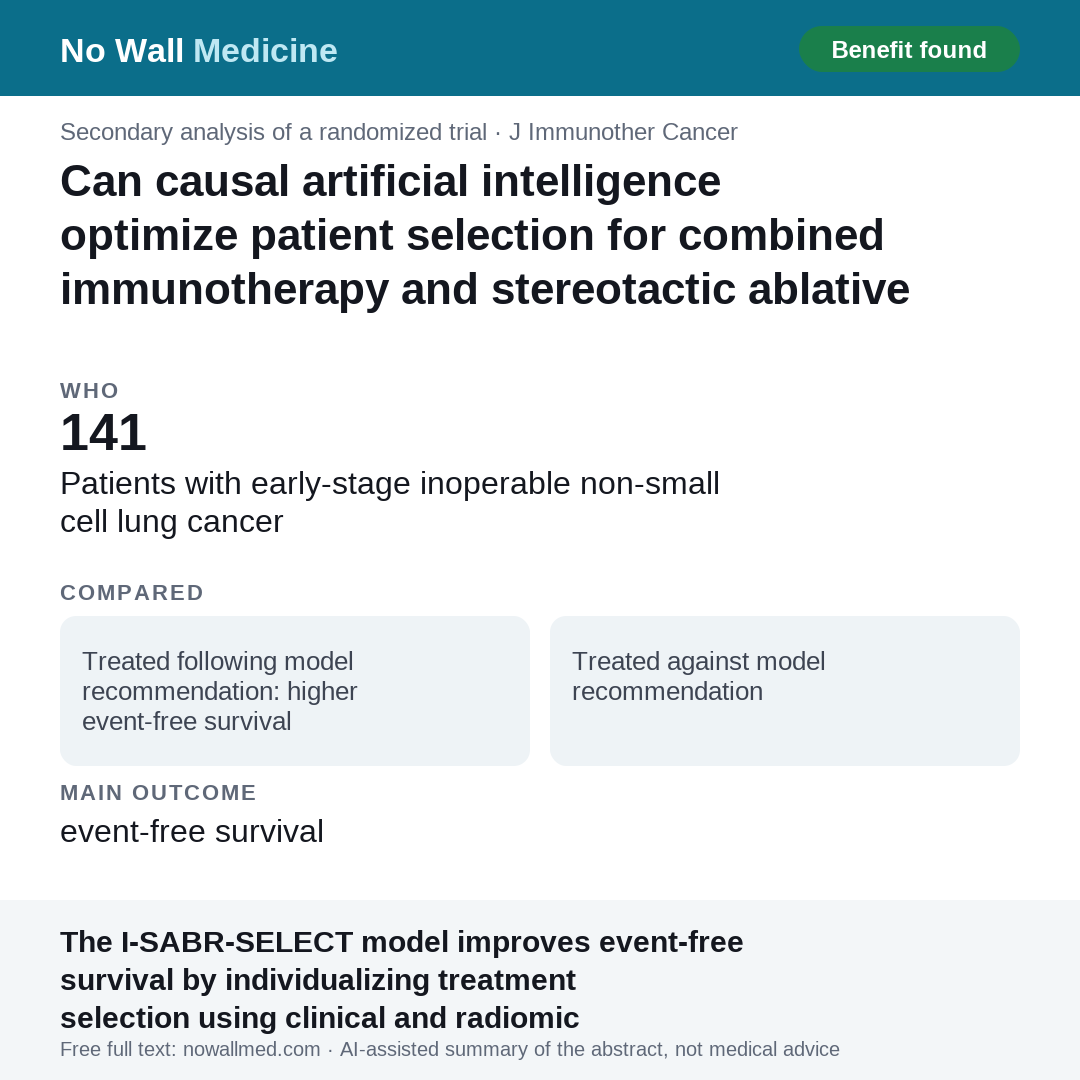
Causal AI-based clinical and radiomic analysis for optimizing patient selection in combined immunotherapy and SABR in early-stage NSCLC: a secondary analysis of the phase II I-SABR trial
Secondary analysis of a randomized trialBenefit found
Can causal artificial intelligence optimize patient selection for combined immunotherapy and stereotactic ablative radiotherapy?
Who
141
Patients with early-stage inoperable non-small cell lung cancer
Compared
Treated following model recommendation: higher event-free survival
Treated against model recommendation
Main outcome
event-free survival
Result: hazard ratio 0.06 (p<0.001) in I-SABR arm
Bottom line: The I-SABR-SELECT model improves event-free survival by individualizing treatment selection using clinical and radiomic factors.
Limitation: The model requires further validation to serve as a foundation for digital twins.
J Immunother Cancer · 2025-10-05Download image
Efficacy and safety of avacopan for treatment of patients with ANCA-associated vasculitis receiving cyclophosphamide
Subgroup analysis of a randomized trialBenefit found
Is avacopan effective versus a prednisone taper in patients with ANCA-associated vasculitis receiving cyclophosphamide?
Who
116
Patients with granulomatosis with polyangiitis or microscopic polyangiitis receiving cyclophosphamide
Compared
avacopan: 62.7% remission at week 26
prednisone taper: 59.6% remission at week 26
Main outcome
remission at week 26 and sustained remission at week 52
Bottom line: Avacopan showed similar remission rates but lower relapse rates and less glucocorticoid toxicity compared to prednisone taper.
RMD Open · 2025-10-05Download image

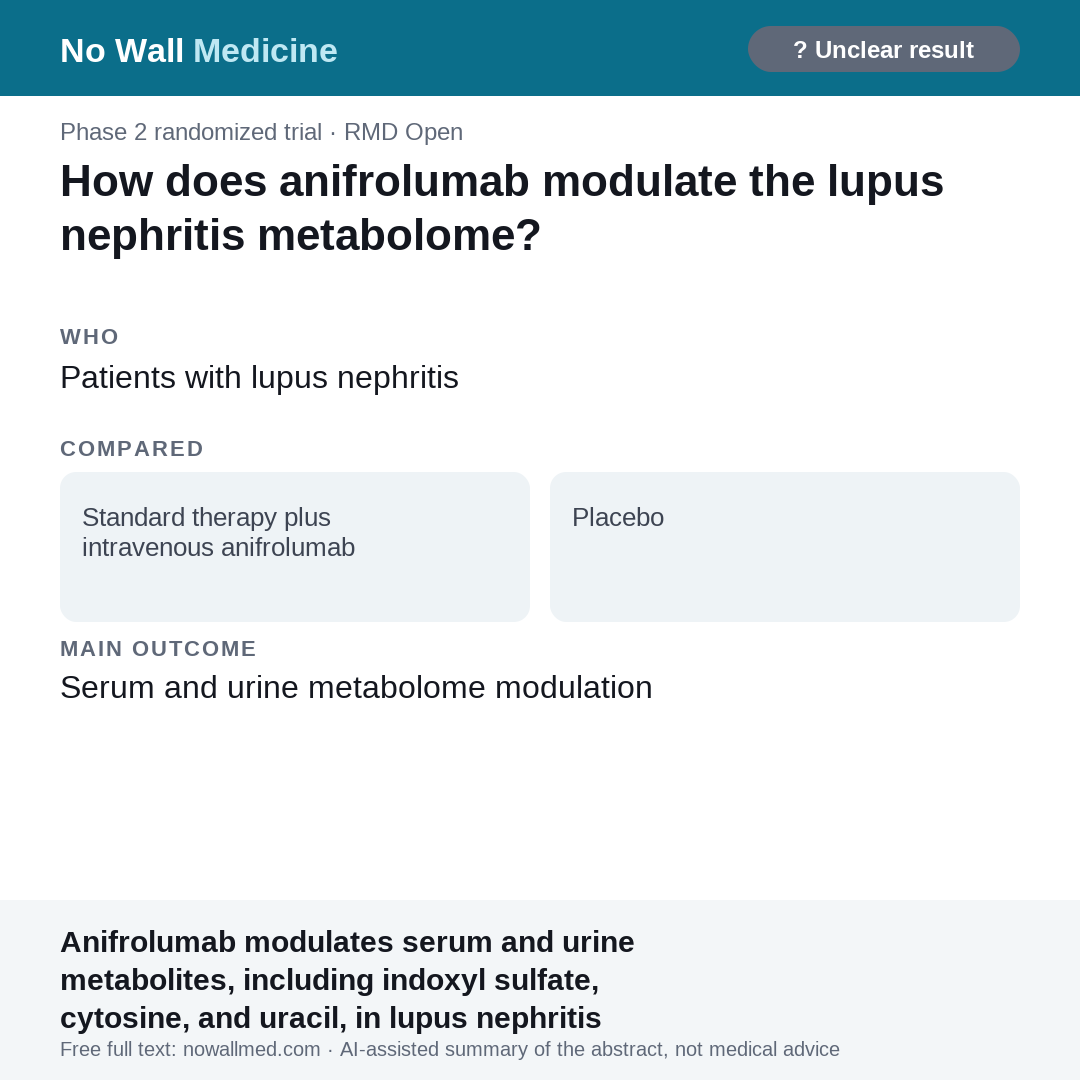
Metabolomic profiling of patients with lupus nephritis reveals unique metabolites that are modulated through type I interferon inhibition by anifrolumab treatment in a phase 2 trial
Phase 2 randomized trialUnclear result
How does anifrolumab modulate the lupus nephritis metabolome?
Who
Patients with lupus nephritis
Compared
Standard therapy plus intravenous anifrolumab
Placebo
Main outcome
Serum and urine metabolome modulation
Bottom line: Anifrolumab modulates serum and urine metabolites, including indoxyl sulfate, cytosine, and uracil, in lupus nephritis patients.
RMD Open · 2025-10-05Download image
Patient vs. clinician-collected cervical cytology for screening for CIN: a systematic review and meta-analysis
Systematic review and meta-analysisMixed results
Is self-collected cervical cytology as accurate as clinician-collected cytology for screening?
Who
Adult women undergoing cervical cytology
Compared
Self-collected cytology: sensitivity 0.698, specificity 0.805
Clinician-collected cytology: sensitivity 0.765, specificity 0.613
Main outcome
Diagnostic accuracy for cervical intraepithelial neoplasia
Bottom line: Self-collection has reasonable accuracy but lower sensitivity than clinician-collected cytology, potentially increasing screening uptake.
Limitation: Methodological concerns in patient selection and wide variation in self-collection methods.
AJOG Glob Rep · 2025-10-05Download image

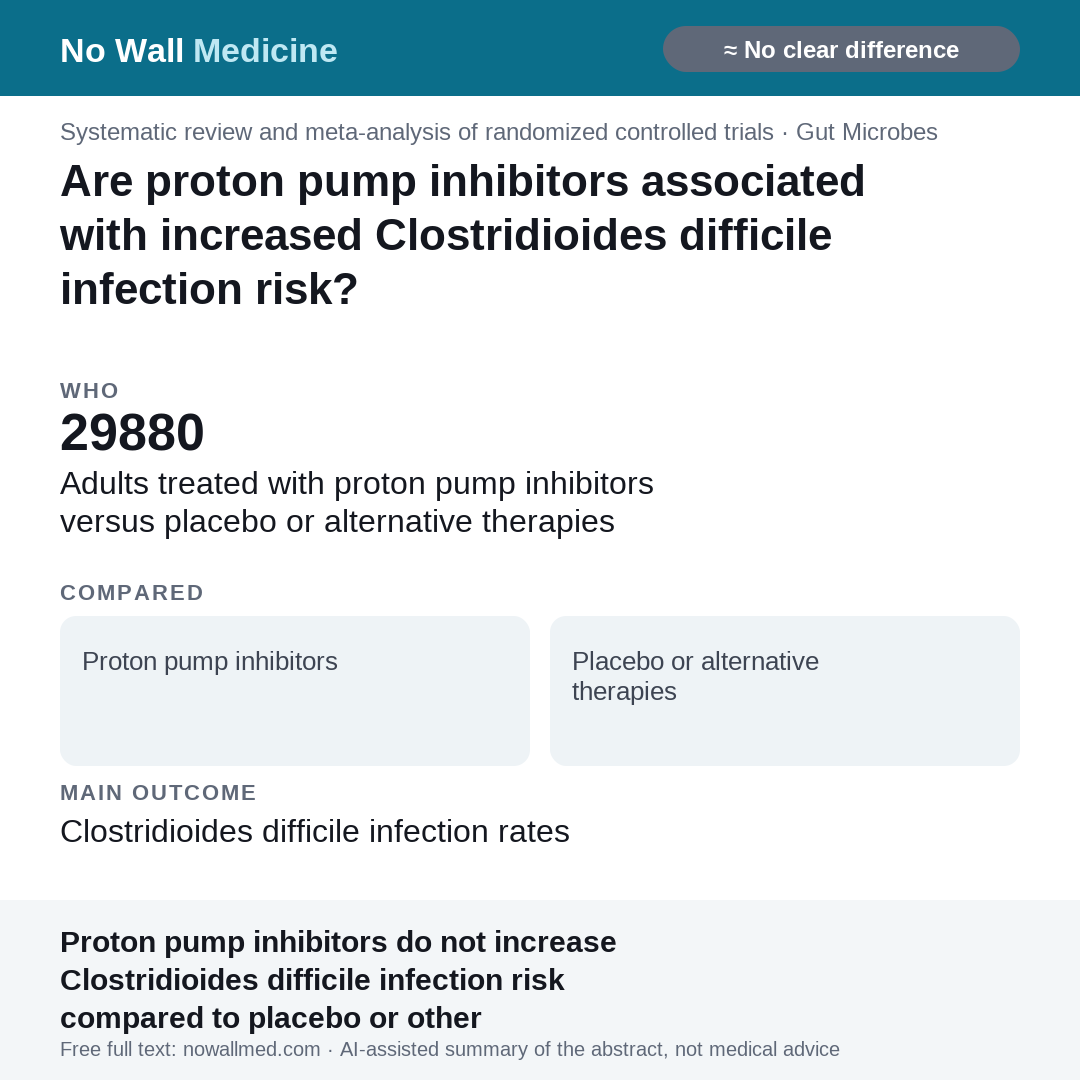
Proton pump inhibitors are not associated with an increased risk of Clostridioides difficile infection: a systematic review and meta-analysis of randomized controlled trials
Systematic review and meta-analysis of randomized controlled trialsNo clear difference
Are proton pump inhibitors associated with increased Clostridioides difficile infection risk?
Who
29880
Adults treated with proton pump inhibitors versus placebo or alternative therapies
Compared
Proton pump inhibitors
Placebo or alternative therapies
Main outcome
Clostridioides difficile infection rates
Result: risk ratio 1.19 (95% CI 0.75 to 1.89)
Bottom line: Proton pump inhibitors do not increase Clostridioides difficile infection risk compared to placebo or other acid-suppressive medications.
Gut Microbes · 2025-10-05Download image
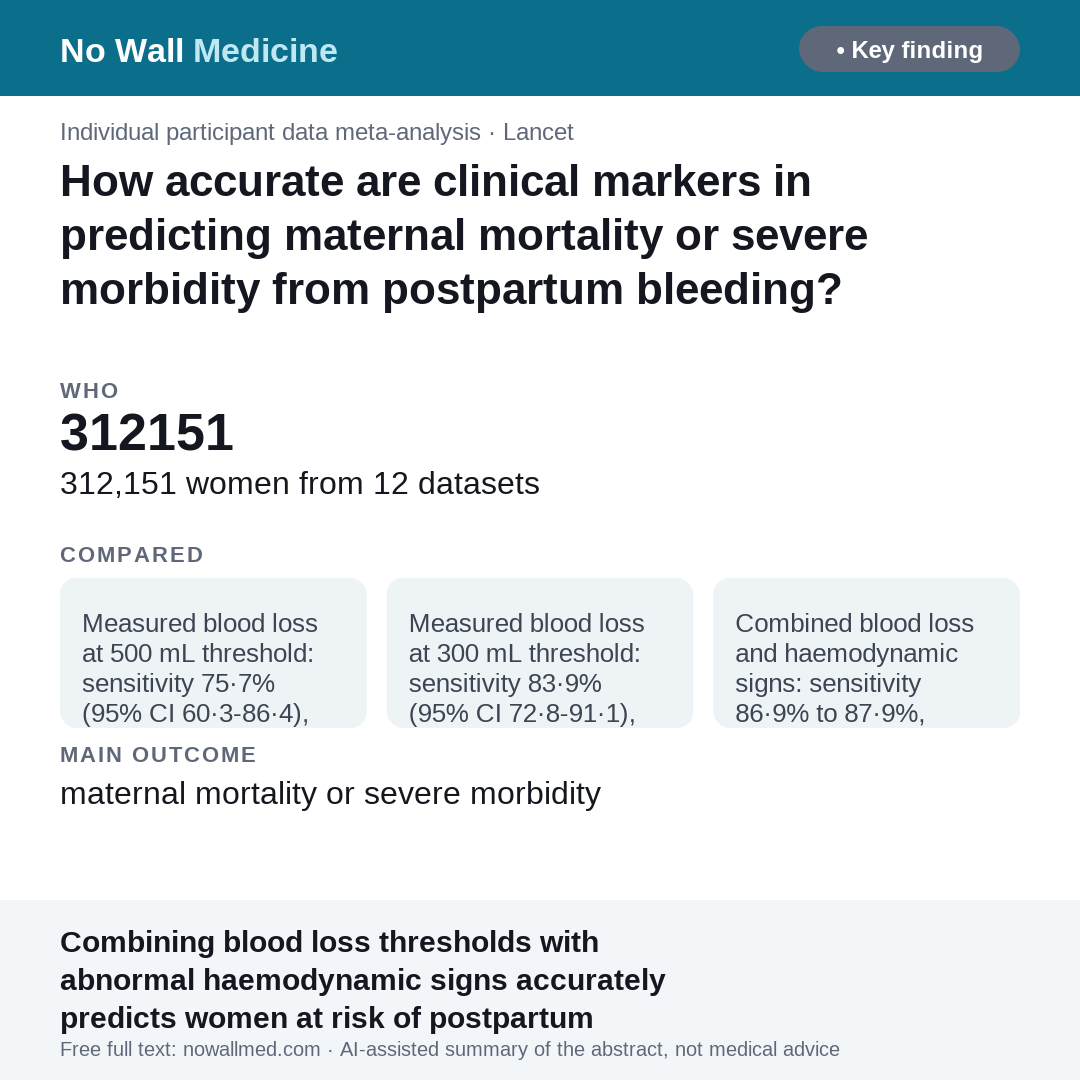
Prognostic accuracy of clinical markers of postpartum bleeding in predicting maternal mortality or severe morbidity: a WHO individual participant data meta-analysis
Individual participant data meta-analysisBenefit found
How accurate are clinical markers in predicting maternal mortality or severe morbidity from postpartum bleeding?
Who
312151
312,151 women from 12 datasets
Compared
Measured blood loss at 500 mL threshold: sensitivity 75·7% (95% CI 60·3-86·4), specificity 81·4% (95% CI 70·7-88·8)
Measured blood loss at 300 mL threshold: sensitivity 83·9% (95% CI 72·8-91·1), specificity 54·8% (95% CI 38·0-70·5)
Combined blood loss and haemodynamic signs: sensitivity 86·9% to 87·9%, specificity 66·6% to 76·1%
Main outcome
maternal mortality or severe morbidity
Bottom line: Combining blood loss thresholds with abnormal haemodynamic signs accurately predicts women at risk of postpartum bleeding complications.
Funded by: Gates Foundation and WHO Special Programme
Lancet · 2025-10-04Download image
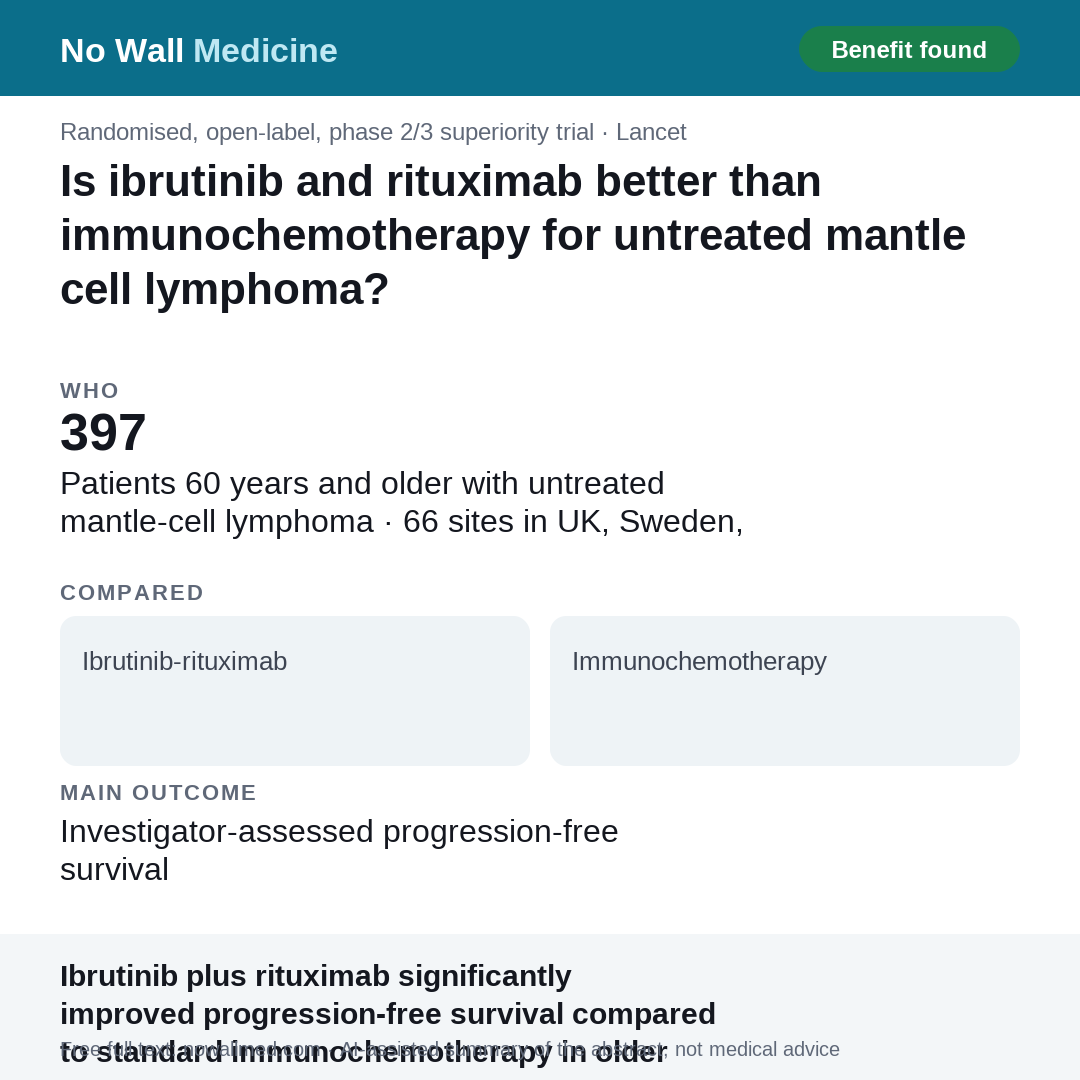
Ibrutinib and rituximab versus immunochemotherapy in patients with previously untreated mantle cell lymphoma (ENRICH): a randomised, open-label, phase 2/3 superiority trial
Randomised, open-label, phase 2/3 superiority trialBenefit found
Is ibrutinib and rituximab better than immunochemotherapy for untreated mantle cell lymphoma?
Who
397
Patients 60 years and older with untreated mantle-cell lymphoma · 66 sites in UK, Sweden, Norway, Finland, and Denmark
Compared
Ibrutinib-rituximab
Immunochemotherapy
Main outcome
Investigator-assessed progression-free survival
Result: hazard ratio 0·69 (95% CI 0·52-0·90)
Bottom line: Ibrutinib plus rituximab significantly improved progression-free survival compared to standard immunochemotherapy in older patients with untreated mantle-cell lymphoma.
Funded by: Cancer Research UK and Johnson and Johnson Pharmaceuticals
Lancet · 2025-10-03Download image
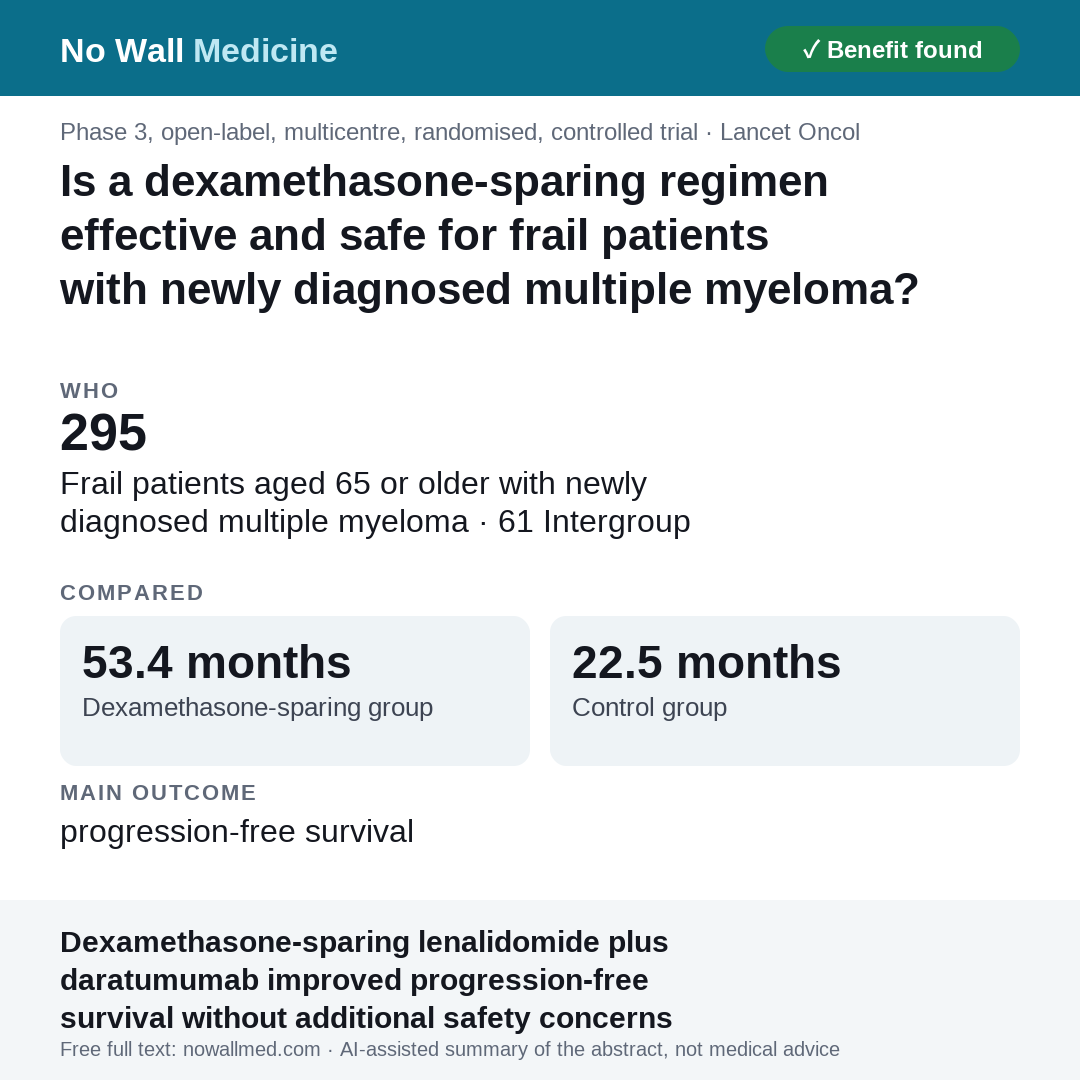
Safety and efficacy of a dexamethasone-sparing regimen with daratumumab and lenalidomide in patients with frailty and newly diagnosed multiple myeloma (IFM2017-03): a phase 3, open-label, multicentre, randomised, controlled trial
Phase 3, open-label, multicentre, randomised, controlled trialBenefit found
Is a dexamethasone-sparing regimen effective and safe for frail patients with newly diagnosed multiple myeloma?
Who
295
Frail patients aged 65 or older with newly diagnosed multiple myeloma · 61 Intergroup Francophone of Myeloma centres
Compared
53.4 monthsDexamethasone-sparing group
22.5 monthsControl group
Main outcome
progression-free survival
Result: hazard ratio 0.51, 95% CI 0.37-0.70
Bottom line: Dexamethasone-sparing lenalidomide plus daratumumab improved progression-free survival without additional safety concerns in frail patients.
Funded by: Johnson & Johnson
Lancet Oncol · 2025-10-03Download image
Best Systemic Therapy With or Without Radical Prostatectomy in the Management of Men With Oligometastatic Prostate Cancer: The RAMPP Randomised Controlled Trial
Randomised controlled trialBenefit found
Does adding radical prostatectomy to best systemic therapy improve cancer-specific mortality?
Who
132
Patients with oligometastatic prostate cancer and low metastatic burden
Compared
13%Radical prostatectomy plus best systemic therapy
23%Best systemic therapy alone
Main outcome
5-year cancer-specific mortality cumulative incidence
Result: hazard ratio 0.39 (95% confidence interval 0.16-0.98)
Bottom line: Adding radical prostatectomy to best systemic therapy reduced 5-year cancer-specific mortality in oligometastatic prostate cancer.
Limitation: Early discontinuation of study accrual and lack of statistical significance for overall survival benefit.
Eur Urol · 2025-10-03Download image

Semaglutide and Exercise Function in Obesity-Related HFpEF: Insights From the STEP-HFpEF Program
Randomized trial, secondary analysis of pooled dataBenefit found
Does semaglutide improve exercise function in patients with obesity-related heart failure with preserved ejection fraction?
Who
1145
Patients with obesity-related heart failure with preserved ejection fraction
Compared
Semaglutide: 17.1 m [95% CI: 9.2-25.0 m] at 52 weeks
Placebo
Main outcome
6-minute walk distance
Result: treatment difference 17.1 m (95% CI 9.2-25.0 m)
Bottom line: Semaglutide improved 6-minute walk distance and heart failure symptoms in patients with obesity-related heart failure with preserved ejection fraction.
JACC Heart Fail · 2025-10-03Download image

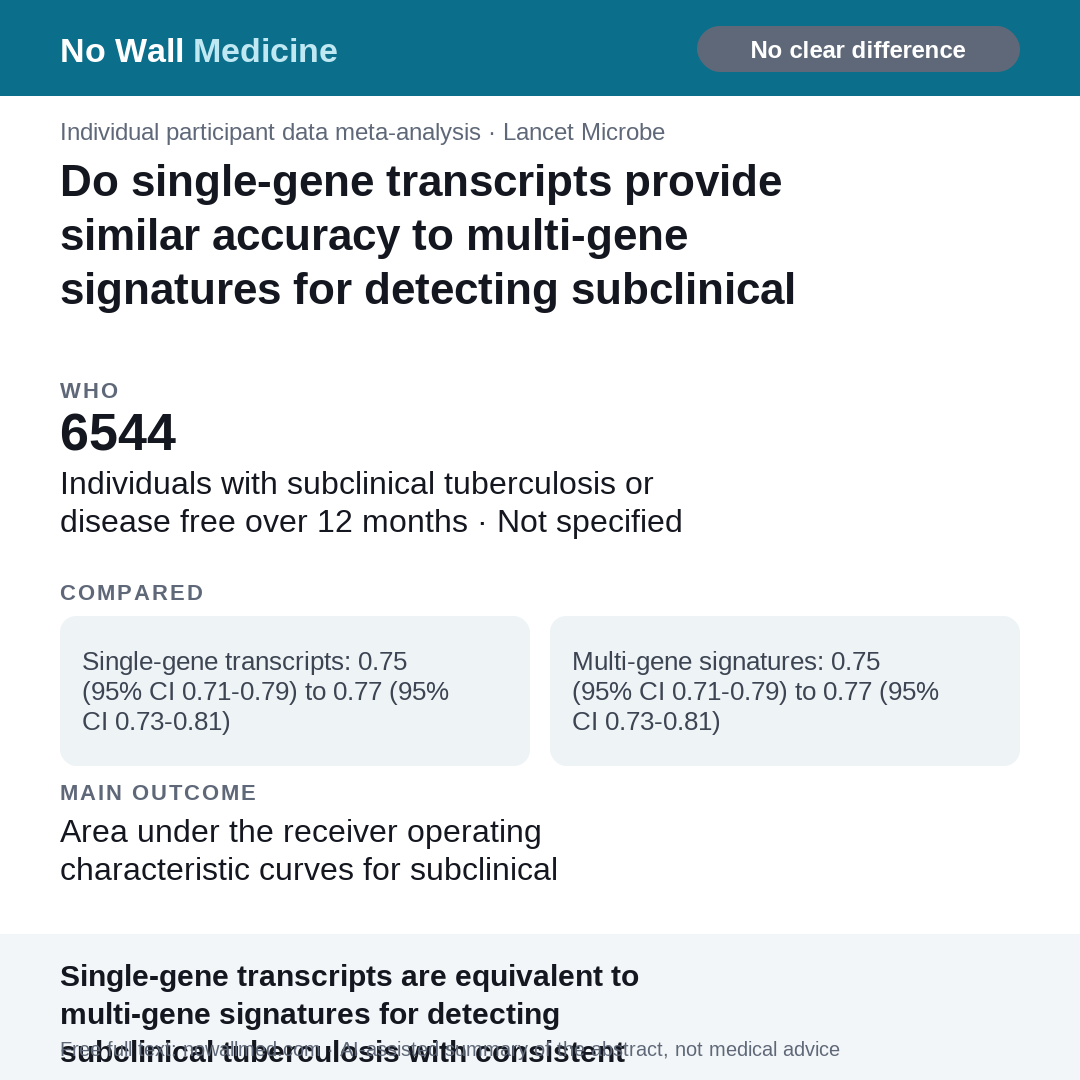
Single-gene transcripts for subclinical tuberculosis: an individual participant data meta-analysis
Individual participant data meta-analysisNo clear difference
Do single-gene transcripts provide similar accuracy to multi-gene signatures for detecting subclinical tuberculosis?
Who
6544
Individuals with subclinical tuberculosis or disease free over 12 months · Not specified
Compared
Single-gene transcripts: 0.75 (95% CI 0.71-0.79) to 0.77 (95% CI 0.73-0.81)
Multi-gene signatures: 0.75 (95% CI 0.71-0.79) to 0.77 (95% CI 0.73-0.81)
Main outcome
Area under the receiver operating characteristic curves for subclinical tuberculosis
Bottom line: Single-gene transcripts are equivalent to multi-gene signatures for detecting subclinical tuberculosis with consistent performance across settings.
Funded by: National Institute for Health Research, Wellcome Trust
Lancet Microbe · 2025-10-03Download image
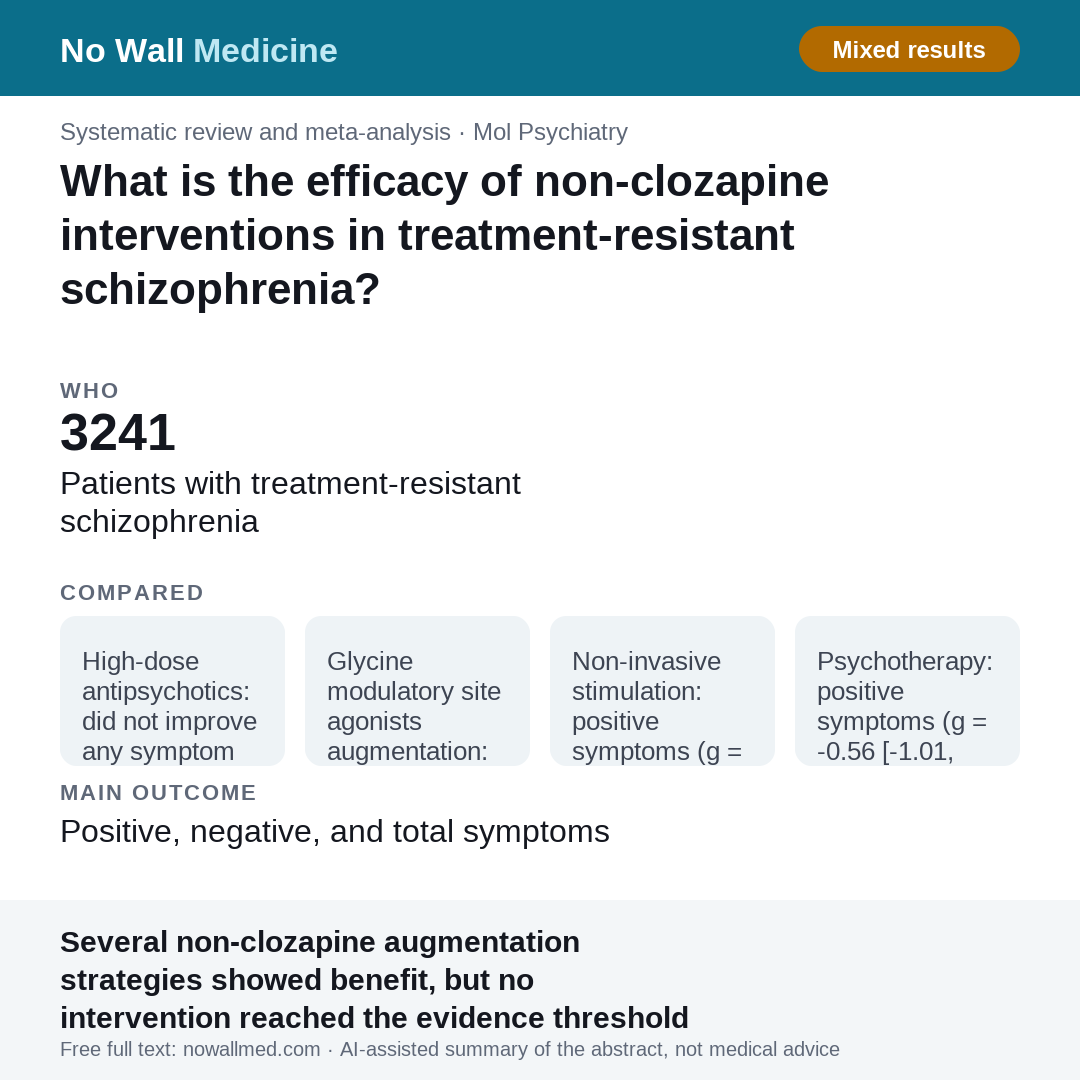
Non-Clozapine interventions in treatment-resistant schizophrenia: a systematic review and meta-analysis
Systematic review and meta-analysisMixed results
What is the efficacy of non-clozapine interventions in treatment-resistant schizophrenia?
Who
3241
Patients with treatment-resistant schizophrenia
Compared
High-dose antipsychotics: did not improve any symptom domain
Glycine modulatory site agonists augmentation: positive (g = -0.56 [-0.81, -0.31]), negative (g = -1.18 [-1.49, -0.87]), total (g = -1.17 [-1.75, -0.59])
Non-invasive stimulation: positive symptoms (g = -0.42 [-0.65, -0.18])
Psychotherapy: positive symptoms (g = -0.56 [-1.01, -0.10])
Main outcome
Positive, negative, and total symptoms
Bottom line: Several non-clozapine augmentation strategies showed benefit, but no intervention reached the evidence threshold for routine recommendation.
Limitation: Small sample sizes and apparent publication bias for non-invasive stimulation studies.
Mol Psychiatry · 2025-10-03Download image
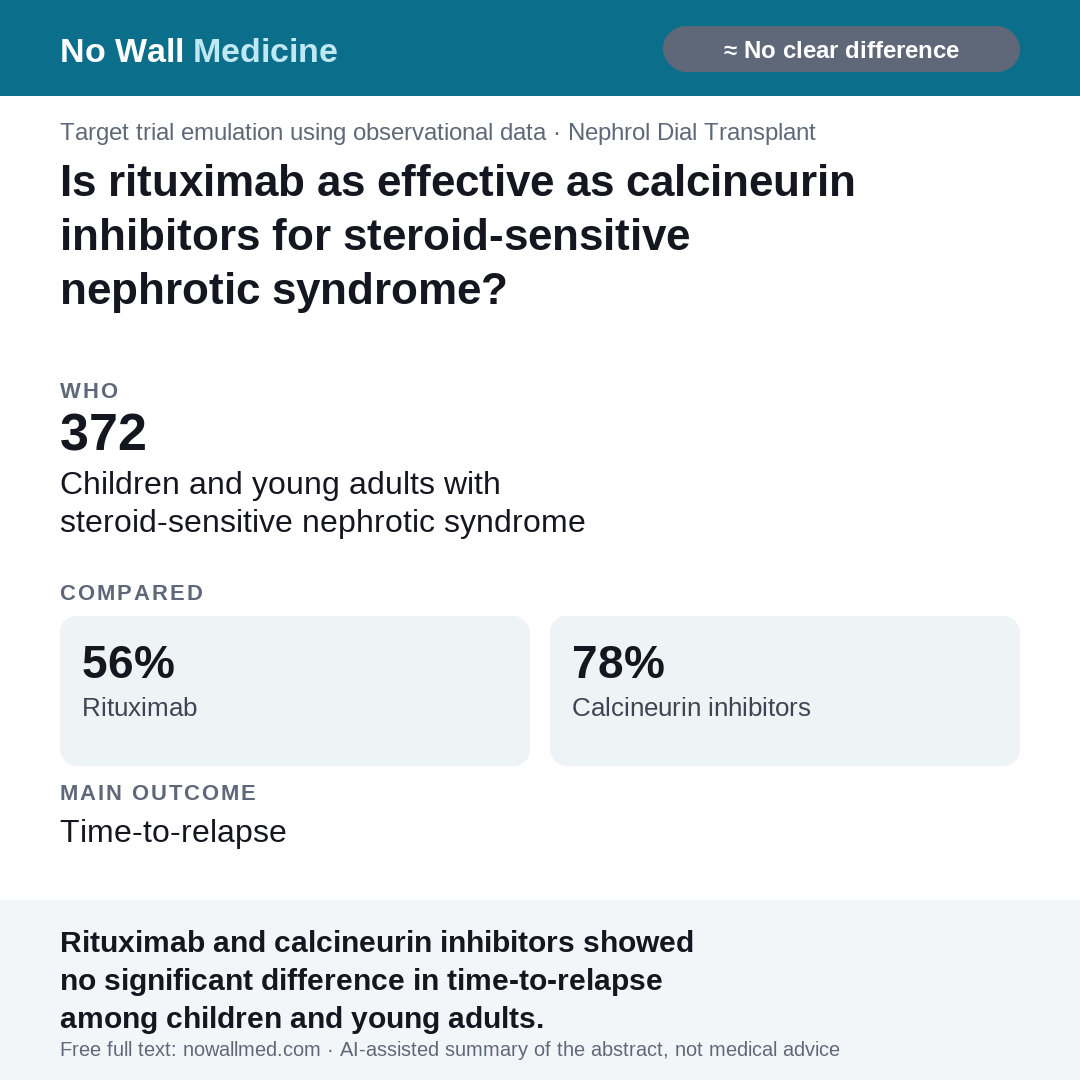
Steroid-sparing drugs in children and young adults with nephrotic syndrome: a target trial emulation
Target trial emulation using observational dataNo clear difference
Is rituximab as effective as calcineurin inhibitors for steroid-sensitive nephrotic syndrome?
Who
372
Children and young adults with steroid-sensitive nephrotic syndrome
Compared
56%Rituximab (58/104)
78%Calcineurin inhibitors (209/268)
Main outcome
Time-to-relapse
Result: weighted hazard ratio 0.90 (95% CI 0.59-1.38)
Bottom line: Rituximab and calcineurin inhibitors showed no significant difference in time-to-relapse among children and young adults.
Nephrol Dial Transplant · 2025-10-03Download image