Visual abstracts
New randomized trials and meta-analyses from leading journals at a glance: who was studied, what was compared, and what was found. Every paper is free to read in full.
All specialtiesCardiology 4877Oncology 4138Gastroenterology & Hepatology 1942Infectious Disease 3837Neurology 1905Psychiatry & Mental Health 2273Pulmonology 2143Critical Care 1365Endocrinology & Diabetes 2580Pediatrics 2980Surgery 2559Orthopedics & Sports Medicine 931Neurosurgery 537Cardiothoracic & Vascular Surgery 674Plastic & Reconstructive Surgery 591Nephrology 1133Rheumatology 823Hematology 1109Dermatology 621Ophthalmology 543Obstetrics & Gynecology 1686Public & Global Health 1058Radiology & Imaging 648Anesthesiology 986Urology 764ENT (Otolaryngology) 503Emergency Medicine 511Allergy & Immunology 313Geriatrics 981Family Medicine & Primary Care 562Medical Genetics & Genomics 676Pathology & Laboratory Medicine 159Physical Medicine & Rehabilitation 757Palliative Care 444Nutrition 1588Digital Health & AI 2201General Medicine 321
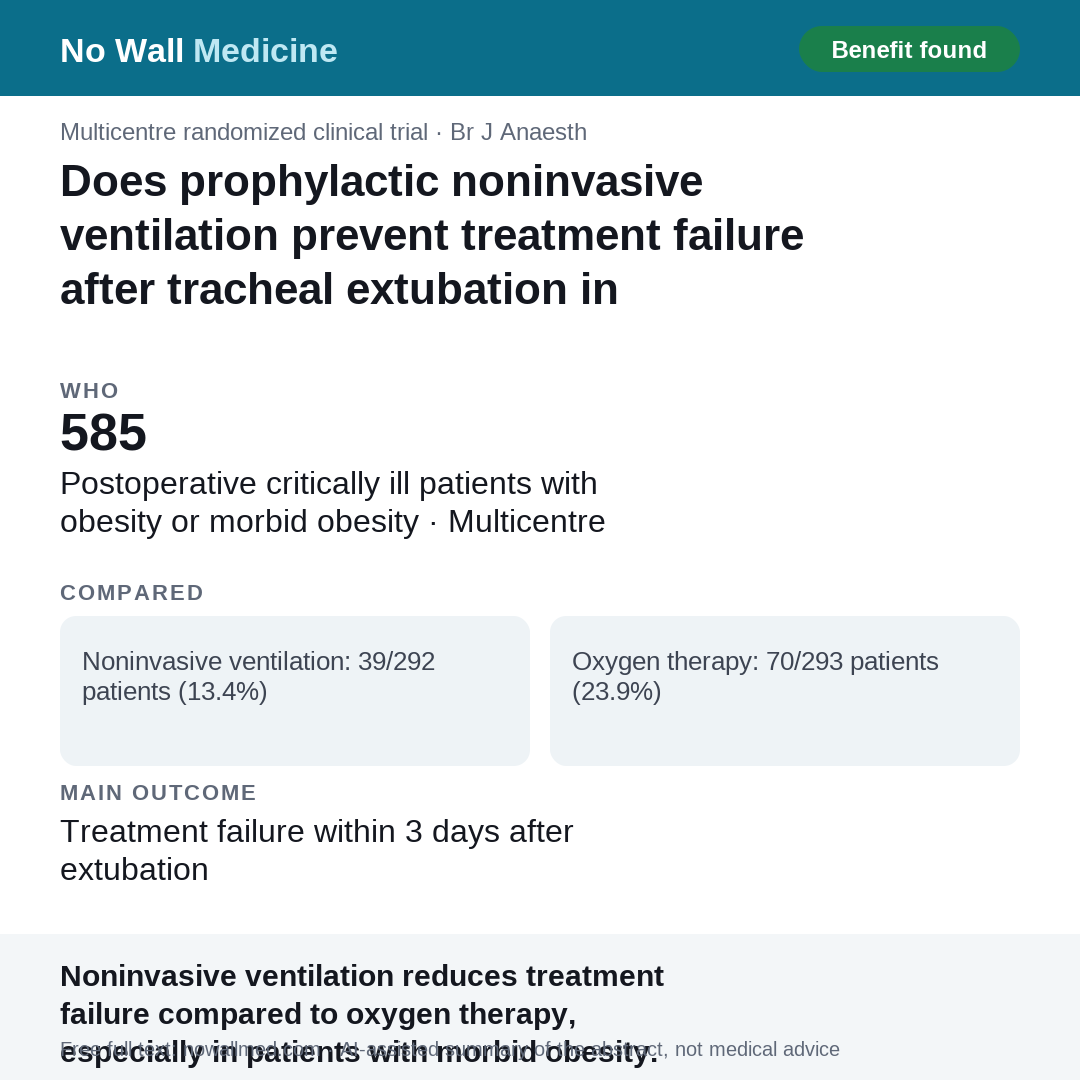
Noninvasive ventilation in postoperative critically ill patients with morbid obesity: secondary analysis of the EXTUBOBESE multicentre randomised clinical trial
Multicentre randomized clinical trialBenefit found
Does prophylactic noninvasive ventilation prevent treatment failure after tracheal extubation in postoperative critically ill patients with obesity?
Who
585
Postoperative critically ill patients with obesity or morbid obesity · Multicentre
Compared
Noninvasive ventilation: 39/292 patients (13.4%)
Oxygen therapy: 70/293 patients (23.9%)
Main outcome
Treatment failure within 3 days after extubation
Result: absolute risk difference: -10.5; 95% confidence interval: -16.8 to -4.3
Bottom line: Noninvasive ventilation reduces treatment failure compared to oxygen therapy, especially in patients with morbid obesity.
Br J Anaesth · 2025-10-03Download image
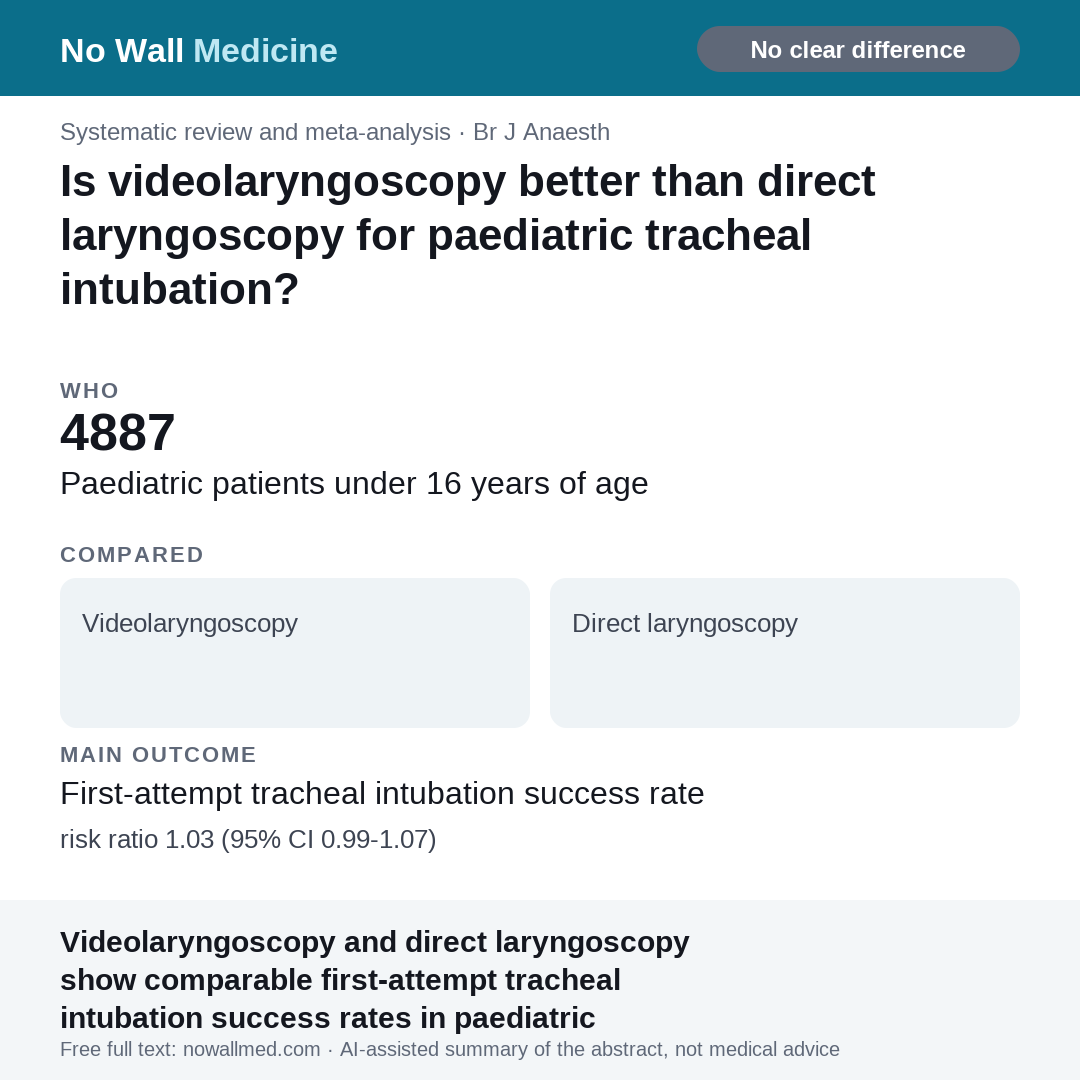
Videolaryngoscopy versus direct laryngoscopy for paediatric tracheal intubation: a systematic review with meta-analysis and trial sequential analysis
Systematic review and meta-analysisNo clear difference
Is videolaryngoscopy better than direct laryngoscopy for paediatric tracheal intubation?
Who
4887
Paediatric patients under 16 years of age
Compared
Videolaryngoscopy
Direct laryngoscopy
Main outcome
First-attempt tracheal intubation success rate
Result: risk ratio 1.03 (95% CI 0.99-1.07)
Bottom line: Videolaryngoscopy and direct laryngoscopy show comparable first-attempt tracheal intubation success rates in paediatric patients.
Br J Anaesth · 2025-10-03Download image
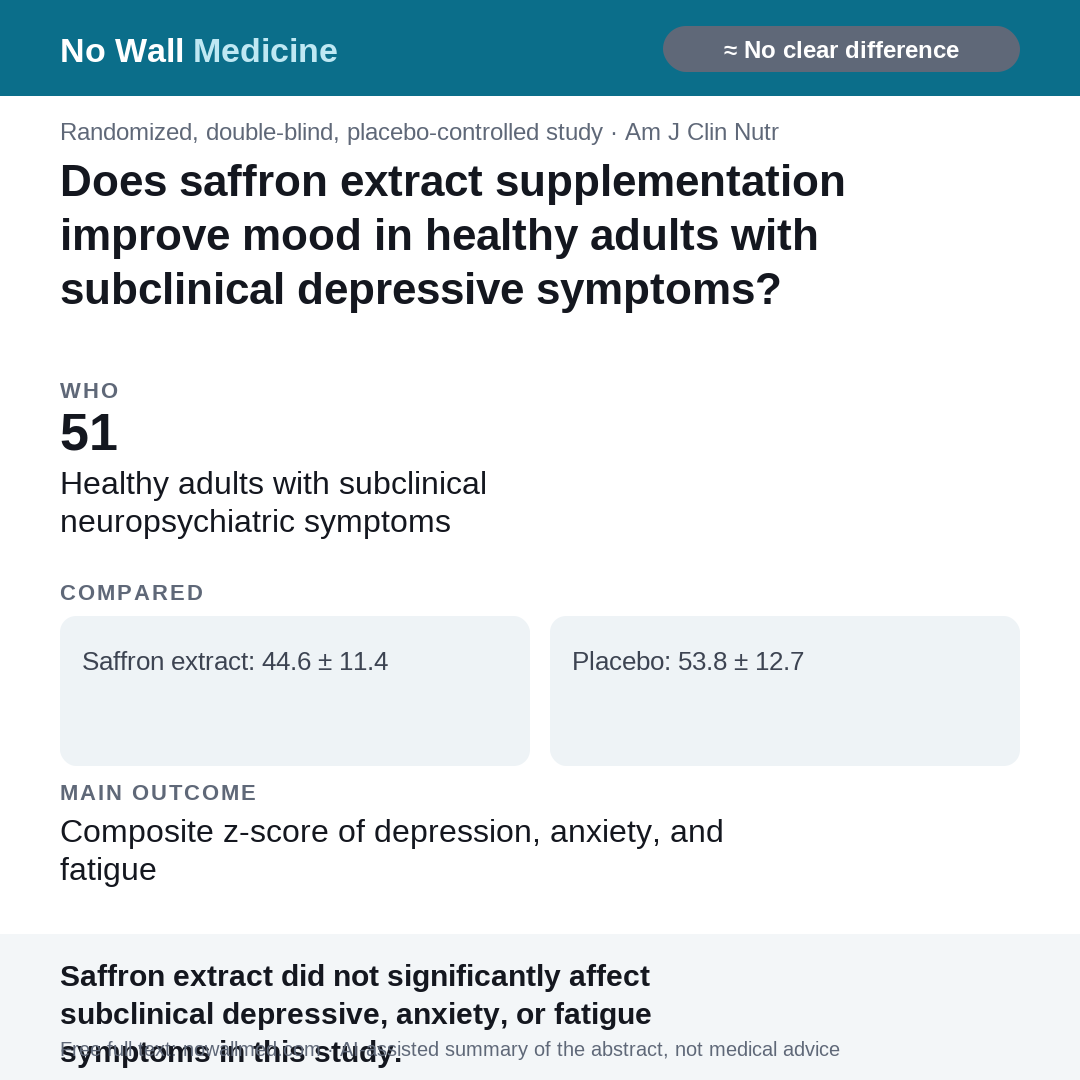
Effect of saffron extract supplementation on mood in healthy adults with subclinical symptoms of depression: a randomized, double-blind placebo-controlled study
Randomized, double-blind, placebo-controlled studyNo clear difference
Does saffron extract supplementation improve mood in healthy adults with subclinical depressive symptoms?
Who
51
Healthy adults with subclinical neuropsychiatric symptoms
Compared
Saffron extract: 44.6 ± 11.4
Placebo: 53.8 ± 12.7
Main outcome
Composite z-score of depression, anxiety, and fatigue
Bottom line: Saffron extract did not significantly affect subclinical depressive, anxiety, or fatigue symptoms in this study.
Limitation: Requires further replication in future well-powered trials.
Am J Clin Nutr · 2025-10-03Download image
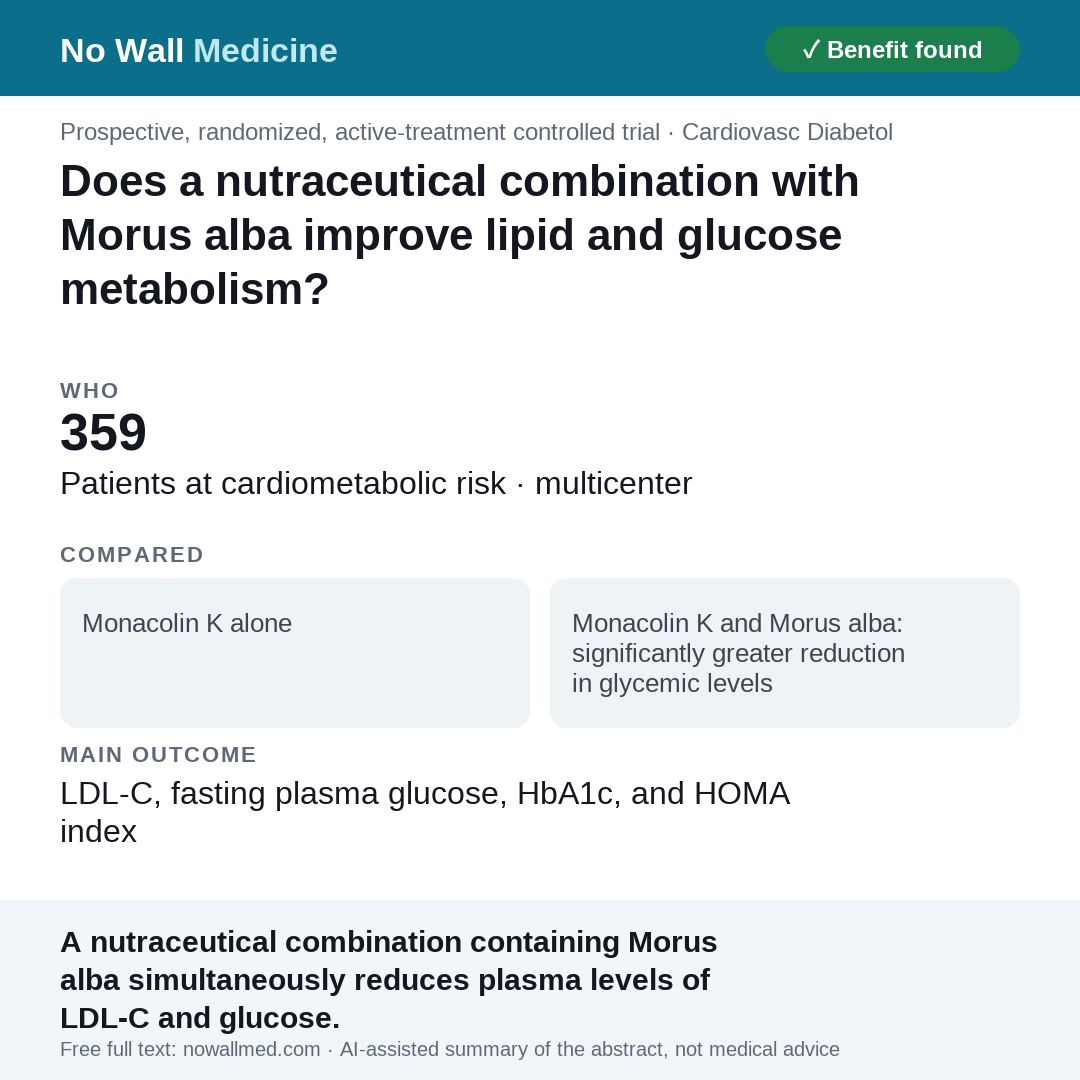
Dual modulation of lipid and glucose metabolism by a nutraceutical combination in patients at cardiometabolic risk: results from a multicenter randomized controlled trial
Prospective, randomized, active-treatment controlled trialBenefit found
Does a nutraceutical combination with Morus alba improve lipid and glucose metabolism?
Who
359
Patients at cardiometabolic risk · multicenter
Compared
Monacolin K alone
Monacolin K and Morus alba: significantly greater reduction in glycemic levels
Main outcome
LDL-C, fasting plasma glucose, HbA1c, and HOMA index
Result: b = -16, p < 0.001
Bottom line: A nutraceutical combination containing Morus alba simultaneously reduces plasma levels of LDL-C and glucose.
Cardiovasc Diabetol · 2025-10-03Download image
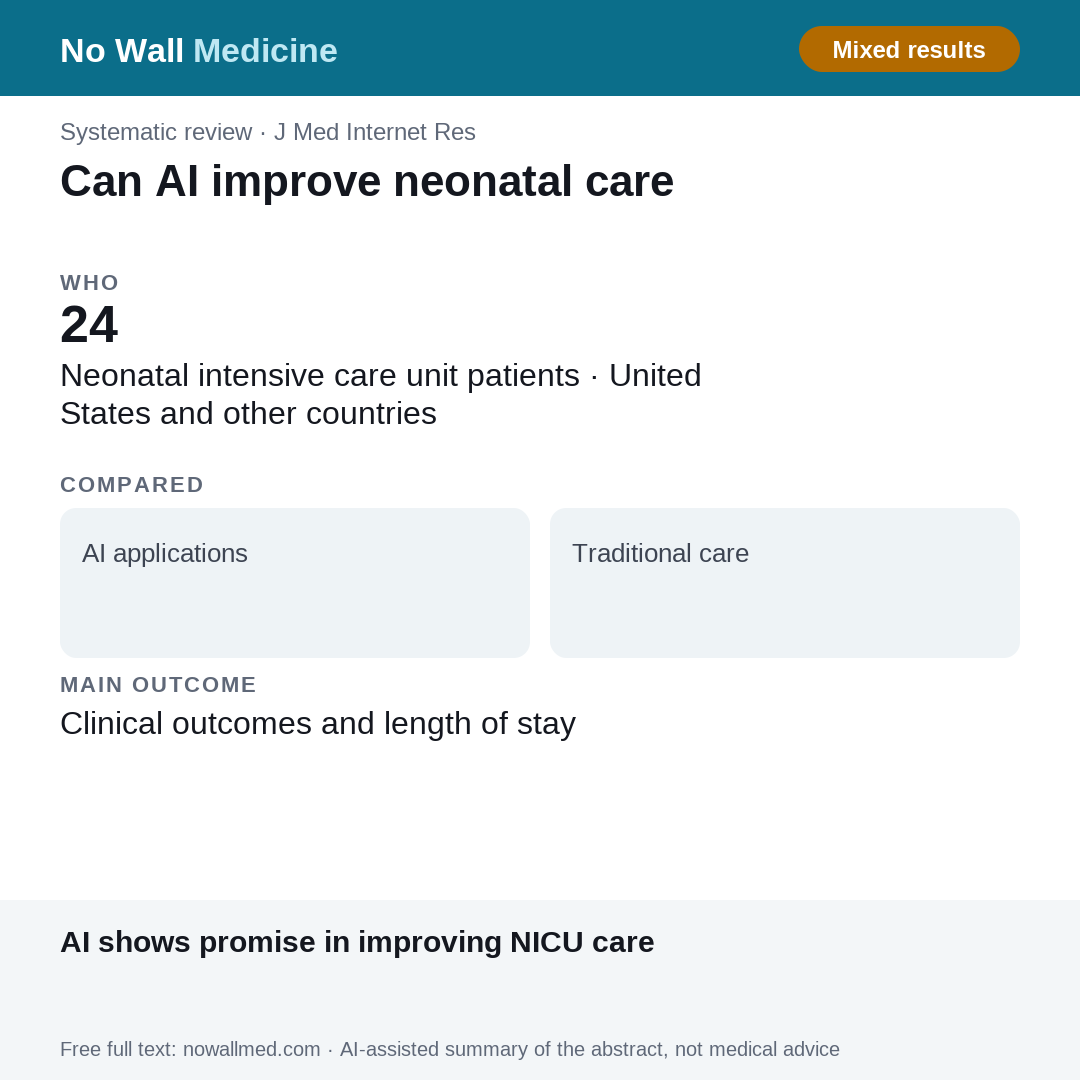
Opportunities and Challenges of Using Artificial Intelligence in Predicting Clinical Outcomes and Length of Stay in Neonatal Intensive Care Units: Systematic Review
Systematic reviewMixed results
Can AI improve neonatal care
Who
24
Neonatal intensive care unit patients · United States and other countries
Compared
AI applications
Traditional care
Main outcome
Clinical outcomes and length of stay
Bottom line: AI shows promise in improving NICU care
Limitation: Methodological variability and small sample sizes
J Med Internet Res · 2025-10-03Download image
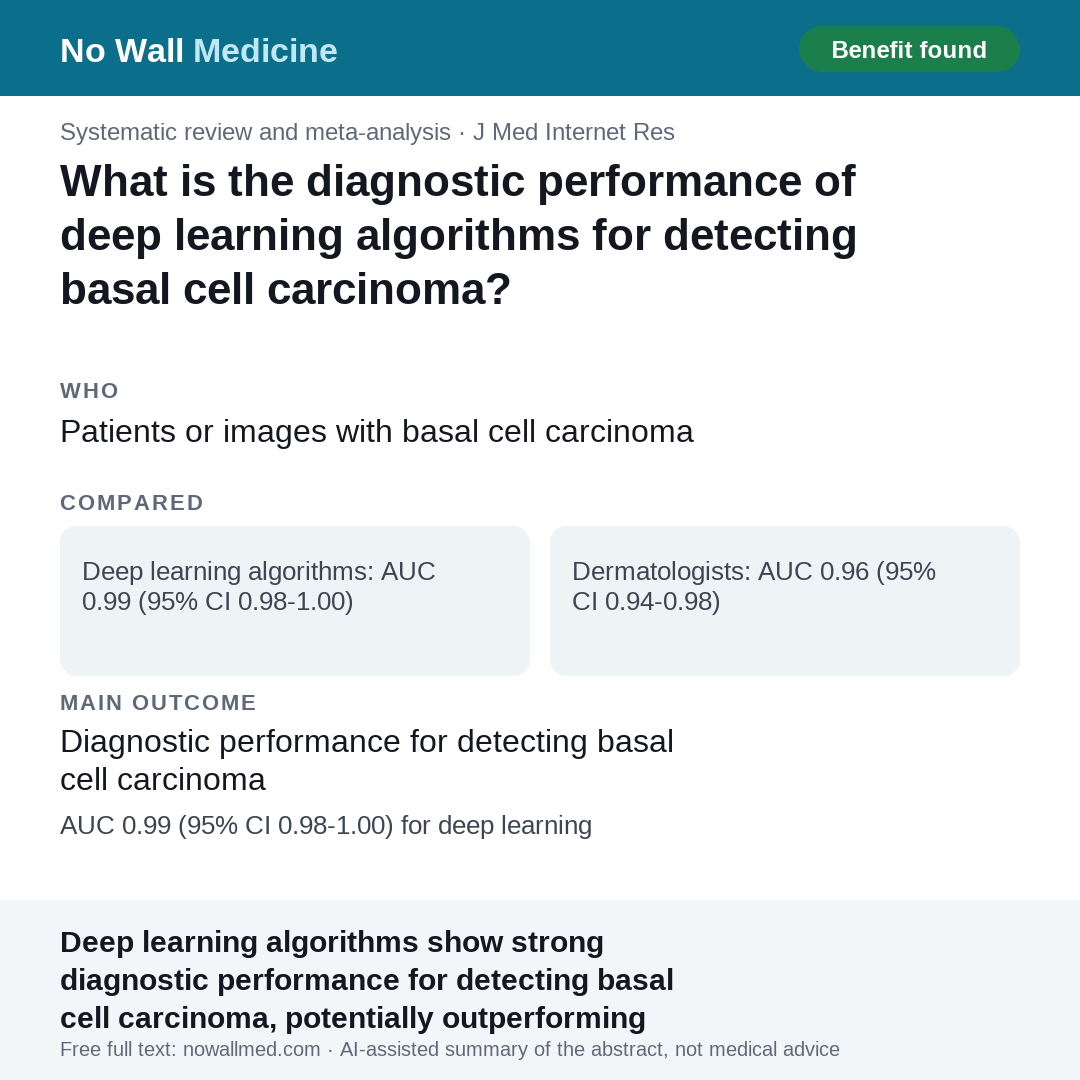
Deep Learning Algorithms in the Diagnosis of Basal Cell Carcinoma Using Dermatoscopy: Systematic Review and Meta-Analysis
Systematic review and meta-analysisBenefit found
What is the diagnostic performance of deep learning algorithms for detecting basal cell carcinoma?
Who
Patients or images with basal cell carcinoma
Compared
Deep learning algorithms: AUC 0.99 (95% CI 0.98-1.00)
Dermatologists: AUC 0.96 (95% CI 0.94-0.98)
Main outcome
Diagnostic performance for detecting basal cell carcinoma
Result: AUC 0.99 (95% CI 0.98-1.00) for deep learning
Bottom line: Deep learning algorithms show strong diagnostic performance for detecting basal cell carcinoma, potentially outperforming dermatologists in internal validation datasets.
Limitation: Retrospective design of many studies and variations in reference standards may restrict generalizability.
J Med Internet Res · 2025-10-03Download image
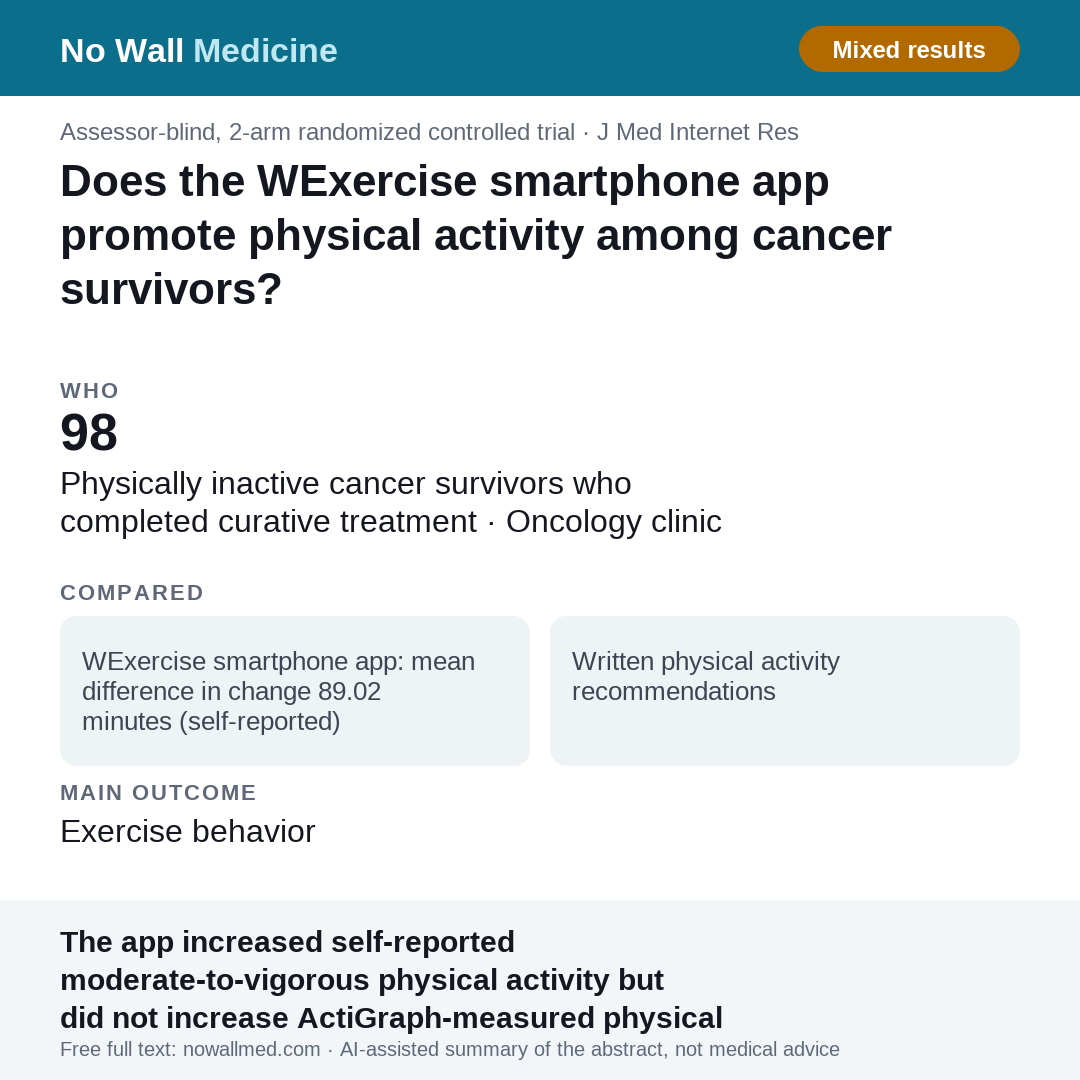
A Smartphone App (WExercise) to Promote Physical Activity Among Cancer Survivors: Randomized Controlled Trial
Assessor-blind, 2-arm randomized controlled trialMixed results
Does the WExercise smartphone app promote physical activity among cancer survivors?
Who
98
Physically inactive cancer survivors who completed curative treatment · Oncology clinic and the community
Compared
WExercise smartphone app: mean difference in change 89.02 minutes (self-reported)
Written physical activity recommendations
Main outcome
Exercise behavior
Result: mean difference in change 89.02 minutes, 95% CI 34.87-143.16
Bottom line: The app increased self-reported moderate-to-vigorous physical activity but did not increase ActiGraph-measured physical activity.
J Med Internet Res · 2025-10-03Download image
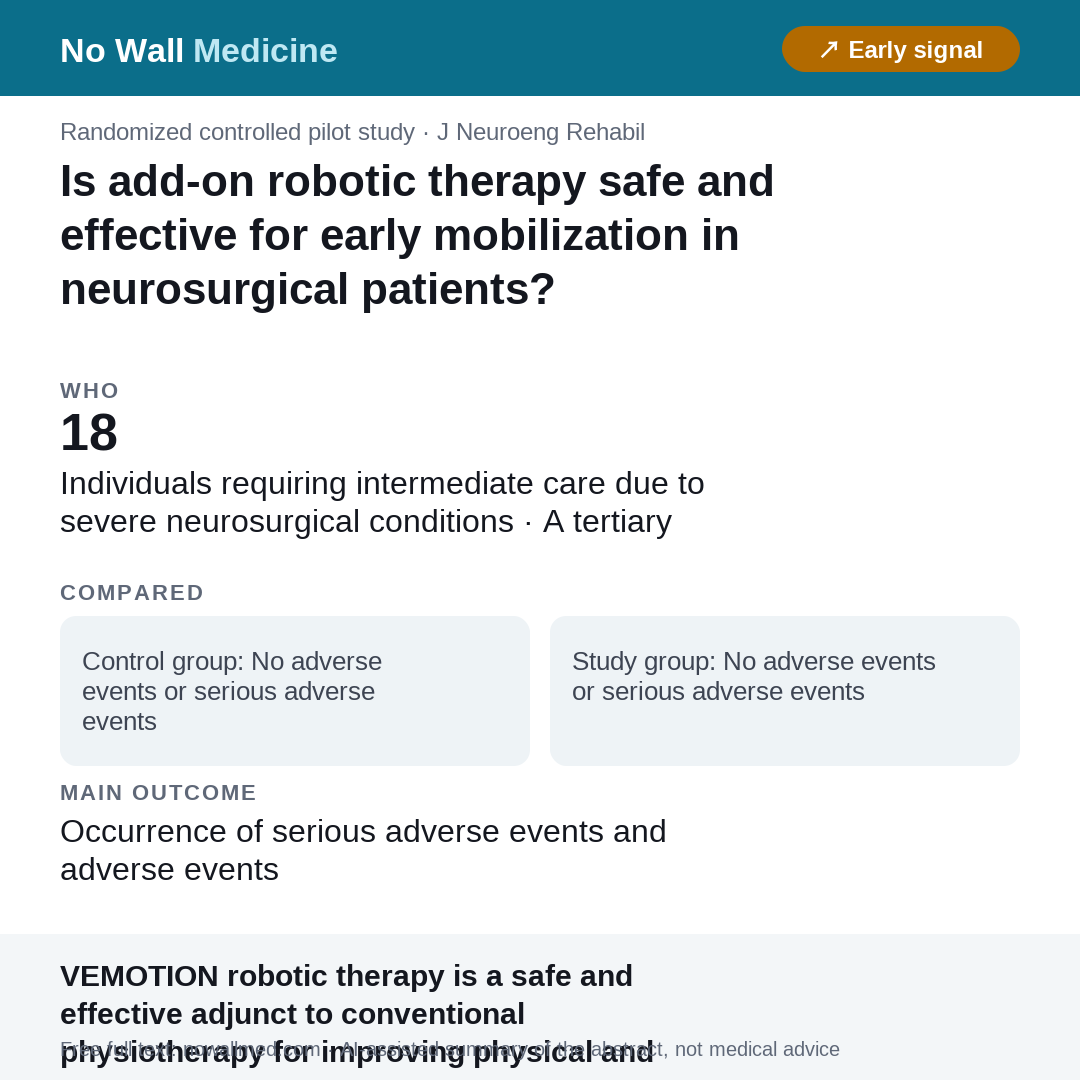
Safety and efficacy of add-on robotic therapy for early mobilization in intermediate neurocritical care: a pilot study
Randomized controlled pilot studyBenefit found
Is add-on robotic therapy safe and effective for early mobilization in neurosurgical patients?
Who
18
Individuals requiring intermediate care due to severe neurosurgical conditions · A tertiary hospital
Compared
Control group: No adverse events or serious adverse events
Study group: No adverse events or serious adverse events
Main outcome
Occurrence of serious adverse events and adverse events
Bottom line: VEMOTION robotic therapy is a safe and effective adjunct to conventional physiotherapy for improving physical and respiratory function.
Limitation: Further large-scale studies are needed to confirm these findings.
J Neuroeng Rehabil · 2025-10-03Download image
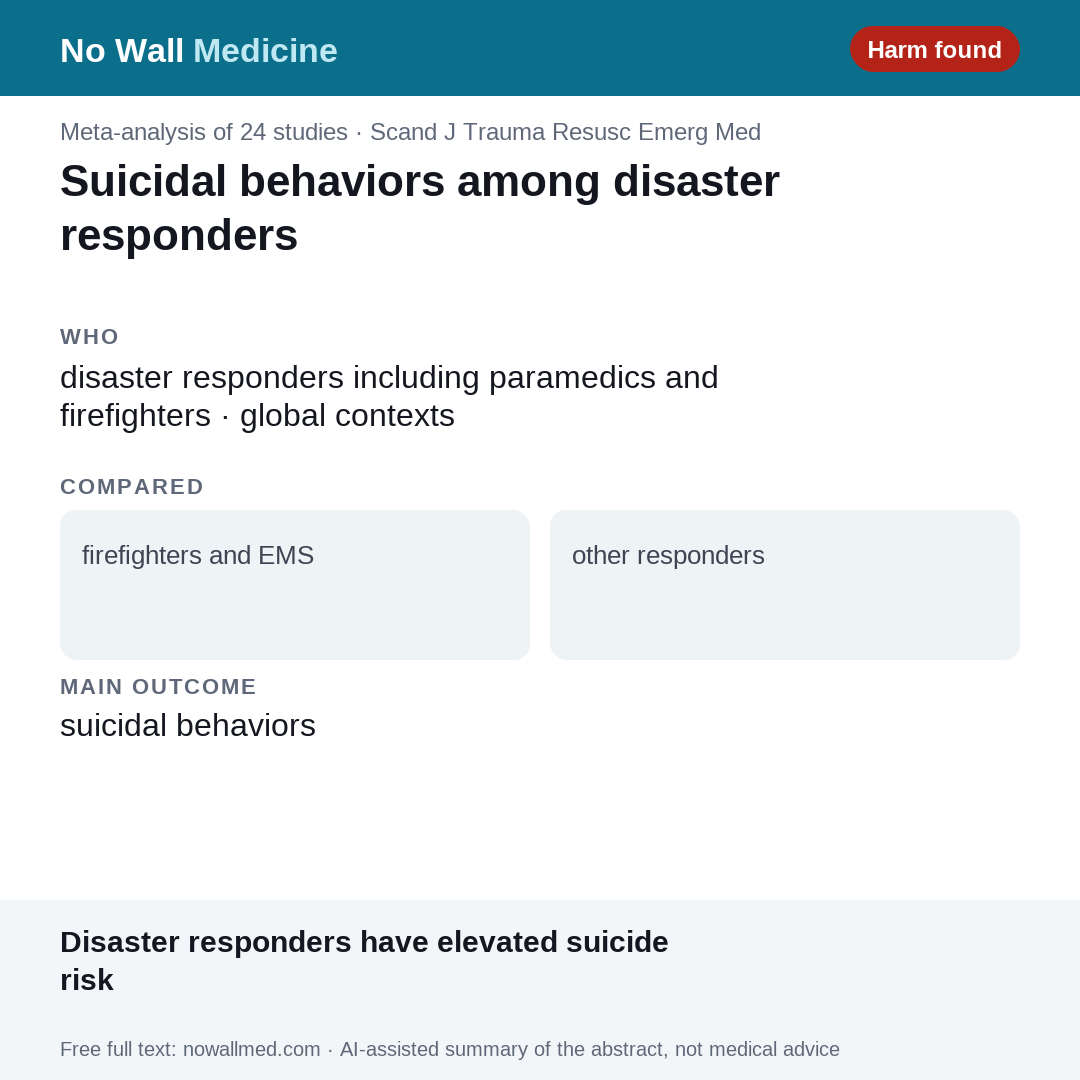
Silent crisis on the frontlines: a systematic review of suicidal behaviors among disaster responders - epidemiology, risk pathways, and evidence-based interventions
Meta-analysis of 24 studiesHarm found
Suicidal behaviors among disaster responders
Who
disaster responders including paramedics and firefighters · global contexts
Compared
firefighters and EMS
other responders
Main outcome
suicidal behaviors
Bottom line: Disaster responders have elevated suicide risk
Scand J Trauma Resusc Emerg Med · 2025-10-03Download image
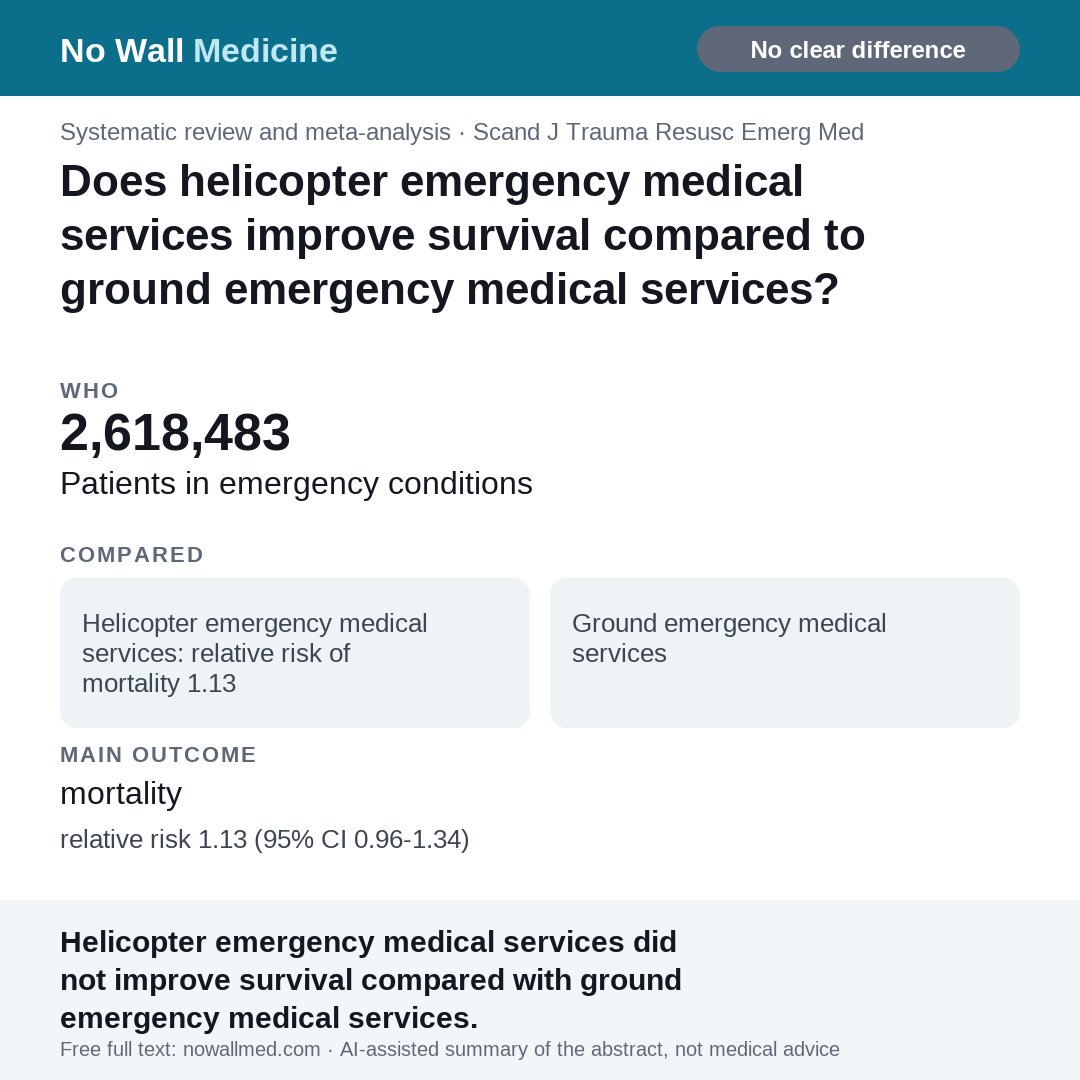
Survival and cost-effectiveness of helicopter versus ground emergency medical services: a systematic review and meta-analysis with meta-regression and trial sequential analysis
Systematic review and meta-analysisNo clear difference
Does helicopter emergency medical services improve survival compared to ground emergency medical services?
Who
2,618,483
Patients in emergency conditions
Compared
Helicopter emergency medical services: relative risk of mortality 1.13
Ground emergency medical services
Main outcome
mortality
Result: relative risk 1.13 (95% CI 0.96-1.34)
Bottom line: Helicopter emergency medical services did not improve survival compared with ground emergency medical services.
Limitation: Very low-quality evidence due to high heterogeneity and potential confounding from registry-based enrolment.
Scand J Trauma Resusc Emerg Med · 2025-10-03Download image
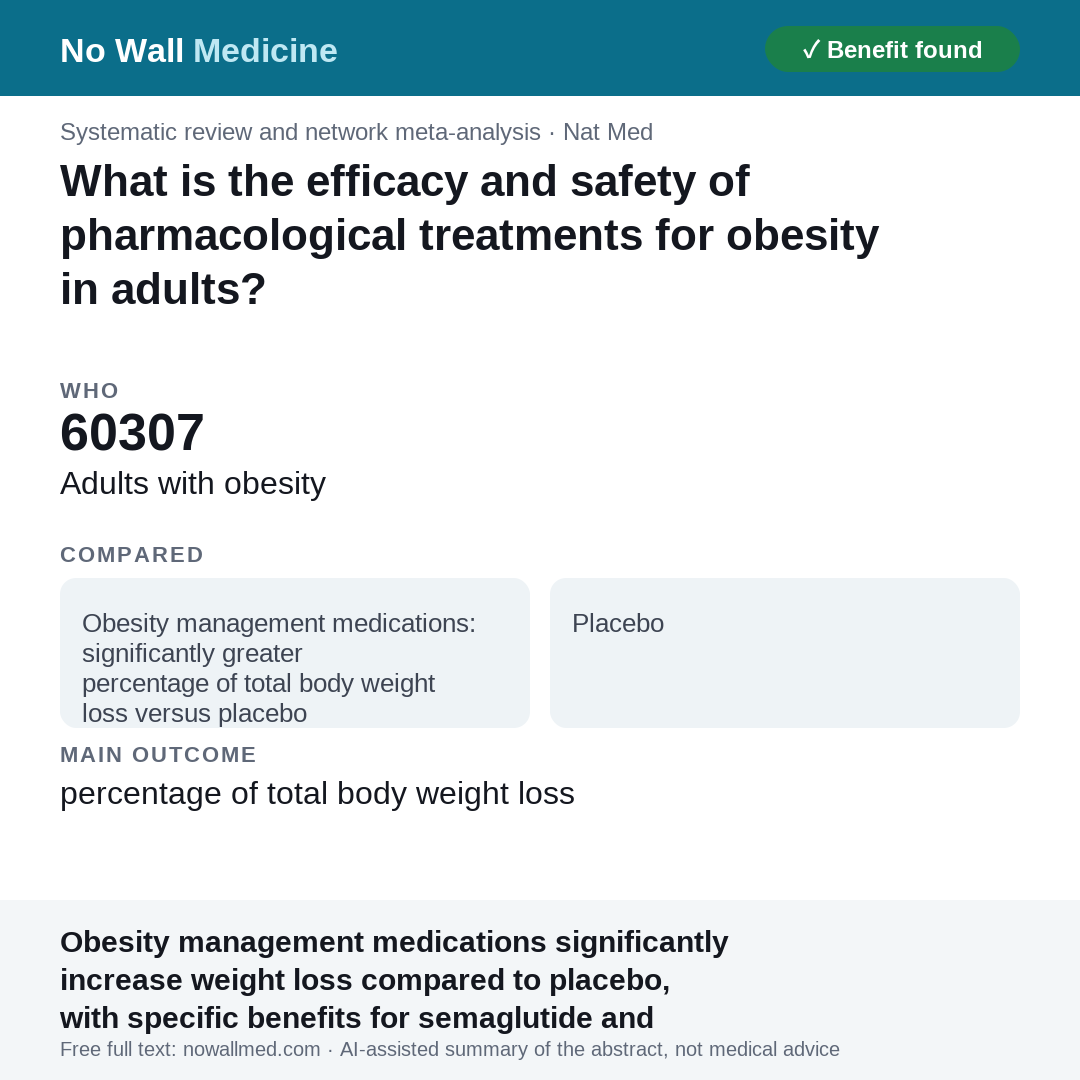
A systematic review and meta-analysis of the efficacy and safety of pharmacological treatments for obesity in adults
Systematic review and network meta-analysisBenefit found
What is the efficacy and safety of pharmacological treatments for obesity in adults?
Who
60307
Adults with obesity
Compared
Obesity management medications: significantly greater percentage of total body weight loss versus placebo
Placebo
Main outcome
percentage of total body weight loss
Bottom line: Obesity management medications significantly increase weight loss compared to placebo, with specific benefits for semaglutide and tirzepatide.
Nat Med · 2025-10-02Download image
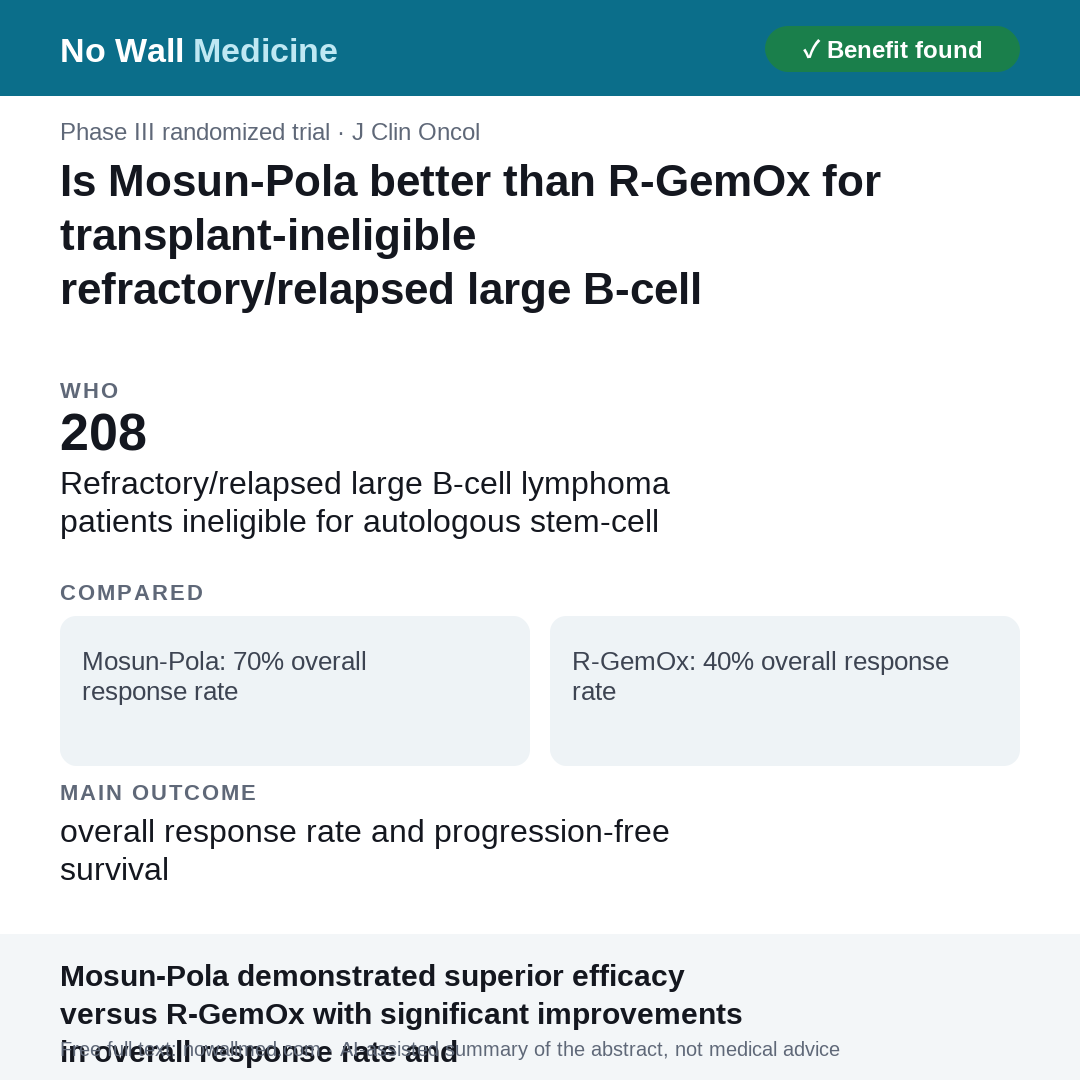
Mosunetuzumab Plus Polatuzumab Vedotin in Transplant-Ineligible Refractory/Relapsed Large B-Cell Lymphoma: Primary Results of the Phase III SUNMO Trial
Phase III randomized trialBenefit found
Is Mosun-Pola better than R-GemOx for transplant-ineligible refractory/relapsed large B-cell lymphoma?
Who
208
Refractory/relapsed large B-cell lymphoma patients ineligible for autologous stem-cell transplant
Compared
Mosun-Pola: 70% overall response rate
R-GemOx: 40% overall response rate
Main outcome
overall response rate and progression-free survival
Result: hazard ratio 0.41 (95% CI 0.3 to 0.6)
Bottom line: Mosun-Pola demonstrated superior efficacy versus R-GemOx with significant improvements in overall response rate and progression-free survival.
J Clin Oncol · 2025-10-02Download image
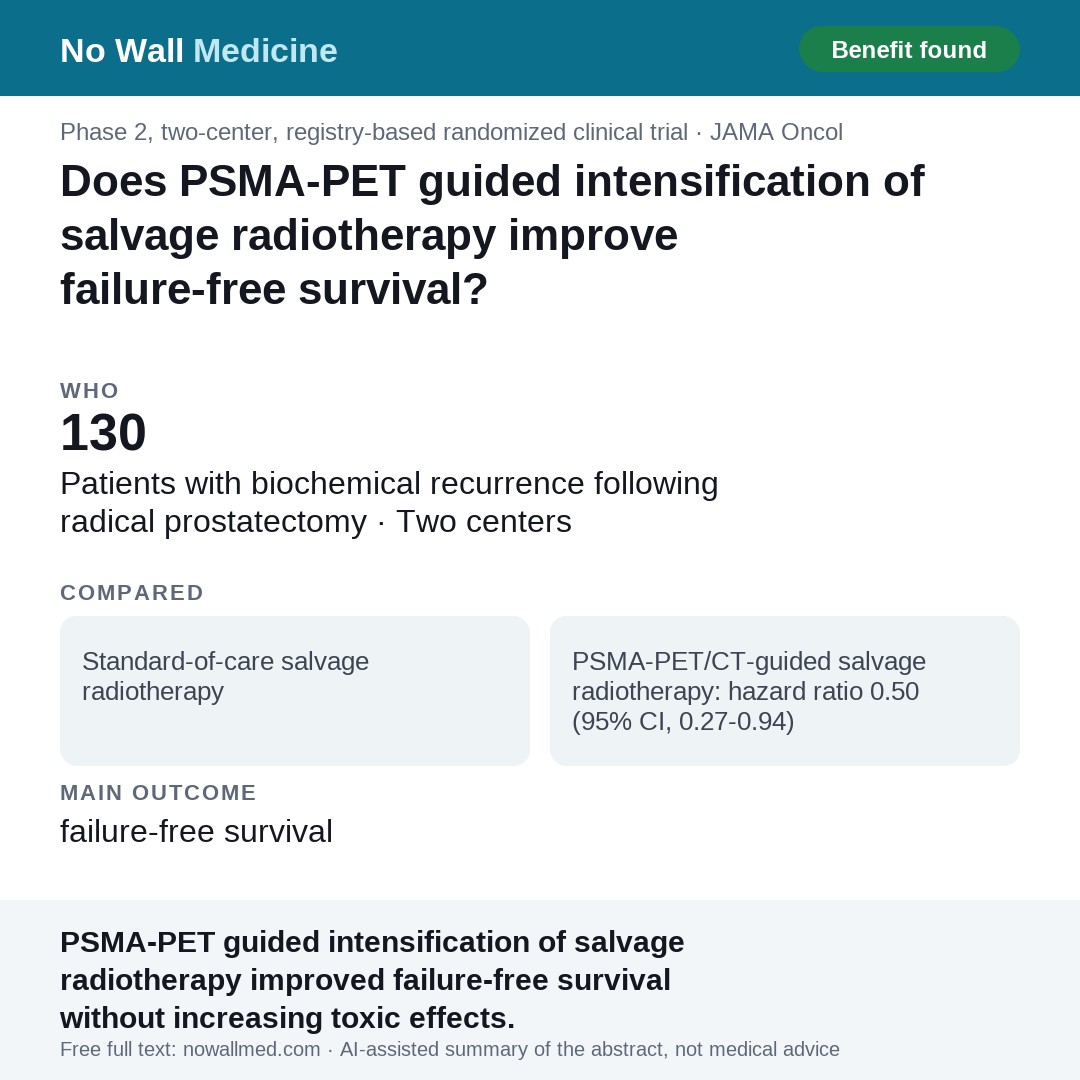
Prostate-Specific Membrane Antigen PET-Guided Intensification of Salvage Radiotherapy After Radical Prostatectomy: A Phase 2 Randomized Clinical Trial
Phase 2, two-center, registry-based randomized clinical trialBenefit found
Does PSMA-PET guided intensification of salvage radiotherapy improve failure-free survival?
Who
130
Patients with biochemical recurrence following radical prostatectomy · Two centers
Compared
Standard-of-care salvage radiotherapy
PSMA-PET/CT-guided salvage radiotherapy: hazard ratio 0.50 (95% CI, 0.27-0.94)
Main outcome
failure-free survival
Result: hazard ratio 0.50 (95% CI, 0.27-0.94)
Bottom line: PSMA-PET guided intensification of salvage radiotherapy improved failure-free survival without increasing toxic effects.
JAMA Oncol · 2025-10-02Download image
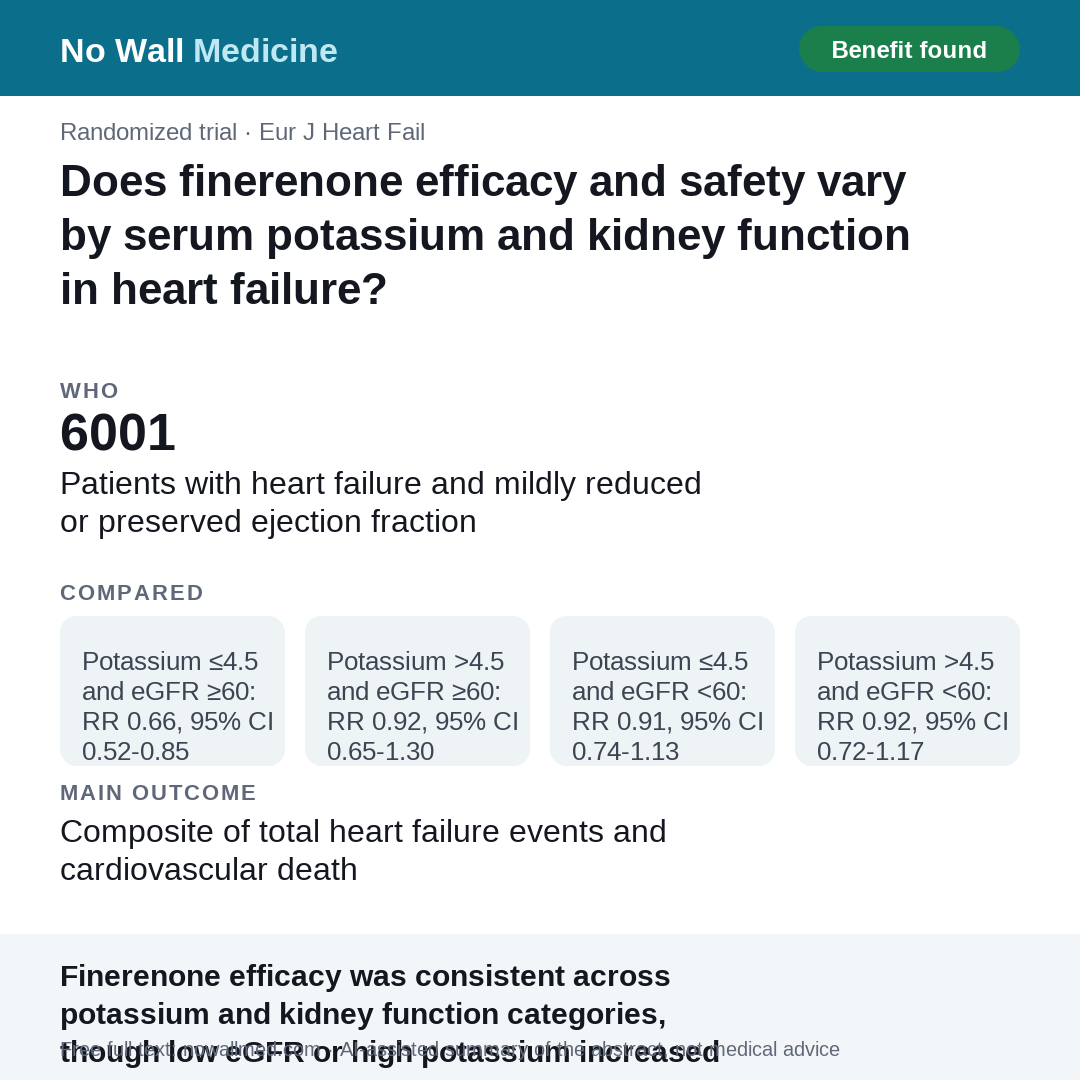
Interplay of serum potassium and kidney function with finerenone in heart failure with mildly reduced or preserved ejection fraction: Findings from FINEARTS-HF
Randomized trialBenefit found
Does finerenone efficacy and safety vary by serum potassium and kidney function in heart failure?
Who
6001
Patients with heart failure and mildly reduced or preserved ejection fraction
Compared
Potassium ≤4.5 and eGFR ≥60: RR 0.66, 95% CI 0.52-0.85
Potassium >4.5 and eGFR ≥60: RR 0.92, 95% CI 0.65-1.30
Potassium ≤4.5 and eGFR <60: RR 0.91, 95% CI 0.74-1.13
Potassium >4.5 and eGFR <60: RR 0.92, 95% CI 0.72-1.17
Main outcome
Composite of total heart failure events and cardiovascular death
Result: p for interaction = 0.20
Bottom line: Finerenone efficacy was consistent across potassium and kidney function categories, though low eGFR or high potassium increased adverse events.
Eur J Heart Fail · 2025-10-02Download image
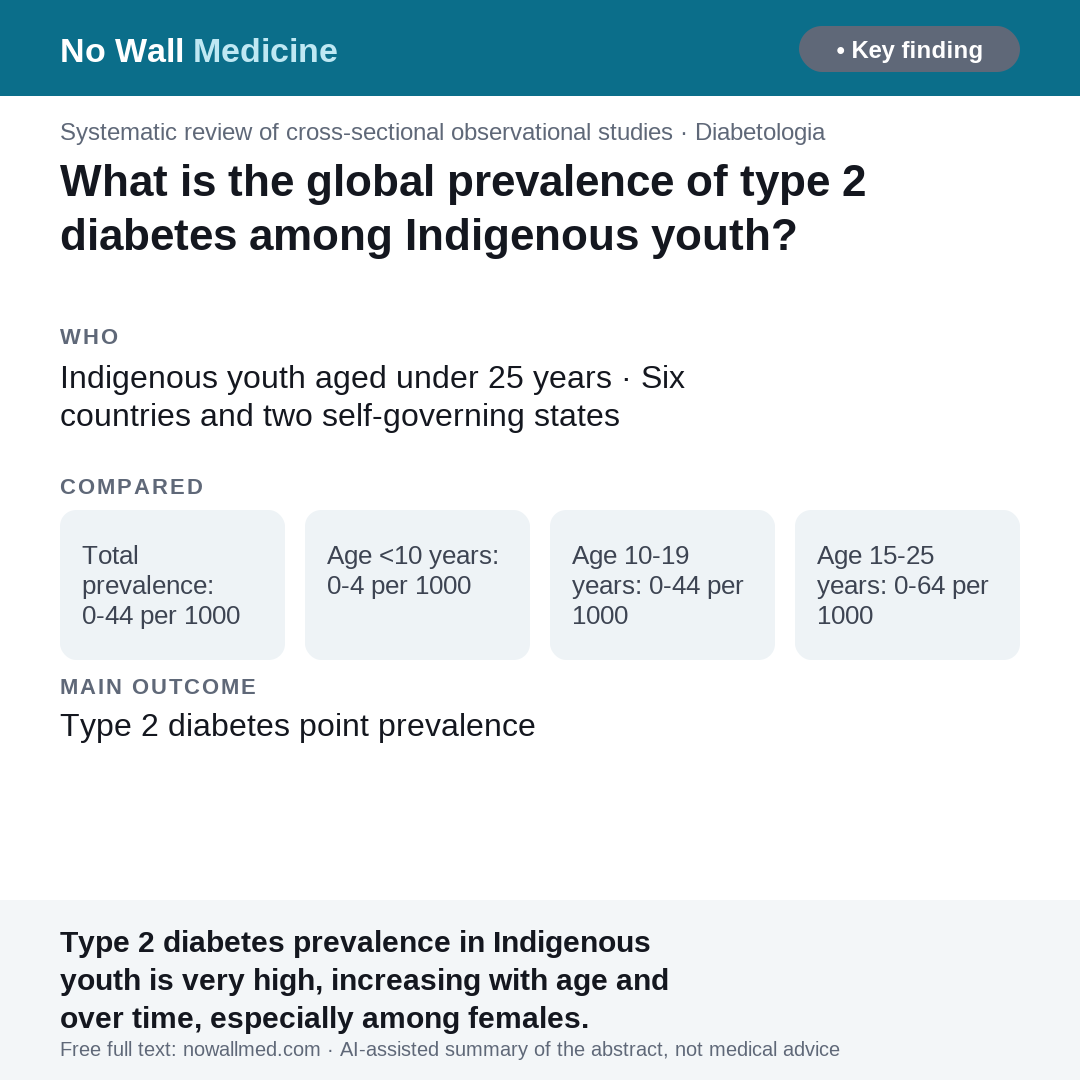
Prevalence of youth type 2 diabetes in global Indigenous populations: a systematic review
Systematic review of cross-sectional observational studiesHarm found
What is the global prevalence of type 2 diabetes among Indigenous youth?
Who
Indigenous youth aged under 25 years · Six countries and two self-governing states
Compared
Total prevalence: 0-44 per 1000
Age <10 years: 0-4 per 1000
Age 10-19 years: 0-44 per 1000
Age 15-25 years: 0-64 per 1000
Main outcome
Type 2 diabetes point prevalence
Bottom line: Type 2 diabetes prevalence in Indigenous youth is very high, increasing with age and over time, especially among females.
Diabetologia · 2025-10-02Download image
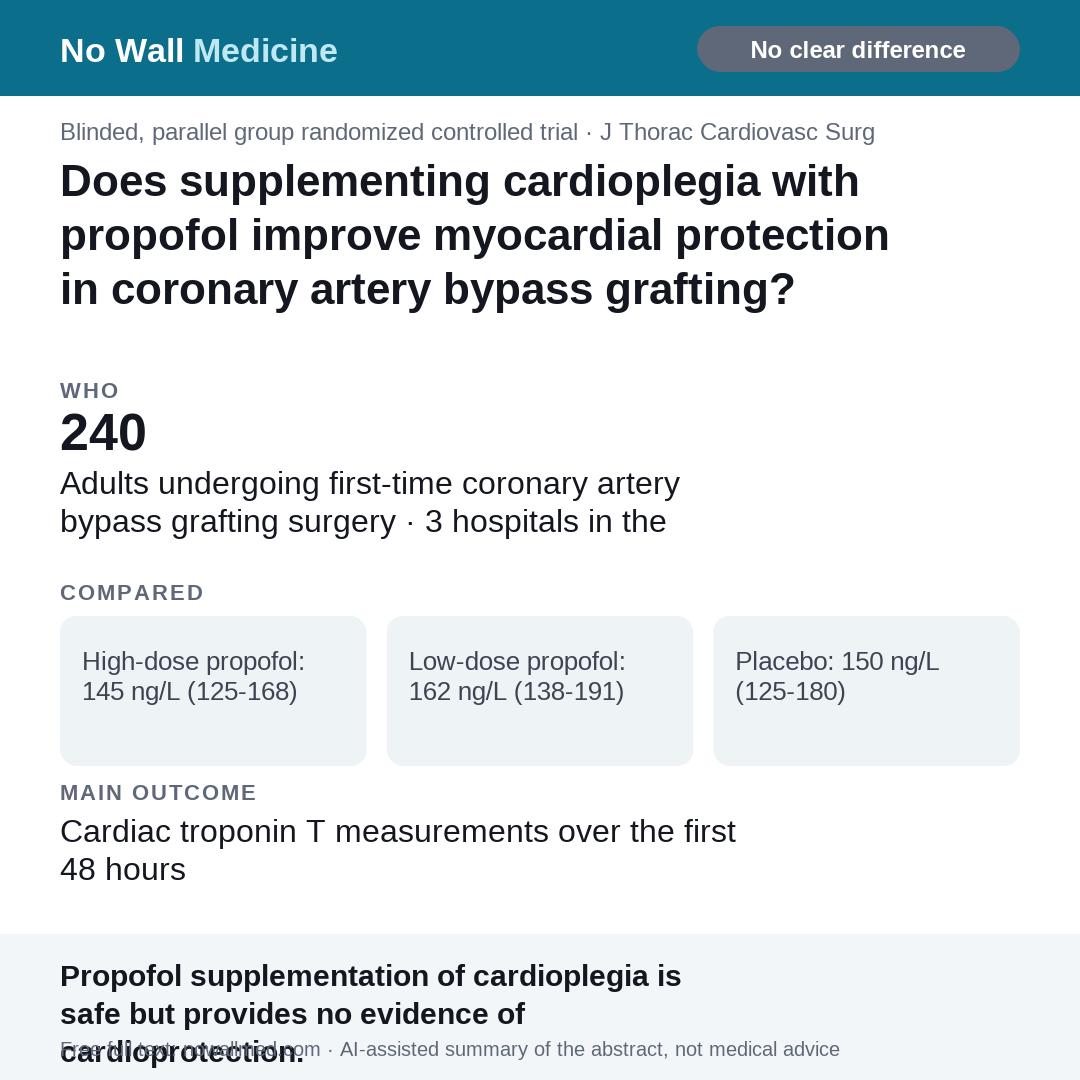
Propofol-supplemented cardioplegia: A multicenter blinded 3-group randomized trial (Propofol for Myocardial Protection Trial 2: ProMPT2)
Blinded, parallel group randomized controlled trialNo clear difference
Does supplementing cardioplegia with propofol improve myocardial protection in coronary artery bypass grafting?
Who
240
Adults undergoing first-time coronary artery bypass grafting surgery · 3 hospitals in the United Kingdom
Compared
High-dose propofol: 145 ng/L (125-168)
Low-dose propofol: 162 ng/L (138-191)
Placebo: 150 ng/L (125-180)
Main outcome
Cardiac troponin T measurements over the first 48 hours
Result: adjusted geometric mean ratio 1.06 (95% confidence interval, 0.97-1.15)
Bottom line: Propofol supplementation of cardioplegia is safe but provides no evidence of cardioprotection.
J Thorac Cardiovasc Surg · 2025-10-02Download image
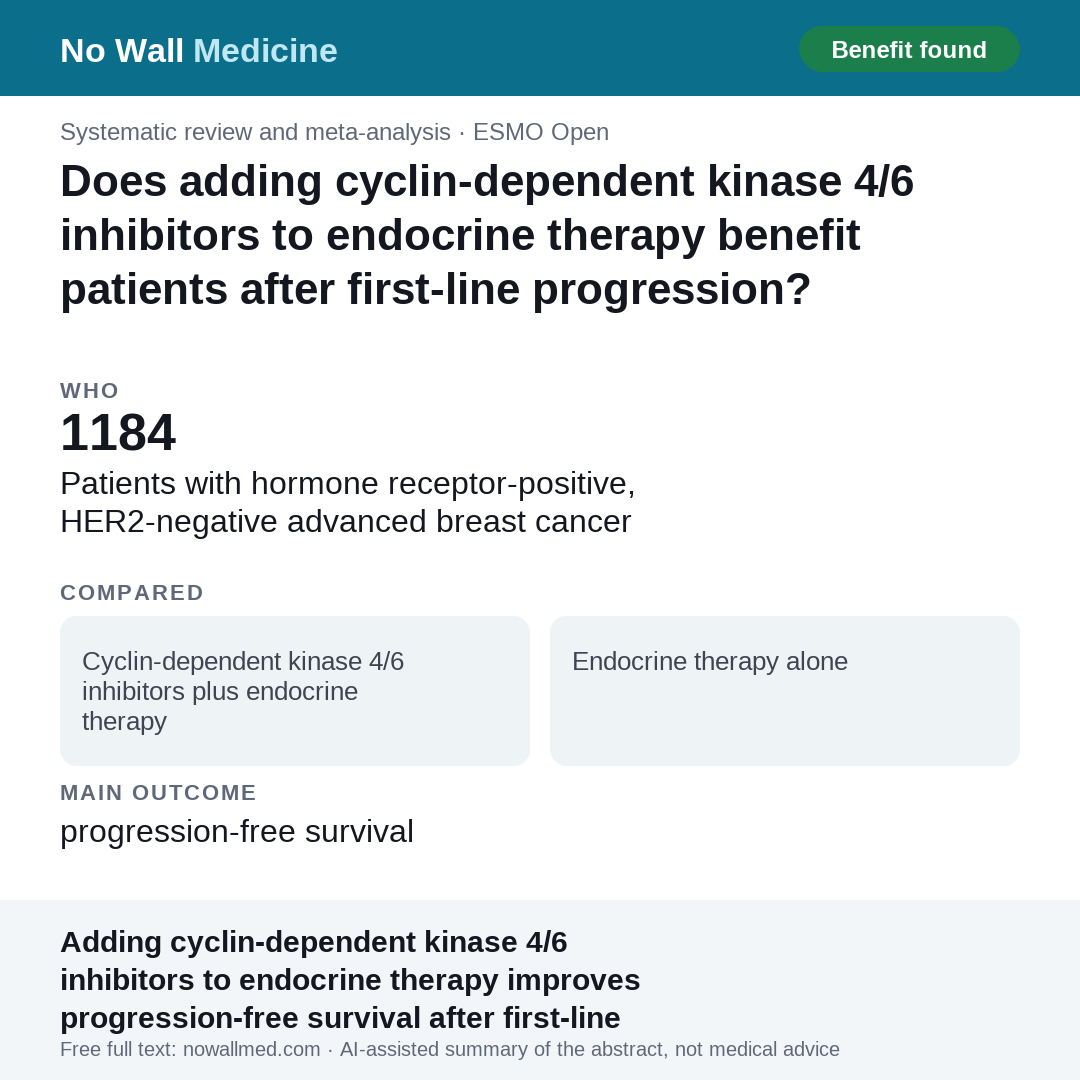
Cyclin-dependent kinase 4/6 inhibitors beyond progression in hormone receptor-positive, HER2-negative advanced breast cancer: a systematic review and meta-analysis (REIGNITE study)
Systematic review and meta-analysisBenefit found
Does adding cyclin-dependent kinase 4/6 inhibitors to endocrine therapy benefit patients after first-line progression?
Who
1184
Patients with hormone receptor-positive, HER2-negative advanced breast cancer
Compared
Cyclin-dependent kinase 4/6 inhibitors plus endocrine therapy
Endocrine therapy alone
Main outcome
progression-free survival
Result: hazard ratio 0.73 (95% CI 0.56-0.94)
Bottom line: Adding cyclin-dependent kinase 4/6 inhibitors to endocrine therapy improves progression-free survival after first-line progression.
ESMO Open · 2025-10-02Download image
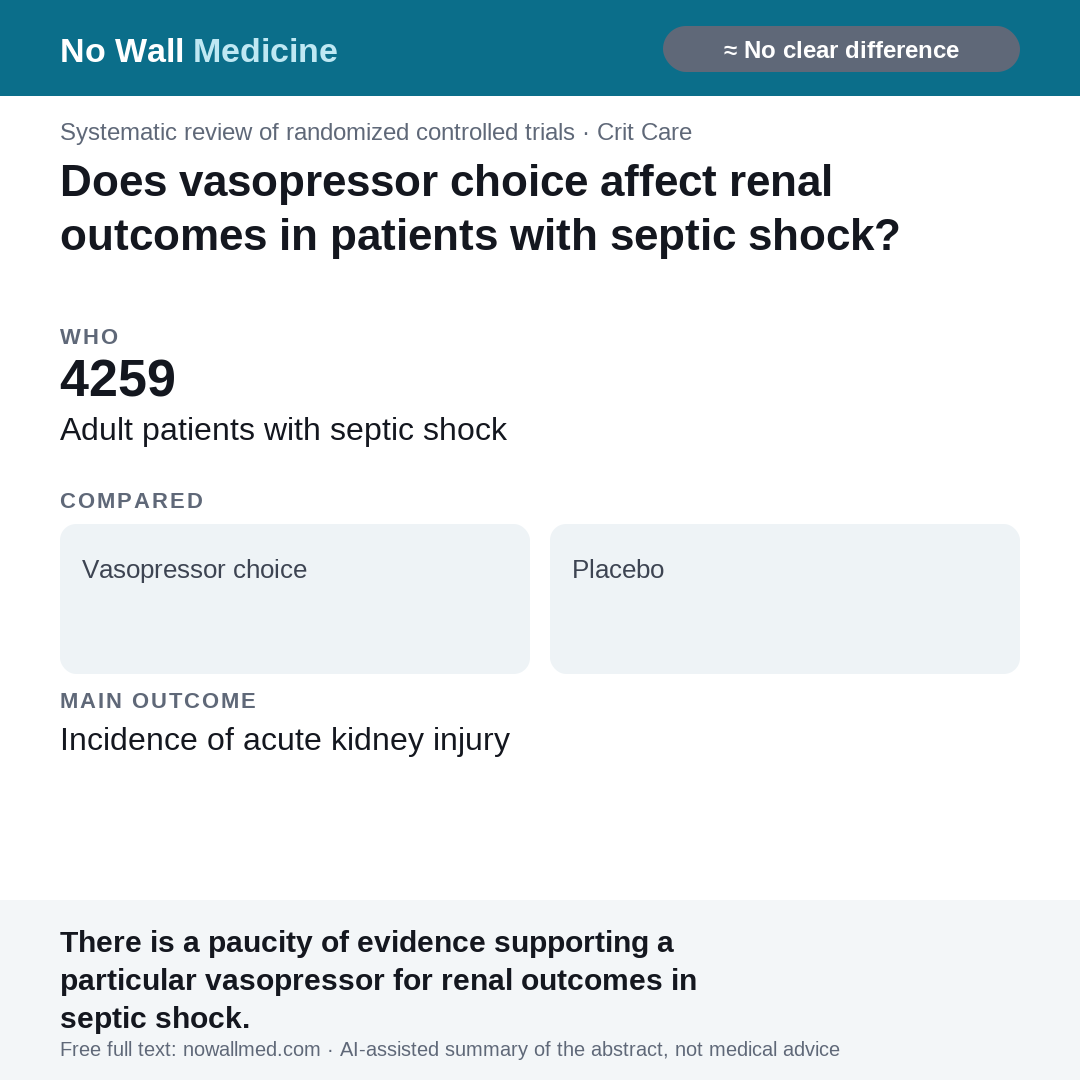
The effects of vasopressor choice on renal outcomes in septic shock: a systematic review of randomised trials as a guide for future research
Systematic review of randomized controlled trialsNo clear difference
Does vasopressor choice affect renal outcomes in patients with septic shock?
Who
4259
Adult patients with septic shock
Compared
Vasopressor choice
Placebo
Main outcome
Incidence of acute kidney injury
Bottom line: There is a paucity of evidence supporting a particular vasopressor for renal outcomes in septic shock.
Limitation: Population and study heterogeneity and focus on renal replacement therapy as a proxy.
Crit Care · 2025-10-02Download image
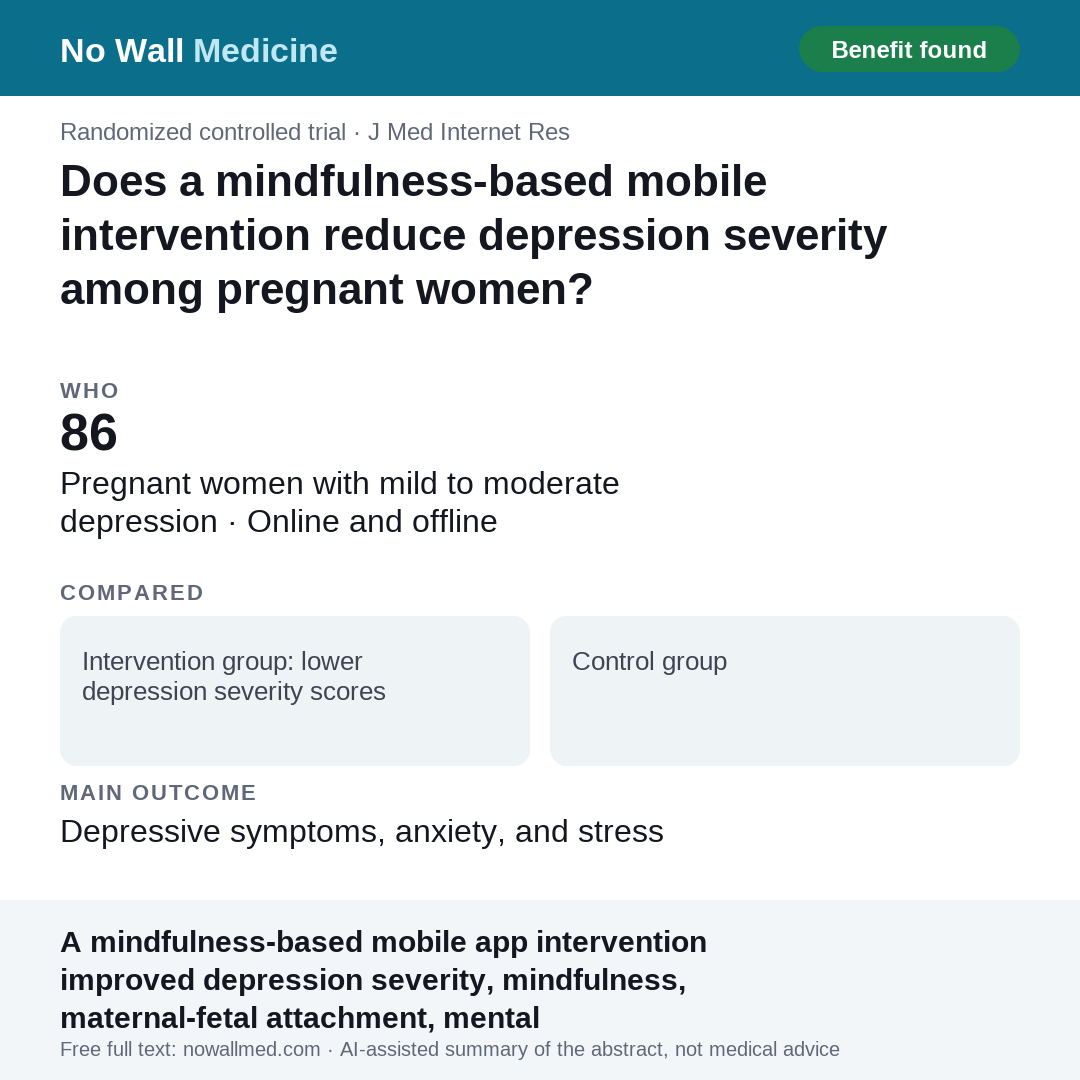
Effectiveness of a Mindfulness-Based Mobile Intervention for Improving Perinatal Mental Health and Reducing Depression During Pregnancy: Randomized Controlled Trial
Randomized controlled trialBenefit found
Does a mindfulness-based mobile intervention reduce depression severity among pregnant women?
Who
86
Pregnant women with mild to moderate depression · Online and offline
Compared
Intervention group: lower depression severity scores
Control group
Main outcome
Depressive symptoms, anxiety, and stress
Bottom line: A mindfulness-based mobile app intervention improved depression severity, mindfulness, maternal-fetal attachment, mental well-being, and positive affect.
J Med Internet Res · 2025-10-02Download image
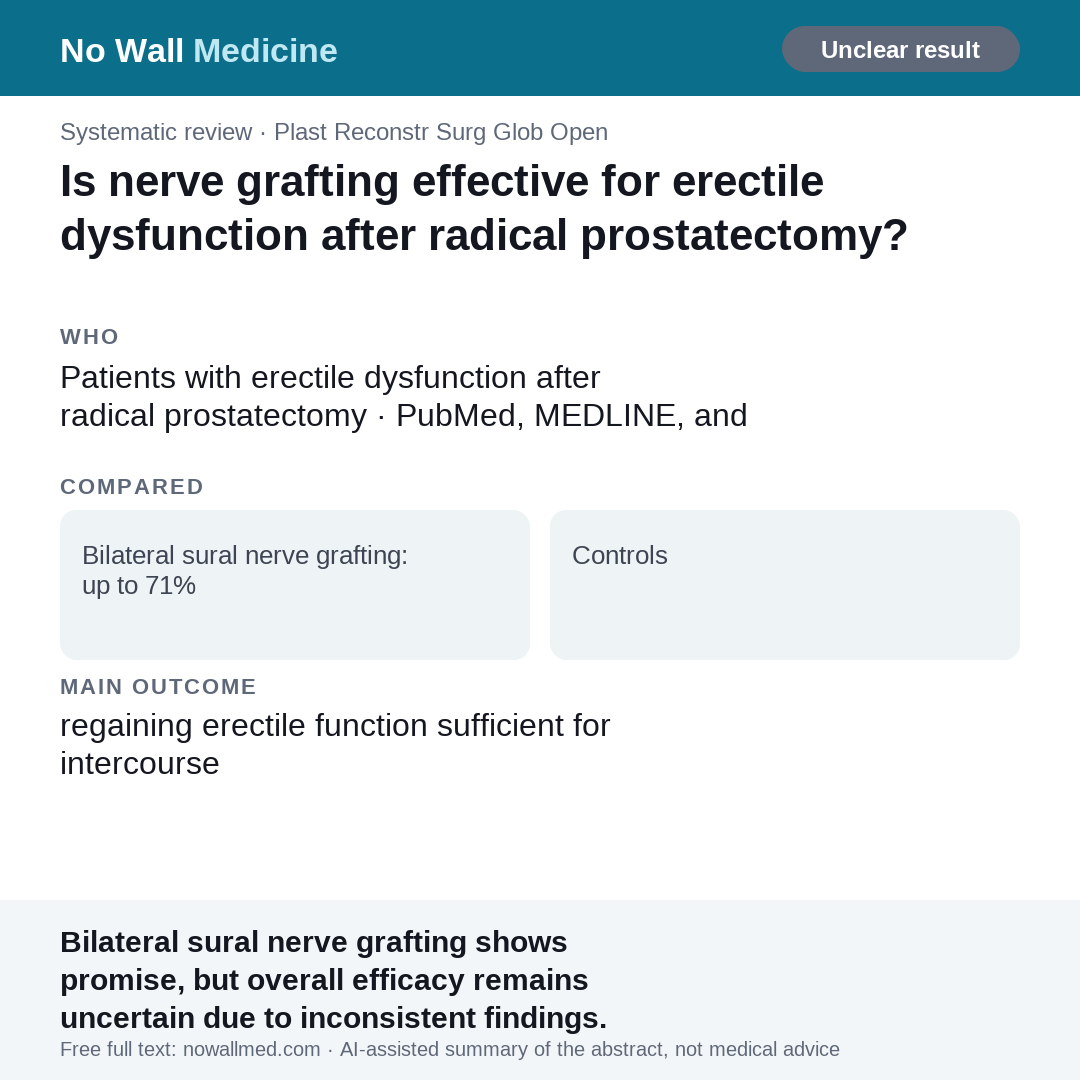
Nerve Repair for Erectile Dysfunction After Radical Prostatectomy: A Systematic Review of Outcomes
Systematic reviewUnclear result
Is nerve grafting effective for erectile dysfunction after radical prostatectomy?
Who
Patients with erectile dysfunction after radical prostatectomy · PubMed, MEDLINE, and Embase databases
Compared
Bilateral sural nerve grafting: up to 71%
Controls
Main outcome
regaining erectile function sufficient for intercourse
Bottom line: Bilateral sural nerve grafting shows promise, but overall efficacy remains uncertain due to inconsistent findings.
Limitation: Inconsistent findings and variability in donor nerve choice, surgical expertise, and patient characteristics.
Plast Reconstr Surg Glob Open · 2025-10-02Download image