Visual abstracts
New randomized trials and meta-analyses from leading journals at a glance: who was studied, what was compared, and what was found. Every paper is free to read in full.
All specialtiesCardiology 2159Oncology 1845Gastroenterology & Hepatology 811Infectious Disease 1344Neurology 876Psychiatry & Mental Health 1040Pulmonology 903Critical Care 602Endocrinology & Diabetes 1146Pediatrics 1258Surgery 1087Orthopedics & Sports Medicine 401Neurosurgery 265Cardiothoracic & Vascular Surgery 231Plastic & Reconstructive Surgery 325Nephrology 456Rheumatology 297Hematology 468Dermatology 249Ophthalmology 252Obstetrics & Gynecology 703Public & Global Health 403Radiology & Imaging 299Anesthesiology 422Urology 378ENT (Otolaryngology) 280Emergency Medicine 236Allergy & Immunology 135Geriatrics 452Family Medicine & Primary Care 249Medical Genetics & Genomics 233Pathology & Laboratory Medicine 72Physical Medicine & Rehabilitation 375Palliative Care 186Nutrition 577Digital Health & AI 1094General Medicine 164
Temporal trends in progression risk in smoldering myeloma: a systematic review
Systematic review and meta-analysis of 14 studiesBenefit found
Have temporal trends changed the progression risk in smoldering multiple myeloma?
Who
Patients with smoldering multiple myeloma
Compared
All-risk patients: 22.8% at two years and 60.1% at ten years
High-risk patients: 44.7% at two years and 85.6% at ten years
Main outcome
Progression risk over time
Bottom line: Smoldering multiple myeloma appears to follow a more indolent trajectory in recent years.
Funded by: Austrian Forum Against Cancer
eClinicalMedicine · 2026-01-08Download image

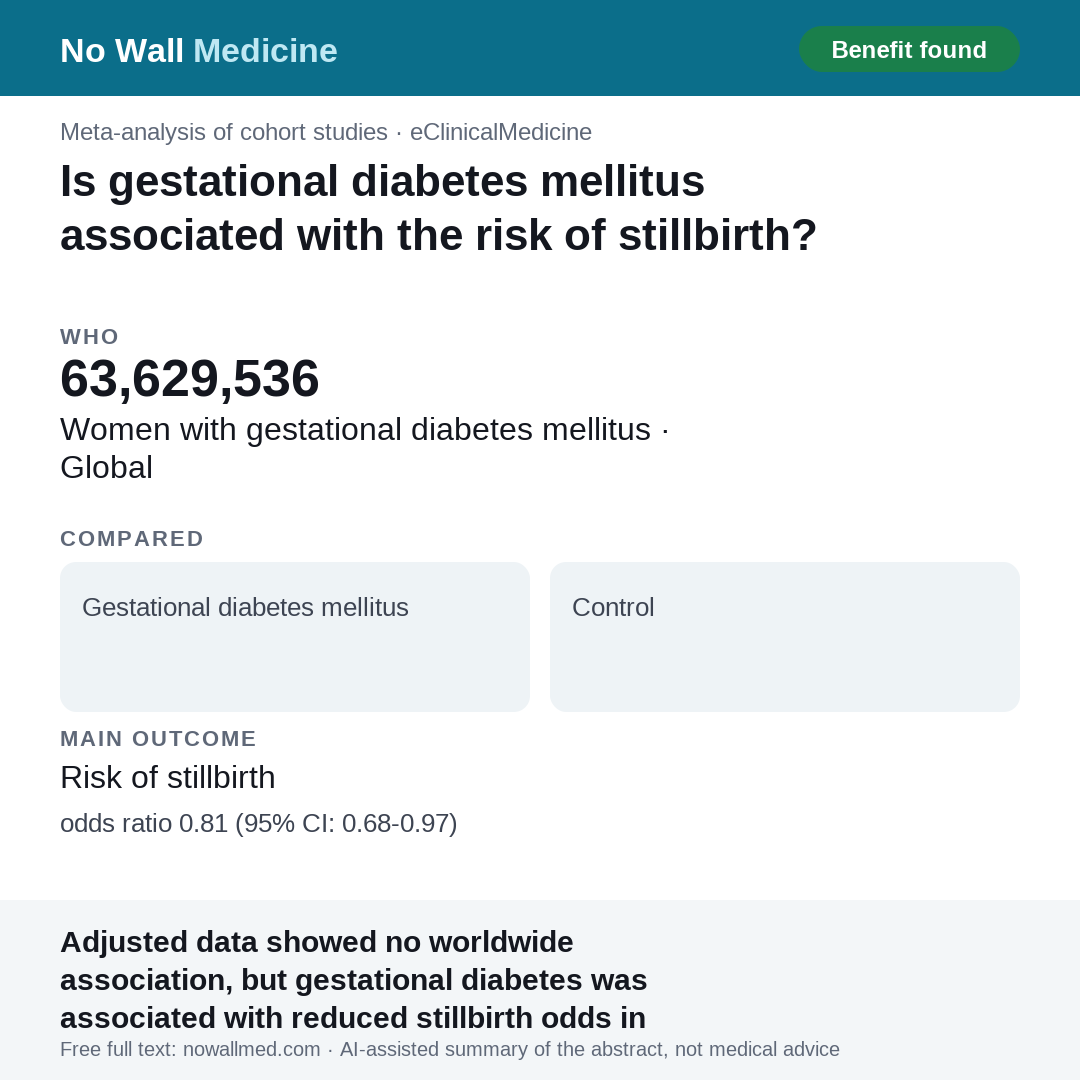
Gestational diabetes and stillbirth: a systematic review and meta-analysis
Meta-analysis of cohort studiesBenefit found
Is gestational diabetes mellitus associated with the risk of stillbirth?
Who
63,629,536
Women with gestational diabetes mellitus · Global
Compared
Gestational diabetes mellitus
Control
Main outcome
Risk of stillbirth
Result: odds ratio 0.81 (95% CI: 0.68-0.97)
Bottom line: Adjusted data showed no worldwide association, but gestational diabetes was associated with reduced stillbirth odds in high income countries.
Limitation: No adjusted estimates were available from low income countries.
eClinicalMedicine · 2026-01-08Download image
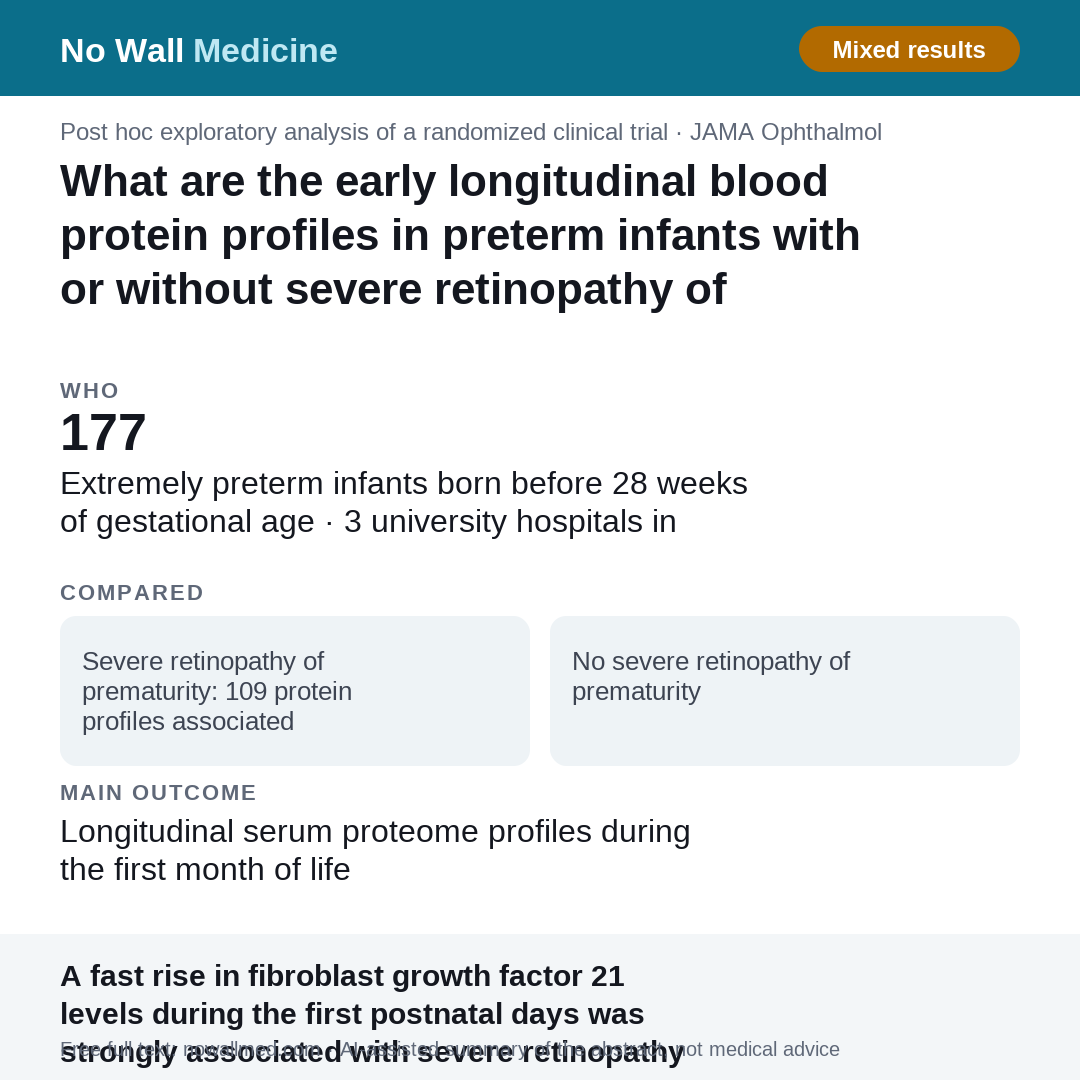
Proteomic Profile in Retinopathy of Prematurity: A Secondary Analysis of the Mega Donna Mega Randomized Clinical Trial
Post hoc exploratory analysis of a randomized clinical trialMixed results
What are the early longitudinal blood protein profiles in preterm infants with or without severe retinopathy of prematurity?
Who
177
Extremely preterm infants born before 28 weeks of gestational age · 3 university hospitals in Sweden
Compared
Severe retinopathy of prematurity: 109 protein profiles associated
No severe retinopathy of prematurity
Main outcome
Longitudinal serum proteome profiles during the first month of life
Result: fibroblast growth factor 21 β = 0.68 (95% CI, 0.39-0.97)
Bottom line: A fast rise in fibroblast growth factor 21 levels during the first postnatal days was strongly associated with severe retinopathy of prematurity.
JAMA Ophthalmol · 2026-01-08Download image
Treatment of unfavorable bleeding patterns in contraceptive implant users with tranexamic acid: randomized clinical trial
Randomized, double-blind, placebo-controlled trialNo clear difference
Does tranexamic acid decrease frequent or prolonged bleeding in etonogestrel contraceptive implant users?
Who
65
Etonogestrel-implant users with frequent or prolonged bleeding or spotting
Compared
Tranexamic acid: median 19 days without bleeding or spotting
Placebo: median 19 days without bleeding or spotting
Main outcome
total number of days without bleeding or spotting
Bottom line: A 5-day course of tranexamic acid did not improve bleeding in etonogestrel contraceptive implant users.
AJOG · 2026-01-08Download image

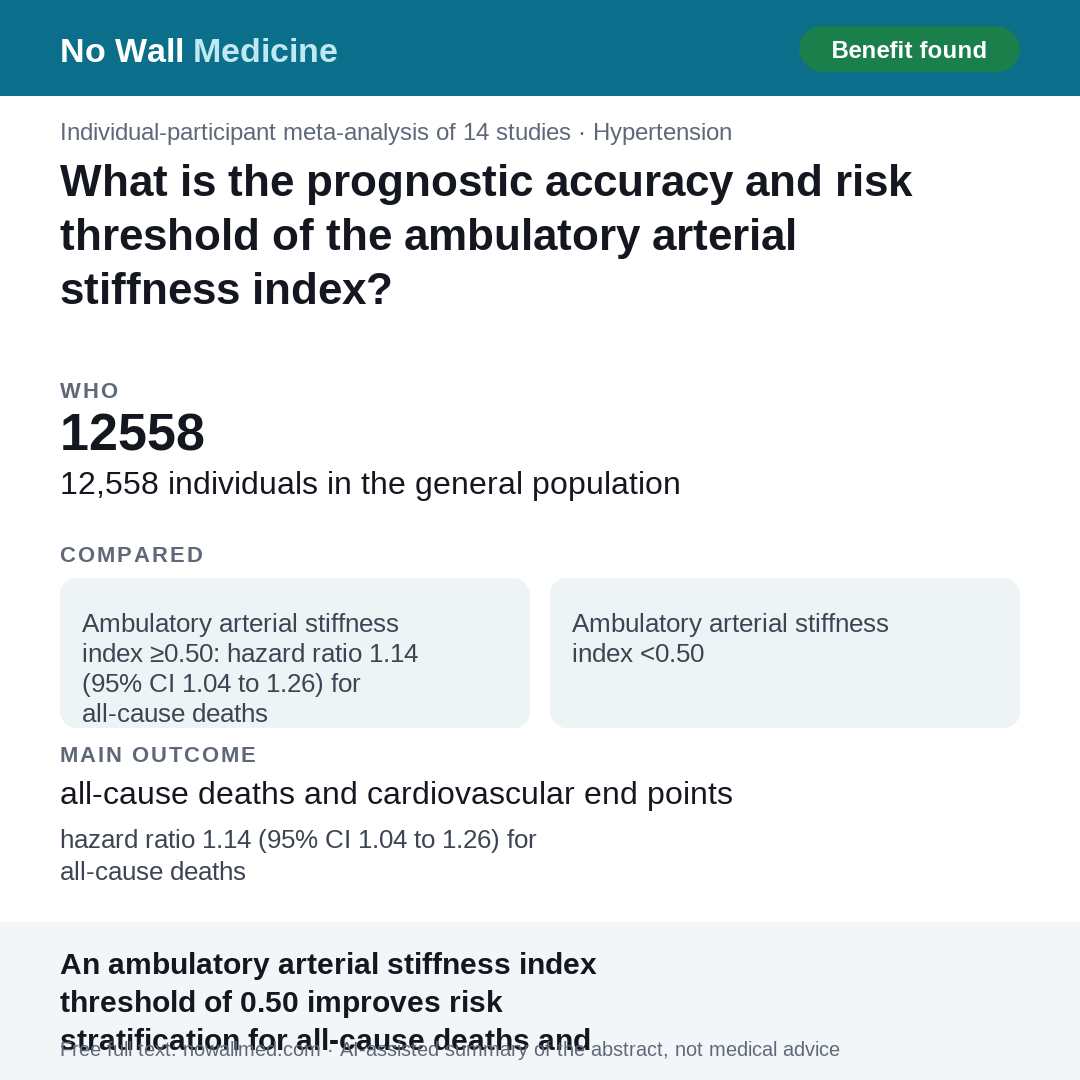
End Point-Based Threshold for the Ambulatory Arterial Stiffness Index
Individual-participant meta-analysis of 14 studiesBenefit found
What is the prognostic accuracy and risk threshold of the ambulatory arterial stiffness index?
Who
12558
12,558 individuals in the general population
Compared
Ambulatory arterial stiffness index ≥0.50: hazard ratio 1.14 (95% CI 1.04 to 1.26) for all-cause deaths
Ambulatory arterial stiffness index <0.50
Main outcome
all-cause deaths and cardiovascular end points
Result: hazard ratio 1.14 (95% CI 1.04 to 1.26) for all-cause deaths
Bottom line: An ambulatory arterial stiffness index threshold of 0.50 improves risk stratification for all-cause deaths and cardiovascular end points.
Hypertension · 2026-01-08Download image
Current state of mammography-based artificial intelligence for future breast cancer risk prediction: a systematic review
Systematic reviewUnclear result
What is the performance of mammography-based artificial intelligence for future breast cancer risk prediction?
Who
41
Women in studies evaluating mammography-based artificial intelligence models · Various, mostly United States
Compared
No longer than 2-year risk prediction: median AUC 0.71
3-4 years risk prediction: median AUC 0.72
5 years or more prediction: median AUC 0.71
Main outcome
Area under the receiver operating curve for discrimination performance
Bottom line: Mammography-based artificial intelligence models show moderate discrimination performance for predicting future breast cancer risk.
J Natl Cancer Inst · 2026-01-08Download image

Phase III Trial of Pegylated Liposomal Doxorubicin for Patients with Advanced and Refractory Desmoid Tumors
Double-blind, phase III trialBenefit found
Is pegylated liposomal doxorubicin effective for advanced and refractory desmoid tumors?
Who
73
Patients with advanced or refractory desmoid tumors
Compared
Pegylated liposomal doxorubicin: not reached
4.3 monthsPlacebo
Main outcome
progression-free survival
Result: hazard ratio 0.05 (95% confidence interval, 0.01-0.17)
Bottom line: Pegylated liposomal doxorubicin significantly prolonged progression-free survival and induced durable responses compared with placebo in desmoid tumors.
Clin Cancer Res · 2026-01-08Download image

The diagnostic accuracy of procalcitonin for community-acquired bacteraemia: an updated systematic review and meta-analysis
Systematic review and meta-analysisBenefit found
What is the diagnostic accuracy of procalcitonin for community-acquired bacteraemia?
Who
192 529
Adults with suspected community-acquired bacteraemia
Compared
Procalcitonin 0.10 ng/mL threshold: 93% (95% CI: 85-97%) sensitivity
Procalcitonin 0.10 ng/mL threshold: 36% (95% CI: 26-47%) specificity
Main outcome
Sensitivity and specificity for community-acquired bacteraemia
Result: area under the summary receiver-operating curve 0.80 (95% CI 0.76-0.83%)
Bottom line: A low procalcitonin threshold of 0.10 ng/mL is useful to exclude community-acquired bacteraemia due to high sensitivity.
Limitation: 32 of 40 included studies had high risk of bias
Clin Microbiol Infect · 2026-01-08Download image

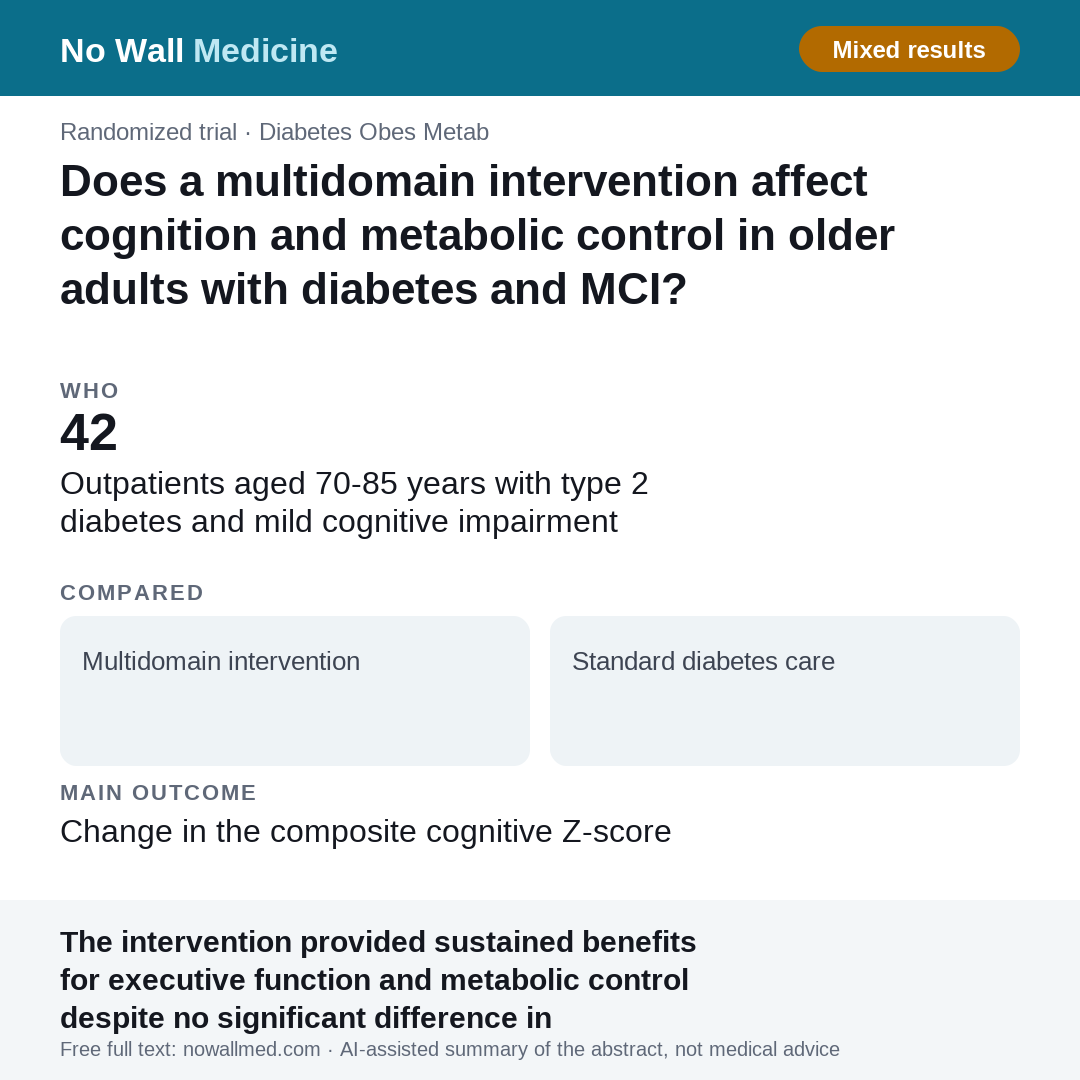
Long-term effects of a multidomain intervention on cognitive function and metabolic control in older adults with type 2 diabetes and mild cognitive impairment: A 42-month follow-up of the J-MIND-Diabetes study
Randomized trialMixed results
Does a multidomain intervention affect cognition and metabolic control in older adults with diabetes and MCI?
Who
42
Outpatients aged 70-85 years with type 2 diabetes and mild cognitive impairment
Compared
Multidomain intervention
Standard diabetes care
Main outcome
Change in the composite cognitive Z-score
Result: 0.19 (95% CI -0.14 to 0.52)
Bottom line: The intervention provided sustained benefits for executive function and metabolic control despite no significant difference in composite cognitive Z-score.
Limitation: Further studies should be performed to validate these findings.
Diabetes Obes Metab · 2026-01-08Download image
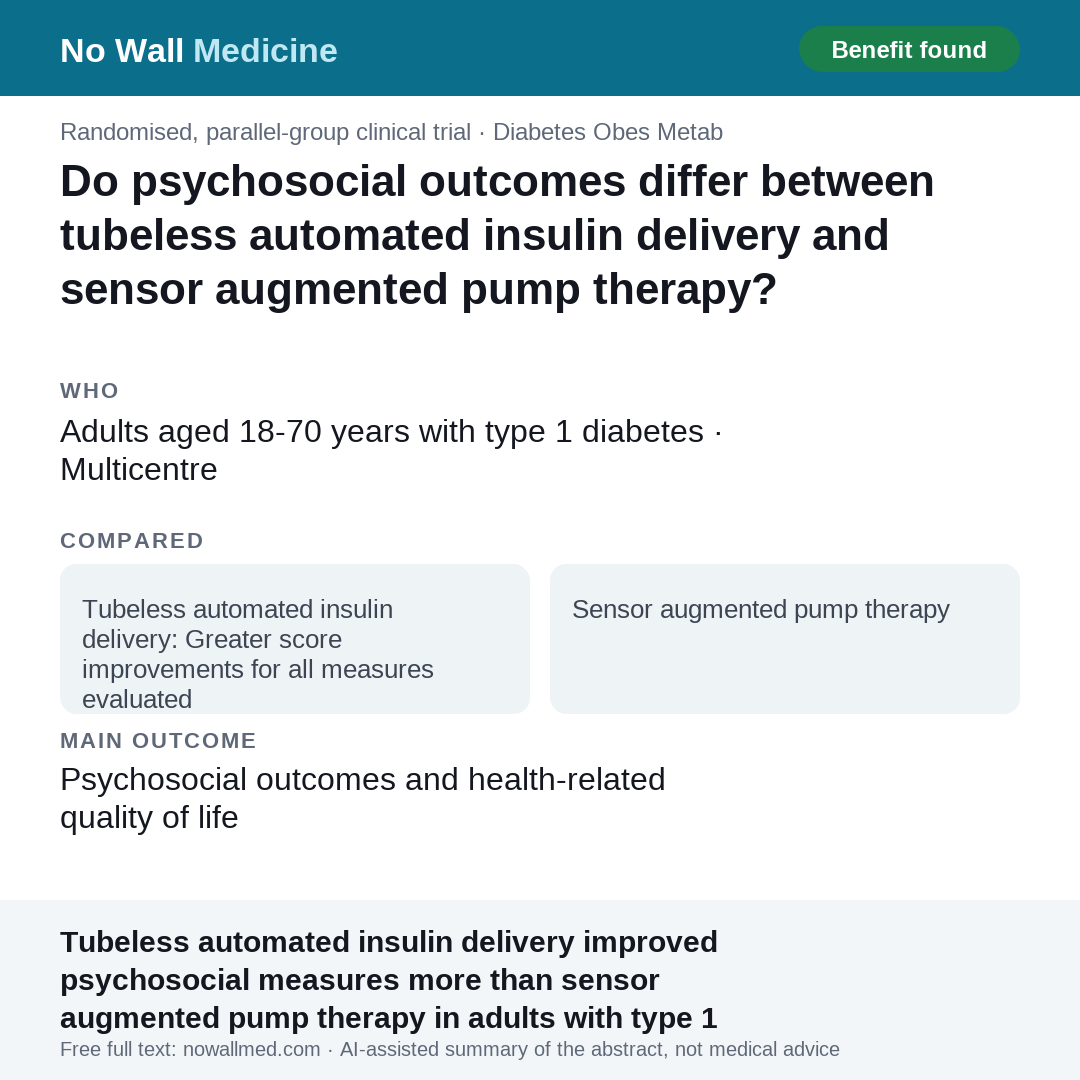
Psychosocial outcomes among adults with type 1 diabetes using a tubeless automated insulin delivery system compared with sensor augmented pump therapy: A randomised, parallel-group clinical trial sub-study
Randomised, parallel-group clinical trialBenefit found
Do psychosocial outcomes differ between tubeless automated insulin delivery and sensor augmented pump therapy?
Who
Adults aged 18-70 years with type 1 diabetes · Multicentre
Compared
Tubeless automated insulin delivery: Greater score improvements for all measures evaluated
Sensor augmented pump therapy
Main outcome
Psychosocial outcomes and health-related quality of life
Bottom line: Tubeless automated insulin delivery improved psychosocial measures more than sensor augmented pump therapy in adults with type 1 diabetes.
Diabetes Obes Metab · 2026-01-08Download image
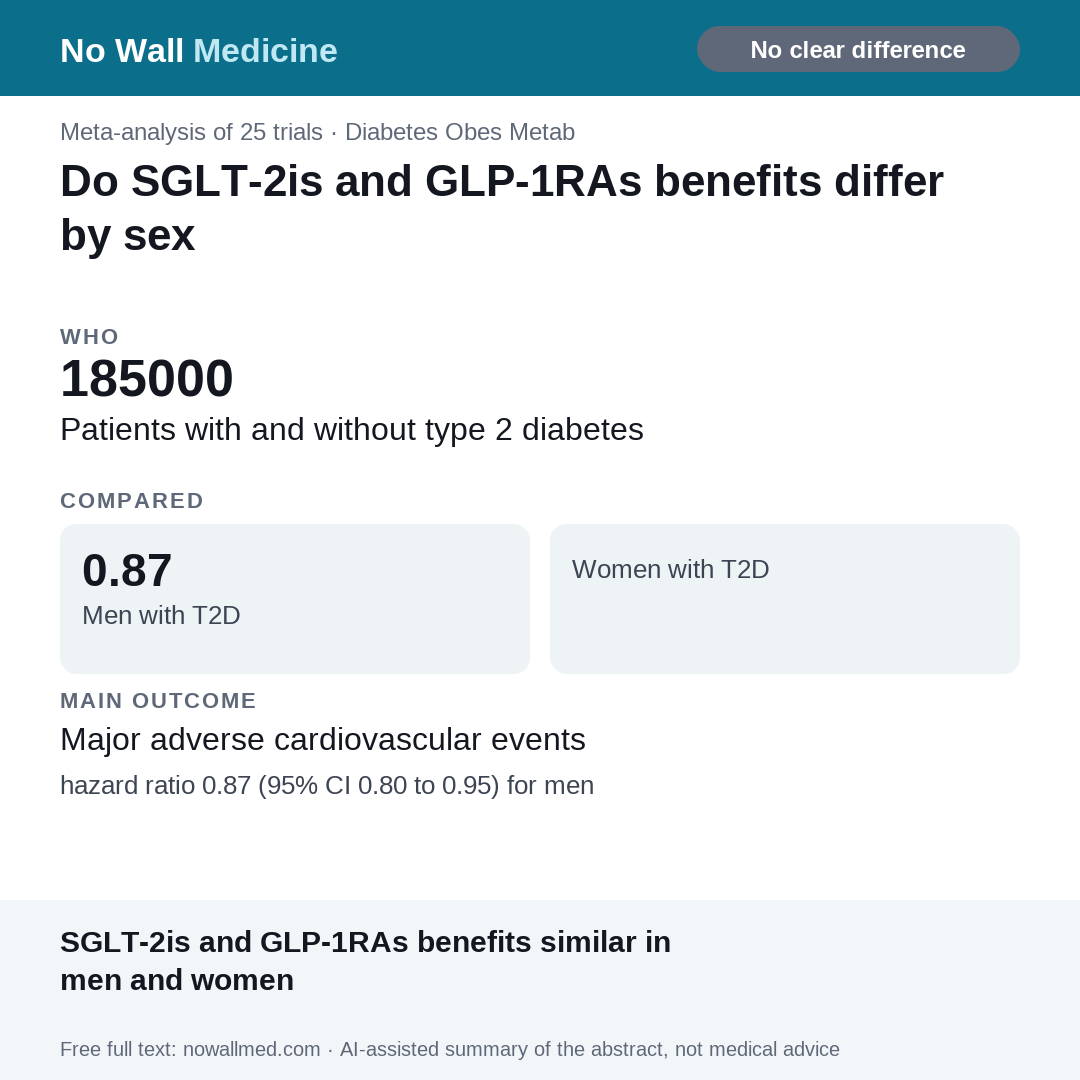
Sex differences in trial representation and the cardiovascular effectiveness of newer glucose-lowering agents in patients with and without type 2 diabetes: A systematic review and meta-analysis of cardiovascular outcome trials
Meta-analysis of 25 trialsNo clear difference
Do SGLT-2is and GLP-1RAs benefits differ by sex
Who
185000
Patients with and without type 2 diabetes
Compared
0.87Men with T2D (0.80-0.95)
Women with T2D
Main outcome
Major adverse cardiovascular events
Result: hazard ratio 0.87 (95% CI 0.80 to 0.95) for men
Bottom line: SGLT-2is and GLP-1RAs benefits similar in men and women
Diabetes Obes Metab · 2026-01-08Download image
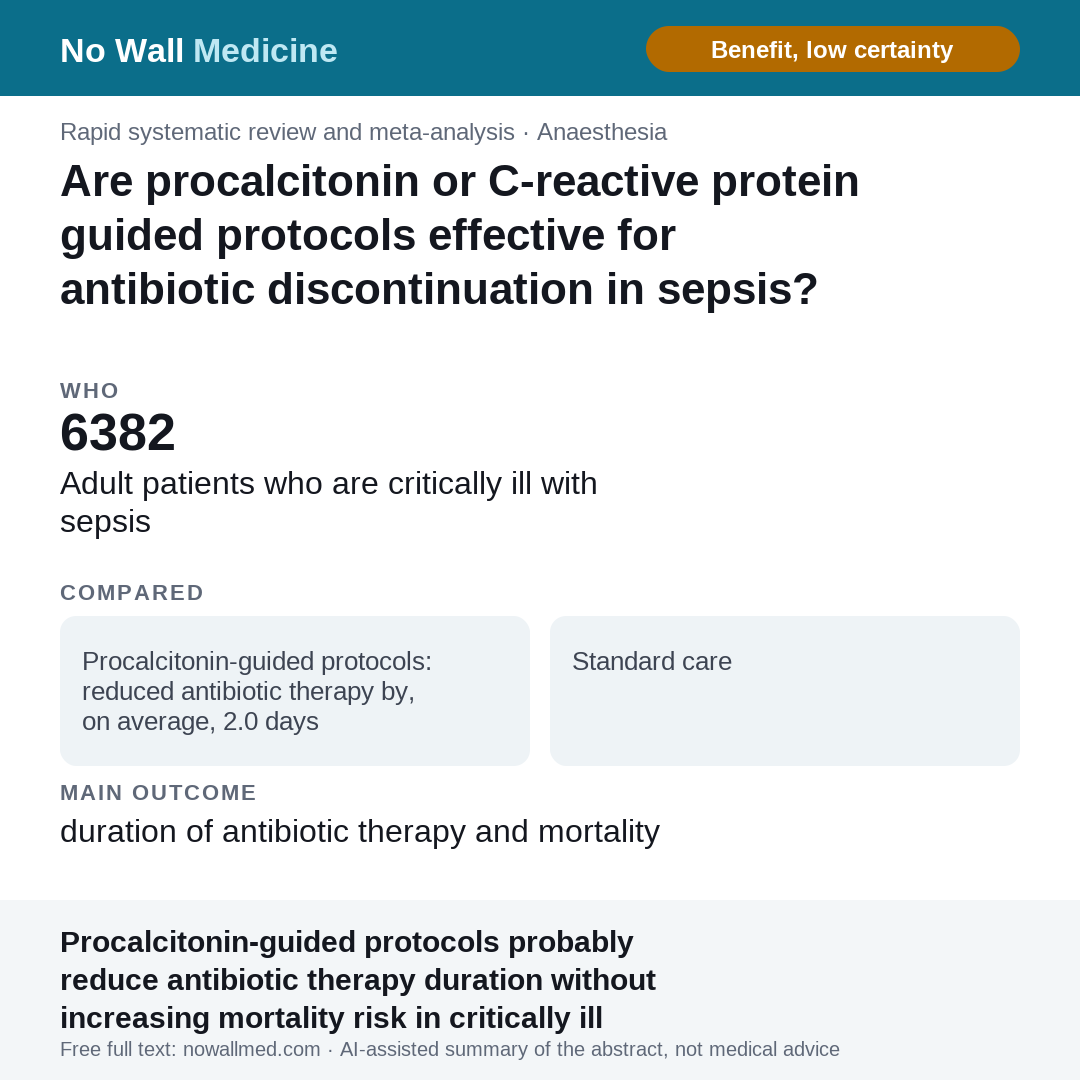
Clinical effectiveness of procalcitonin- or C-reactive protein-guided antibiotic discontinuation protocols for adult patients who are critically ill with sepsis: a rapid systematic review and meta-analysis
Rapid systematic review and meta-analysisBenefit found
Are procalcitonin or C-reactive protein guided protocols effective for antibiotic discontinuation in sepsis?
Who
6382
Adult patients who are critically ill with sepsis
Compared
Procalcitonin-guided protocols: reduced antibiotic therapy by, on average, 2.0 days
Standard care
Main outcome
duration of antibiotic therapy and mortality
Result: risk ratio 0.95, 95%CI 0.83-1.07
Bottom line: Procalcitonin-guided protocols probably reduce antibiotic therapy duration without increasing mortality risk in critically ill sepsis patients.
Limitation: Evidence regarding C-reactive protein-guided protocols remained unclear with very low to low certainty evidence.
Anaesthesia · 2026-01-08Download image
Comparing postprandial inflammatory responses to a plant-based meat alternative, grass-finished beef, and grain-finished beef in healthy middle-aged adults: a 3-group randomized crossover trial
Randomized crossover trialNo clear difference
How do grass-finished beef, plant-based meat, and grain-finished beef affect postprandial inflammation?
Who
36
36 healthy middle-aged adults with body mass index 25-35 kg/m2
Compared
Grass-finished beef
Plant-based meat alternative
Grain-finished beef
Main outcome
Postprandial inflammatory markers
Bottom line: Acute consumption of grass-finished beef, plant-based meat, or grain-finished beef did not significantly change inflammatory responses.
Am J Clin Nutr · 2026-01-08Download image

The circulating proteome and cancer risk: a systematic literature review and meta-analysis of 26 prospective studies with genetic validation
Meta-analysis of 26 studiesMixed results
Circulating proteins and cancer risk
Who
84129
adults without cancer diagnosis at baseline
Compared
protein associated
not associated
Main outcome
incident cancer risk
Bottom line: 131 protein-cancer-associations found
Limitation: limited data for some cancers
Funded by: University of Oxford, Cancer Research UK
eBioMedicine · 2026-01-08Download image

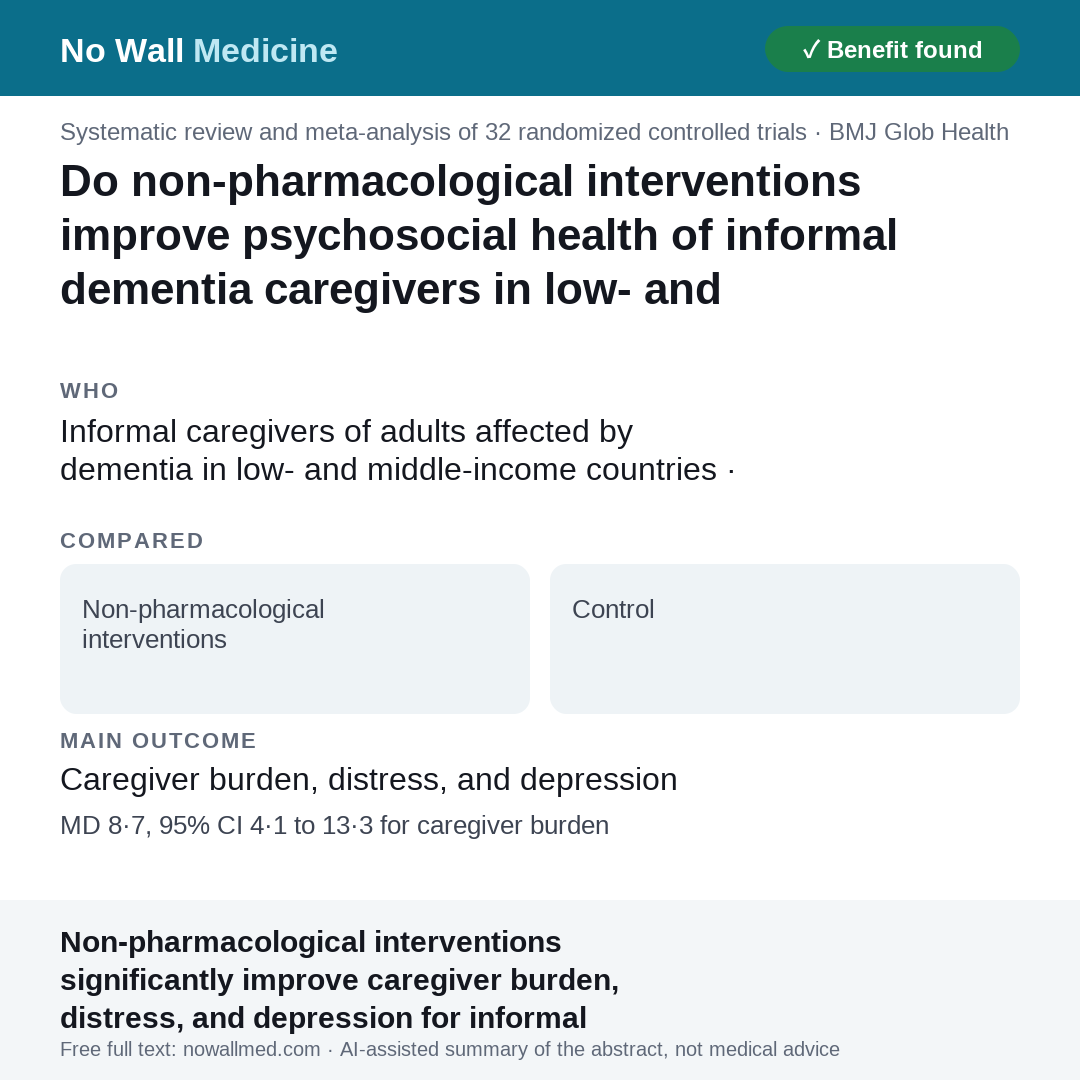
Effects of interventions on the psychosocial health and well-being of informal caregivers of people with dementia in low- and middle-income countries (LMICs): a systematic review and meta-analysis
Systematic review and meta-analysis of 32 randomized controlled trialsBenefit found
Do non-pharmacological interventions improve psychosocial health of informal dementia caregivers in low- and middle-income countries?
Who
Informal caregivers of adults affected by dementia in low- and middle-income countries · 13 low- and middle-income countries
Compared
Non-pharmacological interventions
Control
Main outcome
Caregiver burden, distress, and depression
Result: MD 8·7, 95% CI 4·1 to 13·3 for caregiver burden
Bottom line: Non-pharmacological interventions significantly improve caregiver burden, distress, and depression for informal dementia caregivers in low- and middle-income countries.
Limitation: Inaccessibility of some databases, difficulty analysing multicomponent interventions, and heterogeneity across studies.
BMJ Glob Health · 2026-01-08Download image
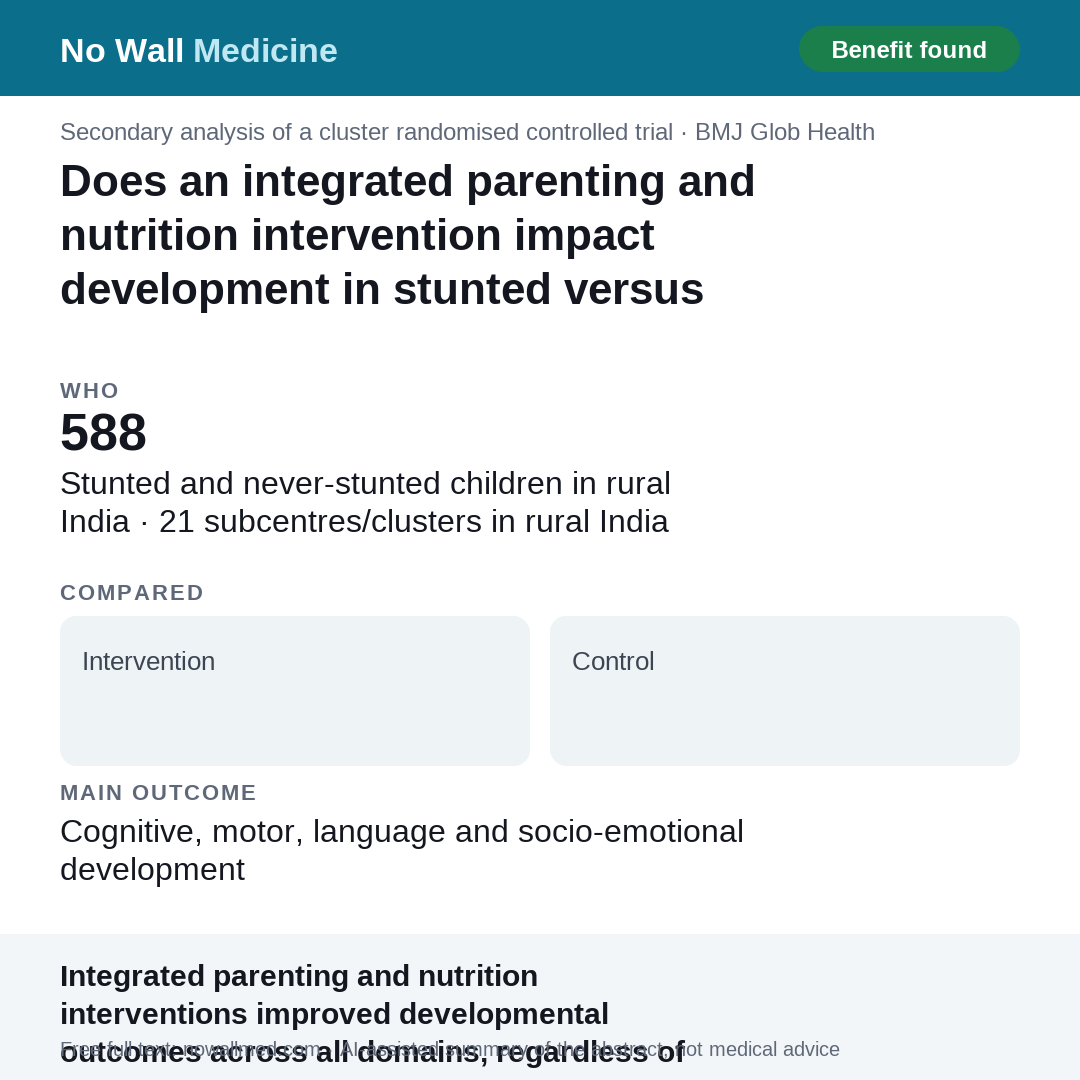
Impact of an integrated parenting and nutrition intervention on growth and development in stunted children at 24 months: evidence from the Stepping Stones programme in rural India
Secondary analysis of a cluster randomised controlled trialBenefit found
Does an integrated parenting and nutrition intervention impact development in stunted versus never-stunted children?
Who
588
Stunted and never-stunted children in rural India · 21 subcentres/clusters in rural India
Compared
Intervention
Control
Main outcome
Cognitive, motor, language and socio-emotional development
Bottom line: Integrated parenting and nutrition interventions improved developmental outcomes across all domains, regardless of stunting status.
BMJ Glob Health · 2026-01-08Download image
Prophylactic Incisional Negative Pressure wound therapy (NPWT) for major Amputations (PINTA): protocol for randomized controlled trial of single-use NPWT devices for closed-incision major lower extremity amputations
Prospective, multicentre, randomized controlled trialUnclear result
Does prophylactic negative pressure wound therapy reduce wound complications after major lower extremity amputations?
Who
Patients undergoing major lower extremity amputation · Multicentre
Compared
Single-use negative pressure wound therapy
Standard dry dressings
Main outcome
Rate of wound complications
Bottom line: This protocol describes a trial to investigate if negative pressure wound therapy reduces complications after major amputations.
BJS Open · 2026-01-08Download image

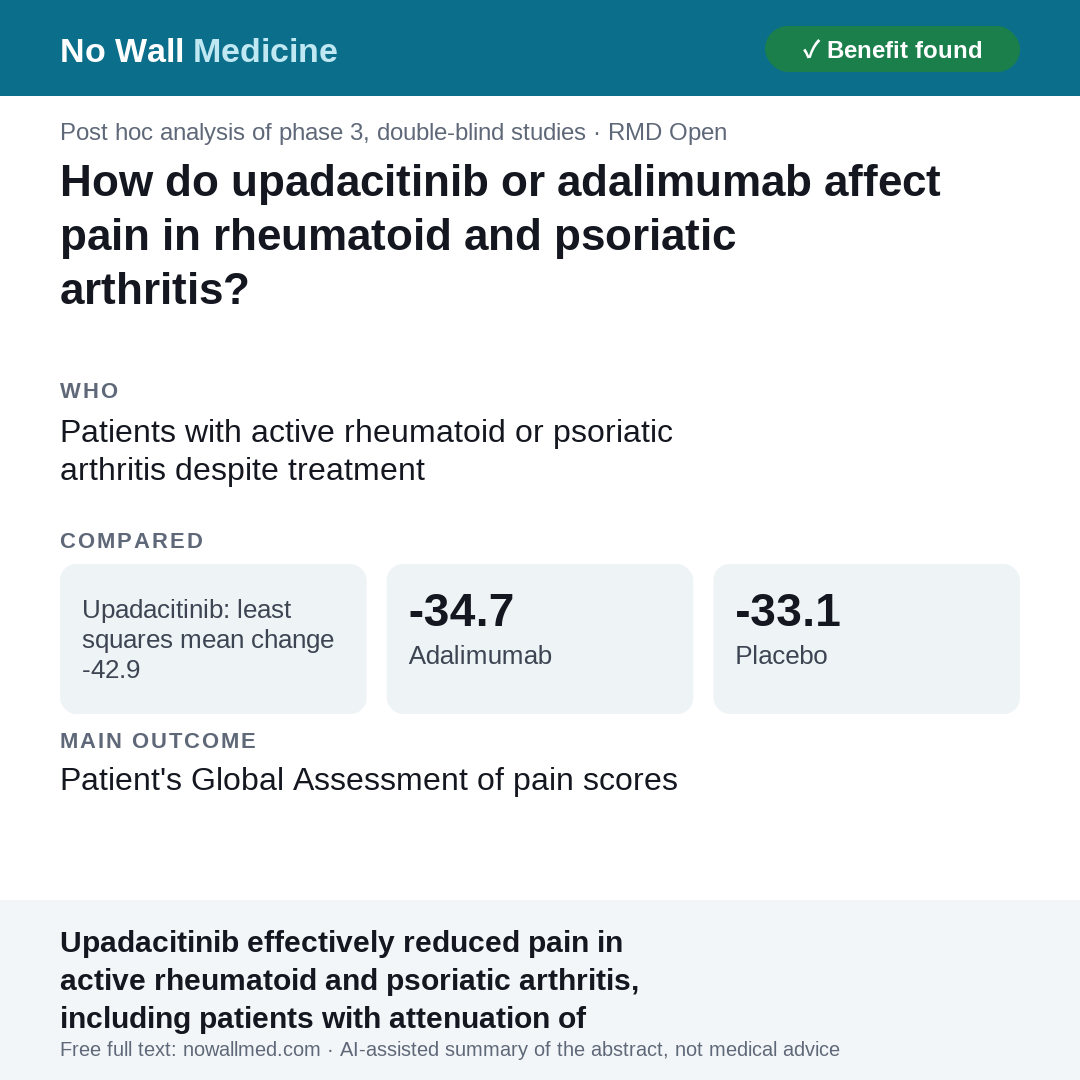
Effects of upadacitinib or adalimumab on pain in rheumatoid arthritis and psoriatic arthritis: results from randomised phase 3 studies
Post hoc analysis of phase 3, double-blind studiesBenefit found
How do upadacitinib or adalimumab affect pain in rheumatoid and psoriatic arthritis?
Who
Patients with active rheumatoid or psoriatic arthritis despite treatment
Compared
Upadacitinib: least squares mean change -42.9
-34.7Adalimumab
-33.1Placebo
Main outcome
Patient's Global Assessment of pain scores
Bottom line: Upadacitinib effectively reduced pain in active rheumatoid and psoriatic arthritis, including patients with attenuation of inflammation.
RMD Open · 2026-01-08Download image
Face-to-Face Versus Digital, Telephone-Delivered, and Self-Help Cognitive Behavioral Therapy for Irritable Bowel Syndrome: Systematic Review and Bayesian Indirect Treatment Comparison Meta-Analysis
Bayesian indirect treatment comparison meta-analysisNo clear difference
Is face-to-face cognitive behavioral therapy as effective as other delivery methods for irritable bowel syndrome?
Who
3161
Adults with irritable bowel syndrome
Compared
Face-to-face cognitive behavioral therapy
Digital, self-help, or telephone-delivered cognitive behavioral therapy
Main outcome
irritable bowel syndrome symptom severity scale
Result: mean difference -0.89 (95% credible interval -20.78 to 18.73) for digital
Bottom line: Face-to-face cognitive behavioral therapy shows similar effects to digital, self-help, and telephone-delivered options for irritable bowel syndrome symptoms.
Limitation: High heterogeneity, high risk of bias, and inadequate effective sample sizes in most comparisons.
J Med Internet Res · 2026-01-08Download image

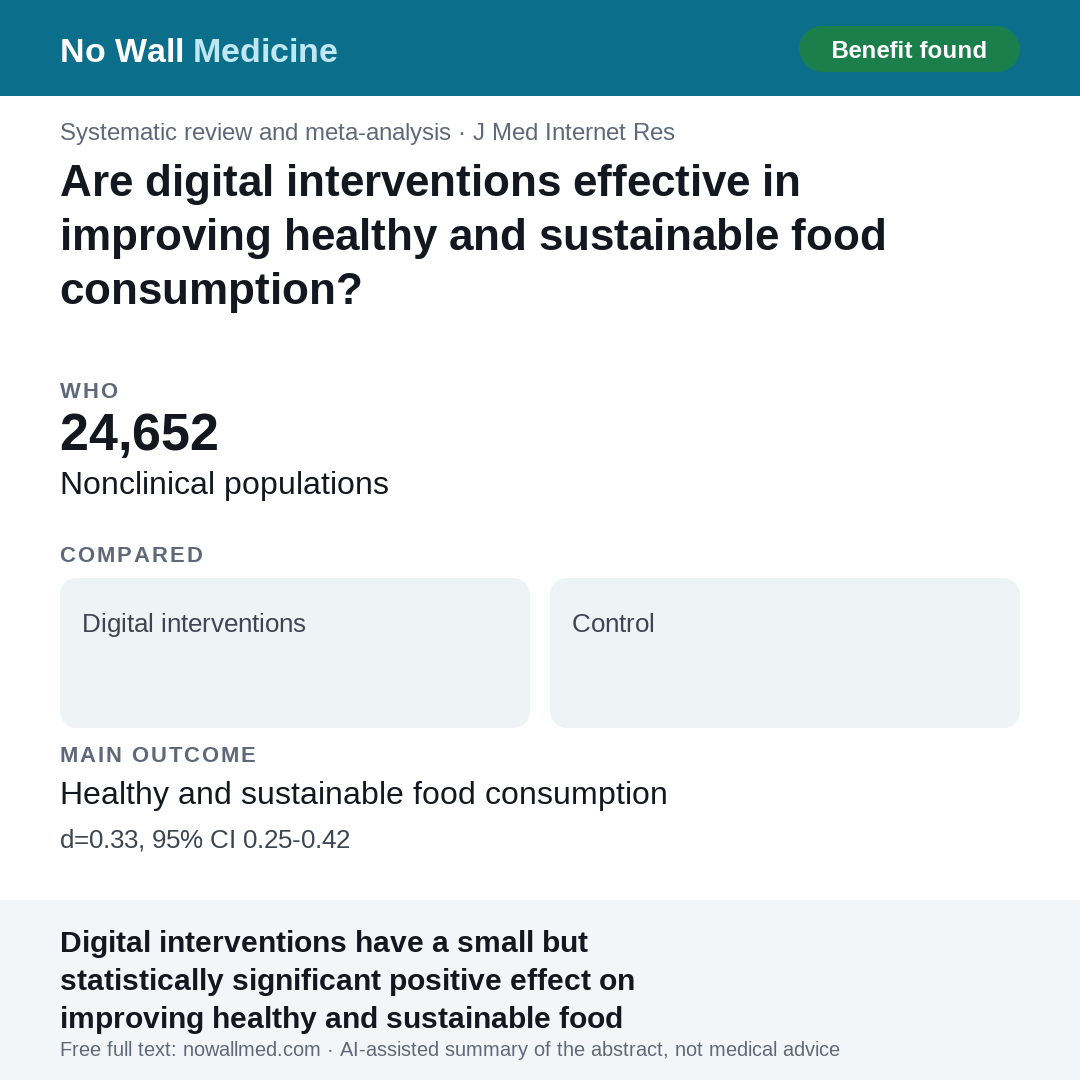
Digital Interventions Targeting Healthy and Sustainable Eating Behavior: Systematic Review and Meta-Analysis
Systematic review and meta-analysisBenefit found
Are digital interventions effective in improving healthy and sustainable food consumption?
Who
24,652
Nonclinical populations
Compared
Digital interventions
Control
Main outcome
Healthy and sustainable food consumption
Result: d=0.33, 95% CI 0.25-0.42
Bottom line: Digital interventions have a small but statistically significant positive effect on improving healthy and sustainable food consumption.
Limitation: Substantial heterogeneity and few studies including adolescents or individuals from lower socioeconomic backgrounds.
J Med Internet Res · 2026-01-08Download image