Visual abstracts
New randomized trials and meta-analyses from leading journals at a glance: who was studied, what was compared, and what was found. Every paper is free to read in full.
All specialtiesCardiology 847Oncology 766Gastroenterology & Hepatology 307Infectious Disease 626Neurology 353Psychiatry & Mental Health 430Pulmonology 368Critical Care 252Endocrinology & Diabetes 480Pediatrics 540Surgery 328Orthopedics & Sports Medicine 163Neurosurgery 100Cardiothoracic & Vascular Surgery 87Plastic & Reconstructive Surgery 132Nephrology 197Rheumatology 108Hematology 182Dermatology 80Ophthalmology 97Obstetrics & Gynecology 262Public & Global Health 167Radiology & Imaging 98Anesthesiology 117Urology 162ENT (Otolaryngology) 100Emergency Medicine 84Allergy & Immunology 58Geriatrics 160Family Medicine & Primary Care 111Medical Genetics & Genomics 91Pathology & Laboratory Medicine 24Physical Medicine & Rehabilitation 148Palliative Care 81Nutrition 223Digital Health & AI 460General Medicine 101
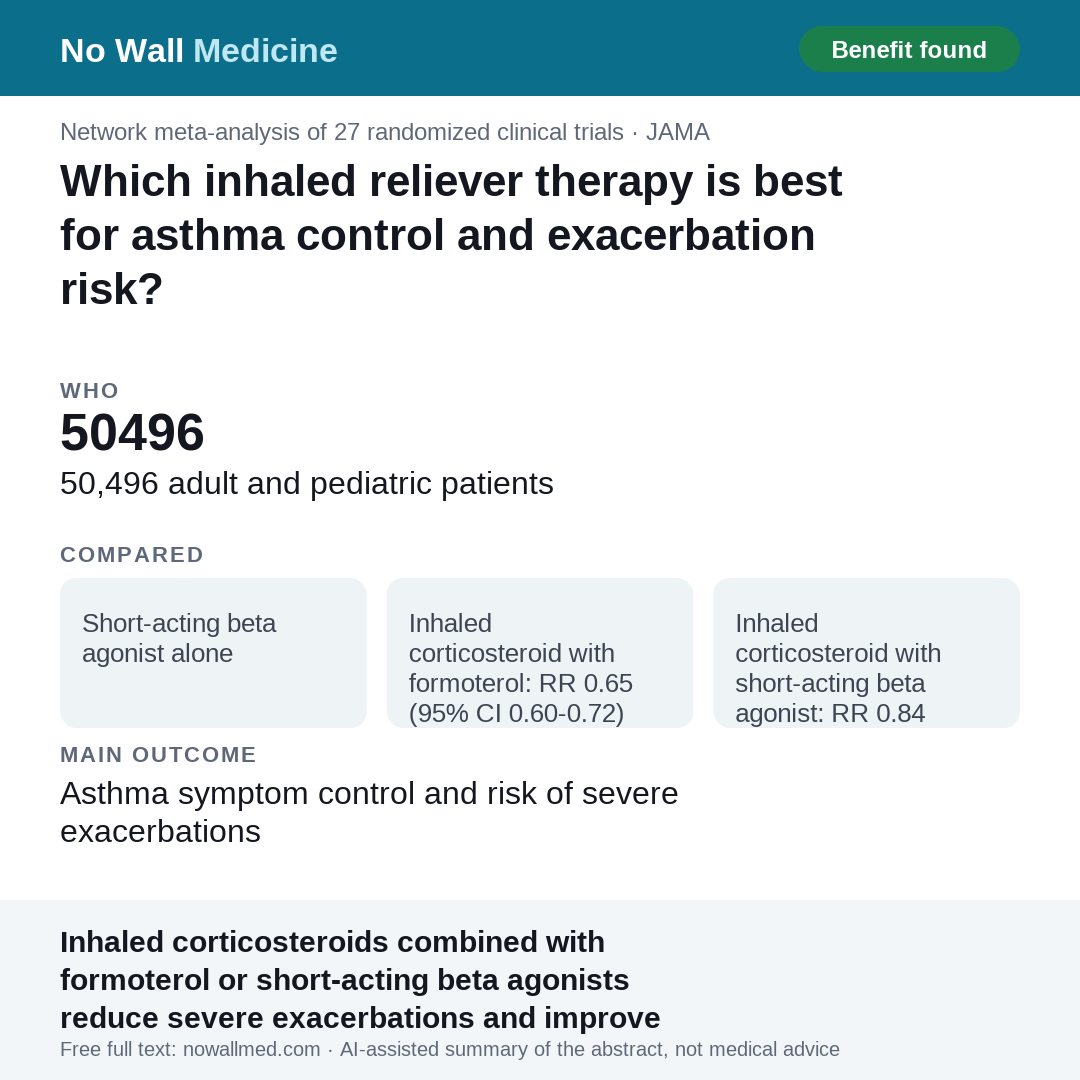
Inhaled Reliever Therapies for Asthma: A Systematic Review and Meta-Analysis
Network meta-analysis of 27 randomized clinical trialsBenefit found
Which inhaled reliever therapy is best for asthma control and exacerbation risk?
Who
50496
50,496 adult and pediatric patients
Compared
Short-acting beta agonist alone
Inhaled corticosteroid with formoterol: RR 0.65 (95% CI 0.60-0.72) for severe exacerbations
Inhaled corticosteroid with short-acting beta agonist: RR 0.84 (95% CI 0.73-0.95) for severe exacerbations
Main outcome
Asthma symptom control and risk of severe exacerbations
Result: ICS-formoterol RR 0.65 (95% CI 0.60-0.72) for severe exacerbations
Bottom line: Inhaled corticosteroids combined with formoterol or short-acting beta agonists reduce severe exacerbations and improve asthma control compared to short-acting beta agonists alone.
JAMA · 2024-10-28Download image
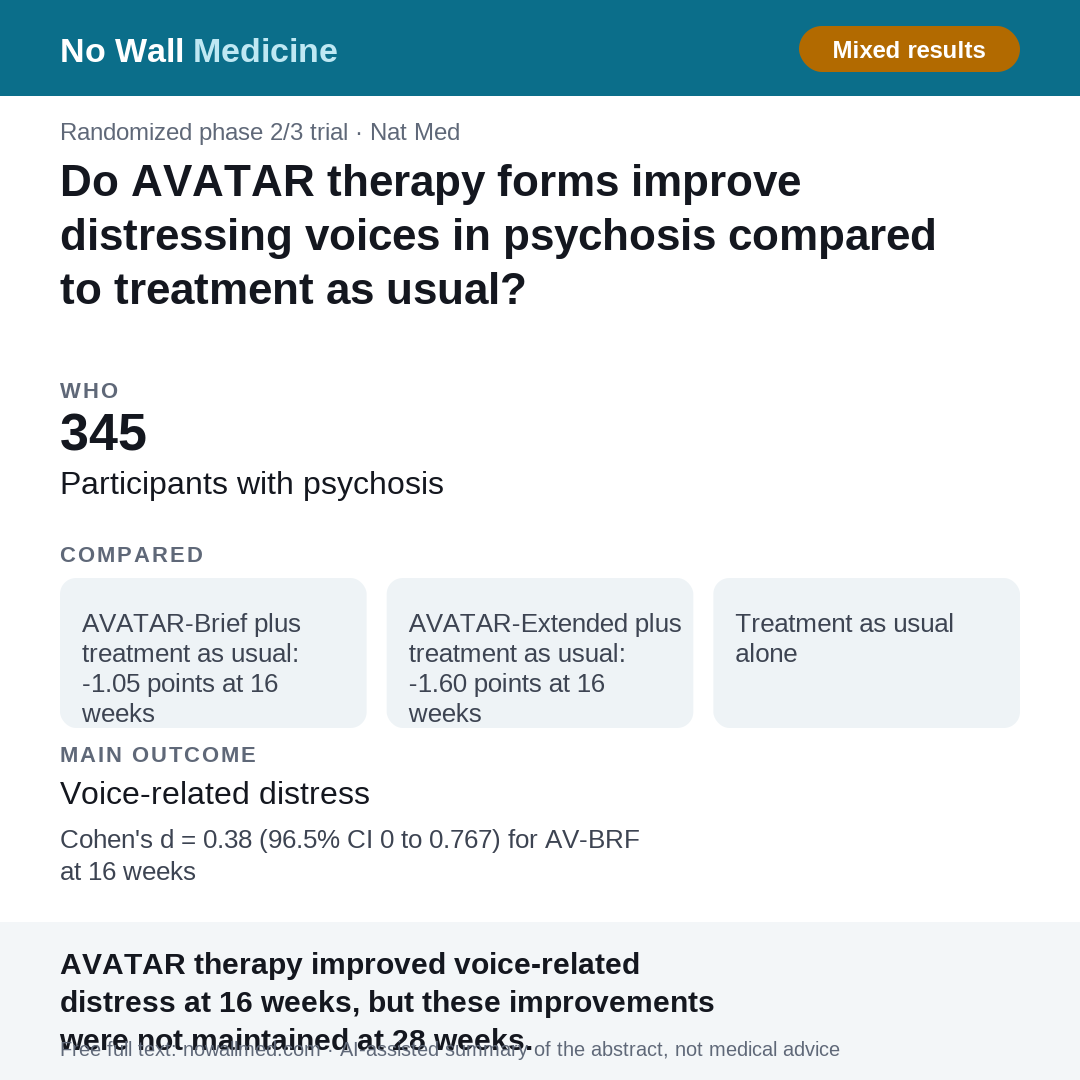
Digital AVATAR therapy for distressing voices in psychosis: the phase 2/3 AVATAR2 trial
Randomized phase 2/3 trialMixed results
Do AVATAR therapy forms improve distressing voices in psychosis compared to treatment as usual?
Who
345
Participants with psychosis
Compared
AVATAR-Brief plus treatment as usual: -1.05 points at 16 weeks
AVATAR-Extended plus treatment as usual: -1.60 points at 16 weeks
Treatment as usual alone
Main outcome
Voice-related distress
Result: Cohen's d = 0.38 (96.5% CI 0 to 0.767) for AV-BRF at 16 weeks
Bottom line: AVATAR therapy improved voice-related distress at 16 weeks, but these improvements were not maintained at 28 weeks.
Nat Med · 2024-10-28Download image
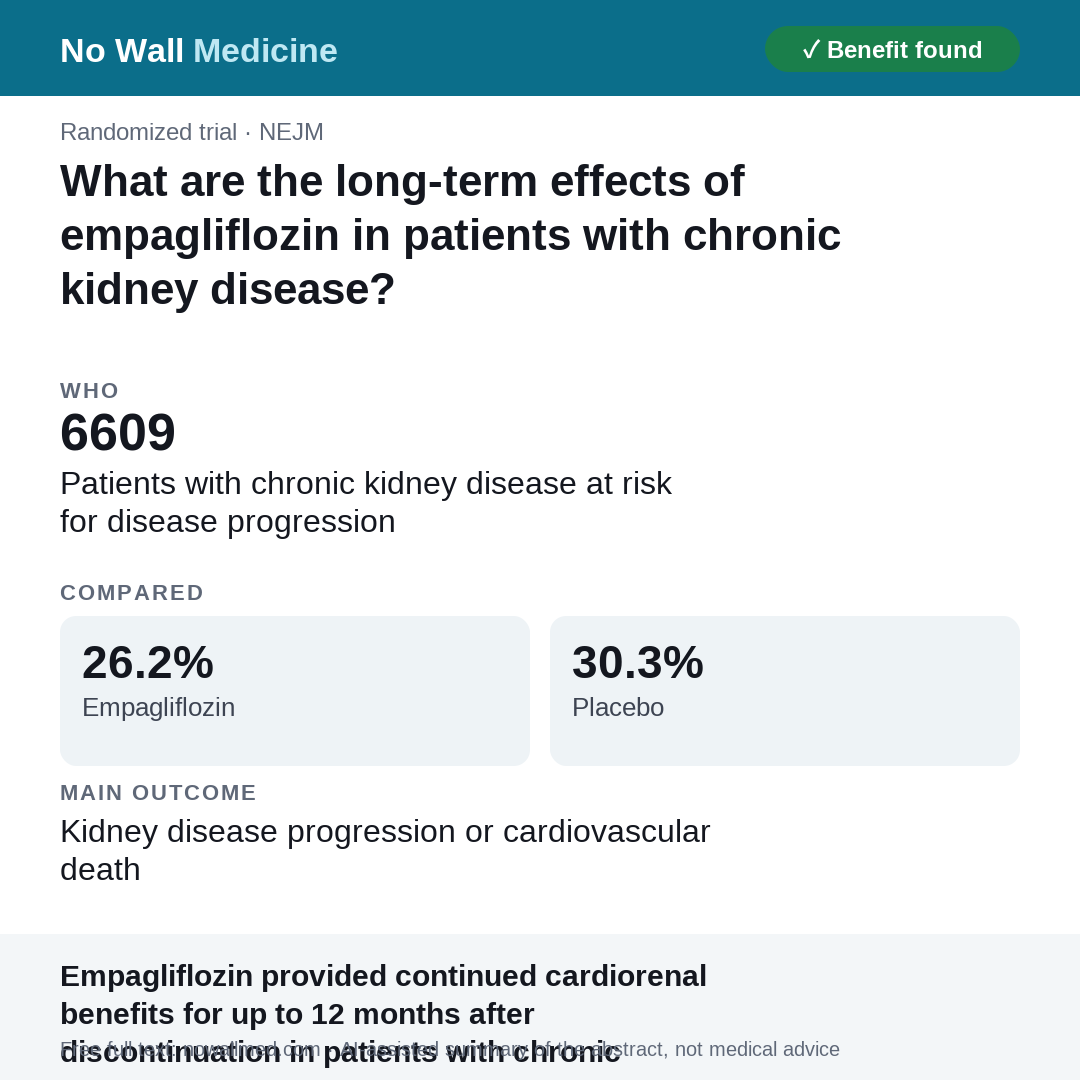
Long-Term Effects of Empagliflozin in Patients with Chronic Kidney Disease
Randomized trialBenefit found
What are the long-term effects of empagliflozin in patients with chronic kidney disease?
Who
6609
Patients with chronic kidney disease at risk for disease progression
Compared
26.2%Empagliflozin
30.3%Placebo
Main outcome
Kidney disease progression or cardiovascular death
Result: hazard ratio 0.79 (95% CI 0.72 to 0.87)
Bottom line: Empagliflozin provided continued cardiorenal benefits for up to 12 months after discontinuation in patients with chronic kidney disease.
Funded by: Boehringer Ingelheim and others
NEJM · 2024-10-25Download image
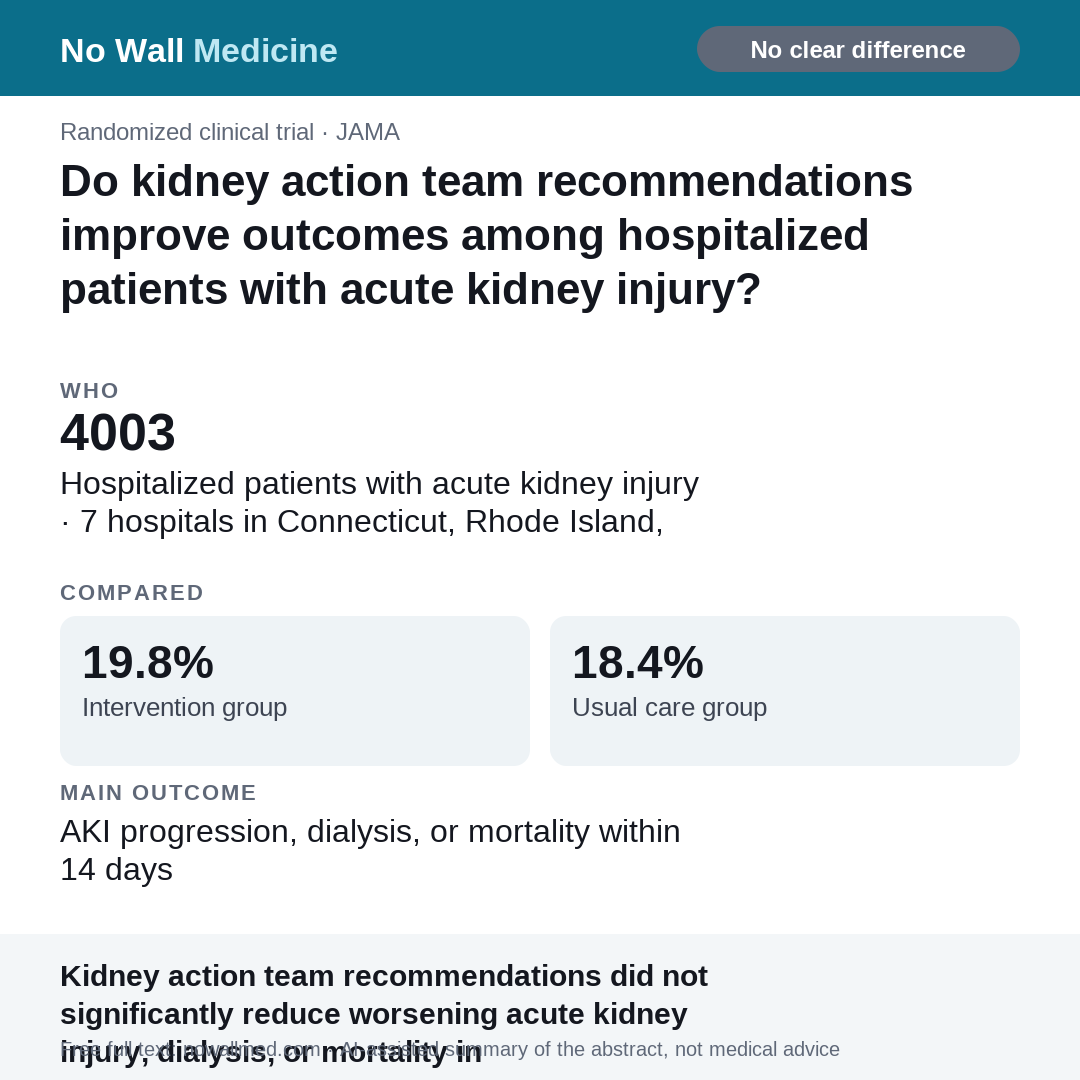
Early, Individualized Recommendations for Hospitalized Patients With Acute Kidney Injury: A Randomized Clinical Trial
Randomized clinical trialNo clear difference
Do kidney action team recommendations improve outcomes among hospitalized patients with acute kidney injury?
Who
4003
Hospitalized patients with acute kidney injury · 7 hospitals in Connecticut, Rhode Island, and Maryland
Compared
19.8%Intervention group
18.4%Usual care group
Main outcome
AKI progression, dialysis, or mortality within 14 days
Result: difference, 1.4%, 95% CI, -1.1% to 3.8%
Bottom line: Kidney action team recommendations did not significantly reduce worsening acute kidney injury, dialysis, or mortality in hospitalized patients.
JAMA · 2024-10-25Download image
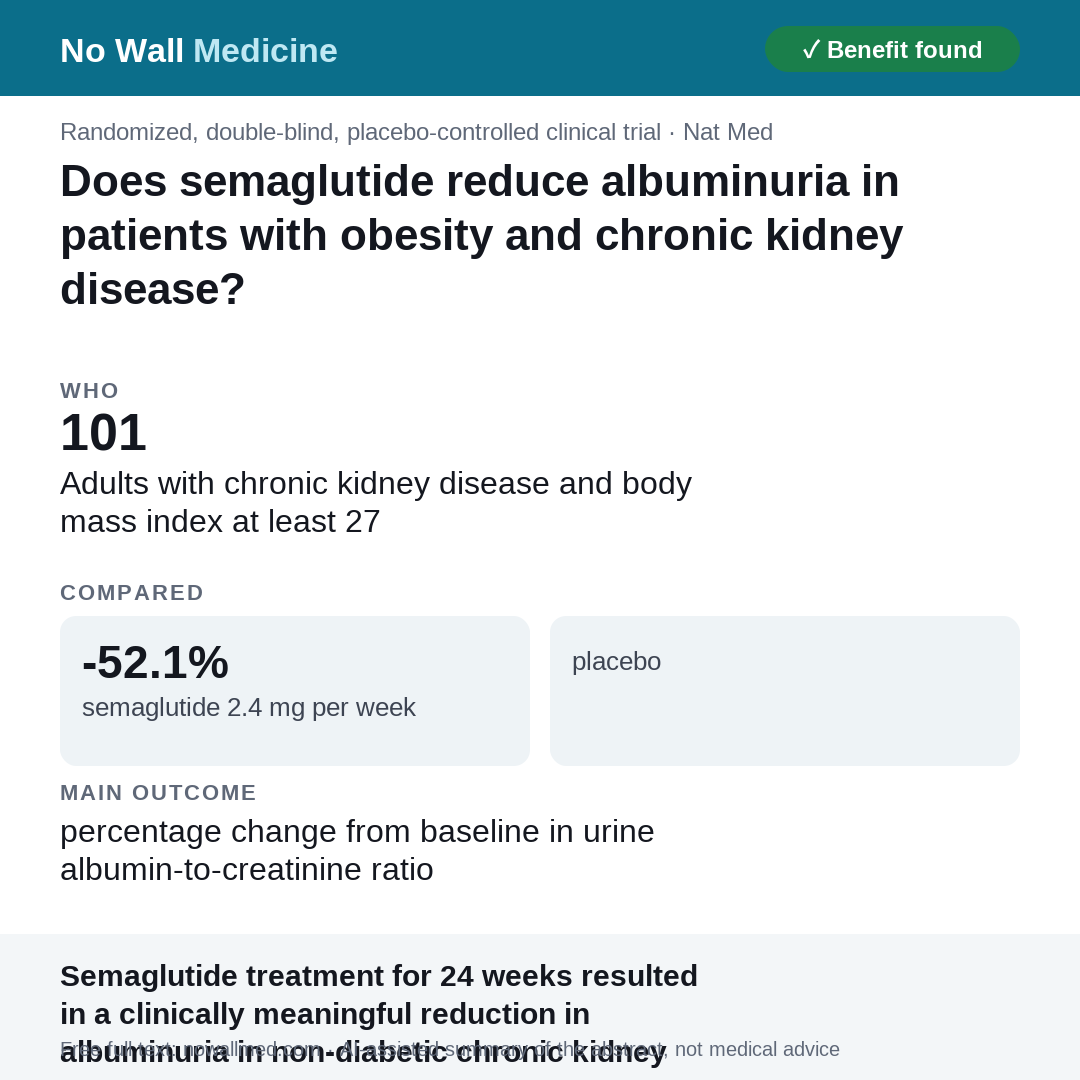
Semaglutide in patients with overweight or obesity and chronic kidney disease without diabetes: a randomized double-blind placebo-controlled clinical trial
Randomized, double-blind, placebo-controlled clinical trialBenefit found
Does semaglutide reduce albuminuria in patients with obesity and chronic kidney disease?
Who
101
Adults with chronic kidney disease and body mass index at least 27
Compared
-52.1%semaglutide 2.4 mg per week
placebo
Main outcome
percentage change from baseline in urine albumin-to-creatinine ratio
Result: -52.1% (95% confidence interval -65.5, -33.4)
Bottom line: Semaglutide treatment for 24 weeks resulted in a clinically meaningful reduction in albuminuria in non-diabetic chronic kidney disease patients.
Nat Med · 2024-10-25Download image
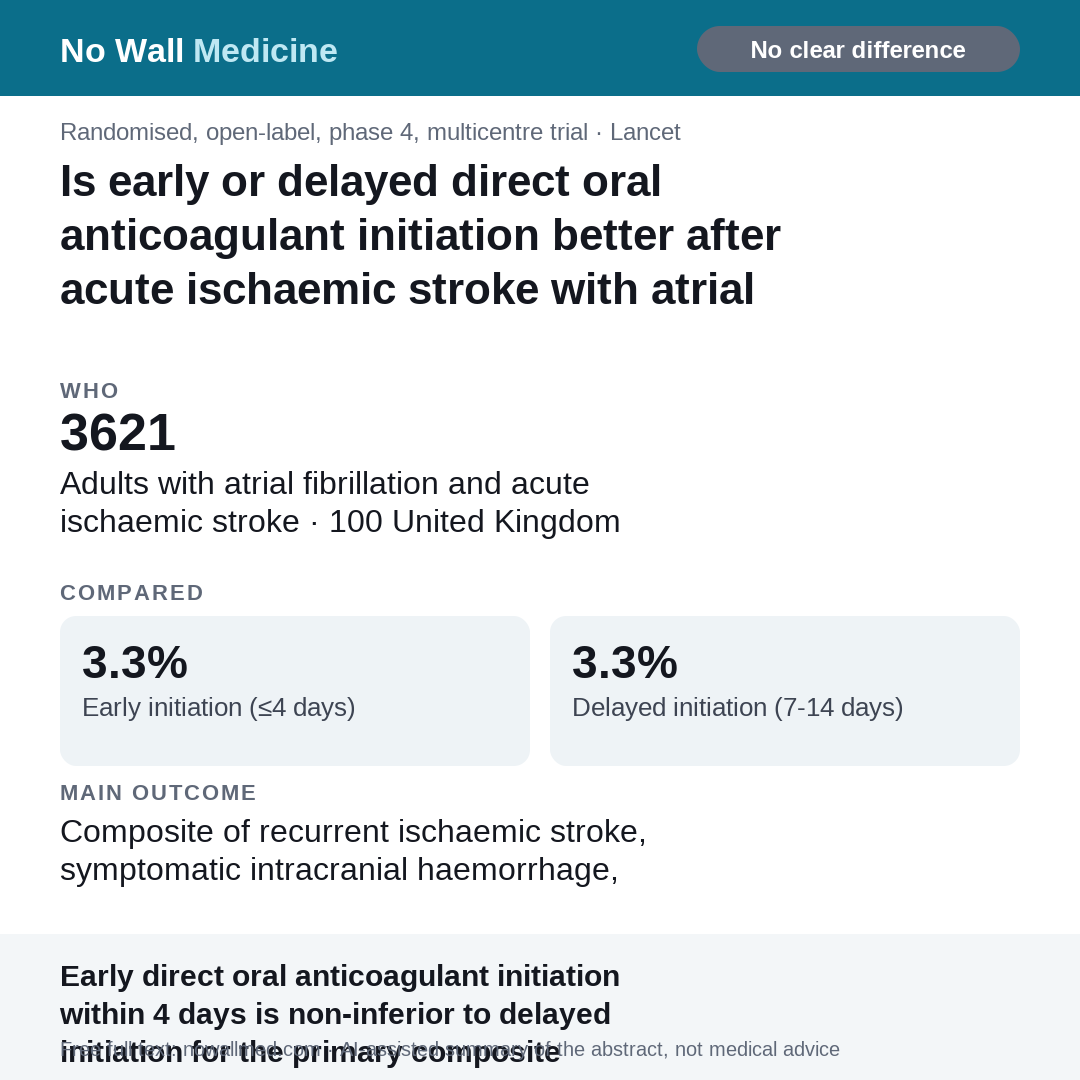
Optimal timing of anticoagulation after acute ischaemic stroke with atrial fibrillation (OPTIMAS): a multicentre, blinded-endpoint, phase 4, randomised controlled trial
Randomised, open-label, phase 4, multicentre trialNo clear difference
Is early or delayed direct oral anticoagulant initiation better after acute ischaemic stroke with atrial fibrillation?
Who
3621
Adults with atrial fibrillation and acute ischaemic stroke · 100 United Kingdom hospitals
Compared
3.3%Early initiation (≤4 days)
3.3%Delayed initiation (7-14 days)
Main outcome
Composite of recurrent ischaemic stroke, symptomatic intracranial haemorrhage, unclassifiable stroke, or systemic embolism
Result: adjusted risk difference 0.000 (95% CI -0.011 to 0.012)
Bottom line: Early direct oral anticoagulant initiation within 4 days is non-inferior to delayed initiation for the primary composite outcome.
Funded by: British Heart Foundation
Lancet · 2024-10-23Download image
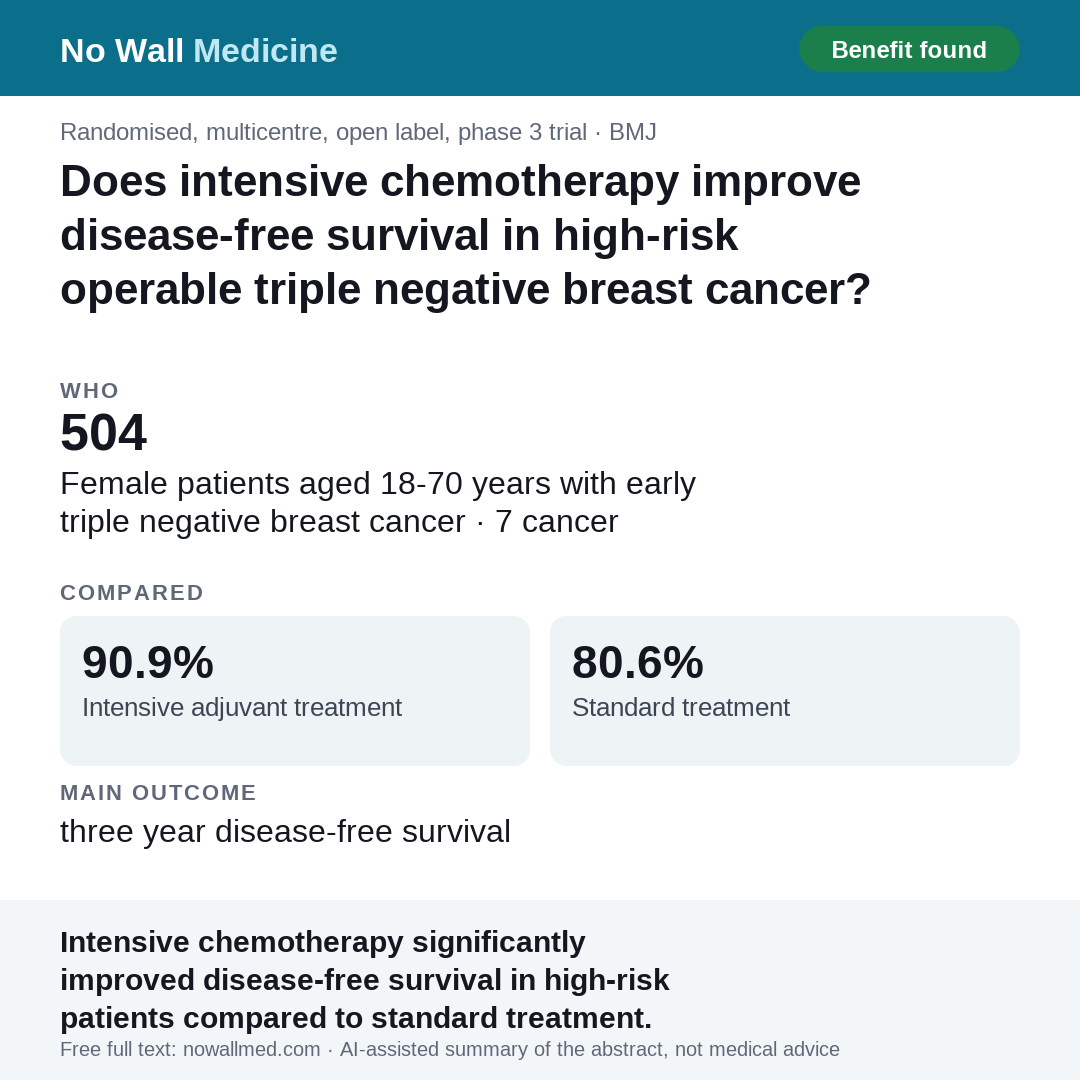
Intensive chemotherapy versus standard chemotherapy among patients with high risk, operable, triple negative breast cancer based on integrated mRNA-lncRNA signature (BCTOP-T-A01): randomised, multicentre, phase 3 trial
Randomised, multicentre, open label, phase 3 trialBenefit found
Does intensive chemotherapy improve disease-free survival in high-risk operable triple negative breast cancer?
Who
504
Female patients aged 18-70 years with early triple negative breast cancer · 7 cancer centres in China
Compared
90.9%Intensive adjuvant treatment
80.6%Standard treatment
Main outcome
three year disease-free survival
Result: hazard ratio 0.51, 95% confidence interval (CI) 0.28 to 0.95
Bottom line: Intensive chemotherapy significantly improved disease-free survival in high-risk patients compared to standard treatment.
BMJ · 2024-10-23Download image
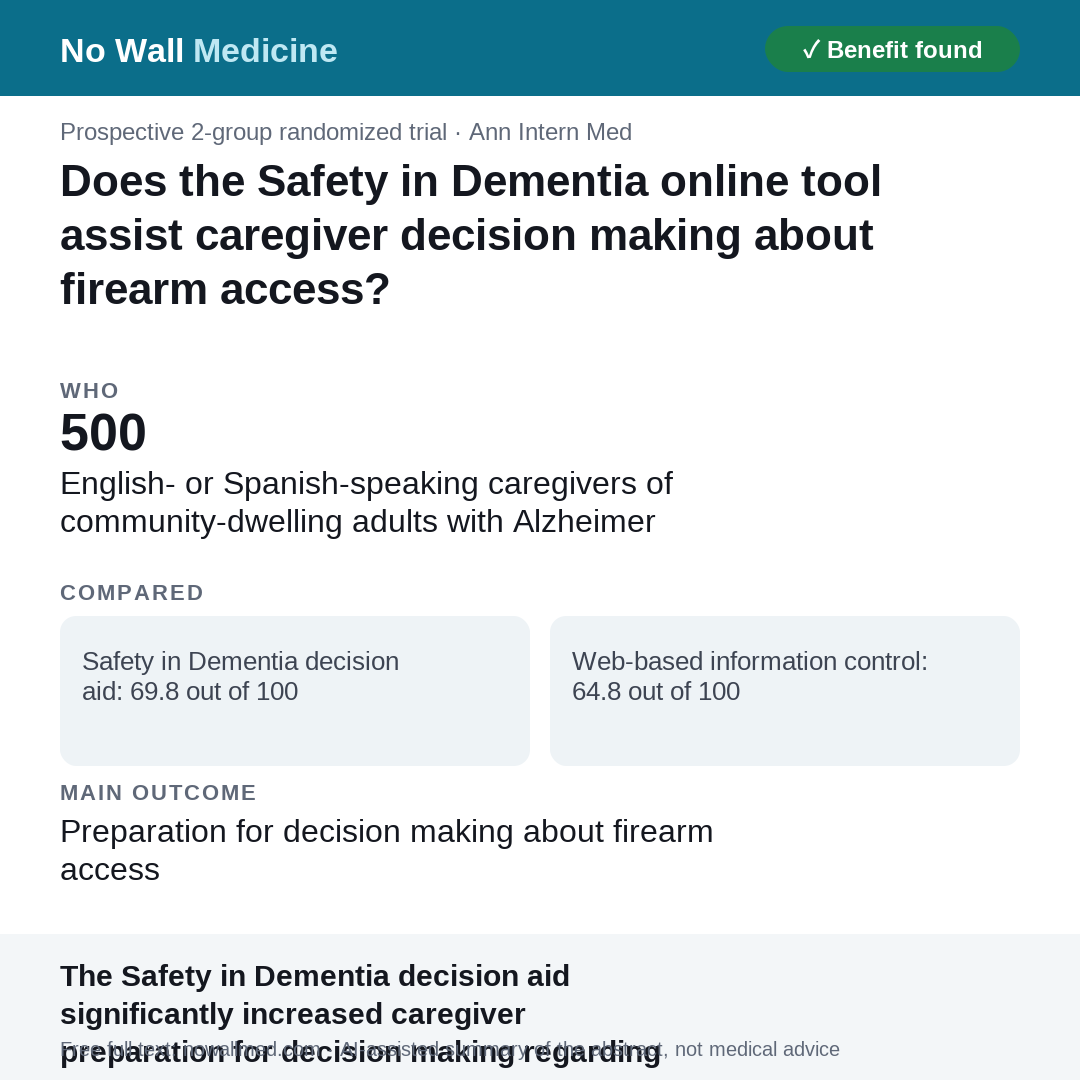
The Effect of the "Safety in Dementia" Online Tool to Assist Decision Making for Caregivers of Persons With Dementia and Access to Firearms : A Randomized Trial
Prospective 2-group randomized trialBenefit found
Does the Safety in Dementia online tool assist caregiver decision making about firearm access?
Who
500
English- or Spanish-speaking caregivers of community-dwelling adults with Alzheimer disease and related dementias · United States
Compared
Safety in Dementia decision aid: 69.8 out of 100
Web-based information control: 64.8 out of 100
Main outcome
Preparation for decision making about firearm access
Result: mean difference, 4.80 (95% CI, 0.53 to 9.07)
Bottom line: The Safety in Dementia decision aid significantly increased caregiver preparation for decision making regarding firearm access.
Limitation: The results may not be generalizable to non-English-speaking populations.
Funded by: National Institute on Aging, National Institutes of Health
Ann Intern Med · 2024-10-22Download image
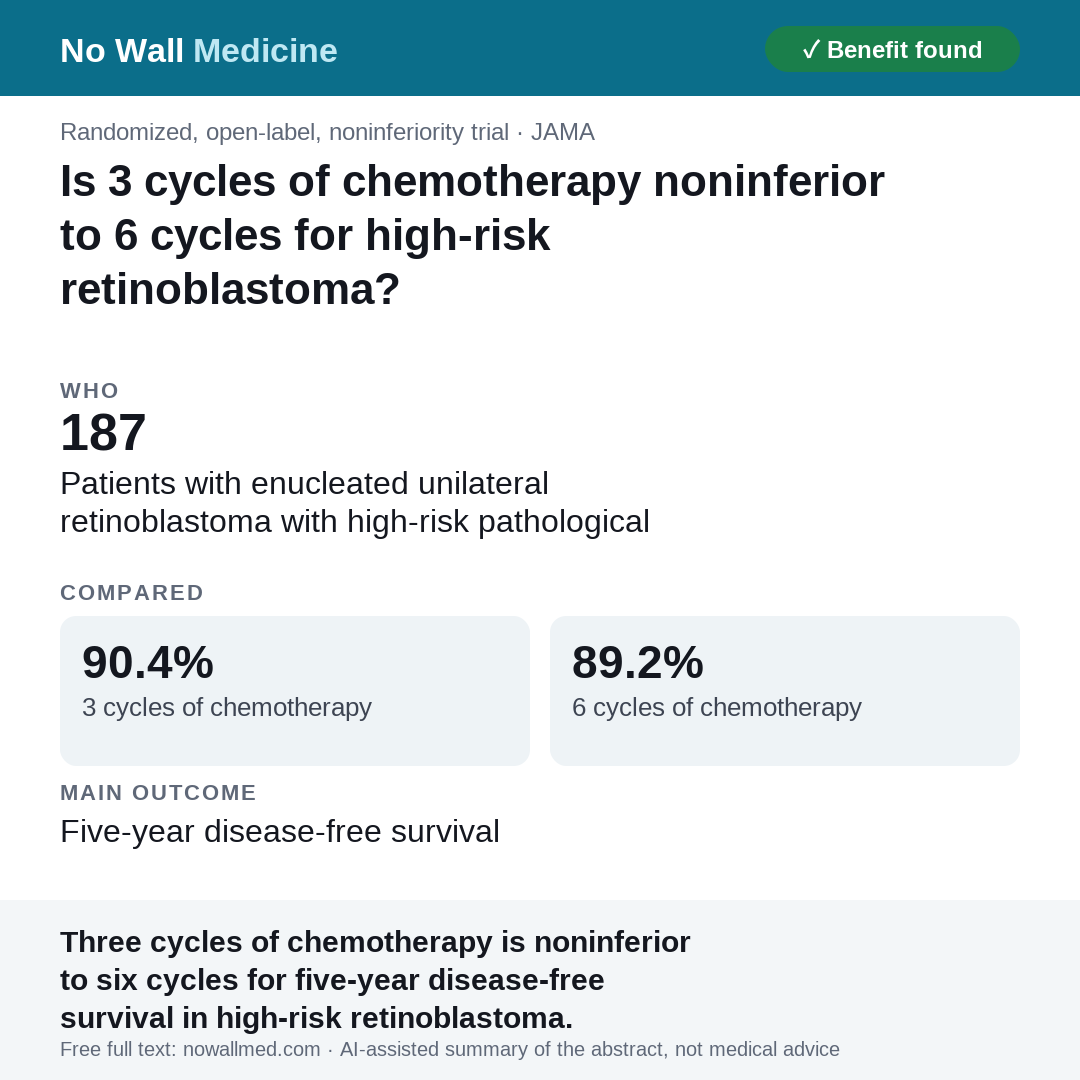
Three vs 6 Cycles of Chemotherapy for High-Risk Retinoblastoma: A Randomized Clinical Trial
Randomized, open-label, noninferiority trialBenefit found
Is 3 cycles of chemotherapy noninferior to 6 cycles for high-risk retinoblastoma?
Who
187
Patients with enucleated unilateral retinoblastoma with high-risk pathological features · 2 premier eye centers in China
Compared
90.4%3 cycles of chemotherapy
89.2%6 cycles of chemotherapy
Main outcome
Five-year disease-free survival
Result: difference, 1.2% (95% CI, -7.5% to 9.8%)
Bottom line: Three cycles of chemotherapy is noninferior to six cycles for five-year disease-free survival in high-risk retinoblastoma.
JAMA · 2024-10-21Download image
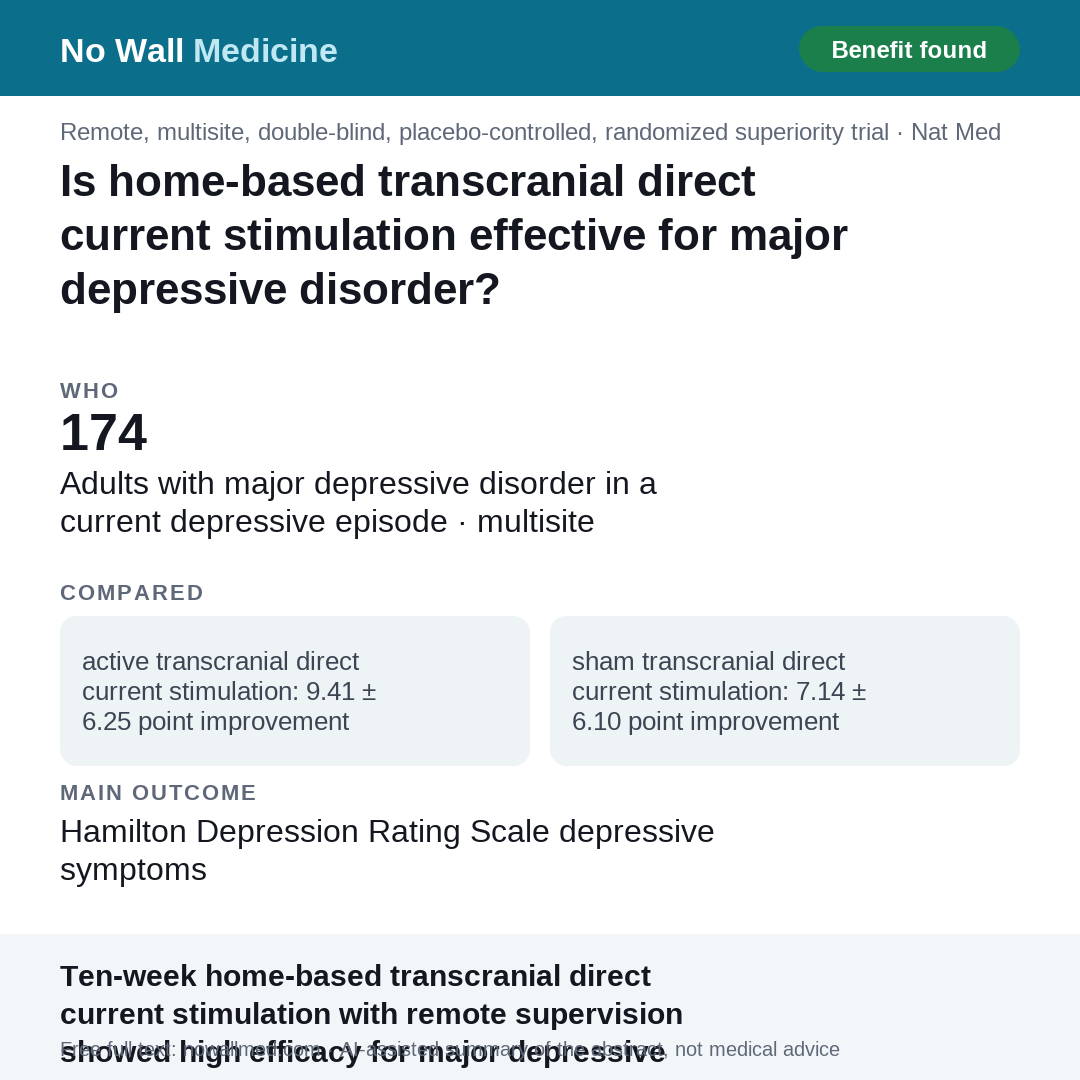
Home-based transcranial direct current stimulation treatment for major depressive disorder: a fully remote phase 2 randomized sham-controlled trial
Remote, multisite, double-blind, placebo-controlled, randomized superiority trialBenefit found
Is home-based transcranial direct current stimulation effective for major depressive disorder?
Who
174
Adults with major depressive disorder in a current depressive episode · multisite
Compared
active transcranial direct current stimulation: 9.41 ± 6.25 point improvement
sham transcranial direct current stimulation: 7.14 ± 6.10 point improvement
Main outcome
Hamilton Depression Rating Scale depressive symptoms
Result: 95% confidence interval = 0.51-4.01, P = 0.012
Bottom line: Ten-week home-based transcranial direct current stimulation with remote supervision showed high efficacy for major depressive disorder.
Nat Med · 2024-10-21Download image
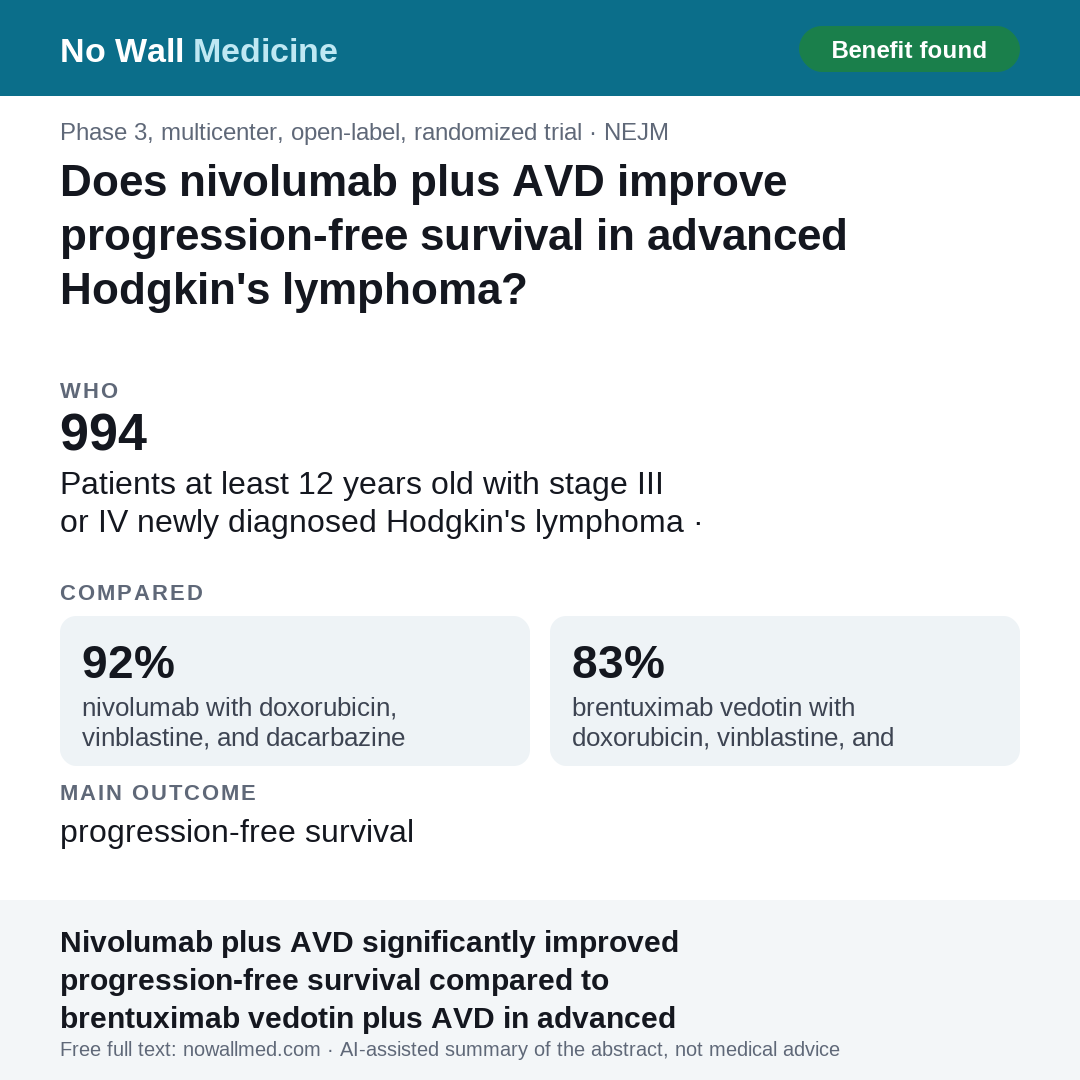
Nivolumab+AVD in Advanced-Stage Classic Hodgkin's Lymphoma
Phase 3, multicenter, open-label, randomized trialBenefit found
Does nivolumab plus AVD improve progression-free survival in advanced Hodgkin's lymphoma?
Who
994
Patients at least 12 years old with stage III or IV newly diagnosed Hodgkin's lymphoma · multicenter
Compared
92%nivolumab with doxorubicin, vinblastine, and dacarbazine (95% CI, 89 to 94)
83%brentuximab vedotin with doxorubicin, vinblastine, and dacarbazine (95% CI, 79 to 86)
Main outcome
progression-free survival
Result: hazard ratio 0.45 (95% CI, 0.30 to 0.65)
Bottom line: Nivolumab plus AVD significantly improved progression-free survival compared to brentuximab vedotin plus AVD in advanced Hodgkin's lymphoma.
Limitation: short follow-up time
Funded by: National Cancer Institute of the National Institutes of Health
NEJM · 2024-10-16Download image
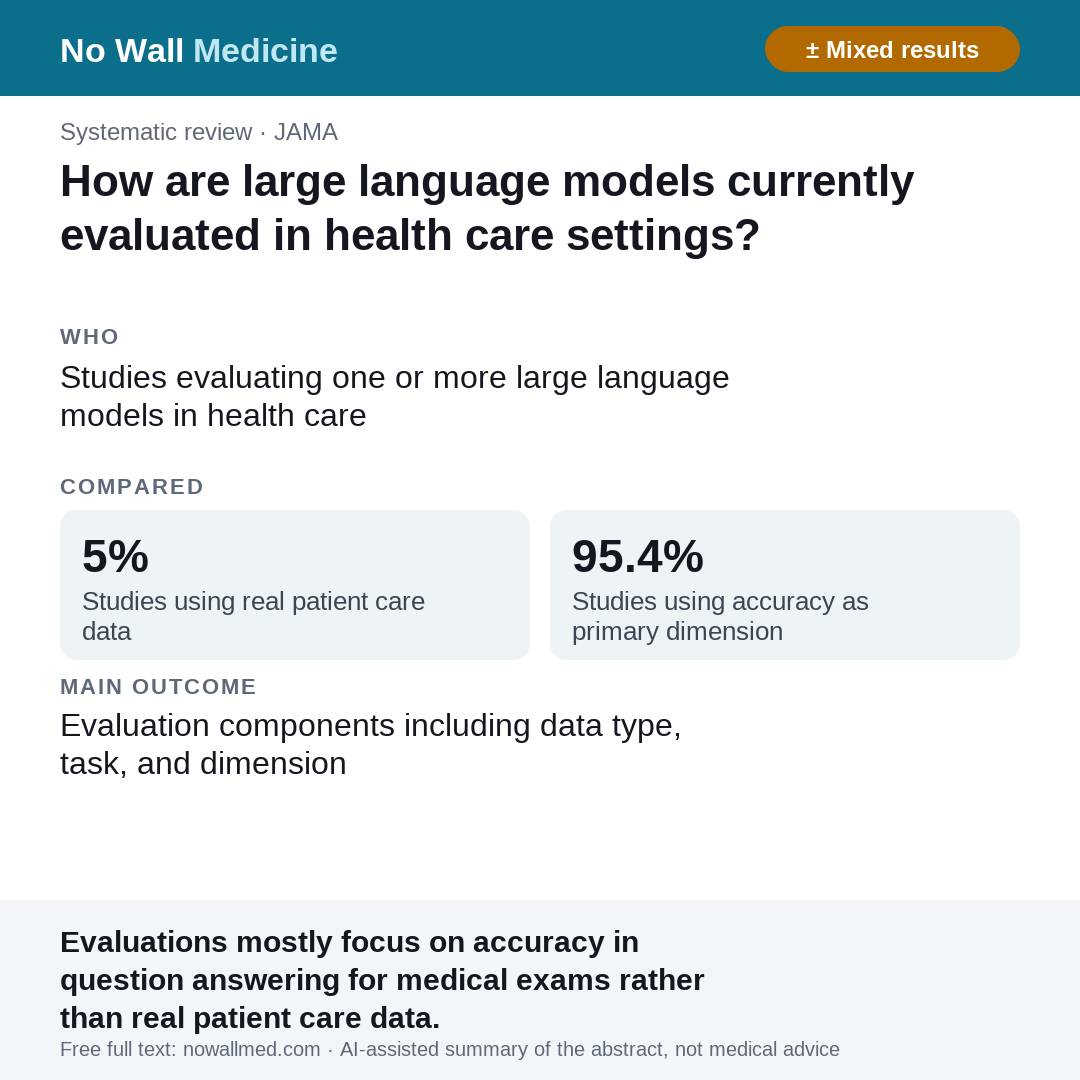
Testing and Evaluation of Health Care Applications of Large Language Models: A Systematic Review
Systematic reviewMixed results
How are large language models currently evaluated in health care settings?
Who
519
Studies evaluating one or more large language models in health care
Compared
5%Studies using real patient care data
95.4%Studies using accuracy as primary dimension
Main outcome
Evaluation components including data type, task, and dimension
Bottom line: Evaluations mostly focus on accuracy in question answering for medical exams rather than real patient care data.
JAMA · 2024-10-15Download image
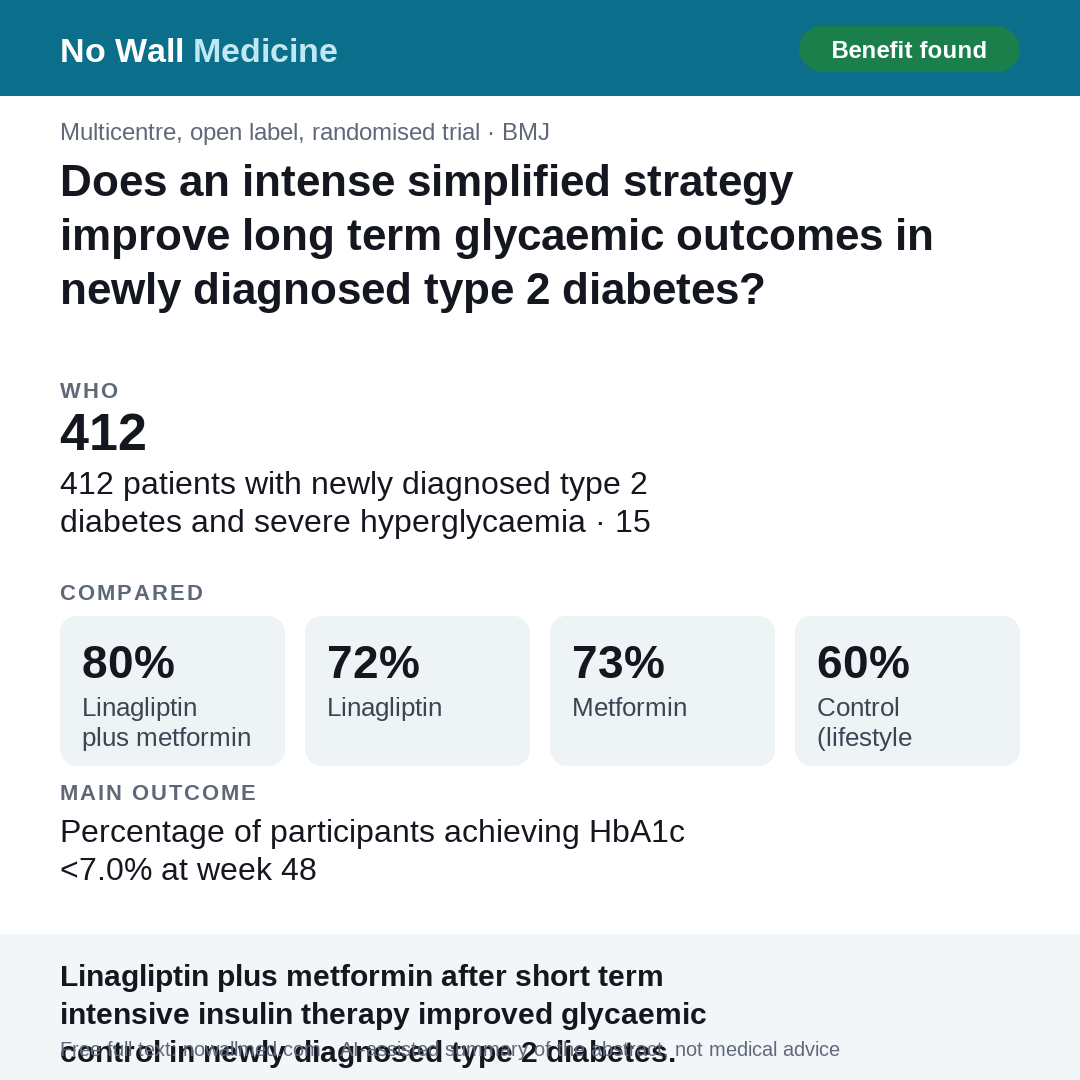
Intense simplified strategy for newly diagnosed type 2 diabetes in patients with severe hyperglycaemia: multicentre, open label, randomised trial
Multicentre, open label, randomised trialBenefit found
Does an intense simplified strategy improve long term glycaemic outcomes in newly diagnosed type 2 diabetes?
Who
412
412 patients with newly diagnosed type 2 diabetes and severe hyperglycaemia · 15 hospitals in China
Compared
80%Linagliptin plus metformin (78/97)
72%Linagliptin (63/88)
73%Metformin (69/95)
60%Control (lifestyle modification) (56/93)
Main outcome
Percentage of participants achieving HbA1c <7.0% at week 48
Result: odds ratio 2.78 (95% confidence interval 1.37 to 5.65)
Bottom line: Linagliptin plus metformin after short term intensive insulin therapy improved glycaemic control in newly diagnosed type 2 diabetes.
BMJ · 2024-10-15Download image
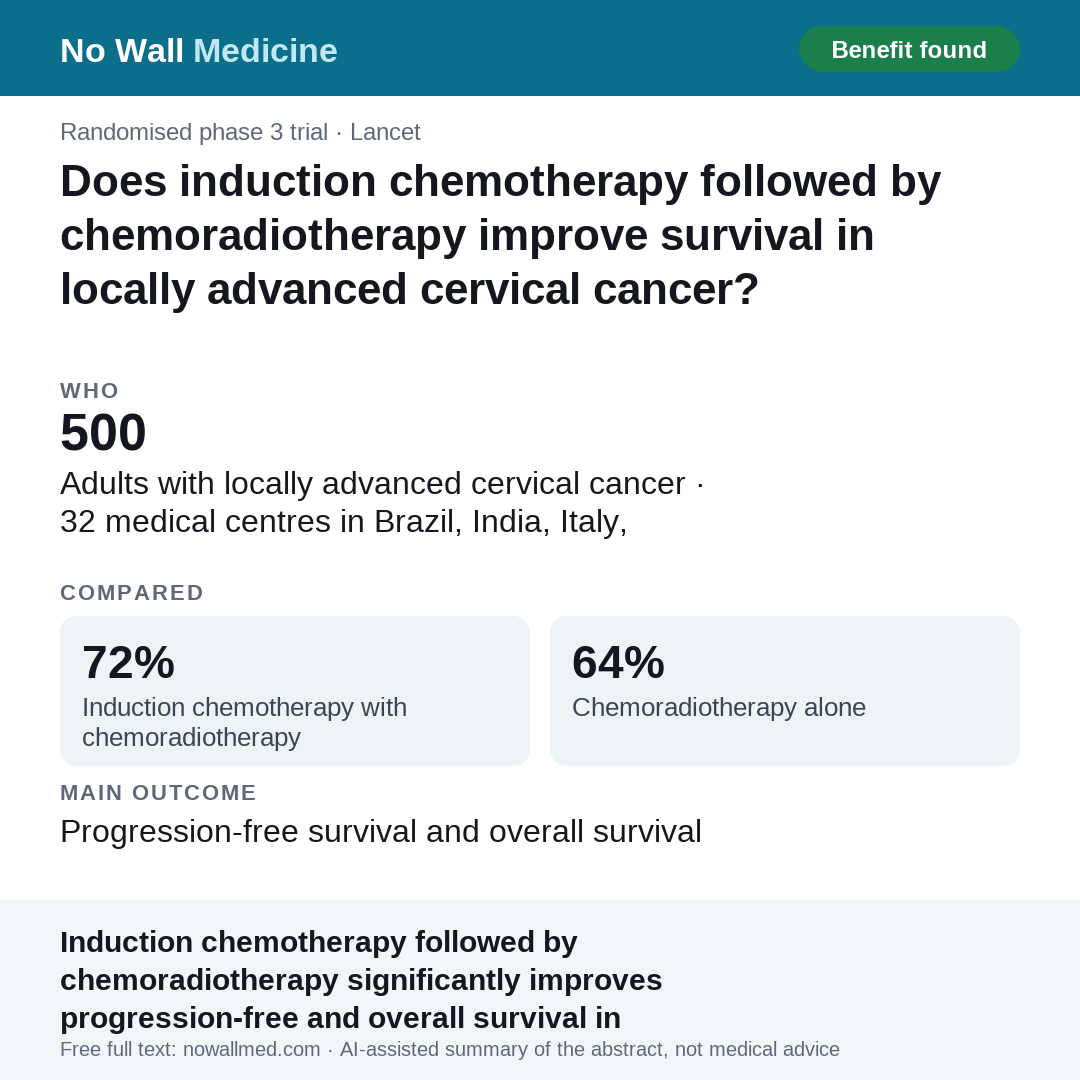
Induction chemotherapy followed by standard chemoradiotherapy versus standard chemoradiotherapy alone in patients with locally advanced cervical cancer (GCIG INTERLACE): an international, multicentre, randomised phase 3 trial
Randomised phase 3 trialBenefit found
Does induction chemotherapy followed by chemoradiotherapy improve survival in locally advanced cervical cancer?
Who
500
Adults with locally advanced cervical cancer · 32 medical centres in Brazil, India, Italy, Mexico, and UK
Compared
72%Induction chemotherapy with chemoradiotherapy (5-year progression-free survival)
64%Chemoradiotherapy alone (5-year progression-free survival)
Main outcome
Progression-free survival and overall survival
Result: hazard ratio 0·65 (95% CI 0·46-0·91)
Bottom line: Induction chemotherapy followed by chemoradiotherapy significantly improves progression-free and overall survival in locally advanced cervical cancer.
Funded by: Cancer Research UK and University College London
Lancet · 2024-10-14Download image
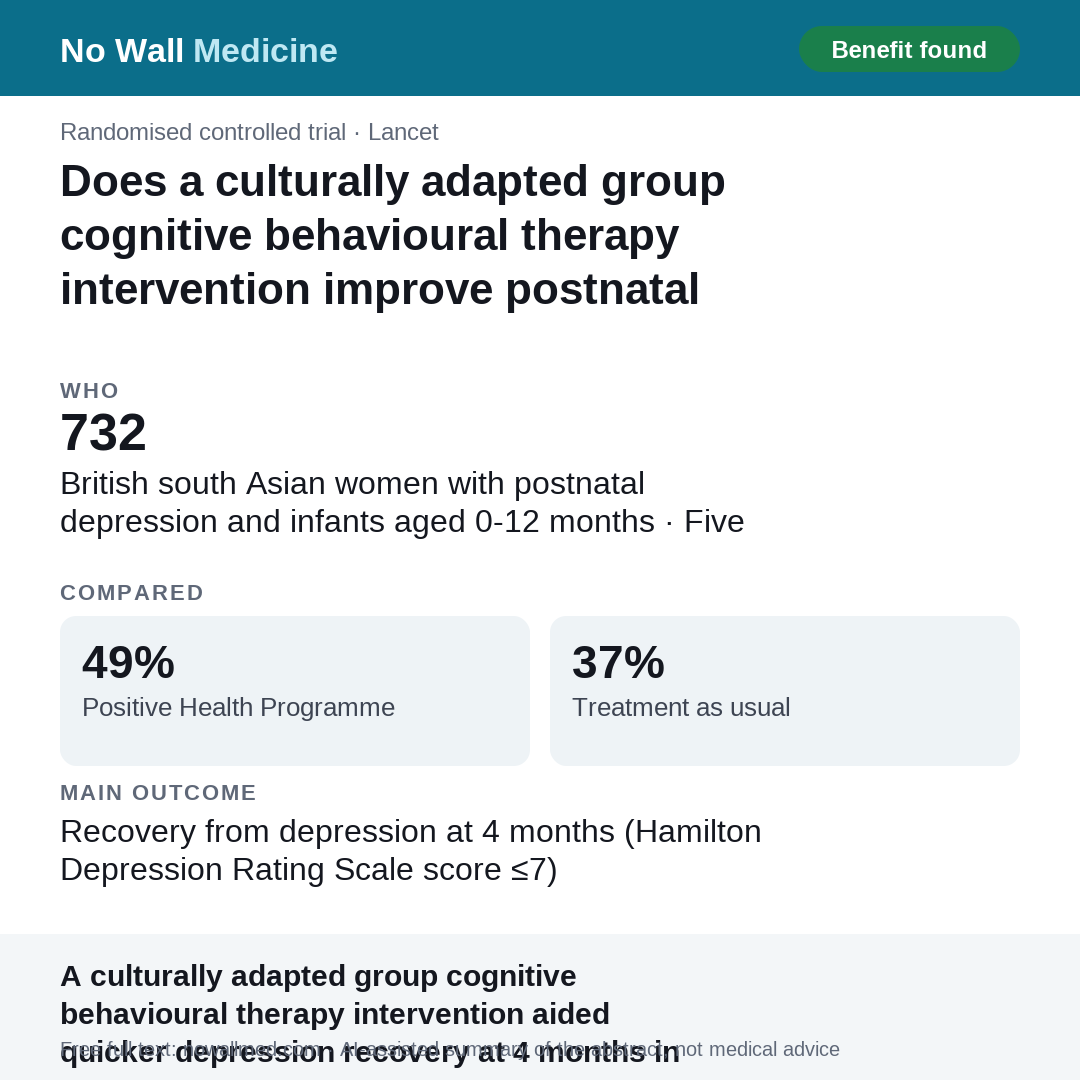
Efficacy of a culturally adapted, cognitive behavioural therapy-based intervention for postnatal depression in British south Asian women (ROSHNI-2): a multicentre, randomised controlled trial
Randomised controlled trialBenefit found
Does a culturally adapted group cognitive behavioural therapy intervention improve postnatal depression recovery?
Who
732
British south Asian women with postnatal depression and infants aged 0-12 months · Five centres across the United Kingdom
Compared
49%Positive Health Programme (138/281)
37%Treatment as usual (105/281)
Main outcome
Recovery from depression at 4 months (Hamilton Depression Rating Scale score ≤7)
Result: adjusted odds ratio 1.97 (95% CI 1.26-3.10)
Bottom line: A culturally adapted group cognitive behavioural therapy intervention aided quicker depression recovery at 4 months in British south Asian women.
Funded by: UK National Institute for Health and Care Research
Lancet · 2024-10-13Download image
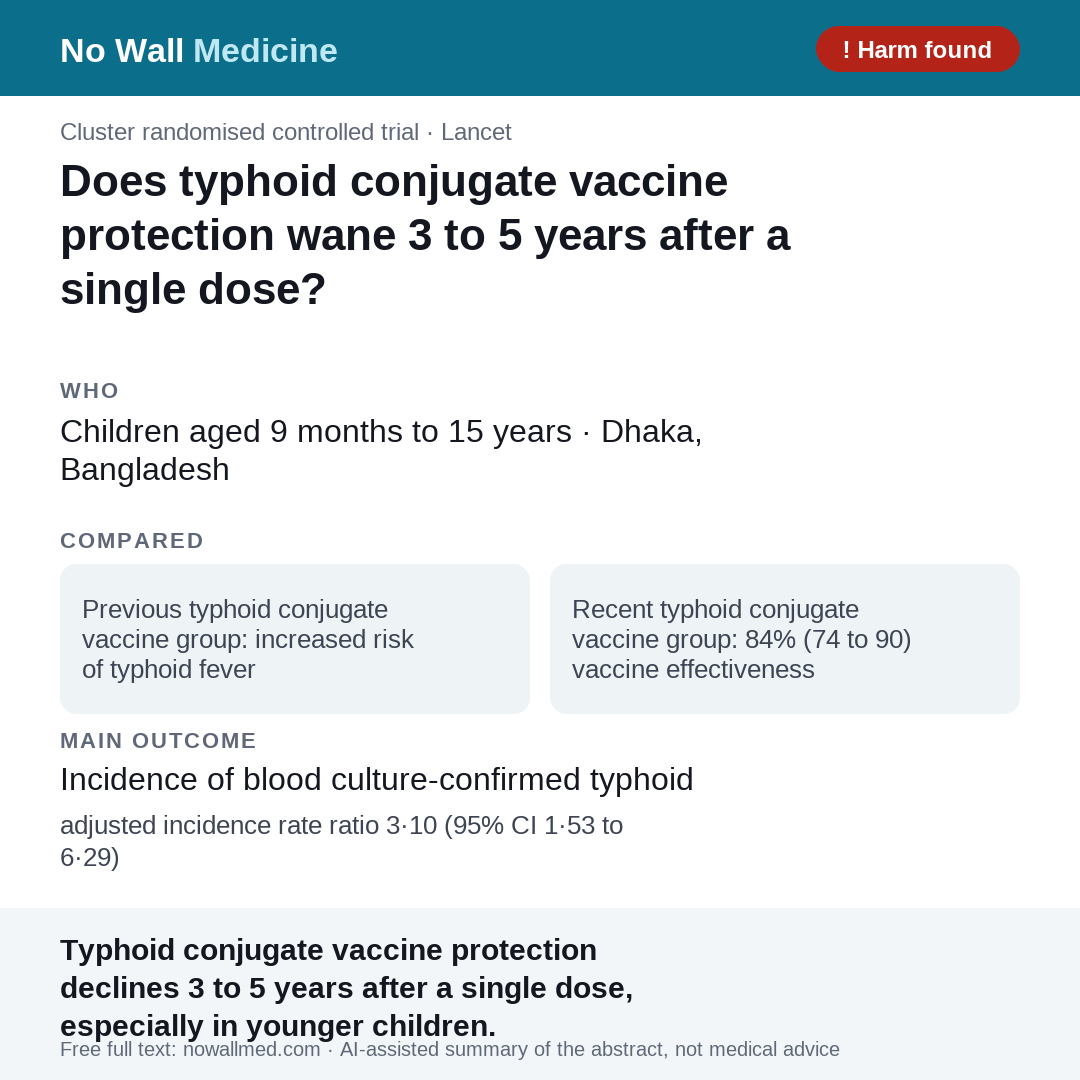
5-year vaccine protection following a single dose of Vi-tetanus toxoid conjugate vaccine in Bangladeshi children (TyVOID): a cluster randomised trial
Cluster randomised controlled trialHarm found
Does typhoid conjugate vaccine protection wane 3 to 5 years after a single dose?
Who
Children aged 9 months to 15 years · Dhaka, Bangladesh
Compared
Previous typhoid conjugate vaccine group: increased risk of typhoid fever
Recent typhoid conjugate vaccine group: 84% (74 to 90) vaccine effectiveness
Main outcome
Incidence of blood culture-confirmed typhoid
Result: adjusted incidence rate ratio 3·10 (95% CI 1·53 to 6·29)
Bottom line: Typhoid conjugate vaccine protection declines 3 to 5 years after a single dose, especially in younger children.
Funded by: Bill & Melinda Gates Foundation
Lancet · 2024-10-13Download image
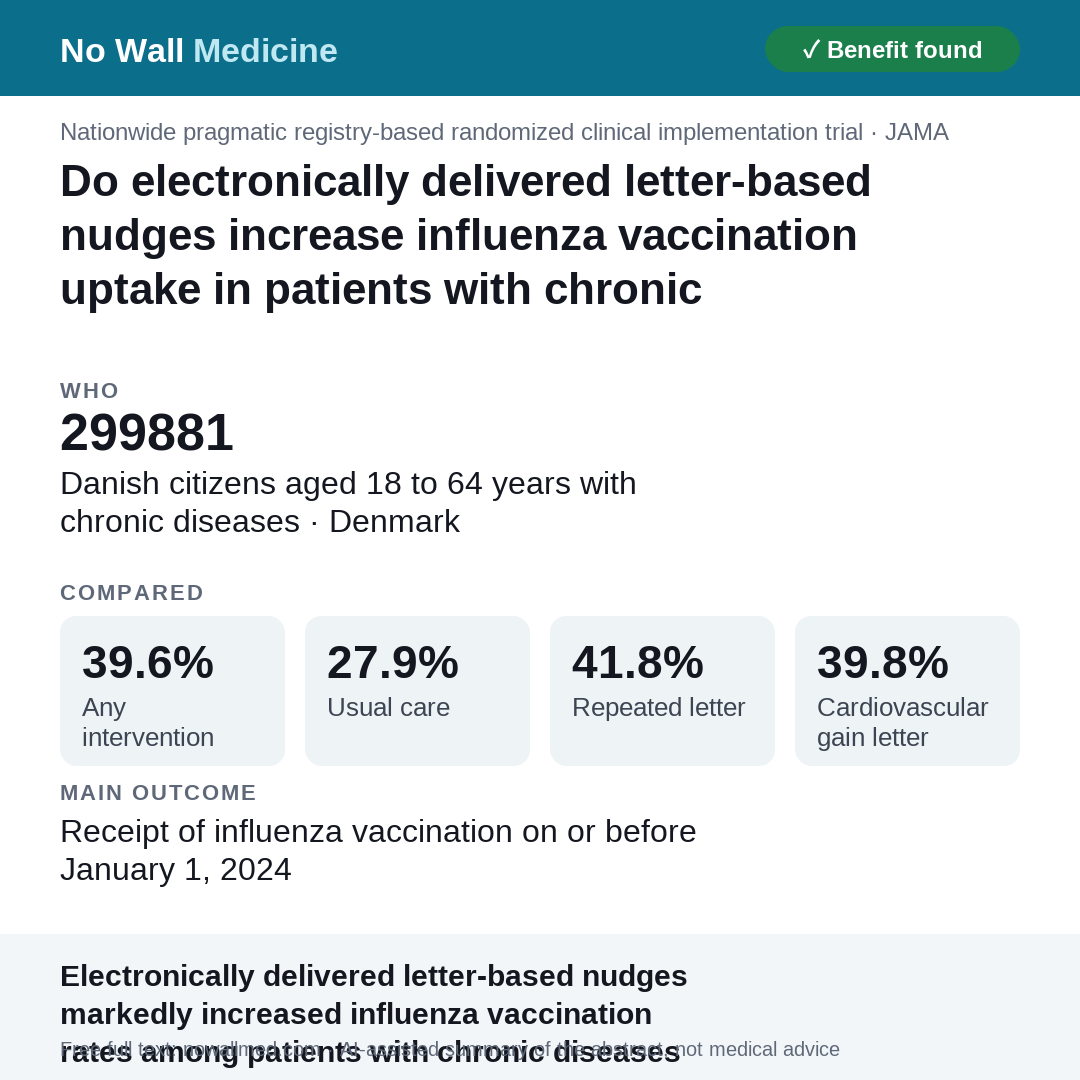
Electronic Nudges to Increase Influenza Vaccination in Patients With Chronic Diseases: A Randomized Clinical Trial
Nationwide pragmatic registry-based randomized clinical implementation trialBenefit found
Do electronically delivered letter-based nudges increase influenza vaccination uptake in patients with chronic diseases?
Who
299881
Danish citizens aged 18 to 64 years with chronic diseases · Denmark
Compared
39.6%Any intervention letter
27.9%Usual care
41.8%Repeated letter
39.8%Cardiovascular gain letter
Main outcome
Receipt of influenza vaccination on or before January 1, 2024
Result: difference, 11.7 percentage points; 99.29% CI, 11.2-12.2 percentage points
Bottom line: Electronically delivered letter-based nudges markedly increased influenza vaccination rates among patients with chronic diseases compared to usual care.
JAMA · 2024-10-11Download image
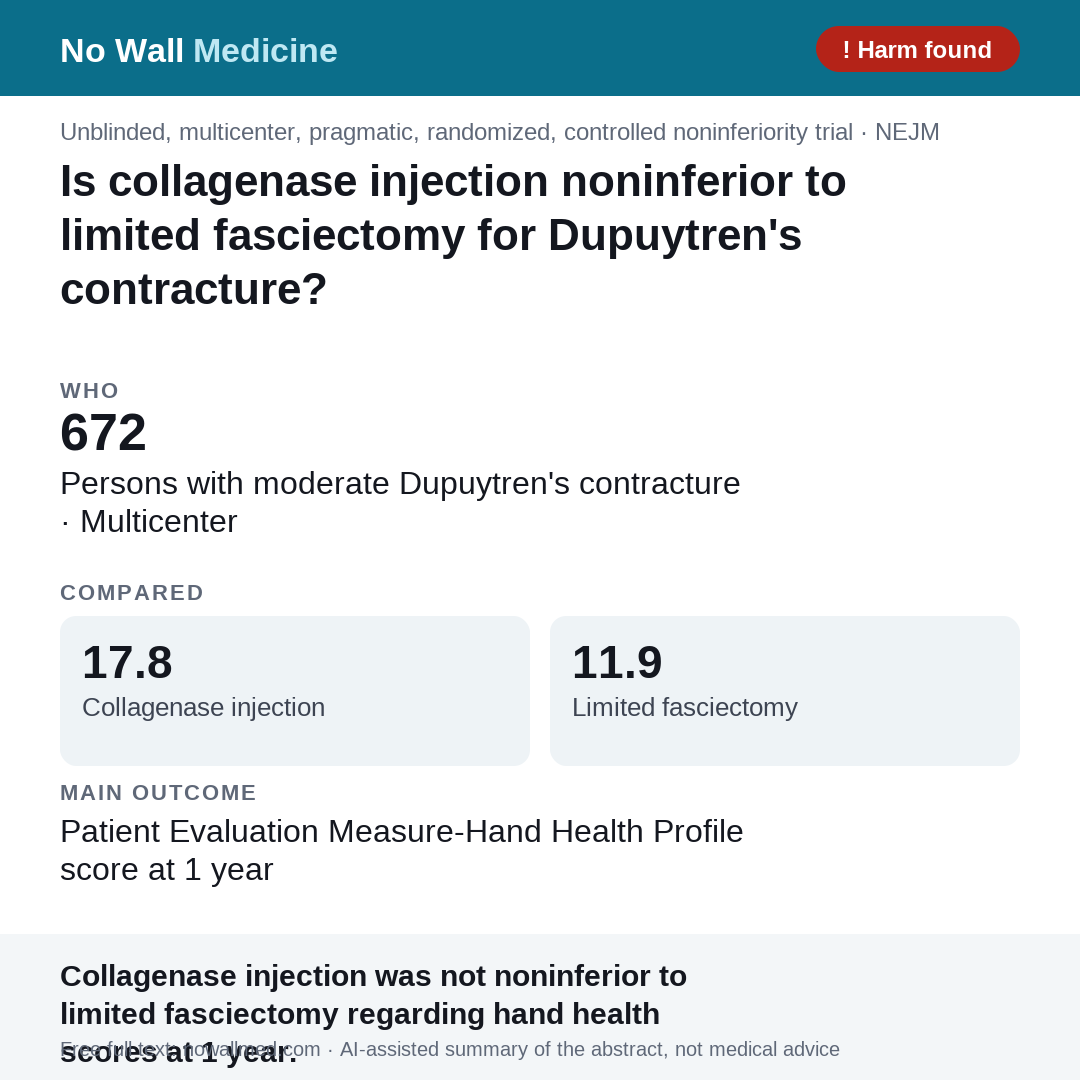
Collagenase Injection versus Limited Fasciectomy for Dupuytren's Contracture
Unblinded, multicenter, pragmatic, randomized, controlled noninferiority trialHarm found
Is collagenase injection noninferior to limited fasciectomy for Dupuytren's contracture?
Who
672
Persons with moderate Dupuytren's contracture · Multicenter
Compared
17.8Collagenase injection
11.9Limited fasciectomy
Main outcome
Patient Evaluation Measure-Hand Health Profile score at 1 year
Result: estimated difference, 5.9 points; 95% confidence interval [CI], 3.1 to 8.8
Bottom line: Collagenase injection was not noninferior to limited fasciectomy regarding hand health scores at 1 year.
Funded by: National Institute for Health and Care Research
NEJM · 2024-10-09Download image
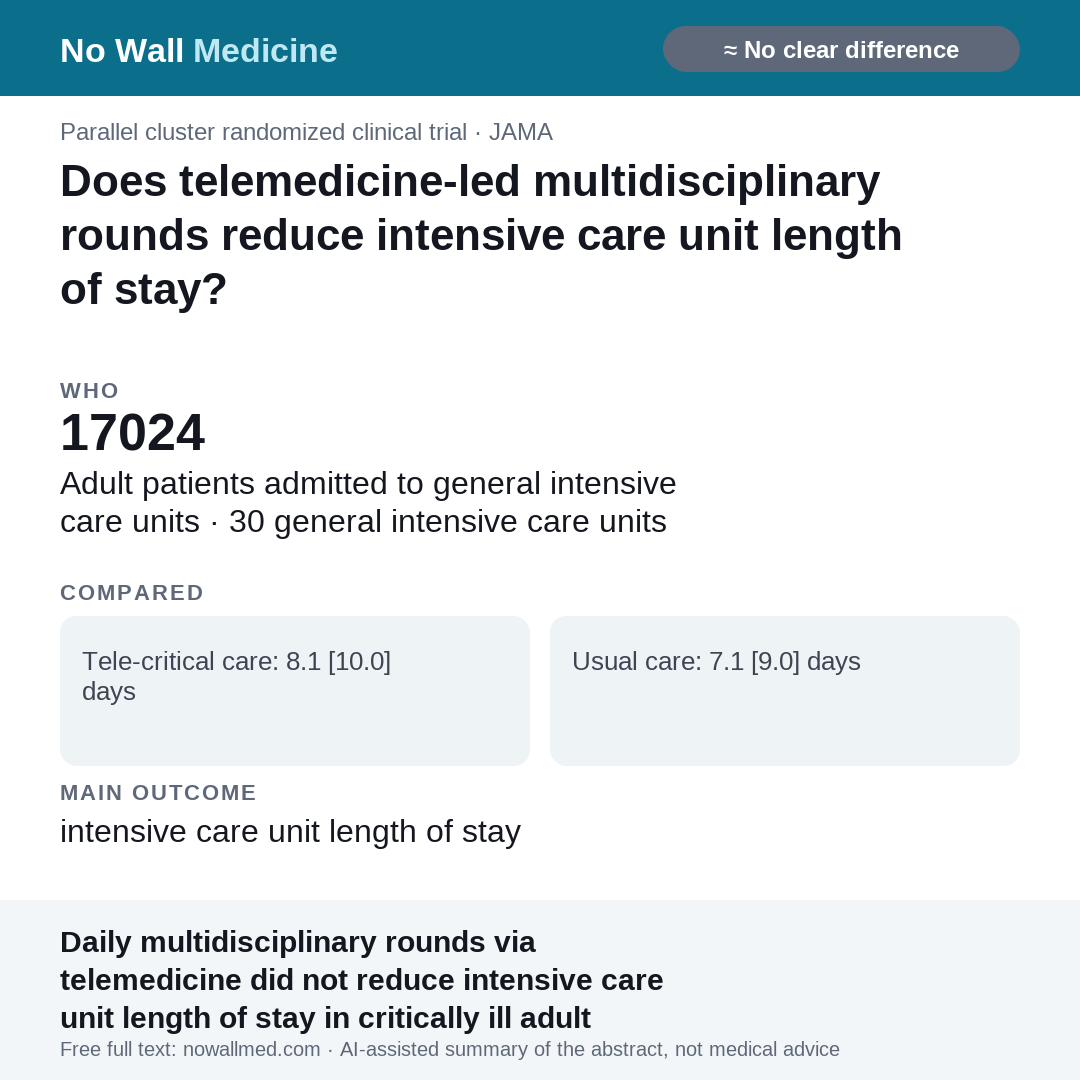
Effect of Tele-ICU on Clinical Outcomes of Critically Ill Patients: The TELESCOPE Randomized Clinical Trial
Parallel cluster randomized clinical trialNo clear difference
Does telemedicine-led multidisciplinary rounds reduce intensive care unit length of stay?
Who
17024
Adult patients admitted to general intensive care units · 30 general intensive care units in Brazil
Compared
Tele-critical care: 8.1 [10.0] days
Usual care: 7.1 [9.0] days
Main outcome
intensive care unit length of stay
Result: percentage change, 8.2% (95% CI, -5.4% to 23.8%)
Bottom line: Daily multidisciplinary rounds via telemedicine did not reduce intensive care unit length of stay in critically ill adult patients.
JAMA · 2024-10-09Download image
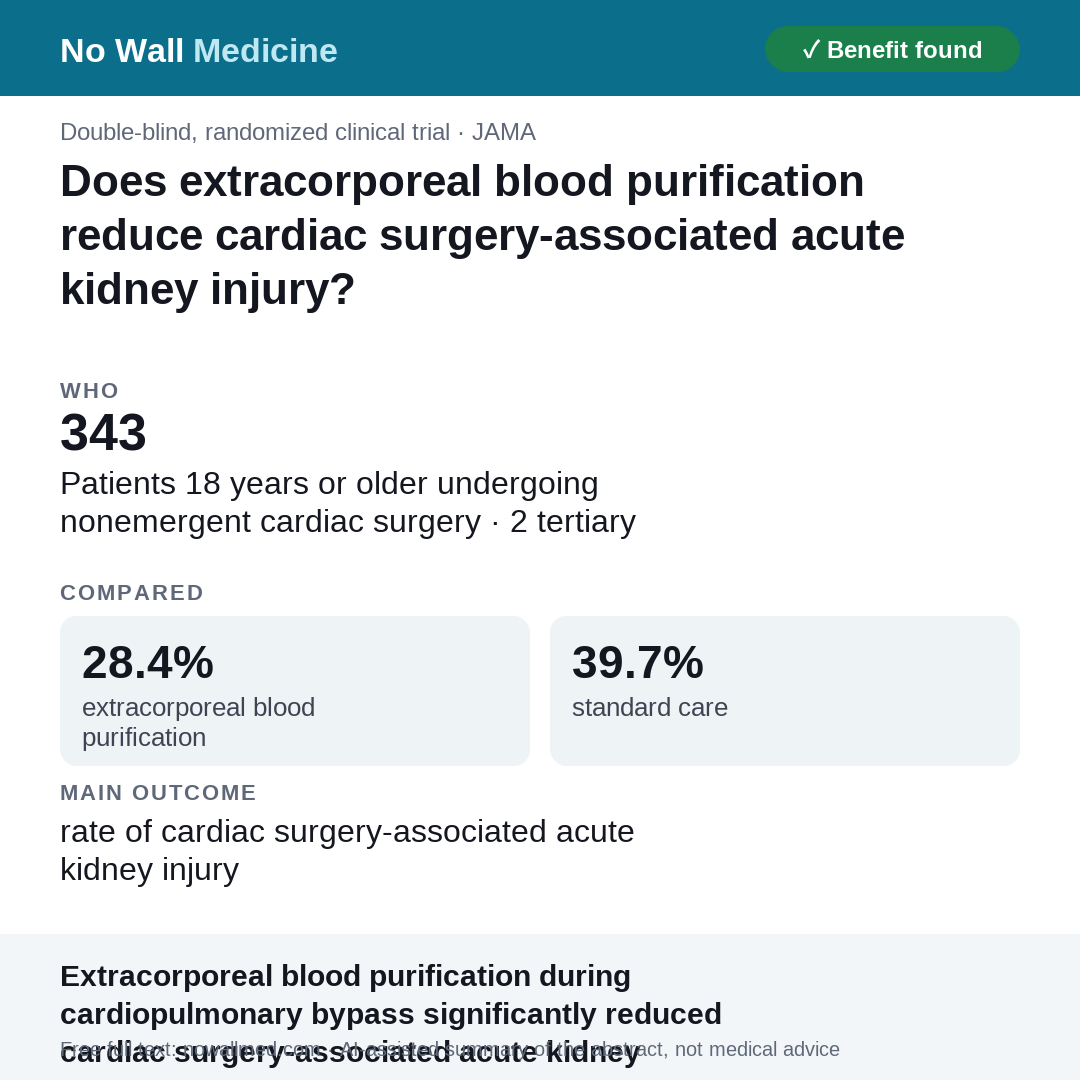
Extracorporeal Blood Purification and Acute Kidney Injury in Cardiac Surgery: The SIRAKI02 Randomized Clinical Trial
Double-blind, randomized clinical trialBenefit found
Does extracorporeal blood purification reduce cardiac surgery-associated acute kidney injury?
Who
343
Patients 18 years or older undergoing nonemergent cardiac surgery · 2 tertiary hospitals in Spain
Compared
28.4%extracorporeal blood purification (95% CI, 21.7%-35.8%)
39.7%standard care (95% CI, 32.3%-47.3%)
Main outcome
rate of cardiac surgery-associated acute kidney injury
Result: adjusted difference of 10.4% (95% CI, 2.3%-18.5%)
Bottom line: Extracorporeal blood purification during cardiopulmonary bypass significantly reduced cardiac surgery-associated acute kidney injury within 7 days.
JAMA · 2024-10-09Download image