Visual abstracts
New randomized trials and meta-analyses from leading journals at a glance: who was studied, what was compared, and what was found. Every paper is free to read in full.
All specialtiesCardiology 4877Oncology 4138Gastroenterology & Hepatology 1942Infectious Disease 3837Neurology 1905Psychiatry & Mental Health 2273Pulmonology 2143Critical Care 1365Endocrinology & Diabetes 2580Pediatrics 2980Surgery 2559Orthopedics & Sports Medicine 931Neurosurgery 537Cardiothoracic & Vascular Surgery 674Plastic & Reconstructive Surgery 591Nephrology 1133Rheumatology 823Hematology 1109Dermatology 621Ophthalmology 543Obstetrics & Gynecology 1686Public & Global Health 1058Radiology & Imaging 648Anesthesiology 986Urology 764ENT (Otolaryngology) 503Emergency Medicine 511Allergy & Immunology 313Geriatrics 981Family Medicine & Primary Care 562Medical Genetics & Genomics 676Pathology & Laboratory Medicine 159Physical Medicine & Rehabilitation 757Palliative Care 444Nutrition 1588Digital Health & AI 2201General Medicine 321
Lobeglitazone improves glycaemic control as add-on therapy to empagliflozin plus metformin in patients with type 2 diabetes mellitus: A double-blind, randomised, placebo-controlled trial
Double-blind, randomised, placebo-controlled trialBenefit found
Does lobeglitazone improve glycaemic control as add-on therapy to empagliflozin plus metformin?
Who
Patients with type 2 diabetes mellitus inadequately controlled with metformin and empagliflozin · Multicentre
Compared
Lobeglitazone 0.5 mg/day: -0.71% (Study 1) and -0.62% (Study 2)
Placebo
Main outcome
Change from baseline in glycated haemoglobin at 24 weeks
Bottom line: Lobeglitazone significantly improved glycaemic control when added to empagliflozin and metformin in type 2 diabetes patients.
Diabetes Obes Metab · 2025-11-14Download image

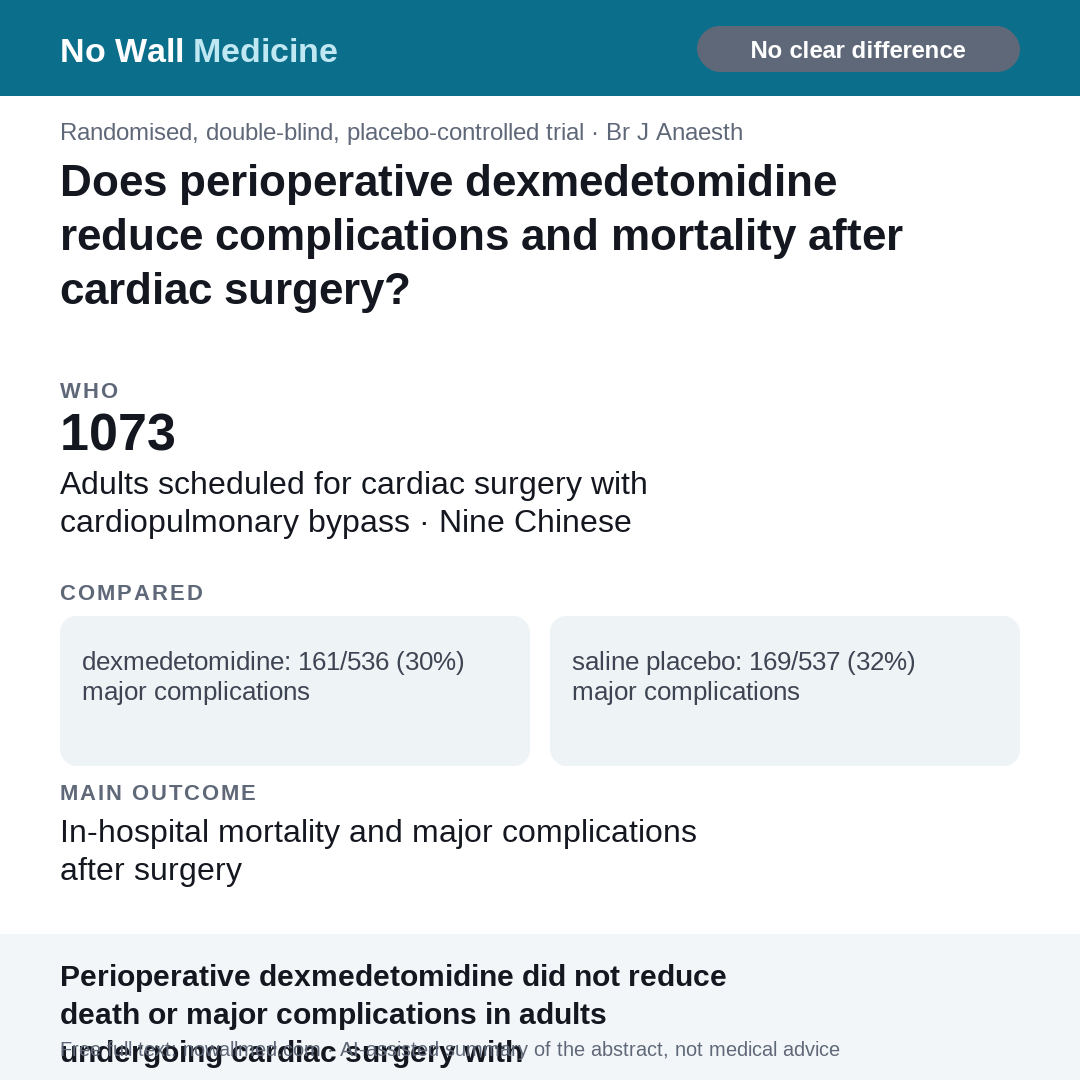
Effects of Dexmedetomidine on Outcomes After Cardiac Surgery (DOCS): a randomised double-blind, placebo-controlled trial
Randomised, double-blind, placebo-controlled trialNo clear difference
Does perioperative dexmedetomidine reduce complications and mortality after cardiac surgery?
Who
1073
Adults scheduled for cardiac surgery with cardiopulmonary bypass · Nine Chinese hospitals
Compared
dexmedetomidine: 161/536 (30%) major complications
saline placebo: 169/537 (32%) major complications
Main outcome
In-hospital mortality and major complications after surgery
Result: relative risk 0.93 (95% confidence interval 0.72-1.21)
Bottom line: Perioperative dexmedetomidine did not reduce death or major complications in adults undergoing cardiac surgery with cardiopulmonary bypass.
Br J Anaesth · 2025-11-14Download image
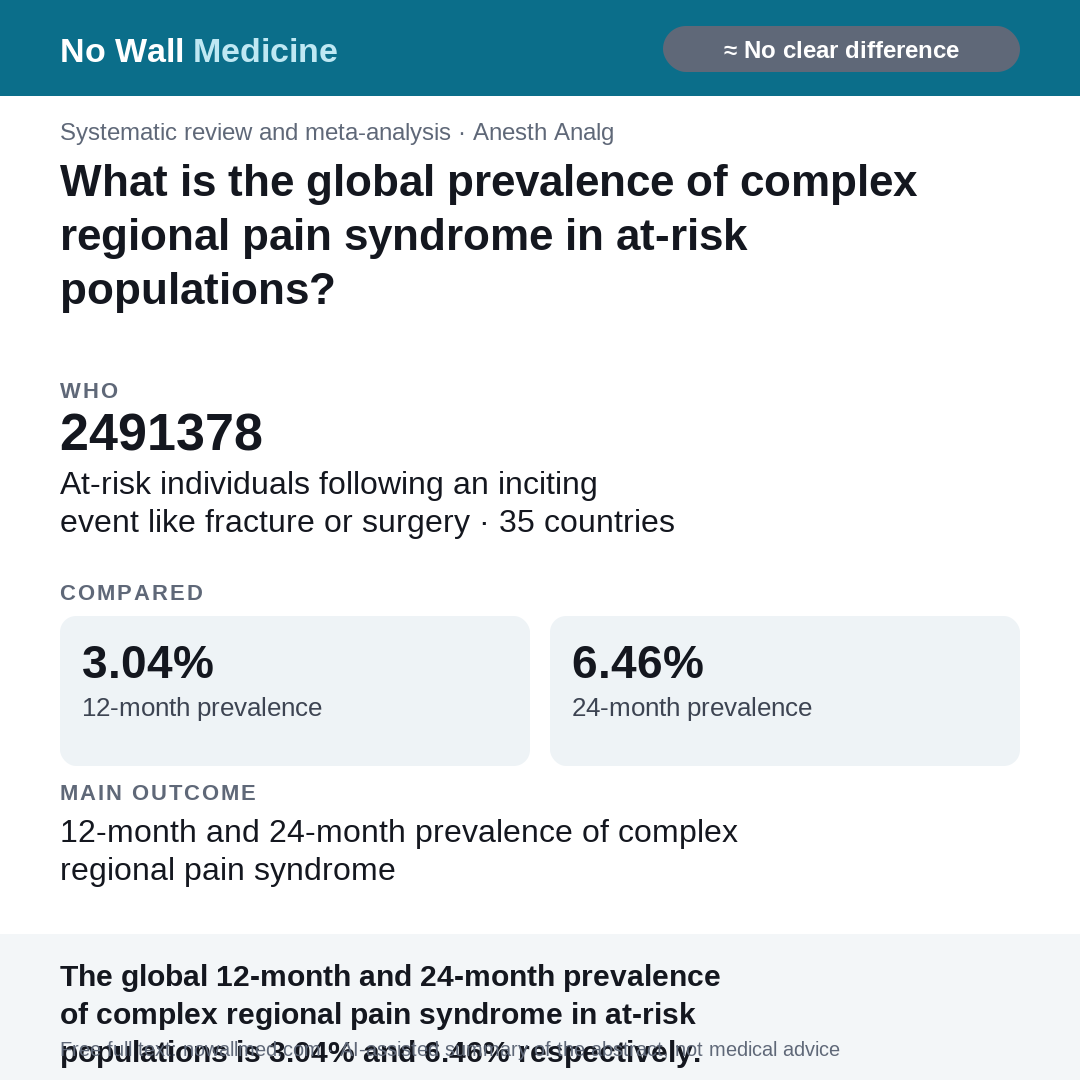
Global Burden of Complex Regional Pain Syndrome in At-Risk Populations: Estimates of Prevalence From 35 Countries Between 1993 and 2023
Systematic review and meta-analysisNo clear difference
What is the global prevalence of complex regional pain syndrome in at-risk populations?
Who
2491378
At-risk individuals following an inciting event like fracture or surgery · 35 countries
Compared
3.04%12-month prevalence (95% CI, 2.64-3.48)
6.46%24-month prevalence (95% CI, 5.46-7.53)
Main outcome
12-month and 24-month prevalence of complex regional pain syndrome
Bottom line: The global 12-month and 24-month prevalence of complex regional pain syndrome in at-risk populations is 3.04% and 6.46% respectively.
Anesth Analg · 2025-11-14Download image
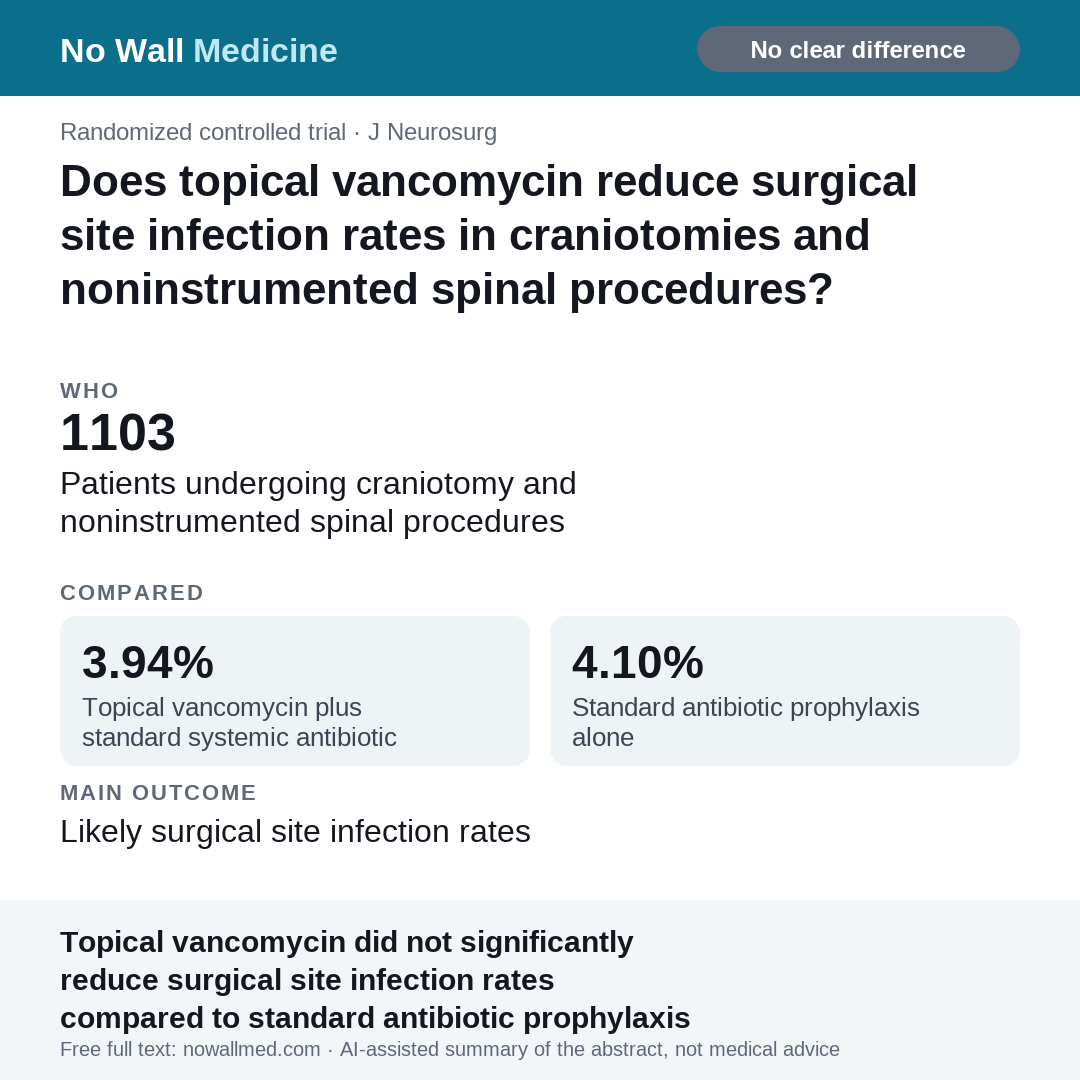
Topical vancomycin for surgical site infection prophylaxis in craniotomies and noninstrumented spinal procedures: a randomized controlled trial
Randomized controlled trialNo clear difference
Does topical vancomycin reduce surgical site infection rates in craniotomies and noninstrumented spinal procedures?
Who
1103
Patients undergoing craniotomy and noninstrumented spinal procedures
Compared
3.94%Topical vancomycin plus standard systemic antibiotic prophylaxis
4.10%Standard antibiotic prophylaxis alone
Main outcome
Likely surgical site infection rates
Result: risk difference -0.0016 (95% CI -0.027 to 0.024)
Bottom line: Topical vancomycin did not significantly reduce surgical site infection rates compared to standard antibiotic prophylaxis alone.
J Neurosurg · 2025-11-14Download image
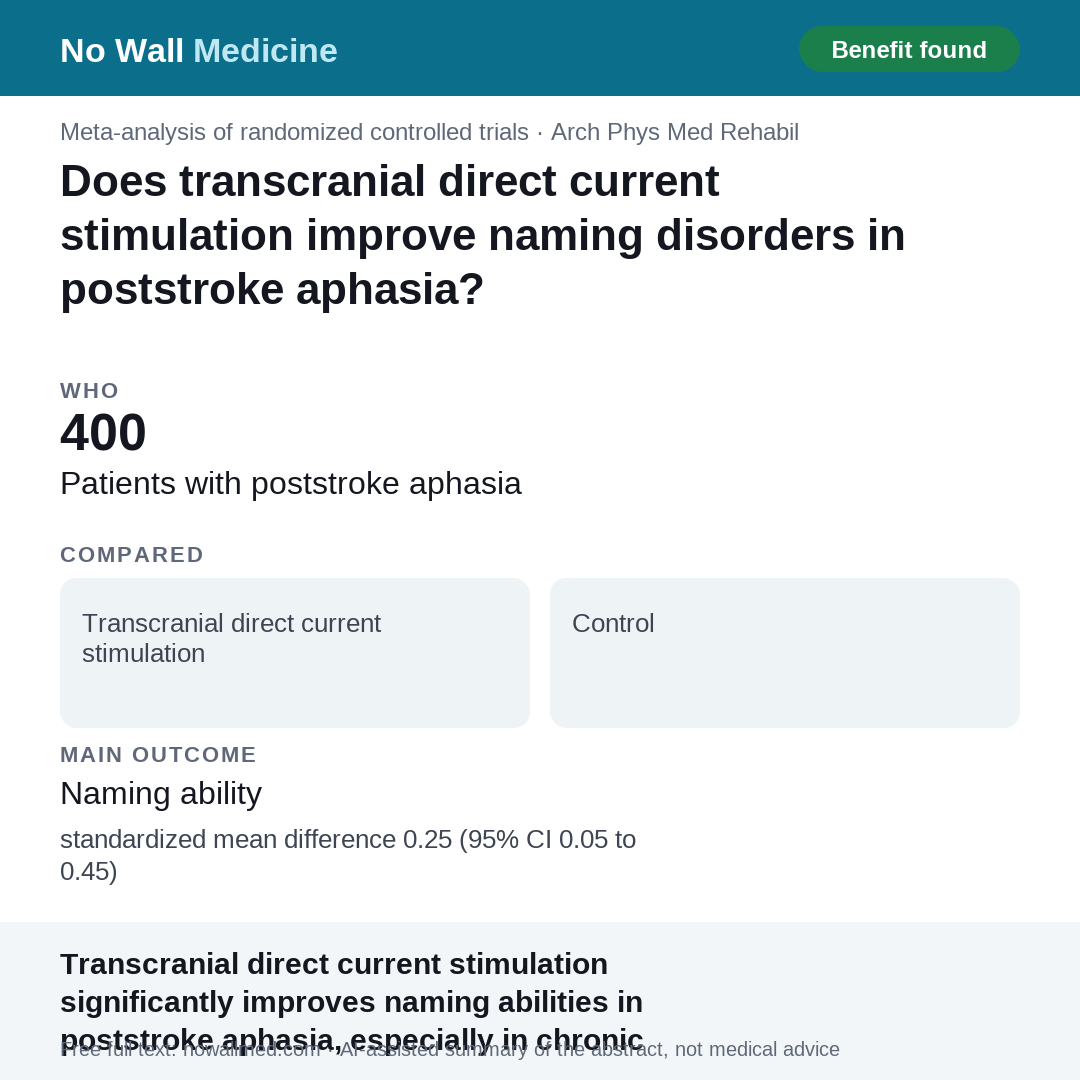
Transcranial Direct Current Stimulation for Naming Disorders in Poststroke Aphasia: A Meta-analysis of Randomized Controlled Trials
Meta-analysis of randomized controlled trialsBenefit found
Does transcranial direct current stimulation improve naming disorders in poststroke aphasia?
Who
400
Patients with poststroke aphasia
Compared
Transcranial direct current stimulation
Control
Main outcome
Naming ability
Result: standardized mean difference 0.25 (95% CI 0.05 to 0.45)
Bottom line: Transcranial direct current stimulation significantly improves naming abilities in poststroke aphasia, especially in chronic stroke patients.
Limitation: Methodological limitations of the included studies.
Arch Phys Med Rehabil · 2025-11-14Download image
A Systematic Review of Applications, Challenges, and Future Trajectories of Artificial Intelligence in Cosmetic Surgery
Systematic reviewMixed results
AI in cosmetic surgery effectiveness
Who
cosmetic surgery patients
Compared
AI applications
traditional methods
Main outcome
precision and objectivity
Bottom line: AI shows potential in cosmetic surgery
Limitation: limited external validation
Aesthet Surg J · 2025-11-14Download image

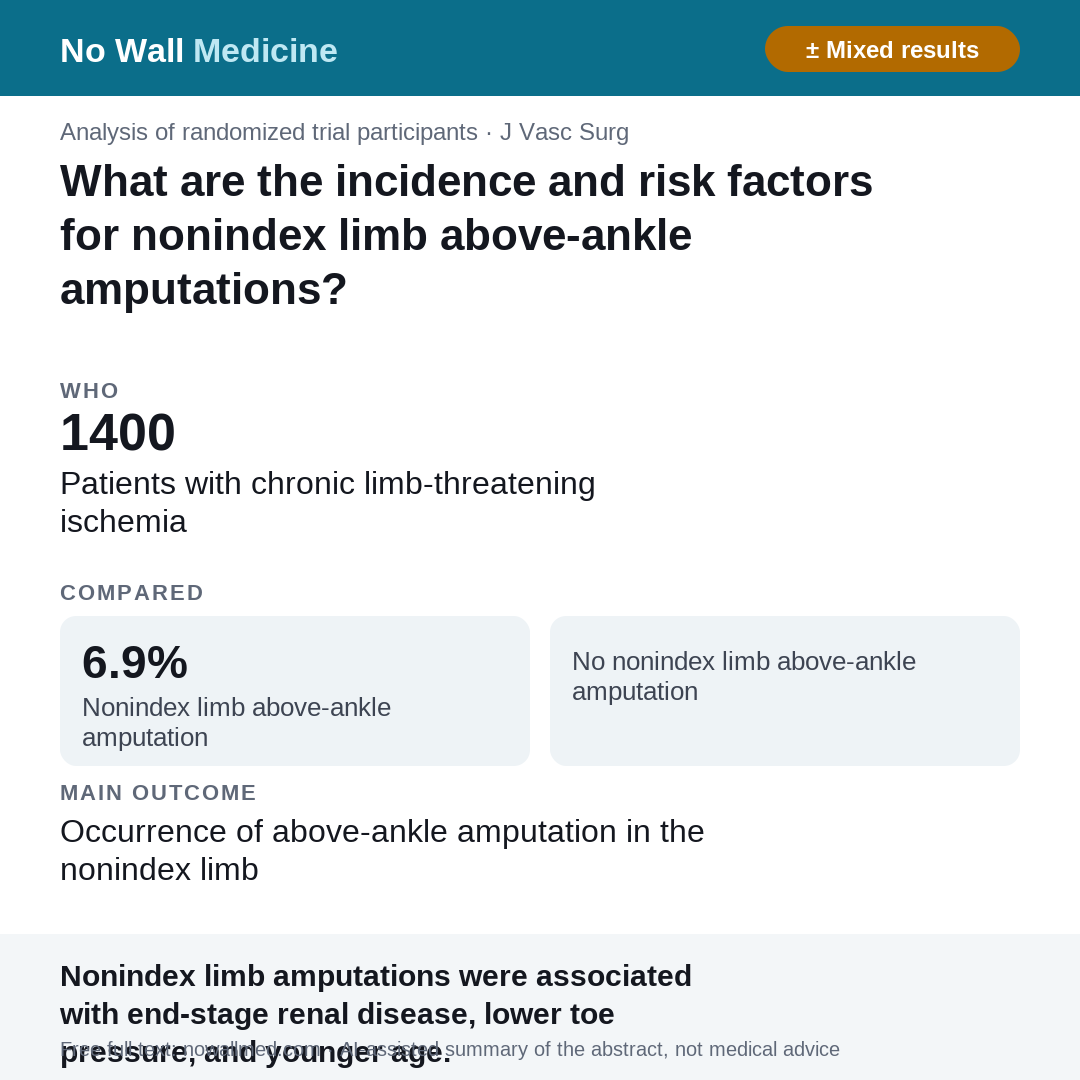
High rates of nonindex limb amputation in the Best Endovascular versus Best Surgical Therapy in Patients with Critical Limb Ischemia (BEST-CLI) trial
Analysis of randomized trial participantsMixed results
What are the incidence and risk factors for nonindex limb above-ankle amputations?
Who
1400
Patients with chronic limb-threatening ischemia
Compared
6.9%Nonindex limb above-ankle amputation
No nonindex limb above-ankle amputation
Main outcome
Occurrence of above-ankle amputation in the nonindex limb
Bottom line: Nonindex limb amputations were associated with end-stage renal disease, lower toe pressure, and younger age.
J Vasc Surg · 2025-11-14Download image
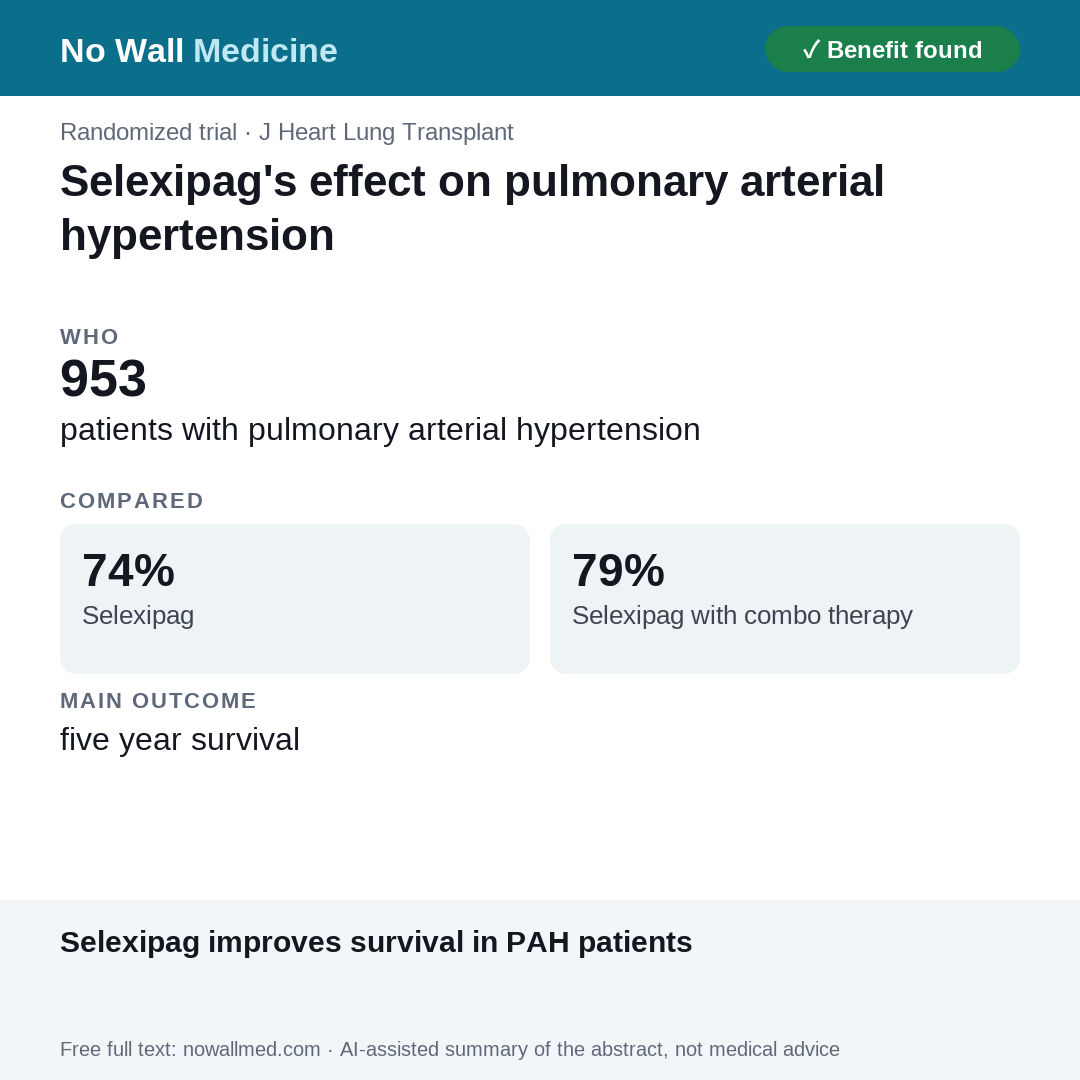
Evaluating oral selexipag in pulmonary arterial hypertension: Insights on survival, safety, and dosing patterns from the complete observation period of GRIPHON and its open-label extension
Randomized trialBenefit found
Selexipag's effect on pulmonary arterial hypertension
Who
953
patients with pulmonary arterial hypertension
Compared
74%Selexipag (69-78)
79%Selexipag with combo therapy (67-87)
Main outcome
five year survival
Bottom line: Selexipag improves survival in PAH patients
J Heart Lung Transplant · 2025-11-14Download image
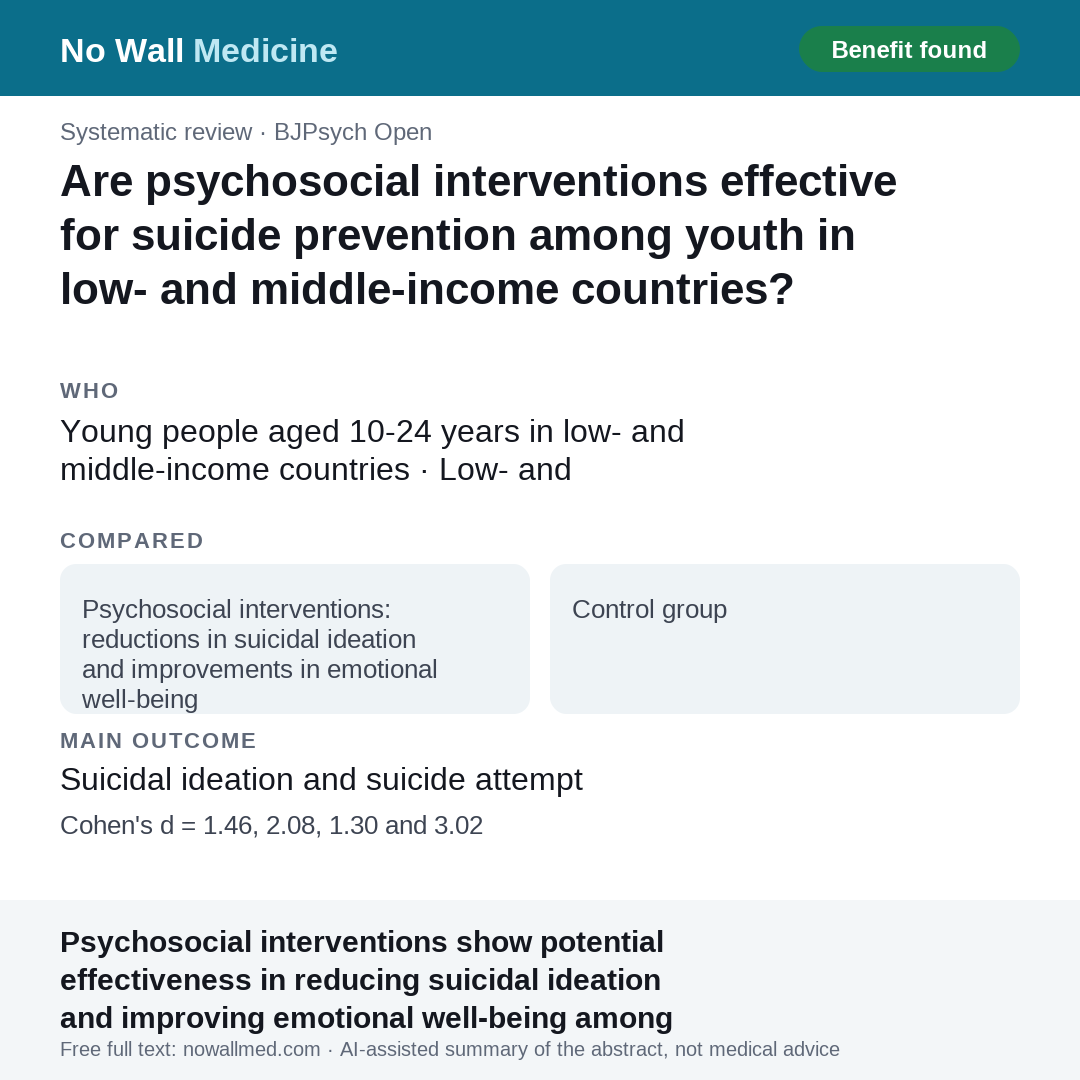
Suicide prevention psychosocial interventions for youth in low- and middle-income countries: systematic review
Systematic reviewBenefit found
Are psychosocial interventions effective for suicide prevention among youth in low- and middle-income countries?
Who
Young people aged 10-24 years in low- and middle-income countries · Low- and middle-income countries
Compared
Psychosocial interventions: reductions in suicidal ideation and improvements in emotional well-being
Control group
Main outcome
Suicidal ideation and suicide attempt
Result: Cohen's d = 1.46, 2.08, 1.30 and 3.02
Bottom line: Psychosocial interventions show potential effectiveness in reducing suicidal ideation and improving emotional well-being among youth in low- and middle-income countries.
Limitation: Interpretation is limited by small samples and inconsistent methods, reducing comparability with high-income data.
BJPsych Open · 2025-11-14Download image
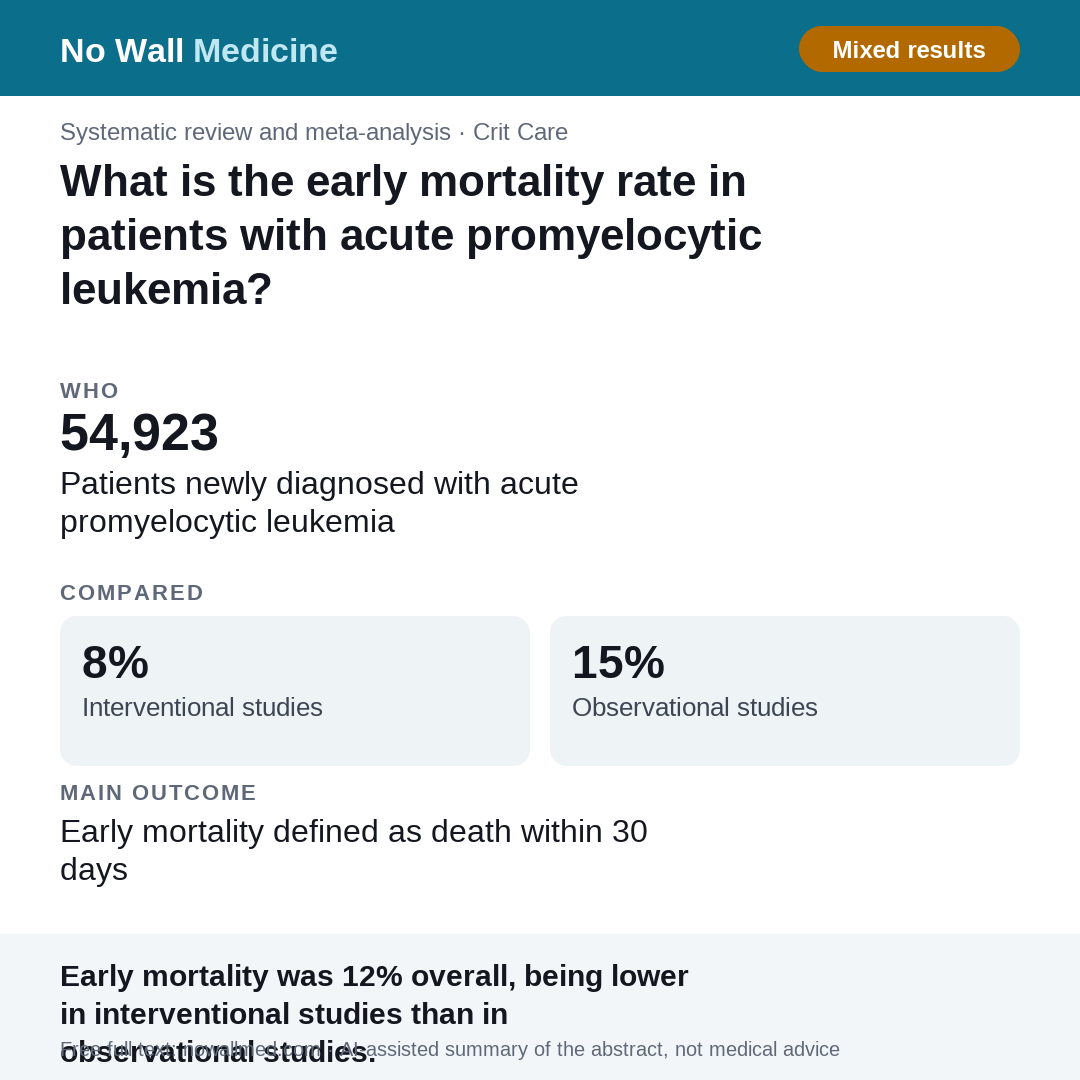
Early mortality in patients with acute promyelocytic leukemia: a systematic review and meta-analysis
Systematic review and meta-analysisMixed results
What is the early mortality rate in patients with acute promyelocytic leukemia?
Who
54,923
Patients newly diagnosed with acute promyelocytic leukemia
Compared
8%Interventional studies
15%Observational studies
Main outcome
Early mortality defined as death within 30 days
Result: 12%
Bottom line: Early mortality was 12% overall, being lower in interventional studies than in observational studies.
Limitation: Difficulty of translating successes of randomized controlled trials into real-world clinical practice.
Crit Care · 2025-11-14Download image
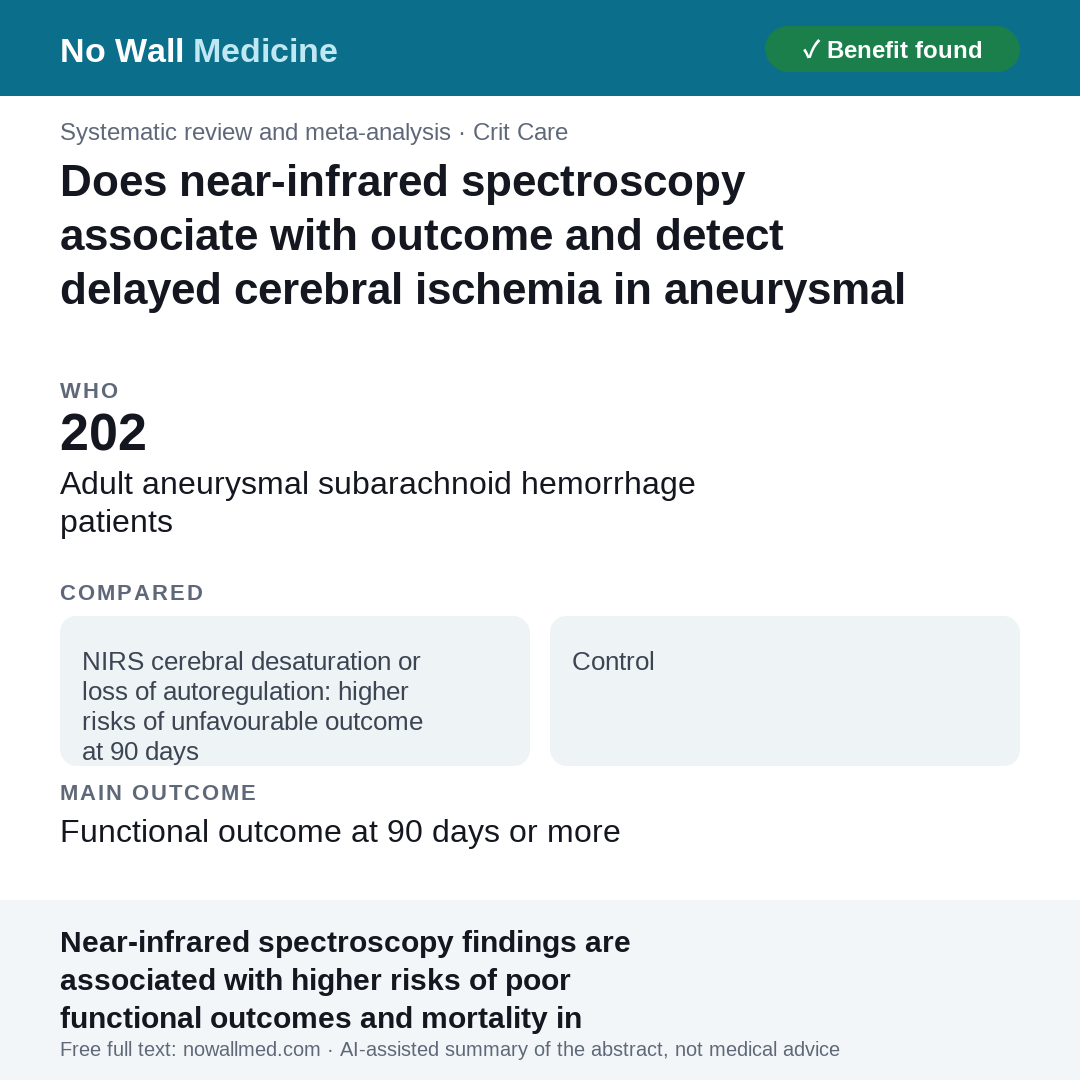
Neuromonitoring with near-infrared spectroscopy (NIRS) in aneurysmal subarachnoid hemorrhage: A systematic review and meta-analysis
Systematic review and meta-analysisBenefit found
Does near-infrared spectroscopy associate with outcome and detect delayed cerebral ischemia in aneurysmal subarachnoid hemorrhage?
Who
202
Adult aneurysmal subarachnoid hemorrhage patients
Compared
NIRS cerebral desaturation or loss of autoregulation: higher risks of unfavourable outcome at 90 days
Control
Main outcome
Functional outcome at 90 days or more
Result: RR 4.29 95% CI [2.10;8.79]
Bottom line: Near-infrared spectroscopy findings are associated with higher risks of poor functional outcomes and mortality in aneurysmal subarachnoid hemorrhage.
Limitation: Small sample sizes, high heterogeneity, and absence of a universally accepted reference standard for delayed cerebral ischemia.
Crit Care · 2025-11-14Download image
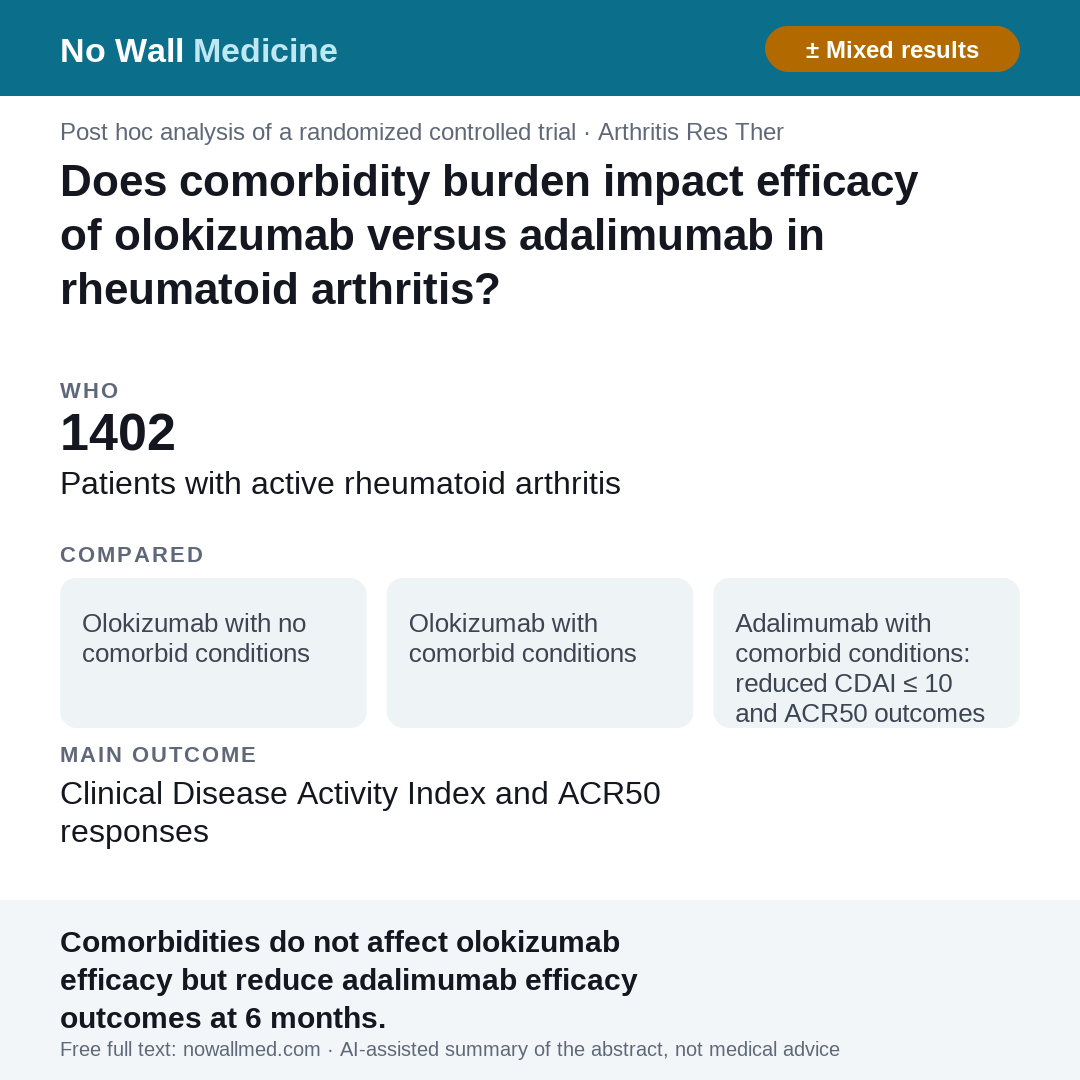
The impact of comorbidities on the efficacy of IL-6 inhibitor olokizumab compared to adalimumab in a randomized controlled trial
Post hoc analysis of a randomized controlled trialMixed results
Does comorbidity burden impact efficacy of olokizumab versus adalimumab in rheumatoid arthritis?
Who
1402
Patients with active rheumatoid arthritis
Compared
Olokizumab with no comorbid conditions
Olokizumab with comorbid conditions
Adalimumab with comorbid conditions: reduced CDAI ≤ 10 and ACR50 outcomes
Main outcome
Clinical Disease Activity Index and ACR50 responses
Bottom line: Comorbidities do not affect olokizumab efficacy but reduce adalimumab efficacy outcomes at 6 months.
Arthritis Res Ther · 2025-11-14Download image
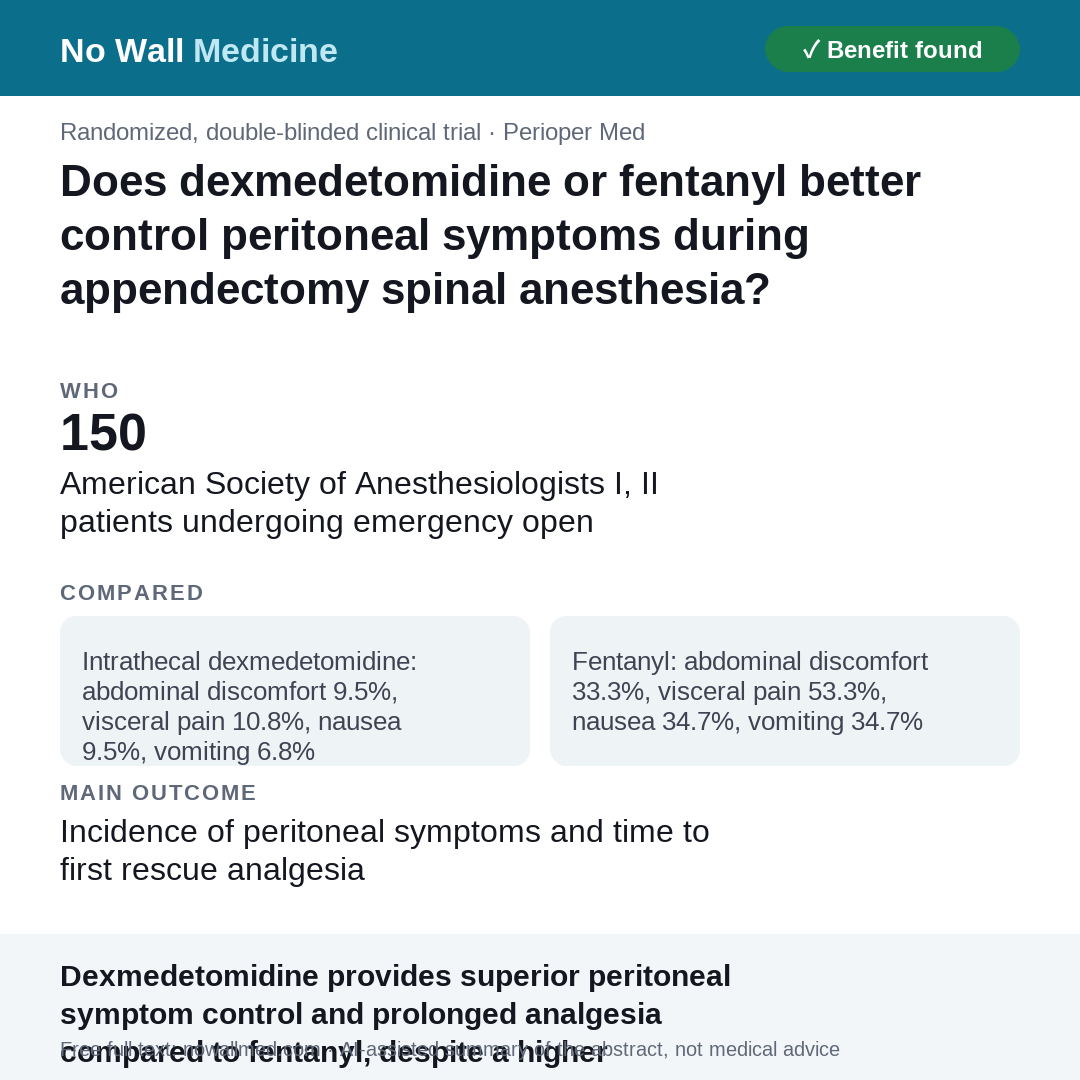
Comparing fentanyl and dexmedetomidine as adjuvants to bupivacaine for spinal anesthesia in appendectomy: effects on peritoneal symptoms - a randomized clinical trial
Randomized, double-blinded clinical trialBenefit found
Does dexmedetomidine or fentanyl better control peritoneal symptoms during appendectomy spinal anesthesia?
Who
150
American Society of Anesthesiologists I, II patients undergoing emergency open appendectomy
Compared
Intrathecal dexmedetomidine: abdominal discomfort 9.5%, visceral pain 10.8%, nausea 9.5%, vomiting 6.8%
Fentanyl: abdominal discomfort 33.3%, visceral pain 53.3%, nausea 34.7%, vomiting 34.7%
Main outcome
Incidence of peritoneal symptoms and time to first rescue analgesia
Bottom line: Dexmedetomidine provides superior peritoneal symptom control and prolonged analgesia compared to fentanyl, despite a higher incidence of bradycardia.
Perioper Med · 2025-11-14Download image
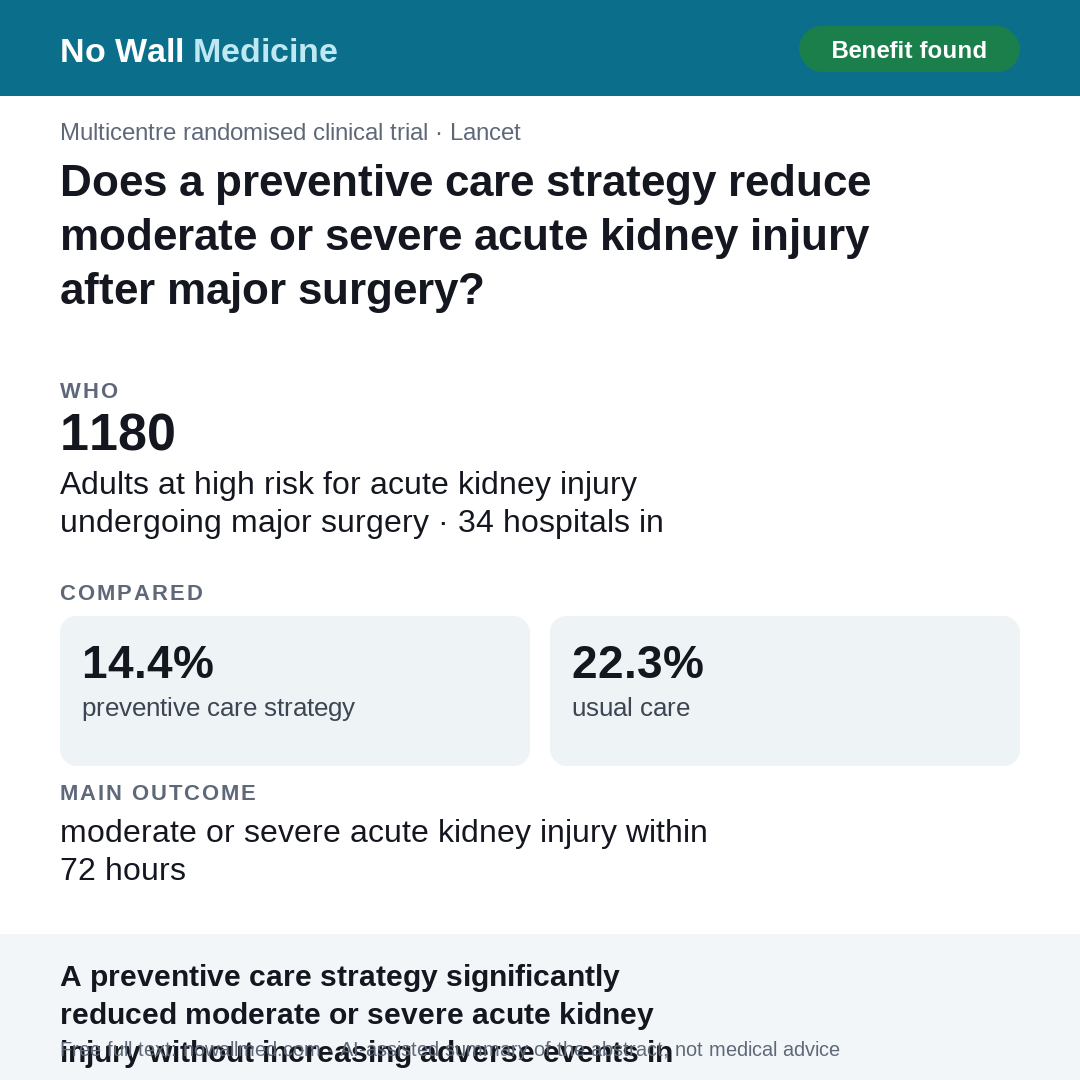
A preventive care strategy to reduce moderate or severe acute kidney injury after major surgery (BigpAK-2); a multinational, randomised clinical trial
Multicentre randomised clinical trialBenefit found
Does a preventive care strategy reduce moderate or severe acute kidney injury after major surgery?
Who
1180
Adults at high risk for acute kidney injury undergoing major surgery · 34 hospitals in Europe
Compared
14.4%preventive care strategy (84/589)
22.3%usual care (131/591)
Main outcome
moderate or severe acute kidney injury within 72 hours
Result: odds ratio 0.57 (95% CI 0.40 to 0.79)
Bottom line: A preventive care strategy significantly reduced moderate or severe acute kidney injury without increasing adverse events in high-risk surgical patients.
Funded by: BioMérieux
Lancet · 2025-11-13Download image
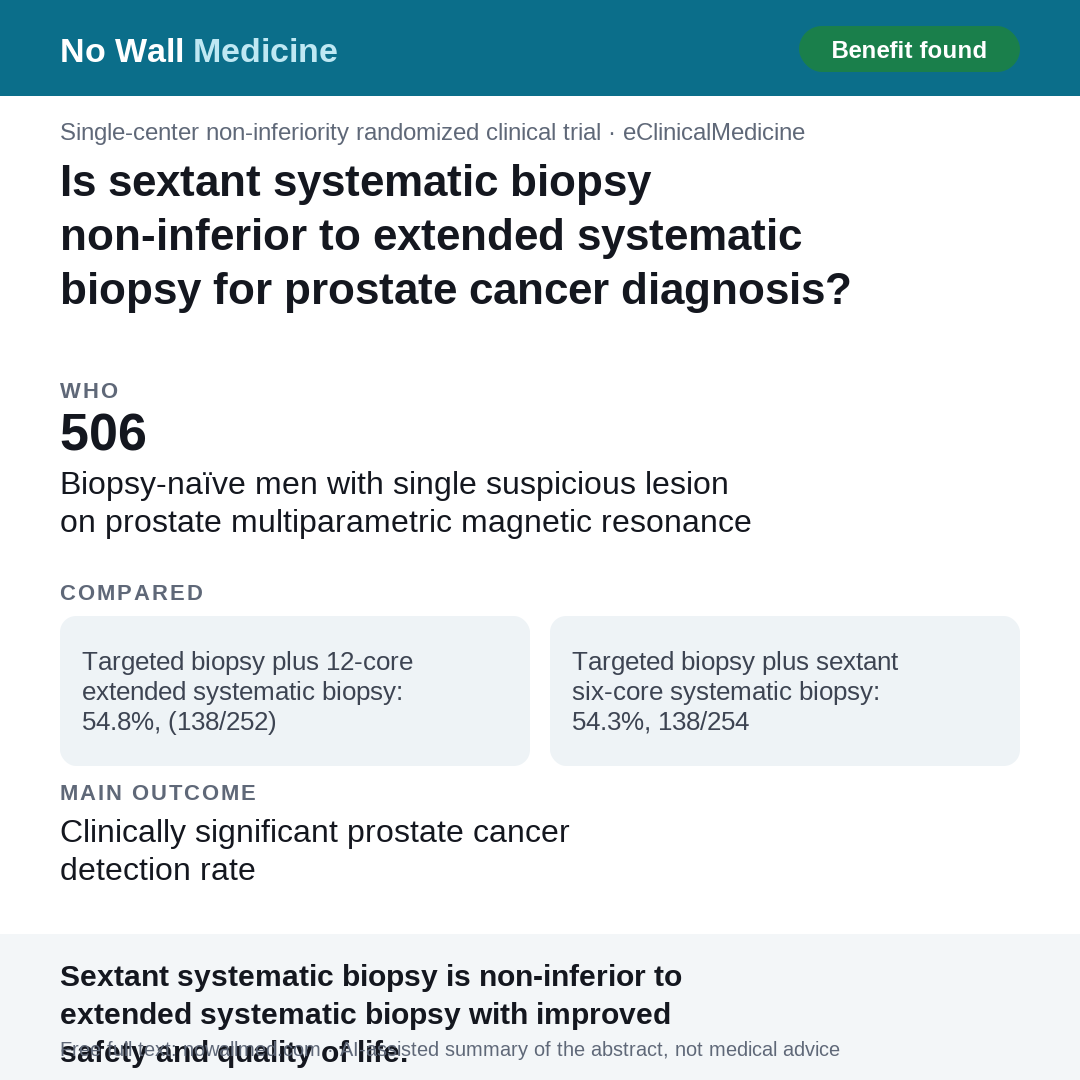
A head-to-head comparison of sextant-systematic biopsy vs. extended-systematic biopsy for prostate cancer diagnosis in the era of MRI-targeted biopsy: SEXTANT-PRO non-inferiority randomized clinical trial
Single-center non-inferiority randomized clinical trialBenefit found
Is sextant systematic biopsy non-inferior to extended systematic biopsy for prostate cancer diagnosis?
Who
506
Biopsy-naïve men with single suspicious lesion on prostate multiparametric magnetic resonance imaging · Single-center
Compared
Targeted biopsy plus 12-core extended systematic biopsy: 54.8%, (138/252)
Targeted biopsy plus sextant six-core systematic biopsy: 54.3%, 138/254
Main outcome
Clinically significant prostate cancer detection rate
Result: rate difference -0.5% (95% CI -9.2%, 8.3%)
Bottom line: Sextant systematic biopsy is non-inferior to extended systematic biopsy with improved safety and quality of life.
Funded by: Beijing Research Ward Excellence Program and National High Level Hospital Clinical Research Funding
eClinicalMedicine · 2025-11-13Download image
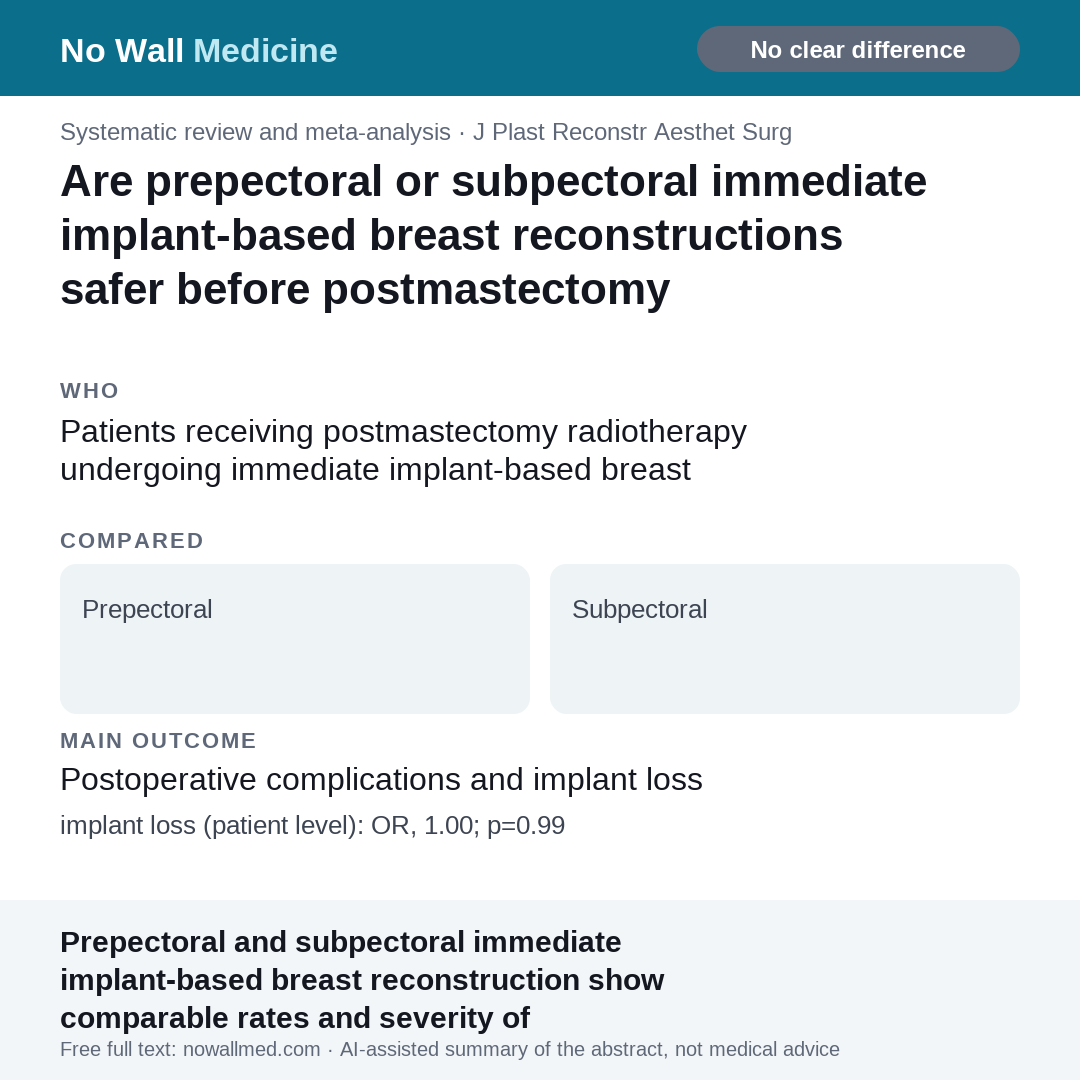
Beam me later: Prepectoral vs subpectoral breast reconstruction before postmastectomy radiotherapy - A systematic review and meta-analysis
Systematic review and meta-analysisNo clear difference
Are prepectoral or subpectoral immediate implant-based breast reconstructions safer before postmastectomy radiotherapy?
Who
Patients receiving postmastectomy radiotherapy undergoing immediate implant-based breast reconstruction
Compared
Prepectoral
Subpectoral
Main outcome
Postoperative complications and implant loss
Result: implant loss (patient level): OR, 1.00; p=0.99
Bottom line: Prepectoral and subpectoral immediate implant-based breast reconstruction show comparable rates and severity of postoperative complications.
J Plast Reconstr Aesthet Surg · 2025-11-13Download image
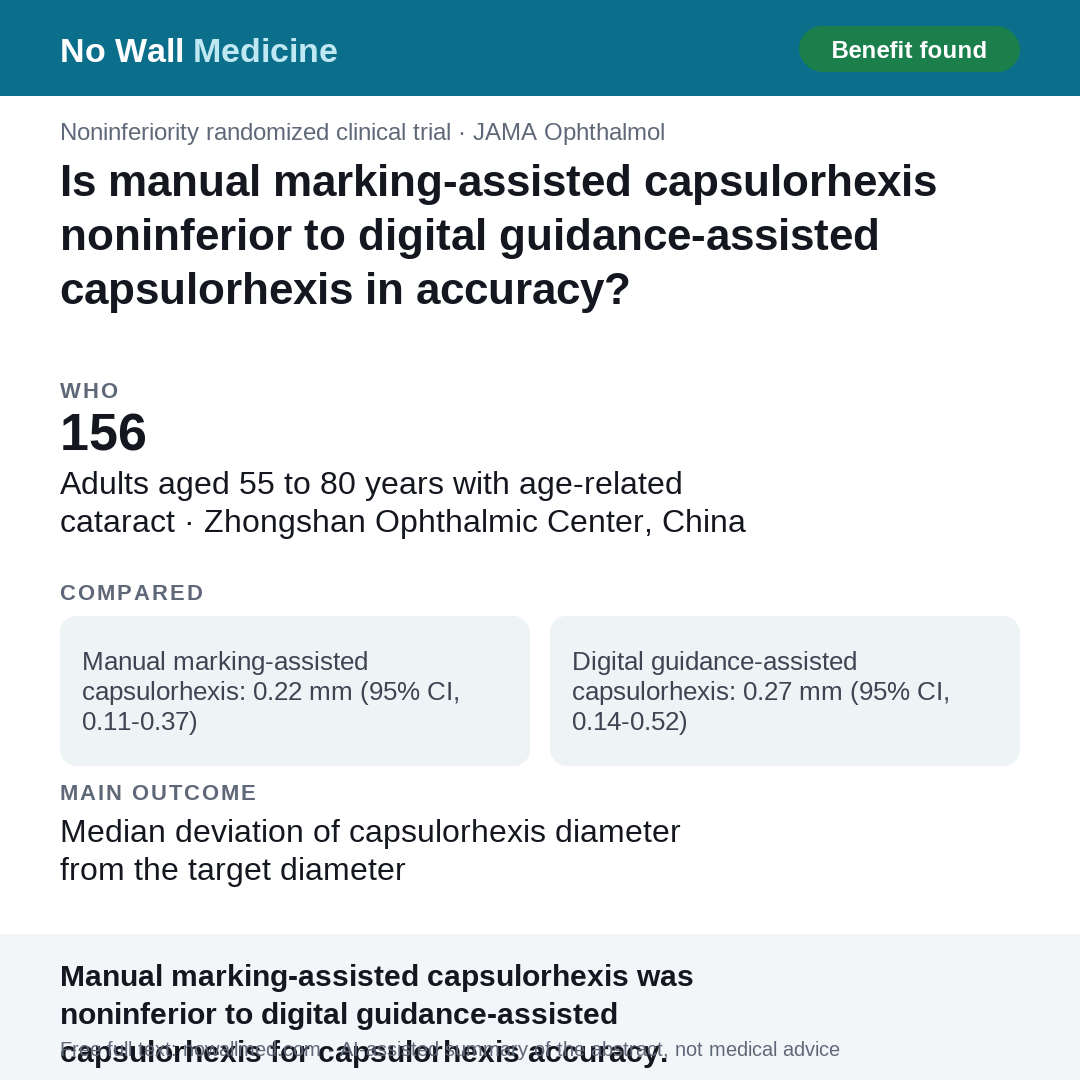
Manual Marking Guidance vs Digital Guidance System-Assisted Capsulorhexis in Phacoemulsification: A Noninferiority Randomized Clinical Trial
Noninferiority randomized clinical trialBenefit found
Is manual marking-assisted capsulorhexis noninferior to digital guidance-assisted capsulorhexis in accuracy?
Who
156
Adults aged 55 to 80 years with age-related cataract · Zhongshan Ophthalmic Center, China
Compared
Manual marking-assisted capsulorhexis: 0.22 mm (95% CI, 0.11-0.37)
Digital guidance-assisted capsulorhexis: 0.27 mm (95% CI, 0.14-0.52)
Main outcome
Median deviation of capsulorhexis diameter from the target diameter
Result: difference, -0.05 mm; 95% CI, -0.16 to 0.07
Bottom line: Manual marking-assisted capsulorhexis was noninferior to digital guidance-assisted capsulorhexis for capsulorhexis accuracy.
JAMA Ophthalmol · 2025-11-13Download image
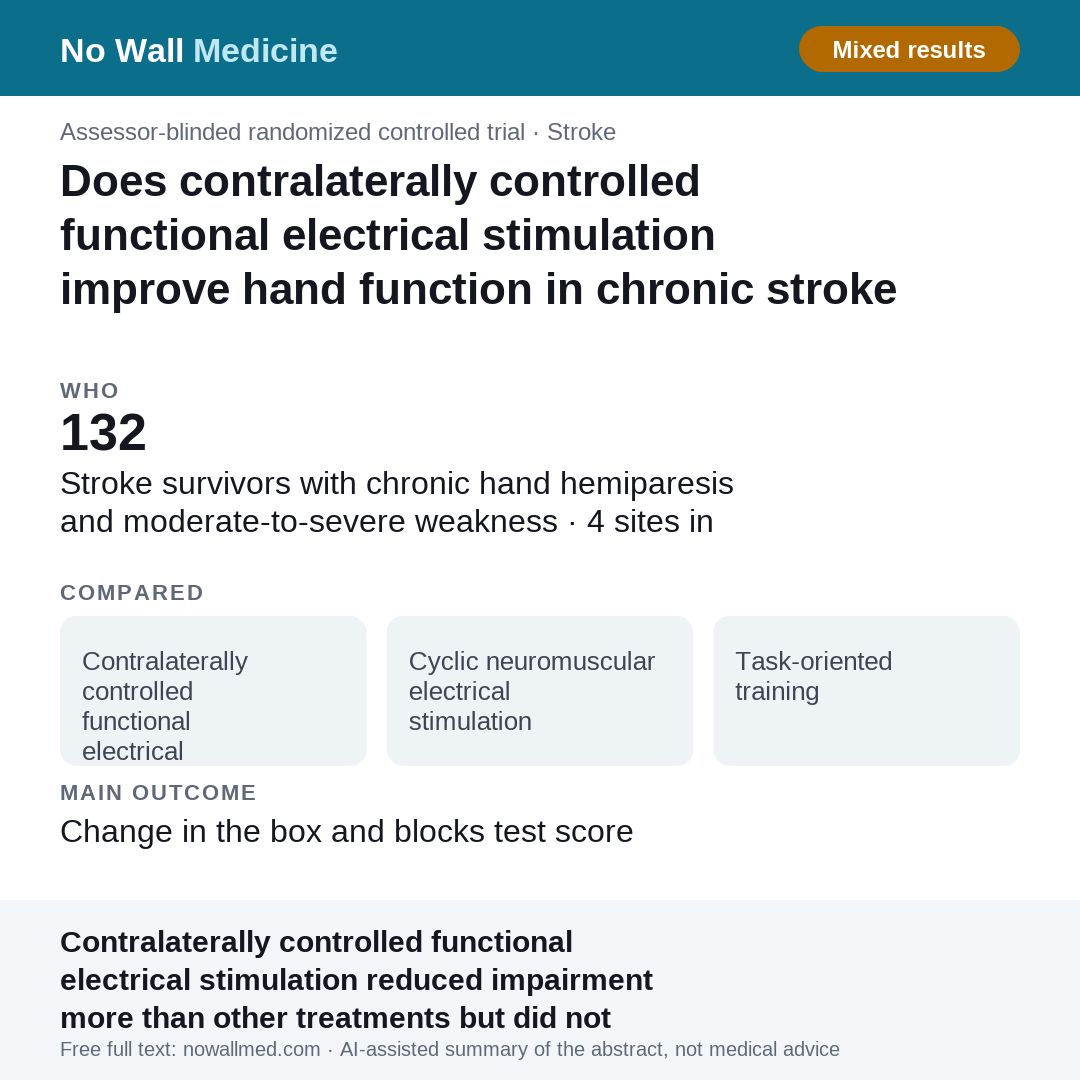
Contralaterally Controlled Functional Electrical Stimulation for Upper Extremity Recovery Following Stroke: A Multisite Randomized Controlled Trial
Assessor-blinded randomized controlled trialMixed results
Does contralaterally controlled functional electrical stimulation improve hand function in chronic stroke survivors?
Who
132
Stroke survivors with chronic hand hemiparesis and moderate-to-severe weakness · 4 sites in the United States
Compared
Contralaterally controlled functional electrical stimulation
Cyclic neuromuscular electrical stimulation
Task-oriented training
Main outcome
Change in the box and blocks test score
Bottom line: Contralaterally controlled functional electrical stimulation reduced impairment more than other treatments but did not improve dexterity more.
Stroke · 2025-11-13Download image
Drug Repurposing for Reducing the Size of Benign Thyroid Nodules: A Systematic Review
Systematic reviewMixed results
Do repurposed drugs effectively reduce the size of benign thyroid nodules?
Who
Adults with benign thyroid nodules
Compared
Metformin: 5 studies reported statistically significant reductions in dominant nodule volume
Statins and somatostatin analogues: mixed results
Main outcome
reduction in benign thyroid nodule size
Bottom line: Metformin shows potential for noninvasive reduction of nodule size, but current evidence is limited and heterogeneous.
Limitation: current evidence is limited and heterogeneous
J Clin Endocrinol Metab · 2025-11-13Download image

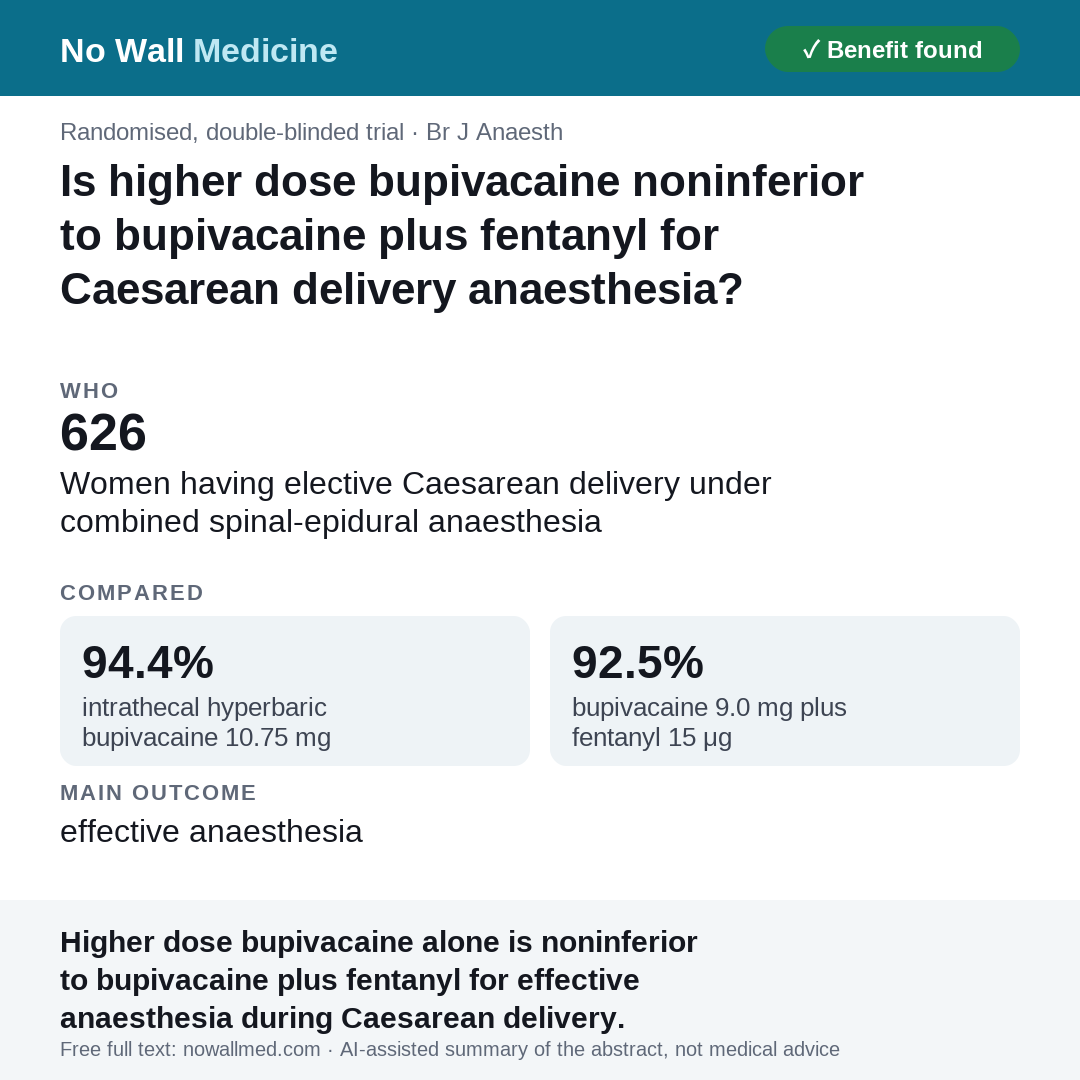
Intrathecal bupivacaine versus bupivacaine plus fentanyl for anaesthesia for Caesarean delivery: a randomised double-blind noninferiority trial
Randomised, double-blinded trialBenefit found
Is higher dose bupivacaine noninferior to bupivacaine plus fentanyl for Caesarean delivery anaesthesia?
Who
626
Women having elective Caesarean delivery under combined spinal-epidural anaesthesia
Compared
94.4%intrathecal hyperbaric bupivacaine 10.75 mg (95% confidence interval 91.1-96.7%)
92.5%bupivacaine 9.0 mg plus fentanyl 15 μg (95% confidence interval 88.9-95.2%)
Main outcome
effective anaesthesia
Result: absolute difference 1.9% (95% CI -2.0% to 5.9%)
Bottom line: Higher dose bupivacaine alone is noninferior to bupivacaine plus fentanyl for effective anaesthesia during Caesarean delivery.
Br J Anaesth · 2025-11-13Download image