Visual abstracts
New randomized trials and meta-analyses from leading journals at a glance: who was studied, what was compared, and what was found. Every paper is free to read in full.
All specialtiesCardiology 1341Oncology 1205Gastroenterology & Hepatology 483Infectious Disease 880Neurology 556Psychiatry & Mental Health 671Pulmonology 578Critical Care 398Endocrinology & Diabetes 746Pediatrics 802Surgery 638Orthopedics & Sports Medicine 259Neurosurgery 182Cardiothoracic & Vascular Surgery 151Plastic & Reconstructive Surgery 212Nephrology 283Rheumatology 179Hematology 283Dermatology 142Ophthalmology 153Obstetrics & Gynecology 426Public & Global Health 261Radiology & Imaging 173Anesthesiology 257Urology 251ENT (Otolaryngology) 182Emergency Medicine 147Allergy & Immunology 90Geriatrics 281Family Medicine & Primary Care 171Medical Genetics & Genomics 144Pathology & Laboratory Medicine 41Physical Medicine & Rehabilitation 233Palliative Care 122Nutrition 353Digital Health & AI 696General Medicine 123
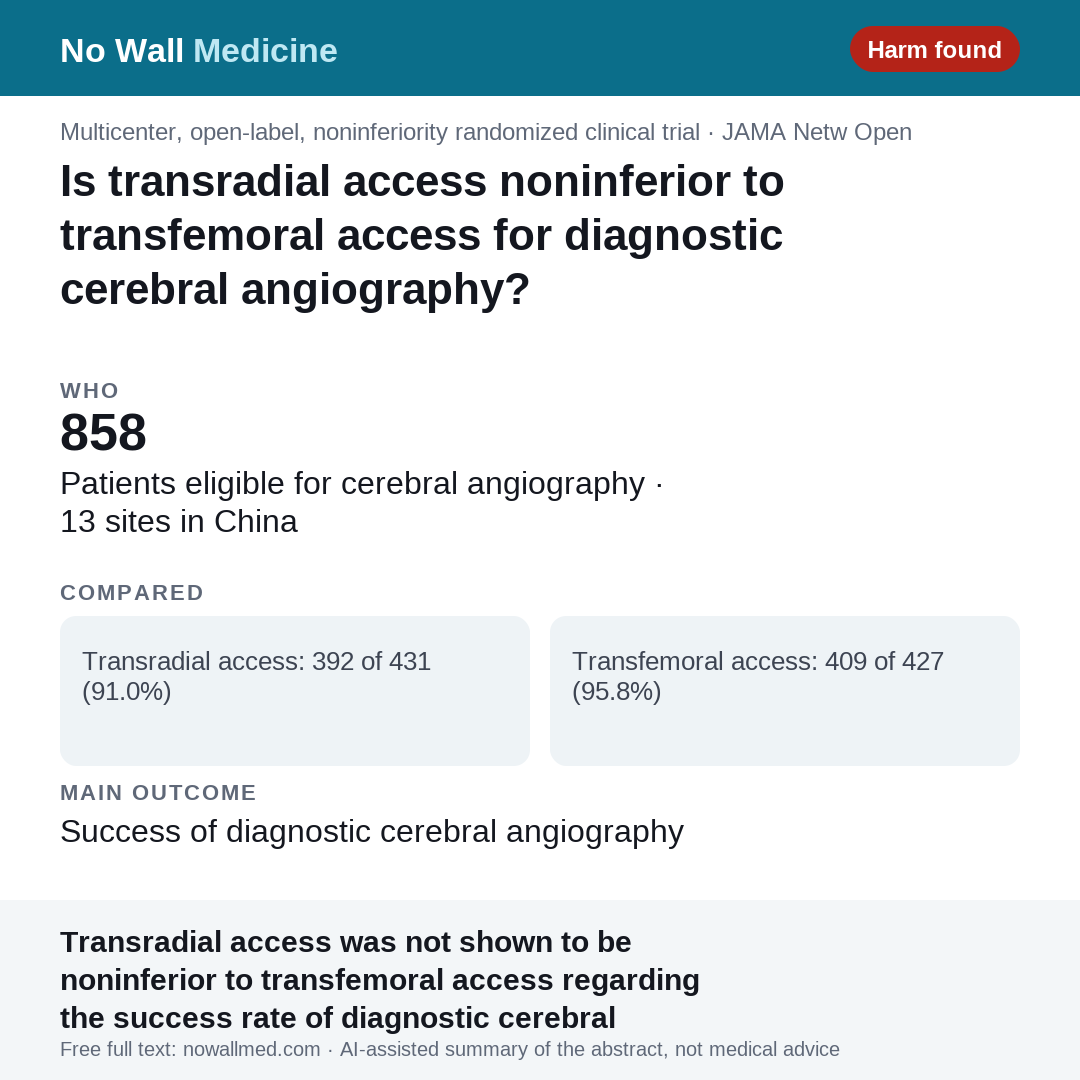
Transradial vs Transfemoral Access for Cerebral Angiography: A Randomized Noninferiority Clinical Trial
Multicenter, open-label, noninferiority randomized clinical trialHarm found
Is transradial access noninferior to transfemoral access for diagnostic cerebral angiography?
Who
858
Patients eligible for cerebral angiography · 13 sites in China
Compared
Transradial access: 392 of 431 (91.0%)
Transfemoral access: 409 of 427 (95.8%)
Main outcome
Success of diagnostic cerebral angiography
Result: difference, -4.8 percentage points (95% CI, -8.1 to -1.5 pp)
Bottom line: Transradial access was not shown to be noninferior to transfemoral access regarding the success rate of diagnostic cerebral angiography.
JAMA Netw Open · 2026-03-02Download image
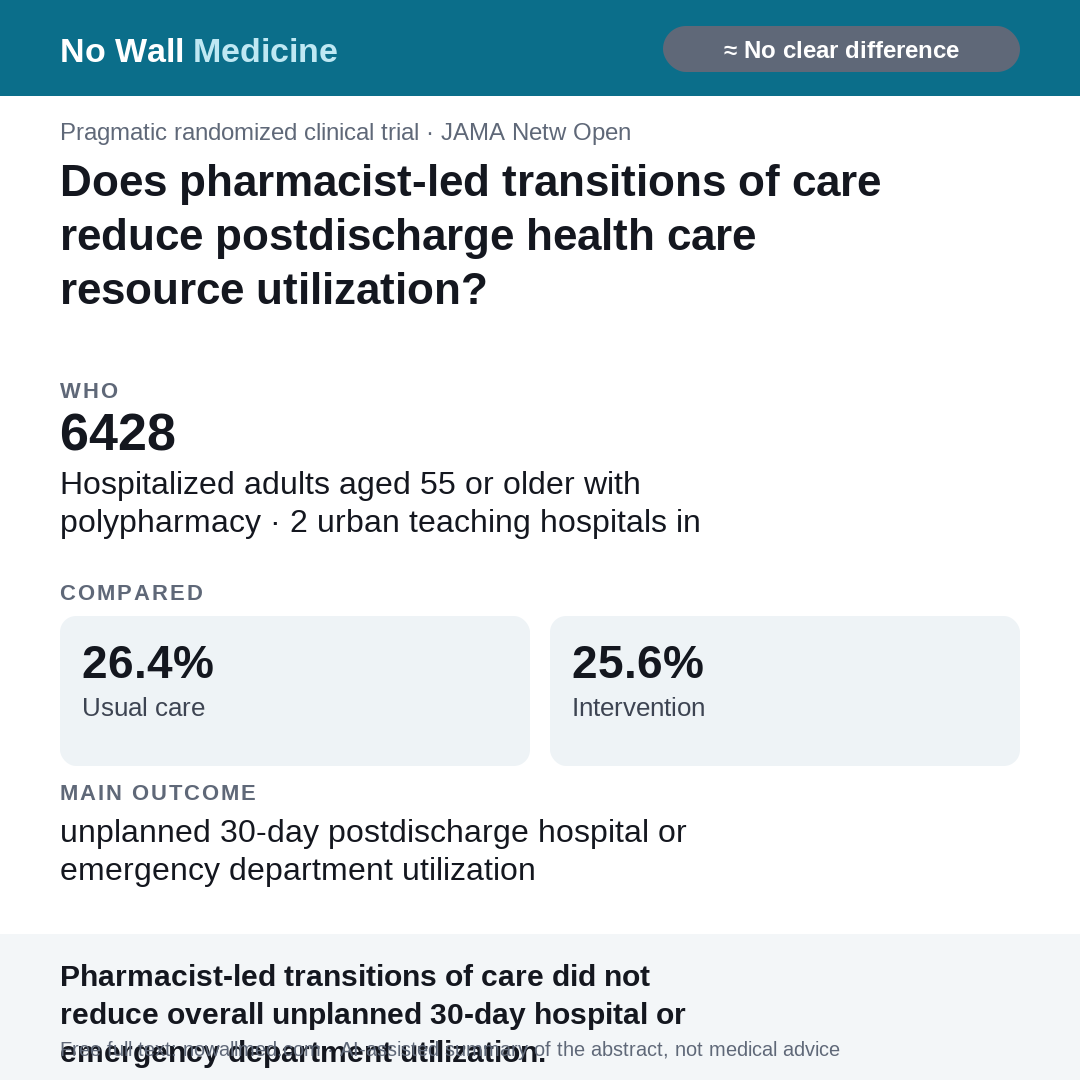
Pharmacist-Led Discharge Care to Reduce Postdischarge Health Care Utilization: A Randomized Clinical Trial
Pragmatic randomized clinical trialNo clear difference
Does pharmacist-led transitions of care reduce postdischarge health care resource utilization?
Who
6428
Hospitalized adults aged 55 or older with polypharmacy · 2 urban teaching hospitals in the US
Compared
26.4%Usual care (593/2242)
25.6%Intervention (570/2230)
Main outcome
unplanned 30-day postdischarge hospital or emergency department utilization
Result: difference, 0.9 percentage points [pp]; 95% CI, -1.7 to 3.5 pp
Bottom line: Pharmacist-led transitions of care did not reduce overall unplanned 30-day hospital or emergency department utilization.
JAMA Netw Open · 2026-03-02Download image
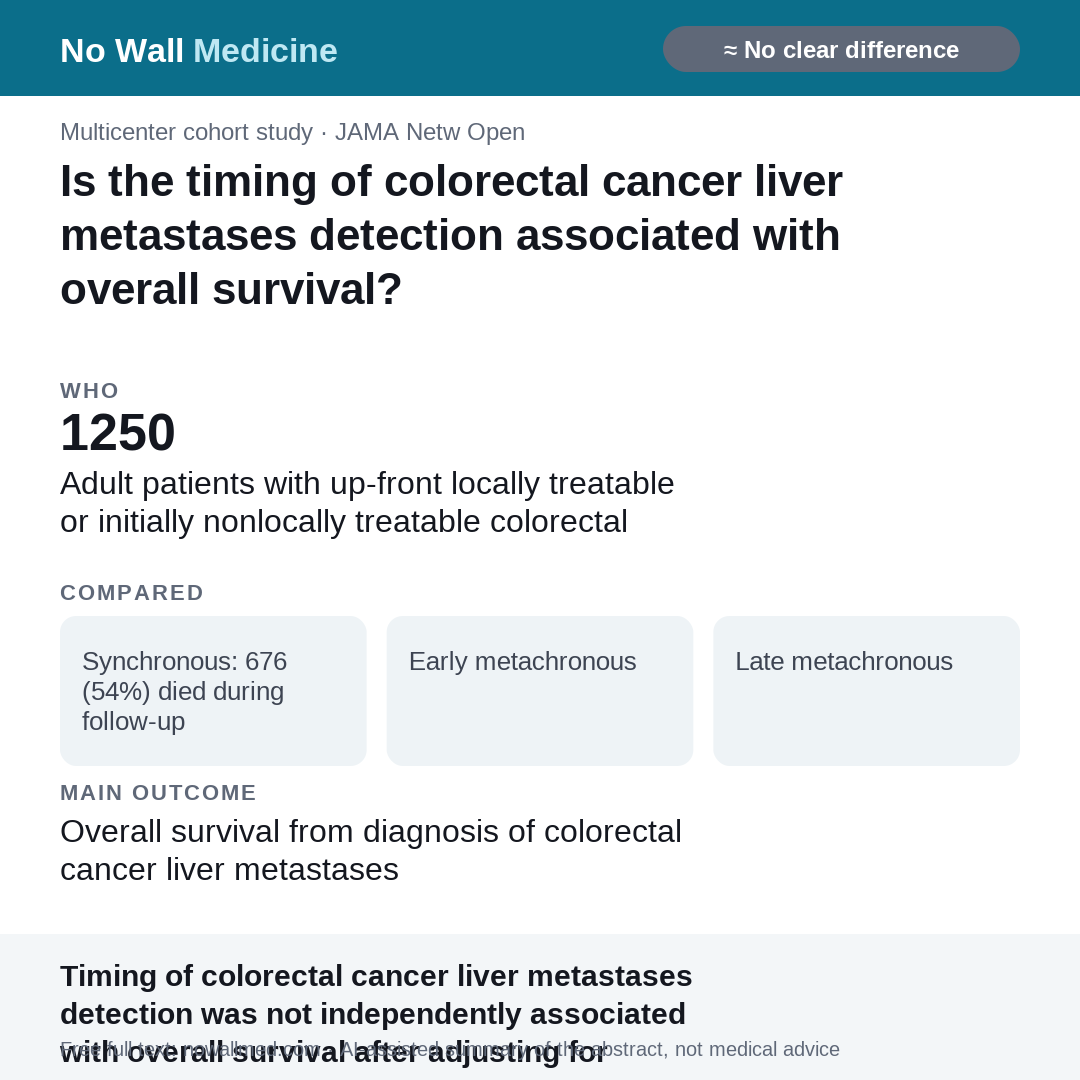
Time of Detection of Liver Metastases and Survival in Patients With Colorectal Cancer
Multicenter cohort studyNo clear difference
Is the timing of colorectal cancer liver metastases detection associated with overall survival?
Who
1250
Adult patients with up-front locally treatable or initially nonlocally treatable colorectal cancer liver metastases · Multicenter
Compared
Synchronous: 676 (54%) died during follow-up
Early metachronous
Late metachronous
Main outcome
Overall survival from diagnosis of colorectal cancer liver metastases
Result: not independently associated with overall survival
Bottom line: Timing of colorectal cancer liver metastases detection was not independently associated with overall survival after adjusting for tumor and treatment factors.
JAMA Netw Open · 2026-03-02Download image
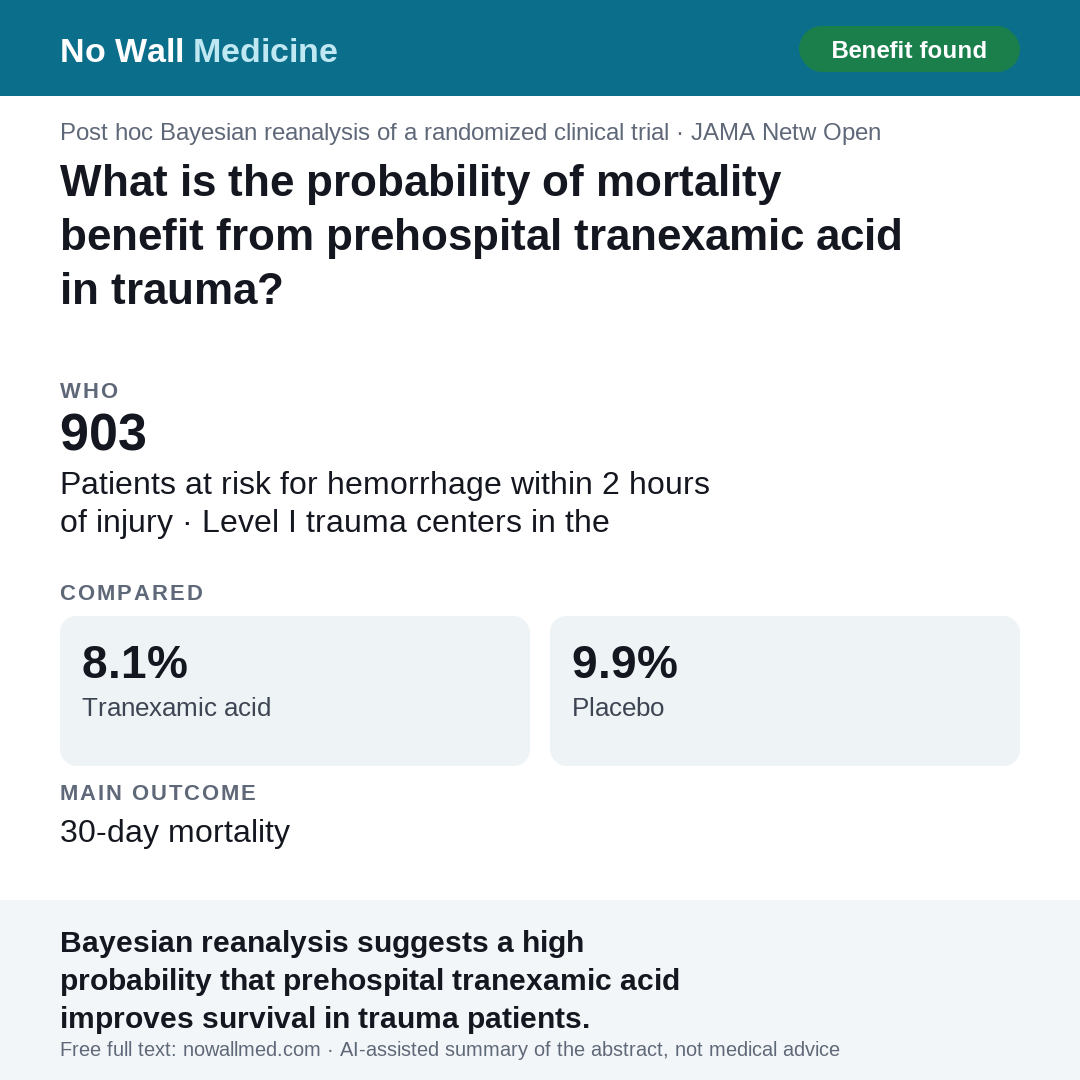
Bayesian Statistics to Reanalyze Data From the STAAMP Trial
Post hoc Bayesian reanalysis of a randomized clinical trialBenefit found
What is the probability of mortality benefit from prehospital tranexamic acid in trauma?
Who
903
Patients at risk for hemorrhage within 2 hours of injury · Level I trauma centers in the United States
Compared
8.1%Tranexamic acid
9.9%Placebo
Main outcome
30-day mortality
Result: posterior risk ratios 0.91 (95% CrI, 0.85-0.97) with a CRASH-2 prior
Bottom line: Bayesian reanalysis suggests a high probability that prehospital tranexamic acid improves survival in trauma patients.
Limitation: This was a post hoc Bayesian reanalysis of existing trial data.
JAMA Netw Open · 2026-03-02Download image
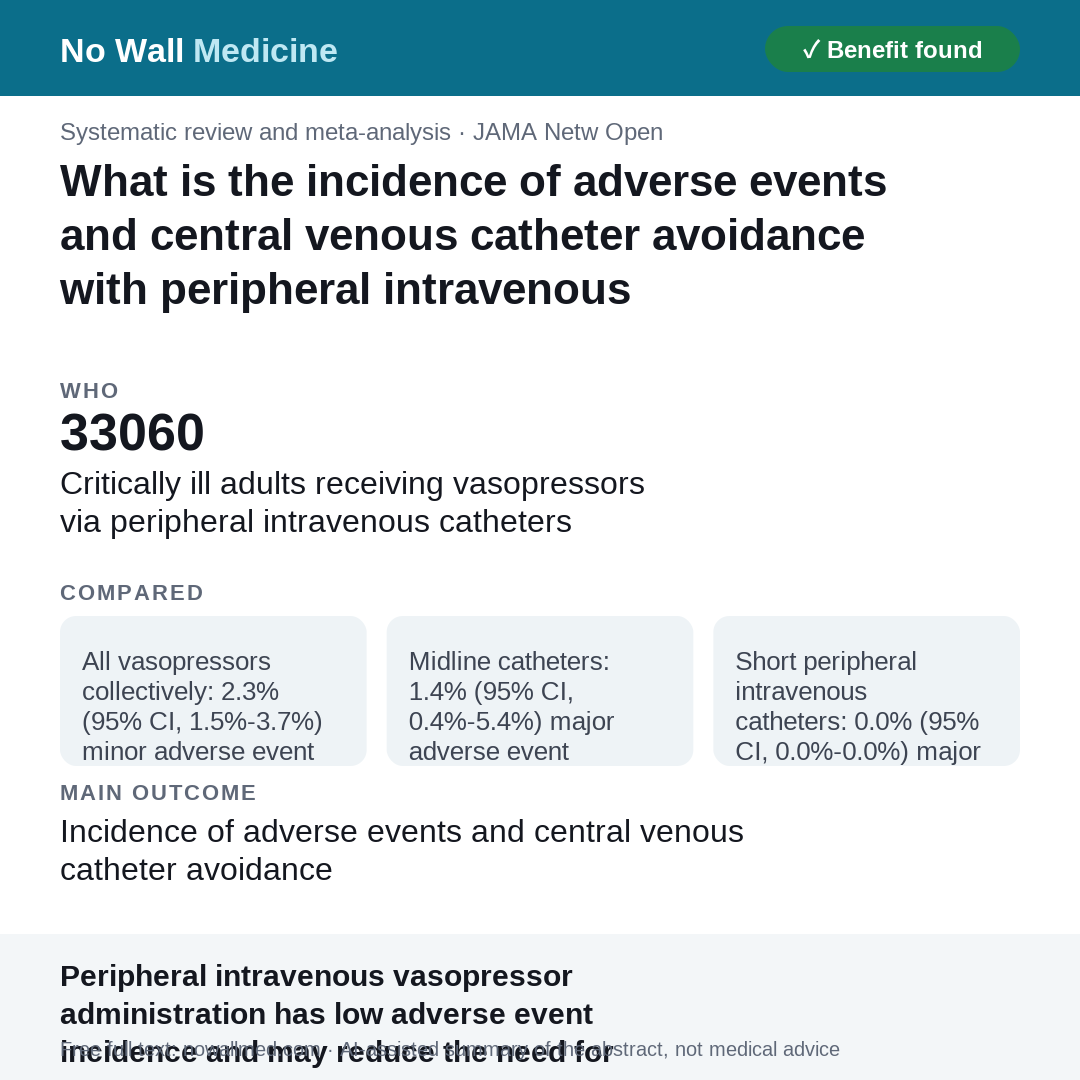
Incidence of Adverse Events in Peripheral Intravenous Vasopressor Use: A Systematic Review and Meta-Analysis
Systematic review and meta-analysisBenefit found
What is the incidence of adverse events and central venous catheter avoidance with peripheral intravenous vasopressors?
Who
33060
Critically ill adults receiving vasopressors via peripheral intravenous catheters
Compared
All vasopressors collectively: 2.3% (95% CI, 1.5%-3.7%) minor adverse event incidence
Midline catheters: 1.4% (95% CI, 0.4%-5.4%) major adverse event incidence
Short peripheral intravenous catheters: 0.0% (95% CI, 0.0%-0.0%) major adverse event incidence
Main outcome
Incidence of adverse events and central venous catheter avoidance
Bottom line: Peripheral intravenous vasopressor administration has low adverse event incidence and may reduce the need for central venous catheter placement.
JAMA Netw Open · 2026-03-02Download image
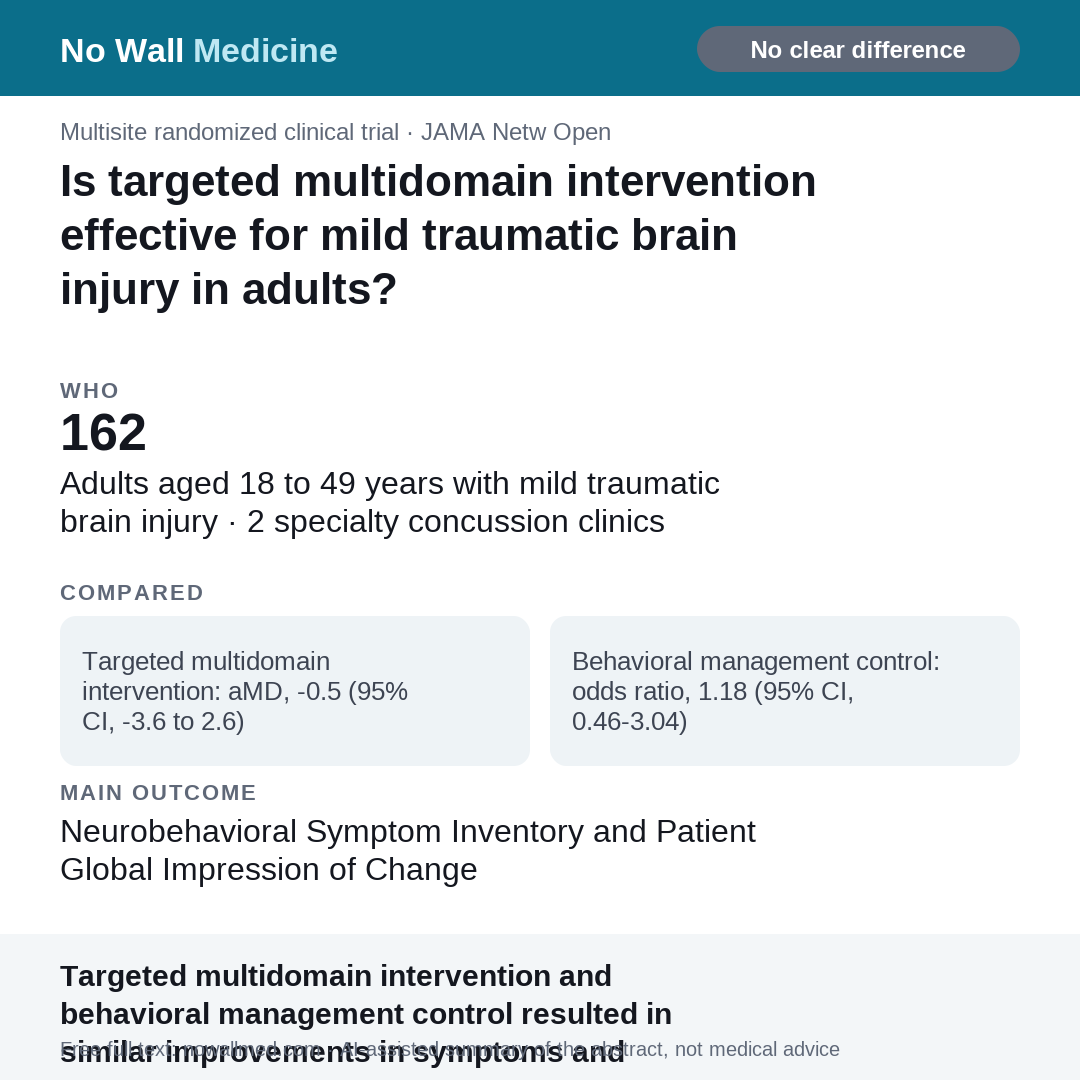
Targeted Multidomain Treatment for Mild Traumatic Brain Injury: A Randomized Clinical Trial
Multisite randomized clinical trialNo clear difference
Is targeted multidomain intervention effective for mild traumatic brain injury in adults?
Who
162
Adults aged 18 to 49 years with mild traumatic brain injury · 2 specialty concussion clinics
Compared
Targeted multidomain intervention: aMD, -0.5 (95% CI, -3.6 to 2.6)
Behavioral management control: odds ratio, 1.18 (95% CI, 0.46-3.04)
Main outcome
Neurobehavioral Symptom Inventory and Patient Global Impression of Change
Result: aMD, -0.5 (95% CI, -3.6 to 2.6)
Bottom line: Targeted multidomain intervention and behavioral management control resulted in similar improvements in symptoms and perceived change.
JAMA Netw Open · 2026-03-02Download image
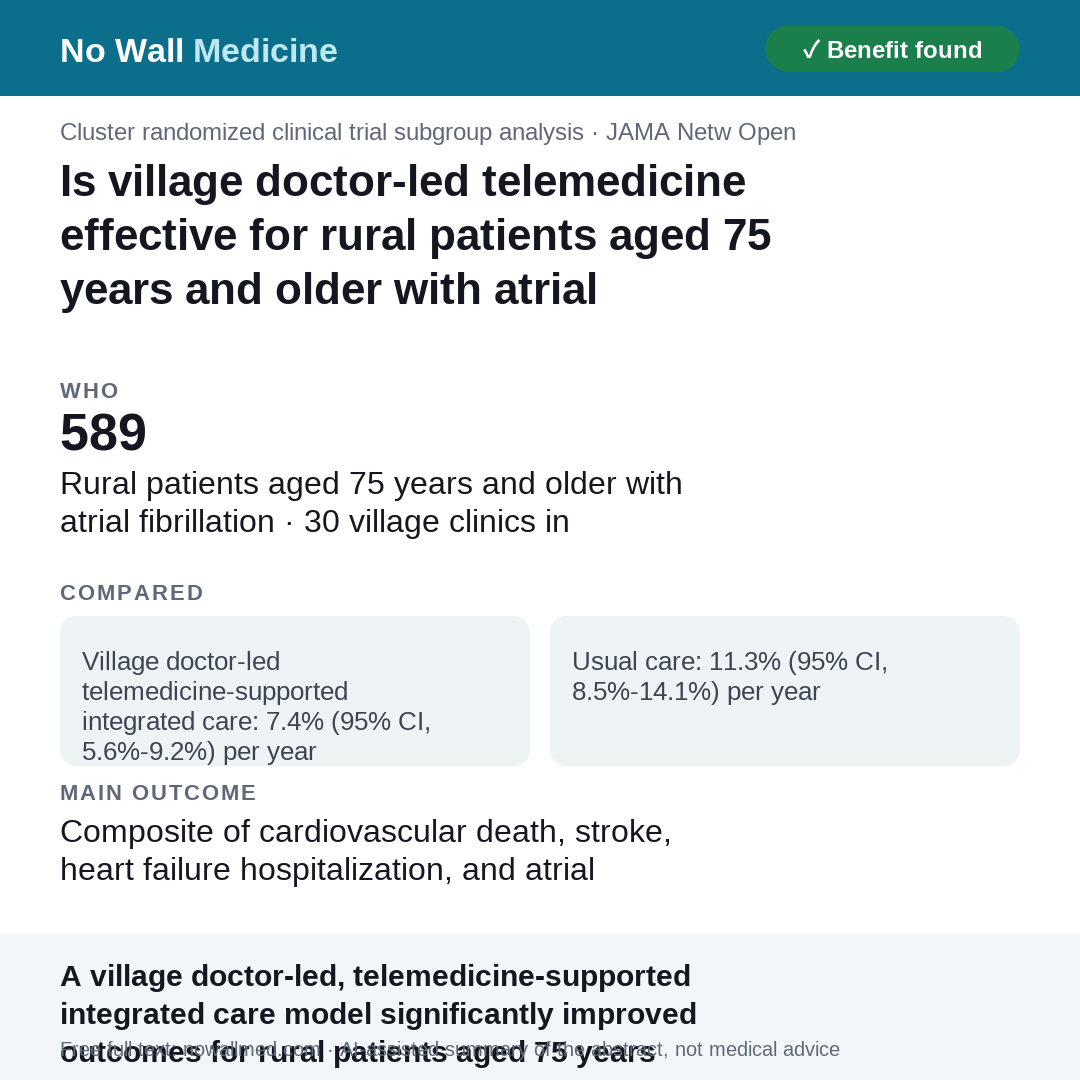
Village Doctor-Led Telemedicine for Rural Patients Aged 75 Years and Older With AF: A Prespecified Secondary Analysis of the MIRACLE-AF Trial
Cluster randomized clinical trial subgroup analysisBenefit found
Is village doctor-led telemedicine effective for rural patients aged 75 years and older with atrial fibrillation?
Who
589
Rural patients aged 75 years and older with atrial fibrillation · 30 village clinics in Jiangdu County, China
Compared
Village doctor-led telemedicine-supported integrated care: 7.4% (95% CI, 5.6%-9.2%) per year
Usual care: 11.3% (95% CI, 8.5%-14.1%) per year
Main outcome
Composite of cardiovascular death, stroke, heart failure hospitalization, and atrial fibrillation emergency visits
Result: adjusted hazard ratio 0.70 (95% CI 0.49 to 0.98)
Bottom line: A village doctor-led, telemedicine-supported integrated care model significantly improved outcomes for rural patients aged 75 years and older.
JAMA Netw Open · 2026-03-02Download image
Cost-Effectiveness of Smoking Cessation Among Survivors of Cervical Intraepithelial Neoplasia or Cervical Cancer
Economic evaluation of a randomized clinical trialBenefit found
Is motivation and problem-solving cost-effective compared to standard treatment for smoking cessation?
Who
194
Patients with history of cervical intraepithelial neoplasia or cervical cancer · Cancer centers
Compared
Motivation and problem-solving: 26.5% at month 12
Standard treatment: 12.5% at month 12
Main outcome
7-day point prevalence abstinence at months 12 and 18
Result: $921 per quit at month 12 and $7458 per quit at month 18
Bottom line: Motivation and problem-solving is cost-effective for smoking cessation at month 12 and shows moderate evidence at month 18.
JAMA Netw Open · 2026-03-02Download image
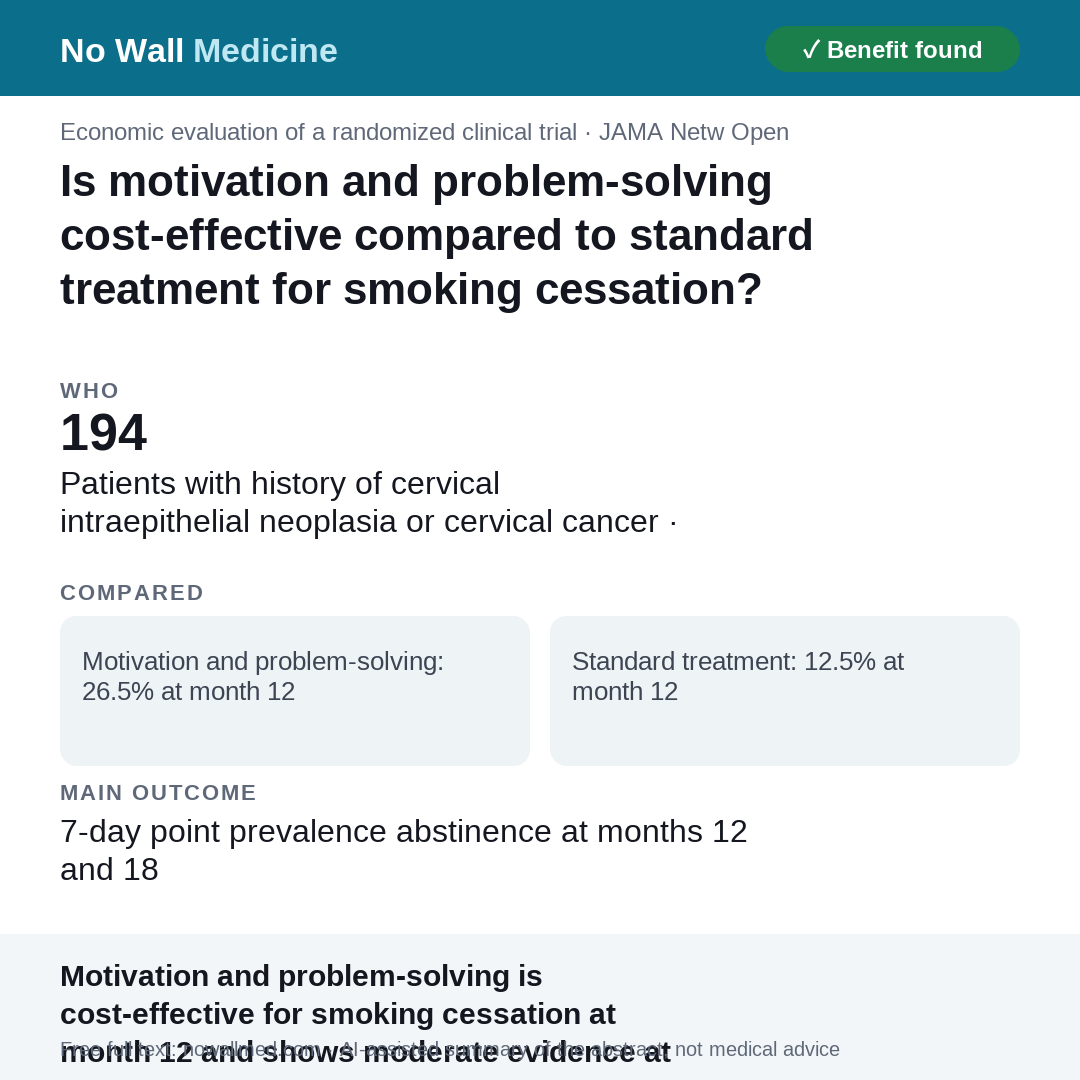
Sivelestat and Incidence of Acute Respiratory Distress Syndrome After Cardiovascular Surgery: A Randomized Clinical Trial
Randomized, placebo-controlled clinical trialBenefit found
Does sivelestat reduce the incidence of postoperative acute respiratory distress syndrome?
Who
424
Patients undergoing major cardiovascular procedures · Single-center tertiary care academic medical center in China
Compared
Sivelestat: 16.8% [32 of 190]
Placebo: 31.2% [60 of 192]
Main outcome
Incidence of acute respiratory distress syndrome
Bottom line: Sivelestat significantly reduced acute respiratory distress syndrome incidence and 90-day mortality in patients undergoing cardiovascular surgery.
Limitation: This was a single-center trial.
JAMA Netw Open · 2026-03-02Download image
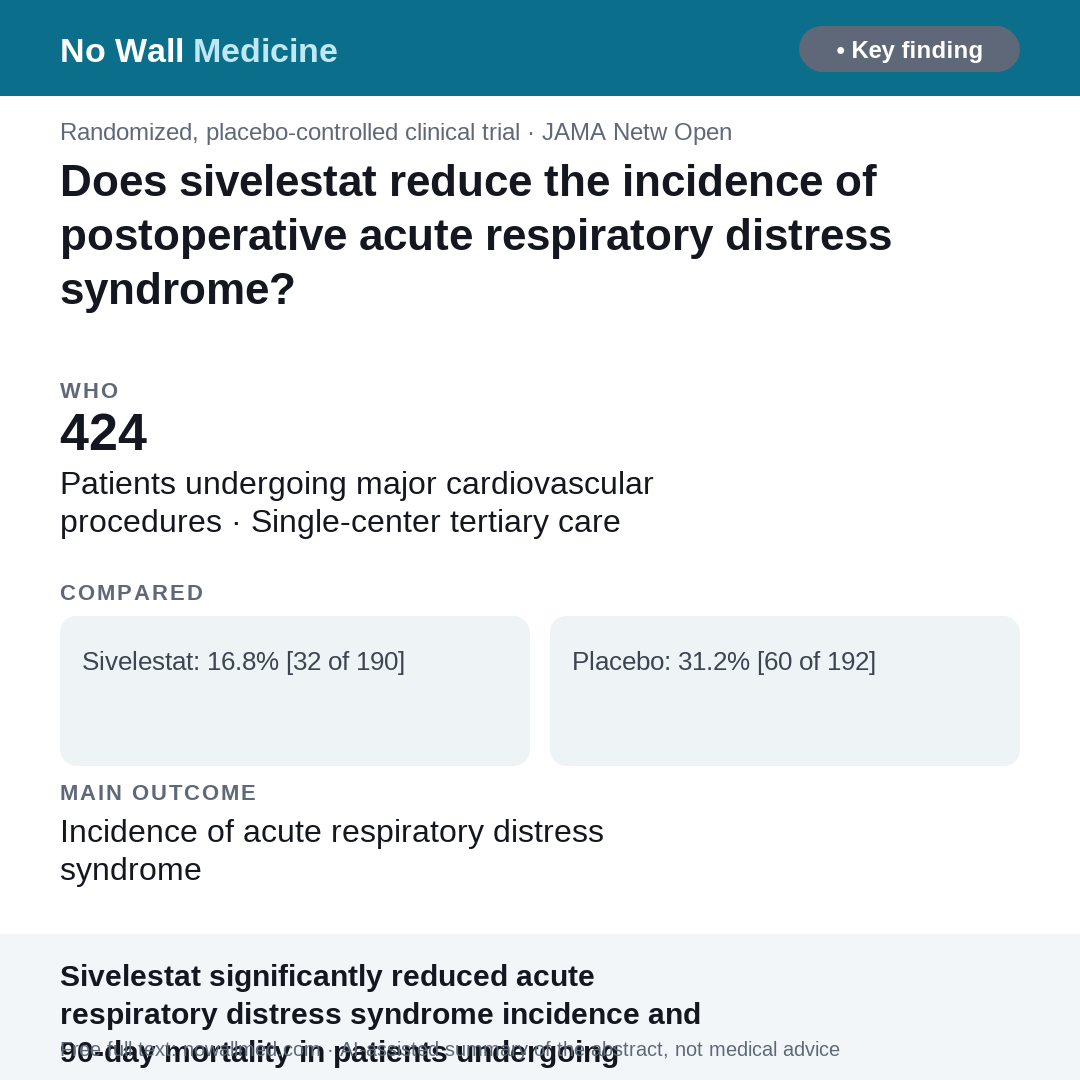
Psilocybin or Nicotine Patch for Smoking Cessation: A Pilot Randomized Clinical Trial
Pilot randomized clinical trialBenefit found
Does psilocybin plus cognitive behavioral therapy improve smoking abstinence compared to nicotine patch plus cognitive behavioral therapy?
Who
82
Psychiatrically healthy adult smokers · Johns Hopkins Bayview Medical Center, Baltimore, Maryland
Compared
40.5%Psilocybin plus cognitive behavioral therapy
10.0%Nicotine patch plus cognitive behavioral therapy
Main outcome
Biochemically verified prolonged smoking abstinence at 6 months
Result: odds ratio 6.12 (95% CI 1.99-23.26)
Bottom line: One dose of psilocybin with cognitive behavioral therapy significantly increased long-term smoking abstinence compared to nicotine patch treatment.
JAMA Netw Open · 2026-03-02Download image
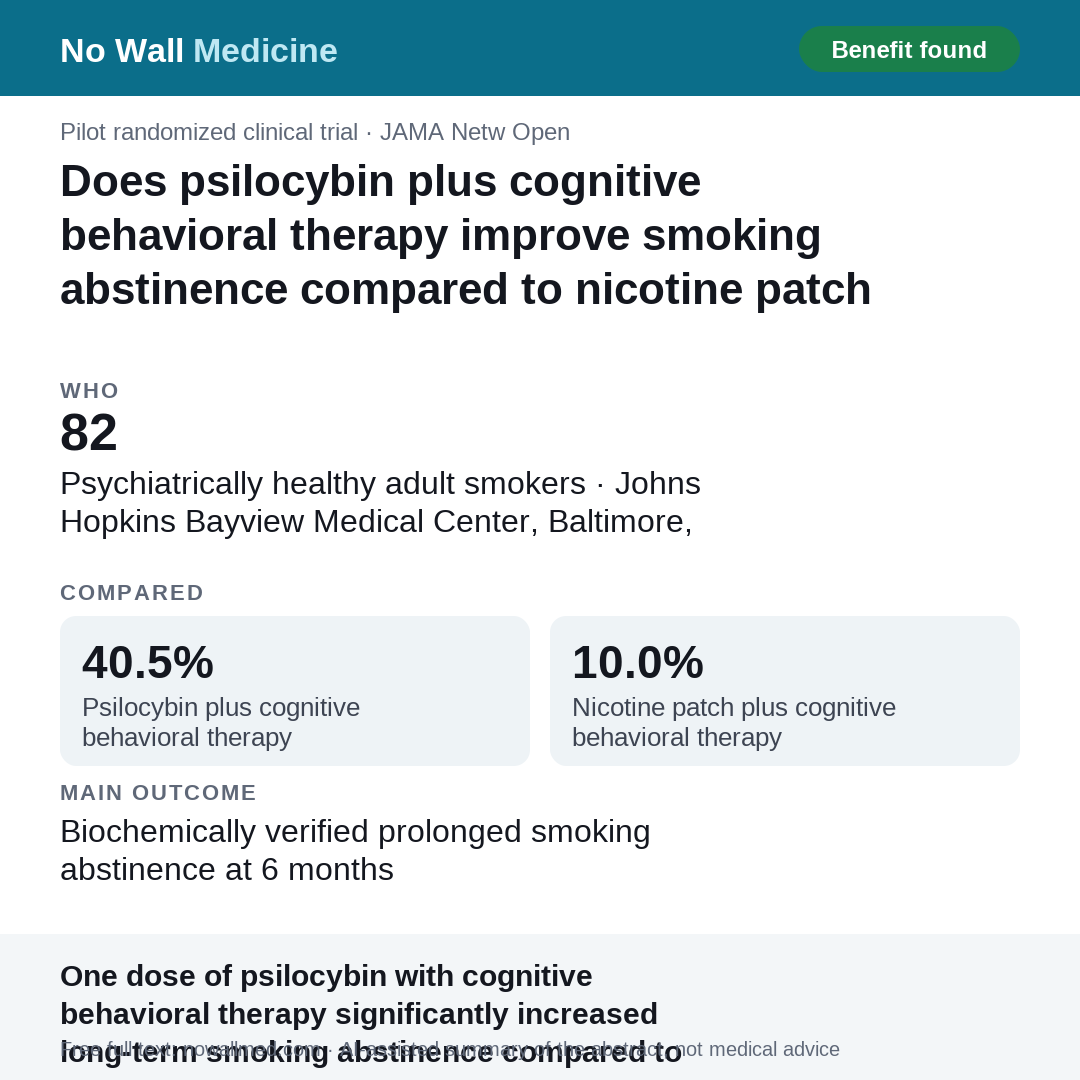
Plasma Phosphorylated Tau 217 and Incident Mild Cognitive Impairment and Dementia in Older Women
Cohort studyHarm found
Plasma p-tau217 and cognitive decline
Who
2766
Older women without cognitive impairment · US clinical sites
Compared
Estrogen plus progestin
Placebo
Main outcome
Mild cognitive impairment or dementia
Result: hazard ratio 2.43 (95% CI 2.18 to 2.71)
Bottom line: High p-tau217 linked to cognitive decline
Limitation: None mentioned
JAMA Netw Open · 2026-03-02Download image
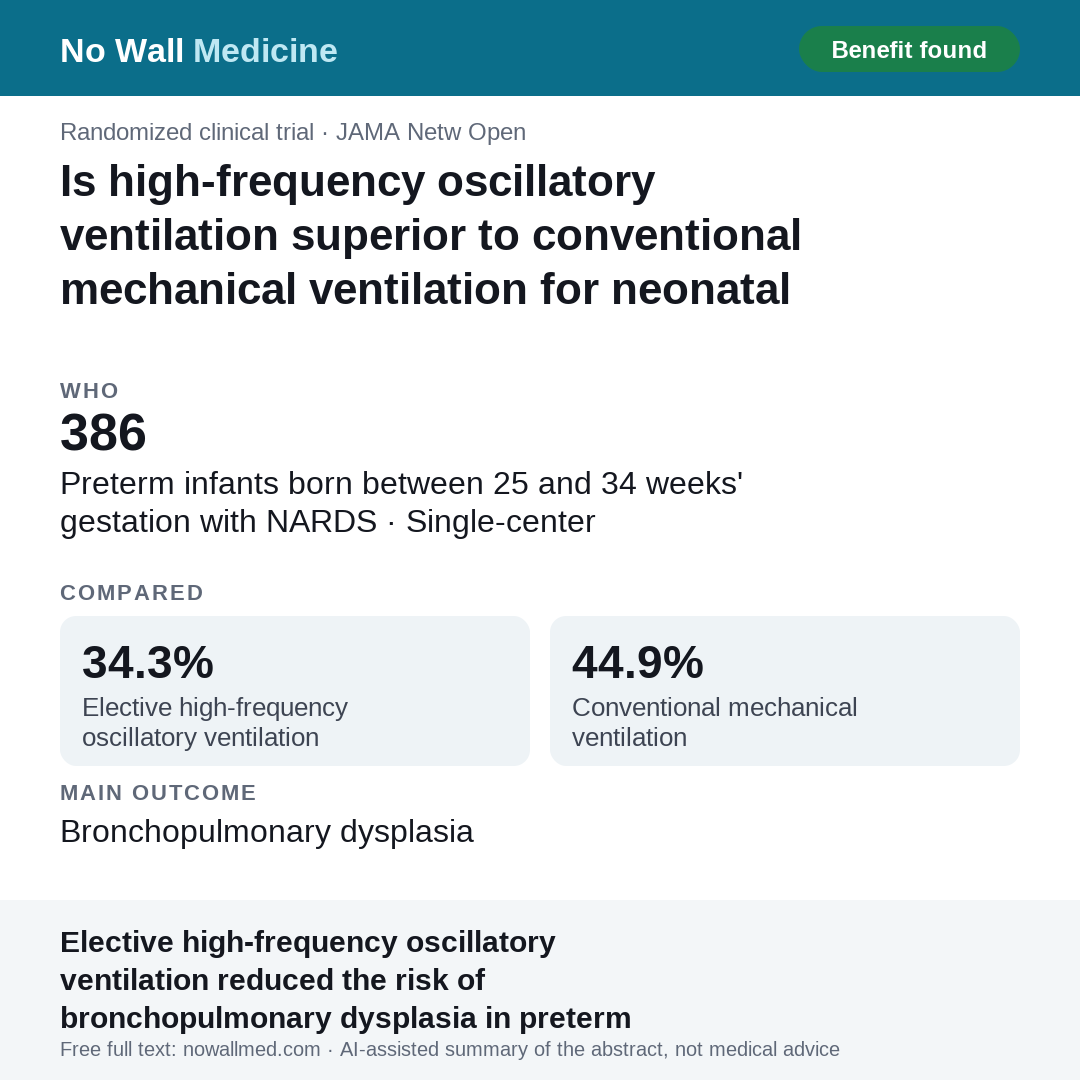
High-Frequency Oscillation vs Mechanical Ventilation for Neonatal Acute Respiratory Distress Syndrome: A Randomized Clinical Trial
Randomized clinical trialBenefit found
Is high-frequency oscillatory ventilation superior to conventional mechanical ventilation for neonatal acute respiratory distress syndrome?
Who
386
Preterm infants born between 25 and 34 weeks' gestation with NARDS · Single-center
Compared
34.3%Elective high-frequency oscillatory ventilation (definition 1)
44.9%Conventional mechanical ventilation (definition 1)
Main outcome
Bronchopulmonary dysplasia
Result: relative risk 0.92 (95% CI 0.86-0.99)
Bottom line: Elective high-frequency oscillatory ventilation reduced the risk of bronchopulmonary dysplasia in preterm infants with neonatal acute respiratory distress syndrome.
Limitation: Sensitivity analysis excluded 44 participants who crossed over between treatment groups
JAMA Netw Open · 2026-03-02Download image
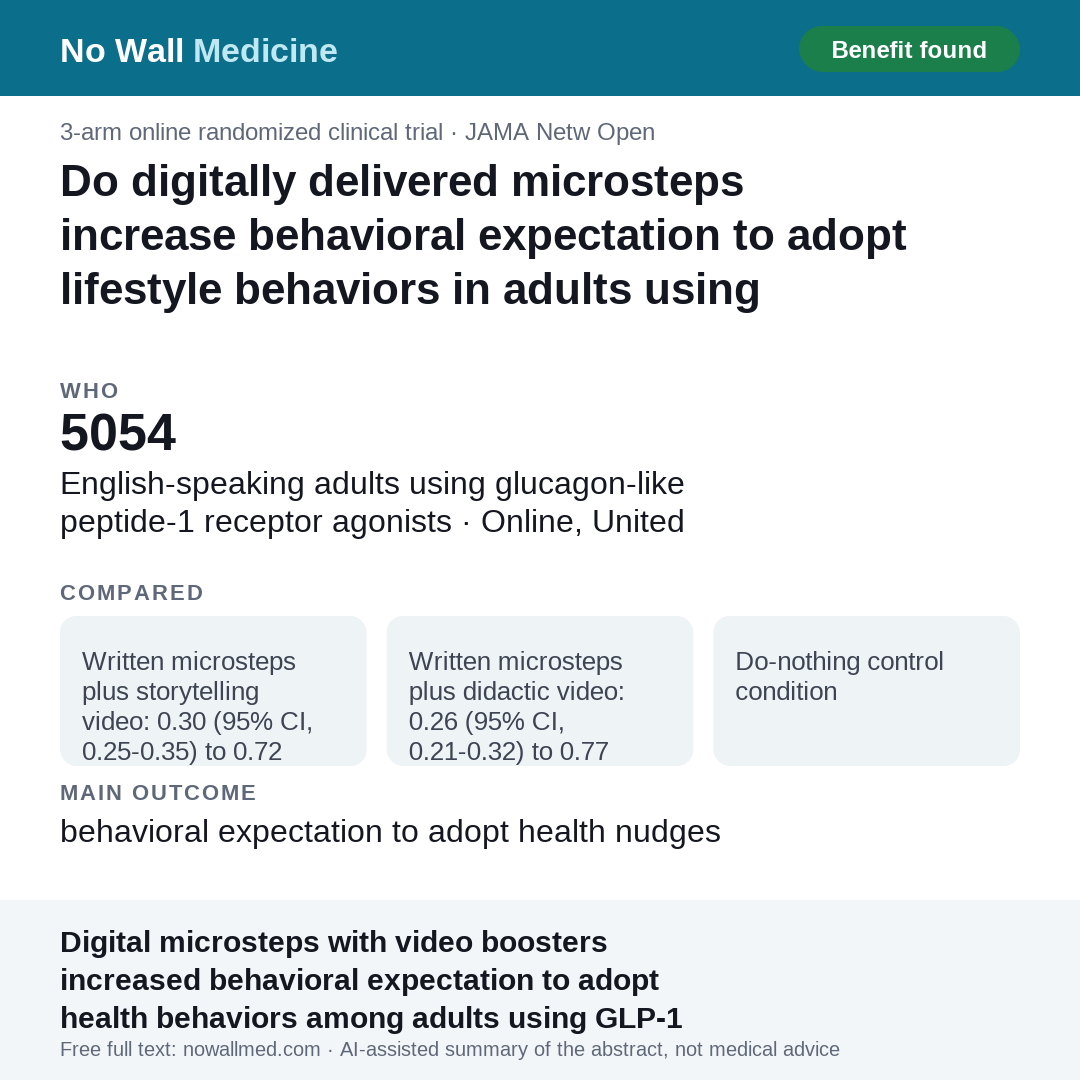
Digital Microsteps as Scalable Adjuncts for Adults Using GLP-1 Receptor Agonists: A Randomized Clinical Trial
3-arm online randomized clinical trialBenefit found
Do digitally delivered microsteps increase behavioral expectation to adopt lifestyle behaviors in adults using GLP-1 receptor agonists?
Who
5054
English-speaking adults using glucagon-like peptide-1 receptor agonists · Online, United States, United Kingdom, and other countries
Compared
Written microsteps plus storytelling video: 0.30 (95% CI, 0.25-0.35) to 0.72 (95% CI, 0.68-0.77)
Written microsteps plus didactic video: 0.26 (95% CI, 0.21-0.32) to 0.77 (95% CI, 0.72-0.81)
Do-nothing control condition
Main outcome
behavioral expectation to adopt health nudges
Bottom line: Digital microsteps with video boosters increased behavioral expectation to adopt health behaviors among adults using GLP-1 receptor agonists.
JAMA Netw Open · 2026-03-02Download image
Virtual Reality-Based Vision Therapy for Intermittent Exotropia: A Randomized Clinical Trial
Randomized clinical trialBenefit found
Is virtual reality-based vision therapy effective for intermittent exotropia in children?
Who
177
Children aged 6 to 18 years with untreated intermittent exotropia · 3 tertiary hospitals in China
Compared
-0.33Virtual reality-based vision therapy (-1.00 to 0.00)
0.00Control group (-0.33 to 0.33)
Main outcome
change in distance exotropia control score from baseline to week 12
Result: -0.33; 95% CI, -0.57 to -0.10
Bottom line: Virtual reality-based vision therapy provided modest improvement in distance exotropia control, especially with high training adherence.
Limitation: follow-up phase is ongoing
JAMA Netw Open · 2026-03-02Download image

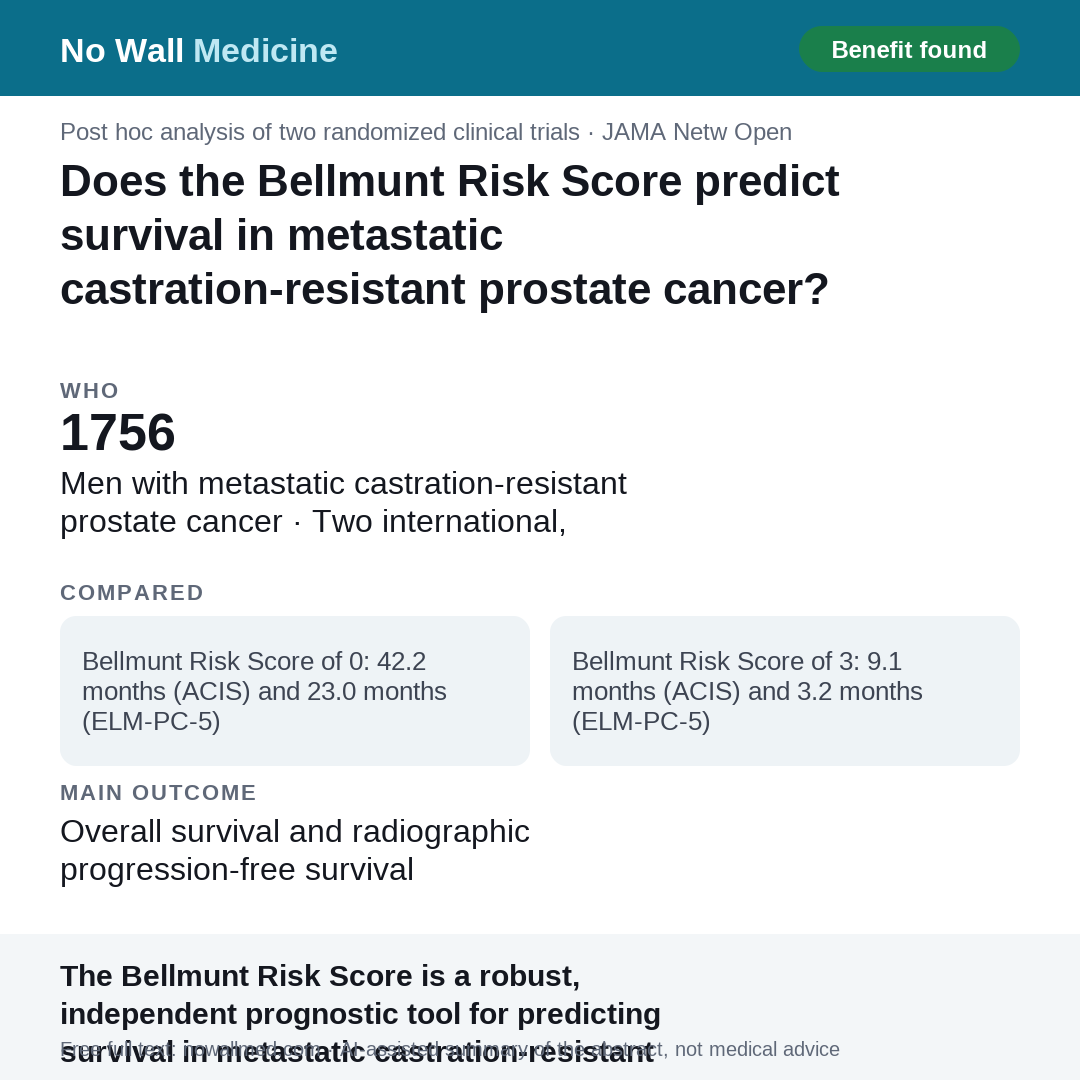
Bellmunt Risk Score as a Prognostic Tool in Metastatic Castration-Resistant Prostate Cancer Survival
Post hoc analysis of two randomized clinical trialsBenefit found
Does the Bellmunt Risk Score predict survival in metastatic castration-resistant prostate cancer?
Who
1756
Men with metastatic castration-resistant prostate cancer · Two international, multicenter sites
Compared
Bellmunt Risk Score of 0: 42.2 months (ACIS) and 23.0 months (ELM-PC-5)
Bellmunt Risk Score of 3: 9.1 months (ACIS) and 3.2 months (ELM-PC-5)
Main outcome
Overall survival and radiographic progression-free survival
Result: AHR 8.29 (95% CI 2.57-26.78) for BRS 3 vs 0 in ACIS
Bottom line: The Bellmunt Risk Score is a robust, independent prognostic tool for predicting survival in metastatic castration-resistant prostate cancer.
JAMA Netw Open · 2026-03-02Download image
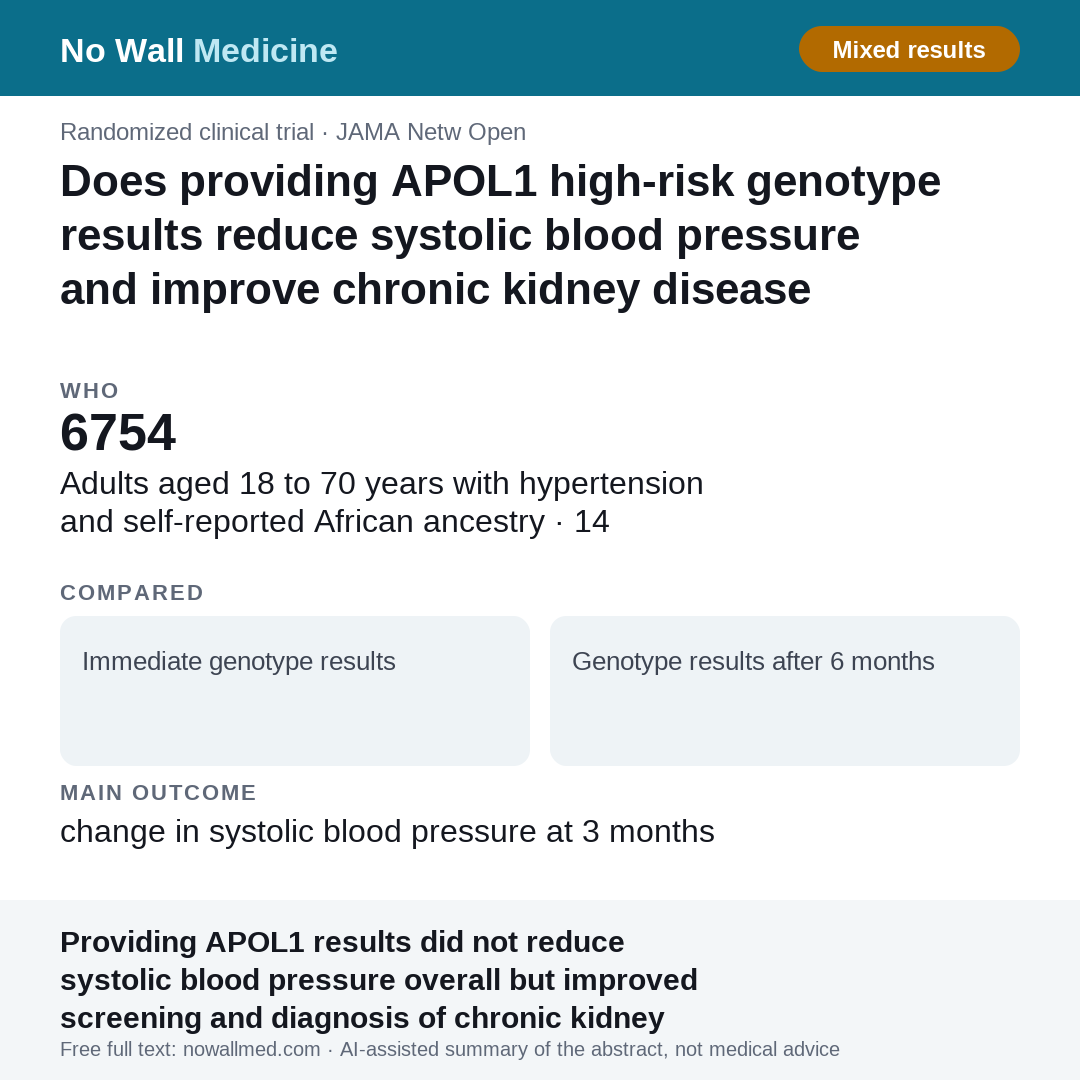
Genetic Testing for APOL1 in Adults With Hypertension: The GUARDD-US Randomized Clinical Trial
Randomized clinical trialMixed results
Does providing APOL1 high-risk genotype results reduce systolic blood pressure and improve chronic kidney disease screening?
Who
6754
Adults aged 18 to 70 years with hypertension and self-reported African ancestry · 14 institutions and 54 clinical sites across the US
Compared
Immediate genotype results
Genotype results after 6 months
Main outcome
change in systolic blood pressure at 3 months
Result: between-group difference, -0.3 mm Hg (95% CI, -2.7 to 2.1 mm Hg)
Bottom line: Providing APOL1 results did not reduce systolic blood pressure overall but improved screening and diagnosis of chronic kidney disease.
JAMA Netw Open · 2026-03-02Download image
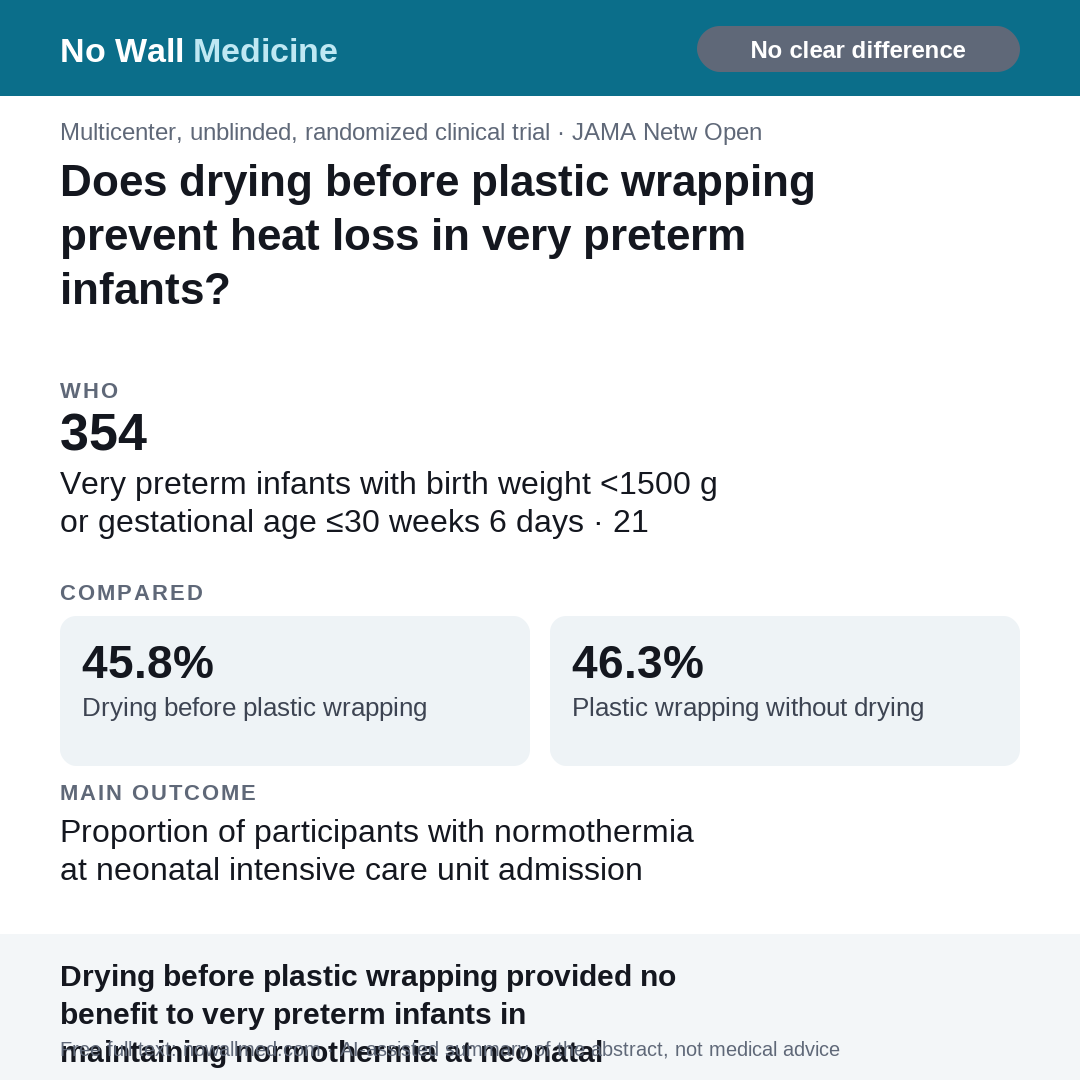
Drying Very Preterm Infants Before Plastic Wrapping at Birth: A Randomized Clinical Trial
Multicenter, unblinded, randomized clinical trialNo clear difference
Does drying before plastic wrapping prevent heat loss in very preterm infants?
Who
354
Very preterm infants with birth weight <1500 g or gestational age ≤30 weeks 6 days · 21 tertiary care hospitals in Italy
Compared
45.8%Drying before plastic wrapping (81/177)
46.3%Plastic wrapping without drying (82/177)
Main outcome
Proportion of participants with normothermia at neonatal intensive care unit admission
Result: risk ratio 0.99 (95% CI 0.79-1.24)
Bottom line: Drying before plastic wrapping provided no benefit to very preterm infants in maintaining normothermia at neonatal intensive care unit admission.
JAMA Netw Open · 2026-03-02Download image
Assessment of antibody responses to Anopheles SG6-P1 and Aedes N-term 34 kDa salivary peptides: a randomised human-challenge trial of controlled exposures to vector bites
Randomised, open-label, exploratory factorial trialMixed results
How do antibody responses to mosquito salivary peptides change after controlled vector bites?
Who
210
Healthy volunteers aged 18-60 years · Single-centre, Mae Sot, Thailand
Compared
305 Anopheles minimus bites: 1.14-fold (95% CI 1.03-1.26) increase during exposure
Other mosquito bite groups: minimal or no boosting observed
Main outcome
total IgG antibodies against Anopheles SG6-P1 peptides
Result: 1.14-fold (95% CI 1.03-1.26)
Bottom line: Antibodies were boosted by 305 Anopheles minimus bites, but the magnitude was small and decay was slow.
BMC Med · 2026-03-02Download image

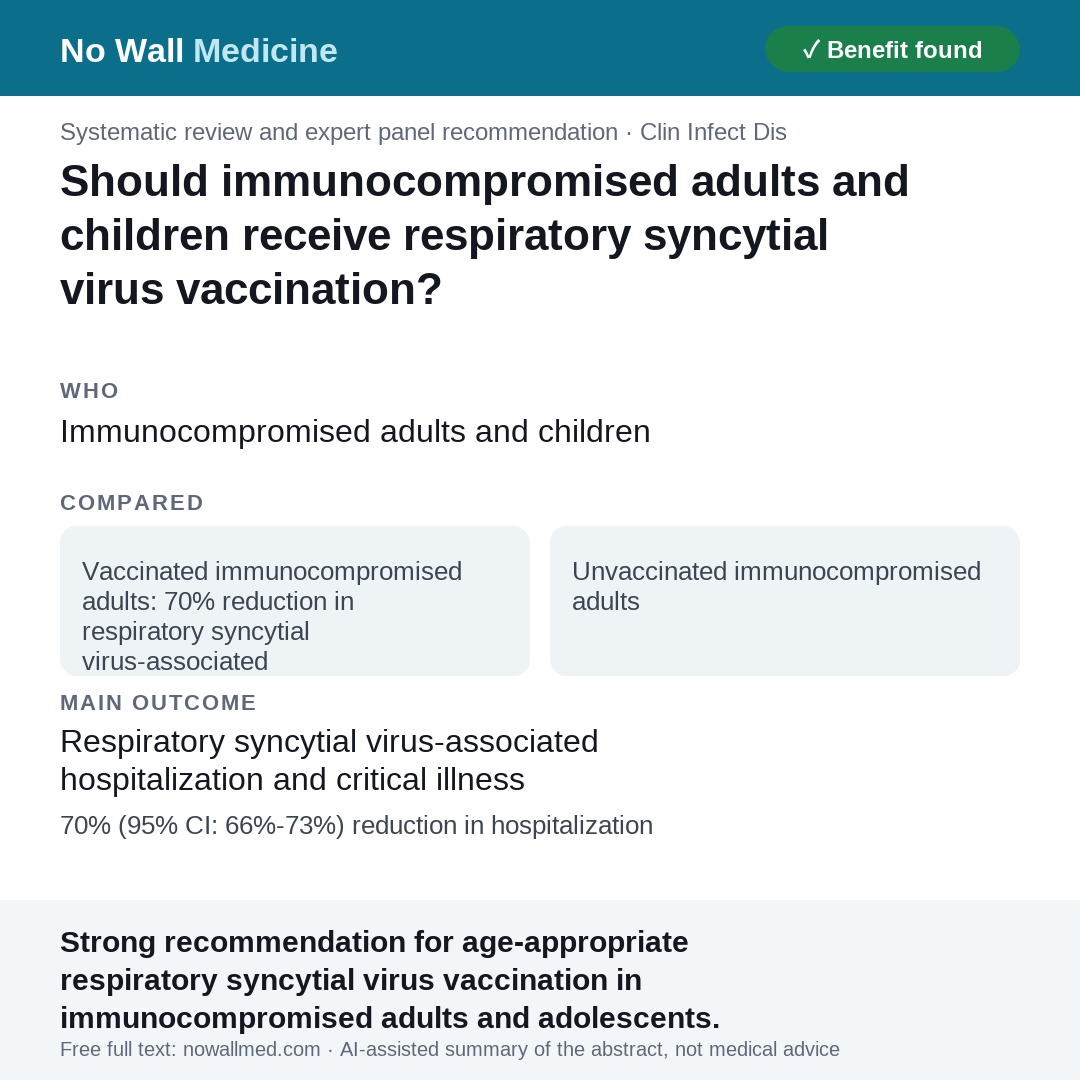
IDSA 2025 Guidelines on the Use of Vaccines for the Prevention of Seasonal RSV Infections in Immunocompromised Patients
Systematic review and expert panel recommendationBenefit found
Should immunocompromised adults and children receive respiratory syncytial virus vaccination?
Who
Immunocompromised adults and children
Compared
Vaccinated immunocompromised adults: 70% reduction in respiratory syncytial virus-associated hospitalization
Unvaccinated immunocompromised adults
Main outcome
Respiratory syncytial virus-associated hospitalization and critical illness
Result: 70% (95% CI: 66%-73%) reduction in hospitalization
Bottom line: Strong recommendation for age-appropriate respiratory syncytial virus vaccination in immunocompromised adults and adolescents.
Limitation: Direct evidence to guide vaccination in this population remains limited.
Clin Infect Dis · 2026-03-02Download image
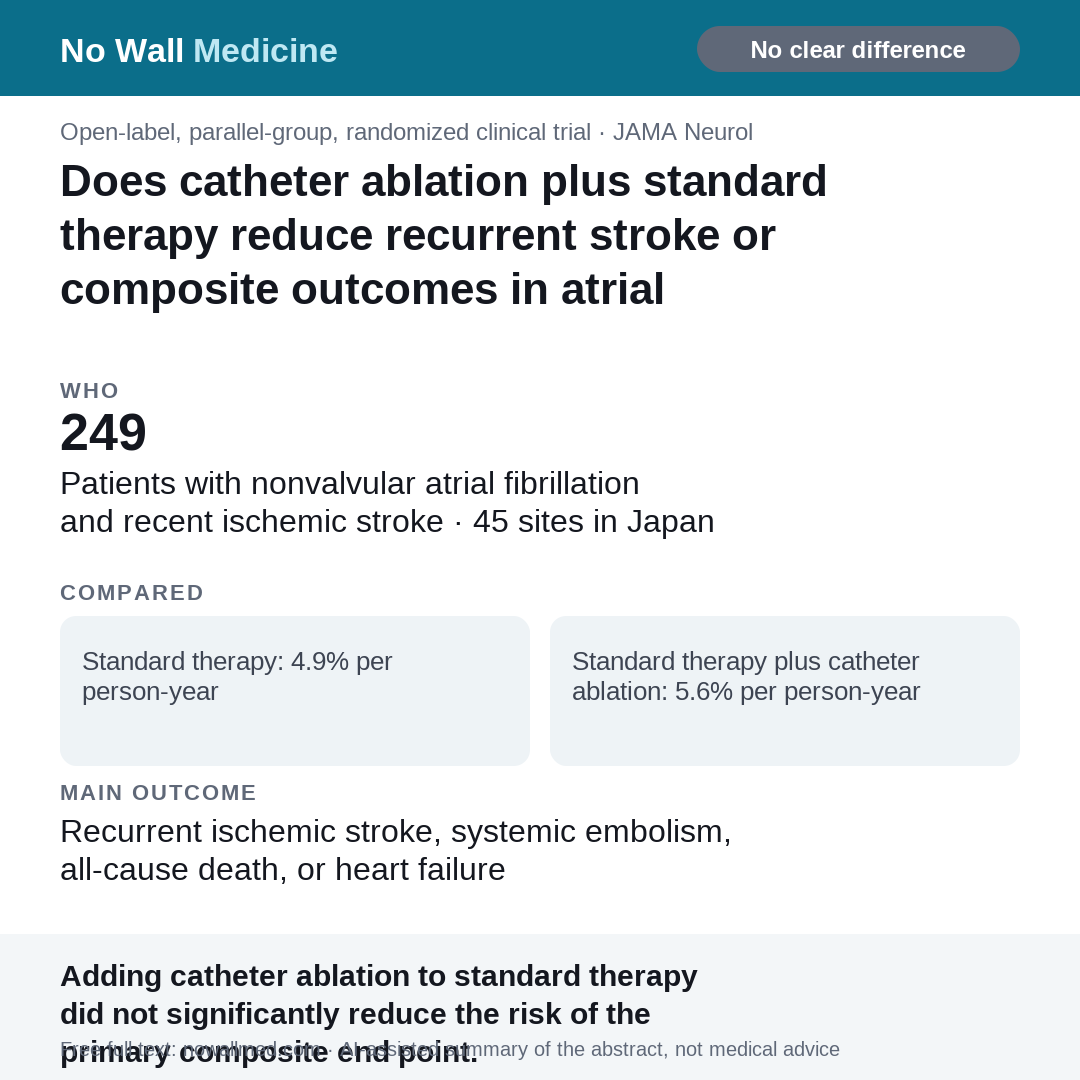
Catheter Ablation and Oral Anticoagulation for Secondary Stroke Prevention in Atrial Fibrillation: The STABLED Randomized Clinical Trial
Open-label, parallel-group, randomized clinical trialNo clear difference
Does catheter ablation plus standard therapy reduce recurrent stroke or composite outcomes in atrial fibrillation?
Who
249
Patients with nonvalvular atrial fibrillation and recent ischemic stroke · 45 sites in Japan
Compared
Standard therapy: 4.9% per person-year
Standard therapy plus catheter ablation: 5.6% per person-year
Main outcome
Recurrent ischemic stroke, systemic embolism, all-cause death, or heart failure hospitalization
Result: hazard ratio 1.11 (95% CI 0.62-2.01)
Bottom line: Adding catheter ablation to standard therapy did not significantly reduce the risk of the primary composite end point.
JAMA Neurol · 2026-03-02Download image