Visual abstracts
New randomized trials and meta-analyses from leading journals at a glance: who was studied, what was compared, and what was found. Every paper is free to read in full.
All specialtiesCardiology 1367Oncology 1224Gastroenterology & Hepatology 493Infectious Disease 893Neurology 567Psychiatry & Mental Health 683Pulmonology 589Critical Care 404Endocrinology & Diabetes 754Pediatrics 819Surgery 648Orthopedics & Sports Medicine 261Neurosurgery 186Cardiothoracic & Vascular Surgery 155Plastic & Reconstructive Surgery 215Nephrology 289Rheumatology 183Hematology 286Dermatology 144Ophthalmology 156Obstetrics & Gynecology 433Public & Global Health 270Radiology & Imaging 176Anesthesiology 264Urology 255ENT (Otolaryngology) 187Emergency Medicine 152Allergy & Immunology 91Geriatrics 287Family Medicine & Primary Care 174Medical Genetics & Genomics 144Pathology & Laboratory Medicine 42Physical Medicine & Rehabilitation 242Palliative Care 123Nutrition 359Digital Health & AI 713General Medicine 123
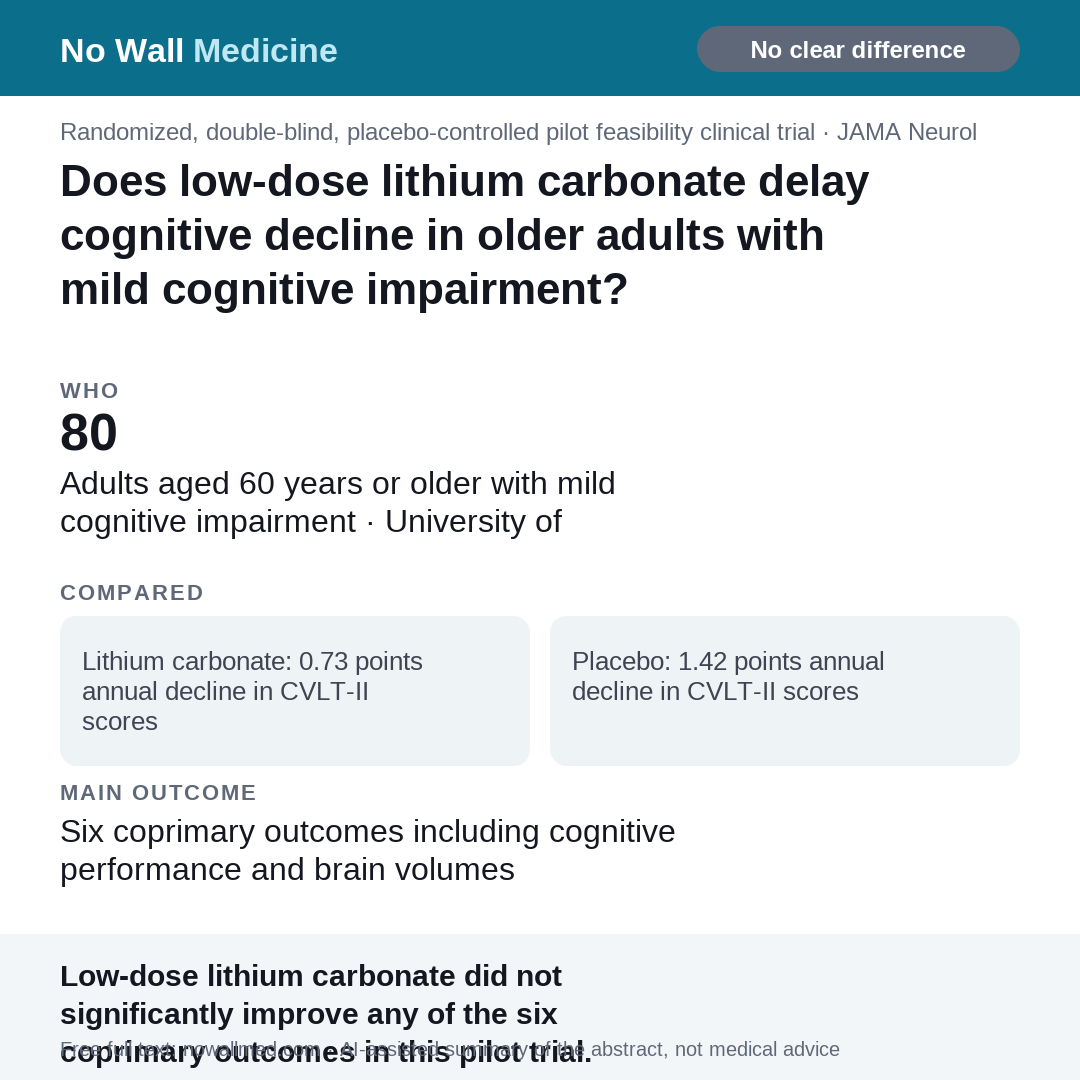
Low-Dose Lithium for Mild Cognitive Impairment: A Pilot Randomized Clinical Trial
Randomized, double-blind, placebo-controlled pilot feasibility clinical trialNo clear difference
Does low-dose lithium carbonate delay cognitive decline in older adults with mild cognitive impairment?
Who
80
Adults aged 60 years or older with mild cognitive impairment · University of Pittsburgh School of Medicine
Compared
Lithium carbonate: 0.73 points annual decline in CVLT-II scores
Placebo: 1.42 points annual decline in CVLT-II scores
Main outcome
Six coprimary outcomes including cognitive performance and brain volumes
Result: difference, 0.69 points per year; 95% CI, 0.01-1.37
Bottom line: Low-dose lithium carbonate did not significantly improve any of the six coprimary outcomes in this pilot trial.
JAMA Neurol · 2026-03-02Download image
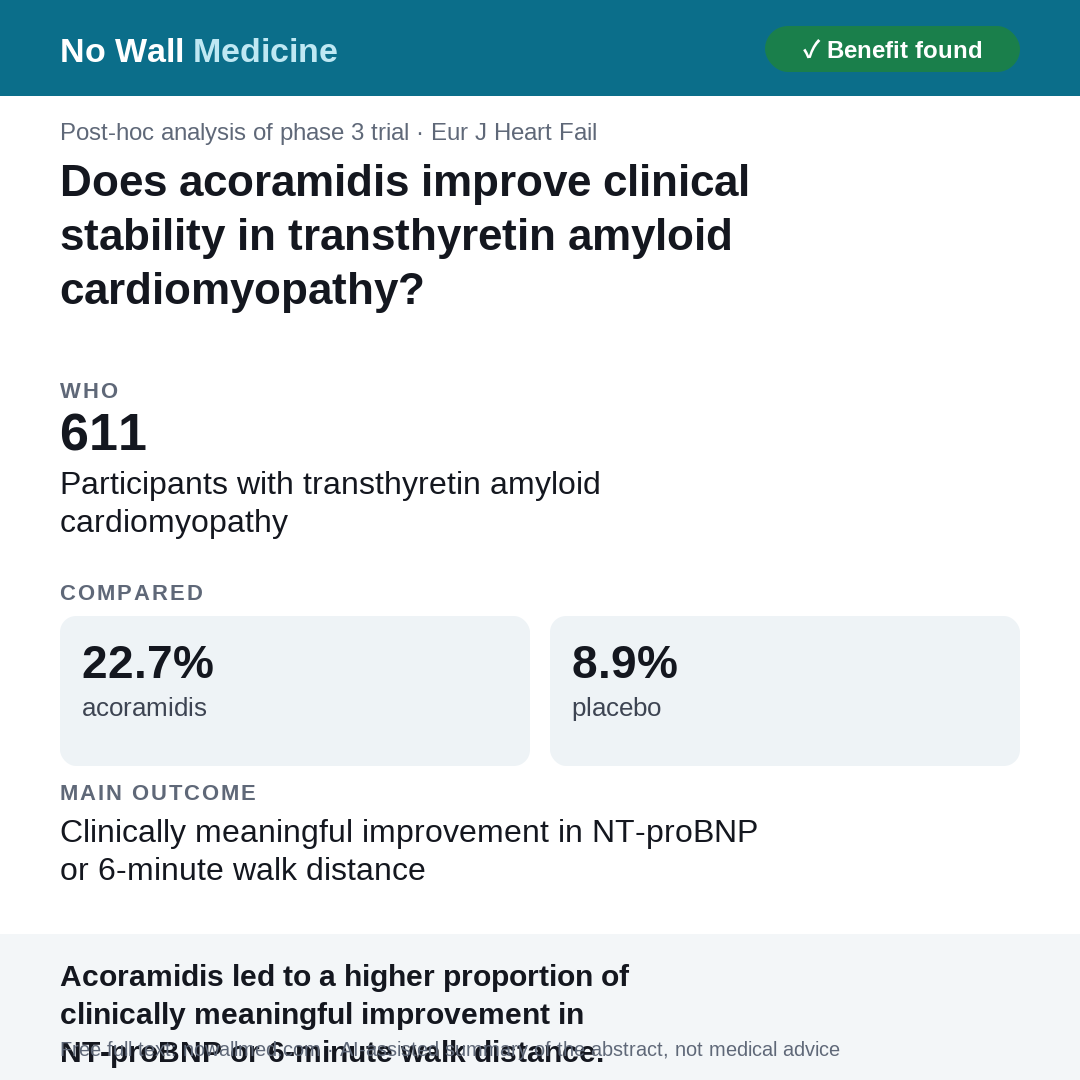
Impact of acoramidis on clinical stability in transthyretin amyloid cardiomyopathy: observations from ATTRibute-CM
Post-hoc analysis of phase 3 trialBenefit found
Does acoramidis improve clinical stability in transthyretin amyloid cardiomyopathy?
Who
611
Participants with transthyretin amyloid cardiomyopathy
Compared
22.7%acoramidis
8.9%placebo
Main outcome
Clinically meaningful improvement in NT-proBNP or 6-minute walk distance
Result: odds ratio 3.0 (95% CI 1.8-5.1)
Bottom line: Acoramidis led to a higher proportion of clinically meaningful improvement in NT-proBNP or 6-minute walk distance.
Eur J Heart Fail · 2026-03-02Download image
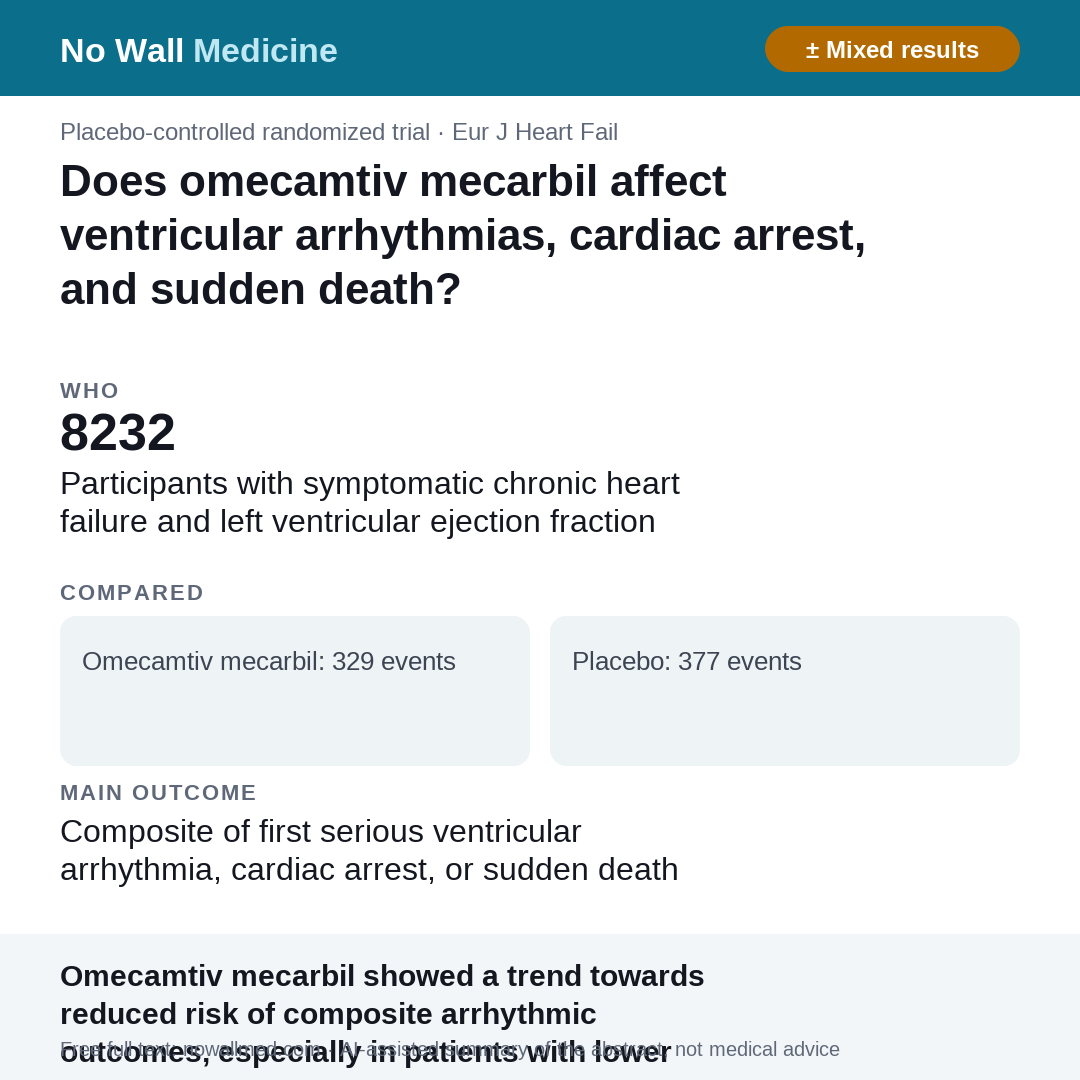
Effect of the cardiac myosin activator omecamtiv mecarbil on ventricular arrhythmias, cardiac arrest, and sudden death in heart failure with reduced ejection fraction: the GALACTIC-HF trial
Placebo-controlled randomized trialMixed results
Does omecamtiv mecarbil affect ventricular arrhythmias, cardiac arrest, and sudden death?
Who
8232
Participants with symptomatic chronic heart failure and left ventricular ejection fraction ≤35%
Compared
Omecamtiv mecarbil: 329 events
Placebo: 377 events
Main outcome
Composite of first serious ventricular arrhythmia, cardiac arrest, or sudden death
Result: hazard ratio 0.86 (95% CI 0.75 to 1.00)
Bottom line: Omecamtiv mecarbil showed a trend towards reduced risk of composite arrhythmic outcomes, especially in patients with lower ejection fraction.
Limitation: This was a post hoc analysis requiring prospective validation.
Eur J Heart Fail · 2026-03-02Download image
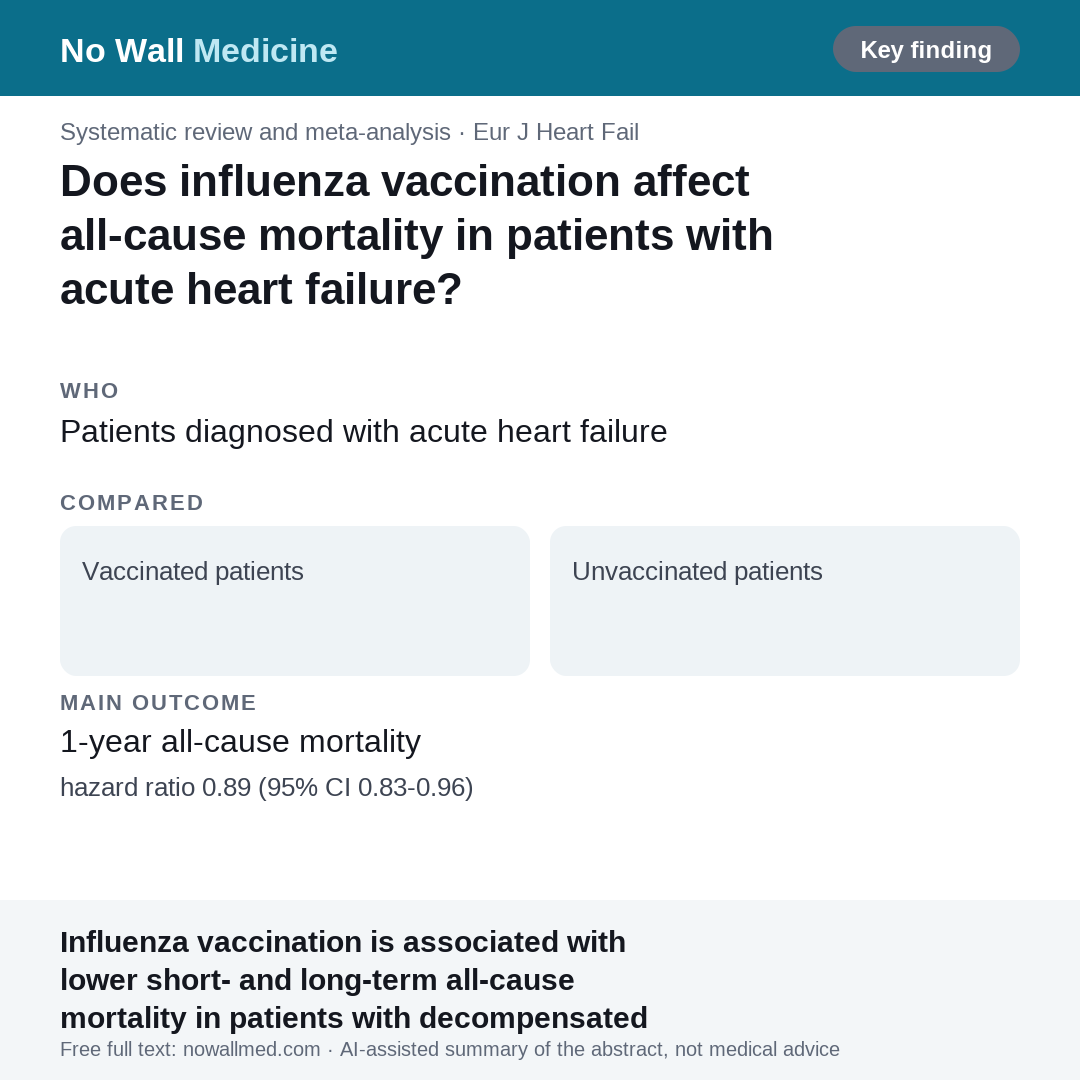
Effect of influenza vaccination in patients with decompensated heart failure: a systematic review and meta-analysis
Systematic review and meta-analysisBenefit found
Does influenza vaccination affect all-cause mortality in patients with acute heart failure?
Who
Patients diagnosed with acute heart failure
Compared
Vaccinated patients
Unvaccinated patients
Main outcome
1-year all-cause mortality
Result: hazard ratio 0.89 (95% CI 0.83-0.96)
Bottom line: Influenza vaccination is associated with lower short- and long-term all-cause mortality in patients with decompensated heart failure.
Limitation: All included studies were observational, so results could be subject to residual confounding.
Eur J Heart Fail · 2026-03-02Download image
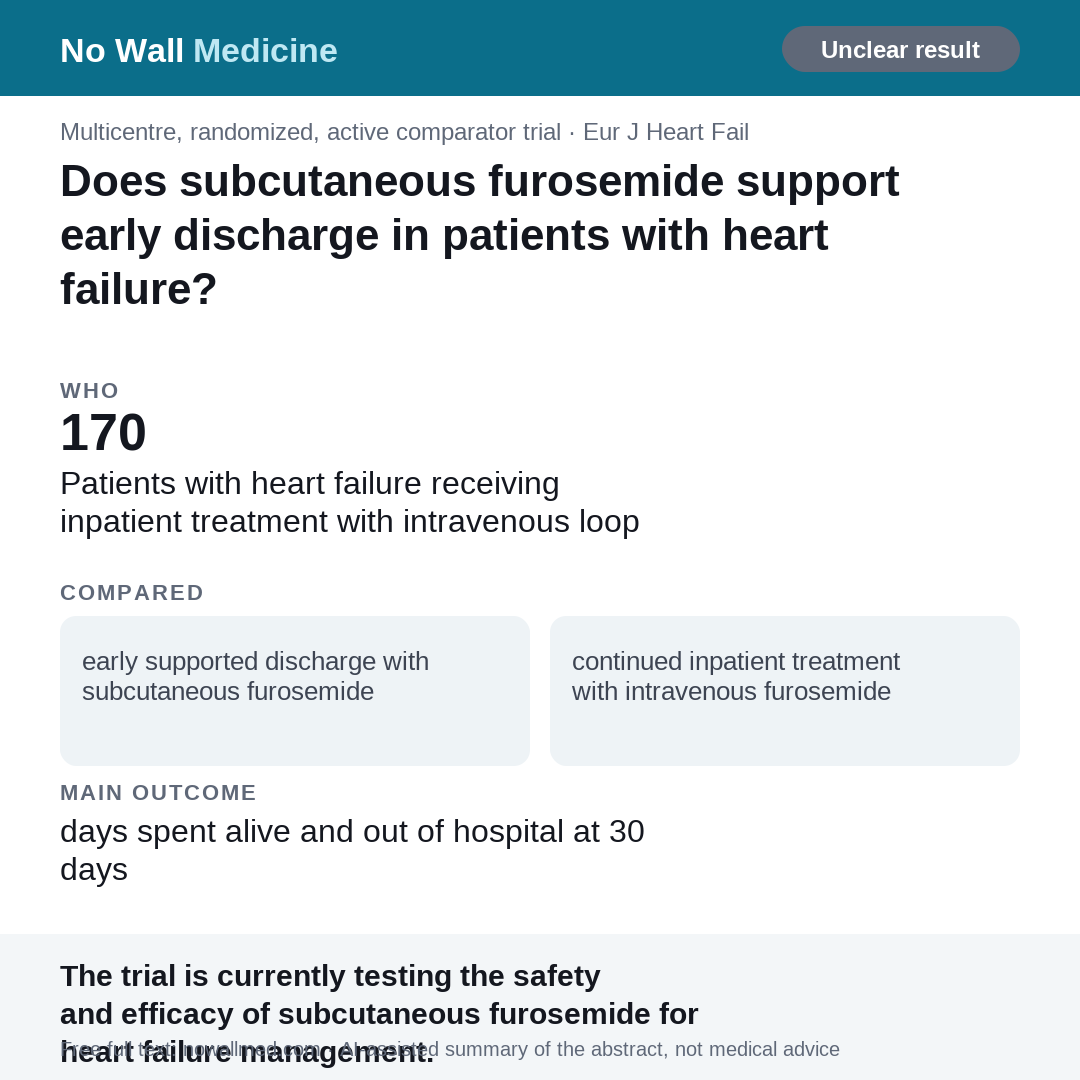
SUBCUT HF II: rationale and design of a multicentre randomized controlled trial of SUBCUTaneous furosemide to support early discharge in patients admitted to hospital due to Heart Failure
Multicentre, randomized, active comparator trialUnclear result
Does subcutaneous furosemide support early discharge in patients with heart failure?
Who
170
Patients with heart failure receiving inpatient treatment with intravenous loop diuretic · 20 hospitals in the United Kingdom
Compared
early supported discharge with subcutaneous furosemide
continued inpatient treatment with intravenous furosemide
Main outcome
days spent alive and out of hospital at 30 days
Bottom line: The trial is currently testing the safety and efficacy of subcutaneous furosemide for heart failure management.
Eur J Heart Fail · 2026-03-02Download image
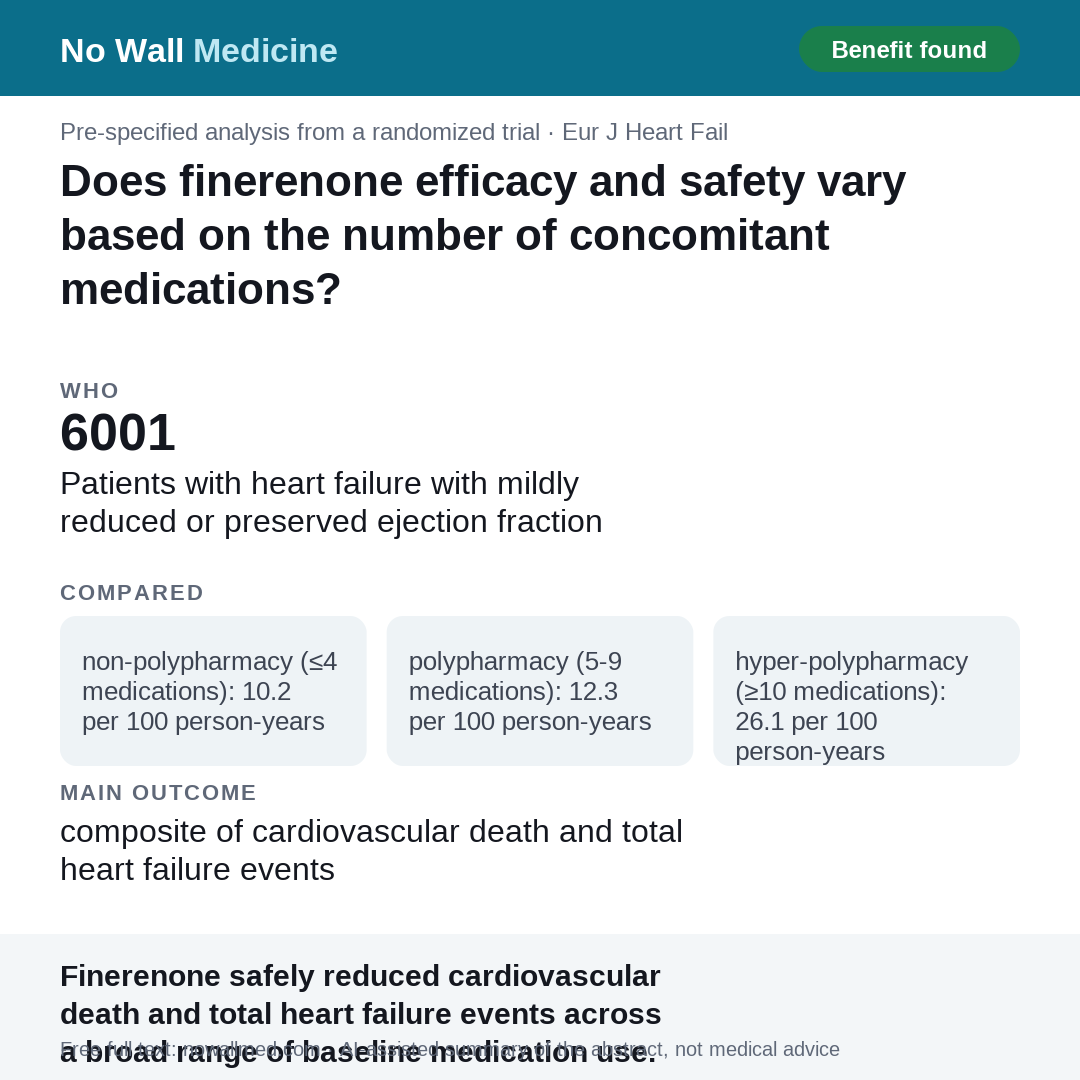
Finerenone, polypharmacy, and clinical outcomes in heart failure: pre-specified analysis from the FINEARTS-HF trial
Pre-specified analysis from a randomized trialBenefit found
Does finerenone efficacy and safety vary based on the number of concomitant medications?
Who
6001
Patients with heart failure with mildly reduced or preserved ejection fraction
Compared
non-polypharmacy (≤4 medications): 10.2 per 100 person-years
polypharmacy (5-9 medications): 12.3 per 100 person-years
hyper-polypharmacy (≥10 medications): 26.1 per 100 person-years
Main outcome
composite of cardiovascular death and total heart failure events
Bottom line: Finerenone safely reduced cardiovascular death and total heart failure events across a broad range of baseline medication use.
Eur J Heart Fail · 2026-03-02Download image
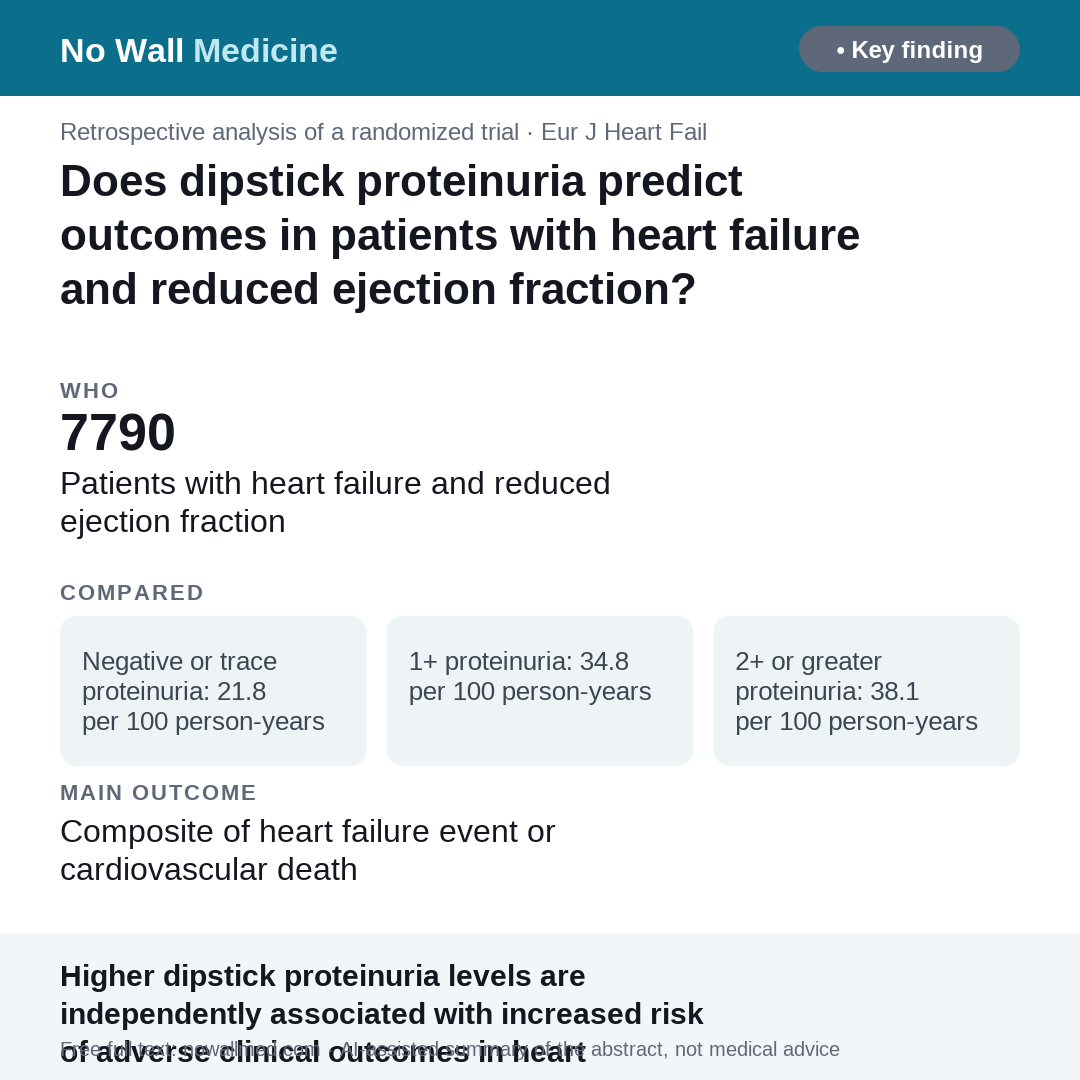
Dipstick proteinuria and outcomes in patients with heart failure and reduced ejection fraction: insights from GALACTIC-HF
Retrospective analysis of a randomized trialHarm found
Does dipstick proteinuria predict outcomes in patients with heart failure and reduced ejection fraction?
Who
7790
Patients with heart failure and reduced ejection fraction
Compared
Negative or trace proteinuria: 21.8 per 100 person-years
1+ proteinuria: 34.8 per 100 person-years
2+ or greater proteinuria: 38.1 per 100 person-years
Main outcome
Composite of heart failure event or cardiovascular death
Bottom line: Higher dipstick proteinuria levels are independently associated with increased risk of adverse clinical outcomes in heart failure patients.
Eur J Heart Fail · 2026-03-02Download image
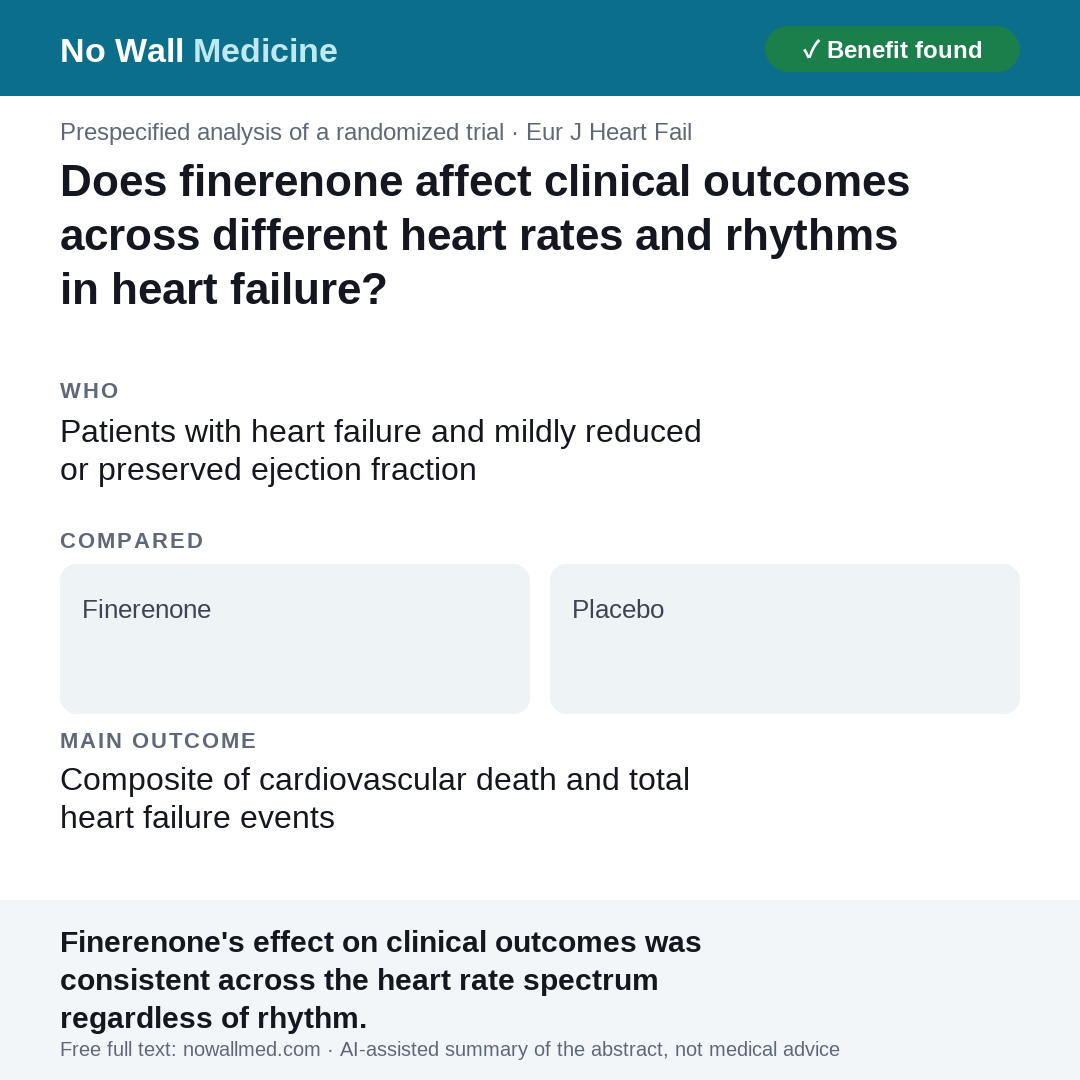
Efficacy of finerenone in patients with heart failure and mildly reduced or preserved ejection fraction: a prespecified analysis of heart rate and heart rhythm in the FINEARTS-HF trial
Prespecified analysis of a randomized trialBenefit found
Does finerenone affect clinical outcomes across different heart rates and rhythms in heart failure?
Who
Patients with heart failure and mildly reduced or preserved ejection fraction
Compared
Finerenone
Placebo
Main outcome
Composite of cardiovascular death and total heart failure events
Bottom line: Finerenone's effect on clinical outcomes was consistent across the heart rate spectrum regardless of rhythm.
Eur J Heart Fail · 2026-03-02Download image
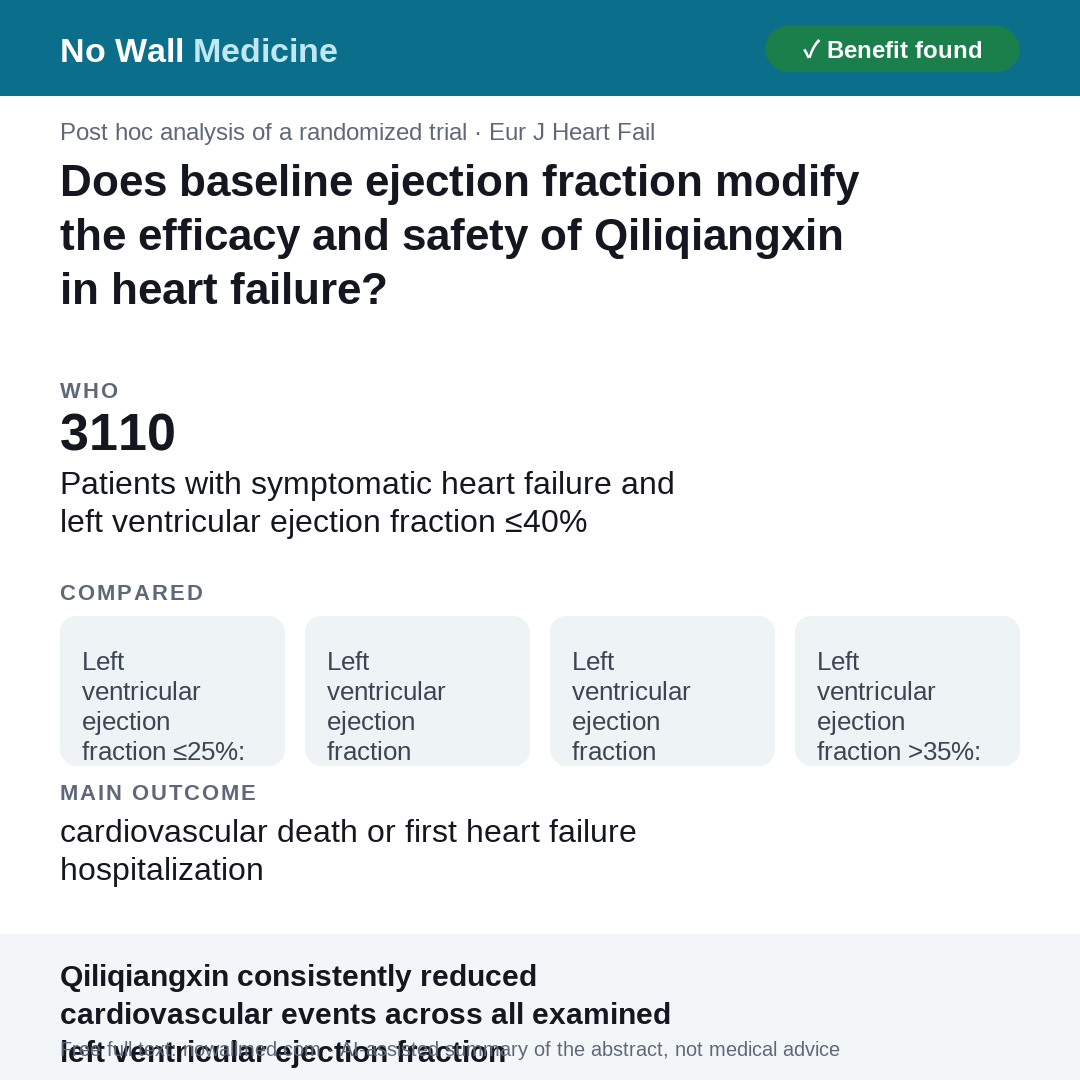
The efficacy and safety of qiliqiangxin according to baseline ejection fraction in patients with heart failure and reduced ejection fraction in QUEST
Post hoc analysis of a randomized trialBenefit found
Does baseline ejection fraction modify the efficacy and safety of Qiliqiangxin in heart failure?
Who
3110
Patients with symptomatic heart failure and left ventricular ejection fraction ≤40%
Compared
Left ventricular ejection fraction ≤25%: hazard ratio 0.91 (95% CI 0.64-1.30)
Left ventricular ejection fraction >25-30%: hazard ratio 0.65 (95% CI 0.47-0.89)
Left ventricular ejection fraction >30-35%: hazard ratio 0.94 (95% CI 0.71-1.26)
Left ventricular ejection fraction >35%: hazard ratio 0.71 (95% CI 0.55-0.91)
Main outcome
cardiovascular death or first heart failure hospitalization
Result: Pinteraction = .28
Bottom line: Qiliqiangxin consistently reduced cardiovascular events across all examined left ventricular ejection fraction categories in heart failure patients.
Limitation: limited use of sodium-glucose co-transporter 2 inhibitors
Eur J Heart Fail · 2026-03-02Download image
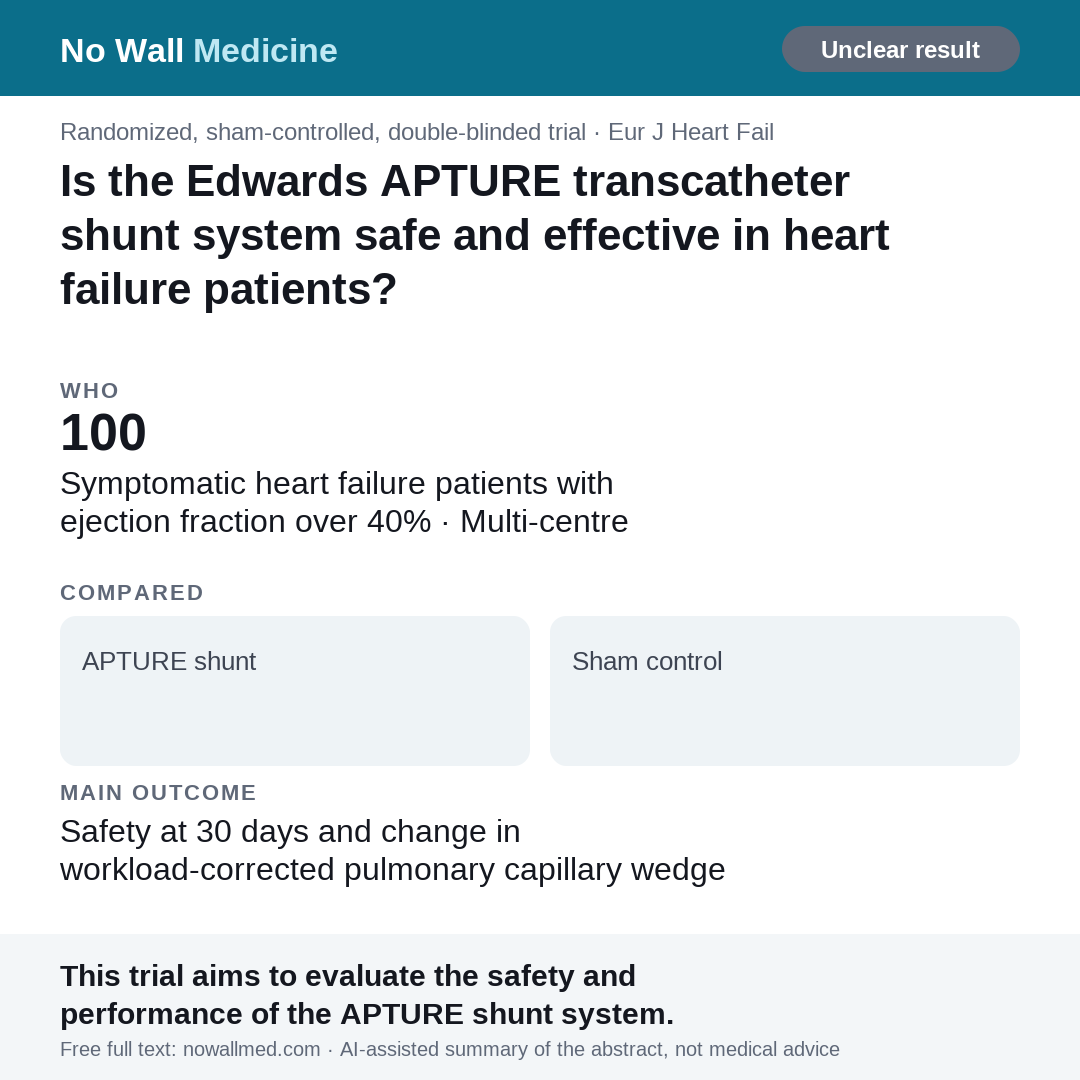
Rationale and design of a randomized, sham-controlled, clinical trial for evaluation of the Edwards APTURE transcatheter shunt system (ALT-FLOW II)
Randomized, sham-controlled, double-blinded trialUnclear result
Is the Edwards APTURE transcatheter shunt system safe and effective in heart failure patients?
Who
100
Symptomatic heart failure patients with ejection fraction over 40% · Multi-centre
Compared
APTURE shunt
Sham control
Main outcome
Safety at 30 days and change in workload-corrected pulmonary capillary wedge pressure
Bottom line: This trial aims to evaluate the safety and performance of the APTURE shunt system.
Eur J Heart Fail · 2026-03-02Download image
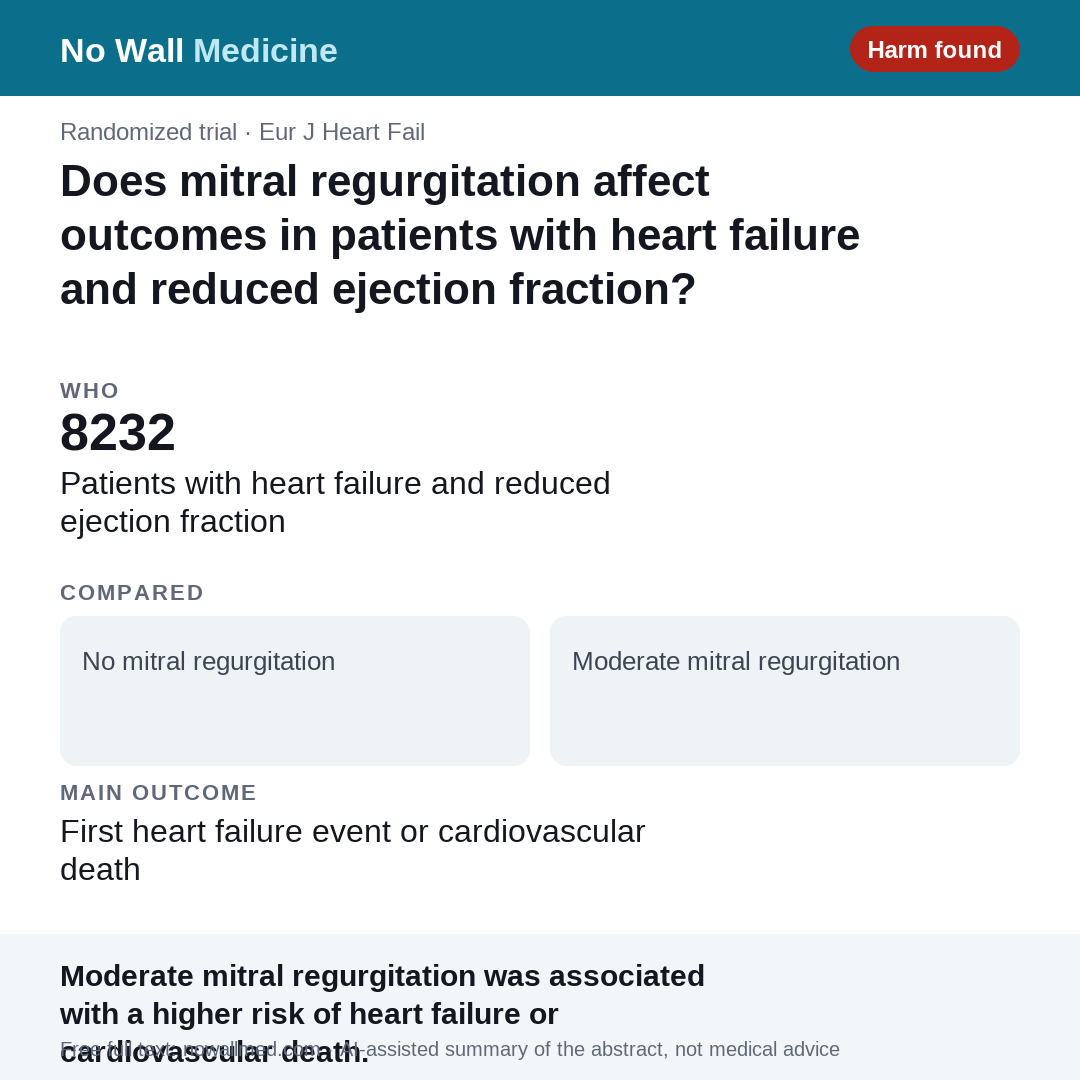
Mitral regurgitation in patients with heart failure and reduced ejection fraction: insights from GALACTIC-HF
Randomized trialHarm found
Does mitral regurgitation affect outcomes in patients with heart failure and reduced ejection fraction?
Who
8232
Patients with heart failure and reduced ejection fraction
Compared
No mitral regurgitation
Moderate mitral regurgitation
Main outcome
First heart failure event or cardiovascular death
Result: adjusted hazard ratio 1.11 (95% CI 1.01-1.23)
Bottom line: Moderate mitral regurgitation was associated with a higher risk of heart failure or cardiovascular death.
Eur J Heart Fail · 2026-03-02Download image
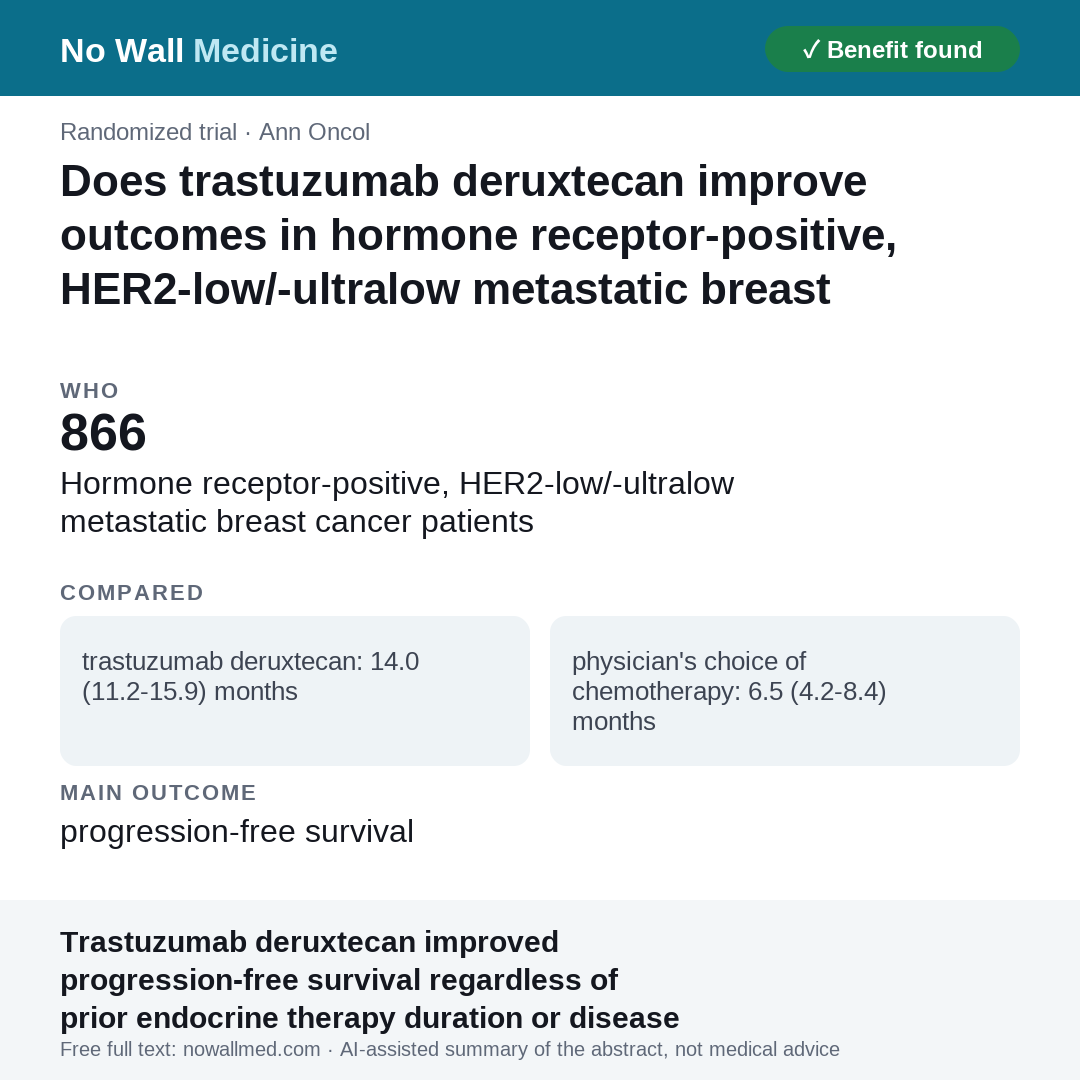
Trastuzumab deruxtecan in hormone receptor-positive, HER2-low/-ultralow metastatic breast cancer (DESTINY-Breast06): outcome analyses by time to progression on prior first-line endocrine therapy with CDK4/6 inhibitor and baseline burden of disease
Randomized trialBenefit found
Does trastuzumab deruxtecan improve outcomes in hormone receptor-positive, HER2-low/-ultralow metastatic breast cancer?
Who
866
Hormone receptor-positive, HER2-low/-ultralow metastatic breast cancer patients
Compared
trastuzumab deruxtecan: 14.0 (11.2-15.9) months
physician's choice of chemotherapy: 6.5 (4.2-8.4) months
Main outcome
progression-free survival
Result: median progression-free survival favored trastuzumab deruxtecan versus physician's choice of chemotherapy
Bottom line: Trastuzumab deruxtecan improved progression-free survival regardless of prior endocrine therapy duration or disease burden.
Ann Oncol · 2026-03-02Download image
Safety, recovery, and pharmacodynamics of CRISPR-Cas therapeutic SNIPR001: a phase 1, randomised, double-blind, first-in-human, dose-escalation study
Randomised, double-blind, placebo-controlled, dose-escalation trialBenefit found
What are the safety, tolerability, and pharmacodynamics of SNIPR001 in healthy participants?
Who
36
Healthy participants aged 18-65 years with high Escherichia coli levels · Single centre, Cincinnati, OH, USA
Compared
SNIPR001 treatment: mild and moderate adverse events
Placebo: 13 adverse events
Main outcome
Incidence and severity of adverse events
Bottom line: SNIPR001 was safe and well tolerated with no serious adverse events reported in treatment groups.
Lancet Microbe · 2026-03-02Download image

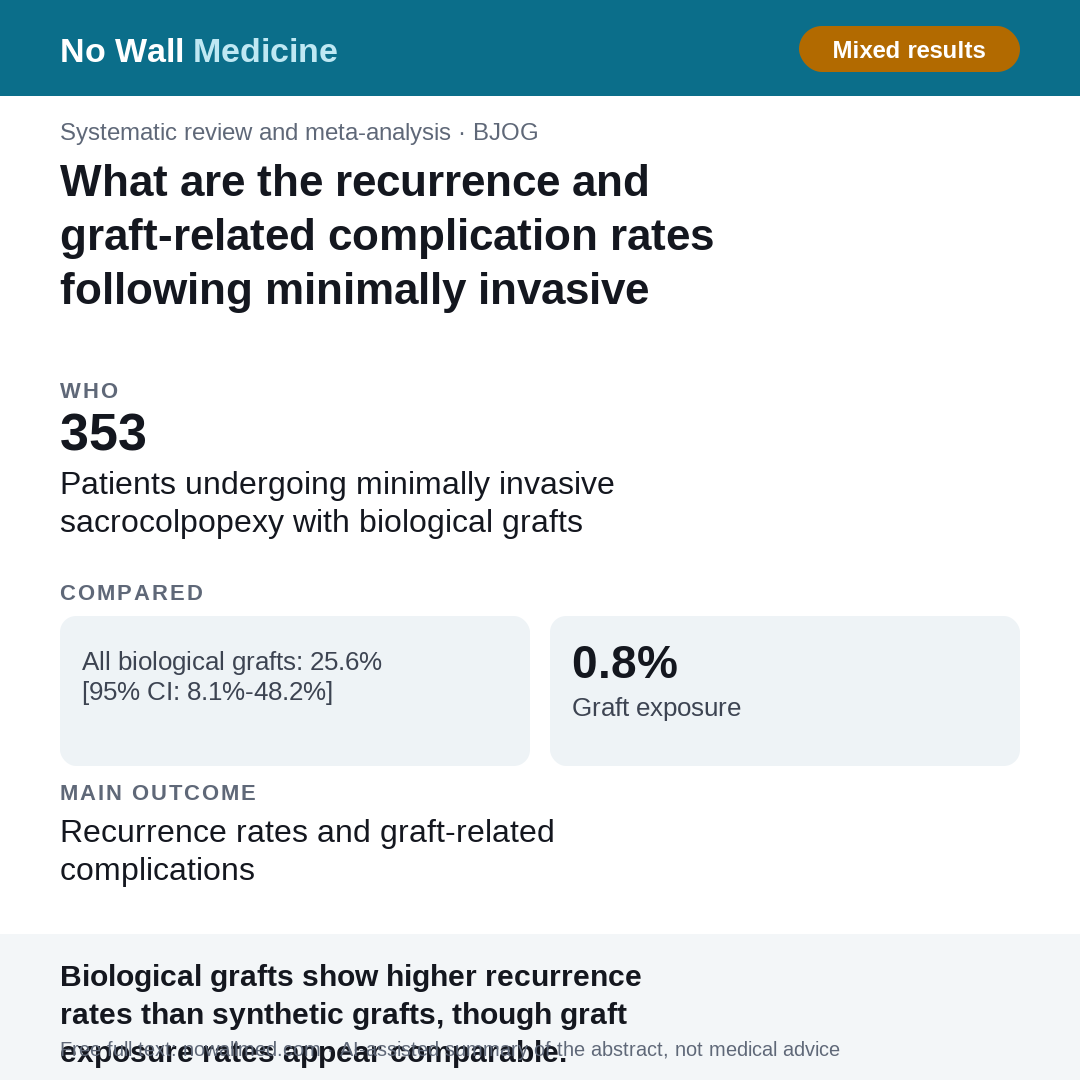
A Systematic Review of Graft-Related Complications and Recurrence Following Minimally Invasive Sacrocolpopexy With Xenografts and Allografts
Systematic review and meta-analysisMixed results
What are the recurrence and graft-related complication rates following minimally invasive sacrocolpopexy with biological grafts?
Who
353
Patients undergoing minimally invasive sacrocolpopexy with biological grafts
Compared
All biological grafts: 25.6% [95% CI: 8.1%-48.2%]
0.8%Graft exposure (95% CI: 0.0%-4.2%)
Main outcome
Recurrence rates and graft-related complications
Result: pooled recurrence 25.6% [95% CI: 8.1%-48.2%]
Bottom line: Biological grafts show higher recurrence rates than synthetic grafts, though graft exposure rates appear comparable.
Limitation: Given study heterogeneity, further research is required to determine the optimal graft choice.
BJOG · 2026-03-02Download image
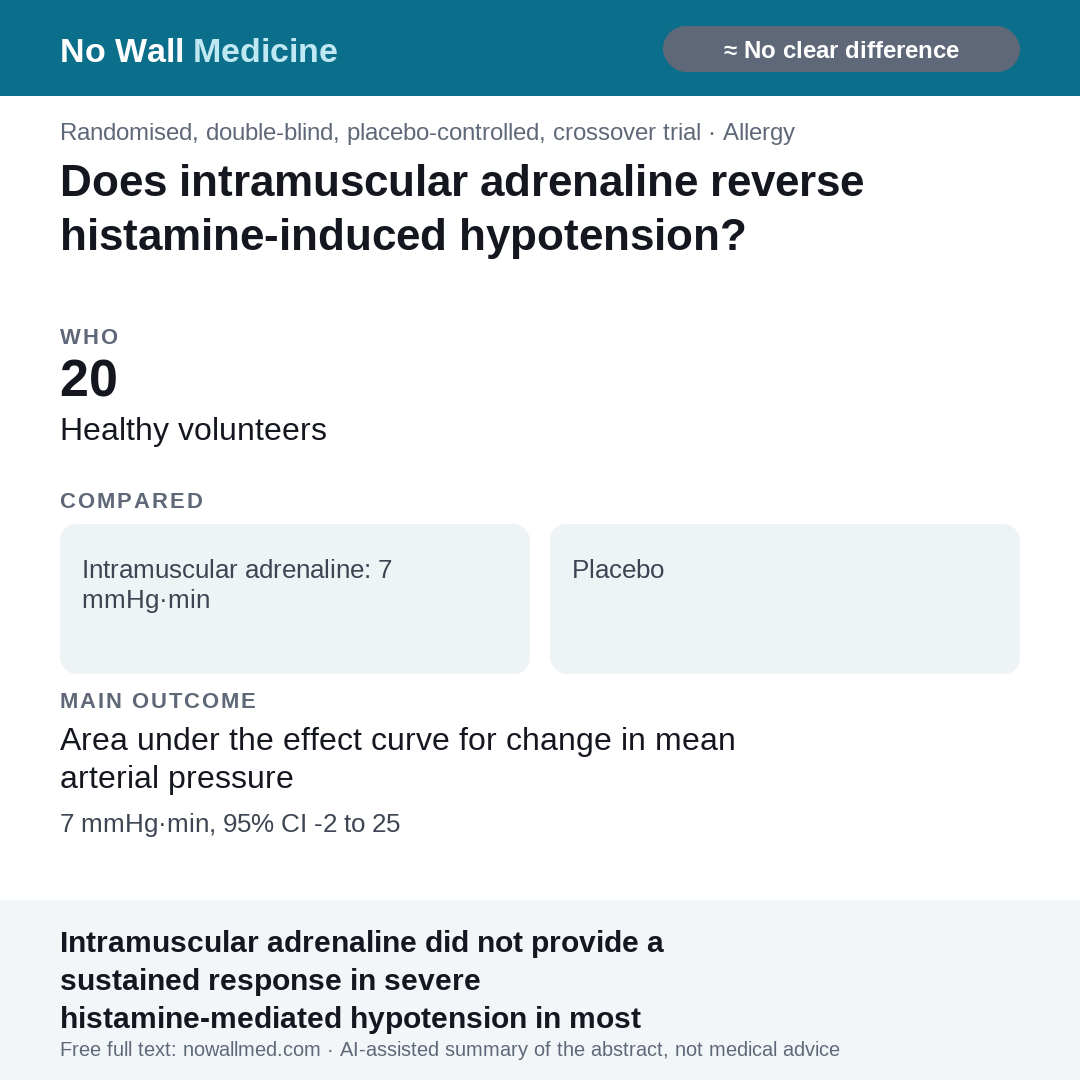
Effect of Intramuscular Adrenaline on Histamine-Induced Hypotension: A Randomised Placebo-Controlled Pilot Trial
Randomised, double-blind, placebo-controlled, crossover trialNo clear difference
Does intramuscular adrenaline reverse histamine-induced hypotension?
Who
20
Healthy volunteers
Compared
Intramuscular adrenaline: 7 mmHg·min
Placebo
Main outcome
Area under the effect curve for change in mean arterial pressure
Result: 7 mmHg·min, 95% CI -2 to 25
Bottom line: Intramuscular adrenaline did not provide a sustained response in severe histamine-mediated hypotension in most recipients.
Limitation: Limited number of healthy human subjects
Allergy · 2026-03-02Download image
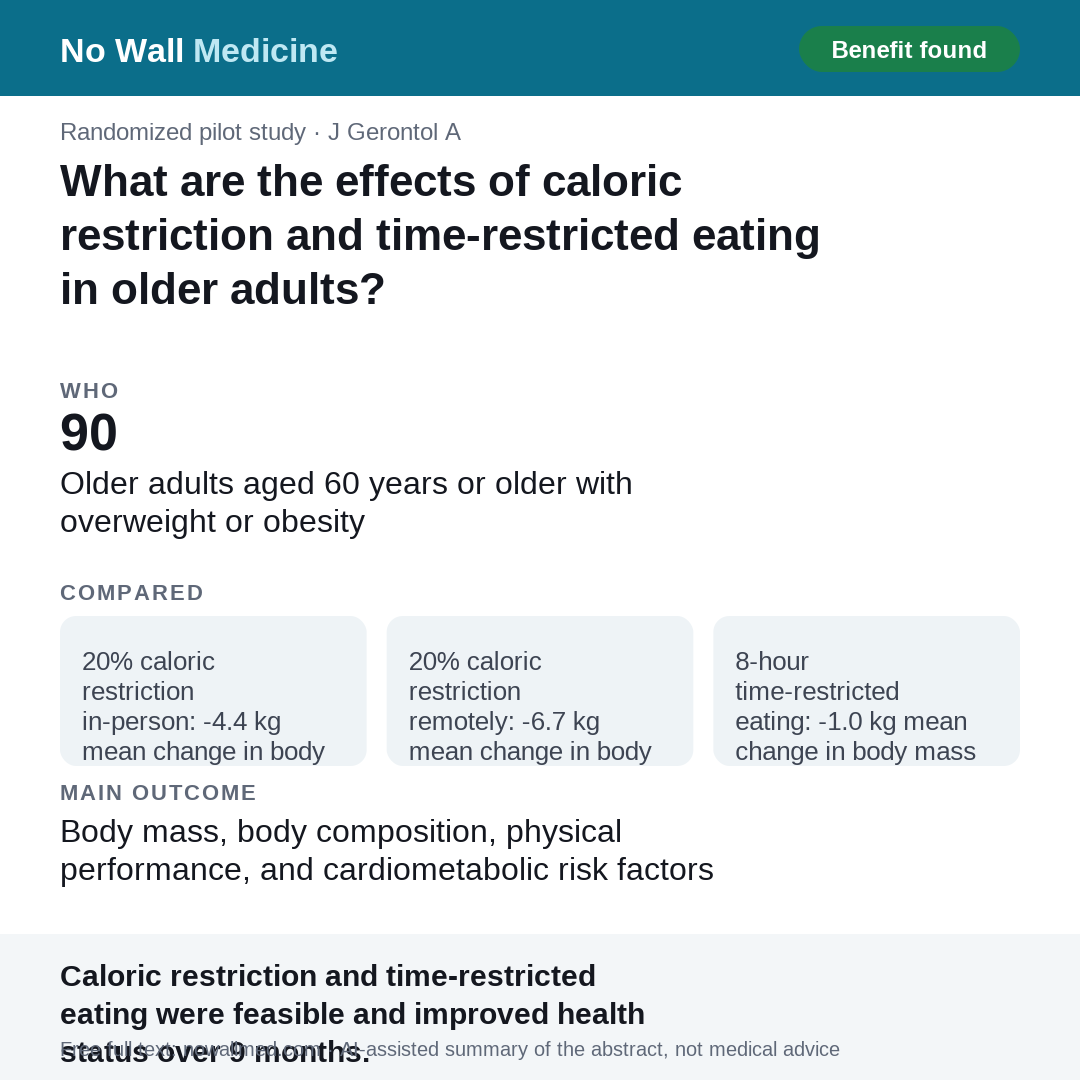
Caloric restriction and time-restricted eating in older adults with overweight or obesity: The Health, Aging, and Later-Life Outcomes Pilot Study
Randomized pilot studyBenefit found
What are the effects of caloric restriction and time-restricted eating in older adults?
Who
90
Older adults aged 60 years or older with overweight or obesity
Compared
20% caloric restriction in-person: -4.4 kg mean change in body mass
20% caloric restriction remotely: -6.7 kg mean change in body mass
8-hour time-restricted eating: -1.0 kg mean change in body mass
Main outcome
Body mass, body composition, physical performance, and cardiometabolic risk factors
Bottom line: Caloric restriction and time-restricted eating were feasible and improved health status over 9 months.
Limitation: Interventions did not achieve the target caloric restriction.
J Gerontol A · 2026-03-02Download image
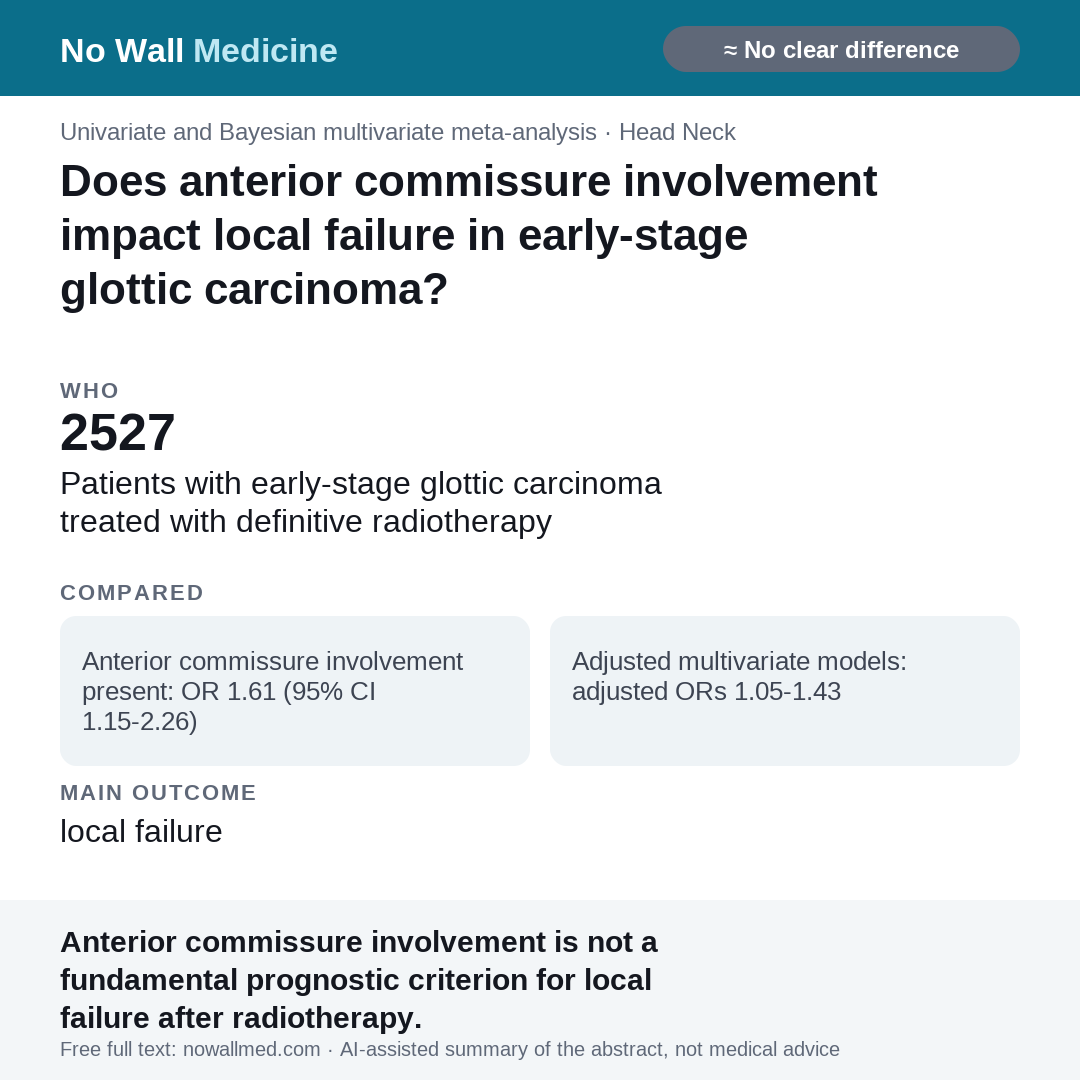
Prognostic Impact of Anterior Commissure Involvement on Treatment Failure in Early-Stage Glottic Carcinoma Treated With Definitive Radiotherapy: A Univariate and Multivariate Meta-Analysis
Univariate and Bayesian multivariate meta-analysisNo clear difference
Does anterior commissure involvement impact local failure in early-stage glottic carcinoma?
Who
2527
Patients with early-stage glottic carcinoma treated with definitive radiotherapy
Compared
Anterior commissure involvement present: OR 1.61 (95% CI 1.15-2.26)
Adjusted multivariate models: adjusted ORs 1.05-1.43
Main outcome
local failure
Result: adjusted ORs 1.05-1.43, all 95% CrIs including unity
Bottom line: Anterior commissure involvement is not a fundamental prognostic criterion for local failure after radiotherapy.
Limitation: Univariate findings may be confounded by correlation with other factors, particularly T substage.
Head Neck · 2026-03-02Download image
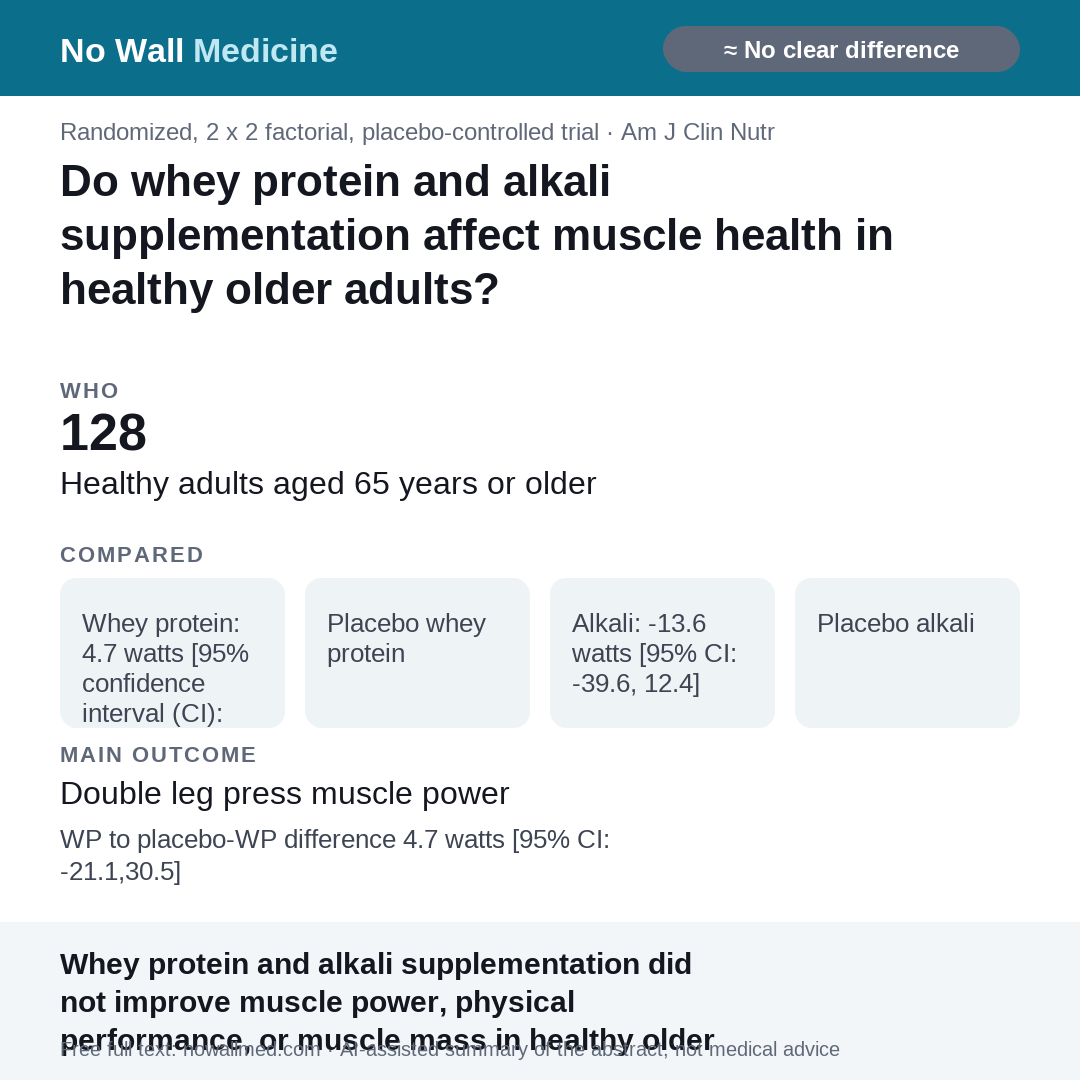
Independent effects of whey protein and alkali supplementation on muscle health in healthy older adults: factorial randomized controlled trial
Randomized, 2 x 2 factorial, placebo-controlled trialNo clear difference
Do whey protein and alkali supplementation affect muscle health in healthy older adults?
Who
128
Healthy adults aged 65 years or older
Compared
Whey protein: 4.7 watts [95% confidence interval (CI): -21.1,30.5]
Placebo whey protein
Alkali: -13.6 watts [95% CI: -39.6, 12.4]
Placebo alkali
Main outcome
Double leg press muscle power
Result: WP to placebo-WP difference 4.7 watts [95% CI: -21.1,30.5]
Bottom line: Whey protein and alkali supplementation did not improve muscle power, physical performance, or muscle mass in healthy older adults.
Am J Clin Nutr · 2026-03-02Download image
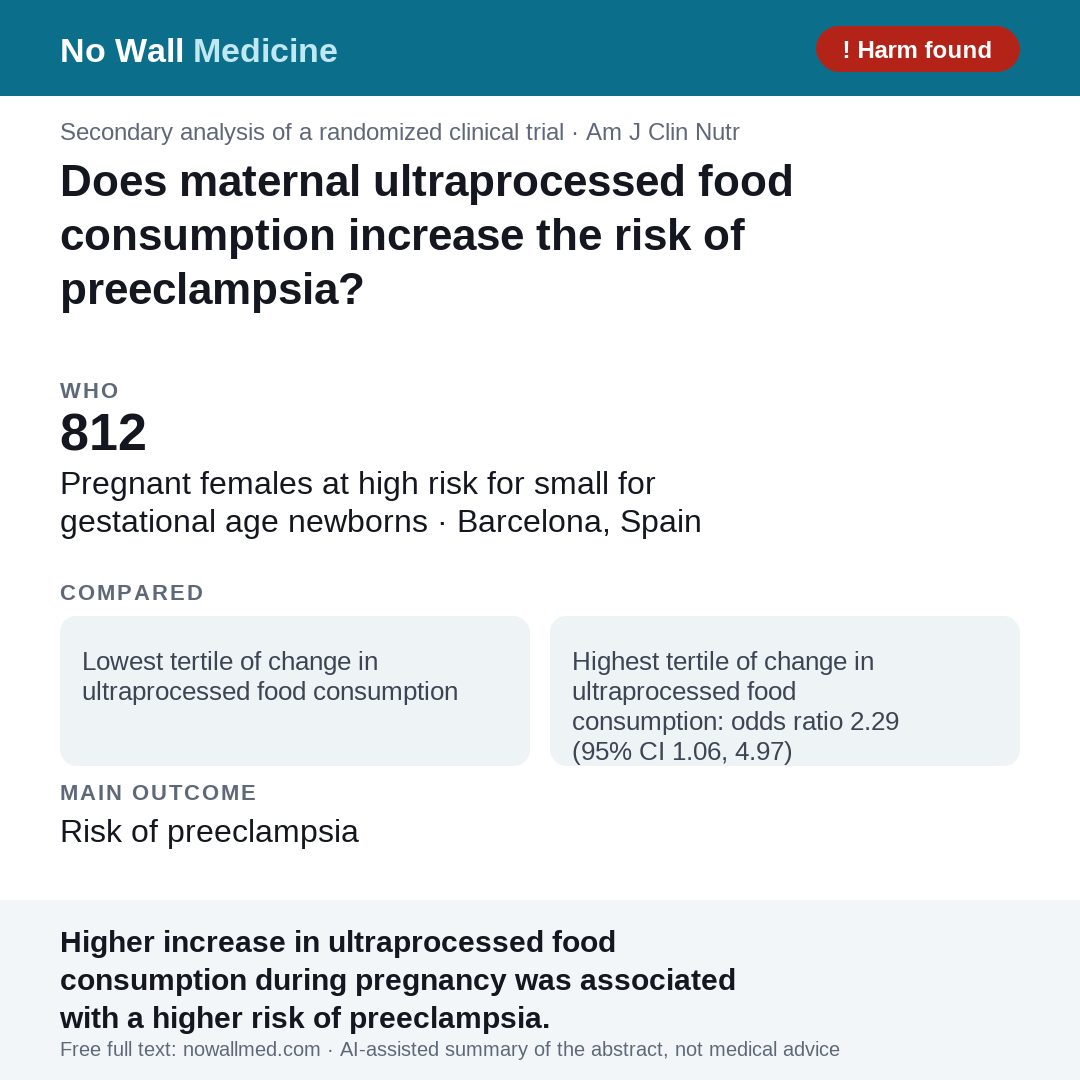
Ultraprocessed foods consumption and risk of preeclampsia: a secondary analysis of the improving mothers for a better prenatal care trial Barcelona (IMPACT BCN) randomized clinical trial
Secondary analysis of a randomized clinical trialHarm found
Does maternal ultraprocessed food consumption increase the risk of preeclampsia?
Who
812
Pregnant females at high risk for small for gestational age newborns · Barcelona, Spain
Compared
Lowest tertile of change in ultraprocessed food consumption
Highest tertile of change in ultraprocessed food consumption: odds ratio 2.29 (95% CI 1.06, 4.97)
Main outcome
Risk of preeclampsia
Result: odds ratio 2.29 (95% CI 1.06, 4.97)
Bottom line: Higher increase in ultraprocessed food consumption during pregnancy was associated with a higher risk of preeclampsia.
Am J Clin Nutr · 2026-03-02Download image
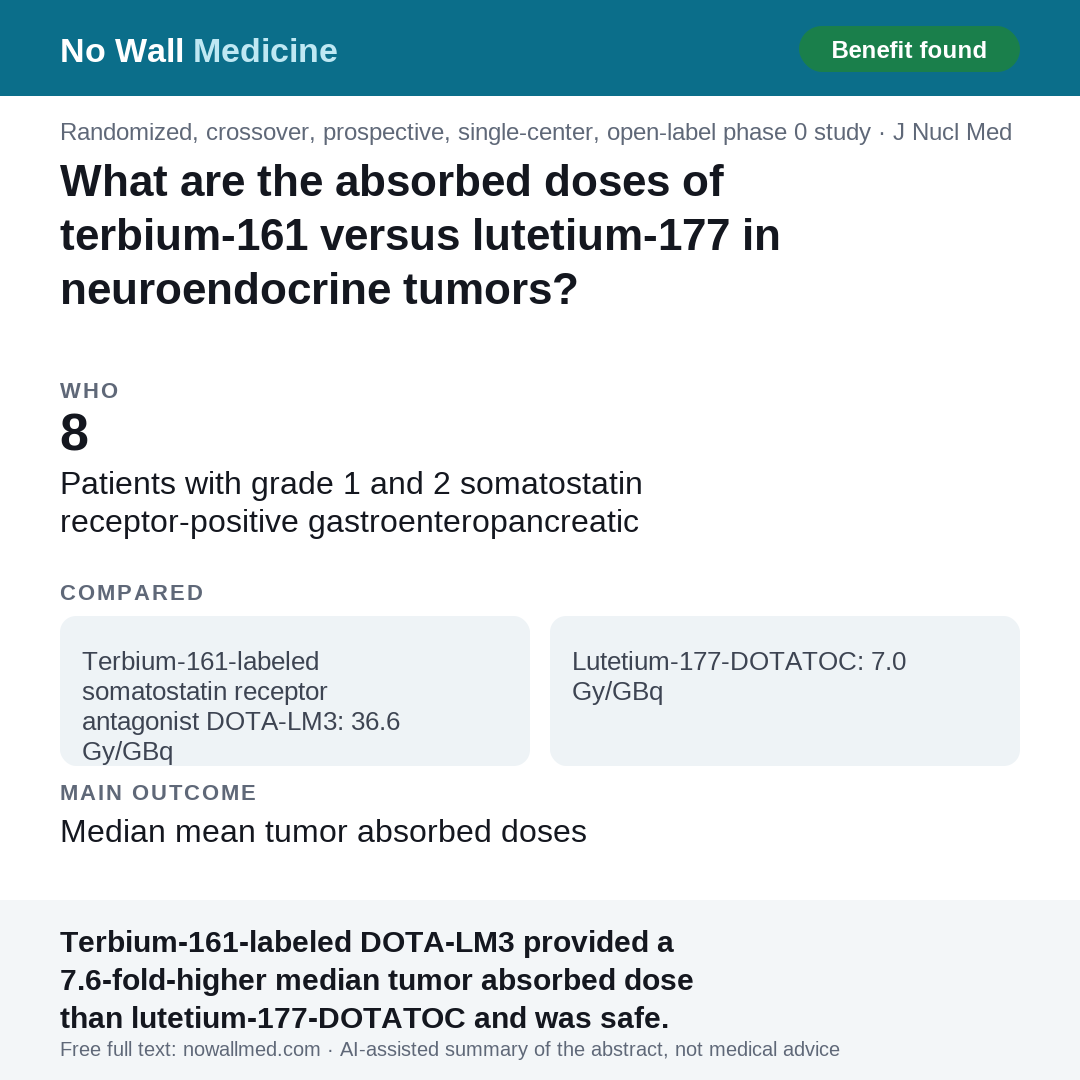
Targeted β--Particle Plus Conversion and Auger-Electron Therapy with 161Tb-Labeled Somatostatin Receptor Antagonist DOTA-LM3: A Phase 0 Study
Randomized, crossover, prospective, single-center, open-label phase 0 studyBenefit found
What are the absorbed doses of terbium-161 versus lutetium-177 in neuroendocrine tumors?
Who
8
Patients with grade 1 and 2 somatostatin receptor-positive gastroenteropancreatic neuroendocrine tumors · Single-center
Compared
Terbium-161-labeled somatostatin receptor antagonist DOTA-LM3: 36.6 Gy/GBq
Lutetium-177-DOTATOC: 7.0 Gy/GBq
Main outcome
Median mean tumor absorbed doses
Bottom line: Terbium-161-labeled DOTA-LM3 provided a 7.6-fold-higher median tumor absorbed dose than lutetium-177-DOTATOC and was safe.
J Nucl Med · 2026-03-02Download image