Visual abstracts
New randomized trials and meta-analyses from leading journals at a glance: who was studied, what was compared, and what was found. Every paper is free to read in full.
All specialtiesCardiology 855Oncology 770Gastroenterology & Hepatology 311Infectious Disease 626Neurology 354Psychiatry & Mental Health 430Pulmonology 370Critical Care 259Endocrinology & Diabetes 484Pediatrics 542Surgery 349Orthopedics & Sports Medicine 166Neurosurgery 115Cardiothoracic & Vascular Surgery 87Plastic & Reconstructive Surgery 144Nephrology 197Rheumatology 108Hematology 183Dermatology 81Ophthalmology 97Obstetrics & Gynecology 266Public & Global Health 168Radiology & Imaging 104Anesthesiology 128Urology 162ENT (Otolaryngology) 114Emergency Medicine 103Allergy & Immunology 58Geriatrics 160Family Medicine & Primary Care 111Medical Genetics & Genomics 91Pathology & Laboratory Medicine 27Physical Medicine & Rehabilitation 149Palliative Care 81Nutrition 223Digital Health & AI 462General Medicine 101
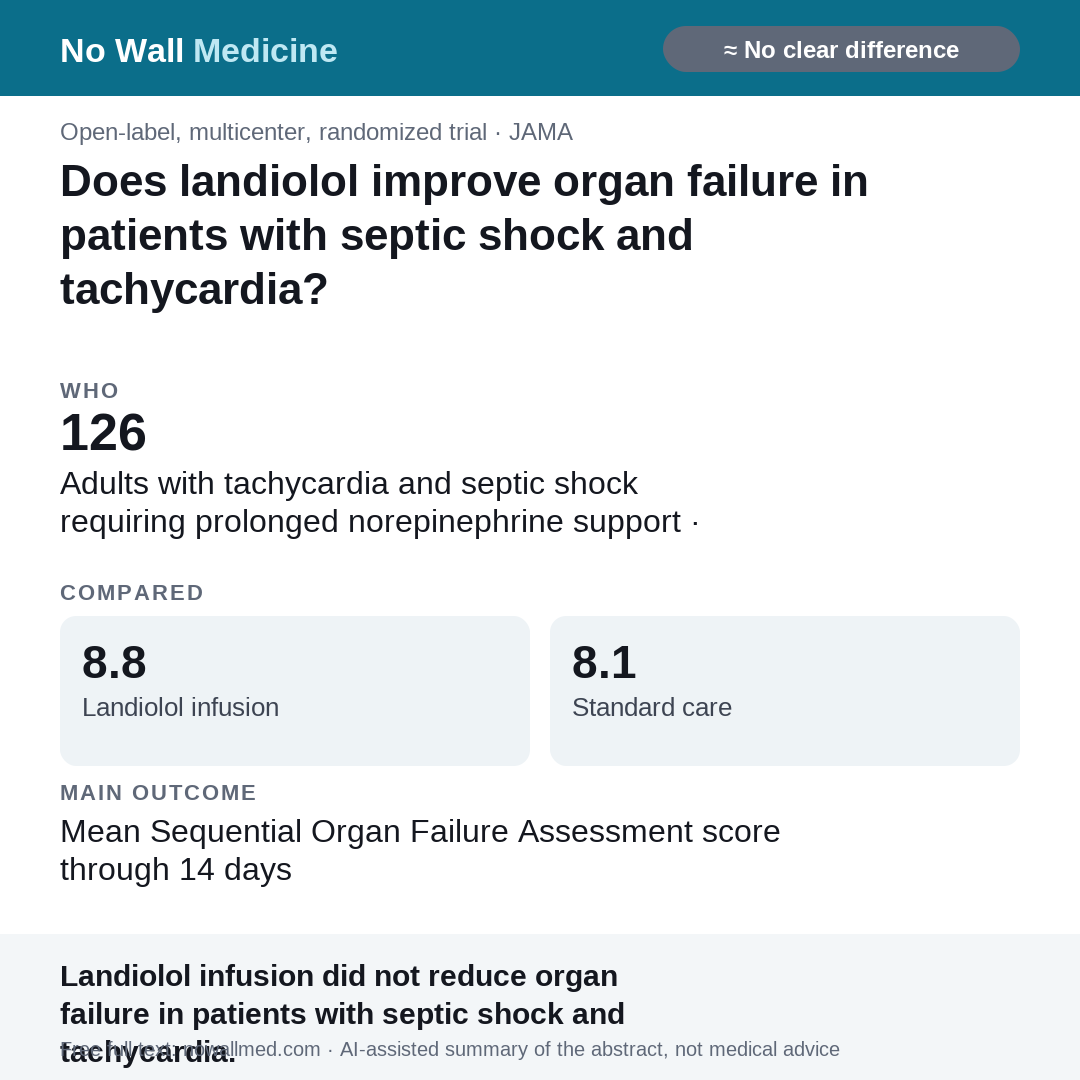
Landiolol and Organ Failure in Patients With Septic Shock: The STRESS-L Randomized Clinical Trial
Open-label, multicenter, randomized trialNo clear difference
Does landiolol improve organ failure in patients with septic shock and tachycardia?
Who
126
Adults with tachycardia and septic shock requiring prolonged norepinephrine support · 40 UK National Health Service intensive care units
Compared
8.8Landiolol infusion (3.9)
8.1Standard care (3.2)
Main outcome
Mean Sequential Organ Failure Assessment score through 14 days
Result: mean difference 0.75 (95% CI -0.49 to 2.0)
Bottom line: Landiolol infusion did not reduce organ failure in patients with septic shock and tachycardia.
JAMA · 2023-10-25Download image
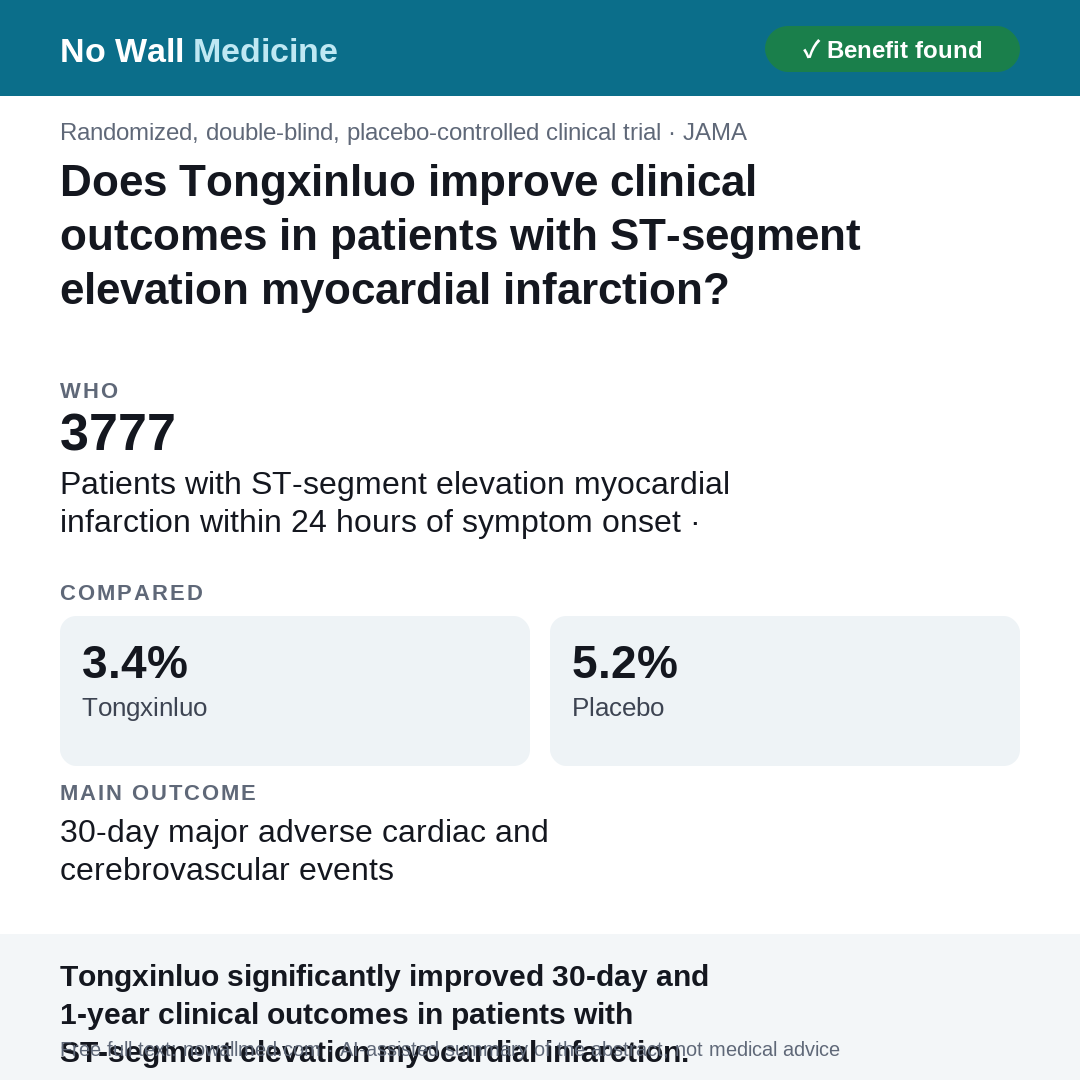
Traditional Chinese Medicine Compound (Tongxinluo) and Clinical Outcomes of Patients With Acute Myocardial Infarction: The CTS-AMI Randomized Clinical Trial
Randomized, double-blind, placebo-controlled clinical trialBenefit found
Does Tongxinluo improve clinical outcomes in patients with ST-segment elevation myocardial infarction?
Who
3777
Patients with ST-segment elevation myocardial infarction within 24 hours of symptom onset · 124 hospitals in China
Compared
3.4%Tongxinluo
5.2%Placebo
Main outcome
30-day major adverse cardiac and cerebrovascular events
Result: relative risk 0.64 (95% CI 0.47 to 0.88)
Bottom line: Tongxinluo significantly improved 30-day and 1-year clinical outcomes in patients with ST-segment elevation myocardial infarction.
JAMA · 2023-10-24Download image
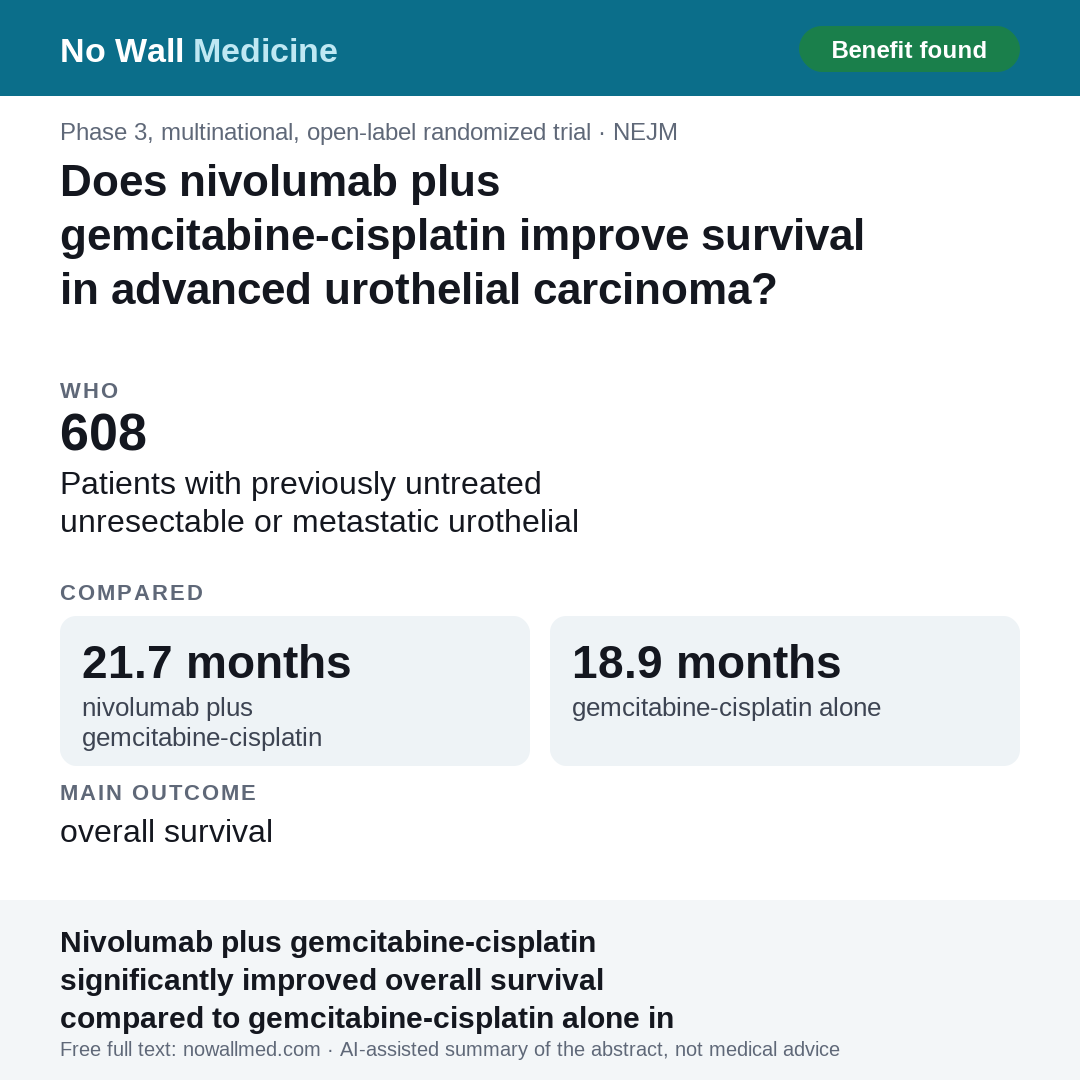
Nivolumab plus Gemcitabine-Cisplatin in Advanced Urothelial Carcinoma
Phase 3, multinational, open-label randomized trialBenefit found
Does nivolumab plus gemcitabine-cisplatin improve survival in advanced urothelial carcinoma?
Who
608
Patients with previously untreated unresectable or metastatic urothelial carcinoma · multinational
Compared
21.7 monthsnivolumab plus gemcitabine-cisplatin
18.9 monthsgemcitabine-cisplatin alone
Main outcome
overall survival
Result: hazard ratio 0.78 (95% CI 0.63 to 0.96)
Bottom line: Nivolumab plus gemcitabine-cisplatin significantly improved overall survival compared to gemcitabine-cisplatin alone in advanced urothelial carcinoma.
Funded by: Bristol Myers Squibb and Ono Pharmaceutical
NEJM · 2023-10-22Download image
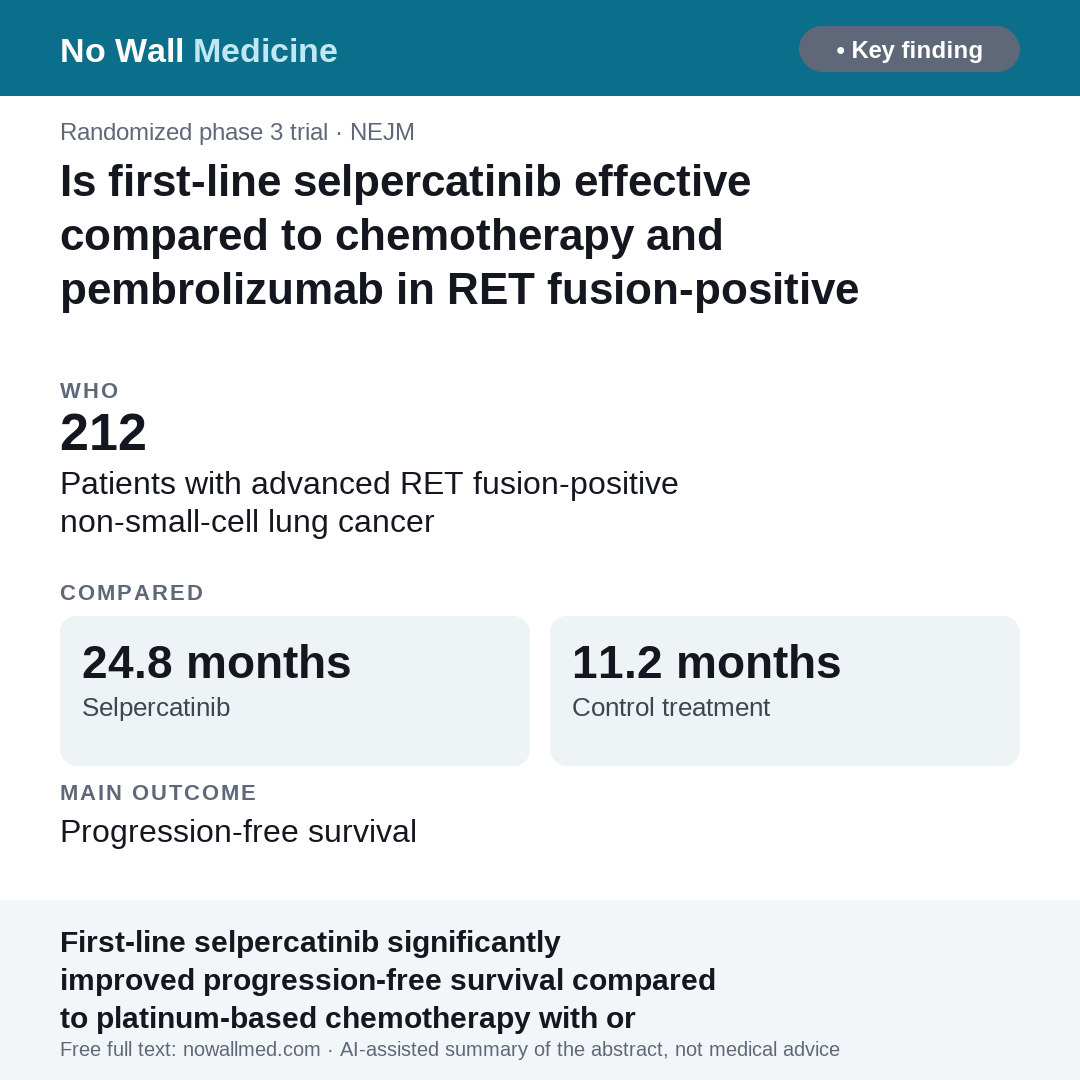
First-Line Selpercatinib or Chemotherapy and Pembrolizumab in RET Fusion-Positive NSCLC
Randomized phase 3 trialBenefit found
Is first-line selpercatinib effective compared to chemotherapy and pembrolizumab in RET fusion-positive NSCLC?
Who
212
Patients with advanced RET fusion-positive non-small-cell lung cancer
Compared
24.8 monthsSelpercatinib (95% CI, 16.9 to not estimable)
11.2 monthsControl treatment (95% CI, 8.8 to 16.8)
Main outcome
Progression-free survival
Result: hazard ratio 0.46 (95% CI, 0.31 to 0.70)
Bottom line: First-line selpercatinib significantly improved progression-free survival compared to platinum-based chemotherapy with or without pembrolizumab.
Funded by: Eli Lilly and others
NEJM · 2023-10-21Download image
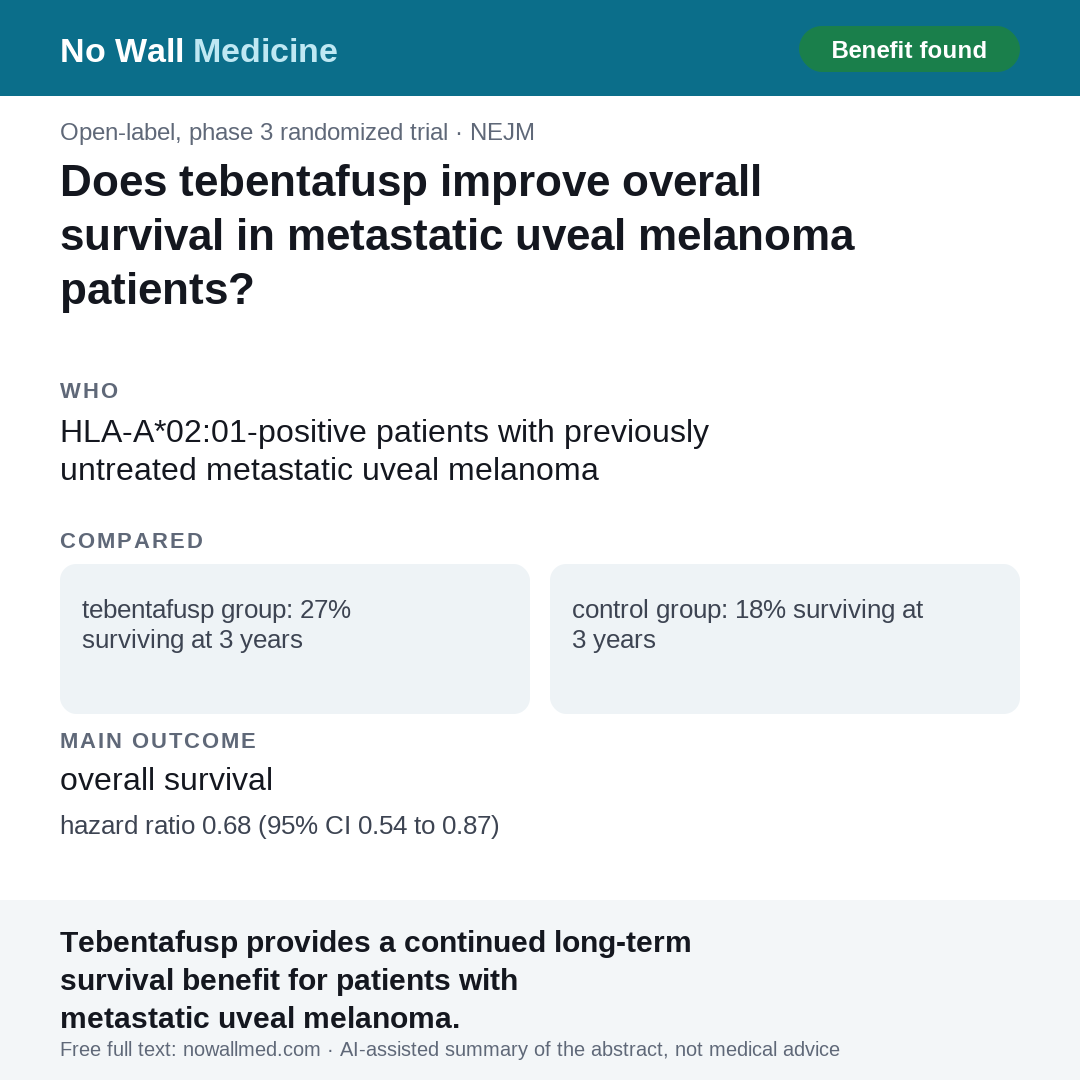
Three-Year Overall Survival with Tebentafusp in Metastatic Uveal Melanoma
Open-label, phase 3 randomized trialBenefit found
Does tebentafusp improve overall survival in metastatic uveal melanoma patients?
Who
HLA-A*02:01-positive patients with previously untreated metastatic uveal melanoma
Compared
tebentafusp group: 27% surviving at 3 years
control group: 18% surviving at 3 years
Main outcome
overall survival
Result: hazard ratio 0.68 (95% CI 0.54 to 0.87)
Bottom line: Tebentafusp provides a continued long-term survival benefit for patients with metastatic uveal melanoma.
Funded by: Immunocore
NEJM · 2023-10-21Download image
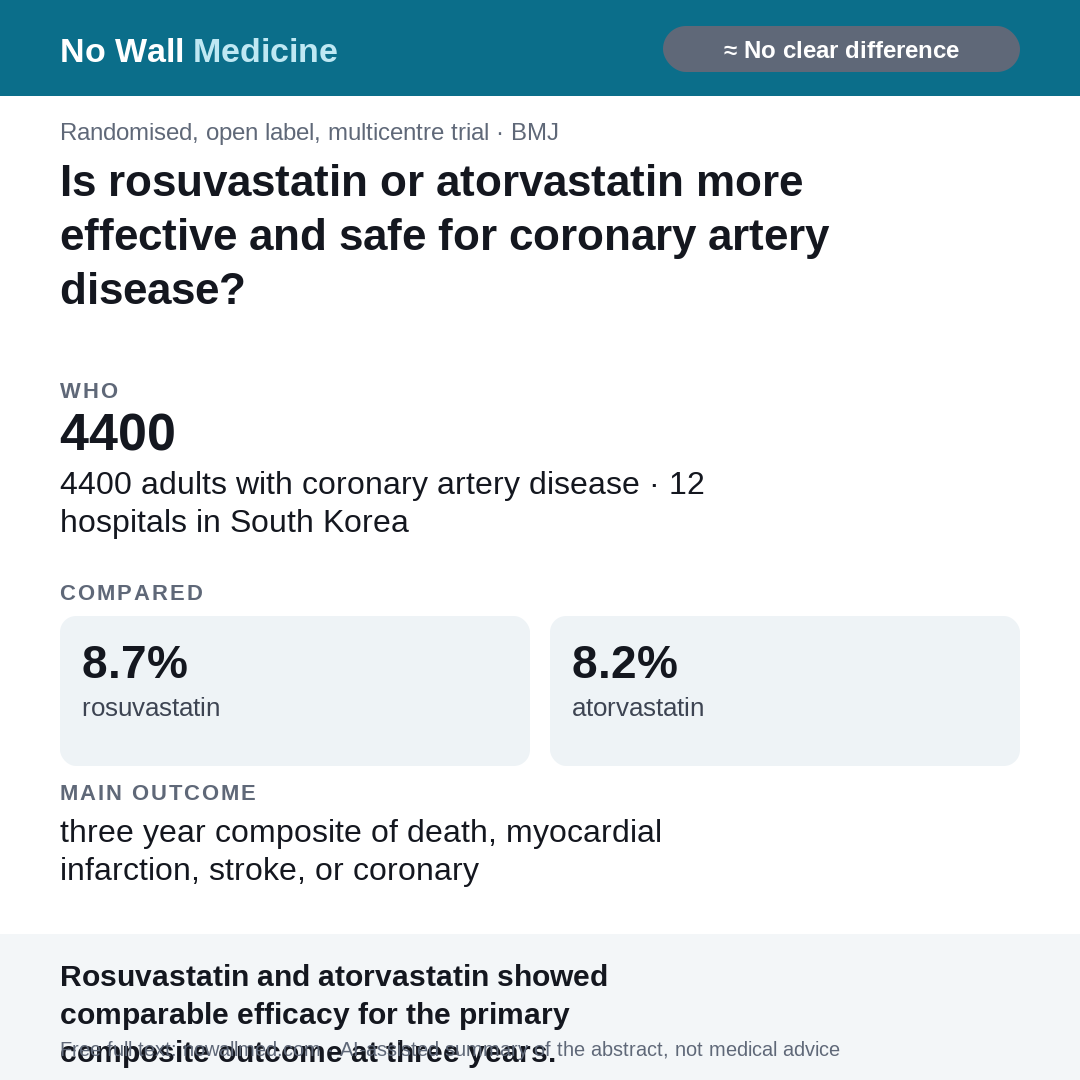
Rosuvastatin versus atorvastatin treatment in adults with coronary artery disease: secondary analysis of the randomised LODESTAR trial
Randomised, open label, multicentre trialNo clear difference
Is rosuvastatin or atorvastatin more effective and safe for coronary artery disease?
Who
4400
4400 adults with coronary artery disease · 12 hospitals in South Korea
Compared
8.7%rosuvastatin
8.2%atorvastatin
Main outcome
three year composite of death, myocardial infarction, stroke, or coronary revascularisation
Result: hazard ratio 1.06 (95% confidence interval 0.86 to 1.30)
Bottom line: Rosuvastatin and atorvastatin showed comparable efficacy for the primary composite outcome at three years.
BMJ · 2023-10-18Download image
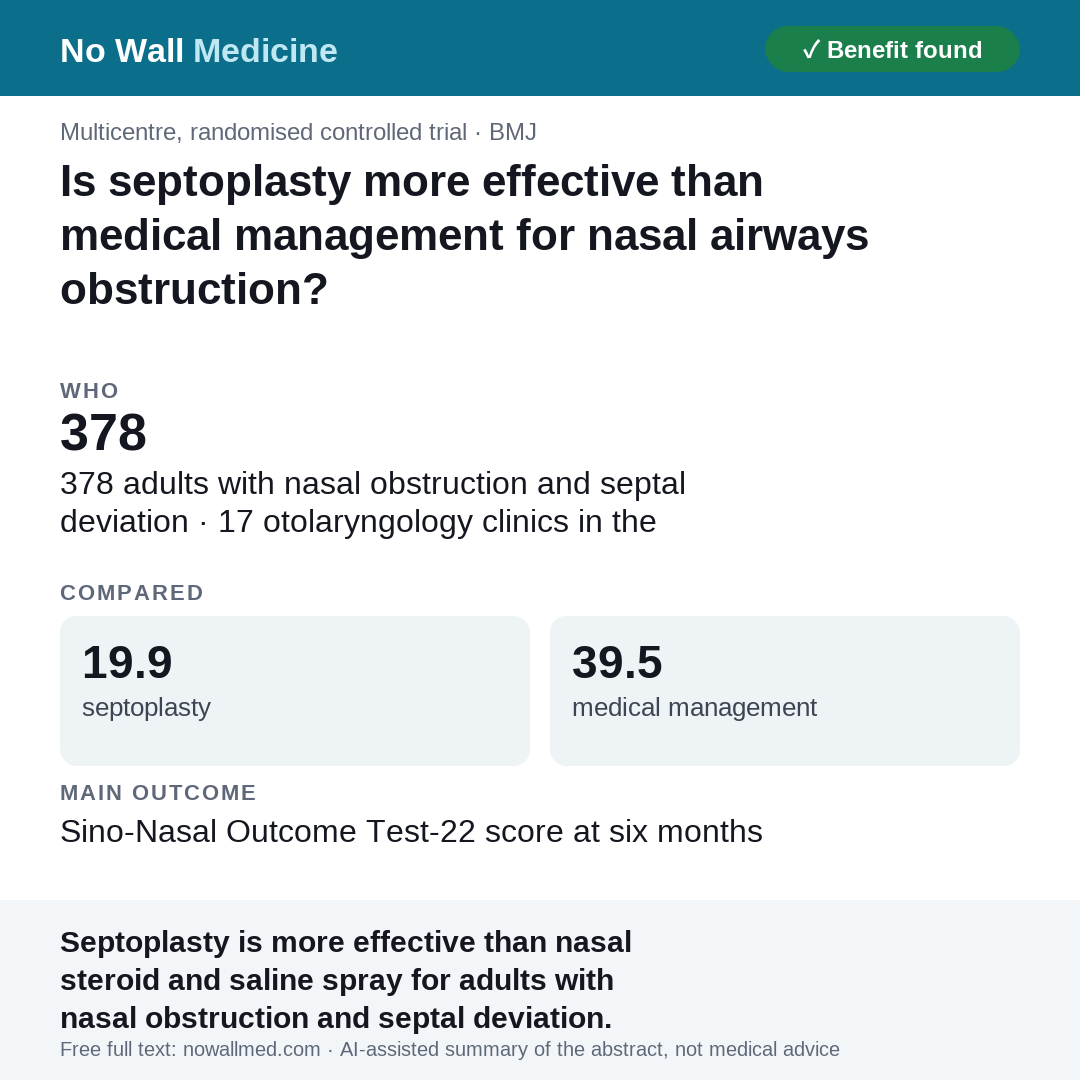
Clinical effectiveness of septoplasty versus medical management for nasal airways obstruction: multicentre, open label, randomised controlled trial
Multicentre, randomised controlled trialBenefit found
Is septoplasty more effective than medical management for nasal airways obstruction?
Who
378
378 adults with nasal obstruction and septal deviation · 17 otolaryngology clinics in the United Kingdom
Compared
19.9septoplasty (95% confidence interval 17.0 to 22.7)
39.5medical management (36.1 to 42.9)
Main outcome
Sino-Nasal Outcome Test-22 score at six months
Result: 20.0 points lower (95% confidence interval 16.4 to 23.6)
Bottom line: Septoplasty is more effective than nasal steroid and saline spray for adults with nasal obstruction and septal deviation.
BMJ · 2023-10-18Download image
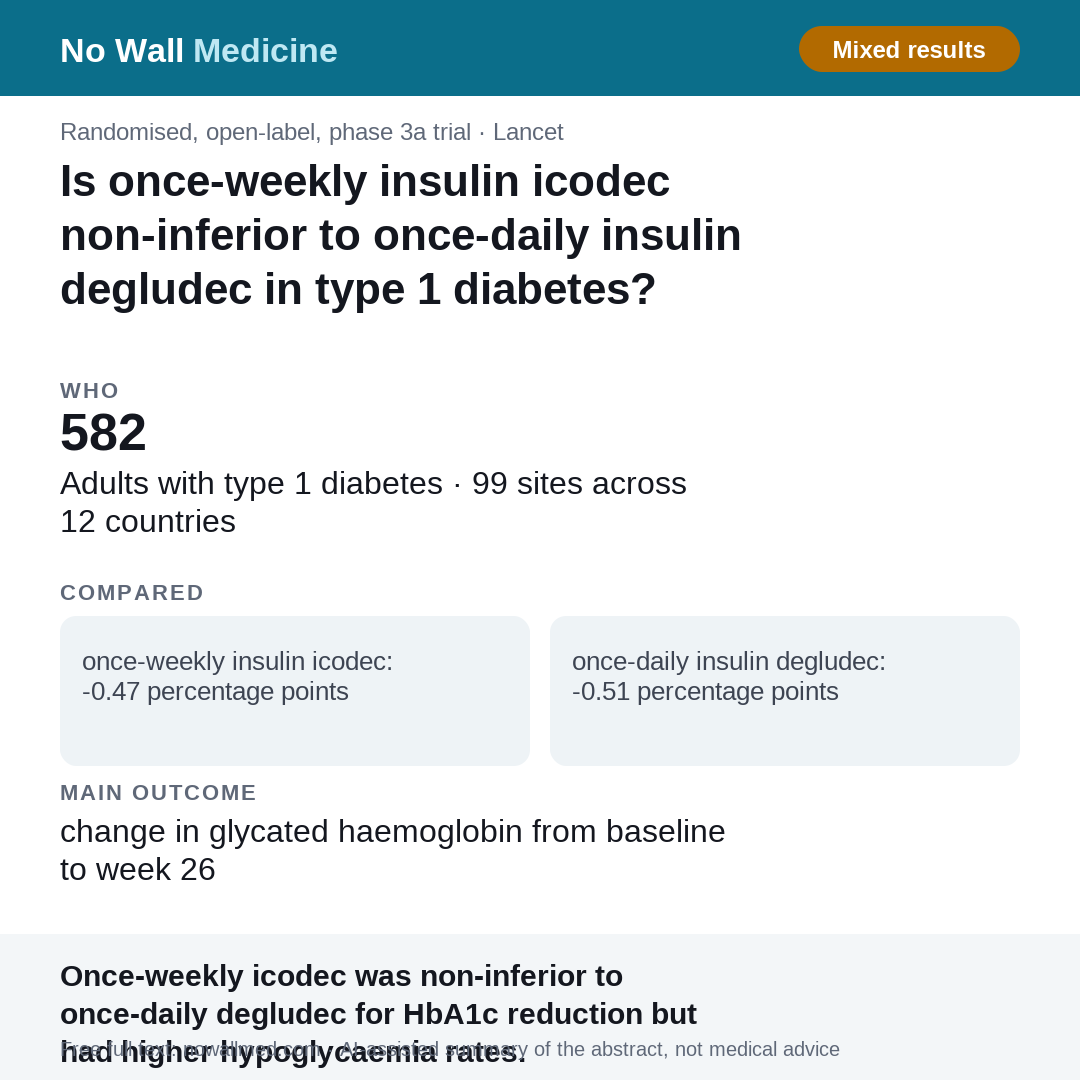
Once-weekly insulin icodec versus once-daily insulin degludec as part of a basal-bolus regimen in individuals with type 1 diabetes (ONWARDS 6): a phase 3a, randomised, open-label, treat-to-target trial
Randomised, open-label, phase 3a trialMixed results
Is once-weekly insulin icodec non-inferior to once-daily insulin degludec in type 1 diabetes?
Who
582
Adults with type 1 diabetes · 99 sites across 12 countries
Compared
once-weekly insulin icodec: -0.47 percentage points
once-daily insulin degludec: -0.51 percentage points
Main outcome
change in glycated haemoglobin from baseline to week 26
Result: estimated treatment difference 0.05 percentage points (95% CI -0.13 to 0.23)
Bottom line: Once-weekly icodec was non-inferior to once-daily degludec for HbA1c reduction but had higher hypoglycaemia rates.
Funded by: Novo Nordisk
Lancet · 2023-10-17Download image
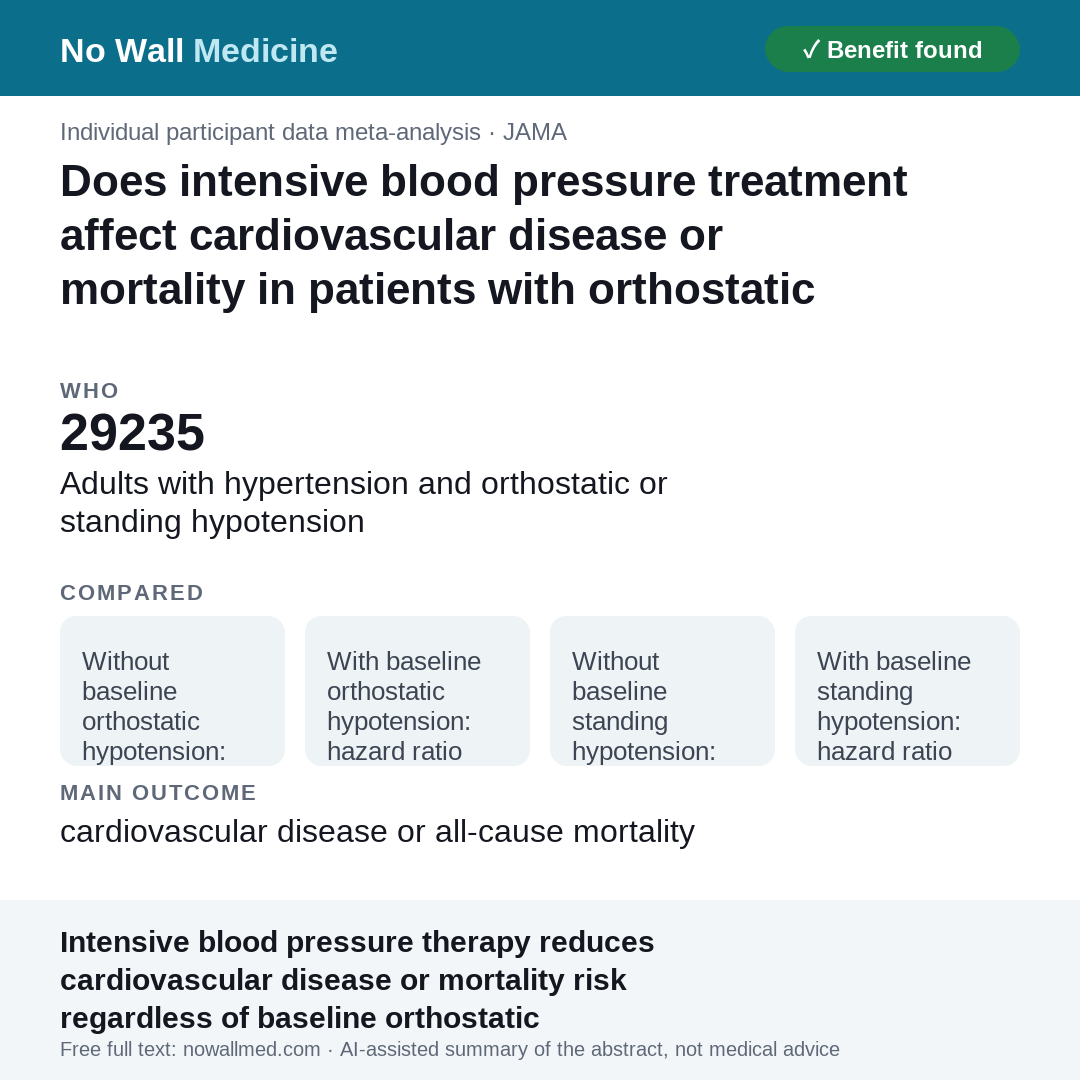
Orthostatic Hypotension, Hypertension Treatment, and Cardiovascular Disease: An Individual Participant Meta-Analysis
Individual participant data meta-analysisBenefit found
Does intensive blood pressure treatment affect cardiovascular disease or mortality in patients with orthostatic hypotension?
Who
29235
Adults with hypertension and orthostatic or standing hypotension
Compared
Without baseline orthostatic hypotension: hazard ratio 0.81 (95% CI, 0.76-0.86)
With baseline orthostatic hypotension: hazard ratio 0.83 (95% CI, 0.70-1.00)
Without baseline standing hypotension: hazard ratio 0.80 (95% CI, 0.75-0.85)
With baseline standing hypotension: hazard ratio 0.94 (95% CI, 0.75-1.18)
Main outcome
cardiovascular disease or all-cause mortality
Result: hazard ratio 0.81 (95% CI, 0.76-0.86) for those without orthostatic hypotension
Bottom line: Intensive blood pressure therapy reduces cardiovascular disease or mortality risk regardless of baseline orthostatic hypotension status.
JAMA · 2023-10-17Download image
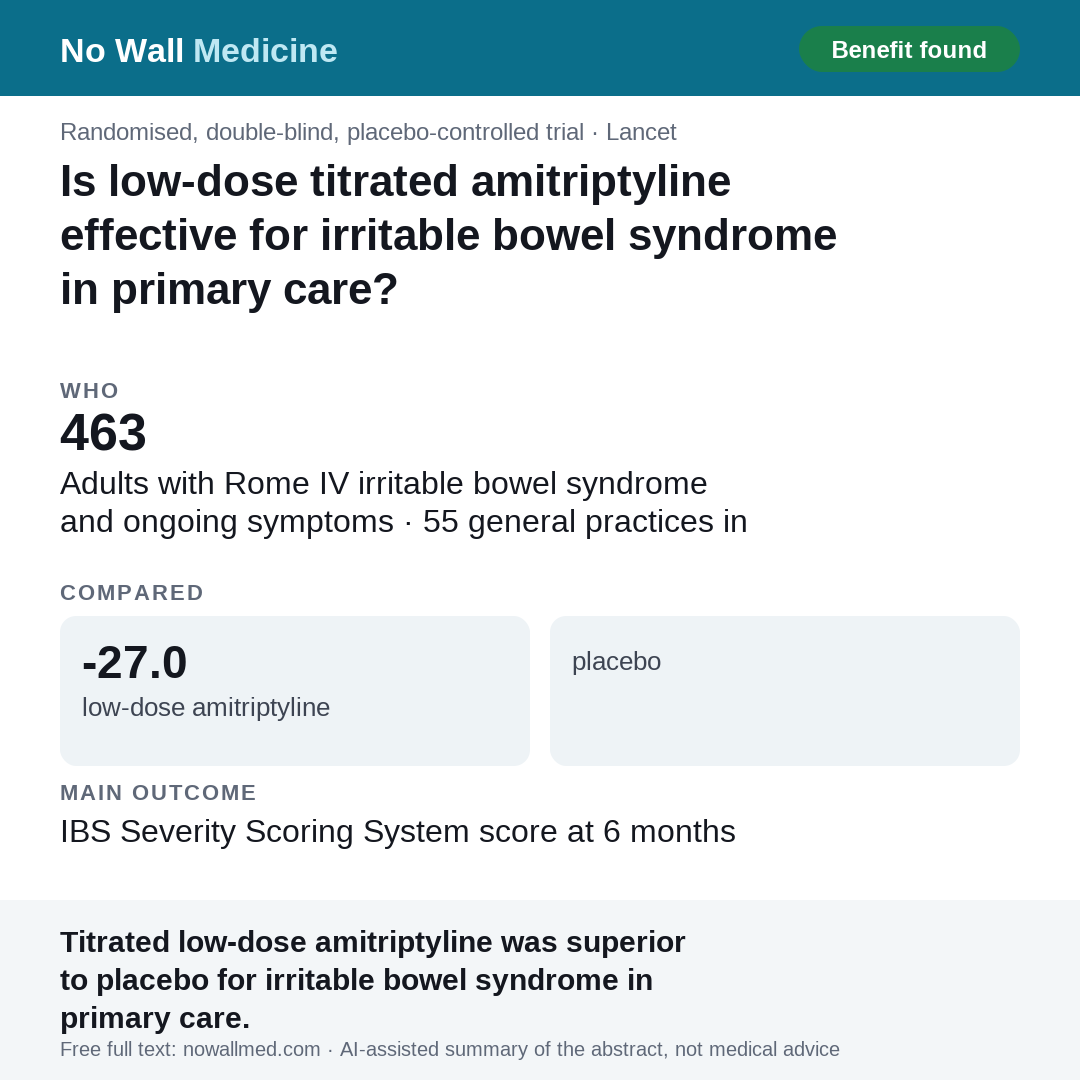
Amitriptyline at Low-Dose and Titrated for Irritable Bowel Syndrome as Second-Line Treatment in primary care (ATLANTIS): a randomised, double-blind, placebo-controlled, phase 3 trial
Randomised, double-blind, placebo-controlled trialBenefit found
Is low-dose titrated amitriptyline effective for irritable bowel syndrome in primary care?
Who
463
Adults with Rome IV irritable bowel syndrome and ongoing symptoms · 55 general practices in England
Compared
-27.0low-dose amitriptyline
placebo
Main outcome
IBS Severity Scoring System score at 6 months
Result: -27.0 (95% CI -46.9 to -7.10)
Bottom line: Titrated low-dose amitriptyline was superior to placebo for irritable bowel syndrome in primary care.
Funded by: National Institute for Health and Care Research
Lancet · 2023-10-16Download image
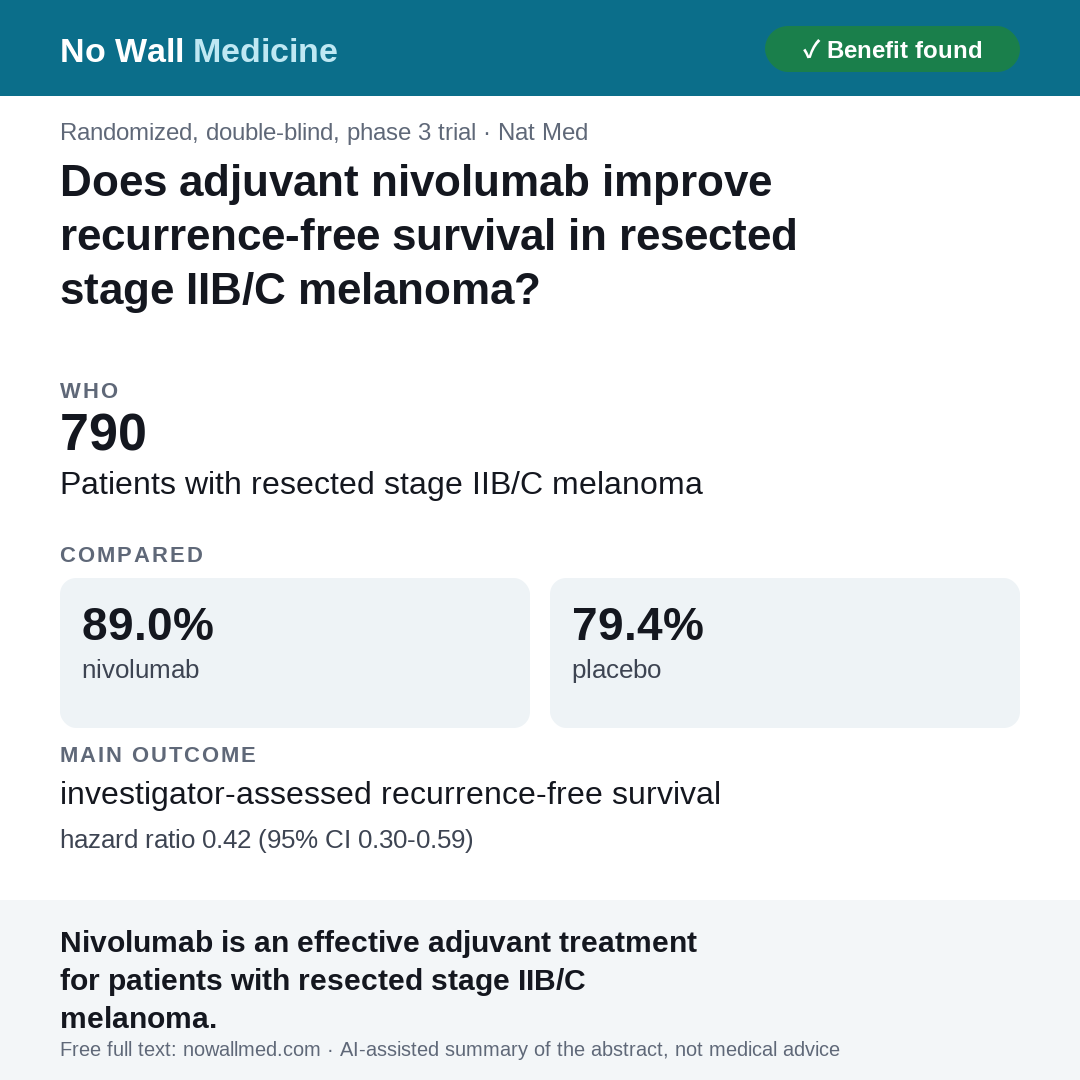
Adjuvant nivolumab in resected stage IIB/C melanoma: primary results from the randomized, phase 3 CheckMate 76K trial
Randomized, double-blind, phase 3 trialBenefit found
Does adjuvant nivolumab improve recurrence-free survival in resected stage IIB/C melanoma?
Who
790
Patients with resected stage IIB/C melanoma
Compared
89.0%nivolumab
79.4%placebo
Main outcome
investigator-assessed recurrence-free survival
Result: hazard ratio 0.42 (95% CI 0.30-0.59)
Bottom line: Nivolumab is an effective adjuvant treatment for patients with resected stage IIB/C melanoma.
Nat Med · 2023-10-16Download image
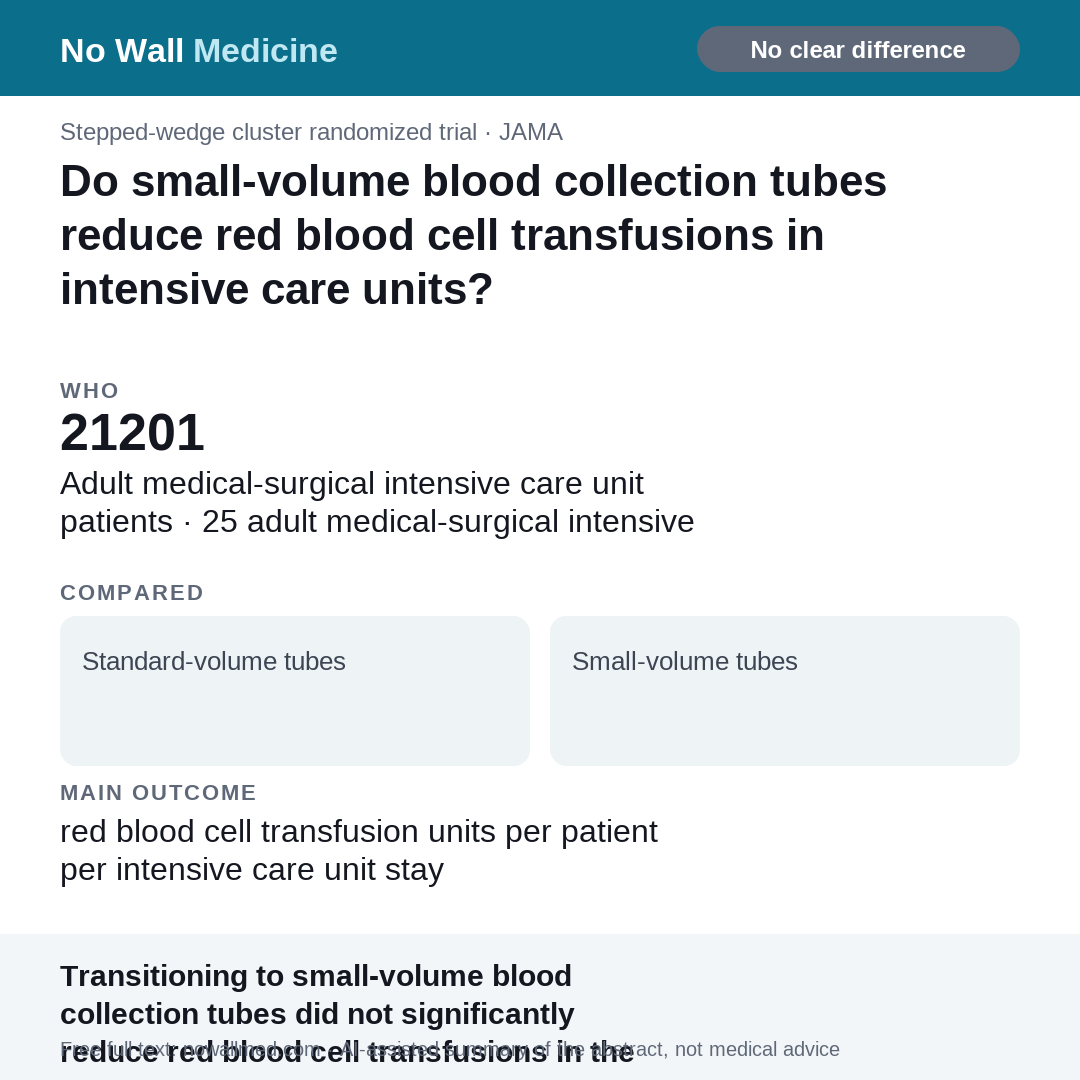
Cefepime vs Piperacillin-Tazobactam in Adults Hospitalized With Acute Infection: The ACORN Randomized Clinical Trial
Randomized clinical trialMixed results
Does cefepime or piperacillin-tazobactam affect risks of acute kidney injury or neurological dysfunction?
Who
2511
Hospitalized adults receiving antipseudomonal antibiotics · Academic medical center in the US
Compared
Cefepime: 7.0% stage 3 acute kidney injury and 7.6% died
Piperacillin-tazobactam: 7.5% stage 3 acute kidney injury and 6.0% died
Main outcome
Highest stage of acute kidney injury or death by day 14
Result: odds ratio 0.95 (95% CI 0.80 to 1.13)
Bottom line: Piperacillin-tazobactam did not increase acute kidney injury or death, but cefepime resulted in more neurological dysfunction.
JAMA · 2023-10-15Download image
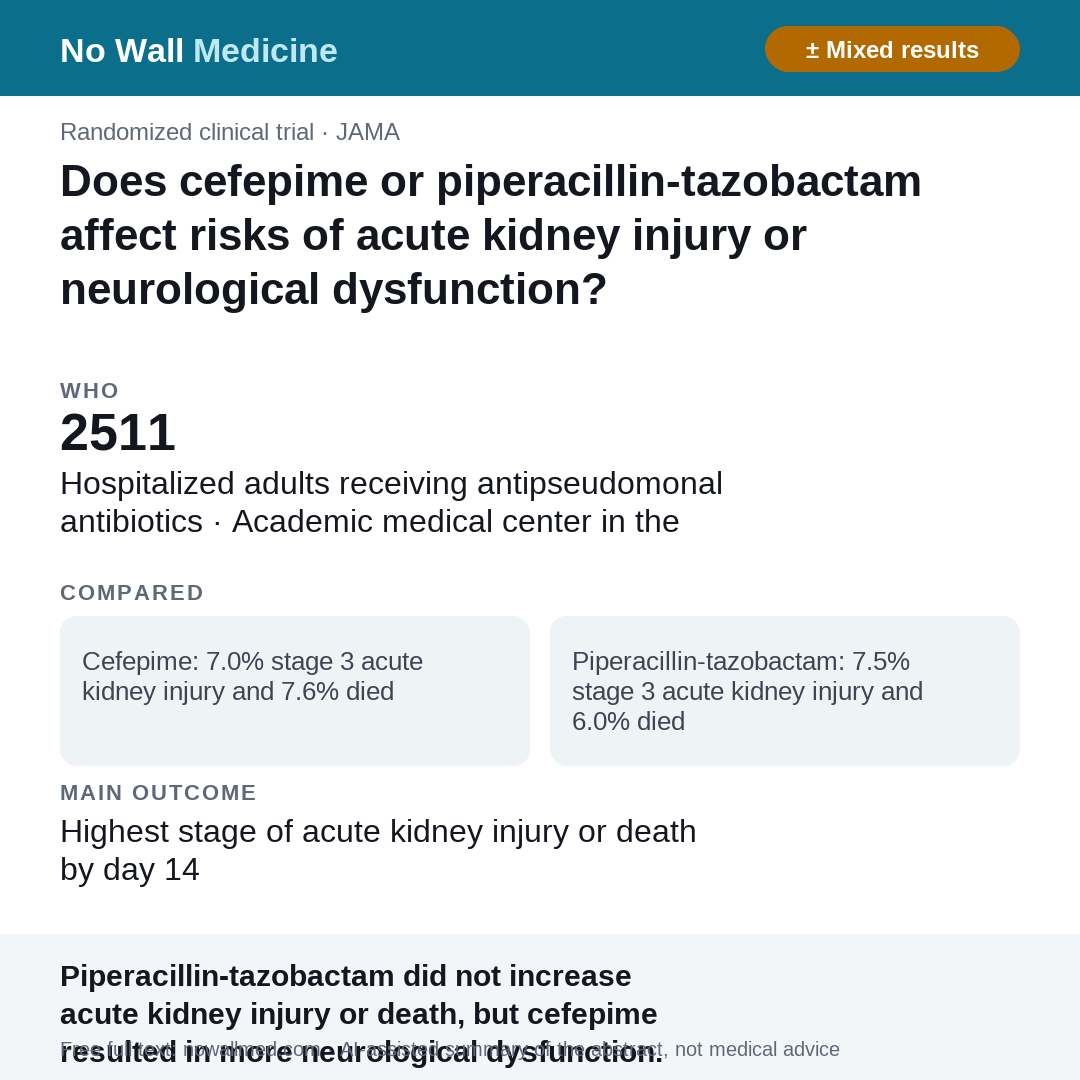
Tirzepatide after intensive lifestyle intervention in adults with overweight or obesity: the SURMOUNT-3 phase 3 trial
Double-blind, placebo-controlled trialBenefit found
Does tirzepatide increase weight reduction after successful intensive lifestyle intervention?
Who
579
Adults with obesity or overweight and one obesity-related complication
Compared
-18.4%Tirzepatide (standard error 0.7)
2.5%Placebo (standard error 1.0)
Main outcome
Additional mean percent weight change from randomization to week 72
Result: -20.8 percentage points (95% CI -23.2%, -18.5%)
Bottom line: Tirzepatide provided substantial additional body weight reduction after intensive lifestyle intervention in adults with obesity.
Nat Med · 2023-10-15Download image
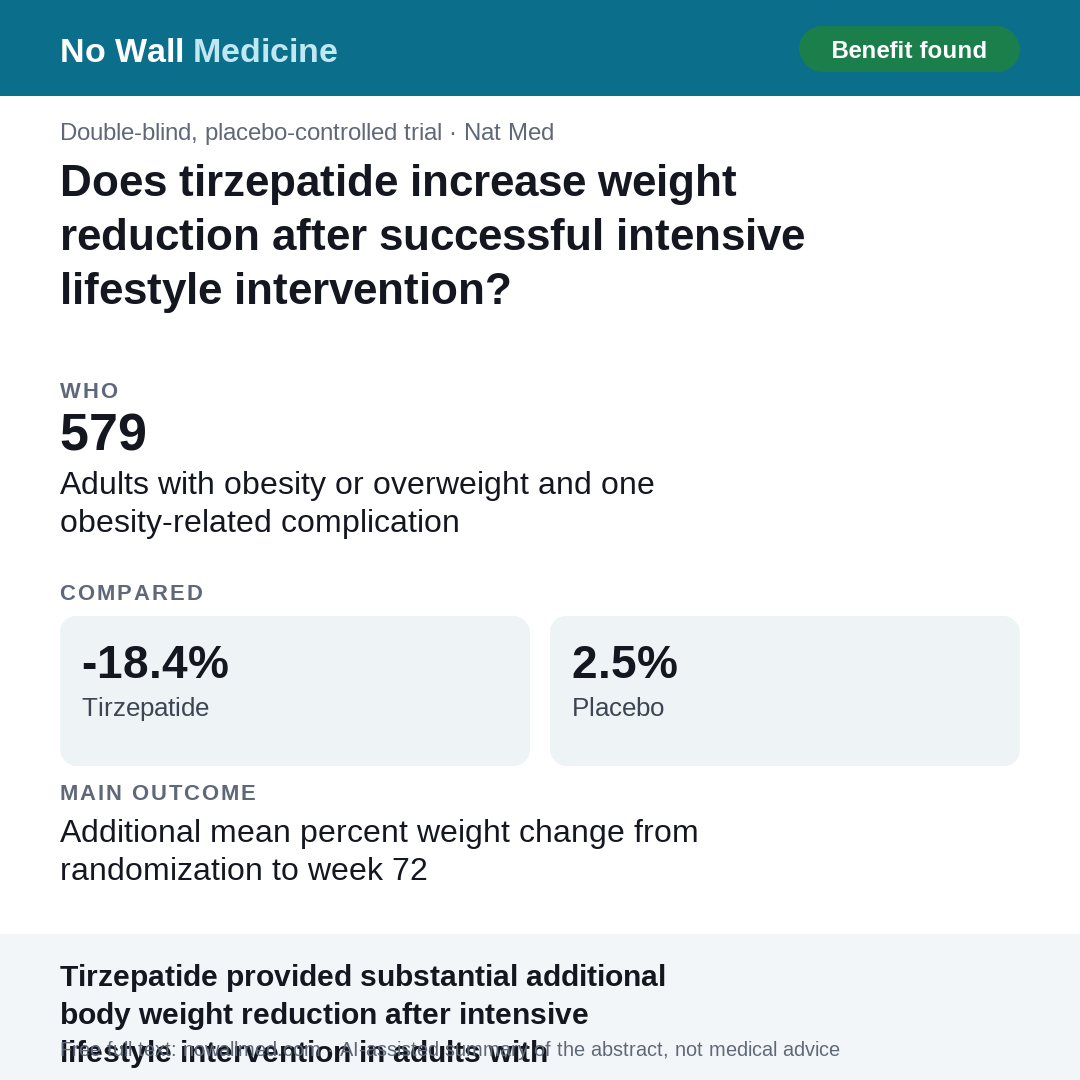
Early and Empirical High-Dose Cryoprecipitate for Hemorrhage After Traumatic Injury: The CRYOSTAT-2 Randomized Clinical Trial
Randomized, open-label, parallel-group controlled trialNo clear difference
Does early empirical high-dose cryoprecipitate improve survival in trauma patients with hemorrhage?
Who
1604
Injured adults requiring major hemorrhage protocol activation and active hemorrhage · 26 United Kingdom and United States major trauma centers
Compared
26.1%Standard care
25.3%Cryoprecipitate
Main outcome
All-cause mortality at 28 days
Result: odds ratio 0.96 (95% CI 0.75-1.23)
Bottom line: Adding early empirical high-dose cryoprecipitate to standard care did not improve 28-day mortality in trauma patients.
JAMA · 2023-10-12Download image
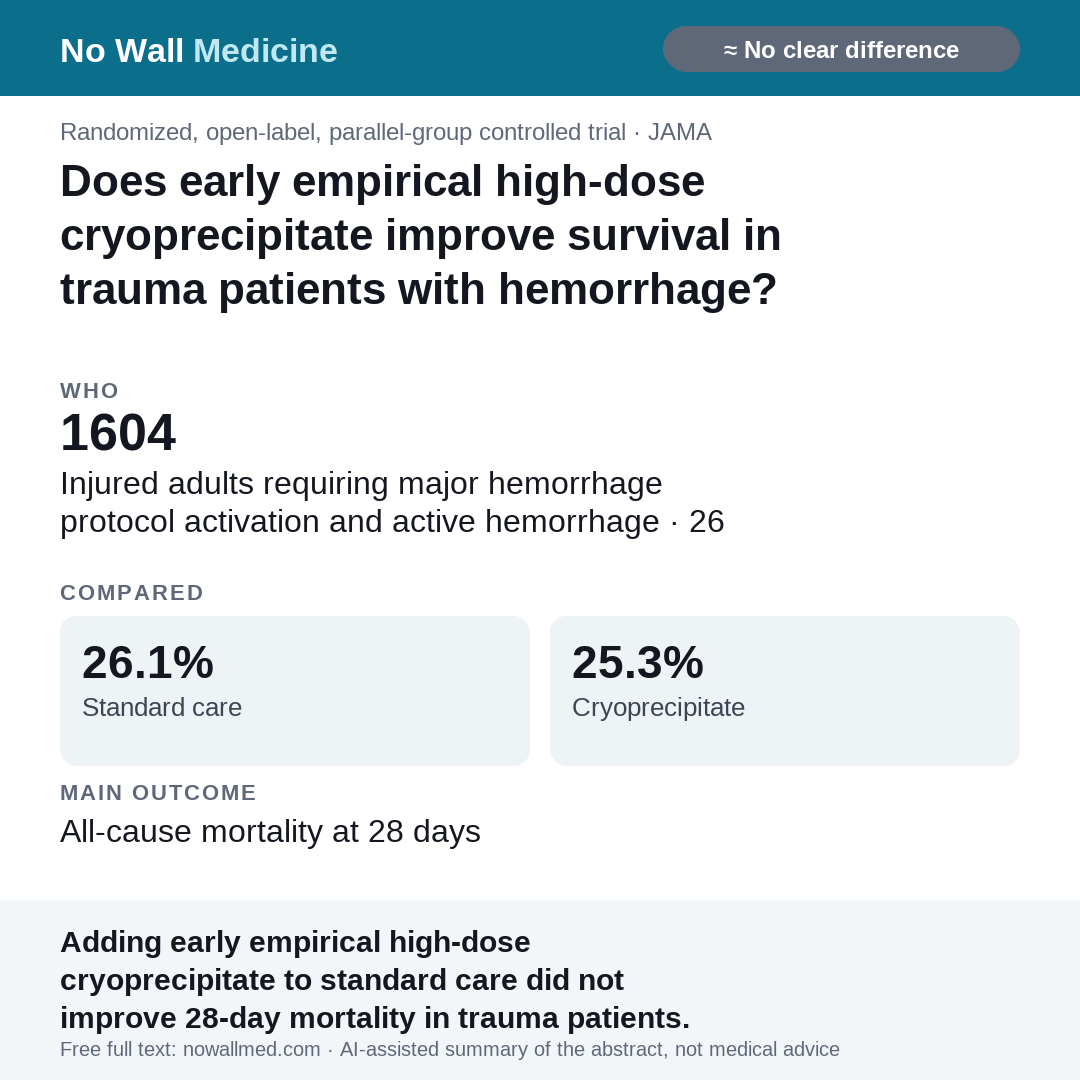
Small-Volume Blood Collection Tubes to Reduce Transfusions in Intensive Care: The STRATUS Randomized Clinical Trial
Stepped-wedge cluster randomized trialNo clear difference
Do small-volume blood collection tubes reduce red blood cell transfusions in intensive care units?
Who
21201
Adult medical-surgical intensive care unit patients · 25 adult medical-surgical intensive care units in Canada
Compared
Standard-volume tubes
Small-volume tubes
Main outcome
red blood cell transfusion units per patient per intensive care unit stay
Result: relative risk 0.91 (95% CI 0.79 to 1.05)
Bottom line: Transitioning to small-volume blood collection tubes did not significantly reduce red blood cell transfusions in the primary analysis.
JAMA · 2023-10-12Download image
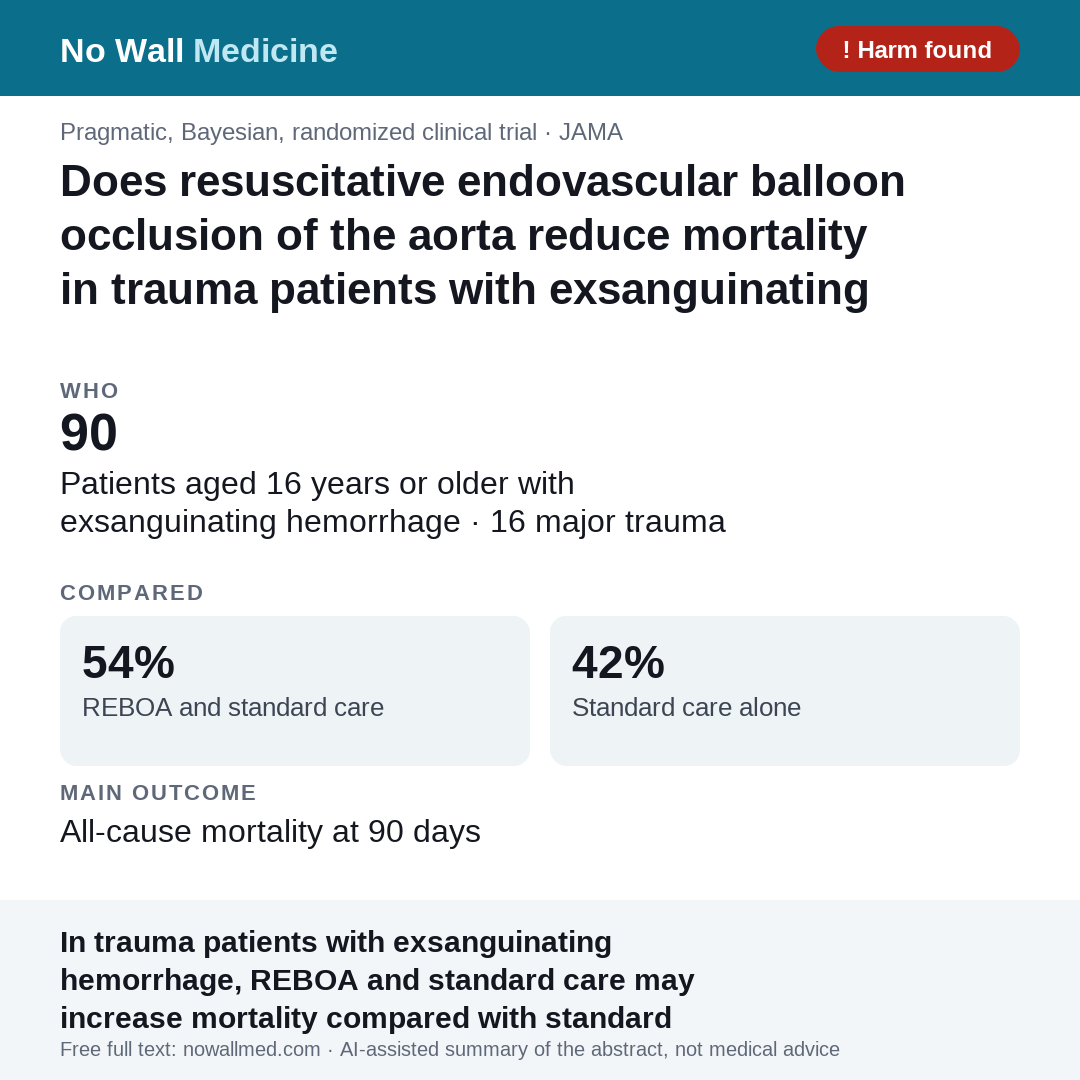
Emergency Department Resuscitative Endovascular Balloon Occlusion of the Aorta in Trauma Patients With Exsanguinating Hemorrhage: The UK-REBOA Randomized Clinical Trial
Pragmatic, Bayesian, randomized clinical trialHarm found
Does resuscitative endovascular balloon occlusion of the aorta reduce mortality in trauma patients with exsanguinating hemorrhage?
Who
90
Patients aged 16 years or older with exsanguinating hemorrhage · 16 major trauma centers in the UK
Compared
54%REBOA and standard care
42%Standard care alone
Main outcome
All-cause mortality at 90 days
Result: odds ratio 1.58 (95% credible interval, 0.72-3.52)
Bottom line: In trauma patients with exsanguinating hemorrhage, REBOA and standard care may increase mortality compared with standard care alone.
JAMA · 2023-10-12Download image
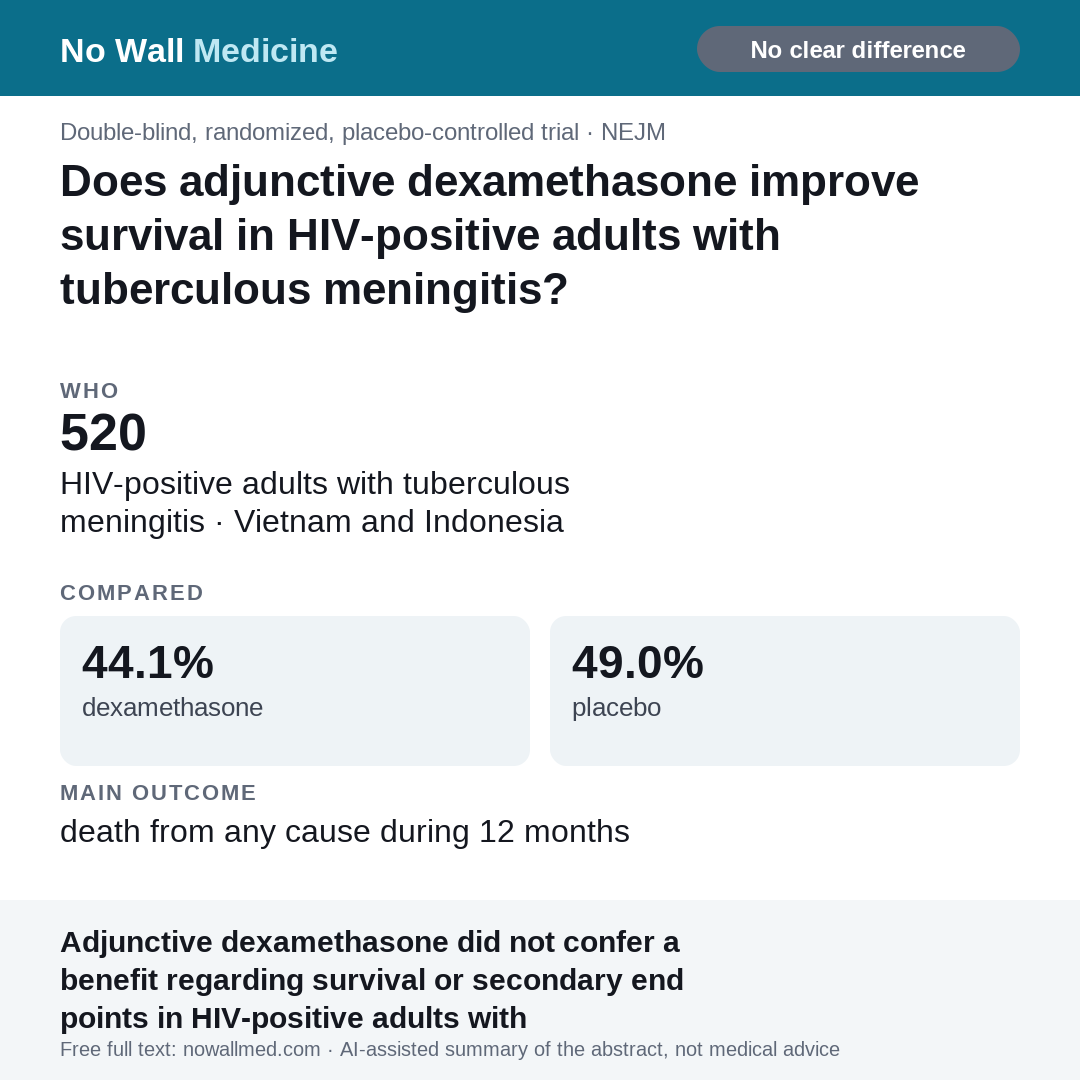
Adjunctive Dexamethasone for Tuberculous Meningitis in HIV-Positive Adults
Double-blind, randomized, placebo-controlled trialNo clear difference
Does adjunctive dexamethasone improve survival in HIV-positive adults with tuberculous meningitis?
Who
520
HIV-positive adults with tuberculous meningitis · Vietnam and Indonesia
Compared
44.1%dexamethasone
49.0%placebo
Main outcome
death from any cause during 12 months
Result: hazard ratio 0.85 (95% confidence interval, 0.66 to 1.10)
Bottom line: Adjunctive dexamethasone did not confer a benefit regarding survival or secondary end points in HIV-positive adults with tuberculous meningitis.
Funded by: Wellcome Trust
NEJM · 2023-10-11Download image
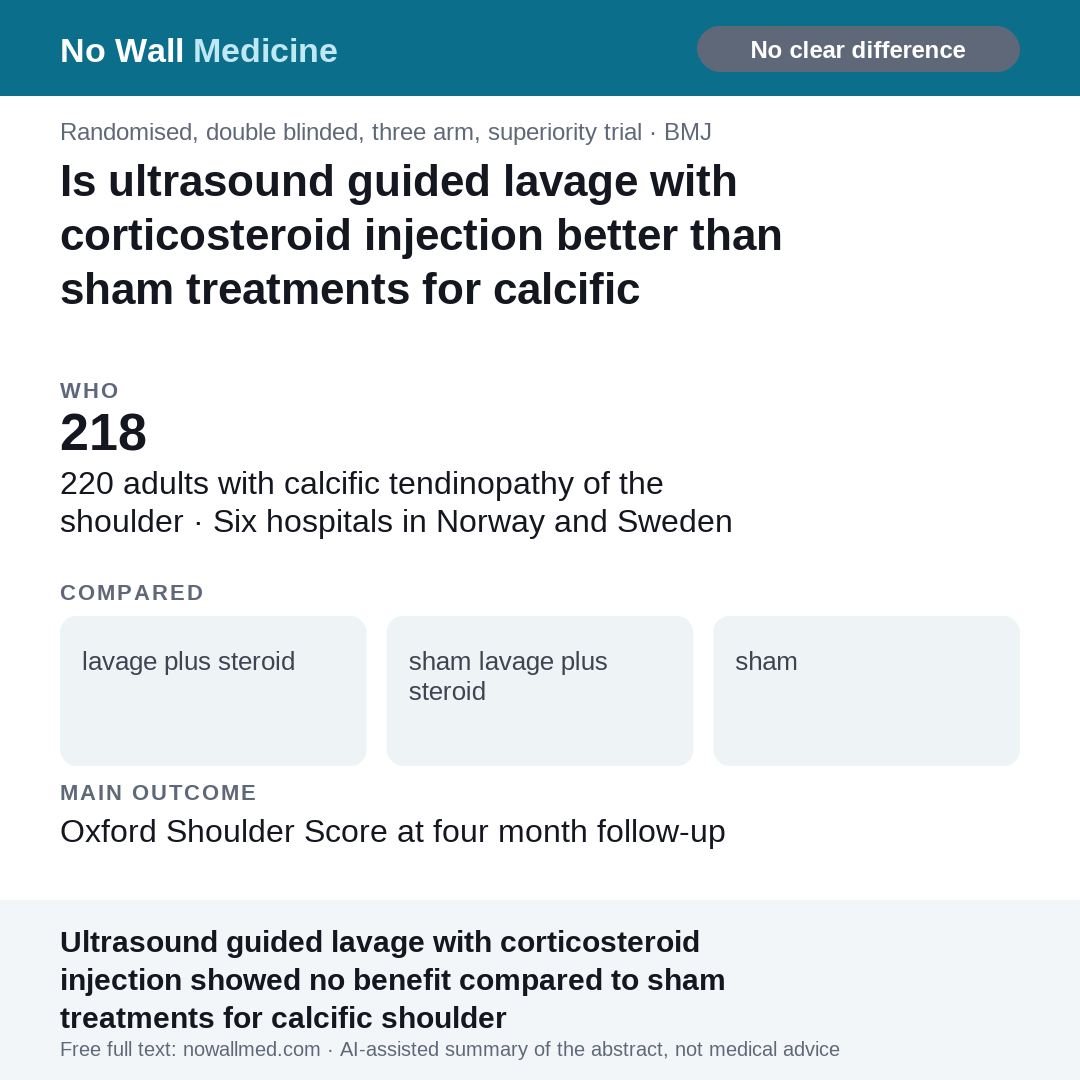
Ultrasound guided lavage with corticosteroid injection versus sham lavage with and without corticosteroid injection for calcific tendinopathy of shoulder: randomised double blinded multi-arm study
Randomised, double blinded, three arm, superiority trialNo clear difference
Is ultrasound guided lavage with corticosteroid injection better than sham treatments for calcific tendinopathy?
Who
218
220 adults with calcific tendinopathy of the shoulder · Six hospitals in Norway and Sweden
Compared
lavage plus steroid
sham lavage plus steroid
sham
Main outcome
Oxford Shoulder Score at four month follow-up
Bottom line: Ultrasound guided lavage with corticosteroid injection showed no benefit compared to sham treatments for calcific shoulder tendinopathy.
BMJ · 2023-10-11Download image
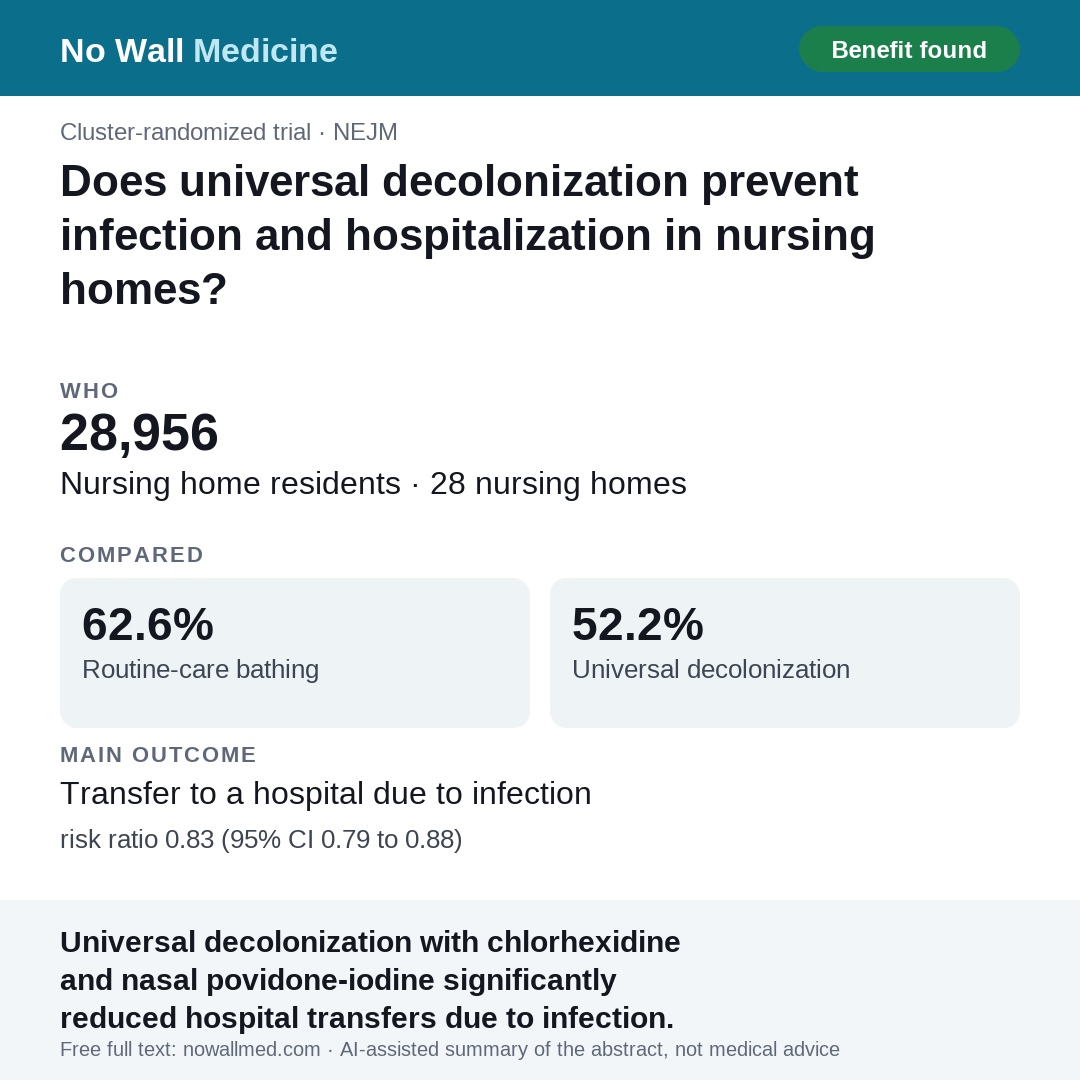
Decolonization in Nursing Homes to Prevent Infection and Hospitalization
Cluster-randomized trialBenefit found
Does universal decolonization prevent infection and hospitalization in nursing homes?
Who
28,956
Nursing home residents · 28 nursing homes
Compared
62.6%Routine-care bathing
52.2%Universal decolonization
Main outcome
Transfer to a hospital due to infection
Result: risk ratio 0.83 (95% CI 0.79 to 0.88)
Bottom line: Universal decolonization with chlorhexidine and nasal povidone-iodine significantly reduced hospital transfers due to infection.
Funded by: Agency for Healthcare Research and Quality
NEJM · 2023-10-10Download image
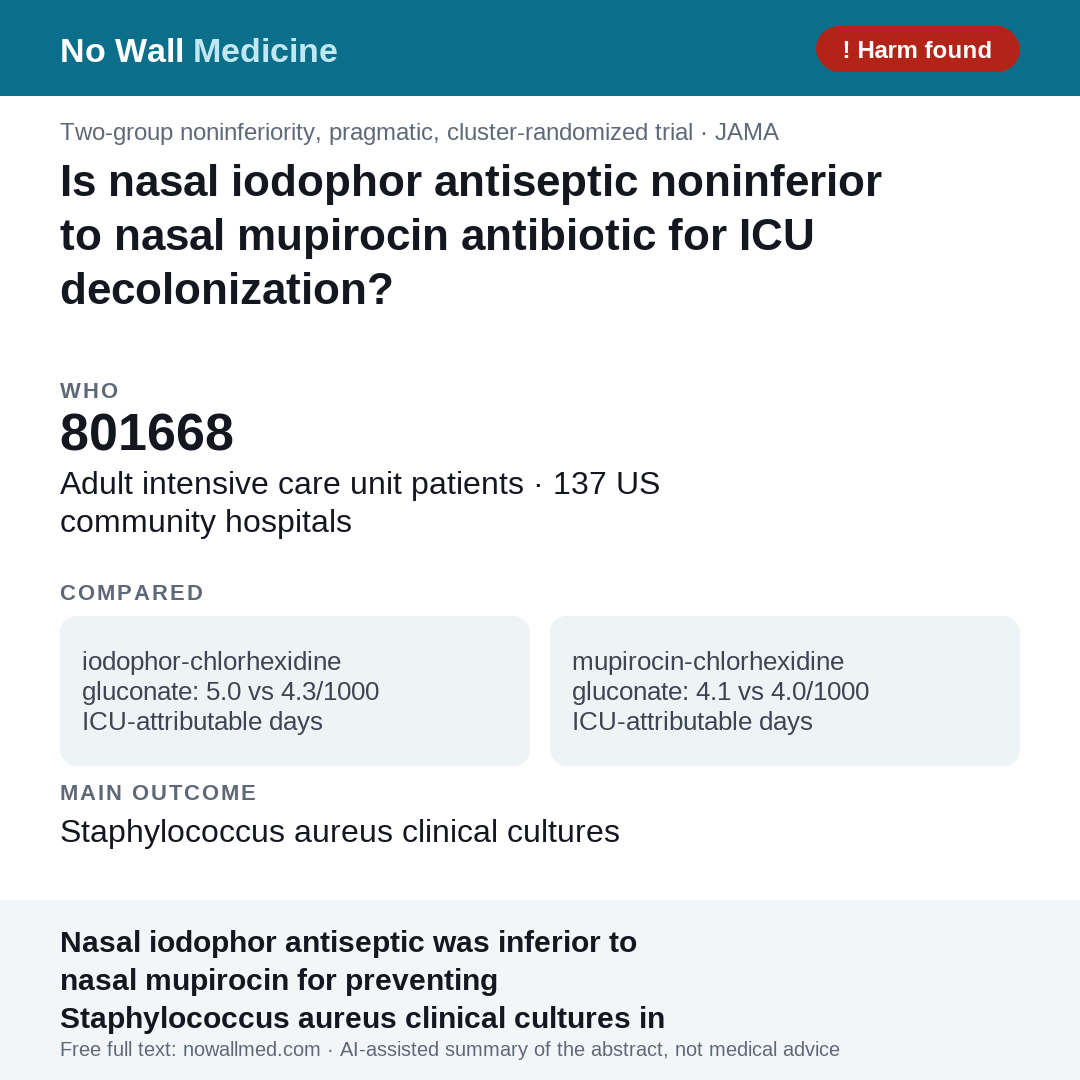
Nasal Iodophor Antiseptic vs Nasal Mupirocin Antibiotic in the Setting of Chlorhexidine Bathing to Prevent Infections in Adult ICUs: A Randomized Clinical Trial
Two-group noninferiority, pragmatic, cluster-randomized trialHarm found
Is nasal iodophor antiseptic noninferior to nasal mupirocin antibiotic for ICU decolonization?
Who
801668
Adult intensive care unit patients · 137 US community hospitals
Compared
iodophor-chlorhexidine gluconate: 5.0 vs 4.3/1000 ICU-attributable days
mupirocin-chlorhexidine gluconate: 4.1 vs 4.0/1000 ICU-attributable days
Main outcome
Staphylococcus aureus clinical cultures
Result: hazard ratio difference in differences 18.4% [95% CI, 10.7%-26.6%]
Bottom line: Nasal iodophor antiseptic was inferior to nasal mupirocin for preventing Staphylococcus aureus clinical cultures in adult intensive care units.
JAMA · 2023-10-10Download image