Visual abstracts
New randomized trials and meta-analyses from leading journals at a glance: who was studied, what was compared, and what was found. Every paper is free to read in full.
All specialtiesCardiology 839Oncology 760Gastroenterology & Hepatology 306Infectious Disease 626Neurology 350Psychiatry & Mental Health 430Pulmonology 365Critical Care 243Endocrinology & Diabetes 480Pediatrics 534Surgery 318Orthopedics & Sports Medicine 161Neurosurgery 87Cardiothoracic & Vascular Surgery 87Plastic & Reconstructive Surgery 113Nephrology 197Rheumatology 108Hematology 181Dermatology 74Ophthalmology 97Obstetrics & Gynecology 261Public & Global Health 167Radiology & Imaging 96Anesthesiology 107Urology 162ENT (Otolaryngology) 85Emergency Medicine 67Allergy & Immunology 58Geriatrics 160Family Medicine & Primary Care 111Medical Genetics & Genomics 91Pathology & Laboratory Medicine 24Physical Medicine & Rehabilitation 148Palliative Care 81Nutrition 223Digital Health & AI 460General Medicine 101
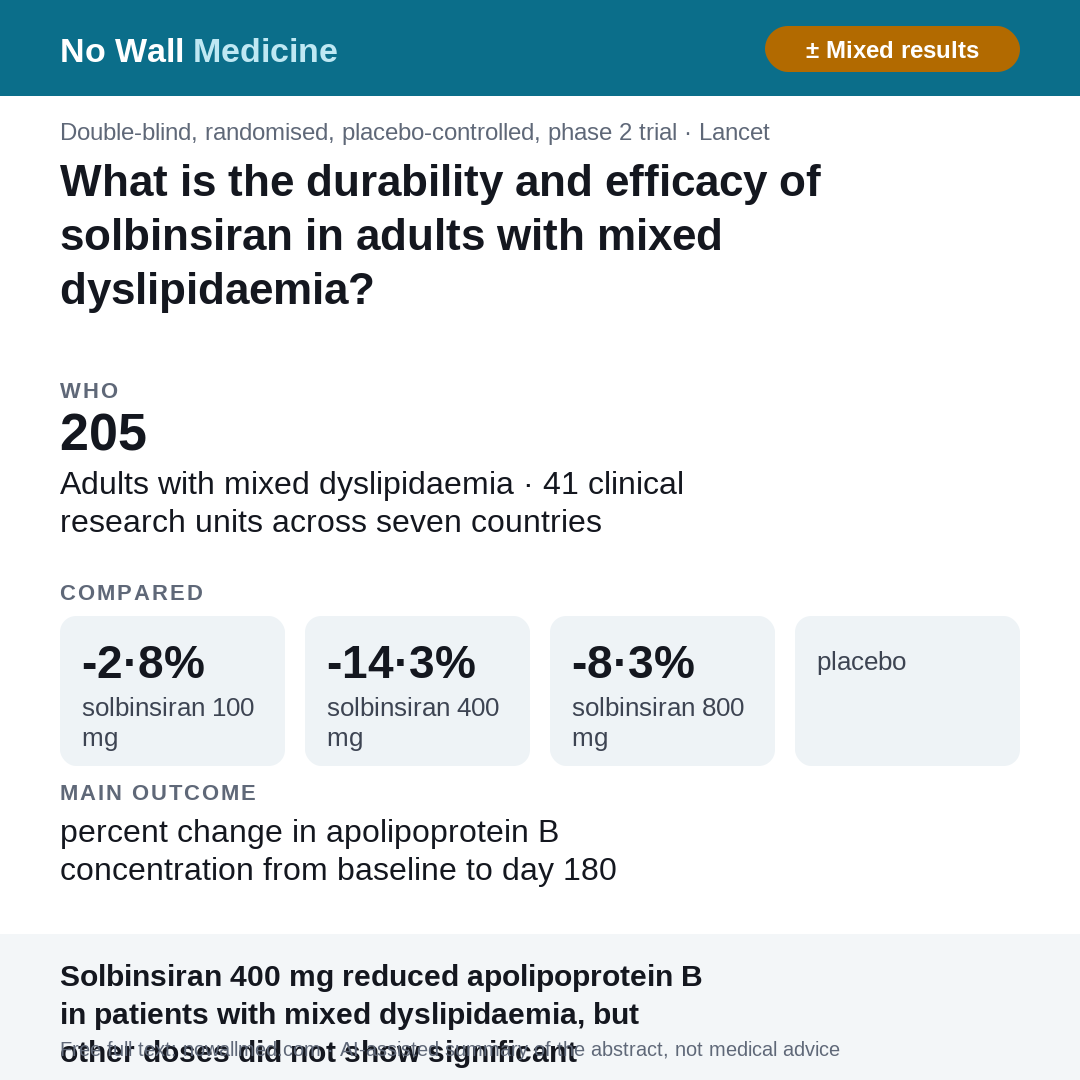
Durability and efficacy of solbinsiran, a GalNAc-conjugated siRNA targeting ANGPTL3, in adults with mixed dyslipidaemia (PROLONG-ANG3): a double-blind, randomised, placebo-controlled, phase 2 trial
Double-blind, randomised, placebo-controlled, phase 2 trialMixed results
What is the durability and efficacy of solbinsiran in adults with mixed dyslipidaemia?
Who
205
Adults with mixed dyslipidaemia · 41 clinical research units across seven countries
Compared
-2·8%solbinsiran 100 mg (95% CI -15·5 to 11·9)
-14·3%solbinsiran 400 mg (-23·6 to -3·9)
-8·3%solbinsiran 800 mg (-18·3 to 2·9)
placebo
Main outcome
percent change in apolipoprotein B concentration from baseline to day 180
Bottom line: Solbinsiran 400 mg reduced apolipoprotein B in patients with mixed dyslipidaemia, but other doses did not show significant reduction.
Funded by: Eli Lilly and Company
Lancet · 2025-03-31Download image
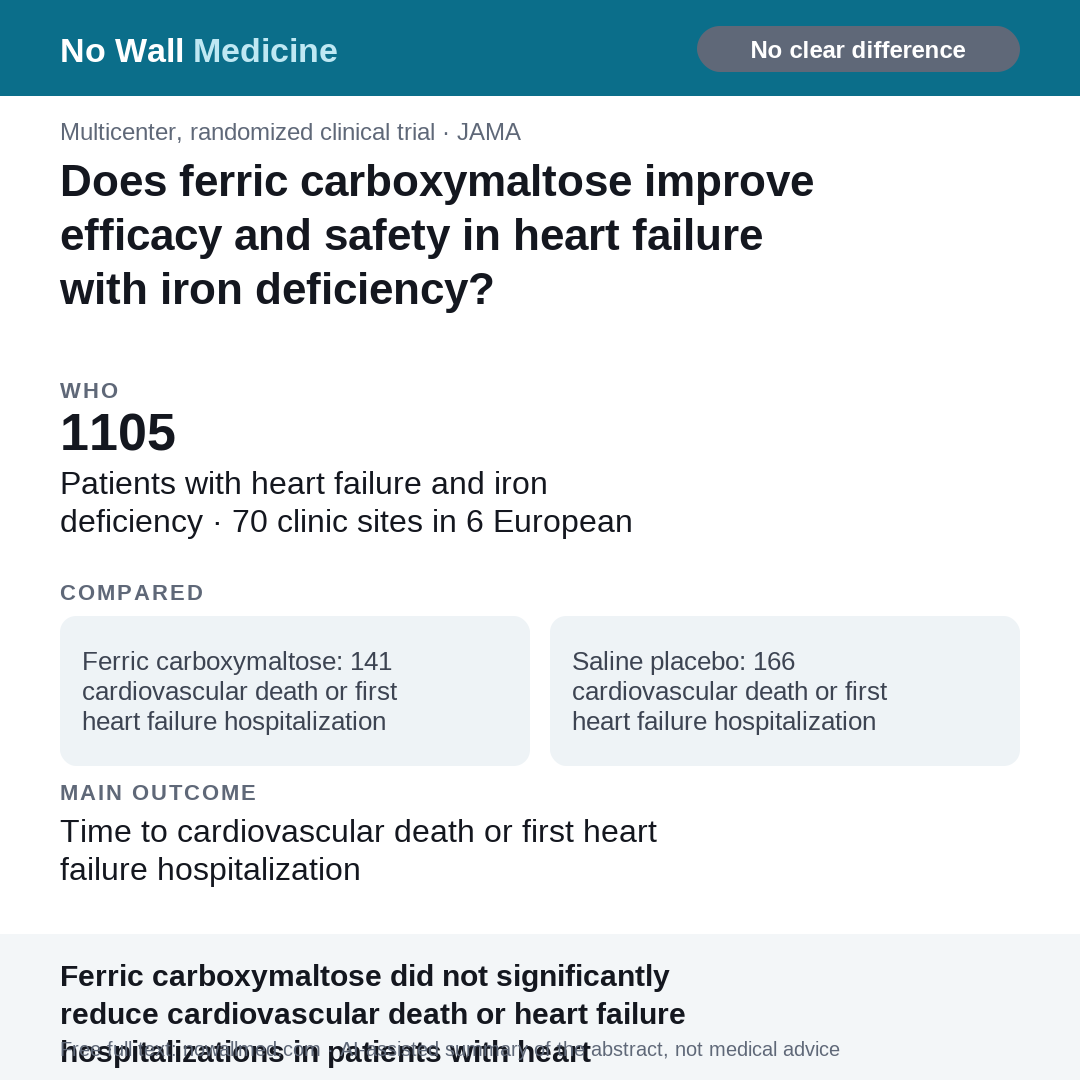
Intravenous Ferric Carboxymaltose in Heart Failure With Iron Deficiency: The FAIR-HF2 DZHK05 Randomized Clinical Trial
Multicenter, randomized clinical trialNo clear difference
Does ferric carboxymaltose improve efficacy and safety in heart failure with iron deficiency?
Who
1105
Patients with heart failure and iron deficiency · 70 clinic sites in 6 European countries
Compared
Ferric carboxymaltose: 141 cardiovascular death or first heart failure hospitalization
Saline placebo: 166 cardiovascular death or first heart failure hospitalization
Main outcome
Time to cardiovascular death or first heart failure hospitalization
Result: hazard ratio 0.79 (95% CI 0.63-0.99)
Bottom line: Ferric carboxymaltose did not significantly reduce cardiovascular death or heart failure hospitalizations in patients with heart failure and iron deficiency.
JAMA · 2025-03-31Download image
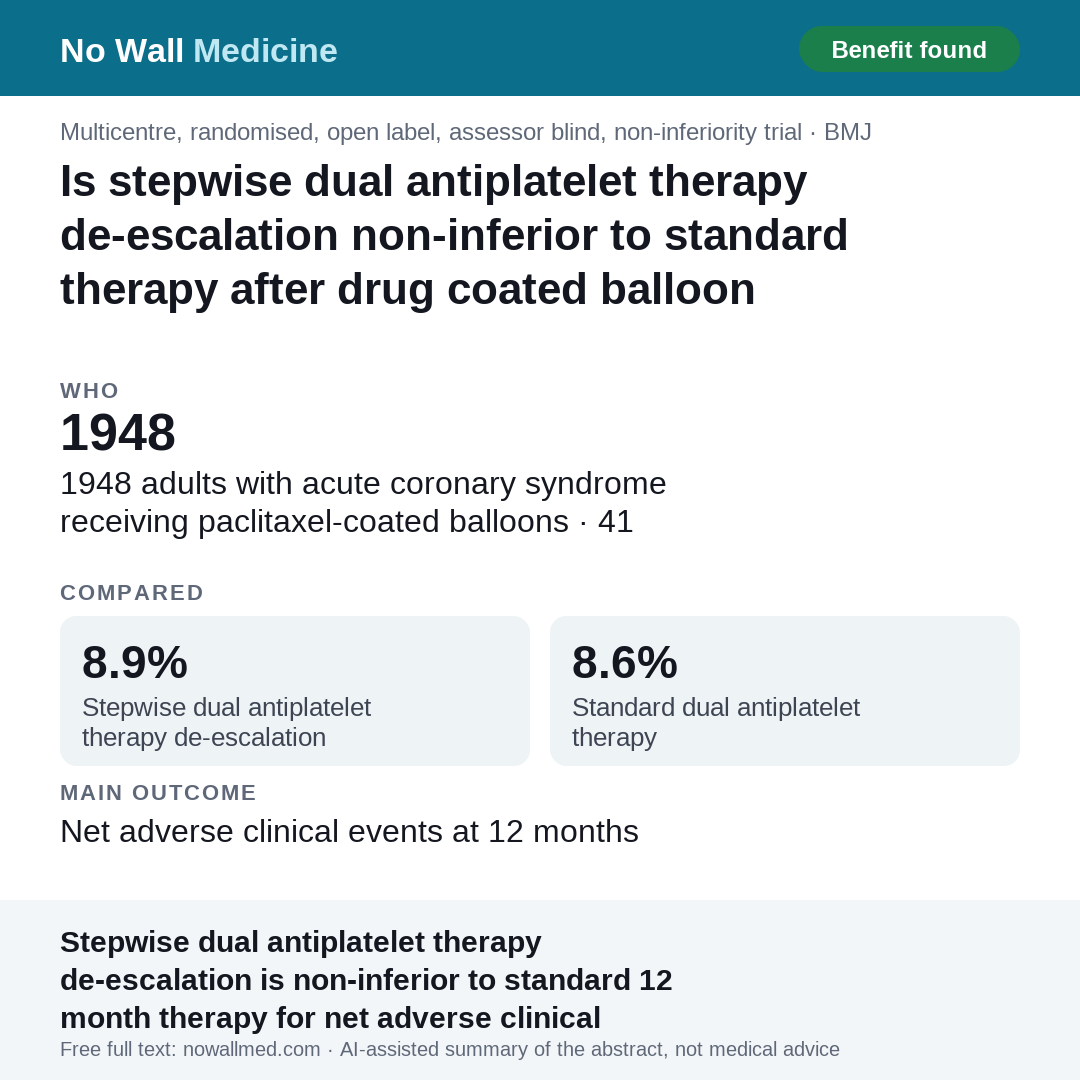
Stepwise dual antiplatelet therapy de-escalation in patients after drug coated balloon angioplasty (REC-CAGEFREE II): multicentre, randomised, open label, assessor blind, non-inferiority trial
Multicentre, randomised, open label, assessor blind, non-inferiority trialBenefit found
Is stepwise dual antiplatelet therapy de-escalation non-inferior to standard therapy after drug coated balloon angioplasty?
Who
1948
1948 adults with acute coronary syndrome receiving paclitaxel-coated balloons · 41 hospitals in China
Compared
8.9%Stepwise dual antiplatelet therapy de-escalation
8.6%Standard dual antiplatelet therapy
Main outcome
Net adverse clinical events at 12 months
Result: difference 0.36%; upper boundary of the one sided 95% CI 2.47%
Bottom line: Stepwise dual antiplatelet therapy de-escalation is non-inferior to standard 12 month therapy for net adverse clinical events.
BMJ · 2025-03-31Download image
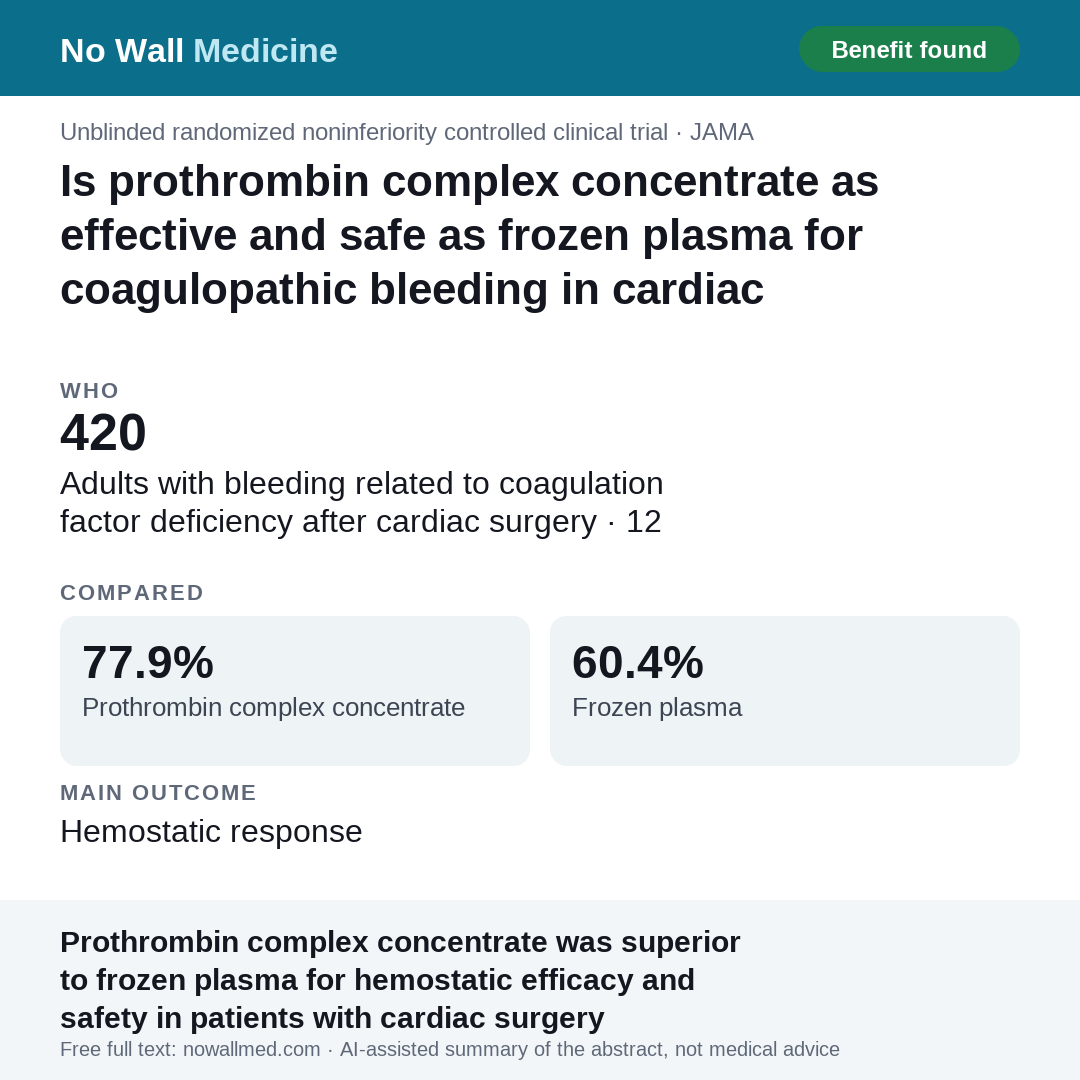
Prothrombin Complex Concentrate vs Frozen Plasma for Coagulopathic Bleeding in Cardiac Surgery: The FARES-II Multicenter Randomized Clinical Trial
Unblinded randomized noninferiority controlled clinical trialBenefit found
Is prothrombin complex concentrate as effective and safe as frozen plasma for coagulopathic bleeding in cardiac surgery?
Who
420
Adults with bleeding related to coagulation factor deficiency after cardiac surgery · 12 hospitals in Canada and the US
Compared
77.9%Prothrombin complex concentrate
60.4%Frozen plasma
Main outcome
Hemostatic response
Result: difference, 17.6%; 95% CI, 8.7%-26.4%
Bottom line: Prothrombin complex concentrate was superior to frozen plasma for hemostatic efficacy and safety in patients with cardiac surgery bleeding.
JAMA · 2025-03-30Download image
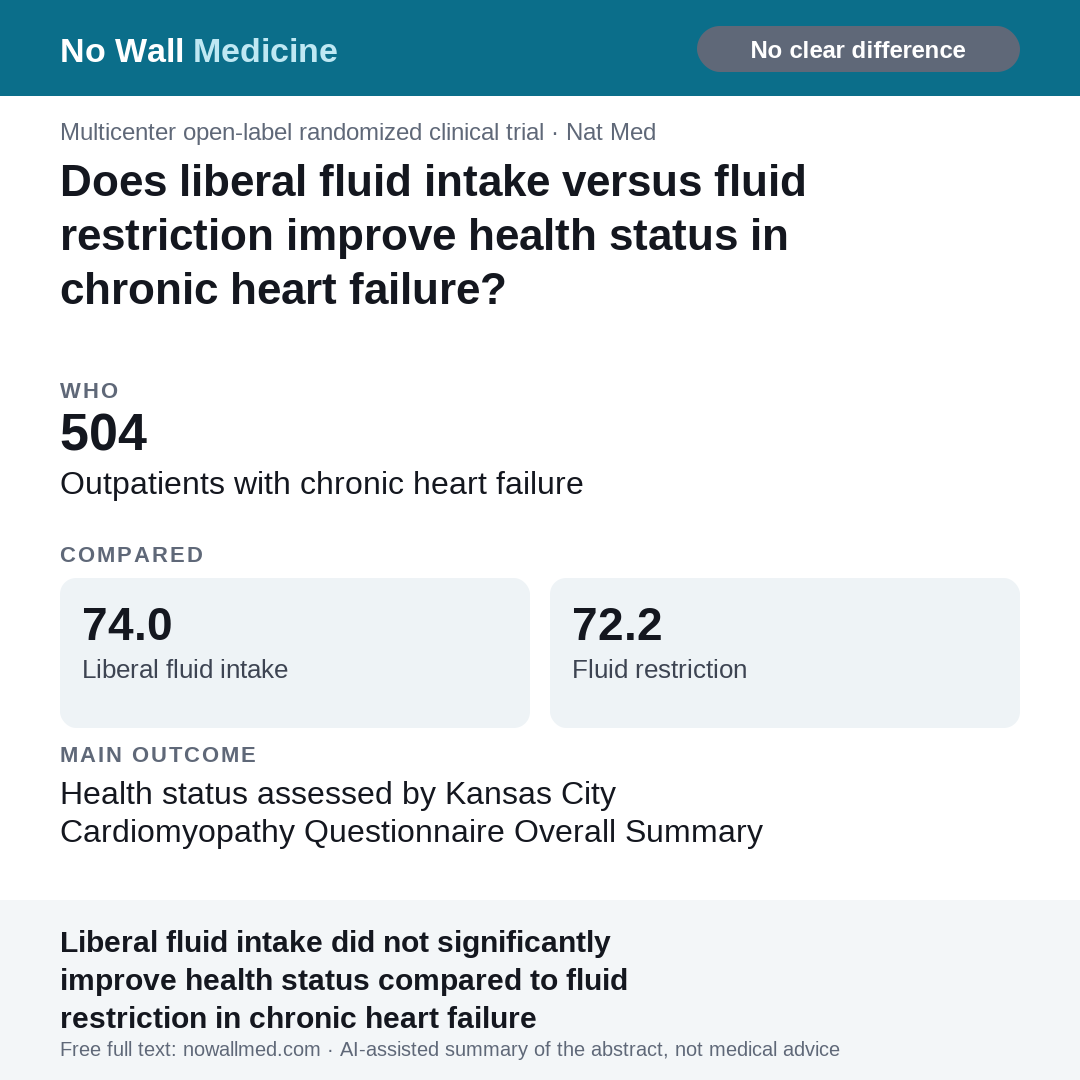
Liberal fluid intake versus fluid restriction in chronic heart failure: a randomized clinical trial
Multicenter open-label randomized clinical trialNo clear difference
Does liberal fluid intake versus fluid restriction improve health status in chronic heart failure?
Who
504
Outpatients with chronic heart failure
Compared
74.0Liberal fluid intake
72.2Fluid restriction
Main outcome
Health status assessed by Kansas City Cardiomyopathy Questionnaire Overall Summary Score
Result: mean difference 2.17 (95% confidence interval -0.06 to 4.39)
Bottom line: Liberal fluid intake did not significantly improve health status compared to fluid restriction in chronic heart failure patients.
Nat Med · 2025-03-30Download image
Systematic review and meta-analysis of intravenous iron therapy for patients with heart failure and iron deficiency
Meta-analysis of six trialsBenefit found
Intravenous iron for heart failure with iron deficiency
Who
7175
Patients with heart failure and iron deficiency
Compared
Intravenous iron
Placebo
Main outcome
Heart failure hospitalizations and cardiovascular mortality
Result: risk ratio 0.72 (95% CI 0.55 to 0.89)
Bottom line: Intravenous iron reduces heart failure events
Nat Med · 2025-03-30Download image

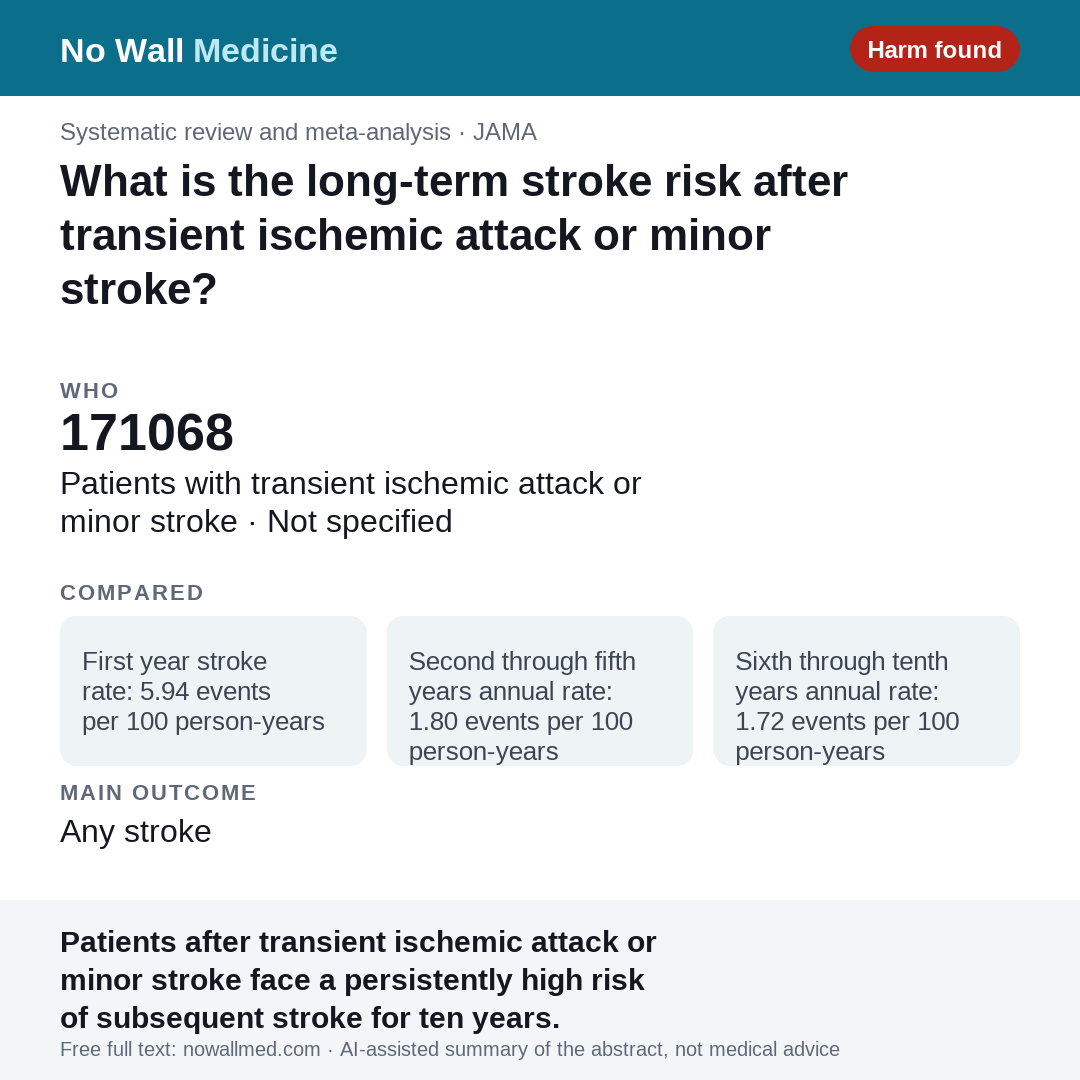
Long-Term Risk of Stroke After Transient Ischemic Attack or Minor Stroke: A Systematic Review and Meta-Analysis
Systematic review and meta-analysisHarm found
What is the long-term stroke risk after transient ischemic attack or minor stroke?
Who
171068
Patients with transient ischemic attack or minor stroke · Not specified
Compared
First year stroke rate: 5.94 events per 100 person-years
Second through fifth years annual rate: 1.80 events per 100 person-years
Sixth through tenth years annual rate: 1.72 events per 100 person-years
Main outcome
Any stroke
Result: 5-year cumulative incidence 12.5% (95% CI, 11.0%-14.1%)
Bottom line: Patients after transient ischemic attack or minor stroke face a persistently high risk of subsequent stroke for ten years.
JAMA · 2025-03-26Download image
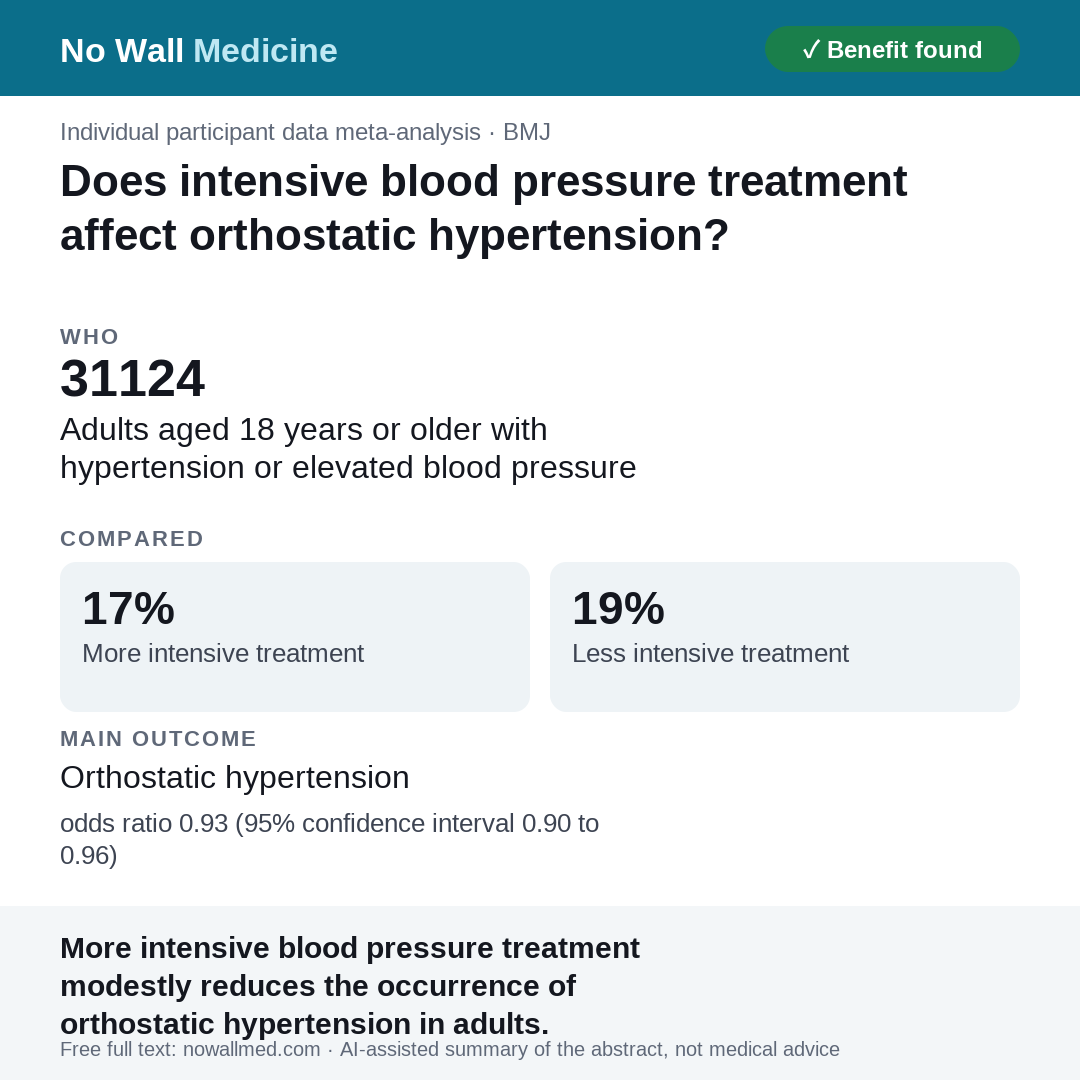
Effects of intensive blood pressure treatment on orthostatic hypertension: individual level meta-analysis
Individual participant data meta-analysisBenefit found
Does intensive blood pressure treatment affect orthostatic hypertension?
Who
31124
Adults aged 18 years or older with hypertension or elevated blood pressure
Compared
17%More intensive treatment
19%Less intensive treatment
Main outcome
Orthostatic hypertension
Result: odds ratio 0.93 (95% confidence interval 0.90 to 0.96)
Bottom line: More intensive blood pressure treatment modestly reduces the occurrence of orthostatic hypertension in adults.
BMJ · 2025-03-25Download image
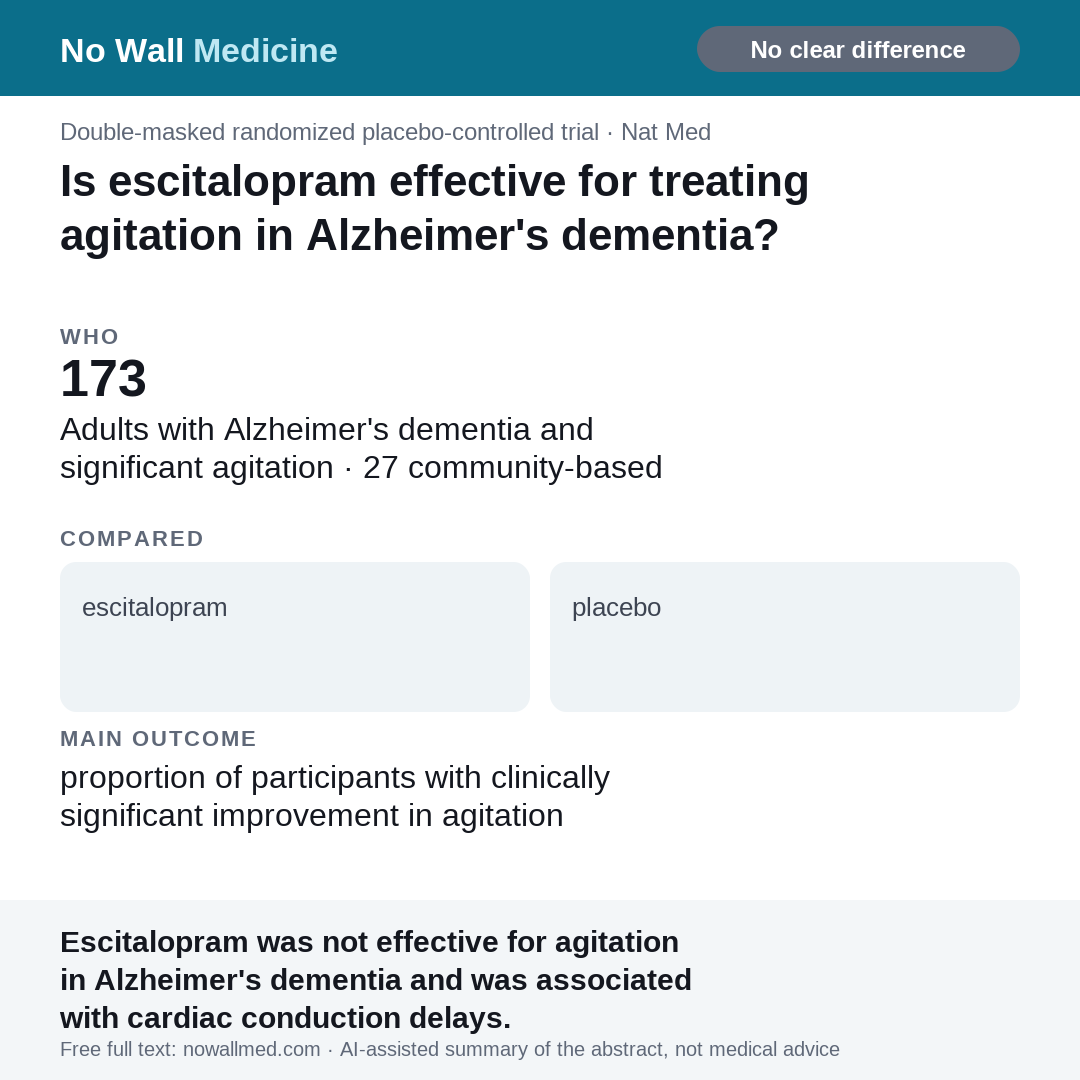
Escitalopram for agitation in Alzheimer's dementia: a randomized controlled phase 3 trial
Double-masked randomized placebo-controlled trialNo clear difference
Is escitalopram effective for treating agitation in Alzheimer's dementia?
Who
173
Adults with Alzheimer's dementia and significant agitation · 27 community-based centers
Compared
escitalopram
placebo
Main outcome
proportion of participants with clinically significant improvement in agitation
Result: risk difference 0.08 (95% confidence interval: -0.21, 0.06)
Bottom line: Escitalopram was not effective for agitation in Alzheimer's dementia and was associated with cardiac conduction delays.
Nat Med · 2025-03-25Download image
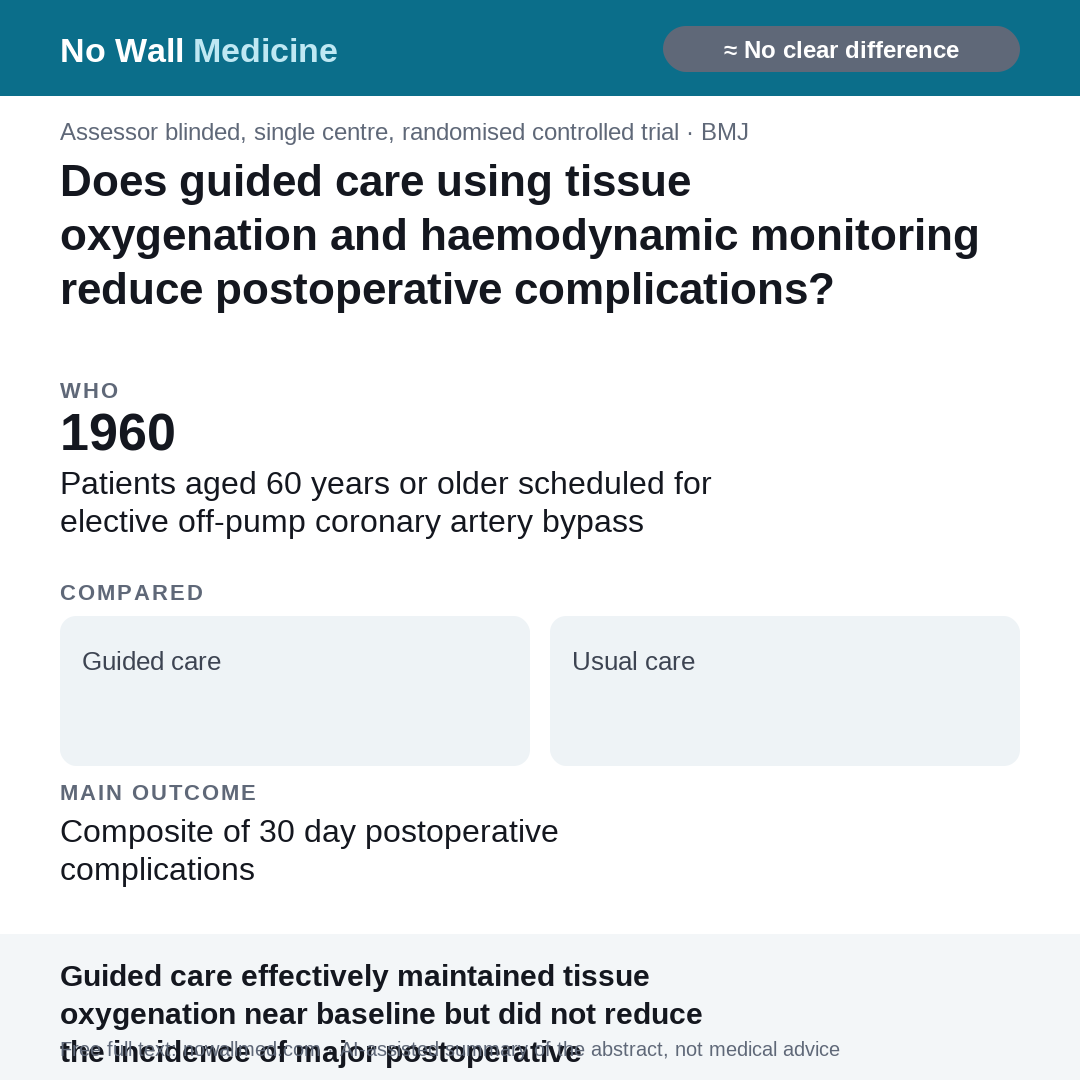
Care guided by tissue oxygenation and haemodynamic monitoring in off-pump coronary artery bypass grafting (Bottomline-CS): assessor blind, single centre, randomised controlled trial
Assessor blinded, single centre, randomised controlled trialNo clear difference
Does guided care using tissue oxygenation and haemodynamic monitoring reduce postoperative complications?
Who
1960
Patients aged 60 years or older scheduled for elective off-pump coronary artery bypass grafting · A tertiary teaching hospital in China
Compared
Guided care
Usual care
Main outcome
Composite of 30 day postoperative complications
Bottom line: Guided care effectively maintained tissue oxygenation near baseline but did not reduce the incidence of major postoperative complications.
BMJ · 2025-03-24Download image
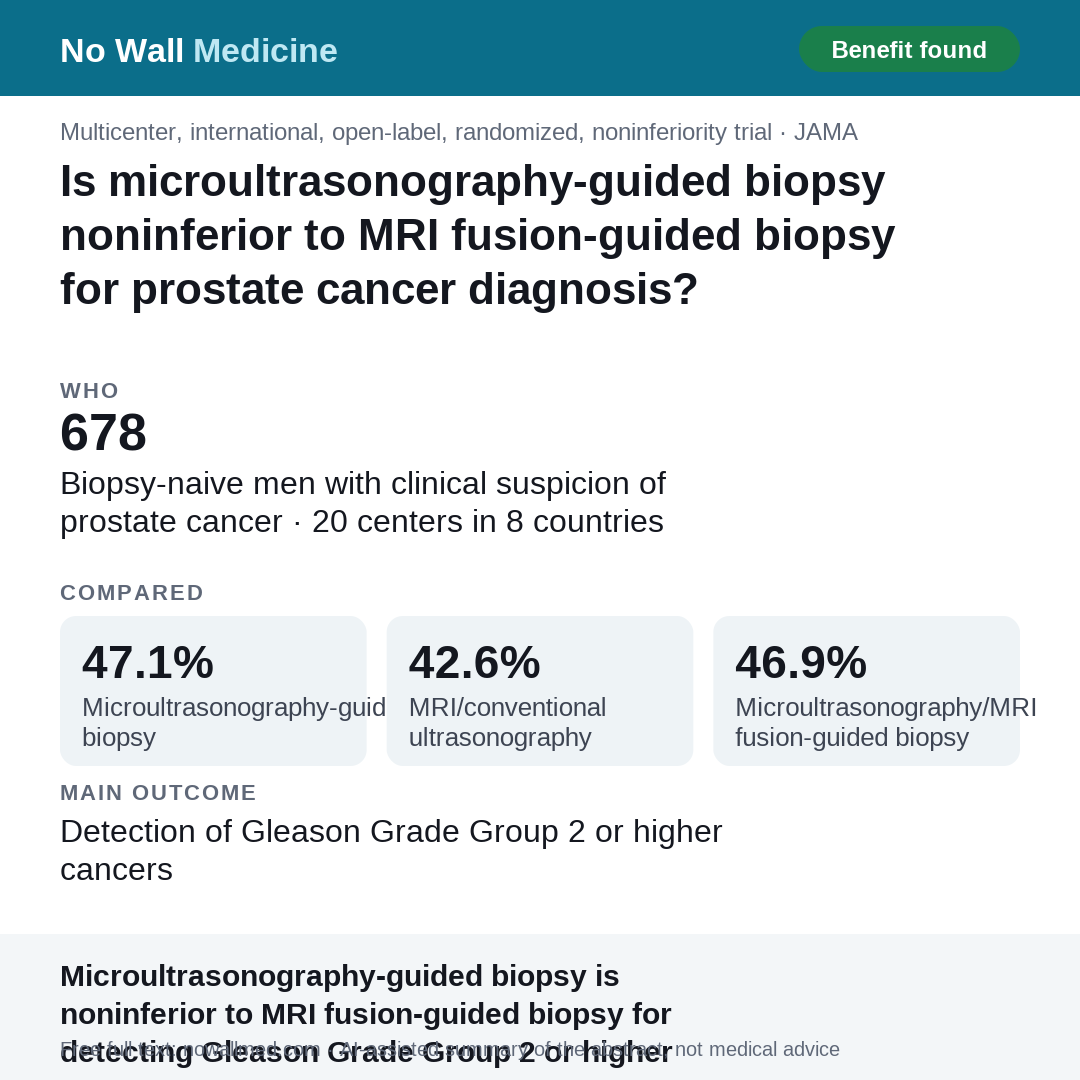
Microultrasonography-Guided vs MRI-Guided Biopsy for Prostate Cancer Diagnosis: The OPTIMUM Randomized Clinical Trial
Multicenter, international, open-label, randomized, noninferiority trialBenefit found
Is microultrasonography-guided biopsy noninferior to MRI fusion-guided biopsy for prostate cancer diagnosis?
Who
678
Biopsy-naive men with clinical suspicion of prostate cancer · 20 centers in 8 countries
Compared
47.1%Microultrasonography-guided biopsy
42.6%MRI/conventional ultrasonography fusion-guided biopsy
46.9%Microultrasonography/MRI fusion-guided biopsy
Main outcome
Detection of Gleason Grade Group 2 or higher cancers
Result: difference, 3.52% (95% CI, -3.95% to 10.92%)
Bottom line: Microultrasonography-guided biopsy is noninferior to MRI fusion-guided biopsy for detecting Gleason Grade Group 2 or higher prostate cancer.
JAMA · 2025-03-23Download image
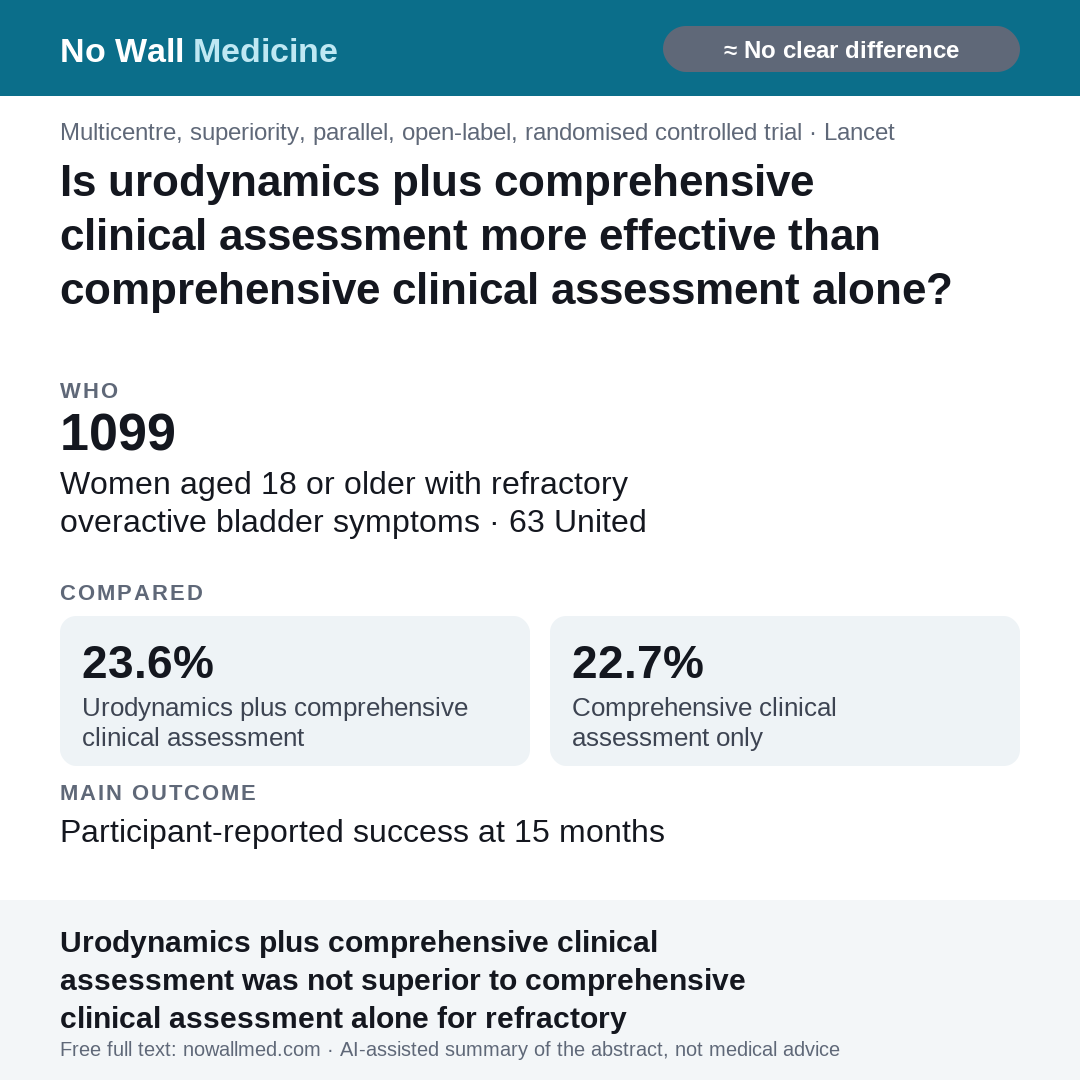
Invasive urodynamic investigations in the management of women with refractory overactive bladder symptoms (FUTURE) in the UK: a multicentre, superiority, parallel, open-label, randomised controlled trial
Multicentre, superiority, parallel, open-label, randomised controlled trialNo clear difference
Is urodynamics plus comprehensive clinical assessment more effective than comprehensive clinical assessment alone?
Who
1099
Women aged 18 or older with refractory overactive bladder symptoms · 63 United Kingdom hospitals
Compared
23.6%Urodynamics plus comprehensive clinical assessment (117/496)
22.7%Comprehensive clinical assessment only (114/503)
Main outcome
Participant-reported success at 15 months
Result: adjusted odds ratio 1.12 (95% CI 0.73 to 1.74)
Bottom line: Urodynamics plus comprehensive clinical assessment was not superior to comprehensive clinical assessment alone for refractory overactive bladder symptoms.
Funded by: UK National Institute for Health and Care Research
Lancet · 2025-03-22Download image
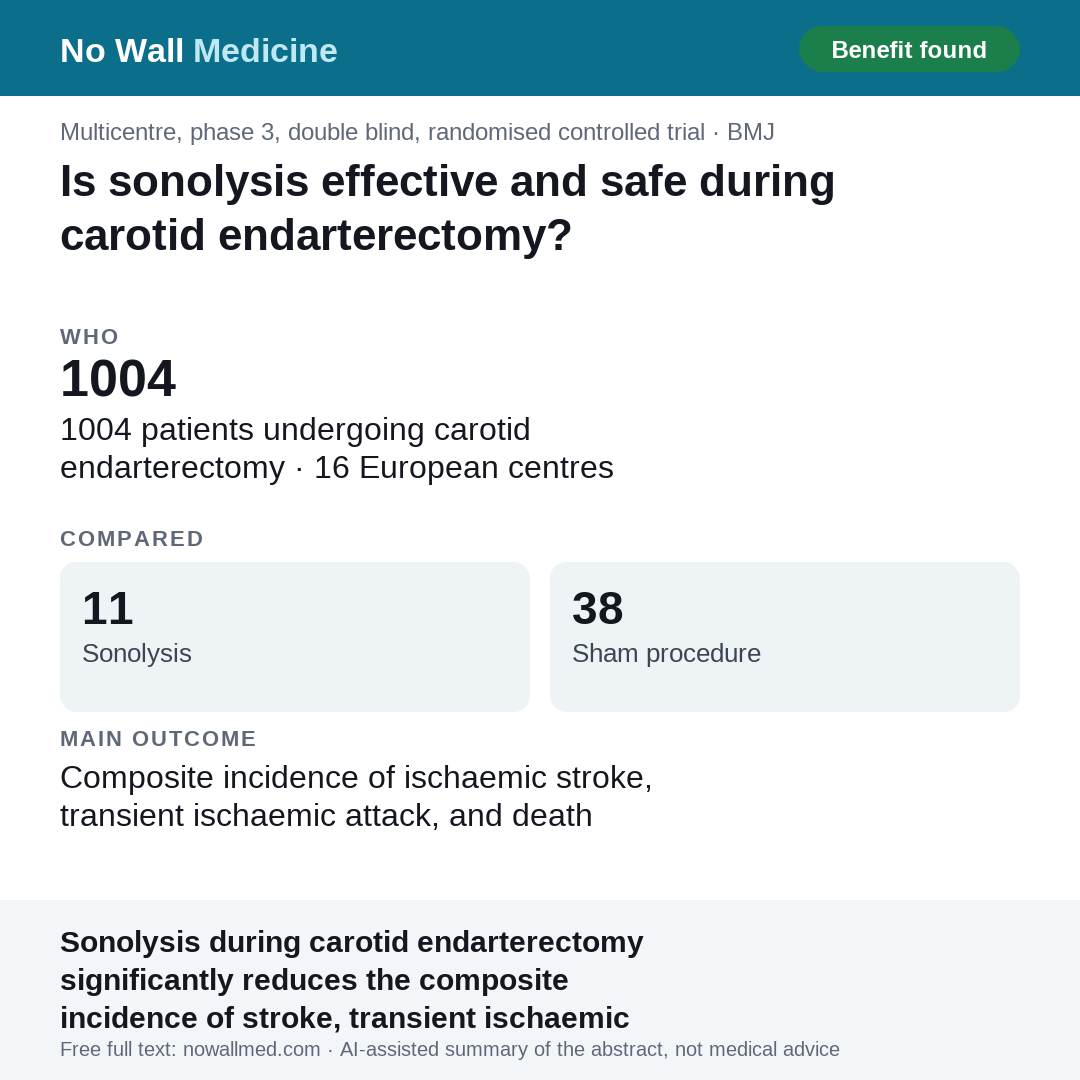
Sonolysis during carotid endarterectomy: randomised controlled trial
Multicentre, phase 3, double blind, randomised controlled trialBenefit found
Is sonolysis effective and safe during carotid endarterectomy?
Who
1004
1004 patients undergoing carotid endarterectomy · 16 European centres
Compared
11Sonolysis (2.2%)
38Sham procedure (7.6%)
Main outcome
Composite incidence of ischaemic stroke, transient ischaemic attack, and death
Result: risk difference -5.5%, 95% confidence interval (CI) -8.3% to -2.8%
Bottom line: Sonolysis during carotid endarterectomy significantly reduces the composite incidence of stroke, transient ischaemic attack, and death within 30 days.
BMJ · 2025-03-19Download image
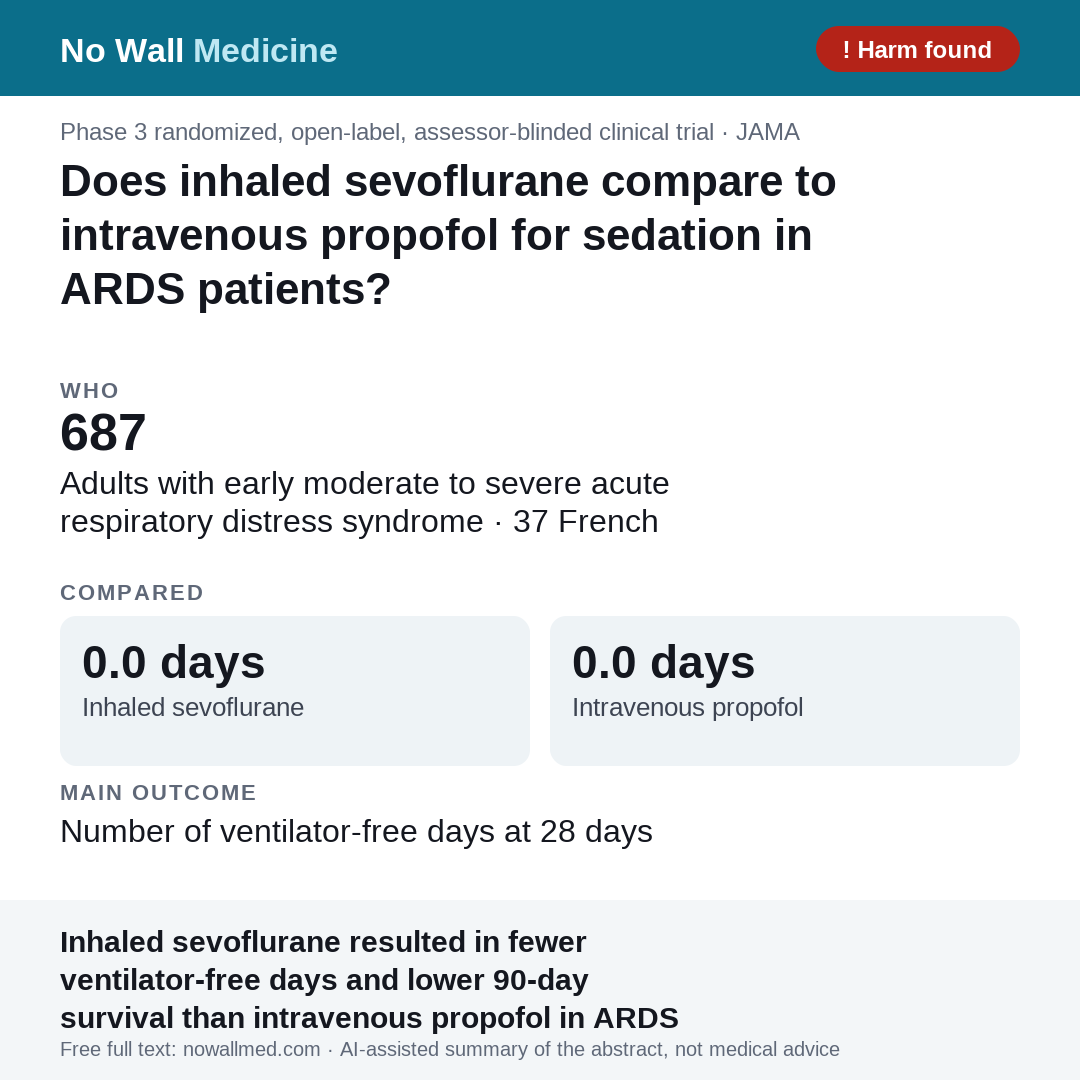
Inhaled Sedation in Acute Respiratory Distress Syndrome: The SESAR Randomized Clinical Trial
Phase 3 randomized, open-label, assessor-blinded clinical trialHarm found
Does inhaled sevoflurane compare to intravenous propofol for sedation in ARDS patients?
Who
687
Adults with early moderate to severe acute respiratory distress syndrome · 37 French intensive care units
Compared
0.0 daysInhaled sevoflurane (IQR, 0.0 to 11.9)
0.0 daysIntravenous propofol (IQR, 0.0 to 18.7)
Main outcome
Number of ventilator-free days at 28 days
Result: standardized hazard ratio 0.76 (95% CI 0.50 to 0.97)
Bottom line: Inhaled sevoflurane resulted in fewer ventilator-free days and lower 90-day survival than intravenous propofol in ARDS patients.
JAMA · 2025-03-18Download image
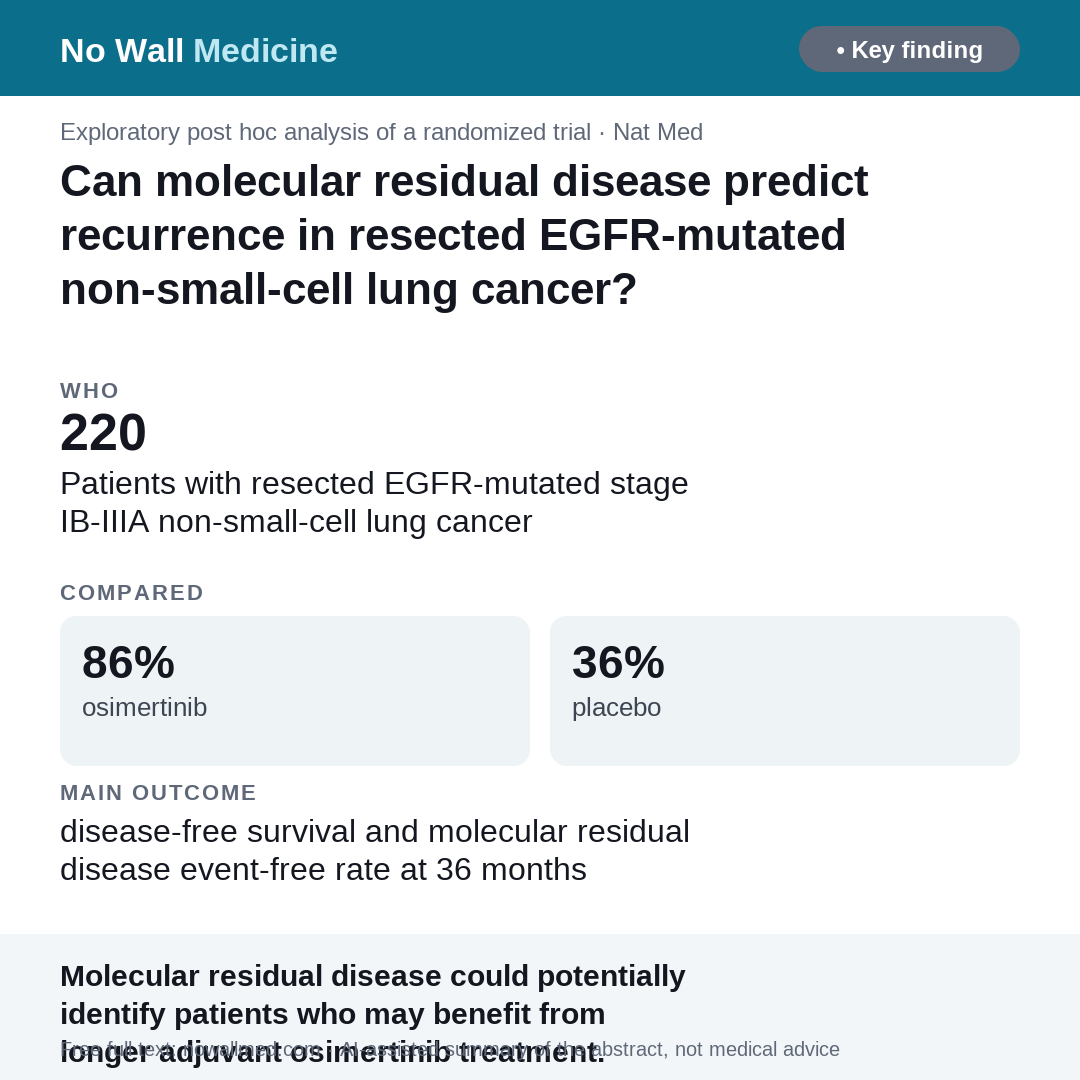
Molecular residual disease analysis of adjuvant osimertinib in resected EGFR-mutated stage IB-IIIA non-small-cell lung cancer
Exploratory post hoc analysis of a randomized trialBenefit found
Can molecular residual disease predict recurrence in resected EGFR-mutated non-small-cell lung cancer?
Who
220
Patients with resected EGFR-mutated stage IB-IIIA non-small-cell lung cancer
Compared
86%osimertinib
36%placebo
Main outcome
disease-free survival and molecular residual disease event-free rate at 36 months
Result: hazard ratio 0.23 (95% confidence interval 0.15-0.36)
Bottom line: Molecular residual disease could potentially identify patients who may benefit from longer adjuvant osimertinib treatment.
Nat Med · 2025-03-17Download image
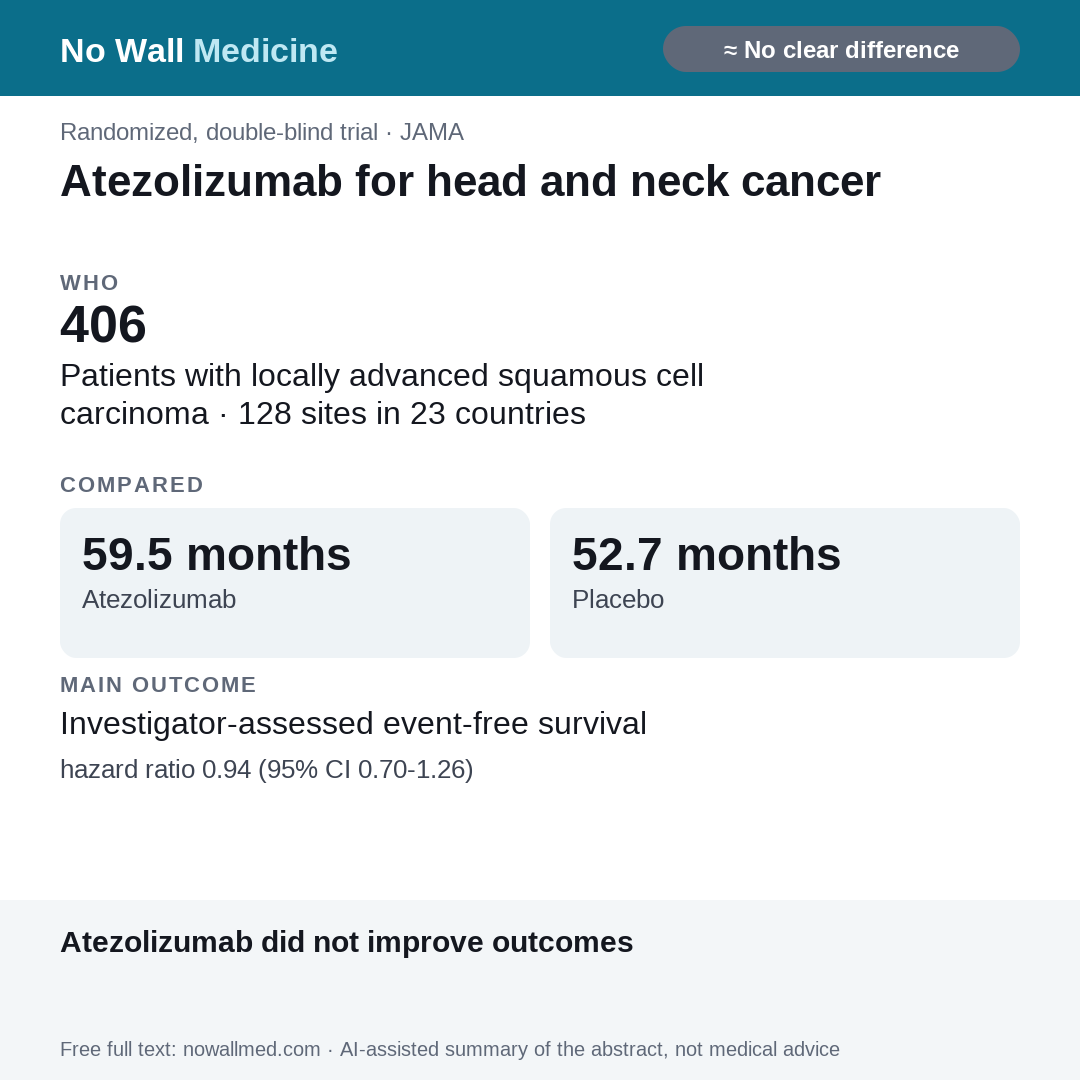
Atezolizumab in High-Risk Locally Advanced Squamous Cell Carcinoma of the Head and Neck: A Randomized Clinical Trial
Randomized, double-blind trialNo clear difference
Atezolizumab for head and neck cancer
Who
406
Patients with locally advanced squamous cell carcinoma · 128 sites in 23 countries
Compared
59.5 monthsAtezolizumab
52.7 monthsPlacebo
Main outcome
Investigator-assessed event-free survival
Result: hazard ratio 0.94 (95% CI 0.70-1.26)
Bottom line: Atezolizumab did not improve outcomes
JAMA · 2025-03-13Download image
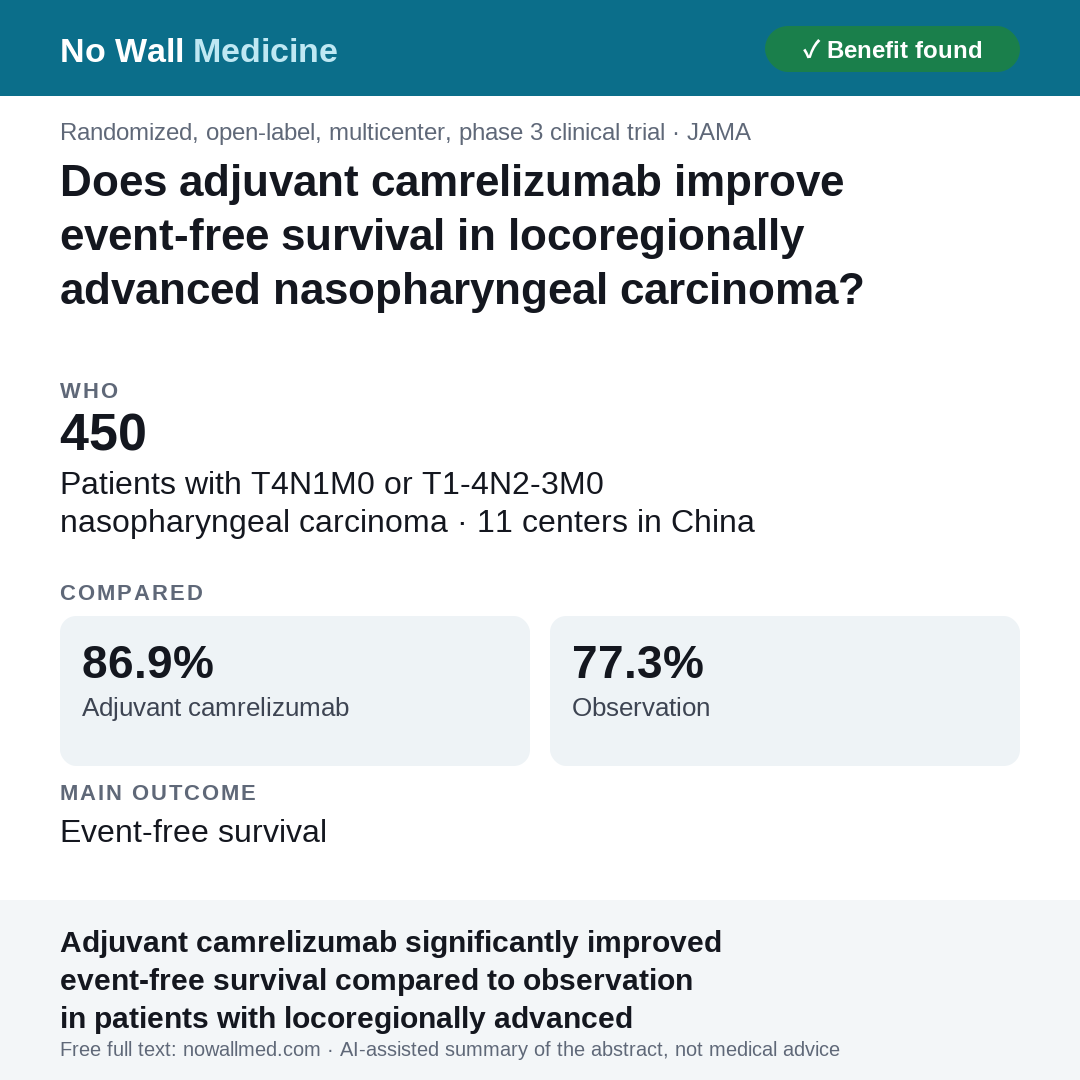
Adjuvant PD-1 Blockade With Camrelizumab for Nasopharyngeal Carcinoma: The DIPPER Randomized Clinical Trial
Randomized, open-label, multicenter, phase 3 clinical trialBenefit found
Does adjuvant camrelizumab improve event-free survival in locoregionally advanced nasopharyngeal carcinoma?
Who
450
Patients with T4N1M0 or T1-4N2-3M0 nasopharyngeal carcinoma · 11 centers in China
Compared
86.9%Adjuvant camrelizumab
77.3%Observation
Main outcome
Event-free survival
Result: stratified hazard ratio 0.56 (95% CI 0.36 to 0.89)
Bottom line: Adjuvant camrelizumab significantly improved event-free survival compared to observation in patients with locoregionally advanced nasopharyngeal carcinoma.
JAMA · 2025-03-13Download image
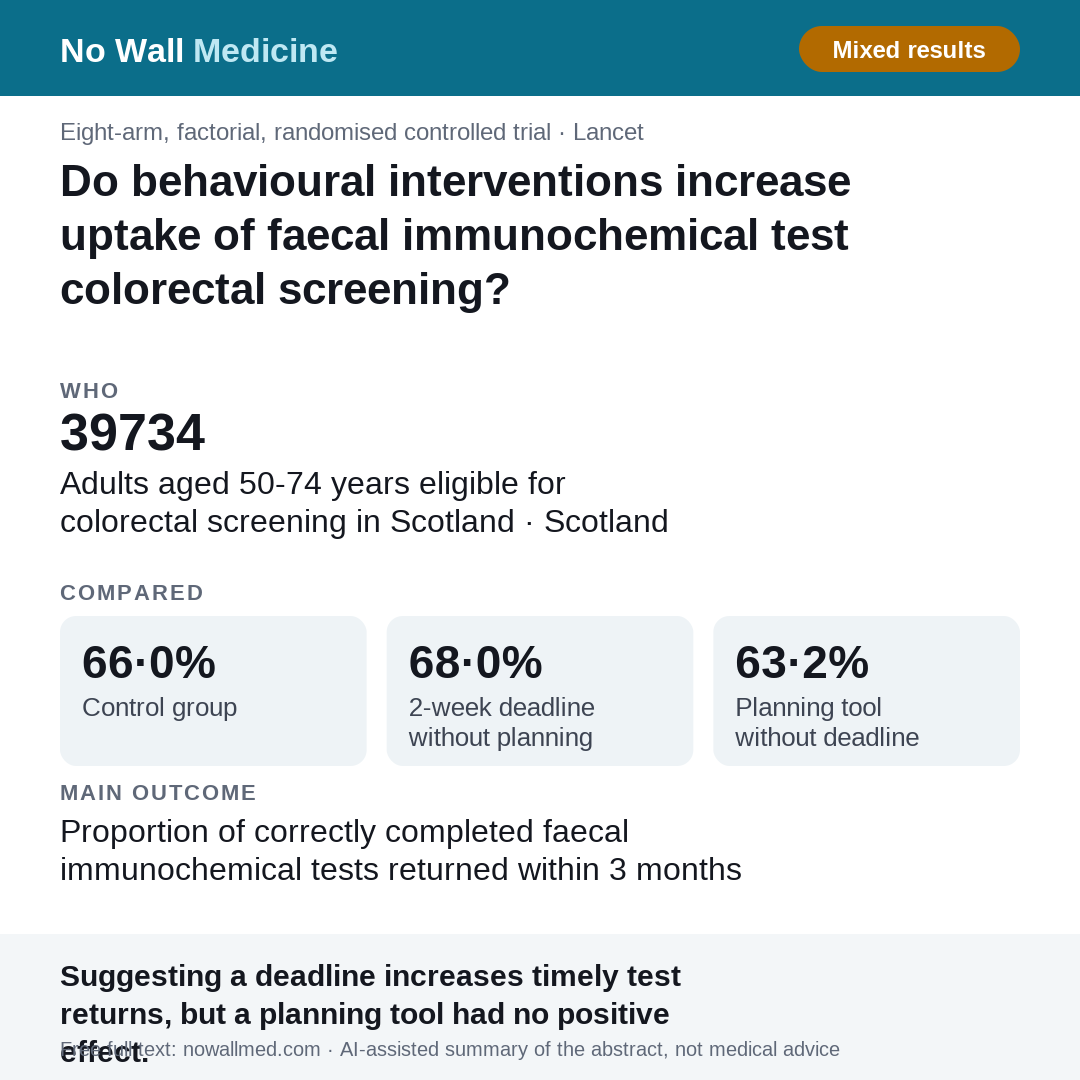
Behavioural interventions to increase uptake of FIT colorectal screening in Scotland (TEMPO): a nationwide, eight-arm, factorial, randomised controlled trial
Eight-arm, factorial, randomised controlled trialMixed results
Do behavioural interventions increase uptake of faecal immunochemical test colorectal screening?
Who
39734
Adults aged 50-74 years eligible for colorectal screening in Scotland · Scotland
Compared
66·0%Control group (3275 of 4965)
68·0%2-week deadline without planning tool (3376 of 4964)
63·2%Planning tool without deadline (3134 of 4958)
Main outcome
Proportion of correctly completed faecal immunochemical tests returned within 3 months
Result: adjusted odds ratio 1·13 (95% CI 1·08 to 1·19) for deadline
Bottom line: Suggesting a deadline increases timely test returns, but a planning tool had no positive effect.
Limitation: The analysis was complicated by an interaction between the two interventions
Funded by: Scottish Government and Cancer Research UK
Lancet · 2025-03-12Download image
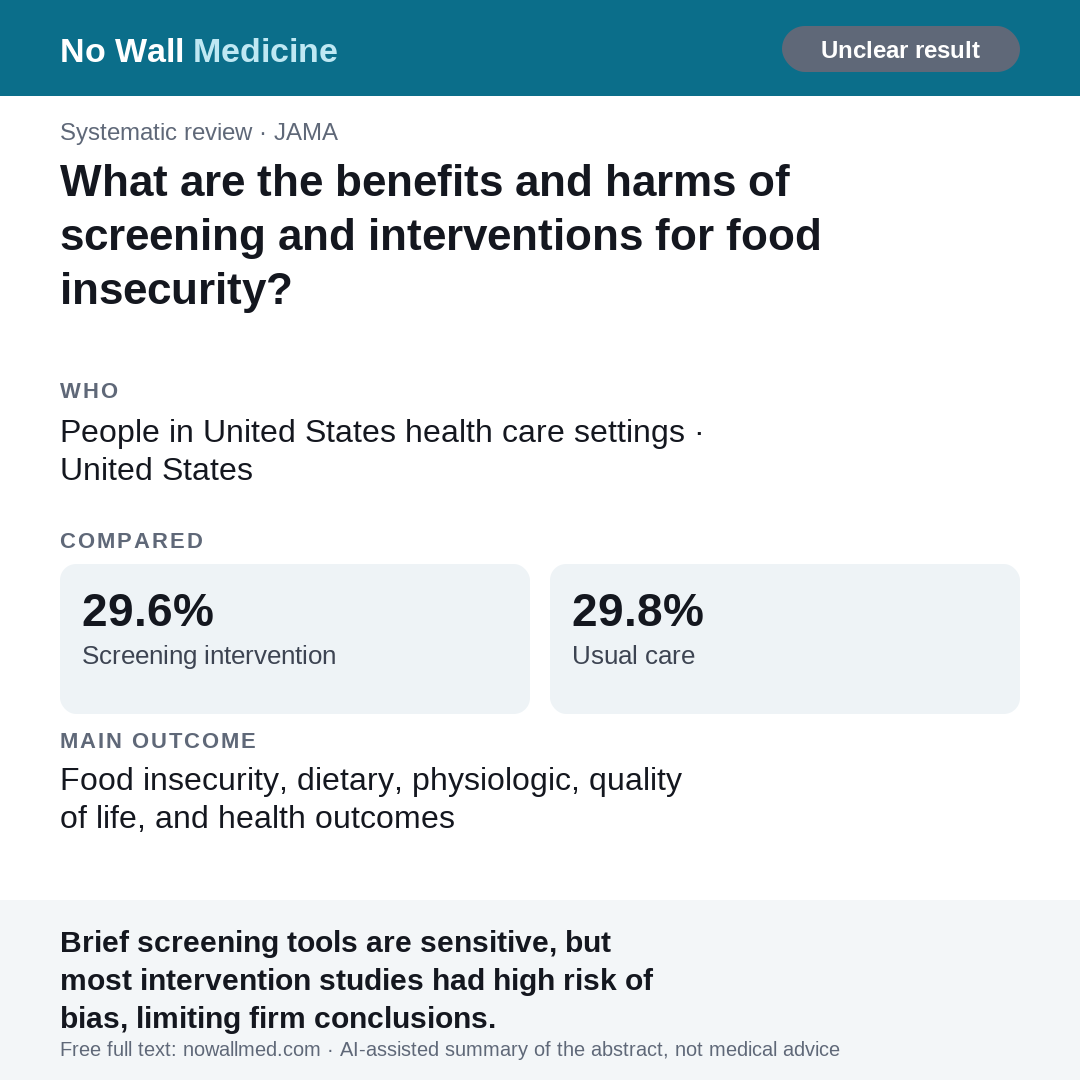
Preventive Services for Food Insecurity: Evidence Report and Systematic Review for the US Preventive Services Task Force
Systematic reviewUnclear result
What are the benefits and harms of screening and interventions for food insecurity?
Who
People in United States health care settings · United States
Compared
29.6%Screening intervention
29.8%Usual care
Main outcome
Food insecurity, dietary, physiologic, quality of life, and health outcomes
Bottom line: Brief screening tools are sensitive, but most intervention studies had high risk of bias, limiting firm conclusions.
Limitation: Most studies of interventions to improve food insecurity had high risk of bias.
JAMA · 2025-03-12Download image
Safety and immunogenicity of a pentavalent meningococcal conjugate vaccine targeting serogroups A, C, W, Y, and X when co-administered with routine childhood vaccines at ages 9 months and 15 months in Mali: a single-centre, double-blind, randomised, controlled, phase 3, non-inferiority trial
Randomised, double-blind, phase 3, non-inferiority trialBenefit found
Is NmCV-5 non-inferior to MenACWY-TT in safety and immunogenicity?
Who
1325
Children aged 9-11 months in Mali · Bamako, Mali
Compared
NmCV-5
MenACWY-TT
Main outcome
seroprotective response (serum bactericidal antibody titre of 8 or higher)
Bottom line: The pentavalent meningococcal conjugate vaccine was non-inferior to the quadrivalent vaccine in immunogenicity.
Lancet · 2025-03-11Download image